Republic of Botswana
European Community
Joint Report 2004
Table of Contents
1. EXECUTIVE SUMMARY...4
2. UPDATE ON THE POLITICAL, ECONOMIC AND SOCIAL SITUATION...5
2.1 Political Situation ...5
2.2 Economic Situation...7
2.2.1 Economic situation, structure and performance...7
2.2.2 Integration in the world economy and trade arrangements...9
2.2.3 Public Financial Management and Budget execution... 11
2.3 Social situation... 13
2.3.1 Achievements in the social sectors... 13
2.3.2 Education and Training... 15
2.3.3 Health and fight against HIV/AIDS... 17
2.3.4 Other challenges ... 19
2.3.5 Achievements in cross-cutting issues ... 21
3. THE POLICY AGENDA OF THE PARTNER COUNTRY ... 23
3.1 The Long Term Vision (Vision 2016) ... 23
3.2 9th National Development Plan (NDP9) ... 23
3.3 Recent Policy Initiatives... 24
4. OVERVIEW OF PAST AND ON-GOING CO-OPERATION ... 26
4.1 Focal sector: Human Resources Development ... 26
4.2 Non Focal sectors... 28
4.2.1 The Micro-Projects Programme (MPP) ... 28
4.2.2 Natural resource utilisation and conservation... 28
4.2.3 Enhance government's implementation and absorption capacity ... 29
4.2.4 Support to Fiscal Reform in Botswana ... 29
4.3 Utilisation of resources for Non-State Actors (NSAs) ... 31
4.4 Utilisation of Envelope B ... 31
4.5 Other Instruments ... 31
4.5.1 SYSMIN ... 32
4.5.2 FLEX ... 33
4.5.3 Regional co-operation ... 33
4.5.4 The European Investment Bank ... 35
4.5.5 The Centre for Development of Enterprises (CDE) ... 36
5. PROGRAMMING PERSPECTIVES FOR THE FOLLOWING YEARS ... 37
5.1.1 Status of utilisation of EDF8 and Envelopes A and B of EDF9 ... 37
5.1.2 Focal sector ... 37
5.1.3 Non focal sectors... 39
5.2 Speeding up of the use of EDF resources ... 39
5.2.1 Performance in 2004 and reduction of RAL/RAC... 39
5.2.2 Forecasts for commitments and payments in 2005 and 2006 ... 40
5.3 Programming of future support ... 40
6. DIALOGUE IN COUNTRY WITH THE NAO AND NSAS AND DONOR CO-ORDINATION... 40
6.1 Dialogue in country with the NAO and NSAs... 40
6.2 Donor co-ordination... 41
7. CONCLUSIONS ... 42
7.1 Key political, economic and social developments in 2004 ... 42
7.2 Progress achieved in poverty reduction... 43
7.3 Results and activities in focal sectors and relevant programmes... 44
7.4 Key perspectives for the future ... 46
7.5 Use of EDF resources, indicators of performance in the focal sector and dialogue with the NSAs ... 47
Annexes Annex 1. EDF9 intervention framework – Education Sector Policy Support Programme... 49
Annex 2. EDF 6, 7, 8 and 9 financial implementation by sector ... 53
Annex 3. Project summaries ... 60
Annex 4. Government commitments in Education and Training under 8th and 9th EDF NIPs ... 71
Annex 5. EDF 6 – 9 (NIP+Sysmin) - Evolution in 2004 of the Remaining to Pay (RAP), Remain to Contract (RAC) and their sum (RAL)... 74
Annex 6. Achievements of the 2004 forecasts & 2005 and 2006 forecasts ... 75
Annex 7. EDF9 updated chronogramme of activities and indicative commitment and expenditure schedule... 76
Annex 8. Selected economic and social parameters and indicators of Botswana ... 77
Annex 9. Donor matrix – an overview of donors’ allocations to sectors ... 79
Annex 10. Botswana Environmental Profile ... 81
Annex 11. Botswana Migration Profile... 88
1.
Executive Summary
During the period 2004 in review, Botswana continued to enjoy peace, political stability, and unbroken democratic rule. The elections of October 2004 considered free and by large fair, renewed the mandate of the party ruling since independence, the Botswana Democratic Party (BDP), which won 44 of the 57 constituencies.
GDP stood at some 40 billion Pula in 2004. Real GDP growth was 5.7% in 2003/4 and is projected at 4-5% for 2004/5 and 2005/6. The economy remains driven by the mining sector, accounting for 34% of GDP in 2003/4, particularly diamonds. Botswana maintained in 2004 as in previous years, large foreign exchange reserves (22 months of imports), low public debt, and a strong currency. The Botswana Pula, which appreciated against major currencies in recent years, was devaluated by 7.5% in February 2004. The real effective exchange rate has, since, again appreciated, partially offsetting the effect of the devaluation. The Balance of Payments and Current Account are in larger surplus than in 2003, due mostly to an increase in mining export revenues. Inflation declined steadily from mid 2003 to 6.4% in December 2004, with an average of 7%, due to the phasing out of the VAT introduction impact, a decline in both domestic and external inflationary pressures and domestic competition. Public finances remain structurally healthy due to tight control of deficits, and in particular cuts in current as well as development expenditure.
Botswana has strong trading links with the EU which accounts for 80% of its exports and 9% of its imports. The new SACU Agreement came into force in July 2004. Negotiations for the future SACU-USA FTA were at year end still ongoing. Botswana benefits, until end 2007, from the status of “Lesser Developed Beneficiary Country” under the USA AGOA-III. Her performance in the implementation of the Kimberley diamond certification scheme has been praised. Negotiations for EPAs under the Cotonou Agreement were launched in July 2004. Countries negotiating an EPA as part of the “SADC configuration” are, besides Botswana, her BLNS partners, Angola, Mozambique, and Tanzania (with South Africa participating as observer).
The country maintains strong public finance management systems, characterised by a high level of predictability and transparency. Prudent macroeconomic policies have allowed budget surpluses in all but four years over the past two decades. The budget was in deficit by 1.4 billion Pula in 2002/03 but in surplus by 574 million Pula in 2004/05. The 2005/06 budget is essentially balanced, with development expenditure representing 24% of total expenditure, an increase by 12% over the revised 2004/05 estimate. Emphasis is placed on implementation of fiscal reforms, improvement in expenditure efficiency, targeting, monitoring, cost control and recovery. Privatisation however progresses at a slow pace.
Important policy and legislation initiatives have been undertaken in 2004 and will be pursued in 2005, notably in the field of environmental.
Implementation of EDF 6 and 7 nears completion while the one of EDF 8 is well underway and run now mostly smoothly. The level of implementation of Government policies and plans in the focal sector of Education and Training is satisfactory, as well as the high level of financial commitment to joint projects. Monitoring of achievements at outcome and output levels remains difficult due to the lack of appropriate indicators.
The MTR of the CSP/IP for EDF9 was completed in November 2004, concluding to the appropriateness of orientations and allocations, and resulting in the transfer of 11 M€ from envelope B to envelope A to be allocated to the Education and Training Sector Policy Support Programme (E&T SPSP, 42.2 M€, 4 years from 2005/06). The latter will be requested for financing in 2005, after an agreement has been reached on a full matrix of process and output/outcome indicators for disbursement of budget support. Support to capacity building for the NSAs has been appraised (5.5 M€) and a programme for strengthening the capacity of the Ministry of Local Government for the implementation of its community-based programmes will be prepared in 2005.
Following losses in export in 2003/4, Botswana has, through the Flex mechanism, accessed 8.06 M€ of her Envelope B. The latter is now exhausted with the project Economic Diversification of the Mining Sector (30M€), ECHO’s drawing rights and the Peace Facility.
The Commission maintains its close political dialogue with Government in line with the objectives of economic diversification, poverty reduction, equity and community development. Dialogue with NSAs also intensified in 2004 but meets various constraints related to the lack of organisation, representativeness and channels for communication.
2.
Update on the political, economic and social situation
2.1 Political Situation
Botswana is one of Africa’s success stories of sustained economic growth, anchored in good governance, peace, political stability and sound macroeconomic management. The country has a multiparty constitutional democracy and free and fair elections are contested every five years. The 9th general elections of October
2004 renewed the mandate of the party ruling since independence, the Botswana Democratic Party (BDP), which won 44 of the 57 constituencies (13 more than in the 1999 elections). His Excellency Mr. Festus Mogae was re-elected as President for a second term. Twelve constituencies went to the Botswana National Front (BNF) and one to the Botswana Congress Party (BCP), a splinter group of the BNF. Four specially elected MPs bring the total number of seats to 61. Twenty MPs of the BDP entered Parliament for the first time. Female representation is low among elected MPs (four women) but high in specially elected MPs (three).
The 2004 Botswana Parliamentary and Local Elections was the 3rd electoral process
assessed on the “Principles for Election Management, Monitoring and Observation
in the SADC Region” (PEMMO)1. The elections were considered free and to a large
1
extent fair. Recommendations have been made by the EISA for further improved fairness, in relation to PEMMO 2.
The President nominates Cabinet and has executive powers. Draft National Assembly bills of tribal concern must be referred to the House of Chiefs, representing subgroups of the Botswana tribes, for advisory opinion. Other leaders preside over customary courts. All persons have the right to request that their case be considered under the formal British-based legal system. The roots of Botswana’s democracy lie in Setswana traditions, exemplified by the Kgotla, or Village Council, in which the powers of traditional leaders are defined and limited by custom and law. Presented to the House of Chiefs in early 2004, the Constitution Amendment Bill No. 34 of 2004, published in December 2004, has a double thrust of (i) rendering the Constitution neutral with respect to tribe and gender and ii) restructuring of the Attorney General’s Office.3
Civil and political rights are entrenched under the Constitution. The latter has a code of fundamental human rights enforced by the courts. There is freedom of association, of worship and of expression. The country is party or signatory to core treaties on human rights, with the exception of the UN Convention on Economic, Social and Cultural Rights. The translation of the ratified Conventions into national laws and practice has been in some instances relatively slow, such as with the Convention on the Elimination of Racial Discrimination (CERD)4. Government has, in
2003, set up an Inter-Ministerial Committee on Treaties, Conventions and Protocols to strengthen compliance with reporting on their implementation5. Botswana
signed in 2003 a bilateral agreement (“Article 98 Agreement”) with the USA preventing the extradition of US citizens present on the national territory to the International Criminal Court6.
The Botswana Constitution is based on the separation between the legislative, executive and judiciary powers. The legal system functions well but lacks capacity to deal with the number of cases, resulting in overcrowding of prisons 7. The Office
of the Ombudsman demonstrates independence and effectiveness. Standards of conduct in political, civil and commercial life are high in Botswana. Allegations of corruption or misuse of position are not common and appear to be systematically pursued by the independent Directorate for Corruption and Economic Crime
2
Interim Statement EISA Election Observer Mission to the 2004 Botswana Parliamentary and Local Government Elections, http://www.eisa.org.za/WEP/bots2004is.htm. These recommendations concerned (i) access to media and public resources; (ii) public funding of political parties; (iii) review of the electoral system to ensure a more balanced gender and political party representation; (iv) increase predictability through a constitutional provision for elections date; (v) revise appointment procedures of the Independent Electoral Commission (IEC) and its secretary to strengthen independence and impartiality, and re-inforce the All-Party Conference to build consensus and trust in the IEC; (vi) decentralisation of the counting process at polling station immediately after closure of the voting.
3
Transfer of prosecution powers from the Attorney General to the proposed office of the Director of Public Prosecutions (DPP).
4
While Botswana ratified the Convention in 1974, she did not submit a report to the Supervising Committee of the Convention before 2002 (next one is due in Match 2005). The Committee considered the report weak which led i.a. to the Government setting up an interdepartmental committee with the aim of better complying with the various Conventions ratified.
5 Four reports to the UN are currently outstanding: two on the Convention on the Elimination of All Forms of
Discrimination Against Women (CEDAW), one on the Convention Against Torture (CAT) and one on the International Convention on Civil and Political Rights (ICCPR).
6 The Agreement (ICC Protocol) is subject to yearly renewal in July but is automatically renewed, on indefinite
terms, if none of the parties wishes to revisit it.
7
(DCEC). Some concerns are expressed concerning the independence of the DCEC and appointment procedures of its Director.
Concerns are expressed about the fact that homosexuality is illegal; about the dominant position of Government in relation to the media8; about the death
penalty, applied in specific murder cases; and the practice of corporal punishment in schools. It is recognised that dialogue between Government and communities such as the San (or Basarwa) needs to be intensified on their aspirations for their own development, and on ways to enhance programmes that will empower them socio-economically. Basarwa groups have challenged Government in court over the constitutional basis of their resettlement from the Central Khalahari and the way it was implemented. Hearings, interrupted in November 2004, will resume in January 2005.
The restructuring of the SADC9 has slowly progressed. The regional 15-year
development plan “Regional Indicative Strategic Development Plan10” was launched
in March 2004. Botswana signed the SADC Protocol on Forestry in 2004, while the Protocol on Politics, Defence and Security Co-operation came into force in March 2004. The Finance and Investment Protocol is expected to be signed in 2005. In August 2005, Botswana will take over Chairmanship of the SADC from Mauritius.
A migration profile is included in Annex 11. The resident population of Botswana consists of some 96.6% own nationals and 3.4% immigrants, mostly from neighbouring and other SADC countries. Most Batswana migrating (close to 3% of the population) go to South Africa (many are employed in mines, though to a decreasing extent, or study there), and other neighbouring countries. Cross-border traffic between South Africa and Botswana has increased tremendously over the past decade. Concerns are expressed over the large number of illegal immigrants from Zimbabwe (which has dramatically increased over the recent years, as the political and economic situation has deteriorated in the neighbouring country), without legal status and income, and potential consequences on crime and sanitary threats from uncontrolled movements of animals and their products across the border.
2.2 Economic Situation
2.2.1 Economic situation, structure and performance
Major economic parameters are presented in Table 2, p. 13. GDP stood at some 40 billion Pula in 2004. Four sectors accounted in 2003/04 for over 70% of GDP: mining (34%), government services (16%), trade/hospitality and financial/business services (11%), a structure quite stable over the past 10 years.
In spite of sustained efforts towards economic diversification, the economy remains largely driven by the mining sector, in particular diamonds. This sector, though
8 Principles of the mass media bill will be laid down early 2005 – involving stakeholders’ consultation - before
being proposed for approval to Parliament in the first half of 2005. The Attorney General's Chambers will then be requested to draft the bill on that basis. The draft document is a product of a task force that included representatives of the Press Council, the Media Institute of Southern Africa (MISA) and the Editors' Forum.
9
Southern Africa Development Community. SADC has currently 13 members: Angola, Botswana, the Democratic Republic of the Congo, Lesotho, Malawi, Mauritius, Mozambique, Namibia, South Africa, Swaziland, Tanzania, Zambia and Zimbabwe. The Seychelles decided to withdraw from the SADC with effect from mid 2004.
10
main contributor to national wealth, is capital- rather than labour-intensive and accounts for only 3% of total employment in the formal sector. Diversification of the economy away from mining is regarded as critical to lessen economic vulnerability and promote employment.
In spite of Government plans for intensification of crop and livestock production, agriculture and agro-processing further shrank from some 5% in the early 1990s to 2.3% of GDP by 2003. The sector, however, represents a substantial proportion of the rural income (50% of the total population), accounts for some 20% of total employment, and is source of exports (beef). Constraints to agricultural expansion are the semi-arid climate, recurrent droughts, poor soils, low investment levels, low technology levels in traditional farming, and more recently a series of Foot and Mouth Disease outbreaks. An ostrich export abattoir has been approved for EU exports in 2004.
Manufacturing accounts for only 4 to 5% of GDP, but employs about 10% of the people active in the formal sector. Government supports the manufacturing industry through a concessionary company tax rate of 15%. The textile industry is seen as particularly promising in the context of trade arrangements such as AGOA-III (see 2.2.2). Tourism represents about 5% of GDP. Services, including financial services, represent close to 50% of GDP. Government has identified the development of international financial services as an area with great potential for economic diversification in Botswana.
Constraints to economic diversification are: inadequate levels of investment, small domestic market, mismatch between labour skills and the needs of the market, low productivity, non competitive production costs (landlocked situation, high utilities costs), remoteness from export markets, etc.
A strong economic growth has been recorded over the past decades. In recent years, it averaged 5.9% p.a., with minimum of 2.1% in 2002 and maximum of 8.6% in 2001. Real GDP growth was 5.7% in 2003/4 and projected at 4-5% for 2004/5 and 2005/6 (2005/6 Budget Speech). Main factors influencing GDP growth were (i) an increase in mining output and revenue (2002/3), (ii) slowdown in the diamond market (low market prices in 2001/2, appreciation of the Pula against the USD but depreciation against the Rand in recent years - hence increased import costs from South Africa), (iii) severe drought affecting the region in 2002/3, and successive outbreaks of Foot and Mouth Disease in 2002 and 2003. Mining sector outputs, however, are expected to increase. The extent to which this will compensate losses in relative terms is yet to be assessed.
Though their results for the past year are not yet known, some loss-making parastatals have in 2004 turned around, most notably the Botswana Telecommunications Corporation. The Botswana Meat Commission remains a serious concern for Government, in particular given its current role in beef exports to the EU. Privatisation progresses slowly.
Preliminary 2004 balance of payments estimates (Bank of Botswana) indicate an overall surplus of 727 million Pula and a current account surplus of 3.9 billion Pula. This larger surplus over 2003 is explained mainly by an increase in export revenues stemming from diamond, nickel and copper. Mineral prices in USD indeed rose in
2004 by 14%, 40% and 60% for diamonds, nickel and copper respectively.
workers.
Foreign exchange reserves were estimated at 24.3 billion Pula at the end of 2004, providing for some 22 months of imports of goods and services (down from 26 months in 2003).
Inflation remained high in 2003 at 9.2% on average (Figure 8.2, Annex 8) while a decline was initiated mid year (8.7% in July) as the impact of the introduction of VAT a year before phased out. This downward trend was maintained to the end of the year (6.4% in December, close to the target of 4-6%). In addition to the phasing out of the VAT effect, a decline in domestic demand and in government expenditure, lower external inflationary pressures, in particular in South Africa, and domestic competition assisted in maintaining lower inflation levels. They limited the impact of the 7.5% devaluation of the Pula in February 2004 to an estimated additional 2-3 inflation percentage points in the first half of 2004. Average annual inflation in 2004 stood at 7%, compared to 9.2% in 2003.
The Botswana Pula11 appreciated against major currencies (Rand, Euro and USD) in
recent years (Figure 8.3, Annex 8). While, in a vow to control inflation, no devaluation of the Pula was effected in 2001, in spite of its significant appreciation against the Rand (+22%), a 7.5% devaluation was implemented in February 2004 to reverse the real effective appreciation trend. This was expected to contribute to boosting exports and domestic production in specific export sectors, such as textiles, mining, and tourism. The real effective exchange rate has since again appreciated, partially offsetting the effect of the devaluation.
2.2.2 Integration in the world economy and trade arrangements
The SADC average economic growth in 2003 of 3.2% in real terms hides important national disparities (range from –11% to +17%), and remains globally well below the 7% target needed to achieve the MDGs. It is currently estimated that 40% of the SADC population live in poverty. Following several years of drought and resulting low agricultural outputs, the SADC region has suffered food deficits in successive years, estimated at some 5.5, 3.0 and 1.1 million tons in 2002, 2003 and 2004.
Botswana, given its small population and landlocked situation, has opted for regional integration and open market policies in order to benefit from foreign investments, free trade and economies of scale. It is however acknowledged that quality products are a pre-requisite to penetrate well-established markets. The country is an active member of various regional, continental and world organisations and institutions such as the SADC, SACU12, African Union, Africa
Development Bank, United Nations, Commonwealth, and signatory to global partnership agreements such as the ACP-EU Cotonou Partnership Agreement and NEPAD.13
The new SACU Agreement, signed in October 2002, came into force in July 2004. The Agreement provides for the establishment of various institutions and results in more favourable terms for Botswana in terms of the determination of customs tariffs and formula for the share of customs revenue among SACU members. In spite of globalisation and specific agreements of other SACU partners (e.g. TDCA14
11 Pegged to a basket of currencies composed of ZAR, USD, Euro, GBP and Japanese Yen. 12
Southern Africa Customs Union, common customs area between South Africa, Botswana, Lesotho, Namibia and Swaziland.
13 New Partnership for Africa’s Development. 14
between the EU and South Africa), the market remains important, even more so in the context of the future SACU-USA Free Trade Area. Negotiations for the latter, launched mid-2003, are still ongoing. Botswana benefits, through a special dispensation, from the status of “Lesser Developed Beneficiary Country” under the USA Africa Growth and Opportunity Act (AGOA III 15) until end 2007.
Botswana pursues very actively the implementation of the Kimberley diamond certification scheme16, of particular importance to the national economy, since the
publishing early January 2003 of its “Export and import of rough diamonds regulation – 2003”. The legislation in place, its enforcement and the quality of statistics and reports produced by Botswana have been praised and the country has been unanimously designated as Vice Chair of the Process for 2005 and Chair in 2006.
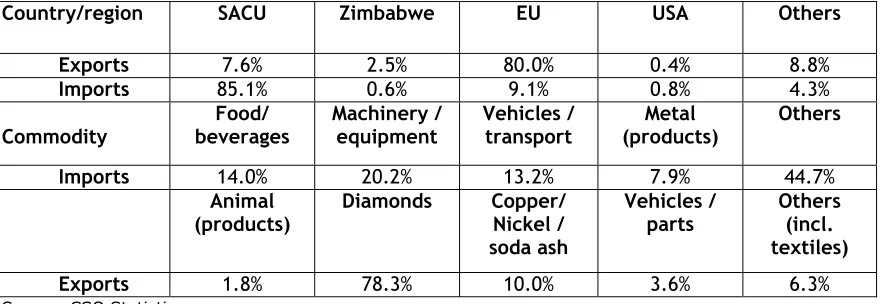
[image:10.595.89.530.378.530.2]Botswana’s main trade partners are the SACU countries (85% of Botswana imports) and the EU (80% of its exports). The composition of imports reflects the country’s low agricultural outputs and high investments in development while the one of exports testifies of the high and increasing dependency on diamonds (Table 1). The latter accounted for 58% only of all exports in the period 1980-1984 (vs. 13% for animal products). The trade balance has been in structural surplus over the past 10 years.
Table 1. External trade partners and composition (1999-2001)
Country/region SACU Zimbabwe EU USA Others
Exports 7.6% 2.5% 80.0% 0.4% 8.8%
Imports 85.1% 0.6% 9.1% 0.8% 4.3%
Commodity beverages Food/ Machinery / equipment Vehicles / transport (products) Metal Others
Imports 14.0% 20.2% 13.2% 7.9% 44.7%
Animal
(products) Diamonds Copper/ Nickel /
soda ash
Vehicles /
parts Others (incl.
textiles)
Exports 1.8% 78.3% 10.0% 3.6% 6.3%
Source: CSO Statistics
Negotiations for Economic Partnership Agreements (EPAs) under the Cotonou Agreement were launched on July 8, 2004 in Windhoek. Countries negotiating an EPA as part of the “SADC configuration” are Angola, Botswana, Lesotho, Mozambique, Namibia, Swaziland and Tanzania (with South Africa participating as observer)17. Botswana plays a very active and constructive role in the EPA
negotiations through the appointment of her Minister of Trade and Industry (MTI) as Chief Coordinator of the group, her Ambassador in Brussels as coordinator at Brussels level, the secondment of the Director for International Trade, MTI, as Chief Technical Advisor to the EPA unit created in 2004 within the SADC Secretariat, and prompt financial contribution to the functioning of this unit.
15
AGOA III extends the Act’s expiry from 2008 to 2015 and reconfirms the waiver from the rules of origin for yarn and fabric for the “Lesser Developed Beneficiary Countries” (LDBCs) until December 2007.
16 Whose implementation in the EU is regulated by the EU Council Regulation EC 2368/2002 of 20.12.02 17
The lack of public awareness about the EPA and the opportunities and challenges it creates is slowly changing. No strongly articulated anti-EPA position has so far emerged. The Delegation has initiated various information activities to raise public awareness.
The technical capacity in the Ministry of Trade and Industry (MTI) is limited. Below the level of Deputy Permanent Secretary, international trade issues are dealt with by six staff members (one of whom currently on secondment at SADC). Capacity is further stretched by Botswana’s membership of two regional organisations, SACU and SADC. Important trade negotiations include the implementation of the SADC Trade Protocol, SACU-US FTA negotiations, the recently concluded Mercosur Preferential Trade Agreement (PTA), WTO Doha Development Agenda (DDA) and EPA negotiations. SACU negotiations on trade agreements with India and China will soon be added to this list.
A National Committee on Trade and Policy Negotiation, coordinated by the MTI and including representatives from public and private sectors, trade unions and NSAs, was created in March 2004, with tasks of advice to government on policy formulation and positions regarding bilateral and multilateral trade negotiations (including regional integration initiatives). It meets quarterly while specific technical sub-committees provide more regular inputs.
2.2.3 Public Financial Management and Budget execution
A participatory and transparent political system has, combined with good and disciplined political leadership, limited the incidence of corruption in Botswana. According to Transparency International’s Corruption Index, Botswana has for many years been ranked among the least corrupt countries (30th rank worldwide in 2004) and the best in Africa. Botswana’s public finance management (PFM) is characterised by a high level of predictability and transparency. It makes reference to the Constitution, based on the separation between legislative, executive and judiciary powers, and to the 1997 revised Finance and Audit Act. The latter fully specifies budget execution procedures and control mechanisms. The various operations (commitment, accountancy and liquidation) are independent; internal and external control functions are distinct responsibilities and the whole process is transparent. Internal control, the ex-ante and ex-post control of expenditure are responsibilities of the MFDP.
The annual budget (April to March, after debate and adoption by Parliament), is prepared by the MFDP, integrates the objectives and financial engagements projected by the NDP, taking into account budget constraints (macro-economic performance, including revenue), level of budget balance, and emerging spending priorities. The MFDP sets envelopes available to each Technical Ministry for recurrent and development expenditure (considered as residual). As a rule, expenditure reduction only concerns new projects. The budget is revised in September-October in view of the macro-economic context. Most of these documents are available to the public through various media, including Government website.
development of a unified accounting period for all statistics, allowing the preparation of an integrated set of economic data.
The Botswana Constitution provides for an Auditor General (AG), supreme audit authority, whose role and independence are laid down in the Finance and Audit Act. The AG Office audits all public accounts of Botswana. Its annual report is presented by the MFDP to the National Assembly. The prime objective of the AG Office is to enhance national socio-economic development through sound financial management and accountability for public funds and assets. Independence – in principle and practice – of the AG, and public availability of relevant documents testify of best international standards and practices. Main constraints are available resources, which have not increased in line with the volume of funds to audit, and staff retention.
The Public Procurement and Assets Disposal Bill, approved by Parliament in 2001, entered into force in July 2002 when the Public Procurement and Assets Disposal Board, created through the Act, started its operations. Current public procurement and assets disposal procedures are consistent with best international practices and with the WTO Government Procurement Agreement. Botswana maintains several areas of national reservation or preference for public procurement. The Director of the Directorate on Corruption and Economic Crime (DCEC) enjoys, under the Corruption and Economic Crime Act (1997), extensive powers for the delivery of his mandate and can be granted prosecution mandate by the Attorney General’s Chamber. Botswana is a full member of the Anti-Money Laundering Group (ESAAMLG) and the Memorandum of Understanding signed in this context addresses, beyond money laundering, issues pertaining to the financing of terrorism.
• Budgets
The Government of Botswana has pursued prudent macroeconomic policies that have allowed budget surpluses in all but four years since 1982/83. Expenditure and net lending are adjusted to projected revenue and grants at the beginning and half way of the financial year, due to a strong commitment to keep budgets in balance or in limited deficit. Over the past four years, budget outturns ranged from a deficit of 1.40 billion (2002/03) to a surplus of 574 million Pula (2004/05). The 2005/06 budget is based on the assumption of a 4-5% GDP growth rate and essentially balanced. Revenue and grants (20.6 billion Pula) are derived mostly from mineral (48%), Customs and Excise (17%), as well as Non-Mineral Income Tax (13%) and VAT (10%). Development expenditure represents 23.6% of total expenditure and grows by 12% over the revised 2004/05 estimate.
Government has defined a “sustainability ratio” as the ratio of non-investment recurrent expenditure to non-mineral domestic revenue. This ratio ideally should be less than 1, and not greater than 1 for any extended period of time. It is based on the principle that revenue derived from non-renewable resources (mineral) should be used only for development purposes. Health and education are considered as investment in human capital and therefore recurrent expenditure in these sectors are not taken into account in the calculation of the ratio. In the absence of an explicit reference to expenditure for the fight against HIV/AIDS, it seems logical to treat it as education and health related expenditure, whatever its sectoral allocation.
development expenditure, performance of public services, efficiency gains, cost savings, and cost recovery mechanisms in some sectors, including transport and education and training.
Taking into account Botswana’s economic structure and the uncertainty as to external factors, the 9th National Development Plan, NDP9 (2003/4-2008/9)
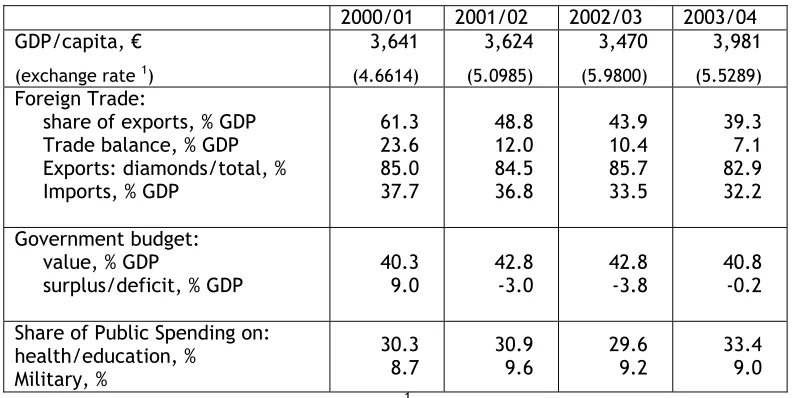
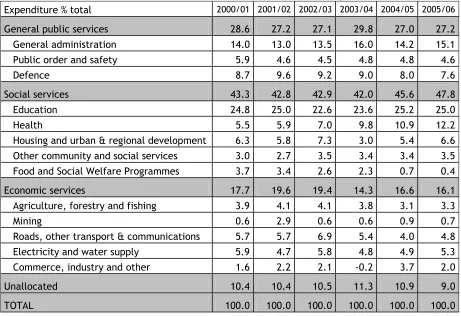
considers three medium-term economic scenarios, with as main variable the diamond prices in USD in real terms. In the base case scenario, assuming an annual growth rate of 5.5%, budgets will be in slight surplus in each of the five years covered by the plan (0.08 to 0.3 billion Pula according to the year). The International Monetary Fund (IMF 2003 Article IV Consultation) expenditure estimates are substantially higher in each of the four years from 2005/06, leading to an overall deficit in each year (about -0.1 to -0.5 billion Pula). They anticipate a lower GDP growth of 3.5% during the plan due to the plateauing of diamond production and the HIV/AIDS pandemic. It is difficult to appreciate these different scenarios particularly because of the uncertain impact of the HIV/AIDS epidemic on the economy as a whole and in terms of public expenditure. In the medium term, the situation is expected to be relatively comfortably managed in economic terms. The main challenges are to maintain the pace of social development and poverty reduction and roll out the HIV/AIDS anti-retroviral (ARV) therapy to those in need. Expenditure in social sectors (Table 8.4, Annex 8) consistently represents a very significant proportion of the successive budgets (45.6% of total expenditure in the 2004/5 revised estimate, health 10.9% and education 25.2%), confirming the country commitment to social development.
[image:13.595.100.497.442.641.2]The evolution of external assistance to Botswana followed a downward trend over the last decade and represents since 2000 some 0.6% of GDP only.
Table 2. Key Macro-Economic Indicators
2000/01 2001/02 2002/03 2003/04 GDP/capita, €
(exchange rate 1)
3,641 (4.6614) 3,624 (5.0985) 3,470 (5.9800) 3,981 (5.5289) Foreign Trade:
share of exports, % GDP Trade balance, % GDP Exports: diamonds/total, % Imports, % GDP
61.3 23.6 85.0 37.7 48.8 12.0 84.5 36.8 43.9 10.4 85.7 33.5 39.3 7.1 82.9 32.2 Government budget:
value, % GDP
surplus/deficit, % GDP 40.3 9.0 42.8 -3.0 42.8 -3.8 40.8 -0.2 Share of Public Spending on:
health/education, % Military, % 30.3 8.7 30.9 9.6 29.6 9.2 33.4 9.0 Source: Budget Speech 2005/6; all in current prices; 1 As per InforEuro rates
2.3 Social situation
2.3.1 Achievements in the social sectors
old18 and 3% are 64 years old and above 19). The actual dependency ratio is probably
much higher in the context of high unemployment.
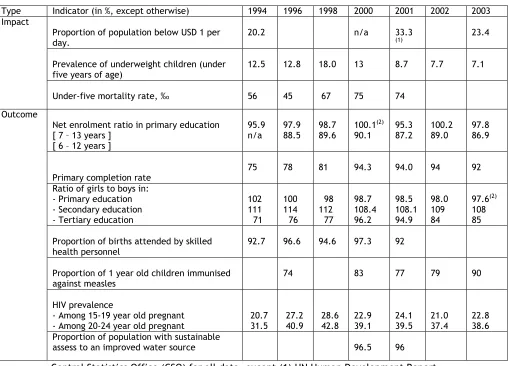
Table 3 below shows the evolution between 1993 and 2004 of the ten indicators selected among those of the Millennium Development Goals (MDGs) to reflect achievements towards development. At the time of formulation of the present report, the 2003 and 2004 values are still missing for many indicators. Botswana has developed from one of the 10 least developed countries worldwide at independence in 1966 into a middle-income country. Outstanding achievements, exemplified by a number of Millennium Development Goals (MDGs) indicators have been recorded in the delivery and outcomes of social services such as health care (over 90% of births attended by skilled health personnel), access to safe water (over 90% of the population), education (net enrolment in primary education [7-13 years] of over 95%), and impressive progress towards gender parity in most formal education. With respect to NER in primary education, CSO has referred to the age group [7-13] until 1999 and to the age group [6-12] from 2000 onwards, to reflect the Government’s policy to encourage enrolment at the age of six. Table 3 therefore indicates both.
The country currently belongs to the “Medium Human Development” group of countries. The Human Development Index, HDI, steadily increased between 1975 (0.494) and 1990 (0.653), declining thereafter to the 1980 level in 2000 (0.572) (Figure 8.6, Annex 8) due mostly to the dramatic shortening of life expectancy 20
due to HIV/AIDS as the other variables composing the HDI remained stable or improved (Figure 8.7, Annex 8). The devastating effect of HIV/AIDS is also reflected in the under-five mortality rate which, according to CSO, increased from 63 to 74 %o live births between 1991 and 200121. Indicators other than population
below 1USD/day, life expectancy and under-five mortality are either improving or fluctuating at high levels.
Indices for 2001 showed an encouraging trend with a HDI value of 0.614 and seemingly life expectancy recovery, hopefully to be confirmed in the coming years.
Figures reported by UNDP and CSO are discrepant for some parameters (notably life expectancy and under five-mortality rate).
18 Botswana Education For All National Action Plan, 2002. 19
Human Development Report, 2002, UNDP
20 44.4 years in 1995-2000, from 53.2 years in 1970-75 (HDR 2002, UNDP) 21
Table 3. Evolution of the 10 selected MDGs indicators between 1994 and 2003
Type Indicator (in %, except otherwise) 1994 1996 1998 2000 2001 2002 2003
Impact
Proportion of population below USD 1 per
day. 20.2 n/a 33.3 (1) 23.4
Prevalence of underweight children (under
five years of age) 12.5 12.8 18.0 13 8.7 7.7 7.1
Under-five mortality rate, %o
56 45 67 75 74
Outcome
Net enrolment ratio in primary education [ 7 – 13 years ]
[ 6 – 12 years ]
95.9
n/a 97.9 88.5 98.7 89.6 100.1
(2)
90.1 95.3 87.2 100.2 89.0 97.8 86.9
Primary completion rate 75 78 81 94.3 94.0 94 92
Ratio of girls to boys in: - Primary education - Secondary education - Tertiary education
102 111 71 100 114 76 98 112 77 98.7 108.4 96.2 98.5 108.1 94.9 98.0 109 84 97.6(2) 108 85
Proportion of births attended by skilled health personnel
92.7 96.6 94.6 97.3 92
Proportion of 1 year old children immunised against measles
74 83 77 79 90
HIV prevalence
- Among 15-19 year old pregnant - Among 20-24 year old pregnant
20.7 31.5 27.2 40.9 28.6
42.8 22.9 39.1 24.1 39.5 21.0 37.4 22.8 38.6 Proportion of population with sustainable
assess to an improved water source 96.5 96
Central Statistics Office (CSO) for all data, except (1) UN Human Development Report, period 1983-2000 for indicator 1;
Empty cells = data not available (none for 2004); (2) Values above 100% to be checked.
2.3.2 Education and Training
Education and Training (E&T) is identified as a critical area for economic development and technological change. Over the last 35 years, the education system has expanded tremendously to accommodate the population growth and needs of the country, as reflected in outstanding achievements in enrolment at both primary and secondary levels. In 2001, the Net Enrolment Ratio at primary level (6-12) was 87.2% in 2001, and the transition rate from primary to Junior Secondary level was 96%. Girls represented 49.4% and 51.9% of total enrolment at primary and secondary levels respectively.
with as main reason “desertion” (86 and 45% at primary and secondary levels in 2001). The high frequency of pregnancies at secondary level (38% of drop-outs), but also at primary level (1.8%), may however testify of a gap in achieving the objective of the education system of informing and changing behaviour with respect to HIV/AIDS. The MoE implements a policy of re-admission to school of girls after delivery.
Vocational Education and Training (VET) exists under two forms, institution-based and work-based. Total enrolment in public and private institutions was estimated at some 21,500 students in 2001, 35% of which were female. The Botswana Technical Education Programme (BTEP) is a modular programme in selected areas of VET with curricula delivered at international standards. Apprenticeship schemes are hampered by the limited capacity of the industry to provide on-the-job training. Tertiary education is available at University of Botswana (UB, 11,700 students in 2001) and other institutions. A second university is planned under NDP9, focusing on science and technology. There is a severe shortage of skilled and experienced teachers in the VET system and of university lecturers. Close to 25,000 students benefited in 2002 from scholarships for tertiary education, specialised colleges and VET institutions, in and outside the country. The management of the scheme, which amounted some 1 billion in 2002, needs strengthening.
In terms of financing of the sector, the period of NDP8 has seen a contraction of the development budget for education (-0.9% p.a. vs. an increase of 11% p.a. globally 22) while education recurrent expenditure grew slightly faster (20.2% p.a.)
than total recurrent expenditure (19.5% p.a.). The declining trend recorded under NDP8 is being reversed in the first years of NDP9 23 and the sector received the
largest budget allocation in 2005/6 (5.1 billion Pula, i.e. +8% over the 2004/5 revised estimate), i.e. 25% of total expenditure and net lending. Current financial constraints and the uncertainty of medium-term perspectives, however, are likely to hamper sectoral allocations allowing for the same growth rate recorded in the latest years.
While NDP9 clearly indicates the sector’s needs and programmes to be implemented (without prioritising them), budget execution reveals difficulties in project implementation and a lack of clearly set priorities for expenditure. The impact of cuts in education development expenditure - along with all other sectors - during several difficult years has accumulated over successive years and has impeded implementation of National Development Plans. Emphasis appears to be placed on junior and senior secondary schools, to address the bottlenecks in terms of places. Infrastructure planning in the MoE to reduce drop-out rates and ensure full enrolment needs strengthening. Maintenance of school infrastructure seems problematic due to the inefficient utilisation of maintenance funds and complex and time-consuming procedures for servicing. The pattern of education expenditure needs to be revised and prioritised, and the national plans for E&T must include plans for establishing public/private partnerships based on joint responsibility and cost-sharing.
Many challenges remain to be addressed within a context of declining resources due to macro-economic constraints, including:
- Gearing education more towards the country’s needs and job market; - Increasing and making more equitable the access to pre-school education;
22 Mainly in health, economic services and housing, urban and regional development. 23
- Optimising pupil/teacher ratio, and improving teacher training and education
infrastructure;
- Making more effective use of learning resources and improving the use of ICT; - Enhancing awareness on HIV/AIDS and promoting behavioural change;
- Decreasing the dropout rates, improving the transition rates from junior to
senior secondary; and
- Improving retention and gender balance in Vocational Education and Training
Major objectives of the sector have been prioritised as follows:
- Maintain the trends in Net Enrolment Rate of children 6-12 years while
simultaneously improving the quality of basic education and training in the country;
- Improve the quality of learning;
- Minimise and cope with the impact of HIV/AIDS on the education sector; - Maintain support policies, programmes and related budget;
- Track progress towards the targets set in the MoE Strategic Plan; and
- Provide the pre-requisites/enabling environment for establishing an effective
and demand-oriented education system.
Progress has been made in reducing the backlog in statistical analysis by CSO following the 2001 population census. Education statistics for 2002 were available at the end of 2004, and 2003 statistics were due for mid 2005. The time lag in the availability of statistics is of concern for an efficient and responsive monitoring of the sector. Specific sample surveys may assist in more timely progress monitoring.
2.3.3 Health and fight against HIV/AIDS
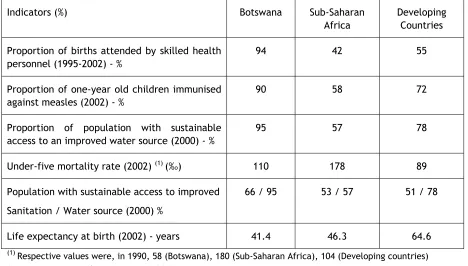
Similarly to education, remarkable achievements are recorded in the provision of health and water/sanitation services (Table 8.5, Annex 8) compared to developing countries, and in particular Sub-Saharan Africa. Priorities for improving the delivery of health services under NDP9 are efficiency, cost effectiveness, equity in access, quality, retention of skilled personnel, focus on primary level, health promotion and disease prevention, infrastructure and technology development.
Access remains a challenge in rural areas where 81% of the population was, in 1995, within eight kilometres of a health facility as compared to 94% of the urban population, and where availability and cost of transport are constraints.
Public expenditure on health has dramatically increased from 5-5.5% of total expenditure until 2001 to 12.2% in 2005/6, as a result of the scaling up of the fight against HIV/AIDS.
User fees represent a very marginal proportion24 of the financing of public health
services, though full cost recovery is implemented for foreigners since 2002 and will be extended to Batswana25.
HIV/AIDS contributes to aggravating poverty, unemployment and inequality, and is also one of their consequences. It invariably draws resources away from other priority areas. Botswana has indeed one of the highest HIV/AIDS prevalence rates in the world with, in 2004, a reported overall prevalence in the population aged 18 months and older of 17.1% and average rates of 25.3% in the population aged 15-49
24 0.1% in 1993 vs. 7% in the 1970s – NDP9 25
(2nd Botswana AIDS Impact Survey)26. Prevalence is the highest in age group 30-34
(40.2%). Women are more infected than men in most age groups, particularly at younger ages. Prevalence is higher in towns (22.0%) than in cities (19.9%) and rural areas (15.8%). Areas close to the eastern border are more affected (E.g. Chobe 29.4%, followed by Francistown 24.6% and Selebi-Phikwe 23.3%).
The pandemic shows so far no consistent signs of being checked. Sentinel surveys in 2001, 2002, and 2003 among pregnant women show a fairly stable HIV seroprevalence of 35.4-37.4%. The disease is currently reversing Botswana’s achievements in the economic and social spheres. It erodes gains in health (under-five mortality rate, life expectancy at birth, eradication of tuberculosis, etc.). A sharp drop is being observed in life expectancy at birth, though of varying severity according to the sources. CSO estimated the number of orphans to 78,000 at the end of 2003; some 50,200 were registered with the Department of Social Services by mid June 2005. HIV/AIDS places the health system under considerable stress in terms of physical, financial and human resources. HIV/AIDS-related illnesses accounts for 50-70% of hospital bed occupancy rates. Home-based care (HBC) is common but additional support is required to ease the burden on care givers. There were, by mid 2005, 10,300 HBC clients registered, of which 92% were assisted with the food basket 27.
There is great concern over the possible loss to HIV/AIDS of much of the country’s skilled and experienced labour over the next two decades, and a significant reduction in labour supply, productivity, foreign direct investment, and economic growth, unless and until current trends are reverted through the successful implementation of HIV/AIDS programmes.
The Botswana National HIV/AIDS Strategic Framework – NSF - 2003-09” takes a holistic approach, emphasising management, monitoring defined indicators and targets through a specific information system, and defining basic packages for different levels that address the most immediate needs. Indicative costs are to be met by Government, development partners and the private sector. Prevention of infection is the first priority and would, if successful, over the next 10 years, save at least 10 billion Pula in treatment and care. The five key areas are: (i) prevention of HIV infection (9.8% of the funding), (ii) provision of care and support (53%), (iii) management of the national response (5%), (iv) psycho-social and economic impact mitigation (16.5%), (v) supportive environment. The total costs including ARV (1.95 billion P) are 12.62 billion P (increasing from 1 in Year 1 to 4 billion Pula in Year 6).
Government implements, since 2002, an Anti-Retroviral (ARV) drug programme currently being rolled out as part of the National HIV/AIDS Strategic Framework 2003-09. In spite of various constraints which initially slowed down its implementation (lack of human resources in terms of numbers and specific skills, reluctance of the population to behaviour change, and persistence of a strong social stigma attached to the disease), the number of patients enrolled has, in 2004, tremendously increased to 30,600 at year end27, i.e. some 67% of the 45,000
meeting criteria for treatment. Infants represent close to 10% of those on therapy. Gaborone and Francistown accounted for 33 and 15% of the patients on therapy at 29 sites27. The capacity of some sites is in large deficit compared to the needs.
Other programmes geared mostly at prevention of infection include Voluntary Counselling and Testing (VCT), Prevention of Mother To Child Transmission (PMTCT), Condom Procurement and Distribution, and National Blood Safety Programme.
26 Various documents from Government and UNDP report average rates of over 35%. 27
Some 60,000 people were tested for the first time between July 2004 and June 2005, 47% of them in the age class [20-29] and 57% women. This calls for intensification of efforts targeting men to know their HIV status.
Over the same period, the proportion of women who tested for HIV at the antenatal clinic (ANC) increased from 74 to 83%, probably as a result of the new policy of systematic testing unless explicit opposition to it. Between April and June 2005, 32% of the deliveries recorded were HIV positive and 16% of HIV positive mothers were neither on prophylaxis or therapy. Additional efforts should be directed at public education on PMTCT benefits.
The use of condoms appears to have dramatically increased over the past years, in particular among the youth28, and is more common in urban than rural areas. The
evolution in the protection pattern of people with multiple partners seems encouraging. Distribution through specific channels such as district health teams and civil society, accounting for only 4% together, should be strengthened27.
The fight against HIV/AIDS was the main area of ODA in Botswana, with close to 18 M€ per year in 2003, i.e. 62% of donor resources29. Large funding also originates
from the private sector, notably the USA30. It is not easy to capture all financing
from all sources while avoiding double counting31. An allocation of Government
funds equivalent to 1.5 % GDP has been made in the 2005/6 budget for HIV/AIDS programmes32.
2.3.4 Other challenges
Botswana faces, in improving the living standards of its citizens, two main challenges in addition to HIV/AIDS (see 2.3.3):
• Poverty
Besides income poverty, Government recognises two other dimensions to poverty: capability 3334 and participation.
Successive Household Income and Expenditure Surveys show a decline in poverty as measured by the percentage of the population living below the Botswana poverty line (BWP 100 per person per month in 1997 prices), from 59% in 1985 to 30.3 % in 2002.
Poverty remains however a structural problem and large income disparities are reflected in a Gini coefficient of 0.573 in 2003, hardly reduced for the past two decades. Poverty largely results from high un- and under-employment and limited capacity for sustainable employment creation. These are the consequences of a narrow economic base, which is also capital- rather than labour-intensive, very low agricultural potential due to climatic and soil conditions, low level of skills for the labour market needs, small and sparsely distributed population and the resulting
28
From 16% in 2000 to 72% in 2004 for the age group [15-24] – BAIS II – 2004.
29
Excluding allocations from the Global Fund (18 MUSD over 2 years), not yet disbursed in 2003.
30 E.g. ACHAP (African Comprehensive HIV/AIDS Partnership), public-private partnership between the
Government of Botswana, the Bill and Melinda Gates Foundation and the Merck Company Foundation, has dedicated 20 MUSD / year over 5 years. Merck also donates ARV for the ARV programme of Government, MASA. The Baylor University International Paediatric HIV/AIDS Initiative, financed from various grants, operates since 2003 and focuses on research for children with HIV/AIDS and their families, advocacy for children and training of professionals.
31 Financing as Trust Funds through the UN may appear both under UN contribution and the Trust Fund donor. 32
Art. IV Consultation IMF, 2005.
33 Using UNDP capability poverty measure, which includes under-5 mortality rate, female illiteracy and rate of
unattended birth.
34
small internal market. Foreign Direct Investment, required to boost the strategy of using private sector as engine of growth and employment, fails to show any consistent increasing trend.
Factors of vulnerability include remoteness, gender, ill health, lack of access to physical assets, financial resources, and to markets. Remoteness in particular appears to play a major role. For a national average of 23.4% of people living below USD 1/day, values of 5.1, 19.3 and 36.1% in cities/towns, urban villages and rural areas respectively35. Income disparities have been slightly reduced in cities and
towns over the last 10 years while they have increased in urban villages and rural areas. Weakening of traditional solidarity mechanisms exacerbates the impact of vulnerability factors 36
.
Botswana has made remarkable progress in reducing capability poverty through education and training, health and nutrition. However, capability remains still quite low for some groups and some geographic areas. For example, illiteracy rates are higher in the western region and the pass rates (grades A to C) at primary school leaving examination in 2002 were much below the national average (79%) in two districts (Ghanzi – 69% and Kgalagadi – 66%). In a review of the Remote Areas Development Programme (BIDPA, 2003), communities identified access to education, in particular at secondary level, and sensitivity of the system to their needs, as remaining constraints. Health matters were not reported as a major problem, though HIV/AIDS could spread very rapidly.
While Botswana has a tradition of popular participation through the Kgotla system and decentralisation to local authorities, further decentralisation to communities is needed and education and training will aim at enhancing the ability of the poor to truly participate in development processes.
In spite of being drought prone and of a high incidence of poverty, Batswana have been mostly protected from hunger through the implementation of specific feeding programmes and adequate social safety nets financed by government budget. The results from a comprehensive review of previous anti-poverty schemes in 2002 were fed back in the 2003 National Strategy for Poverty Reduction.
Prospects at year end about the rainfall 2004/5 are worrying and Botswana may, in 2005, be facing the worst drought in 20 years. The drought would mainly affect the poorest population segments and rural areas.
• Unemployment
Employment is influenced by a multitude of factors, including economic growth, demographics, and education enrolment. Economic growth is mostly based on the capital-intensive mining sector while the agricultural sector, highly labour-intensive, has shrunk over the years (to less than 3% in 2001/2002)37. Retrenchment
in some sections of the economy may have contributed to unemployment. The majority of new jobs are created in the private sector and more are created in the informal than the formal sector. Employment is increasingly skill-intensive and many of the unemployed are relatively young people with low education and no skills. One of the priorities of Government remains, as in the past, heavy
35
2002/3 Household Income and Expenditure Survey (HIES)
36 Botswana MDG report 2004 (final draft) 37
investment in Education and Training (E&T) to address the problem of lack of skills38.
With a national average unemployment rate of 23% in 2002/3, women were more affected (26.3%) than men (21.4%), and urban villages (29.6%) more than cities/towns (18.5%). Unemployment was very high amongst young people (e.g. close to 50% in [20-24] age group) and did fall below 20% for age category [30-34]35.
2.3.5 Achievements in cross-cutting issues
• Gender
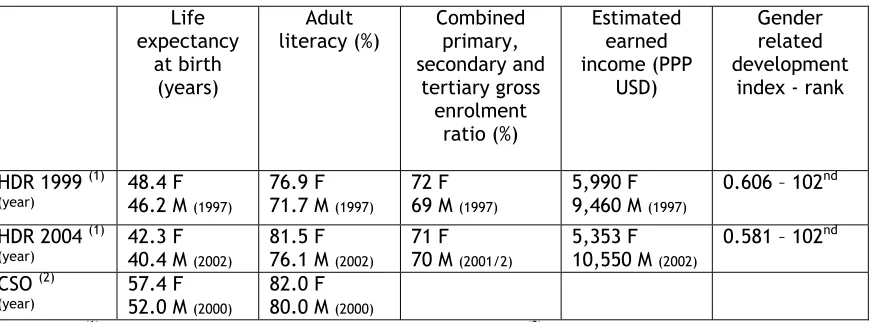
[image:21.595.84.522.309.470.2]In general, disaggregated indicators show good achievements for gender equity. The disparity in income remains nonetheless important (Table 4).
Table 4. Selected indicators disaggregated by gender Life
expectancy at birth
(years)
Adult
literacy (%) Combined primary, secondary and
tertiary gross enrolment
ratio (%)
Estimated earned income (PPP
USD)
Gender related development
index - rank
HDR 1999 (1)
(year) 48.4 F 46.2 M (1997) 76.9 F 71.7 M (1997) 72 F 69 M (1997) 5,990 F 9,460 M (1997) 0.606 – 102 nd
HDR 2004 (1)
(year) 42.3 F 40.4 M (2002) 81.5 F 76.1 M (2002) 71 F 70 M (2001/2) 5,353 F 10,550 M (2002) 0.581 – 102 nd
CSO (2)
(year) 57.4 F 52.0 M (2000) 82.0 F 80.0 M (2000)
Sources: (1) Human Development Reports 1999 and 2004, UNDP; (2) Central Statistics Office; F= female; M = male
• Environment
Botswana’s environmental profile (Annex 10) reviews the major environmental constraints of the country: (semi-) arid climate, increase in temperatures and decline in annual rainfall over the past decades, meagre ground and surface water resources, indiscriminate dumping of waste and widespread littering, rapid population growth and resulting pressure on natural resources. The elephant population is more than twice the national carrying capacity, resulting in increasing human-elephant conflicts and alteration to the vegetation cover in some areas. Land use conflicts between wildlife and livestock reflect the tension between the two competing sectors and represent a major concern. Poverty is identified as a major cause and consequence of environmental degradation and natural resources depletion. Community-based Natural Resources Management is one of the strategies adopted to address poverty reduction through sustainable use of natural resources, although at present diverging approaches are being discussed in view of the finalisation of the CBNRM policy.
38
This environmental profile also lists major legislation and plans, as well as key-ministries and institutions involved, alongside with the Ministry of Environment, Wildlife and Tourism, as well as NGOs, CBOs and private sector operators, involved in environmental matters, and schemes, international, African and regional conventions and protocols to which Botswana is a party.
Government has expressed the need for financial and technical assistance to build its capacity to consistently and effectively address environmental issues, in particular Multilateral Environmental Agreements. Community financing could provide support in these areas, as well as contribute to the development of a Country Environmental Profile, ideally coupled with a comprehensive strategy and action plan. Support to the formulation of such documents could be considered, notably under the Technical Cooperation Facility.
• Capacity building and institutional development
Main strengths of Botswana public services lie in the discipline, predictability, accountability and transparency of the procedures as implemented; in the institutions set up to ensure adequate control of the use of public resources (PPADB, AG, DCEC) and their independence; and in transparency vis-à-vis the public, as exemplified by the availability of documents to the latter. Government officials usually have a high level of formal qualifications. Budgetary restrictions are translated in a tight control of recruitment for public services. Hence the importance of a successful implementation of the Performance Management Systems which should improve the efficiency of public services in the delivery of their mandate with a given level of means, in particular human resources.
The creation of new institutions and restructuring of existing ones often initially result, as one may expect, in certain delays (e.g. the creation of the PPADB (set up of the Board, adaptation of procuring entities to new standards and practices) while transparency has improved) and/or uncertainties, grey zones as to the roles and responsibilities, which must be addressed at managerial level.
Capacity building needs in the focal sector, education and training, have been identified in the following priority areas:
Two important inter-related processes require strengthening monitoring and
evaluation and planning. Of particular importance in this context are:
A weak quality assurance of data collection, analysis and presentation statistics, resulting in unreliability and lack of confidence of stakeholders in using available data for planning purposes;
Absence of accurate key baseline data; Weak sector wide development planning;
Inadequate mechanisms for monitoring performance against objectives and targets;
Increasing cost-effectiveness of the E&T system, once weaknesses are evidenced
through a comprehensive information system and sectoral expenditure review.
Adoption of a National Qualifications Framework: in its absence, the multitude
of non-transparent and poorly co-coordinated E&T products, of varying quality results in time and cost-inefficiency for the users of the training.
One of the major constraints to capacity building is the absence of a
public and private sectors, leaving room to overlaps, duplications, occasionally conflicts, as well as gaps.
These findings concur with two key development challenges recognised by the Botswana MDGs Status Report of 2004:
“Empowering Batswana everywhere to be viable agents of their own
development”, through successful human resource development producing “functionally global workers and citizens” and deliberate measures to increase sense of responsibility by individuals and communities for own development, with Government acting as facilitator and engaging in a truly consultative dialogue;
“Ensuring that policies and programmes are fully implemented”, in particular
strengthening of Monitoring and Evaluation capacities. Data should be disaggregated for key-factors, time series available for basic indicators, and the capacity for analysis and feed back into policy-making and planning strengthened.
3.
The policy agenda of the partner country
3.1 The Long Term Vision (Vision 2016)
Botswana’s long-term development plan, “Vision 2016”, “Prosperity for All”, adopted in 1996, is a multi-dimensional perspective of where the country should be by 2016, socially, economically, politically and spiritually. It re-affirms the country’s four development objectives of sustained development, rapid economic growth, economic independence, and social justice. Although Botswana has achieved, over the past decades, rapid economic growth through mining and in particular diamonds, economic diversification is critical to secure sustainable development and to address persistent high unemployment and poverty levels. Strategies to achieve these objectives are articulated around private sector development as the new engine of growth. Vision 2016’s emphasis is on Human Resource Development (HRD), productivity and innovation, as well as the fight against HIV/AIDS.
Vision 2016 provides the framework for all future plans, and particularly National Development Plans (NDPs). The possibility of merging or streamlining common goals and targets of Vision 2016 and the MDGs 2015 is currently discussed. Vision 2016 Council is responsible for monitoring and evaluation of progress in achieving the objectives of the Vision.
3.2 9th National Development Plan (NDP9)
The theme of NDP9 (April 2003 to March 2009), “Towards Realisation of Vision 2016: Sustainable and Diversified Development through Competitiveness in Global Markets”, acknowledges that global competitiveness and trade are critical for a small-sized country such as Botswana. The policy thrust of NDP9 includes:
- Economic diversification, employment creation and poverty alleviation; - Macro-economic stability, financial discipline and public sector reforms;
3.3 Recent Policy Initiatives
The theme of the Budget Speech 2005/6 « Meeting the Millennium Development Goals and Vision 2016 through a self-reliant Approach to Development », reflects Government current concern of ensuring cost-effectiveness and sustainability of NDP spending and in the provision of services, as well as improved revenue collection. The need to re-examine and re-focus spending to ensure good value for money is identified, as well as cost savings, cost sharing and cost recovery. After the introduction of the VAT and the launch of the BURS, revenue collection will be addressed at Ministries’ level (5 in the first « wave »). With reference to the spirit of self-reliance, the Minister of Finance reminded « values of hard work, paying one’s bills and a sense of responsibility », as well as individuals creating employment for themselves and others. The emphasis on self-reliance and increased productivity is rooted in the fact that, achievements of MDGs and Vision 2016 require respectively a growth of 7 and 8%, NDP9 projects an average annual growth of 5.5%.
Various key policy and plans have been recently adopted, addressing critical challenges in the social spheres: Revised National Policy for Rural Development (2002), National Strategy for Poverty Reduction39 (2003), National HIV/AIDS
Strategic Framework – NSF - 2003-09” (2003).
In recognition of the ability of a growing number of Batswana to pay substantial amounts for their children’s education, specific cost recovery schemes are being put in place for different levels40, together with equity schemes. Priorities in education are increasing access to senior secondary school (currently 50% only) and tertiary education facilities and opportunities, including the Faculty of medicine and Allied Sciences, a second University focusing on Science and Technology, as well as expansion of colleges of VET. The development of a tertiary education policy and review of the Education Act of 1967 will be undertaken in 2005.
The « Women in Development Policy » will be revised in a « National Gender Policy » with new strategies for promoting gender equality.
Cabinet approved in 2004 the National Policy for Non-Governmental- Organisations, which singles out the roles and relationships of Government and NGOs in addressing the country development challenges. As part of its right-sizing strategy, Government plans to outsource projects and services, which have traditionally been implemented by local authorities.
As a further step towards environmental protection, which was given a prominent place under NDP 9, the Environmental Impact Assessment legislation has been recently gazetted and will render EIA compulsory for major projects. A number of policies are being prepared or reviewed41. A draft National Energy Policy is being
developed to increase efficiency and effectiveness in the sector. A decision will be made on how best to meet local electricity demand, based on a study into the expansion of the Morupule Power Station while export potential will be explored. The review of the National Water Master Plan, started in September 2004, will further ensure increased access of the population to safe drinking water (currently
39
It is not a “Poverty Reduction Strategy Paper” (PRSP) in its usual meaning and bearing; the reference development plan and expenditure framework remains the one of NDP9.
40 School fees (including boarding fees), in particular in secondary schools; loan / grant system at tertiary level.
The proportion of grant/loan ranges from 100% for those study subjects considered necessary for the economy to 0% which are considered of importance for individuals rather than the nation.
41