in First Pregnancy
Carmel Therese Poyser
A thesis submitted for the degree of Master of Science of The Australian National University
Declaration
This thesis is my own work, and has not been submitted elsewhere. All sources have been acknowledged.
I thank both of my supervisors, Drs Helen Christensen and Elinor McKone, for their assistance with the production of this thesis. Thanks also to the Psychiatric Epidemiology Research Centre, ANU, for providing the facilities for interviewing.
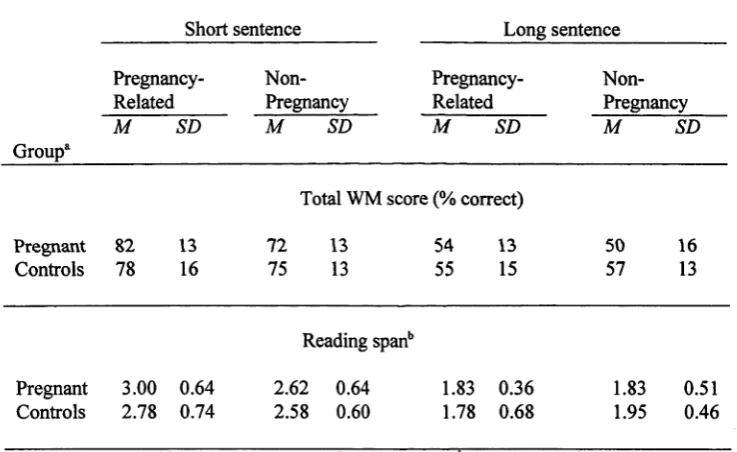
Despite the finding that women report memory problems in pregnancy, there is little evidence for an objective memory deficit on retrospective-type tests, such as recall, recognition, and priming. Two other areas, prospective memory and working memory, have not been investigated to date. The aims of this study were to examine the nature of memory complaints in pregnancy, and three possible origins of objective memory deficits: (i) inefficient self-initiated retrieval processes as revealed by poor prospective memory; (ii) inefficient working memory; and (iii) a selective memory deficit specific to non-pregnancy material (i.e., a content specificity effect). These aims were investigated using a memory perception questionnaire, and objective tests of prospective memory, working memory, and recognition. In addition, this investigation addressed the possibility that subjective or objective memory deficits may be attributable to factors other than pregnancy, including depression, anxiety, and sleep loss.
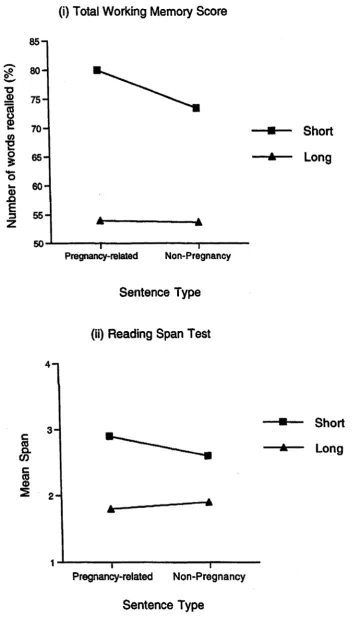
show any deficits on the objective memory tests. However, on the working memory task, pregnant women showed marginally better memory for pregnancy-related material, and marginally worse memory for non-pregnancy material than did the controls. Strikingly, on the recognition test of incidentally learnt words, pregnant women had better memory for both pregnancy-related and neutral words. Generally, across the three objective tests, memory performance was not related to depression, anxiety, sleep loss, or perceived memory functioning.
There was little support for any of the proposed origins of objective memory deficits in pregnancy. Specifically, there was no evidence for the notions of inefficient self-initiated retrieval or inefficient working memory, although there was some support for a content specific memory effect as suggested by the working memory task. However, the finding that pregnant women had superior recognition memory, independent of whether the material’s content was pregnancy-related or not, was not consistent with this effect.
Title... i
Declaration... ii
Acknowledgements... iii
Abstract... iv
Contents... vi
Chapter 1. Pregnancy and Cognitive Functioning 1.0 Introduction...1
1.1 Perceptions versus Performance... 2
1.1.1 Perceptions of Cognitive Deficits in Pregnancy...2
1.1.2 Cognitive Performance in Pregnancy...8
1.1.3 Discrepancy between Perceptions and Performance...23
1.2 Possible Mechanisms underlying Memory Deficits in Pregnancy...25
1.2.1 Psychological Processes in Memory Deficits...25
1.2.2 Hormonal Factors in Cognitive Deficits...32
1.2.3 Depression, Anxiety, and Sleep Loss...34
1.3 Aims of the Present Study...35
Chapter 2. General Description of Study 2.0 Participants... 38
2.1 Psychological Measures... 41
2.2 General Procedure... 42
2.3 Group Differences in Depression, Anxiety, and Sleep Loss...43
2.4 Statistical Analysis... 43
Chapter 3. Perceptions of Memory in Pregnancy 3.0 Introduction... 44
3.1 Methods... 45
3.1.1 Participants... 45
3.1.2 Materials... 46
3.1.3 Procedure... 48
3.1.4 Design... 49
3.2 Results and Discussion... 49
Chapter 4. Prospective Memory and Inefficient Self-initiated Retrieval
4.0 Introduction... 64
4.1 Methods... 66
4.1.1 Participants... 66
4.1.2 Materials and Procedure...66
4.1.3 Design... 68
4.2 Results and Discussion... 68
Chapter 5. Working Memory and a Selective Memory Bias 5.0 Introduction... 75
5.1 Methods... 77
5.1.1 Participants... 77
5.1.2 Materials... 78
5.1.3 Procedure... 79
5.1.4 Scoring... 81
5.1.5 Design... 82
5.2 Results and Discussion... 82
Chapter 6. Recognition Memory and the Content Specificity Effect 6.0 Introduction... 92
6.1 Methods... 93
6.1.1 Participants... 93
6.1.2 Materials and Procedure... 94
6.1.3 Design... 95
6.2 Results and Discussion... 95
Chapter 7. General Discussion 7.0 Introduction...102
7.1 Summary of Results...102
7.2 Mechanisms underlying Objective Memory Deficits in Pregnancy... 104
7.3 Relationships between Memory Deficits and Depression, Anxiety, and Sleep Loss...107
7.4 A Mechanism for Enhanced Memory in Pregnancy...109
7.6 Discrepancy between Subjective and Objective Measures...110
7.7 Concluding Remarks...118
References...120
Appendices Appendix A ... 131
Appendix B ...132
Appendix C ...133
Appendix D ...134
Chapter 1
Pregnancy and Cognitive Functioning
1.0 Introduction
Reports of increased difficulties with memory and concentration during pregnancy have generated interest in the study of cognitive deficits in pregnant women. Much of this research, carried out over the past decade, indicates that women perceive that their cognitive skills, particularly their memories, have deteriorated during pregnancy. Despite these perceptions, the evidence of an objective cognitive deficit from psychometric testing of memory and attention is, at best, mixed.
The goal of this chapter is to assess the evidence for subjective and objective cognitive deficits in pregnancy. In addition, this analysis reviews a number of potential psychological and hormonal explanations for such deficits. The chapter concludes with an outline of the areas that will be assessed in this thesis. These focus on possible bases for objective memory deficits.
1.1 Perceptions versus Performance
This section reviews the findings of studies investigating (1) women’s perceptions of cognitive functioning during pregnancy, and (2) women’s performance on cognitive tasks during pregnancy. This review reveals a major discrepancy between women’s perceptions of memory deterioration and their objective performance on a range of memory tests. It finds that women report poorer performance, but that the objective evidence for this deficit is weak. Possible explanations for this discrepancy are discussed.
1.1.1 Perceptions o f Cognitive Deficits in Pregnancy
Six of the studies have investigated women’s perceptions of memory. This has typically been assessed by a single self-report questionnaire item on some aspect of memory functioning. Poser, Kassirer, and Peyser (1986) found that 81% of women reported having problems with forgetfulness during pregnancy («=51). However, their reports were retrospective (with some reports relating to pregnancies that had occurred 12 months earlier), and the study lacked a baseline measurement or control group. Condon & Ball (1989) found that pregnant women («=90) rated that their memory was worse during pregnancy than it had previously been. Informants of the women also perceived that their memory had deteriorated. Parsons and Redman (1991) found that 64% of women, who had recently delivered their first child, retrospectively reported that they had greater difficulties with remembering during pregnancy than usual («=236). They also found that 68% of currently pregnant women («=50) reported greater difficulties with recall and memory since becoming pregnant.
current memory problems than did controls («=35), the pregnant women rated that their memory had been better 6 months earlier. Informants also confirmed these reports. A limitation of these general subjective measures is that they are uninformative about possible impairments in specific areas of memory.
As with memory, women also perceive deterioration to occur in concentration and attention during pregnancy. Parsons and Redman (1991) found that 50% of new mothers retrospectively perceived greater problems with concentration during pregnancy than usual, and 60% perceived greater problems with absentmindedness. They also found that 54% of currently pregnant women perceived greater problems with concentration and attention, and 52% with absentmindedness. Condon and Ball (1989) reported that currently pregnant women, and their informants, perceived that they had more problems with concentration during pregnancy relative to a previous non-pregnant state, as well as an increase in problems with ‘drifting o ff, ‘being easily distracted’, ‘losing track when talking’, and ‘daydreaming’. Finally, Poser et al. (1986) found that 57% of women reported having difficulties with reading during pregnancy, possibly reflecting a concentration or memory problem. They also found that relatively few women reported increases in confusion (29%) or disorientation (14%). As noted earlier, this study did not have a baseline measurement or a control group.
women reported ‘cognitive decline’ during pregnancy. This was measured by a generated 17-item questionnaire comparing pregnancy with a previous non-pregnant status, and included a range of items relating to memory and concentration. Informants who completed a similar questionnaire about the pregnant women also perceived the women to have suffered cognitive decline, although to a lesser degree than the women themselves did. Similarly, Condon (1987) found that 48% of pregnant women («=165) perceived that their ‘memory and concentration’ had deteriorated in comparison to a non-pregnant state. A longitudinal study by Schneider (1989) followed a group of pregnant women («=33) each week from conception until the end of pregnancy, collecting reports of their problems with concentration, memory, and ‘ability to comprehend or understand something’. Although the study noted that 91% of women reported lapses in memory and concentration throughout pregnancy, it failed to measure this rate against a baseline measurement or a control group. A general problem with these combined scores is that they may mask problems in specific domains of memory or cognition.
the baseline rating may have been inflated by the effects of hormonal and emotional fluctuations following childbirth.
Condon, Derham, and Kneebone (1991) examined self-reported cognitive failures in a group of women («=38) during pregnancy and again 8 weeks postpartum (baseline) using the Cognitive Failures Questionnaire (CFQ; Broadbent, Cooper, Fitzgerald, & Parkes, 1982), which scores for failures of perception, memory, and motor function in everyday activities. They found that women’s rate of cognitive failures did not change between pregnancy and the baseline testing. However, it was noted that the failure to reveal a deficit could have been due to the presence of a deficit at both interviews, or to the insensitivity of the questionnaire to the type of cognitive changes that occur during pregnancy. Also using the CFQ, Gross and Pattison (1994) failed to find any differences between pregnant women («=31) and controls («=17). Finally, Lips (1982) compared pregnant women («=108) with their husbands («=95), and also with non-pregnant women («=151) and their husbands («=116) on their self-perceptions of general performance, a score which combined concentration, efficiency, work performance, and motor coordination. Surprisingly, the pregnant women rated their performance as better than non-pregnant women and their husbands, although this may have been confounded by age differences which showed that the pregnant women were significantly younger.
For example, women have reported cognitive deficits in first, second, and third trimesters (e.g., Brindle et al., 1991; Christensen et al., in press; Condon & Ball, 1989; Sharp et al., 1993). Women have also reported cognitive deficits to have occurred in their first pregnancy (Brindle et al., 1991; Christensen et al., in press; Condon & Ball, 1989; Sharp et al., 1993), and in subsequent pregnancies (Brindle et al., 1991; Condon & Ball, 1989; Sharp et al., 1993). Although Brindle et al. (1991) reported that perceived deterioration was highest among primiparous women, and particularly in second trimester (83%, n=6), these effects have not been supported by other studies (Condon & Ball, 1989; Sharp et al., 1993). Overall, the evidence points to no relationship between perceived cognitive deficits and trimester or parity.
Summary
In summary, it is clear that there is the perception of cognitive deterioration during pregnancy in a substantial proportion of women. While most of the studies have found that women report memory problems in pregnancy, a few studies have also found that women report deficits in concentration and attention. Although there are methodological problems in some of these studies, these deficits have been confirmed by informants, suggesting that the effect may be genuine. Whether or not this perceived deficit corresponds to an actual performance deficit on objective tests
will be discussed in the next section.
1.1.2 Cognitive Performance in Pregnancy
Despite the evidence from women’s self-reports of perceived cognitive deficits during pregnancy, there is a lack of robust evidence of such deficits on objective tests. In considering the studies on the relationship between pregnancy and objective cognitive performance, the objective tests are divided into the following categories: explicit memory, implicit memory, prospective memory, working memory, and other cognitive tests (e.g., attention, speed).
words from the list as in a recognition test. There is mixed evidence for a deficit on explicit memory tests during pregnancy. Some of the studies using explicit memory tests have also used intentional and incidental learning conditions. An intentional learning condition is one in which participant are given definite instructions to learn the words to be studied. By contrast, an incidental learning condition is one in which no instructions are given that a memory test will be forthcoming. Hence, any learning of the material is incidental.
Condon et al. (1991) compared pregnant women («= 35) and controls («=15) on Buschke’s Selective Reminding Test (SRT). The SRT resembles a recall test, but also involves the selective presentation on each study trial of only those items which were not recalled on the immediately preceding test (Buschke, 1973). Pregnant women were tested during the third trimester of pregnancy and, for baseline, at 8 weeks postpartum. Controls were tested twice at a similar interval. Compared to controls, pregnant women showed poor performance on two indices of the SRT (total recall and long-term retrieval, but not long-term storage) during pregnancy. However, a deficit was also observed at baseline, which suggests that there may have been differences between the groups that were not related to pregnancy. Alternatively, a different set of factors, such as those associated with the major adjustment after birth, may have maintained poor performance in the postpartum.
Sharp et al. (1993) compared pregnant women («=48) and controls («=19) on a variety of recall and recognition tests, where the learning conditions were either incidental or intentional. Pregnant women showed impairment on a word recall test following incidental learning. Furthermore, multiparous women («=26), but not primiparous women («=24), showed impairment on a word recall test when the learning was intentional. No differences were found for the recall of objects (with intentional learning) or for tests of recognition (word recognition with both incidental and intentional learning; object recognition with intentional learning).
Memory and Visual Reproduction tests. Pregnant women were impaired on the Logical Memory test which required participants to listen to a story and to recall as many details as possible. In contrast, they did not differ from controls on the Visual Reproduction Test. This required participants to study abstract figures and later draw them from memory. It is noted that these women with high-risk pregnancies may have had higher than normal levels of anxiety and depression. This factor may be responsible for the deficits observed, rather than pregnancy per se. The role of such performance-related factors will be described in more detail in a later section.
Each of the explicit memory studies considered so far report a pregnancy- related deficit on at least one measure of explicit memory. In contrast, Brindle et al. (1991) showed that pregnant women’s performance («= 32) did not differ from that of controls («=9) on three explicit memory tests, including the recall of categorised words and household objects, and the recognition of faces. However, the control group was significantly older than the pregnant group, and this may have contributed to the lack of differences. Christensen et al. (in press) found no differences between pregnant women («=52) and controls («=35) on a four word recall tests with incidental and intentional learning instructions, a word recall test cued with the stems of studied words, and a recognition test following incidental learning.
mood symptoms had impaired memory compared to controls. They also noted that no differences were found between testing at pregnancy and postpartum (>12 months), or between pre-conception and pregnancy, compared to controls tested at similar intervals.
In sum, four of the seven studies report a deficit in pregnancy on one or more tasks. Overall, the evidence seems inconsistent, and in many cases is complicated by methodological problems and potentially confounded by other performance-related factors, such as anxiety and depression.
Implicit memory. Implicit memory tests are those in which the participant’s knowledge is tested indirectly, through methods that do not involve conscious recollection of a previous experience (for review, see Schacter, 1987). In a typical test of implicit memory, such as a word-stem completion task, the participant views a study list of words, and shortly afterwards (e.g., 2-3 mins) is asked to complete half words or stems to make the first word that comes to mind, (e.g., studied word: MOUSE; stem: MOU__). Unlike explicit memory tests, no reference is made to the studied list by the experimenter.
also found that pregnant women showed impaired performance on two implicit memory tests compared to non-pregnant controls using ‘perceptual’ and ‘conceptual’ cues at test. A word-stem completion task was used as the perceptual test because, in this test, the cue is similar in visual appearance to the studied word. The priming of the pronunciation of homographs was used as the conceptual test. Here, the cue shares semantic features with the target. In this test, women studied a list of words and were later asked to read aloud a different set of words that could be pronounced in two ways corresponding to two different meanings. One of those meanings had been primed by the studied list (e.g., studied word: CRY; word tested: TEAR, pronounced either ‘teer’ as in “a tear drop” or ‘tair’ as in “ to tear up some paper”).
In contrast to these two studies, the unpublished studies of Casey, Huntsdale, Angus, & Janes (1998) and Janes, Casey, Huntsdale, & Angus (1998) have failed to find any deficits in a combined group of pregnant women and new mothers («=40, «=66, respectively) compared to controls («=20, «=45, respectively). These studies also used word-stem completion tests with perceptual cues. However, given that a combined group was used, it is not clear that the finding is related to pregnancy.
at test differed. In the 'inclusion’ task, participants were asked to complete the stems with words from the studied list, whereas in the ‘exclusion’ task, participants were asked to complete the stems with any word other than ones seen in the list. In sum, the evidence from the two published studies of pregnant women suggests that performance on implicit memory tests may be impaired during pregnancy, although replication of this effect is required.
Prospective memory. Prospective memory refers to remembering to perform an action in the future (for reviews, see Harris, 1984; Morris, 1992). Many everyday situations, such as remembering to attend a meeting or a doctor’s appointment, involve prospective memory. Prospective memory can also be distinguished from retrospective memory in that it does not have obvious external cues to aid remembering (see Kvavilashvili, 1987).
obscures the results with respect to pregnant women. No other studies have investigated the effects of pregnancy on prospective memory performance.
Working memory. Working memory is defined as the short-term simultaneous storage and processing of information in complex cognitive tasks such as mental arithmetic, language comprehension, problem-solving, learning, and reasoning (for reviews, see Baddeley, 1986; Hitch, 1984). Its dual functions of storage and processing distinguish it from other forms of memory, such as explicit memory, which only requires storage (Baddeley, 1986; Daneman & Carpenter, 1980; Salthouse, 1990). Working memory is commonly measured by tests such as backward digit span and reading span. A typical backward digit span test requires participants to learn progressively longer sets of digits and recall them in the reverse order to that in which they were presented. A typical reading span task (Daneman & Carpenter, 1980) requires participants to read progressively longer sets of sentences aloud and learn the last word of each sentence for a later memory test.
span test and a reading span test. Similarly, pregnant women (primigravid) («=22) also showed unimpaired backward digit span when compared to ‘never been pregnant’ women («=23) (P. Casey, personal communication, October 22, 1998). With only two conflicting studies in this area, no conclusions can be drawn about changes that might occur in working memory performance during pregnancy.
Other cognitive tests. A number of studies have investigated the effect of pregnancy on cognitive measures other than memory, such as attention and speed. These findings have been inconsistent. Silber et al. (1990) examined performance of pregnant women on a simple reaction time task that required participants to respond to a visual stimulus presented at varying intervals. These women were tested once during pregnancy, and then on four occasions during the postpartum period. A group of controls were also tested at similar intervals. Pregnant women showed slower reaction times during pregnancy than at 6 months postpartum, while controls showed faster reaction times at first testing occasion than at the later 6 month testing.
within a list of words. The study also failed to find group differences on a test of everyday attention in which participants were timed on a task of searching a listing of telephone numbers for specific symbols.
Brinsmead, Smith, Singh, Lewin, and Owens (1985) measured ‘cognitive performance’ of pregnant women in their third trimester («= 19) and then again after childbirth in the first 4 days postpartum. Women completed a forward digit span test. This requires participants to listen to increasingly longer sets of digits for recall at the end of a trial until the participant fails to recall all digits perfectly. They also completed a modified version of Raven’s progressive matrices. In this test, participants are presented with an incomplete design to be completed from six alternatives. On a combined score for the two tests, performance did not change between pregnancy and postpartum, although, as noted earlier, the postpartum test was confounded by birth-related emotional and hormonal fluctuations.
Summary o f objective performance on cognitive tests
Overall, these findings do not strongly support the proposition that there is an objective cognitive deficit in pregnancy. Many of the findings are inconsistent. For example, there is mixed evidence for a deficit on explicit memory tests (paired- associate learning test: Silber et al., 1990; SRT: Condon et al., 1991; recall: Eidelman et al., 1993; Sharp et al., 1993; cf. recall, recognition: Brindle et al., 1991; Christensen et al., in press; Condon et al., 1991; Silber et al., 1990). The evidence is also mixed for deficits on attention-type tests (Silber et al., 1990; cf. Christensen et al., in press; Condon et al., 1991), and backward digit span (P. Casey, personal communication, October 22, 1998).
The few results pertaining to trimester and parity are also inconsistent. Brindle et al. (1991) found greater impairments in second-trimester women compared to first- and third- trimester women on an implicit memory test. Sharp et al. (1993) found that third-trimester women had worse incidental word recall than did second- trimester women. On other cognitive tests, there is no evidence of a trimester effect (Brindle et al., 1991; Christensen et al., in press; Sharp et al., 1993).
showed greater impairments than the primigravidae on an incidental word recall test. Overall, while these findings suggest that there is no effect of trimester and parity on memory performance, there is insufficient systematic examination of these relationships.
Methodological shortcomings o f previous studies
The interpretation of these pregnancy-cognition findings must be considered in the context of methodological shortcomings. Mood changes and sleep loss are two factors that are commonly found in pregnancy, and which are also known to impair cognitive performance in non-pregnant individuals, but have not been adequately considered in past pregnancy studies. It is possible that one or both of these factors may have contributed to the outcome of cognitive tests independent of any pregnancy effect. These and other methodological limitations of previous studies are discussed below.
Mood symptoms. As noted earlier, pregnancy is associated with increases in depressive and anxiety symptoms. Furthermore, there is substantial evidence that depression and anxiety are associated with cognitive deficits in non-pregnant individuals (for reviews, see Eysenck, 1992; Johnson & Magaro, 1987; Williams, Watts, MacLeod, & Mathews, 1988).
emotional disturbance during pregnancy. Second, data from a British survey of health and lifestyle found that pregnant women with adverse mood changes, but not other pregnant women, showed poor recall of incidentally learnt words compared to controls (Huppert & Whittington, 1997). Third, Brindle et al. (1991) found a correlation between self-rated anxiety and performance on a word-stem completion test in which pregnancy-related deficits were found, although there were no overall differences between pregnant and control groups on anxiety levels.
In contrast, a study by Sharp et al. (1993) failed to find a relationship between self-ratings of anxiety and memory deficits in pregnancy. Further, Condon et al. (1991) found that women reported higher levels of tension and depression on the Profile of Mood States (McNair, Lorr, & Droppleman, 1971) during pregnancy than at a later postpartum test. However, these symptoms were not associated with performance on objective tests (i.e., Stroop test, SRT). In a study of pregnant women and controls with equivalent levels of anxiety and depression (excluding somatic symptoms), Christensen et al. (in press) found no evidence of poor performance among the pregnant women. Most other studies have failed to control for depression (Brindle et al., 1991; Eidelman et al., 1993; Jarrahi-Zadeh et al., 1969; Sharp et al., 1993; Silber et al., 1990), and anxiety (Eidelman et al., 1993; Silber et al., 1990). Thus, for these studies, the possibility remains that higher levels of mood symptoms in pregnant women may have been responsible for the observed objective deficits.
(Condon et al., 1991; Cox, Connor, & Kendell, 1982; Janes et al., 1998; Jarrahi- Zadeh et al., 1969; Smith et al., 1990). In non-pregnant individuals, there is clear evidence that cognitive performance, at least on some objective tests, deteriorates as a consequence of severe sleep deprivation, such as several days without any sleep (e.g., Angus, Heslegrave, & Myles, 1985; Babkoff, Mikulincer, Caspy, Kempinski, & Sing, 1988; Englund, Ryman, Naitoh, & Hodgdon, 1985; Linde & Bergstrom, 1992; for a meta-analysis, see Pilcher & Huffcutt, 1996). However, the effects of partial sleep loss (<5 hours sleep in 24 hours) on cognitive performance are mixed (e.g., Haslam, 1985; Pilcher & Huffcutt, 1996). While pregnancy-related sleep loss is more likely to resemble partial sleep loss, few studies have considered the impact of this variable.
Other limitations. There are a number of other methodological limitations in the studies described. Differences in age between pregnant women and controls may have been responsible for the deficits observed in studies where age has not been controlled (e.g., Brindle et al., 1991). In addition, the use of a post-birth interview as baseline in the longitudinal studies (e.g., Condon et ah, 1991; Jarrahi -Zadeh et ah,
1969) may be confounded because of the effects of emotional and hormonal factors. The possibility that pregnancy-related hormonal fluctuations may have some effect on cognitive performance will be discussed in a later section. The findings of several pregnancy studies are also limited by small sample sizes (Brindle et ah, 1991; Eidelman et ah, 1993), and by the lack of a control group (Schneider, 1989). Although Schneider (1989) reported that cognitive performance improved as pregnancy progressed in comparison to a baseline testing prior to conception, this may reflect practice effects. Christensen et ah (in press) have also noted that few of the studies have adequate statistical power to reveal small deficits.
Conclusion
1.1.3 Discrepancy between Perceptions and Performance
In earlier sections, I have reviewed studies on subjective and objective cognitive functioning in pregnancy. These have found clear evidence for a subjective cognitive deficit, but less clear evidence for an objective deficit. The majority of these studies have examined memory functioning. Three studies that have assessed both subjective and objective memory deficits in pregnant women are summarised in Table 1. These studies also find a discrepancy between subjective and objective memory measures. As indicated in the separate reviews of subjective and objective measures, the pregnant women report memory deficits, but there is little evidence of a deficit in their performance on objective memory tests. Clearly, there is a major discrepancy between what pregnant women say about their memory' functioning and how they perform on memory tests.
li es w it h b o th s u b je c ti v e a n d o b je c ti v e m e m o ry m e a su n -O CQ H ^5 3 $
c d
O 3 .-3 cO
o <u
c E
<u *“ Q C/5 0) b-o E i) 2 v > •S <L> o C/5 00 3 1 at e? o E <D > 8 S ' 3 C/5 CO C /5 <D
>-5 Z
«- o
•S 5 a. 3
.1 8 2 2
i > 5b -5 <l> iS
£ 2
c o u a. E E 5 w -a o £ CO C /5 O <L>
Z
>-<u > to os os 'S <u 1 o
Z Zo
C/5 <U o § b 2 *5 D-3 o ob o Z W5 C /5 2 o _o *4— ’E 00 o 81_ o at o 00 u 13 2?
3 /-v T3 ° J2 f i s t '5 3 >
I S .
c 2 Ö-£ Ö-£ to
& § g
<u ° fe £ 2 £
c/T "O c/5 O c <u <2*4-1 ■5 ex 3 o 00 o z
.2 ö >
2 s i l l .1 - 8 O 3 O
*2 oo § s ° § so ^
1 O. 1 I 2
^ -3 == T3
o | 8 fe £ a. 2 £
IS1 ~ ® .2 o .ts —• c 13 g>
8 C2 2
c/5 3 CD CO c 2 <D 3 in «J *2 c 43 00 •-6 2
a. °-3 °-3 c/5 2 8 o oo £ 2 o 2 3 z _8 8
e «
§ 2
1 § cx\c I & o o
E 8 8
u-■p = o S £ 2
.c Os Os 13 a3 & CO J3 C /5 C/5 C/5 2 a. 13 t3 2C/5 £ u & o c
o oo - E „o <uE 2
•d O o ‘d
£ t o
o *C ~ 8 2
-a u i 2
2 c0 & Q_ <U
2 a3 cx «2 O 2 J/ oCU. O -O O^ Q. s>2 £ c0
C 2 & E o ..
c -o c & E o ..
3 <L> 2
g 2 <u 3 J21) <L> E
l-3 O >5 Pre gn an t w o great er m em < th a n controls Pre gn an t w o grea ter m e m th a n con tro
ls ° 2 2> C0 CO 2 -c 13
& I ^ 2 «3 h
& E 8
o S ^ *3! « 2 c0 O
§ > ' E
o -2 1- <D CU "O pre
1.2 Possible Mechanisms underlying Memory Deficits in Pregnancy
In this section, I briefly review mechanisms that may underlie the postulated objective memory deficits in pregnancy. Both psychological and hormonal factors may influence memory performance during pregnancy. Possible psychological bases for memory deficits are described first. Three of these were chosen for further investigation: inefficient self-initiated retrieval processes, inefficient working memory, and a selective memory bias for pregnancy-related material. The potential role of hormonal factors in the genesis of memory deficits is then reviewed. The possible contribution of depression, anxiety, and sleep loss is also noted.
1.2.1 Psychological Processes in Memory Deficits
A number of different psychological processes have been proposed as the origin of memory deficits during pregnancy. Five possibilities are discussed below. The first three propose that deficits are based on changes in attention during pregnancy, including a general reduction in attention, a temporary lapse in attention, and a selective bias for pregnancy-related information. Two other possibilities are proposed here: inefficiency in self-initiated retrieval processes, and inefficiency in working memory. It is also possible that there are multiple origins of memory deficits in pregnancy, with several of these processes contributing to such deficits.
consequence of internally focussing and preoccupation with pregnancy (e.g., Bailey & Hailey, 1986; Deutsch, Ruble, Fleming, Brooks-Gunn & Stangor, 1988; Leifer; 1977). If a general reduction in attention occurs, there should be deterioration in cognitive tasks that require attention, such as recall tests. Although findings by Sharp et al. (1993) of deficits on explicit memory tasks are somewhat consistent with this notion, findings from Brindle et al. (1991) and Christensen et al. (in press) are not. These studies found no impairments on recall. Overall, there is weak support for a generalised deficit in cognitive performance as proposed by a general reduction in attention.
Temporary lapses in attention. The possibility that pregnancy might be associated with temporary lapses in attention was offered as an explanation of Brindle et al.’s (1991) inconsistent findings. The findings of impairment on an implicit memory test in which material was incidentally learned, but none on explicit memory tests in which material was intentionally learned, were used to suggest that pregnant women could have temporary lapses in attention that could be reversed with effort.
this result did not extend to multiparous women or tests of recognition. Moreover, the results of Christensen et al. (in press) failed to replicate the finding, reporting that there were no pregnancy-related deficits on recall tests, irrespective of whether the learning conditions were incidental or intentional.
In sum, there is equivocal evidence for the notion of a temporary attentional lapse in pregnancy, which was offered as a post-hoc explanation for a deficit on an implicit memory test. No other studies have consistently confirmed this.
Selective bias for pregnancy-related information. Another possible factor that may affect memory functioning during pregnancy is some form of selective bias for pregnancy-related information and activities (Christensen et al., in press). Here, deficits are a function of the type of material, and are thus content specific. Christensen et al.’s (in press) study suggested that the selective bias might be manifested as a selective attentional shift towards pregnancy-related material or selective recall for pregnancy-related material.
words in a dot probe attention test, whereas controls shift their attention away from such words (MacLeod, Mathews, & Tata, 1986). Depressed individuals have been shown to have superior memory for negative or depressive material compared to controls (e.g., Denny & Hunt, 1992; Hertel & Hardin, 1990; for review, see Blaney, 1986). In addition, depressed individuals often show impaired memory for positive or neutral information.
Given the possibility that content specificity could affect either attention or memory, Christensen et al. (in press) investigated both of these aspects in pregnant women. The results failed to reveal a content specific effect on a dot probe attention task. That is, pregnant women and controls did not differ in their reaction time to a dot following the presentation of pregnancy-related words or neutral words.
In sum, there is tentative evidence for a content specificity effect, which reflects a memory bias for pregnancy-related material. Given the possibility that the effect observed on the recognition test may have been due to differences in false alarm rates, this result requires replication.
Not all of the pregnancy evidence to date is consistent with the presence of inefficient self-initiated retrieval. Two studies have failed to reveal pregnancy-related deficits on recall tests (Brindle et ah, 1991; Christensen et ah, in press). It is possible that deficits were not found in the former study because the requirement for SIRP had been lowered by the use of semantically organised material.
Given that all memory tasks can vary in their requirement for SIRP, it is possible that previous pregnancy studies have failed to reveal deficits because the requirement for SIRP was lower than optimal. Indeed, one view adopted by Craik (1986) is that, of all the different types of memory tasks, prospective memory should show the greatest deficits because it relies more heavily on these processes (see also Maylor, 1993). This is because in prospective memory tests, there are fewer, if any, experimenter cues to initiate remembering. Unlike other forms of memory, prospective memory requires the ‘rememberer’ to remember that something has to be done.
with inefficient self-initiated retrieval in that no deficits were found on prospective memory. However, it is possible that the requirement for SIRP in the prospective memory task was minimised by the use of external cues such as personal memory aids and reminder cards. Furthermore, as noted earlier, this result cannot inform about pregnant women because the group combined pregnant women and new mothers. No studies have directly investigated the possible disruption of SIRP in pregnancy.
Inefficient working memory. A fifth possibility is that a decline in the efficiency of working memory may contribute to memory deficits in pregnancy. Consistent with this suggestion, some subjective evidence indicates that pregnant women have problems on tasks that require working memory skills, such as reading and problem-solving. As noted earlier, a recent re-analysis of data from Janes et al. (1998) found that pregnant women had impaired backward digit span compared to controls (P. Casey, personal communication, October 22, 1998). However, the pregnant women from Casey et al.’s (1998) study failed to show such deficits.
Summary o f possible psychological factors in memory deficits
What can be said about the role of each of these five factors in pregnancy- related cognitive deficits? Clearly, there is insufficient experimental data to evaluate the merit of each conclusively. However, the current evidence suggests that there is, at best, weak support for a general reduction in attention or a temporary attentional lapse. Although data from other fields, such as anxiety, depression, and aging, give plausibility to the notions of content specificity, SIRP, and inefficient working memory, there have been few, if any, direct investigations of such mechanisms in pregnancy. The present thesis will investigate these last three possible origins for the postulated memory deficits in pregnant women.
It should also be noted that this study does not attempt to address possible underlying causes for these psychological changes. One possibility is that the hormonal fluctuations occurring during pregnancy are responsible for the psychological changes that impair cognitive performance. While it is beyond the scope of this sthesis to explore possible hormonal factors in objective memory deficits, a discussion of these issues is covered in the next section.
1.2.2 Hormonal Factors in Memory Deficits
promising evidence from studies of hormone replacement therapy in postmenopausal women that estrogen treatment enhances cognitive functions, such as verbal memory (for review, see Sherwin, 1994). It may even offer a protective effect for dementia (Haskell, Richardson, & Horwitz, 1997; Yaffe, Sawaya, Lieberburg & Grady, 1998). On the other hand, estrogen treatment may impair other functions, such as spatial memory.
There is also some evidence from studies of the menstrual cycle linking fluctuations in estrogen and progesterone to changes in memory functioning, although, overall, the evidence for this is inconclusive (e.g., Broverman et al., 1981; Logue & Moos, 1988; for reviews, see Sherwin, 1994, Sommer, 1982). Strikingly, both hormone-replacement and menstrual studies suggest that increases in estrogen are beneficial to some aspects of memory performance. Paradoxically, these findings would suggest that the higher levels of estrogen found in pregnant women should improve at least some areas of memory performance. However, given the suggestion of cognitive deficits in pregnant women, it seems plausible that an ‘ oversupply ’ of estrogen as found in pregnant women (as opposed to ‘replenished’ levels of estrogen in elderly women), could have a negative influence on performance. There are no studies on the effects of estrogen and progesterone changes on memory performance in pregnant women.
research suggesting such a link (Kennett, Devlin, & Ferrier, 1982). Although ß- endorphin, plasma cortisol, and corticotrophin releasing hormone all rise during pregnancy (Smith et al., 1990; Smith & Thomson, 1991), their effects on memory functioning in pregnancy have not been investigated.
Another position worth considering is the interaction of hormonal and psychological factors in the precipitation of memory deficits in pregnancy. For example, the effect of hormonal changes may be an indirect one, which operates via an effect on mood or processes of attention. Ballou (1978) suggests that changes in mood resulting from hormonal changes may be responsible for internal focussing or preoccupation with pregnancy and childbirth. Such internal focussing and preoccupation may be one of the bases for memory deficits in pregnancy (see Brindle et ah, 1991; Christensen et ah, in press).
1.2.3 Depression, Anxiety, and Sleep Loss
1.3 Aims of the Present Study
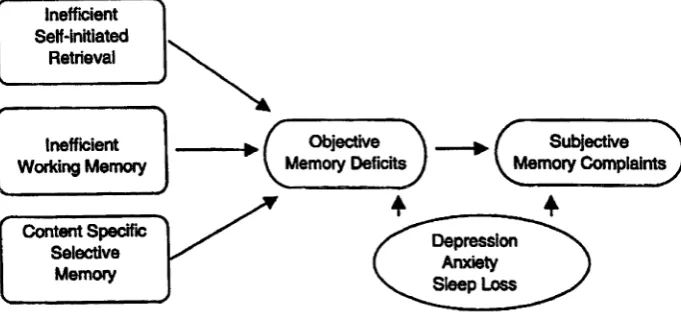
This thesis aims to investigate the relationship between self-perceptions of memory and objective memory performance in pregnancy. As briefly summarised in Figure 1, it aims to examine a number of possible bases for subjective and objective memory deficits in pregnant women. Thus, the aims of this study are:
(a) To examine the nature of subjective memory functioning in pregnancy:
(i) To examine whether pregnancy is associated with a subjective memory deficit;
(ii) To examine whether this deficit is confirmed by informants;
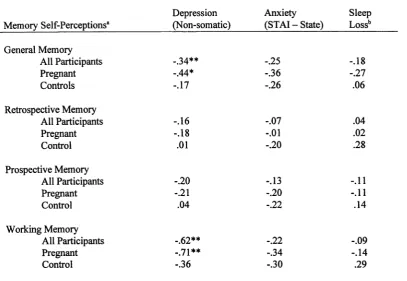
(iii) To examine whether this subjective deficit is associated with depression, anxiety, or sleep loss.
(b) To examine possible origins of objective memory deficits in pregnancy: (i) To investigate whether pregnancy is associated with inefficient self-
initiated retrieval as reflected in poorer performance on a prospective memory task;
(ii) To investigate whether pregnancy is associated with an inefficient working memory;
Inefficient Self-initiated
Retrieval
Subjective Memory Complaints Objective
Memory Deficits Inefficient
Working Memory
Content Specific Selective
Memory
Depression Anxiety Sleep Loss
Figure 1. Possible origins of objective and subjective memory deficits
[image:44.527.92.433.247.405.2](iv) To examine whether performance on objective tests of prospective memory, working memory, and recognition is associated with depression, anxiety, or sleep loss in pregnancy.
(c) To examine the correspondence between subjective memory functioning and objective memory performance in pregnancy:
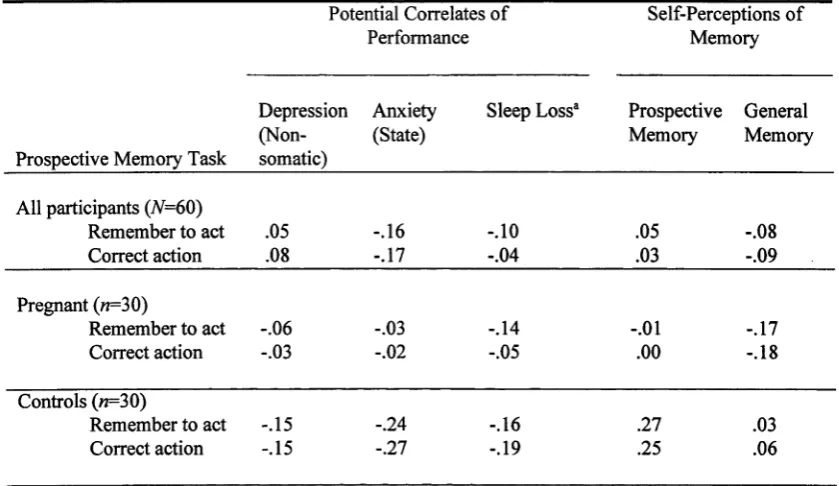
(i) To examine whether general self-perceptions of memory functioning are related to performance on individual tests of prospective memory, working memory, and recognition;
Chapter 2
General Description of Study
All participants completed all parts of the study. This chapter describes the sample, non-memory measures, and the general procedure. Specific details of the memory experiments are described in the following chapters. Ethics approval was obtained from the Australian National University, and the two hospitals involved in the study.
2.0 Participants
A total of 60 women participated in the study: 30 pregnant women, and 30 non-pregnant women. Pregnant participants were recruited through antenatal classes at the John James Memorial Hospital, and Calvary Hospital, Canberra, Australia. Given that the effects of trimester and parity on cognitive performance have not been established, the recruitment was restricted to primiparous women in third trimester (M= 33.6 weeks pregnant, SD= 2.3, Range=28-3$).
had similar background characteristics to the pregnant women. Where a pregnant woman was unable to identify a suitable non-pregnant woman, candidates that were nominated by other participants were approached.
All participants were volunteers, and were not paid for their participation. They were all at least 18 years old, and had no history of head injury, alcohol abuse, or schizophrenia.
Background information was obtained by asking participants a number of questions concerning age, level of education, marital status, native language, and working status. Furthermore, all participants completed the National Adult Reading Test (Nelson, 1982) for an indication of verbal ability. The NART requires participants to read aloud a list of 52 irregular words, which cannot be pronounced phonetically. NART error scores reflect the number of words pronounced incorrectly
out of a possible 52.
controls did not differ in age, years of education, or the National Adult Reading Test (Nelson, 1982).
Table 2
Characteristics o f Pregnant Women and Non-Pregnant Controls
Variable
Pregnant («=30)
Controls («=30)
M SD Range M SD Range IT) 00
1
Age (years) 29.3 3.8 22-37 28.1 3.4 21-35 1.32
Education (years) 13.9 1.8 12-18 14.8 1.9 12-18 1.82
NART error scoreb 17.5 6.6 7-30 17.2 7.4 6-33 0.18
STAI - State 34.3 5.9 25-46 36.0 8.1 24-56 0.93
BDI
Non-somatic 4.2 3.3 0-13 2.8 2.4 0-9 1.77
Somatic 5.4 2.4 2-10 1.7 1.4 0-5 7.14**
Total 9.5 4.4 2-17 4.5 3.2 0-14 5.05**
Sleep loss 1.4 0.7 0-2 0.7 0.7 0-2 2.49**
Note. NART = National Adult Reading Test. STAI= State Trait Anxiety Inventory.
BDI = Beck Depression Inventory. Higher scores on STAI, BDI, and Sleep loss indicate more symptoms. a Mann-Whitney IJ calculated for sleep loss data. bMean intelligence equivalents for both pregnant women & controls were 113.
*p < .05. **p <.01.
informants for controls, 8 of these were husbands or partners, and the remaining 9 were either close relatives or friends.
2.1 Psychological Measures
Depression. The Beck Depression Inventory (Beck, 1972) was used. It is a well-established scale for detecting depressive symptoms. The BDI was divided into two sub-scales to separate out cognitive-affective symptoms and somatic symptoms as used in other pregnancy studies (see Christensen et al., in press; O’Hara, et al., 1990). The cognitive-affective scale (referred to as non-somatic depression herein) provides a more sensitive indicator of genuine depressive symptoms in pregnancy than does the total BDI scale since pregnancy itself is associated with many of the same somatic changes found in depression (e.g., changes in appetite, sleeplessness, and fatigue). A higher score on the BDI scales represents a higher level of symptoms over the past week.
Sleep Loss. Sleep loss was measured by two questions about sleeping problems over the past month (“Have you been sleeping poorly?” & “Have you had difficulty falling asleep?”). Responses were either ‘yes’ or ‘no’. Total scores ranged from 0 to 2, with higher scores representing greater sleep loss. These items were taken from a short-form anxiety and depression scale (Goldberg, Bridges, Duncan- Jones, and Grayson, 1988). Research with pregnant women indicates that they report these types of sleep problems (Smith et al., 1990). The two items showed satisfactory internal consistency (Cronbach’s a=.51).
2.2 General Procedure
Participants attended one interview lasting approximately 1.5 hours. The interviews were conducted on a one-to-one basis in a room at the University. During the interview, the participant was seated at a desk facing a computer, which was used to display the experimental tasks. Before the commencement of the interview, written consent was obtained from each participant. The participants were aware that the study concerned possible memory impairments during pregnancy. They were informed that the evidence was unclear with respect to changes in memory during pregnancy.
tests. These objective tasks were interspersed with a number of self-completed questionnaires about memory functioning and mood. At the end of the interview, participants were invited to complete a memory diary for the following week. Furthermore, all participants were asked to invite an informant to complete the informant’s version of the memory functioning questionnaire.
2.3 Group Differences in Depression, Anxiety, and Sleep Loss
As shown in Table 2, the pregnant women were no more anxious or depressed on the non-somatic BDI scale than the controls. As expected, pregnant women reported more somatic symptoms on the BDI. These symptoms were assumed to reflect symptoms of pregnancy rather than depression. Pregnant women reported greater sleep loss than did the controls (see Table 2). These findings confirm the findings of other pregnancy studies (e.g., Christensen et al., in press; Condon et ah, 1991).
2.4 Statistical Analysis
Chapter 3
Perceptions of Memory in Pregnancy
3.0 Introduction
The main aim of this chapter was to examine whether pregnancy is associated with the perception of a memory deficit, and, in particular, to establish whether this occurred in the two areas of memory where objective investigation was planned: prospective memory and working memory. The other aims were to examine whether this deficit was confirmed by informants, and whether it was associated with non- somatic depression, anxiety, or sleep loss.
Other research has noted that women report using more memory aids during pregnancy than they normally do (Parsons & Redman, 1991). This perceived change in the use of memory aids would be consistent with their perceptions of memory deterioration.
For the validation of the women’s reports, informants also completed the memory perception questionnaire. In addition, women’s questionnaire responses were compared to their reports of memory failures collected from diary records. A memory diary can offer a useful validation of questionnaires as they are less likely to be influenced by reporting biases associated with estimating memory problems (Morris, 1984). Notably, questiomiaires are more likely to be biased by individual’s beliefs or judgements about their memory abilities. The finding of good agreement between questionnaires and memory diaries would indicate that the questionnaires had not been unduly influenced by such reporting biases. Furthermore, a memory diary may also reveal memory problems that may not be captured by a structured questionnaire.
3.1 Methods
3.1.1 Participants
3.1.2 Materials
Memory Perception Questionnaire
A memory perception questionnaire was constructed. The items were drawn from several memory perception questionnaires, largely used in aging studies, to reflect the different areas of memory being investigated. The questionnaire had two sections, each consisting of 14 items about memory functioning (see Appendix A). One section referred to problems occurring in the last few weeks, and the other to those occurring in normal circumstances, but apart from this, the actual items in each section were identical and assessed the following five areas:
General memory. This was measured by one item adapted from Gilewski,
Zelinski, and Schaie (1990): “How would you rate your memory (over the last few weeks/under normal circumstances) in terms of the kinds of problems that you have had?”. This was assessed on a 7-point response scale (1 = ‘major problems’, 4=
‘some problems’ and 7 = ‘no problems’). A higher score indicated fewer problems with memory. This item is comparable to that used in other recent studies (e.g., Brindle et al., 1991; Christensen et al., in press; Sharp et al., 1993).
Retrospective memory. This was measured by five items from the Gilewski et
questionnaire has been shown to correlate with measures of retrospective memory performance such as recognition and recall (Zelinski, Gilewski, & Anthony- Bergstone, 1990).
Prospective memory. This was measured by three items chosen to assess the kinds of everyday activities that involve prospective memory (forgetting appointments, birthdays or important dates, and ‘to do things, like lock the door’). These items were assessed on a 7-point response scale for frequency of forgetting, where 1 = ‘always’, 4 = ‘sometimes’, and, 7 = ‘never’. A higher score indicated fewer problems with prospective memory. These items were adapted from Gilewski et al. (1990) and Bennett-Levy and Powell (1980).
Working memory. This was measured by three items chosen to assess the kinds of everyday activities that involve working memory that participants could relate to (‘learning new things’, ‘problem-solving’, and ‘doing several things at once’). These items were assessed on a 7-point response scale for frequency of problems, where 1 = ‘always’, 4 = ‘sometimes’, and, 7 = ‘never’. A higher score indicated fewer problems with working memory. The first item was adapted from Bennett-Levy and Powell (1980), and other two were purpose-built as no appropriate items were found in the standard memory questionnaires reviewed.
Informant version o f Memory Perception Questionnaire
An informant version of the memory perception questionnaire was constructed. This questionnaire was identical to the self-report questionnaire described above except that references to ‘you’ were replaced with ‘your partner/friend’ or ‘she’ as appropriate.
Memory Diary
A semi-structured memory diary was adapted from Reason's diary for recording absentminded acts (Reason, 1984). For each memory problem or failure, participants were required to make an entry into a pocket diary. The entry contained information on three aspects of the memory problem: its nature (e.g., the participant’s intentions and actions), its consequences or effect, and the circumstances in which the problem occurred. This information was used to identify the type of memory problem that had occurred. A sample diary and examples of entries are shown in Appendix B.
3.1.3 Procedure
completed the memory perception questionnaire in their own time and returned it by reply-paid mail.
For the diary study, participants were instructed to record all memory-related problems in the diary for a period of 7 days, commencing at the end of the interview. They were asked to record details as soon as possible after the memory failure occurred. Given that this would not always be possible, participants were also asked to review each day’s events once a day. They returned diaries by reply-paid mail.
3.1.4 Design
The design of the experiment was a 2x2 mixed factorial. For each of the outcomes, the between-subjects factor was pregnancy status (pregnant or non pregnant) and the within-subjects factor was whether or not the memory perception questionnaire referred to current or normal circumstances (current or normal). Interaction effects were examined using post-hoc t-tests. The same analysis was used for informant reports.
3.2 Results and Discussion
Group differences in self-ratings o f memory functioning
retrospective memory scale), the score was calculated on the basis of the remaining items. If more items were missing, the case was excluded.
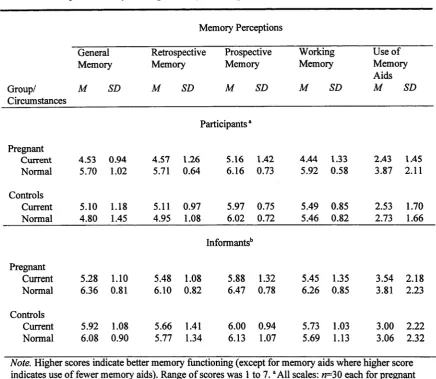
Table 3 shows the mean scores and standard deviations for pregnant women and controls for the five areas that were assessed: general memory, retrospective memory, prospective memory, working memory, and use of memory aids.
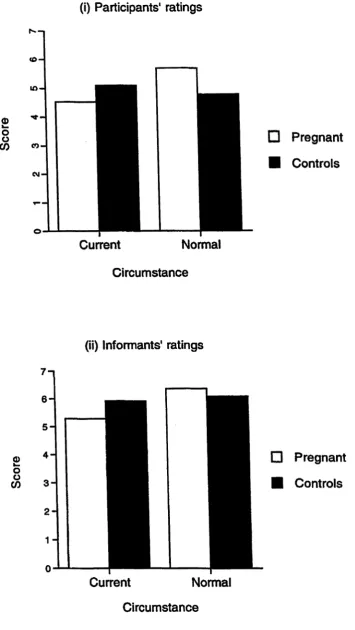
General memory. Approximately 63% of pregnant women indicated that their memory had deteriorated over the last few weeks, whereas only 13% of controls indicated that their memory had deteriorated. An ANOVA on the mean general memory score revealed a main effect for circumstances (F(l,58)=9.27, MS!E=0.61, 7?<.01). However, this was modified by an interaction between pregnancy status and circumstances (F(l,58)=26.56, MSE= 0.61, p<.01), which reflected a perceived deterioration with respect to normal for pregnant women (r(29)=4.86,/?<.01), but no significant change from normal for controls (t(29)=1.96,/?>.05). This interaction is illustrated in Figure 2. A similar pattern was found for the specific memory scales discussed below.
respect to normal for pregnant women (/(29)=5.68, /?<.01), but no change from normal for controls (/(29)=1.42,/?>0.1).
Table 3
Mean Scores fo r Memory Perceptions by Participants and Informants
Memory Perceptions
General Retrospective Prospective Working Use of
Memory Memory Memory Memory Memory
Aids Group/
Circumstances
M SD M SD M SD M SD M SD
Participantsa Pregnant
C u rrent 4.53 0.94 4.57 1.26 5.16 1.42 4.44 1.33 2.43 1.45
Normal 5.70 1.02 5.71 0.64 6.16 0.73 5.92 0.58 3.87 2.11
Controls
Current 5.10 1.18 5.11 0.97 5.97 0.75 5.49 0.85 2.53 1.70
Normal 4.80 1.45 4.95 1.08 6.02 0.72 5.46 0.82 2.73 1.66
Informants'5 Pregnant
Current 5.28 1.10 5.48 1.08 5.88 1.32 5.45 1.35 3.54 2.18
Normal 6.36 0.81 6.10 0.82 6.47 0.78 6.26 0.85 3.81 2.23
Controls
Current 5.92 1.08 5.66 1.41 6.00 0.94 5.73 1.03 3.00 2.22
Normal 6.08 0.90 5.77 1.34 6.13 1.07 5.69 1.13 3.06 2.32
Note. Higher scores indicate better memory functioning (except for memory aids where higher score
S
c
o
re
(i) Participants' ratings
Current Normal
Circumstance
□ Pregnant
■ Controls
(ii) Informants' ratings
Q)
I—
O o
CO
7 - 1
Current Normal
Circumstance
Pregnant
[image:60.527.108.464.56.687.2]Controls
Prospective memory. According to the prospective memory scale, 73% of pregnant women and 40% of controls perceived deterioration in their prospective memory from normal levels. The ANOVA for mean prospective memory scores revealed a main effect for circumstances (F(l,58)=17.24, MS£=0.48, /?<.01) and pregnancy status by circumstances interaction (F( 1, 58)=13.80, MSE=0.48, /K.01). The interaction effect reflected a perceived deterioration in prospective memory from normal for pregnant women (/(29)=4.33, /?<.01), but no change from normal for controls (/(29)<1).
Working memory. Deterioration in working memory from normal levels was reported by 87% pregnant women, but only by 33% of controls. An ANOVA on the mean scores revealed a main effect for circumstances (F(l,58)=30.36, MSE=0.52, /?<.01) and an interaction between pregnancy status and circumstances
(F(l,58)=33.23, MSE=0.52, /K.01). This interaction reflected a perceived deterioration with respect to normal for pregnant women (r(29)=6.09,/?<.01), but no change for controls (t(29)<1).
Diary records
Memory problems recorded in the diary included problems related to retrospective memory (e.g., “forgot the name of a street”), prospective memory (e.g., “forgot a friend’s birthday”), and working memory (e.g., “lost track of some tasks I had started but not completed”). A small number of entries were excluded from the analysis because insufficient details were provided or the event was related to inattention or concentration (e.g., “Not noticing traffic when driving”).
The compliance rate for completing memory diaries was poor. Diaries were completed by approximately half of the participants in each group. This included 15 pregnant women and 13 controls (50% and 43% respectively). Most of the non- compliant participants indicated that they had not been able to find the time or had forgotten about it when contacted by telephone. It should be noted that the pregnant women who completed the diaries did not differ from the main pregnant group on age, education, NART error scores, self-perceptions of memory functioning, depression, anxiety, or sleep loss. However, the controls who completed the diaries were older, had higher NART error scores, and reported fewer problems with retrospective memory (under normal circumstances) than the main control group.