S T U D Y P R O T O C O L
Open Access
The efficacy of SMART Arm training early after
stroke for stroke survivors with severe upper limb
disability: a protocol for a randomised controlled
trial
Sandra G Brauer
1*, Kathryn S Hayward
1, Richard G Carson
2,3,4, Andrew G Cresswell
4and Ruth N Barker
5Abstract
Background:Recovery of upper limb function after stroke is poor. The acute to subacute phase after stroke is the optimal time window to promote the recovery of upper limb function. The dose and content of training provided conventionally during this phase is however, unlikely to be adequate to drive functional recovery, especially in the presence of severe motor disability. The current study concerns an approach to address this shortcoming, through evaluation of the SMART Arm, a non-robotic device that enables intensive and repetitive practice of reaching by stroke survivors with severe upper limb disability, with the aim of improving upper limb function. The outcomes of SMART Arm training with or without outcome-triggered electrical stimulation (OT-stim) to augment movement and usual therapy will be compared to usual therapy alone.
Methods/Design:A prospective, assessor-blinded parallel, three-group randomised controlled trial is being conducted. Seventy-five participants with a first-ever unilateral stroke less than 4 months previously, who present with severe arm disability (three or fewer out of a possible six points on the Motor Assessment Scale [MAS] Item 6), will be recruited from inpatient rehabilitation facilities. Participants will be randomly allocated to one of three
dose-matched groups: SMART Arm trainingwithOT-stim and usual therapy; SMART Arm trainingwithoutOT-stim
and usual therapy; or usual therapy alone. All participants will receive 20 hours of upper limb training over four weeks. Blinded assessors will conduct four assessments: pre intervention (0-weeks), post intervention (4-weeks), 26 weeks and 52 weeks follow-up. The primary outcome measure is MAS item 6. All analyses will be based on an intention-to-treat principle.
Discussion:By enabling intensive and repetitive practice of a functional upper limb task during inpatient
rehabilitation, SMART Arm training with or without OT-stim in combination with usual therapy, has the potential to improve recovery of upper limb function in those with severe motor disability. The immediate and long-term effects of SMART Arm training on upper limb impairment, activity and participation will be explored, in addition to the benefit of training with or without OT-stim to augment movement when compared to usual therapy alone. Trial registration:ACTRN12608000457347
Keywords:Stroke, Upper limb, Function, Training, Rehabilitation
* Correspondence:[email protected] 1
Division of Physiotherapy, School of Health and Rehabilitation Sciences, The University of Queensland, Brisbane QLD 4072, Australia
Full list of author information is available at the end of the article
Background
Recovery of the upper limb after stroke is poor. Up to 80% of stroke survivors have some upper limb disability during the acute to subacute phase after stroke. By vari-ous estimates, only 5% to 20% demonstrate complete functional recovery [1-3]. Thus, stroke survivors with upper limb disability appear to be a rehabilitation chal-lenge. There is therefore, a pressing need to increase the potential for functional recovery of the upper limb after stroke.
To drive recovery of function, it is recommended that training commence early and be intensive, repetitive and task-oriented [4-6]. However, stroke survivors with se-vere motor disability are often unable to participate in task-oriented training as they are incapable of generating levels of volitional motor activity or control that are suffi-cient to engage in training tasks [7]. Further compounding their situation is a lack of access to interventions that make task-oriented practice possible [8]. It is therefore not surprising that priority is rarely given to upper limb train-ing by stroke survivors [9] or rehabilitation services [10-15] during inpatient rehabilitation. Yet, with stroke survivors spending up to 25% of a physiotherapy session inactive [15], there appears to be considerable scope within current therapeutic regimes to increase the delivery of task-oriented upper limb training.
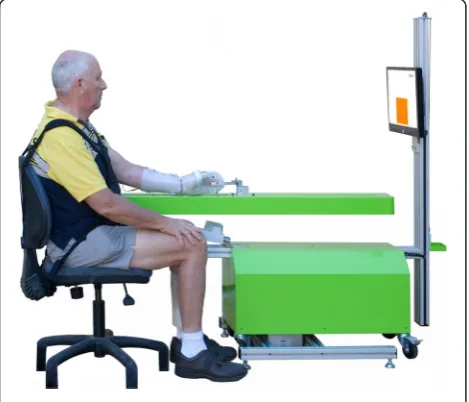
To capitalise upon this opportunity, a non-robotic training device, the SMART Arm (Sensori-Motor Active Rehabilitation Training of the Arm) (Figure 1), was de-veloped to enable stroke survivors with severe upper limb disability to undertake intensive and repetitive task-oriented training. The device was specifically designed so that stroke survivors with little to no muscle activity could practice reaching, a fundamental upper limb func-tion, along a straight-line path consistent with a normal
reaching pattern. The device can be used with or with-out electrical stimulation to the lateral head of triceps brachii to augment elbow extension and enhance com-pletion of the reaching task. To optimise the potential for motor learning, this device incorporates elements critical to skill acquisition, including active problem solving, augmented real-time feedback of performance, task progression that is tailored to each individual, mo-tivation and encouragement.
To date, a 12-hour SMART Arm training program with or without electromyographic (EMG)-triggered electrical stimulation to triceps has been investigated in chronic stroke survivors with severe upper limb disabil-ity. Compared with the control group, those who under-went SMART Arm training with or without stimulation showed a significant improvement in upper limb func-tion (improvement in MAS6 item 6 score) that was sustained at 2 months follow-up [16], an improved ratio of triceps to biceps EMG activity during reaching [17], and greater corticospinal reactivity [18]. There were however, variations in the expression of additional bene-fits derived from the use of EMG-triggered electrical stimulation. As this may have been due to the use, by some individuals, of maladaptive patterns of EMG activ-ity such as co-contraction of biceps and triceps, that could nonetheless trigger stimulation, a new method of outcome-triggered electrical stimulation (OT-stim) was developed. Here, electrical stimulation is triggered when initial goal directed motion surpasses an individualised threshold. Thus, assistance by means of electrical stimu-lation (and reinforcement) occurs when the movement generated voluntarily is commensurate with the desired outcome. In a pilot trial of SMART Arm with OT-stim during inpatient rehabilitation, SMART Arm training (with or without OT-stim), led to a significantly greater improvement in upper limb function as compared to usual therapy alone [19]. In that these improvements were evident early after stroke, further investigation within the context of a larger trial is warranted [20].
Thus, the primary aim of the current randomised con-trolled trial (RCT) is to determine the ability of SMART Arm training with or without OT-stim compared to usual therapy to improve upper limb function in stroke survivors with severe upper limb disability undergoing inpatient rehabilitation. In addition, we will determine the impact of the different training programs on upper limb impairment, activity and participation.
Methods/Design
Design
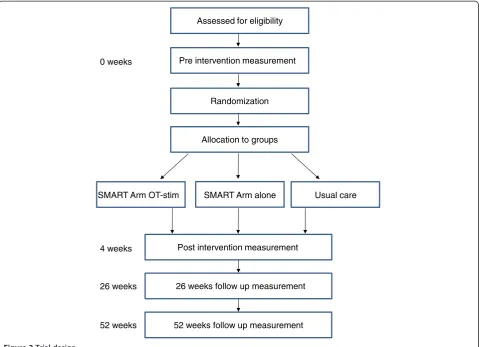
[image:2.595.57.292.520.721.2]A prospective, assessor-blinded, three group parallel RCT will be conducted with 75 stroke survivors with se-vere upper limb disability who are undertaking inpatient rehabilitation (Figure 2).
Location and setting
We plan to recruit stroke survivors from two inpatient rehabilitation services located in Brisbane, Australia: the Princess Alexandra Hospital, with a six-bed Acute Stroke Unit, located separately to a 78-bed Geriatric and Rehabilitation Unit; and the Queen Elizabeth II Jubilee Hospital, which has a four bed Acute Stroke Unit, co-located within a 24-bed Geriatric and Rehabilitation Unit. Assessment and training will be undertaken in dif-ferent areas of the same site.
Population
All stroke survivors admitted to the Acute Stroke Unit at each hospital will be screened for eligibility. Participants will be eligible if they are adult stroke survivors (>17 years) with a primary diagnosis of first-ever unilateral stroke (ischaemic or haemorrhagic, including subarach-noid haemorrhage) less than four months previously, which has been confirmed either radiographically (CT or MRI) or clinically by the consulting physician; demon-strate severe upper limb disability equivalent to a score of three or fewer out of a possible six points (inability to hold the upper limb in position when placed at 90° shoulder
flexion in sitting) on the MAS item six; and are able to fol-low single-stage commands, either with verbal instruc-tions, demonstration or other non-verbal cues.
Participants will be excluded if they are medically un-stable as defined by the medical registrar or by location in an acute medical ward; have upper limb comorbidities that could limit their functional recovery (e.g., arthritis, pain, other neurological disorders); have a contraindica-tion to the use of (e.g., pacemaker insitu), or inability to tolerate, electrical stimulation (e.g., hypersensitivity or skin condition); have an infectious disease requiring the use of personal protective equipment (e.g., methicillin resistant staphylococcus aureus or vancomycin resistant enterococcus) or are unable to sit without support.
Randomisation and blinding
All participants will provide written informed consent. In the event that a participant is unable to provide in-formed consent, consent will be sought from their legal guardian. After completion of the initial assessment, par-ticipants will be randomised to one of three dose-matched groups (two intervention and one control). The intervention groups are SMART Arm trainingwith OT-Assessed for eligibility
Pre intervention measurement
Randomization
Allocation to groups
SMART Arm OT-stim
Post intervention measurement
26 weeks follow up measurement
52 weeks follow up measurement
SMART Arm alone Usual care
4 weeks
26 weeks
[image:3.595.59.539.89.436.2]52 weeks 0 weeks
stim (SMART Arm OT-stim) and usual therapy; SMART Arm trainingwithoutOT-stim (SMART Arm alone) and usual therapy. The control group will receive usual ther-apy only. Concealed randomisation will be prepared by an offsite investigator, not involved in recruitment, inter-vention or data collection, using a computer generated random number sequence. Consecutively numbered, randomly ordered opaque envelopes containing group allocation in permuted blocks of four or six in a 1:1 ratio will be opened consecutively after baseline assessment in the presence of the participant. Usual therapists will be informed of group allocation.
Research assistants who enrol participants, and con-duct pre, post and follow-up assessments will be blinded to group allocation throughout the study. Participant coding will not refer to group allocation and participants will be instructed not to divulge information regarding their intervention to the assessors during assessment. Participants, SMART Arm trainers and usual therapists (physiotherapy and occupational therapy) will not be blinded to group allocation. To control expectancy ef-fects for participants and usual therapists, it will be explained that it is not yet determined which therapy is more effective.
Intervention
All participants will receive 20 hours of upper limb ther-apy, comprising 60 minutes duration five days per week for four weeks. The proposed volume of training was guided by discussions with each site and reports from these [15] and other facilities [21], along with previous SMART Arm research [16,19]. All SMART Arm training and usual therapy will be recorded in individual partici-pant logbooks. If a participartici-pant misses a SMART Arm or usual therapy session due to illness, medical procedure, or extended leave (e.g., returned to acute medical ward as became unstable), additional days will be added to en-sure all participants are given the opportunity to complete a total of 20-days of therapy.
SMART Arm training
SMART Arm training will be administered for 30 mi-nutes per day by a physiotherapist or occupational ther-apist, trained in the delivery of the intervention. The participant’s treating therapy team will administer 30 mi-nutes of usual therapy per day. Training will be typically undertaken five times per week for four weeks.
On commencement of a SMART Arm training session, the participant will be seated on a (armless) chair beside the device. A harness will be applied to restrict trunk movements to less than 15 degrees and therefore, min-imise compensatory trunk movements and encourage recovery of a pre-morbid pattern of reaching [22-24]. The affected upper limb will be positioned in a
customised thermoplastic splint in mid pronation-supination and wrist extension (0 degrees to 45 degrees) to mimic a functional reach-to-grasp hand position [25]. To accommodate for any muscle contracture or pain, the splint can be positioned through the full range of pronation and supination. The splint is connected to a manipulandum, which is mounted on a linear slide and encoder belt. The linear slide serves to constrain move-ment to one plane and to reduce friction and resistance to movement. The elbow is positioned in a standardized start position of 90 degrees of elbow flexion.
Trainers will be provided with guidelines for the administration of SMART Arm training. To ensure participants perform a consistent minimum number of repetitions during the training time period (30 minutes), a goal of a minimum of 60 repetitions in week one and 80 repetitions in weeks two through four will be set. This dose was guided by previous research [16,19]. Progression in training difficulty will occur when consistency in task practice is evident. Training elements that can be progressed include the number of repetitions, track elevation, degree of shoulder external rotation, hand position, load, visual and auditory feedback, instruction and level of supervision. The decision-making process with regards to when and how to progress training will be at the discretion of the SMART Arm trainer and will be based on the stroke survivor’s performance during training. To ensure consistency between trainers, monitoring (e.g., benchmarking evaluations of completed training logs for consistent dose, progressions of practice used) and mentoring (e.g., peer-supervision, feedback during sessions, and debriefing) will regularly occur. All SMART Arm train-ing will be documented in a log, which will capture dose and training element use.
intensity will be set to the maximum that can be toler-ated by the participant.
Usual therapy
Participants allocated to usual therapy alone will partici-pate in 20 therapy sessions of 60 minutes duration, typic-ally undertaken five days per week for four weeks. Usual therapy refers to the combined duration of occupational therapy and physiotherapy. It will not be standardized and will likely consist of a mix of individual and group sessions administering both passive (e.g. stretching, cyclic electrical stimulation) and active (e.g. range of movement, strength-ening, modified task practice with electrical stimulation) interventions where possible. All usual therapy will be documented in an upper limb therapy log, which will cap-ture dose (minutes), frequency (sessions) and content of upper limb therapy.
Outcome measures
Arm function (impairment, activity and participation) will be assessed in accordance with the ICF Classifica-tion of FuncClassifica-tioning, Disability and Health [26]. All par-ticipants will be assessed at four time points: three days prior to commencement of the intervention (baseline, 0 weeks), within one week of completion of the interven-tion (post-interveninterven-tion, 4 weeks), and following comple-tion of the intervencomple-tion at 26 and 52 weeks. Assessors will be provided with guidelines for administering the measures.
Demographic information about participants will be col-lected from their medical record and will include age, gen-der, date of stroke onset, type (ischaemic or haemorrhagic) and location (cortical, subcortical, cortical and subcortical or brainstem) of stroke, stroke medical intervention (e.g. thrombolysis), co-morbidities and medications.
Primary outcome measure The primary outcome measure will be performance on the MAS item 6 at the post intervention time period (4 weeks). The MAS is designed to measure recovery of the affected limb over 3 task-related subscales (upper arm function, hand and ad-vanced hand movements) that are scored from 0–6. It is the stroke recovery scale most commonly used in clin-ical practice in Australia and takes less than 10 minutes to complete. The reliability and validity of this measure with the stroke population has been previously docu-mented [27]. It has been shown to be sensitive to change in performance in people with severe upper limb disabil-ity after training with SMART Arm [16,19].
Secondary laboratory outcome measures The func-tional force generating capacity of the impaired limb will be assessed using a dynamic and an isometric reaching task similar to previous protocols [16,17]. In both tasks,
surface EMG activity will be collected from triceps brachii lateral head, biceps brachii, anterior deltoid, upper trapezius, external rotators, lower trapezius and serratus anterior. EMG will be obtained using single dif-ferential pre-amplified (gain 1000) parallel bar electrodes (Bagnoli, DELSYS, 8-channel System, Boston, MA, USA) with a fixed inter-electrode distance of 10 mm and positioned according to SENIAM guidelines [28]. A reference electrode will be attached over the bony prominence of the seventh cervical spinous process. Signals will be sampled (1000Hz) using a Power 1401 Data Acquisition System (Cambridge Electronics Design, Cambridge, UK) and Spike2 software (version 6.02). Time series data will be collected and stored using Spike2 and processed using custom routines in Matlab (Mathworks Inc., Nattick, MA).
Participants will be seated at a custom-built apparatus with the upper limb in a pendant position, the elbow flexed and the forearm and hand restrained in pronation via a custom built brace. For all measures a computer monitor positioned directly in front of the participant will provide visual feedback on a vertical bar scale. In the dynamic task, the brace will be secured to a manipulandum mounted on a linear slide restricting motion of the upper limb to flexion/ extension of the shoulder and elbow. A potentiometer attached to the slide will measure transducer, reaching, linear displace-ment. The upper limb will be placed at a standardised starting position with the elbow at 90 degrees of flexion. Upon presentation of a tone, participants will be re-quired to‘reach forward as far as possible’in five separ-ate trials. In the isometric task, the participant will be required to push forwards (elbow extension) in a pos-ition of 150 degrees of elbow flexion against a manipulandum instrumented to measure force. In five separate trials, following a tone, participants will be instructed to ‘push as hard as possible’ and to keep pushing for five seconds. In both tasks continuous vis-ual feedback of the applied force will be provided along with verbal encouragement. During each contraction, force or reach distance and EMG recordings will be obtained. On the basis of these recordings, peak force, distance, time to peak and the muscle onset times, amplitude (root-mean-square (RMS)) and triceps to bi-ceps ratio of EMG RMS amplitude will be calculated.
velocity and changes in angles of upper arm segments and markers.
Secondary outcome measures: clinicalA range of clin-ical measures will be collected to measure the presence of impairments post stroke. To measure strength, lateral head of triceps brachii muscle power will be assessed using manual muscle testing according to MRC ratings from 0–5 [29]. To measure the active range of move-ment of finger flexion and extension, thumb extension and abduction, elbow flexion and extension and shoul-der abduction and adduction, assessment according to the protocol described by Uswatte et al. [30] will be performed. To measure the presence of spasticity of bi-ceps brachii and resistance to passive elbow extension, the modified Ashworth Scale [31] and Tardieu Scale [32] will be administered. To evaluate joint tenderness on passive movement of the hemiplegic shoulder, the Ritchie Articular Index will be administered [33,34]. To describe participants at baseline only, the Cognitive Lin-guistic Quick Test [35] and Nottingham Sensory Assess-ment [36,37] will be administered. Motor AssessAssess-ment Scale items 7 (hand movements) and 8 (advanced hand activities) will be performed to monitor for any carryover improvement in hand function. To examine upper limb function at the participation level, two self-report mea-sures will be used. The Stroke Impact Scale will be used to measure the impact of the intervention on the stroke survivor’s recovery [38]. The Motor Activity Log will be administered to all subjects to rate how well and how much they use the paretic limb spontaneously in every-day tasks [30].
Data analysis
Data analysis will be performed on an intention-to-treat basis using an alpha level of 0.05. Descriptive statistics will be used to ensure comparability of scores between groups at baseline, to describe performance at each phase and to test whether the assumptions for use of parametric statistics have been met. If the assumptions for F or t-tests are violated, equivalent non-parametric statistics will be utilized. The main hypothesis will be tested using mixed effects models, in a 3 group (SMART Arm + OT stim, SMART Arm alone, usual therapy) × 4 phase (0, 4, 26, 52 weeks) model. This will be followed by between-groups planned comparisons. All secondary outcomes will be analysed in a similar manner.
Sample size
The principle endpoint is post intervention (4 weeks). Our previous RCT demonstrated that stroke survivors using the SMART Arm alone or with electrical stimula-tion demonstrated significant improvements in MAS-6 scores compared to the control group [16]. On this
basis, we estimate a mean improvement of 1.8 (SD 2) in the usual therapy group, 2.91 (SD 2) in the SMART Arm alone group and 3.91 (SD 2) in the SMART Arm with OT-stim group. To achieve 80% power and a signifi-cance of 0.05 with pairwise comparisons, 22 subjects are required per group, to total 66 subjects. A 15% dropout rate will be allowed to account for withdrawals, thus 25 subjects will be recruited per group, totalling 75.
Ethics approval
The study protocol has been approved by the University of Queensland Medical Research Ethics Committee (MREC ID: 2007001628), and the Princess Alexandra Hospital Ethics Committee (ID: 2008–046). This study will be conducted in accordance with the Declaration of Helsinki.
Discussion
This will be the first prospective trial to compare the ef-fect of dose-matched volumes of SMART Arm with OT-stim and usual therapy, versus SMART Arm alone with usual therapy versus usual therapy alone during in-patient rehabilitation following stroke. While it is known that intensive and repetitive, task-oriented training is critical to drive motor recovery after stroke [39,40], those with severe impairment and ‘not enough move-ment to work with’ require assistance to complete a functional movement pattern. Currently, the most com-monly used method is manual assistance by a therapist. The minimal time spent on the upper limb during physio-therapy indicates however, that this time-inefficient strat-egy is not prioritised. It is likely that gait training requirements, which are paramount to determining dis-charge destination, are prioritised. Another option is ro-botic therapy, however availability is currently limited and functional outcomes remain inconclusive [8,41,42].
In the event that SMART Arm training, with or with-out electrical stimulation, leads to demonstratable sig-nificant improvements in upper limb function, reduced impairments or increased participation, an alternative option for retraining would be presented. Improvements in impairments and activity using the SMART Arm have been obtained in chronic stroke survivors [16], and the indications from our pilot work are that similar out-comes may be achieved in those undertaking inpatient rehabilitation [19]. If positive changes may be induced during inpatient rehabilitation, this may allow some stroke survivors to regain levels of function that are suf-ficient to enable progression to interventions such as constraint induced movement therapy.
stimulation, in circumstances in which the stroke sur-vivor isrewarded for performing the desired movement, rather than for simply generating sufficient levels of EMG i.e. regardless of the functional consequences.
Findings from this study will provide insights into the effects of practice on regaining motor skill in those with severe upper limb disability following stroke. The collec-tion of detailed training data will generate new know-ledge regarding the importance of specific training elements, such as load and feedback on performance in the early phase of rehabilitation. These will have implica-tions that extend beyond the current modes of training investigated and possibly to other populations such as those with other forms of brain injury.
Consent
Written informed consent was obtained from the patient for publication of the image (Figure 1). A copy of the written consent is available for review by the Editor of this journal.
Abbreviations
ANCOVA:Analysis of covariance; EMG: Electromyography; MAS: Motor assessment scale; RCT: Randomised controlled trial; RMS: Root mean square; SENIAM: Surface electromyography for the non-invasive assessment of muscles; SPSS: Statistical processes for the social sciences.
Competing interests
SG Brauer, KS Hayward, RN Barker and RG Carson are currently involved in commercialisation of the SMART Arm device.
Authors’contributions
SB, RB, and RC conceived the idea for the study. SB, RB, RC and AC all contributed to the research design and obtained funding for the study. SB, KH, RB, RC and AC contributed to the design of the study, intervention and outcome measures. SB, KH and RB were involved in participant recruitment. SB and KH were principally responsible for the drafting of the manuscript. All authors assisted in editing the final submitted manuscript. All authors read and approved the final manuscript.
Acknowledgements
This study has been funded by a National Health & Medical Research Council Project Grant (ID: 511241). The authors thank the staff at the Princess Alexandra Hospital and the QEII Hospital. We also thank Dr Stephen Wilson, Dr David Lloyd and Mr Russell Gee for their contribution to SMART Arm construction; Dr David Lloyd, Dr Craig Tokono, and Dr Christoph Szubski for their contribution to data collection equipment design and construction; and Dr Brenda Ocampo and Ms Katrina Kemp for their contribution to project management.
Author details
1Division of Physiotherapy, School of Health and Rehabilitation Sciences, The
University of Queensland, Brisbane QLD 4072, Australia.2Trinity College Institute of Neuroscience & School of Psychology, Trinity College Dublin, Dublin, Ireland.3School of Psychology, Queen’s University Belfast, Belfast, United Kingdom.4School of Human Movement Studies, The University of Queensland, Brisbane QLD 4072, Australia.5Discipline of Physiotherapy, School of Public Health, Tropical Medicine & Rehabilitation Sciences, James Cook University Townsville, Townsville, Australia.
Received: 30 January 2013 Accepted: 19 June 2013 Published: 2 July 2013
References
1. Gowland C:Recovery of motor function following stroke: Profile and prediction.Physiother Canada1982,34:77–84.
2. Kwakkel G, Kollen BJ, Van der Grond J, Prevo AJ:Probability of regaining dexterity in the flaccid upper limb. The impact of severity of paresis and time since onset in acute stroke.Stroke2003,34:2181–2186.
3. Nakayama H, Jorgensen HS, Rasschou HO, Olsen TS:Recovery of upper extremity function in stroke patients: The Copenhagen Stroke Study.
Arch Phys Med Rehabil1994,75:394–398.
4. National Stroke Foundation:Clinical guidelines for stroke management. Melbourne, Australia; 2010. ISSBN0-978-0-9805933-3-4.
5. Peppen RPS van, Kwakkel G, Harmeling-van-der Wel BC, Kollen BJ, Hobbelen JSM, Buurke JH:KNGF Clinical Practice Guidelines for physical therapy in patients with stroke: Review of the evidence.Dutch J Phys Ther2004,
114(Suppl 5).
6. Lindsay MP, Gubitz G, Bayley M, Davies-Schinkel C, Singh S, Phillips S: Canadian best practice recommendations for stroke care (Update 2010). On behalf of the Canadian Stroke Strategy Best Practice and Standards Writing Group.Ottawa, Ontario Canada: Canadian Stroke Network; 2010. 7. Chae J, Yu D:A critical review of neuromuscular stimulation for
treatment of motor dysfunction in hemiplegia.Assist Tech2000,
12:33–49.
8. Hayward KS, Barker RN, Brauer SG:Interventions to promote upper limb recovery in stroke survivors with severe paresis: A systematic review.
Disabil Rehabil2010,32:1973–1986.
9. Barker RN, Brauer SG:Recovery of the upper limb after stroke: The stroke survivors' perspective.Disabil Rehabil2005,27(20):1213–1223.
10. Goldie P, Matyas T, Kinsella G:Movement rehabilitation following stroke, In Research report to the Department of Health Housing and Community Services. Victoria; 1992.
11. Mackey F, Ada L, Heard RC, Adams R:Stroke rehabilitation:are highly structured units more conducive to physical activity than less structured units?Arch Phys Med Rehabil1996,77:1066–1070.
12. Ada L, Mackey F, Heard R, Adams RJ:Stroke rehabilitation: Does the therapy area provide a physical challenge?Aust J Physiother1999,45:33–38. 13. Bernhardt J, Chan J, Nicola I, Collier JM:Little therapy, little physical
activity: Rehabilitation within the first 14 days of organized stroke unit care.J Rehabil Med2007,39:43–48.
14. Goldie P, Matyas T, Kinsella G:Movement rehabilitation following stroke. Victoria: Department of Health, Housing and Community Services; 1992. 15. Kuys SS, Brauer SG, Ada L:Routine physiotherapy does not induce a
cardiorespiratory training effect post-stroke, regardless of walking ability.
Physiother Res Int2006,11:219–227.
16. Barker RN, Brauer SG, Carson RG:Training of reaching in stroke survivors with severe and chronic upper limb paresis: A randomised clinical trial.
Stroke2008,39:1800–1807.
17. Barker RN, Brauer SG, Carson RG:Training-induced changes in the pattern of triceps to biceps activation during reaching tasks after chronic and severe stroke.Exp Brain Res2009,196:483–496.
18. Barker RN, Brauer SG, Barry BK, Gill TJ, Carson RG:Training-induced modifications of corticospinal reactivity in severely affected stroke survivors.Exp Brain Res2012,221:211–221.
19. Hayward KS, Barker RN, Lloyd D, Brauer SG, Horsley SA, Carson RG:SMART Arm with outcome-triggered electrical stimulation: A pilot RCT.Top Stroke Rehabil. In press.
20. Turton A, Pomeroy V:When should upper limb function be trained after stroke? Evidence for and against early intervention.Neurorehabil2002,
17:215–224.
21. Rodgers H, Mackintosh J, Price C, Wood R, McNamee P, Fearon T, Marritt A, Curless R:Does an early increased-intensity interdisciplinary upper limb therapy program following acute stroke improve outcome?Clin Rehabil 2003,17:579–589.
22. Michaelsen SM, Dannenbaum R, Levin MF:Task-specific training with trunk restraint on arm recovery in stroke: Randomised controlled trial.
Stroke2006,37:186–192.
23. Woodbury ML, Howland DR, McGuirk TE, Davis SB, Senesac CR, Kautz S, Richards LG:Effects of trunk restraint combined with intensive task practice on poststroke upper extremity reach and function: A pilot study.Neurorehabil Neural Repair2009,23:78–91.
25. Santello M, Flanders M, Soechting JF:Patterns of hand motion during grasping and the influence of sensory guidance.J Neurosci2002,
22:1426–1435.
26. World Health Organisation:International Classification of Functioning, Disability and Health.Geneva: World Health Organisation; 2001.
27. Malouin F, Pichard L, Bonneau C, Durand A, Corriveau D:Evaluating motor recovery early after stroke: Comparison of Fugl-Meyer assessment and the Motor Assessment Scale.Arch Phys Med Rehabil1994,75:1206–1212. 28. Hermens HJ, Freriks B, Disselhorst-Klug C, Rau G:Development of
recommendations for SEMG sensors and sensor placement procedures.
J Electromyogr Kinesiol2000,10:361–374.
29. Kendall FP, Kendall EM, Provance PG:Muscle testing and function.4th edition. Baltimore: Williams and Wilkins; 1993.
30. Uswatte G, Taub E, Morris D, Light K, Thompson PA:The Motor Activity Log-28: Assessing daily use of the hemiparetic arm after stroke.
Neurology2006,67:1189–1194.
31. Bohannon RW, Smith MB:Inter-rater reliability of a modified Ashworth scale of muscle spasticity.Phys Ther1987,67:206–207.
32. Mackey AH, Walt SE, Lobb G, Stott NS:Intra-observer reliability of the modified Tardieu scale in the upper limb of children with hemiplegia.
Dev Med Child Neurol2004,46:267–272.
33. Bohannon RW, Andrews AW:Shoulder subluxation and pain in stroke survivors.Am J Occ Ther1990,44:507–509.
34. Gustafsson L, McKenna K:Correlation between two measurement scale of hemiplegic shoulder pain.Int J Ther Rehabil2003,10:247–252.
35. Helm Estabrooks N:Cognitive Linguistic Quick Test.San Antonion, TX: Psych Corp; 2001.
36. Cambier DC, De Corte E, Danneels LA, Witvrouw EE:Treating sensory impairments in post-stroke upper limb with intermittent pneumatic compression. Results of a preliminary trial.Clin Rehabil2003,17:14–20. 37. Lincoln NB, Parry RH, Vass CD:Randomised, controlled trial to evaluate increased intensity of physiotherapy treatment of arm function after stroke.Stroke1999,30:573–579.
38. Duncan PW, Wallace D, Min Lai S, Johnson D, Embretson S, Lacobs Laster L:
The stroke impact scale version 2.0: Evaluation of reliability, validity and sensitivity to change.Stroke1999,30:2131–2140.
39. Hubbard IJ, Parsons MW, Neilson C, Carey LM:Task-specific training: evidence for and translation into clinical practice.Occ Ther Int2009,
16:175–189.
40. Timmermans AAA, Spooren AIF, Kingma H, Seelen HAM:Influence of task-oriented training content on skilled arm-hand performance in stroke: A systematic review.Neurorehabil Neural Repair2010,24:858–870. 41. Kwakkel G, Kollen BJ, Krebs HI:Effects of robotic-assisted therapy on
upper limb recovery after stroke: A systematic review.Neurorehabil Neural Repair2008,22:111–121.
42. Mehrholz J, Hadrich A, Platz T, Kugler J, Pohl M:Electromechanical and robot-assisted arm training for improving generic activities of daily living, arm function and arm muscle strength after stroke.Cochrane Database Syst Rev2012,13(6):CD006876.
doi:10.1186/1471-2377-13-71
Cite this article as:Braueret al.:The efficacy of SMART Arm training early after stroke for stroke survivors with severe upper limb disability: a protocol for a randomised controlled trial.BMC Neurology201313:71.
Submit your next manuscript to BioMed Central and take full advantage of:
• Convenient online submission
• Thorough peer review
• No space constraints or color figure charges
• Immediate publication on acceptance
• Inclusion in PubMed, CAS, Scopus and Google Scholar
• Research which is freely available for redistribution