University of Southern Queensland
FACULTY OF HEALTH, ENGINEERING & SCIENCES
EVALUATION OF THE PERFORMANCE OF DIFFERENT
GLOBAL SATELLITE NAVIGATION SYSTEMS (GNSS)
FOR AUSTRALIAN GNSS USERS
A dissertation Submitted by
Kari Hautsalo
in fulfilment of the requirements of Courses ENG4111 and 4112 Research Project
Towards the degree of
Abstract
Satellite navigation has been available in the aviation and maritime worlds since GPS system was built in the 1970's and users were able to navigate anywhere in the world with unheard-of accuracy unheard-of less than a hundred meters. Since then other systems have emerged and a new term, Global Navigation Satellite System was born to generalise the concept.
Now that there are four different GNSS systems in a stage of development that includes satellites in orbit, it is prudent to ask the question: which GNSS system best suits the Australian user? This project took the task of finding information about all four GNSS systems that would enable an evaluation of performance of each system.
The project devised an evaluation framework for ranking the benefits and a methodology of assessing identified indicators of such suitability against that framework. As a result, differences were found, impacts of those differences were assessed and results tabulated in a matrix of ranking.
With limited resources and scope, the results can be seen as discussion enhancing rather than authoritative points of view and others may have other ideas of where the emphasis should lie.
University of Southern Queensland
FACULTY OF HEALTH, ENGINEERING & SCIENCES
SCHOOL OF ENGINEERING AND SURVEYING
ENG 4111 & ENG4112
Research Project
Limitations of Use
The Council of the University of Southern Queensland, its Faculty of Health, Engineering & Sciences, and the staff of the University of Southern Queensland, do not accept any responsibility for the truth, accuracy or completeness of material contained within or associated with this dissertation.
Persons using all or any part of this material do so at their own risk, and not at the risk of the Council of the University of Southern Queensland, its Faculty of Health, Engineering & Sciences or the staff of the University of Southern Queensland.
This dissertation reports an educational exercise and has no purpose or validity beyond this exercise. The sole purpose of the course pair entitled "Research Project" is to contribute to the overall education within the student's chosen degree program. This document, the associated hardware, software, drawings, and other material set out in the associated appendices should not be used for any other purpose: if they are so used, it is entirely at the risk of the user.
Assoc Prof Kevin McDougall
Certification
I certify that the ideas, designs and experimental work, results, analysis and conclusions set out in this dissertation are entirely my own effort, except where otherwise indicated and acknowledged.
I further certify that the work is original and has not been previously submitted for assessment in other course or institution, except where specifically stated.
Kari Kauko Juhani Hautsalo Student Number: 0050100245
Signature
Acknowledgements
I would like to take this opportunity to thank the following people for their assistance with this paper.
My University of Southern Queensland project supervisor, Dr Dev Raj Paudyal, for providing me with the direction of this topic and writing this project report.
Contents
Abstract ... i
University of Southern Queensland ... i
Acknowledgements ... ii
Contents ... iii
List of figures ... v
List of tables ... vi
Glossary ... vii
Chapter 1 Introduction ... 1
1.1 Project background ... 1
1.1.1 GNSS background information ... 1
1.1.2 Project context ... 3
1.2 Project aims and objectives ... 4
1.2.1 Project aims ... 4
1.2.2 Project objectives ... 4
1.3 Scope and assumptions of the project ... 4
1.4 Evaluation framework ... 5
1.5 Structure and outline of the report ... 6
1.6 Chapter summary ... 8
Chapter 2 Literature review ... 9
2.1 Introduction ... 9
2.2 The physical perspective ... 9
2.3 The application perspective ... 13
2.4 The control perspective ... 17
2.5 Australian perspective ... 18
Chapter 3 Methodology ... 20
3.1 Introduction ... 20
3.2 Methodology of evaluation ... 20
3.3 General framework for evaluation ... 22
3.4 Evaluation framework structure ... 22
3.5 Risk Assessment ... 23
3.6 Ethics ... 23
3.7 Conclusions ... 23
Chapter 4 Evaluation... 24
4.1 Introduction ... 24
4.2 Evaluation of physical aspects ... 24
4.2.1 Frequency bands ... 24
4.2.2 Signal structures ... 27
4.2.3 Signal strengths ... 29
4.2.4 Availability ... 30
4.2.5 Orbital differences ... 33
4.2.6 Geographical differences ... 34
4.3 Evaluation of application aspects ... 38
4.3.1 Available services ... 38
4.3.2 Supporting systems ... 40
4.3.3 Virtual Reference Station systems ... 42
4.4 Evaluation of control aspects ... 43
4.5 Conclusions ... 43
Chapter 5 Discussion and Conclusions ... 45
5.1 Introduction ... 45
5.2 Reviewing assumptions ... 45
5.3 Discussion ... 46
5.4 Conclusions ... 46
List of figures
Figure 2-1: SBAS system coverage ... 14
Figure 2-2: OmniSTAR/FUGRO coverage ... 15
Figure 2-3: MGEX stations ... 16
Figure 2-4: MGEX stations with Galileo tracking capability. ... 16
Figure 2-5: MGEX stations with BeiDou-2 tracking capability. ... 16
Figure 2-6: FUGRO stations with Galileo and BeiDou-2 tracking capability... 17
Figure 2-7: CONGO tracking stations ... 17
Figure 4-1: GNSS frequency band L1 ... 25
Figure 4-2: GNSS frequency band L2 ... 25
Figure 4-3: GNSS frequency band L5 ... 26
Figure 4-4: Galileo E1 spectrum ... 29
Figure 4-5: BeiDou-2 orbits ... 32
Figure 4-6: Tasmanian user's GPS, Galileo and BeiDou-2 sky view North-South ... 33
Figure 4-7: Tasmanian user's GLONASS sky view North-South ... 34
Figure 4-8: GPS control segment ... 35
Figure 4-9: GLONASS ground segment... 35
Figure 4-10: SDCM reference stations in Russia ... 36
Figure 4-11: SDCM reference stations global ... 36
Figure 4-12: Galileo Ground Segment ... 36
Figure 4-13: Stations capable of BeiDou-2 tracking ... 37
Figure 4-14: BeiDou-2 IGSO SV's ephemeris data age in hours ... 38
Figure 4-15: BeiDou-2 MEO SV's ephemeris data age in hours ... 38
Figure 4-16: QZSS and IRNSS coverage and orbits ... 41
List of tables
Table 1-1: Evaluation Framework. ... 7
Table 4-1: Frequency bands of different GNSSs ... 27
Table 4-2: GNSS signals and received signal strength on Earth ... 31
Table 4-3: GNSS orbital information ... 31
Table 4-4: BeiDou GEO satellites ... 32
Table 4-5: BeiDou IGSO satellites ... 32
Glossary
BOC Binary Offset Carrier BPSK Binary Phase Shift Keying CBOC Composite Binary Offset Carrier CDMA Code Division Multiple Access
CS Commercial Service
EGNOS European Geostationary Navigation Overlay Service
EU European Union
FDMA Frequency Division Multiple Access GAGAN GPS Aided GEO Augmented Navigation GBAS Ground Based Augmentation System GEO Geostationary Earth Orbit
GLONASS GLObal NAvigation Satellite System GNSS Global Navigation Satellite System GPS Global Positioning System
GRAS Ground-Based Regional Augmentation System GRR Galileo Ground Reference Receiver
GSS Galileo Sensor Station
GSO GeoSynchronous Orbit
HP High Precision
ICD Interface Control Document ICG International Committee on GNSS IGSO Inclined Geosynchronous Orbit
IOV In-Orbit Validation
IRNSS Indian Radio-Navigation Satellite System ISRO Indian Space and Research Organisation MBOC Multiplexed Binary Offset Carrier
MEO Medium Earth Orbit
OS Open Service
PPS Precise Positioning Service
PRN Pseudo Random Noise
PRS Public Regulated Service
PSK Phase Shift Keying
QPSM Quadrature Product sub-carrier Modulation QZSS Quasi-Zenith Satellite System
RNSS Regional Navigation Satellite Systems
SA Select Availability
SAR Search and Rescue
SARSAT Search and Rescue Satellite Aided Tracking SBAS Satellite-Based Augmentation Systems
SIS Signal In Space
SV Space Vehicle
TCAR Tri Carrier Ambiguity Resolution
US United States
Chapter 1
Introduction
1.1
Project background
1.1.1GNSS background information
The current GNSS systems have been developed to provide competing alternate Global Navigation Satellite Systems (GNSS), largely overlapping in functionality but with limiting factors built into them to maintain strong control over who is able to use the systems and at which level of accuracy. Some systems, such as the US GPS system and Russian GLONASS are fully operational in terms of available satellites, whereas European Galileo, Chinese BeiDou-2 Navigation Satellite System (BDS) (formerly known as Compass/BeiDou-2), Japanese Quasi-Zenith Satellite System and Indian Regional Navigational Satellite System (IRNSS) are in their respective development and implementation phases.
degrading of data, called "Selective Availability", which needed to be removed by a decoding packet to achieve nominal accuracy.
The same perceived heightened threat of a nuclear war prompted the Soviet Union to replace its accurate but slow TSYKLON submarine navigation system (Ristić et al. 2010). This marked in 1976 the start of Globalnaya Navigatsionnay Sputnikovaya Sistema (GLONASS), which was under the jurisdiction of the Russian Aerospace Defence Forces. GLONASS also, like GPS, incorporates deliberate error generation in its high precision signal in order to deny civilian users, or the enemy, the more accurate GNSS service.
The European Union initially started to develop their GALILEO system as a commercial enterprise for civilian use in 1999 (Roberts 2011) After some creative marketing estimates, giving the project much greater return on investment than was realistic, were discovered erroneous the project was close to being abandoned. This was given further discouragement by the US opposing to the Galileo project due to resulting inability to deny accurate positioning service in times of conflict (Dawoud 2012). Ironically, this resulted in decision makers realising that they cannot rely on GPS or GLONASS due to them being potentially shut off at any time. In 2002 the Galileo project was agreed upon (Dawoud 2012) by the European Union to be established and run by the European Space Agency (ESA).
direction that China wanted (Dawoud 2012) and made a decision to develop BeiDou further and enter into commercial, civilian market with it.
The resulting Compass/BeiDou-2, later renamed BeiDou-2, still maintains its geo-stationary satellites but introduces additional satellites in the medium earth orbit planes making it an autonomous global navigation satellite system.
The Indian Regional Navigational Satellite System (IRNSS) and Japanese Quasi-Zenith Satellite System (QZSS) are Regional Navigational Satellite Systems (RNSS), which both operate autonomously and use existing GNSS systems to add functionality in operating in challenging urban environments and mountainous regions. They use geo-stationary satellites and inclined geo-synchronous orbit (IGSO) satellites to distribute their augmentation data (Roberts 2011). RNNS systems do not however fall under the scope of this project.
1.1.2Project context
Common to all GNSS systems is that long standing procedures and traditions do not exist and much of the international guidelines are based on agreements between nations and their respective agencies of authority. The resulting allocations of frequencies and bandwidths have been contested at times and space vessels have even been launched to confirm said frequencies to some extent (Dawoud 2012).
The concept of global navigation satellite system has been implemented in relatively similar fashions by all system designers. They are based on having an accurate clock in the satellite and broadcasting of orbital information with a time stamp down to receivers. This project, Evaluation of the performance of different Global Satellite Navigation Systems (GNSS) for Australian GNSS users, will focus on different physical and application details and specifications to evaluate them in terms of practical relevance.
The evaluation of GNSS systems includes how each provides a service to an Australian user. This includes topics like physical parameters of the signals, the geographical and orbital characteristics and availability. Furthermore it includes topics about services, integrated and external, and applications such as integration and customisation potential, global positioning services as well as distribution of reliability and availability of service. It also seeks to uncover any Governmental policies and guidelines that may be relevant to the use of a GNSS system in national legislature and regulations.
1.2
Project aims and objectives
1.2.1Project aims
This project aims to find tangible differences in GNSS systems currently available and in planning from an Australian GNSS user point of view. It seeks to uncover aspects of design or physical characteristics that will differentiate between GNSS systems, in particular when used in Australia.
1.2.2Project objectives
The project objectives include:
Gain understanding of systems by performing a literature review Research technical specifications for differences in GNSS systems Research geographical differences of GNSS systems
Develop evaluation assumptions, methods and criteria Draw conclusions
1.3
Scope and assumptions of the project
This project will evaluate information on systems and designs against an evaluation framework. It determines that framework based on published work on feature relevancies.
The project is supported by field tests when appropriate to verify theories and confirm behaviour estimates in the Australian context.
Assumptions will be formulated to both limit the scope in the context of "Australian User" as well as overcome the issues with non-verifiable information, such as system features that are published but not implemented and therefore subject to scrutiny.
The evaluation framework from an Australian perspective will be restricted to the use of GNSS for positioning purposes with emphasis on the surveying discipline. Furthermore, the framework is limited to include features and technical differences of the GNSS systems that provide a basis for evolutionary applications and are likely to be exploited by the surveying discipline.
1.4
Evaluation framework
Evaluation framework provides a focus on the evaluation by giving it a scope of particular issues of importance, a set of goals or desired outcomes within those issues and a set of criteria in determining the level of comparative impact to the topic.
Due to the rapid changes in implementation progress of particularly Galileo and BeiDou, some aspects of evaluation will be speculative as to the interoperability status with augmentation systems.
Overall, assumptions have to be made about exclusive use of any given GNSS system:
The nature of comparative evaluation demands that features of individual systems be assessed on their stand alone merits even if that exclusive use is unlikely.
Assumptions regarding the adoption of various supported services will have to be made to include the use of potential relevant technical advantages, regardless of their commercial viability in surveying industry. The user will be able to use only one GNSS system.
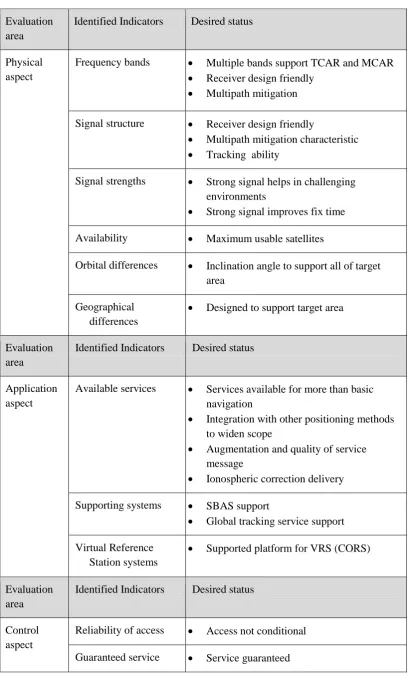
Table 1-1 depicts the elements of each evaluation areas:
Physical; features of the signals and equipment as well as methods and physical means of signal transmission.
Application; services and applications that the signals enable and support. Control; characteristics of the system administration and user
authorisation.
These areas as well as identified indicators have been derived from the perceived focus in review literature.
1.5
Structure and outline of the report
This report starts off with the introduction to the project and its historical background regarding its major area of focus to conceive the objective of the project.
That is followed by the review of significant perspectives expressed by industry experts in the area of GNSS features and their practical effects on real life surveying. Consequently the evaluation framework was determined to enable comparative assessment and evaluation.
A literature review was conducted to ascertain the nature and trends of research in the area of GNSS development and future outlook. This revealed features that are the most likely to contribute to finding details of the identified indicators of comparative excellence.
The data collection was performed along with the literature review resulting in outlining of the features and respective relative strengths and weaknesses of each GNSS as well as attempting to classify the quality of that data. An evaluation framework table of these strengths, weaknesses and qualities of the source of the data was formulated to lay out the final assessment of the different GNSS systems.
Table 1-1: Evaluation Framework.
Evaluation area
Identified Indicators Desired status
Physical aspect
Frequency bands Multiple bands support TCAR and MCAR
Receiver design friendly
Multipath mitigation
Signal structure Receiver design friendly
Multipath mitigation characteristic
Tracking ability
Signal strengths Strong signal helps in challenging environments
Strong signal improves fix time
Availability Maximum usable satellites
Orbital differences Inclination angle to support all of target area
Geographical differences
Designed to support target area
Evaluation area
Identified Indicators Desired status
Application aspect
Available services Services available for more than basic navigation
Integration with other positioning methods to widen scope
Augmentation and quality of service message
Ionospheric correction delivery
Supporting systems SBAS support
Global tracking service support
Virtual Reference Station systems
Supported platform for VRS (CORS)
Evaluation area
Identified Indicators Desired status
Control aspect
1.6
Chapter summary
Chapter 2
Literature review
2.1
Introduction
"In the next few years, surveyors using high productivity, real-time
kinematic (RTK) positioning and indeed all other precision positioning
users will be faced with a barrage of new global navigation satellite
system (GNSS) signals from GPS, GLONASS, GALILEO and possibly
COMPASS/Beidou2 as well as Satellite Based Augmentation Systems
(SBAS) signals and Regional Navigation Satellite Systems (RNSS).
New receivers with enhanced capabilities will enter the market and the
old days of choosing which colour GPS receiver will be replaced by a
myriad of new considerations." (Roberts 2011, p1)
In the wake of the realisation that the high precision services from systems like GPS and GLONASS will not be reliable in times of conflict many national instances have decided to secure their navigation needs by implementing alternative systems. This has been done either by introducing completely self-contained GNSS systems like Galileo and BeiDou-2 or by implementing additional resources to GPS and GLONASS base services to form Regional Navigation Satellite Systems (RNSS) or Space Based Augmentation Systems (SBAS).
To assess the differences and advantages or limitations between any two or more systems we need to gain understanding of the development of each system.
2.2
The physical perspective
equatorial plane. The orbits are ellipses (Cojocaru et al. 2009) with small eccentricity (e≈0.003) with flight path length of the flight path for each satellite is 26,560km at an orbital radius of approximately 26,600 km and the travel time is 11h 58min (Ristić et al. 2010). This design aims at having always a minimum of 4 satellites visible at any location at any point in time.
The GPS system uses Code Division Multiple Access (CDMA) technique, where each and every satellite transmits the same two carrier bands (Lewandowski et al. 2009). The satellites initially transmitted Coarse/Acquisition (C/A) code signals on the L1 (1575.42MHz) band and the P(Y or Precise) code on the L2 (1227.60MHz) band (Eissfeller et al. 2001). After a modernization phase began in 2005 more bands were utilised, L1M and L2M for military use and L2C for a new civil signal (Eissfeller et al. 2001) as well as new L5 band signal (1176.45MHz) (Roberts 2011). The clock accuracy is one of the most important factors in achieving positioning accuracy and Larson et al. state (2000) "The formal error for the carrier-phase clock estimates are on the order of 125x10-12s". GPS system uses WGS-84 coordinate reference frame which closely resembles the International Terrestrial Reference Frame (ITRF) and GPS time (Chen et al. 2009).
2010). The GLONASS satellites initially carried Caesium clocks with daily frequency stability of 5x10-13 (Eissfeller et al. 2001) but with second generation implementation these were replaced by rubidium clocks.
The GLONASS system uses ParametryZemli 1990 (PZ90) coordinate reference frame which also closely resembles the International Terrestrial Reference Frame (ITRF) and UTC (SU) time (Chen et al. 2009).
The Galileo will, when fully operational, consist of a constellation of 27 active satellites. These satellites are spaced around the plane in three circular medium earth orbits with radii equal to around 29,600km and inclination of 56⁰ to the equatorial reference plane. They have an orbital period of 14 sidereal hours (Cojocaru 2009). Galileo constellation guarantees that at any point on the earth, there will be at least 6 satellites in the view (Dawoud 2012). The combination of the orbital inclination and the flight altitude of the satellites will considerably increase the coverage of the Polar Regions (Cojocaru 2009).
Galileo will transmit its ten navigation signals in the frequency ranges of 1164 - 1215 MHz (for E5a and E5b), 1215 - 1300 MHz (for E6) and 1559 - 1592 MHz (for E2-L1-E1). The E2-L1-E1 range includes the GPS frequency band L1. An additional frequency range of 1544.05-1545.15 MHz is defined as Search and Rescue (SAR) uplink as well as frequency range of 406.0-406.1 MHz as SAR downlink frequencies. All Galileo satellites will transmit using the same nominal frequency, utilising Code Division Multiple Access (CDMA) which is compatible with the GPS approach (Dawoud 2012).
The Galileo satellites generate its signals using passive hydrogen masers. It is very stable and its accuracy can be stated by saying it would lose only one second in three million years (ESA 2012). They also carry rubidium atomic frequency standards for backup. The stability of the rubidium clock using the same analogy indicates it would lose three seconds in one million years.
UTC by 13 s and will not apply leap seconds. GST is therefore “aligned” to GPST (Dalporte 2009)
The Beidou-2 system will consist of 35 satellites including 5 geostationary orbit (GEO) satellites, 5 in highly inclined (55⁰) geosynchronous orbits (IGSO) and 24 medium Earth orbit (MEO) satellites. The 24 satellites will be evenly distributed, 45° separated in argument of latitude, in 3 orbital planes with an inclination angle of 55° (Chen et al. 2009). They will offer complete coverage of the globe orbiting flying at an altitude with semi-major axis of 27840km (Dawoud 2012).
As at June 2012, 4 of the 5 GEO satellites are operating whilst one has ceased transmitting, all 5 IGSO satellites are fully operational and can already be employed for standalone positioning in South East Asia and Oceania. The only MEO satellite in orbit, whilst still transmitting, has developed a clock problem and cannot be relied upon for positioning (Montenbruck et al. 2012). The MEO satellites have an orbital period of 12h50m. The BeiDou-2 signals are transmitted in three bands; B1 (Equivalent of Galileo E2) at 1,561.098MHz, B3 (Equivalent of Galileo E6) at 1,268.520MHz and B2 (Equivalent of Galileo E5b) at 1,207.140MHz. The signal division technique for BeiDou-2 is CDMA.
2.3
The application perspective
The GPS system transmits its navigation message in two codes, the Coarse/Acquisition (C/A) providing Standard Positioning Service (SPS) and the encrypted Precise-code (P) providing Precise Positioning Service (PPS). Furthermore, a new M-code incorporating the Selective Denial spoofing technique of the C/A code is included (Ristić et al. 2010). Although there are many services to complement the GPS system, no additional services are included in the GPS system itself and for instance augmentation services are completely external to the GPS architecture (Rizos et al. 2005).
Glonass runs a similar system to GPS with Standard Precision Service (SP) and High Precision Service (HP) with C/A and P-codes respectively. Importantly, each service is run on both L1 and L2 bands allowing dual frequency receiver civilian use (Ristić et al. 2010).
The Galileo runs five different services (ESA 2011):
Galileo Open Service (OS), open, free service with guaranteed accuracy but no quality or integrity information
Galileo Commercial Service (CS), adds two encrypted and customer configurable signals to allow external service integration to CS
Galileo Public Regulated Service (PRS) is an Access-Controlled service intended for law enforcement and government authorities of European Union offering improved continuity of service in the presence of interfering threats
Galileo Safety of Life (SoL) contains signal integrity information at global level as opposed to other systems using SBAS to provide for integrity Galileo Search and Rescue Service (SAR/Galileo) provides SAR service
via detection of Emergency Position Indicating Radio Beacons (EPIRBs) as well as via a return link from the SAR operator to the distress emitting beacon
differential services including ionosphere grid data and intersystem time offsets (Montenbruck & Steigenberger 2013).
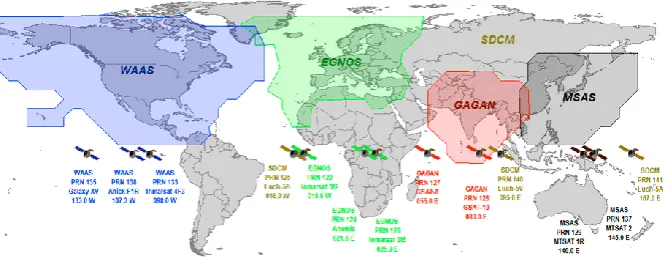
[image:25.595.146.478.432.563.2]GNSS systems are widely supported and utilised by various commercial and non-commercial service providers. They are of both global and regional nature. Precise Point Positioning (PPP) service is an example of a global service where institutions around the world provide post processing of observation data gathered anywhere in the world, often free of charge, over the internet. Although it may be reasonable to expect that all systems will be supported at a later stage, according to Gakstatter (2013) the Australian AUSPOS PPP-service does not get a mention for support for other than GPS system, where most others are reported to include GLONASS data processing. No information was given on Galileo or BeiDou-2. Regional services include Space Based Augmentation Systems (SBAS) which although operate satellites, target specific regions of the globe. Figure 2-1 depicts coverage areas of some SBAS operations and although Australia is getting usable signals from MSAS and WAAS, it can be seen that coverage is not ideal for Australia.
Figure 2-1: SBAS system coverage (GENEQ 2013).
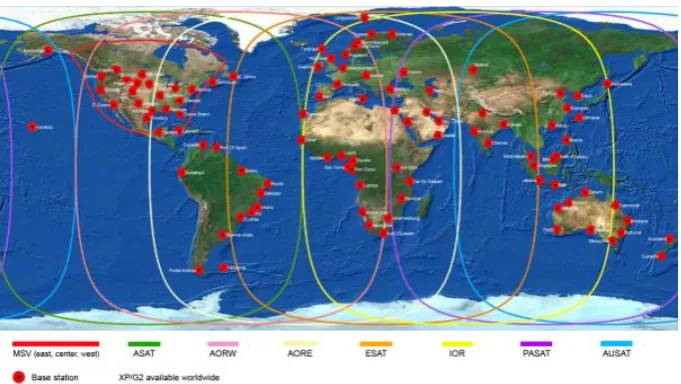
Figure 2-2: OmniSTAR/FUGRO coverage (OminSTAR 2013).
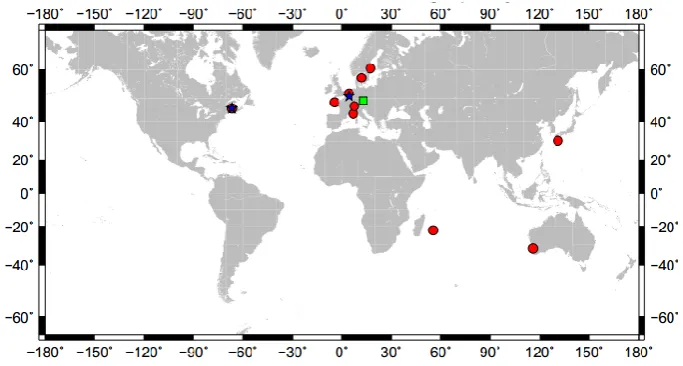
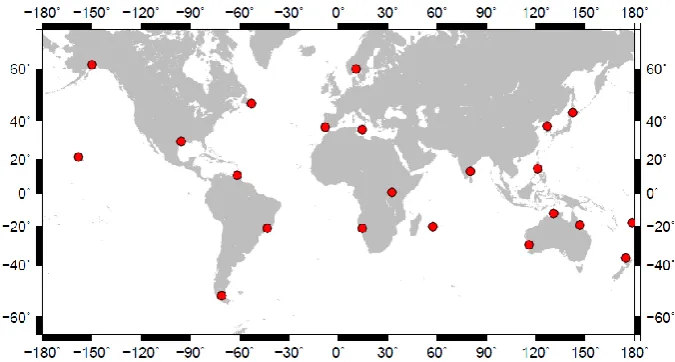
Global tracking is also an aspect of support for a GNSS system. One of the purposes for global tracking is determination of inter-system biases (IGS 2013) and that implies tracking of all systems. The Multi-GNSS Experiment (MGEX) coverage map, Figure 2-3 below, depicts tracking stations around the world. Figure 2-4 and Figure 2-5 show stations capable of tracking Galileo and BeiDou-2 satellites respectively. Cooperative Network for GIOVE Observations (CONGO) is operated by Deutsches Zentrum für Luft- und Raumfahrt (DLR ,The German Aerospace Center), Bundesamt für Kartographie und Geodäsie (BKG, The Federal Agency for Cartography and Geodesy), and Deutsches GeoForschungsZentrum (GFZ, German Research Centre for Geosciences). It provides tracking information for GIOVE satellites but some tracking stations also carry out tracking of GPS and GLONASS satellites. CONGO tracking stations are depicted in Figure 2-7 with GLONASS capable stations signified with red squares.
Figure 2-3: MGEX stations (IGS 2013).
Figure 2-4: MGEX stations with Galileo tracking capability (Tegedor et al. 2013).
[image:27.595.143.485.497.680.2]Figure 2-6: FUGRO stations with Galileo and BeiDou-2 tracking capability (Tegedor et al. 2013).
Figure 2-7: CONGO tracking stations (TUM 2013)
2.4
The control perspective
As Eissfeller et al. (2001) and Ristić et al. (2010) have stated GPS and GLONASS, respectively, have been developed with a sovereign military control. Dawoud (2012) mentions that BeiDou-2 is aimed at commercial markets whilst supremely run by the Government of China. Galileo on the other hand is a civilian enterprise (Roberts 2011) with dedicated services for Government use.
[image:28.595.142.484.302.498.2]2.5
Australian perspective
Literature about the impacts of different GNSS systems to Australian users seems focused on overall potential and real benefits provided by multiple GNSS systems employing new frequency bands. According to Roberts (2011), the new signals are more powerful and improve initialisation time in dual frequency RTK as well as suit Australian geographical location particularly well.
Reporting of benefits of an individual GNSS system over the others has been limited to outlining affiliations and partnerships between said GNSS and augmentation service providers such as the Japanese Quasi-Zenith Satellite system and the US WAAS supporting GPS whilst European EGNOS supports Galileo (Roberts 2011).
"More signals however will mean a stronger solution as a result of
improved dilution of precision and less likelihood of dropouts due to a
lack of satellites. Australia is geographically well situated to benefit from
the increase in new signals… Perhaps mission planning will become
redundant" (Roberts 2011).
From an Australian perspective the regional component of BeiDou-2 system offers advantages in improved availability and Geometry Dilution of Precision (GDOP), due to presence of additional, regional satellites, as well as availability of differential services (Chiang et al. 2010).
Literature about supporting services paint a picture of GPS-centric practice with some Glonass support as laid out in previous chapter covering application perspective.
2.6
Conclusions
Chapter 3
Methodology
3.1
Introduction
To ascertain how different characteristics of each GNSS system affect the Australian user the theoretical information is assessed to reveal any potential contributing factors. The prevailing profile of an Australian GNSS user needs to be clarified in terms of potential use of different navigation data available through the GNSS systems. A study of assessing this will be undertaken simultaneously with previous task due to likely overlapping of topics. Also a perspective of the professional GNSS bodies is outlined in this context.
The necessary field activities, if deemed useful given the availability of applications exploiting specific features is uncertain, were planned based on availability of equipment and necessary access to all GNSS information. As the information was gathered it became evident that field experiments would serve only a limited purpose due to two of the GNSS systems reviewed running in limited or test mode as well as, for testing probable differentiating features, an unrealistic need of resources such as experimental receivers and simulation equipment and software.
The project needed a methodology that could be implemented within the scope of the project, would fulfil the requirements of finding real and measurable differences and allow for the assumptions necessary to perform the evaluation.
3.2
Methodology of evaluation
Assumptions made were:
The Australian user is limited to one GNSS.
The Australian user perspective was limited to surveying in Australia. All GNSS assessed are fully operational.
Receiver technology does not pose any limitations.
The next step was to research literature for information that would contribute to identifying indicators that can be used in evaluating benefits and limitations of each GNSS, specifically from an Australian user's perspective. This was performed by researching papers from conferences and seminars for topics of special interest. This provided an insight into which areas of technology and applications the experts in the industry expected to be relevant when comparing the performance of each GNSS. Further research was conducted into thesis produced and reports on subjects that gave new evidence in theories and technological predictions. Furthermore, research was extended to international and national institutions and their work to gain understanding in the areas of compatibility and inter-operability of the GNSS. A list of identified indicators was compiled based on this research and will be put in a matrix for evaluation.
The data to be evaluated was gathered from previously mentioned literature research and no data collection from field experiments was performed.
Classifying the information by quality and by relevance was performed along with previous formulation of identified indicators. This was done by sorting the data into groups of:
research on actual data and performance
research on simulations of performance based on published data and known parameters
research on theoretical implications of expected behaviour within known context
Evaluating the parameters against the evaluation framework was then performed to determine the effectual differences in the GNSS systems and the result of the evaluation, weighted by data classification, was formulated.
This was followed by review of the objectives and how the results contribute to achieving those objectives.
Review of assumptions was then overlayed to the results and objectives to identify any discrepancies as well as circular structures and multiplication of instances of weighting of results.
Finally, conclusions were formulated based on evaluation against the evaluation framework along with caveats regarding the objectivity of weightings.
3.3
General framework for evaluation
The evaluation framework falls under 'competition benchmarking' (Steudler &Kaufmann 2002). This means that rather than evaluate whether a system feature gives the best possible outcomes, an outline on how the outcome of that feature compares with other systems is given.
Historical review of evaluation frameworks reveals that an evaluation of GNSS systems is dominated by specific scenarios or the performance of combined GNSS systems. The evaluation framework for this project adheres to the competition benchmarking criterion but also looks at a broad range of topics. The evaluation framework was chosen to provide a focus on the evaluation that reflects the needs of an Australian user. It was designed to focus on real outcomes and results of the various differentiating features and factors of each GNSS.
3.4
Evaluation framework structure
applications each GNSS system enable and support. Finally, the control aspect looks at how the use of each GNSS system is governed and how that might affect decision making in Australia.
A matrix of identified indicators was built with ranking of features as well as rudimentary classification of the quality of the data collected. Quality was decided to be determined by the nature of study behind the data, real testing versus simulation or theoretical examination, as well as the consensus relating to the data amongst academics.
3.5
Risk Assessment
Risk Assessment was performed on the basis that outside of everyday risks no specific risks were anticipated. The risk of consequences of misrepresentation of data and implied, unqualified recommendations was deemed to be low.
3.6
Ethics
This project was not likely to encounter the topic of ethics either in its preparation and field work, nor its publication. The possible global political opinions of contributing literature were not relayed to the project output, nor were any offered by the author.
3.7
Conclusions
Chapter 4
Evaluation
4.1
Introduction
Evaluating GNSS systems is about finding different features in each of them and assessing the impact they are likely to have on an Australian user. Many of the features impact same or similar aspect of the usability of a system. It was necessary to give the evaluation a structure that enabled evaluation to be divided into smaller entities that were logical and easy to understand. This resulted in division into physical, application and control aspects.
4.2
Evaluation of physical aspects
4.2.1Frequency bands
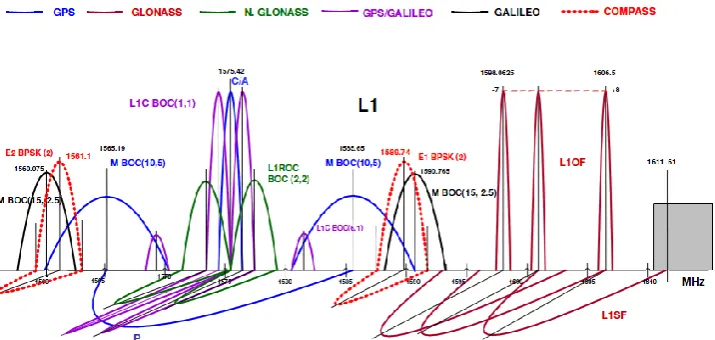
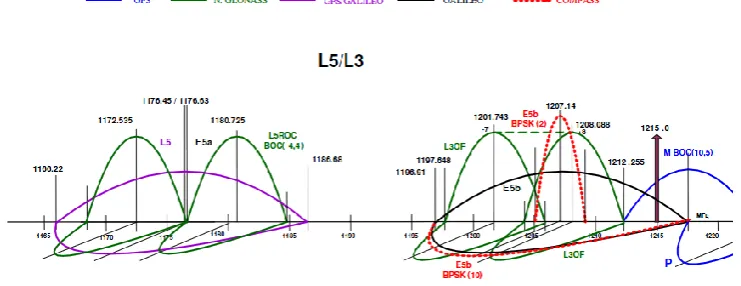
The various GNSS systems operate in the L - Band frequency range which sits between 1GHz and 2GHz. Figure 4-1, Figure 4-2 and Figure 4-3 show the distribution within that frequency range covering a number of different carriers and bandwidths. It is, however, fortunate from the receiver manufacturing point of view that they can be grouped to two bands. The first ranges from E5/L5 to E6 and the second from Compass L1 to Glonass G1. These two bands can be handled by a single receiver design. Using stacked patches in antenna design multiple bands can be received albeit with less gain and bandwidth (Dempster & Hewitson 2007).
There are performance differences due to selection of carrier frequencies nevertheless. Three-carrier ambiguity resolution can be seen as an improvement to RTK baseline length for high accuracy surveying. With gap-bridging concept, TCAR uses two closely spaced (super-widelane) and two widely spaced (widelane) carrier frequencies to create virtual wavelengths and frequencies (Werner & Winkel 2003). These are then subjected to mathematical formulae along with first estimation of the satellite to receiver line-of-sight range from one code range measurement to obtain first a super-widelane and then widelane ambiguity fix.
[image:36.595.119.476.391.625.2]Figure 4-1: GNSS frequency band L1 (Stupak 2008)
Figure 4-3: GNSS frequency band L5 (Stupak 2008)
The separation of bands plays a part in the success rate of ambiguity resolution (AR). Werner and Winkel (2003) studied the theoretical AR success rate between GPS and Galileo systems and found that, of all possible band combinations and using specific set of assumptions regarding the signal structures, carrier-to-noise ratios and the multipath environment, using E5ab for code and base signal, E6-E5ab for Super-Widelane and L1-E6-E5ab for Widelane yielded a 100% success rate overall. This compared favourably with GPS which only has three bands and therefore les potential combinations.
Werner and Winkel (2003) point out that "an important pre-condition for the performance of this algorithm is that there are no or only small multipath effects present, because otherwise, these systematic effects will destroy this 'gap-bridging' concept". This is likely to dilute the potential of TCAR, despite the lure of its distance independency, as a realistic alternative for other than wide open areas. Another limiting factor for TCAR is that at this time availability of mobile receivers capable of performing TCAR is to be announced.
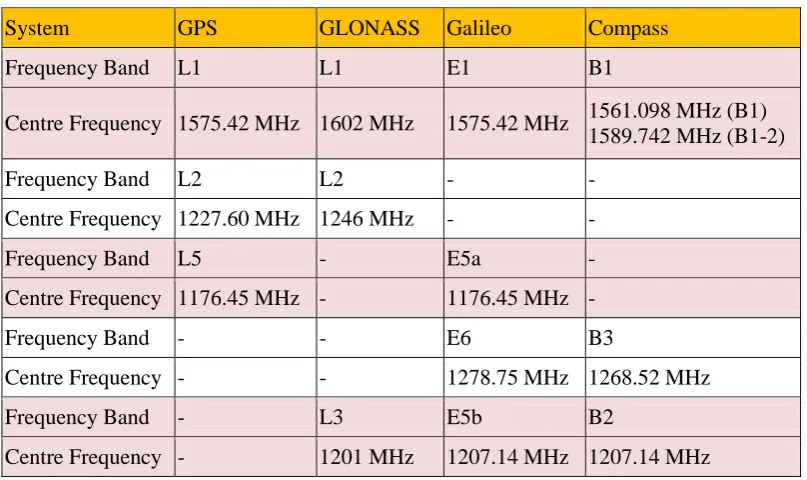
Table 4-1: Frequency bands of different GNSSs (Rodríguez 2008).
System GPS GLONASS Galileo Compass Frequency Band L1 L1 E1 B1
Centre Frequency 1575.42 MHz 1602 MHz 1575.42 MHz 1561.098 MHz (B1) 1589.742 MHz (B1-2) Frequency Band L2 L2 - -
Centre Frequency 1227.60 MHz 1246 MHz - - Frequency Band L5 - E5a - Centre Frequency 1176.45 MHz - 1176.45 MHz - Frequency Band - - E6 B3
Centre Frequency - - 1278.75 MHz 1268.52 MHz Frequency Band - L3 E5b B2
Centre Frequency - 1201 MHz 1207.14 MHz 1207.14 MHz
4.2.2Signal structures
The signal structures of various GNSS systems vary substantially more than the frequencies. Three of the four GNSS, GPS, Galileo and BeiDou, use Code Division Multiple Access (CDMA) modulation to identify each space vehicle message within the broadcast stream. Glonass uses historically Frequency Division Multiple Access (FDMA) modulation (which is depicted as a group of frequencies in Figure 4-1), with each space vehicle allocated one out of 16 frequencies, thus providing identification to the control system. Even though there are 16 frequencies, the full constellation is planned to consist of 18 space vehicles (SV). This has been made possible by allocating same frequencies to antipodal SVs (Misra 2013). Glonass are modernising the SVs and is testing and will be implementing a CDMA method as well.
point of view, as long as receiver can decode both modulation methods, there is no practical difference.
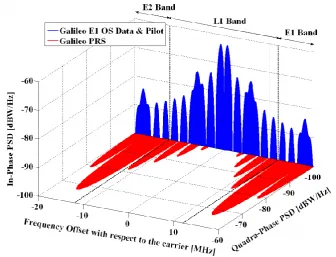
Whilst the actual signal structures of different GNSS systems is beyond this report, some pieces of information can give insight into how they affect the user. The signal structure of each GNSS system contributes to some extent to the success of the tracking of the signal. For example, as Eissfeller et al. (2001) state, the navigation data in Galileo system is only modulated on the I-Component, leaving the Quadrature-Channel free of additional phase shifts (Galileo E1 In-Phase and Quadra-In-Phase channels can be seen in Figure 4-4). This leads to a coherent, i.e. more robust phase tracking at a lower Signal-to-Noise level.
Chipping rates (signal pulse rates) are to some extent decided with demands from the requirement for interoperability and legacy concerns between different GNSS systems in mind (Roberts 2011). The Galileo system, although free from compelling design restrictions, chose to make its E1-band compatible to GPS L1-band to enable use of legacy L1 receivers.
In general higher chipping rates are reported by each GNSS system literature to yield higher accuracy levels in positioning. To explain this Roberts (2011, p. 8) states: 'Chipping rate defines the resolution to which a raw measurement can be made. So the L5 (or E5) with a 10.23Mhz chipping rate will be a more precise measurement than the L1 C/A (or E1) at a 1.023Mhz rate'. He continues to add (citing Avila-Rodriguez et al, 2008; Dempster and Rizos, 2009) that higher chipping rates require more transmission power and more expensive receiver design.
Figure 4-4: Galileo E1 spectrum, (Rodríguez 2011)
In conclusion, signal structures lend themself to various advantages in technique exploitation. Higher chipping rates are being introduced to all GNSS systems and Binary Offset Modulation in various forms is included in all GNSS systems, at least in some message types. The FDMA used by GLONASS no longer enjoys a security benefit due to the cross-correlation of codes modulated in CDMA. The FDMA modulation of some GLONASS SVs causes some cost burden towards receiver design. This has however stabilised with virtually every receiver manufacturer offering a product. The Quadrature-Channel, being free of additional phase shifts, leads to a coherent, i.e. more robust phase tracking at a lower Signal-to-Noise level and should prove a benefit.
4.2.3Signal strengths
Table 4-2 shows also the improved user received signal power yielded by more powerful Galileo E5 and GPS L5 signals. This will improve the tracking of the signal in areas where obstacles hinder the reception (Roberts 2011).
GPS and Galileo are enjoying an advantage in received signal strength in L5 and E5-E6 bands respectively with a nominal difference.
4.2.4Availability
Table 4-2: GNSS signals and received signal strength on Earth (de Bakker 2007)
3. Minimum received power with a 3dBi gain linearly polarized antenna for a satellite with a minimum of 5 degrees elevation.
4. Minimum received power with a 0dBi gain ideally matched antenna for a satellite with a minimum of 10 degrees elevation.
Table 4-3: GNSS orbital information, source Chen et al. (2009)
GPS GLONASS Galileo BeiDou (MEO) Number of SV 31 24 27 27
Orbital planes 6 3 3 3 Inclination 55º 64.8º 56º 55º
Table 4-4: BeiDou GEO satellites, source Chen et al. (2009)
Satellite Launch Date Position BeiDou-1A 31-Oct-2000 140°E BeiDou-1B 21-Dec-2000 80°E BeiDou-1C 25-May-2003 110.5°E BeiDou-1D 3-Feb-2007 58.75°E BeiDou-1E TBD 160°E
Table 4-5: BeiDou IGSO satellites, source Chen et al. (2009)
Semi-major Axis [Km] 42164 Inclination [Deg] 55 Eccentricity 0
RAAN 0°, 120°, 240° Argument of perigee 187.6°, 67.6°, 307.6°
From an Australian user's perspective availability is determined by available satellites in Australian sky. This varies according to the number of satellites as stated above and their orbits.
BeiDou-2 enjoys a particular advantage in having a regional component to it. This, in the form of satellites in Geo Stationary (GEO) and Inclined Geo Synchronous (IGSO) orbits provide significant increase in total available satellite in areas where those are visible. As can be seen from Figure 4-5, Australia is very conveniently situated to get almost full benefit from them, thus adding up to 8 satellites to sky view to complement the Medium Earth Orbit (MEO) satellites in view.
[image:43.595.143.480.567.739.2]4.2.5Orbital differences
[image:44.595.184.445.400.633.2]Users in higher latitude areas, such as areas in the North of Canada, Alaska, Europe, Russia as well as Antarctica, even Southern parts of Australia to some extent, obtain better GLONASS availability and consequently better derived dilution of precision (DoP) than users of GPS, Galileo or BeiDou-2 (Eissfeller et al. 2001). This is due to the high inclination angle of GLONASS; 64.8 degrees compared to 55 degrees for GPS and BeiDou-2 as well as 56 degrees for Galileo. This will obviously affect an Australian user depending on the latitude they are in. For GPS, Galileo and BeiDou-2 a user slightly south of Tasmania, at latitude -45 degrees, would be able to observe satellites all the way to northward masking angle of, say, 10 degrees but would be subjected to a de facto southward masking angle of approximately 76 degrees and the north-south sky view is approximately 105 degrees (see Figure 4-6). Using GLONASS the scenario changes so that the de facto southward masking angle is approximately 63 degrees and the north-south sky view is approximately 120 degrees (see Figure 4-7).
Figure 4-7: Tasmanian user's GLONASS sky view North-South
4.2.6Geographical differences
Geographically, the focus of each GNSS system has been in the areas of controlling bodies, North America for GPS, Russian Federation for GLONASS, Europe for Galileo and China for BeiDou-2.This is evident in the distribution of control stations.
The GPS control segment, depicted in Figure 4-8, is distributed well around the globe and the Ground Antennas, green triangles in the map, enable continuous data and update upload capability. In general the GPS service is available all around the globe with Australia enjoying the full geographical advantage.
Figure 4-8: GPS control segment (NCO 2013)
The Galileo ground segment consists of two Galileo Control Centres (GCCs), located at Fucino (Italy) and Oberpfaffenhofen (Germany) five telemetry, tracking and control stations, 10 uplink stations (ULSs), and up to 40 Galileo Sensor Stations (GSSs). The ULSs transmit navigation signals to the satellites and the GSSs receive the navigation signal from the constellation for transmission to the GCCs (Telespazio 2010). The coverage is worldwide with Noumea the nearest location to Australia, see Figure 4-12.
[image:46.595.146.481.482.664.2]Figure 4-10: SDCM reference stations in Russia (Stupak 2012)
Figure 4-11: SDCM reference stations global (Stupak 2012)
[image:47.595.119.505.519.727.2]The BeiDou-2 ground segment consists of one Master Control Station, two Upload Stations and 30 Monitor Stations. The locations are believed to be in mainland China, although, as BeiDou-2 capable tracking is performed by MGEX and CONGO (Montenbruck et al. 2013), see Figure 4-13. Australia is not only in with two tracking stations, but benefits from the contributions of the IGSO and GEO satellites of the regional component. A minor disadvantage compared to northern parts of the IGSO orbits stem from the fact that satellite ephemeris data gets updated when a satellite is in range of the control stations on Chinese mainland and therefore the issue-of-data-ephemeris parameter (IODE), measured in hours, is up to 6 hours old when that same satellite services Australian skies (see Figure 4-14). As can be seen in Figure 4-15, this characteristic of data updates from mainland China control stations affects the MEO satellites as well, even more so, with IODE values between 8 and 23 hours from the Americas to Indian subcontinent on the satellites journey eastward, until they reach the range of update centres.
Figure 4-14: BeiDou-2 IGSO SV's ephemeris data age in hours (Montenbruck & Steigenberger 2013)
Figure 4-15: BeiDou-2 MEO SV's ephemeris data age in hours (Montenbruck & Steigenberger 2013)
4.3
Evaluation of application aspects
4.3.1Available services
The basic function of a GNSS system is to provide navigation data to the GNSS user via a receiver. This is done via the navigation signal within the broadcast signal from the GNSS Space Vehicle.
[image:49.595.145.480.314.494.2]making it P(Y) and cannot be used on its own in a dual frequency scenario. This has been overcome by employing semi-codeless tracking techniques, which is not a feature of the GPS system. Furthermore, a new M-code incorporating the Selective Denial spoofing technique of the C/A-code is included (Ristić et al. 2010).
Glonass also has Standard Precision Service (SP) and High Precision Service (HP) with C/A and P-codes respectively. Each service is included on both L1 and L2 bands allowing dual frequency receiver civilian use (Ristić et al. 2010). The P-code navigation message has never been published but instead was distributed to the scientific community making the P-code fully available. This was apparently done to reserve the right to change code at will at any time ESA 2011). The Galileo runs five different services:
Galileo Open Service (OS), open, free service with guaranteed accuracy but no quality or integrity information (ESA 2011).
Galileo Commercial Service (CS), adds two encrypted and customer configurable signals to allow external service integration to CS (ESA 2011).
Galileo Public Regulated Service (PRS) is an Access-Controlled service intended for law enforcement and government authorities of European Union offering improved continuity of service in the presence of interfering threats (ESA 2011).
Galileo Safety of Life (SoL) contains signal integrity information at global level as opposed to other systems using SBAS to provide for integrity Galileo Search and Rescue Service (SAR/Galileo) provides SAR service
via detection of Emergency Position Indicating Radio Beacons (EPIRBs) as well as via a return link from the SAR operator to the distress emitting beacon (ESA 2011).
As a conclusion, and regardless of the common use of external services, The Galileo is the most attractive proposition for particularly applications where user has additional services to integrate to the Commercial Service signal. This could implementation of networks of different technologies combined with GNSS signals.
BeiDou-2 has both global worldwide services and regional services. Under the global services it offers Open Service similar to GPS and Authorized Service for Military use. Under the regional services users are provided with wide area differential services including ionosphere grid data and intersystem time offsets (Montenbruck & Steigenberger 2013). The China Satellite Navigation Office has been slow to publish navigation message content and the BeiDou Navigation Satellite System Signal In Space Interface Control Document Open Service Signal B1I (Version 1.0) was published only in late 2012.
4.3.2Supporting systems
Figure 4-16: QZSS and IRNSS coverage and orbits (Rodríguez 2008).
Figure 4-17 shows the target areas for some SBAS systems as well as GRAS, but it is worth noting that the Australian user can receive signals from satellites that service areas far away. Because the augmentation data is optimised for the target area, the quality of those services is questionable in Australia. Table 4-6 shows the respective GNSS support of the SBAS systems with GPS clearly most supported with GLONASS and BeiDou-2 and even Galileo, through Russian SDCM, also supported. Future plans for SBAS systems stated on their respective websites did not reveal any changes to the above.
[image:52.595.158.470.491.653.2]Table 4-6: GNSS support in Australia for GNSS (Rodríguez 2008).
SBAS
G
PS GLO
N A SS G al ileo B ei D ou -2 A ust co ver
Wide Area Augmentation System (WAAS) European Geostationary Navigation Overlay Service
(EGNOS) * *
Chinese Satellite Navigation Augmentation System (SNAS)
MTSAT Space-based Augmentation System (MSAS) System of Differential Correction and Monitoring (SDCM) GPS and GEO Augmented Navigation system (GAGAN) Nigerian Communications Satellite System (NIGCOMSAT)
Canadian Wide Area Augmentation System (CWAAS) South American Satellite Augmentation System (CSTB) *according to Wikipedia but not EGNOS or others
Global tracking systems are predominantly trying to include all GNSS systems in their service with an increasing number of stations with receiving capabilities of GNSS systems other than GPS, which is the dominant GNSS. No differentiators to be found in that area.
Post-processing services are also clearly moving towards multi-GNSS support but for the moment GPS is the default system with GLONASS support available with some but according to Gakstatter (2013) the Australian AUSPOS PPP-service does not get a mention for support for other than GPS system.
4.3.3Virtual Reference Station systems
4.4
Evaluation of control aspects
"The GLONASS P-code never was published by the system operators,
but it was made known to the scientific community. This means, the
GLONASS P-code is fully available. However, along with the P-code
not being published by the system operators, it neither was officially
released for use outside the Russian Armed Forces. Instead, they
reserve the right to alter the code in future. "(ESA 2011)
This statement is typical description of a GNSS system developed under the premise of military threats, real or perceived, controlling governmental decision making.
In short, Galileo is the only GNSS controlled by civilians, the European Union. In times of conflict the choice of GNSS may come under some regret if the system shuts down, or more realistically the US employs the M-code to deny GPS signals from anyone else.
In Australia, individuals make their own choice of GNSS and carry the consequences in case of service denial and have no real material to use for evaluating that risk.
Director of Aviation Safety, on behalf of The Australian the Civil Aviation Safety Authority (CASA), has made an instrument under regulations 174A and 179A of the Civil Aviation Regulations 1988 (CAR 1988) as Instructions — use of Global Navigation Satellite System (GNSS) (CASA 2012). It makes a mention of GPS but not any other GNSS system. Whether this implies an alignment to GPS or not, or is just pragmatic about the dominance and current availability of GPS is not clear.
4.5
Conclusions
Chapter 5
Discussion and Conclusions
5.1
Introduction
This project sought to evaluate the available GNSS systems from an Australian user's perspective. To get an understanding of the potential factors contributing to the benefit of one GNSS over another, some literature research was necessary. This resulted in a vast array of aspects that would need to be processed and assumptions were made to limit the scope of the project. A sub-research about what an Australian GNSS user might appreciate most was conducted along the main task of literature review and related data collection.
An evaluation framework was also needed and the author decided to formulate his own based on views expressed in literature about GNSS in relation to surveying. The conclusions are somewhat subjective without empirical data on user preferences and the matrix of performance credits is limited as in being more a discussion provoker than absolute ranking method.
5.2
Reviewing assumptions
The Australian user is limited to one GNSS.
o This may be unlikely due to receivers capable of multi-GNSS operation but conceivable nevertheless.
o Enables relevant comparative assessment.
The Australian user perspective was limited to surveying in Australia.
o Necessary to limit the scope of the project. All GNSS assessed are fully operational.
o No indications found that any GNSS would be halting progress. Receiver technology does not pose any limitations.
o This is market driven and is limited only by cost.
o Cost of equipment is not within the scope of the project.
5.3
Discussion
Although these assumptions were made, the scenarios assessed are relatively realistic and even likely. The trend towards multi-GNSS is prevalent and expressed by prominent authorities within each GNSS organisation but they each still are and are seen to strive for better systems, better the other GNSS. The differences are in some cases small, even marginal. For instance, the real impact of signal strength is difficult to ascertain, with literature avoiding the voicing out of real tangible results and preferences.
Some differences, on the other hand, are significant and in the final ranking of performance credits may not get the weight they deserve due to lack of confidence from the author.
Data collected for the project is from numerous scholarly as well as commercial sources over a relatively long time, considering the concept is relatively new and progress is made rapidly and continuously. The data has taken new shapes as the concepts expressed mature and clarification is provided. Therefore the possibility of existence and reporting of conflicting data is real.
The features assessed as significant contributors to the results are subject to constant change and support from external or additional sources and may lose their significance accordingly. So even though each GNSS is judged as finalised, some aspects were needed to be judged by the current status.
5.4
Conclusions
In general, GNSS systems are headed to more compatibility and interoperability. Superiority and advantages in an area or other are ebbing and flowing from one system to another but it was rather surprising to realise that the fate of the GNSS future is in the hand of soldiers with scenarios of threat painted to justify decisions to keep the crème de la crème in GNSS technology away from public use.
References:
Avila-Rodriguez, J, Hein, G, Wallner, S, Issler, J, Ries, L, Lestarquit, L, de Latour, A, Godet, J, Bastide, F, Pratt, T, & Owen, J 2008, 'The MBOC Modulation: The Final Touch to the Galileo Frequency and Signal Plan', NAVIGATION, vol. 55, no. 1, pp. 14-28.
de Bakker, PF 2007, 'Effects of Radio Frequency Interference on GNSS Receiver Output ', Masters Thesis, Delft University of Technology Faculty of Aerospace Engineering, Delft University of Technology, The Netherlands.
Chen, H-C, Huang, Y-S, Chiang, K-W, Yang, M, & Rau, RJ 2009, 'THE PERFORMANCE COMPARISON BETWEEN GPS AND BeiDou-2/COMPASS: A PERSPECTIVE FROM ASIA', Journal of the Chinese Institute of Engineers, vol. 32, no. 5, pp. 679-689.
Cojocaru, S 2009, 'GPS-GLONASS-GALILEO: A Dynamical Comparison', The Journal of Navigation, vol. 62, pp. 135–150, The Royal Institute of Navigation.
Dalporte, J 2009, 'The Definition and Implementation of Galileo System Time (GST)', Proceedings of ICG-4 WG-D on GNSS time scales, United Nations Office for Outer Space Affairs.
Dawoud, S, 'GNSS principles and comparison', Potsdam University, Potsdam,
http://www.snet.tu-berlin.de/fileadmin/fg220/courses/WS1112/snet-project/gnss-principles-and-comparison_dawoud.pdf.
Dempster, AG & Hewitson, S 2007,' The “System of Systems” receiver: An Australian opportunity?',paper to be presented at IGNSS2007 Symposium on GPS/GNSS, 4-6 December 2007, Sydney, Australia.
Eissfeller, B, Ameres, G, Kropp, V, Sanroma, D 2001, Performance of GPS, GLONASS and Galileo, University of Stuttgart, viewed 28 May 2013.
Gakstatter, E 2013, A Comparison of Free GPS Online Post-Processing Services, report, 7 October, GPS World, North Coast Media LLC, viewed 16 October 2013,
<http://gpsworld.com/a-comparison-of-free-gps-online-post-processing-services>.
Gao, W, Jiao, W, Xiao, Y, Wang, M & Yuan, H 2011, 'An Evaluation of the Beidou Time System (BDT)', The Journal of Navigation, vol. 64, pp. 31-39, The Royal Institute of Navigation.
He, L, Maorong, G, Wang, J, Wickert, J, & Schuh, H 2013, 'Experimental Study on the Precise Orbit Determination of the BeiDou Navigation Satellite System', Sensors, vol. 13, Issue 3, 1 March 2013, pp. 2911-2928.
Hongwei, S, Haibo, Y, Hong, Z 2010 'The impact of navigation satellite ephemeris error on common-view time transfer', Ultrasonics, Ferroelectrics and Frequency Control, vol.57, January 2010, pp 151-153.
Larson, KM, Levine, J, Nelson, LM &Parker, TE 2000, 'Assessment of GPS Carrier-Phase Stability for Time-Transfer Applications', Proceedings of the IEEE Trans Ultrason
Ferroelectr Freq Control 2000, vol.47(2), pp. 484-94.
Lewandowski, W, Jiang, Z 2009, 'USE OF GLONASS AT THE BIPM', presentation to be presented at the 41st Annual Precise Time and Time Interval (PTTI) Meeting, 16 - 19 November 2009, Santa Ana Pueblo, New Mexico, USA.
Lohan, ES , Lakhzouri, A & Renfors, M 2005, 'Benefits of using lower chip rates for Galileo OS and PRS signals', ENC-GNSS 2005, Munich, Germany.
Montenbruck, O & Steigenberger, P 2013, 'The BeiDou Navigation Message' paper to be presented at International Global Navigation Satellite Systems Society IGNSS Symposium, 16-18 July 2013, Gold Coast, Qld, Australia.
Montenbruck, O, Steigenberger, P, Hauschild, A 2013, 'From China with Love – The BeiDou Navigation System ', presentation to be presented at the Satellite Navigation Seminar, 14 May 2013, Munich, Germany.
Montenbruck, O, Hauschild, A, Steigenberger, P, Hugentobler, U, Teunissen, P & Nakamura, S 2012, 'Initial assessment of the COMPASS/BeiDou-2 regional navigation satellite system', published online, Springer.
Pellerin, C 2006, United States Updates Global Positioning System Technology,media release, 03 February 2006, U.S. Department of State, viewed 28 May 2013,
<http://www.america.gov/st/washfile-english/2006/February/20060203125928lcnirellep0.5061 609.html>.
Ristić, A, Govedarica, M, Petrovački, D 2010, 'GNSS – Status and Perspective', Journal on Processing and Energy in Agriculture, vol. 14, 2010, pp. 6-10.
Rizos, C, Higgins, M, Hewitson, S 2005, 'New GNSS Developments and their Impact on Survey Service Providers and Surveyors', paper to be presented at SSC2005 Spatial
Intelligence, Innovation and Praxis: The national biennial Conference of the Spatial Sciences Institute, September 2005, Melbourne.
Rodríguez, J 2008, 'On Generalized Signal Waveforms for Satellite Navigation', Doctoral Thesis, FAF University of Munich, Munich.
—— 2011, GALILEO Signal Plan, European Space Agency Navipedia, viewed 8 September 2013, <http://www.navipedia.net/index.php/GALILEO_Signal_Plan>.
Roberts, C 2011, 'How will all the new GNSS signals help RTK surveyors?', Proceedings of the SPATIAL SCIENCES & SURVEYING BIENNIAL CONFERENCE 2011, 21-25 November 2011, Wellington, New Zealand, pp. 40-51.
Stupak, G 2010, 'GLONASS status and development plans', presentation to be presented at the 5th Meeting of the International Committee on GNSS, presentation, Turin, Italy, 18 – 22 October 2010.
—— 2012, 'SDCM status and plans', presentation to be presented at the Seventh Meeting of the International Committee on Global Navigation Satellite Systems, 4 – 9 November 2012, Beijing, China.
Tegedor, J, Melgard, T, Øvstedal, O & Vigen, E 2013, 'Multi-constellation Precise Point Positioning including GPS, Glonass, Galileo and BeiDou', presentation to be presented at GNSS Precise Point Positioning Workshop: Reaching Full Potential, 12-14June 2013, Ottawa, Canada.
Werner, W & Winkel, J 2003, 'TCAR and MCAR Options With Galileo and GPS',
Proceedings of 16th Tech. Meeting of the Satellite Div. of the U.S. Institute of Navig