The Effective
Management of Time
Patrick Weaver PMP
Mosaic Project Services Pty Ltd
17thAugust 2010
The most comprehensive Oracle applications & technology content under one roof
Outline
• Time is not money! • Project Planning • Project Scheduling
• The Guide – future developments
Time is not money!
• The state of play – ICT – Gartner
– Construction – CIOB • Time -v- Money
• Skills and Knowledge
The state of play
• ICT – Gartner
• Construction – CIOB
– Managing the Risk of Delayed Completion in
the 21st Century
(http://www.mosaicprojects.com.au/PDF/CIOB_TM_report_full.pdf)
Time -v- Money
• Money – keep until you spend
– Symptom of other successes or failures • Time – 60 seconds lost every minute
– Can’t change the past – Now is too late to change – Manage the future
Burj Khalifa -v- Empire State Building
The steel frame rose at the rate of
four and a half floors per week
Empire State Bldg.
completed in 1931
Burj Khalifa Dubai
208 floors in 5+ years
Burj Khalifa -v- Empire State Building
The steel frame rose at the rate of
four and a half floors per week
Empire State Bldg.
completed in 1931
Burj Khalifa Dubai
208 floors in 5+ years
If the Burj Khalifa in Dubai had been built at the same speed as the Empire State Building it would have
opened two years earlier!
Time -v- Money
• Things that don’t work!
– Contract terms and conditions / penalties
• CIOB Report
• UK Government metrics (Constructing Excellence)
– Static contract programs
• Measure failure
Skills and Knowledge
• Skills and Knowledge
– Very few skilled planers and schedulers – Not used or respected by management – Except for the fights after the event
• A Brief History of Scheduling
http://www.mosaicprojects.com.au/Resources_Papers_042.html
Skills and Knowledge
• Solutions are being developed – Definition of good practices
– Development training and certification – Education of management
Planning -v- Scheduling
• Project Planning – Strategic process
– Focus on objectives and methods – Foundation for scheduling
• Project Scheduling
– Develop and maintain an effective schedule
Project Planning
• Precedes Scheduling • Focuses on methods
and Strategy
Project Planning
• Creates Buy-in • Frames
the
Schedule
Project Scheduling
• Requires good knowledge of scheduling • Understanding of the scheduling tool
• Involves:
Designing the schedule
• Understanding the Project Scope & Objectives (Planning)
• Determine the optimum update cycle
• Major milestones, gateways and phasing – The project life cycle
Designing the schedule
• Schedule users / audience – Code and report structures • Schedule size
– Heuristics ( 25 / 600)
– Control using Schedule Levels
Designing the schedule
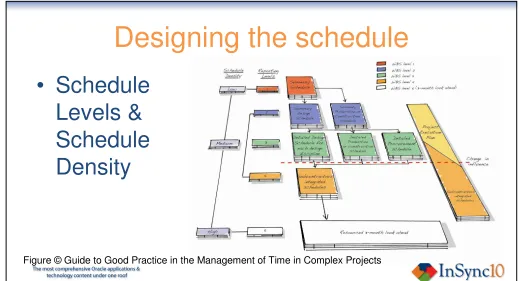
[image:9.595.36.555.93.374.2]• Schedule Levels & Schedule Density
Figure © Guide to Good Practice in the Management of Time in Complex Projects
Developing the schedule
Developing the schedule
• Schedule Density
– Overall framework is essential for Time Management….. But
– Detail planning requires the people doing the work to be involved (eg, Last Planner)
– Therefore, add detail when appropriate
Schedule Density
Activities are progressively expanded to greater levels of ‘density’ as more
information becomes available
Unless the work is designed in its entirety and all subcontractors and specialists appointed before any work commences, it is impossible to plan the work in its entirety, in detail at the beginning of a project.
Schedule Density
Low-density is
appropriate for work, which is intended to take place 12 months, or more in the future.
Tasks may be several months in duration
Medium density is appropriate for work, which is intended to take place between 3 and 9 months after the schedule date. At this stage the work should be designed in sufficient detail to be allocated to contractors, or subcontractors. Task durations should not exceed 2 months.
Schedule Density
High-density scheduling is an essential prerequisite for undertaking work. The schedule is prepared with the people doing the work.
Task durations should be no more than the update cycle
Schedule Density
The activity coding structure (ID) maps high to medium to low density
Sensible Activities
• Milestones
– Zero Duration
– Marks a significant point or event in a project – Start and Finish
– Other key points
Activity Identification
• Involve Stakeholders and Team • Test for completeness
• Keep level of detail consistent with your ‘plan for the schedule’
• Identify all Activities before moving onto next stage
Attributes of a ‘Good Activity’
• A discrete element of work
• A single person is responsible for
managing the performance of the work
• Its description is unique and unambiguous • The work is capable of proceeding to
Estimate Activity Durations
• Deal with each activity in turn
• Estimate optimum duration for activity • Consider: the work involved, the ideal
crew size & the team’s experience
• Involve people who will be responsible actually for ‘doing’ the work
Estimate Activity Durations
• High Density - Its duration is less than twice the update cycle (or undividable) • Be real!
– For 90% of projects use ‘days’ – Most of the rest ‘weeks’
See: The Cost of Time
Developing the schedule
• Practical Logic
– Organise the activities into a logical sequence – Only use ‘real logic’
– Use Finish-Start relationships where possible – Keep getting agreement
See: Links, Lags & Ladders
-www.mosaicprojects.com.au/Planning.html#Core_Papers
Links Cause Problems
• Progressive feed (but understand the issues) – Use both SS and FF
– Use Approximation or ‘Ladders’ if available
Task A - 10 Days Work
Task C - 12 Days Work
SS +4
SS +1
FF +3
Links Cause Problems
• But make sure you understand how your system works
Task A - 10 Days Work
Task C - 12 Days Work
SS +1
Task B - 3 Days Work
FF +1
Task A - 10 Days Work
Task C - 12 Days Work
SS +1
Task B - 6 Days Work
FF +1
Typical software solution
Increasing the duration of ‘critical’ Task B reduces the overall duration of the work!
A strange result……
Maintaining the Schedule
• Establish a baseline
– At the development stage – As part of a re-baseline • Record actual progress • Reschedule from
Maintaining the Schedule
• Edit for accuracy
– No tool accurately manages all of the issues around partially complete tasks
• Involve both task owners and managers – Use ‘their data’ not yours!
See: Managing for Success - The power of regular
updates-www.mosaicprojects.com.au/Resources_Papers_002.html
Reporting Options
• The major challenge with scheduling is communicating complex data effectively • This is achieved by effective reporting
See: Seeing the Road Ahead - the challenge of communicating schedule data
Reporting Options
Data is not information,
information is not knowledge, knowledge is not understanding, understanding is not wisdom.
Clifford Stoll
See: Beyond Reporting - The Communication Strategy
http://www.mosaicprojects.com.au/Resources_Papers_094.html
The Guide
– future developments
• Guide to Good Practice in the
Management of Time in Complex Projects • Educational Framework & Qualification
The Guide
• Guide to Good Practice in the
Management of Time in Complex Projects • Publication November 2010
• Copies available from:
http://www.mosaicprojects.com.au/Books.html#CIOB_Guide
Qualification Framework
• Current Qualification Framework
– Association for the Advancement of Cost Engineering International (AACE) PSP – PMI Scheduling Professional (PMI-SP) • Both focused on highly experienced
Education Framework
• Limited training for PMI-SP or AACE – Assumed self study by experts
– Mosaic planning a PMI-SP course for 2011 • Relatively low numbers of credentials
awarded
New Developments
• Planning Planet: www.planningplanet.com
– Developing training materials
– Developing accreditation process
Educational Framework
• CIOB
– Three levels – Based on
The Guide
– Certificate courses late 2011
Conclusion
• Definite trend towards
– Standardising planning and scheduling – Developing training frameworks
Conclusion
• Challenges:
– Keep training and credentials aligned – Gain respect of management
• We can make a difference!
Useful schedule are useful because they are used!
Discussion
• Questions please • Contact details:
– Free planning and scheduling resources:
http://www.mosaicprojects.com.au/Planning.html
Tell us what you think…
• http://feedback.insync10.com.au
• Free planning and scheduling resources: