“
EFFECTIVENESS OF MOTOR RELEARNING ALONG WITH
PROPRIOCEPTIVE NEUROMUSCULAR FACILITTATION ON
IMPROVING FUNCTIONAL MOBILITY IN SUBJECTS WITH
SUB ACUTE STROKE
”
DISSERTATION
Submitted for the partial fulfillment of the requirement for the degree of
MASTER OF PHYSIOTHERAPY (MPT)
(Elective MPT-NEUROLOGY)
OCT-2018
BY
G.THANGA BARATHI
Reg no: 271620224
Submitted to
MADHA COLLEGE OF PHYSIOTHERAPY
KUNDRATHUR, CHENNAI-600069
CERTIFICATE BY THE EXAMINER
This is to certify that the dissertation entitled
“
EFFECTIVENESS OF MOTOR
RELEARNING
ALONG
WITH
PROPRIOCEPTIVE
NEUROMUSCULAR
FACILITTATION
ON
IMPROVING
FUNCTIONAL MOBILITY IN SUBJECTS WITH SUB ACUTE
STROKE
”
was done by
G.THANGA BARATHI (REG NO: 271620224).
The undersigned examiners has duly verified and examined the submitted dissertation done by the above candidate.Internal Examiner
External Examiner
MADHA COLLEGE OF PHYSIOTHERAPY
KUNDRATHUR, CHENNAI-600069
CERTIFICATE BY THE PRINCIPAL
This is to certify that the dissertation entitled
“
EFFECTIVENESS OF MOTOR
RELEARNING
ALONG
WITH
PROPRIOCEPTIVE
NEUROMUSCULAR
FACILITTATION
ON
IMPROVING
FUNCTIONAL MOBILITY IN SUBJECTS WITH SUB ACUTE
STROKE
”
was done by
G.THANGA BARATHI (REG NO: 271620224).
This work has been done as a partial fulfilment for the degreeof
Master of Physiotherapy
doneat
Madha College of Physiotherapy, Chennai
and submitted in the year October 2018 toThe Tamilnadu Dr. M.G.R. Medical University.
Seal & signature of principal
PROF.V.VIJAIKRISHNA. MPT.MIAP
Madhacollege of physiotherapy
Date:
MADHA COLLEGE OF PHYSIOTHERAPY
KUNDRATHUR, CHENNAI-600069
CERTIFICATE BY THE GUIDE
This is to certify that the dissertation entitled
“
EFFECTIVENESS OF MOTOR
RELEARNING
ALONG
WITH
PROPRIOCEPTIVE
NEUROMUSCULAR
FACILITTATION
ON
IMPROVING
FUNCTIONAL MOBILITY IN SUBJECTS WITH SUB ACUTE
STROKE
”
was done by
G.THANGA BARATHI (REG NO: 271620224).
This work has been done as a partial fulfilment for the degree ofMaster of Physiotherapy
done atMadha college of physiotherapy, Chennai
. The dissertation has been done under the direct supervision and my guidance and submitted in the year October 2018 toThe
TamilnaduDr.M.G.R. Medical University.
Signature of guide
MR.P.BRIGHT ALWIN VICTOR. M.P.T(NEURO)
Associate professor
Madhacollege of physiotherapy
Date:
MADHA COLLEGE OF PHYSIOTHERAPY
KUNDRATHUR, CHENNAI-600069
CERTIFICATE BY THE CANDIDATE
I hereby declare that the dissertation entitled
“
EFFECTIVENESS OF MOTOR
RELEARNING
ALONG
WITH
PROPRIOCEPTIVE
NEUROMUSCULAR
FACILITTATION
ON
IMPROVING
FUNCTIONAL MOBILITY IN SUBJECTS WITH SUB ACUTE
STROKE
”
was done by
G.THANGA BARATHI (REG NO: 271620224
). This work has been done as a partial fulfilment for the degree ofMaster of Physiotherapy
done atMadhacollege of physiotherapy, Chennai
and submitted in the year October 2018 toThe Tamilnadu Dr. M.G.R. Medical University.
Signature of the candidate
ACKNOWLEDGEMENT
I express my gratitude to
MY GOD ALMIGHTY
for his abundant grace and mercy that has made me to succeed in my life.I express my heartfelt thanks to my dear family and friends for the astounding support, sacrifice and prayers that as enable me to spell success in life.
I am greatful to the chairman and management of the
Mr. SOOSAIYA PETER
educational trust for providing me an opportunity to do my study.I sincerely thanks our beloved principal
Prof. Mr. V.VIJAIKRISHNA, M.P.T, M.I.A.P
,for his support and valuable knowledge for completing my work.
I also wish to thank Associate
Professor .Mr. P.BRIGHT ALWIN VICTOR, M.P.T,
for his support and valuable knowledge for completing my work.
I also wish to thank
Prof. Mr. S.NAGARAJ, M.P.T, M.I.A.P, PGCDE
, andProf.
Mrs. MERCY CLARA M.P.T, M.I.A.P
for the ideas and support. \TABLE OF CONTENTS
S.NO TITLES PAGE.NO
1. INTRODUCTION 1-5
2.
REVIEW OF LITERATURE 6-19
3.
MARETIALS AND METHODOLOGY
20-25
4.
DATA ANALYSIS AND RESULTS 26-30
5.
DISCUSSION 31-32
6.
SUMMARY 33
7. LIMITATION AND SUGGESSION
34
8.
BIBILOGRAPHY 35-39
9.
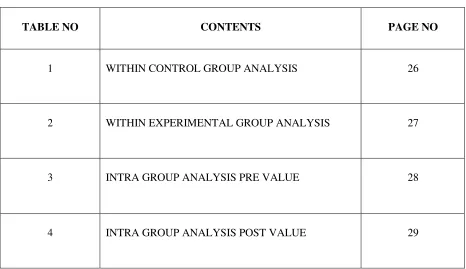
LIST OF TABLES
TABLE NO CONTENTS PAGE NO
1 WITHIN CONTROL GROUP ANALYSIS 26
2 WITHIN EXPERIMENTAL GROUP ANALYSIS 27
3 INTRA GROUP ANALYSIS PRE VALUE 28
LIST OF GRAPH
TABLE NO CONTENTS PAGE NO
1 MEAN VALUE OF ETUG 30
LIST OF FIGURES
S.NO LIST OF FIGURES PAGE NO
1. PHOTOGRAPHIC REPRESENTATION OF
RHYTHMIC INITATION OF PELVIC
25
2. PHOTOGRAPHIC REPRESENTATION OF
SITTING WITHOUT ARM SUPPORT CHAIR
ABSTRACT
“EFFECTIVENESS MOTOR RE-LEARNING ALONG WITH PROPRIOCEPTIVE
NEUROMUSCULAR FACILITATION ON IMPROVING FUNCTIONAL MOBILITY IN
SUBJECTS WITH SUB-ACUTE STROKE”
Aim of the study: The study is aimed to investigate the effectiveness of motor relearning along with proprioceptive neuromuscular facilitation on improving functional mobility in subjects with sub-acute stroke.
Objective of the study: The objective of the study is to enlighten the effectiveness motor relearning along with proprioceptive neuromuscular facilitation in improving functional mobility in subjects with sub-acute stroke
Methodology:
Study design: Experimental study design.
Sample size: 30 subjects with sub-acute stroke with functional mobility impairment were selected.
Procedure: Thirty subjects aged 45 to 55 years with stroke under Brunnstrom recovery stage III and IV were selected and assigned into two groups control group and experimental group with 15 subjects each, control group received PNF and the experimental group received PNF along with motor relearning program for a period of 4 weeks.
Outcome measures: Extended timed up and go test (ETUG) was used to evaluate the functional mobility before and after the treatment.
Results &Conclusion: The paired t test was used for within group analysis. The t values of control group for ETUG components sit to stand, walk 1, turn, walk 2, turn sit, walk speed ware21.469, 9.234, 35.133, 11.259, 14.587, 29.077 and p value were 0.00 through SPSS. 17 version.
The paired t test was used for within group analysis. The t values of experimental group for ETUG components sit to stand, walk 1, turn, walk 2, turn sit, walk speed were 19.795, 21.500, 15.985, 14.343, 18.189, 26.858 and p value were 0.00through SPSS. 17 version. The result showed significant improvement in within group analysis.
Hence it can be concluded that PNF along with motor relearning show improvement in functional mobility that subjects treated with PNF alone.
CHAPTER I
INRODUCTION
1.1BACKGROUND OF THESTUDY:
Ischemic stroke refers to an episode of neurological dysfunction, i.e., clinical evidence, due
to focal cerebral, spinal or retinal infarction; infarction is based on objective evidence. In
other words, stroke is characterized by symptoms, and the 24-hour time line is not mandatory
if thereis objective evidence of CNS infarction.[1]
Ischemic stroke is characterized by the sudden loss of blood circulation to an area of the
brain, resulting in a corresponding loss of neurologic function. Acute ischemic stroke is
caused by thrombotic or embolic occlusion of a cerebral artery and is more common than
hemorrhagicstroke.[2]
1.2INCIDENCE:
Cerebrovascular disorders (CVD) are increasing in prevalence and incidence in India due to
rapid escalation of risk factors including hypertension diabetes mellitus, smoking and obesity
affecting considerable proportion of adult population.
Global Burden of Disease study shows that of the 9.4 million deaths in India, 619,000 were
due to stroke and Disability Adjusted Life Years (DALYs) lost were 28.5 million
highlighting the fact that CVD leads to considerable mortality and morbidity.[3]Therefore
there is likely to be a major crisis in India unless national measures to prevent/control risk
factors of CVD are instituted and adequate services are put in place for the management and
rehabilitation of stroke.[4] Another issue of concern is that 20-30% of strokes occur in people
younger than 45 years and is more frequently seen in India compared to thewest.[4]
The overall annual incidence rates are available only from few regions in the country; the
rates per 100000 populations varied from 13 in Vellore [5] 33 in Rohtak[6] to 36/100000 in
Kolkata.[7] The age adjusted rate per 100000 persons was 105 in Kolkata, [7] 135 in
Trivandrum (based on Trivandrum stroke registry),[8] and 152 for Mumbai (based on
cities 76 to 150/100000),[10] and also as in developed countries including Perth (160), South
London (130/100000).[11] In view of the problems of determining the actual burden of strokes
in developing countries, particularly in view of rising trend in low-income and middle-
income countries, [12] stepwise approach has been proposed by WHO to facilitate standardized
approach to data collection and surveillance.[13],[14]
The strategy essentially consists of three
steps: Outcome of stroke patients in hospital, fatal events in the community and non-fatal
events in the community and it is envisaged that this approach will provide the framework for
creation of registries.[12],[13],[14] A multicentre study "Indian Collaborative Acute Stroke Study
(ICASS)" based on step approach was initiated in seven cities and this experience has led to
concept of establishing registries.[4],[8],[15],[16] Currently feasibility studies are underway for
urban and rural registries under the aegis of ICMR with the goal to develop National stroke
registry.[17]
Many patients remain unable to walk or have difficulties with walking after stroke. The
ability to walk independently is a prerequisite for many daily activities. [18] It has been
reported that only a small proportion can walk with sufficient ability to function effectively
within the community.[19] Hemiplegics patients have been shown to bear a greater percentage
of body weight on the sound limb, than on affectedside.[20]
In persons with hemiplegic, posture, tone and coordinate reciprocal movements, which are
required for normal gait, are usually impaired. Normal reciprocal pelvic movement is often
replaced by a fixed pelvic retraction, which makes it difficult for patients to swing the
affected lower extremity forward [21]
. Co-ordination between moving body parts is essential
for functional walking and is modified, often in a subtle manner, to accommodate variation in
task requirements and circumstances, such as walking speed,n path curvature, and
environmentalclutter.[22]
Proprioceptive Neuromuscular Facilitation (PNF) is one approach commonly used to improve
the gait of patients with hemiplegia. Various PNF procedures have been used, depending on
the affected site. Among these PNF techniques is facilitation of pelvic motion to improve
control of the pelvis. Because the pelvis has been described as a “key point of control” for
maintaining a gait pattern, techniques designed to affect the pelvis are widely used [21]. The
aspect of daily functioning in patients after stroke, and is being used increasingly for
international research in patients with stroke.
Carr and Shepherd advocated that rehabilitation involve training of everyday actions using
information from movement sciences, particularly the fields of biomechanics and motor
learning, as well as knowledge of the pathology and impairments associated with stroke.
Moreover, Carr and Shepherd have suggested that training can be organized into a circuit
with a series of workstations designed to strengthen affected muscles and provide the
opportunity for taskpractice.[23,24,25,26,27]
1.3NEED OF THESTUDY:
Stroke is one of the main causes for impairment or decrease in functional mobility. Many
studies have proven effectiveness of various techniques to improve functional mobility. PNF
and Motor relearning program are one among them.
Conventional therapy, motor relearning along with PNF is a new concept to improve
functional ability. There are very less studies to prove the effectiveness of conventional
therapy, Motor relearning along with PNF to improve the functional mobility of subjects with
stroke.
In India there is lack of studies to improve functional mobility in subjects with stroke by
using conventional therapy, PNF along with Motor re learning, so the need of this study is to
find out the effectiveness of conventional therapy, PNF and Motor relearning program in
1.4AIM OF THESTUDY:
The study is aimed to find out the effectiveness in improving functional mobility in subjects
with stroke by using Conventional therapy, motor relearning program along with PNF.
1.5OBJECTIVE OF THESTUDY:
To find out the effectiveness of conventional therapy along with PNF in improving the
functional mobility of subjects with stroke.
To find out the effectiveness of conventional therapy along with Motor relearning and PNF in
improving the functional mobility of subjects with stroke
To compare the effectiveness of conventional therapy along with PNF and conventional
therapy along with Motor relearning and PNF in improving the functional mobility of
subjects withstroke.
1.6HYPOTHESIS
NULL HYPOTHESIS:
There is no significance difference between of conventional therapy along with
Motor relearning and PNF on improving functional mobility in subjects with MCA stroke
ALTERNATE HYPOTHESIS:
There is significant difference between of conventional therapy along with Motor
1.7OPERATIONALDEFINITIONS:
STROKE:
Cerebro-vascular diseases can be defined as those in which brain disease occurs
secondary to a pathological disorder of blood vessel or blood supply.
PROPRIOCEPTIVE NEUROMUSCULAR FACILITATION:
Hastening the response of the neuromuscular mechanism through stimulation of the proprioceptors; could result in either facilitation or inhibition.
MOTOR RELEARNING:
Motor relearning program is a set of process associated with practice or experience
leading to relatively permanent changes leading in the capability for movement. This process
employs unassisted, goal directed practice.
FUNCTIONAL MOBILITY:
Functional mobility can be defined as the manner in which people are able to move
around in the environment in order to achieve daily activities and interact with society
EXTENDED TIMED UP AND GO TEST:
The ETGUG test is a practical, objective, assessment tool that can be used in almost any clinical
setting with minimal equipment, professional expertise, or training. Additionally, it has the capacity to give
the clinician more information since it measures each of the component parts of the test. The scope of
application of the test might be enlarged to include implications for prevention strategies in the high-risk
CHAPTER II
REVIEW OF LITERATUR
1. Alex Pollock “et al” 2015 conducted study on the Physical Rehabilitation Approaches for the Recovery of Function and Mobility after Stroke Major Update. A
total of 96 studies (10,401 participants) in this review. More than half of the studies
(50/96) were carried out in China. Generally the studies were heterogeneous, and
many were poorly reported. Physical rehabilitation was found to have a beneficial
effect, as compared with no treatment, on functional recovery after stroke (27 studies,
3423 participants; standardized mean difference (SMD) 0.78, 95% confidence interval
(CI) 0.58 to 0.97, for Independence in ADL scales), and this effect was noted to
persist beyond the length of the intervention period (nine studies, 540 participants;
SMD 0.58, 95% CI 0.11 to 1.04). Subgroup analysis revealed a significant difference
based on dose of intervention (P value < 0.0001, for independence in ADL),
indicating that a dose of 30 to 60 minutes per day delivered five to seven days per
week is effective. This evidence principally arises from studies carried out in China.
Subgroup analyses also suggest significant benefit associated with a shorter time since
stroke (P value 0.003, for independence in ADL). We found physical rehabilitation to
be more effective than usual care or attention control in improving motor function (12
studies, 887 participants; SMD 0.37, 95% CI 0.20 to 0.55), balance (five studies, 246
participants; SMD 0.31, 95% CI 0.05 to 0.56) and gait velocity (14 studies, 1126
participants; SMD 0.46, 95% CI 0.32 to 0.60). Subgroup analysis demonstrated a
significant difference based on dose of intervention (P value 0.02 for motor function),
indicating that a dose of 30 to 60 minutes delivered five to seven days a week
provides significant benefit. Subgroup analyses also suggest significant benefit
associated with a shorter time since stroke (P value 0.05, for independence in ADL).
No one physical rehabilitation approach was more (or less) effective than any other
approach in improving independence in ADL (eight studies, 491 participants; test for
subgroup differences: P value 0.71) or motor function (nine studies, 546 participants;
test for subgroup differences: P value 0.41). These findings are supported by subgroup
which identified no significant effects of different treatment components or categories
of interventions. [28]
2. Beyaert C “et al” 2015 conducted a study on Gait post-stroke: Pathophysiology and rehabilitation strategies. We reviewed neural control and biomechanical description of
gait in both non-disabled and post-stroke subjects. In addition, we reviewed most of
the gait rehabilitation strategies currently in use or in development and observed their
principles in relation to recent Pathophysiology of post-stroke gait. In bothnon-
disabled and post-stroke subjects, motor control is organized on a task-oriented basis
using a common set of a few muscle modules to simultaneously achieve body support,
balance control, and forward progression during gait. Hemiparesis following stroke is
due to disruption of descending neural pathways, usually with no direct lesion of the
brainstem and cerebellar structures involved in motor automatic processes. Post-
stroke, improvements of motor activities including standing and locomotion are
variable but are typically characterized by a common postural behavior which
involves the unaffected side more for body support and balance control, likely in
response to initial muscle weakness of the affected side. Various rehabilitation
strategies are regularly used or in development, targeting muscle activity, postural and
gait tasks, using more or less high-technology equipment. Reduced walking speed
often improves with time and with various rehabilitation strategies, but asymmetric
postural behavior during standing and walking is often reinforced, maintained, or only
transitorily decreased. This asymmetric compensatory postural behavior appears to be
robust, driven by support and balance tasks maintaining the predominant use of the
unaffected side over the initially impaired affected side. Based on these elements,
stroke rehabilitation including affected muscle strengthening and often stretching
would first need to correct the postural asymmetric pattern by exploiting postural
automatic processes in various particular motor tasks secondarily beneficial to gait.[29]
3. Hollands KL “et al” 2015 conducted a study on A novel and simple test of gait adaptability predicts gold standard measures of functional mobility in stroke
survivors. Stroke survivors (n=42) stepped to targets, on a 6m walkway, placed to
elicit step lengthening, shortening and narrowing on paretic and non-paretic sides.
The number of targets missed during six walks and target stepping speed was
(SWWS) and single support (SS) and step length (SL) symmetry (using Gait Rite
when not walking to targets) were also assessed. Stepwise multiple-linear regression
was used to model the relationships between: total targets missed, number missed
with paretic and non-paretic legs, target stepping speed, and each clinical measure.
Regression revealed a significant model for each outcome variable that included only
one independent variable. Targets missed by the paretic limb, was a significant
predictor of FM . Speed of target stepping was a significant predictor of each of BBS.
No variables were significant predictors of SL or SS asymmetry. Speed of target
stepping was significantly predictive of BBS and SSWS and paretic targets missed
predicted FM, suggesting that fast target stepping requires good balance and accurate
stepping demands good paretic leg function. The relationships between these
parameters indicate gait adaptability is a clinically meaningful target for measurement
and treatment of functionally adaptive walking ability in stroke survivors.[30]
4. L. Brewer “et al” 2014 conducted a study on Stroke rehabilitation: recent advances
and future therapies despite advances in the acute management of stroke, a large
proportion of stroke patients are left with significant impairments. Over the coming
decades the prevalence of stroke-related disability is expected to increase worldwide
and this will impact greatly on families, healthcare systems and economies. Effective
neuro-rehabilitation is a key factor in reducing disability after stroke. In this article we
have reviewed and discussed the effects of stroke, principles of stroke rehabilitative
care and predictors of recovery. We also have also discussed on novel therapies in
stroke rehabilitation, including non-invasive brain stimulation, robotics and
pharmacological augmentation. Many trials are currently underway, which, in time,
may impact on future rehabilitative practice. [31]
5. Rajesh Verma “et al” 2011 conducted study to evaluate the effectiveness of the task- oriented circuit class training (TOCCT) with motor imagery (MI) on the gait during
the sub acute phase after a stroke. 30 subjects with 4 – 12 weeks after stroke was
randomized into 2 groups and outcome measures were measured by Functional
ambulation classification (FAC), the Rivermed Visual Gait Assessment (RVGA),
improvement in mean and median scores of the experimental group. The study
conclude Task-oriented circuit class training with Motor imaginary produces statically
significant and clinically relevant improvements in gait and gait related activities. [32]
6. Mohamed ElsayedKhallaf “et al” 2014 conducted the study to find the effect of task specific exercises, Gait training and visual feedback of equinovarus gait among the
individuals with stroke. 16 subjects with ischemic stroke were assigned in 2 groups.
The subjects are at the stage 4 of motor recovery of foot according to chedokeMc
master stroke assessment. Significant improvements were observed among group 1
who received task specific exercises, gait training, and visual biofeedback than
with the group 2 who received traditional physiotherapy treatment. A
significant improvement was observed among group 1 which last one month
after termination of the treatment. Results showed positive long lasting effect
of the task specific exercises, gait training, and visual biofeedback on
equinovarus gait pattern among individuals with stroke.[33]
.
7. Kamal Narayana “et al” 2012 conducted study to find the improvements in
the upper extremity motor recovery of the patients who had a sub acute stroke
using Meaning full Task specific training. 103 subjects with 4 to 12 weeks of
post stroke were selected of the study subjects were randomized into 2 groups
(MTST, 51; standard training group, 52). Subjects in the Brunnstrom stage of
arm recovery of 2 to 5 were included in the study. Ninety-five participants
completed the 8-week follow-up. Participants were assigned to receive either
the MTST or dose-matched standard training program based on the Brunnstrom
stage and Bobath neuro developmental technique, 4 to 5 days a week for 4
weeks. Outcome measures were measured using Fugl-Meyer assessment
(FMA), Action Research Arm Test (ARAT), Graded Wolf Motor Function Test
(GWMFT), and Motor Activity Log (MAL). The MTST group showed a
positive improvement in the mean scores on the outcome measures at post and
follow-up assessments in comparison to the control group. Further, statistically
significant differences were observed in changes between the groups at post
produced statistically significant and clinically relevant improvements in the
upper extremity motor recovery of the patients who had a sub acute stroke. [34]
8. Chayuri "etal" 2014 conducted study to investigate the effect of intensive gait training with rhythmic auditory stimulation on postural control and gait performance
in individuals with chronic hemiparetic stroke.20 subjects with chronic hemiparetic
stroke participated in this study. Subjects in the Rhythmic auditory stimulation
training group (10 subjects) underwent intensive gait training with rhythmic auditory
stimulation for a period of 6 weeks(30 min/day, five days/week),while those in the
control group (10 subjects) underwent intensive gait training for the same duration.
Two clinical measures, Berg balance scale and stroke specific quality of life scale,
and a 2-demensional gait analysis system, were used as outcome measure. To provide
rhythmic auditory stimulation during gait training,the MIDI Cuebase musical
instrument digital interface program and a KM Player version 3.3 was utilized for this
study. Intensive gait training with rhythmic auditory stimulation resulted in significant
improvement in scores on the Berg balance scale, gait velocity, cadence, stride length
and double support period in affected side, and stroke specific quality of life scale
compared with the control group after training. Findings of this study suggest that
intensive gait training with rhythmic auditory stimulation improves balance and gait
performanceaswellasqualityoflife,inindividualswithchronichemipareticstroke.
[35]
9. Langhammer B "et al" 2010 conducts study to compare motor re learning versus Bobath to improve quality of movement in subjects with stroke. A randomized
controlled stratified trial of acute stroke patients. The patients were treated according
to Motor Relearning Programme and Bobath approach and assessed with Motor
Assessment Scale, Scoring Motor Evaluation Scale, Nottingham Health Profile and
the Barthel Index. A triangulation of the test scores was made in reference to the
Movement Quality Model and biomechanical, physiological, psycho-socio-cultural,
and existential themes. The items arm (p = 0.02–0.04) sitting (p = 0.04) and hand (p =
0.01–0.03) were significantly better in the Motor Relearning Programme group than
in the Bobath group, in both Scoring Motor Evaluation Scale and Motor Assessment
Scale. Leg function, balance, transfer, walking and stair climbing did not differ
biomechanical, physiological and psycho-socio-cultural showed higher scoring in the
Motor Relearning Programme group, indicating better quality of movement in all
items. Regression models established the relationship with significant models of
motor performance and self reported physical mobility (adjusted R2 0.30–0.68, p <
0.0001), energy (adjusted R2 0.13–0.14, p = 0.03–0.04, emotion (adjusted R2 0.30–
0.38, p < 0.0001) and social interaction (arm function, adjusted R2 0.25, p = 0.0001).
These analyses confirm that task oriented exercises of the Motor Relearning Program
type are preferable regarding quality of movement in the acute rehabilitation of
patients withstroke.[36]
10. Beverley French "et al" 2010 conducts study to Beverley French determine if
repetitive task training after stroke improves functional activity. Systematic review
and meta-analysis of trials comparing repetitive task training with attention control or
usual care. 659 participants were included in the study and they are reviewed with
Cochrane Collaboration methods, resources, and software. Results werestatically
analyzed for walking distance, walking speech, sit to stand and ADL. Repetitive task
training resulted in modest improvement across a range of lower limb outcome
measures, but not upper limb outcome measures. Training may be sufficient to have a
small impact on activities of daily living. Interventions involving elements of
repetition and task training are diverse and difficult to classify: the results presented
are specific to trials where both elements are clearly present in the intervention,
without major confounding by other potential mechanisms ofaction.[37]
11. GajananBhalerao “et al” 2013 conducted study to compare the effectiveness of Motor Relearning program (MRP) versus Bobath approach on Activities of Daily
Living (ADL’s) and ambulation at every two week’s interval in Acute Stroke
Rehabilitation in first six weeks of training. Randomized Control trial of 32 subjects
with first unilateral stroke (middle cerebral artery territory involvement) participated
in the study. Random allocation using block randomization in to two groups was
done. Group A included 17 subjects received Motor Relearning Program (MRP) and
Group B, 15 subjects received management based on Bobath approach for a period of
six weeks. Functional Independence Measure and Barthel Index used for ADL’s
ambulation performance. Motor relearning program showed significant improvement
in Barthel Index. [38]
12.
Santos-Couto-Paz Cc “et al” 2015 conducted the study to find the addition of functional task-oriented mental practice to conventional physical therapy improves
motor skills in daily functions after stroke. 9 individuals with stable mild and
moderate upper limb impairments participated, by employing an A1-B-A2 single-case
design. Phases A1 and A2 included one month of conventional PT, and phase B the
addition of MP training to PT. The motor activity log (MAL-Brazil) was used to
assess the amount of use (AOU) and quality of movement (QOM) of the paretic upper
limb; the revised motor imagery questionnaire (MIQ-RS) to assess the abilities in
kinesthetic and visual motor imagery; the Minnesota manual dexterity test to assess
manual dexterity; and gait speed to assess mobility. After phase A1, no significant
changes were observed for any of the outcome measures. However, after phase B,
significant improvements were observed. The significant gains in manual dexterity
and gait speed were maintained after phase A2. Specific functional task-oriented MP,
when added to conventional PT, led to improvements in motor imagery abilities
combined with increases in the AOU and QOM in daily functions, manual dexterity,
and gait speed.[39]
13. StraubeDd “et al” 2014 conducted study to find the Effects of dynamic stepping training on non locomotors tasks in individuals post stroke. Individuals with
locomotor deficits following sub acute and chronic stroke (n=22) completed a
locomotor training paradigm using a repeated-measures design. Practice of multiple
stepping tasks was provided in variable environments or contexts at high aerobic
intensities for ≥40 sessions over 10 weeks. The primary outcome was timed Five- Times Sit-to-Stand Test (5XSTS) performance, with secondary measures of sit-to-
stand kinematics and kinetics, clinical assessment of balance, and isometric lower
limb strength. Participants improved their timed 5XSTS performance following
stepping training, with changes in selected biomechanical measures. Statistical and
clinically meaningful improvements in balance were observed, with more modest
changes in paretic leg strength. The present data suggested that significant gains in
training. Improvements in non practiced tasks may minimize the need to practice
multiple tasks within and across treatment sessions. [40]
14. Michael A. Gregory “et al” 2016 conducted a study on Group-based exercise combined with dual-task training improves gait but not vascular health in active older
adults without dementia. Participants were randomized to either intervention. Each
week, for 26 weeks, both groups accumulated 50 or 75 min of aerobic exercise from
group-based classes and 45 min of beginner-level square stepping exercise (SSE).
Participants accumulating only 50 min of aerobic exercise were instructed to
participate in an additional 25 min each week outside of class. The EDT group also
answered cognitively challenging questions while performing SSE (i.e., dual-task
training). The effect of the interventions on gait and vascular health was compared
between groups using linear mixed effects models. At 26 weeks, the EDT group
demonstrated increased dual-task (DT) gait velocity, and carotid intima-media
thickness, as well as reduced DT stride time variability,coefficient of variation
percentage points, when compared to the EO group. Group-based exercise combined
with dual-task training can improve DT gait characteristics in active older adults
without dementia.[41]
15. Sarah Richardson “et al”2015 conducted study to outline possible benefits in function from repetitive task-oriented training techniques and document outcomes of
a patient who had received PT services >12 months post stroke. The patient was an
82 year-old female who was suffering from late effects of two separate stroke events.
She was seen for outpatient PT for one hour, two times weekly for a total of 12 weeks
during this episode of care. The following outcome measures were used: Function in
Sitting Test (FIST), Tinetti, and a modified Gait Speed Test. Outcomes:
Improvements in balance and functional mobility on the Tinetti (4/28 to 16/28) and
Function in Sitting Test (43/56 to 56/56) were noted. Improved strength was noted
based on manual muscle testing of the quadriceps and hamstrings. This patient was
able to achieve independent bed mobility, increase her walking distance, and decrease
the level of gait assistance needed (from max to contact guard) with improved quality
of gait. No significant changes were noted in gait speed. Modified Ashworth Scale
indicated no change in spasticity. Discussion: The findings suggest that a task-
for this individual with chronic effects of stroke. Further research is needed to validate
these results for similar patients. [42]
16. Bhaleraogajanan “et al”2015 conducted a study on various neurophysiologic approaches like Proprioceptive neuromuscular facilitation technique i.e. PNF,
Bobath's neurodevelopment approach i.e. NDT, Brunnstrom technique and Rood's
approach. But there is a lot of variation of use of these approaches depending on the
therapists. We wanted to find the approach is used the most, what was the reason
behind the selection, and were the physiotherapists trained in it. It is questionnaire
based survey, validated by 3 clinical experts, created using Google docs and was
emailed to more than 2000 therapists across India. Out of which 412 therapists
willingly participated in the survey. Ten incomplete questionnaires were excluded.
Final sample size was 402. The questionnaire was based on the neuro therapeutic
approaches. Physiotherapists holding BPTh and MPTh degrees were included in the
study. After the reception of responses the data was analyzed through descriptive
analysis. Out of all the respondents, 15% of them were on-going masters students
while rest all of them were clinicians. This included 39% from south and west region
each and 13% from north and 9% from east region of India. The study shows that
96% therapist show good awareness about the approaches, despite this 73% faced
difficulty practicing it. Although PNF, sensory integration, CIMT, MRP are found to
be most commonly taught at graduation level followed by Rood, NDT/Bobath and
Brunnstorm, PNF and CIMT are most commonly preferred and practiced approaches,
followed by NDT/Bobath and Brunnstorm. The least preferred and practiced
approaches were found to be Roods and Motor Relearning Program. It was found that
the therapists misunderstood sensory integration with sensory re-education. PNF and
CIMT were more preferred because they are easy to learn and practice and are also
evidence based. Only 13% of therapists were found to have received training in some
approaches. Surprisingly, 90% of them were found to be interested in attending
additional training in these approaches.96% of therapists are well aware of neuro
approaches, but face difficulty practicing them. PNF and CIMT are most commonly
MRP. There is a mix pattern of practice of traditional approaches such as PNF,
Brunnstorm and NDT and the task specific training such as CIMT. This study
suggests that the physiotherapists are still practicing more of traditional approaches
than task specific approaches such as CIMT and MRP. The study further shows that
majority of the therapists i.e.87% have not had any additional training and that 90%
are keen on acquiring additional knowledge about these approaches through some
workshop or a seminar [43]
17. SeoKc “et al” 2015 Conducted study to examine the effects of ramp gait training using lower extremity patterns of Proprioceptive neuromuscular facilitation (PNF) on
chronic stroke patients' dynamic balance ability. [Subjects and Methods] In total, 30
stroke patients participated in this study, and they were assigned randomly and
equally to an experimental group and a control group. The experimental group
received exercise treatment for 30 min and ramp gait training with PNF for 30 min.
The control group received exercise treatment for 30 min and ground gait training for
30 min. The interventions were conducted in 30 min sessions, three times per week
for four week. The subjects were assessed with the Berg balance scale test, timed up
and go test, and functional reach test before and after the experiment and the results
were compared. After the intervention, the BBS and FRT values had significantly
increased and the TUG value had significantly decreased in the experimental group;
however, the BBS, FRT, and TUG values showed no significant differences in the
control group. In addition, differences between the two groups before the intervention
and after the intervention were not significant. In conclusion, ramp gait training with
PNF improved stroke patients' dynamic balance ability, and a good outcome of ramp
gait training with PNF is also expected for other neurological system disease
patients.[44]
18. Kim Ek “et al” 2015 conducted the study to investigate the effect of aquatic Proprioceptive neuromuscular facilitation (PNF) patterns in the lower extremity on
balance and activities of daily living (ADL) in stroke patients. [Subjects] Twenty post
stroke participants were randomly assigned to an experimental group (n = 10) or a
control group (n = 10). The experimental group performed lower extremity patterns in
an aquatic environment, and the control group performed lower extremity patterns on
weeks. Balance was measured with the Berg Balance Scale (BBS), Timed Up and Go
Test (TUGT), Functional Reach Test (FRT), and One Leg Stand Test (OLST).
Activities of daily living were measured with the Functional Independence Measure
(FIM). A paired t-test was used to measure pre- and post-experiment differences, and
an independent t-test was used to measure between-group differences. The
experimental and control groups showed significant differences for all pre- and post-
experiment variables. In the between-group comparison, the experimental group was
significantly difference from the control group. These results indicate that performing
aquatic Proprioceptive neuromuscular facilitation patterns in the lower extremity
enhances balance and ADL in stroke patients.[45]
19. Co Akosile “et al” 2011 conducted study to investigate the effect of an 8- weekproprioceptive neuromuscular facilitation (PNF)treatment program on the
functional ambulation of post-stroke individuals measured with the Emory Functional
Ambulation Profile (EFAP) - a timed-test instrument comprising 5 subtasks.
Seventeen male and female post-stroke individuals (mean age56.73+8.79years) were
recruited into the study and treated with a PNF protocol twice weekly for 8 weeks.
Performance on individual subtasks of the EFAP were measured and recorded for
each participant before and at the end of the study. Only the data for 15participants
was available at the post-test for analysis. EFAP subtasks completion times were
significantly reduced for all subtasks at the post-test and total EFAP score (p<0.05).
PNF technique led to improvement in the functional ambulation of post stroke
individuals. PNF is recommended as an effective treatment for functional ambulatory
gains in strokerehabilitation.[46]
20. DildipKhanal "et al" 2013 conducted study to find Effectiveness of Pelvic Proprioceptive Neuromuscular Facilitation Technique on Facilitation of Trunk
Movement in Hemiparetic Stroke Patients Thirty hemiparetic stroke patients were
randomly divided into two groups. The experimental group received pelvic PNF while
the control group received conventional physiotherapy in the form of trunk exercises
for 30 minutes. Along with this both group received regular physiotherapy in the form
of tonal management and range of motion exercises for the affected limbs for 30
minutes. Intervention was given once in a day for five days/week for four weeks.
Flexion Range of Motion (TLF ROM), and Tinetti Test (TT). Post-intervention, both
the group shows improvement on trunk performance, range of motion, balance and
gait but the experimental group shows more improvement than control group. [47]
21. Tatiana Souza Ribeiro “et al” 2014 Conducted study to analyze the effects of a training program based on the Proprioceptive Neuromuscular Facilitation (PNF)
method on motor recovery of individuals with chronic post-stroke hemiparesis.
Eleven individuals with chronic hemiparesis (mean lesion time of 19.64 months) after
unilateral and non-recurrent stroke underwent training based on PNF method for
twelve sessions, being evaluated for motor function - using the Stroke Rehabilitation
Assessment of Movement (STREAM) instrument; functionality, by the Functional
Independence Measure (FIM); and gait kinematic (using the Qualisys Motion Capture
System), at baseline and post-training. Significant changes in FIM were observed.
Data showed significant changes in motor function and functionality after training,
suggesting that this program can be useful for rehabilitation of chronic stroke
survivors.[48]
22. Kumar “et al 2012” conducted study to find The Effect of PNF Technique on Gait Parameters and Functional Mobility in Hemiparetic Patients 30 subjects affected by
cerebrovascular accident of ischemic injury took part in the study. They were divided
into two groups i.e. an Experimental group and a Control group with 15 patients in
each group. The subjects of this study were the residents of northern Haryana and the
mean age of the patients was 59 to 30 years. Patients were assessed before
commencement and after the completion of treatment sessions by a fixed battery of
tests on Stride length, Gait Velocity, Cadence and Functional Mobility parameters
with measuring tape, stop watch and Rivermead Mobility Index respectively. The
results of this study demonstrated that the PNF technique has significant effect on gait
parameters & functional mobility as compared to conventional therapy in patients
with hemiplegia. The findings show that the walking speed has a significant effect on
23.. ChaturvediPoonam et al"2015" conduct a study To find correlation of lesion
volume with functional outcome and effects of PNF (Proprioceptive Neuromuscular
Facilitation) exercises in the improvement of functional outcome in the patients
having MCA ischemic stroke. The study is a randomized controlled pilot study. 20
subjects having first time ischemic MCA stroke were recruited and their lesion
volumes were calculated from CT scan. Subjects were divided into two equal groups:
experimental (gp. A) and control (gp. B). Experimental group were given PNF
exercises and control group were given general exercises. Barthel Index and Fugl-
Meyer scale were assessed before and after the intervention. Data was analyzed by
using student t- test by SPSS version 16.0. There is negative correlation between
lesion volume and Barthel Index; and between lesion volume and Fugl- Meyer scale..
The patients receiving PNF showed improvement in functional outcome more than
control group.[50]
24.PernilleBotolfsen "et al” 2008 conducted a study to find the Reliability and
concurrent validity of the Expanded Timed Up-and-Go test in older people with
impaired mobility. The present study is reliability and a validity study. Twenty-eight
subjects (80 ± 4.1 years) with balance and gait problems were included. Three raters
timed the ETUG subtasks from a video, using a computer-based scoring programme,
and the total ETUG time was calculated. TUG was registered by a regular stopwatch.
The ETUG scored from a video shows a good reliability for experienced raters and
acceptable internal consistency. The ETUG showed a higher reliability than TUG
when tested on the same sample of older subjects with impaired mobility, and the high
concurrent validity between ETUG and TUG suggests that the two tests may have
similar properties. Since ETUG also adds new information compared with TUG, we
suggest that ETUG is an interesting alternative to existing clinical tests of mobility.[51]
25. Christina D. Faria, “et al” 2012 conducted a study to investigate the intra- and inter
rater reliabilities of the Expanded Timed Up and Go (ETUG) test with subjects with
stroke and to compare the ETUG scores between subjects with stroke and healthy
and levels of physical activity were included in the study. Subjects with stroke spent
more time in all of the ETUG activities when compared with control subjects. All of
the activities appeared to contribute similarly to the poorer performances observed in
subjects with stroke, because the ratio values were similar between the groups.
Considering the positive intra- and inter rater reliability results, the ETUG could be
CHAPTER II MATERIALS AND METHODOLOGY
3.1MATERIALS
Couch
Parallel bars
Steppingboard
Foot stool
Mirror
Ball
Tray
Walk way with chart instructiondescribed
Chair with arm rest and without armrest
Stop watch
3.2METHODOLOGY
3.2.1 Study design:
The study design was experimental study design.
3.2.2 Samplingsize:
Sample of 30 subjects who came under selection criteria were included in the study.
3.2.3 Samplingmethod:
Convenient sampling technique and randomly allocated.
3.2.4 Study duration:
3.2.5 Study method:
Subjects were divided into control group and experimental group
Control group:
15 subjects are treated with conventional therapy along with Proprioceptive
neuromuscular facilitation
Experimental group:
15 subjects are treated with conventional therapy along with motor relearning
And PNF
3.2.6 Selectioncriteria: Inclusive criteria:
Both male andfemale
Age 35-45
Burn storm recovery stage 3,4
Dominant side hemiplegicsubjects
Exclusive criteria:
Perpetual and Cognitivedeficits
Recent surgery of lowerlimb
Associated neurological problems likeParkinsonism.
Any fixeddeformity
Severe respiratory distress and cardiacinvolvement.
Medicalinstability
3.2.7 Study setting:
Madha medical college hospital &research institute, Kundrathur, Chennai.
3.2.8 Study duration:
The treatment will be scheduled according to the clinical standards and the subjects in
control groups will be given 30 min of PNF along with conventional therapy and subjects in
experimental group will be given 30 min of PNF along with conventional therapy and 20 min
of Task training program. The treatment will be given 3 times in a week in alternate days for
3.2.9 Parameter:
Outcome measures:
Extended Timed Up and Go Test(ETUG).
3.2.10 TREATMENTTECHNIQUE:
PROPRIOCEPTIVE NEUROMUSCULAR FACLITATION:
Rhythmic initiation ofpelvic
Slow reversal of pelvic
Agonistic reversal ofpelvic
PNF elements such as manual contact, stretch, resistance, and verbal cuing were incorporated
along with the treatment.
Frequency: 30 min/session/day.
MOTOR RE LEARNNG PROGRAMME:
TASK SPECIFIC LOCOMOTORSTRAINING: Sitting to standing:
With arm restchair
Without arm restchair
Walking:
Walking forward with eye open andclosed
Walking backward with eye open andclosed
Walking sideward with eye open andclosed
Crossed stepping:
Sidestepping
Elevation activities:
Step up
Step down
Lateral stepups
Stairclimbing
Community activities:
Walking onramps
Walking oncurbs
Walking on uneventerrain
Walking over and aroundobstacles
Balance activities:
Tandem walking on aline
Semi-tandemwalking
Walking on afoam
Dual task activities:
Holding a ball andwalk
Carrying a tray over head andwalk
Carrying on a conversation andwalk
Coincident timing required:
Walking to thedoors
Walking across theroom
Frequency: 20 min/session/day.
CONVENTIONAL THERAPY:
Stretching.
Strengtheningexercise:
Pelvicbridging.
Active assistedmobilization.
Active mobilization with minimal and maximal
resistance.
Bed transferencetraining.
Upper limb and Lower limb exercises in sitting and
3.2.11 StudyProcedure:
After getting informed consent, checking inclusion and exclusion criteria under
convenient sampling technique 30 subjects were selected and randomly assigned into control
group and experimental group.
Group A will consist of 15 subjects (control group), Group B will consist of 15
subjects (Experimental group). Both the control group and experimental group will receive
clear explanation in detail about the study.
The subjects in Group A (control group) will be given Proprioceptive neuromuscular
facilitation as per the protocol, all subjects will receive a protocol of 3 PNF techniques i.e.
rhythmic initiation, slow reversal and agonistic reversal for pelvis for 30min for 3 days for
alternate days in a week for a total duration of 4 weeks (12 sessions). Each technique will be
given for 10 minutes.
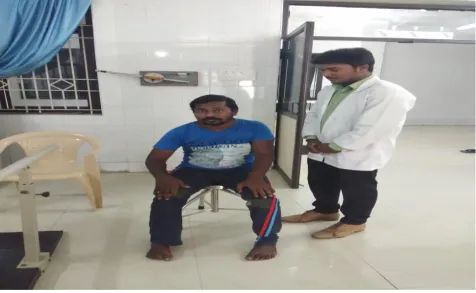
These procedures were done to facilitate anterior tilt and posterior tilt of pelvis in a
side lying position. The elements of PNF, such as manual contact, stretch, resistance, and
verbal cuing were incorporated into the treatment scheme.
The subject will be doing the conventional therapy as a home exercise everyday and
also during the session
The subjects in Group B (EXPERIMENTAL GROUP) will be given PNF and
conventional therapy along with motor relearning as per protocol, all subjects received MRP
for 20min along with PNF. Task training program will be used to assign the motor re-learning
program; the protocol was designed according to the clinical standards in the MRP.
The subject will be doing the conventional therapy as a home exercise everyday and
also during the session
The results are obtained through the extended timed up-go test (ETUG) [51,52] and the timings
for each task were recorded using stop watch for pre- test and post-test in both control and
FIG: 1 RHYTHMIC INITIATION OF PELVIC
[image:36.596.75.551.443.736.2]CHAPTER IV
DATA ANALYSIS AND RESULTS
The study comprised of two groups, control group and experimental group, with 15 subjects in each group. For the both group age range was between 45 and 55. Statistics was done by using SPSS.17version.
The paired t test was used for within group analysis. Pre and post mean with standard error mean, t values and p values of control group for ETUG components sit to stand, walk 1, turn, walk 2, turn sit, walk speed are given in the table1. Their p value was 0.00. The result showed there were significant improvement in within group analysis for control group.
TABLE I
WITHIN CONTROL GROUP ANALYSIS
COMPONENT OF ETUG
PRE MEAN VALUE ± STANDARD ERROR MEAN
POSTMEAN VALUE± STANDARED ERROR MEAN
t VALUE
SIGNIFICANCE (p VALUE)
SIT TO STAND 10.1200 ±0.20545 7.5200±0.22640 21.469 0.0
WALK 1 10.7600±0.11580 8.5667±0.19752 9.234 0.0
TURN 9.8533±0.22822 7.5533±0.22036 35.133 0.0
WALK 2 11.4600±0.2466 8.8933±0.23227 11.259 0.0
TURN & SIT 10.4067±0.34219 7.6733±0.28174 14.587 0.0
For experimental group pre and post mean with standard error mean, t values and p values of experimental group for ETUG components sit to stand, walk 1, turn, walk 2, turn sit, walk speed were given in the table 2. Their p values are calculated to be 0.00 through SPSS version 17. The result showed there was significant improvement in within group analysis for experimentalgroup.
TABLE II
WITHIN EXPERIMENTAL GROUP ANALYSIS
COMPONENT OF ETUG
PRE MEAN VALUE ± STANDARD ERROR MEAN
POSTMEAN VALUE± STANDARED ERROR MEAN
t VALUE SIGNIFICANCE
(p VALUE)
SIT TO STAND 10.3733 ±0.14225 5.8000±0.16036 19.795 0.0
WALK 1 11.0933±0.19651 5.8000±0.17968 21.500 0.0
TURN 10.0067±0.2588 5.06673±0.15096 15.985 0.0
WALK 2 10.3467±0.34598 5.3000±0.12459 14.343 0.0
TURN & SIT 10.5267±0.29592 4.6800±0.11050 18.189 0.0
Unpaired t test was used to compare the pre – post values of both the group. The pre test values of both the control and experimental group for the ETUG components sit to stand, walk 1, turn, walk 2, turn sit, walk speed outlining the f value and p value were given intable 3.The result showed that there was no homogenisity among thegroup.
TABLE III
INTRA GROUP ANALYSIS PRE VALUES
COMPONENTS OF ETUG
CONTROL PRE MEAN VALUE ±
STANDARD ERROR MEAN
EXPERIMENTAL PRE MEAN
VALUE ± STANDARD ERROR MEAN
F VALUE SIGNIFICANCE
‘p’ VALUE
SIT TO STAND 10.1200 ±0.20545 10.3733 ±0.14225 3.310 0.88
WALK 1 10.7600±0.11580 11.0933±0.19651 5.615 0.25
TURN 9.8533±0.22822 10.0067±0.2588 0.182 0.673
WALK 2 11.4600±0.2466 10.3467±0.34598 3.008 0.094
TURN & SIT 10.4067±0.34219 10.5267±0.29592 .280 0.601
The post test values of both the group were calculated. The mean values, F value and p value of ETUG components sit to stand, walk 1, turn, walk 2, turn sit, walk speed are given in table 4.The result showed that there were significant difference between control and experimental group in walk2 and turn to sit components only. Remaining components were not significant. It concludes that the experimental group showed good improvement than the controlgroup.
TABLE IV
INTRA GROUP ANALYSIS POST VALUES
COMPONENTS OF ETUG
CONTROL POST MEAN
VALUE ± STANDARD ERROR MEAN
EXPERIMENTAL POST MEAN
VALUE ± STANDARD ERROR MEAN
F VALUE SIGNIFICANCE
‘p’ VALUE
SIT TO STAND 7.5200±0.22640 5.8000±0.16036 2.208 0.165
WALK 1 8.5667±0.19752 5.8000±0.17968 0.196 0.662
TURN 7.5533±0.22036 5.06673±0.15096 2.389 0.133
WALK 2 8.8933±0.23227 5.3000±0.12459 4.731 0.038
TURN & SIT 7.6733±0.28174 4.6800±0.11050 8.217 0.008
MEAN VALUES OF ETGUG
60
50
40
30
20
CONTROL 7
EXPERIMENTAL
1 0
0 PRE POST PRE POST PRE POST PRE POST PRE POST PREPOST
SITTO
STAND
WALK 1 TURN WALK 2 TURNSIT WALKSPEED
66 10.3467 5.3 10.5267 4.68
5.0 7
10.3733 5.8
11.0933
5.8 10.0067
CHAPTER V
DISCUSSION
Stroke leads the patients to completely dependency with loss of sensory, motor,
perpetual, and cognitive deficits. Functional mobility is altered following stroke owing to
various factors. Inability to perform the functional mobility like walking, sitting, standing,
and turning is common in stroke patients. PNF along MRP are rarely used in improving
functional mobility of strokepatients.
Proprioceptive neuromuscular facilitation developed by Herman Kabatis a ongoing
analysis of sensorimotor function and carefully planned intervention designed to improve
functional mobility. The synergic patterns and methods involved have a great effect on
improving functional mobility and motor function. Janet and carrshepered stated that moor
relearning has a set of internal process associated with practice and experience leading to
permanent changes in the capability for skilled behaviour. I involves significant amount of
practice and feedback with high level of information processing related to control error
detection and correction.
A study by RAJESH VERMA “ET AL” 2011 with 30 post stroke patients concluded
that physical therapy programming using task oriented training in MRP improves the
functional mobility and gait related activities which supports this study on improving
functional mobility.
A study by KIM EK “ET AL” 2015 with 20 post stroke participants conclude that
PNF is effective in improving ADL and enhance balance. In recent past a study by NWE NI
maintaining trunk balance, this insisted to make a study by implicating PNF along with MRP
to improve functional mobility in sub acute stroke subjects.
With the support of past evidences there are many study to show their individuality in
improving functional mobility unfortunately there not much studies on improving functional
mobility by using PNF along with MRP the present study was designed to show that PNF
along with MRP is more significant on improving functional mobility in hemiplegic patients.
We need further research to provoke the early recovery using PNF along with MRP on
functional mobility. Hence PNF along with MRP may be helpful in improving the functional
mobility in hemiplegic patients.
Even though there are evidences for reliability and concurrent validity for ETUG (51, 52)
there is not much supporting articles and evidences for evaluating functional mobility for
stroke subjects using the components of ETUG, the study will evaluate the hypothesis from
the obtained values.
In this study the result highlighted that there is significant difference for ETUG components
walk2 and turn sit. The reason may be the patient had some delay in the initiation of the
CHAPTER VI
SUMMARY AND CONCLUSION
Summary:
In an effort to find out the effectiveness of MRP along with PNF in improving
functional mobility in sub acute stroke subjects, 30 subjects were selected using convenient
sampling technique and randomly allocated in to two groups with 15 subject each.
Control group was treated with PNF and experimental group was treated with MRP along
with PNF for a period of 4weeks.
The results were analysed using paired‘t’ test and unpaired‘t’ test which favoured the
alternate hypothesis.
Conclusion:
It can be conclude that MRP along with PNF shows significant improvement than
CHAPTER VII
LIMITATION AND SUGGESTION
The study was very short term study and therefore to make the result more valid long
term study should bedone
This study has been done with smaller samples and hence further studies should be
conducted with largersample
This study should be analysed using various other profiles and scales like ETGUG,
Modified ETUG, Functional ambulation profile (FAP), Functional independent
measures (FIM),etc,
Variation in climate, drugs, diet, personal habit, side of involvement, gender, age
could not becontrolled.
Dominant side is included in this study can be done over non dominant side
CHAPTER VIII BIBLIOGRAPHY
1. American Heart Association (AHA) and American Stroke Association (ASA) to publish an updated definition of stroke in July2013.
2. C Jauch E, L Lutsep H. Ischemic Stroke: Practice Essentials, Background, Anatomy
[Internet].Emedicine.medscape.com.http://emedicine.medscape.com/article/1916 852-overview#a1
3. Murray CJ, Lopez AD. Mortality by cause for eight regions of the world: Global burden of disease study. Lancet1997;349:1269-76.
4. Dalal PM. Burden of stroke: Indian perspective. Int J Stroke2006;1:164-6
5. Abraham J, Rao PS, Inbaraj SG, Shetty G, Jose CJ. An epidemiological study of hemiplegia due to stroke in South India. Stroke1970;1:477-81.
6. Bansal BC, Dhamija RK. Epidemiology of stroke in Haryana (North India). In: Bansal BC, Agarwal AK, editors. Recent concepts in stroke. New Delhi: Indian College of Physicians, Association of Physicians of India;1999.
7. Banerjee TK, Mukherjee CS, Sarkhel A. Stroke in the urban population of Calcutta -- An epidemiological study. Neuroepidemiology2001;20:201-7.
8. Sridharan SE, Unnikrishnan JP, Sukumaran S, Sylaja PN, Nayak SD, Sarma PS, et al. Incidence, types, risk factors and outcome of stroke in a developing country: The Trivandrum stroke registry. Stroke2009;40:1212-8
9. Dalal PM, Malik S, Bhattacharjee M, Trivedi ND, Vairale J, Bhat P, etal. Population-based stroke survey in Mumbai, India: Incidence and 28-day case fatality. Neuroepidemiology2008;31:254-61
10.Jiang B, Wang WZ, Chen H, Hong Z, Yang QD, Wu SP, et al. Incidence and trends of stroke and its subtypes in China: Results from three large cities. Stroke 2006;37:63-8.