Whose Knowledge?:
Science Education, Indigenous
Knowledges and Teacher Praxis
A thesis submitted by
Renee Desmarchelier
Bachelor of Applied Science (Hons), Graduate Diploma of Teaching and Learning,Master of Philosophy
Abstract
This study investigated how a group of secondary school science teachers considered the implementation of a Cross-Curriculum Priority that mandated the inclusion of Aboriginal and Torres Strait Islander histories and cultures in all learning areas. The inclusion of Indigenous content and perspectives, as a way of promoting intercultural understanding, has been advocated in the Australian context for some time. However, classroom implementation has been lacking with teachers feeling unsure about how to satisfy these curriculum initiatives. With the introduction of the new (national) Australian Curriculum such content and perspectives were mandated. This context enabled an exploration of science teachers’ responses to the Cross-Curriculum Priority as they attempted to translate the intent of the curriculum into classroom practice.
The investigation took place through a collaborative and collegial approach using Participatory Action Research. A group of five teachers from different schools proceeded through cycles of inquiry, action and reflection framed by the curriculum requirements. Across the participant group these cycles operated asynchronously as the individual teacher participants had to negotiate their schooling contexts while still being guided by group participation. The teacher participants’ needs and perspectives directed the topics of discussion and progress of the cycles. Advice and guidance around cultural sensitivities inherent in the research were given by three Critical Friends of the project, who all self-identified as Aboriginal people. A bricolage approach was taken to data collection allowing the capture of the experiences of the participants through interviews, group meetings, one-on-one discussions with the researcher, documentary analysis and observation of classroom activities. Data were analysed using a critical theory and pedagogy lens.
Certification of thesis
I certify that the ideas, analyses and conclusions reported in this thesis are my own work, except where otherwise acknowledged. I also certify that the work is original and has not been previously submitted for any other award.
______________________________ 9 February 2016 Renee Desmarchelier
Signature of Candidate Date
ENDORSEMENT
______________________________ 9 February 2016 A/Prof Robyn Henderson
______________________________ 9 February 2016 Dr Lindy Abawi
Acknowledgements
I acknowledge the Giabal and Jarowair peoples of the Toowoomba area who are the traditional custodians of the lands this project was conducted upon. I extend my respect to elders of the past and present and recognise the current generation as the elders of the future.
The first people I need to thank are my participants. Without you there would have been no project and no thesis. I acknowledge all of your hard work and thank you for putting yourselves out there. I really believe we have made a great contribution to understanding how engaging with Indigenous knowledges ‘works’ in science education.
I sincerely thank my supervisors, A/Prof Robyn Henderson and Dr Lindy Abawi. Thanks for taking in an orphan (or maybe a run-away). Without your prodding and gentle encouragement this thesis would not be what it is. It was your belief in my academic skills that got me to the end. Thanks for your understanding, encouragement, insight and hours and hours of work. I also thank A/Prof Jon Austin for his encouragement and knowledgeable assistance along the way.
List of publications related to this work
Journal Article:
Baynes, R. (2015). Teachers' attitudes to including Indigenous knowledges in the Australian Science Curriculum. Australian Journal of Indigenous Education, Advance online publication. doi: http://dx.doi.org/10.1017/jie.2015.29
Book chapters:
Baynes, R. (2013). The Tree of Life as a methodological metaphor. In W. Midgley, K. Trimmer & A. Davies (Eds.), Metaphors for, in and of educational
research (pp. 145-155). Newcastle Upon Tyne: Cambridge Scholars Press.
Baynes, R. (2015). Humanization in decolonizing educational research: A Tree of Life metaphor. In M. A. Peters & T. Besley (Eds.), Paulo Freire the global legacy (pp. 103-114). New York, NY: Peter Lang.
Peer reviewed conference proceedings:
Table of contents
Abstract ... ii
Certification of thesis ... iv
Acknowledgements ... vi
List of publications related to this work ... vii
Table of contents ... viii
List of figures ... xii
List of tables ... xiii
Chapter 1: Introduction ... 1
Foreword – A personal journey ... 1
But who am I? – Positioning myself ... 4
Introduction – Positioning this study ... 6
Rationale of the study ... 7
Context of place ... 11
Overview of the thesis ... 12
Chapter 2 - Theoretical and educational background ... 12
Chapter 3 - Literature review ... 13
Chapter 4 - Methodology ... 13
Chapter 5 - The beginning: Participants and their contexts ... 13
Chapter 6 - The PAR cycles ... 14
Chapter 7 - Epistemologies, pedagogies and politics ... 14
Chapter 8 - The Grand Narrative of neo-liberalism ... 14
Chapter 9 - Concluding Reflections ... 14
Notes on how to read this thesis ... 15
Notes on terminology ... 15
Chapter 2: Theoretical and educational backgrounds ... 17
Theoretical framework ... 17
Education as a practice of liberation ... 17
Official knowledge, curriculum and ideology ... 19
Knowledge – scientific and Indigenous ways of knowing ... 20
What is Science? ... 22
What are Indigenous knowledges? ... 23
Intersecting knowledges ... 24
The educational background ... 26
Chapter 3: Literature review ... 38
Introduction ... 38
Section 1 – Epistemology, curriculum and pedagogy ... 39
Personal epistemologies ... 40
Scientific epistemologies ... 46
Critical epistemology and pedagogy ... 51
Using a post-formal lens to understand epistemology ... 54
Section 2 – Indigenous knowledges, power and school science ... 58
Why study Indigenous knowledges? ... 59
Why include Indigenous knowledges in science? ... 67
Serving the interests of Indigenous peoples ... 70
Indigenous knowledges in science education ... 72
Teachers’ attitudes and beliefs ... 77
Conclusion ... 80
Chapter 4 - Methodology ... 82
Introduction ... 82
Critical qualitative research ... 84
Grand Narratives and Little Stories ... 87
Participatory action research ... 88
PAR and Indigenous methodologies ... 90
Indigenous methodological perspectives ... 92
A Tree of Life metaphor ... 96
Nourishment – The fruit of the Tree ... 97
Growth and change ... 97
Wholeness ... 97
PAR group participant profiles ... 99
Critical friends ... 100
Position of the researcher ... 101
Data collection methods ... 106
Initial and concluding interviews ... 108
Group meetings and discussions with individuals ... 108
Complications and frustrations ... 110
Transcription ... 111
Data analysis ... 111
Critical moments ... 113
The research process ... 114
Timeline ... 114
PAR cycles ... 115
Conclusion ... 116
Chapter 5 - The beginning: Participants and their contexts ... 117
Introduction ... 117
Previous experiences of teachers ... 118
Themes in the Initial interviews ... 123
What are the possible/perceived problems of inclusion? ... 133
Interconnectedness of teacher confidence, epistemology and demands on time . 146 Conclusion ... 148
Chapter 6: The PAR cycles ... 150
Introduction ... 150
Cycle 1 ... 153
Cycle 1 meetings ... 155
Critical moment 1 – Who is this priority for? ... 156
Critical moment 2 – Valuable, worthwhile and useful ... 157
Critical moment 3 – The Collective Vision Statement ... 159
Reflection ... 162
Cycle 2: Where will Indigenous Knowledges fit in the curriculum? ... 162
Spaces found in the curriculum ... 163
Critical moment 4 – Physics unit ... 164
Reflection ... 170
Cycle 3 – Putting plans into action ... 170
Critical moment 5 – Allen’s implementation ... 171
Critical moment 6 – Cristy’s implementation ... 176
Reflection ... 181
Cycle 4 – moving forward ... 181
Critical moment 7 – Cristy encounters resistance ... 183
Critical moment 8 – Allen’s success ... 183
Conclusion ... 184
Chapter 7: Epistemologies, Pedagogies and Politics ... 186
Introduction ... 186
Defining positions ... 188
Epistemology – Using a post-formal lens ... 190
Politics ... 205
Interconnectedness of epistemology, pedagogy and politics ... 212
Challenging teacher identities for productive professional development ... 216
Conclusion ... 218
Chapter 8: The Grand Narrative of neo-liberalism ... 220
Introduction ... 220
Revisiting the literature ... 221
Neo-liberal influences on teacher participation ... 223
Rhetoric and practical marginalisation: Preserving the knowledge status quo ... 233
Policy and politics post data collection ... 239
Conclusion ... 244
Chapter 9: Concluding Reflections ... 246
Introduction ... 246
Revisiting the thesis ... 247
Answering the research questions ... 252
Research Question 1 ... 252
Research Question 2 ... 254
Research Question 3 ... 256
Contribution to knowledge ... 258
Limitations of the study ... 259
Future research ... 260
Where to next? ... 261
References ... 263
List of figures
Figure 1: Organising ideas of the Aboriginal and Torres Strait Islander histories and
cultures CCP (ACARA, n. d.-a) ... 31
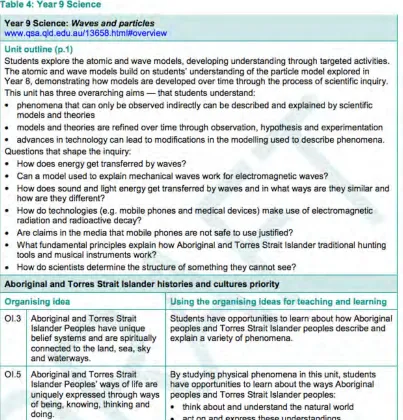
Figure 2: Year 9 Science exemplar including Indigenous CCP (QSA, 2012) ... 36
Figure 3: Framing of Section 1 – Epistemology, Curriculum and Pedagogy ... 40
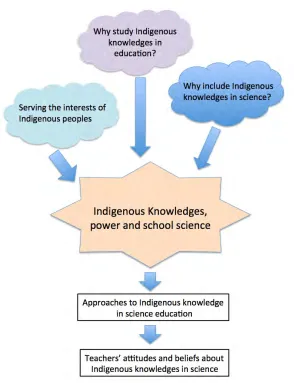
Figure 4: Literature review section 2 - Indigenous knowledges, power and school science ... 59
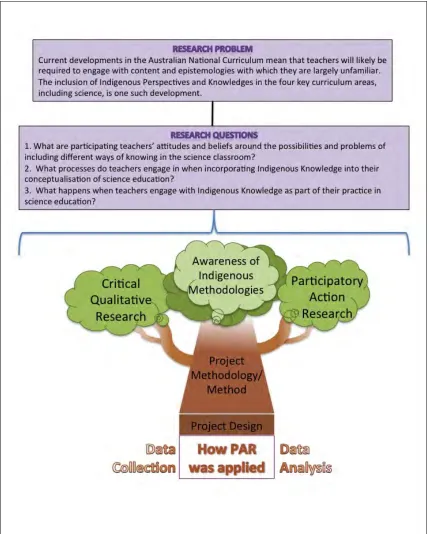
Figure 5: Research design components and their relationship ... 83
Figure 6: McIntyre's (2008) model of PAR ... 89
Figure 7: 17th-century depiction of the Tree of Life in Palace of Shaki Khans, Azerbiajan (Meniashvili, 2013) ... 93
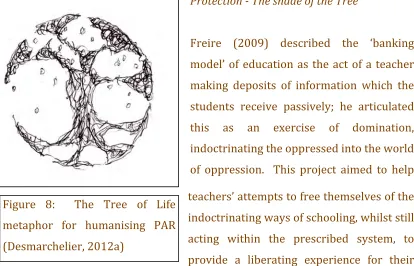
Figure 8: The Tree of Life metaphor for humanising PAR (Desmarchelier, 2012a) ... 96
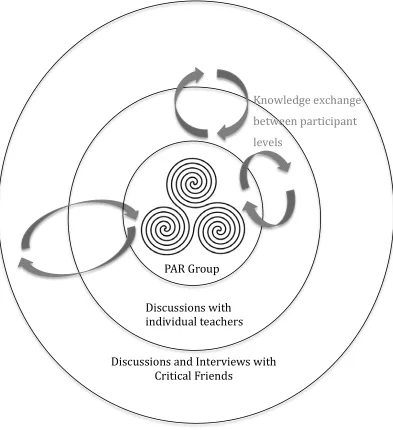
Figure 9: The PAR model used in this project ... 105
Figure 10: The seedling Tree (Desmarchelier, 2015) ... 117
Figure 11: Student made cross hanging on the wall of the science laboratory at Sue and Isabelle's school ... 141
Figure 12: Interconnectedness of factors linked with a lack of progress towards science education inclusive of Indigenous knowledges ... 147
Figure 13: Growth and nourishment (Desmarchelier, 2012b) ... 152
Figure 14: PAR cycles within the project ... 153
Figure 15: Cycle 1 – Production of a Collective Vision Statement ... 154
Figure 16: The PAR group's collective vision statement ... 160
Figure 17: Cycle 2 - Where will Indigenous knowledges fit? ... 163
Figure 18: Cycle 3 - Putting plans into action ... 171
Figure 19: Slides from student assessment in Allen's classification unit ... 172
Figure 20: Fish charts from Rock Never Dies geology unit ... 174
Figure 21: Whiteboard showing Allen's different pedagogical strategies ... 174
Figure 22: Demonstration of stone tool making for Rock Never Dies unit ... 175
Figure 23: Cristy’s Forces of the Past unit plan for Year 8 ... 177
Figure 24: Assessment task for Cristy's Forces of the Past ... 178
Figure 25: Cycle 4 - Moving forward ... 182
Figure 26: The Tree of Life (Desmarchelier, 2012c) ... 186
Figure 27: Epistemology, pedagogy and politics in the positions of the teachers ... 188
Figure 29: Epistemology, pedagogy and politics for teacher Position 2 ... 214
Figure 30: Epistemology, pedagogy and politics for teacher Position 3 ... 215
Figure 31: Speaking back through humanisation (Desmarchelier, 2012d) ... 223
Figure 32: Student activities as part of Allen's future planning project ... 285
Figure 33: Brochure on an Indigenous perspective of the local landscape ... 287
List of tables
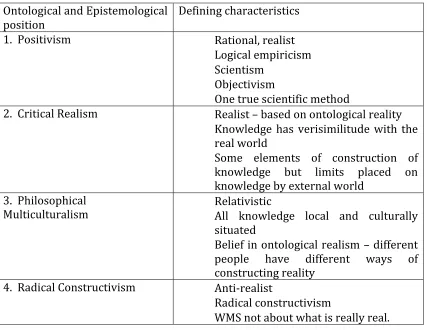
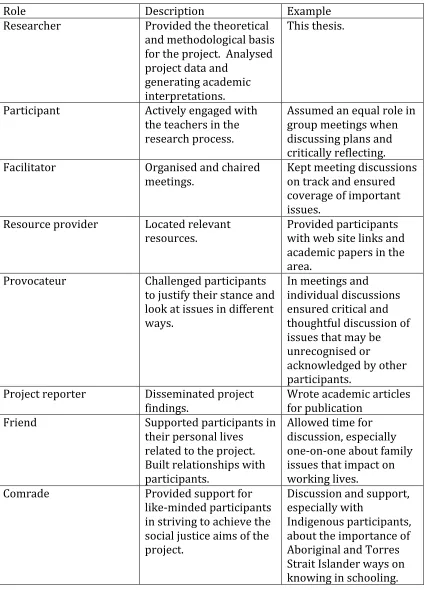
Table 1: Ontological and epistemological positions of science (Cobern and Loving, 2008) ... 49Table 2: The multiple roles of the researcher in this PAR project (identified and adapted from McIntyre, 2008). ... 103
Table 3: Participants' contributions to the project’s data collection ... 115
Chapter 1: Introduction
Opportunities only come when they are made, when the power of hegemonic common-sense is challenged.
(Apple, 2000b, p. xix)
Foreword – A personal journey
This project came to be through grappling with my own epistemological challenges while studying a Graduate Diploma in Learning and Teaching. I had been a scientist and science educator at university level for about 10 years and discovered that my passion lay in teaching rather than scientific research. So, after completing my Master of Philosophy in crop science, I enrolled in a teacher education program with a view to teaching secondary school science.
It was in this program that I discovered Paulo Freire (2009) and his book Pedagogy of the Oppressed. This encounter challenged me in ways that I am still coming to understand. In my efforts to elucidate a completely new way of making sense of the world and uncover the unacknowledged social structures of power that I had always felt surrounding me but had never been able to identify, I delved deeper into areas of critical pedagogy encountering Giroux (2005) and Kincheloe (2010, 2008). As many have experienced before me, I had found a language to help me make sense of the world and understand the overt and subtle ways that power works to inform whose knowledge is seen as legitimate.
teaching (part of) the Western story of science and wondered how anything else could be considered legitimate in a science classroom. At the same time, the potential for enacting a critical pedagogy of science was right in front of me.
As a Masters student I had become disillusioned with the scientific research industry. The competition for grant money and the ways in which this impacted upon not only people’s stress levels, but also on what research could be conducted, did not fit well with me. I had been working in alternative pest management systems for horticultural crops, looking at the potential of large-scale companion plantings. This was generally viewed as fine for a Masters research project, but not something that would gain on-going funding. This was my introduction to alternative knowledge systems and has become a passage into considering Indigenous knowledges. There are a few pieces of writing that acted as a bridge between my Masters thesis and this one. Particularly important in that cross-over were Alteri’s (1994), Biodiversity and pest management in agroecosystems and Agrawal’s (1995), Dismantling the divide between Indigenous knowledge and scientific knowledge. These were my introduction to thinking differently within a scientific frame and they acted to increase my unease with a Western science only framing of science education. Although, at the time I did not have the language to name this discomfort and the idea of teaching anything other than the canonical version of science I had been taught was still challenging.
the group and was considered a member of the extended family and community. This paper concerned the nation’s environmental knowledge around seasons.
Reading the paper was my first encounter with Indigenous Australian knowledges. I recall at first being confronted by its differing writing style to the strictly empirical research papers I was used to. However, I quickly became more interested in the content of the paper, making links to what was presented and my Western scientific understanding of ecology. It was initially puzzling to consider what was presented as cultural knowledge within my scientific epistemology. It required some mental manipulation to make sense of what I was reading in a scientific frame. At this point I was not particularly interested in understanding the knowledge from an Indigenous perspective and probably in quite a neo-colonial way, was impressed with the way that the knowledge fitted within my scientific schema.
When I attended the workshop on embedding Indigenous perspectives in curriculum as an intending science teacher, the memory of this paper resurfaced. At that time, I had recently taught a unit on ecology while on teaching practicum and, even with my new-found interest in Indigenous knowledges in science, had not considered including the type of knowledge described in the paper. The workshop helped me see these and other opportunities to consider multiple ways of knowing in the classroom. This was not without complexities, trepidation about ‘getting it right’, or anxiety around pedagogical approaches.
commencing the work at a time when the new Australian Curriculum was being formed and implemented (Australian Curriculum Assessment and Reporting Authority, 2009b). This gave me the opportunity to engage with a group of sympathetic fellow travellers in science education in a policy environment where Indigenous perspectives were being mandated.
Methodologically I had to unlearn my scientific ways, although I found them sneaking in at the most unexpected moments. At first, trying to understand critical qualitative and Indigenous methodologies was a bit like trying to turn my mind inside out. Even basic ideas such as what constituted data were problematic for me with my ingrained scientific mindset. As such, the following presentation and analysis of the research problem and data represented a hard fought journey of perseverance in order to advance understanding of the possibilities of science education. It was a personal battle of breaking out of the formerly unseen barriers I was constrained by, then a joint project of opening up different ways of knowing within what has traditionally been a purely Western scientific discourse.
This thesis has been framed by this experience and my continuing journey as an educator. It was necessary for me to understand what the implications of teaching science were, the inherent power differentials between knowledges and more practical concerns around knowledge and the implementation of the Australian Curriculum. My own journey is reflective to a large degree of the teacher participants of the project. While each individual saw different challenges, some overarching theoretical, philosophical and practical issues were shared.
But who am I? – Positioning myself
question on the basis of working from a position of unacknowledged privilege (McLaren, 2007). S. Wilson (2008) discusses the importance of fully identifying oneself to hold true to Indigenous research paradigms in terms of relational accountability and building a proper relationship between the readers and the story. I have chosen to include more personal details in this positioning of myself than may usually be included by doctoral candidates. This may be particularly important to Indigenous readers of this thesis. As Wilson points out, “I cannot know beforehand who will read this book, I cannot be sure of the relationships that readers might hold with me or the ideas I share” (p. 6). Providing this background is intended to assist in forming a proper relationship with readers, whoever they may be.
I am a non-Indigenous woman who grew up on Butchulla Country on Queensland’s Fraser Coast. As a child, I spent a lot of time on World Heritage Listed K’Gari (Fraser Island) and this incredible environment profoundly impacted my understanding of the natural world. My experiences were, at the time, however, not at all linked to any understanding of Indigenous Australia. The small town I lived in did not, at the time, have any representations of Indigeneity that I can recall. I do not remember being aware of the local Indigenous community and I was taught very little about the Indigenous history of the local area or of Australia in general. This absence in the curriculum was common at the time and it continues to be a silence that my teacher education students at university acknowledge.
I am a wife and mother to a family of my own. I have two older children, a girl and a boy (both born while studying my Masters qualification) and a little (toddler) girl who was born through the progress of this doctoral study. I am fortunate to have a partner who understands the importance of this work to me and has supported me incredibly through the time of my study.
I am a lecturer at a regional university teaching Critical Pedagogies and Indigenous Studies to a diverse range of students including anthropology, human services, social sciences and education students. I commenced in this position during the time of my doctoral study. Part of my main teaching commitments has been the delivery of a course in Indigenous perspectives for intending educators. In addition, I’ve taught courses on Indigenous knowledges and topics around Indigenous identity.
These are the experiences that I see as framing who it is I am in relation to this study. I acknowledge that I come to this work from a position of non-Indigenous privilege that has made it easier for me to be situated educationally to do this work.
Introduction – Positioning this study
promoting intercultural understanding in students (ACARA, 2014). One of three cross-curriculum priorities, the Aboriginal and Torres Strait Islander Histories and Cultures Priority aims to deepen students’ knowledge of Australia through engaging with Indigenous cultures (ACARA, 2011a). Within the science curriculum, this involves investigating “the ways traditional knowledge and Western scientific knowledge can be complementary” (ACARA, 2011c).
As with any curriculum initiative, it is the classroom teacher who is ultimately responsible for engaging students in the required learning. Curriculum change generally requires changes in teachers’ practices. The introduction of differing ways of knowing requires change in perspectives and pedagogy (Kanu, 2011a) and may challenge teachers’ epistemologies. This challenge may be accentuated for science teachers due to the (unacknowledged) nature of science as culturally specific and the need therefore for teachers to facilitate cultural border-crossings for themselves and their students (Aikenhead, 1996).
While some authors have addressed the role of teachers in implementing the incorporation of Indigenous knowledges and perspectives in schooling (for example, Burridge & Evans, 2012b; Harrison & Greenfield, 2011; Nakata, 2011), the voices of teachers are not often addressed in the research on this issue (Kanu, 2011a). As Nakata (2011) identified, “there is a gap between the big statements and the more detailed guidance teachers and schools might require… teachers tend to be the ones left to work out how Indigenous issues are to be worked into classroom practice” (pp. 1-2). Teachers’ attitudes, perceptions and beliefs about any curriculum innovation have been identified as crucial to the success of implementation (Kanu, 2005, 2011a).
Rationale of the study
Training and Youth Affairs, 2000). To promote a socially just education system, it was an agreed national goal drawn from The Adelaide Declaration and restated in the Melbourne Declaration on Educational Goals for Young Australians (the Melbourne Declaration) that all students should “understand and acknowledge the value of Aboriginal and Torres Strait Islander cultures to Australian society and possess the knowledge, skills and understanding to contribute to and benefit from, reconciliation between Indigenous and non-Indigenous Australians” (Ministerial Council on Education, Employment, Training and Youth Affairs (MCEETYA), 2008, p. 9). Working from the Melbourne Declaration, the MCEETYA four-year action plan outlined the establishment of the Australian Curriculum, Assessment and Reporting Authority (ACARA) to develop national reforms in curriculum to be implemented in all jurisdictions from 2011 (MCEETYA, 2009). As the national curriculum body, ACARA developed the draft Australian Curriculum (ACARA, 2010a) including a concern for reconciliation through education. Three cross-curriculum perspectives were proposed, one of which - Indigenous perspectives - aimed to “ensure that all young Australians have the opportunity to learn about, acknowledge and respect the history and culture of Aboriginal people and Torres Strait Islanders” (ACARA, 2009a). Cross-Curriculum perspectives were re-named Cross-Cross-Curriculum Priorities (CCPs) and the Indigenous Perspective was renamed the Aboriginal and Torres Strait Islander History and Cultures Priority for the implementation of the Australian Curriculum (ACARA, 2013b). In addition to the national perspective, in Queensland, state schools were to embed Aboriginal and Torres Strait Islander perspectives in school practice, including curriculum and pedagogy, by 2012 (Queensland Government, 2009).
defined part of their ‘core business’ as being to “embed Indigenous perspectives in new and revised P–12 curriculum material” (QSA, 2008). Such inclusions necessitate a negotiation between Western and Indigenous perspectives and the facilitation of a dialogue between the different epistemological foundations of knowing that underpin each.
The underlying epistemologies of the science classroom warrant investigation in terms of the social assumptions and ‘claims to knowledge’ generated through the educative process. To date, the use of alternative and Indigenous knowledges and perspectives have not been prominent in science education in Australia. Curricular content has been limited to a view of science as an objective and universal knowledge system, derived solely from Western rationality and ways of knowing (Stanley & Brickhouse, 2001). The presence of only one way of knowing the scientific world, a “White Western Way” (Austin & Hickey, 2009, p. 223) of knowing, has implications for the perceived legitimacy of other forms of knowledge. The potential of a multicultural (Snively & Corsiglia, 2001), multiscience perspective (Ogawa, 1995) has been largely unrealised or ignored.
meaningfully engage in the teaching of Indigenous knowledges when they are largely unfamiliar with the epistemology and knowledge required?
Research Problem: The introduction of the Intercultural Understanding General Capability and the Aboriginal and Torres Strait Islander Cross-Curriculum Priority in the Australian Curriculum meant that teachers were required to engage with content and epistemologies with which they may have been unfamiliar. The inclusion of Indigenous perspectives and knowledges in science classroom teaching is one such problematic example.
This problem will be addressed through the investigation of the following three research questions.
Research Questions:
1. What are participating teachers’ attitudes and beliefs relating to the possibilities and challenges of including different ways of knowing in the science classroom?
2. What processes do teachers engage with when incorporating Indigenous knowledges into their conceptualisation of science education?
3. What happens when teachers engage with Indigenous knowledge as part of their practice in science education?
the project and encompass the range of implications that may include pedagogical, epistemological, institutional, or social justice dimensions.
The project sought to engage teachers in problematising their current practice and to build new pedagogical possibilities in regard to the new curriculum. To do this, the project focused on the views of selected, current teachers of science from across several schools in order to chart and record the engagement of teachers with the curriculum and Indigenous knowledge in science education. Co-operative work allowed teachers to interact with like-minded colleagues they would not normally work with to co-construct their responses to the CCP.
Context of place
Under the Queensland Aboriginals Protection and Restriction of the sale of Opium Act 1897, most aspects of Aboriginal people’s lives were controlled and people were removed from Country to reserves where they were completely separated from white society (E. Wilson, 2005). During this time, most remaining Aboriginal people of the Toowoomba area were removed and reportedly the last Aborigine of ‘full descent’ (sic) from the region died in 1902 (Riethmuller, 2006). While there is some evidence that descendants of the region were living in family groups in the reserves, an anthropologist in 1934 officially found no descendants of the ‘tribes’ (sic) from the Toowoomba area. Today, there are very few people who know and claim the Toowoomba area as their Country.
Acknowledging the almost complete genocide that occurred in the area in which this study took place is an important contextualisation in terms of the critical intent of the project and this thesis. From an Indigenous perspective, this history still resonates in the land and people of the area, influencing current relationships between Indigenous and non-Indigenous people. The relationships between Indigenous and non-Indigenous knowledge systems, ontologies and epistemologies are also influenced by such a history. In recognising this historical context, the importance of the project occurring in this area is also recognised, as too are its complexities and complications.
Overview of the thesis
Chapter 2 - Theoretical and educational background
Chapter 3 - Literature review
Chapter 3 charts a course through literature that is important to understanding the context, theory and complexities of the research. As with all literature reviews in doctoral work, it necessarily contains only the works most relevant to my framing and thinking about the project. It is organised into two sections. Section 1 considers the intersections in literature about epistemology, curriculum and pedagogy. A broad approach to understanding epistemology and how it relates to curriculum and pedagogy is taken, drawing from different discourses from psychology, educational psychology and critical theory. Section 2 considers Indigenous knowledges and their relationship to power and school science. Literature around the ‘why’ and ‘how’ of science education inclusive of Indigenous knowledges, as well as the attitudes of teachers towards the idea, are examined.
Chapter 4 - Methodology
Chapter 4 explains the methodological approach taken in the project and how this was enacted in the method of research. The rationale for a critical qualitative approach is explained. Literature considering critical and Indigenous methodologies is examined and a Participatory Action Research (PAR) method that considers both is outlined. Methods of data collection and analysis are given and an outline of the process of the research is explained.
Chapter 5 - The beginning: Participants and their contexts
Chapter 6 - The PAR cycles
The process and progress of the research is described in Chapter 6. This chapter outlines what happened in each PAR cycle and is organised not only around the cycles themselves but the critical moments of teacher participation in these cycles. As such, it also contributes to understanding the Little Stories of teacher participation and places primacy on the voices of the teachers.
Chapter 7 - Epistemologies, pedagogies and politics
The analysis of participants’ Little Stories moves to a theoretical analysis in Chapter 7. Data are considered from across the project and my analysis as the researcher-participant is brought to the fore. An interaction paradigm for understanding the ways in which epistemologies, pedagogies and politics influenced individual teachers’ participation in the project is given and discussed.
Chapter 8 - The Grand Narrative of neo-liberalism
Chapter 8 moves from the Little Stories of teachers’ participation to naming the Grand Narrative influencing and confining how teachers were able to engage with the project. The context of neo-liberal education in Australia is discussed and theoretical analysis is given in terms of themes and analysis arising from the previous chapters. The complexities around moving from rhetorical acceptance to practical implementation of the CCP are discussed.
Chapter 9 - Concluding Reflections
Notes on how to read this thesis
Writing this thesis (as with any thesis I am sure) was a complex task. In order to represent the project on paper I have used several formatting tools to define areas such as participants’ voices, my voice as a researcher-participant and attempts to present a differing perspective. For example, Chapter 4 uses brown text to differentiate between discussion from a critical qualitative position and an Indigenous methodological position. To ensure the reader knows when I am foregrounding my own voice in analysis of participants’ Little Stories, text boxes and purple text have been used.
Notes on terminology
The use of terminology to describe Indigenous peoples, knowledges and cultures is complex and contested (L. T. Smith, 1999). Different conventions exist in the literature, as the reader will notice in direct quotes taken from reference sources which have been written as the author presented them in-text. Indigenous groups in different global contexts choose to name themselves differently. In Australia, traditionally, people were identified through their language group name. This is still the preferred identification where applicable (Pascoe, 2008). However, some individuals do not know their language groups due to the severe disruption and genocidal practices of successive Government policies.
Chapter 2: Theoretical and educational
backgrounds
Such a consciousness would encounter the possibility that the de/legitimation of knowledge is more a socio-political process than an exercise of a universal form of disinterested abstract reason. (Semail & Kincheloe, 1999, p. 17)
This chapter outlines two key areas of contextual background necessary to understanding the construction and findings of this project. Firstly, making clear the researcher’s theoretical (and political) position is a cornerstone of critical practice and essential when working with Indigenous knowledges and peoples (Semali & Kincheloe, 1999; Smith, 2012). The theoretical framework section outlines the theoretical position that informed my work. As such, it should aid and guide the reader in understanding and placing the work in the wider field of qualitative research. Secondly, understanding the educational context of Australian schooling and curriculum at the time this project was being conducted is essential to making sense of the positioning of the project and its findings. The educational context section outlines the conceptualisation and implementation of the Australian Curriculum.
Theoretical framework
Education as a practice of liberation
either preserve the status quo, or radically transform the world of oppression (Freire, 1970). As such, the project was framed in terms of understanding praxis as the action of people upon their world in order to change it (Freire, 2009). In particular considering the ways teachers might engage praxis within science education inclusive of Indigenous knowledges.
I also worked from a position that in order for praxis to come into being, people need hope that things can be otherwise. Drawing on critical theorists such as Freire and Hall, Giroux (2000) describes hope as “an act of moral imagination and political passion that partly enables educators and other cultural workers to think otherwise in order to act otherwise” (p. 345). Freire (2008) describes hope as an existential concrete imperative and hopelessness as leading to paralysis, immobilising our ability to recreate the world. Hope however, needs to be anchored in practice. Freire (2008) wrote “there is no hope in sheer hopefulness” (p. 2).
In order for authentic liberation and a process of humanisation to occur, “those truly committed to the cause of liberation can accept neither the mechanistic concept of consciousness as an empty vessel to be filled, nor use the banking methods of domination” (Freire, 2009, p. 79). This reflects a rejection of the ‘banking’ concept of education that Freire described as “an act of depositing, in which the students are depositories and the teacher is the depositor” (p. 72). In this way, I frame education as part of becoming more fully human and firmly a process of humanisation rather than dehumanisation.
constructed nature of knowledge that students and teachers achieve a critical consciousness (Freire, 2009).
Official knowledge, curriculum and ideology
Following on from an approach that calls for teachers to recognise the historical and socially constructed nature of knowledge in education, I also recognise the need to consider the form and content of curriculum. How particular knowledges become important in the classrooms is intimately related to the principles of social and cultural control in a society (Apple, 2004). Some knowledges achieve the status of ‘official knowledge’ being defined as worthwhile to be passed onto future generations (Apple, 2000b). I see the recognition of the power these knowledges then hold within schooling and therefore society more broadly as important to the context of considering Indigenous knowledges in science education.
Accordingly, I approached curriculum knowledge as problematic and was aware of the ideological basis of curriculum formation. In this respect, I consider Apple’s (2004) questions about the selective tradition of knowledge in curriculum to be important to the project:
Whose knowledge is it? Who selected it? Why is it organised and taught in this way? To this particular group? The mere act of asking these questions is not sufficient, however. One is guided, as well, by attempting to link these investigations to competing conceptions of social and economic power and ideologies. (p. 6)
we can now begin to get a more thorough understanding of how institutions of cultural preservation and distribution like schools create and recreate forms of consciousness that in enable social control to be maintained without the necessary necessity of dominant groups having to resort to overt mechanisms of domination. (p. 2)
Urging a struggle against epistimicides (the extinguishing of epistemic positions) in curricula, Paraskeva (2011) recognises the way hegemonic epistemology (defined as that predominantly of the White male) has violently imposed a coloniality of knowledge. Paraskeva posits that particular kinds of knowledge and ‘science’ have been able to acquire a dominant position while other knowledges from outside Western rationality have been silenced. Drawing only on dominant knowledge leads to what Freire (2009) calls dehumanising pedagogy, a pedagogy that actually oppresses both the oppressed and the oppressor.
However, importantly for this project, Apple (2000b) reminds us that “the powerful are not that powerful. The politics of official knowledge are the politics of accords or compromises” (p. 10). These compromises occur at different levels, through political and ideological discourse; at the level of state politics, at the level of what is taught in schools, at the level of the daily activities of teachers and students in classrooms, and at the level of how we are to understand all of this. As such, they are not impositions but represent how dominant groups try to create situations where the compromises favour them. As a result it is possible to understand how accords and compromises “enable social control to be maintained without the necessary necessity of dominant groups having to resort to overt mechanisms of domination” (Apple, 2000b, p. 2).
Knowledge – scientific and Indigenous ways of knowing
a consent among constituent groups. Politics, ethnicities, and group ideologies influence the notion of rational knowledge” (p. 604). Adyanga Akena’s ideas echo Apple’s (2000b) proposition of ‘common-sense’, where ideology becomes seen as ‘natural’ as people go about their daily lives.
In this project I considered the epistemological construction of Western knowledge as addressed by Kincheloe (2010). He used a description based on the recognition of the positivistic epistemology applied to society by public institutions such as those involved in the military, economy and education. Kincheloe’s categorisation considers this epistemology to be:
• Formal – knowledge is produced by formal scientific methodologies that are inflexible despite changing circumstances;
• Intractable – based on the assumption that the world is an inert, static entity;
• Decontextualised – phenomenon are studied in isolation from the diverse contexts they occur in;
• Universalistic – strict scientific method leads to knowledge that can be applied to all domains of the world and universe;
• Reductionistic – factors that are most easily measured are focused on failing to acknowledge the multitude of factors that shape the production of the knowledge; including questions about the position of the researcher;
• One dimensional – shaped by the belief in one true reality that can be discovered and completely described.
(Kincheloe, 2010, pp. 22-23)
involves exploring where knowledge comes from, its rules of production and the ways in which we can assess the quality and purposes of production becomes antithetical (Kincheloe, 2010).
What is science?
The status afforded to science within Western society cannot be denied. Since World War II, research and development in the area of science has attracted vast sums of money and is usually conducted by large institutions, both government and privately owned, for the ‘common-good’ of the people (Illich, 1981). Scientific achievements are honoured at every level, from the local school science fair to Nobel Prizes (Salmon et al., 1992). The popular media, academic and scholarly fields alike appeal to a sense of legitimacy through ‘scientific proof’, whether it is to sell an age-defying beauty cream or market a new pharmaceutical drug. The word science is also used to attach a desired legitimacy to fields of study (e.g. Creation Science, Christian Science, Administration Science) through appealing to the authority of science and scientists (Chalmers, 2004).
Where does this authority to validate and legitimise knowledge come from? What is Science? in attempting to define a ‘Standard Account of Science’ Cobern and Loving (2001) suggest that “science is a naturalistic, material explanatory system used to account for natural phenomena that ideally must be objectively and empirically testable” (pp. 58-60). Their ‘Standard Account’ also recognises science as about the world as it ‘really is’, thus presupposing that there is order and causation in nature. Similarly, Chalmers (1991) suggests that science is commonly thought of as ‘proven knowledge’, where “personal opinion or preferences and speculative imaginings have no place” (p. 1) and knowledge is reliable because of its objectivity.
theories (Stanley & Brickhouse, 2001). Western Modern Science (WMS) operates on the basis of a Cartesian materialistic world that is both reductionist and mechanistic (Ogawa, 1995). The acronym WMS has also been taken to represent ‘White Male Science’ (Pomeroy, 1994 as cited in Aikenhead, 1996) reflecting the Eurocentric, male history of the Scientific Revolution, Enlightenment and succeeding modern scientific era.
I recognise the contestations around what science ‘is’. The objectivity and universality of science leads to it being seen as ‘externalised knowledge’ where the scientific community legitimises what knowledge counts as science. Therefore people need to be scientifically literate in order to gain access to the body of knowledge that science offers. Lyotard (1984) contends that “one is a scientist if one can produce verifiable or falsifiable statements about referents accessible to the experts” (p.25) and that scientific knowledge is, in this way, set apart from narrative knowledge and is not a direct and shared component of a social bond. Similarly, Nandy (1992) views science as ‘structured isolation’ operating through Cartesian dualism and its self-legitimating nature. In this way, I recognise that scientific knowledge holds a certain power to decide what is considered as ‘scientific’ and operates to subjugate other forms of knowledge.
What are Indigenous knowledges?
The term Indigenous knowledge is used to describe a plethora of localised knowledge systems developed by Indigenous peoples worldwide. Whilst each Indigenous group’s ways of knowing and objects of knowledge differ, some commonalities exist between these systems in comparison to Western ways of knowing. In the context of this research, the complex nature of Indigenous knowledges and their status in relation to Western knowledge are important.
Mwadime, 1999). There is also a difference of social and intellectual goals between Indigenous knowledges and science (Metallic, 2009). In Indigenous knowledge systems, importance lies in the process of gaining knowledge as opposed to the knowledge itself and the importance of narrative and learned experience in the passing on of that knowledge (Chigeza, 2007). Epistemology is important to understanding Indigenous knowledges, and like all bodies of knowledge, Indigenous knowledges have their own ontological, conceptual/philosophical, methodological, and axiological groundings (Sefa Dei, 2011). Whilst Indigenous knowledges are embedded in the culture and traditions of local people, they are also dynamic and influenced by external systems and internal creativity (Mwadime, 1999).
The position of Indigenous knowledges as ‘subjugated knowledge’ (Foucault, 1980) is recognised (Langdon, 2009; Maurial, 1999; Shiva, 1993). As has the marginalisation of Indigenous knowledges through colonial domination of Western knowledge, presented and accepted as transcendent truth, where other cultural knowledge is represented as ‘superstition’ (Semali & Kincheloe, 1999). The acceptance of the universality of science often leads to the replacement of local Indigenous knowledge claims that do not conform to this way of knowing (Snively & Corsiglia, 2001). A particular challenge in positioning Indigenous knowledges lies in working to introduce, affirm and re-inscribe knowledges that have been positioned outside the system of knowledge production that governs what is seen as ‘truth’ (Sefa Dei & Simmons, 2009).
Intersecting knowledges
concept of a historically placed, unchanging knowledge is not applicable to either Indigenous knowledge or science, nor is an assertion that they are in binary opposition.
Kincheloe and Steinberg (2008) warn that “once the binary opposition is embraced, we have to choose one and dismiss the other” (p. 143). Agrawal (1995) highlights the difficulties in separating Indigenous and Western forms of knowledge, contending that it is difficult to frame them as being untouched by each other due to historically recognised contact, exchange and communication. Agrawal also recognises the heterogeneity within both classifications of knowledge, suggesting that this makes it difficult to construct fixed and unchanging distinctions. Through embracing both Indigenous and Western knowledge the illumination of the processes of knowledge production is possible. Within an educational frame, the inclusion of Indigenous knowledges in Western curricula necessitates a negotiation of what may seem to initially be conflicting ways of knowing, in order to develop an approach that values both without putting them in opposition to each other. Herein lies the research problem this project considered.
The cultural interface, as the space where Western and Indigenous knowledges meet, can be a place of tension as well as of immense opportunity (Nakata, 2002, 2008, 2010). From his standpoint as a Torres Strait Islander man, Nakata (2011) conceptualises the cultural interface as the contested space between Indigenous and non-Indigenous peoples, knowledges and cultures. He describes the ways in which Indigenous peoples have not capitulated to the order of Western knowledge but have taken up what has been necessary to practical needs in people’s lifeworlds (Nakata, 2010). Working from a cultural interface perspective accepts that knowledge systems are:
I recognise that in order for non-Indigenous people to work effectively in the cultural interface, there needs to be a preparedness to engage in knowledge from multiple perspectives. Kincheloe and Steinberg (2008) suggest the concept of multilogicality is central to non-Indigenous people’s understanding of Indigenous knowledges. Mulitlogicality can be described as a critical complex concept that focuses on transcending reductionism by gaining access to a wide diversity of perspectives when involved with research, knowledge work, and pedagogy (Kincheloe, 2008). As Kincheloe and Steinberg (2008) explain, “In a sense, the single photograph of Cartesian thinking is replaced by the multiple angles of the holographic photograph” (p. 139). In order to work with diverse ways of knowing, it is first necessary to see the boundedness of Western knowledge systems and then embrace multiple epistemological viewpoints (Austin, 2011).
Recognising these theoretical complexities around working with two intersecting knowledge systems was an important starting point for myself as the researcher to be able to plan and engage in the project. Recognising the importance of not essentialising Indigenous knowledges, operating within the cultural interface and taking a multilogical approach framed my approach to project methodology, my research participants and data analysis. Particularly working with a canonical discipline such as science, theoretical and epistemological tensions were anticipated and realised, for both the participants and myself.
The educational background
During 2011, when the research group was first meeting, schools and teachers were required to become familiar with the curriculum and consider how they might implement it in 2012. Data collection finished within the first term of the staged implementation of the curriculum in Queensland1.
This timing meant that the project engaged with teachers as they were experiencing a time of curricular uncertainty. This offered research opportunities to collect data as teachers and schools were grappling with the ‘how to?’ questions arising from a new curriculum approach. The research therefore, was uniquely positioned to explore the research questions and provide data around teacher participants’ beliefs and attitudes to the implementation of the CCP.
The development of the Australian Curriculum has been seen as a political response to globalisation and re-occurring poor standardised test scores in literacy, mathematics and science in international rankings (Lingard & McGregor, 2014; Lowe & Appleton, 2014). The Melbourne Declaration (MCEETYA, 2008), provided a rationale for the development of a national curriculum to which all State and Federal Education Ministers elected to office at the time were signatories. School based education in Australia is the constitutional responsibility of State and Territory Governments. In 2007 when developments toward a national curriculum were started, all governments, State, Territory and Federal were held by Labor (Lingard & McGregor, 2014). While the development and implementation of a national curriculum were novel, there had been political manoeuvres over several decades to establish a uniform curriculum to eradicate inter-state variability, which was seen to impact on children moving across state borders (Lowe & Appleton, 2014). Since the initiation of national curriculum development, the political landscape of Australian has changed and now the Federal Government is a conservative Liberal-National Coalition and three out of seven states and territories have Liberal governments. This altered political landscape has renewed critical focus on the curriculum and the knowledge contained within it.
Lingard and McGregor (2014) offer one of the few academic articles (available at the time of writing this thesis), that examines the interplay between national politics and policy in the formation of the curriculum. While noting that historically Labor governments had been more centralist and conservative governments had been more federalist, Lingard and McGregor posit that the bipartisanship apparent in the development and implementation of the Australian Curriculum reflects “the reworking of the nation in the context of globalisation and the human capital framing of education policy” (p. 93). They characterise the Australian curriculum as a vernacular representation of the Global Educational Reform Movement (GERM):
This approach to school and system reform in response to globalisation has the following features: prescribed curriculum, focus on literacy and numeracy, top-down, test-based accountability, standardised teaching and learning and market-orientated reforms (e.g. Management models from the private school sector, school and parental choice discourses) (Sahlberg, 2011, p.103). (Lingard & McGregor, 2014, p. 96)
Critical of this approach, Lingard and McGregor note that while policies reflect GERM in terms of assessment and accountability, the Australian Curriculum represents a discipline-based approach that “may soon be more reflective of last-century models of school subjects, than those connected with and responsive to global needs and contexts” (p. 103). The foregrounding of ‘doing’ over ‘knowing’ and a discipline-based approach in the Australian Curriculum is relevant to the inequalities of knowledges this thesis considers. A focus on high-status knowledges that facilitate civic participation and economic reward foregrounds the knowledge of the powerful (Lingard & McGregor, 2014).
program (ACARA, 2013d). The first phase, ‘shaping’, involved the production of a Shaping Paper for each discipline area, informed by ‘expert advice’, to provide direction on purpose, structure and organisation of the learning area. Shaping papers were then open for consultation including public comment and targeted consultation with ‘key stakeholders’. The second phase was the writing phase where teams of writers, supported by expert advisory groups, developed the curriculum including content descriptors and achievement standards. Again, these draft curriculum documents were subject to consultation and revision. The third implementation stage saw ACARA provide the curriculum on-line but implementation and curriculum support were the responsibilities of the States and Territories. The final stage of monitoring and evaluation is ongoing. it involves the systematic collection and analysis of data on the effectiveness of the curriculum. This has been followed by Review of the curriculum that is discussed in Chapter 8.
As implementation of the curriculum is the responsibility of the States and Territories, each jurisdiction decided its own timeline. In Queensland, the implementation process commenced in 2011 with teachers and schools becoming familiar with the English, Maths and Science curriculums with full classroom implementation from 2012 (ACARA, 2012). The State based education authority, Education Queensland (now the Department of Education, Training (DET)), had responsibility for implementation but stated that it was the responsibility of each school to arrange appropriate professional development, which proved challenging with tight budgets, short timeframes and several learning areas to implement simultaneously (Lowe & Appleton, 2014). As such, Lowe and Appleton describe the curriculum implementation as a top-down initiative driven by factors external to the school and teacher.
CCPs are supposed to enable teachers to deliver the content of the learning area while developing knowledge, understanding and skills in the CCP. In the document The Shape of the Australian Curriculum (ACARA, 2009b), available at the time of the commencement of this project, CCPs were initially called Cross-Curriculum Perspectives and were to be represented “in learning areas in ways appropriate to that area” (p. 13). The shaping paper stated that curriculum documents would be explicit as to how the perspectives would be dealt with and how links could be made between learning areas. Through 2011, which represented the data collection phase of this project, a continuum of learning for each CCP had purportedly been developed to attempt to ensure “strong and coherent inclusion in the Australian Curriculum” (ACARA, 2010c, p. 20). Lingard and McGregor (2014) describe the CCPs as a curriculum approach based on what the education system wants students to become contextualised through an idea of contemporary Australia (recognising a need for reconciliation with Indigenous Australians) and global political concerns (like global warming and a focus on Asia).
The Aboriginal and Torres Strait Islander histories and cultures CCP was designed to take account of:
the underlying elements of Identity and Living Communities and the key concepts of Country/Place, Culture and People. Aboriginal and Torres Strait Islander Identities are represented as central to the priority and are approached through knowledge and understanding of the interconnected elements of Country/Place, Culture and People. (ACARA, n. d.-a, para. 1)
Figure 1: Organising ideas of the Aboriginal and Torres Strait Islander histories and cultures CCP (ACARA, n. d.-a)
Each organising idea is broken down into coded elements to enable further explanation. For example, OI.1 (Organising Idea 1) under Country/Place is “Australia has two distinct Indigenous groups, Aboriginal Peoples and Torres Strait Islander Peoples”; and OI.5 under the Culture organiser is “Aboriginal and Torres Strait Islander Peoples’ ways of life are uniquely expressed through ways of being, knowing, thinking and doing”. While it is necessary to be explicit as to what each CCP is intended to encompass, the expression of ideas is particularly Western in its organisation. As Nakata (2002) points out:
in incorporating understandings of indigenous knowledge into curriculum areas… it must be acknowledged that we are screening it through a filter that positions it to serve our educational objectives, and which draws on our prior theoretical investments in knowledge and knowledge practice. (p. 192)
ACARA provides general advice on how the Aboriginal and Torres Strait Islander histories and cultures CCP fits with the science curriculum:
Torres Strait Islander Peoples have longstanding scientific knowledge traditions.
Students will have opportunities to learn that Aboriginal and Torres Strait Islander Peoples have developed knowledge about the world through observation, using all the senses; through prediction and hypothesis; through testing (trial and error); and through making generalisations within specific contexts. These scientific methods have been practised and transmitted from one generation to the next. Students will develop an understanding that Aboriginal and Torres Strait Islander Peoples have particular ways of knowing the world and continue to be innovative in providing significant contributions to development in science. They will investigate examples of Aboriginal and Torres Strait Islander science and the ways traditional knowledge and Western scientific knowledge can be complementary. (ACARA, n. d.-c, para. 5-6)
The Science curriculum is organised into three strands, Science Understanding, Science as a Human Endeavour, and Science Inquiry Skills (ACARA, n. d.-b). Science Understanding encompasses facts, concepts, principles, laws, theories and models established by scientists over time and students’ abilities to explain and predict phenomena using this understanding. Science as a Human Endeavour recognises the changeable nature of science in the light of new evidence, the influence science has on society and society on it, the role of ethics and the social implications of science. It also recognises “that science advances through the contributions of many different people from different cultures” (ACARA, n. d.-b, para. 9). Science Inquiry Skills considers how evidence based arguments are constructed through predictions, hypothesis and investigation.
and the CCPs, Queensland schools had been required to embed Aboriginal and Torres Strait Islander perspectives in the Queensland curriculum. Both DET and QCAA provided advice and resources for this initiative. Embedding Aboriginal and Torres Strait Islander perspectives in schools was a key action in The Queensland Government Reconciliation Action Plan and the Aboriginal and Torres Strait Islander Education Action Plan 2010-2014 (DET, n. d.). To this end, DET publishes the Embedding Aboriginal and Torres Strait Islander Perspectives in Schools (EATSIPS) guide which was revised every two years (DET, n. d.).
The EATSIPS initiative addresses the incorporation of Indigenous perspectives into school culture, curriculum and pedagogy. According to the EATSIPS guide, embedding of Indigenous perspectives enhances the educational experiences of Indigenous and non-Indigenous students:
There is a call for educators and institutions to build bridges between the Indigenous and Western knowledge systems to achieve meaningful outcomes, for Indigenous students in particular but for all students in general. The challenge still remains: how does one build bridges between Western scientific and disciplinary knowledge and the Indigenous ‘responsive, active eco-logical’ knowledge that views ‘language, land, and identity as interdependent in a unique way and constantly renewed and reconfigured’ (Willimanson & Dalal, Christie cited in Klenowski 2008, p.11). (DET, n. d., p. 9)
DET suggest that in order to find a place where everyone’s perspectives can meet, grow and learn, Bhahba’s (2004) idea of a third cultural space is useful as a conceptual framework. The third cultural space is where Indigenous ways of knowing, being and doing overlap with Western ways, creating a space of innovation and creation.
Aboriginal and Torres Strait Islander perspectives need to be presented to all students. How we teach these perspectives is based on an understanding of why we teach them… By recognising that their role is ‘the facilitator’, as opposed to ‘the expert’, teachers can use this pedagogical approach to frame and support their development and understanding of Aboriginal and Torres Strait Islander issues. (DET, n. d., p. 30)
It is also outlined that Indigenous perspectives are not considered to be embedded in curriculum unless “they are consistently and explicitly found within the intended curriculum and the pedagogies used in enactment” (DET, n. d., p. 30). In defining Aboriginal and Torres Strait Islander perspectives (the term Indigenous perspectives is also used synonymously) DET outline that perspectives are ways of seeing the world impacting on how we interact with the environment and how we perceive ourselves and others. Personal and family experiences, group and religious affiliations, linguistic understandings, media, text and visual representations and cultural values and beliefs influence them. They are not limited to one way of seeing the world as individual and collective identities contribute to perspectives. In terms of Indigenous perspectives DET recognise the localised nature of culture, the link between peoples and the land and the historical influences of past Australian policy and practice on Indigenous communities.
Aboriginal and Torres Strait Islander Histories and Cultures CCP takes a content rather than a perspective based approach to classroom implementation. Neither QCAA nor DET address this issue on their webpages.
Figure 2: Year 9 Science exemplar including Indigenous CCP (QSA, 2012)
out, teachers know the gaps in these curriculum documents and many of their questions around implementation remain from past curriculum approaches.
By undertaking research into how teachers experience engaging with unfamiliar content and knowledge at a time of curriculum upheaval, it was hoped to provide some clarification of what is important for participants to gain confidence and understanding around curriculum implementation. It was fortuitous that I was able to conduct this work at a time when teachers were already engaging anew with questions around how to include Indigenous ways of knowing and content in their teaching. The timing enabled interactions and questions to come to the fore that may have otherwise been silenced.
Conclusion
Chapter 3: Literature review
Education is an act of love, and thus an act of courage. It cannot fear the analysis of reality or, under pain of revealing itself as a farce, avoid creative discussion. (Freire, 1989a, p. 33)
Introduction
Two broad areas of literature were considered to be important to this research. Firstly, multifaceted literature around teachers and epistemology, to provide a basis for understanding the processes teachers may engage with when considering unfamiliar knowledge systems. Secondly, it was important to situate the project in terms of literature around the purposes of Indigenous knowledges in education broadly and science education specifically. Both of these areas offered substantial fields of work to consider.
Teachers’ engagement with curriculum necessarily concerns the knowledge/s contained within them. Whenever people work with knowledge, their epistemologies influence their responses and understandings. Within the context of this research, teachers were required to engage with knowledges and epistemologies they were not familiar with. As such this review considers epistemology from a broad perspective, incorporating psychology, scientific and critical understandings.
classroom is considered along with the beliefs and attitudes of teachers who are ultimately responsible for such implementations.
Education that includes Indigenous knowledges and ways of knowing has been recognised in the literature as contributing to the success of Indigenous students (Aikenhead & Michell, 2011; D. Foley, 2003). I acknowledge t