Book-Tax Differences: a Function of
Accounting-Tax Misalignment, Earnings Management and
Tax Management
BY
TANYA YAO HUA TANG
JUNE 2006
A THESIS SUBMITTED
FOR
THE DEGREE OF DOCTOR OF PHILOSOPHY
OF
THE AUSTRALIAN NATIONAL UNIVERSITY
School of Accounting and Business Information Systems
College of Business and Economics
DECLARATION
Except where stated otherwise, this thesis is an original research conducted by the author during the period from March 2003 to June 2006 at the Australian National University.
ACKNOWLEDGEMENTS
First of all, I would like to express my gratitude to my supervisory committee members: Dr Greg Shailer, Millicent Chang, Lillian Mills and Alfred Tran. I appreciate Dr Greg Shailer who provided me with lots of time and opportunities to make constantly academic arguments throughout my candidature. I acknowledge his initial contribution that placed me on the right track and his careful review on my thesis drafts. I am greatly indebted to Dr Millicent Chang for her unselfish, constructive guidance. My heartfelt thanks go to Dr Lillian Mills for her insightful comments on my research proposal, chapters and paper. I will never forget her inspiring remark at the inaugural KPMG/ATA Tax Doctoral Consortium in 2005: you should let the world get to know Tanya Tang because of BTD theory. Thanks go to Dr Alfred Tran for his supervision at the initial stage.
I gratefully acknowledge the valuable suggestions from Professor Liyan Wang, at Peking University and Professor Xiao Chen, at Tsinghua University when I was a visiting fellow at Guanghua School of Management, Peking University, PRC in 2004. I am grateful to my research partner, Professor Huixin Huang who assisted me in adapting to the environment and approaching more research sources. I also wish to thank Professor Xizhun Zhao at Renmin University for providing useful discussions and materials regarding the Chinese capital market practice.
I am deeply indebted to Professor Terry Shevlin, three anonymous reviewers of the American Accounting Association 2006 Northeast Regional Meeting and the American Accounting Association 2006 Annual Meeting for their encouragement and insightful comments on my papers, which substantially improve this thesis from different perspectives. Thanks All.
Special Thanks are reserved for my family. I wish to extend my deepest gratitude to my husband. He offered me spiritual support with his wisdom and philosophy. “Through many dangers, toils and snares, I have already come”.
ABSTRACT
This thesis investigates the informativeness of book-tax differences (BTD). It examines the usefulness of BTD in evaluating the extent of accounting-tax nonconformity and proxying firms’ earnings management and tax management, and investigates the value relevance of BTD in a Chinese context.
Motivated by the potential but largely overlooked usefulness of BTD in indicating unobservable earnings management and tax management and earnings quality, three research questions are addressed: (1) Can observable BTD proxy earnings management and tax management after controlling for accounting-tax misalignment? (2) To what extent is variation in BTD associated with earnings management and tax management incentives? (3) Is the information embedded in BTD sufficient to make BTD value relevant?
A conceptual framework is developed, identifying BTD as a function of accounting-tax misalignment, earnings management and tax management. Therefore, BTD is argued to be a measure of EM and TM after controlling for the effect of accounting-tax misalignment and so signifies the earnings quality. It is expected to be value relevant because it provides the policy-related information about different requirements in book and tax reporting and the earnings-quality-related information regarding managerial manipulations to the capital markets. Both of information may aid investors to precisely evaluate and forecast firms’ future performance and so may affect share returns.
mechanical differences arising from divergent income reporting rules for book and tax
r
purposes, signalling the extent of accounting-tax misalignment. ABTD is attributed to managerial choices in accounting and tax reporting, thus proxying the level of management manipulations. These latent components of BTD are estimated by regressing BTD on factors associated with normal BTD. When the resultant model is used to forecast normal BTD, the unpredicted BTD is abnormal (ABTD).
Accounting data from Chinese B-shares listed companies’ financial statements are used to test this framework. This is particularly advantageous because the disclosure requirements for these companies reveal particular aspects of BTD not readily observable in other settings.
The variables of incentives for EM and TM explain a large portion of the estimated ABTD. The magnitude of ABTD appears to indicate the existence and level of management manipulations, suggesting that it is a useful metric for EM and TM. A naive proxy for ABTD is aiso used to evaluate the robustness of the conceptual design, with similar but slightly weaker results.
CONTENTS
Declaration...II
Acknowledgments... Ill
Abstract... V
List of Tables...XII
List of Figures... XIV
Glossary of Acronyms... XV
CHAPTER 1 INTORDUCTION...1
1.1 Objectives of the Thesis... 1
1.2 Important Concepts and Definitions in this Thesis...2
1.3 Why Research BTD?... 5
1.3.1 The Potential Informativeness and Usefulness of BTD...5
1.3.2 Research Gaps in Prior Literature... 6
1.4 Why Research BTD in the Chinese Context?... 10
1.5 Contributions of the Thesis... 12
1.6 Structure of the Thesis...13
CHAPTER 2 LITERATURE REVIEW: BTD, EARNINGS MANAGEMENT AND TAX MANAGEMENT... 15
2.1 Introduction... 15
2.2 BTD and Mechanical Factors... 16
2.2.1 Mechanical Causes of BTD...17
2.2.2 Composition of BTD... 19
2.3 BTD and Opportunistic Behaviour...20
2.4 BTD and Earnings Management Literature... 23
2.4.1 Motivations and Methods of Earnings Management... 23
2.4.2 Current Approaches to Detect Earnings Management... 28
2.4.3 The Role of BTD and Earnings Management... 30
2.5. BTD and Tax Management Literature... 33
2.5.1 The Framework of Tax Management...33
2.5.2 Motivations and Approaches of Tax Management... 34
2.5.5 The Role of BTD and Tax Management...42
2.6 Summary... 43
CHAPTER 3: LITERATURE REVIEW: BTD AND VALUE RELEVANCE...46
3.1 Introduction... 46
3.2 Value Relevance Literature... 47
3.2.1 Purposes of Value Relevance Research... 47
3.2.2 Development of Value Relevance Literature... 48
3.2.3 The Problems in Value Relevance Research...53
3.2.4 Managerial Manipulation, Earning Quality and Value Relevance... 55
3.3 The Value Relevance of BTD...58
3.3.1 Mechanical Causes of BTD and Share Returns... 58
3.3.2 Opportunistic Causes of BTD, Earnings Quality and Share Returns...60
3.4 Summary... 62
CHAPTER 4: THE THEORETICAL FRAMEWORK OF BTD... 64
4.1 Introduction... 64
4.2 The Theoretical Framework of BTD... 65
4.2.1 Discretion in GAAP and Tax Laws and Managerial Incentives 66 4.2.2 The Impacts of Different EM and TM Strategies on BTD...67
4.2.3 Defining Normal and Abnormal BTD and Its Implications...69
4.2.4 The Measurement of B TD ... 71
4.3 The Reasoning of Value Relevance of B T D ... 72
4.3.1 The Predictive and Valuation Links...73
4.3.2 The Value Relevance of Normal B T D ... 74
4.3.3 The Value Relevance of Abnormal B T D ... 75
4.4 Summary... 78
CHAPTER 5: ACCOUNTING, TAX, CAPITAL MARKET AND BTD IN CHINA... 80
5.1 Introduction... 80
5.2 Relationship between the Chinese GAAP and Income Tax Laws... 81
5.2.1 The Development of the Chinese Accounting Standards...82
5.2.2 The Development of the Chinese Tax Regime—A Focus on Corporate Income ta x ... 89
5.2.3 Remained Issues in the Current Accounting and Taxation
Systems... 93
5.3 The Chinese Emerging Capital Market...100
5.3.1 Background of China’s Capital Market... 100
5.3.2 Features of China’s Capital Market... 101
5.3.3 Requirements of Financial Reporting Framework for Listed Firms... 103
5.4 The Institutional Structure of BTD Based on IAS, Chinese GAAP and Income Tax Laws...105
5.5 A Comparison of U.S. BTD and China’s B T D ... 114
5.6 Summary... 122
CHAPTER 6: HYPOTHESES DEVELOPMENT... 124
6.1 Introduction... 124
6.2 Tax Management Hypotheses... 125
6.2.1 Tax Burden and Tax-Rate Differences... 125
6.2.2 Non-Tax Costs Consideration and Different Tax Treatment... 126
6.2.3 Tax Loss Utilised...130
6.3 Earnings Management Hypotheses... 131
6.3.1 Seasoned Equity Offering Incentives...131
6.3.2 Avoid Delisting and Trading Restrictions Incentives...134
6.3.3 Local Government and Parent-Stated-Owned-Enterprise Incentives... 136
6.4 Value Relevance Hypothesis... 137
6.4.1 Overview of Value Relevance Research in China...138
6.4.2 Hypothesis Development...140
6.5 Summary... 141
CHAPTER 7: RESEARCH DESIGN...142
7.1 Introduction...142
7.2 Empirical Design...143
7.2.1 Estimation of Abnormal BTD... 143
7.2.2 Model for Testing the Association between ABTD and EM and TM Incentives...147
7.2.3 Models for Testing the Value Relevance of BTD... 149
7.3 Data Collection... 154
7.3.3 Data Analyses 158
CHAPTER 8: EMPIRICAL RESULTS: THE ASSOCIATION BETWEEN
ABTD AND EM AND TM INCENTIVES... 163
8.1 Introduction...163
8.2 Estimating ABTD... 163
8.2.1 Estimation from Cross-Sectional BTD Regressions...163
8.2.2 Estimation from a Naive Difference Model...166
8.3 Testing the Association between ABTD and EM and TM Incentives...171
8.3.1 Empirical Analysis... 172
8.3.2 Sensitivity Tests... 181
8.4 Summary...185
CHAPTER 9: EMPIRICAL RESULTS: THE HYPOTHESIS OF VALUE RELEVANCE... 187
9.1 Introduction... 187
9.2 Testing the Predictive Link... 188
9.2.1 Results from One-Year-Ahead Earnings Regression Model...188
9.2.2 Sensitivity Tests... 192
9.3 Testing the Valuation Link...193
9.3.1 Results from Return Modei...194
9.3.2 Additional Analyses...198
9.4 Summary... 200
CHAPTER 10: CONCLUSION AND FUTURE RESEARCH... 202
10.1 Overview of the Thesis... 202
10.2 Summary of Findings and Implications...205
10.2.1 ABTD, an Indicator of Earnings Management and Tax Management... 206
10.2.2 The Value Relevance of BTD... 207
10.3 Limitations and Future Research... 208
10.3.1 The Generalisation and Application of Conceptual and Empirical Results... 209
10.3.2 The Potential Effects of Sample Size and Industry Distribution... 210
10.3.3 The Observability Problems and Measurement Issues...210
10.3.4 The Interaction and Trade-Offs of EM and TM... 211
List of Tables
Table 5.1 Three Phases in the development of Chinese Accounting
and Taxation systems...82
Table 5.2 Corporate Income Tax Incentives and Holidays for Foreign Investment Enterprises... 98
Table 5.3 Corporate Income Tax Incentives and Holidays for Domestic Enterprises...99
Table 5.4 Chinese GAAP-based BTD and IAS-based BTD—Major Differences between Chinese GAAP, IAS and Chinese Income Tax Laws... 108
Table 5.5 China’s BTD and Its Composition... 121
Table 6.1 Regulations on Rights Issuing by Chinese Securities Regulatory Commission... 133
Table 6.2 Regulations on Public Offering by Chinese Securities Regulatory Commission... 133
Table 7.1 Sample Selection Criteria...155
Table 7.2 Industry Distribution... 156
Table 7.3 Industry Distribution of Omitting Data... 157
Table 7.4 Descriptive Statistics for Firm Characteristics... 158
Table 8.1 Descriptive Statistics and Correlations among Variables for BTD model... 165
Table 8.2 Estimated Coefficients from Cross-Sectional BTD Regressions... 167
Table 8.3 Descriptive Statistics of ABTD Estimated from the Cross-Sectional BTD Regressions... 169
Table 8.4 Descriptive Statistics of ABTD Estimated from the Naive Difference Model...170
Table 8.5 Descriptive Statistics for ABTD Regression... 174
Table 8.6 Results of GLS Regression with the Regression-Based ABTD... 176
Table 8.7 Results of GLS Regression with the Naive Difference ABTD... 182
Table 9.2 Results for OLS Regressions of One-Year-Ahead EPS on
Deflated EPS, BTD and Its Components... 191 Table 9.3 Descriptive Statistics and Correlations for Variables for
the Return Model... 194 Table 9.4 Results for Regression of Return on EPS, AEPS and BTD....196 Table 9.5 Regressions Result of Market-adjusted Cumulative
List of Figures
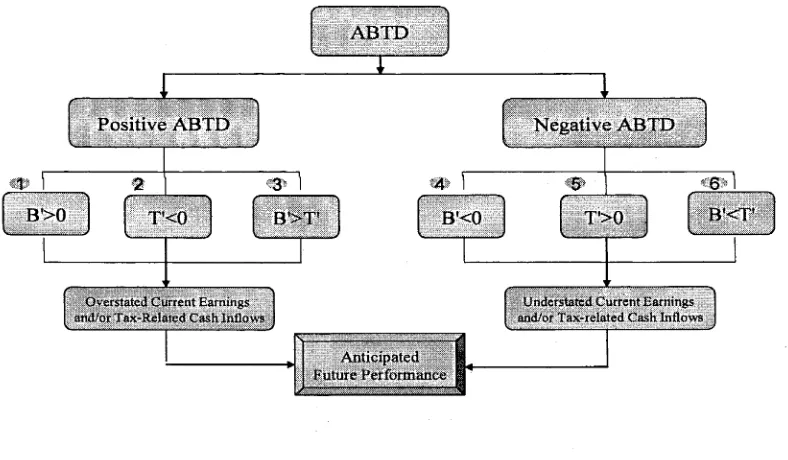
Figure 4.1 The Theoretical Framework of BTD... 71 Figure 4.2 How ABTD Informs on the Noises in Reported Earnings and
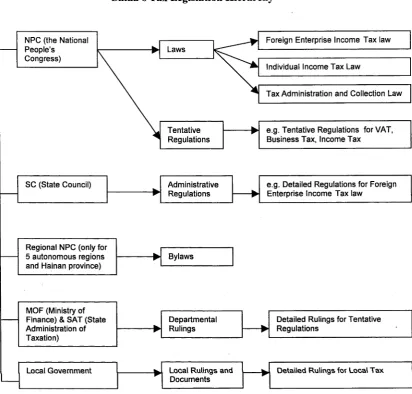
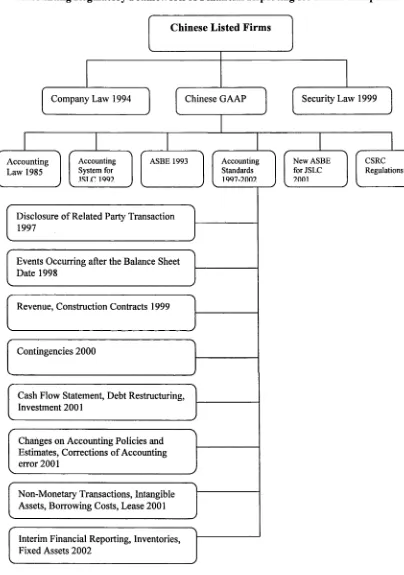
Cash Flows and Future Performance... 77 Figure 5.1 China’s Tax Legislation Hierarchy... 96 Figure 5.2 Accounting Regulatory Framework of Financial Reporting
for Listed Companies... 104 Figure 5.3 Relationships between Chinese GAAP, Income Tax Laws
and IAS... 107 Figure 5.4 The Aggregate Tax-Effect BTD from 1999-2004...118 Figure 5.5 The Trend of Aggregate BTD... 119 Figure 5.6 The Comparison of Permanent Differences and Timing
Differences...120 Figure 7.1 Histograms of BTD Distribution in 1999-2004...160 Figure 8.1 The Industry-Based Distributions of ABTD Estimated from
the Cross-Sectional BTD Regressions for 2000-2004... 169 Figure 8.2 The Industry-Based Distributions of ABTD Estimated from
Glossary of Acronyms
ABTD ASBE BTD CAS COE CSRC EM EMH ETR FDI FEHL
FIE GAAP GDP GFPE IASC IPO IOE JSLE MOF NBTD NPC NOL OLS PD PT REIT ROE SAT SEO SOE ST
Abnormal Book-Tax Differences
Accounting Standards for Business Enterprises Book-Tax Differences
Chinese Accounting Standards Collectively Owned Enterprises
Chinese Securities Regulatory Commission Earnings Management
Efficient Market Flypothesis Effective Tax Rate
Foreign Direct Investment
Income Tax Law for Enterprises with Foreign Investment and Foreign Enterprises
Foreign Investment Enterprises
Generally Accepted Accounting Principles Gross Domestic Products
General Financial Principles for Enterprises International Accounting Standards Committee Initial Public Offerings
Individually Owned Enterprises
Accounting System for Joint Stock limited Enterprises Minister of Finance
Normal Book-Tax Differences National People’s Congress Net Operating Losses Ordinary Least Squares
Permanent Differences Particular Transfer
Tentative Regulations for Enterprises Income Tax of PRC Return of Equity
TD TM WTO
Temporary (Timing) Differences Tax Management
CHAPTER ONE
INTRODUCTION
1.1 Objectives of the Thesis
This thesis explores the informativeness of book-tax differences (BTD). It examines the potential for BTD in evaluating the extent of accounting-tax misalignment and proxying firms’ earnings management (EM) and tax management (TM), and investigates the value relevance of BTD in a Chinese context.
This thesis attempts to enrich and deepen the understanding of BTD in terms of epistemology and methodology. Three broad research questions addressed in this thesis are:
(1) Can observable BTD proxy earnings management and tax management after controlling for accounting-tax misalignment?
(2) To what extent is variation in BTD associated with earnings management and tax management incentives?
(3) Is the information embedded in BTD sufficient to make BTD value relevant?
impounded in BTD may aid investors to precisely evaluate and forecast firms’ future performance and so may affect stock returns.
Next, this thesis develops a methodology to decompose BTD into normal and abnormal components. Normal BTD (NBTD) is defined as the mechanical differences due to the divergent reporting rules for book and tax purposes, addressing the extent of accounting-tax misalignment. Abnormal BTD (ABTD) refers to the potentially opportunistic differences due to the managerial choices in accounting and tax reporting, thus quantifying the level of management manipulations. Because both NBTD and ABTD are not observed directly, indicator measures are developed by regressing BTD on factors associated with normal BTD. When the resultant model is used to forecast normal BTD, the unpredicted BTD is abnormal (ABTD).
Accounting data from Chinese B-shares listed companies’ financial statements are used to test the relevant research questions. This is particularly advantageous because the disclosure requirements for these companies reveal particular aspects of BTD not readily observable in other settings. The empirical study provides evidence that the estimated ABTD is positively related to most EM and TM incentives, suggesting it is a useful metric for EM and TM. BTD and its components are value relevant in the Chinese capital markets.
1.2 Important Concepts and Definitions in the Thesis
Book-Tax Differences
In the definition used most commonly in the literature, book-tax differences refer to the gap between pre-tax income reported in a company’s published financial statement (thereafter book income) and taxable income reported to tax authorities. BTD originates from different reporting rules for financial reporting (including accounting principles, standards, regulations) compared to income tax laws (including income tax legislations, judicial precedents, administrative ruling) (e.g. Smith and Butters 1949, Beresford et al. 1983, Tran 1997).1
The objective of financial reporting as set in accounting rules is to provide information about the financial position, performance and changes in financial position of an enterprise that is useful to accounting information users in making economic decisions. However, the objectives of tax laws typically are to raise revenue for governmental operations and to control the economy to achieve social, economic and political goals. These conflicting objectives guiding different development of rules for financial reporting and tax reporting raise the issue of BTD.
In this study, BTD not only reflects the mechanical differences due to the divergent reporting rules for book and tax purposes, but also reflects the opportunistic differences due to the managerial choices in accounting and tax reporting.
Earnings Management
Based on existent literature, there are various definitions of earnings management. Watts and Zimmerman (1990) define earnings management as occurring when managers exercise their discretion over the accounting numbers with or without
restrictions. This study follows the definition of earnings management suggested by Healy and Wahlen (1999) in which earnings management refers to “managers use judgement in financial reporting and in structuring transactions to alter financial reports to either mislead some stakeholders about the underlying economic performance of the company, or to influence outcomes that depend on reported accounting numbers” (p368).
Tax Management
Like earnings management, tax management, or tax planning or tax avoidance or tax shelter has various definitions. 2 Generally, it is defined as taxpayers taking advantage of the provision of the tax laws to legally reduce or defer their tax liability (e.g. Scholes et al. 2002, Tresch 2002). In this study, tax management refers to taxpayers exploiting the uncertainty of tax laws to choose the advantageous provision in tax reporting and in structuring tax-favoured activities to legally influence their tax liabilities.
Value Relevance
In the value relevance literature, a potential information item is defined as value relevant if it exhibits the significant association with a measure of equity market value or stock prices (Barth et al. 2001, Barth 2000, Ohlson 1995, Beaver 1998). Some studies also regard an item as value relevant if it affects stock prices, stock prices variability, or trading volumes (Beaver 1968, Bauman 1996). In this study, an accounting variable is regarded as value relevant if it is informative for evaluating firms’ performance and estimating future earnings and this information can be reflected in
stock prices as suggested in Ou (1990), Lev and Thiagarajan (1993) and Abarbanell and Bushee (1997).
1.3 Why Research BTD?
To date, the intricate business activities and managerial practice have complicated the informativeness of BTD. While aggressive book and tax reporting appear to be pervasive, BTD has become more and more meaningful due to its potential for interpreting this unobserved managerial practice. However, as will be illustrated in Chapters 2 and 3, prior research on BTD is relatively limited. This leads to the informativeness of BTD has not been adequately demonstrated and utilised.
1.3.1 The Potential Informativeness and Usefulness of BTD
Based on the definition, BTD is the gap between book income and taxable income underlying different accounting and tax rules. However, these two sets of rules can not specify accounting and/or tax treatment for each detail of business transaction because business activities are complex and changing. This necessarily leaves considerable uncertainty in applying accounting standards and tax laws. If managers manage their earnings reported to investors and tax authorities by opportunistically implementing the accounting and tax rules, can BTD reflect additional information other than the accounting-tax misalignment per se?
figure out what actual profits are” (The Wall Street Journal, 2003). The massive earnings management and accounting scandals (e.g. Enron, WorldCom) have threatened the value of accounting information and its role in providing useful information for share pricing and economic decisions. As a result, how to detect earnings management and tax management or assess the reliability of accounting information is an empirical issue.
If BTD is also reflective of these opportunistic behaviours, how this information can be discriminated from that about institutional arrangements? What is the implication of the mechanical differences for evaluating the extent of accounting-tax misalignment in a specific country? Can the opportunistic differences be used to measure the unobserved EM and TM? If yes, tax authorities and audit firms may focus on firms with larger opportunistic differences to perform an efficient and effective auditing. Researchers may use a new proxy to estimate or detect the forms and incidence of the unobservable EM and TM. Investors and financial analysts may assess the reliability of accounting reports. Further, if BTD can inform the market of extra information about unobservable managerial manipulation, is it possibly a good supplement of accounting measures and incrementally informative for stock prices? This thesis is motivated by these concerns and potential implications of BTD for explaining and predicting some accounting phenomena.
1.3.2 Research Gaps in Prior Literature
Incomplete Research on BTD
Two research lines make up the existing BTD literature: the first line studies BTD from the perspective of institutional arrangements, emphasising that BTD is a product of the discrepancy between accounting rules and tax laws. This line either implicitly studies BTD by analysing the relationship between accounting and taxation, which explains the mechanical sources of BTD or studies the relationship between accounting and taxation in a selected country by using BTD to explain the divergent rules (e g. Porcano and Tran 1998, Tran 1998).
The second line concentrates on managerial incentives and opportunistic choices, arguing that BTD is influenced by managerial practice in increasing/smoothing accounting earnings or reducing/deferring tax payment to serve management interests (e.g. Mills 1998, Mills and Newberry 2001, Phillips et al. 2003, Plesko 2004, McGill and Outslay 2004, Desai and Dharmapala 2004). This line posits that distinct incentives of financial statement preparers likely lead to different amounts of income reported to investors and tax authorities that may generate the opportunistic variation in BTD. These studies extend the implications of BTD for interpreting management manipulations, though no much empirical evidence supports the proposition that BTD may be a proxy for tax planning.
Research Challenges in the EM and TM Literature
A major challenge in recent EM and TM research is the unobservability of managerial actions or the lack of an appropriate measurement for EM and TM (Beneish 2001, Hofmann 2002). Although, in the earnings management literature, the measurements of total accruals and discretionary accruals have been widely used as proxies for EM (e.g. Healy 1985, DeAngelo 1986, Jones 1991, Dechow et al. 1995, Dechow and Sloan 1991, Guenther 1994a), they have been subject to significant criticism due to measurement imprecision and misspecification (e.g. Beneish 1999, Phillips et al. 2003, Guay et al. 1996, Bernard and Skinner 1996, McNichols 2000).
Dechow et al. (1995) evaluate the power and specification of five discretionary accruals models, such as Healy, DeAngelo, Jones, Modified Jones model and the Industry Model, they conclude that “the models all generate tests of low power for earnings management of economically plausible magnitude” (p193). More importantly, accruals measurement per se can not detect some EM if earnings are managed by real transactions which create both cash flows and earnings (Roychowdhury 2004, Jian and Wong 2003).
As with detecting earnings management, measuring tax planning is not easy, due mainly to the confidentiality of tax data and lack of an appropriate proxy for TM. In current tax research, effective tax rate (ETR) is commonly used to measure TM (e.g. Mills et al. 1998, Petroni and Shackelford 1999, Gupta and Mills 2002, Rego 2003, Phillips 2003).3 Shevlin (1999) and Shackelford and Shevlin (2001) suggest that ETR, measured as current tax expense as a percent of pre-tax book income, provides an
appropriate measure for tax planning effectiveness (and also tax aggressiveness)
because effective tax planning results in a low ETR.
However, some argue that ETR’s ability may be weakened due to measurement
error and its exclusion of implicit tax (Wilkie 1992, Wilkie and Limberg 1993, Scholes et
al. 2002, Plesko 2003). For example, Wilkie (1992) argues that ETR is noisy when a
net operating loss (NOL) is carried forward in a profitable year because in that
circumstance, ETR is understated even no tax planning.
In addition, ETR itself contains the information of both tax planning and incentive
effects of tax policy. It is hard to ascertain whether the lower level of ETR is caused by
tax preference/holidays or tax sheltering. Thus, ETR proxy will introduce measurement
error into the results of TM examination (See a detailed discussion in Chapter 2).
Remaining Concerns in the Value Relevance Literature
In capital markets research, value relevance studies which assess the extent to
which selected accounting variables affect stock market values are a major group.
Some financial variables such as earnings, taxable income, inventory, ETR have been
documented to be value relevant since they can provide useful information for investors
and market analysts to evaluate firms’ performance and estimate future earnings (Ball
and Brown 1968, Beaver 1968, Lev and Thiagarajan 1993, Abarbanell and Bushee
1997, Shevlin 2002, Lev and Nissim 2004, Hanlon 2004). The fixation, however, on
reported financial statement numbers of investors and market induces management to
manipulate the value-relevant financial variables (e.g. book and taxable income) for
Two major concerns relating to the value relevance of accounting information arise: (1) the lower explanatory and predictive power of earnings on stock prices presented in prior literature (Lev 1989); and (2) a deterioration in the association between accounting information and stock prices over the past four decades (Collins et al. 1997, Francis and Schipper 1999). An argument made by Lev (1989) stresses that, if accounting numbers used in regressions are not accurate in depicting the performance of the company, the regression results will not explain the extent to which earnings predict stock returns. It is an essential point because much of research has been done on refining statistical models but appears to fail in testing the quality of input data. If value relevance research is conducted on a basis of manipulated data, its implications for practice should be doubted. Thus, how the market can assess the reliability of financial variables is an empirical issue.
Taken together, the challenges in detecting EM and TM leave the quality of accounting information open for further investigation. The inadequate studies in the informativeness of BTD weaken BTD's utility on this issue. This study aims to conduct a complete study to extend the knowledge of BTD. It also attempts to advance extant BTD research by developing a new method to classify different information in BTD and further investigate their usefulness. This thesis fills some of gaps in the EM, TM and value relevance literature by testing the capability of BTD to proxy EM and TM, and earnings quality in the capital markets.
1.4 Why Research BTD in the Chinese Context?
planned economy to a market-oriented economy and business internationalisation, China established its accounting standards to comply with International Accounting Standards (IAS), and imported international tax practice to its tax system. This importation not only brought some mechanical gaps in the reporting rules, but also brought opportunistic differences due to managerial choices in book and tax reporting. Although China has a rather short history of BTD, managerial and market practice has led it to develop in a similar way to countries with a long history of BTD, such as the U.S. and Australia.
Being the largest emerging capital market in the world, however, the reliability of accounting information has been questioned (Haw et al. 1998a, Abdel-khalik et al. 1999, Eccher and Healy 2000, Shen 2001, Chen et al. 2003). Empirical evidence shows that management manipulation over earnings in the Chinese listed firms is rampant (e.g. Chen 1998, Jian and Wong 2003, Haw et al. 1998b, Chen et al. 2000). Anecdotal evidence suggests that tax planning is prevalent and easily undertaken in China.
Similarly, the increasing occurrence of accounting scandals (e.g. YingGuangXia, Sanjiu Medical & Pharmaceutical and QiongMingYuan) has weakened the investors’ confidence in their use of accounting information.4 The question of how the investors can evaluate the firms’ managed and unmanaged performance remains open and is of key interest to market participants and regulators.
These institutional and opportunistic contexts provide opportunities to develop a complete and in-depth BTD theory. More importantly, the disclosure requirements for China’s B-shares listed companies reveal particular aspects of BTD not readily
4
observable in other settings, avoiding some of the measurement error in the estimated BTD as shown in the U.S. literature. This is particularly advantageous for the empirical research of BTD as elaborated in Chapter 5.
1.5 Contributions of the Thesis
The research conducted in this thesis is expected to add to the knowledge about the informativeness and usefulness of BTD. It contributes to five lines of research.
(1) This study develops a theoretical framework for BTD research, identifying BTD as a function of accounting-tax misalignment, EM and TM. BTD is expected to be value relevant because it informs the market of both policy-related information about the differences between GAAP and tax laws and quality-related information about managerial manipulations.
(2) It makes an important methodological and conceptual contribution by decomposing BTD into normal and abnormal components. NBTD provides researchers with a measure to evaluate the magnitude of accounting-tax misalignment among countries and its variation across the time in a particular country, and ABTD proxies the extent of management manipulations and the levels of distortion in reported financial information. This identification offers some insights into standard setting and the role of accounting.
(3) It extends prior studies concerning BTD and EM conducted in the U.S. by controlling for the mechanical causes of BTD and incorporating the consideration of tax management. It refines the research design in prior U.S. literature by examining a whole reported BTD (i.e. including timing differences and permanent differences) instead of one of components of BTD (i.e. using deferred tax expenses as a proxy for BTD).
provides empirical support for the proposition that BTD signals the existence of tax management. Specifically, the adoption of tax-effect BTD provides an insight into studying tax-induced income shifting.
(5) It extends prior fundamental analysis literature by investigating the value relevance of BTD from the perspectives of both institutional arrangements and earnings quality. The findings also add to the understanding of the Chinese capital markets and managerial practice.
1.6 Structure of the Thesis
CHAPTER TWO
LITERATURE REVIEW: BTD, EARNINGS MANAGEMENT AND TAX
MANAGEMENT
2.1 Introduction
This chapter develops the basic theoretical and empirical foundations for this
thesis, incorporating a broad-based review of the literature that pertains to the research
questions. The literature is related to three areas: BTD, earnings management and tax
management.
Prior research examines the information contained in BTD from two major lines.
One line studies BTD from an institutional angle, emphasising BTD as a product of the
discrepancy between accounting rules and tax laws. This line addresses the primary
informativeness of BTD and explains the definition, components and original causes of
BTD (Smith and Butters 1949, Beresford et al. 1983).
Another line incorporates managerial incentives and opportunistic choices,
arguing that BTD is influenced by managerial practice in increasing/smoothing
accounting earnings or reducing/deferring tax payments (Phillips et al. 2003, Mills and
Newberry 2001, Plesko 2004, McGill and Outstay 2004, Desai and Dharmapala 2004,
Mills 1998). These studies extend the potential implications of BTD for explaining
unobserved managerial practice and provide some support relevant to the theoretical
To study the comprehensive informativeness of BTD, this chapter first reviews the BTD literature in these two lines. To understand the potential ability of BTD to proxy EM and TM and its importance, this chapter reviews the EM and TM literature in term of four aspects: (1) why and how do managers engage in EM and TM? (2) Why does detecting these opportunistic behaviours matter? (3) Why the appropriate indicator of EM and TM is the major challenge in existing literature? (4) How does BTD relate to EM and TM? As these issues are discussed separately in the literature rather than being integrated, the review follows this practice. It commences in Section 2.2 with the mechanical causes of BTD due to accounting-tax nonconformity, followed with a discussion of the opportunistic causes of BTD in Section 2.3. Section 2.4 overviews the earnings management literature relevant to the motivations and approaches of EM, challenges in detecting EM and the association between EM and BTD. Section 2.5 draws together the framework, motivations and approaches of TM. The challenges in detecting TM and the role of BTD on this issue are discussed. The tax costs and non tax costs trade-offs literature is also reviewed to advance the understanding of the vital consideration of tax planning. Section 2.6 concludes with a summary of main points
raised in this chapter.
2.2 BTD and Mechanical Factors
2.2.1 Mechanical Causes of BTD
Considerable literature addresses the relationship between accounting and taxation in different countries (e.g. Smith and Butters 1949, Beresford et al. 1983, Organization for Economic Co-operation and Development (OECD)1987, Hoogendoorn 1996, Porcano and Tran 1998, Tran 1997). Two essentially different structures of relationship between accounting and taxation are distinguished: (1) dependence structure; and (2) independence structure.5
Dependence Structure
With dependence structures, accounting and tax rules are concordant because either book rules follow tax rules, or taxable income is determined by the choices made in commercial accounts. This is typical of Continental European countries, such as France, Germany, Italy, Sweden, Finland and Belgium (Hoogendoorn 1996). In these countries, financial reporting income equals taxable income, income tax expenses for the period equal income tax payable for the period. Hence, no BTD arises. The major reason for the existence of dependence structure is that accounting profit and taxable income are used by a homogenous group of users and thus are expected to be more or less identical (Tran 1997).
Independence Structure
With independence structures, financial reporting rules and tax laws are developed separately. Income determination for accounting purposes is distinguishing from income determination for tax purposes. Countries traditionally falling into this structure include Anglo-American countries such as the United States, the United
Kingdom, Canada and Australia, and hence exhibit BTD (Porcano and Tran 1998, Hoogendoorn 1996).
In the countries with independence structures, accounting rules and tax laws differ because they serve different objectives. Taking the U.S. as an example, the function of financial reporting as set in Generally Accepted Accounting Principles (GAAP) is to provide useful information to shareholders and other users of financial statements to evaluate firm performance and then make economic decisions about business enterprises and investments. Therefore, financial rules tend to prevent companies from overstating revenue or understating expenses to financial statement users and thus protect third party creditors and investors (Mills and Plesko 2003). For example, the traditional conservatism or prudence principle in financial rules requires a later recognition of doubtful income and an early recognition of doubtful losses or expenses.
expenses (loss) can be anticipated. The deductions of contingent provision are allowed until the contingencies become fixed (Smith and Butters 1949).
In summary, the disparity of objectives as set in accounting rules and tax laws leads to the different treatment in tax and financial reporting and subsequently raises the issue of BTD.
2.2.2 Composition of BTD
Differences in income and expenses measurement under two sets of reporting systems generate two sources of BTD: permanent differences (PD) and temporary differences or timing differences (TD) (Smith and Butters 1949, Beresford et al. 1983).
PD occurs when particular revenue or expense is recognised in the determination of accounting profit but never in the determination of taxable income, or vice versa. PD does not reverse and generally derives from governmental tax policy decisions.
For example, interest income on governmental bonds, is excluded in taxable income but recognised as income for financial reporting purpose. Another example is non-deductible expenses such as fines or penalties, which are expensed in book income but are not deducted from taxable income because allowing a deduction would be counter to public policy.
For example, for financial reporting purpose, business revenue is not recognised until it is both realised and earned, implying that the firm must have provided the goods or service and have reasonable assurance that payment will be received. By contrast, for tax reporting purpose, revenue may be recognised on a cash basis. As a result, revenue received in advance is recognised as taxable income in the period of receipt but is not recognised as financial income in financial reports until a later period. In addition, a greater accounting depreciation deduction in the near terms relative to tax depreciation recorded in tax reporting is also a typical example.
The detailed items of PD and TD in a Chinese context are discussed in Chapter 5.
2.3 BTD and Opportunistic Behaviour
While the mechanical causes of BTD are widely understood, some might argue that, if BTD is caused oniy by the divergent financial accounting and tax treatment, the variation of BTD for companies should be relative constant under the same jurisdiction after controlling for policy and economic factors. Why does aggregate BTD change over time?
Motivated by a continued increase in BTD throughout the 1990s in the U.S. and the conjecture that the increasing positive BTD may relate to tax shelters by Treasury, some researchers begin to study BTD from a perspective of managerial incentives.6 The notion underlying these studies is that (1) there is considerable flexibility in accounting rules and uncertainty in tax laws; and (2) opportunistic practice by
management to manage (increase or smooth) book income, or manage (reduce or delay) taxable income might be one of drivers of BTD.
For example, given that financial statements are designed to provide historical information to shareholders and others to evaluate a firm’s performance, the accounting rules place great weight on consistency over time within the firm, but less weight on uniformity of all firms to identical assumptions regarding their businesses’ accounting rules. As a result, for different firms, managers can exercise discretion to make different determinations about the amount of revenue or expenses to recognise in any given periods (Manzon and Plesko 2002).
In addition, due to the variety and complexity of business activities, accounting rules leave considerable discretion in estimation and allow flexibility in the choice of accounting methods, such as depreciation, cost allocation or asset valuation. Therefore, managers may exploit accounting judgement in self-interested attempts, e.g. overstating income and assets for increasing compensation and stock price or
understating income for creating additional reserves for future use (Mills et at. 2002).
Given this discretion and uncertainty, distinct incentives of managers likely lead to the differences in the amount of income reported to investors and tax authorities that might generate the variation of BTD (Manzon and Plesko 2002). Therefore, BTD may reflect opportunistic differences in accounting or tax choices (Mills and Plesko 2003).
Using publicly available data from 1988-1998, Manzon and Plesko (2002) examine the magnitude and source of BTD. They develop a fixed effect regression model to estimate the amount of variation in traditional BTD that can be explained by economic and institutional factors. The evidence shows that aggregate BTD has increased over time but a relatively small set of variables can explain this increase. They interpret “any unexplained residual as attributable to other factors, one of which may be tax-sheltering activity”. Shevlin (2002) reminds the inference from this paper about tax shelters should be cautious because of any omitted variables and noises in the explained variables.
Other studies (e.g. Mills et al. 2002, Desai 2003, Plesko 2004) also document increasing trends in BTD in the U.S.. Consistently, Desai (2003) indicates that the institutional arrangements, such as the differential treatment of depreciation, stock option deductions and foreign source income, only explain less than 50 percent of the current BTD. He suggests that the large unexplained BTD may be partly attributable to increasing tax shelters. Although these studies do not provide direct evidence to support the inference that BTD is associated with tax planning, they suggest that BTD may be explained by other factors other than mechanical and economic factors.
exist in their research design, these empirical studies extend the conceptual understanding of BTD by incorporating the opportunistic differences into BTD research. A detail discussion on this issue is presented in Section 2.4.3.
To examine the potential association between BTD and managerial opportunistic behaviour, an understanding of the motivations and approaches of management manipulations is essential and necessary. The following sections review the EM and TM literature, highlighting the aspects relevant to research issues.
2.4 BTD and Earnings Management Literature
This section first reviews the earnings management literature as to the motivations and methods of EM, followed with a discussion of the approaches of detecting EM in the current literature. After evaluating the weakness of these approaches, the literature that associates BTD with EM is reviewed and argued.
2.4.1 Motivations and Methods of Earnings Management
The EM literature identifies several incentives to manipulate earnings, including: (1) accounting-based contracts; (2) stock market expectations; and (3) regulatory requirements (e.g. Healy and Wahlen 1999, Fields et al. 2001). The methods of managing earnings are also explicitly or implicitly addressed.
Accounting-Based Contracts
financial accounting numbers. However, these contracts also provide managers with
incentives to manage earnings in order to increase their compensation or reduce the
likelihood of bond covenant violations (Watts and Zimmerman 1978, Watts and
Zimmerman 1986).
A large body of literature has emerged to test the association between contracting
incentives and earnings management. Healy (1985) and subsequent studies
demonstrate that bonus schemes create incentives for managers to choose current
discretionary accruals to maximise the value of their bonus awards. When earnings are
expected to fall between the upper and lower bound, managers make income-
increasing choices. When earnings are expected to be either above the upper bound or
below the lower bound, managers are more likely to choose income-decreasing
accruals so that to maximise multi-period compensation. Healy’s work provides a
benchmark for subsequent compensation studies that improve on his methodology
(Fields et al. 2001).
Controlling for the effects of external agency conflicts and stock-based
compensation by using internal data from different business units within a single
corporation, Guidry et al. (1999) find support for the Healy bonus plan hypothesis,
showing divisional managers are likely to decrease income when the earnings target
can not be met as set in their bonus plans.
Consistent with Healy’s lower bound hypothesis, Elliott and Shaw (1988) and
Strong and Meyer (1987) find when earnings are already below expectations or are
negative for a period, some managers write-off as many costs as possible in that
period with an impetus of creating reserves for future use by taking a “big bath”. Chen
and Lee (1995) also find firms with accounting losses are more likely to take further
After refining the research design in Healy (1985) by using the modified Jones
(1991) model and actual data on the bounds instead of estimated bounds, Holthausen
et at. (1995) also find support for the Healy’s hypothesis at the upper bound although
no evidence shows that managers manipulate earnings upward around the lower
bound.
In comparison with compensation contracts, the evidence on the association
between debt contract and earnings management is mixed. While some studies
conclude that there is little evidence of earnings management among firms
approaching debt default (e.g. Healy and Palepu 1990, DeAngelo et al. 1994, Beneish
and Press 1993), other evidence demonstrates that firms close to debt covenant
violations will choose income-increasing accounting methods (DeFond and Jiambalvo
1994, Sweeney 1994).
Using the firms’ debt-equity ratio as a proxy for closeness to debt covenant constrains in cross-sectional regressions, initial studies examine the effect of debt
covenants on accounting decision and conclude that the larger the firms’ debt-equity
ratio, the more likely the firms’ managers are to shift reported earnings to the current
period from future periods (e.g. Christie 1990). DeFond and Jiambalvo (1994) and
Sweeney (1994) extend prior literature by examining a sample of firms that actually
violated a lending covenant and adopting cross-sectional and time-series model of
normal accruals. DeFond and Jiambalvo (1994) find that abnormal accruals are
significantly positive in sample firms in the year prior to the covenant violation,
interpreting this as evidence of earnings management. In the year of violation, they
present the evidence of positive manipulation after controlling for going concern
Sweeney (1994) also documents that covenant violators make a large number of
income-increasing discretional changes in the violation year and in years following the
first year of default. Managers of 130 default firms make 205 accounting changes in the
period from five years prior to two years following the year of default and 76 percent of
these changes are income-increasing. In addition, the covenant violators are more
likely to manipulate earnings than a sample of control firms matched by industry, size
and time period.
Stock Market Expectations
Apart from accounting-based contracting motivation, the widespread use of
accounting information by investors and financial analysts to evaluate stocks value
induce managers to manipulate earnings in an attempt to influence stock price
performance (Healy and Wahlen 1999). Numerous studies have investigated capital
market-based incentives for earnings management, such as equity valuation and the
cost of capital.
Aharony et al. (2000) present empirical evidence that accelerating credit sales is
a low-cost method for B-shares companies’ earnings management in China and is
widely used by unprotected stated-owned enterprises (SOE) before initial public
offerings (IPO). They find that total accruals of unprotected SOE decline but the cash
flows from operation increase after the IPO. The firms manage accounting accruals to
boost earnings and/or list those business units with temporarily high profits resulting
from high accounting accruals during the process of financial packaging.
Other studies have examined whether earnings are managed to meet the
Williams (1994) report that managers manipulate discretionary accruals to understate earnings, presumably in the hope of reducing the share price.
Burgstahler and Dichev (1997) demonstrate that firms boost reported earnings to avoid earnings decreases and losses. Kasznik (1999) finds that managers who issue earnings forecasts might manage reported earnings toward their forecasts, consistent with firms managing earnings based on stock market expectations.
Regulatory Requirements
In addition to accounting-based contract and stock market motivations, three forms of regulatory motivations for earnings management have been discussed in the literature: earnings management for tax planning purpose, earnings management to reduce the risk of scrutiny and earnings management for seasoned equity offerings (SEO) (Healy and Wahlen 1999). The most common hypotheses are that firms manage their earnings to reduce or defer taxes and to avoid political costs (Fields et al. 2001). The evidence provided in Dhaliwal and Wang (1992) shows that firms adjusted accounting accruals by shifting permanent and temporary differences across periods to minimise the tax effect of the Alternative Minimum Tax (AMT). Guenther (1994a) investigates earnings management in response to corporate tax rate changes and reports that the decrease in tax rate resulting from the Tax Reform Act of 1986 (TRA’86) induces firms to shift net income through current accruals from the higher to the lower taxed periods.
above the thresholds in order to gain rights to issue new equity in China (Chen 1998, Jiang and Wei 1998, Haw et al. 1998b, Chen et al. 2000). Firms also have strong incentives to withdraw loss from the book to avoid delisting and trading restriction (Chen et al. 2003).
In summary, the earnings management literature addresses managers’ incentives to alter reported earnings in beneficial ways in contractual and regulatory contexts. These findings indicate a variety of determinants of earnings management, including increasing managers’ compensation, reducing the likelihood of debt covenant violation, influencing stock market perceptions, reducing taxes, and avoiding regulatory intervention. However, how to measure the incidence of earnings management is a difficult work despite the popular wisdom that earnings management exists prevalently (Beneish 2001).
2.4.2 Current Approaches to Detect EM
Detecting EM is a significant issue since earnings management distorts financial reports and misleads some stakeholders about underlying economic performance of the company, thereby weakening the role of accounting in providing useful information for economic decision-making. More importantly, stakeholders can not see through earnings management and its effect on evaluation and estimation of accounting numbers (Fields et al. 2001). The major problem lies in managerial manipulation being largely unobservable and the difficulty in measuring the managed and unmanaged earnings (Beneish 2001).
management. Among them, aggregate accruals variable is widely used as a proxy for earnings management although it has been subject to significant criticism (McNichols 2000, Guay et al. 1996, Beneish 1997). Numerous studies have been undertaken to examine accruals in detecting EM (e.g., Healy 1985, DeAngelo 1986, Jones 1991, Dechow et al. 1995, Dechow and Sloan 1991, Guenther 1994a). These and other studies construct measures of abnormal (sometimes called discretionary) accruals from the residual of a regression of total accruals on explanatory variables.
However, extant studies suggest that accrual variables poorly measure the managers’ discretion to manage earnings (e.g. Phillips et al. 2003, Guay et al. 1996, Bernard and Skinner 1996, McNichols 2000). For example, Bernard and Skinner (1996) argue that abnormal accruals estimate using Jones model reflect measurement error due in part to the systematic misclassification of normal accruals as abnormal accruals. Dechow et al. (1995) evaluate the power and specification of five discretionary accruals models such as Healy, DeAngelo, Jones, Modified Jones model and the Industry Model, they conclude that “the models aii generate tests of low power for earnings management of economically plausible magnitude” (p193). The misspecification is performed due to the correlation between the magnitudes of normal accruals and past/contemporaneous firm performance. Consistently, Guay et al. (1996) demonstrate that accruals derived from five alternative models reflect considerable imprecision and/or misspecification.
flows and earnings are generated simultaneously, accruals fail to detect this type of earnings management.
Therefore, using accruals variable as a proxy for earnings management is flawed though it is widely used in the earnings management literature. While its shortcomings have been acknowledged, it seems difficult to seek a better measure to replace it.
2.4.3 The Role of BTD and EM
While recent literature debates whether accruals variable is an appropriate measure of earnings management, some scholars start to examine the association between BTD and earnings management. Given that BTD addresses the different income reported to investors and tax authorities, larger BTD might imply high book income reported due to financial reporting incentives, or low taxable income reported due to tax incentives. Revsine et al. (1999) suggest that the ratio of pre-tax book income to taxable income can be used as a measure of accounting conservatism or aggressiveness. Penman (2001) regards BTD as a diagnostic to detect manipulation of core expenses. He indicates that, if a firm is estimated to generate higher GAAP income, it must recognise more deferred taxes.
Using confidential tax return data, Mills and Newberry (2001) present evidence that firms with incentives of earnings management have larger BTD. In particular, public firms, highly leveraged privately-held firms, and financial distressed privately- held firms all have high levels of BTD.
firms employ the strategy to avoid an earnings decline and loss. By testing three
earnings thresholds (prior year’s earnings, zero earnings, and analyst earnings
forecasts), they conclude that BTD can supplement accruals measure in detecting EM
to avoid an earnings decline and to avoid a loss. However, BTD is not incrementally
useful in detecting EM to avoid failing to meet or beat analysts’ forecasts.
The paper of Phillips et al. (2003) is the first empirical study to evaluate the
usefulness of BTD as a metric of EM relative to various accruals measures, where they
claim that an investigation of timing BTD will help separate management discretion
from nondiscretionary choices. Assuming that GAAP allows managers greater
discretion than tax laws in determining the amounts of income and expenses in certain
period, managers might exploit the discretion in accounting choices to manipulate
earnings. DTE, reflecting the temporary differences between book income and taxable
income under two systems, can capture this discretion in financial reporting vis-ä-vis
tax reporting. Holding taxable income constant, the change of DTE can detect EM. For
example, an increase of net deferred tax liabilities means that firms report higher pre
tax book income than taxable income, and vice versa. Considering that some tax
planning activities might also create DTE, the paper performs a sensitivity analysis and
concludes that positive BTD caused by tax planning does not lead to the positive
relation between DTE and EM.
Building on some studies (Burgstahler et al. 2002, Dhaliwal et al. 2004, Mills and
Plesko 2003, Schrand and Wong 2003) those suggest that the accruals leading to
negative DTR (deferred tax ratio—deferred tax expense divided by lagged total assets)
are subject to greater management discretion than the accruals leading to positive DTR,
Joos et al. (2003) compare the persistence of negative and positive DTR across the
time and demonstrate that negative DTR is less stable across time and thus it is a
al. (2003) that DTE can detect earnings management beyond total accruals and abnormal accruals, DTE can signal different earnings management strategies depending on the earnings target.
Following Phillips et al. (2003) and Joos et al. (2003), Phillips et al. (2004) decompose the changes in net deferred tax liabilities into eight components to determine which component can predict earnings management. They use the change of net deferred tax liability as a proxy for BTD and find that firms use revenue and expense accruals and reserves and other asset valuations to manage earnings upwards. The study addresses how firms manage their earnings although some empirical issues are argued by Krull (2004).
While the above literature extends the role and implications of BTD, unfortunately, all of them ignore the effect of institutional factors on BTD measure. One simple question emerges: what if the BTD (or DTE) is caused by the differences between GAAP and tax regulations or caused by the changes in GAAP and/or tax laws? In addition, when testing the ability of BTD to identify earnings management, permanent difference as a major component of BTD is neglected. This omission will impact the explanatory power as some earnings management activities also generate permanent difference.7
Furthermore, the assumption that managers manage income upward while keeping taxable income constant as made in Phillips et al. (2003) remains controversial. One might question: if the benefits brought from an earnings management strategy are much higher than the resultant tax cost, will firms forsake this strategy so as to pursue
a constant tax payment? In practice, is it possible for firms to disregard the benefits from tax planning?
In summary, recent studies such as Phillips et al. (2003), Joos et al. (2003) extend prior literature by demonstrating BTD can be used to detect earnings management, and in some settings it is more useful than total accruals and abnormal accruals in accurately classifying firm-years as earnings management or non-earnings management firm-years pertaining to avoiding a loss and a earnings decline. However, there is still much to do in the empirical work, such as controlling for the effect of mechanical factors when examining the ability of BTD in detecting earnings management, measuring BTD by using both of permanent differences and temporary differences rather than singly using temporary differences.
2.5. BTD and Tax Management Literature
This section addresses the framework of tax management, and the motivations and forms of tax management in prior literature. It also discusses the impact of tax and non-tax costs consideration on tax management. The weaknesses of current approach in detecting tax management and the potential role of BTD are debated.
2.5.1 The Framework of Tax Management
effective tax planning. Effective tax planning is defined as tax-favoured activity that maximises the firm’s expected discounted after-tax cash flows. It “requires the tax planner to consider the tax implications of a proposed transaction for all of the parties to the transaction, to consider not only explicit taxes (tax dollar paid directly to tax authorities) but also implicit taxes (taxes that are paid indirectly in the form of lower before-tax rates of return on tax-favoured investments), to recognise that taxes represent only one among many business costs, and all costs must be considered in the planning process: to be implemented, some proposed tax plans may require exceedingly costly restructuring of the business” (Scholes and Wolfson 1992, p2).
Tax planning takes many forms, including (1) converting income from one type to another, such as selection of the type of income, transaction, or situations which are treated most favourably by the tax law, e.g. changing interest income to dividend income, choosing financial lease rather than operating lease; (2) shifting income from one time period to another, e.g. avoidance or postponement of recognition of income, alternation in the timing of incomes and deductions (deferring tax); and (3) shifting income from one pocket to another, for example, converting income from subsidiary with high tax rate to another with low tax rate (e.g. transfer pricing) (Scholes et al. 2002). But all of them share a common goal—reducing corporate income tax liability to maximise the firm’s expected discounted after-tax cash flows.
2.5.2 Motivations and Approaches of Tax Management