The Australian National University
National Institute of the Arts
School of Art
Visual Arts Graduate Program
LOREN DALGARNO LOCKWOOD
REPORT
PRESENTED IN FULFILMENT OF THE REQUIREMENTS OF THE
GRADUATE DIPLOMA OF ART
Abstract
Acknowledgements
The Dynamics of Geometry and Pattern
Table Of Contents
Introduction: The Dynamics of Spotted Drum page 21
Geometry and Pattern page 6
Conclusion page 23
Materials and Process page 9 page 23
Curriculum Vitae page 24
Stream page 13 page 24
Starburst Bibliography page 27
Starburst page 16 Bibliography page 27
Appendix 1: Photo credits page28
Semi Circles page 19 Appendix 1: Photo credits page28
The Dynamics of Geometry
and Pattern
Geometry is the language of man he has
discovered rhythms apparent to the eye and clear
in their relations with one another. And these
rhythms are at the very root of human activities.
They resound in man by an organic inevitability,
the same fine inevitability that causes the tracing
out of the Golden Section by children, old men,
savages and the learned.
Le Corbusier, Towards A New Architecture {^93^)
T
he visual inspiration for the patterns and rhythms of my work to date, has come from those found in the naturalworld: the patterns of structure, movement and the dynamics
of natural processes from the microscopic to the macroscopic.
In our environment we witness the often ephemeral patterns
from the contest of mass and flow - the receding sequence of
the landscape, braided drainage channels, the lie of dunes,
shore and riparian ripples. These are things of multiples,
synergy, of repetition. In their unitary multiples, my work
employs the richness and seeming softness of bent timber
laths to take the lines, rhythm and fluidity of nature to create
derived objects.
The use of line and the creation of illusion from the synergy of
multiple lines create the input for the perceptual play evident
in my pieces. The capacity for lines to create illusion is the
vehicle of many optical artists. Repeats that are numerous or
textural may produce a dazzle effect. Through controlling the
content of size, shape, value, and colour the dazzle can be
increased or reduced. This treatment of the image is what
confuses the eye in Op Art: the space between the lines has
the same value as the lines themselves and the eye cannot
determine which element is the more important. The eye sees
eschewed the intensity of much of this art. The quality of light
and surface in these timber objects I have assembled,
produce a shimmering, even ephemeral effect as in the
example Fluid (fig. 1). We see the multiple of curves as the quality of line and mark. They are draw/ings.
The thin flatness of the strips suggests quick movement and
energy; the thicker strips, power and resistance: repetition
suggests pattern, perception and illusion. As a lattice or
assemblage this material sets and emphasises space.
To gesture with the hands or arms is to generate curves: the
dynamic, fluid relationship we have with the world about us is
expressed in curves. The process of steam bending is
dynamic - it is a process-choreographed movement of hands,
arms, body, and wood as the ephemeral moment of its
plasticity is captured about a form. The individual bent
components created in my work, become the unitary element
that in their multiples abstract the modulation of pattern by
[image:7.612.36.597.16.429.2]time. At a formative level, the finally resolved installations or
Figure 1: Fluid, part of the installation '1+1=8', Hoop Pine, 2001
sculptures manifest a gestural translation of the dynamic
language of steam bending.
Steam bending is an old and low technology process and has
manufacturers as Thonet. Their famous bentwood chairs might be regarded as a form that both exposes and even symbolises the manufacturing processes that lay behind it. The steam bent wood removes the prerequisite of joinery and qualifies a simplicity of structure; thin, linear qualities result in a chair, in furniture that can become near transparent.
When wood is steamed, the heat carried by the steam softens the lignin material that serves to bind the fibres together in the wood matrix allowing them to move with respect to one another in bending. It is important that the steam be saturated with moisture. The moisture in the steam prevents moisture loss and degradation of the wood being steamed. Pressurised steam does not greatly aid the final bending, it may even be detrimental by making the wood brittle.
contribute to a diminishment of environmental quality. Today, terms such as renewable, degradable, and recyclable should impact on all design vocabularies. New ways of assessing good design are evolving within the framework of sustainability. Within my work, the necessity to consider the importance of the latter ethic upon our environment and society is actively part of my design and making process.
Although my focus at present is essentially installation, many of the process and aesthetic developments might be applied to functional items such as screens, floors, lights, ceilings and wall panels. The absence of a determined outcome has facilitated my exploration of what is possible.
Materials and Process
daj and night, from birth to
death, life flows in a timeless cycle — life in the
soil, water, and air, life of animal and plant, life
of man and earth, always in constant change and
growth so that in all nature no thing is the same
at day's end as it was at day's beginning."
A n d r e a s Feininger (1976)
In nature, s h a p e is c h e a p e r t h a n material. T h e s h a p e of a t r e e
is the history of t h e forces that w e r e acting on it w h i l e it grew.
T h e result is a structure w h o s e lightness a n d a p p a r e n t fragility
are m a d e robust by a highly efficient transfer of stress. T h e
beautiful logic of s t e a m - b e n t w o o d is an a m e l i o r a t i o n of t h e
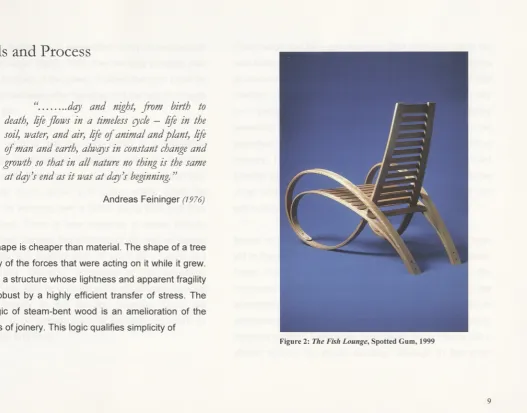
[image:9.612.73.601.18.431.2]prerequisites of joinery. This logic qualifies simplicity of
structure and making as is exemplified in my undergraduate
piece Fish Lounge (fig.2). Here the bending process was fundamental to much of the joinery. Further, the chair could be
assembled immediately after bending and the whole allowed
to season in situ.
The steam bending process has within it a wonderful
dichotomy of technologies. Mankind, early in technical
evolution learnt that green wood might be reversibly
plasticised by heat: arrow and spear shafts could be
straightened by warming over a flame, being bent and then
allowed to cool. There is later evidence of canoe frames,
snowshoes, and utensils. The simplicity of the process denies
the complexity and sophistication of wood as a matrix and
fibre composite. However, something of the underlying
complexity in the material is hinted at by not all timber species
responding equally to the bending process. Some are
characterised by a smooth ease of bending — others by
being obdurate and fissile.
Green wood can be easily bent and then dried and set in the
bent configuration - for example, the traditional back spindles
of chairs or the splints in basket making were handled in this
manner. Thus, in its evolution, steam bending is traditionally
(and perhaps ideally) a green wood process. Yet, today
accessing green wood is not always possible through the
extended logistics and practices of the commercial timber
industry. However, appropriate air-dried or even kiln-dried
species will still give excellent results. In both cases, if the
wood seems excessively dry, soaking it for a day or so can
add sufficient water to facilitate the process.
Issues of sustainability, patina, colour, and availability have
led to the extensive use of Hoop Pine in my installation work.
Hoop Pine {Araucaria cunninghamii) is native to the rainforests of Northern NSW and Queensland and is now
sustainably sourced from plantation harvesting. From
commercial sources, the material is sold kiln dried to lower
moisture content. Even when used green Hoop Pine is not a
section sizes I have used, soaking in water hydrates the
material sufficiently for bending. Interestingly, later in my post
graduate work a change to a smaller stock dimension required
a change of species to the superior bending qualities of
Blackwood (Acacia melanoxylon).
In the designing of the component curves for the installation
assemblies in this postgraduate year, interesting results were
better obtained from the computer and such programs as
AutoCAD than from mathematical analysisV We think of the
calculus of Newton and Leibniz as giving a tool to handle the
^ Curves as in the catenary sweep of a suspension bridge are an inlierent expression of the laws of stress and gravitation. The line of a fold of drapery is an arc of a catenary. The absolute circle, as well as the absolute straight line, exists only in the theoretical mind of man.
The Greeks knew this well and boycotted the circle and the straight line. The most characteristic curves in their designs were close to a very tense arc of a hyperbola in the heel of the Doric Capital, and close to a logarithmic spiral in the Ionic Capital - both most dynamic and life-loaded curves of stress.
If we say 'close to' it is because the Greek curves are never geometrically perfect. They were borrowed from eroded curves of life found in nature, whether in echinoderms or shell forms. The conic or exponential equations we might refer them to should be considered as only approximations, and simplifications.
Grille, Paul Jacques, Form, Function & Design, Dover, New York, 1975.
science of change. However, for patterns of say, turbulence,
calculus is merely as the brush is to the picture. It provides the
formalism of an equation with which to set out the problem.
Since the equation provides no visual solution reality has to
be sought, rather in the same way that mathematician Jean
Leray always returned to gaze at eddies of the Seine as it
flowed beneath the Pont Neuf in Paris.
The AutoCAD program furnishes beautifully constructed
drawings that provide access to the variability and detail
needed to translate the pattern on the 2D-picture plane into
wood. The illustration below (fig. 3), for example, was used in
the design and construction process for Starburst. As well as being guides to construction, these drawings are also
conceptual sketches. With this tool, I was able to quickly
generate new families of curves. I have also made extensive
use of photography, not just for documentation of patterns,
but as a visual investigation that has allowed choices to be
essence a visual diary, a sl<etch bool<; an essential part of the experimentation.
[image:12.612.58.601.12.426.2]In some way, these curves and their expression in installation have a double life - artistic and scientific - and the two aspects are not separable.
Stream
Waves move through all things carrying energy,
vibrations and messages, yet they remain separate to
their medium. Waves have direction. Waves have
form
Keith DougallBentwood in symmetrical latticework created the lines within
the intricate parquet flooring of the Palais Liechtenstein in
Vienna in 1843. A lattice can be stood up, stretched, unfolded
to become bigger or smaller. Bigger, it can generate the fabric
of a building. Smaller, it can act as a screen to conceal, partly
conceal, or display. Where lattices affect looking-in and
looking-out, we are conscious of segments, which isolate
objects so we see them strongly. To perform in this way, the
lattice has to have a certain thickness (width or depth) to
isolate and intensify the fragments seen through the lattice.
This is much the same as how a frame will affect the sense of
[image:13.612.47.596.17.431.2]space in a picture.
Figure 4: Detail
of Stream,Hoop Pine, 1999
A lattice screen at a window or setting of a personal space, is
a selector of the outside from the inside and the inside from
the outside... we live in a compound of both. Stream (fig. 4 & 5) was an undergraduate response to a design brief for an
articulated screen and whose conception was influenced by
the glass weavings of Keith Dougall. The curves of the steam
and mark. They are the apotheosis of a sketch: capturing the instant while exclaiming the transience of forms in motion. The thin flatness of the strips suggests quick movement; the massed curves something of a heavier scale; the strips convey flux or a schematic depiction of flow as in a Chinese painting.
In method, the plasticised wood strips were bent by compression between complementary male and female forms: the male and female forms not only provide shape, but support the stressed fibres of the bending wood^. Even using
^ A bent lath of wood is in compression on the concave side and in tension on the convex side. Bent beyond its elastic limit, greater deformation occurs in the compressed material than in the tensed. In fact, about 1% elongation in tension causes failure. Plasticising the vi/ood by steam increases the compressibility by some 30% but only slightly increases (ca. 2%) the elongation ability in tension.
[image:14.612.54.601.15.430.2]When required by either thickness of stock, sharpness of bend, or species, a steel strap with end-block restraints added to the convex side of the bend will carry most of the tension stress and the wood undergoes mainly compressive deformation. Since steaming will greatly increase the wood's plasticity in compression, extreme compressive strain, if uniformly distributed, can be absorbed.
the small dimension strip material for Stream, the formers were strongly and rigidly constructed. By bending four strips at a time in one former and using drying or setting racks, in excess of forty strips a day could be bent. For bending multiples, it is essential that a drying rack be used such as the one shown opposite in fig. 6. The bends are quite shallow and because complete distortion of the fibre-matrix in the wood has not taken place, the memory of the material will cause it to straighten out. In the final piece, numbers of these strips are glued together to form sub-assemblies which stabilise the bent material.
[image:15.612.67.594.11.424.2]Starburst
In 2000 I had used a pattern similar to that of Stream in a
freehand sketch of a circular form and imagined it technically
possible. Attempts to devise a suitable wriggle or shape of the
unitary component able to be used in multitude, by drawing
with pen on paper proved to be not physically possible. The
problem was resolved by using the drawing finesse of the
AutoCAD program.
[image:16.612.48.598.18.432.2]The component was resolved as being of 3 x 22 x 2200mm in
section and something of a wedge shaped 'squiggle' in plan
view. The pieces were thus long, thin, and required more
bending at one end than the other. To exploit this I used a
jaw-like former where the male and female sections were
hinged together at one end and were simply drawn shut. This
meant that the bends could happen quickly allowing the wood
to find its position while at the highest temperature possible.
The process was efficient and with two formers and two
setting racks, I was able to produce eighty components a day.
Figure 7: Starburst, Hoop Pine, 2001
slippery, moisture and heat resistant surfaces. The evolution
of the formers and refinement for smooth operation has been
essential to the process of creation.
Apart from the creation of Starburst (fig. 7) the components showed something of the potential of multiples. Each
'squiggle' was a building block that could be used to create a
range of different objects. I made several sculptures or
installations, such as the two shown in fig. 8 & 9, from already
existing components. Thus the objects arose from the
disposition of the components: it was the components that
were important. This realisation caused a shift in my focus
[image:17.612.52.595.19.426.2]from object to component.
Figure 8: Installation made with Starburst components, Hoop Pine, 2001
In a round about way this was emphasized for me by what
happened after my mid-year assessment. I used the Arts
Centre Theatre space as a venue to properly set up my work
for assessment, photography, and a one-night event with
lighting designer Ivan Smith and musician Chris Lancaster.
After some time the response moved to the audience where
some of the more adventurous/destructive members decided
to use some of the abundant 'squiggle' building blocks to
create their own responses.
For me now the 'squiggle' had taken on a new role. It became
'Squiggles' were building blocks that had synergistic effects
-a rel-atively insignific-ant, interch-ange-able 'squiggle' in its
multiples might become any form^. It becomes like the outer
protein coat of a virus; or the roar of countless molecules of
water crashing onto rocks at a shoreline.
With an awakened idea of the importance of the relationship
of the component to my pieces, I introduced new section
sizes, forms, timber and scale. I had always been encouraged
to see the potential of the pieces for installation. From
research I could see that my work was, in fact, already a
sequence of installations - most of the pieces created would
change each time they were installed and I was, in fact,
responding with the environment in which I placed them.
Initially I explored the installing of my work in diverse outdoors
^ Any surface may be graphically represented by a pattern of equidistant
geodesic lines, or by any orthogonal lattice, without the help of rendering
shades and shadows. This is an almost intuitive mode of expression in the
art of line drawing or etching.
Figure 9: Sculpture made from Stream components, Hoop Pine, 2001
Semi Circles
These grew out of consideration of component design and
were devised to as a 3x25x2000mm 'squiggle'. However, in
installations of this component I wanted to emphasise the
depth of the derived 3- dimensional illusion. To this end, I
used semi circles of the same diameter along the length of the
bend. This decision presented a considerable technical
challenge.
The problem was friction: there was a considerable change in
length of the bent from the unbent material with the former
being only about 50% of the length of the latter. Thus, the
necessary sliding over the faces of the former was
considerable and the retarding friction too great for a simple
opposition of the form faces. The jaw style of the former used
with Starburst was initially promising. However, it took the help of four people and an array of clamps, to just bend the
[image:19.612.44.597.21.419.2]The breakthrough was to bend with the male and female
components of the former in the closed position. Beginning at
one end the steamed timber was smooched or threaded into
the slot in the former. Friction was no longer an issue and the
bend easily achievable on up to four components
simultaneously. It then became clear that the labour input into
a carefully made, shaped former was unnecessary and a
more easily accessed and adaptable disc system was
sufficient (shown opposite in Figure 11). The only down side
was that with the tighter radius, the bends set-up better if the
bent stock was left on the formers to cool and begin drying for
four hours before transfer to a drying rack. For a production
flow, this now meant more formers had to be made than the
[image:20.612.29.603.15.410.2]spotted
drum
[image:21.612.29.599.17.423.2]For bending a single piece of wood in a reverse, or S, curve or
for bending in two planes the principles remain the same.
However, the former needed will, by necessity, be more
complex and the complementary form has to be engineered to
be able to follow the convex, or outside, of each portion of the
curve. The initial concept was to have the clamped-up primary
bend and former to be able to be bent in the other plane. This
would prevent the component simply rolling, but it put in place
a necessity for the mould to have something of an
"anisotropic" rigidity. The putting of this into a physical reality
was daunting.
Figure 12: Detail of one of the objects made with the
Spotted Drum
component
An alternative way of going about making 3-dimensional
components was offered by the 'smooching' former and
bending technique discovered with Semi circles. If the discs
were now placed on the curved surface of a cylinder, the
secondary, cross-face bend would be automatically
accomplished when the strip was 'smooched' or threaded into
thus the bending former alone was used to hold the
components overnight.
I began this last work with strips that were smaller-scaled than
my previous work in order to resolve the problem of 'cross
face' bending. The scale became important for more than just
prototyping and design development. One outcome was the
immediate necessity to change to a more effective bending
species than Hoop Pine such as Blackwood. Further, I
became interested in how the process and my aesthetic would
work using the component size of 3 x4 x 900mm in the darker
Blackwood. The previous large scale of my work has made it
difficult for it to relate to the usual exhibiting gallery space.
This smaller, even domestic scale could allow a broader
[image:22.612.64.597.17.427.2]audience to be reached through such contexts as lighting.
Conclusion:
There is an inevitability of the exploration of pattern and rhythm within nature and science. In the installation work that has evolved in the course of my Post Graduate Diploma, there is exploration of patterns, of textured visual fields of expression deriving from the synergy of mass, unit components. All the senses might be engaged. I have begun experimenting with the addition of light and sound in the presentation of the work. I collected sounds from the workshop and the process involved and then worked with Chris Lancaster to produce a sound scape that would serve to embed the 'viewer' in the process. This was then combined with lighting designed to harmonise with the soundscape and the wood work.
My investigations into natural patterns have only served to strengthen previous beliefs of environmentalism. The process of steam bending and choice of materials allows me to express my art in a way that is in tune with my values.
Through the technical evolution of the 'Spotted Drum' former and the investigations done to achieve 'Semi Circles' I have developed the process' that I employed, resolving and inventing new techniques to produce the lines in my work.
Loose type and the Gutenberg press enabled the repeated and efficient reproduction of a single image. Pattern was easily accessible and ultimately demeaned through an overt ease of access. However, the potential of mass production and the aesthetic of structural design also displaced pattern. The bentwood furniture of Michael Thonet, for example, became a model for modern structural form.
Curriculum Vitae
Loren Dalgarno Lockwood
Email: [email protected] Phone: 0416 166 4251991
1989-90
1987
Certificate of Business Management, New
Enterprise Incentive Scheme, ACT.
Bachelor of Arts, to 2"'' year, Sydney University and ANU.
Matriculation, Dickson College, ACT.
Education
2000-01
1998-99
1992-96
Candidate, Graduate Diploma of Art, School of
Art, NITA, ANU
Associate Diploma of Art Wood Workshop,
School of Art, NITA, ANU
Trade Certificate in Carpentry and Joinery, CIT,
ACT.
Solo Exhibitions
2001 1+1=8, solo exhibition. Arts Centre Theatre, ANU, ACT
Selected Group Exhibitions
2002 0xygen:02, The School of Art Graduate Season, CSA Gallery, ANU
1999
1999
Placemaking: Glen Murcott and the Canberra School of Art, Canberra Museum and Gallery, Canberra, A.C.T.
Three Giraffes and a Canoe, wood workshop exhibition, CSA, ANU.
Selected Perfornnances
2001 'Demons', play, directed by David Branson,
Culturally Innovative Arts, Street Theatre, ACT
2001 'Dream Home', Public performance directed by
John Paul Hussey, Odd productions. Festival of
Contemporary Art, Civic, ACT
1999 'Mini Epic', public theatre directed by Odd Productions, Festival of Contemporary Arts,
Canberra, A.C.T.
1998-99 'Swill thrill', various performances with Odd Productions, Canberra, A.C.T.
1987 'Romeo and Juliet', leading role. National Gallery of Australia, Canberra, A.C.T.
Publications
Article in 21 for 2001, in InDesign, Vol. 4, p.34, 2001
Citations
Econeer directory, www.econeerdesign.com WIN TV News, Dec., 2001
ABC TV News, Dec., 2001
Landon, D., Canberra Times, December 3, 2001
Cerabona, R., Carving a Niche, Times Out, Canberra Times,
September 13, 2001
Greenwood, H., Master Class, Domain, Sydney Morning Herald, August 9, 2001
Dokulil, H., 69 Reasons, (Inside)lnterior Review, special edition, 2000
Hayward, R., Placemaking, Furniture and Context, Object Magazine, issue 2, July, 2000
Awards
1999 Mitchell Giurgola & Thorp Architects Award,
Emerging Artists Support Scheme, AND
Commissions
2002 Australian National Botanic Gardens Arid Zone
Display Garden proposal, Mitchell Giurgola &
Thorp Architects
2000 The Big Day Out, Kinetic installations, design and fabrication. Odd productions, Homebush
NSW
1998 The Big Day Out, Kinetic Installation, design and fabrication. Odd Productions, Homebush,
N.S.W.
Professional Experience
1999 Assistant to artist Neil Bromwich with vanishing point, an exhibition of new work
1998 Creator/producer, Lunaspect 2, Mongarlowe, NSW.
1997 Creator/producer, Lunaspect 1, Gundaroo, NSW.
1996 Organiser and sponsor for the Zimbabwe Dance
Company tour.
Work History
1998-2000 Occasional work for Greenhouse Design and
Build. Occasional joinery work for Thor's
Hammer, suppliers of ethically sourced timber
and timber products.
1997 Carpenter: self-employed, Chiang Mai, Thailand.
1992-97 Carpenter: self-employed, Canberra, ACT.
1992 Carpenter: self-employed, Phnom Pen,
Cambodia.
1991-92 Manager/partner of Windfall, Good Gardens
Good Homes
Bibliography
Grillo, Paul Jacques, Form, Function & Design, Dover, New York, 1975.
Le Corbusier, Towards a new architecture : by Le Corbusierl
[pseud.]: trans, by Frederick Etchelles : 2nd ed. Lond., The Architectural press, 1952
Feininger, Andreas, The Mountains of the Mind: a Fantastic Journey into reality, Thames and Hudson, London, 1977
Keith Dougall, CSA Graduate Exhibition Catalogue, 1998
Zwerger, Klaus, Wood and wood Joints: building traditions of Euroope and Japan, Birkhauser, Verlag, 2000
Spies, Werner, Vasarely, H. N. Abrams, New York, 1969 Russel, Garner, Reid, A Century of Chair Design, Rizoli, 1980, USA.
R. Makinson, Greene and Greene, Peregrene Smith, 1977, USA
J.G.Shea, The American Shakers and Their Furniture, Litton Educational Publishing, 1971, USA
Derek E Ostergard, Bent Wood and Metal Furniture 1850-1946, The American Fedration of Arts, 1987, USA
S. Landis, Conservation by Design, Woodworkers Alllence for Rainforest Protection, 1993, USA
Pfeiffer, Frank Lloyd Wright, Collected Writings Vol 1 1894-1930, Rizolli, NY, 1992
Victor Papanek, Design for the Real World, Granada Publishing Limited, 1971, UK
Victor Papanek, The Green Imperative, Thames and Hudson, 1995, UK
D. McKensie, Green Design, Lawrence King, 1971, UK
Appendix 1
Photography Credits
Figure 1 Fluid, part of the installation '1+1=8', Hoop Pine, 2001 Figure 2 The Fish Lounge, Spotted Gum, 1999
Figure 3 none
Figure 4 Detail of Stream, Hoop Pine, 1999 Figure 5 Detail of Stream, Hoop Pine, 1999
Figure 6 An example of a rack I used for drying steam bent timber Figure 7 Starburst, Hoop Pine, 2001
Figure 8 Installation with Sfartotvrsf components, Hoop Pine, 2001 Figure 9 Sculpture with Stream components. Hoop Pine, 2001 Figure 10 F/t/Zd, Hoop Pine, 2001
Figure 11 'Smooching' former for the Semi Circle component Figure 12 Object made with the Spotted Drum component Figure 13 Spotted Drum former