Theses Thesis/Dissertation Collections
2010
Exploration of the effect of surface roughness on
heat transfer in microscale liquid flow
Nicholas M. Schneider
Follow this and additional works at:http://scholarworks.rit.edu/theses
This Thesis is brought to you for free and open access by the Thesis/Dissertation Collections at RIT Scholar Works. It has been accepted for inclusion
in Theses by an authorized administrator of RIT Scholar Works. For more information, please [email protected].
Recommended Citation
HEAT
TRANSFER IN
MICROSCALE
LIQUID
FLOW
by
Nicholas M. Schneider
A Thesis Submitted in Partial Fulfillment of the Requirements for a B.S./M.S. in
Mechanical Engineering
Thesis Advisor:
Dr. Satish G. Kandlikar Professor of Mechanical Engineering
Approved by:
Dr. Steven J. Weinstein
Professor and Department Head of Chemical and Biomedical Engineering
Approved by:
Dr. David J. Gee Assistant Professor of Mechanical Engineering
Approved by:
Dr. Ting-Yu Lin
Postdoctoral Research Associate, Department of Mechanical Engineering
Approved by:
Rochester Institute of Technology
Kate Gleason College of Engineering
Title:
Exploration of the Effect of Surface Roughness on Heat Transfer in
Microscale Liquid Flow
I, Nicholas M. Schneider, hereby grant permission to the Wallace Memorial Library
of the Rochester Institute of Technology to reproduce my thesis in whole or part. Any
reproduction will not be for commercial use or profit.
Nicholas M. Schneider
Abstract
Exploration of the Effect of Surface Roughness on Heat Transfer in
Microscale Liquid Flow
Nicholas M. Schneider
Thesis Advisor: Dr. Satish G. Kandlikar
As technology provides smaller devices with greater heat dissipation needs,
microflu-dic systems become essential. The scale of device architecture causes concerns to arise
that were previously not an issue. The results of manufacturing processes, such as
rough-ness structures on machined surfaces, now play a significant role in transport phenomena.
This study takes an analytical and experimental approach to understanding the
fundamen-tal heat transfer process in rectangular channels with artificially roughened walls. Steady,
incompressible, fully developed liquid flow is modeled with lubrication theory to develop
an expression for the fully developed Nusselt number. The heat transfer performance of the
small aspect ratio rectangular channels with two wall heating under the H2 boundary
con-dition is experimentally investigated. A constant wall heat flux is applied at opposing long
walls. Four different structured roughness geometries are investigated along with smooth
channels as the heated walls. In total, hydraulic diameters ranged from Dh = 183µmto
Dh = 1698µmand were tested over a Reynolds number range of45to600. The pitch to
height ratio of the sinusoidal roughness surfaces covered the ranged of 2.6to 10.6. The
resulting relative roughness was2.17%to16.53%. Fully developed Nusselt was found to
lie below classic theory. Sinusoidal roughness geometries were found not to provide heat
Contents
Abstract . . . iii
Nomenclature . . . viii
1 Introduction. . . 1
1.1 Literature Review . . . 1
1.1.1 Surface Roughness and Heat Transfer . . . 1
1.1.2 Axial Conduction . . . 6
1.2 Previous Work at RIT . . . 7
1.2.1 Surface Roughness Parameters . . . 8
1.2.2 Pressure Drop . . . 10
1.2.3 Heat Transfer . . . 13
2 Theoretical Analysis . . . 15
2.1 Complete Solution . . . 15
2.1.1 Classical Parallel Flat Plates . . . 15
2.1.2 Wavy Walls . . . 19
2.2 Scale Analysis . . . 21
3 Experimentation . . . 24
3.1 Experimental Setup . . . 24
3.2 System Architecture . . . 31
3.3 Measurements . . . 31
3.4 Roughness Geometry Design . . . 33
3.5 Assembly . . . 35
3.5.1 General Assembly . . . 35
3.5.2 Power Balancing . . . 36
3.6 Conditioning . . . 37
3.6.2 Heat Loss Tests . . . 39
3.6.3 Fluid Flow Only Validation . . . 40
3.7 Operation . . . 42
4 Data Processing . . . 44
4.1 Surface Analysis . . . 44
4.2 Data Reduction . . . 48
5 Uncertainty . . . 54
5.1 Bias Error . . . 54
5.1.1 Propagation Technique . . . 55
5.2 Experimental Uncertainties . . . 56
6 Experimental Results . . . 58
6.1 Smooth Results . . . 58
6.2 Roughness Results . . . 62
6.3 Entrance Region Data . . . 69
6.4 Discussion of Results . . . 70
6.4.1 Experimental Studies in Agreement with Experimental results . . . 71
6.4.2 Experimental Studies in Disagreement with Experimental results . . 71
6.4.3 Fluid Heat Loss Issue . . . 73
6.4.4 All Results Summary . . . 74
7 Conclusions . . . 86
7.1 Experimental Conclusions . . . 86
7.1.1 Summary of Experimental Results . . . 87
7.2 Theoretical Conclusions . . . 88
8 Recommendations . . . 90
8.1 Experimental . . . 90
References . . . 92
List of Figures
1.1 Reproduction of results from Wu and Cheng [2] . . . 5
1.2 Roughness Visualization . . . 10
1.3 Constricted Parameter Performance . . . 12
2.1 Smooth Channel Domain Illustration . . . 16
2.2 Wavy Wall Domain Illustration . . . 19
3.1 Axial Conduction,M Comparison of Aluminum and Stainless Steel . . . . 26
3.2 Axial Conduction,M for Stainless Steel . . . 26
3.3 Test Piece Ground Surfaces . . . 27
3.4 Test Section Assmebly . . . 28
3.5 Test Piece Example . . . 29
3.6 Gauge Block Illustration . . . 29
3.7 Base Block Design . . . 30
3.8 System Architecture . . . 32
3.9 36AWG Thermocouple Weld . . . 34
3.10 LABVIEWTMGUI . . . 34
3.11 Structured Roughness Design Parameters . . . 35
3.12 Test Setup Assembly . . . 36
3.13 Test Setup Assembly . . . 37
3.14 Pressure Sensor Calibration Curve . . . 38
3.15 Flow Meter Calibration Curve . . . 39
3.16 Heat Loss Curve . . . 41
3.17 Experimental Friction Factor Compared to Conventional Theory . . . 42
4.1 Laser Confocal Surface Results . . . 44
4.2 Curve Fit Coefficients . . . 45
4.3 Surface Rendering ofλ/h= 2.6 . . . 46
4.4 Surface Rendering ofλ/h= 4.8 . . . 46
4.6 Surface Rendering ofλ/h= 10.6 . . . 47
4.7 Channel Orientation . . . 49
6.1 Channel Orientation . . . 59
6.2 Smooth wall results as a function ofRe . . . 60
6.3 Smooth wall results as a function ofαRe . . . 61
6.4 N u∗ vsReforλ/h= 4.8Sinusoidal Roughness . . . 63
6.5 N u∗ vsαReforλ/h= 4.8Sinusoidal Roughness . . . 65
6.6 N u∗ vsαReforλ/h= 4.8Sinusoidal Roughness,AactualCompared toAP 66 6.7 N u∗ vsαRefor All Sinusoidal Roughness . . . 67
6.8 N u∗ overε/D . . . 68
6.9 Local Nusselt Number ( Smooth,Dh = 1698µm,Re= 105) . . . 69
6.10 Local Nusselt Number (λ/h= 4.8,Dh = 1115µm,Re= 65) . . . 70
6.11 Reproduction of results from Hetsroniet al.[34] . . . 72
6.12 Reproduction of results from Quet al.[19] . . . 73
Nomenclature
Symbols
A- Area
a- Channel height
b- Root Channel Separation
Cp- Specific Heat Capacity
Dh- Hydraulic Diameter
F dRa- Floor Distance to Mean Line
f - Friction Factor
h- Roughness Height
¯
h- Heat Transfer Coefficient
k- Thermal Conductivity
L- Length
M - Axial Conduction Number, Eqn. (1.2)
˙
m- Mass Flow Rate
N u- Nusselt Number
P - Pressure
P r- Prandtl Number
Q- Power
q- Heat Flux
Ra- Average Roughness Height
Rp - Maximum Peak Height
RSM - Mean Spacing Between Peaks
Rv - Lowest Valley
Re- Reynolds Number
T - Temperature
u-xˆComponent of Velocity
~
V - Velocity Vector
˙
V - Volumetric Flow Rate
v -yˆComponent of Velocity
< v >- Average Velocity
xf d - Thermal Developing Length
α- aspect ratio (α =b/a)
αf - Thermal Diffusivity
ε- Average Roughness Height
ρ- Density
Subscripts
actual- Actual Surface Based on Arclength
ave- Average
cf - Constricted Parameter
cond- Conduction
conv - Convection
f - Fluid
H - Heater
i- ith Thermocouple
L- Local
P - Projected Surface
room- Ambient
s- solid
Chapter 1
Introduction
Microfluidic devices are becoming necessary in diverse fields and new technologies.
Un-derstanding the underlying fundamental physics of the transport phenomena occurring in
devices whose scale is continuously decreasing in size is essential for optimal design. The
ratio of surface area to volume in small channels provides characteristics exploitable in heat
transfer applications. In the specific application of electronics chip cooling, it is desirable
to maximize heat dissipation with minimal energy input.
Laminar forced convection in single phase flow is appealing due to the lower pressure
drop associated with this regime. Modifications in channel wall geometry have shown
potential to increase heat transfer in ducts with minimal pressure drop costs. However, due
to experimental uncertainties, the complexity of the coupled physics problem, and the lack
of an in-depth systematic study researchers are left inconclusive and contradictory results.
The aim of this study is to develop and test an experiment design which isolates sources of
uncertainty and identifies the key parameters necessary for accurate experimental results,
while fully investigating the controlled geometry of sinusoidal wall roughness.
1.1
Literature Review
1.1.1
Surface Roughness and Heat Transfer
The effect of surface roughness on low Reynolds number flow is receiving substantial
including PEM fuel cells and electronics, requiring high heat flux removal are providing
new avenues for the use of mini- and microchannels [1,2,3,4-11]. In current literature, the
effects of surface roughness are still ambiguous due to the compounding effects of the
de-veloping entrance region, early transition to turbulence, and high experimental uncertainty.
This study will mitigate these issues by using designed structure roughness to better control
the overall system.
Most research regarding surface roughness effects on heat transfer has been performed
at macroscale. Gao and Sunden [12] studied air flow through rectangular ducts with
hy-draulic diameters of 24.9 mmand700 mm. Reynolds number was varied between 1000
and 6000 to examine the temperature distribution across a rib with surface roughness. The
data collected was used to find the local and average heat transfer coefficients along with
the Nusselt numbers. The ribs were found to enhance the heat transfer process compared to
smooth ducts. Friction factors for different rib orientations were also investigated in their
study. The authors found the greatest heat transfer to occur at the tips of the rib roughness
elements, with the lowest heat transfer occurring at the base of the ribs.
Changet al. [13] recently investigated the effects of scale shaped roughness elements on the heat transfer characteristics of air flow through rectangular channels. A large range
for Reynolds number was chosen to cover the range from 1500 to 15000. The authors
used various roughness element configurations for the study, and concluded that the scaled
roughness elements enhanced heat transfer with better performance than rib shaped
rough-ness elements.
In 1994 Ling et al. studied how triangular shaped rib-roughness in channels effected the heat and mass transfer [14]. The paper lacks the details on channel dimensions and the
means of heating. The authors chose Reynolds numbers to correspond with the turbulent
regime. Reynolds number was varied from 10,000 to 70,000 over systematically placed rib
Entrance length was found to increase with Reynolds number. Heat and mass transfer rates
were increased by a factor of up to 2.3 over the smooth channel equivalent. The increase
of heat and mass transfer was also found to a function of Reynolds number, while friction
factor,f, was a weak function of Reynolds number.
Heat transfer characteristics of water in stainless steal minitubes with inner diameters
of 1067and 620 µmwere studied by Kandlikar et al. [3]. The experiments utilized two different etches in order to create a variety of surface roughness inside the minitubes. The
average roughness of the tubes ranged from 1 µm to 3 µm, corresponding to a relative
roughness range of0.161%to0.355%. The study was focused on the laminar flow regime,
and was determined to have thermally developing conditions. With consideration to the
conditions, the experimental data was compared with correlations available at the time. For
the smoothest tubes and all of the roughness ranges of the1067µmtube, the experimental
data was found to correspond to the predicted values within uncertainties. The smaller
tube, the620µmtube, was under-predicted by the correlation as roughness increased. This
deviation lead the authors to conclude that more research is necessary to understand the
effects of surface roughness as the diameter becomes smaller.
Bucci et al. in 2003 investigated fluid flow and heat transfer properties in capillary tubes [8]. Hydraulic diameters of 172 µm, 290 µm, and 520µm were selected and
sub-ject to both laminar and turbulent flows, with Reynolds number ranging from 100 to 6000.
Roughness was reported as an absolute height ranging from 1.498 µm to2.166 µm, the
authors used a laser interferometric microscope to obtain the roughness values. The
out-side wall temperature was held constant via water vapor condensation. The results fit the
Gnielinski correlation well for the two larger diameter tubes in the turbulent regime. The
two smaller diameter tubes did not fit the Gnielinski correlation well for turbulent flow.
The Hausen correlation under-predicted the experimental data from the laminar regime.
The investigation considered Reynolds numbers from10,000to90,000in four tubes with
diameters of1931µm, 1042µm, 834µm, and531µm. The objective was to understand
the effects of surface roughness on single-phase pressure drop and heat transfer
proper-ties in the four given stainless steal minitubes. The experimental Nusselt number results
were under-predicted by the Dittus-Boelter and Gnielinski correlations for their respective
ranges. The authors also noted that the discrepancies increased as channel diameter
de-creased. Overall, surface roughness was found to improve heat transfer properties in the
minitubes.
Hegab et al. in 2001 studied rectangular microchannels with R-134a refrigerant [16]. The goal was to understand the effects of channel geometry and Reynolds number on
con-vective heat transfer. Hydraulic diameter was chosen to range from112µmto210µmwith
varying aspect ratios from 1to 1.5. In order to mitigate error, the authors paid particular
attention to measurements. The surface profile was measured with a profilometer to more
accurately know the roughness of the test pieces. A microscope and video camera were
em-ployed to measure the channel width, while digital dial calipers were used to measure the
length. Reynolds number ranged from2000to4000in the experiments. This range, being
the transition range, allowed the results for the Nusselt number to be compared to
Gnielin-ski’s correlation. Wall temperatures were calculated by means of a conduction heat transfer
analysis utilizing the average temperature measured by seven thermocouples located on the
back of the wafer. The authors found that both the friction factor and the Nusselt number
were over-predicted by conventional correlations ranging from6%to84%. The deviations
were found to decrease as channel diameter increase or Reynolds number decreased.
Lee et al. in 2005 investigated single-phase heat transfer in rectangular minichannels
[17]. The corresponding hydraulic diameters ranged from318 µmto 903 µm. Reynolds
number was varied from 300 to 3500 for five channel configurations. The experimental
developed flows. Deviation from classic theory was inversely related to channel size for a
given flow rate.
Wu and Cheng in 2003 studied laminar water flow through trapezoidal silicon mini- and
microchannels [2]. The experimental variables were: geometry, hydrophilic properties, and
surface roughness. These properties were varied over thirteen channels etched in a silicon
wafer. Ten out of the thirteen channels had silicon for the surface material, and the other
three had a thermal oxide layer deposited to increase the surface hydrophilic properties.
The first set of channels also had geometry and relative roughness variances to see the
effects of all the chosen variables. Different etching processes were used to vary the relative
roughness of the channels. The wafer was heated by a thin film heater attached to a DC
power supply. Reynolds number was varied up to 1500, and the effects on heat and mass
flow were observed. Their results for Nusselt number as a function of Reynolds number
can be seen in the reproduction found in Figure 1.1.
1 1.5 2 2.5
N
u
0 0.5
0 100 200 300 400 500 600 700
Re
Dh = 82um
[image:14.612.174.464.428.646.2]Dh = 84um
A few experimental studies have found that fluid flow in smooth microchannels does
not deviate from conventional theory. Yang and Lin [18] examined water flow through
six stainless steal mini and microtubes with diameters ranging from 123 µm to962 µm.
Reynolds number was varied through both the laminar and turbulent regimes with values
up to 10,000 being studied. The surface temperature of the tubes was acquired by means
of Liquid Crystal Thermography. The tubes were heated by DC powered heaters clamped
to each end of the tubes. The average roughness for the tubes ranged from1.16µmto1.48
µm. The experimental results for the laminar flow Nusselt number were found to agree
well with the theoretical values for fully developed flow with constant heat flux. Turbulent
results were compared with the Gnielinski correlation, and were also found to fit well.
Finally, the developing region Nusselt number was also found to agree with the Shah and
Bhatti correlations. The authors concluded that there is no deviation from classic theory
for the range of diameters investigated in their study.
Given discrepancies in current literature, more research on the effects of surface
rough-ness on heat and mass transfer is necessary to develop a model that will accurately predict
these effects. It is important to better understand these transport phenomena while paying
close attention to uncertainty generated in test results. It is also important to define at what
point roughness becomes a non-negligible issue for microfluidic scenarios. This work will
aim to generate a theoretical model that fulfills the fore-given requirements.
1.1.2
Axial Conduction
Axial heat conduction in channel walls is generally low in conventional sized channels
where the channel diameter is greater than3mm. The axial conduction effects are small
because the channel walls are relatively thin compared to the overall channel size and flow
length. In mini and microchannels, the convective heat transfer becomes significantly
ef-fected due to the relatively large multi-dimensional conduction in the wall. A number of
the channel without considering the multidimensional conduction in the wall [2, 19, 20,
21]. These studies showed that the heat transfer coefficient was smaller for microscale
compared to conventional macroscale results. Guo and Li indicated that it might be due
to the error introduced by the assumption of one-dimensional heat conduction in the wall
[22]. The results show that without considering the axial heat conduction in the walls, the
experimental Nusselt number will be lower than the actual value. Chiou [23] presented a
conductance number,cond, to describe the effects of axial heat conduction in the walls on
convective heat transfer.
cond= ksAs
Lm˙fcp,f
=
As
Af
L D
1
ReP r ks
kf
(1.1)
whereks,As,kf, andAf are the thermal conductivity and cross-sectional area for the tube
wall and fluid. The other parameters: L,D,m˙f, andcp,f are the tube length, tube diameter,
mass flow rate of the fluid, and the specific heat of the fluid respectively. Forcondless than
0.005, the effects of axial heat conduction are negligible. A non-dimensional number,M,
was proposed by Maranzanaet al. [24] to quantify the role of axial conduction in the walls.
M = qcond
qconv
= ks
esw
L
ρcp,fefwV
(1.2)
wherees andef are the thickness of the solid and fluid respectively,ρis the fluid density,
w is the channel width, andV is the mean fluid velocity. When M is less than 0.01, the
effects of axial heat conduction in the walls is considered negligible. The test section has
been designed with this in mind, and will be discussed in a later section.
1.2
Previous Work at RIT
and both easy to use and determine. Most manufacturers will use average roughness with
confidence in defining the surface finish of the product. Average roughness does not
ac-curately represent the surface structure and topography. This parameter generalizes the
surface, but does not give details into maximum height or uniformity of roughness
ele-ments. In order to more accurately describe surfaces, other parameters are often used in
addition to the average roughness parameter.
Kandlikaret al.[26] and Tayloret al.[25] proposed six new roughness parameters that will better describe the surface topography of roughened surfaces for use in fluid flow
ap-plications. Three of the presented parameters describe the surface roughness and the other
three correspond to the localized hydraulic diameter variations. The roughness
parame-ters describe: mean spacing of profile irregularities (RSM), maximum profile peak height
(RP), and the floor distance mean line FdRa. The proposed roughness parameter to replace
average roughness (Ra) isεF p, and will be further discussed.
1.2.1
Surface Roughness Parameters
The most common surface roughness parameter is relative roughnessRa. This is the
cur-rently accepted parameter in industry, and can be found via Equation (1.3):
Ra=
1
n
n
X
i=1
|Yi| (1.3)
wheren is the number of sample points and|Yi|identifies the absolute value of the profile
deviation from the mean line.
Mean spacing of profile irregularities,RSM, parameterizes the pitch of the surface
pro-file, and can be calculaed by means of Equation (1.4):
RSM =
1
n
n
X
i=1
Smi (1.4)
a percentage value or represent a standard height of the profile, and are centered around the
mean value line. The area between the two lines is considered to be a dead zone. Smi is
used to represent the peaks and valleys of the profile, or the distance from the dead zone to
a maximum or minimum of the profile (relative to the mean line).
The mean line is a parameter that is needed to calculate a number of other surface
roughness parameters. This line represents the average of all points on a surface profile
relative to an arbitrary reference (controlled by measurement technique). Equation (1.5)
can be used to calculate this parameter.
M eanLine= 1
n
n
X
i=1
zi (1.5)
wherezi is a point on the surface profile.
The maximum profile peak height, Rp, defines the distance from the mean line to the
highest point on the profile. The conjugate of the maximum profile peak height is the
maximum profile valley height,Rv. This second parameter represents the distance between
the mean line and the lowest point on the profile. Equations (1.6) and (1.7) show the
calculation for these parameters.
Rp =max(zi)−M eanLine (1.6)
Rv =min(zi)−M eanLine (1.7)
The floor distance to the mean line is given by the F dRa parameter. F dRa can be
calculated by finding the average of all profile data points that fall below the mean line.
Letzi ⊆Zi such that allzi =Zi if and only ifZi < M eanLine
Fp =
1
n
nz
X
i=1
Zi
F dRa=M eanLine−Fp (1.8)
The roughness parameter proposed in place of average roughness,εF p, is also reviewed.
The proposed parameter is the sum of the roughness parameters Rp andF dRa. This
pa-rameter is shown in Equation (1.9) and is representative of the height of the roughness
asperities.
εF p =Rp+F dRa (1.9)
These Roughness parameters can be visualized in Figure 1.2 below, from Brackbill
[29].
Figure 1.2: Roughness Visualization
1.2.2
Pressure Drop
Schmitt and Kandlikar [27] studied the effects of surface roughness on pressure drop in
rectangular minichannels with both air and water flow. The authors set out to examine the
work intended to identify the Reynolds number where transition from the laminar to
turbu-lent regimes occurs. The experiments tested Reynolds numbers ranging from 200 to 7200
in channels with hydraulic diameters from 325 µm to 1819 µm . The authors observed
that the relative roughness parameter (Ra), the standard roughness parameter, was not
ef-fective in fully explaining the different surfaces being studied. In order to more completely
interpret the surface structures, five roughness parameters were used. Average roughness,
root mean square roughness, Rq, skewness, RSk, kurtosis, Rku, and average maximum
roughness height, Rz. The study investigated channels with three types of roughness
sur-faces: one set were smooth channels, then the other two were aligned and offset sawtooth
roughness surfaces. The results from these sets of channels were compared to conventional
theory and the Moody Diagram. The smooth channel correlated well with conventional
theory for both working fluids. The sawtooth roughness surfaces resulted in large error for
experimental friction factor when using the entire diameter. The error could be significantly
reduced by using a constricted diameter. The work proposed a model that predicts the
crit-ical Reynolds number from the transition region. The work had shown that the critcrit-ical
Reynolds number increased as the roughness ratio decreased.
The work done by Schmitt and Kandlikar [27] was recently extended by Brackbill and
Kandlikar [28,29]. The new work studied the effects of triangular roughness elements on
the critical Reynolds number for transition and friction factor. The authors utilized a
vari-able diameter test setup for water flow through minichannels. The channels had hydraulic
diameters ranging from 424 µmto 1697 µm with Reynolds number varying from 30 to
15,000. The authors also examined the effects of uniform roughness on the single-phase
friction factor of water in mini and microchannels. The work studied the roughness
param-eters proposed by Taylor et al. [25] and Kandlikar et al. [26]. Based on the results, the Brackbill and Kandlikar works proposed a new constricted hydraulic diameter parameter.
to be used in calculating the friction factor. This new parameter is used in place of the
hydraulic diameter, and was found to give results that correspond to classic theory more
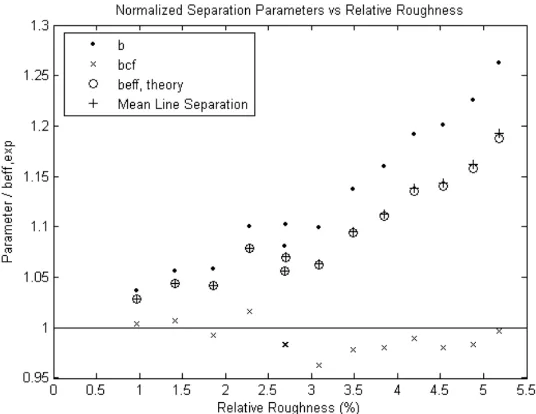
closely as seen in Figure 1.3 from Brackbill [29], where normalized results are shown as
a function of relative roughness. In this plot a value of1 represents agreement with
the-ory. It is easily seen that the constricted parameter better predicts fluid flow characteristics
[image:21.612.189.457.239.446.2]compared to the root separation.
Figure 1.3: Constricted Parameter Performance
Wagner and Kandilkar [31] extended the work of Brackbill [28, 29] to incorporate
wall functions in the two dimension domain. Lubrication theory was used to extract a
pressure flow relationship to be used in the boundary layer analysis. The extension brings
inertial effects back into the flow physics to arrive at a velocity profile as shown in Equation
(1.10), wheref(x)andh(x)are continuous functions describing the bottom and top walls
respectively. The resulting expressions for friction factor were validated with experimental
u= 6 ˙V
z(h(x)−f(x))3 (y−f(x)) (y−h(x)) (1.10)
1.2.3
Heat Transfer
In 2001, Joshi [30] and Kandlikaret al.[34] studied the effects of surface roughness on flow characteristics. The work studied two stainless steel capillary tubes with diameters of 620
µmand 1067µmand relative roughness ranging from0.161%to0.355%, where Reynolds
number ranged from 500 to 3000. A reservoir and positive displacement pump were
uti-lized to pump distilled water through a flow meter controlling the mass flow rate in the
system. A needle valve was placed after the flow meter to help mitigate oscillations in the
flow throughout the system. The distilled water would then enter the test section. Pressure
drop was measured across the entire test section. For the heat transfer portion of the work,
DC electrical resistive heaters provided a constant heat flux across the capillary tubes. The
system was insulated with fiberglass insulation in order to minimize heat loss. Due to a low
current path being created were the pressure taps where machined, two sets of capillary
tubes were manufactured to run the pressure drop and heat transfer experiments separately.
In order to measure wall temperature, K-type thermocouples were attached to the exterior
walls of the capillary tubes at three places along the test pieces. Inlet and outlet
tempera-tures were measured in-line with jacketed K-type Thermocouples. Experimental data was
collected via LABVIEWTM. The work found that for smaller tubes, surface roughness was
a significant factor in both heat transfer and pressure drop. The large tube of 1067 µm,
however, behaves as a macroscale tube.
Dharaiyaet al.[32] performed a numerical analysis of microchannels subject to the H2 boundary condition. The H2 boundary condition is defined as a constant heat flux along the
channel walls both axially and circumferentially. The numerical work varied aspect ratio
heating case was validated with published data to ensure the accuracy of the numerical
model. The investigation went further to return results for the fully developed Nusselt
number for two and three wall heating. These results for two wall heating are the only data
Chapter 2
Theoretical Analysis
The motivation exists to develop relationships that accurately predict physical situations.
These expressions allow engineers to properly design to meet specific application
require-ments. In most applications, however, full solutions to fundamental problems are not
possi-ble to obtain. For this reason it is often necessary to look toward analytical approximations
and theoretical limits to obtain bounds for design.
2.1
Complete Solution
Limiting theoretical cases with full, close-form solutions provide both insight and building
blocks for further refinement. In this section the classical case of parallel flat plates is first
investigated to provide the ultimate limit for Nusselt number. The results of Wagner [31]
for fluid flow in small aspect ratio channels with rough walls are then applied to the heat
transfer application.
2.1.1
Classical Parallel Flat Plates
The first approach to understanding the physics of heat transfer in small, wide channels
was to look at the limiting case of pressure driven flow between infinite parallel flat plates.
This case is a classical fluid mechanics problem found in textbooks. If we were to look
at the results from the Navier-Stokes equation for steady, fully developed, laminar,
profile, where u is the axial velocity component with y = 0 centered between the plates
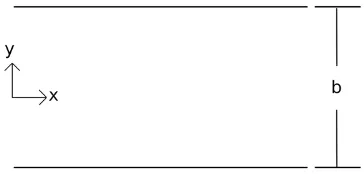
[image:25.612.226.408.168.255.2]andbis the total gap size as shown in Figure 2.1
Figure 2.1: Smooth Channel Domain Illustration
~
V →u= 1 2µ
dP dx
y2− b 2
4
(2.1)
Next we look at the full energy equation in Equation (2.2).
ρCP
DT
Dt =ρqgen+∇ ·(k∇T) + DP
Dt +τ
0dui
dxi
(2.2)
Where DTDt and DPDt represent the total derivatives of temperature and pressure respectively.
The viscous dissapation terms are given in the last term on the right hand side,τ0dui
dxi
Apply-ing the additional standard assumptions of constant heat flux, no heat generation, constant
thermal conductivity and negligible viscous dissipation, energy reduces to:
u∂T ∂x =αf
∂2T
∂y2 (2.3)
Since we are applying the constant heat flux boundary condition, we know that ∂T∂x
later to ensure its accuracy. We are now left with an easily solvable, well-posed ordinary
differential equation:
uD=αf
d2T
dy2 (2.4)
With the following boundary conditions on the first derivative:
∂T ∂y
y=−b
2
= −q
k
∂T ∂y
y=b
2
= q
k
This problem can be solved directly, but we are left with an integration constant. We
apply the fact that at the top or bottom plate, the fluid temperature is equal to the wall
temperature to pick up the last constant and close the solution.
T|b
2 =Tw(x) (2.5)
After applying this last boundary condition, we obtain an expression for the temperature
within the fluid across the gap:
T = q
k
−
y4 b3 +
3y2 2b −
5b
16
+Tw (2.6)
When checked, the final expression forT satisfies the original ODE, validating setting
∂T
∂x equal to an arbitrary constant,D. The reason this works is becauseD, though arbitrary,
is a slave to the wall heat flux boundary conditions.
Tm =
1 ¯
vbz
Z 2b
−2b
uT zdy (2.7)
Substituting Equations (2.1) and (2.6), we can solve the integral exactly:
Tm =
17 70
q
kb+Tw (2.8)
The last step is to look at the definition of convection:
Q= ¯hA(Tw −Tm) (2.9)
This means the convective coefficient will equal:
¯
h=
Q A
Tw−Tm
(2.10)
Which, when the wall heat flux conditions and Equation (2.8) are applied, reduces to:
¯
h= 140k
17b (2.11)
Now we define Nusselt number based on the total separation,b:
N ub =
¯
hb
k =
140
17 ≈8.235 (2.12)
2.1.2
Wavy Walls
The objective is to be able to analyze structured roughness along the walls. In order to
incorporate non-smooth walls, we specify wall functions at the top and bottom walls as
h(x) and f(x) defining the wall topography. Each wall is only a function of the axial
direction and is continuous. The first approach is to adjust the velocity profile for a wavy
wall case and again perform the analysis from Section 2.1.1. The velocity profile that
will be used is based on a lubrication theory approximation. In order to use this velocity
profile, we are assuming a small slope trajectory between fluid particles as taken in Wager
and Kandlikar [31]. This theory was developed for dealing with small asperities found on
the walls in bearings. The small slope assumption dictates that the axial velocity profile is
approximately parabolic provided their are no sudden changes in a fluid particles trajectory.
Inertial effects have also been reincorporated into the velocity profile shown in Equation
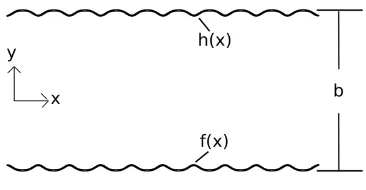
(2.13). A visual representation of the computational domain is illustrated in Figure 2.2.
The separation,b, is defined as the root separation or the distance between the average floor
[image:28.612.225.408.475.570.2]profiles of each wall.
Figure 2.2: Wavy Wall Domain Illustration
u= 6 ˙V
Using the velocity profile from Wagner and Kandlikar [31] in the ordinary differential
equation given by Equation (2.4), and applying the same boundary conditions of constant
heat flux at the wall, we obtain a temperature profile within the fluid:
T = q
k(f(x)−h(x))3[y
4−2(f(x) +h(x))y3+ 6f(x)h(x)y2 (2.14)
+ (f(x)3−3f(x)2h(x)−3f(x)h(x)2+h(x)3)y
−f(x)h(x)(f(x)2−3f(x)h(x) +h(x)2)] +Tw
In the case wheref(x)andh(x)are constant (smooth walls) the resulting temperature
profile reduces exactly to that of the smooth case. When the analysis is carried through to
the end, we obtain the following expression for Nusselt number based on the root
separa-tion:
N ub =
140b
17(h(x)−f(x)) (2.15)
Which again, reduces to conventional theory when h(x)−f(x) = b. Unfortunately,
upon further inspection, except in the case of smooth walls and possibly some
coinciden-tal wall functions, the expression obtained in Equation (2.14) fails to meet the criteria of
∂T
∂x being equal to a constant. We can conclude that the theoretical Nusselt number will
vary locally in wavy walled channels. However, if the difference of the wall functions is
replaced by the constricted parameter as is done by Brackbill [29], we obtain an acceptable
expression for Nusselt number.
N ub =
140b
17bcf
The constricted parameter is defined as:
bcf =b−2εf p (2.17)
2.2
Scale Analysis
In order to develop an understanding of the complex physics involved in the coupled
trans-port problem, the use of a scale analysis allows for the identification of dominant terms.
This approach provides insight without obtaining a full solution to sets of equation that
would otherwise have no closed form solution. If one were to apply lubrication theory as
done by Wagner [31] to the wavy wall setting, we could extract thexˆdirection of
momen-tum and continuity as shown in Equations (2.18) and (2.19).
ρ
u∂u ∂x +v
∂u ∂y
=−∂P ∂x +µ
∂2u ∂x2 +
∂2u ∂y2 +
∂2u ∂z2
(2.18)
∂u ∂x +
∂v
∂y = 0 (2.19)
u=< v > u∗
x=Lx∗
y=by∗
z =az∗
P =PsP∗
wherePs is a scale chosen to balance appropriately with the right hand side. From
conti-nuity we can arrive at the scaledyˆvelocity,v:
v = b
L < v > v ∗
By applying our scaled quantities to Equation (2.18) we obtain the following:
ρ < v >2 L
u∗∂u ∗ ∂x∗ +v
∗∂u∗
∂y∗
=−Ps L
∂P∗
∂x∗ +µ < v >
1
L2 ∂2u∗ ∂x∗2 +
1
b2 ∂2u∗ ∂y∗2 +
1
b2 ∂2u∗ ∂z∗2
(2.20)
By extracting the coefficients and rearranging, an expression is found that balances the
order of the terms:
Ø [αRe] = Ø
bPs
µ < v >
+ Ø
L a
+ Ø
"
b a
3#
+ Ø
"
b L
2#
(2.21)
side will be dominated by the pressure term and the La term. If we look at a length scale on
the order ofaand choose ourPs as shown below, then we are left with the dominant term
on the left hand side ofαRe. This parameter will be used as in reporting the experimental
results as it is a dominant term in the physics. This method is by no means a complete
solution, but lends insight into the complex problem.
Ps=
µ < v >
b (2.22)
The value of a scale analysis is in its to extract understanding of the fundamental physics
from the governing equations without applying additional simplifying assumptions. In this
case we were able to arrive at a term useful in comparing results from different geometries
on an equal basis. The utilization ofαRe, in a sense, normalizes results for channel aspect
ratio by dividing out this geometry factor. As will be seen later, the usefulness of this
Chapter 3
Experimentation
3.1
Experimental Setup
The experimental setup design used for this study is the next iteration of a previously proven
design for fluid flow characterization by Brackbill and Kandlikar [27,28]. The conceptual
auxiliary architecture and footprint of the design is maintained with the exception of
ma-terial selection and separation control. The design was of mutual acceptance for both of
the simultaneous heat transfer and fluid flow studies. Due to the requirement of precise
machining, the final manufacturing of complex auxiliary parts was performed via CNC
un-der the operation of NSF team member Brian LaPolt, Mechanical Engineering Technology,
Rochester Institute of Technology. The strength of the design is interchangeability of the
specially designed roughness test sections. Any arbitrary test section can be tested for both
fluid flow characteristics and heat transfer performance with directly compatible results.
Extensive consideration was placed on the design of the test sections. A previous
in-house, heat transfer experimental design showed unacceptable results due to the domination
of axial conduction within the test section. Learning from this case, the new test pieces
would have to account for this arising issue. An investigation was performed into the
had a number of factors to balance. The driving forces for the design were to minimize
axial conduction (multidimensional conduction within the wall), to ensure the footprint
of the test sections fit the predefined auxiliary architecture, allow for the application of a
heater, to support the placement of thermocouples, and to allow for a means of controlling
separation and maintaining a seal.
Axial conduction is a physical attribute that is governed by material and geometry.
Utilizing Equation 1.2, the non-dimension axial conduction number,M, can be calculated
for the desired range of Reynolds numbers, dimensions, and materials. The parameterM is
a measure of the ratio of conduction within the wall, along the length of the channel to the
convection from the wall to the fluid. Ana priorimeans can be performed to estimate Axial conduction using the experimental design. A simple ExcelTM whorksheet is utilized to
estimate the parameterM.
The most desirable material for machining purposes is an Aluminum Alloy. Due to
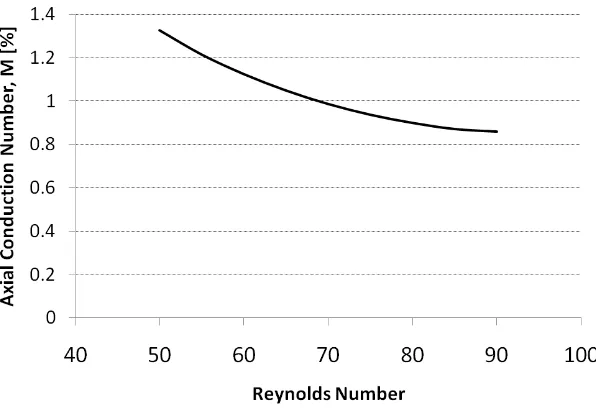
the relatively high thermal conductivity of Aluminum (238mW·K at 100◦C for Al6061-T6), low Reynolds number cases will have significant axial conduction. The plot in Figure
3.1 shows the worst case estimation forM as a percentage over Reynolds number for the
defined thickness of4mm(thickness required for rigidity and machinability for both
Alu-minum and Stainless Steel). Since axial conduction is considered negligible for values less
than1%, Aluminum Alloys are not acceptable for mitigating the effects of axial conduction.
The only reasonable option for material, despite complications in fabrication, is Stainless
Steel. In order to establish a rule-of-thumb for a minimum Reynolds number, Figure 3.2 is
generated in the same fashion in order to show the low Reynolds number behavior of the
designed test section with the specified stainless steel. By inspection, a Reynolds number
of70can be used as a lower bounds for negligible axial conduction.
The available footprint, heater requirement, and base design for fluid flow directed the
Figure 3.1: Axial Conduction,M Comparison of Aluminum and Stainless Steel
[image:35.612.175.473.439.643.2]of specific surfaces: ground ends, angled headers, channels walls, and heater attachment
locations. Thermocouple holes are drilled to the center of each test piece in eleven locations
equally spaced by6.35mm.
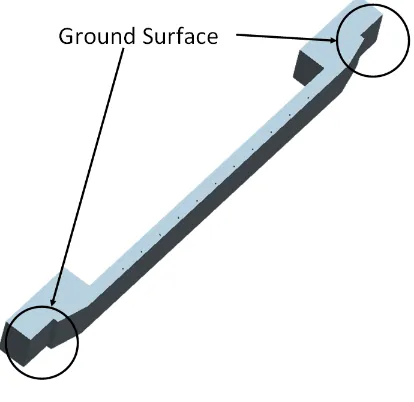
The ends of each test piece have to have a ground face in order to support the gauge
blocks. This surface is identified in Figure 3.3 on either end. These surfaces are ground
smooth to meet two functions, first, the geometric tolerance of the system require careful
[image:36.612.219.426.273.474.2]care, and second, these surfaces mate with the gauge blocks to create a water tight seal.
Figure 3.3: Test Piece Ground Surfaces
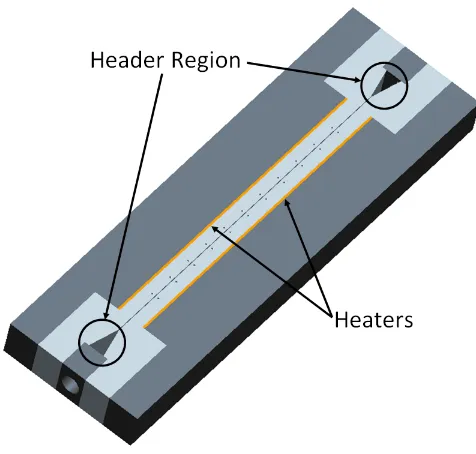
The next surface is an angled surface to act as the header for the channel. These surfaces
direct the flow from the gauge block down to the final channel root separation. When the
two test pieces are assembled in the test section, they make a triangular header region at
both the inlet and outlet as shown in Figure 3.4. The design, in conjunction with the gauge
blocks, is meant to ensure a smooth transition from circular to rectangular ducts. The
channel exit is symmetric with the inlet, and so has the same header configuration.
Figure 3.4: Test Section Assmebly
elements making up the channel walls. The design creates a total length of 114.6 mm
for hydrodynamic flow with a channel height of 12.7 mm. These surfaces are machined
using a wire Electrical Discharge Machining technique to provide the specified controlled
geometries.
Lastly, the test pieces must provide a footprint for the application of heaters. Silicone
Film heaters with adhesive backs rated at10W were identified. The total heated area has
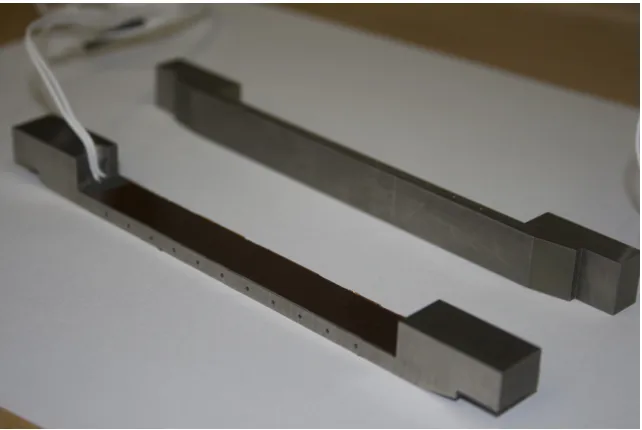
a length of94.6mmand height spanning that of the channel wall, 12.7mm. Figure 3.5
shows an example picture of the smooth test pieces.
The gauge blocks, as illustrated in Figure 3.6, act as the means of controlling separation,
provide the transition point from the circular inlet tube to the square channel geometry,
and provide the mating surface to seal the channel ends with the test pieces. The overall
geometry for different gauge blocks is maintained with the exception of varying width
for varying separations. The detailed drawings of the gauge blocks can be found in the
Figure 3.5: Test Piece Example
[image:38.612.259.383.452.628.2]The heat transfer aspect of the study magnifies the requirements of the experimental
setup. First, the heat transfer setup requires an insulating enclosure, and so, the ceramic
Garolite G-10, a resin based ceramic, was selected due to its low thermal conductivity of
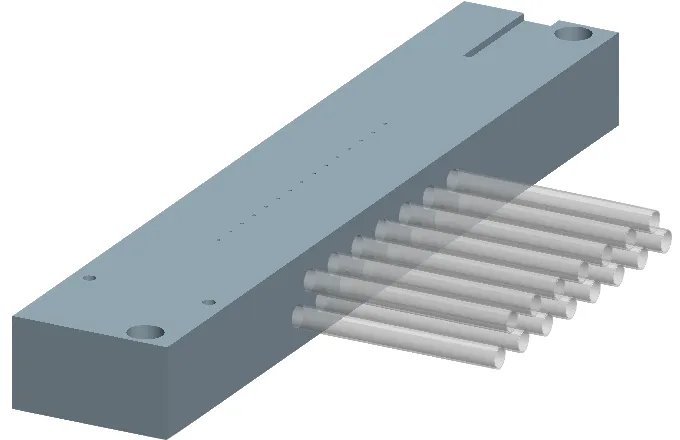
0.288mW·K, operating temperature range, and acceptable machinability. The base block, as illustrated in Figure 3.7, provides a smooth mounting surface with fifteen pressure taps
spaced equally by 6.35 mm along the total length of the flow channel. Low durometer
(highly compressible) silicone gasketing with an ample operating temperature range was
selected to accommodate the extra sealing requirement around the thermocouple wires.
Gaskets were cut to fit the base block and cover pieces. These low durometer gaskets were
chosen to ensure sealing around the channel edges and thermocouples. Setup clamps are
[image:39.612.153.493.357.577.2]used to compress the test section and gaskets.
3.2
System Architecture
Brackbill and Kandlikar implemented a variable hydraulic diameter test setup [27,28].
For the proposed work, the test setup remains nearly the same from a system architecture
stand point. The only difference in architecture is the addition of a constant temperature
water bath and heat exchanger subsystem to meet the heat transfer conditioning needs.
Figure 3.8 below shows a representation of the overall system. Degassed, distilled water
is circulated through the system by a Micropump motor drive attached to a Micropump
positive displacement, micro-geared metered pump head. The system is capable of up to
2500 mL/min with 8 bars of pressure drop. The working fluid exits the closed reservoir
and is conditioned through a heat exchanger with an outside loop cooled by a chiller at
a constant temperature. The reservoir is necessary to ensure the water remains degassed.
The heat exchanger is used in order to avoid cavitation issues that arise from the chiller
being physically below the test section. The working fluid exits the heat exchanger and
flows through a bank of flow meters to monitor the flow rate. The flow meter bank includes
a bypass loop and two digital flow meters. The two flow meters in parallel are capable of
measuring 10-100 mL/min and 60-1000 mL/min respectively. The use of a flow meter bank
in this fashion will increase the accuracy per given range of flow. The degassed, distilled
water exits the flow meter on its way to the test section. After exiting the test section, the
working fluid is returned to the reservoir.
3.3
Measurements
The measurable quantities for this experimental setup are volumetric flow rate, pressure
drop between two pressure taps, fluid inlet and outlet temperature, and wall temperature.
Figure 3.8: System Architecture
The pressure can be measured at known locations along the length of the channel. The
inlet fluid temperature is measured by a jacketed K-type thermocouple. Upon exiting the
test section, the total temperature is again measured by the same means. Channel wall
temperature is more difficult to obtain. Thermocouples are made out of 36AWG K-type
thermocouple wire via an in-house thermocouple welder using nitrogen as the inert gas.
The thermocouples are inspected under a microscope to ensure proper welding as can be
seen in Figure 3.9. The thermocouples are then dipped in thermal-epoxy to protect exposed
wire from water contact.
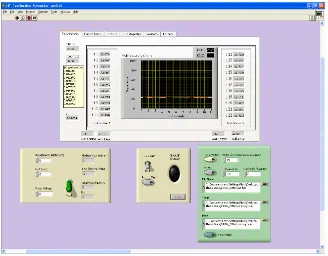
A robust, well-organized LABVIEW GUI as shown in Figure 3.10 was developed in
order to facilitate the collection of measurable quantities. The LABVIEWTMcode was
opti-mized for ease of use during heat transfer testing. Sensor information is visually presented
to facilitate ease of reading and accurately performing tests. The code records calibrated
raw data obtained from sensors. Parameters recorded are listed below.
2. Fluid Temperatures:Tin,Tout
3. Pressure Drop: ∆T
4. Wall Temperature: Ti,i= 1,2,3, ...,11
Where the thermocouples are located in the center of the4mmwall thickness, at the center
of the depth, and at the axial distances of (measured from the start of the heated channel):
1. 16.2mm
2. 24.4mm
3. 32.7mm
4. 40.9mm
5. 49.1mm
6. 57.3mm
7. 65.6mm
8. 73.8mm
9. 82.0mm
10. 90.2mm
11. 98.5mm
3.4
Roughness Geometry Design
The effect of the ratio of pitch to height of structured roughness elements has been
iden-tified as a key parameter on fluid flow and heat transfer [31]. In this study the sinusoidal
Figure 3.9: 36AWG Thermocouple Weld
The general form of the designed curve is shown in Equation (3.1). The actual fabricated
surfaces varied slightly as is discussed in the Results section. The surfaces are tested in
both concurrent fluid flow and heat transfer studies. The explicit designed parameters are
listed in Figure 3.11.
y(x) = hhcosπ λx
iP
(3.1)
Figure 3.11: Structured Roughness Design Parameters
3.5
Assembly
3.5.1
General Assembly
The assembly of the test setup proves to be the most important step in the experimental
procedure. Prior to any testing, the adhesive backed heaters are attached to individual test
sections and allowed to cure for 72 hours per manufacturer specifications. The auxiliary
setup is fitted with appropriate gaskets and mounted on the experimental stand. The
sys-tem is ran as a closed loop without the test section to ensure proper performance. Once
prepared, the test sections are carefully cleaned with small amounts of Isopropyl Alcohol
materials as shown in Figure 3.12. The test section is mounted on the base block and
se-cured axially and laterally. With the test section securely placed, the 22 thermocouples are
covered in thermal paste and carefully placed in their respective locations. The
thermocou-ple holes are designed to place the weld at the center of the channel wall. At this point,
the channel separation is measured via a optical confocal microscope. Figure 3.13 shows
the assembled setup being measured by the microscope. Once the separation is accurately
measured and checked along the length of the channel, the test setup is sealed with the top
plate. Serrated step clamps are used to apply a constant force for vertical sealing.
Figure 3.12: Test Setup Assembly
3.5.2
Power Balancing
Due to manufacturing variations individual heaters will vary slightly in resistance. In order
to balance the power being applied to each wall a potentiometer was placed in series with
each resistive heater. This creates two series circuits with one heater and one potentiometer
each. These circuits are then placed in parallel with nodes at the positive and negative
terminals of the system power supply. The resistance of each heater is measured along with
Figure 3.13: Test Setup Assembly
“zero” setting. A simple circuit analysis is performed using Ohm’s law. An Excel sheet
was created in order to utilize solver to minimize the difference in power output by each
heater. This method allows for the heaters to be balanced within0.1%at room temperature.
3.6
Conditioning
3.6.1
Sensor Calibration
Accurate measurement is an essential aspect of any experimental study. For this reason
care is taken in order to ensure information gathered from sensors is properly interpreted.
The experimental setup in this study has three types of sensors that need to be calibrated.
There are a set of differential pressure sensors, the flow meter bank, two jacketed K-Type
thermocouples and 23 K-Type thermocouples made from the 36AWG wire.
The first sensor is the set of Huba Control differential pressure sensors type 692 used
in calculating pressure drop. A0.1bar and0.2bar pressure sensor with reported0.4%F S
known pressures by means of the in-house digital pressure calibrator. Pressure and voltage
are recorded within the linear range of the piezoelectric device. Least squares is then used
on the recorded calibration points to quantify the linear relationship between pressure and
measured voltage. An example calibration curve is shown in Figure 3.14 This procedure
is repeated for each sensor and is checked to ensure the sensors have not deviated during
[image:47.612.181.450.239.448.2]testing.
Figure 3.14: Pressure Sensor Calibration Curve
The second set of sensors is the two Omega digital flow meters type FLR1000. The two
ranges of 10-100 ml/minand 100-1000 ml/minwith reported accuracy of1%F S were
selected. In an analogous way, water is pushed at a constant rate through the individual
flow meter. Both time and mass of fluid are recorded for at least 60 seconds. For lower
flow rates a digital scale is used to accurately measure the mass of the fluid, while higher
flow rates require a triple beam balance due to the limit of the digital scale. Mass and time
measurements are converted to volumetric flow rates and then the least squares method
is again employed to find the quantitative relationship between sensor output voltage and
ml/min).
Figure 3.15: Flow Meter Calibration Curve
The last set of sensors is the large array of thermocouples. These sensors are calibrated
using a two-point approach to find the slope and intercept of the calibration curve. A
bath of distilled water at the local two-phase points (freezing and boiling) is first prepared.
The sensors, once protected with epoxy or their inherent jacketing are submerged in the
prepared baths while voltage is measured. This method proves to be extremely accurate in
obtaining calibration data.
3.6.2
Heat Loss Tests
Garolite has a very low thermal conductivity of 0.288 W
m·K
, however, it is not a perfect
insulator. In order to account for all system losses, it was necessary to perform heat loss
tests. The setup was first assembled in the same fashion as described in Section 3.5 with
plain smooth channels. No water was introduced to the setup during the tests. A known
along with average wall temperature and ambient temperature. The entire setup was
al-lowed to reach steady state, which took approximately 30 minutes for each power setting.
Steady state was ensured by recording temperature readings for 15 minutes and checking
the standard deviation of the readings was less than experimental error in temperature.
It is assumed that the total power reading is the same as the heat loss when fluid flow is
not present. By varying input power and recording steady state temperatures, a plot of heat
loss as a function of the temperature difference of the average wall temperature, Tave and
ambient temperature can be generated. It was predicted and shown to be true that heat loss
has a linear relationship with the temperature difference (∆T =Tave−TRoom). Figure 3.16
shows the resulting curve and a linear regression for these tests. This slope of this curve is
used in Equation (3.3) for heat loss estimations.
Tave =
Tave,wall1+Tave,wall2
2 =
1 11
11
X
i=1
Ti,wall1+
1 11
11
X
i=1
Ti,wall2 (3.2)
qloss= 0.16265(Tave−Troom) (3.3)
3.6.3
Fluid Flow Only Validation
Before any heat transfer tests were performed, the entire test system was validated for fluid
flow only conditions. These tests were performed on the smooth channels with varying
separations (aspect ratio) and Reynolds number. Pressure, fluid temperature and flow rate
were collected in order to calculate friction factor, f, based on Equation (3.4). Results
were compared to convention theory as defined by Equation (3.5) from Kakac et al.[33].
Figure 3.16: Heat Loss Curve
typical of the setup’s compliance with conventional fluid flow smooth theory. Validation
was ensured for the four separations of165µm,338µm,501µm,593µmwith the smooth
test section.
f = ∆P
x
ρDhA2
2 ˙m (3.4)
f = 24
Re 1−1.3553α+ 1.9467α
2−1.7012α3+ 0.9564α4−0.2537α5
Figure 3.17: Experimental Friction Factor Compared to Conventional Theory
3.7
Operation
In order to ensure consistent results, a test procedure was developed and maintained for
the duration of testing. Once the assembly procedure listed in Section 3.5 has been carried
out, LABVIEW is opened and the test parameters entered. The LABVIEW GUI only
requires separation information to begin a test. The heaters are powered by an external
power supply, flow rate is controlled via the GUI, and minor manual dexterity is required
to choose the appropriate flow meter and pressure sensor.
Once the micropump is started, the first step to starting a test is to ensure there are no
leaks around the test setup. If the setup does not leak, the power supply is turned on and
set to the proper voltage of a given test. The constant temperature bath is also set to control
the inlet temperature to the test section. The setup is allowed to come to steady state by
waiting for approximately 30 minutes. Once steady state is ensured, data is recorded over
a 12 minute interval. The data is checked to ensure temperature variation in the form of the
set point. If the power has not been changed, it takes approximately 15 minutes for steady
state to be reached. Data is again recorded and the procedure is repeated over the entire test
range.
It is important to constantly look for leaks. Garolite, being a resin based ceramic, does
not leave surfaces that are as smooth as aluminum, and so does not seal as well, especially
at non-gasketed interfaces. If leaking is observed, the test is stopped, data discarded, and
reassembly is performed. The regions most prone to leaking are in the header regions. The
proper cutting of gaskets is essential in creating a water tight setup. Slight mis-alignment
of test section and gasket will cause a leak. Fortunately, the heaters used in the setup are
designed with PTFE coated wires, and will resist the incidental water contact. The heaters,
Chapter 4
Data Processing
4.1
Surface Analysis
Geometry of roughness surfaces can be hard to establish when working on the order of
mi-crons. For this reason a Keyance Confocal Laser Scanning Microscope (model# VK9710)
was utilized for surface analysis. Each roughness surface was imaged using the Keyance
VK Analyzer software, providing the require topography information to analyze each
[image:53.612.156.463.470.678.2]sur-face geometry.
Figure 4.2: Curve Fit Coefficients
Topography data was extracted for processing in Excel. The average roughness of
the smooth channel pieces was extracted directly and found to be 1 µm. The structured
roughness surfaces require some sophistication in order to properly quantify their surfaces.
A curve fit was performed using Solver to minimize the residuals between the surface
topography and the desired form of the surface model shown in Equation (4.1). The form
of the equation can be generalized to fit the form of the output data. The general form to
which each surface was fitted is shown in Equation (4.2)
f(x) =hhcosπ λx
iP
(4.1)
f(x) =a1[cos(a2x+a3)]a4 +a5 (4.2)
Using the topographical information extracted, curve fits where performed to each of
the four surfaces shown in Figures 4.3 through 4.6. The resulting coefficients for each
Figure 4.3: Surface Rendering ofλ/h= 2.6
Figure 4.5: Surface Rendering ofλ/h= 7.8
4.2
Data Reduction
Care was taken to properly process collected data. For heat transfer tests there were a
number of steps that had to be taken prior to reaching the final result of average fully
developed Nusselt number. The process flow for each of the data sets is the same and can
be summarized in seven steps:
1. Raw data is recorded by LABVIEW in the form of thermocouple readings, flow rates,
geometry, and experimental conditions.
2. Raw data is compiled in a single Excel worksheet for each separation and geometry.
3. A custom VBA script extracts relevant data while performing an initial statistical
analysis where appropriate.
4. Parameters from all data sets are combined in single worksheet for further data
pro-cessing.
5. The first stage of processing calculates derived geometric parameters, fluid
proper-ties, length of the developing region, and total heat flux.
6. The results from the first stage of processing are used in the second stage of
process-ing, which is performed in a summary worksheet combining all geometries.
7. The second stage of processing calculates local nusselt number as shown in Equation
(4.17) for each thermocouple as well as the uncertainty of each result.
In the first step, data collection, the procedure for testing outlined in Section 3.7 was
followed to ensure proper, consistent testing. The LABVIEWTMGUI is used to actively
control the experiment. The user inputs geometric and test information before beginning
outlet fluid temperature, room temperature, and wall temperatures are acquired from the
setup’s thermocouples. Flow rate and geometry information are also recorded by the code.
Each test condition creates a single, archival raw data sheet. In order to organize the
raw data in a usable fashion, the second step is performed combining results from a single
separation and geometry in a single worksheet. The custom VBA script is run, organizing
the data, averaging flow rate and fluid temperatures, and preparing the wall temperatures.
The fourth step takes the results in their new form and combines them for each
indi-vidual geometry. This allows the data to be organized in a format that allows comparison
within a single geometry. The first steps of data processing are performed in this sheet.
First, the geometric information about separation and surface geometry is used to derive
secondary geometric parameters. Hydraulic diameter is then calculated using Equation
(4.3) and aspect ratio is defined as Equation (4.4). The last standard geometric parameter,
relative roughness can be calculated using Equation (4.5). Figure 4.7 shows a cross section
[image:58.612.239.405.432.535.2]view of the channel with axial flow into the page.
Dh =
4ab
2(a+b) (4.3)
α= b
a (4.4)
ε/D= εf p
Dh
(4.5)
∆T =Tout−Tin (4.6)
Next, the constricted parameter can be calculated by Equation (4.7). This parameter can
then be used to calculate the constricted hydraulic diameter and aspect ratio by replacingb
withbcf.
bcf =b−2εf p (4.7)
Fluid temperatures are then used to find the mean fluid temperature to be used in the
interpolation of the Prandtl number, viscosity, and thermal conductivity. The total
temper-ature change across the fluid is used to calculate the power input with Equation (4.8).
Q= ˙mCp∆T (4.8)
Reynolds number is now calculated followed by the developing length for a given
be used to identify which wall thermocouples are in the fully developed region.
Re= 4 ˙m
2µ(a+b) (4.9)
xf d = 0.05ReP rDh (4.10)
The last parameters that need to be defined in this stage of the data processing are the
two different heat flux calculations. Heat flux is calculated using the projected area (size of
the heater), and using an estimate of the actual area including roughness. The actual area
is estimated by the arclength of one roughness element over the pitch as found in the curve
fitting in Section 4.1.
qP =
Q AP
(4.11)
qactual =
Q
Aactual
(4.12)
At this point the partially processed data can be combined in a summary data sheet
along with the average wall temperature at each of the 11 locations. Internal wall
tem-perature, which is in contact with the fluid, can be estimated by a simple wall conduction
analysis as seen in Equation (4.14), where all temperatures are in Kelvin[K].
∆T = q
ks∆x
(4.13)
Tw =Ti−∆T =Ti−
q
The fluid temperature at any location can be estimated assuming a linear axial increase
along the heated length (due to the constant heat flux boundary condition).
Tf =
Tout−Tin
LH
x+Tin (4.15)
The last two temperature can then be used to find the difference in mean fluid
tempera-ture and the internal wall temperatempera-ture at any thermocouple location. The local heat transfer
coefficient can now be defined by Equation (4.16) and calculated for all fully developed
locations from a given test set.
¯
h= q
Tw−Tf
(4.16)
It is important to note that both the wall temperature, Tw, and the local heat transfer
coefficient can be calculated using the actual and projected areas. The actual area will
![Figure 1.1: Reproduction of results from Wu and Cheng [2]](https://thumb-us.123doks.com/thumbv2/123dok_us/115516.11058/14.612.174.464.428.646/figure-reproduction-results-wu-cheng.webp)