Problem Solving in
Diabetes
L E E K E N N E D Y
James Cook University, Queensland, Australia
I S K A N D A R I D R I S
Sherwood Forest Hospitals, Sutton-in-Ashfield, UK
A N A S T A S I O S G A Z I S
Queen’s Medical Centre University Hospital, Nottingham, UK
O X F O R D
C L I N I C A L P U B L I S H I N G
An imprint of Atlas Medical Publishing Ltd
Oxford Centre for Innovation Mill Street, Oxford OX2 0JX, UK
T: +44 1865 811116 F: +44 1865 251550
W: www.clinicalpublishing.co.uk
Distributed by:
Marston Book Services Ltd PO Box 269, Abingdon Oxon OX14 4YN, UK T: +44 1235 465500 F: +44 1235 465555
©
Atlas Medical Publishing Ltd 2006First published 2006
All rights reserved. No part of this publication may be reproduced, stored in a retrieval system, or transmitted, in any form or by any means, without the prior permission in writing of Clinical Publishing or Atlas Medical Publishing Ltd
Although every effort has been made to ensure that all owners of copyright material have been acknowledged in this publication, we would be glad to acknowledge in subsequent reprints or editions any omissions brought to our attention
A catalogue record for this book is available from the British Library ISBN 1 904392 61 X
The publisher makes no representation, express or implied, that the dosages in this book are correct. Readers must therefore always check the product information and clinical procedures with the most up-to-date published product information and data sheets provided by the manufacturers and the most recent codes of conduct and safety regulations. The authors and the publisher do not accept any liability for any errors in the text or for the misuse or misapplication of material in this work
Project manager:
Contents
Abbreviations
viiS E C T I O N 01
Prevention and Diagnosis
11 Preventing type 1 diabetes 1
2 Preventing type 2 diabetes 5
3 Diabetes risk after the menopause 9
4 Genetic diabetes syndromes (MODY) 13
5 Screening and impaired glucose tolerance 17
6 Type A/B diabetes and insulin resistance 21
S E C T I O N 0 2
Acute Diabetes
257 Diabetic ketoacidosis 25
8 Hyperosmolar hyperglycaemic state 30
9 Recurrent hypoglycaemia 34
10 Diabetes and acute myocardial infarction 40
11 Diabetes and acute stroke 43
12 Diabetes and critical limb ischaemia 47
13 Perioperative management of diabetes 51
14 The hot foot 55
S E C T I O N 0 3
Managing Diabetes
6115 Insulin pumps 61
16 Type 1 diabetes and exercise 65
17 Adolescent diabetes 69
18 Low-carbohydrate diets 72
19 Treatments that stimulate insulin production 77
20 Treatments that improve insulin resistance 81
21 Diabetes and enteral feeding 85
22 Obesity and diabetes 89
23 Diabetes in the elderly 93
S E C T I O N 0 4
Reproductive Complications
9924 Polycystic ovarian syndrome 99
25 Gestational diabetes 103
27 Erectile dysfunction 111
28 Pre-eclampsia 115
S E C T I O N 0 5
Cardiovascular Risk Factors in Diabetes
12129 Smoking cessation 121
30 Hypertriglyceridaemia 125
31 Hyperlipidaemia in type 1 diabetes 129
32 Hyperlipidaemia in type 2 diabetes 133
33 Aspirin use in diabetes 137
34 Hypertension—uncomplicated 140
35 Hypertension—hard to control 143
S E C T I O N 0 6
Microvascular Complications
14936 Painful neuropathy 149
37 Microalbuminuria 154
38 ACE inhibitor treatment 159
39 Advancing renal failure 163
40 Background retinopathy 167
41 Proliferative and pre-proliferative retinopathy 171
42 Macular disease 175
43 Autonomic neuropathy 178
44 The Charcot foot 182
S E C T I O N 07
Macrovascular and Other Complications
18745 Angina in patients with type 2 diabetes 187
46 Advances in management of peripheral arterial disease 191
47 Renal artery stenosis 195
48 Foot ulceration 199
49 Transient ischaemic attack 203
S E C T I O N 0 8
Diabetes in Special Groups of Patients
20750 Diabetes and respiratory disease 207
51 Diabetes and cystic fibrosis 212
52 Diabetes and dialysis 216
53 Diabetes and coeliac disease 220
General index
225Contents
Abbreviations
4S Scandinavian Simvastatin Survival Study ABCD trial Appropriate Blood Pressure Control in
Diabetes Trial
ABPI Ankle–brachial pressure index
ABPM Ambulatory blood pressure monitoring ACAS Asymptomatic Carotid Atherosclerosis
Study
ACE Angiotensin-converting enzyme ACR Albumin–creatinine ratio
ACHOIS trial Australian Carbohydrate Intolerance Study in Pregnant Women
AER Albumin excretion rate AHI Apnoea–Hypopnea Index
ALLHAT Antihypertensive and Lipid-Lowering Treatment to Prevent Heart Attack Trial AMD Age-related macular degeneration ANG-1 and ANG-2 Angiopoetin APT Anti-Platelet Trialists ARB Angiotensin receptor blocker
ASTRAL trial Angioplasty and Stent for Renal Artery Lesions trial
BARI trial Bypass Angioplasty Revascularization Investigation
BMI Body mass index BP Blood pressure
CABG Coronary artery bypass grafting CALM study Candesartan And Lisinopril
Microalbuminuria study
CAPD Continuous ambulatory peritoneal dialysis CAPRIE study Clopidogrel versus Aspirin in
Patients at Risk of Ischaemic Events study CARDS Collaborative Atorvastatin Diabetes Study CARE study Cholesterol and Recurrent Events
study
CAS Carotid artery stenosis
CETP Cholesteryl ester transfer protein CF Cystic fibrosis
CFRD Cystic fibrosis-related diabetes
CHD Coronary heart disease
CHHIPS Controlling Hypertension and Hypotension Immediately Post-Stroke trial CI Confidence interval
CK Creatine kinase
CPAP Continuous positive airway pressure CSII Continuous subcutaneous infusion of insulin CSMO Clinically significant macular oedema CT Computed tomography
CWS Cotton-wool spot
DAN Diabetic autonomic neuropathy
DCCT Diabetes Control and Complications Trial DIGAMI Diabetes and Insulin-Glucose Infusion in
Acute Myocardial Infarction study
DIRECT DIabetic Retinopathy Candesartan Trial DKA Diabetic ketoacidosis
DMa Diabetic maculopathy
DME study Diabetic Macular Edema study DPN Distal sensory peripheral neuropathy DPP Diabetes Prevention Program DPP-IV Dipeptidyl peptidase IV DPS Diabetes Prevention Study DRS Diabetic Retinopathy Study ECG Electrocardiogram
ECST European Carotid Surgery Trial
EDIC Epidemiology of Diabetes Interventions and Complications
ELISA Enzyme-linked immunosorbent assay ENDIT European Nicotinamide Diabetes
Intervention Trial
ETDRS Early Treatment Diabetic Retinopathy Study
ETF Enteral tube feeding
EUCLID study EURODIAB Controlled Trial of Lisinopril in Insulin-Dependent Diabetes Mellitus
FSH Follicle-stimulating hormone GABA Gamma-aminobutyric acid
G-CSF Granulocyte–colony stimulating factor GDM Gestational diabetes mellitus
GFD Gluten-free diet
GFR Glomerular filtration rate GI Glycaemic index
GIK Glucose insulin potassium GIST Glucose Insulin in Stroke Trial GLP-1 Glucagon-like peptide-1
HAAF Hypoglycaemia associated autonomic failure
HAIR-AN syndrome HyperAndrogenism, Insulin Resistance and Acanthosis Nigricans HbA1c Glycosylated haemoglobin HDL High-density lipoprotein
HELLP syndrome Haemolysis, Elevated Liver enzymes, Low Platelets
HERS Hormone Estrogen-Progestin Replacement Study
HHS Hyperosmolar hyperglycaemic state HLA Human leucocyte antigen
HOPE Heart Outcomes Protection Evaluation study
HOT study Hypertension Optimal Treatment study
HPS Heart Protection Study HRT Hormone replacement therapy ICU Intensive care unit
IFG Impaired fasting glucose IGF Insulin-like growth factor IgG Immunoglobulin G IGT Impaired glucose tolerance IHD Ischaemic heart disease IMT Intima–media thickness INR International normalized ratio IRS Insulin resistance state
IRMA Intraretinal microvascular abnormality ISDN Isosorbide dinitrate
IV Intravenous IVF in vitro fertilization LAD Left anterior descending LDH Lactate dehydrogenase LDL Low-density lipoprotein
LIFE study Losartan Intervention For Endpoint reduction in hypertension
LIPID study Long-term Intervention with Pravastatin in Ischaemic Disease study LH Leuteinizing hormone
MA Microaneurysm MDI Multiple daily injections
MDRD study Modification of Diet in Renal Disease Study
MIDD Maternally inherited diabetes and deafness MO Macular oedema
MODY Maturity-onset diabetes of youth MRA Magnetic resonance angiography MRFIT Multiple Risk Factor Intervention Trial MRI Magnetic resonance imaging
MRSA Methicillin-resistant Staphylococcus aureus NAOIN Non-arteritic optic ischaemic neuropathy NASCET North American Symptomatic Carotid
Endarterectomy Trial NGF Nerve growth factor
NHANES National Health and Nutrition Evaluation Study
NMR Nuclear magnetic resonance NO Nitric oxide
NTD Neural tube defects
NRT Nicotine replacement therapy OAD Oral antidiabetic agent oGTT Oral glucose tolerance test OSA Obstructive sleep apnoea PAD Peripheral arterial disease PARP Poly-ADP-ribose polymerase PCI Percutaneous coronary intervention PCOS Polycystic ovarian syndrome PDE Phosphodiesterase
PDGF Platelet-derived growth factor PEDF Pigment Epithelial-Derived Factor PEG Percutaneous endoscopic gastrostomy PKC Protein kinase C
PPAR Peroxisome proliferator-activated receptor PPP Primary Prevention Project
PROGRESS Perindopril PROtection aGainst Recurrent Stroke Study
RAS Renin–angiotensin system
RANKL Receptor Activator of Nuclear factor Kappa B Ligand
Abbreviations
RArtS Renal artery stenosis RIO Rimonabant In Obesity trial
rTPA Recombinant tissue plasminogen activator RR Relative risk
SDB Sleep-disordered breathing SHBG Sex-hormone binding globulin SR Sustained release
STOP-NIDDM Study to Prevent Non-Insulin-Dependent Diabetes Mellitus
SHHS Sleep Heart Health Study
SSRI Selective serotonin reuptake inhibitor SUR Sulphonylurea receptor
SWAN Study of Women’s health Across the Nation T1DM Type 1 diabetes
TCC Total contact casting
TIA Transient ischaemic attack TNT study Treating to New Target study UAE Urinary albumin excretion
UKPDS United Kingdom Prospective Diabetes Study
VAT Visceral adipose tissue
VA-HIT Veterans Affairs High-Density Lipoprotein Intervention Trial
VEGF Vascular endothelial growth factor VLDL Very-low-density lipoprotein VO2max Maximal oxygen uptake WHI Women’s Health Initiative
WOSCOPS West of Scotland Coronary Prevention Study
XENDOS study XENical in the prevention of Diabetes in Obese Subjects study
S E C T I O N O N E
Prevention and Diagnosis
1 Preventing type 1 diabetes
2 Preventing type 2 diabetes
3 Diabetes risk after the menopause
4 Genetic diabetes syndromes (MODY)
5 Screening and impaired glucose tolerance
6 Type A/B diabetes and insulin resistance
1
Preventing Type 1 Diabetes
Case History
Background
Preventing or curing type 1 diabetes is one of the holy grails for those who research autoimmune disease or treat patients with diabetes. The disease typically presents in childhood, currently necessitates lifelong use of insulin injections and exposes the
indi-The parent of a 4-year-old boy with type 1 diabetes consults you wanting to know if there is anything he can do to prevent a future child developing the condition. He already has an 8-year-old daughter with diabetes and there is a strong family history of autoimmune thyroid disease on both his and his wife’s side of the family. They are contemplating having a third child.
Is there any evidence that type 1 diabetes is preventable?
Is there any general advice the parents can usefully follow?
Can we predict the onset of type 1 diabetes?
01
P R O B L E M
vidual to increased risk of vascular complications. The risk of type 1 diabetes in the gen-eral population is about 1 in 300, and this is increased up to 20-fold in first-degree rela-tives. Genetic markers do not provide an accurate prediction of diabetes, with only 5% of those with susceptibility markers actually developing the disease. However, the fact that the disease has a long latent period and that the pre-diabetic phase can be identified by measuring islet cell antibodies or by assessing beta cell function yields an opportunity for preventative therapy. The results of trials using non-specific immunosuppression in the 1980s were disappointing with only temporary improvements in insulin production demonstrated.
Type 1 diabetes in children became much more common in the course of the 20th century.1 In fact, available evidence suggests that the disease was quite uncommon,
although generally fatal, in children during the 19th century. This, along with the geo-graphical variation in the prevalence of childhood diabetes that is not accounted for by variations in the prevalence of susceptible genotypes, strongly suggests that environmen-tal factors are important.2The wide variation in incidence rates applies much more to
childhood than to adult type 1 diabetes.3It is not surprising that there has been intensive
research into environmental triggers for diabetes that might be modified, or into safe and effective nutritional or immunological manipulations that might decrease risk of devel-oping the disease (Figure 1.1). Recent evidence suggests that most parents of children at risk of type 1 diabetes will attempt preventative measures,4and it is increasingly
impor-tant for health professionals to be able to enter into a balanced discussion with parents and would-be parents.
Both macronutrient and micronutrient components of the diet have received atten-tion.5A protective effect of breast-feeding has been proposed, but not confirmed in all
§01 Prevention and Diagnosis
2
Factors Predisposing To Type 1 Diabetes Level of Evidence
Genetic (including HLA)
***
Non-breast-fed
*
Early exposure to cows’ milk
*
Low vitamin D status
**
Viral infection
*
Rapid weight gain in childhood
*
The Following Do Not Appear To Modify Risk
Childhood vaccination Treatment with nicotinamide Oral insulin therapy
***
Strong evidence supported by multiple well-conducted and randomized clinical studies**
Reasonable evidence supported by clinical studies (not randomized)*
Some evidence supported by observational studies and expert opinionstudies. Breast-feeding may afford protection through early oral exposure to human milk (inducing tolerance to insulin; see below), through protection against infectious agents, and by decreasing the risk of excessive weight gain in infancy. The latter is also probably a trigger for diabetes during adolescence. On the other hand, early exposure to cows’ milk may increase risk through exposure to bovine insulin or -casein, the latter being a known immunomodulatory protein contained in cows’ milk. Bottle-feeding can also be associated with excessive weight gain. Amongst micronutrient components of the diet, nitroso compounds (related to streptozotocin), nitrates and nitrites, all used as preserva-tives in meat products, have been considered. Variations in vitamin D status may be another reason for the geographical variation in the incidence of type 1 diabetes. Vitamin D has important regulatory effects on the immune system. A protective effect of cod liver oil (a source of both vitamin D and long-chain n-3 fatty acids, which are also anti-inflam-matory) was shown against childhood diabetes in the recent study reported by the Norwegian Childhood Diabetes Study Group.6
Certain infectious agents, including enteroviruses, have been associated with develop-ment of diabetes in animal models and in rare cases of human diabetes. This has led to worries that childhood vaccination, particularly with live attenuated vaccines, may be a risk factor for type 1 diabetes. A Danish study, along with other recent evidence, has gone a long way to dispel worries on this score; Hviid and colleagues7studied a cohort
includ-ing all Danish children born between 1990 and 2000, and found no evidence of any asso-ciation between childhood vaccinations and diabetes. On the contrary, the vaccines may be protective by limiting the effect of potentially diabetogenic infections, particularly rubella.
Recent Developments
1 Vitamin B3(niacin) consists of nicotinic acid and nicotinamide. The latter is tolerated in high doses, and has been shown to decrease the incidence of diabetes in streptozo-tocin-treated animals, and in non-obese diabetic mice. Some early preclinical studies showed promise for the agent. The vitamin inhibits poly-ADP-ribose polymerase (PARP), an enzyme involved in DNA repair. Activation of PARP leads to depletion of intracellular nicotinamide adenine dinucleotide. This depletion of cellular energy stores may predispose to cell damage, including in the pancreatic beta cell. The European Nicotinamide Diabetes Intervention Trial (ENDIT)8 was a randomized,
double-blind, placebo-controlled trial in which 552 islet cell antibody-positive first-degree relatives of patients with diabetes took either nicotinamide or placebo. There was no difference in the incidence of diabetes during the five years of the trial (82 vs 77 cases, respectively).
2 Autoimmunity directed at insulin epitopes is one of the critical driving forces in the pathogenesis of type 1 diabetes. In animal models, exposure to mucosal insulin induces tolerance and thus decreases risk of diabetes. This mechanism is of particular interest because of the recent developments of insulin formulations which are active after oral or nasal administration. The Diabetes Prevention Trial-Type 1 reported recently.9In this trial, a large number of first- and second-degree relatives of patients
with diabetes were screened for pre-diabetes. Those found to be positive were
domized to receive either oral insulin or placebo. Again, there was no difference in the incidence of new diabetes between the control and the treatment groups.
3 The prospects of gene therapy for diabetes are improving rapidly. Approaches to introduce a functioning insulin-producing mechanism in glucose-responsive cells have been considered. The genetic susceptibility to diabetes is mainly through class II histocompatibility alleles. Recent experiments in non-obese diabetic mice have been carried out to replace diabetes-prone genes with those that are protective.10
Conclusion
There is not, currently, any way to accurately predict which individuals are going to get diabetes, or to prevent its occurrence. Family history is a major risk factor, increasing sus-ceptibility by up to 20-fold, and there might be a slight bias towards males developing dia-betes. Epidemiological data strongly support a role for environmental influences, especially for childhood diabetes. There is no evidence currently to support specific pre-ventative measures. Breast-feeding should be promoted for its possible role in preventing type 1 diabetes, as well as its other health benefits. Efforts to limit excessive weight gain in infancy and adolescence should be promoted, as high body weight at these times may favour development of type 1 diabetes. Among the other nutritional factors, the best evi-dence is for a protective effect of vitamin D and supplementation should be considered (perhaps as cod liver oil) in areas where sunlight exposure is low. Finally, parents should be encouraged to have their children vaccinated as per normal childhood schedules— there is no evidence that vaccination predisposes to diabetes and it may be that, by decreasing infection with some agents, it actually protects.
Further Reading
1 Gale EAM. The rise of childhood type 1 diabetes in the 20th century. Diabetes 2002; 51: 3353–61.
2 Kukko M, Virtanen SM, Toivonen A, Simmell S, Korhonen S, Ilonen J, Simel O, Knip M. Geographical variation in risk HLA-DQB1 genotypes for type 1 diabetes and signs of beta-cell autoimmunity in a high-incidence country. Diabetes Care 2004; 27: 676–81.
3 Kyvik KO, Nystrom L, Gorus F, Songini M, Oestman J, Castell C, Green A, Guyrus E, Ionescu-Tirgoviste C, McKinney PA, Michalkova D, Ostrauskas R, Raymond NT. The epidemiology of Type 1 diabetes mellitus is not the same in young adults as in children. Diabetologia 2004; 47: 377–84.
4 Baughcum AE, Johnson SB, Carmichael SK, Lewin AB, She JX, Schatz DA. Maternal efforts to prevent type 1 diabetes in at-risk children. Diabetes Care 2005; 28: 916–21.
5 Virtanen SM, Knip M. Nutritional risk predictors of beta cell autoimmunity and type 1 diabetes at a young age. Am J Clin Nutr 2003; 78: 1053–67.
6 Stene LC, Joner G, Norwegian Childhood Diabetes Study Group. Use of cod liver oil during the first year of life is associated with lower risk of childhood-onset type 1 diabetes: a large, population-based, case-control study. Am J Clin Nutr 2003; 78: 1128–34.
7 Hviid A, Stellfeld M, Wohlfahrt J, Melbye M. Childhood vaccination and type 1 diabetes. N Engl J
Med 2004; 350: 1398–1404.
§01 Prevention and Diagnosis
8 Gale EA, Bingley PJ, Emmett CL, Collier T. European Nicotinamide Diabetes Intervention Trial (ENDIT): a randomised controlled trial of intervention before the onset of type 1 diabetes.
Lancet 2004; 363: 925–31.
9 Skyler JS, Krischer JP, Wolfsdorf J, Cowie C, Palmer JP, Greenbaum C, Cuthbertson D, Rafkin-Mervis LE, Chase HP, Leschek E. Effects of oral insulin in relatives of patients with type 1 diabetes: The Diabetes Prevention Trial-Type 1. Diabetes Care 2005; 28: 1068–76.
10 Tian C, Bagley J, Cretin N, Seth N, Wucherpfennig KW, Iacomini J. Prevention of type 1 diabetes by gene therapy. J Clin Invest 2004; 114: 969–78.
2
Preventing Type 2 Diabetes
Case History
Background
Once the condition is established, it is extremely difficult to maintain tight control of blood glucose and other vascular risk factors in patients with type 2 diabetes. A number of very important studies have been published in the past three years demonstrating the potential for lifestyle interventions and drugs to either prevent diabetes, or at least to delay its onset. These studies, along with the acknowledged costs of managing patients with type 2 diabetes, have heightened awareness of the value of preventative measures. The best-known of the prevention studies is the Diabetes Prevention Program (DPP), carried out in 27 North American centres.1In this study, 3234 non-diabetic patients with
impaired glucose tolerance were randomly assigned to placebo, metformin (850 mg twice daily) or lifestyle intervention. The latter consisted of dietary advice plus at least 150
min-You are consulted by a 43-year-old man who has a strong family history of diabetes. He is concerned because his father developed diabetes at the age of 56 and has recently (aged 60 years) had a lower limb amputation. Your patient is generally in good health. He has a body mass index of 28 kg/m2
and takes very little exercise as he has a busy job and a young family. He smokes 20 cigarettes per day, and has been noted to be mildly hypertensive although not requiring treatment at present.
How would you advise him?
Are we able to prevent development of type 2 diabetes?
Is there a role for drug therapy?
2 Preventing type 2 diabetes 5
utes of physical activity per week. After 2.8 years of follow-up, the incidence of diabetes was 11.0, 7.8 and 4.8 cases per 100 patient-years in the placebo, metformin and lifestyle groups, respectively. Metformin reduced the incidence of new diabetes by 31%, while lifestyle intervention reduced it by 58%. Some of the benefit associated with metformin use is lost after the drug is stopped. However, a recent washout study using the DPP cohort confirms that much of the benefit persists.2A very recent cost–benefit analysis of
this study confirmed that both interventions were cost effective.3However, lifestyle
inter-vention was much more cost effective with a cost, relative to placebo, of $1100 per quali-ty-adjusted life-year, compared with $31 300 for metformin.
The benefit of lifestyle intervention was confirmed in the Finnish Diabetes Prevention Study (DPS).4Usual diabetes care was compared with a lifestyle intervention programme
in 522 overweight, middle-aged subjects with impaired glucose tolerance. The lifestyle intervention group experienced greater weight loss and improved glycaemic and lipid parameters. The STOP-NIDDM trial5 (Study to Prevent Non-Insulin-Dependent
Diabetes Mellitus) randomized 714 patients with impaired glucose tolerance to either placebo or acarbose, and followed them up for over three years. Forty-two per cent of patients in the placebo wing and 32% of patients taking acarbose developed diabetes. The decrease in new diabetes was highly significant, although the study has been criticized because of possible bias due to the large proportion of patients that did not complete their treatment regime. There is further evidence that drug treatment can prevent, or delay the onset of, diabetes from small studies using either sulphonylureas or the thiazo-lidinedione drug, troglitazone.6
One in five of the population in most developed countries is now obese, and this is the major factor underlying the global increase in diabetes prevalence in recent years. It is not surprising, therefore, that obesity has become an increasing focus for treatment and pre-vention of diabetes and cardiovascular disease. In the XENDOS study (XENical in the prevention of Diabetes in Obese Subjects), 3305 patients were treated with lifestyle inter-vention and randomized either to placebo or to treatment with the gastrointestinal lipase inhibitor, orlistat.7After four years’ treatment, diabetes had developed in 9.0% of placebo
patients and in 6.2% of orlistat-treated patients. Patients treated with orlistat also lost more weight and had improved lipid profiles. Again, and as with many long-term studies in this area, a relatively large proportion of patients did not complete the study.
In summary, a number of recent studies confirm that both lifestyle interventions and drug treatments can reduce the incidence of new diagnoses of diabetes, and also improve some of the associated cardiovascular risk factors (Figure 2.1). Lifestyle intervention is clearly preferable, particularly if changes can be sustained long-term. Diet and exercise can also be cost-effective interventions. For those who do not succeed with lifestyle man-agement, drug treatment appears to be both a safe and an effective option.
Recent Developments
1 Other drug groups used in the prevention of cardiovascular disease may affect the development of diabetes.6Blockade of the renin–angiotensin system has now been
shown in several studies, including the Heart Outcomes Protection Evaluation (HOPE) study, to modestly decrease incidence of diabetes. Lipid-lowering drugs may have a similar effect, perhaps by decreasing insulin resistance. For some patients, vig-§01 Prevention and Diagnosis
orous treatment of cardiovascular risk factors may be the best line of attack, and decreased risk of diabetes an important secondary benefit of treatment.
2 Individuals at high risk of vascular disease should have vigorous management of their multiple risk factors wherever possible. One of the largest randomized trials of life-style intervention conducted is the Multiple Risk Factor Intervention Trial (MRFIT). Recent data8from nearly 13 000 men followed for up to seven years show, again, that
diet and exercise can prevent diabetes. However, there were interesting differences between smokers and non-smokers; with lifestyle intervention, diabetes incidence was 18% lower in non-smokers but 26% higher in smokers. The exact reasons for this are not clear but use of antihypertensive drugs in smokers and weight gain associated with attempts to quit smoking are possible confounding factors.
3 The role of exercise in improving glucose tolerance is now well established. Traditionally, vigorous aerobic exercise was recommended but was often unpalatable or unachievable for overweight and untrained subjects. Now, almost any type of exer-cise—depending on the patient’s preferences and capabilities—is regarded as benefi-cial. Recent data from the Finnish Diabetes Prevention Study have confirmed the link between leisure-time physical activity and reduced risk of diabetes.9 Even
low-intensity and walking activity were associated with improved glucose tolerance.
4 There is currently great focus on the effects of diets with differing macronutrient contents. Diets that are low glycaemic index, high in fibre and rich in wholegrain foodstuffs can improve glucose tolerance and diminish the risk of developing dia-betes. These findings have been confirmed in a number of substantial studies pub-lished in the past two years. In one recent study involving over 36 000 Australian
2 Preventing type 2 diabetes 7
Review Diet
Exercise Plan
Hypertensive Normotensive
Orlistat ?Metformin Sibutramine
Other Risk Factors
[image:15.515.83.434.67.281.2](Smoking/Blood Pressure/Lipids/?Aspirin)
men,10consumption of a low glycaemic diet correlated strongly with a decreased risk
of diabetes. Also, and in keeping with other studies, low dietary magnesium intake was also associated with increased risk of diabetes.
Conclusion
Given the difficulty experienced in reducing the risk associated with type 2 diabetes once the condition has developed, it seems imperative to try to prevent the condition when-ever the opportunity arises. Although the above patient is fit and healthy at present, he is at risk in the future of developing type 2 diabetes. Initial management should be with dietary advice from a registered dietician and the patient should be advised about the benefits of exercise. Even a modest increase in low-intensity activity might be of benefit. He should have a thorough assessment of his overall cardiovascular risk and, if necessary, receive treatment for poorly controlled risk factors. Given that he is healthy and young, he should be strongly advised to keep his weight down and to engage in regular physical activity. Once he commences drug therapy, he is likely to take it for life. He should be advised to stop smoking and offered smoking cessation support if needed. This will reduce his risk of cardiovascular events and may also decrease his risk of diabetes. His glycaemic status should be assessed by fasting blood glucose and, preferably, also with a random or post-prandial measurement. Drug therapy—for example with metformin—could be con-sidered if he has impaired glucose tolerance. The benefit is not likely to be as great as that with diet and exercise, and this should be repeatedly emphasized to the patient.
Further Reading
1 Knowler WC, Barrett-Connor E, Fowler SE, Hamman RF, Lachin JM, Walker EA, Nathan DM. Reduction in the incidence of type 2 diabetes with lifestyle intervention or metformin. N Engl J
Med 2002; 346: 393–403.
2 Diabetes Prevention Program Research Group. Effects of withdrawal from metformin on the development of diabetes in the diabetes prevention program. Diabetes Care 2003; 26: 977–80.
3 Herman WH, Hoerger TJ, Brandle M, Hicks K, Sorensen S, Zhang P, Hamman RF, Ackermann RT, Engelgau MM, Ratner RE. The cost-effectiveness of lifestyle modification or metformin in preventing type 2 diabetes in adults with impaired glucose tolerance. Ann Intern Med 2005; 142: 323–32.
4 Lindström J, Louheranta A, Mannelin M, Rastas M, Salminen V, Eriksson J, Uusitupa M, Tuomilehto J. The Finnish Diabetes Prevention Study (DPS): Lifestyle intervention and 3-year results on diet and physical activity. Diabetes Care 2003; 26: 3230–6.
5 Chiasson JL, Josse RG, Gomis R, Hanefeld M, Karasik A, Laakso M. Acarbose for prevention of type 2 diabetes mellitus: the STOP-NIDDM randomised trial. Lancet 2002; 359: 2072–7.
6 Padwal R, Majumdar SR, Johnson JA, Varney J, McAlister FA. A systematic review of drug therapy to delay or prevent type 2 diabetes. Diabetes Care 2005; 28: 736–44.
7 Torgerson JS, Hauptman J, Boldrin MN, Sjöströöm L. XENical in the prevention of diabetes in obese subjects (XENDOS) study: a randomized study of orlistat as an adjunct to lifestyle changes for the prevention of type 2 diabetes in obese patients. Diabetes Care 2004; 27: 155–61. §01 Prevention and Diagnosis
8 Davey Smith G, Bracha Y, Svendsen KH, Neaton JD, Haffner SM, Kuller LH. Incidence of type 2 diabetes in the randomized multiple risk factor intervention trial. Ann Intern Med 2005; 142: 313–22.
9 Laaksonen DE, Lindström J, Lakka TA, Eriksson JG, Niskanen L, Wikström K, Aunola S, Keinänen-Kiukaanniemi S, Laakso M, Valle TT, Ilanne-Parikka P, Louheranta A, Hämäläinen H, Rastas M, Salminen V, Cepaitis Z, Hakumäki M, Kaikkonen H, Härkönen P, Sundvall J, Tuomilehto J, Uusitupa M. Physical activity in the prevention of type 2 diabetes: the Finnish diabetes prevention study. Diabetes 2005; 54: 158–65.
10 Hodge AM, English DR, O’Dea K, Giles GG. Glycemic index and dietary fiber and the risk of type 2 diabetes. Diabetes Care 2004; 27: 2701–6.
3
Diabetes Risk after the Menopause
Case History
Background
Compared with men, women are relatively protected from cardiovascular disease except when they are post-menopausal or they have diabetes. Sex steroids have important roles in regulating lipid metabolism, endothelial function, blood vessel tone and other aspects of vascular function. Menopause is associated with a relatively abrupt decrease in circu-lating oestrogen. There is no comparable process in men. Since the general population is aging, and women spend an increasing proportion of their life in an oestrogen-deficient
A 54-year-old Afro-Caribbean woman is referred to you. She is two years
post-menopausal and type 2 diabetes was diagnosed eight months ago. Despite having visited the dietician three times since then, her body mass index remains high at 30 kg/m2. She
takes atenolol 50 mg/day for hypertension, which is well controlled. Diabetes is treated by diet alone, and her glycosylated haemoglobin (HbA1c) is reasonable at 7.1%. Fasting cholesterol is 5.8 mmol/l and triglycerides 2.5 mmol/l. She has a strong family history of type 2 diabetes.
How would you manage her diabetes and hypertension?
Is her age and menopausal status relevant to her management?
Is her racial background important?
She wants to know whether she should consider hormone replacement therapy
3 Diabetes risk after the menopause 9
state in which they are at risk of atherosclerotic disorders, management of cardiovascular risk in the peri- and post-menopausal periods is of particular importance.
The period of declining ovarian function leading up to the menopause, the peri-menopause, is associated with declining sex steroid levels and important alterations in body composition. Thus total and visceral adiposity increase, and bone mineral density decreases. The change in fat mass and distribution may relate to decreased lipolysis and increased activity of lipoprotein lipase. Weight gain around the menopause is greater in women from more deprived socio-economic backgrounds and in those who do not smoke, do not exercise regularly and have never used HRT. In a prospective 9-year study of women during the menopausal transition, Guthrie et al.1demonstrated that mood
changes and decreased quality of life appeared to contribute to the changes in body composition and cardiovascular risk profile around the menopause.
HRT is not currently recommended for prevention of cardiovascular disease. Although benefits in risk-markers have been documented, there is debate about which oestrogen, which progestogen, or which combination, and which route of administration. Set against the possibility of a marginal benefit in cardiovascular disease prevention, there is un-doubtedly increased risk of thromboembolic events and breast cancer. Moreover, two important trials—the Women’s Health Initiative (WHI) and the Hormone Estrogen-Progestin Replacement Study (HERS)—actually reported increased cardiac events in the short term. A recent large, Swedish study2 appears to confirm that oestrogen use can
improve cardiovascular risk profile and there are now several lines of evidence that either oral or transdermal oestrogen may improve insulin sensitivity and slow the progress of the metabolic syndrome, thus retarding development of diabetes in those at risk.3
The impact of diabetes on cardiovascular risk is higher for women than it is for men. In a recent Finnish study,4the event rate per 1000 patient-years was 11.6 for non-diabetic
men and 1.8 for non-diabetic women, while comparable event rates for males and females with diabetes were 36.3 and 31.6, respectively. In the recent Study of Women’s health Across the Nation (SWAN),5differences between insulin sensitivity and beta cell
function were compared in groups of pre- or peri-menopausal women from differing racial backgrounds. Insulin sensitivity was lower in African-Americans compared with other racial groups, while beta cell function was relatively preserved in this group. Thus measures to improve insulin sensitivity, including weight loss, should be the approach of choice in this group.
Recent Developments
1 Increased abdominal obesity in women is linked with insulin resistance and with markers of inflammation that predispose to ischaemic heart disease and other com-plications of obesity (Figure 3.1).6Although visceral obesity does not account for all
of the increased risk associated with the post-menopausal state, it is an important therapeutic target, and regular exercise goes a long way to ameliorate the fat accumu-lation and accompanying risk factors.7
2 Attempts to improve health and deal with cardiovascular risk factors should not wait until the menopause. Recent data from the Nurses Health Study8demonstrate that
§01 Prevention and Diagnosis
increasing obesity in the pre-menopause is associated with increased levels of inflam-matory markers (tumour necrosis factor-receptor, interleukin-6 and C-reactive pro-tein), and these markers are predictive of the development of diabetes.
3 Micronutrient status also changes around the time of the menopause and there is con-siderable evidence now that some of these changes may relate to risk of diabetes and cardiovascular disease. Thus, decreased magnesium levels are more common after the menopause, and predispose to insulin resistance and the metabolic syndrome.9
Increased iron stores are associated with increased cardiovascular risk factors,10and
this may be a factor in the peri-menopausal period for many women.11
Conclusion
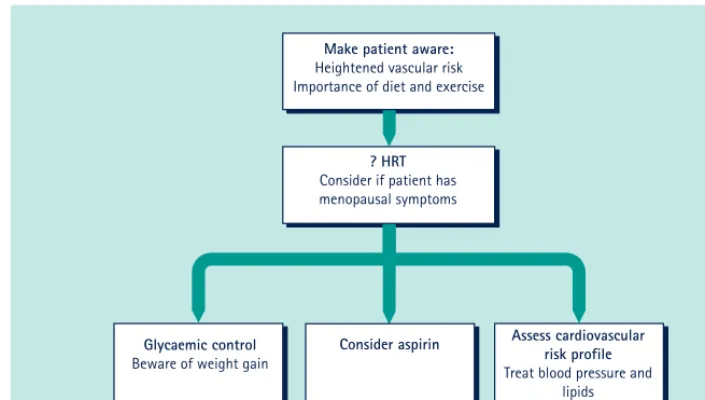
This woman is at increased risk on the grounds of age, ethnicity, menopausal status and the fact that she has diabetes. She should try hard with diet and exercise to manage her weight and glycaemic control (Figure 3.2). Given her imperfect glycaemic control at pres-ent, she might consider metformin to help preserve her beta cell function long term. Her hypertension is well controlled but atenolol might not be the ideal agent given her weight and imperfect glycaemic control. An angiotensin-converting enzyme inhibitor or angio-tensin II receptor blocker might be preferable. HRT is not routinely recommended for cardiovascular disease prevention but patient choice is important, and she may consider this if she is experiencing menopausal symptoms. She may benefit from aspirin treatment (see Chapter 33).
3 Diabetes risk after the menopause 11
High IR Low IR
45 %
40
35
30
25
20
15
10
5
0 45 %
40
35
30
25
20
15
10
5
0
42.9
P
ercent type 2 diabetes
Pe
rcent type 2 diabetes
Low VAT High VAT
[image:19.515.130.363.68.252.2]5.3 10.5
Further Reading
1 Guthrie JR, Dennerstein L, Taffe JR, Lehert P, Burger HG. The menopausal transition: a 9-year prospective population-based study. The Melbourne Women’s Midlife Health Project.
Climacteric 2004; 7: 375–89.
2 Shakir YA, Samsioe G, Nyberg P, Lidfeldt J, Nerbrand C. Cardiovascular risk factors in middle-aged women and the association with use of hormone therapy: results from a population-based study of Swedish women. The Women’s Health in the Lund Area (WHILA) Study. Climacteric 2004; 7: 274–83.
3 Rossi R, Origliani G, Modena MG. Transdermal 17-beta-estradiol and risk of developing type 2 diabetes in a population of healthy, nonobese postmenopausal women. Diabetes Care 2004; 27: 645–9.
4 Juutilainen A, Kortelainen S, Lehto S, Rönnemaa T, Pyörälä K, Laakso M. Gender difference in the impact of type 2 diabetes on coronary heart disease risk. Diabetes Care 2004; 27: 2898–904.
5 Torrens JI, Skurnick J, Davidow AL, Korenman SG, Santoro N, Soto-Greene M, Lasser N, Weiss G. Ethnic differences in insulin sensitivity and beta-cell function in premenopausal or early perimenopausal women without diabetes: the Study of Women’s health Across the Nation (SWAN). Diabetes Care 2004; 27: 354–61.
6 Piché ME, Weisnagel SJ, Corneau L, Nadeau A, Bergeron J, Lemieux S. Contribution of abdominal visceral obesity and insulin resistance to the cardiovascular risk profile of postmenopausal women. Diabetes 2005; 54: 770–7.
7 Holcomb CA, Heim DL, Loughin TM. Physical activity minimizes the association of body fatness with abdominal obesity in white, premenopausal women: results from the Third National Health and Nutrition Examination Survey. J Am Diet Assoc 2004; 104: 1859–62. §01 Prevention and Diagnosis
12
Make patient aware:
Heightened vascular risk Importance of diet and exercise
? HRT
Consider if patient has menopausal symptoms
Glycaemic control
Beware of weight gain
Assess cardiovascular risk profile
Treat blood pressure and lipids
[image:20.515.76.429.67.267.2]Consider aspirin
8 Hu FB, Meigs JB, Li TY, Rifai N, Manson JE. Inflammatory markers and risk of developing type 2 diabetes in women. Diabetes 2004; 53: 693–700.
9 Laires MJ, Moreira H, Monteiro CP, Sandinha L, Limao F, Veiga L, Goncalves A, Ferreira A, Bicho M. Magnesium, insulin resistance and body composition in healthy postmenopausal women. J
Am Coll Nutr 2004; 23: 510S–513S.
10 Jehn M, Clark JM, Guallar E. Serum ferritin and risk of the metabolic syndrome in U.S. adults.
Diabetes Care 2004; 27: 2422–8.
11 Masse PG, Dosy J, Cole DEC, Evroski J, Allard J, D’Astous M. Is serum ferritin an additional cardiovascular risk factor for all postmenopausal women? Ann Nutr Metab 2004; 48: 381–9.
4
Genetic Diabetes Syndromes
(MODY)
Case History
Background
Maturity-onset diabetes of youth (MODY) is an unusual cause of diabetes, and accounts for 1–2% of all cases of diabetes. The fact that the diagnosis is seldom made in clinical practice almost certainly reflects the fact that there is no simple clinical test for the syn-drome and it is, therefore, under-diagnosed. It is important to recognize MODY for a number of reasons: the syndrome is usually diagnosed in adolescence or early adulthood and patients may thus have diabetes for a substantial portion of their life; there is an appreciable risk of diabetic complications even though the degree of hyperglycaemia may be mild; the approach to treatment is different to that to either type 1 or type 2 diabetes; and other family members are usually affected. Diabetes usually develops before the age
A 24-year-old woman attends your clinic for annual diabetes review. She was diagnosed with diabetes at the age of 18 years. She is not overweight. She checks her blood sugar two days per week and fasting values are always below 7.0 mmol/l and her glycosylated haemoglobin (HbA1c) is 5.8%. She takes gliclazide 80 mg/day. Checking her eyes, you find that she has moderate diabetic retinopathy. Her blood pressure is 138/92 mmHg. She has a brother who was diagnosed with diabetes at the age of 18 and commenced on insulin.
What type of diabetes does she have?
How would you manage her?
What is her prognosis regarding diabetic complications?
4 Genetic diabetes syndromes (MODY) 13