
Design, development and implementation of innovative and pervasive applications using emerging communication technologies for highly mobile organisations
246
0
0
Full text
(2) Abstract Information and Communications Technology (ICT) industry is rapidly expanding, constantly changing and oriented around emerging technologies. In recent times, research data from industry skills demand and job advertisements shows that there is clearly vast skills shortages to develop applications leading to computer and telecommunications networks for financial, banking, energy, health, engineering, aviation, tourism, hospitality and education sectors. Applications based on the wireless technologies both short range (Bluetooth® and IEEE 802.11x family) and long range (next generation cellular technologies) reliant on telecommunication networks are growing at an alarming rate with an increased demand for security, quality of service, scalability, mobile multimedia, bandwidth usage, infrastructure and innovation. This demand brings major technological challenges for the management, developers and end-users in the ICT sector. This dissertation presents an investigation into these challenges in form of a decade of individual professional projects requiring fundamental design from the principles of wireless communications. Innovative and pervasive solutions are developed for the highly mobile organisations using amalgamation of compatible and cost effective emerging communication technologies.. Highly mobile organisations span the aviation, power generation and distribution, hospitality, tourism, education, and telecommunication sectors. These industries execute numerous and distinctively different real-time business transactions. From the preliminary research and investigations in each, suitable technological solution for each organisation’s problem is designed, developed then implemented. This dissertation is assembled from my research input to nine commercial projects executed between 2001 and 2010. Each was ‘cutting edge’ and technically challenging at the time of execution. These comprise: . a secure wireless technology implementation at the Sydney Airport Corporation Limited (SACL) between 2001 and 2003;. . implementation of a secure on-site and off-site electricity meter reading solutions for the Hong Kong Electricity Company (HEC) between 2004 and 2005;. . design and development of wireless food ordering system, iPod as a visitor’s personal guide and voice over internet protocol (VoIP) for student attendance. i.
(3) recording and retrieval application (SARRA) for the Box Hill Institute (BHI) between 2005 and 2007; . a new three layered packet switching media access control (MAC) framework was developed with the quality of service mechanism for the Aricent® Group between 2007 and 2009;. . a new modular data link layer (M-DALL) was developed for a multiple radio access technologies (RATs) for the Aricent® Group between 2008 and 2009;. . digital living network alliance (DLNA) enabled mobile terminals integrated with home gateway (HG) and an adaptive quality framework was developed for the Aricent® Group between 2009 and 2010; and. . a heuristic buffer management scheme on Android® to enhance video quality for smart phones was developed for the Aricent® Group between 2009 and 2010.. One of the major key performance indicators for these projects was to develop and implement solutions in their respective organisations. This dissertation is based on these projects. To date a total of 15 manuscripts (international refereed conferences and journals) and one book in the form of international refereed conference proceedings are published.. ii.
(4) Certification of Dissertation I certify that the ideas, experimental work, results, analyses and conclusions reported in this dissertation are entirely my own effort, except where otherwise acknowledged. I also certify that the work is original and has not been previously submitted for any other tertiary award, except where otherwise acknowledged.. ____________________________________. ______________. Signature of Candidate. Date. (Keyurkumar Jayantibhai Patel). Endorsement. ____________________________________. ______________. Signature of Principal Supervisor. Date. (Dr Wei Xiang). ____________________________________. ______________. Signature of Associate Supervisor. Date. (Associate Professor Nigel Hancock). iii.
(5) Acknowledgement I would like to express my deepest gratitude to Dr Wei Xiang and Associate Professor Nigel Hancock for their guidance, support and critical reviews of the entire dissertation and many constructive suggestions from the initial to the final level that enabled me to develop my projects into the dissertation.. This thesis would not be possible without immense help and support from my collaborators and ex-colleagues Mr Steve McCubben of the Sydney Airport Corporation Ltd (SACL), Dr Wing Tam of the Hong Kong Electricity Company (HEC), Mr S. Vijay Anand and Mr Suman Kumar Prasanna of Aricent® Group, and Mr Henry Wiebell, Mr Steven Besford and Mr Jose Straube of Box Hill Institute.. I am grateful to my colleagues at Armed Reconnaissance Helicopter Project Office,. Mr. Dong Le (Nova Defence) and Squadron Leader Mikel Schmid for their time and contribution towards proof reading of this dissertation. I am obliged to the Australian Defence Force and in particular, the Army, Defence Materiel Organisation (DMO), Colonel Robert B. Crowe, Mr Brett J. Worsley and Major Aaron J. Rose for providing a flexible working conditions and much needed study leaves in order to pursue the Engineering Doctorate.. I am heartily thankful to Mr Mohan Trada, Mrs Lata Trada, Dr Vipul Parikh and Mrs Preeti Parikh for providing much needed hospitality during my several visits to Toowoomba.. I am indebted to my wife, Dr Deval Patel and my parents for their unconditional support and continuous encouragement that kept me constantly focused towards completion of the study.. Needless to say, without all the above help and support, the writing of this dissertation would not have been possible. Lastly, I offer my sincere regards to all of those who supported me in any respect during the completion of the Engineering Doctorate.. iv.
(6) Dissertation Overview Telecommunication is the fastest growing part of the Information Communication Technology (ICT) industry with the emergence of real-time and multimedia rich applications, distributed systems and mobile technologies needs to be compatible with the existing skills sets, applications and infrastructures.. Chapter 1 presents a fundamental understanding on emerging communication technologies, their classification and implications on the third and fourth generation wireless and mobile services. Discussions on standards and technologies are done only as needed and relevant to projects to get the readers up to speed on the technologies. This chapter undertakes qualitative comparison of emerging technologies and demonstrates with examples, the features, effort and investments in these technologies. Chapter 1 concludes with the implications of current downturn in global economy and consumer reaction towards new technologies.. Chapters 2, 3, 4, 5 and 6 are based on five major projects carried out between 2001 and 2007. These projects are based on short range communication technologies and were commercially financed and business driven which warranted return on investment, ease of use, simple design, and scalable. They mainly focus on data communication. In summary, the topics of these chapters are as follows.. Chapter 2 presents wireless technology implemented at the Sydney Airport Corporation Limited (SACL). Wireless Technology, an integral part of the telecommunication industry, is growing at an alarming rate with increased security being the main challenge for developers and end users. It discusses tackling initial challenges and issues faced during the implementation of wireless technology and how security issues and wireless application were implemented at the Sydney Airport – a highly mobile organisation. The decision to deploy and manage the wireless spectrum throughout the Airport campus meant the Wireless Local Area Network (WLAN) will be a shared medium with public users, tenants and aircraft communications, sharing the same available bandwidth. Therefore to protect unintended users from breach of existing security policies adopted by their corporate network a comprehensive security solution needed to be established. This chapter focuses on how WLAN architecture and security challenges of implementing a. v.
(7) common use wireless infrastructure were addressed. Authentication and data privacy challenges are also presented. The complete WLAN connectivity for tenants, public and corporate usage is presented. My role in this project was as a research engineer. Tasks included but not limited to, infrastructure research, feasibility analysis, technical proposal development and design review.. Chapter 3 presents a comprehensive technical overview on how a wireless application is developed and implemented using short range wireless technology – Bluetooth®, to securely collect electricity meter readings using on-site and off-site techniques. A huge manpower is coordinated by electricity distributor – Hong Kong Electricity Company (HEC), to collect electricity usage data from the electricity meters. It is an expensive task and prone to obtain wrong readings. An innovative solution is presented which automates and simplifies the meter reading task using Bluetooth. This solution is referred as On-site Meter Reading. Mobile communication has been used in technologically motivated countries like Singapore and Hong Kong. In early 2003, meter reading was accomplished by using an electricity meter equipped with a modem to connect to a GSM network through a serial interface with firmware control. Few problems existed due to physical constraints of buildings. One of the major problems was connectivity due to the GSM coverage. Since any Bluetooth enabled digital power meter can form a wireless network (piconet) and with Bluetooth enabled smartphone, staff of electricity companies can collect numerous meter readings from a distance of up to 100 m away from electricity meters. Within seconds, the data collected by smartphone are sent to the energy provider’s central office via mobile network. This solution is referred as Off-site Meter Reading System. As a result of these solutions, electricity distributor has considerably reduced the operating cost, elimination of human error and avoided unnecessary estimation. My role in this project was as a lead technical consultant in a team consisting two members. My specific responsibilities included research, develop, test, implement and document the project. Overall management including finance, coordination and client liaison was the responsibility of the other team member.. Chapter 4 presents the design and development undertaken to create an innovative application of wireless food ordering system in a training restaurant run by students at the Box Hill Institute (BHI). This chapter presents an in-depth technical operation of Fountains Integrated Wireless Ordering System which includes systems architecture,. vi.
(8) workings, software development and implementation. It is demonstrated that by using wireless enabled PDA, food ordering system can increase coordination efficiency for restaurants and caterers. It saves time, reduces human errors and provides superior quality customer service. I strongly believe that with the increase use of wireless enabled PDA in restaurants, this application will become an important teaching and learning tool for the hospitality educators and students. Combining simple design, lower development and readily available emerging communications technologies, this chapter concludes that this system is an attractive learning and teaching solution for hospitality industry and educators. I was the key stake holder as a project manager and a mentor. Chapter 5 showcases the design and development of an iPod as a visitor’s personal guide at BHI. Since late 2004, the iPod has been successfully and effectively used for various purposes in entertainment and education industry which includes media player, external data storage device, a PDA replacement and for pod-casting. An emerging application is developed as an interface designed around a central scroll wheel of an iPod for the navigation, recording and playback facility which provides latest information to visitors visiting “innovation walk” within the Institute. With the increasing use of digital media together with the handheld devices, this iPod application will eliminate need of a human guide and will provide an entertaining experience to visitors. This solution can be implemented at various landmark tourist destinations such as mines, aquariums, museums etc, and in near future will replace existing expensive technologies. I was the key stake holder as a project manager and a mentor.. Chapter 6 aims to provide an in-depth technical in-sight into development of an innovative student attendance recording application using emerging communication technologies. Development of Voice over IP (VoIP) Student Attendance Recording Application (VoIP SARRA) for BHI is presented. This project demonstrates application programming, test bed setup, design considerations, design decisions, future plans as well as creative usage of emerging communications technologies. Developed application combines Cisco VoIP telephony and network systems and integrates it with existing database systems with the aim to provide BHI with an efficient and secure way to record and store student attendance data. This project is a success and when fully integrated within existing system, it will provide BHI with a cost effective and efficient student attendance recording and reporting system. This chapter concludes that the developed. vii.
(9) application has a potential for use to record student attendance at other Australian education providers. I was a project manager and a mentor in this project.. Chapters 7, 8, 9 and 10 are presented as a breakdown of four major projects executed between 2007 and 2011 for Aricent® Group (www.aricent.com). These chapters set out research development for the future – Next Generation Mobile Communication. These projects were commercially financed and business driven which warranted superior multimedia experience, quality of service, innovative design, scalable architecture and interoperability with other compatible technologies. They mainly focused on voice, video and data communication in 3G and 4G. In summary, the topics of these chapters are as follows.. Chapter 7 presents a new Packet Switching Media Access Control (PSMAC) Framework architecture with a three-layer approach for the NEXT GEN Mobile Terminal suitable for all IP based wireless networks. The design goal of a new NEXT GEN PSMAC Protocol was to provide support for enhanced mobility management; handover strategy with IPv6 protocol, high throughput with efficient quality of service (QoS) oriented packet transmission mechanism, scheduling techniques, and traffic and flow control mechanism. PSMAC Protocol stipulates the QoS requirements for an application depending upon traffic type and mapping various parameters for different kinds of flows, which would ultimately make sure that an application receives the QoS it requested. Simulations results are presented. This chapter concludes that proposed new PSMAC Framework for mobile terminals provides high-speed data transfer and ensures high throughput for different code rate and modulation techniques. I was a collaborating systems engineer in this project.. Chapter 8 presents a new Modular Data Link Layer (M-DALL) for NEXT GEN Mobile Terminal to abstract common metrics and introduces a single interface for retrieving radio link layer information. Present 3G Mobile Devices often support multiple communication technologies. If software developers want to control the configuration or monitor the characteristics of active Radio Access Technologies (RATs), their mobile applications will have to use different programming interfaces for each technology on the various supported platforms. M-DALL offers a flexible query interface and a powerful notification mechanism to the application layer that enables applications to become linkaware. The M-DALL also compromises common data functionality that is extended. viii.
(10) through specific parts of dedicated RATs like GPRS, UMTS, CDMA2K and WLAN, that could serve as a basis for existing and future Protocol stack development through reusable software components. The M-DALL also provides enhanced Services like handover, data storage and a method of power consumption. The evaluation of these enhanced services by means of analysis, simulations and prototyping is a topic of ongoing and future work. Additionally, special attention was paid to keep the M-DALL extendible for emerging networking technologies. I was a collaborating systems engineer in this project.. Chapter 9 presents advanced QoS Framework for the Digital Living Network Allianceenabled Home Gateway (DLNA-HG) to provide enhanced services for accessing and sharing various multimedia contents which are distributed over DLNA capable devices in a digital home environment. Many measurement studies have characterized the media access patterns and user behaviours. In order to gain insights into the current system, we have analysed these patterns for most commonly used applications among consumers. An analysis was carried out and it shows that the QoS is delivered on a best-effort basis in a connected home environment. Motivated by these observations we propose a QoS framework for DLNA-HG. DLNA home networked device interoperability guidelines were adopted with the proposed QoS-enabled media distribution architecture for interoperability of multimedia networking and QoS management among respective networked devices. By combining the DLNA guidelines with the proposed QoS architecture and integrating them into a standard home gateway and multimedia devices, interoperability of media distribution among different networked devices and an easy-touse management of QoS for multimedia services in a digital home environment were offered. The architecture presents an innovative perspective of identifying, classifying, prioritizing and assigning the primary QoS parameters to devices. In other words, deterministic quality-of-service is ensured by a process of sequential delegation, i.e. at each stage the best fit for the given request is determined and the information is passed to the next stage. It is the responsibility of the element in the subsequent stage to analyse and act on this information to move closer to the optimal solution. A prototype is built based on this architecture demonstrating the QoS feature that is implemented in a DLNA-HG. The performance characteristics for a trial problem are also presented. I was a collaborating systems engineer in this project.. ix.
(11) Chapter 10 is the final chapter of the dissertation. Android® is a mobile operating system running on the Linux kernel initially developed by Google, and later the Open Handset Alliance. This chapter presents a new architecture for efficient end-to-end performance delivery on Android. This allows developers to write managed code in the Java language, controlling the device using Google® developed Java libraries. Most research efforts have concentrated on advancement in video compression techniques resulting in DivX/Xvid codecs for better performance on handheld devices. Initial investigations reveal that these techniques are actually taking less time compared to entire execution time in a typical media playback system. However, it enlists that the buffer management methods employed in multimedia framework can significantly impact the overall end-to-end performance on these resource constrained devices. Motivated by these observations, a heuristic buffer management scheme to improve end-to-end performance for Android based devices is presented. An existing buffer management methods used within Packet Video Multimedia Framework (PVMF) of Android is discussed. How buffering schemes used between processors in hardware platform can further contribute to the performance bottleneck is also described. Consequently, a heuristic buffer management scheme is proposed to ensure a uniform buffer allocation among PVMF components and between processor-coprocessor of the hardware platform. To validate the approach, an experiment was performed using the heuristic buffer management technique to playback Xvid content on Zoom2 hardware platform based on Android®. The performance characteristics of the trial experiments are conducted. Experimental results lead to conclusion that the technique is effective at improving overall system performance significantly. The benchmark performance is achieved to further characterize this method. Finally, evaluation trade-off between memory and performance using the method with combinations of measurements using the experimental setup are also presented. I was a collaborating systems engineer in this project.. x.
(12) Table of Contents. Abstract ................................................................................................................................. i Certification of Dissertation ............................................................................................... iii Acknowledgement .............................................................................................................. iv Dissertation Overview ......................................................................................................... v Table of Contents ............................................................................................................... xi List of Figures .................................................................................................................... xx List of Tables ................................................................................................................... xxv List of Acronyms........................................................................................................... xxvi List of Publications ........................................................................................................ xxxii. Chapter 1 Introduction to Emerging Communication Technologies ................................................................ 1. 1.1 ... Introduction ................................................................................................................ 1 1.2 ... Emerging Communication Technologies ................................................................... 3 1.2.1 ......Wireless Fidelity .......................................................................................... 3 1.2.2 ......Bluetooth ...................................................................................................... 4 1.2.3 ......Intelligent Networks ..................................................................................... 5 1.2.4 ......Voice-Based Services ................................................................................... 6 1.2.5 ......Computer Telephony Integration ................................................................. 6 1.2.6 ......Ultra Wide Band .......................................................................................... 7 1.2.7 ......Zigbee........................................................................................................... 7 1.2.8 ......Wireless LAN ............................................................................................... 8 1.2.9 ......3G................................................................................................................. 9 1.2.10 ....4G............................................................................................................... 11 xi.
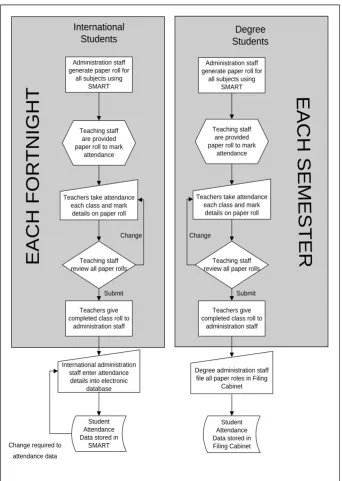
(13) 1.3 ... Implications for In-Service Provision ...................................................................... 15 1.3.1 ......Standards ................................................................................................... 15 1.3.2 ......Deployment and Business Model ............................................................... 16 1.3.3 ......Occupational Health and Safety ................................................................ 17 1.3.4 ......Short Term Solutions.................................................................................. 18 1.3.5 ......Adopting Supply Chain Management ........................................................ 18 1.3.6 ......New Revenue with SMS and MMS ............................................................. 18 1.3.7 ......Future Directions ....................................................................................... 18 1.4 ... Conclusions .............................................................................................................. 19. Chapter 2 Scalable and Secure Wireless Communication Technology Implementation for the Sydney Airport Corporation Limited (2001-2003) ........................................................... 21 2.1 ... Introduction .............................................................................................................. 21 2.2 ... WLAN Architecture and Security Challenges ......................................................... 23 2.3 ... Network Architecture and Security Policy .............................................................. 24 2.4 ... SACL Wireless Authentication ................................................................................ 25 2.5 ... Wireless Data Privacy Enhancements ...................................................................... 26 2.6 ... Computerised Mobile Maintenance ......................................................................... 29 2.7 ... Wireless VPN Remote Access Solution .................................................................. 30 2.8 ... Wireless Voice over IP Pilot Program ..................................................................... 31 2.9 ... Tenant Wireless Connectivity .................................................................................. 32 2.10 . Public Wireless Internet Connectivity ..................................................................... 33 2.11 . Customer Satisfaction .............................................................................................. 35 2.12 . Conclusions and Future Projects .............................................................................. 38 2.13 . Projects Status .......................................................................................................... 39 xii.
(14) Chapter 3 Development and Implementation of Wireless Application for Securely Recording Electricity Consumption for the Hong Kong Electricity Company (2004-2005) ............. 42 3.1 ... Introduction .............................................................................................................. 42 3.2 ... GSM Solution for Electricity Meter Reading .......................................................... 43 3.3 ... Problems with the GSM Network Solution ............................................................. 44 3.4 ... Solution for On-Site Power Meter Reading ............................................................. 46 3.5 ... Solution for Off-Site Meter Recording and Reporting System ................................ 50 3.6 ... System Configuration .............................................................................................. 50 3.7 ... Design Considerations ............................................................................................. 51 3.8 ... System Hardware ..................................................................................................... 54 3.9 ... System Software ...................................................................................................... 55 3.10 . Conclusions .............................................................................................................. 58. Chapter 4 Design and Development of a PDA based Wireless Food Ordering System for the Box Hill Institute (2005-2006) .................................................................................................. 61 4.1 ... Introduction .............................................................................................................. 61 4.2 ... Related Work ........................................................................................................... 62 4.3 ... Approach in selecting PHP / Mobile Technology.................................................... 62 4.4 ... Methodology ............................................................................................................ 64 4.5 ... System Architecture ................................................................................................. 66 4.6 ... PDA Client ............................................................................................................... 67 4.7 ... Centralised Relational Database (CRD) .................................................................. 68 4.8 ... Back-end Application Software ............................................................................... 69 4.9 ... Wireless Connectivity .............................................................................................. 70 xiii.
(15) 4.10 . Security .................................................................................................................... 72 4.11 . Limitations ............................................................................................................... 73 4.12 . Lessons Learned ....................................................................................................... 73 4.13 . Future Work ............................................................................................................. 74 4.14 . Conclusions .............................................................................................................. 75. Chapter 5 Design and Development of a Visitor’s Personal Guide using iPod for the Box Hill Institute (2006) .................................................................................................................. 76 5.1 ... Introduction .............................................................................................................. 76 5.2 ... Background .............................................................................................................. 77 5.3 ... Personal Guide Design ............................................................................................. 79 5.4 ... Content Page ............................................................................................................ 79 5.5 ... Alternative Operating Systems for Apple’s iPod ..................................................... 80 5.6 ... An alternative iPod operating system ...................................................................... 81 5.7 ... Advantages ............................................................................................................... 82 5.8 ... Future Trends ........................................................................................................... 83 5.9 ... Conclusions .............................................................................................................. 83. Chapter 6 Design and Implementation of an Innovative Student Attendance Recording and Retrieval Application (SARRA) for the Box Hill Institute (2006-2007) .......................... 84 6.1 ... Introduction .............................................................................................................. 84 6.2 ... Related Work ........................................................................................................... 86 6.3 ... Project Justification .................................................................................................. 87 6.4 ... Student Attendance Recording Process ................................................................... 88 xiv.
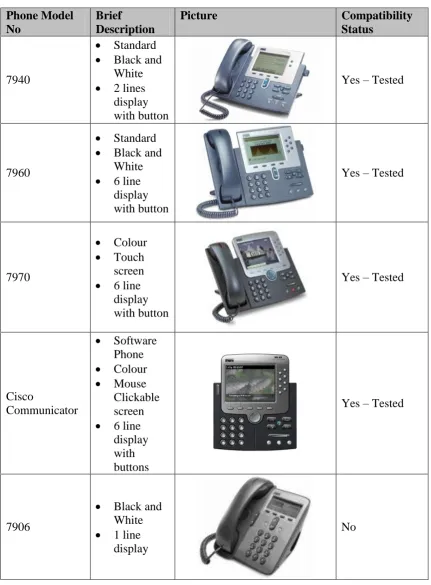
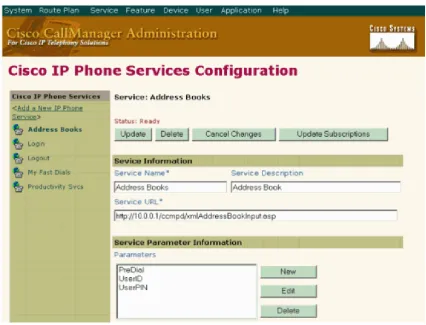
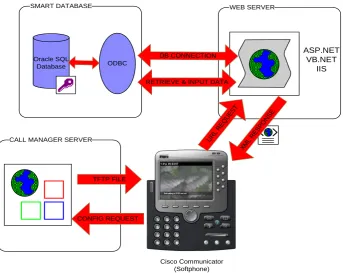
(16) 6.4.1 ......Current Process ......................................................................................... 88 6.4.2 ......Proposed Process....................................................................................... 90 6.5 ... Application Prototype .............................................................................................. 91 6.6 ... System Architecture ................................................................................................. 92 6.6.1 ......Design Overview ........................................................................................ 92 6.6.2 ......Cisco VoIP Phones and there Comparison ............................................... 93 6.6.3 ......Cisco Call Manager ................................................................................... 95 6.6.4 ......Application and Web Server ...................................................................... 97 6.7 ... The Application – VoIP SARRA ............................................................................. 98 6.7.1 ......XML............................................................................................................ 98 6.7.2 ......VB.NET ...................................................................................................... 99 6.7.3 ......HTTP ........................................................................................................ 100 6.7.4 ......Database .................................................................................................. 101 6.8 ... Development Environment .................................................................................... 102 6.9 ... Project Constraints and Limitations ....................................................................... 105 6.9.1 ......Constraints ............................................................................................... 105 6.9.2 ......Limitations ............................................................................................... 105 6.9.3 ......Development of Options Due to Limitations ............................................ 106 6.9.4 ......Preferred Option ...................................................................................... 108 6.10 . Evaluation .............................................................................................................. 109 6.11 . Lessons Learned ..................................................................................................... 110 6.12 . Future Work ........................................................................................................... 111 6.13 . Conclusions ............................................................................................................ 112. xv.
(17) Chapter 7 Design and Development of a New Three Layered MAC Architecture for the NEXT GEN Mobile Terminals for the Aricent Group (2007-2009) .......................................... 113 7.1 ... Introduction ............................................................................................................ 113 7.2 ... Proposed New NEXT GEN MAC Layer ............................................................... 113 7.3 ... Mobility Management Sub-layer ........................................................................... 115 7.4 ... Resource Management Sub-layer .......................................................................... 117 7.5 ... QoS Management Sub-layer .................................................................................. 119 7.5.1 ......QoS Manager ........................................................................................... 119 7.5.2 ......Traffic and Flow Control Module ............................................................ 130 7.5.3 ......Packet Flow Scheduling ........................................................................... 132 7.6 ... Implementation Methodology ................................................................................ 133 7.7 ... Simulation and Results........................................................................................... 135 7.8 ... Conclusions ............................................................................................................ 138. Chapter 8 Modular Data Link Layer (M-DALL) for NEXT GEN Mobile Terminals Enabling Wireless Aware Applications: A Platform Independent Software Design for the Aricent Group (2008-2009) .......................................................................................................... 139 8.1 ... Introduction ............................................................................................................ 139 8.2 ... Related Work and Proposed Concept .................................................................... 140 8.3 ... High Level Requirements ...................................................................................... 141 8.4 ... M-DALL Interface Architecture ............................................................................ 142 8.4.1 ......The Application Layer Interface .............................................................. 143 8.4.2 ......The Network Layer Interface ................................................................... 144 8.4.3 ......The Transport Layer Interface ................................................................. 145 xvi.
(18) 8.4.4 ......The Physical Layer Interface ................................................................... 145 8.5 ... M-DALL Software Architecture ............................................................................ 145 8.5.1 ......Common Data Function Framework (CDFF) Software Architecture ..... 147 8.5.2 ......Handover Controller ................................................................................ 151 8.6 ... M-DALL Enhanced Services ................................................................................. 154 8.6.1 ......M-DALL for Unlicensed Mobile Access (UMA) ...................................... 154 8.6.2 ......M-DALL for IEEE 802.21-based Media Independent Handover (MIH) . 155 8.6.3 ......M-DALL for Voice ................................................................................... 156 8.6.4 ......M-DALL for Battery Life ......................................................................... 157 8.6.5 ......M-DALL for Power Saving ...................................................................... 157 8.6.6 ......M-DALL Storage Library ........................................................................ 159 8.7 ... Conclusions and Future Work................................................................................ 159. Chapter 9 Development and Implementation of DLNA-enabled Mobile Terminal and Home Gateway offering an Adaptive QoS framework for the Digital Home Environment to Cater for Multimedia Services for the Aricent Group (2009-2010) ................................ 160 9.1 ... Introduction ............................................................................................................ 160 9.2 ... Design Approach .................................................................................................... 161 9.2.1 ......Device Discovery ..................................................................................... 162 9.2.2 ......Device Removal ....................................................................................... 162 9.2.3 ......Bandwidth Allocation............................................................................... 162 9.2.4 ......Bandwidth Re-allocation ......................................................................... 162 9.3 ... Proposed Adaptive QoS Framework ...................................................................... 162 9.4 ... Bandwidth Allocation Policy ................................................................................. 163 9.5 ... QoS Manager ......................................................................................................... 164 xvii.
(19) 9.6 ... Traffic Classification .............................................................................................. 165 9.7 ... Service Class Manager ........................................................................................... 167 9.8 ... Real-Time Traffic Manager ................................................................................... 168 9.9 ... QoS with Feedback Mechanism ............................................................................ 168 9.9.1 ......A/V Synchronisation Module ................................................................... 169 9.9.2 ......Receive Side Video Rendering ................................................................. 170 9.9.3 ......Send Side Video Frame Timestamp Generation ...................................... 170 9.9.4 ......Example: Streaming on Mobile over DLNA-HG ..................................... 170 9.10 . Media Distribution System with QoS .................................................................... 172 9.10.1 ....Media Server Device ................................................................................ 173 9.10.2 ....DLNA -HG Device ................................................................................... 173 9.10.3 ....Media Renderer Device ........................................................................... 174 9.10.4 ....Example: Media Distribution .................................................................. 175 9.11 . Prototype Implementation and Results .................................................................. 177 9.12 . Conclusions ............................................................................................................ 180. Chapter 10 A Heuristic Buffer Management Scheme on Android to Enhance Video Quality on Digital Handheld Devices for the Aricent Group (2009-2010) ....................................... 182 10.1 . Introduction and Rationale ..................................................................................... 182 10.2 . Design Approach .................................................................................................... 183 10.3 . System Model ........................................................................................................ 184 10.4 . Existing System ...................................................................................................... 185 10.5 . Proposed System: Heuristic Buffer Management Technique ................................ 186 10.5.1 ....Variable Length Decoding (VLD) Engine Method .................................. 189 10.5.2 ....Shared Cache Method .............................................................................. 190 xviii.
(20) 10.5.3 ....Direct Memory Access Method ................................................................ 190 10.6 .... Test Bed ............................................................................................................... 191 10.7 .... Performance Evaluationa and Memory Requirements ........................................ 192 10.8 .... Time Measurement .............................................................................................. 194 10.9 .... Conclusions.......................................................................................................... 195. Chapter 11 Conclusion ....................................................................................................................... 197. References ....................................................................................................................... 199 Appendix A – FIWOS System Installation Procedure, User Manual and Source Codes 209 Appendix B – VoIP SARRA Source Codes and Cisco XML Objects ............................ 211. xix.
(21) Table of Figures. Figure 1-1 – CRE in 4G networks ..................................................................................... 12 Figure 1-2 – Architecture of 4G Terminal operating under CRE...................................... 13 Figure 1-3 – Architecture of 4G terminal operating under reconfigurable context........... 13 Figure 2-1 – Existing SACL Wired Communication Network ......................................... 22 Figure 2-2 – Wireless and Wired Network Security ......................................................... 23 Figure 2-3 – Network Architecture and Security Policy ................................................... 24 Figure 2-4 – SACL Wireless Authentication – LEAP ...................................................... 26 Figure 2-5 – Computerised Maintenance Management System ........................................ 29 Figure 2-6 – VPN Authentication Process ........................................................................ 30 Figure 2-7 – Wireless VoIP Pilot Program ........................................................................ 31 Figure 2-8 – Public Wireless Internet Connectivity .......................................................... 34 Figure 2-9 – SACL Wireless Deployment ........................................................................ 36 Figure 2-10 - Total Wireless Connectivity ........................................................................ 37 Figure 3-1 – A schematic of electricity distribution and transmission in Hong Kong ...... 42 Figure 3-2 – Connection of GSM modem ......................................................................... 43 Figure 3-3 – Typical layout of a shopping mall ................................................................ 44 Figure 3-4 – Typical layout of a large restaurant .............................................................. 44 Figure 3-5 – Typical layout of a multi-storey office block ............................................... 44 Figure 3-6 – Electricity meters in a secure rack ................................................................ 45 Figure 3-7 – Automatic meter reading and reporting system using GSM and Bluetooth . 46 Figure 3-8 – (a) GSM and Bluetooth modules mounted on the wall; (b) power supply main switch; (c) power distribution panel in a metal rack; and (d) rear view of power distribution panel ............................................................................................................... 47 Figure 3-9 – Line diagram of reflected signal path of Bluetooth wireless link ................. 48 xx.
(22) Figure 3-10 – Antenna directivity and propagation path ................................................... 48 Figure 3-11 – Off-site Meter Recording and Reporting System ....................................... 50 Figure 3-12 – Class 2 Configuration ................................................................................. 53 Figure 3-13 – Class 1 and Class 2 combination ................................................................ 53 Figure 3-14 – Class 1 Configuration ................................................................................. 53 Figure 3-15 – Class 1 Bluetooth module design for power meter ..................................... 55 Figure 3-16 – Bluetooth Profile Hierarchy ........................................................................ 56 Figure 3-17 – Security Architecture .................................................................................. 57 Figure 3-18 – Operation of OMR software ....................................................................... 58 Figure 4-1 – Mobile Applications: Architecture, Design and Development ..................... 63 Figure 4-2 – Layout of Fountains Restaurant .................................................................... 65 Figure 4-3 – Logical Wireless Network Diagram ............................................................. 65 Figure 4-4 – System Information Flow Diagram .............................................................. 67 Figure 4-5 – Table Summary……………………….........................................................63 Figure 4-6 – Add Meals Sub-Menu ................................................................................... 68 Figure 4-7 – Back-end GUI ............................................................................................... 69 Figure 4-8 – Wireless PDA Connectivity .......................................................................... 71 Figure 4-9 – Alternate printing option............................................................................... 72 Figure 5-1 – Innovation Walk Website ............................................................................. 78 Figure 5-2 – Sections of the Walk of Innovation .............................................................. 78 Figure 5-3 – Sample Main Function created using “C” Programming Language............. 81 Figure 5-4 – Design of a Main Menu ................................................................................ 82 Figure 6-1 – Current Process ............................................................................................. 89 Figure 6-2 – Proposed Process .......................................................................................... 90 Figure 6-3 – Application design overview ........................................................................ 92 Figure 6-4 – Phone Protocols ............................................................................................ 95 xxi.
(23) Figure 6-5 – Cisco VoIP Phone Interface .......................................................................... 95 Figure 6-6 – Cisco Call Manager Configuration Screen ................................................... 96 Figure 6-7 – Application Data/Msg flow .......................................................................... 98 Figure 6-8 – XML Coding ................................................................................................. 99 Figure 6-9 – HTTP Response & Request ........................................................................ 100 Figure 6-10 – Database logic ........................................................................................... 101 Figure 6-11 – SQL Database ........................................................................................... 102 Figure 6-12 – Laptop – A configurations ........................................................................ 103 Figure 6-13 – Laptop – B configurations ........................................................................ 103 Figure 6-14 – Call Manager Emulator configuration screen ........................................... 104 Figure 6-15 – Preferred Class List Screen ....................................................................... 106 Figure 6-16 – Preferred Class List Code ......................................................................... 107 Figure 6-17 – Alternative Class List Screen .................................................................... 107 Figure 6-18 – Alternative Class List Code ...................................................................... 108 Figure 6-19 – VoIP SARRA Application Functional Diagram ....................................... 109 Figure 7-1 – Challenges and related solutions in the proposed MAC architecture ........ 114 Figure 7-2 – Proposed new NEXT GEN MAC Layer .................................................... 115 Figure 7-3 – QoS Management Sub-layer ....................................................................... 120 Figure 7-4 – Queue Management .................................................................................... 122 Figure 7-5 – MAC Management Interface ...................................................................... 123 Figure 7-6 – Radio Link Control Data Flow Diagram .................................................... 124 Figure 7-7 – Radio Link Control Software Architecture ................................................. 125 Figure 7-8 – Actual Data Flow through IP ...................................................................... 129 Figure 7-9 – Traffic and Flow Control Module ............................................................... 131 Figure 7-10 – MAC Implementation Methodology ........................................................ 134 Figure 7-11 – OFDM Physical Layer Model .................................................................. 135 xxii.
(24) Figure 7-12 – Simulation Result for Uplink .................................................................... 136 Figure 7-13 – Simulation Result for Downlink ............................................................... 136 Figure 8-1 - M-DALL Concept ....................................................................................... 140 Figure 8-2 – M-DALL High level Requirements ............................................................ 141 Figure 8-3 – M-DALL Interface Architecture ................................................................. 143 Figure 8-4 – M-DALL Software Modules ...................................................................... 144 Figure 8-5 – Link Layer Architecture.............................................................................. 146 Figure 8-6 – Layer 2 Interface Architecture .................................................................... 147 Figure 8-7 – CDFF Software Architecture ...................................................................... 148 Figure 8-8 – Handover Controller in M-DALL............................................................... 150 Figure 8-9 – M-DALL for UMA ..................................................................................... 155 Figure 8-10 – M-DALL for IEEE 802.21-based MIH .................................................... 156 Figure 8-11 – M-DALL for Power Saving ...................................................................... 158 Figure 9-1 – DLNA Enabled Home Gateway with QoS Support ................................... 161 Figure 9-2 – Proposed Software Modules in Adaptive QoS Framework ........................ 163 Figure 9-3 – Interface of Adaptive QoS Framework within Services Layer................... 167 Figure 9-4 – Execution Process for QoS Framework ...................................................... 169 Figure 9-5 – Execution Process of QoS Framework ....................................................... 171 Figure 9-6 – Media Distribution between Gateway, Server and Renderer ..................... 172 Figure 9-7 – QoS negotiation between DLNA-HG, Media Server and Mobile Devices 173 Figure 9-8 – Test Bed Setup ............................................................................................ 176 Figure 9-9 – Experimental Test Environment ................................................................. 178 Figure 9-10 – Throughput of Video Streaming without QoS Framework ...................... 178 Figure 9-11 – Throughput of Video Streaming with QoS Framework ........................... 179 Figure 9-12 – GUI for media content sharing running over DLNA enabled M-DMP and M-DMS ..................................................................................................................... 179 xxiii.
(25) Figure 9-13 – DLNA based Video Player streaming the media running over DLNA enabled Android and Windows mobile devices .............................................................. 180 Figure 10-1 – Real Time Scenario ................................................................................... 182 Figure 10-2 – System Architecture .................................................................................. 184 Figure 10-3 – Existing Middleware System Model ........................................................ 185 Figure 10-4 – Proposed Middleware System Model ....................................................... 187 Figure 10-5 – Component Architecture on PVMF on Zoom2 Platform ......................... 189 Figure 10-6 – Component Architecture of Zoom2 .......................................................... 191 Figure 10-7 – Results shown on Zoom2 board using Heuristic Buffer Management Scheme ............................................................................................................................ 192 Figure 10-8 – DSP RAM requirements on OMAP ......................................................... 193 Figure 10-9 – Cortex RAM requirements on OMAP ...................................................... 193 Figure 10-10 – Performance Analysis ............................................................................. 194. xxiv.
(26) List of Tables. Table 4-1 - Centralised Relational Database ..................................................................... 69 Table 6-1 – Comparison of selected Cisco VoIP Phones for Application Development .. 94 Table 6-2 – Server Software Requirements ....................................................................... 97 Table 7-1 – Mode related OFDM Parameters for different Data Throughputs ............... 137 Table 7-2 – OFDM Related Input Parameters ................................................................. 137. xxv.
(27) List of Acronyms 1G. First Generation. 2G. Second Generation. 3G. Third Generation. 4G. Fourth Generation. A/V. Audio Video. AAA. Accounting, Authentication and Authorisation. ACK. Acknowledgement. ADSL. Asymmetric Digital Subscriber Line. ADT. Average Decoding Time. AES. Advanced Encryption Standard. AMPS. Advanced Mobile Phone Systems. AP. Access Point. API. Application Programming Interface. ARM. Acorn RISC Machine. ARQ. Automatic Repeat Request. ASP. Active Server Pages. ATD. Automatic Call Distribution. ATM. Asynchronous Transfer Mode. BCP. Basic Call Processing. BCSM. Basic Call State Model. BER. Bit Error Rate. BHI. Box Hill Institute. BRS. Baggage Reconciliation System. CDF. Common Data Functions. CDFF. Common Data Function Framework. CDMA. Code Division Multiple Access. CIP. Channel Interface Processor. CLP. China Light and Power Limited. CMMS. Computerised Maintenance Management System. CPU. Central Processing Unit. CRD. Centralised Relational Database. CRE. Composite Radio Environment. xxvi.
(28) CRM. Customer Relationship Management. CSD. Circuit Switching Data. CSV. Comma Separated Value. CTI. Computer Telephony Integration. DB. Dynamic Bandwidth. DHCP. Dynamic Host Configuration Protocol. DLLF. Data Link Function Framework. DLNA. Digital Living Network Alliance. DMA. Direct Memory Access. DMP. Digital Media Player. DMS. Digital Media Server. DMZ. De-Militarised Zone. DPF. Digital Picture Frame. DSP. Digital Signal Processor. DS-UWB. Direct Sequence Ultrawide Band. DTG. Decoding Time Gaps. DVB. Digital Video Broadcasting. DWDM. Dense Wavelength Division Multiplexing. EAP. Extensible Authentication Protocol. EAP-TLS. EAP Transport Layer Security. Ec/Io. Energy per Chip to Total Receive Power. EDGE. Enhanced Digital GSM Evolution. EMI. Electromagnetic Interference. ESP. Encapsulation Protocol. EU. European Union. FER. Frame Error Rate. FHS. Frequency Hopping Sequence. FHSS. Frequency-Hopping Spread-Spectrum. FTP. File Transfer Protocol. GPP. General Purpose Processor. GPRS. General Packet Radio Service. GSM. Global System for Mobile. GUI. Graphical User Interface. HC. Handover Control. xxvii.
(29) HDTV. High Density Television. HG. Home Gateway. HTML. Hyper Text Mark-up Language. HTTP. Hyper Text Transfer Protocol. HTTPS. Hyper Text Transfer Protocol over Secure Socket Layer. I/O. Input/Output. ICT. Information Communications Technology. IEEE. Institute of Electrical and Electronics Engineers. IIS. Internet Information Services. IM. Instant Messaging. IN. Intelligent Networks. INAP. Intelligent Networks Application Part. IP. Internet Protocol. IPTV. Internet Protocol Television. ISM. Industrial, Scientific and Medical. ISP. Internet Service Provider. IVR. Interactive Voice Response. J2EE. Java 2 Platform Enterprise Edition. J2ME. Java 2 Platform Micro Edition. JAIN. Java APIs for Integrated Networks. L2TP. Layer Two Tunnelling Protocol. LAN. Local Area Network. LEAP. Light-weight Extensible Authentication Protocol. LLC. Logical Link Control. LNA. Low Noise Amplifier. LTE. Long Term Evolution. MAC. Medium Access Control. MAP. Mobile Application Part. MCU. Microcontroller Unit. MIC. Message Integrity Check. MIH. Mobile Independent Handover. MMS. Multimedia Messaging Service. MPEG. Moving Pictures Experts Group. NAK. Non-Acknowledgement. xxviii.
(30) NEXT GEN. Next Generation. ODBC. Open Database Connection. OFDM. Orthogonal Frequency Division Multiplexing. OMAP. Open Multimedia Application Platform. OMR. Off-site Meter Reading. PA. Power Amplifier. PAN. Personal Area Network. PBX. Private Branch Exchange. PC. Personal Computer. PCS. Personal Communication System. PDA. Personal Digital Assistant. PDCP. Packet Data Convergence Protocol. PDU. Packet Data Unit. PHP. Personal Home Page or Hypertext Pre-processor. PMP. Portable Media Player. PoS. Point of Sale. PSTN. Public Switched Telephony Network. QoE. Quality of Experience. QoS. Quality of Service. QM. QoS Manager. R&D. Research and Development. RADIUS. Remote Authentication Dial-In User Service. RAT. Radio Access Technology. RB. Radio Bearer. RF. Radio Frequency. RLC. Radio Link Control. RSCP. Received Signal Code Power. RSSI. Received Signal Strength Indicator. RTP. Real-time Transport Protocol. RTT. Round Trip Time. RX. Receiver Module. SACL. Sydney International Airport Corporation Limited. SAR. Specific Absorption Rate. SCP. Service Control Point. xxix.
(31) SD. Secure Digital. SDK. Software Development Kit. SDU. Service Data Unit. SIB. Service Independent Building Block. SIG. Special Interest Group. SLEE. Service Logic Execution Environment. SLP. Service Logic Program. SMS. Short Messaging Service. SNDCP. Sub-Network Convergence Data Protocol. SNR. Signal to Noise Ratio. SQL. Server Query Language. SSI. Signal Strength Indicator. SSID. Service Set Identifier. SSL. Secure Socket Layer. SSP. Service Switch Point. TAFE. Technical and Further Education. TDM. Time Division Multiplexing. TDMA. Time Division Multiple-Access. TFTP. Trivial File Transfer Protocol. TKIP. Temporal Key Integrity Protocol. TTI. Transmission Time Interval. TX. Transmission Module. UMA. Unlicensed Mobile Access. UMTS. Universal Mobile Telecommunications Systems. UPnP. Universal Plug and Play. USB. Universal Serial Bus. UTP. Unshielded Twisted Pair. UTRAN. UMTS Terrestrial Radio Access Network. UWB. Ultra Wide Band. VB. Visual Basic. VLD. Variable Length Decoding. VoIP. Voice over Internet Protocol. VPN. Virtual Private Network. VWLAN. Virtual Wireless Local Area Network. xxx.
(32) WAMP. Windows Apache MySQL PHP. WAN. Wide Area Network. WAR. Wireless Access Router. WCDMA. Wideband Code Division Multiple Access. xxxi.
(33) List of Publications. [1]. Keyurkumar J. Patel, Vijay Singh, “Services for Third and Forth Generations: Technologies and Implications”, in the Proc. International Conference on Computer, Communication and Control Technologies: CCCT’03, vol. 4, pp. 97-102, July 31, August 1-2, 2003, Orlando, Florida, USA.. [2]. Keyurkumar J. Patel, Steven McCubben, “Addressing Wireless Security Issues during Implementation of Wireless Applications in a Highly Mobile Organisation”, Savoie, M.J., Chu, H.W., Patel, K., Tran, N. & Ahmad, A. (editors) in the Proc. International. Conference. on. Computing,. Communications. and. Control. Technologies: CCCT’04, vol. 7, pp. 13-18, Aug. 14-17, 2004, Austin, Texas, USA. [3]. Keyurkumar J. Patel, Steven McCubben, “Implementation of Wireless Technology in a Highly Mobile Organisation: Challenges and Issues”, in the Proc. 8th World Multi-Conference on Systemics, Cybernetics and Informatics: SCI 2004, vol. 13, pp. 309-314, July 18-21, 2004, Orlando, Florida, USA.. [4]. Keyurkumar J. Patel, Steven McCubben, “Implementation of Secure Wireless Communication Technology in a Highly Mobile Organisation: Challenges and Issues”, Journal of Personal Wireless Communications, vol. 35, no. 3, pp. 255-267, Nov. 2005, Kluwer Academic Publishers, U.S.A. ISSN: 0929-6212.. [5]. Keyurkumar J. Patel, “Successful Implementation of Emerging Communication Technologies in a Mobile-Intense Organization: A Case Study of Sydney Airport Corporation Limited (SACL)”, Handbook of Research in Mobile Business: Technical, Methodological and Social Perspective. Hershey, PA, USA: IDEA Group Publishing (IGP). (As a book chapter). [6]. Keyurkumar J. Patel, Wing K. Tam, “Application of Bluetooth for a Secure Electric Meter Reading in an Urban Environment”, in Proc. Wireless Personal Multimedia Communications: WPMC’05, Sept. 17-22, 2005, Aalborg, Denmark. (IEEE Conference). [7]. Keyurkumar J. Patel, Wing. K. Tam, “A Secure Electric Meter Reading Application using Bluetooth”, in Proc. IASTED International Conference on Networks and Communication Systems: NCS 2005, pp. 149-154, April 18-20, 2005, Krabi, Thailand. xxxii.
(34) [8]. Wing K. Tam, Keyurkumar J. Patel, Nguyen Tran, “Developing Wireless Application for Secure Electric Power Meter Reading using Bluetooth”, in Savoie, M.J., Chu, H.W., Patel, K., Tran, N. & Ahmad, A. (eds) Proc. International Conference on Computing, Communications and Control Technologies: CCCT’04, vol. 7, pp. 23-27, Aug. 14-17, 2004, Austin, Texas, USA.. [9]. Keyurkumar J. Patel, Andrew Y. J. Lee, “Realistic simulation of a wireless signal propagation in an urban environment”, the International Journal of Simulations, Systems, Science and Technology (IJSSST), vol. 10, no. 6, pp. 1-5, November 2010, ISSN: 1473-804x online, 1473-8031 print.. [10] Keyurkumar J. Patel, Umesh Patel, Andrew Obersnel, “PDA based Wireless Food Ordering System for Hospitality Industry – A Case Study of the Box Hill Institute”, Wireless Telecommunications Symposium – WTS 2007, CalPoly, Pomona, California, USA, April 26-28, 2007. (IEEE Conference) [11] Keyurkumar J. Patel, Umesh Patel, “iPod as a visitor’s personal guide”, in Encyclopaedia of Mobile Computing and Commerce, David Taniar (editor), vol. 2, pp. 365-368, 2007, Idea Group Inc., Hershey, PA, USA. [12] Keyurkumar J. Patel, S. Nocker, C. Tolson, “Development of an Innovative VoIP Student Attendance Recording Application (VoIP SARRA), accepted in the Australasian Journal of Engineering Education (AJEE), vol. 16, no. 2, pp. 87-99, 2010. [13] Keyurkumar J. Patel, S. Vijay Anand, Suman Kumar S. P., “A novel QoS platform to ensure efficient media delivery to DLNA enabled Android based devices”, accepted in the 2010 IEEE International Conference on Wireless Communications, Networking and Information Security (WCNIS 2010), 25-27 June 2010, Beijing, China. (IEEE Conference) [14] Keyurkumar J. Patel, S. Vijay Anand, Suman Kumar S. P., “A novel scalable architecture for efficient QoS to cater IMS services for handheld devices based on Android”, accepted in the Fourth International Conference on Next Generation Mobile Applications, Services and Technologies (NGMAST 2010), 26-29 July 2010, Amman, Jordan. (IEEE Conference) [15] Keyurkumar J. Patel, S. Vijay Anand, Suman Kumar S. P., “Aggregate functional software architecture on Android for end-2-end real time interactive content. xxxiii.
(35) management to cater IPTV services on digital handheld devices”, the Fourth International Conference on Next Generation Mobile Applications, Services and Technologies (NGMAST 2010), 26-29 July 2010, Amman, Jordan. (IEEE Conference) [16] Keyurkumar J. Patel, S. Vijay Anand, Suman Kumar S. P., “A heuristic buffer management scheme on Android to enhance video quality on digital handheld devices”, the Fourth International Conference on Next Generation Mobile Applications, Services and Technologies (NGMAST 2010), 26-29 July 2010, Amman, Jordan. (IEEE Conference). xxxiv.
(36) Chapter 1 Introduction to Emerging Communication Technologies 1.1. Introduction. Telecommunications service providers form an integral part of communications infrastructure. This infrastructure forms the backbone of modern-day services, such as connection to the internet service provider (ISP) via T1, virtual private network (VPN), switching, routing etc. Equipment manufacturers, swings from prosperity to downturns have been reflected in their respective stock performances [1]. However, the more recent and sudden slowdown, particularly in capital spending on networking equipment, has resulted in massive corporate restructuring and workforce realignment in the information communications technology (ICT) industry. Through merger and acquisition strategies, major telecom equipment suppliers such as Cisco, Alcatel-Lucent, Juniper, Qualcomm and Nortel, expanded their product portfolios globally.. First generation (1G) mobile was analogue voice and offered no roaming or security. In the 1990s, mobile services based on digital mobile technologies ushered in the 2G of wireless that we have today. In the US, these were referred to as personal communication systems (PCS) and used technologies such as time division multiple-access (TDMA), code division multiple access (CDMA) and global system for mobile (GSM). The main focus of wireless mobile services has been voice telephony. However, in recent years there has been growing interest in data services as well. While data services are available over advanced mobile phone systems (AMPS), these are limited to quite low data rates (<10 Kbps). Higher speed data and other advanced telephone services are more readily supported over the digital second generation (2G).. 2G cellular networks were introduced in early 2000 and included mobile systems such as GSM communication and their evolutions, often called 2.5G systems such as enhanced digital GSM evolution (EDGE), general packet radio service (GPRS) and IS136 [1]. These systems are based on TDMA technology. 2G systems essentially offered the same service, voice with the advantages of digital transmission and global standardisation, including roaming and tighter security. Taking 9.6 Kbps as the data rate available for 2G, 2.5G offers higher rates anything from 14.4 Kbps at launch to a maximum of 160 Kbps. 1.
(37) More importantly, 2.5G also offers ‘always-on’ and per packet charging (as is the case with i-mode).. Anticipation that average revenue per user would continue to decline, 2G wireless service operators looked to third generation (3G) broadband services as the next promising opportunity to maximise business growth. 3G mobile networks known as universal mobile telecommunications systems (UMTS and CDMA2000) based on code division multiple access (CDMA) technology that provides speed up to 2 Mbps. Wireless equipment manufacturers invested heavily in the research and development (R&D) of 3G system equipment and handsets [2]. Spending on 3G product and system development by most of the major wireless equipment manufacturers has curved upward steeply [2].. As 3G equipment manufacturers continued to promote and encourage 3G capabilities and full-colour video wireless handsets, wireless service providers, investors and consumers became excited and anxiously awaited the arrival of 3G.. The major expectation from the fourth generation (4G) of wireless communication networks is to be able to handle much higher data rates, which will be up to 1 GB in the wireless local area network (WLAN) environment and 100 MB in cellular networks. A user, with a large range of mobility, will access the network and will be able to seamlessly reconnect to different networks, even within the same session. The spectrum allocation is expected to be more flexible and spectrum sharing among the different sub-networks is anticipated [3]. In such a composite radio environment (CRE), it is anticipated that there will be a need for more adaptive and reconfigurable solutions on all layers in the network [4].. The sudden economic slowdown at the end of 2001 and again in 2008 caught almost everyone off-guard. The telecom industry suffered severe downturns in sales and revenue. The following factors were responsible [1-5]: . 2G/3G/4G license auctions;. . uncertain 2G/3G/4G profitability;. . network over-build and competition;. . heavy debt among telecom start-ups and dot coms;. 2.
(38) 1.2. . B2C and B2B investment spending cuts; and. . write-offs on acquisitions and many more.. Emerging Communication Technologies. 1.2.1 Wireless Fidelity Wi-Fi is the popular name for the wireless Ethernet 802.11x standard for WLAN. It allows collections of personal computers, dumb terminals and other distributed computing devices such as personal digital assistant (PDA) etc, to share common resources and peripherals. One of the most popular LAN technologies was Ethernet. Over the years, the IEEE has approved a succession of Ethernet standards to support higher capacity LANs over a diverse array of media [5].. The two most fundamental 802.11x family are 802.11a which operates at 11 Mbps in the 2.4 GHz band and 802.11b which operates up to 54 Mbps in the 5 GHz unlicensed spectrum band. Other 802.11x standards include 802.11g which offers up to 100 Mbps in the 2.4 GHz band; 802.11e which adds quality-of-service support to manage latency which is important for supporting voice telephone; 802.11h solves problems like interference with satellites and radar using 5 GHz; and 802.11i which adds security features of Wi-Fi protected access (WPA) by replacing wired equivalent privacy (WEP). 802.11i uses advanced encryption standard (AES). WLAN operate using unlicensed spectrum in the 2.4 GHz band. The current generation of WLAN support up to 512 Mbps data rates within 100 meters of the base station. Most typically, WLAN are deployed in a distributed way to offer last-hundred-meter connectivity to a wired backbone corporate or campus network. Typically in a corporate environment, WLAN are implemented as part of a private network. The base station equipment is owned and operated by the end-user community as part of the corporate enterprise, campus, or government network. In general, use of the network is free to the end-users that is, it is subsidised by the community as a cost of doing business, like corporate employee telephones.. Although each base station can support connections only over a range of a hundred meters, it is possible to provide contiguous coverage over a wider area by using multiple base stations. A number of corporate business and university campuses have deployed such contiguous WLAN [5]. Still, the WLAN technology was not designed to support. 3.
Figure
![Figure 1-1 – CRE in 4G networks [4]](https://thumb-us.123doks.com/thumbv2/123dok_us/167019.44163/47.595.146.455.74.410/figure-cre-g-networks.webp)
![Figure 1-2 – Architecture of 4G Terminal operating under CRE [4]](https://thumb-us.123doks.com/thumbv2/123dok_us/167019.44163/48.595.129.479.398.667/figure-architecture-g-terminal-operating-cre.webp)
+7
Related documents