M
AKING THE MOST OF THE
G8+5
M
AKING THE MOST OF THE
G8+5
C
LIMATE
C
HANGE
P
ROCESS
A
CCELERATING
S
TRUCTURAL
C
HANGE AND
T
ECHNOLOGY
D
IFFUSION ON A
G
LOBAL
S
CALE
CEPS
T
ASK
F
ORCE
R
EPORT
C
HAIRMAN: G
UNNARS
TILLSenior Vice President, Head of Environment Division ThyssenKrupp
R
APPORTEURS: N
ORIKOF
UJIWARA Research Fellow, CEPSC
HRISTIANE
GENHOFER Senior Research Fellow, CEPSCENTRE FOR EUROPEAN POLICY STUDIES
This report is based on discussions in the CEPS Task Force on “EU Climate Change Strategy and the Gleneagles Plan of Action: The G8+5 Climate Change Dialogue”. The Task Force met several times over a concentrated period from November 2006 to September 2007. Participants in this CEPS Task Force included senior executives from a broad range of industries – including energy production and supply companies, energy-intensive industries and service companies – and representatives from business associations and non-governmental environmental organisations. A list of members and invited guests and speakers appears in Appendix 5.
The members of the Task Force engaged in extensive debates in the course of several meetings and submitted comments on earlier drafts of this report. Its contents contain the general tone and direction of the discussion, but its recommendations do not necessarily reflect a full common position agreed by all members of the Task Force, nor do they necessarily represent the views of the institutions to which the members belong.
ISBN-13: 978-92-9079-794-4
© Copyright 2008, Centre for European Policy Studies.
All rights reserved. No part of this publication may be reproduced, stored in a retrieval system or transmitted in any form or by any means – electronic, mechanical, photocopying, recording or otherwise – without the prior permission of the Centre for European Policy Studies.
Centre for European Policy Studies Place du Congrès 1, B-1000 Brussels Tel: (32.2) 229.39.11 Fax: (32.2) 219.41.51
C
ONTENTS
Preface ... i
Executive Summary...1
I. Key messages ...2
II. Recommendations ...8
Introduction...13
1. Setting the Context for Action to Mitigate Climate Change...18
1.1 The state of the climate and pathways towards long-term stabilisation ..18
1.2 The G8+5 countries and the EU...19
1.3 International processes for discussions or negotiations...21
UN processes...21
Initiatives and activities contributing to the UN processes...22
1.4 Building blocks for a post-2012 agreement ...24
Adaptation ...24
Avoided deforestation...24
Sectoral approaches...25
2. Long-Term Structural Change for the Global Low-Carbon Economy...27
3. Crucial Policies for Accelerating Structural Change...30
3.1 The role of a carbon price ...30
3.2 Carbon markets...32
Linking through international agreements...32
Linking as a result of traders’ search for arbitrage ...33
3.3 Technology ...33
3.4 Energy ...35
Natural gas ...36
Coal ...36
Carbon capture and storage ...36
Renewables...36
Nuclear power...37
3.5 Sectoral approaches ...38
3.6 An integrated approach to transport...39
3.7 End-use energy efficiency ...42
Buildings including dwellings...42
Appliances ...43
4. Concluding Remarks...46
Bibliography...48
Glossary of Abbreviations...53
Appendix 1. Global Cost Curve for Greenhouse Gas Abatement Measures...54
Appendix 2. Shares of World GHG Emissions, Per Capita Emissions and GHG Intensity in G8+5 Countries...55
Appendix 3. Major Global Partnerships on Energy and Climate Change...58
Appendix 4. Report of the Transport Sub-group, May 2007...62
| i
P
REFACE
ackling climate change poses one of the world’s greatest challenges. The growing need for energy from fossil fuels, amongst other activities, contributes to the increases in greenhouse gases (GHGs) associated with climate change. This will require fundamental changes in the way we produce and consume energy. In this CEPS Task Force, which has been my pleasure to chair, we discussed and finally identified a list of concrete measures that have the potential both to reduce greenhouse gas (GHG) emissions and stimulate long-term structural change and technology development and diffusion. Structural change calls for an action-based approach and supporting measures to achieve the necessary reductions. I believe that such action-based approaches can help integrate targets and timetables, as they are agreed, with consistent and comparable policies and measures. Such integration will facilitate a robust global climate change agreement, which we all hope will be struck in Copenhagen in late 2009.
The CEPS Task Force has brought together representatives from different stakeholders that included senior executives from a broad range of industries – including energy production and supply companies, energy-intensive industries and service companies – and representatives from business associations and non-governmental environmental organisations. The members of the Task Force engaged in extensive debates in the course of several meetings. During the meetings, they also had ample opportunity to discuss these issues with officials from the EU institutions, member states and international organisations.
I want to thank the members of the Task Force for their active and positive contributions throughout the meetings. Although each member endorses the general content of the report, one should not conclude that all members subscribe to every sentence of the text. I would also like to thank Noriko Fujiwara from CEPS who, in collaboration with Christian Egenhofer, has been leading the effort to draft this report.
Gunnar Still Chairman of the CEPS Task Force Senior Vice President, Head of Environment Division ThyssenKrupp
| 1
E
XECUTIVE
S
UMMARY
limate change has become a major topic of the G8 meetings since the launch of the Gleneagles Dialogue on Climate Change, Clean Energy and Sustainable Development in 2005. This initiative has sought to explore new approaches to international cooperation on clean energy technologies between developed and emerging economies. At the 2007 UN conference on climate change in Bali, a formal process was launched to address countries’ commitments in the so-called ‘post-2012 period’ after the first commitment period of the Kyoto Protocol, aiming to meet the objective of UNFCCC itself to avoid ‘dangerous climate change’. In the EU, the EU heads of state and government have agreed on the need for a comprehensive package of responses to energy needs and climate change, welcoming the Commission’s proposal. Moreover, a new strategy for EU industrial policy intends to create incentives to unlock the full potential of low carbon and resource-efficient goods, technologies and services in the EU in order to make Europe a ‘forerunner’ in these markets.
Against this background, this report identifies a number of concrete measures that could reduce greenhouse gas (GHG) emissions, while at the same time stimulating structural change and technology development and diffusion. The report calls for supporting action-based approaches, which are essential to achieve the necessary reductions in GHG emissions, inform the post-2012 negotiations and address the most urgent issues such as surging energy demand and the need for clean energy technologies in emerging economies. An action-based approach can be regarded as a way of integrating targets and timetables, as they are agreed, with consistent and comparable policies and measures. With a view to a long-term climate strategy, this report attempts to present a portfolio of actions that can be implemented and accelerated on a global scale – especially in the G8+5 countries and the EU, and could become a basis on which these developed and developing countries can cooperate.
2 | EXECUTIVE SUMMARY
I.
Key messages
Merits of action-based approaches
1) There seems to be an emerging consensus on a push for policies to accelerate structural change and transition towards a low carbon economy, no matter how the post-2012 discussions develop. This trend can be facilitated by putting stronger emphasis on action-based approaches, closer cooperation between governments and stakeholders, and research into the scope for sector-specific mitigation options as witnessed in the implementation of the Gleneagles Plan of Action. Action-based approaches play an important role in achieving the emission reduction targets of the Kyoto Protocol and in putting into place the infrastructure, technologies and experience that will help to stimulate the further decarbonisation of development in the post-2012 period. Action-based approaches could also influence discussions on the post-2012 agreement in terms of direction, speed and depth by encouraging the sharing of data and knowledge, by facilitating the comparability of actions and by improving transparency. At the same time, such approaches could gain more support if guided by the level of ambition (e.g. a call for developed countries to reduce GHG emissions by 60–80% by 2050 from 1990 levels (European Council, 2007)).
2) Countries are more likely to undertake actions and reduce emissions if their efforts are acknowledged. A common yardstick would enable assessment of the progress made through domestic measures, e.g. in terms of reductions against business-as-usual levels or in costs. Such an instrument could also increase trust in the international negotiations. Ultimately, a yardstick could develop into a benchmark against which the performance of countries could be measured and thus become part of a compliance mechanism in a future climate-change regime.
Carbon pricing and its limits
MAKING THE MOST OF THE G8+5CLIMATE CHANGE PROCESS |3
incentives for consumers and businesses to save energy, improve efficiency and use less carbon-intensive energy sources. At the same time, it will encourage businesses to invest in low-carbon technologies or may trigger the establishment of new services such as energy service companies. The more visible and universal price signals are, the more robust these incentives should be. A precondition is that the carbon intensity of products and services is correctly reflected in the decisions of market participants. Still, although carbon pricing is necessary, it is not enough on its own. Market failures that justify intervention are typically associated with i) technology development, demonstration and deployment; ii) energy efficiency in the domestic sector; and iii) changes in consumer behaviour. Governments can learn from best practices. It must be also kept in mind that climate change objectives need to be balanced against other environmental, economic and public policy objectives in order to foster sustainable development.
The untapped potential in emerging economies
4 | EXECUTIVE SUMMARY
determination to fulfil their commitments under the UN Framework Convention on Climate Change (UNFCCC) to take a lead in the fight against climate change.
Specific action-based approaches
This report further analyses some examples of action-based approaches for energy supply, sectoral initiatives for global industry, an integrated road transport policy, buildings and appliances.
Energy supply: Avoiding being locked into high-carbon technologies
5) The EU set a target of a 20–30% GHG emissions cut from the 1990 levels by 2020, motivated by the ambition that future climate change will be limited to an increase of no more than 2°C above pre-industrial levels. Improving the efficiency of existing equipment is important for reducing emissions but will not be enough to meet the target. The main challenge is how to encourage the replacement of existing assets by low-carbon technologies and investment in near-zero carbon technologies such as renewables, nuclear power, and carbon capture and storage (CCS) in order to avoid being locked into high-carbon capital technologies. In the absence of a robust, global, long-term price signal for GHG emissions, for example through a global climate-change agreement, the single most important instrument for the EU is the EU emissions trading scheme (EU ETS). Both the level of the cap – i.e. the scarcity and by extension the price of allowances – and allocations will be crucial for the future structure of the capital stock of the ETS sector. The allocation rules (for distributing allowances) for the trading periods beginning in 2013 and beyond will be fundamental for stimulating investment in low-carbon technologies.
MAKING THE MOST OF THE G8+5CLIMATE CHANGE PROCESS |5
entrepreneurship, thus devising the most cost-effective solutions. Other advantageous technologies such as combined heat and power (CHP) and district heating and cooling may not reach their full potential because of market and non-market barriers or the lack of an appropriate framework, improved data or analytical tools.
Approaches for industrial sectors
7) As sectoral approaches and their designs evolve, questions about how they can fit into existing policies and practices become more urgent. New initiatives such as sectoral approaches will most likely be expected to complement existing frameworks rather than replace them.
8) There are four ways in which sectoral approaches could constructively interact with EU policy priorities in a significant way and thereby increase support from both governments and stakeholders. These relate to collecting data and formulating sectoral performance benchmarks.
• Sectoral performance benchmarks can be used for setting a cap if they are based on best practice or the best available technology in a sector.
• Sectoral benchmarks can be also used for allocation, at least as long as free allocation continues.
• The linking of emissions trading schemes would be facilitated and accelerated by coordination of the central design options such as cap-setting, (free) allocation, and monitoring, reporting and verification. Sectoral approaches can assist the coordination efforts.
• Sectoral performance benchmarks could be a useful tool for measuring, reporting and verifying actions and extended to a possible sectoral clean-development mechanism.
Integrated approaches to mobility –the example of cars and vans
6 | EXECUTIVE SUMMARY
vehicle technologies, infrastructure, consumer preferences and driving behaviour. Although this situation will necessitate an integrated approach based on flexibility and alternative options, the capacity of governments to implement integrated approaches is still limited and has to be developed. Experiences from integrated approaches such as the Auto-Oil and the European Climate Change Programme indicate the need for a high level of transparency and the inclusion of major stakeholders (especially legislators) as well as considerable resources for independent, high-quality scientific support. A particular challenge for policy-makers will be to find a consensus on the contributions of the various components of the transport sector to emission reductions, for example, through assigning specific targets. Uneven contributions by the different components would not only risk jeopardising the least-cost abatement goal but eventually political acceptability and, by extension, implementation. Flexibility for stakeholders in reaching their specific targets would reduce this risk by balancing initially uneven allocations to some extent. In the end, the success of integrated approaches will depend on the successful development of suitable performance indicators for those stakeholders responsible for the different components: manufacturers, fuel producers, governments as infrastructure providers and consumers as buyers and drivers. Suitable indicators are a precondition for i) developing targets, ii) monitoring progress and iii) enforcing compliance. The definitive test for the success of an integrated approach is whether the aggregate emission reductions envisaged are achieved.
An integrated approach will be aided by an efficient system based on a set of fiscal instruments, for example, the use of fuel, vehicle or circulation taxes as incentives for consumers to buy low-carbon or more efficient vehicles or to switch to more climate-friendly driving behaviour.
End-use energy efficiency
MAKING THE MOST OF THE G8+5CLIMATE CHANGE PROCESS |7
reduce energy consumption by 20–50%, often in a cost-effective way with a payback period of 10 years or less.
Buildings
10) Considerable ‘no-regret options’ exist in thermal insulation, high performance windows and solar shading, airtight structural details, ventilation and heat/cold recovery systems, supported by the integration of renewable energy production in buildings. Even so, in order to reach the full potential that buildings offer, the current EU focus on new buildings will need to be enlarged to include existing buildings (i.e. renovations) and buildings smaller than the current legislated threshold of 1,000 square metres. Concentration on new, innovative low-energy and low-GHG techniques for new buildings is crucial to avoid lock-in with respect to the new housing stock but fails to address the majority of emissions in the buildings sector. 11) Experience in the EU and elsewhere suggests that the full potential is
best reached by combining different policy measures, such as more stringent regulation, the (re-)introduction of financial stimuli, better information campaigns and training in the construction and maintenance industries. For the EU, where the principal competencies in energy matters lie with the member states, an immediate way forward would be to screen and compare member state policies to identify best practices. This step requires increased resources in terms of both money and staff in EU administrations in addition to continued political commitment. Comparisons among the member states are facilitated by indicators, which, for example, could be developed further by the European Commission in conjunction with stakeholders.
Appliances
8 | EXECUTIVE SUMMARY
13) This Task Force has identified a number of actions that could assist in reaching the full potential of emission reductions that appliances offer. These include
– undistorted energy (and electricity) price-setting that reflects the
real energy costs and specifically the costs of carbon;
– smart information and labelling campaigns to encourage
consumers to examine the economic and environmental effects of their choices based on a life-cycle perspective that incorporates, for example, not only emissions from material use but also benefits from (eco-)design. Global information and labelling campaigns could overcome or even prevent potential trade barriers stemming from the development of diverse technical standards in different countries;
– government incentive schemes to increase the rate of replacement
by encouraging consumers to replace energy-inefficient equipment with highly energy-efficient products, particularly cooling appliances;
– assessment of the potential that additional finance from
international financial institutions could have in speeding up replacement in emerging economies, especially of cooling appliances; and
– enforcement of existing laws and regulations, e.g. the one-watt
standby initiative.
II.
Recommendations
The Task Force has formulated the following recommendations:
1) The EU and other governments should support action-based approaches not just because they can reduce emissions here and now but also because they can enhance knowledge about the potential of various abatement options and their costs.
MAKING THE MOST OF THE G8+5CLIMATE CHANGE PROCESS |9
3) Until a robust, global carbon-price signal emerges from a post-2012 agreement, governments should continue to support the deployment of promising low-carbon technologies such as renewables and CCS to bring down the costs of the technologies.
Energy supply
4) Action-based approaches must focus on encouraging the replacement of existing assets in the energy supply sector to avoid lock-in with respect to a high-carbon capital stock.
5) The EU must use the review of the EU ETS to ensure that allocation rules provide incentives for investment in sustainable low-carbon technologies.
6) In parallel, governments should improve their data and analytical tools to develop strategies for other promising technologies such as CHP and district heating and cooling.
Approaches for industrial sectors
7) Governments and industry together should test various concepts of sectoral approaches in practice (proof of concept) by undertaking pilot projects in key countries and sectors to assess whether four challenges – technical issues related to data definition and collection, the risks of anti-competitive behaviour, workable incentives for governments and industry in developing countries, and a suitable governance structure – can be pragmatically solved.
8) The governments of developed countries in cooperation with industry and international bodies should make progress in capacity-building in the governments or industries of developing countries. 9) Industry should reinforce its efforts to develop performance
benchmarks that are practical to use and are acceptable in sectors across a range of developed and developing economies.
10) Industry sectors should attempt to develop a common framework that sets out principles for monitoring, reporting and verification or principles and processes to develop benchmarks and provide information to governments and international organisations.
10 | EXECUTIVE SUMMARY
12) Industry and governments should harmonise the data formats of various databases.
Integrated approaches to mobility – the example of cars and vans
13) To provide incentives for consumers and drivers, governments must reform the system based on fuel, vehicle or circulation taxes to encourage consumers to buy low-carbon or more efficient vehicles or to switch to more climate-friendly driving behaviour.
14) As there are market failures and other barriers that pricing/taxation alone will not overcome, the EU should attempt to devise an integrated policy for the various components of the transport sector – fuels, engine and vehicle technologies, infrastructure, consumer preferences and driving behaviour – to achieve emission reductions at the lowest cost.
15) EU funding in the transport sector should be targeted towards sustainable transport infrastructures, sustainable transport solutions and technology research and deployment.
16) The EU should develop suitable indicators, inter alia, to i) determine targets, which can be reached in a technologically- and economically-reasonable way ii) monitor progress and iii) enforce compliance, in order to ensure that targets are measurable and enforceable. Flexibility in how to reach their targets should be given to the individual stakeholders in order to realise the most cost-efficient potential.
End-use energy efficiency
Buildings
17) The EU should put stronger emphasis on existing buildings and dwellings, where the principal potential lies.
18) To reach the full potential in buildings and dwellings, the EU and other governments should combine different policy measures in parallel, such as more stringent regulation, (re-)introduction of financial stimuli, and better information campaigns and training in the construction and maintenance industries.
MAKING THE MOST OF THE G8+5CLIMATE CHANGE PROCESS |11
20) The European Commission, together with stakeholders associated with the buildings sector, could further develop appropriate indicators to aid comparability.
Appliances
21) To reach the potential for emission reductions related to appliances, governments must
a) ensure an undistorted energy (and electricity) price that reflects the real costs of energy, including the costs of carbon;
b) initiate smart information and labelling campaigns to encourage consumers to examine the economic and environmental effects of their choices based on a life-cycle perspective that incorporates, for example, not only emissions from material use but also benefits from eco-design; and
c) implement and enforce existing decisions and laws such as the one-watt standby initiative.
22) Governments should also
d) launch government incentive schemes to increase the rate of replacement, especially of cooling appliances; and
| 13
I
NTRODUCTION
limate change has been at the top of the G8 agenda since 2005. The UK’s G8 presidency launched a process to accelerate worldwide action on climate change, engaging five major emerging economies – Brazil, China, India, Mexico and South Africa – in discussions towards a global agreement, which became known as the Gleneagles Dialogue on Climate Change, Clean Energy and Sustainable Development. The backbone of the 2005 Gleneagles commitments is the Gleneagles Plan of Action (Box 1), which pledges to promote innovation, energy efficiency and conservation, to improve policy, regulatory and financing frameworks and to accelerate the deployment of cleaner (particularly lower-emitting) technologies. Among other things, the opportunity for cost-effective investment in cleaner energy technologies and greater efficiency is highlighted. Implementation of the commitments made in the Gleneagles Plan of Action has been monitored in the course of the Dialogue in close cooperation with the International Energy Agency (IEA), the World Bank and other initiatives.
14 | INTRODUCTION
environmental protection and economic growth by utilising energy conservation and other technologies.1
The final stage of the Gleneagles Dialogue will likely benefit from the momentum gained in the 2007 UN conference on climate change in Bali with the announcement of the Bali Action Plan. The Bali Action Plan has launched a formal process to discuss a post-2012 agreement through the creation of a new Ad-hoc Working Group on a Long-term Cooperative Action Plan (AWG-LCA) under the UN Framework Convention on Climate Change (UNFCCC). The first meeting of this group in Bangkok in April 2008 saw agreement on a work programme and the schedule for workshops focused on specific themes. Discussions will likely centre on the
1 For further information on the G8 Tokyo summit, see the website of the Japanese
Ministry of Foreign Affairs (http://www.mofa.go.jp/policy/economy/summit/ 2008/index.html).
Box 1. Six priorities of the Gleneagles Plan of Action
1. Energy use in buildings (building standards, renewable energy and efficiency partnerships to outreach to developing countries; procurement and management of public buildings), appliances (coordination of international policies on labelling, standard-setting and testing procedures), surface transport, aviation and industry (voluntary initiatives, the improvement of energy efficiency performance, cross-border partnerships and technology transfer)
2. Cleaner fossil fuels for power generation (research, dissemination and demonstration, clean coal, the reduction of gas flaring, renewables and electricity grids)
3. Efforts for strengthening international cooperation and R&D
4. The financing of the transition to clean energy with a focus on improving the investment climate and developing market
5. Adaptation
MAKING THE MOST OF THE G8+5CLIMATE CHANGE PROCESS |15
main building blocks for a post-2012 agreement, which include both widely-agreed themes such as mitigation, adaptation, finance and technology as well as emerging topics such as avoided deforestation and sectoral approaches.
Moreover, a Major Economies Meeting, initially proposed by the US, took on a new dimension when France, which is to take over the EU presidency in the second half of 2008, hosted the subsequent meeting on 17/18 April 2008 with an emphasis on sectoral approaches. It is expected that there will be increasing interaction and synergy among processes such as the Gleneagles Dialogue, the AWG-LCA and the Major Economies Meeting, while each process in turn draws wider participation from emerging and developing economies.
Although its share of global CO2 emissions is relatively small, the EU has been one of the most vocal advocates for the fight against climate change and for leading global efforts towards a global climate change agreement. In 2007, the EU heads of state and government agreed on a “firm independent commitment” to at least a 20% reduction in greenhouse gas (GHG) emissions by 2020 from 1990 levels, which can be increased to 30% on the conclusion of an international agreement (European Council, 2007).2 This target was proposed as part of an integrated energy and climate change package.3 Other commitments include a binding target of sourcing 20% of the EU’s total energy consumption from renewable energy by 2020 and a binding minimum target of sourcing a 10% share of biofuels in overall EU transport petrol and diesel consumption by 2020. In the push for technology, the EU has also agreed on the development of a strategic energy technology plan and a carbon capture and storage (CCS) policy (see section 3.4). Discussions on the further spread of efforts on GHG emission reductions (European Commission 2008a) and renewables among member states (European Commission 2008b), changes to the design of the EU
2 The 30% cut is a commitment on the condition that other developed countries
also commit themselves to GHG emission reductions as part of an international agreement. At the same time, the EU has advocated that developed countries reduce their emissions collectively by 60% to 80% by 2050 from 1990 levels.
3 See the European Commission’s website and related articles under the heading
16 | INTRODUCTION
emissions trading scheme (ETS) after 2012 (European Commission 2008c) or the development of CCS pilot projects (European Commission 2008d) have begun since the publication of the Commission’s integrated proposal for a climate action and renewable energy (CARE) package in January 2008 (European Commission 2008e).4 The EU heads of state and government set out a clear timetable, recognising the CARE package as “a good starting point and basis for agreement” to be reached before the end of 2008 and to be ready for adoption in early 2009 at the latest (European Council, 2008).
Meanwhile, a new strategy for EU industrial policy (European Commission, 2007) intends to create incentives to unlock the full potential of low carbon or resource-efficient goods, technologies and services in the EU to make Europe a ‘forerunner’ in these markets. The new strategy addresses the triple objective of competitiveness, energy and the environment, and calls for an integrated approach to mobilise action by all stakeholders. The main challenge is to explore how to move to a low-carbon economy while aiding the competitiveness of European industry. From this perspective, the High Level Group on Competitiveness, Energy and the Environment produced five reports from June 2006 to November 2007.5 The reports recognise the need for:
i) specific measures to minimise the risk of carbon leakage in cost-effective ways, especially in energy-intensive industries;
ii) flexibility and price certainty as provided through the liberalisation of energy markets and long-term energy supply contracts;
iii) getting the policy framework right, along with the urgency of stimulating the investment needed in the energy sector;
iv) ensuring that the investment signals provided through market mechanisms (the ETS and an international carbon market) are more long-term and predictable;
4 For further information, see the European Commission’s website and related
articles under the heading “Climate Action” (http://ec.europa.eu/ energy/climate_actions/index_en.htm; and http://ec.europa.eu/environment/ climat/climate_action.htm).
5 See the European Commission’s website and related articles under the heading
MAKING THE MOST OF THE G8+5CLIMATE CHANGE PROCESS |17
v) a more strategic approach to technology development and deployment through a combination of technology push and pull; and vi) global sectoral approaches to help progress international action.
Against this background, CEPS has convened a Task Force to identify a number of concrete measures for combating climate change that could reduce GHG emissions while at the same time stimulating structural change and technology diffusion. This Task Force report builds on the existing literature that has identified a number of policies and measures that could simultaneously accelerate structural change and improve cost-effectiveness.6 In general, it calls for action-based approaches that can play an important role in achieving the emission reduction targets of the Kyoto Protocol and in putting into place the infrastructure, technologies and experience needed. With a view towards a long-term climate strategy, it attempts to present a portfolio of actions that can be implemented and accelerated on a global scale, especially in the G8+5 countries and the EU.
After setting the context for actions against climate change in chapter 1, chapter 2 highlights the importance of long-term structural change for the global low-carbon economy. Chapter 3 lists some crucial policies to accelerate structural change and to enable an action-based system to work. Chapter 4 draws brief conclusions.
The main findings of the report are contained in the Executive Summary, including its sections on key messages and recommendations.
The report has five appendices. Appendix 1 illustrates a global cost curve for GHG abatement measures beyond business-as-usual levels. Appendix 2 compares shares of world GHG emissions, per capita emissions and GHG intensity in the G8+5 countries. Appendix 3 summarises the major global partnerships on energy and climate change, listing their main participants. Appendix 4 introduces the Report of the Transport Sub-group. Appendix 5 presents a list of members of the Task Force and invited guests and speakers.
6 This includes, for example, the ‘wedges approach’ (Pacala & Socolow, 2004), the
18 |
1.
S
ETTING THE
C
ONTEXT FOR
A
CTION
TO
M
ITIGATE
C
LIMATE
C
HANGE
o meet the considerable challenge of reducing GHG emissions and stabilising atmospheric concentrations to avoid ‘dangerous climate change’ will require a combination of initiatives and policies integrating global action under UNFCCC with domestic actions and international cooperation.
1.1
The state of the climate and pathways towards long-term
stabilisation
According to the Intergovernmental Panel on Climate Change (IPCC), there is persuasive evidence that most of the temperature rise that has occurred over the last 50 years is attributable to human activity. As GHG concentrations continue to increase, the potential impact of GHG emissions on people and ecosystems may prove to be significant. In their contribution to the Fourth Assessment Report in 2007, Working Group 1 of the IPCC highlights the unprecedented level of observed climate change. For the next two decades, it projects a rise of about 0.2°C per decade across a range of emission scenarios. And even with the concentrations of all GHGs and aerosols being kept constant at year 2000 levels, a rise of about 0.1°C per decade could be anticipated. The same body finds that this is likely to trigger serious consequences for humanity and other forms of life. Ramifications include a rise in sea levels, thus endangering coastal areas and small islands, as well as provoking a greater frequency of extreme weather events, impacts on agricultural production and higher incidences of the spread of diseases, damage to infrastructure or migration.
The principal source of global GHG emissions is CO2, on which this report concentrates. Roughly speaking, about 60% of total GHG emissions
MAKING THE MOST OF THE G8+5CLIMATE CHANGE PROCESS |19
come from the use of fossil fuels and 20% from land-use changes, e.g. deforestation. The rest is attributed to GHGs other than CO2.
Global atmospheric CO2 concentration has grown, rising from a pre-industrial value of about 280 ppm to 379 ppm in 2005. Annual fossil CO2 emissions have increased from an average of 23.5 GtCO2 per year in the 1990s to 26.4 GtCO2 per year in 2000–05. Based on the current understanding of climate carbon-cycle feedback, model studies suggest that stabilising CO2 at 450 ppm would require reductions of cumulative emissions over the 21st century from an average of approximately 2,460 GtCO2 to around 1,800 GtCO2 (IPCC, Working Group 1, 2007). In response to this challenge, the World Business Council for Sustainable Development (WBCSD) (2005) illustrated how a world with global carbon emissions at or below 33 GtCO2 7 per year could be realised by 2050, stabilising CO2 concentrations in the atmosphere at no more than 550 ppm and made clear the magnitude of changes that would have to take place. A study by McKinsey on behalf of Vattenfall (Vattenfall, 2006) has identified more than 30 measures that can be undertaken at a CO2 price of up to €50 per tonne (see Appendix 1).
1.2
The G8+5 countries and the EU
The G8+5 countries – Canada, France, Germany, Italy, Japan, Russia, the UK and the US plus Brazil, China, India, Mexico and South Africa – are responsible for about 55% of global GHG emissions (see Appendix 2). The G8 countries are currently responsible for some 63% of world GDP (Federal Government of Germany, 2007b). Even so, the emerging economies are rapidly closing the gap. The IMF expects that by 2015, China will outpace Europe in terms of its share of global GDP, with China accounting for 19% and Europe for 17% (Federal Government of Germany, 2007a). The significance of increasing emissions from the five emerging economies, especially China, is discussed further in chapter 2.
An agreement by the G8+5 countries on policies and measures could constitute a major step forward not only because they account for a large
7 WBCSD(2005) expresses emissions in tonne of carbon but this report expresses
emissions data in tonne of carbon dioxide. Thus, 9 GtC is converted to 33GtCO2,
20 | SETTING THE CONTEXT FOR ACTION TO MITIGATE CLIMATE CHANGE
share of the global economy but also because they could exert leadership in the regions for which they stand. The G8+5 group can be seen as a microcosm of the broader global picture. Appendix 2 shows that within the G8+5 group, there are major differences between countries in terms of shares of GHG emissions (Figure A2.1), per capita emissions (Figure A2.2) and GHG intensity (GHG emissions per unit of GDP) (Figure A2.3). Among these indicators, the intensity indicator requires careful treatment because it tends to reflect the structure of energy production rather than consumption. For example, Canada scores higher in energy intensity than does the US, even though the majority of energy produced in the former tends to be consumed in the latter.8
[image:28.482.50.418.374.523.2]The share of the EU25 in global CO2 emissions is relatively small, currently standing at 15% (see Figure A2.2, Appendix 2). Politically, however, the EU has been one of the most vocal advocates for combating global climate change and for leading global efforts towards a global climate-change agreement. At the same time, the EU is playing a key role in the development of emerging carbon markets, in both running the world’s largest allowance market (see Table 1) and generating considerable demand for clean development mechanism (CDM) credits (Capoor & Ambrosi, 2007, p. 22).
Table 1. Carbon market at a glance, volumes and values in 2005–06
2005 volume
(MtCO2e)
2005 value
($ million) 2006 volume (MtCO2e)
2006 value ($ million)
Allowances
EU ETS 321 7,908 1,101 24,357 New South
Wales
6 59 20 225
Chicago Climate Exchange
1 3 10 38
UK ETS 0 1 na Na
Sub-total 328 7,971 1,131 24,620
8 Canada is the single largest foreign supplier of energy to the US, providing 17%
MAKING THE MOST OF THE G8+5CLIMATE CHANGE PROCESS |21
Project-based transactions
Primary CDM 341 2,417 450 4,813 Secondary CDM 10 221 25 444
Joint
implemen-tation 11 68 16 141
Other compliance
20 187 17 79
Sub-total 382 2,894 508 5,477 Total 710 10,864 1,639 30,098
Source: Capoor & Ambrosi (2007), Table 1, p. 3.
1.3
International processes for discussions or negotiations
The UN plays a central role in developing a coordinated approach to climate change. Given the complexity of the matter as well as the lack of agreement within the UN, recently there have been additional attempts at better international coordination. This section provides an overview of UN processes and additional initiatives. While this section concentrates on processes for discussions or negotiations, any substance brought on the agenda of these processes is addressed in the next section, 1.4.
UN processes
Under the UNFCCC and the Kyoto Protocol processes, two major discussion tracks are currently running in parallel (e.g. Carter et al., 2008; Höhne et al., 2008).
Ad-hoc Working Group (AWG)
22 | SETTING THE CONTEXT FOR ACTION TO MITIGATE CLIMATE CHANGE
Ad-hoc Working Group on Long-term Cooperative Action
It was agreed in December 2007 to set up the AWG-LCA as a follow-up process to the Dialogue on Long-term Cooperative Action to address climate change by enhancing implementation of the Convention. The Dialogue resulted in a series of exploratory workshops under four broad themes – sustainable development, adaptation, technology potential and market-based opportunities – some of which have become possible building blocks for a post-2012 agreement. The AWG-LCA is mandated to launch a comprehensive process to enable the full, effective and sustained implementation of the Convention through long-term cooperative action up to and beyond 2012. The new body must complete its work by the UN Climate Change Conference in Copenhagen (COP15) in December 2009. The first meeting, which took place in Bangkok, Thailand from 31 March to 4April 2008, set out the work plan for implementing the Bali Action Plan. Comparability of effort has been high on the agenda. This meeting acknowledged the importance of comparability supported by an agreed yardstick (for comparability of effort, see section 1.4).
Initiatives and activities contributing to the UN processes
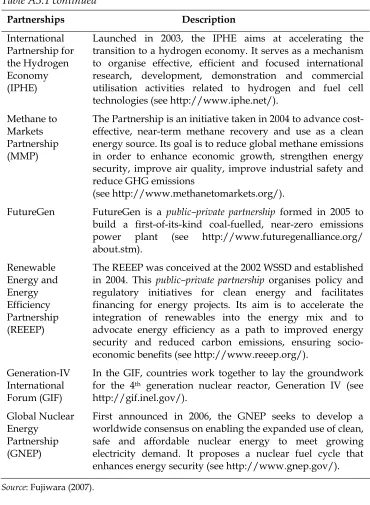
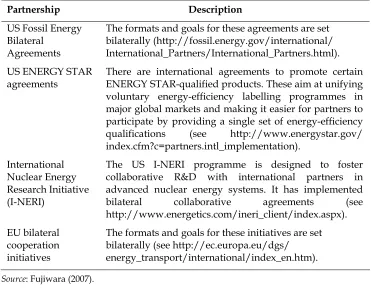
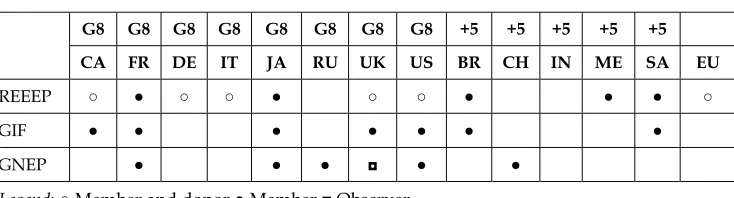
With the intention of complementing the UNFCCC and the Kyoto Protocol processes, a series of other initiatives and activities have also been undertaken, mainly within existing international fora including the G8. For a summary of the major global partnerships on energy and climate change, see Appendix 3, Tables A3.1-4. These initiatives can contribute to the UN processes not only by allowing for exchanges of information about respective climate and energy policies, but also by fostering international cooperation on key aspects (e.g. energy efficiency).
G8+5 and the Globe G8+5 Climate Change Dialogue
MAKING THE MOST OF THE G8+5CLIMATE CHANGE PROCESS |23
Moreover, the GLOBE9 G8+5 Climate Change Dialogue, launched to shadow the G8 process, is expected to ensure input from stakeholders including business10 and environmental non-governmental organisations (NGOs). The fifth meeting of their Legislators Forum will convene in the Japanese Parliament in June 2008.
Major Economies Meetings
The Major Economies Meeting on Energy Security and Climate Change is an initiative by the US to develop and contribute to a post-2012 framework on energy security and climate change.11 The third meeting in France in April 2008 (marking the first shift of the venue from the US) focused on sectoral approaches for addressing climate change.
Asia–Pacific Partnership on Clean Development and Climate
The Asia–Pacific Partnership on Clean Development and Climate12 focuses on sector-specific approaches and technology cooperation. The Partnership envisages international cooperation involving both the public and private sectors (i.e. a public–private partnership) with the principal aim of developing and diffusing technologies mainly through technology push (see section 3.3).
Bilateral or multilateral partnerships
Lastly, there have been attempts to explore bilateral or multilateral partnerships that are specific to individual topics such as CCS, biofuels, renewables and energy efficiency (see Appendix 3, Tables A3.1-4).
9 GLOBE stands for the Global Legislators Organisation for a Balanced
Environment, an organisation comprising legislators across the world, including G8+5 countries.
10 The WBCSD has been active in putting climate change policy on the mainstream
business agenda. Its output includes the pathways study (WBCSD, 2005) quoted in section 1.1.
11 The invited countries, entities and organisations are Australia, Brazil, Canada,
China, France, Germany, India, Indonesia, Italy, Japan, Mexico, Russia, South Korea, South Africa, the UK, the EU, the European Commission and the UN.
12 The members are Australia, Canada, China, India, Japan, the Republic of Korea
24 | SETTING THE CONTEXT FOR ACTION TO MITIGATE CLIMATE CHANGE
1.4
Building blocks for a post-2012 agreement
In the course of ongoing discussions in the UN processes and additional initiatives, some main themes appear to have developed into possible building blocks for a post-2012 agreement with various degrees of support from participating countries and organisations. This section covers adaptation, avoided deforestation and sectoral approaches. Equally important are carbon markets and technology, which are introduced in sections 3.1 to 3.3.
Adaptation
Irrespective of the intensity of a global response to climate change, there will be a need for adaptation to climate change. Adaptation measures in many cases will provide local benefits without taking long lead times, even before mitigation measures can have an effect. Depending on the temperature changes that occur, the costs of adaptation will rise sharply. Stern (2007) estimates them to be in the range of $15-150 billion each year (0.05-0.5% of GDP) for the construction of new infrastructure and buildings resilient to climate change in OECD countries. The World Bank (2006) estimates that the costs of ‘climate proofing’ and investment amounts to between $10 billion and $40 billion annually. The UNFCCC (2007) calculates that the additional investment and financial flows needed for adaptation in the infrastructure will total $2-41 billion for non-Annex I Parties and $8-130 billion globally in the year 2030. The challenge of adaptation will be even more acute in developing countries, which are vulnerable to climate change but short of resources to implement adaptation measures, meaning that there will need to be major transfers of money from developed to developing countries.
Avoided deforestation
MAKING THE MOST OF THE G8+5CLIMATE CHANGE PROCESS |25
protection (e.g. avoiding deforestation) in eight countries accounting for 70% of emissions from land use could be about $5 billion per year initially, with marginal costs rising over time (Stern, 2007). Yet again, as is the case for adaptation, action would require commitment to the immediate release of finance from developed countries.
Sectoral approaches
Sectoral approaches have rapidly become the focus of post-2012 discussions, but exactly what they mean and what they can deliver remain unanswered. There have been proposals for several types of sectoral approaches. One type is an industry-led “sector-wide transnational approach” to commitments (Baron, 2006; Baron et al., 2007). The Bali Action Plan 1(b) (iv) calls for consideration of “cooperative sectoral approaches and sector-specific actions”. Another type is a government-led approach as a method or tool for setting country- or region-based targets founded on an analysis of mitigation potentials, which has been explored in AWG workshops.13 The Bali Action Plan 1(b)(i) proposes for consideration “measurable, reportable and verifiable nationally appropriate mitigation commitments or action, including quantified emission limitation and reduction objectives, by all developed country Parties, while ensuring the comparability of efforts among them, taking into account differences in their national circumstances”. For elucidation, a “sector-wide transnational approach” is introduced in section 3.5, simply referred to ‘sectoral approaches’. This section only covers the concept of sectoral approaches as a method of setting country-based targets or, more broadly, as a basis for developed countries to take on “measurable, reportable and verifiable” commitments or action with a view to ensuring the comparability of efforts.
It can be foreseen that countries will make their own commitments in the absence of globally agreed and coordinated commitments. Some countries may strongly focus on domestic policies, including technology standards, renewable or energy-efficiency commitments, domestic trading schemes and policies targeting the domestic or transport sectors. Other countries or regions such as the EU may prefer legally binding
13 For further information, see the UNFCCC website (http://unfccc.int/
26 | SETTING THE CONTEXT FOR ACTION TO MITIGATE CLIMATE CHANGE
commitments in the form of absolute or intensity targets. Given the uncertainty about a post-2012 agreement, despite an urgent need to reduce emissions, some governments and many stakeholders have shown an increasing interest in action-based approaches. The advantages of such approaches are that they can be implemented here and now – without waiting until a global agreement can be found – and they will reduce emissions. The outcome, however, will most likely be a more complex and decentralised system, leading to questions about the comparability of efforts.
The comparability of efforts will depend on the existence of some sort of agreed or common yardstick, against which the progress of domestic measures can be assessed. In the absence of a common yardstick, there will be a risk of continuous finger-pointing that one country is doing more than another. An example of such a yardstick is the IEA energy indicators.14 While the comparability of efforts is a necessary condition for making an action-based system work, it is not sufficient on its own. Countries that have pledged emission reductions need to know in advance that they will be held responsible for achieving what they pledge and for accepting the eventual consequences for non-compliance or lack of performance. Provided the comparability of measures is ensured and that there is a shared understanding about the consequences of (non-)compliance or lack of performance, country or regional commitments based on national or regional priorities may yield at least some measurable reductions. Nevertheless, there is a risk that proliferating actions in many countries will lead to ever-diverging approaches, which could make reaching a global agreement more difficult. The biggest risk of such a system, however, would appear to be that countries or regions are invited to pick and choose.
14 For further information, see the IEA website (http://www.iea.org/Textbase
| 27
2.
L
ONG
-T
ERM
S
TRUCTURAL
C
HANGE
FOR THE
G
LOBAL
L
OW
-C
ARBON
E
CONOMY
he demand for primary energy is projected to increase globally by a factor of 1.6 to 3.5 between now and 2050 and in non-OECD countries by a factor of 2.3 to 5.2 (World Bank, 2006). The estimates of the IEA’s reference scenario put the investment needs of the energy sector in developing countries at an average cost of $300 billion per year for the period 2003–30, of which 65% is for the electricity sector alone. According to the WETO-H2 reference projection, energy consumption in developing countries will overtake that of developed countries shortly after 2010 and will account for two-thirds of the world total in 2050 (European Commission, 2006a).
The World Bank (2006) holds that developing countries need an annual investment for electricity supply of $165 billion through to 2010, increasing at 3% per year to 2030. There is currently a large financing gap in the energy sector of about $80 billion per year, or about 50% of the actual needs for electricity generation. The under-investment in energy is estimated to reduce GDP growth in some countries by as much as 1–4% per annum. International financial institutions, donors and foreign direct investment can help fill the gap by about $10 billion per year with existing instruments (World Bank, 2006). Closing the remaining gap will depend on the pace of implementing sector reforms to attract private investment.
Experience suggests that primary energy use in developing countries can be cut by 30–50%, because the cost of energy savings is negligible compared with the cost of increasing energy supply. Therefore, accelerating cost-effective improvements in energy efficiency will be a priority in increasing energy supply. While energy intensity started declining mostly
28 | LONG-TERM STRUCTURAL CHANGE FOR THE GLOBAL LOW-CARBON ECONOMY
as a result of structural changes in developing countries and economies in transition, much of the technical potential across the supply, transmission and use of energy is still to be tapped (World Bank, 2007).
The costs of reducing GHG emissions can be further lowered through increased end-use energy efficiency, a multi-gas/multi-sector strategy, international emissions trading or the carbon markets in general (World Bank, 2006).
Nevertheless, without changes in policy frameworks and appropriate instruments to facilitate investment in new technologies, developing countries are likely to follow a carbon-intensive development path. Developing countries are believed to account for over three-quarters of the increase in global CO2 emissions between 2004 and 2030 in the IEA reference scenario. The share of developing countries in global CO2 emissions will rise from 39% in 2004 to over 50% by 2030. Their share of global CO2 emissions is growing faster than their share of energy demand because their incremental energy use is more carbon-intensive than that of the OECD and transition economies (IEA, 2006a).
There are strong pressures on emerging economies for the quick expansion of energy supply, notably for power generation and transport fuels. Although there is little scope for substituting oil as the principal fuel in transport, power can be generated by a variety of fuels such as natural gas, nuclear power, renewables, coal, and combined heat and power (CHP), which has a high degree of efficiency. These economies are scrambling to meet growing demand for generation capacity very quickly. They are often doing so by using the existing capital stock and technology and by making use of domestic reserves of coal, wherever possible, in spite of the higher recurrent costs at a later stage through efficiency losses and local or regional environmental damage. There is a major risk of a lock-in of the power sector into coal. The investment taking place in the next 10–20 years could consequently lock in very high emissions for the next half-century (World Bank, 2006).
MAKING THE MOST OF THE G8+5CLIMATE CHANGE PROCESS |29
savings of around 213 million tonnes per year (Heller, 2006), or about half the Kyoto Protocol commitment of the EU-15.
Other problems in developing countries range from domestic energy pricing (e.g. energy subsidies, fiscal policies to soften the impact of fuel supply scarcity on final consumer prices, the absence of differentiation according to the polluting potential of fuels) to government failure in the enforcement of environmental regulations or investment in untested technologies. Such factors can slow down the introduction of more efficient technologies that are already cost-effective in developed countries, e.g. supercritical boilers for coal-fired power stations. Moreover, low levels of capacity relative to demand make it difficult for operators to take plants offline to improve energy efficiency and delivery, with implications for local residents and industry. Hence, old and carbon-intensive infrastructure tends to remain in operation despite the cost-effectiveness of upgrading (Stern, 2007).15
A special case is public infrastructure, which predetermines through its long lifespan production and consumption patterns over a long period. Decisions taken by governments today are highly influential in terms of reducing emissions for decades to come.
30 |
3.
C
RUCIAL
P
OLICIES FOR
A
CCELERATING
S
TRUCTURAL
C
HANGE
n the absence of a comprehensive global agreement, there are a number of crucial policies that have the potential to accelerate structural change.
3.1
The role of a carbon price
Within the EU and member states, there is already a plethora of policies – some of them imperfect – for setting a price on carbon. These include the EU ETS, member state taxes, and agreements between governments and industry. The UK, for example, has launched the Energy Performance Commitment scheme to target emissions from large entities such as supermarkets, hotels, and central and local government. It remains essential that a carbon price be eventually reflected in the price of the final product. Without a universal price on carbon, it is uncertain how far these efforts will spread to global commodities.
A carbon price encourages businesses to take the least costly actions, for example, those aimed at energy-efficiency improvements. There may also be advantages for first-mover businesses, which can substantially reduce their carbon footprint. Consumers appear to increasingly demand low-carbon products.
Nonetheless, carbon pricing alone is not sufficient. Even if the costs of climate change were borne directly by GHG emitters, leading to higher fossil-fuel prices, climate change is associated with market failures and barriers. The literature has identified a number of market deficiencies
MAKING THE MOST OF THE G8+5CLIMATE CHANGE PROCESS |31
related to the development and adoption of new technologies.16 First, owing to ‘knowledge spillover’, innovating firms cannot keep other firms from also benefiting from their new knowledge and, therefore, cannot capture for themselves all the benefits of innovation. Second, there are ‘adoption spillovers’, which imply that the cost or value of a new technology to one user may depend on how many other users have adopted the technology, and thus adoption is not as straightforward a matter as it appears. Third, market shortcomings arise through incomplete information. For example, incomplete information can be a barrier when a builder or landlord chooses the level of investment in energy efficiency in a building but a later purchaser or tenant pays the energy bills.
Moreover, a problem may occur when factoring the cost of carbon in the cost of materials. It is possible that the entire carbon footprint is not always reflected for various reasons, for example because of different methodologies to account for inputs, including indirect emissions or the life cycle (e.g. production, subsequent recycling and the end of a product’s life). Finally, uncertainty associated with returns to investment in innovation is particularly significant. Based on these market deficiencies, methodological problems or uncertainty about investment, it is reasonable to suggest that the policy prescription of economists to ‘put a price’ on GHG emissions, thereby inducing individuals and firms to internalise the cost of environmental externalities, does not always unlock the full potential. This issue highlights the potential for non-pricing measures to play a complementary role. For instance, technology measures (see section 3.3) not only rely on pricing but also on government support for R&D as well as public procurement, product labelling and certification. Integrated approaches to transport (see section 3.6) are based on a combination of measures ranging from pricing to consumer information and driver training.
16 These technology market problems are particularly relevant for climate policy,
32 | CRUCIAL POLICIES FOR ACCELERATING STRUCTURAL CHANGE
3.2
Carbon markets
The Kyoto Protocol has attached major importance to carbon markets and has introduced international emissions trading alongside the CDMs and joint implementation (JI) (Arts. 6, 12 and 17) under the Protocol.
Uncertainty about countries’ commitments after the first commitment period of the Kyoto Protocol (the ‘post-2012 period’) poses a challenge to the development and organisation of future carbon markets. Unless countries agree on rules for further commitments, there will be no assigned amount of units to parties beyond 2012. If there is no assigned amount of units approved by parties, each party may make its own commitment and any cap-and-trade emissions trading scheme will face the problem of finding the basis of cap-setting. Until there is a single carbon market on a global scale, emerging domestic and regional carbon markets will be likely to play an active role through their linking at least in the short term.
Linking domestic and regional emissions trading schemes is possible. There are two main options for linking: government-driven linking through international agreements and market-driven linking resulting from traders’ search for arbitrage. While formal linking through international agreements may be an option for the long term, informal linking through arbitrage may be a preferred option in the short to mid-term.
Linking through international agreements
MAKING THE MOST OF THE G8+5CLIMATE CHANGE PROCESS |33
Linking as a result of traders’ search for arbitrage
It is highly likely that participants in emissions trading schemes will search for arbitrage possibilities among carbon markets or commodities. Carbon prices will converge as long as most national or regional emissions trading schemes allow operators to use allowances generated through Kyoto Protocol project mechanisms (i.e. CDM/JI) or comparable domestic offset mechanisms for their compliance and there is sufficient volume of such allowances.
After 2012, a few more commodities may be created through the introduction of new mechanisms. A sectoral crediting mechanism (SCM) could evolve from the CDM or be ‘implanted’ in the Kyoto Protocol framework as another flexibility mechanism (Baron & Ellis, 2006). Such a mechanism generates credits for emission reductions on a sectoral basis. The challenge is to match the magnitude of credits the SCM could generate with the demand for emission reductions. Against the risk of over-supply, Baron (2006) suggests that parties could agree to either discount the value of SCM credits or adopt baselines that are below business-as-usual ones, such as no-lose sectoral targets (Schmidt et al., 2006). If emerging economies agree to take up no-lose targets, these economies will in effect move from the CDM to a multilateral mechanism trading (green) assigned amount units.
3.3
Technology
Most of the (post-2012) climate literature stresses the crucial role of technology in stabilising GHG emission concentrations at low costs, the need for a portfolio of R&D investments across a spectrum of technologies and integration of energy technology development as part of a larger and comprehensive climate-change strategy (e.g. Humphreys, 2001; Edmonds, 2003; Barrett, 2002 and 2003; Stern, 2007).17
In general, the costs of new and carbon-saving technologies tend to fall over time. The cost reduction can be achieved through three main approaches: i) carbon pricing in the form of taxes or emissions trading; ii) government support for research, development, demonstration and, in some sectors, early-stage deployment of technology; and iii) measures that
34 | CRUCIAL POLICIES FOR ACCELERATING STRUCTURAL CHANGE
create conditions that enable consumers to choose clean technologies. For example, public procurement can be used to create the critical mass for market penetration (e.g. ‘green procurement’) while product labelling and certification can inform consumers about the best choices. Furthermore, governments could promote actions such as trade policies, the removal of technical, legal and administrative barriers to technology transfer, sound economic policies, regulatory frameworks and transparency – all of which create an environment conducive to private and public technology transfer. Technology-oriented agreements (TOAs) have the potential to address important failures in the market with respect to technological innovation (e.g. de Coninck et al., 2007). Examples of such agreements are renewable energy quotas or feed-in tariffs but also EU or global energy efficiency or car efficiency standards. Still, they will operate best in conjunction with appropriate policies aimed at emission reductions, particularly market-based ones. TOAs could be negotiated separately or linked together, or incorporated into a national climate-change policy. TOAs that are more modest can be negotiated and implemented by a smaller set of countries, potentially outside the UNFCCC (see Appendix 3, Tables A3.1-4).
On the other hand, TOAs could become an effective substitute for an emissions-based strategy focusing on a limited category of standards, mandates or substantial incentives that could be applied on a sector-by-sector or a technology-by-technology basis. This approach may make the most sense for specific sectors or settings: sectors that are highly trade-sensitive, in which reaching agreements on targets and timetables is likely to be too difficult; sectors not otherwise covered by policies aimed at emission reductions; sectors that can benefit from international coordination; and situations in which significant ancillary benefits are foreseen.
MAKING THE MOST OF THE G8+5CLIMATE CHANGE PROCESS |35
countries to generate similar effects in developing and transition economies.
For the least-developed countries, access to technology is a key issue. Arrangements for technology finance could be considered together with the funding of avoided deforestation or adaptation as a package deal (see section 1.4). On the other hand, some emerging economies need concession-based finance for wider technology cooperation on a larger scale. Concessionary finance could be one of the instruments used to ensure low-carbon investment in these economies.18 Carbon markets could finance some of the investment needs foreseen in the long term. Yet the revenues expected from their contributions will probably be insufficient, certainly in the short term, which requires additional resources.
3.4
Energy
There are a number of non-market barriers to the uptake of new supply and distribution technologies such as political acceptability, potential safety questions and the lack of a regulatory framework. Among these, the most important barrier in the EU to further diffusion of more efficient and low-carbon technologies concerns energy prices. Such technologies would be expected to come to the market as a result of a significantly higher carbon price. Which technologies will be able to penetrate the market depends inter alia on fuel costs, including those resulting from the climate constraint (i.e. carbon prices) as well as on the development of capital costs (see section 3.1). It is difficult to forecast price developments that depend, to some degree, on learning effects, i.e. cost reductions stemming from the deployment of technologies. Herein lies the reason for governments to ‘force’ through policies on the deployment of technologies, for example, for renewables or possibly CCS. There is a risk that the absence of a significant carbon price or subsidies will lock new investment into an unsustainable future. On the other hand, there is a risk that such deployment policies will create vested interests seeking economic rent from government regulation.
18 The World Bank (2006) has estimated that up to $30 billion per year would be