Abstract-- This paper describes the application of cluster
analysis and classification techniques for the diagnosis of partial discharge defects present in electrical power transformers. The subsequent implementation of an agent-based, decision support system (DSS) incorporating these intelligent techniques is also discussed. Successful defect classification of empirical partial discharge data, using neural networks and rule induction, affirms the application of these techniques as a suitable means of providing reliable decision support for partial discharge defect diagnosis, particularly where expert diagnostic knowledge may be scarce or ambiguous. Through the interaction of intelligent agents the DSS considers the effectiveness and diagnostic contribution of each agent (intelligent technique) before presenting a consolidated diagnosis.
Index Terms-- Cluster Analysis, Classification Techniques,
Partial Discharges, Transformers, Decision Support, Neural Networks, Rule Induction, Intelligent Agents.
I. INTRODUCTION
n increasingly competitive marketplace, stringent regulatory demands and ageing electrical plant are some of the issues which have established asset management and condition monitoring as key business objectives among asset owners within the electricity supply industry [1].
Effective condition monitoring plays a significant role in improving the performance, reliability and longevity of electrical plant, having a positive economic and regulatory impact on an organisation’s asset management and maintenance strategies.
Condition monitoring equipment provides valuable data and diagnostic information through automatic processing of raw sensor data, or via on/off-line data analysis conducted by technical experts. The application of established intelligent techniques [2] used for data classification are presented
This work was supported in part by the U.K. Engineering Physical Science Research Council (EPSRC).
S. Strachan is a Research Assistant at the University of Strathclyde, Glasgow, UK ([email protected]).
G. Jahn is a Research Assistant at the University of Strathclyde, Glasgow, UK ([email protected]).
S. McArthur is a Lecturer at the University of Strathclyde, Glasgow, U.K. Prof. J. McDonald is the Director of the Institute for Energy and Environment at the University of Strathclyde, Glasgow, UK.
within this paper as a practical means of providing reliable decision support for the classification of partial discharge defect types detected in electrical power transformers.
The paper discusses the approach taken to the analysis and classification of empirical data derived from various laboratory experiments designed to simulate different sources of partial discharge activity occurring in oil and air insulated transformers, under various operational conditions [3].
Knowledge of the defect type (i.e. source) responsible for the initiation of partial discharge activity within a power transformer provides a useful indication of the possible location and severity of this activity. This paper proposes the classification of these defect types through the application of the following intelligent techniques:
• C5 Rule Induction [4];
• Feed-forward Backpropagation Networks [5]. • K-Means Clustering [5];
Software implementation of a prototype decision support system (DSS), incorporating these techniques as separate intelligent software agents [6], allows cross-corroboration of the individual agent outputs. The diagnostic output of the system is subsequently formed by the consensus of agent opinion. The implementation issues associated with the prototype development are also discussed later in this paper.
II. TRANSFORMERCONDITIONMONITORINGOFPARTIAL DISCHARGEACTIVITY
Electrical discharges, which do not completely bridge the distance between two electrodes, are known as partial discharges [7]. Partial discharge activity exists where an electric field surrounding a conductor exceeds the dielectric strength of the conductor insulation. In practical terms, partial discharges can occur in items of electrical plant as a result of temporary over-voltage, or an incipient weakness in the insulation introduced during manufacturing or as a result of degradation over the plant lifetime [1]. Insulation weaknesses (or defects) manifest themselves in a number of ways. Different classes of defect type resulting in partial discharge activity in oil filled power transformers are described below [3]:
• Bad Contact (BC) – caused by sparking, e.g. sparking occurring between the threads of loose nuts and bolts.
Intelligent Diagnosis of Defects Responsible for
Partial Discharge Activity Detected in Power
Transformers
S. M. Strachan, G. Jahn, S. McArthur
Member, IEEE
, J.R. McDonald
Senior Member, IEEE
• Floating Component (FL) – caused by the presence of large, usually motionless objects, e.g. due to winding vibrations causing metallic constructional parts to become detached from the earthed tank base and acquiring a floating potential.
• Suspended Particle (SP) – caused by small objects residing, and often moving, within the insulating oil.
• Protrusion (PRO) – caused by fixed, sharp metallic protrusions existing on windings, e.g. due to poor manufacture or as a result of winding vibrations over a substantial period of time.
• Rolling Particle (RP) – caused by a stray metallic object moving across the surface of the insulation.
• Surface Discharge (SD) – caused by moisture contamination, e.g. introduced at commissioning stage or as a result of interactions between cellulose material and the insulating oil.
Partial discharges may cause serious damage to transformers, significantly limiting the plant’s performance and lifetime. Undetected and untreated partial discharge activity can have far reaching, and in some cases catastrophic implications regarding public and employee safety, unplanned outages, and damage to plant, often culminating in severe financial and legal penalties for the asset owner.
III. DATA ACQUISITION AND PRE-PROCESSING
The application of classification and clustering techniques, mentioned previously, required extensive pre-processing of the data acquired from the laboratory experiments (Fig. 1).
Under laboratory conditions, Ultra High Frequency (UHF) sensors were used to detect electromagnetic energy signals radiated by localised electrical discharges, caused by the induced dielectric breakdown of insulating material. A phase-resolved pattern (shown in Fig. 1), representative of the partial discharge activity monitored [3], was generated from the raw sensor data. A phase-resolved pattern can be decomposed into four distinct distributions:
• Pulse Summation against Phase (Hqs).
• Pulse Count against Phase (Hn).
• Mean Pulse Height against Phase (Hqn).
• Max Pulse Height against Phase (Hqm).
A feature vector is constructed from various basic, deduced and statistical parameters derived from these distributions. Many parameters may be used to successfully characterise partial discharges [7]. Basic, deduced and statistical parameters are used to form the feature vector, providing some indication of the shape (cross-correlation), symmetry (skew) and ‘peakedness’ (kurtosis) of the phase resolved pattern, effectively producing a ‘snapshot’ or ‘fingerprint’ of the partial discharge activity. The feature vector consists of parameters (or features), capable of discriminating between different types of partial discharge defect.
Prior to the analysis of the data, it is necessary to normalise and then separate the entire data set into balanced
[image:2.595.377.488.157.437.2]and representative training and test data sets. The training data set is used to train the neural network or derive induction rules while the test data set, consisting of previously unseen data (i.e. data not used in training), is used to assess the performance of the technique under consideration.
Fig. 1. Data pre-processing IV. DATA VISUALISATION
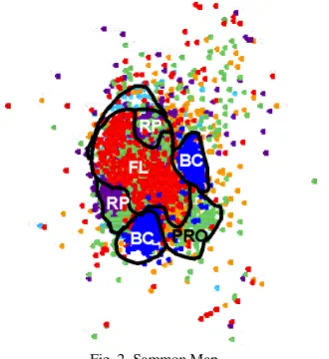
Sammon's mapping is a method of mapping points originally plotted in n-dimensional space to a lower, more comprehensible, dimensional representation (usually into two dimensions) [5]. The inherent structure of the original data set represented in n-dimensional space is retained during this transformation, providing a clear visual indication of any ‘cluster’ relationships present within the data set.
[image:2.595.349.514.563.743.2]This technique was used to assess the feasibility of the clustering techniques under investigation. If no clusters can be visualised from the Sammon Map, it is unlikely that any intelligent clustering technique will effectively classify the data. However, from the Sammon Map shown in Fig. 2, it is evident that, in most cases each defect type forms at least one distinct cluster, implying cluster analysis may indeed offer a practical solution to this particular classification problem.
V. C5.0 RULE INDUCTION
C5.0 rule induction attempts to derive If-Then rules from the training data set, which can subsequently be used to classify ‘unseen’ data [4]. Rule-sets and decision trees are induced by segmenting plotted data (feature vectors) using partitioning lines. The following is an example of a rule derived for the classification of the ‘Bad Contact’ partial discharge defect type.
Rule for Bad Contact (BC):
if Neg. Skew1 > 0.462 and Pos. Phase Incp <= 1 and Q <= 0.365
then -> BC (115, 0.991)
The general observations of partial discharge activity associated with ‘Bad Contact’ defect types interpreted from the above rule, include:
• +’ve value of skew infers the phase resolved distribution is asymmetric to the left of the zero crossing (i.e. Neg. Skew1 > 0.462);
• Positive phase inception occurs at less than or equal to a value of 1 (i.e. Pos. Phase Incp <= 1);
• Q<1 infers the discharge is asymmetric over the complete voltage cycle, i.e. discharge distribution over positive half cycle differs from that over negative half cycle (i.e. Q <= 0.365).
Note that a confidence figure is also provided (i.e. 115, 0.991), indicating 115 test cases have been classified as ‘Bad Contact’ defect types by this particular rule, with a confidence level of 99.1%.
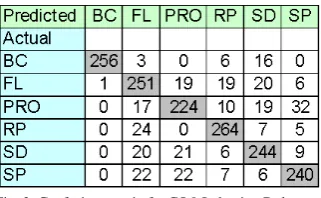
[image:3.595.323.533.455.560.2]The confusion matrix shown in Fig.3, provides information on how effectively the C5.0 rules classify the different defect types represented in the test cases [8].
Fig. 3. Confusion matrix for C5.0 Induction Rules
The confusion matrix compares the predicted defect types
derived from the induced rule sets, with the actual defect types associated with the (previously unseen) test cases. The confusion matrix shows defect type ‘Bad Contact’ correctly classified in 256 instances, while incorrectly classified in 25 separate instances, as either defect type ‘Floating Component’ (FL), ‘Rolling Particle’ (RP) or ‘Surface Discharge’ (SD). The strong leading diagonal indicates these rules generally perform very well in the classification of all partial discharge defect types.
C5.0 rules were also derived to successfully classify the insulation type (Oil or Air) and the electrode type (Earth or HV) associated with the partial discharge source.
VI. BACKPROPAGATION NEURAL NETWORK
Backpropagation (BP) neural networks employ supervised learning in the training of a neural network [2]-[5]. The input data vector is presented to the network input layer while the output layer is presented with the “target” output (i.e. defect type). The network is refined through a process of error backpropagation, where the resultant error between the actual and target output is minimised.
The confusion matrix shown in Fig. 4, resulting from the BP network analysis, exhibits a strong leading diagonal among those test cases classified successfully, indicating that (from the data classified) most of it was classified correctly. However, a number of test cases remain unclassified by the network. Further investigation may identify other techniques as a more effective means of classifying these particular test cases.
Fig. 4. Confusion matrix for Backpropagation matrix VII. K-MEANS
The K-means algorithm is an iterative procedure in which the cluster centres are continually recalculated, resulting in data points (feature vectors) changing membership between clusters and the subsequent redefinition of these clusters in n-dimensional space [2]-[5].
Following the K-Means training phase, each network node is associated with a cluster of feature vectors plotted in n-dimensional space. Each node is then assigned to represent the defect type most prevalent in the cases clustered around the node. The K-Means network’s classification performance can be assessed by measuring, for each defect type -
[image:3.595.96.257.626.725.2]around specifically assigned nodes (false positives);
• the proportion of incorrectly classified cases associated with a particular defect type (false negatives).
Comparing the true positives, false positives and false negatives associated with each defect type classified by K-Means networks of varying size provides a clear indication of which network offers the best classification results. The graph shown in Fig. 5 illustrates how the network performance varies with the number of predefined K-Means nodes (i.e. clusters), while classifying the defect type ‘Bad Contact’.
[image:4.595.306.547.76.169.2]
Fig. 5. K-Means network performance in the classification of ‘Bad Contact’
defect types, varying with network size
The network providing the most comprehensive classification of this particular defect type, (i.e. highest proportion of true positives and lowest proportion of false positives and negatives) is clearly that consisting of forty pre-defined K-Means nodes (i.e. K = 40).
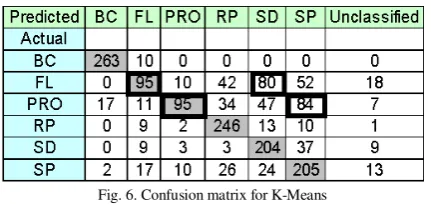
Fig. 6. Confusion matrix for K-Means
[image:4.595.57.283.233.376.2]The confusion matrix of the forty-node K-Means network (shown in Fig.6) illustrates the difficulty experienced by the network in distinguishing between ‘Floating Component’ (FL) and ‘Surface Discharge’ (SD) defects, and between ‘Protrusion’ (PRO) and ‘Suspended Particle’ (SP) defects. This observation is consistent with the relative positions of the ‘PRO’ and ‘SP’ clusters shown Fig. 7, where overlap exists between FL and SD defect types and also between PRO and SP defects.
Fig. 7. Overlapping clusters in Sammon Map
The lack of symmetry evident in the matrix also provides a useful insight into how the network performs. It is evident that while there are 84 instances of ‘PRO’ defects being mis-classified as ‘SP’ defects, only 10 instances of ‘SD’ defects being mis-classified as ‘PRO’ defects exist. Therefore, while the network may experience difficulty in classifying ‘PRO’ defects it experiences no such problems in classifying ‘SP’ defects.
VIII. IMPLEMENTATION
The techniques presented above represent a number of ways in which data mining and intelligent techniques can be used in order to achieve an initial interpretation of activities within a transformer based on partial discharge fingerprints. It has also been shown that no one technique is perfectly suited to interpreting UHF feature vector fingerprints, and that for more reliable results, a hybrid system is required.
The integration method piloted for an overall condition monitoring system in gas insulated substation and gas turbine monitoring projects was to use agents to split both computational load and diagnosis tasks into small manageable chunks [6]-[9]. This also has the advantage of removing proprietary data types at the system’s external interfaces thus overcoming problems related to building a condition monitoring system that can deal with equipment from multiple manufacturers. The need for a hybrid system is further highlighted by the large number of heterogeneous devices installed on the typical power network and the challenge associated with extending the transformer monitoring system to other devices like dissolved gas analysers. This extension will include not only the addition of new devices and data types but is also likely to feature additional analysis techniques as they become available.
[image:4.595.63.279.479.581.2]The design and implementation of the ontology is a crucial component of building the overall system and requires extensive thought to ensure all data can be accommodated within the final system. This requires that the ontology include key elements from the ontologies of other systems with which it is likely to interact and where this is not possible, for example where the same term represents different concepts in two different existing systems, translations between those ontologies must be provided.
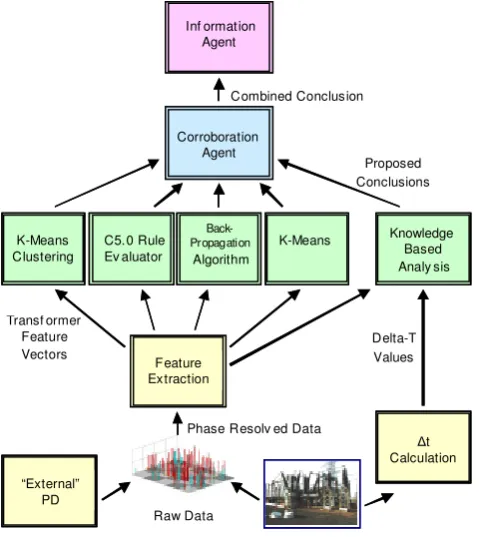
[image:5.595.51.291.247.516.2]Fig. 8 shows the various modules in the intelligent interpretation process and the data flow paths through the system with the data paths labelled according to the corresponding entry in the system ontology.
Fig. 8. Decision Support System Architecture
The intelligent techniques applied in this system are primarily concerned with using the data to gain an initial impression of what may be happening within, in this case, the transformer. This means that in order to apply each technique, a single agent is needed which can request relevant data from other agents, for example those at the systems external interfaces, and perform the analysis as required.
This process results in a single proposed conclusion from each analysis agent that requires rationalisation into a single conclusion. In traditional terms, this is similar to requesting the input of several experts on the subject, but requiring only a single prognosis. This idea of thinking of the overall agent system in terms of how a company would function is oft touted as useful [11] and the organisational metaphor suggests two possible courses of action; the first is for all parties to negotiate and refine conclusions until there is
sufficient agreement. The second method is to pass each party’s idea to an authority that can make an executive decision. In communicative terms, the first of these can be shown to require at least n×(n-1) messages (where n is the number of parties negotiating) being exchanged whereas the second requires only n messages being passed to the executive authority. Negotiation for this particular task would also require all agents checking their results with others and waiting for agreement, possibly leading to delays in the initial conclusion. It may also introduce race conditions where the first agent to return a result may be weighted more favourably as it can notify more agents of its idea sooner. This is clearly undesirable and would likely prove difficult to explain to the end user exactly how the conclusion was reached. For these reasons, and because allowing other agents to influence their decision would break the important agent concept of autonomy, it has been decided that a single executive authority is the best technique to use for this application. This should result in the information that is both timely and automatically updated through time. This could prove most useful when an additional analysis technique is added to troublesome plant at a later date, where only the new agent would require processing its data and submitting its ideas to the corroboration agent for inclusion in its executive process.
Corroboration within this system will take place across sensors (to ensure all sensors are working correctly), between techniques (using expert knowledge on the success rate of each technique at identifying fault types) and between external and internal data to ensure external equipment, like mobile phones, aren’t causing false readings on the transformer UHF detectors.
It is hoped that these steps to introduce corroboration and explainability into the system at design time will help alleviate a common weakness in intelligent systems – that of explaining the results that the system yields [12]. Agent based systems integrating intelligent systems are in no way immune to this requirement and validation through robust explanations of the individual steps taken to come to a conclusion is very important.
The final part of the decision support system is the knowledge-based analysis. This component receives data on the time differences between partial discharge signals arriving at the multiple UHF sensors mounted on the transformer, as well as the feature vector information. By using this data as well as knowledge in the form of transformer models, it can calculate approximate positions in which discharges occurred. This knowledge can then be used in tandem with the feature vector information to ascertain the types of fault that might be expected in that region.
Following the intelligent corroboration step, the conclusion information is passed to an interactive 3D-viewer interface within the information agent so the engineer can take the correct action. Using the agent architecture, it is K-Means
Clustering Kohonen Classif ier Knowledge Based Analy sis ∆t Calculation Feature Extraction “External” PD Corroboration Agent Inf ormation Agent Kohonen Classif ier Kohonen Classif ier K-Means
Clustering K-Means Clustering Kohonen Classif ier C5.0 Rule Ev aluator Knowledge Based Analy sis Knowledge Based Analy sis ∆t Calculation ∆t Calculation Feature Extraction Feature Extraction “External” PD “External” PD Corroboration Agent Inf ormation Agent Kohonen Classif ier Back- Propagation Algorithm Kohonen Classif ier K-Means Raw Data
relatively easy to develop additional interfaces for other systems users, for example the asset manager. Agent techniques also allow additional analysis techniques to be quickly integrated into the system.
IX. COMMUNICATION BETWEEN AGENTS
In order to build an extensible system, standard agent conventions have been used. This means that all inter-agent communications are handled using just a few types of message – namely “subscribe”, “query-ref” and “inform”.
Of these, “subscribe” and “query-ref” allow agents to request information updates automatically and to ask for answers to specific queries respectively. The “inform” message type is used in response to both query types.
This part of the overall system has been designed to mainly use the “subscribe” mechanism for passing information between agents. When agents come on line, they will find everyone capable of providing them with required information and send the appropriate subscription request. In order to ensure the system has missed nothing during the offline period, or in the period during which the subscriptions were set up, the system will also issue a query and check the resulting information with its own knowledge. A similar technique is adopted whenever it is detected that communications between agents has failed and been re-established.
It can be seen that data is initially passed from the data monitor to the analysis systems. From here, the proposed conclusions of each method-implementing technique are passed to the corroboration agent. It is then up to this agent to use its own knowledge of the analyses to figure out the overall conclusion using all of the available information.
The addition of this extra reasoning layer allows new techniques to be rapidly added to the system simply by adding the agent to the community and reconfiguring the corroboration agent. Depending on the type of data this agent is dealing with, it will use either manually set rules or weights, or adaptive algorithms in order to generate a single conclusion with probabilities for each proposed outcome.
X. DISCUSSION
The paper has illustrated the approach adopted in the assessment of a number of intelligent techniques applied specifically to the classification of partial discharge defect types. In addition, the implementation of these techniques, forming a practical decision support system for partial discharge defect diagnosis and location, is also described.
Assessment of the intelligent techniques considered within this paper, shows the techniques implemented offer varying degrees of reliable partial discharge defect classification. Using the agent interaction described previously, the constraints and limitations associated with each technique are considered within the corroboration agent, as part of the complete diagnostic process performed by the system.
At present, the explainability of the system is restricted to providing an explanation of which agents contribute to the overall diagnosis and providing some indication of the confidence and reliability of each contribution. However, a clear justification of the defect diagnosis presented by the system can be expressed in terms of the partial discharge activity observed, through the application of expert knowledge represented as rules in a knowledge-base. To this end, future work will consider the implementation of a knowledge-based agent, offering further corroboration of the system diagnosis and improved explainability of the system output.
XI. ACKNOWLEDGMENT
The authors gratefully acknowledge ScottishPower and the EPSRC for their support throughout this work, and Dr. M. D. Judd and G. F. Cleary for the provision of technical support and the experimental data.
XII. REFERENCES
[1] M. D. Judd, S. D. J. McArthur, J. R. McDonald and O. Farish. "Intelligent Condition Monitoring and Asset Management: Partial Discharge Monitoring for Power Transformers", IEE Power Engineering Journal, December 2002
[2] G.F. Luger and W.A. Stubblefield. Artificial Intelligence – Structures and Strategies for Complex Problem Solving, Addison Wesley.
[3] G. P. Cleary and M. D. Judd, “An investigation of discharges in oil insulation using UHF PD detection”, Proc. 14th Int. Conf. on Dielctric Liquids (ICDL 2002), Graz, Austria, July 7-12, 2002.
[4] R. Quinlan. C5.0 Programs For Machine Learning, Morgan Kaufmann. [5] L. Tarassenko. A Guide to Neural Computing Applications, Arnold.T. [6] E.E. Mangina, S.D.J. McArthur, J.R. McDonald and A. Myyes, “A Multi
Agent System for Monitoring Industrial Gas Turbine Start-up Sequences”,
PICA 2001 (22nd IEEE Power Engineering Society International Conference).
[7] E. Gulski, “Computer-Aided Recognition of Partial Discharges Using Statistical Tools”, PhD Disseration, Delft University Press, 1991. [8] E. Mangina, S. D. J. McArthur, and J. R. McDonald, "Application of
Artificial Intelligence Techniques to the Recognition of Partial Discharge Signatures in Gas Insulated Substations", Intelligent Systems for Industry (ISFI 2001), 26-29 June 2001, Paisley, Scotland.
[9] E. E. Mangina, S.D.J McArthur, J.R. McDonald, “The use of a Multi-Agent Paradigm in Electrical Plant Condition Monitoring”, Proceedings of Large Engineering Systems Conference on Power Engineering (LESCOPE) 2001.
[10] M. Uschold and M. Grninger, Ontologies: Principles, methods and applications, Knowledge Sharing and Review, 11(2).
[11] F. Zambonelli, N. R. Jennings, and M. Wooldridge, “Organisational abstractions for the analysis and design of multi-agent systems”, Agent-Oriented Software Engineering, LNCS 1957, pages 127-141, Berlin, 2001. Springer-Verlag.
[12] U. Chajewska and J.Y. Halpem, “Defining Explanation in Probabilistic System”, Proceedings of Uncertainty in Artificial Intelligence 13 (UAI 97), pp 62-71.
XIII. BIOGRAPHIES
Gordon Jahn received his M.Eng (Hons) degree in 2001 from the University of Strathclyde. He currently holds the post of Research Assistant in the Institute of Energy and Environment. His research interests include, Agents, Intelligent Systems, Alarm Processing, Internet/Intranet Applications, Knowledge Engineering and AI Based Incident Identification Techniques.
Dr Stephen McArthur is a Lecturer within the Institute for Energy and Environment. He received his B.Eng. (Hons) and PhD degrees from the University of Strathclyde in 1992 and 1996 respectively. His research interests include Intelligent System Applications in Power Engineering, Hybrid Intelligent Systems and Intelligent Agent Technology.