VALIDATION FOR QUANTITATIVE ESTIMATION OF
MEBENDAZOLE CHEWABLE TABLETS BY RP
A dissertation submitted to
THE TAMILNADU Dr.M.G.R MEDICAL UNIVERSITY
In partial fulfillment of the requirements
MASTER OF PHARMACY
PHARMACEUTICAL ANALYSIS
DEPARTMENT OF PHARMACEUTIC
EDAYATHANGUDY.G.S PILLAY COLLEGE OF PHARMACY
VALIDATION FOR QUANTITATIVE ESTIMATION OF
MEBENDAZOLE CHEWABLE TABLETS BY RP-HPLC”
A dissertation submitted to
THE TAMILNADU Dr.M.G.R MEDICAL UNIVERSITY
CHENNAI- 600 032.
In partial fulfillment of the requirements for the award of Degree of
MASTER OF PHARMACY
IN
PHARMACEUTICAL ANALYSIS
Submitted By
Reg No: 261230957
DEPARTMENT OF PHARMACEUTICAL ANALYSIS
EDAYATHANGUDY.G.S PILLAY COLLEGE OF PHARMACY
NAGAPATTINAM-611002APRIL 2014
VALIDATION FOR QUANTITATIVE ESTIMATION OF
HPLC”
THE TAMILNADU Dr.M.G.R MEDICAL UNIVERSITY
egree of
VALIDATION FOR QUANTITATIVE ESTIMATION OF
MEBENDAZOLE CHEWABLE TABLETS BY RP
A dissertation submitted to
THE TAMILNADU Dr.M.G.R MEDICAL UNIVERSITY
In partial fulfillment of the requirements
MASTER OF PHARMACY
PHARMACEUTICAL ANALYSIS
M. SANKAR., B. Pharamcy
Prof. Dr.S.Vadivelan, M.Pharm., Ph.D.,
DEPARTMENT OF PHARMACEUTICS
EDAYATHANGUDY.G.S PILLAY COLLEGE OF PHARMACY
VALIDATION FOR QUANTITATIVE ESTIMATION OF
MEBENDAZOLE CHEWABLE TABLETS BY RP-HPLC”
A dissertation submitted to
THE TAMILNADU Dr.M.G.R MEDICAL UNIVERSITY
CHENNAI- 600 032.
In partial fulfillment of the requirements for the award of Degree
MASTER OF PHARMACY
IN
PHARMACEUTICAL ANALYSIS
Submitted By
M. SANKAR., B. Pharamcy
(Reg No: 261230957)
Under the guidance of
Dr.S.Vadivelan, M.Pharm., Ph.D.,
DEPARTMENT OF PHARMACEUTICS
EDAYATHANGUDY.G.S PILLAY COLLEGE OF PHARMACY
NAGAPATTINAM-611002APRIL 2014
VALIDATION FOR QUANTITATIVE ESTIMATION OF
HPLC”
THE TAMILNADU Dr.M.G.R MEDICAL UNIVERSITY
egree of
Associate Professor,
Department of Pharmaceutical Analysis,
Edayathangudy.G.S.Pillay College of Pharmacy,
Nagapattinam – 611 002.
This is to certify that the dissertation entitled
METHOD DEVELOPMENT AND VALIDATION FOR
QUANTITATIVE ESTIMATION OF MEBENDAZOLE
CHEWABLE TABLETS BY RP
(Reg No: 261230957) in partial fulfillment
Master of Pharmacy to the Tamilnadu Dr. M.G.R Medical University, Chennai is an independent bonafide work of the candidate carried out under my guidance in the Department of Pharmaceutic
Edayathangudy.G.S Pillay Coll 2013-2014.
Place: Nagapattinam
Date:
Department of Pharmaceutical Analysis,
Edayathangudy.G.S.Pillay College of Pharmacy,
611 002.
CERTIFICATE
This is to certify that the dissertation entitled “ANALYTICAL
DEVELOPMENT AND VALIDATION FOR
QUANTITATIVE ESTIMATION OF MEBENDAZOLE
CHEWABLE TABLETS BY RP-HPLC” submitted by M. SANKAR
) in partial fulfillment for the award of degree of Master of Pharmacy to the Tamilnadu Dr. M.G.R Medical University, Chennai is an independent bonafide work of the candidate carried out under my guidance in the Department of Pharmaceutical Analysis Edayathangudy.G.S Pillay College of Pharmacy during the academic year
Dr.S.Vadivelan, M.Pharm.,Ph.D.,
“ANALYTICALDEVELOPMENT AND VALIDATION FOR
QUANTITATIVE ESTIMATION OF MEBENDAZOLE
M. SANKAR
for the award of degree of Master of Pharmacy to the Tamilnadu Dr. M.G.R Medical University, Chennai is an independent bonafide work of the candidate carried out al Analysis, ege of Pharmacy during the academic year
Principal,
Edayathangudy.G.S.Pillay College of Pharmacy,
Nagapattinam – 611 002.
This is to certify
Development and Validation for
Mebendazole Chewable tablets by RP
M. SANKAR (Reg No:
of degree of Master of Pharmacy to the Tamilnadu Dr. M.G.R Medical University, Chennai is an independent bonafide work of the candidate
carried out under the guidance of
Associate
Professor, Department of PharmaceuticEdayathangudy.G.S Pillay College of Pharmacy during the academic year 2013-2014.
Place: Nagapattinam
Date:
Edayathangudy.G.S.Pillay College of Pharmacy,
002.
CERTIFICATE
This is to certify that the dissertation “Analytical
alidation for Quantitative Estimation of
Mebendazole Chewable tablets by RP-HPLC” submitted by
: 261230957) in partial fulfillment for the award of degree of Master of Pharmacy to the Tamilnadu Dr. M.G.R Medical University, Chennai is an independent bonafide work of the candidate
carried out under the guidance of
Dr.S.Vadivelan, M.Pharm.,Ph.D.,
sor, Department of Pharmaceutical Analysis
Edayathangudy.G.S Pillay College of Pharmacy during the academic year
Prof.Dr.D.Babu Ananth,
M.Pharm., Ph.D.,nalytical Method
Estimation of
submitted by in partial fulfillment for the award
of degree of Master of Pharmacy to the Tamilnadu Dr. M.G.R Medical University, Chennai is an independent bonafide work of the candidate
M.Pharm.,Ph.D.,
al Analysis,
Edayathangudy.G.S Pillay College of Pharmacy during the academic year
I would like to express profound gratitude to Chevalier
Thiru.G.S.Pillay, Chairman, E.G.S.Pillay College of Pharmacy, and
Thiru. S.Paramesvaran, M.Com., FCCA.,Secretary, E.G.S.Pillay College
of Pharmacy.
I express my sincere and deep sense of gratitude to my guide
Dr.S.Vadivelan, M.Pharm.,Ph.D.,
Department of PharmaceuticalAnalysis, E.G.S.Pillay College of Pharmacy, for his invaluable and extreme support, encouragement, and co-operation throughout the course of my work.
It is my privilege to express my heartfelt thanks to Prof.
Dr.D.Babu Ananth, M.Pharm, Ph.D., Principal, E.G.S.Pillay College of
Pharmacy, for providing me all facilities and encouragement throughout the research work.
I express my sincere gratitude to Prof. Dr.M.Murugan, M.Pharm., Ph.D.,Director cum Professor, Head, Department of Pharmaceutics. E.G.S.Pillay College of Pharmacy, for his encouragement throughout the course of my work.
I wish to express my great thanks to Dr.P.Dheen Kumar,
M.Pharm., Ph.D., Associate Professor , Department of
Pharmaceutical Analysis, E.G.S.Pillay College of Pharmacy, for his support and valuable guidance during my project work.
I would like to extend my thanks to all the Teaching Staffand
Non-Teaching Staff, who are all supported me for the successful
completion of my project work.
INDEX
S.NO CONTENTS PAGE NO
1 INTRODUCTION 1
2 LITERATURE REVIEW 45
3 AIM & OBJECTIVE 48
4 PLAN OF WORK 50
5 DRUG PROFILE 51
6 MATERIALS & METHODS 55
7 RESULTS & DISCUSSION 114
8 SUMMARY 116
9 CONCLUSION 120
Bangalore - 562 123. INDIA Phone: +91-80-27730346-48
Fax : +91-80-27733273
www.kemwellbiopharma.com
TO WHOM SO EVER IT MAY CONCERN
Date: - 10/02/2014
This is to certify that Mr. Sankar. M a student from Edayathangudy G.S.Pillay College of Pharmacy has successfully completed his project titled “Analytical Method Development and Validation for Quantitative Estimation of Mebendazole Chewable Tablets 500mg by RP-HPLC” in our laboratory with reference to the partial fulfilment of the requirement of the Master of Pharmacy
Course of The Tamilnadu, Dr.MGR Medical university, Chennai.
Best regards,
Head of the department (Analytical Development).
Dept. of Pharmaceutical
Dept. of Pharmaceutical Dept. of Pharmaceutical
Dept. of Pharmaceutical Analysis, EGSPCPAnalysis, EGSPCPAnalysis, EGSPCPAnalysis, EGSPCP
Abs
A.R
Conc.
e.g
EC
FDA
Gm
GC
Hrs
HPLC
HPTLC
ICH
LOD
LOQ
LC-MS
M
Mg
min
mL
Abs Absorbance
A.R Analytical Reagent
Degree centigrade
Conc. Concentration
e.g Example
EC European Committee
FDA Food and Drug Administration
Gm Gram
GC Gas Chromatography
Hrs Hours
HPLC High Performance Liquid Chromatography
HPTLC High Performance Thin Layer Chromatography
ICH International Conference of harmonization
LOD Limit of Detection
LOQ Limit of Quantification
LC-MS Liquid chromatography-Mass Spectroscopy
M Molarity
Mg Milli gram
min Minutes
mL Milli liter
N Normality
Dept. of Pharmaceutical
Dept. of Pharmaceutical Dept. of Pharmaceutical
Dept. of Pharmaceutical Analysis, EGSPCPAnalysis, EGSPCPAnalysis, EGSPCPAnalysis, EGSPCP
NLT Not Less Than
nm Nano meter
NMT Not More Than
% Percentage
UV Ultra violet
QC Quality Control
RSD Relative Standard Deviation
RT Retention time
SD Standard deviation
S.No Serial Number
µm Micro meters
µ Microns
µl Micro liter
USP United States of pharmacopoeia
UV Ultra violet
V Volume
Wt. Weight
Dept. o Dept. o Dept. o
Dept. of Pharmaceutical Analysis, EGSPf Pharmaceutical Analysis, EGSPf Pharmaceutical Analysis, EGSPf Pharmaceutical Analysis, EGSPCPCPCPCP
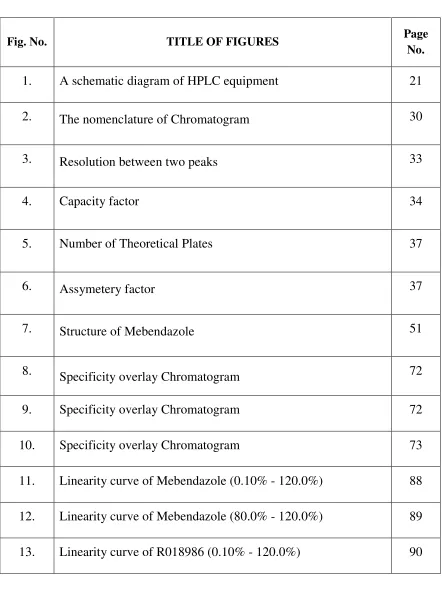
[image:10.612.108.550.96.689.2]LIST OF FIGURES
Fig. No. TITLE OF FIGURES Page
No.
1. A schematic diagram of HPLC equipment 21
2. The nomenclature of Chromatogram 30
3. Resolution between two peaks 33
4. Capacity factor 34
5. Number of Theoretical Plates 37
6. Assymetery factor 37
7. Structure of Mebendazole 51
8. Specificity overlay Chromatogram 72
9. Specificity overlay Chromatogram 72
10. Specificity overlay Chromatogram 73
11. Linearity curve of Mebendazole (0.10% - 120.0%) 88
12. Linearity curve of Mebendazole (80.0% - 120.0%) 89
Dept. of Pharmaceutical Analysis, EGSPCP Dept. of Pharmaceutical Analysis, EGSPCP Dept. of Pharmaceutical Analysis, EGSPCP
Dept. of Pharmaceutical Analysis, EGSPCP Page | Page | Page | Page | 1111
INTRODUCTION
The federal food, drug, and cosmetic act defines a drug as follows:
The term “drug” means (a) articles recognized in the official United states pharmacopoeia, official homoeopathic pharmacopoeia of the united states, or official national formulary.; and (b) articles intended for use in the diagnosis, cure, mitigation, treatment, or prevention of disease in man and other animals; and (c) articles (other than food) intended to affect the structure or any function of the body of man or other animals; and (d) articles intended for use as a component of any articles specified in (a), (b) or (c).1
Pharmaceutical analysis is the branch of chemistry involved in separating, identifying and determining the relative amounts of the components making up a sample of matter. It is mainly involved in the qualitative identification or detection of compounds and quantitative measurements of the substances present in bulk drug and pharmaceutical preparations.2
Dept. of Pharmaceutical Analysis, EGSPCP Dept. of Pharmaceutical Analysis, EGSPCP Dept. of Pharmaceutical Analysis, EGSPCP
Dept. of Pharmaceutical Analysis, EGSPCP Page | Page | Page | Page | 2222 production of modern drugs and the intermediates appearing during research, development and synthesis, involve thousands of diverse organic compounds. The pharmaceutical analyst must, therefore, have a firm grounding in basic organic analysis in addition to special skill in the quality evaluation of drug products.
Laboratories requiring pharmaceutical analysis may be classified as follow:
1. government regulatory agencies, 2. manufacturers of drugs,
3. manufacturers of raw materials for drugs,
4. university and other non-commercial research centres, 5. Consulting laboratories.
The principal federal agencies that regulate the drug industry are the food and drug administration (F.D.A) and the U.S. public health service. The latter is responsible for biological products such as vaccines and antitoxins that are tested largely by biological rather than chemical methods.
Dept. of Pharmaceutical Analysis, EGSPCP Dept. of Pharmaceutical Analysis, EGSPCP Dept. of Pharmaceutical Analysis, EGSPCP
Dept. of Pharmaceutical Analysis, EGSPCP Page | Page | Page | Page | 3333 otherwise they can have no adequate appreciation of their front-line role as guardians of the public health1.
In a modern industrialized society the analytical chemist has a very important role to play. Thus most manufacturing industries rely upon both qualitative and quantitative chemical analysis to ensure that the raw materials used meet certain specifications, and also to check the quality of the final product. The examination of raw materials is carried out to ensure that there are no unusual substances present which might be deleterious to the manufacturing process or appear as a harmful impurity in the final product. Further, since the value of the raw material may be governed by the amount of the required ingredient which it contains, a quantitative analysis is performed to establish the proportion of the essential component: this procedure is often referred to as assaying. The final manufactured product is subject to quality control to ensure that its essential components are present within a pre-determined range of composition, whilst impurities do not exceed certain specified limits.
Dept. of Pharmaceutical Analysis, EGSPCP Dept. of Pharmaceutical Analysis, EGSPCP Dept. of Pharmaceutical Analysis, EGSPCP
Dept. of Pharmaceutical Analysis, EGSPCP Page | Page | Page | Page | 4444 quality differs and concerned not only with chemical purity, but also with those other characterstics of pharmaceutical materials which may influence safety, efficacy, formulation and processing of medicines.3
TYPES OF ANALYSIS:
Important factors which must be taken into account when selecting an appropriate method of analysis include
(a) The nature of the information which is sought,
(b) The size of sample available and the proportion of the constituent to be determined, and
(c) The purpose for which the analytical data are required.
The nature of the information sought may involve requirement for very detailed data, or alternatively, results of a general character may suffice with respect to the information which is furnished.
Different types of chemical analysis may be classified as follows:
Proximate analysis, in which the amount of each element in a sample is
determined with no concern as to the actual compounds present;
Partial analysis, which deals with the determination of selected constituents in the
Dept. of Pharmaceutical Analysis, EGSPCP Dept. of Pharmaceutical Analysis, EGSPCP Dept. of Pharmaceutical Analysis, EGSPCP
Dept. of Pharmaceutical Analysis, EGSPCP Page | Page | Page | Page | 5555
Trace constituent analysis, a specialized instance of partial analysis in which we
are concerned with the determination of specified components present in minute quantity;
Complete analysis, when the proportion of each component of the sample is
determined.
On the basis of sample size, analytical methods are often classified as:
1. Macro, the analysis of quantities of 0.1g or more;
2. Meso(semi micro),dealing with quantities ranging from 10-2g to 10-1g ; 3. Micro, for quantities in the range 10-3 g to 10-2 g;
4. Sub micro, for samples in the range 10-4 g to 10-3 g; 5. Ultra micro, for quantities below 10-4 g.
The term ‘semi micro’ given as an alternative name for classification (2) is not very apt, referring as it does to samples larger than micro.
Dept. of Pharmaceutical Analysis, EGSPCP Dept. of Pharmaceutical Analysis, EGSPCP Dept. of Pharmaceutical Analysis, EGSPCP
Dept. of Pharmaceutical Analysis, EGSPCP Page | Page | Page | Page | 6666 million (ppm), micro trace to 102-10-1pg per gram, (10-4-10-7 ppm), nanotrace to 102-10-1fm per gram (10-7-10-10ppm).
When the sample weight is small (0.1-1.0mg), the determination of a trace component at the 0.01 percent level may be referred to as sub trace analysis. If the trace component is at the microtrace level, the analysis is termed submicrotrace. With a still smaller sample (not larger than 0.1mg) the determination of a component at the trace level is referred to as ultra trace analysis, whilst with a component at the microtrace level, the analysis is referred to as ultra-microtrace.
Dept. of Pharmaceutical Analysis, EGSPCP Dept. of Pharmaceutical Analysis, EGSPCP Dept. of Pharmaceutical Analysis, EGSPCP
Dept. of Pharmaceutical Analysis, EGSPCP Page | Page | Page | Page | 7777
COMMON TECHNIQUES:
The main techniques employed in quantitative analysis are based upon:
• The quantitative performance of suitable chemical reactions and either measuring
the amount of reagent needed to complete the reaction, or ascertaining the amount of reaction product obtained;
• Appropriate electrical measurements(e.g. potentiometry);
• The measurement of certain optical properties (e.g. absorption spectra).
In some cases, a combination of optical or electrical measurements and quantitative chemical reaction (e.g. amperometric titration) may be used.
The quantitative execution of chemical reactions is the basis of the traditional or ‘classical’ methods of chemical analysis: gravimetry, titrimetry, and volumetry. In gravimetric analysis the substance being determined is converted into an insoluble precipitate which is collected and weighed, or in the special case of electrogravimetry electrolysis is carried out and the material deposited on one of the electrodes is weighed.
In titrimetric analysis the substance to be determined is allowed to react with an appropriate reagent added as a standard solution, and the volume of solution needed for complete reaction is determined.
The common types of reaction which are used in titrimetry are:
Dept. of Pharmaceutical Analysis, EGSPCP Dept. of Pharmaceutical Analysis, EGSPCP Dept. of Pharmaceutical Analysis, EGSPCP
Dept. of Pharmaceutical Analysis, EGSPCP Page | Page | Page | Page | 8888 (b) Complex-forming reactions;
(c) Precipitation reactions;
(d) Oxidation-reduction reactions.
Volumetry is concerned with measuring the volume of gas evolved or absorbed in a chemical reaction.
Electrical methods of analysis (apart from electrogravimetry referred to above) involve the measurement of current, voltage or resistance in relation to the concentration of a certain species in solution.
Techniques which can be included under this general heading are:
1. Voltammetry (measurement of current at a micro-electrode at a specified voltage);
2. Coulometry (measurement of current and time needed to complete an electrochemical reaction or to generate sufficient material to react completely with a specified reagent);
3. Potentiometry (measurement of the potential of an electrode in equilibrium
with an ion to be determined)
Dept. of Pharmaceutical Analysis, EGSPCP Dept. of Pharmaceutical Analysis, EGSPCP Dept. of Pharmaceutical Analysis, EGSPCP
Dept. of Pharmaceutical Analysis, EGSPCP Page | Page | Page | Page | 9999
Optical methods of analysis are dependent either upon
• Measurement of the amount of radiant energy of a particular wavelength
absorbed by the sample, or
• The emission of radiant energy and measurement of the amount of energy
of a particular wavelength emitted.
Absorption methods are usually classified according to the wavelength
involved as
(a) Visible spectrophotometry (colorimetry),
(b) Ultraviolet spectrophotometry, and
(c) Infrared spectrophotometry.
Atomic absorption spectroscopy involves atomizing the specimen, often by spraying a solution of the sample into a flame, and then studying the absorption of radiation from an electric lamp producing the spectrum of the element to be determined.
Dept. of Pharmaceutical Analysis, EGSPCP Dept. of Pharmaceutical Analysis, EGSPCP Dept. of Pharmaceutical Analysis, EGSPCP
Dept. of Pharmaceutical Analysis, EGSPCP Page | Page | Page | Page | 10101010 Emission methods involve subjecting the sample to heat or electrical treatment so that atoms are raised to excited states causing them to emit energy: it is the intensity of this emitted energy which is measured.2, 4
Table: 1. List of Common Solvents used in UV Spectroscopy5
Solvents Cut off wavelength(nm)
Acetonitrile 190
Water 191
Cyclohexane 195
Hexane 201
Methanol 203
Ethanol 204
Ether 215
Methylene dichloride 220
Chloroform 237
Dept. of Pharmaceutical Analysis, EGSPCP Dept. of Pharmaceutical Analysis, EGSPCP Dept. of Pharmaceutical Analysis, EGSPCP
Dept. of Pharmaceutical Analysis, EGSPCP Page | Page | Page | Page | 11111111
The common excitation techniques are:
Emission spectroscopy, where the sample is subjected to an electric arc or
spark plasma and the light emitted (which may extend into the ultraviolet region) is examined;
Flame photometry, in which a solution of the sample is injected into a
flame,which evaporates the solvent,sublimates and atomizes the metal. Light is emitted at characteristic wavelength for each metal.
Fluorimetry, in which a suitable substance in solution (commonly a
metalfluorescent reagent complex) is excited by irradiation with visible or ultraviolet radiation.
Chromatography is a separation process employed for the separation of
mixtures of substances. It is widely used for the identification of the components of mixtures, but, it is often possible to use the procedure to make quantitative determinations, particularly when using gas chromatography (GC) and high performance liquid chromatography (HPLC).
INSTRUMENTAL METHODS:
Dept. of Pharmaceutical Analysis, EGSPCP Dept. of Pharmaceutical Analysis, EGSPCP Dept. of Pharmaceutical Analysis, EGSPCP
Dept. of Pharmaceutical Analysis, EGSPCP Page | Page | Page | Page | 12121212 such methods are referred to as ‘instrumental methods’. Instrumental methods are usually much faster than purely chemical procedures, they are normally applicable at concentrations far too small to be amenable to determination by classical methods, and they find wide application in industry .in most cases a microcomputer can be interfaced to the instrument so that absorption curves, polarograms, titration curves, etc., can be plotted automatically, and in fact, by the incorporation of appropriate servo-mechanisms, the whole analytical process may, in suitable cases, completely automated.
Despite the advantages possessed by instrumental methods in many directions, their widespread adoption has not rendered the purely chemical or ‘classical’ methods obsolete; the situation is influenced by three main factors.
The apparatus required for classical procedures is cheap and readily available in all laboratories, but many instrument are expensive and their use will only be justified if numerous samples have to be analyzed, or when dealing with the determination of substances present in minute quantities (trace,subtrace or ultratrace analysis).With instrumental methods it is necessary to carry out a calibration operation using a sample of material of know composition as reference substance.
Dept. of Pharmaceutical Analysis, EGSPCP Dept. of Pharmaceutical Analysis, EGSPCP Dept. of Pharmaceutical Analysis, EGSPCP
Dept. of Pharmaceutical Analysis, EGSPCP Page | Page | Page | Page | 13131313 is often simpler to use a classical method than to go to the trouble of preparing requisite standards and carrying out the calibration of an instrument.
Clearly, instrumental and classical methods must be regarded as supplementing each other.
OTHER TECHNIQUES:
In addition to the main general methods of analysis outlined above there are also certain specialized techniques which applied in special circumstances .Among these are X-ray methods, methods based upon the measurement of radioactivity, mass spectrometry, the so-called kinetic methods, and thermal methods.
X-ray methods:
Dept. of Pharmaceutical Analysis, EGSPCP Dept. of Pharmaceutical Analysis, EGSPCP Dept. of Pharmaceutical Analysis, EGSPCP
Dept. of Pharmaceutical Analysis, EGSPCP Page | Page | Page | Page | 14141414 amounts of the various elements present. This is the basis of electron probe microanalysis, in which a small target area of the sample is pinpointed for examination .This has important applications in metallurgical research, in the examination of geological samples, and in determining whether biological materials contain metallic elements.
When a beam of primary X-rays of short wavelength strikes a solid target, by a similar mechanism to that described above, the target material will emit X-rays at wavelengths characteristic of the atoms involved: the resultant emission is termed secondary or fluorescence radiation. The sample area can be large, and quantitative results obtain by examining the peak heights of the fluorescence radiation can be taken as indicative of sample composition. X-ray fluorescence analysis is a rapid process which finds application in metallurgical laboratories, in the processing of metallic ores, and in the cement industry.
Crystalline material will diffract a beam of X-rays, and X-ray powder diffractometry can be used to identify components of mixtures. These X-ray procedures are examples of non-destructive methods of analysis.
Radioactivity:
Dept. of Pharmaceutical Analysis, EGSPCP Dept. of Pharmaceutical Analysis, EGSPCP Dept. of Pharmaceutical Analysis, EGSPCP
Dept. of Pharmaceutical Analysis, EGSPCP Page | Page | Page | Page | 15151515 arising from exposure of the sample under investigation to a neutron source (activation analysis); or the application of what is known as the isotope dilution technique.
Typical applications of such methods are the determination of trace elements
in
(a) The investigation of pollution problems;
(b) The examination of geological specimens;
(c) Quality control in the manufacture of semiconductors.
Mass spectrometry:
In this technique, the material under examination is vaporized under a high vacuum and the vapour is bombarded a high-energy electron beam. Many of the vapour molecules undergo fragmentation and produce ions of varying size. These ions can be distinguished by accelerating them in an electric field, and then deflecting them in a magnetic field where they follow paths dictated by their mass/charge ratio (m/e) to detection and recording equipment: each kind of ion gives a peak in the mass spectrum.
Dept. of Pharmaceutical Analysis, EGSPCP Dept. of Pharmaceutical Analysis, EGSPCP Dept. of Pharmaceutical Analysis, EGSPCP
Dept. of Pharmaceutical Analysis, EGSPCP Page | Page | Page | Page | 16161616 Mass spectrometry can be used for gas analysis, for the analysis of petroleum products, and in examining semiconductors for impurities. It is also a very useful tool for establishing the structure of organic compounds.
Kinetic methods:
These methods of quantitative analysis are based upon the fact that the speed of a given chemical reaction may frequently be increased by the addition of a small amount of a catalyst, and within limits, the rate of the catalyzed reaction will be governed by the amount of catalyst present. If a calibration curve is prepared showing variation of reaction rate with amount of catalyst used, then measurement of reaction rate will make it possible to determine how much catalyst has been added in a certain instance. This provides a sensitive method for determining sub-microgram amounts of appropriate substances. The method can also be adapted to determine the amount of a substance in solution by adding a catalyst which will destroy it completely, and measuring the concomitant change in for example, the absorbance of the solution for visible or ultraviolet radiation. Such procedures are applied in clinical chemistry.
Optical methods:
Those of particular application to organic compounds are:
Dept. of Pharmaceutical Analysis, EGSPCP Dept. of Pharmaceutical Analysis, EGSPCP Dept. of Pharmaceutical Analysis, EGSPCP
Dept. of Pharmaceutical Analysis, EGSPCP Page | Page | Page | Page | 17171717 can also be used (in conjunction with a calibration curve) to analyse a mixture of two liquids.
2. Measurement of the optical rotation of optically active compounds. Polarimetric measurements can likewise be used as a method of identifying pure substances, and can also be employed for quantitative purposes.
Thermal methods:
Changes in weight, or changes in energy, recorded as a function of temperature (or of time) can provide valuable analytical data. For example, the conditions can be established under which a precipitate produced in a gravimetric determination can be safely dried. Common techniques include the recording as a function of temperature or time of (a) change in weight (thermogravimetry, TG); (b) The difference in temperature between a test substance and an inert reference material (differential thermal analysis, DTA); (C) The energy necessary to establish a zero temperature difference between a test substance and a reference material (differential scanning calorimetry,DSC).
FACTORS
AFFECTING
THE
CHOICE
OF
ANALYTICAL
METHODS:
Dept. of Pharmaceutical Analysis, EGSPCP Dept. of Pharmaceutical Analysis, EGSPCP Dept. of Pharmaceutical Analysis, EGSPCP
Dept. of Pharmaceutical Analysis, EGSPCP Page | Page | Page | Page | 18181818 requirements, and an important task for the analyst is the selection of the best procedure for a given determination. This will require careful consideration of the following criteria.
• The type of analysis required: elemental or molecular, routine or occasional.
Problems arising from the nature of the material to be investigated. E.g. radioactive substances, corrosive substances, substances affected by water.
• Possible interference from components of the material other than those of
interest.
• The concentration range which needs to be investigated. • The accuracy required.
• The facilities available; this will refer particularly to the kinds of
instrumentation which are at hand.
The time required to complete the analysis; this will be particularly relevant when the analytical results are required quickly for the control of a manufacturing process. This may mean that accuracy has to be a secondary rather than a prime consideration, or it may require the use of expensive instrumentation.
The number of analyses of similar type which have to be performed: in other words, does one have to deal with limited number of determinations or with a situation requiring frequent repetitive analyses.
Dept. of Pharmaceutical Analysis, EGSPCP Dept. of Pharmaceutical Analysis, EGSPCP Dept. of Pharmaceutical Analysis, EGSPCP
Dept. of Pharmaceutical Analysis, EGSPCP Page | Page | Page | Page | 19191919 analysis as opposed to the more commonly applied destructive methods involving dissolution of the sample (possible in acid) prior to the application of normal analytical techniques.
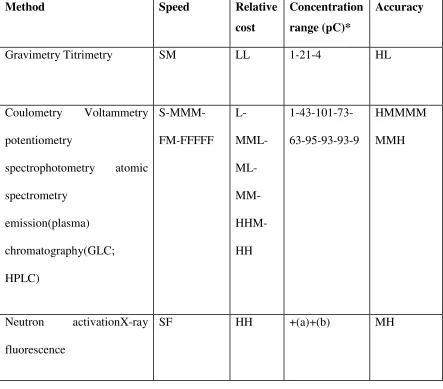
[image:29.612.103.546.331.720.2]Some information relevant to the choice of appropriate methods is given in condensed form in table, which is divided into three sections: the ‘classical’ techniques; a selection of instrumental methods; some ‘non-destructive’methods.2,6,7
Table :2. Conspectus of some common quantitative analytical methods.2
Method Speed Relative
cost
Concentration
range (pC)*
Accuracy
Gravimetry Titrimetry SM LL 1-21-4 HL
Coulometry Voltammetry
potentiometry
spectrophotometry atomic
spectrometry
emission(plasma)
chromatography(GLC;
HPLC)
S-MMM-FM-FFFFF
L-
M
ML-
MM-
HHM-HH
1-43-101-73-63-95-93-93-9
HMMMM
MMH
Neutron activationX-ray
fluorescence
Dept. of Pharmaceutical Analysis, EGSPCP Dept. of Pharmaceutical Analysis, EGSPCP Dept. of Pharmaceutical Analysis, EGSPCP
Dept. of Pharmaceutical Analysis, EGSPCP Page | Page | Page | Page | 20202020 *Pc=log101/concn, where concentration is expressed in moles per litre.
+concentration range has little significance: detection values are (a) 10-5-10-12g; (b) 10-3-10-6g.
Abbreviation: F=fast; H=High; L=Low; M=Moderate; S=Slow.
CHROMATOGRAPHY3,8
Chromatography (from Greek: chroma, colour and:”graphein” to write) is essentially a group of techniques for the separation of the compounds of mixtures by their continuous distribution between two phases, one of which is moving fast the other that depends on differential affinities of the solute between two immiscible phases, one of which will be fix with large surface area, while the other is fluid which moves through or over the surface of the fixed phase. Tswett.M first invented the chromatographic technique in 1906.
Chromatography is a very important tool in organic chemical analysis, which involves the separation of various chemical mixtures into its individual constituents. Different types of chromatographic techniques are present for separation of compounds.
Introduction to HPLC method of analysis for drugs in combination:- 6,9-13
Dept. of Pharmaceutical Analysis, EGSPCP Dept. of Pharmaceutical Analysis, EGSPCP Dept. of Pharmaceutical Analysis, EGSPCP
Dept. of Pharmaceutical Analysis, EGSPCP Page | Page | Page | Page | 21212121 accuracy, precision and ease of automation of this method. HPLC method eliminates tedious extraction and isolation procedures. Some of the advantages are
speed (analysis can be accomplished in 20 minutes or less),
greater sensitivity (various detectors can be employed),
improved resolution (wide variety of stationary phases),
reusable columns (expensive columns but can be used for many analysis),
easy sample recovery, handling and maintenance,
precise and reproducible and
Calculations are done by integrator itself.
[image:31.612.118.458.407.610.2]HPLC Method Development and Validation for Pharmaceutical Analysis:
Fig.1. A schematic diagram of HPLC equipment
Dept. of Pharmaceutical Analysis, EGSPCP Dept. of Pharmaceutical Analysis, EGSPCP Dept. of Pharmaceutical Analysis, EGSPCP
Dept. of Pharmaceutical Analysis, EGSPCP Page | Page | Page | Page | 22222222 development seem complex. The process is influenced by the nature of the analytes and generally follows the following steps:
• Step 1 - Selection of the HPLC method and initial system • Step 2 - Selection of initial conditions
• Step 3 - Selectivity optimization • Step 4 - System optimization • Step 5 - Method validation
Depending on the overall requirements and nature of the sample and analytes, some of these steps will not be necessary during HPLC analysis. For example, a satisfactory separation may be found during step 2, thus steps 3 and 4 may not be required. The extent to which method validation (step 5) is investigated will depend on the use of the end analysis; for example, a method required for quality control will require more validation than one developed for a one-off analysis.
The following must be considered when developing an HPLC method:
• Keep it simple
• Try the most common columns and stationary phases first
• Thoroughly investigate binary mobile phases before going on to ternary
• Think of the factors that are likely to be significant in achieving the desired
Dept. of Pharmaceutical Analysis, EGSPCP Dept. of Pharmaceutical Analysis, EGSPCP Dept. of Pharmaceutical Analysis, EGSPCP
Dept. of Pharmaceutical Analysis, EGSPCP Page | Page | Page | Page | 23232323 Mobile phase composition, for example, is the most powerful way of optimizing selectivity whereas temperature has a minor effect and would only achieve small selective changes. pH will only significantly affect the retention of weak acids and bases.
HPLC method development
:-
Step 1 - Selection of the HPLC method and initial
system:-When developing an HPLC method, the first step is always to consult the literature to ascertain whether the separation has been previously performed and if so, under what conditions - this will save time doing unnecessary experimental work. When selecting an HPLC system, it must have a high probability of actually being able to analyse the sample; for example, if the sample includes polar analytes then reverse phase HPLC would offer both adequate retention and resolution, whereas normal phase HPLC would be much less feasible. Consideration must be given to the following:
Sample preparation:Does the sample require dissolution, filtration, and
extraction, preconcentration or clean up? Is chemical derivatization required to assist detection sensitivity or selectivity?
Types of chromatography: Reverse phase is the choice for the majority of
Dept. of Pharmaceutical Analysis, EGSPCP Dept. of Pharmaceutical Analysis, EGSPCP Dept. of Pharmaceutical Analysis, EGSPCP
Dept. of Pharmaceutical Analysis, EGSPCP Page | Page | Page | Page | 24242424 suppression (for weak acids or bases) or reverse phase ion pairing (for strong acids or bases) should be used. The stationary phase should be C18 bonded. For low/medium polarity analytes, normal phase HPLC is a potential candidate, particularly if the separation of isomers is required. Cyano-bonded phases are easier to work with than plain silica for normal phase separations. For inorganic anion/cation analysis, ion exchange chromatography is best. Size exclusion chromatography would normally be considered for analysing high molecular weight compounds (2000).
Column dimensions: For most samples (unless they are very complex), short
columns (10–15 cm) are recommended to reduce method development time. Such columns afford shorter retention and equilibration times. A flow rate of 1-1.5 mL/min should be used initially. Packing particle size should be 3 or 5 µm.
Detectors: Consideration must be given to the following:
• Do the analytes have chromophores to enable UV detection? • Is more selective/sensitive detection required (Table I)? • What detection limits are necessary?
• Will the sample require chemical derivatization to enhance detectability
Dept. of Pharmaceutical Analysis, EGSPCP Dept. of Pharmaceutical Analysis, EGSPCP Dept. of Pharmaceutical Analysis, EGSPCP
Dept. of Pharmaceutical Analysis, EGSPCP Page | Page | Page | Page | 25252525 Fluorescence or electrochemical detectors should be used for trace analysis. For preparative HPLC, refractive index is preferred because it can handle high concentrations without overloading the detector.
UV wavelength: For the greatest sensitivity λmax should be used, which detects all
sample components that contain chromophores. UV wavelengths below 200 nm should be avoided because detector noise increases in this region. Higher wavelengths give greater selectivity.
Fluorescence wavelength:The excitation wavelength locates the excitation
maximum; that is, the wavelength that gives the maximum emission intensity. The excitation is set to the maximum value then the emission is scanned to locate the emission intensity. Selection of the initial system could, therefore, be based on assessment of the nature of sample and analytes together with literature data, experience, expert system software and empirical approaches.
Step 2 - Selection of initial conditions:-
Dept. of Pharmaceutical Analysis, EGSPCP Dept. of Pharmaceutical Analysis, EGSPCP Dept. of Pharmaceutical Analysis, EGSPCP
Dept. of Pharmaceutical Analysis, EGSPCP Page | Page | Page | Page | 26262626
Mobile phase solvent strength:-The solvent strength is a measure of its ability to
pull analytes from the column. It is generally controlled by the concentration of the solvent with the highest strength; for example, in reverse phase HPLC with aqueous mobile phases, the strong solvent would be the organic modifier; in normal phase HPLC, it would be the most polar one. The aim is to find the correct concentration of the strong solvent. With many samples, there will be a range of solvent strengths that can be used within the aforementioned capacity limits. Other factors (such as pH and the presence of ion pairing reagents) may also affect the overall retention of analytes.
Determination of initial conditions:-The recommended method involves
performing two gradient runs differing only in the run time. A binary system based on either acetonitrile/water (or aqueous buffer) or methanol/water (or aqueous buffer) should be used.
Step 3 - Selectivity optimization:-
Dept. of Pharmaceutical Analysis, EGSPCP Dept. of Pharmaceutical Analysis, EGSPCP Dept. of Pharmaceutical Analysis, EGSPCP
Dept. of Pharmaceutical Analysis, EGSPCP Page | Page | Page | Page | 27272727 Once the analyte types are identified, the relevant optimization parameters may be selected. Note that the optimization of mobile phase parameters is always considered first as this is much easier and convenient than stationary phase optimization.
Step 4 - System parameter
optimization:-This is used to find the desired balance between resolution and analysis time after satisfactory selectivity has been achieved. The parameters involved include column dimensions, column-packing particle size and flow rate. These parameters may be changed without affecting capacity factors or selectivity.
Step 5 - Method validation:-
Proper validation of analytical methods is important for pharmaceutical analysis when ensurance of the continuing efficacy and safety of each batch manufactured relies solely on the determination of quality. The ability to control this quality is dependent upon the ability of the analytical methods, as applied under well-defined conditions and at an established level of sensitivity, to give a reliable demonstration of all deviation from target criteria.
Dept. of Pharmaceutical Analysis, EGSPCP Dept. of Pharmaceutical Analysis, EGSPCP Dept. of Pharmaceutical Analysis, EGSPCP
Dept. of Pharmaceutical Analysis, EGSPCP Page | Page | Page | Page | 28282828 method. Method selection is the first step in establishing an analytical method and consideration must be given to what is to be measured, and with what accuracy and precision.
Method development and validation can be simultaneous, but they are two different processes, both downstream of method selection. Analytical methods used in quality control should ensure an acceptable degree of confidence that results of the analyses of raw materials, excipients, intermediates, bulk products or finished products are viable. Before a test procedure is validated, the criteria to be used must be determined.
Dept. of Pharmaceutical Analysis, EGSPCP Dept. of Pharmaceutical Analysis, EGSPCP Dept. of Pharmaceutical Analysis, EGSPCP
Dept. of Pharmaceutical Analysis, EGSPCP Page | Page | Page | Page | 29292929
Modes of HPLC:
In the normal phase mode, the stationary phase is polar and the mobile phase is nonpolar in nature. In this technique, nonpolar compounds travel faster and are eluted first. This is because of the lower affinity between the nonpolar compounds and the stationary phase and vice versa. Therefore, normal phase mode of separation is not generally used for pharmaceutical applications because most of the drug molecules are polar in nature and hence take longer time to elute.
Reversed phase mode is the most popular mode for analytical and
Dept. of Pharmaceutical Analysis, EGSPCP Dept. of Pharmaceutical Analysis, EGSPCP Dept. of Pharmaceutical Analysis, EGSPCP
[image:40.612.135.530.107.318.2]Dept. of Pharmaceutical Analysis, EGSPCP Page | Page | Page | Page | 30303030 octadecylsilane (ODS) or C18, C8, etc., (in the order of increasing polarity of the tationary phase).
Fig.2.The nomenclature of Chromatogram
System Suitability
20,21,22:
System suitability is the checking of a system to ensure system
performance before or during the analysis of unknowns. Parameters such as plate count, tailing factors, resolution and reproducibility (%RSD retention time and area for six repetitions) are determined and compared against the specifications set for the method. These parameters are measured during the analysis of a system suitability "sample" that is a mixture of main components and expected
Dept. of Pharmaceutical Analysis, EGSPCP Dept. of Pharmaceutical Analysis, EGSPCP Dept. of Pharmaceutical Analysis, EGSPCP
Dept. of Pharmaceutical Analysis, EGSPCP Page | Page | Page | Page | 31313131
Definition:
The purpose of the system suitability test is to ensure that the complete testing system (including instrument, reagents, columns, analysts) is suitable for the intended application.
Theoretical plates per meter were calculated from the data obtained from the peak
using the following expression
2 2 54 . 5
h
LW Vr n=
Theoretical plates per column were calculated from the data obtained from the
peak.
2 2 54 . 5
h
W Vr n=
Where, ‘n’ is number of theoretical plates per meter, ‘Vr’ is the distance along
the base line between the point of injection and a perpendicular dropped from the maximum of the peak of interest and ‘Wh’ is the width of the peak of
Dept. of Pharmaceutical Analysis, EGSPCP Dept. of Pharmaceutical Analysis, EGSPCP Dept. of Pharmaceutical Analysis, EGSPCP
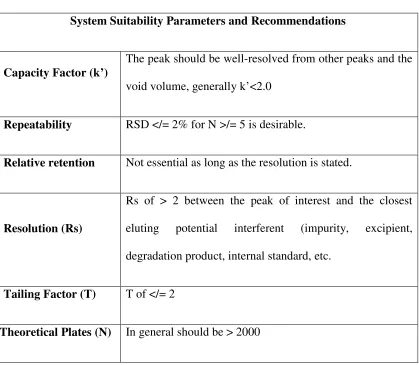
[image:42.612.116.535.99.464.2]Dept. of Pharmaceutical Analysis, EGSPCP Page | Page | Page | Page | 32323232 Table:3. System Suitability Parameters and Recommendations
System Suitability Parameters and Recommendations
Capacity Factor (k’)
The peak should be well-resolved from other peaks and the
void volume, generally k’<2.0
Repeatability RSD </= 2% for N >/= 5 is desirable.
Relative retention Not essential as long as the resolution is stated.
Resolution (Rs)
Rs of > 2 between the peak of interest and the closest
eluting potential interferent (impurity, excipient,
degradation product, internal standard, etc.
Tailing Factor (T) T of </= 2
Theoretical Plates (N) In general should be > 2000
If the results are adversely affected by the changes in column performance (e.g. unacceptable precision of results due to overlapping peaks), the system suitability results from these experiments will help to determine the limits for system suitability criteria.
Dept. of Pharmaceutical Analysis, EGSPCP Dept. of Pharmaceutical Analysis, EGSPCP Dept. of Pharmaceutical Analysis, EGSPCP
Dept. of Pharmaceutical Analysis, EGSPCP Page | Page | Page | Page | 33333333 The parameters that are affected by the changes in chromatographic conditions are
• Resolution (Rs),
• Capacity factor (k’), • Selectivity (a),
• Column efficiency (N) and • Peak asymmetry factor (As).
Resolution (Rs) is the parameter describing the separation power of the complete
chromatographic system relative to the particular components of the mixture.
The resolution, Rs, of two neighbouring peaks is defined as the ratio of the distance between two peak maxima. It is the difference between the retention times of two solutes divided by their average peak width. For baseline separation, the ideal value of Rs is 1.5. It is calculated by using the formula
) (
5 .
0 W1 W2
t Rs R
+ ∆ =
Fig. 3. Resolution between two peaks
Dept. of Pharmaceutical Analysis, EGSPCP Dept. of Pharmaceutical Analysis, EGSPCP Dept. of Pharmaceutical Analysis, EGSPCP
Dept. of Pharmaceutical Analysis, EGSPCP Page | Page | Page | Page | 34343434 are desirable.w1& w2 are corresponding width at the bases of the peak of
components.
There are three fundamental parameters that influence the resolution of a chromatographic separation
• capacity factor (k') • selectivity (α)
• column efficiency (N)
These parameters provide you with different means to achieve better resolution, as well as defining different problem sources.
Capacity Factor (k’) is the ratio of the reduced retention volume to the dead
volume. Capacity factor, k’, is defined as the ratio of the number of molecules of solute in the stationary phase to the number of molecules of the same in the mobile phase. Capacity factor is a measure of how well the sample molecule is retained by a column during an isocratic separation. The ideal value of k’ ranges from 2-10. Capacity factor can be determined by using the formula,
Dept. of Pharmaceutical Analysis, EGSPCP Dept. of Pharmaceutical Analysis, EGSPCP Dept. of Pharmaceutical Analysis, EGSPCP
Dept. of Pharmaceutical Analysis, EGSPCP Page | Page | Page | Page | 35353535 Where, tR = retention volume at the apex of the peak (solute) and
t0 = void volume of the system.
Capacity Factor (k') changes are typically due to
• Variations in mobile phase composition
• Changes in column surface chemistry (due to aging)
• Changes in operating temperature.
In most chromatography modes, capacity factor (k') changes by 10 percent for a temperature change of 50 C.
• Adjusting Capacity Factor (k') good isocratic methods usually have a
capacity factor (k') in the range of 2 to 10 (typically between 2 and 5). Lower values may give inadequate resolution. Higher values are usually associated with excessively broad peaks and unacceptably long run times.
If the analytes fall outside their specified windows run the initial column test protocol to compare the results obtained with a new column.
Dept. of Pharmaceutical Analysis, EGSPCP Dept. of Pharmaceutical Analysis, EGSPCP Dept. of Pharmaceutical Analysis, EGSPCP
Dept. of Pharmaceutical Analysis, EGSPCP Page | Page | Page | Page | 36363636
Selectivity (separation factor) (α)is a measure of relative retention of two
components in a mixture. Selectivity is the ratio of the capacity factors of both peaks, and the ratio of its adjusted retention times. Selectivity represents the separation power of particular adsorbent to the mixture of these particular components.
This parameter is independent of the column efficiency; it only depends on the nature of the components, eluent type, and eluent composition, and adsorbent surface chemistry. In general, if the selectivity of two components is equal to 1, then there is no way to separate them by improving the column efficiency.The
ideal value of ‘α’ is 2. It can be calculated by using formula, ' 2 ' 1 0 1 1 2 k k V V V V = − − = α
Where, V0 = the void volume of the column, V1 and V2 =the retention volumes of the second and the first peak respectively.
Column Efficiency/ Band broadening ‘N’ of a column is measured by the
number of theoretical plates per meter. It is a measure of band spreading of a peak. Similar the band spread, higher is the number of theoretical plates, indicating good column and system performance. Columns with N ranging from 5000 to 10000 plates/meter are ideal for a good system. Efficiency is calculated by using the formula, ) ( 16 b R W t
N= or 5.54( )
2 / 1
Dept. of Pharmaceutical Analysis, EGSPCP Dept. of Pharmaceutical Analysis, EGSPCP Dept. of Pharmaceutical Analysis, EGSPCP
Dept. of Pharmaceutical Analysis, EGSPCP Page | Page | Page | Page | 37373737 Fig. 5. Number of Theoretical Plates
Where, tR is the retention time and Wb and W1/2 is the peak width at base and half height respectively.
You can recognize problems in your separation due to a loss of column efficiency when the width and/or shape of all peaks are affected.
If the measured efficiency has degraded, either the column has degraded, or system band broadening has increased. At this point, check system band spreading against established benchmarks. When measuring Column Efficiency, use test conditions identical to those used in the established benchmark performance (such as test sample, flow rate, mobile phase composition and so on). Measure the column efficiency against the established performance.
Peak asymmetry factor (Tf) can be used as a criterion of column performance.
The peak half width, b, of a peak at 5% of the peak height, divided by the corresponding front half width, a, gives the asymmetry factor.
Dept. of Pharmaceutical Analysis, EGSPCP Dept. of Pharmaceutical Analysis, EGSPCP Dept. of Pharmaceutical Analysis, EGSPCP
Dept. of Pharmaceutical Analysis, EGSPCP Page | Page | Page | Page | 38383838 For a well packed column, an asymmetry factor of 0.9 to 1.1 should be achievable.Tailing factor of peak was calculated from the following expression.
Tailing factor =AB/2AC
Where, AB = 2*½ width of the peak at one twentieth of the peak height.
AC = ½ width of the peak at one twentieth of the peak height.
Validation Parameters:-
i) Linearity and Range ii) Accuracy
iii) Specificity iv) Precision
v) Limits of detection and quantitation vi) Robustness
i) Linearity and Range: The linearity of a test procedure is its ability (within a
Dept. of Pharmaceutical Analysis, EGSPCP Dept. of Pharmaceutical Analysis, EGSPCP Dept. of Pharmaceutical Analysis, EGSPCP
Dept. of Pharmaceutical Analysis, EGSPCP Page | Page | Page | Page | 39393939 coefficient and y-intercept of the linear regression line for the response versus concentration plot. The regression coefficient (r2) is .0.998 and is generally considered as evidence of acceptable fit of the data to the regression line. The per cent relative standard deviation (RSD), intercept and slope should be calculated.
ii) Accuracy:A method is said to be accurate if it gives the correct numerical
answer for the analyte. The method should be able to determine whether the material in question conforms to its specification (for example, it should be able to supply the exact amount of substance present). However, the exact amount present is unknown, which is why a test method is used to estimate the accuracy. Furthermore, it is rare that the results of several replicate tests all give the same answer, so the mean or average value is taken as the estimate of the accurate answer.
Some analysts adopt a more practical attitude to accuracy, which is expressed in terms of error. The absolute error is the difference between the observed and the expected concentrations of the analyte. Percentage accuracy can be defined in terms of the percentage difference between the expected and the observed concentrations.
Dept. of Pharmaceutical Analysis, EGSPCP Dept. of Pharmaceutical Analysis, EGSPCP Dept. of Pharmaceutical Analysis, EGSPCP
Dept. of Pharmaceutical Analysis, EGSPCP Page | Page | Page | Page | 40404040 measuring a known amount of standard material under a variety of conditions but preferably in the formulation, bulk material or intermediate product to ensure that other components do not interfere with the analytical method. For assay methods, spiked samples are prepared in triplicate at three levels across a range of 50-150% of the target concentration. The per cent recovery should then be calculated. The accuracy criterion for an assay method is that the mean recovery will be 100±2% at each concentration across the range of 80-120% of the target concentration. To document accuracy, ICH guidelines regarding methodology recommend collecting data from a minimum of nine determinations across a minimum of three concentration levels covering the specified range (for example, three concentrations, three replicates each).
iii) Specificity: Developing a separation method for HPLC involves demonstrating
Dept. of Pharmaceutical Analysis, EGSPCP Dept. of Pharmaceutical Analysis, EGSPCP Dept. of Pharmaceutical Analysis, EGSPCP
Dept. of Pharmaceutical Analysis, EGSPCP Page | Page | Page | Page | 41414141 For formulated products, heat, light and humidity (70-80% RH) are often used. The resulting mixtures are then analysed, and the analyte peak is evaluated for peak purity and resolution from the nearest eluting peak.
Once acceptable resolution is obtained for the analyte and potential sample components, the chromatographic parameters, such as column type, mobile phase composition, flow rate and detection mode, are considered set. An example of specificity criterion for an assay method is that the analyte peak will have baseline chromatographic resolution of at least 2.0 from all other sample components. In this study, a weight of sample placebo equivalent to the amount present in a sample solution preparation was injected to demonstrate the absence of interference.
iv) Precision: Precision means that all measurements of an analyte should be very
close together. All quantitative results should be of high precision - there should be no more than a ±2% variation in the assay system. A useful criterion is the relative standard deviation (RSD) or coefficient of variation (CV), which is an indication of the imprecision of the system
Dept. of Pharmaceutical Analysis, EGSPCP Dept. of Pharmaceutical Analysis, EGSPCP Dept. of Pharmaceutical Analysis, EGSPCP
Dept. of Pharmaceutical Analysis, EGSPCP Page | Page | Page | Page | 42424242 equipment and reagents. It should be determined from a minimum of nine determinations covering the specified range of the procedure (for example, three levels, three repetitions each) or from a minimum of six determinations at 100% of the test or target concentration.
Intermediate precision results from variations such as different days, analysts and equipment. In determining intermediate precision, experimental design should be employed so that the effects (if any) of the individual variables can be monitored. Precision criteria for an assay method are that the instrument precision and the intra-assay precision (RSD) will be ≤2%.
v)Limits of detection and quantitation:The limit of detection (LOD) is defined as
the lowest concentration of an analyte in a sample that can be detected, not quantified. It is expressed as a concentration at a specified signal: noise ratio,(14) usually 3:1. The limit of quantitation (LOQ) is defined as the lowest concentration of an analyte in a sample that can be determined with acceptable precision and accuracy under the stated operational conditions of the method. The ICH has recommended a signal: noise ratio 10:1. LOD and LOQ may also be calculated based on the standard deviation of the response (SD) and the slope of the calibration curve(s) at levels approximating the LOD according to the formulae:
Dept. of Pharmaceutical Analysis, EGSPCP Dept. of Pharmaceutical Analysis, EGSPCP Dept. of Pharmaceutical Analysis, EGSPCP
Dept. of Pharmaceutical Analysis, EGSPCP Page | Page | Page | Page | 43434343 The standard deviation of the response can be determined based on the standard deviation of the blank, on the residual standard deviation of the regression line, or the standard deviation of y-intercepts of regression lines. The method used to determine LOD and LOQ should be documented and supported, and an appropriate number of samples should be analysed at the limit to validate the level.
vi) Robustness: Robustness measures the capacity of an analytical method to
remain unaffected by small but deliberate variations in method parameters. It also provides some indication of the reliability of an analytical method during normal usage. Parameters that should be investigated are percent organic content in the mobile phase; pH of the mobile phase; buffer concentration; temperature; and injection volume. These parameters may be evaluated one factor at a time or simultaneously as part of a factorial experiment. The chromatography obtained for a sample containing representative impurities when using modified parameter(s) should be compared with the chromatography obtained using the target parameters.20,21,22
Dept. of Pharmaceutical Analysis, EGSPCP Dept. of Pharmaceutical Analysis, EGSPCP Dept. of Pharmaceutical Analysis, EGSPCP
Dept. of Pharmaceutical Analysis, EGSPCP Dept. of Pharmaceutical Analysis, EGSPCP Dept. of Pharmaceutical Analysis, EGSPCP
Dept. of Pharmaceutical Analysis, EGSPCP Page | Page | Page | 45Page | 454545
REVIEW OF LITERATURE
J. V.Shanmukha Kumar et al., have reported validation of analytical procedures for determination of Mebendazole.
Acharjya sasmita kumari et al., have reported UV-Spectroscopic methodsfor estimation of Mebendazole in pharmaceutical preparations26.
Khedkar amol et al., have reported spectrophotometric method for analysis of Mebendazole.
Prithvuraj S Yadav et al., have reported determinatio nof Mebendazole in bulk and its tablet dosage forms by UV spectroscopic method28.
Ramzia.I.El-Bagary et al., have reported fluorimetric and colorimeric methods for the determination of some anti migraine drugs29.
Madhukar. A et al., have reported analytical method development and validation of Mebendazole Chewable tablets by RP-LC30.
Devprakash et al., have reported estimation of Mebendazole by RP-HPLC method in bulk and dosage form31.
Gopichand.I et al., have reported HPLC method for quantitative determination of Mebendazole, an anti migraine agent in pharmaceutical dosage forms and purity evaluation in bulk drugs32.
Dept. of Pharmaceutical Analysis, EGSPCP Dept. of Pharmaceutical Analysis, EGSPCP Dept. of Pharmaceutical Analysis, EGSPCP
Dept. of Pharmaceutical Analysis, EGSPCP Page | Page | Page | 46Page | 464646
Murthy T.E.G.k. et al., have reported reverse phase HPLC method developmment for the estimation of Mebendazole from formulated oral-dispersable tablets34.
Sachin S Jagathap et al., have reported stability indicating reverse-phase high-performance liquid chromatographic method for the determination of
Mebendazole in bulk and its pharmaceutical formulations35.
El-Bagary RI et al., have reported two chromatographic methods for the determination of some anti migraine drugs36.
Devprakash dahiya et al., have reported determination of Mebendazole in bulk and its tablet dosage forms by HPTLC method37.
Syama Sundar B et al., have reported development and validation of HPTLC method for the estimation of Mebendazole benzoate in bulk and tablets38.
Trinath. M et al., have reported development and validation of spectrophotometric method for simultaneous estimation of Albendazole and Naproxen sodium in tablet dosage form39.
Buridi. Kalyana Ramu et al., have reported estimation of Albendazole in bulk and formulations by visible spectrophotometry using aromatic aldehydes40.
C.R.Shah et al., have reported developmant and validation of a HPTLC method for the estimation of Albendazole in tablet dosage forms41.
Dept. of Pharmaceutical Analysis, EGSPCP Dept. of Pharmaceutical Analysis, EGSPCP Dept. of Pharmaceutical Analysis, EGSPCP
Dept. of Pharmaceutical Analysis, EGSPCP Page | Page | Page | 47Page | 474747
Suneetha et al., have reported a validated RP-HPLC method for estimation of Albendazole in pharmaceutical dosage forms43.
Tariq Mahmood Ansari et al., have reported a novel spectrophotometric method for determination of Albendazole in pharmaceu