ON LEVEL OF DEPRESSION, FAMILY SUPPORT,
QUALITY OF LIFE AMONG ELDERLY CLIENTS
WITH DEPRESSION IN SELECTED RURAL
POPULATION.
THESIS
Submitted to
The Tamil Nadu Dr.M.G.R Medical University, Chennai
for the award of the degree of
DOCTOR OF PHILOSOPHY
IN
NURSING
By
Ms. HEMAVATHY.J, M.Sc(Nursing)
EFFECTIVENESS OF NEED- BASED INTERVENTION
ON LEVEL OF DEPRESSION, FAMILY SUPPORT,
QUALITY OF LIFE AMONG ELDERLY CLIENTS
WITH DEPRESSION IN SELECTED RURAL
POPULATION.
THESIS
Submitted to
The Tamil Nadu Dr.M.G.R Medical University, Chennai
for the award of the degree of
DOCTOR OF PHILOSOPHY
IN
NURSING
By
Ms. HEMAVATHY.J, M.Sc(Nursing)
Under the Guidance of
Dr
.
LAKSHMI VIJAYAKUMAR,
M.B.B.S., D.P.M, Ph.D., FRCP., Psych(Hon)
DIRECTOR ACADEMIC AND RESEARCH
TINSVHS T.T.T.I.POST, CHENNAI-113
ON LEVEL OF DEPRESSION, FAMILY SUPPORT,
QUALITY OF LIFE AMONG ELDERLY CLIENTS
WITH DEPRESSION IN SELECTED RURAL
POPULATION.
THESIS
Submitted to
The Tamil Nadu Dr.M.G.R Medical University, Chennai
for the award of the degree of
DOCTOR OF PHILOSOPHY
IN
NURSING
By
Ms. HEMAVATHY.J, M.Sc(Nursing)
Guided By
Dr. LAKSHMIVIJAYAKUMAR,
Ph.D RESEARCH GUIDE
M.B.B.S., D.P.M, Ph.D., FRCP., Psych(Hon)
DIRECTOR ACADEMIC AND RESEARCH
CERTIFICATE
This is to certify that the thesis entitled “AN EFFECTIVENESS OF NEED-BASED INTERVENTION ON LEVEL OF DEPRESSION, FAMILY SUPPORT, QUALITY OF LIFE AMONG ELDERLY CLIENTS WITH DEPRESSION IN SELECTED RURAL POPULATION” submitted by Ms.HEMAVATHY.J for the award of the degree of Doctor of Philosophy in Nursing, is a bonafide record of research done by her during the period of study under my
supervision and guidance and that it has not formed on basis for the award of any
Degree, Diploma, Associateship, fellowship or other similar title. I also certify that this
thesis is her original independent work. I recommend this thesis should be placed before
the examiners for their consideration for the award of Ph.D. Degree.
Research Guide
Dr. LAKSHMIVIJAYAKUMAR, Ph.D RESEARCH GUIDE
M.B.B.S.,D.P.M,Ph.D.,FRCP.,Psych(Hon) DIRECTOR ACADEMIC AND RESEARCH,
V.H.S. T.T.T.I.POST, CHENNAI-113
DECLARATION
I hereby declare that this entitled “AN EFFECTIVENESS OF NEED-BASED INTERVENTION ON LEVEL OF DEPRESSION, FAMILY SUPPORT, QUALITY OF LIFE AMONG ELDERLY CLIENTS WITH DEPRESSION IN SELECTED RURAL POPULATION” is my own work carried out under the guideship of Dr. LAKSHMI VIJAYAKUMAR, M.B.B.S., D.P.M, Ph.D., FRCP., Psych(Hon) Ph.D RESEARCH GUIDE, DIRECTOR, V.H.S. approved by Research Degree Committee.
I further declare that to the best of my knowledge the thesis does not contain any
part of any work which has been submitted for the award of any degree either in this
university or in any other University / Deemed university without proper citation.
Ms.HEMAVATHY.J RESEARCH SCHOLAR Place :
ACKNOWLEDGEMENT
I wish to place a record my sincere gratitude to the
Vice – Chancellor, Registrar
and
Controller of Examination of the Tamil Nadu Dr.M.G.R. Medical University, Chennai,
Tamil Nadu, India, for granting me the permission to do my doctoral thesis under this esteemed
university.
My profound gratitude and thanks to the
Dr.Prof.Krishnamoorthy Srinivas, Emeritus
Chairman, The Institute of Neurological Science (TINS), Voluntary Health Services Multi-
Speciality Hospital (VHS), Chennai, which department environment stimulated research thinking
and scholarship.
I owe my genuine gratitude and heartfelt thanks to
Dr.E.S.Krishnamoorthy, M.B.B.S.,
M.D., DCN (London), MAMS(India), FIMSA, FIPS, Ph.D Guide, The Institute of Neurological
Science, VHS hospital for his constant guidance, constructive effort and valuable suggestions
throughout the study.
I express my immense gratitude to my Guide
Dr.Lakshmi Vijayakumar, M.B.B.S.,
D.P.M., Ph.D., FRCP, Psych (Hon), Director Academic and Research, Ph.D Research Guide,
The Institute of Neurological Sciences (TINS) Voluntary Health Services Multispeciality
Hospital, (VHS), Chennai, or the valuable guidance and support in bringing out this doctoral
(Edin), Head of Academic Services and Doctoral Research Committee Member, The Institute of
Neurological Science (TINS), Voluntary Health Services Multispeciality Hospital (VHS),
Chennai, who helped in making the project a success with her expert guidance and support.
I express my sincere thanks to
Dr.S.Kanchana Khan, M.Sc.(N), Ph.D., Post Doc,
Principal & Research Director, Omayal Achi College of Nursing, and
Dr.Mangala Gowri,
M.Sc.(N), Ph.D., Principal Saveetha College of Nursing, Doctoral Research Committee Member,
for devoting support which gave me hope to accomplish this task.
I express my immense thanks to Mr.Vivek Misra, B.Tech., M.S., Dr.Sailakshmi, MPT,
Ph.D, NCT TINS (VHS), Dr.James Deva Sagayam, Clinical Psychologist, M.A., M.Phil., Ph.D,
for constant support, encouragement and expert guidance for the study.
I express my sincere thanks to
Mrs.B.Mala, Project Director and Psychologist, Rajaji
Centre for De-addiction and Department of Psychiatry VHS and his team.
I express my immense thanks to
Mrs.Gowri, Administrative Assistant for her kindly
help.
At the outset, I the researcher of this study, express my heartfelt gratitude to the
honourable
Managing Trustee, Omayal Achi College of Nursing for giving me an opportunity
to undergo PhD Degree program and sponsoring to do my study at TINS(VHS) for the uplifting
I express my gratefulness to
Dr.Raja Narayanan, FRCH (London), Research
Co-ordinator, International Centre for Collaborative Research and Honorary Professor in
Community Medicine for his valuable guidance, thoughtful suggestion and constant
encouragement throughout the study.
I am greatly indebted to express my heartfelt thanks to
Executive Committee Member
of ICCR, Omayal Achi College of Nursing, for their expert guidance for the study.
I extend my earnest gratitude to
Dr.Hemalatha, Psychiatrist, Sr.Division Medical
Officer,
Dr.Srivastav, DPM, DNBE, TINS VHS, Psychiatrist, for their kind co-operation and
valuable suggestions in validating the tool for the sudy.
I extend my earnest gratitude to
Dr.Ramachandiran, Ph.D(N),
Dr.Nagarajaiah,
Ph.D(N) for their kind co-operation and valuable suggestions in validating the tool for the study.
I extend my earnest gratitude to
Dr.James, Ph.D., Clinical Psychologist TINS VHS,
Mrs.Mala, Psychologist, Project Director, Rajaji Centre for De-addiction VHS,
Ms.Kannamma, Clinical Psychologist (Ph.D), Southern Railway Hospital for kind co-operation
and valuable suggestion in validating the tool for the study.
I extend my earnest gratitude to Mrs.Fatima Jessy, Psychiatric Social Worker, Institute
of Mental Health,
Ms.Preenu Ashok, Medical Social Worker, TINS VHS, for their kind
assistance in statistical analysis.
I express my sincere thanks to gratitude to Mrs.B.Manimala, M.A., M.Ed., for editing in
English.
I express my sincere gratitude to
Mrs.K.Shanthi, M.A., B.Ed., M.Phil., for editing in
Tamil.
A special note of gratitude to Mr.G.K.Venkataraman, B.Sc., H.D.S.M, P.G.Dip (B.S),
Elite Computers, for his efforts and Co-operation in shaping the manuscript.
I extend my heartfelt thanks for
Mr.Judith Anand, B.A., (Eng.), M.Lis., M.Phil.,
Mr.Muthukumaran,
M.A., B.Ed., M.Lis., M.Phil., PGDCA,
Mr.T.M.Ashokan, B.A., M.Lis.,
M.Phil., DCA,
Librarians, Omayal Achi College of Nursing for their help extended in locating
appropriate search materials..
I express my sincere thanks to my
friends, students, teaching and
non-teaching
faculties
of TINS VHS and Omayal Achi College of Nursing, for their support, without them
this piece of work would not have come true.
I am deeply indebted to my mother Mrs.R.Saraswathy for unending love, support and
prayers which made this study a dream come true.
Above all, I thank God Almighty for being with me, guiding me and sustaining me in all
LIST OF ABBREVIATIONS
ADL
-
Activities of Daily Living
ANOVA
-
Analysis of Variance
CI
-
Confidence Interval
CESD
-
Centre for Epidemiological Scale for Depression
COPD
-
Chronic Obstructive Pulmonary Disease
DALYS
-
Disability Adjusted Life Years
DF
-
Degree of Freedom
DM
-
Diabetes Mellitus
DSM
-
Diagnostic and Statistical Manual
ECT - Electro Convulsive Therapy
FSS
-
Family Support Scale
F-Test
-
Fisher’s Test
GDS
-
Geriatric Depression Scale
GDS-SF
-
Geriatric Depression Scale Short Form
HRQOL
-
Health Related Quality of Life
HT
-
Hypertension
IADL
-
Instrumental Activities of Daily Living
ICD-10
-
International Classification of Disease
ICCR
-
International Centre for Collaborative Research
MI
-
Myocardial Infarction
MMSE
-
Mini Mental State Examination
NIMH
-
National Institute of Mental Health
NGO
-
Non-Governmental Organization
OACHC
-
Omayal Achi Community Health Centre
PPS
-
Probability Proportional Size
PAF
-
Population Attributable Fractions
QOL
-
Quality of Life
SD
-
Standard Deviation
SCID
-
Structured Clinical Interview for DSM – IV
SHLSE
-
Surveys of Health & Living Status of Elderly
US
-
United States
WHO
-
World Health Organization
CONTENTS
CHAPTER
NO. TITLE
PAGE NO.
I INTRODUCTION 1
1.1 Background and Significance of the study 2
II AIMS AND OBJECTIVES 13
2.1 Statement of the Problem 13
2.2 Aim 13
2.3 Objectives of the Study 13
2.4 Operational Definitions 14
2.5 Assumptions 15
2.6 Research Hypotheses 16
2.7 Theoretical Framework – General Concepts 16 2.8 Application of Conceptual Framework 20
III REVIEW OF LITERATURE 24
3.1 Review of literature related to general concepts of
depression among elderly 25
3.2 Review of literature related to depression among elderly. 30 3.3 Scientific studies related to impact of depression among
elderly. 40
3.4 Scientific studies related to Need-based interventions to
decline the depressive status among elderly. 53
IV MATERIALS AND METHODS 59
4.1 Research Approach 59
4.2 Research Design 59
4.3 Variables of Study 60
4.4 Study Setting 61
4.5 Population 61
4.7 Criteria for Sample selection 61
4.8 Sampling Technique 62
4.9 Data Collection Instrument 62
4.10 Content validity 68
4.11 Ethical Considerations 68
4.12 Reliability of the tool 69
4.13 Pilot Study 70
4.14 Procedure for Data Collection 71
4.15 Plan for Data Analysis 72
V RESULTS AND ANALYSIS 74
5.1
Section I: Description of demographic variables of the elderly clients with depression in the experimental and control group.
79
5.2
Section II: Assessment of item-wise mean, standard deviation and comparison of level of depression, Family Support, Activities of Daily Living, Quality of Life in the experimental and control group in pre test of elderly clients with depression.
87
5.3
Section III: Assessment and comparison of level of depression, Family Support, Activities of Daily Living, Quality of Life within and between experimental and control group of elderly clients with depression.
99
5.4
Section IV:Correlation of pre test and post test between level of depression, Family Support, Activities of Daily Living and Quality of Life of elderly clients with depression in the experimental group.
123
5.5
Section V: Association between mean differed score of level of depression, Family Support, Activities of Daily Living, Quality of Life with their demographic variables of elderly clients with depression in the experimental group.
131
CHAPTER
NO. TITLE
PAGE NO.
VII SUMMARY AND CONCLUSION 146
VIII REFERENCES 151
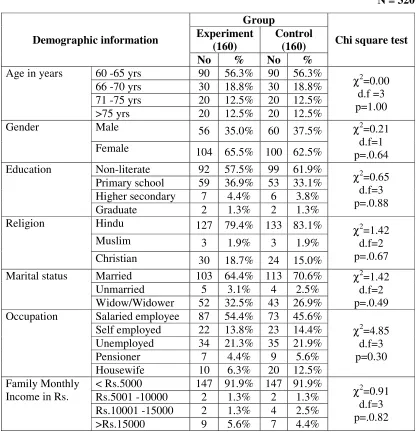
S. No. Tables Page No. 1.1 Elderly as suffering from one Disability 5 1.2 According to National Health Statistics (2012) 8 5.1.1(a) Frequency and percentage distribution of demographic variables of
the elderly clients with depression in the experimental and control group.
79
5.1.1(b) Frequency and percentage distribution of demographic variables of the elderly clients with depression in the experimental and control group.
82
5.1.1(c) Frequency and percentage distribution of demographic variables of the elderly clients with depression in the experimental and control group.
84
5.2.1 Item-wise mean, percentage and comparison of level of depression in the experimental and control group in pre test of elderly clients with depression.
87
5.2.2 Item-wise mean, percentage and comparison of Family Support in the experimental and control group in pre test of elderly clients with depression.
91
5.2.3 Item-wise mean, percentage and comparison of Activities of Daily Living in the experimental and control group in pre test of elderly clients with depression.
95
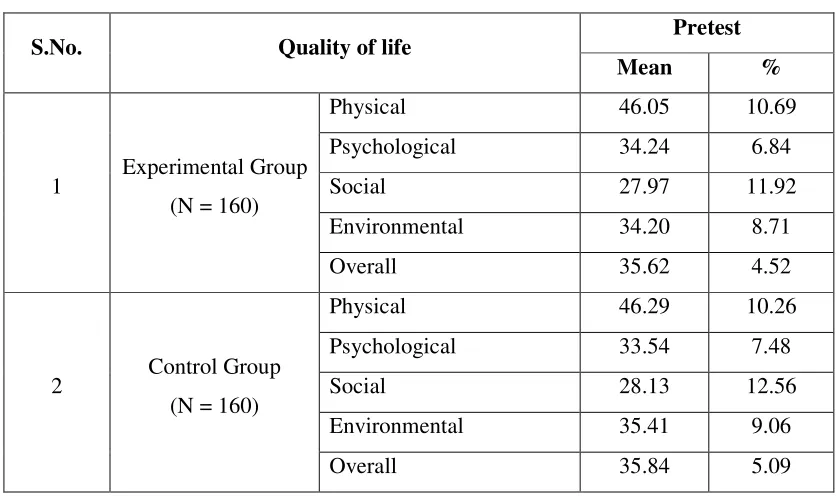
5.2.4 Domain-wise mean, percentage and comparison of Quality of Life in the experimental and control group in pre test of elderly clients with depression.
97
5.3.1 Assessment and comparison of pretest and post test level of depression of elderly clients with depression in experimental and control group.
99
5.3.2 Assessment and comparison of pretest and post test level of Family Support of elderly clients with depression in experimental and control group
101
5.3.3 Assessment and comparison of pretest and post test level of Activities of Daily Living of elderly clients with depression in experimental and control group.
S. No. Tables Page No. 5.3.4 Comparison of Quality of life of elderly clients with depression in
experimental and control group.
105
5.3.5 Comparison of pretest and post test level of depression within experimental and control group of elderly clients with depression.
107
5.3.6 Comparison of pretest and post test level of Family support within experimental and control group of elderly clients with depression.
108
5.3.7 Comparison of pretest and post test level of Activities of Daily Living within experimental and control group of elderly clients with depression.
110
5.3.8 Comparison of pretest and post test level of Quality of life within experimental and control group of elderly clients with depression.
112
5.3.9 Comparison of pretest and post test level of depression between experimental and control group of elderly clients with depression.
115
5.3.10 Comparison of pretest and post test level of Family support between experimental and control group of elderly clients with depression.
116
5.3.11 Comparison of pretest and post test level of Activities of Daily Living between experimental and control group of elderly clients with depression.
117
5.3.12 Comparison of pretest and post test level of Quality of Life between experimental and control group of elderly clients with depression.
118
5.3.13 Overall effectiveness of Need-Based intervention of pretest and post test level of depression, Family Support, Activities of Daily Living, Quality of Life between experimental and control group of elderly clients with depression.
121
5.4.1 Correlation between mean differed pretest and post test between level of depression, Family Support, Activities of Daily Living and Quality of Life of elderly clients with depression in experimental group.
123
5.4.2 Correlation of pretest and post test between Family Support, Activities of Daily Living, Quality of Life and level of depression of elderly clients with depression in experimental group.
125
5.4.3 Correlation of pretest and post test between Activities of Daily Living, Quality of Life, level of depression and Family Support of elderly clients with depression in experimental group.
depression, Family Support and Activities of Daily Living of elderly clients with depression in experimental group.
5.5.1 Association between mean score of depression with their demographic variables of elderly clients with depression in the experimental group.
131
5.5.2 Association between mean differed score of Family Support with their demographic variables of elderly clients with depression in the experimental group.
133
5.5.3 Association between mean differed score of Activities of Daily Living with their demographic variables of elderly clients with depression in the experimental group.
136
5.5.4 Association between mean differed score of Quality of life with their demographic variables of elderly clients with depression in the experimental group.
138
LIST OF FIGURES
Fig. No. Title
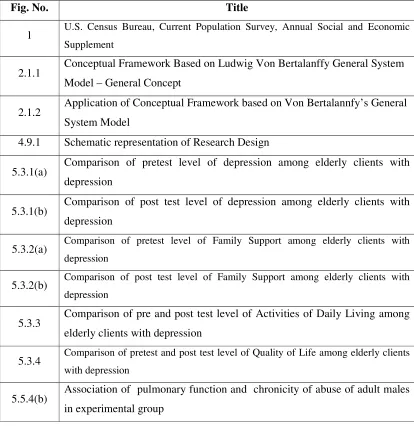
1 U.S. Census Bureau, Current Population Survey, Annual Social and Economic Supplement
2.1.1 Conceptual Framework Based on Ludwig Von Bertalanffy General System Model – General Concept
2.1.2 Application of Conceptual Framework based on Von Bertalannfy’s General System Model
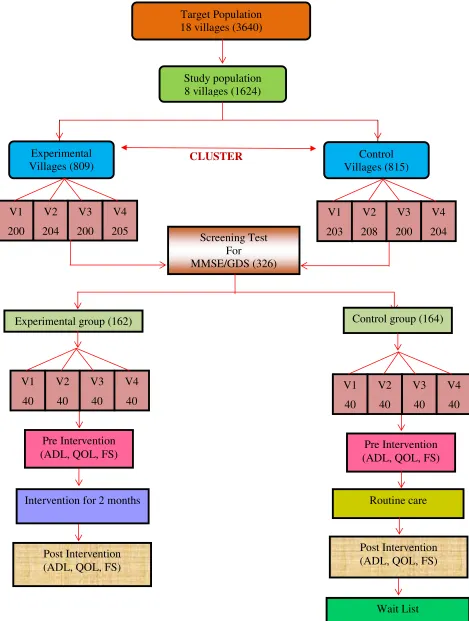
4.9.1 Schematic representation of Research Design
5.3.1(a) Comparison of pretest level of depression among elderly clients with depression
5.3.1(b) Comparison of post test level of depression among elderly clients with depression
5.3.2(a) Comparison of pretest level of Family Support among elderly clients with depression
5.3.2(b) Comparison of post test level of Family Support among elderly clients with depression
5.3.3 Comparison of pre and post test level of Activities of Daily Living among elderly clients with depression
5.3.4 Comparison of pretest and post test level of Quality of Life among elderly clients with depression
S. No. Title
A Provisional Registration for Full Time Ph.D Degree B Full Time Ph.D Research Programme Proforma C Advisory Committee Certificate
D Ethical Clearance Certificate
E Permission for conducting the study in the Data Collection Setting F Certificate for Meditation
G Related Research Work Executed
H No Harm Certificate for Relaxation Technique I Content Validity Experts
J Tool Validity Certificate
K English and Tamil Editing Certificates L Tool in English and Tamil
M Intervention Tool – English & Tamil
N Ph.D Synopsis Submission Application Form O Ph.D Thesis Submission Application Form P Photos
ABSTRACT
INTRODUCTION
Ageing is a universal process and it affects every individual, family, community
and society. It is a normal, progressive and irreversible process. Ageing is generally
defined as a process of decline in the functional capacity of an individual that results
from structural changes, with advancement of age. It should be seen in the perspective
not merely a matter of accumulating years but also a process of "adding life to years, not
years to life", following the World Health Day theme in 2012 “Good health adds life to
years”.
The old age experiences many life stressors that can affect the level of depression
such as loneliness, unemployment, poor financial support, chronic health problems, poor
health status and poor functional capacity. A major component of the burden of illness
for the elderly derives from prevalent chronic disabling conditions that often accompany
ageing. This can be prevented or delayed, not only by medical but also by social,
economic and environmental interventions.
AIM
To assess the effectiveness of Need-based intervention on the level of depression,
Family support, Activities of Daily Living, Quality of life among elderly clients with
The objectives of the study were:
1. To assess the pre and post test level of depression with associated factors Family
support, Activities of daily living, Quality of life among elderly clients with
depression in experimental and control group.
2. To assess the effectiveness of Need- based intervention on level of depression
with associated factors Family support, Activities of daily living, Quality of life
among elderly clients with depression within and between experimental and
control group.
3. To correlate between the level of depression with associated factors Family
support, Activities of daily living, Quality of life among elderly clients with
depression in the experimental group.
4. To associate the mean difference score on the level of depression with associated
factors Family support, Activities of daily living, Quality of life of elderly clients
with depression with their selected demographic variables in experimental group.
RESEARCH HYPOTHESES
RH1: There will be significant difference between the pre and post test level of depression, Family Support, Activities of Daily Living, Quality of Life among
elderly clients with depression within and between the experimental and control
group at p<0.05 level.
RH2: There will be significant correlation between the level of depression, Family Support, Activities of Daily Living, Quality of Life among elderly clients with
RH3:There will be significant association of mean difference in the score on the level of depression, Family Support, Activities of Daily Living, Quality of Life score
with selected background variables among elderly clients in experimental and
control group at p<0.05 level.
METHODOLOGY Research design
The research design for the proposed research adopted for the present study was
experimental design. The experimental group (intervention group) was compared with a
control group of Depression on the same base line .The control group was exposed to the
routine care intervention and namely the outcome variable was exposed to Need- based
intervention by using randomization among the mild, moderate and severe depression.
The severe cases were referred to Psychiatrist.
Variables
Dependent Variables
Need -based Intervention and Level of Depression,
Independent Variable
Level of Family Support, Activities of Daily Living and Quality of Life.
Confounding Variables
Age, Gender, Education, Religion, Marital status, Occupation, Family Monthly
income, Habits, No. of siblings, Birth order, Type of family, Family size, No. of
The setting for the study was Omayal Achi Health Centre located in rural
outskirts of Chennai.
POPULATION Target Population
The target population for the study comprised of elderly with depression residing in
the villages.
Accessible Population
The subjects were recruited from 18 adopted villages belonging to the intensive
coverage area of Omayal Achi Community Health Centre Project.
SAMPLE AND SAMPLE SIZE
Selected depressive elderly clients of the adopted rural villages of Omayal Achi
Health Centre who fulfill the inclusion criteria will be the samples of the study.Sample
size was estimated by using Statcalc – Epi Info.
SAMPLING TECHNIQUE
Cluster sampling technique was used to select the villages. Household survey of
the rural villages was done to identify the depressive clients among elderly by using
random table method with those who fulfill inclusive criteria.
Measurement tool
1. Mini Mental State Examination described by Folstein & McHugh. It was widely
reliable. A cut off 23 for the presence of cognitive impairment has been
suggested with variations depending on lack of education. The MMSE reliability
was 0.84.
2. Geriatric Depression Scale Version developed by Sheikh and Yesavage, 1986: it
is used to identify depression in older adults in community setting.
The reliability of GDS measured through Cronbach’s Alpha = 0.865, proved
highly reliable to screen depression.
3. Family Support scale was developed by Dunst, Jenkins, Hansley, 1984, was used
to measure the support of the family among older people residing in the rural
population. The reliability of Family Support scale was measured through
Cronbach’s Alpha = 0.77, proved highly reliable to assess family support.
4. Activities of Daily Living: Kartz index developed by Sidney Kartz MD, 1963,
was used to measure the activities of daily living. The reliability of the tool was
0.95 and it proved highly reliable to assess activities of daily living among
elderly.
5. Quality of Life of Elderly WHO (BREF) found to have 4 domains to analyze the
quality of life among community dwelling (40 – 90) minutes.
INTERVENTION TOOL Need- based intervention:
Need-based intervention denotes the combined comprehensive nursing
interventions developed by the investigator for the elderly clients with depression for a
Psychosocial/Non-Pharmacological Treatment and Advice:
Psychoeducation: for the person and his or her family, as appropriate about the depression and its need to be managed.
Structured physical activity programme: adjunct treatment option for moderate-severe depression (WHO). Seniors Chair Exercise Program Organizing of physical activity of
moderate duration 3 times per week for Strength, balance, coordination, stamina,
posture, agility, release of tension, range of motion, respiratory health, core strength, fall
prevention, energy, well being and better rest.
Relaxation training: The intervention involves training the person in techniques such as breathing exercises and Jacobson’s progressive relaxation to elicit the relaxation
response. Jacobson’s progressive relaxation teaches how to identify and relax specific
muscle groups. Usually treatment consists of daily relaxation exercises for at least 1 – 2
months.
RESULT
The findings of the study revealed that the overall the post test mean score of
level of depression was 9.28 and11.56 with standard deviation of2.06 and 1.40. The
calculated ‘t’ value was t=11.58 which showed a high statistical significance at p<0.001
between experimental and control group respectively, Family Support was 54.18 and
28.04 with standard deviation of 17.11and 8.60. The calculated ‘t’ value was t= 17.62
which showed a high statistical significance at p<0.001 between experimental and
control group respectively, Activities of Daily Living was 4.41and 1.91 with standard
statistical significance at p<0.001 between experimental and control group respectively,
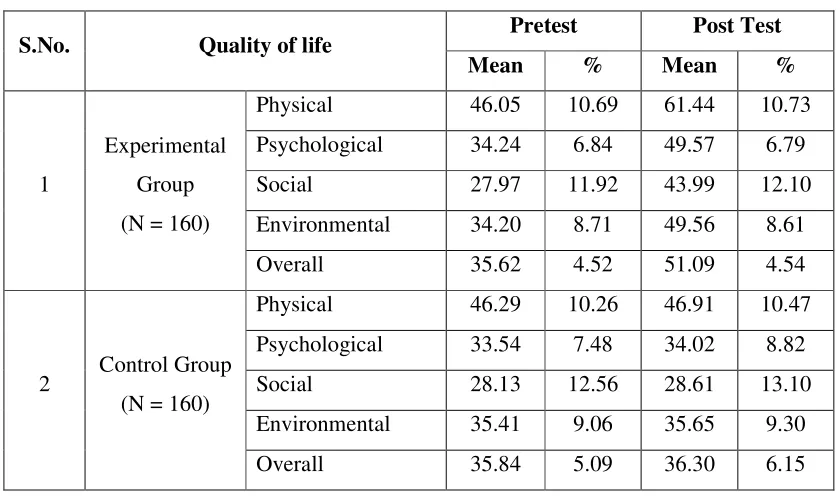
Quality of Life was 51.09 and 36.30 with standard deviation of 4.54 and 6.15. The
calculated ‘t’ value was t=24.47which showed a high statistical significance at p<0.001
between experimental and control group respectively. Hence the study concluded that the
effectiveness of Need-based intervention had significant improvement in Family support,
Activities of daily living and Quality of life score of elderly clients in the experimental
group.
DISCUSSION
There was a significant reduction in level of depression with improvement in
Family support, Activities of daily living, Quality of life score of elderly clients in the
experimental group. Thus the Need- based intervention was found to be effective in the
reduction in level of depression with improvement in Family support, Activities of daily
living, Quality of life score of elderly clients in the experimental group.
IMPLICATIONS
Depression can be reduced by improving the Activities of daily living, Family
support with basic needs even without anti-depressants.
CONCLUSION
Old age experience many life stressors that can affect the level of depression such
as loneliness, unemployment, poor financial support, chronic health problems, poor
health status and poor functional capacity. Elderly persons with depression are more
likely to experience poor Family support, lesser functioning on Activities of daily living,
depression. The major focus is on the Need-based intervention in the reduction of level
of depression with improvement in Family support, Activities of daily living, Quality of
life score of elderly clients in the experimental group and was found effective. Hence,
Need-based intervention can be used as an interventional tool to reduce the level of
depression and it also improves the Family support, Activities of daily living, Quality of
life among elderly.
The findings of the study will be incorporated in the Wellness Clinic Program of
Omayal Achi Community Centre which not only addresses the physical health of the
elderly, but also the mental health.
1
INTRODUCTION
Ageing is a universal process and it affects every individual, family, community and society. It is a normal, progressive and irreversible process. Ageing is generally defined as a process of decline in the functional capacity of an individual that results from structural changes, with advancement of age. It should be seen in the perspective not merely a matter of accumulating years but also a process of "adding life to years, not years to life", following the World Health Day theme in 2012 “Good health adds life to years”.1
The physiological decline in ageing refers to the physical changes an individual experiences because of the decline in the normal functioning of the body resulting in poor mobility, vision, hearing, inability to eat and digest food properly, a decline in memory, the inability to control certain physiological functions, and the onset of various chronic conditions. Change in socio-economic status adversely affects the individual’s way of life after retirement. The economic loss is due to a change from salary to pension or unemployment leading to economic dependency on children or relatives. A feeling of low self-worth may be felt due to the loss of earning capacity and social recognition. This state of mind is harmful. With the prospect of this stressful situation worsening in the coming decades, ways and means of managing effectively needs to be examining both at the individual and community levels.
for the elderly derives from prevalent chronic disabling conditions that often accompany ageing. This can be prevented or delayed, not only by medical but also by social, economic and environmental interventions.
1.1 BACKGROUND AND SIGNIFICANCE OF THE STUDY
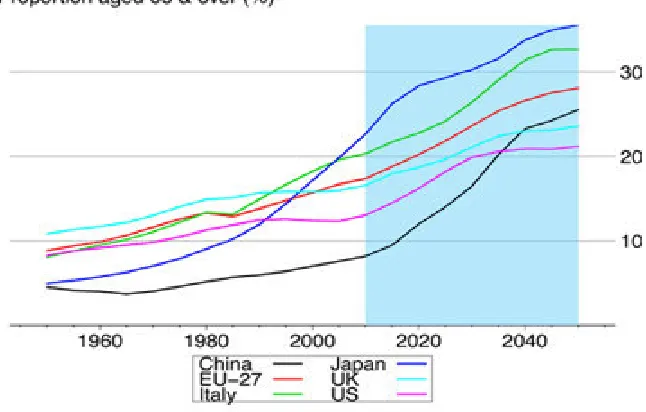
Ageing is taking place in the world’s adult population and within the older
population itself. The proportion of persons aged 80 years or over within the older population increased from 7 per cent in 1950 to 14 per cent in 2013. According to the medium-variant projection, this proportion of “oldest-old” within older persons is
expected to reach 19 per cent in 2050 and 28 per cent in 2100. If this projection is realized, there will be 830 million persons aged 80 years or over by the end of the century, seven times as many as in 2013 WHO REPORT (2013)2.
[image:29.612.155.478.468.674.2]Chakraborti’s (2004) study reported that more than half of the world’s elderly population lives in the Asia – Pacific region. As compared to a 52% distribution of elderly in Asia for 2000, projected figures for 2050 will be 62% in Asia.3
3
Kalavar etal., (2008) pointed out that the largest number of elderly persons in Asia are in China, followed by India, Japan, and several other countries.5
Caldwell et al (2005) in rural areas of developing nation older adults comprise more than 20% of the population, in contrast to their comprising 12.4% of the population in the entire United States. Rural older adults are usually socio-economically disadvantaged and have poor housing, higher poverty rate and less formal education. Moreover, health care services are fewer and less accessible. Thus, older adults experience problems such as under diagnosis, more disability, poorer health outcomes and lower rates of monitoring chronic conditions.6
Passel & Cohn (2008) observed that the aging of the population is a global phenomenon occurring at a record - breaking rate, especially in developing countries around the world. The U.S economy, as well as health and social services are affected by this marked increase in the proportion of the older adults in the population. By the year 2030, 23% of the population in the United States will consists of individuals older than 65 years of age. Among older adults the fastest – growing subgroups are the minorities, the poor, and those aged 85 yrs and older. In 2005, the percentage of adults older than 65 was 12%; by 2050 this will rise to 19%.7
the elderly and found that as much as 15% of seniors who live in the community suffer from depression. However, this proportion increases to as high as 80–90% within long-term care facilities.8
Although the rate of older adults with depressive symptoms tends to increase with age, depression is not a normal part of growing older. Rather, in 80% of cases it is a treatable condition. Unfortunately, depressive disorders are a widely under-recognized condition and often are untreated or under treated among older adults Hispanic adults aged 50 and above reported more current depression than white Hispanic, black non-Hispanic adults, or other non-non-Hispanic adults (11.4% compared to 6.8%, 9.0%, and 11%, respectively). Women aged 50 and above reported more current and lifetime diagnosis of depression than men (8.9% compared to 6.2% for current depressive symptoms; 19.1% compared to 11.7% for lifetime diagnosis).9
The prevalence of depression (2013) reported by various countries projected that in Mexico (5.1%), Japan (19.8 – 33.5%), U.S (3.6%), Hong Kong (9.7%), Malaysia (8%), Pakistan (45.9%) and Uganda (29%).10,11,12,13,14,15
5
India is in a phase of demographic transition .As per the 1991 census, the population of the elderly in India was 57 million as compared with 20 million in 1951. There had been a sharp increase in the number of elderly persons between 1991 and 2001 and it had been projected that by the year 2050, the number of elderly people would rise to about 324 million Help age India (2007)17
Irudayarajan (2005) observed that in India as many as 75% of elderly persons
were living in rural areas. About 48.2% of elderly persons were women, out of whom 55% were widows. A total of 73% of elderly persons were illiterate and dependent on
physical labor. One-third was reported to be living below the poverty line, i.e., 66% of older persons were in a vulnerable situation without adequate food, clothing, or shelter. About 90% of the elderly were from the unorganized sector, i.e., they had no regular
source of income.18
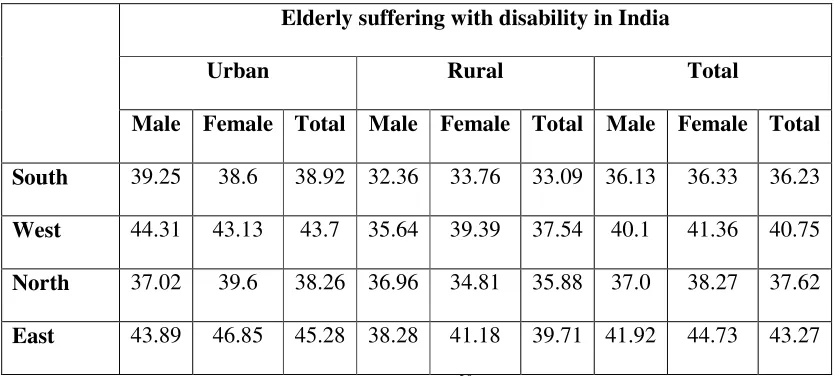
[image:32.612.108.525.521.709.2]Joshik etal., (2003) found that elderly people in rural and urban areas of Chandigarh in Haryana observed that as many as 87.5% had minimal to severe disabilities.19
Table 1.1: Elderly as suffering from one Disability
Elderly suffering with disability in India
Urban Rural Total
Male Female Total Male Female Total Male Female Total
South 39.25 38.6 38.92 32.36 33.76 33.09 36.13 36.33 36.23
West 44.31 43.13 43.7 35.64 39.39 37.54 40.1 41.36 40.75 North 37.02 39.6 38.26 36.96 34.81 35.88 37.0 38.27 37.62
East 43.89 46.85 45.28 38.28 41.18 39.71 41.92 44.73 43.27
Dey AB etal .,(2001) conducted a community based study in Delhi among 10,000 elderly people, it was found that problems related to backache and arthritis topped the list.21
Ahluwalia (2004) found that elderly people who belong to middle and higher income groups were prone to develop obesity and its related complications due to a sedentary lifestyle and decreased physical activity.22
Singh P etal., (2004) found that among 206 elderly persons attending the Geriatric clinic at a tertiary care hospital in Delhi, about 34% of the men and 40.3% of the women were obese respectively and prone to physical and mental distress.23
Khandelwal SK (2003) found that elderly people were highly prone to mental morbidities due to ageing of the brain problems associated with physical health, cerebral pathology; socio-economic factors such as breakdown of the family support systems and decrease in economic independence. The mental disorders that are frequently encountered include dementia and mood disorders.24
7
Karthikeyan S etal., (1999) found that the socio-economic problems of the elderly were aggravated by factors such as the lack of social security and inadequate facilities for health care, rehabilitation and recreation. Also, in most of the developing countries, pension and social security is restricted to those who had worked in the public sector or the organized sector of industry.26
Goel PK etal., (1999) found through various surveys that retired elderly people were confronted with the problems of financial insecurity and loneliness.27
According to National Sample Survey (2006) data reported the old age dependency ratio. It was found to be higher in rural areas (125) than in urban areas (103) .With regard to the state of economic development, a higher number of males in rural areas, 313 per 1000, were fully dependent as compared with 297 per 1000 males in urban areas. For the aged female, an opposite trend was observed (706 per 1000 for females in rural areas compared with 757 for females in urban areas).28
Bose A (1997) reported that over 81% of the elderly confessed to have increased stress and psychological problems in modern society, while 77.6% complained about mother-in-law/ daughter-in-law conflicts being on the increase.29
above in Chennai found the prevalence rate of mistreatment to be 14%. Chronic verbal abuse was the most common followed by financial abuse, physical abuse, and neglect. A significantly higher number of women faced abuse as compared with men; adult children, daughter-in-law, spouses and sons-in-law were the prominent perpetrators.30
Table No 1.2: According to National Health Statistics (2012)31
S.NO. MAJOR DISORDERS PREVALENCE
1 Dementing disorder 66.5%
2 Depressive disorder 56%
3 Somatoform disorder 47%
4 Anxiety disorder 37%
7 Sleep disorder 62%
8 Suicidal risk 54%
9
According to National Institute of Mental Health NIMH (2004) reported that depression accounts for up to 70% of late – life suicides. Research has shown that older adults who commit suicide suffer from the most treatable kind of depression but do not receive needed mental health services.33
According to National Institute of Mental Health, NIMH (2007) reported that although depression in older adults is common, it is not a normal result of aging. It is estimated that of the 35 million people over age of 65,2 million (almost 6%) suffer from severe depression, and another 5 million (around 14%) suffer from less severe forms of depression. Many older adults suffer from subsyndromal depression, in which they experience many, but not all, the symptoms of a major depressive episode. These individuals have an increased risk of developing major depression and a disproportionate number of older adults with depression are likely to die by suicide. Unfortunately, the symptoms of depression often go unrecognized in this population, although older adults generally make a frequent medical visits. Thus older individuals suffering from depression are at risk of being untreated.34
Yalom (2005) found that elderly groups are useful because they can diminish social isolation and loneliness and help the members understand that they are not alone in their situation. Group members can learn creative ways to raise their mood and increase quality of life.36
Arslantas D, et al., (2013) conducted a cross – sectional study to determine the prevalence of depression among the elderly to examine the relationship between depression and dependency in activities of daily living. There were 251 individuals aged 65 years and older living in the two centers and 203(80.8%) of them had been reached. The depression status was assessed by using the Geriatric Depression Scale, Katz’s Activities of Daily Living. The study found that the prevalence of depression was significantly higher in women with increasing scores on ADL and IADL for each p<0.05. The study concluded that the primary health care should be integrated into community based and it would be appropriate to plan early diagnosis and treatment programs for the elderly.37
Levin etal., (2007) a meta- analysis study showed that stroke, loss of hearing, poor eyesight, cardiac disease and chronic lung disease were factors associated with depression in old age.38
11
Castro L.C, et al (2009) conducted a study to identify the significant impact of psychological problem in the elderly. In the later part of life psychological problem had a high prevalence and was associated with increased morbidity, mortality, functional impairment, poorer quality of life and significant societal cost. It is an extremely important and urgent need to create awareness and earlier intervention to prevent psychological problem.40
Wu etal., (2000) found that Quality of life was a surrogate indicator for general well-being. Quality of life in elderly patients was a significant independent predictor of functional status. Depressive symptoms are also closely related to Quality of life.41
Unsar etal., (2010) found that depressive symptoms in elderly in-patients with chronic illness were associated with decline in self -rated quality of life. Moreover, Late- life depression also had significant negative impact on quality of life and was associated with increased mortality due to either suicide or chronic illness.42
Health Centre renders various spectrum of care from Pediatric to Geriatric care on daily basis.
The Health Centre also conducts a special outpatient clinic for chronic diseases. This investigator is an alumnus of Omayal Achi College of Nursing, who has stayed after BSc Nursing to join as faculty member over the past 14 years. After interaction with the rural population for several years, this investigator has developed deep understanding of the culture and ethos – based psychosocial and health needs. The investigator felt strongly that the preventive and curative health care gap could be effectively filled by implementing a structured programme of need-based intervention, psycho education, breathing exercise, senior citizen chair exercise, progressive muscle relaxation to reduce the level of depression and improve the level of Family support, Activities of daily living, and Quality of life among elderly clients with Depression. Hence, it was decided to take the strategies to the door step of community and focus on community participation of older adults.
13
AIMS AND OBJECTIVES
2.1 STATEMENT OF THE PROBLEM
An Experimental study to assess the effectiveness of Need- based intervention on
level of depression, Family support, Activities of Daily Living, Quality of life among
elderly clients with depression in a selected rural population.
2.2 AIM
To assess the effectiveness of Need- based intervention on level of depression,
Family support, Activities of Daily Living, Quality of life among elderly clients with
depression in a selected rural population.
2.3 OBJECTIVES
The objectives of the study were:
1. To assess the pre and post test level of depression with associated factors Family
support, Activities of daily living, Quality of life among elderly clients with
depression in the experimental and control group.
2. To assess the effectiveness of Need-based intervention on level of depression
with associated factors Family support, Activities of daily living, Quality of life
among elderly clients with depression within and between the experimental and
control group.
3. To correlate the level of depression with associated factors Family support,
Activities of daily living, Quality of life among elderly clients with depression in
4. To associate the mean difference score on the level of depression with associated
factors Family support, Activities of daily living, Quality of life of elderly clients
with depression with their selected demographic variables in experimental group.
2.4 OPERATIONAL DEFINITION 2.4.1 Effectiveness
It refers to the outcome of Need-based intervention on level of depression,
Family Support, Activities of Daily Living, Quality of Life after administration of
Need-based intervention which is appraised by Geriatric Depression Scale, Mini Mental Status
Examination, Quality of life of elderly (WHO) BREF- 4) which has 26 items, Family
support scale, the Kartz Index of Activities of Daily Living in the experimental group
whereas routine care followed for control group.
2.4.2 Need-based intervention
Need-based intervention denotes the combined nursing interventions developed
by the investigator for the elderly clients with depression carried out over a period of 2
months which includes: elder care education for caregivers, psychosocial or non
pharmacological treatment of moderate - severe depression.
2.4.3 Level of depression
It refers to identifying the elderly with a feeling of sadness as manifested by
hopelessness, helplessness, worthlessness, inability to sleep, suicidal ideas (which will be
15
2.4.4 Family Support
It refers to the family members either spouse, kith and kin, those relatives of the
same family living under the same roof who interact regularly with the elderly (which
will be assessed in this study by using Family Support Scale).
2.4.5 Activities of Daily Living
It refers to the level of independency in doing Activities of Daily Living among
elderly (which will be assessed in this study by using Kartz Index of Activities of Daily
Living).
2.4.6 Quality of life
It refers to the physical health, psychological, social, environmental health
dimensions of the elderly (which will be assessed in this study by using World Health
Organization Quality of Life – BREF tool).
2.4.7 Elderly clients with depression
It refers to the men and women aged 60 years and above and had been identified
as having moderate to severe depression by using Geriatric Depression Scale.
2.5 ASSUMPTIONS
1. Depression is more prevalent among elderly in the rural population.
2. Early identification and Need-based intervention may help to reduce the level of
depression which in turn will enhance the Activities of Daily Living, Family
2.6 RESEARCH HYPOTHESES
RH1: There will be significant difference between the pre and post test level of
depression, Family Support, Activities of Daily Living, Quality of Life among
elderly clients with depression within and between the experimental and control
group at p<0.05 level.
RH2: There will be significant correlation between the level of depression, Family
Support, Activities of Daily Living, Quality of Life among elderly clients with
depression in experimental and control group at p<0.05 level.
RH3:There will be significant association of mean difference in the score on the level
of depression, Family Support, Activities of Daily Living, Quality of Life score
with selected background variables among elderly clients in experimental and
control group at p<0.05 level.
2.7 THEORETICAL FRAMEWORK
Conceptual framework based on Von Bertalannfy's General System Model will
be utilized to guide the researcher in conducting the proposed research work.
The world we live in is a complex system composed of subsystems that interact
among themselves, with each having clearly defined boundaries and coherent dynamics.
Systems theory was developed by biologist Ludwig Von Bertalanffy in the 1930s to
simplify world complexity to the human mind and make it more understandable
(Von Bertalanffy, 1962) .Systems theory looks at the world as a system composed of
smaller subsystems. Systems as a representation of life phenomena used by humanity in
17
Significance of Systems Theory
Systems theory can be used to clearly and concisely understand health care
structures, processes and outcomes, processes and their interactions within a health care
system. Systems theory can be used as a framework to describe the components of
systems and the relationships between these components, the boundaries of the system,
the goals of the system, and the system's ability to change and adapt in response to
internal and external forces. Systems theory and thinking can help us understand how
health care organizations and systems work and it allows us to clearly assess, visualize,
analyze and understand the structure, processes, and feedback loops that make up the
organization. This correct and clear understanding of the organization as a system is a
necessity, to be able to manage organizations effectively and efficiently and to achieve
the goals of the organization.
System Definition
A system is a collection of independent but interrelated elements or components
organized in a meaningful way to accomplish an overall goal. The function of any
system is to convert or process materials, energy, and/or information (inputs) into a
product or outcome for use within the system, or outside of the system (the environment)
or both.
Definition of Key Terms
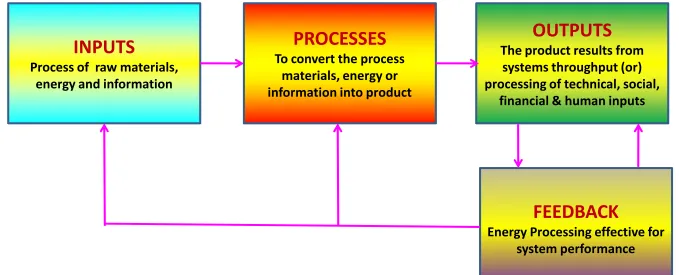
Throughputs are the processes used by the system to convert raw materials or energy (inputs) from the environment into products or services that are usable by either the
system itself or the environment.
Output is the product or service which results from the system's throughput or processing of technical, social, financial and human input.
INPUTS
Process of raw materials,
energy and information
PROCESSES
To convert the process
materials, energy or
information into product
OUTPUTS
The product results from
systems throughput (or)
processing of technical, social,
financial & human inputs
FEEDBACK
[image:46.792.54.733.150.425.2]Energy Processing effective for
system performance
2.8 APPLICATION OF LUDWIG VON BERTALANFFY GENERAL SYSTEM
MODEL FOR THE PRESENT STUDY
A conceptual framework or model is made up of concepts that are the mental
image of phenomena. These concepts are linked together to express the relationship
between them. The study design of the thesis is to assess the effectiveness of
Need-based intervention on level of depression, Family Support, Activities of Daily Living,
Quality of Life among elderly clients with depression in a selected rural population.
.
. The conceptual model for the study is based on Modifications made on Von
Bertalantiy’s General System Theory.
According to General System Theory a system is a set of components or units
interacting with each other, within a boundary that facilitate the kind and the rate of flow
of input and output to and from the system.
All systems are open in which there is a continuous exchange of matter, energy
and information. Open system have varying interaction with environment from which
the system rears input, and gives output and inflow of matter, energy and information.
THE MAJOR CONCEPTS DESCRIBING THE PHENOMENA
Input
Input is information needed by the system. It is also referred to as imparting
phase. Here, according to the investigator, Need-based intervention is provided to the
elderly with depression, using psycho education, breathing exercise, senior citizen chair
21
Throughput
Throughput is the activity phase. Here the investigator conducts psycho
education, breathing exercise, senior citizen chair exercise, and progressive muscle
relaxation exercise for a period of two months to the elderly with depression on a group
basis. During this phase, the investigator observes the changes in the behaviour.
Output
The information are continuously processed through the system and released as
output in an altered state. Here it refers to the attainment of level of coping among the
elderly with depression through psycho education, breathing exercise, senior citizen
chair exercise, progressive muscle relaxation exercise (Need- based intervention) which
is assessed through pretest done before providing Need- based intervention and post test
done after providing the Need-based intervention. The post test assessment refers to the
reduction in the level of depression attained by the elderly with depression after
providing Need -based intervention.
Feedback
Feedback is evaluation or response of system. Here feedback may be positive or
negative. In this study feedback emphasize to strengthen the output based on the training
provided to the elderly with depression the outcome of Need-based intervention.
.
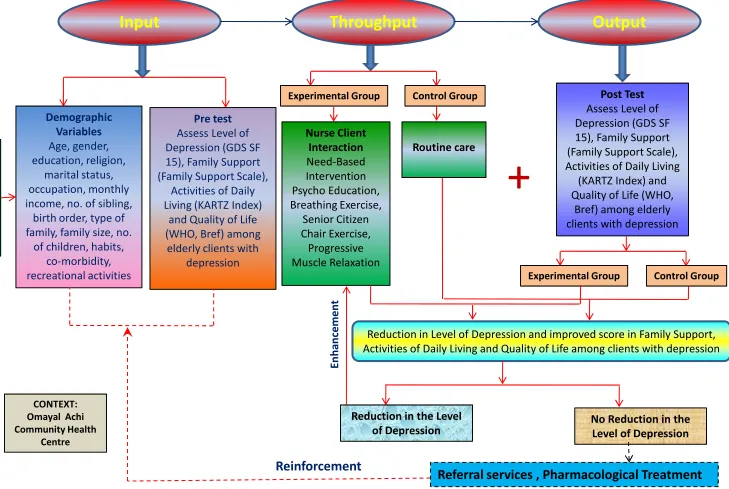
The investigator promotes reduction in the level of depression for the elderly with
depression by assessing demographic variables and by doing the pretest using level of
depression (GDS), Family Support (Family Support Scale), Activities of Daily Living
senior citizen chair exercise, progressive muscle relaxation exercise (Need-based
intervention) providing for a period of two months to the elderly with depression. The
post test score are analyzed. The elderly with reduction in the depression after post test
will be able to function to an optimal level.
Input
Throughput
Output
Demographic
Variables
Age, gender,
education, religion,
marital status,
occupation, monthly
income, no. of sibling,
birth order, type of
family, family size, no.
of children, habits,
Pre test
Assess Level of
Depression (GDS SF
15), Family Support
(Family Support Scale),
Activities of Daily
Living (KARTZ Index)
and Quality of Life
(WHO, Bref) among
elderly clients with
Nurse Client
Interaction
Need-Based
Intervention
Psycho Education,
Breathing Exercise,
Senior Citizen
Chair Exercise,
Progressive
Post Test
Assess Level of
Depression (GDS SF
15), Family Support
(Family Support Scale),
Activities of Daily Living
(KARTZ Index) and
Quality of Life (WHO,
Bref) among elderly
clients with depression
+
N
U
R
S
E
R
E
S
E
A
R
C
H
E
R
Experimental Group Control Group
Routine care
of children, habits,
co-morbidity,
recreational activities
elderly clients with
depression
Progressive
Muscle Relaxation
Reduction in Level of Depression and improved score in Family Support,
Activities of Daily Living and Quality of Life among clients with depression
Reduction in the Level
of Depression
No Reduction in the
Level of Depression
Referral services , Pharmacological Treatment
[image:50.792.43.772.56.545.2]E
n
h
a
n
ce
m
e
n
t
Reinforcement
Fig.2.1.2: Application of Conceptual Framework based on Von Bertalannfy’s General System Model
Experimental Group Control Group
CONTEXT: Omayal Achi Community Health
REVIEW OF LITERATURE
Review of literature is a systematic search of a published work to gain
information about a research topic (Polit and Hungler).
The literature review was based on extensive survey of books, journals and
international nursing studies. A review of literature relevant to the study was undertaken
which helped the investigator to develop insight into the problem and gain information
on what has been done in the past. An extensive review of literature was done by the
investigator to lay a broad foundation for the study and a conceptual framework framed
based on Peplau’s Interpersonal Relationship theory to proceed with the study under the
following headings.
For the purpose of logical sequence the chapter was divided into the following
sections.
Section 3.1: Review of literature related to general concepts of depression among
elderly.
Section 3.2: Review of literature related to depression among elderly.
Section 3.3: Scientificstudies related to impact of depression among elderly.
Section 3.4: Scientific studies related to Need- based interventions to decline the
25
SESSION 3.1: REVIEW OF LITERATURE RELATED TO GENERAL
CONCEPTS OF DEPRESSION AMONG ELDERLY
Definition
Depression elderly
Depression is a medical illness in which a person has persistent feelings
of sadness, often with discouragement and a lack of self-worth.
Depression in the elderly is a widespread problem, but it is not a normal part of
aging. It is often not recognized or treated.
Causes of depression in older people
Physical ill health
There is a complex relationship between physical illness, disability and
depression. Many physical illnesses also cause depression through a variety of biological
mechanisms. Physical illnesses that can cause depression in old age include cancer,
thyroid disease, vitamin deficiencies and infections. There is also mounting evidence that
cerebrovascular disease is an important risk factor for late life depression. So it is
essential that any older person who becomes depressed for the first time in old age has a
thorough medical evaluation.
Many physical illnesses in old age result in permanent disabilities which can
restrict a person’s mobility and often require assistance with self-care. This may result in
loss of dignity, a sense of being a burden on others and fears of institutionalization.
with depression; particularly drugs used to treat high blood pressure, and steroids,
painkillers and tranquilizers.
Social isolation and loneliness
Many people experience social isolation and loneliness in old age, either as a
result of living alone, a lack of close family ties, reduced connections with their culture
of origin, or an inability (often through lack of transport) to actively participate in the
local community. When this occurs in combination with physical disablement,
demoralization and depression are common.
Loss in old age
Symbolic and real losses are the psychological basis of many depressions. Old
age represents a period of life where losses are cumulative and frequent. Many elderly
people cope well with losses such as the death of their partner, siblings, friends and pets,
and the loss of independence, health, home and lifestyle. However, for other people,
these losses can trigger the development of depressive symptoms.
Types of depression in older people
The most common type of depression in older age is non-melancholic depression
which is linked to psychological factors, personality characteristics and stressful life
events. However, when there is a history of depression in earlier life, it is likely that
genetic factors may contribute to the course of the depressive illness. Depression that
first develops in later life, usually after age 60, is more commonly associated with
27
health with no history of previous episodes has a relatively low risk of developing
depression at a later age.
Signs of depression in older people
The common depressive symptoms (such as a loss of interest in life, lack of
enjoyment in normal activities, apprehension, poor sleep, persistent thoughts of death,
chronic unexplained pain, poor concentration or impaired memory) are incorrectly
attributed to old age, dementia or poor health.
The typical ways that depression may present in old age are:
Chronic unexplained physical symptoms
Older people may complain of a range of physical symptoms for which no
adequate medical explanation can be found. Common symptoms include dizziness,
chronic aches and pains, constipation, weight loss and insomnia. Usually symptoms of
depression become apparent on close questioning, though the older person may not see it
that way and may deny that it could be the problem. In extreme cases, an older person
may believe that they have an incurable illness which can be a risk for suicide.
Memory loss
Depression in old age is often accompanied by memory changes which become
the main focus for intervention rather than the depressive illness. Treatment of the
underlying depression can usually improve memory if there is no corresponding
Behavioural changes
These can be quite varied and can include:
• Avoidance of leaving the home, refusal to eat, shoplifting, hoarding behaviours
or alcohol abuse
• Preoccupations with changing their will, giving away personal possessions,
talking about death, or taking an unprecedented interest in firearms
These behaviours should not only alert friends and family to the possibility of
depression, but also to the risk of suicide
Treatment of depression in older people
There are a range of treatments available to treat older people:
• For more severe depression, antidepressant medication is usually required.
Antidepressant medication may take longer to work in older people, so trials of at
least six to eight weeks may be required
• Electroconvulsive therapy (ECT) is a useful treatment in melancholic and
psychotic depression when individuals have failed to respond to medication, or
when the depression is very severe
• In the non-melancholic depressions, the usual range of psychotherapies is
applicable, though therapists need to take into account the limitations imposed by
poor hearing, poor eyesight and physical discomfort
Other helpful treatments for depression include social activities, physical exercise
29
The consequences of untreated depression in older persons:
Late- life depression increases risk for medical illness and cognitive decline.
Unrecognized and untreated depression has fatal consequences in terms of both suicide
and non-suicide mortality. Depression is the single most significant risk factor for suicide
in the elderly population. Tragically, many of those people who go on to die by suicide
have reached out for help- 20 percent see a doctor the day they die, 40 percent the week
they die and 70 percent in the month they die. Yet depression is frequently missed.
Elderly person are more likely to seek treatment for other physical ailments than they are
to seek treatment for depression.
Prevention of depression in old age:
Lifestyle changes in mid-life may be the key to the prevention of depression in
old age includes:
• reduction of high blood pressure
• cessation of cigarette smoking
• reduction of cholesterol and lipid levels increased physical exercise
• weight control
• a diet rich in fish, grains and greens
Other ways to reduce the risk of depression include mental stimulation, social
II. SESSION 3.2: REVIEW OF LITERATURE RELATED TO DEPRESSION
AMONG ELDERLY
Barcelos – Ferreira R, et al., (2013)44 investigated a cross sect