
Problem based learning using ambulatory patients
289
0
0
Full text
(2) PROBLEM BASED LEARNING USING AMBULATORY PATIENTS. Thesis submitted by Tarun Kumar SEN GUPTA MBBS, FRACGP, FACRRM in August 2005. For the degree of Doctor of Philosophy in the School of Medicine James Cook University.
(3) STATEMENT OF ACCESS. I, the undersigned, author of this work, understand that James Cook University will make this thesis available for use within the University library and, via the Australian Digital Theses network, for use elsewhere. I understand, that as an unpublished work, a thesis has significant protection under the Copyright Act and:. I do not wish any further restrictions to be placed upon this work. ______________________________ Signature. August 26, 2005. ii.
(4) STATEMENT OF SOURCES. DECLARATION I declare that this thesis is my own work and has not been submitted in any form for another degree or diploma at any university or other institution of tertiary education. Information derived from the published or unpublished work of others has been acknowledged in the text and a list of references is given.. _______________________________ Signature. August 26, 2005. iii.
(5) STATEMENT ON THE CONTRIBUTION OF OTHERS. Colleagues at the North Queensland Clinical School provided general advice on the direction of this research and participated as tutors in the problem based learning process. My supervisors provided detailed advice on methodology and implementation, and critically reviewed drafts of this thesis. Limited assistance with data collection was provided by two research assistants as described in the text. Support was provided by the following grants: The University of Queensland Undergraduate Research Grant $1354, to support evaluation and materials in the pilot phases. The University of Queensland New Staff Research Grant $16 576 to support standardization of tutor training for clinical problem based learning. I also thank my colleagues who contributed to the following papers resulting from this work in which I was the principal investigator:. Sen Gupta TK, Hays RB, Jacobs HJ. Problem based learning using ambulatory patients. Res Dev Problem Based Learning. Australian Problem Based Learning Network. Newcastle, Australia: 1997;4:574-578. Sen Gupta TK, Hays RB. “Problem-based learning using ambulatory patients. Advances in Medical Education. Scherpbier AJJA et al, editors. 1996, 525-527.. In addition the author was the principal investigator for five papers which have been presented at national and international conferences.. iv.
(6) DECLARATION ON ETHICS. The research presented and reported in this thesis was conducted within the guidelines for research ethics outlined in the National Statement on Ethics Conduct in Research Involving Humans (1999), the Joint NHMRC AVCC Statement and Guidelines on Research Practice (1997), the James Cook University Policy on Experimentation Ethics, Standard Practices and Guidelines (2001), and the James Cook University Statement and Guidelines on Research Practice (2001).. All human participation in this research project was conducted before the transfer of candidature to James Cook University and was covered by the Townsville General Hospital (now The Townsville Hospital) ethics approval (Appendix 3).. _______________________________ Signature. August 26, 2005. v.
(7) ACKNOWLEDGEMENTS. I wish to thank the many people who have supported and encouraged me to complete this work. I owe a particular debt of gratitude to:. … the students, colleagues and patients who participated in this study and provided many insights. Thank you for your willingness to try new approaches. … Professor Richard Hays for his patience, advice and direction as supervisor. He has encouraged me to follow and complete this path of exploration and has been more than generous with his time and expertise. … my parents who were instrumental in my formative years in encouraging me to learn, to question and to think. I thank them for the many opportunities they provided to help me develop an inquiring mind. … my family, Wendy, Eliza and Toby, to whom I owe the biggest debt for the sacrifices they have made and their unfailing support, love and encouragement.. vi.
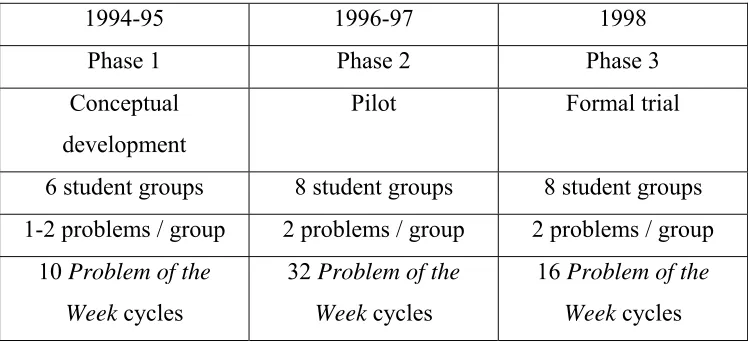
(8) ABSTRACT. Introduction Problem based learning (PBL) tutorials based on ambulatory patients were conducted for year 5 medical students undertaking their General Practice rotation. The students, who had little prior experience of PBL, participated in two sets of PBL tutorials over the four-week course, in addition to traditional seminars, tutorials, and practice-based teaching. Cases were constructed around real patients with ongoing problems which were often evolving or incompletely explored. Working in a PBL format students explored dimensions of the case, with access to the patient and other resources including health workers involved in the case, the medical record, and a house call. At the end of the week students presented the case and their recommendations for management and summarized this in a letter which formed part of the medical record. Methods Sixteen PBL tutorials with eight groups of students were formally evaluated by a combination of student and tutor questionnaires, direct observation, and interviews with patients and tutors. All tutorials were observed by an experienced independent rater, using a validated instrument. Students completed questionnaires at the completion of each problem and participated in a focus group at the end of the rotation. Tutors completed a Group Assessment Schedule and were interviewed by a research assistant after each tutorial. The same research assistant interviewed the patient and the clinician responsible for the patient’s care, probing their perception of the PBL process, the students’ learning, and any positive or negative impacts on the patient’s health care.. vii.
(9) Results Students enjoyed the group work, but had mixed feelings about the PBL format. Groups struggled with the new approach but many saw the value of exploring a problem widely and holistically. Group characteristics such as leadership and prior experience of PBL, along with tutor factors had a major influence on the outcome. Groups and tutors adopted a variety of strategies to overcome problems with the new approach. Most groups undertook an appropriate range of PBL-related tasks, although self-evaluation occurred rarely, and groups did not make full use of available resources. Students valued the real patient contact and authenticity of the case. The patient interview was seen as a key part of the process, providing students with rich information and immediate feedback. House calls, when undertaken, provided students with many insights which were often unexpected and only appreciated in retrospect. A standardized approach was developed to case design, tutor training, and implementation of tutorials. The most suitable cases were those that were evolving or incompletely explored, with a number of dimensions to investigate, and with a level of complexity appropriate to the students’ prior knowledge. The use of real patients was seen as engaging, stimulating and contextually deep, providing immediate feedback and an opportunity to integrate and apply learning. Most students felt that this approach emphasised thinking, creativity and holistic care. The authenticity and opportunity to potentially contribute to patient care created an encouraging learning environment. Patients were willing to take part, with none reporting any adverse effects. Discussion This approach appears to be consistent with the literature on PBL and the use of real patients, and extends the literature on clinical PBL by describing the added value of real patients and making specific recommendations on case selection, tutorial design and delivery and educational outcomes. There was an apparent mismatch between the educational innovation and student experiences, but tutors and groups worked together. viii.
(10) to resolve these issues. This approach is consistent with trends towards communitybased education, teaching holistic care, and the use of the patient’s voice. It appears suitable for clinical teaching in a variety of settings providing suitable patients matched to the learning objectives can be identified, although further work is needed to address this question.. ix.
(11) TABLE OF CONTENTS. Title page. i. Statement of access. ii. Statement of sources. iii. Statement on the contribution of others. iv. Declaration on ethics. v. Acknowledgements. vi. Abstract. vii. Table of contents. x. List of tables. xv. CHAPTER 1 – INTRODUCTION. page 1. 1.1 Background and experience. page 1. 1.2 General Practice education in Australia. page 8. 1.3 Undergraduate education in General Practice. page 10. 1.4 Postgraduate education in General Practice. page 12. 1.5 Education for rural practice. page 15. 1.6 The North Queensland Clinical School. page 16. 1.7 Research questions. page 21. 1.8 Summary. page 22. CHAPTER 2 - LITERATURE REVIEW. page 23. 2.1 Background. page 24. 2.2 Overview of problem based learning. page 25. 2.3 Rationale for problem based learning. page 30. 2.4 Introduction and implementation of problem based learning. page 37. 2.5 Problem based learning in clinical education. page 40. 2.6 Outcomes from problem based learning. page 46. 2.7 Developments in medical education. page 48. x.
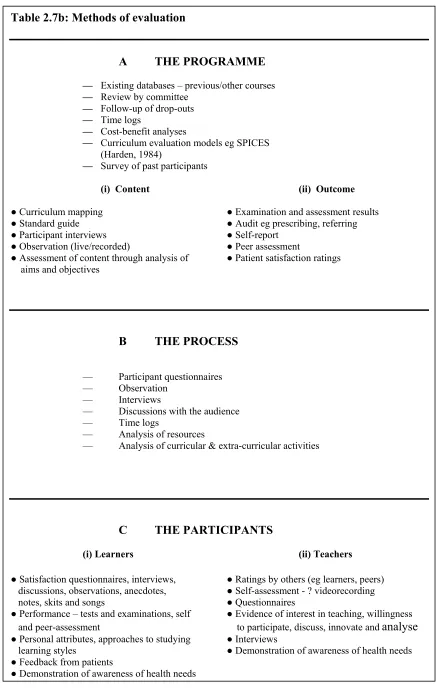
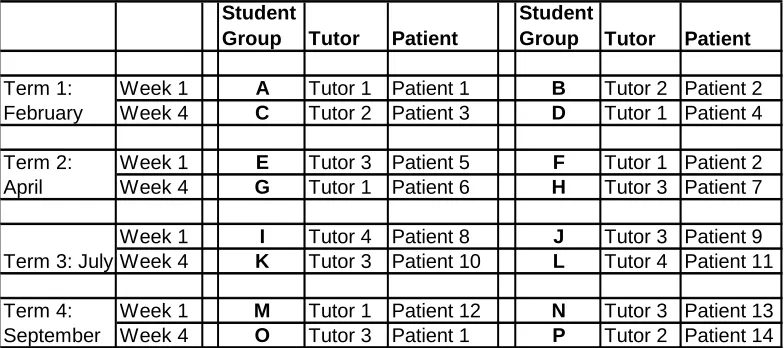
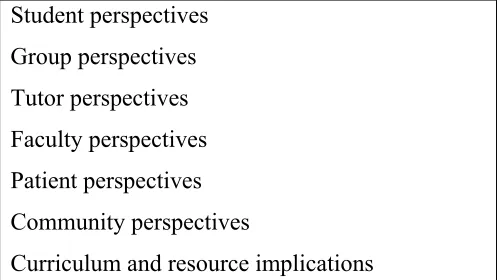
(12) 2.8 Research and evaluation in medical education. page 49. 2.8.1 Evaluation in medical education. page 50. 2.8.2 Research in medical education. page 53. 2.8.3 Methodological approaches in medical education research. page 56. 2.8.4 The distinction between research and evaluation. page 58. 2.8.5 Research in problem based learning. page 60. 2.8.6 Evaluation instruments. page 62. 2.8.6.1 Approaches to studying. page 64. 2.9 Summary. page 67. CHAPTER 3 – METHODS. page 69. 3.1 Development of the Problem of the Week concept. page 69. 3.1.1 Organisation of the term. page 72. 3.1.2 Student selection and group allocation. page 73. 3.1.3 Tutor selection and training. page 74. 3.1.4 Patient selection and recruitment. page 75. 3.1.5 Ethical clearance. page 78. 3.1.6 Case design. page 78. Case Study 1. page 80. 3.1.7 Allocation of cases and tutors to groups. page 81. 3.1.8 Delivery and implementation of the Problem of the Week. page 83. 3.2 Choice of methodology. page 89. 3.3 Evaluation. page 92. 3.3.1 Student perspectives. page 92. 3.3.2 Tutor perspectives. page 94. 3.3.3 Patient perspectives. page 95. 3.3.4 General Practitioner perspectives. page 95. 3.3.5 Direct observation of tutorials. page 96. 3.3.6 Outputs from tutorials. page 98. 3.4 Data collection and analysis. page 99. 3.5 Generation of research findings. page 103. 3.6 Summary. page 104. xi.
(13) CHAPTER 4 RESULTS & DISCUSSION: THE TUTORIAL PROCESS. page 106. 4.1 Group work. page 106. 4.2 Problem based learning format. page 109. 4.3 Approach to the problem based learning process. page 113. 4.3.1 Direct observation of tutorials. page 115. 4.4 Gender differences. page 121. 4.5 Strategies to overcome problems. page 122. 4.6 Group characteristics. page 126. 4.6.1 Group Assessment Schedule. page 131. 4.6.2 Approaches to studying. page 135. 4.7 Tutor factors. page 137. 4.8 Summary. page 142. CHAPTER 5 RESULTS & DISCUSSION: EDUCATIONAL ISSUES 5.1 Learning activities. page 143 page 143. 5.1.1 Learning activities: Video trigger. page 144. 5.1.2 Learning activities: Hypothesis generation. page 145. 5.1.3 Learning activities: Patient interview. page 147. 5.1.4 Learning activities: Chart review. page 151. 5.1.5 Learning activities: House call. page 152. 5.1.6 Learning activities: Resource people. page 155. 5.1.7 Learning activities: Literature review. page 157. 5.1.8 Learning activities: Final presentation. page 158. 5.2 Case design and selection. page 159. Case Study 2. page 163. xii.
(14) 5.3 Tutorial design. page 164. 5.4 Impact of using real patients. page 167. 5.5 Educational outcomes: Student learning. page 175. 5.6 Effects on patients. page 185. 5.7 Methodological issues. page 189. 5.7.1 Impact of observation. page 189. 5.7.2 Utility of data collection tools. page 190. 5.8 Summary. page 193. CHAPTER 6 – CONCLUSIONS 6.1 Key themes. page 194 page 195. 6.1.1 Group work. page 195. 6.1.2 The problem based learning process. page 196. 6.1.3 The use of real patients. page 201. 6.1.4 The Problem of the Week format. page 203. 6.1.4.1 The Problem of the Week: choice of case. page 203. 6.1.4.2 The Problem of the Week: tutorial design. page 206. and delivery 6.1.4.3 The Problem of the Week: learning outcomes. page 211. 6.1.4.4 The Problem of the Week: summary. page 213. 6.2. Additional perspectives. page 215. 6.2.1 Curriculum and resource perspectives. page 215. 6.2.2 Faculty perspectives. page 217. 6.2.3 Community perspectives. page 218. 6.3. Significance of this study 6.3.1 New findings. page 219 page 219. 6.3.1.1 Learning activities. page 222. 6.3.1.2 Learning outcomes. page 224. 6.3.2 Comparison with the literature. page 226. 6.3.3 Implications for other settings. page 228. 6.3.3.1 Implementation. page 228. xiii.
(15) 6.3.3.2 Practical applications. page 232. 6.4 Limitations of the study. page 233. 6.5 Further research questions. page 234. 6.6 Summary. page 237. BIBLIOGRAPHY. page 239. APPENDICES Appendix 1: Summary of the Problem of the Week process for tutors. page 249. Appendix 2: Consent forms and information sheet for patients. page 251. Appendix 3: Ethics approval. page 254. Appendix 4: Problem of the Week case outline. page 255. Appendix 5: Problem of the Week detailed outline for students. page 258. Appendix 6: Student questionnaire. page 261. Appendix 7: Interview proformas – students, patients, tutors. page 262. Appendix 8: Approaches to Studying questionnaire. page 264. Appendix 9: Group Assessment Schedule. page 266. Appendix 10: Problem based learning tutorial observation guide. page 270. Appendix 11: Glossary. page 272. xiv.
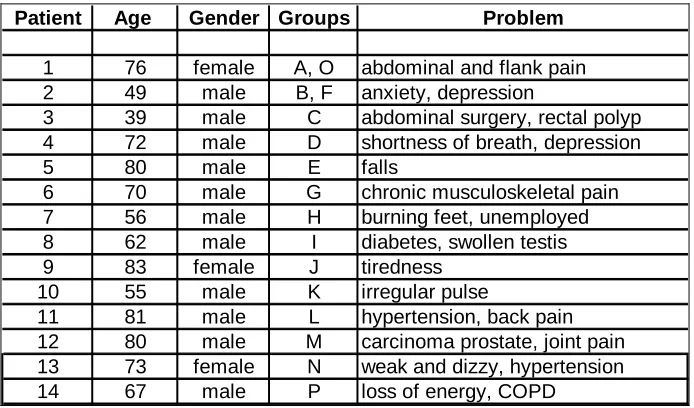
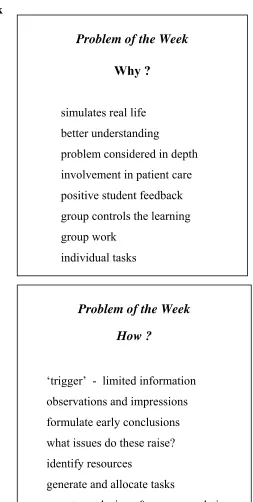
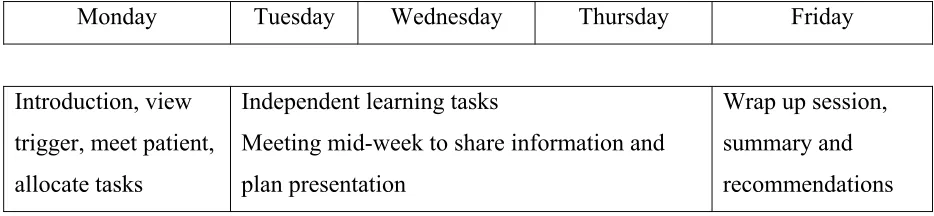
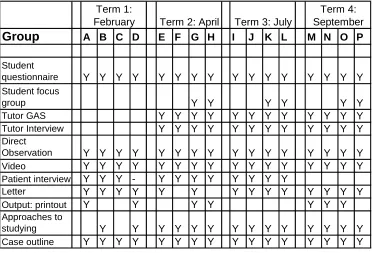
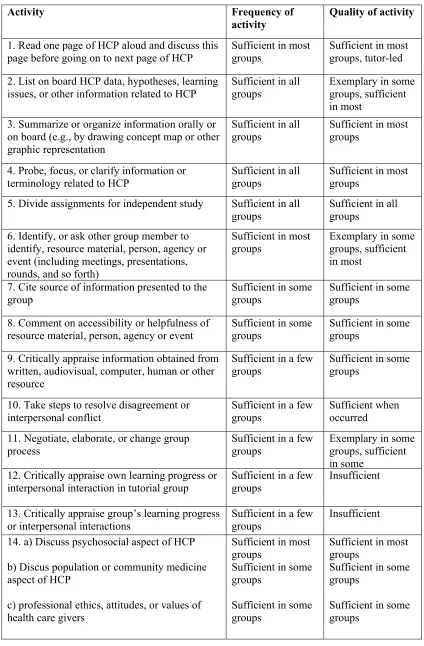
(16) LIST OF TABLES Table 2.1: Criticisms of traditional medical teaching. page 24. Table 2.2: A paper-based PBL case from the University of Liverpool. page 26. Table 2.3: The seven steps used in PBL tutorials. page 27. Table 2.4: Principles of cognitive learning. page 34. Table 2.5: Educational objectives of PBL. page 36. Table 2.6: Objectives of PBL. page 37. Table 2.7a: What to evaluate. page 51. Table 2.7b: Methods of evaluation. page 52. Table 2.8: A hierarchy of levels of evaluation. page 53. Table 2.9: Differences between research and evaluation. page 58. Table 2.10: Indicators used in evaluating educational innovations. page 64. Table 2.11: Approaches to studying questionnaire. page 66. Table 3.1: Development of the Problem of the Week. page 71. Table 3.2: The Year 5 GP term (SM503),. page 72. The University of Queensland, 1998 Table 3.3: Numbers of student groups and Problem of the Week cycles. page 74. Table 3.4: Demographic data of patients used. page 77. Table 3.5: Template of case outline. page 79. Table 3.6: Allocation of cases and tutors to groups. page 83. Table 3.7: Overhead transparencies used in the introduction to. page 85. the Problem of the Week Table 3.8: Problem of the Week: weekly cycle. page 86. Table 3.9: Problem Based Learning Tutorial Observation guide. page 98. Table 3.10: Data collection and instruments. page 101. Table 3.11: Perspectives used in discussion. page 102. Table 4.1: Summary of total observed activities by group. page 116. Table 4.2: Summary of frequency of observed activities by item. page 117. Table 4.3: Frequency and quality of activities observed. page 120. Table 4.4: Group Assessment Schedule summary. page 132. xv.
(17) Table 4.5 Comparison of direct observation with Group Assessment. page 134. Schedule Table 4.6: Approaches to studying questionnaire. page 136. Table 5.1: Student questionnaire – usefulness of the Problem of the Week page 182. xvi.
(18) CHAPTER 1. INTRODUCTION. Problem based learning (PBL) has been used world-wide in medical education since the 1970s. Most experience has been in the preclinical years of undergraduate medical courses, using paper-based cases. Much of the recent reform in medical education has not involved the more senior clinical years.1,2,3 This thesis describes the development, implementation, and evaluation of problem based learning using ambulatory patients as one of the teaching strategies in a year 5 undergraduate course in General Practice. In this introduction I will outline how my educational and clinical experience led to an interest in PBL. I will describe the environment in which this was occurring, including developments in General Practice in Australia, changes in medical education, in particular in the developing field of PBL, and opportunities that have arisen as a result of these changes. I will reflect on how my professional background and experiences of medical education as a learner have influenced my practice as a provider of medical education and led to the work described in this thesis.. 1.1 Background and experience. I came into a career in medical education with exposure to relatively conventional education. From secondary school I undertook a ‘traditional’ 6-year undergraduate medical programme in the early 1980s. Most clinical teaching was hospital-based and there were relatively few opportunities to undertake terms away from major teaching hospitals in the large cities.. 1.
(19) My early experiences of medical education in a traditional course at The University of Queensland were not unusual: large group lectures (to 200 students or more); large volumes of material presented in a didactic fashion, with teaching and assessment strategies that emphasized isolated recall of facts rather than deeper learning and application; and there was little exposure to patients until the clinical years, in the second half of the course. The course was structured in a traditional way, with three pre-clinical and three clinical years. The early parts of the course focused on the basic biological sciences, with a heavy emphasis on pathology in the fourth year, and rotations through the various clinical specialties in the last two years. There was little clinical exposure in the first half of the course and much of the material presented appeared irrelevant to patient care. When confronted with a patient it was difficult to recall, let alone apply, relevant prior learning. There was relatively little exposure to patients in the pre-clinical years, while in the latter years most patients were seen in the contexts of specialty units in large teaching hospitals. Most teaching and assessment in the clinical years was by hospital-based discipline. There was little opportunity for integration of learning across disciplines. The only elective period in the clinical years was a relatively unstructured clinical attachment between years 5 and 6, which had to be undertaken outside the major teaching hospitals. The only mandatory community-based attachment was the four-week General Practice subject in year 5, which included a two-week attachment to a general practice. The majority of undergraduate clinical education was therefore in large teaching hospitals, delivered by hospital-based registrars and specialists. Education was organized in traditional, discipline-based units, with no requirement for graduates to spend more than two weeks in the community. Most graduates had similar experiences in their intern year. There were compulsory rotations in Medicine, Surgery, and Accident and Emergency, and some exposure to other disciplines. The intern year was undertaken in a large tertiary hospital, with little exposure to community medicine. There was little emphasis on training for 2.
(20) General Practice although some effort was made to give interns destined for rural practice exposure to anaesthetics and obstetrics. After completing my intern year in a metropolitan hospital in the mid-1980s I moved to a remote community in Northwest Queensland in order to complete the requirements of my State Government bonded rural scholarship. These scholarships offered financial support for undergraduate medical students in return for which students had to repay service on an equal time basis after graduation. Scholarship holders were generally sent to rural and remote communities that could not be filled by other means. At that stage there was little in the way of formal preparation or support. Scholarship holders attended a two-day briefing before taking up their scholarship, but there was no requirement for additional rural experience or training, and no formalized support network. The conditions of my bonded scholarship required me to commence unsupervised rural practice with minimal prior training or experience. I had only had a two-week General Practice attachment as an undergraduate, with limited rural exposure. This two-week attachment formed the only community-based education in my seven years of medical education to date. Most of my clinical teaching was therefore in hospitals, and most clinical teachers were specialists. The contrasts in rural practice were immediately apparent: I had little preparation for practice in a community-based setting and found that I had to think and interact differently with patients and their families. I had to place increasing reliance on working in a small group with other members of the local and visiting health care team, using all available resources and the skills of all participants, and being able to define my limits, acknowledge them to patients, and then to go about finding solutions. Working as a rural general practitioner (GP) with no formal preparation and clinical experience almost entirely based in large teaching hospitals brought a series of challenges. The work involved routine General Practice consultations, and inpatient and outpatient care at the small 16-bed hospital, which included management and stabilisation of emergencies, and uncomplicated obstetrics. Clinical support was 3.
(21) provided by base hospitals; aeromedical services including the Royal Flying Doctor Service; visiting specialists; and the flying specialist services. Part of each day was spent in private practice and part in the hospital, and I was ‘on call’ 24 hours a day. Other responsibilities included administrative duties in the hospital; practice management; and dispensing of pharmaceuticals. Relief for days off was provided from the base hospital, initially irregularly, but more formally (6 days every 6 weeks) when an industrial award was established in 1989. In this remote setting I was undertaking rural General Practice with no on-site supervision. My training and experience offered me little preparation for this new role. I had attended school and university in major provincial and capital cities, and had no experience of life in a small rural community. There was little formal preparation for rural practice in the undergraduate course, and almost no exposure to rural role models. In addition, I was new to the region and had little understanding of the local health care system, and few personal and professional support mechanisms. I therefore developed my own networks and training pathway, and enrolled in the Family Medicine Programme (FMP), later known as the RACGP Training Program, in order to formally train for General Practice. FMP used an apprenticeship-style approach, with trainees undertaking supervised placements in accredited general practices. At that time there was no formalized training stream for remote practice or distance supervision. However, some limited distance supervision was available, and the training programme did provide access to an informal network of trainees and supervisors.4 Educational sessions were mostly centrally based in Townsville and Brisbane, where I was able to attend workshops from time to time. There was a loose curriculum framework, but no defined rural training path. The special skills and preparation for rural practice were in the early stages of being recognized and described.5 Distance education was available in the form of regular teleconferences with other trainees, statewide satellite broadcasts, and the occasional on-site external clinical teaching visit. Other resources provided by the Family Medicine Programme included study packs, journals, and access to a bank of computerised questions. Some support was provided by the regional and state office of FMP, but. 4.
(22) there were no resources for full distance supervision, and no particular emphasis on education for rural and remote practice. I practised in this location for over 6 years and found that much of my learning was from my patients. When faced with a new or challenging clinical problem I went through the steps of identifying what I already knew about the problem, what I needed to know, and possible sources of information. I then had to apply my new learning to the clinical situation. In a sense this was a form of clinical problembased learning, although occurring more often in an individual rather than a group setting, and I was not consciously aware of the parallels. The learning was, of necessity, case-based, highly contextual, applied, and self-directed. Other resources were used in similar ways. There were a range of visiting specialists, including a Flying Surgeon who visited monthly, a three-monthly visit from the Flying Obstetrics and Gynaecology service, and annual visits from a chest physician. In addition I had access to other visiting allied health services as well as child health and other nursing services resident in the community. A substantial part of my learning occurred in discussions around real cases and clinical problems with these professionals, either on a one-to-one basis or in small groups. While the terms of my scholarship only required me to spend one year in this community, I eventually spent over six years there. By accessing a variety of resources and developing networks I was able to meet my professional needs and overcome professional isolation. Some of these needs were met by the emergence of groups such as rural doctors associations in the late 1980s, with the Rural Doctors Association of Queensland being formed in 1990. These networks provided access to peer support, role models, and medicopolitical information and were instrumental applying political pressure to governments to address and resource the problems of rural practice.6 This was an unusual career path. Most Queensland Health scholarship holders tended to serve their bonded period and then return to the larger centres to undertake more formal training in General Practice or their chosen specialty. Very few scholarship holders undertook extended periods of unsupervised practice, as the 5.
(23) majority of postings were to hospitals with at least two-three doctors. Relatively few had the opportunity or the inclination to undergo training in the location in which they were serving their bond. The educational models for training for rural and remote practice that were emerging at the time emphasized a different model, that of closely supervised experience early in training, with the opportunity for less intensely supervised, more remote experience later in the training. There was a strong focus on appropriate preparation prior to entering remote practice, accreditation of appropriate practices and supervisors, and formalisation of the support and educational networks for the learner. The model of education for rural practice that I underwent was regarded by many as educationally unsound. There was a growing view at the time that General Practice and rural practice were both specialties, which required specific preparation, and that recent graduates should not be exposed to them without adequate preparation and supervision. This was supported by Federal Government Provider Number legislation introduced in 1996, which required all new entrants to General Practice to either have undergone appropriate training or to be in a recognized training programme.6 The process of allocation of posts for Queensland Health Scholarship holders changed during the 1990s to ensure that graduates were able to undergo appropriate training before being exposed to unsupervised practice. Later models such as the Isolated Solo Terms project of the Family Medicine Programme in the mid-1990s 7 and the Pilot Remote Vocational Training Stream,8 which commenced in 2000, provided training paths more in line with my experience. There were a number of significant differences in these programmes, which were designed to allow training in remote areas with minimal on-site supervision and support provided at a distance. Most trainees in these programmes were carefully selected doctors with significant prior experience and training, formal support structures were set up to meet their educational needs, and there was a process of accreditation of practices and supervisors. In my case the combination of informal supervision, networks and other support seemed to succeed and I was able to formalize my General Practice training with completion of the requirements for Fellowship of the RACGP (FRACGP) in the 6.
(24) early 1990s. I was able then to take on increasing roles in medical education. A number of medical students undertook clinical attachments in my practice, which was also accredited for vocational training. Although I had no formal training in medical education I was able to reflect on my own experiences of education, both in my undergraduate years and in my early clinical practice. Most of my learning in General Practice had been experiential and case-based, and I used this approach with students. My patients were generally very interested in talking to medical students, and were only too pleased to be used as the basis of the students’ education. As I started to use patients to teach students I was able to reflect on the ways in which I had learned from my patients. This style of practice forced me to reflect on my educational background and was ideal preparation for the next phase of my professional life, in medical education. In 1993 I, became involved in vocational training for General Practice and rural practice, taking up an appointment as Medical Educator with the Family Medicine Programme (FMP) / RACGP Training Program. Learners were motivated, most were in community settings, many had substantial prior experience, and they enjoyed working in groups and learning around their patients. I became involved with the vertically integrated teaching structure of the General Practice and Rural Health group at the North Queensland Clinical School, with major responsibilities for undergraduate teaching and vocational training, and some involvement at other levels including high school promotions, intern training, and continuing medical education. The undergraduate programme included a four-week General Practice attachment, SM503. One of the teaching strategies developed in this course involved the use of real patients in problem based learning (PBL) tutorials, and formed the basis of this study. The North Queensland Clinical School was one of many changes that were taking place in medical education in Australia. In the next section I will describe the changing culture of General Practice education in Australia, and will then outline. 7.
(25) other changes in medical education and their influence on the work described in this thesis.. 1.2 General Practice education in Australia. There were many changes in General Practice education in Australia in the 1980s and early 1990s. Academic General Practice was emerging as a distinct discipline, with initial appointments in some medical schools in the 1970s. By the early 1980s all Australian medical schools had an academic General Practice presence.9 However, departments were described by a variety of nomenclature including ‘Social and Preventive Medicine’, ‘Community Medicine’, and ‘Family Medicine’. The focus of many of these departments included, but was not limited to, community-based teaching. Many departments encompassed a variety of disciplines and interests, and presented no clear single identity. Indeed, only one school, the University of Western Australia named its foundation chair a chair of ‘General Practice’. In 1991 only two medical schools had departments or divisions with General Practice in their names.10 General Practice was not considered as an academic discipline 11 and most of the fledgling academic units had difficulty in securing curriculum time and in attracting and funding core staff. In contrast, by 2001, ten of the eleven medical schools had ‘General Practice’ in their departmental designations, and all had chairs in General Practice.12 The emergence of the name General Practice as the preferred term in Australia for primary medical care in the community context was mirrored by the change in name from Family Medicine Programme to RACGP Training Program, and the development of the Australian Association for Academic General Practice which was formed to support and express the views of the growing numbers of GP academics across the country.9. 8.
(26) There was also a growing international recognition of General Practice as an academic discipline. McWhinney had described the essentials on an academic discipline in 1966 as having a defined body of knowledge, a unique field of action, an active area for research, and academically rigorous undergraduate or postgraduate training programmes.13 Kamien asserted in 2001, ‘It would be a brave dean who would still publicly argue that General Practice lacks the essentials of an academic discipline.’ 9 Several elements of McWhinney’s definition are relevant to the changes taking place in General Practice in Australia in the 1980s and 1990s. The body of knowledge and identity of General Practice was being shaped by the development of departments of General Practice in all medical schools, a growing literature including widely read journals such as Australian Family Physician and Modern Medicine, and publications in the 1990s of a range of textbooks on General Practice by Professor John Murtagh and others. While there were substantial increases in teaching time devoted to General Practice curricula through the 1980s and 1990s, and a sixfold increase in research output over this period,14 much more needed to be done to promote the research culture in Australian General Practice. Kamien concluded ‘an entire discipline that produces an average of only 55 research publications a year in Australia is still in its academic infancy.’ 9 Despite reports such as the ‘Doherty Review’ of medical education in 1988 drawing attention to the shortage of resources available for teaching General Practice, 15 universities were slow to act on its recommendations. Dickinson pointed out that many of the single departments of medicine and surgery at the larger medical schools had a greater number of full-time-equivalent academic appointments than the twenty appointments in the ten academic departments of General Practice in 1990.16 He observed ten years later that this position had hardly changed.17 In spite of their resourcing constraints, departments of General Practice were having an impact on medical schools. They were instrumental in pioneering the promotion of socially responsive curricula, addressing needs in such areas as Indigenous 9.
(27) health, rural medicine, and the health of people in disadvantaged areas. Departments of General Practice were often involved in development of teaching communication and consultation skills, and ethical and professional values to medical schools.. 1.3 Undergraduate education in General Practice. While many of these issues that were being promoted by the developing departments of General Practice are relevant to all aspects of medicine and are not unique to General Practice, there was only limited success in promoting community-based education. The majority of the undergraduate curriculum was still delivered in large teaching hospitals. Students generally saw General Practice attachments as a soft option. The workload was not demanding, examinations were not taxing, and students rarely failed. There appeared to be no formal curriculum or textbook of General Practice, and a career in General Practice was generally seen as a default option for students who could not make it into specialty training or those with other needs such as wanting to work part-time.11 Much of the medical school experience portrayed General Practice and rural practice negatively.18 Little curriculum time was spent in the community: most medical schools had a 2-4 week General Practice or community medicine term, with no compulsory rural attachment.19 Any further experience was largely left to students to organize themselves in elective time. All medical schools in Australia at this time had an undergraduate programme although some were considering a move to a graduate course. The majority of students were school-leavers who were selected purely on academic merit. There was comparatively little attention paid to selecting students from a diversity of backgrounds, schools, or geographic areas. Indeed, of all the medical schools only Newcastle considered personal qualities via an interview process. General Practice academics did not have a high status among medical students. There was no doubt they taught some interesting material and were competent in a 10.
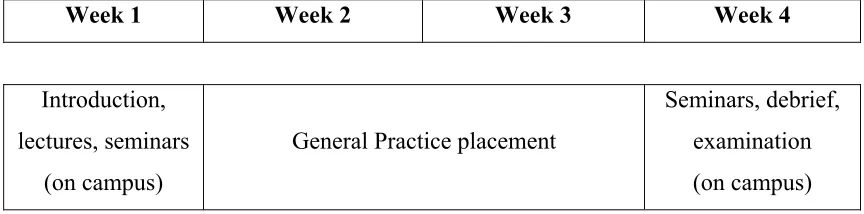
(28) range of common conditions, but they were not really able to advance students’ learning in ‘difficult’ disciplines such as Medicine and Surgery. They were interested in areas such as communication skills, the consultation process, ethics and compliance, which were seen by students as interesting, but more relevant to their future practice than to the immediate reality of passing impending examinations. Academic general practitioners were working in an environment in which there was little research culture or literature based in General Practice.14 Their interests lay in areas such as teaching and communication skills, which were not particularly valued by medical schools, and they did not have a high profile with other clinical academics or within their profession. The year 5 General Practice term at the University of Queensland may be taken as typical of an Australian undergraduate General Practice course in the 1980s. Students undertook this four-week subject as one of six rotations during year 5 of the six-year programme. The first and last weeks were based at the central campus, with the middle two weeks comprising a General Practice attachment. The introductory week aimed to prepare students for their General Practice attachment by teaching students about the academic basis of General Practice and common conditions that they may not have encountered in major teaching hospitals. Students had a good deal of freedom in their choice of practice and were able to select a practice to attend on the basis of personal knowledge, or from a centrally maintained list. There was no formal system of practice selection or accreditation in place, little support or training for general practitioner teachers, and few incentives or rewards for preceptors. Limited support for student travel was available, and the majority of placements occurred in the larger centres. Attachments were experiential and unstructured. Students were expected to learn by observing the general practitioner and by participating where possible in clinical encounters and practical procedures. Apart from a log of one hundred consecutive patients there were no formal learning activities or tasks over the two-week General Practice attachment.. 11.
(29) The prevailing feeling among medical students at the time was that this was an interesting, but not particularly demanding term. General Practice was not seen as a separate discipline to be formally studied and mastered, nor was it seen as the first career option for most students. Students’ interest and energy was more likely to be channelled into fascinating but complex inpatient cases than dealing with common, self-limiting illnesses, or issues around communication and consultation skills. Most recognized the role of the general practitioner in the health care system, but had little interest or incentive to study the content or process of General Practice care in any depth. GP academics were not seen as significant role models, and there was little emphasis on the concept of formal preparation for rural and remote practice. Other changes in medical education in Australia included the move by three medical schools including The University of Queensland to a graduate entry programme. These courses had differences in selection procedures, curricula, and teaching methods, with an emphasis on PBL, group work, and self-directed learning (SDL). The first intake into the university’s Graduate Medical Course was in 1997, with the first cohort undertaking year 3 of the course at the North Queensland Clinical School in 1999. Teaching staff had several years in which to develop curriculum material and prepare for new methods of teaching and assessment. Students enrolled in the University of Queensland’s medical course were also affected by the curricular changes. The students involved in this study were in the last cohorts to undertake the traditional six-year undergraduate programme, and were doing so in an environment of curricular debate and reform. Considerable attention was paid to the new approaches to medical education, including the introduction of PBL. 1.4 Postgraduate education in General Practice At the same time the Family Medicine Programme was delivering vocational training in General Practice across Australia. Founded in the mid 1970s, the Family Medicine Programme (FMP) was funded by the federal government and delivered by an arm of the Royal Australian College of General Practitioners (RACGP). It offered training in all states and territories and was recognized as one of the largest single vocational training programmes in the world. FMP had a central structure and 12.
(30) management, with offices in each state and some regions. The programme was three-four years in length, and was based around rotations through hospital posts and General Practice attachments, augmented by seminars and workshops.4 The programme had developed a system of accrediting general practices and other positions as teaching posts, which was carried out at arm’s length by the RACGP. Teacher training was provided by FMP, which also provided a teaching allowance and subsidy to practices. There were few other direct incentives for general practitioners to teach. The programme was based on sound adult learning principles and had gained a reputation for educational innovation. Trainees (later called Registrars) were expected to develop learning plans in conjunction with their designated training adviser. Feedback was a prominent part of the educational process with trainees being required to collect at least two feedback forms from their supervisors each year. Direct observation of trainees’ consultations was encouraged by means of video recording and review, or by direct observation by FMP staff. These visits developed into a formal programme of external clinical teaching visits, which were conducted both by staff and by experienced general practitioners who were recruited and trained. The training programme also pioneered some models of distance education including external study packs, interactive satellite broadcasts, and computer-based true/false questions and patient management problems. The programme was delivered by Medical Educators, who were experienced general practitioners with an interest in education. They were supported by other general practitioners who took on part-time roles as Training Advisers and Area Coordinators, and reported to a State Director. Many FMP staff developed skills in programme design and delivery, and in innovative small group teaching. However the culture did not emphasize or value research. Most evaluation tended to be on specific aspects of the programme and disseminated internally. There was less emphasis on the need to secure external grants and publish in refereed journals compared to the University setting.. 13.
(31) At this time there were few formal links between University departments of General Practice (or their equivalent) and the vocational training programme. General Practice training tended to be delivered by different organisations to learners at different levels, with little evidence of collaboration or cross-fertilisation. The end point of vocational training was the Certificate of Satisfactory Completion of Training, although many trainees sat the RACGP Fellowship examination. The examination was optional until the introduction of Provider Number legislation in 1996 requiring new entrants to General Practice to provide evidence of having been trained (or be in training) for General Practice before they could be issued with a provider number. The introduction of Vocational Registration in 1989 did provide some incentive to undertake the RACGP exam, as this was recognized as one avenue to vocational registration.6 The grandfather clause for Vocational Registration (VR) ended on 1/11/1995, meaning that successful completion of the FRACGP was the only route to Vocational Registration in Australia. With the change of name from the Family Medicine Programme to the RACGP Training Program (RACGP-TP) came a series of changes. For the first time numbers entering the Training Program nationally were restricted to 400 in 1995. A competitive national selection process was implemented. For the first time entry to vocational training for General Practice was not automatic: graduates had to make a decision to apply and compete with their peers for places.6 Along with tightening of entry procedures, the pathway through the Training Program was becoming more structured. Teaching and learning was still based on an experiential apprenticeship style model, and learners still had considerable flexibility in the path they could follow. Teaching sessions still tended to be casebased, usually using real cases as the cue. These tended to be dealt with rapidly, and without a formal structure or framework. There was, however, more pressure to complete the programme, rather than take extended periods of leave and elective time, and more pressure to meet community and government needs by limiting the number of training practices available, and encouraging more training in rural and regional areas.. 14.
(32) With the growing recognition of the need for a formal training programme for rural practice, a number of new initiatives were introduced. A Rural Training Stream was introduced with selection by an interview panel with representatives from the Training Program, rural health training units, and practising rural doctors. The Rural Training Stream emphasized early exposure to supervised rural practice, with Registrars encouraged to undertake hospital terms in regional hospitals, and a total of at least 12 months of General Practice training in rural practices. Registrars had access to rural training advisers who helped them tailor appropriate training plans, and had access to a wider range of resources. Advanced Rural Skills Posts were set up with curricula developed by the respective Colleges working through a Joint Consultative Committee structure, and accreditation mechanisms developed. These activities were co-ordinated by a central directorate of Rural Training, with rural coordinators being appointed in all regions.20 There was a growing movement for all Registrars, whether in the Rural stream or not, to experience some rural practice through a requirement to complete an Area of Medical Service Need term. Increased resources were available for rural training, with rurally oriented applicants being favoured in the selection process, incentives for rural registrars, and use made of various forms of distance education including teleconferencing and videoconferencing.21. 1.5 Education for rural practice The Kamien report 22 together with growing political pressure to address the crisis in rural workforce led to a series of rural initiatives at the federal level, the General Practice Rural Incentives Program.23 The Rural Incentives Program addressed a number of broad programme areas including training, continuing medical education and locum support; remote area support; recruitment and GP relocation; and undergraduate support. The Rural Undergraduate Steering Committee encouraged rural initiatives in medical schools through a series of targets. These included increased recruitment of rural origin students; development of rural components in medical school curricula; a minimum of eight weeks of structured 15.
(33) rural clinical placement; educational support for rural clinical teachers and appointments of rural-based academic staff; support for rural student clubs; and support for academic departments of General Practice.23 Medical schools were encouraged to explore rural initiatives and community-based teaching, and regional clinical schools were being discussed. The pace of change varied between medical schools, with the smaller regional schools such as Flinders and Monash adopting these changes sooner than the larger and older metropolitan schools. At the same time University Departments of Rural Health were being established in all states. A Rural Faculty was established within the RACGP to address issues relating to rural education, training and workforce. Rural Doctors movements were active in all states by the early 1990s, and the Australian College of Rural and Remote Medicine was formed in 1997.24. 1.6 The North Queensland Clinical School. The North Queensland Clinical School of The University of Queensland was established in 1993 and led the way in a series of these initiatives.25 The Clinical School was a community-based dispersed campus some 1200 km distant from the main university campus. With departments of Medicine, Surgery and Psychiatry, as well as General Practice and Rural Health, the School attracted students with an interest in General Practice, and offered opportunities for innovation and collaboration across disciplines. Students from the University of Queensland had the opportunity to complete part or all of the last 2 years of the six-year undergraduate programme in North Queensland. Students had a background of 3 years of pre-clinical science, and a fourth year of clinical medicine and pathology. The majority of students had entered university directly from school, and had undertaken a traditional undergraduate medical education programme. Until the formation of the North Queensland 16.
(34) Clinical School most clinical teaching was close to the main campus. However, there was increasing emphasis on teaching in regional areas, with more use being made of rural placements and consideration given to the development of resources outside of the main campus. The department of General Practice and Rural Health was developed as a vertically integrated unit, with major responsibilities at undergraduate (university) and postgraduate (RACGP Training Program) levels, and other roles in intern training, continuing medical education and professional leadership.26 This integration brought staff and learners from several levels together with shared office space, staff, and teaching activities. Innovative models of educational delivery could be trialed and the boundaries blurred between undergraduate and vocational training. The opportunity to develop a year 5 General Practice course in North Queensland allowed a number of options to build on my prior experiences. Smaller student numbers and generous support from the local medical fraternity resulting in favourable staff: student ratio allowed for the opportunity for small group teaching and innovative approaches to education. As a newly appointed academic at a new Clinical school, I had to develop my own teaching strategies, which were based on my own experiences and feedback from learners, usually in a small group environment. There were a number of similarities with my earlier clinical experiences in remote practice: I was in a role for which I had little formal preparation, and much of my learning was experiential, based upon my real-world experiences and feedback from those around me who were involved in the process. This background had a major influence on my interest in developing clinical teaching around real patients. The year 5 course in General Practice, SM503, was structured to run in parallel with the main campus. Students in both groups covered the same material, and met the same learning objectives, although emphasis, delivery and process varied according to local circumstances. Assessment was identical for both groups, as was the structure of the four-week course: students undertook an introductory week, a twoweek attachment to a GP, and then a final week which included a number of wrapup sessions and a summative examination. 17.
(35) The introductory and wrap up weeks included coverage of the theoretical basis of General Practice; common problems seen in General Practice such as ear, nose and throat (ENT), skin and eye problems and practical procedures; community-based activities such as visits with the Blue Nursing Service; communication and consultation skills workshops; and management of chronic diseases and selflimiting problems. Some of these sessions were case based using written simulations of clinical cases, or cases that the students had seen in practice. The small group format provided an opportunity to trial some innovative approaches to delivery. One of the teaching strategies used from the initial rotation in 1994 was the concept of the Problem of the Week. In addition to more conventional lectures and tutorials, students were asked to examine one patient’s case in more detail. Students were expected to work as a group on the case over the duration of the week, and report their findings in a tutorial at the end of the week. Learning objectives included promotion of group work; achieving an understanding of a GP’s role in the management of chronic complex cases; and appreciation of the role of various team members in the care of a patient and their family. This activity was used to replace other scheduled sessions such as management of chronic diseases. Students were initially exposed to a brief ‘trigger’, which was written information or a brief videotape of the start of a consultation. The group then worked through the case over a week. In the first tutorial observations and information regarding the patient were listed and discussed, hypotheses generated, and decisions made about further information required and how to obtain it. Students divided these independent tasks among themselves and worked independently on them during the week. Possible tasks included interviewing the patient at the clinic on-site; performing a house call to meet the patient and family in their own setting; interviewing the patient’s GP; interviewing specialists and other health professionals involved in the patient care; and reviewing the patient’s chart. Students met in a second tutorial at the end of the week to share and synthesize this information, and make suggestions regarding further management.. 18.
(36) Informal evaluations of this approach when it was first trialed in 1994 were very positive: staff and students were enthusiastic about the opportunity to ground learning in the context of a real patient, and to explore one case in detail, considering multiple dimensions. There were some logistic issues to be resolved such as recruitment of patients and organisation of necessary resources, but there was sufficient interest in this approach to consider exploring it more formally. The approach outlined in the Problem of the Week demonstrated many of features of PBL including small group work; exploration of a particular problem in depth, with the group identifying what was known about the problem, what they wished to learn about it, and how they would accomplish this; opportunity for individual work; and a group meeting at the end of the cycle where members shared and synthesized information.2,3 PBL had been used in medical education to help students learn in the context of real clinical situations. By overcoming the artificial divide between the basic and clinical sciences and requiring students to apply and integrate their learning to a clinical situation, the PBL format was able to address many of the criticisms of traditional medical education. Students in traditional curricula often wasted time in acquiring knowledge that is subsequently forgotten or found to be irrelevant, and complained of the difficulty in applying knowledge in a clinical context. The approach is based on principles of adult education and cognitive psychology, and is believed to lead to deeper understanding of the causes behind phenomena.27,28 Other advantages included the opportunity for group work and leadership skills, and the promotion of communication skills and self-directed learning. Most experience with PBL was in the preclinical years in undergraduate medical courses where PBL was a major teaching method. Cases were generally paperbased, with multiple groups of students in the same cohort working through the same case. There was less experience of PBL in the clinical years, where the teaching tended to be discipline-based, with tutorials, ward rounds and teaching around clinical cases.. 19.
(37) Case-based teaching had long been used in medical education. Traditional bedside teaching involved the teacher discussing clinical signs or conditions demonstrated by a patient with small groups of students. Learning was contextual and relevant, and tended to be more easily recalled by students than the same material presented in a lecture or a textbook. However, teaching tended to be ad hoc, depending on what clinical material was available. Many conditions were not available for teaching in the wards or hospital outpatient clinics where these sessions were traditionally held, so that even within a medical course, students could have quite different educational experiences. Case-based teaching shared some approaches with PBL in helping students meet similar learning objectives. Both were designed to directly help students develop the reasoning process used by clinicians in an effective and efficient manner. Actual patient problems are presented in the same manner that occurs in practice, with students free to choose the path they take in approaching the problem. The sequence of behaviours of students as they work with patient problems and carry out selfdirected learning is similar to that required in clinical practice. The tutor has an important role to facilitate the development of the clinical reasoning process in students. Finally, patient problems were carefully selected to illustrate the kinds of problems, both in terms of content and process, which appear in practice.2 The Problem of the Week approach had been used in an effort to address some of the concerns of traditional medical teaching formats. This approach was used to help students apply and integrate their learning in the context of a real General Practice patient. There were some learning objectives generic to all cases such as illustration of the process of care and teamwork in General Practice, dealing with uncertainty, and the interplay of physical, social and psychological factors in many General Practice patient encounters. Students undertaking this course were new to PBL. They were in the fifth year of a traditional undergraduate course, with limited experience of working in small groups and minimal experience of PBL. Both students and teachers were comfortable with the established model of didactic subject-based teaching. The medical school was also involved in a transition from a six-year undergraduate 20.
(38) course to a four-year graduate entry course. The year 5 cohort involved in this study was in the last year of the ‘old’ course. These students, in addition to being new to PBL, were in an environment of a medical school undergoing dramatic change with a perception that resources and attention were being diverted to the ‘new’ course. My interest in PBL using ambulatory patients therefore stems from a variety of factors. Firstly there were my experiences of medical education as a medical student, in particular the contrasts between small group and large group teaching, and between learning in a teaching hospital and in the community. Secondly, my clinical practice as a rural GP in a remote location offered opportunities to both learn from patients, and to intimately involve them in the teaching of medical students. Finally, working in medical education at the North Queensland Clinical School offered the opportunity to develop an innovative approach to communitybased education in a small group setting. My approach to medical education was driven by my background experiences, and my role, as a newly appointed academic in a new clinical school, developing my teaching skills experientially, based upon my real-world experiences and feedback from participants and other staff.. 1.7 Research questions. Most PBL courses are based around paper cases with relatively few reports in the literature of PBL using real patients.29 Most of these courses used PBL extensively in the first half of the course, but tended to use traditional approaches to teaching in the clinical years. Early trials of PBL using real patients and discussions with the tutors and faculty involved led to a variety of questions. Was PBL using real patients feasible? Was it efficient? What sort of patients should be selected? How should cases be written? How should the conduct of the tutorial be organized? Did the role of the tutor vary? How should tutors be selected and trained? Were students able to meet the learning objectives equally well? Can curricular requirements be met equally well? Were there variations in the group process and learning outcomes? How could these be measured? How should PBL be introduced to senior medical students with little prior experience of PBL? How could this format be 21.
(39) evaluated? Could distinctions be made between the educational impact of the introduction of a new format (PBL) and a new approach (using real patients)? These issues led to formulation of the principal research question (null hypothesis): ‘There is no difference between PBL using real patients and PBL using paper-based cases’. In order to examine this issue a number of further questions were posed. What is the best way to approach PBL with real patients? How do outcomes vary when real patients are used rather than paper cases? What is the effect on the students’ learning? What are the learning outcomes? How should this be evaluated? What tools exist to assist? What are the experiences of students, tutors and faculty? Is there any effect (positive or negative) on the patients involved? What are the wider implications of this approach for the faculty, the community and from a resource perspective? The approach to the exploration of these issues will be more fully described in the section on methodology.. 1.8 Summary. This section has outlined how my educational and clinical experience led to an interest in clinical teaching with real patients. The environment in which this was occurring included major changes in General Practice, particularly in the areas of undergraduate and postgraduate training in General Practice and in rural medicine. Other developments in medical education such as the North Queensland Clinical School provided opportunities to adopt innovative approaches, including construction of problem based learning tutorials around real patients. The early experiences of this approach were positive and led to the formal evaluation reported in this study. The next section will describe developments and research in medical education generally, specifically in the area of PBL.. 22.
(40) CHAPTER 2. LITERATURE REVIEW. The relationship between the basic and clinical [sciences] cannot be one-sided; it will not spontaneously set itself up in the last two years if it is deliberately suppressed in the first two. There is no cement like interest, no stimulus like the hint of a coming practical application.30. PBL remains one of the major developments in medical education in the latter part of the 20th century. This chapter will review the historical background and theoretical basis of PBL, with a description of applications of PBL in a variety of disciplines. Approaches in medical education have tended to focus more on undergraduate rather than postgraduate applications as PBL is widely accepted as a teaching method at this level and the majority of reports are in this context. An examination of reviews and reports of clinical PBL will follow with a discussion on gaps in the literature and identified research questions. Relevant developments in medical education will be described. These include an increased emphasis on community-based medical education and teaching around real patients. Finally, developments in methodologies used for research and evaluation in medical education will be reviewed, specifically those used in evaluating PBL programmes. The review is based on computerized literature searches of the Medline and Educational Resources Information Centre (ERIC) databases from 1980 through to 2001. The Medical Subject Headings (MeSH) included problem-based learning and medical education, clinical education, real patients and ambulatory patients. The literature review was updated prior to submission of the thesis, with additional references obtained from articles held by the author and bibliographies from selected articles.. 23.
(41) 2.1 Background Problem-based learning is an important development in medical education which is increasingly being adopted by medical schools across the world as an integral part of innovative curricula designed to better prepare graduates to enter practice.31 Medical schools making this change are doing so in an effort to ensure graduates are better prepared to enter practice with strong attributes of self-directed learning and grounding in knowledge, attitude and procedural skills.32,28 PBL is believed to lead to deeper understanding of causes behind phenomena and to have other advantages such as the opportunity for group work, basic leadership training and developing communication skills.28 However, its popularity with new schools, particularly in the developing world has led to some questions about its value in institutions without strong basic science infrastructure. PBL is an approach which was first used in medicine but has now been adopted by a variety of disciplines including architecture, nursing, engineering and social work.33 The approach is based on principles of adult education and cognitive psychology.28,34 There are fundamental differences from the traditional, lecture-based course in which background knowledge in the basic sciences is acquired in the early part of the course and then applied to clinical problems in the later years. Finucane et al 35 cite a number of criticisms of the traditional approach. (Table 2.1) These include the artificial divide between the basic and clinical sciences, problems with acquiring information that is forgotten, appears irrelevant or is difficult to apply, and the impact of these factors on students. Table 2.1: Criticisms of traditional medical teaching 35 It creates an artificial divide between the basic and clinical sciences Time is wasted in acquiring knowledge that is subsequently forgotten or found to be irrelevant Application of the acquired knowledge can be difficult The acquisition and retention of information that has no apparent relevance can be boring and even demoralising for students. 24.
(42) 2.2 Overview of problem based learning Definitions of PBL vary across disciplines but can be summarized as ‘an educational method characterized by the use of patient problems as a context for students to learn problem-solving skills and acquire knowledge about the basic and clinical sciences’.1 Neufeld and Barrows 36 describe PBL as a method in which students first encounter a problem, followed by a student-centred inquiry process. Much of the literature is derived from the major proponents of PBL, notably McMaster University in Canada, the University of Limburg at Maastricht in the Netherlands (now the University of Maastricht) and Newcastle University in Australia. As PBL has become more widely accepted in medical school programmes in North America, the United Kingdom, Asia, the Middle East and Australia,35 many variants of PBL have evolved but there are a number of central elements that remain constant. PBL emphasizes both the content and the process of learning. The content is derived from the problem which students are presented with. These are devised by faculty based upon carefully constructed learning objectives. In many cases the curriculum has had to be reorganized around problems rather than disciplines, with an emphasis on an integrated approach rather than separation into various components of basic and clinic sciences, and on cognitive skills as well as the acquisition of knowledge.37 The problems, or cases as they are sometimes known, may represent important health problems of the region as well as prototypical situations and domains of knowledge.38 They may, therefore represent community-based or individual patient problems. Cases need to be carefully designed to arouse the students’ interest and to meet the learning objectives appropriate to the learners’ needs. When structured this way the acquired knowledge is likely to be seen as highly relevant, and to be remembered in the context of the problem discussed. One of the axioms of PBL described by Mennin and Majoor 39 is that the problem comes first. The problem is designed as a stimulus for the need to know, without the requirement for prior reading or preparation. Problems must be designed so that they cannot be solved at first glance with only the initial information presented. The design of the problem must take account of students’ prior learning and allow them to explore 25.
(43) various hypotheses and determine what further information they need in order to deal with the various aspects of the problem. The presentation of the problem can take many formats. Cases are usually presented as neutral descriptions of observed phenomena, such as a real life case or example of professional practice. Many PBL problems are presented as paper-based cases, while others use real or simulated (standardized) patients (trained healthy people used to portray the features of real patients). Mennin and Majoor (2002) describe other forms of media including video, internet, and computerized multimedia applications, to allow greater variability in problem presentation. An example of a paper-based PBL case from the University of Liverpool is in Table 2.2.3 Maria is 50 years old. She has two daughters aged 18 and 23, is divorced and is looking after her 82-year-old mother. She was called for screening by the National Health Service Breast Screening programme last week and was recalled to the assessment clinic. She has been told that she has a suspicious lesion in the left breast. Table 2.2: A paper-based PBL case from the University of Liverpool3 In most PBL programmes each case is dealt with in a small group, typically 5-8 students, working in a tutorial situation, with the assistance of a facilitator or tutor. The tutor’s role is as a guide to help students through the PBL process as they explore various dimensions of the problem. They help students create an optimal learning environment where all group members feel able and motivated to participate. Tutors use questions to clarify and stimulate students’ thinking and to help them discover what they do and do not know about a particular problem, and what they need to know to deal with the problem, and its relevance. Other roles may include helping the group define the depth and breadth of knowledge needed; developing group and teamwork skills; and enhancing skills and attitudes such as communication skills, professional behaviours, critical reasoning and self and peer assessment. The tutor’s role is not that of a content expert, and he or she is not expected to act as a resource for the group.2,41,42. 26.
(44) Groups form for periods that vary between programmes, usually from eight weeks to a semester. Students are usually randomly assigned, a deliberate strategy that forces students to work with others whom they may not know well, and which mirrors the health care teams in which the students will ultimately be working. The time spent on each PBL problem also varies depending on the curriculum time available and the length and complexity of the case. The most common model involves two tutorial meetings over the period of a week. A key part of the process is self-directed learning between sessions.43 At the first meeting of a group there will be normally be some time spent on process: introductions, clarifications of expectations, and establishment of any ‘ground rules’. From time to time groups are encouraged to take time to reflect on the process, how well group members and tutors are working together, and how group members and individuals are developing in various domains such as knowledge; clinical reasoning and communication skills; personal and professional attitudes and skills; and self and peer assessment. Several authors have described how frequent feedback and selfreflection about individual and group process enhance learning and group development.39 At the start of each PBL problem the group will usually appoint a note taker or scribe to record the important points of discussion on a board or flip chart, and, in some cases, a group chair. The group then works through the problem following an approach often described as the ‘seven steps’ (Table 2.3)3,37. THIS TABLE HAS BEEN REMOVED DUE TO COPYRIGHT RESTRICTIONS. Table 2.3: The seven steps used in PBL tutorials 3,37. 27.
Figure
+7
Related documents