PATIENTS
DISSERTATION SUBMITTED
FOR
ORIENTATION PROGRAM IN RLA STAGE 4
TRAUMATIC BRAIN INJURY PATIENTS
was carried out
by
Reg. No.411414001
, KMCH College of Occupational
Therapy, towards partial fulfillment of the requirements of Master
of Occupational Therapy (Advanced OT in Neurology) of the
Tamil Nadu Dr. M.G.R. Medical University, Chennai.
____________________
__________________
Guide
Principal
Mrs. Sujata Missal Mrs. Sujata Missal
M.Sc. (OT), PGDR. (OT) M.Sc. (OT), PGDR.
(OT)
KMCH College of
KMCH College of
Occupational Therapy
Occupational Therapy
________________
Clinical Guide
Dr. V. Arul Selvan
MD DM(Neuro)MRCP(UK) FRCP(Lond)FRCP(Edin)
Consultant Neurologist
Kovai Medical Center and Hospital, Coimbatore
________________
_________________
the wisdom to accomplish this project and bring it to a successful culmination.
I would like to extend my heartfelt gratitude to my Guide and Principal, Mrs. Sujata
Missal MOT for her incredible support, constant encouragement and patient teaching.
I am extremely thankful to Mrs. Sugi MOT, for her valuable advice especially while
finalizing the topic and during the analysis.
I am thankful to Mr. S. G. Praveen MOT, Vice Principal, for his support markedly by
raising questions regarding my study so that I could continue without hardship later.
I sincerely thank Dr. V. Arul Selvan, MD (Neurologist), Dr. Parthiban JKBC
(NeuroSurgeon), Dr. Suresh Jayabalan (NeuroSurgeon), Dr. Ganesan
(NeuroSurgeon), Dr. Rohit (NeuroSurgeon) for their guidance and providing their
precious time for me to explain and referring patients to me.
I am tremendously grateful to God for blessing me with wonderful friends circle so
that I wouldn’t sink down especially Hrudya who was always there for me and my
dear classmates Suja, Ancy, Ameera, Jancy and Ms Swati MOT for her extra time &
guidance, Ms Jewel and my Neuro Staffs.
I would like to thank my family for being a constant source of encouragement and
support through their powerful prayers throughout my study.
Aim
To find the effectiveness of Reality Orientation Program for RLA stage 4
traumatic brain injury patients.
Methods
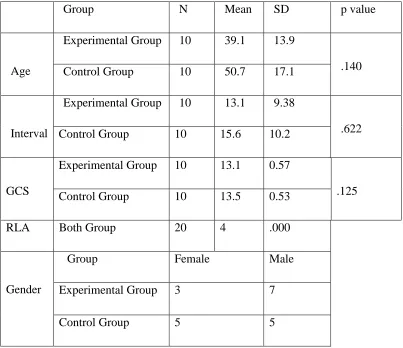
20 patients were recruited for the study. Of which 10 patients underwent
Reality Orientation Program (ROP) and 10 underwent Conventional therapy.
The patients were administered with Galveston Amnesia and Orientation Test
(GOAT), Mini Mental Status Examination (MMSE), Rancho Los Amigos
Scale (RLA), Glasgow Coma Scale (GCS) and Glasgow Outcome Score
(GOS). The study period was for 4 weeks, two weeks given by the therapist
and family members (under the supervision of therapist) in the hospital and
remaining two weeks orientation was provided by the family members either
in home or hospital.
Results
The duration of Post Traumatic Amnesia (PTA) was reduced by 10 days for
the patients who received ROP. Even though the results were not statistically
significant perhaps were clinically relevant (p= 0.096). Correlation between
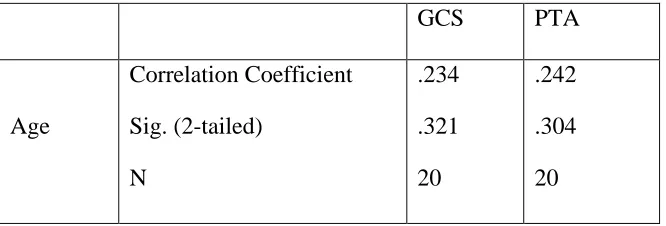
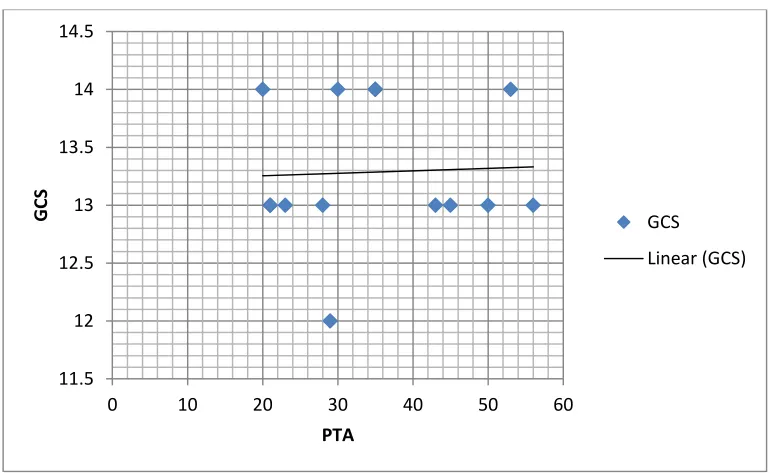
age & GCS (r=.234), age & PTA (r=.242) and GCS & PTA (r=.050) showed
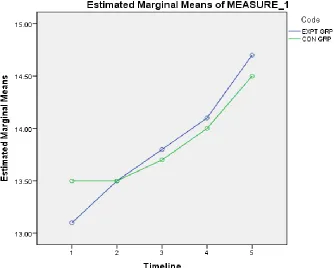
no positive correlation. On comparison of the MMSE scores between groups it
exhibited statistical significance at the end of fourth week. Other scales did not
display statistical significance. On comparison of scales within the group it
revealed high statistical significance. On comparing the significance of
effectiveness it was found that MMSE scores had medium effect (ηp2=.070),
GCS had very low effect ηp2=.000, small effect size (ηp2=.049) for RLA, and
GOAT revealed medium effect (ηp2=.087) between group. Resolution of time,
place and person in experimental group had a mean of 30, 22 and 14 days
Length of PTA was shorter in the patients who received ROP. ROP included
the orientation board which reduced the confusion of the therapist and burden
on the family members and enabled them to participate more actively in the
ACKNOWLEDGEMENT
ABSTRACT
LIST OF TABLES AND GRAPHS
LIST OF APPENDICES
CHAPTERS
I. INTRODUCTION………. 1
II. OPERATIONAL DEFINITION……… 5
III. AIMS & OBJECTIVES………. 6
IV. HYPOTHESIS……….... 7
V. RELATED LITERATURE………. 8
VI. REVIEW OF LITERATURE………. 17
VII. CONCEPTUAL FRAMEWORK……….. 27
VIII. METHODOLOGY……… 30
IX. DATA ANALYSIS AND RESULTS……… 39
X. DISCUSSION……… 55
XI. CONCLUSION………. 60
XII. LIMITATION AND RECOMMENDATIONS……… 61
REFERENCES……… 62
Table 2: Outcome Measure for experimental group and control group
Table 3: Correlation between age, GCS and PTA
Table 4: Correlation between Initial GCS and PTA
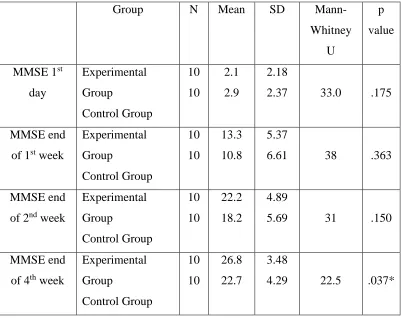
Table 5: Comparison of MMSE scores at various timeline (between group analysis)
Table 6: Comparison of GCS scores at various timeline (between group analysis)
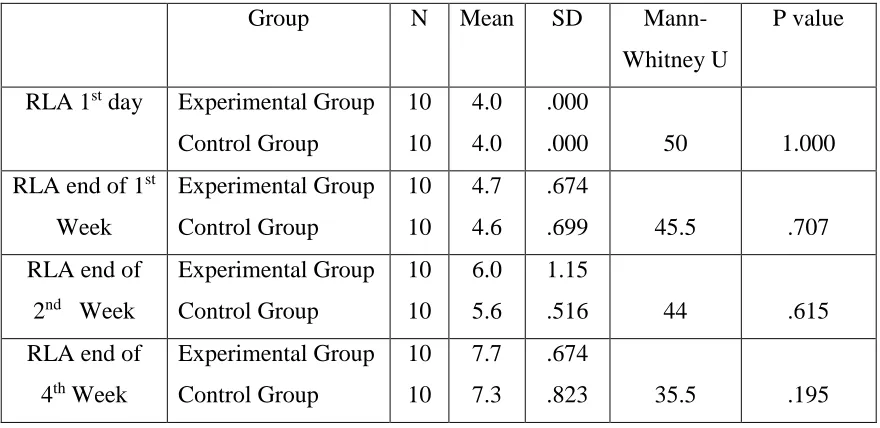
Table 7: Comparison of RLA scores at various timeline (between group analysis)
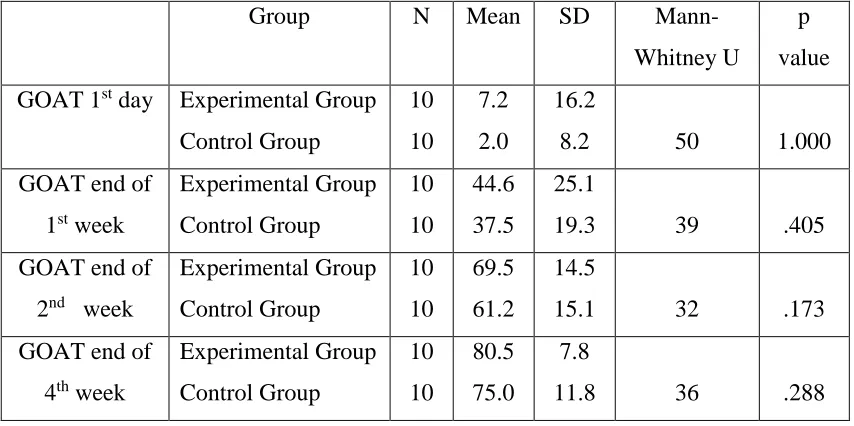
Table 8: Comparison of GOAT scores at various timeline (between group analysis)
Table 9: Comparison of pre and post test results of experimental group (within group
analysis)
Table 10: Comparison of pre and post test results of control group (within group
analysis)
Table 11: To examine the effect size of MMSE of both the groups.
Table 12: To examine the effect size of GCS of both the groups.
Table 13: To examine the effect size of GOAT of both the groups.
Table 14: Descriptive statistics of time, place and person.
Graph 1: Correlation between Initial GCS and PTA
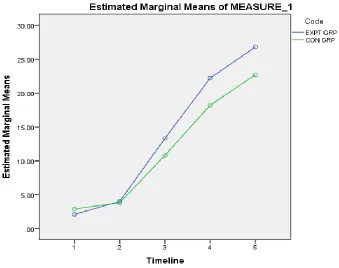
Graph 2: To examine the effect size of MMSE of both the groups
Graph 3: To examine the effect size of GCS of both the groups
Graph 4: To examine the effect size of RLA of both the groups
Graph 5: To examine the effect size of GOAT of both the groups
Graph 6: Descriptive statistics of time
Graph 7: Descriptive statistics of place
I. GALVESTON ORIENTATION AND AMNESIA TEST
II. MINI MENTAL STATUS EXAMINATION
III. RANCHO LOS AMIGOS
IV. GLASGOW COMA SCALE
V. GLASGOW OUTCOME SCORE
VI. FAMILY TASK SHEET IN TAMIL
VII. FAMILY TASK SHEET IN ENGLISH
VIII. FREQUENCY CHART
1
INTRODUCTION
Traumatic brain injury (TBI) is a form of acquired brain injury that causes damage to the
brain as a result of sudden trauma. (Solmaz I et al, 2009) It is regarded as “the most
complex disease in the most complex organ”, and distinguished by great heterogeneity in
terms of etiology, mechanism, pathology, severity and treatment with highly varying
outcomes. It may consist of diffuse damage, contusion brain damage or intracerebral
hematoma. It is recognized that intrinsic pathophysiologic processes and systemic insults
such as hypoxia and hypotension heightens the primary brain damage.(Lingsma HF et al,
2011) Sport, falls, motor vehicle accidents, assaults or blast injuries cause different types
of injury (Maas et al, 2014).
The incidence of TBI is rising as a sequel of transport related injuries in low and middle
income countries (Maas et al, 2014). Country-based incidence reported as 108 to 332
hospitalized new cases per 100,000 populations per year (Abelson- Mitchell, 2008). In
India it is estimated that nearly 1.5 to 2 million persons are injured out of which road
traffic injuries are the leading cause (60%) of TBIs followed by falls (20-25%) and
violence (10%). (Gururaj G, 2002)
Traditionally, depending on the patient’s presenting level of consciousness as expressed
by the Glasgow Coma Scale (GCS) score TBI are classified into mild (GCS 13-15),
moderate (GCS 9-12), or severe (GCS 3-8) (Teasdale G et al, 1974). Interestingly, the
highest incidence of mild TBI is seen between the ages 15 to 24 years. In addition to this
age group, men and women above the age 65 years are observed to have similar
incidence of mild TBI (Jagoda AS et al, 2008).
Evidence suggests that many of the TBI survivors face problems with cognition,
2
main and common cognitive consequences following TBI is a state of confusion and
disorientation which is referred to as post-traumatic amnesia (PTA). Subsequently, the
ability to remember events after the onset of the condition is impaired leading to
anterograde amnesia (Lezac M, 1995).
Several studies have reported that PTA is a very frequent disorder in patients with TBI
and it remains one of the most important indexes for classification of injury severity after
TBI. Moreover, the duration of PTA is shown to be one of the best early predictors of
TBI outcome (Nakase-Richardson et al., 2009; Walker et al., 2010; Yap & Chua, 2008).
In acute brain injury departments, 70% of TBI patients have PTA (Tate et al., 2006).
As TBI patients are emerging from a loss of consciousness, the patient’s orientation and
memory for ongoing events are poor. Which can lead to problems with interacting and
engaging during the awakening and resulting in delayed transfer to intensive
rehabilitation programs and, furthermore, to a prolonged hospitalization (Cicerone et al.,
2005; Nakase-Richardson et al., 2009; Weir, Doig, Fleming, Wiemers, & Zemljic, 2006).
Tate et al., 2006 and weir er at al., 2006 studies suggest that intensive rehabilitation
should commence when the TBI survivor emerge from PTA. Further, it is used as a
guideline for providing therapies. Therefore, PTA plays a vital role in planning and
optimizing the need for early rehabilitation (Greenwald & Rigg, 2009; Greenwood, 1997;
Jacobs et al., 2012).
The theory of PTA provides a useful account of the importance of therapies to tackle the
memory issues of the TBI patients. A number of researchers have reported the
effectiveness of Reality Orientation Program (ROP) in this field. The ROP is a cognition
orientated technique for patients with memory loss and time-place disorientation. ROP is
used when the patient had emerged from coma and/or was able to communicate at level 4
at the RLAS (Hagen et al., 1972/1997).The RO has, in several studies, produced
3
with dementia and in confused elderly people (Patton, 2006; Spector et al., 2003;
Woodrow, 1998; Woods, Spector, Jones, Orrell,&Davies, 2005; Zanetti et al., 2002). In
addition, in the TBI literature, RO has shown a positive effect on improved orientation
skills (Corrigan, Arnett, Houck, & Jackson, 1985; Woods et al., 2005;
Zencius,Wesolowski, & Rodriguez, 1998). The purpose of using ROP in our study is to
reorientate patients by means of continuous stimulation with repetitive orientation to the
environment.
This will be done using a 24-hour approach where patients will be stimulated with
information about their surroundings with regard to time, place, and person in order to
decrease their confusion and dysfunctional behavior. Besides this, this method will be
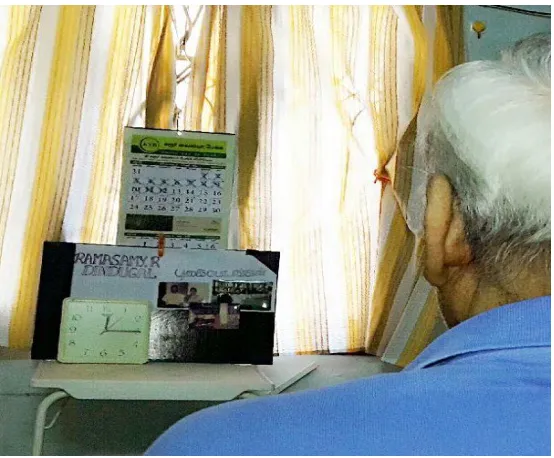
used to improve their understanding of their surroundings. The ROP clipboard has clock,
calendar, and poster which will be used to facilitate the orientation, and at least twice a
day, ROP sequence will be performed. The orientation sequence contains six orienting
statements including the patient’s name; the visitor’s name and relationship to the patient;
the name of the hospital and the reason why the patient was at the hospital; the weekday,
date, month, and year; the hour and period of the day; and the reason why the visitor had
come. Even though it is standardized, it will also be individualized to meet the chief
needs of each patient. The method calls for regular stimulation and repetition of basic
orientation information (Corrigan J et al 1985; Woodrow P 1998). The approach will be
carried out systematically and competently by Occupational Therapist and Relatives.
The involvement of family has been found very crucial in administering ROP. Existing
research recognizes the critical role played by family. Interestingly, tertiary care settings
have been described as substantial need for family-centered care (Mullin et al, 1999).The
term “ family” in TBI program denotes intimacy and concern that exists in relationships
between patients their significant others. Involving family into the orientation program is
of great significance for both the patient and the family. When family members are
4
(Thomas, H & Feyz et al 2003). Studies have shown that this increased involvement of
family/carer’s need not result in increased burden on families, if the proper supports are
in place (Dean and Gadd, 1990). Hence it is essential for incorporating family members
into the program in a tertiary health care setup for earlier recovery of the TBI patients.
In Indian population, TBI patients are great in number; therapist may be confused as to
what therapy has to be given for PTA patients. Staff and family members have found it
challenging and frustrating while treating agitated patients (Montgomery, Kitten &
Niemiee, 1997). This is a particular area of concern for occupational therapist, who are
responsible for early intervention in TBI patients.
Our intervention is inspired as there is no standardized protocol which is presently used
in tertiary health care setup along with the family members. This could pave the path for
bringing earlier recovery in patients with TBI so that it can be incorporated in the future.
Therefore, a further study in this intervention strategy in similar TBI programs was
required.
Research Question
Will ROP program improve orientation for RLA stage 4 TBI patients?
5
OPERATIONAL DEFINITION
Traumatic Brain Injury
Traumatic Brain Injury is defined as any traumatically induced structural injury or
physiological disruption of brain function as a result of an external force.
Post Traumatic Amnesia- Anterograde Amnesia
It is the deficit in forming new memory after the accident, which may lead to decreased
attention and inaccurate perception. Anterograde memory is frequently the last function
to return after the recovery from loss of consciousness.
Orientation
It is defined as the awareness of oneself in relation to the characteristics of one’s
surroundings: time, place and person.
Reality Orientation
Reality Orientation means interacting with patients about the patient's current
6
AIMS AND OBJECTIVES
To find the effectiveness of Reality Orientation Program for improving orientation
among RLA stage 4 Traumatic Brain Injury patients.
7
HYPOTHESIS
Alternate Hypothesis:
Reality Orientation Program is significantly effective than Conventional Therapy in stage
4 Traumatic Brain Injury.
There is relationship between Reality Orientation Program and recovery.
Null Hypothesis:
Reality Orientation Program is not significantly effective than Conventional Therapy in
stage 4 Traumatic Brain Injury.
8
RELATED LITERATURE
Definition of Traumatic Brain Injury
Traumatic Brain Injury (TBI) is defined as any traumatically induced structural injury or
physiological disruption of brain function as a result of an external force. It is manifested
by one or more clinical signs occurring immediately afterwards including a loss,
decreased, or altered level of consciousness, amnesia, neurologic deficit, or intracranial
lesion. External forces may include direct impact of the head with another object, indirect
forces from acceleration/deceleration, or a blast injury. The Glasgow Coma Score (GCS)
has traditionally been used to classify TBI as mild (GCS 13-15), moderate (GCS 9-12), or
severe (GCS 3-8). A more recent classification scheme for TBI uses length of loss of
consciousness (LOC), alteration of consciousness (AOC), and post traumatic amnesia
(PTA) as well as imaging findings to categorize TBI (Cifu et al, 2009).
Biomechanics
Traumatic injury results from the transfer of energy from the environment to tissue above
the amount that can be absorbed without dysfunction. Traumatic insults generally occur
over short periods of time and are referred to as dynamic loading. Dynamic loading
includes both direct or impact loading, as well as impulsive loading where no physical
contact occurs. The loads absorbed by the brain after trauma generally include linear and
rotational components called angular loads. The rate and duration of the insult are
important because loads applied at high rates tend to result in more damage (Laplaca et
al, 2007). Focal injury such as contusion results from direct loading and often occurs in
the absence of widespread injury. In contrast, diffuse axonal injury (DAI) often occurs as
a result of the rotational acceleration accompanying indirect loading. (Gennerelli et al,
1982) Humans are particularly susceptible given their large cranium connected to the
9
and widespread strains within the brain resulting from both acceleration and deceleration.
These diffuse strains lead to differential movement of the brain relative to the skull which
can cause hemorrhage. Shear strain is most prominent after rotational injury, and brain
tissue is particularly sensitive to this type of strain. (Holbourn, 1943)
Pathophysiology
The initial traumatic insult results in mechanical damage including rupture of cellular and
vascular membranes with release of intracellular contents, ultrastructural damage of
axons, and changes in cerebral blood flow (McIntosh TK, 1994; Werner & Engelhard,
2007). Subsequent metabolic derangement includes widespread release of excitatory neurotransmitters such as glutamate, severe dysregulation of calcium homeostasis, energy
failure due to Adenosine triphosphate (ATP) depletion, free radical generation, and cell
death by necrotic and apoptotic pathways (Werner C et al, 2007;Thompson HJ et al,
2005). More global consequences of the traumatic insult include increased intra-cranial
pressure, decreased cerebral blood flow, tissue ischemia, cerebral edema, and functional
blood brain barrier dysfunction (Statler KD et al, 2001; Marklund N et al, 2006).
Following the initial damage, repair and recovery processes begin through the removal of
cellular debris, glial scar formation, and plastic changes in neural networks (Gulf War
and Health: Volume 7)
Putative Causes of Altered Consciousness in mild TBI
The definitive causes of altered consciousness are not known. Loss of consciousness
requires either loss of the function of both cerebral hemispheres or of the reticular
activating system. Several plausible hypothetical mechanisms have been proposed for the
alteration of
consciousness that occurs with mild TBI. These include the reticular, pontine-cholinergic
system, centripetal, and convulsive hypotheses. The reticular activating system (RAS)
resides in the brainstem reticular formation which extends from the top of the spinal
10
RAS is excited by input from surrounding sensory tracts and transmits this excitation to
the cortex to induce generalized cortical and behavioral arousal. In the absence of input
from the RAS, consciousness is impaired.
Under the reticular hypothesis of concussion, loss of consciousness after brain trauma
results from a disturbance or depression of the activity of polysynaptic pathways within
the RAS. It is not completely understood how a traumatic dysfunction of the RAS occurs
however it is believed to result from shearing or tensile strains on RAS pathways at the
cranio-cervical junction. Neuropathological evidence for this is limited. The hypothesis
also fails to address traumatic amnesia. A further difficulty is that Electroencephalogram
(EEG) findings do not support depression of the RAS in concussion.
The pontine-cholinergic system hypothesis differs from the reticular activating system
hypothesis in that RAS dysfunction is thought to occur as a consequence of
trauma-induced activation of the inhibitory cholinergic system of the dorsal pontine tegmentum
(Hayes RL et al, 1989). Furthermore, EEG studies show widespread neuronal discharge
after concussion and elevated acetylcholine is found in the Cerebrospinal Fluid (CSF) of
patients after TBI. However, it is not clear that activation of this system can produce loss
of consciousness due to RAS suppression.
The centripetal hypothesis posits that sudden rotational forces cause shearing strains and
stresses that result in functional decoupling of nerve fibers (Ommaya & Gennarelli,
1974). The depth of this functional decoupling is directly related to the extent of
rotational acceleration delivered to the brain.
Also, with greater rotational acceleration the likelihood of mechanical injury to fibers
increases. Lower inertial forces that result in functional decoupling between the subcortex
or diencephalon and the cortex may result in amnesia or confusion without loss of
consciousness (LOC). Furthermore, greater forces resulting in decoupling between more
11
explains post-traumatic amnesia and dazed states, however it also requires very high
energy injuries to cause full loss of consciousness. Consequently, patients with LOC
would often have accompanying structural brain injury which is simply is not observed.
Patients with concussion have similar symptoms to those who have experienced
generalized epileptic seizures or electro convulsive therapy (ECT). This overlap of
symptoms has led to speculation that similar pathophysiological events occur in all three
conditions. (Ishige N et al, 1987;Marmarou A et al, 1994). According to the convulsive
hypothesis the symptoms associated with concussion are due to direct injury to neurons
resulting in hyperexcitability and widespread membrane depolarization followed by
neuronal exhaustion (Walker AE et al., 1994). These two neuronal states correspond to
the convulsive and paralytic phases, respectively.
The convulsive hypothesis is able to reasonably account for a broader range of
postconcussive behaviors than its competitors including LOC, amnesia, convulsive
movements, autonomic disturbances, and the dazed or “dinged” state (Shaw NA., 2002).
While this hypothesis does a better job than the others at providing a unified explanation
for the broad range of symptoms observed as an acute result of mild TBI, it does not
account for the structural abnormalities that occur as a result of mild TBI. In summary,
none of the individual hypotheses currently available explain all the findings seen with
mild TBI. Given the often complimentary strengths and weakness discussed above, it
seems likely that the mechanisms of altered consciousness after TBI may be due to a
combination of processes.
TBI can cause long term cognitive, behavioural, and physical disability. Cognitive and
behavioural changes, difficulties maintaining personal relationships and coping with
occupational roles are typically reported to be more disabling than physical deficits (Nott,
Chapparo, & Baguley, 2006) One of the cognitive consequences of TBI is a transient
12
characteristic of this state is anterograde amnesia, which is the impaired ability to
remember events after the onset of a condition (Lezac M, 1995).
The duration of PTA the best indicator of traumatic brain injury severity (Teasdale &
Jennett, 1974) and the most dependable marker of outcome prediction,(Bishara SN et al,
1992; Haslam C et al,1994) even in mild cases(Stuss DT et al, 1999;Crovitz HF et al,
1983). While variously described by different investigators, PTA includes impaired
orientation, that is, retrograde amnesia and anterograde amnesia (Shores EA et al, 1989).
Posttraumatic amnesia may be divided into 2 types. The first type of PTA is retrograde,
defined by Cartlidge and Shaw as a ‘‘partial or total loss of the ability to recall events that have occurred during the period immediately preceding brain injury.’’ (Cartlidge &
Shaw,1981)
The duration of retrograde amnesia usually progressively decreases. The second type of
PTA is anterograde amnesia, a deficit in forming new memory after the accident, which
may lead to decreased attention and inaccurate perception. Anterograde memory is
frequently the last function to return after the recovery from loss of consciousness
(Russell WR, 1932). Memory and new learning are believed to involve the cerebral
cortex, subcortical projections, hippocampal formation (gyrus dentatus, hippocampus,
and parahippocampal gyri), and the diencephalons, especially the medial portions of the
dorsomedial and adjacent midline nuclei of the thalamus (Ross, 1997). In addition,
frontal lobe lesions may cause alterations in behavior, including irritability,
aggressiveness, and loss of inhibition and judgment. Recently, evidence has been
presented that the right frontal lobe plays a prominent role in sustained attention.
Patients with TBI suffer initial cognitive-communication deficits characterized by
confusion and disorientation. As well, many of these same patients manifest affective and
13
This article will describe an innovative standardized interdisciplinary approach based on
the concepts of reality orientation, (Manzi & Weaver, 1987) which is hoped to improve
the patient’s awareness of and interaction with his or her environment during the early
phase of rehabilitation in an acute care hospital.
Innovations in medical technology for rehabilitation following TBI have increased the
number of survivors, and the total rate of TBI related hospitalization has increased. In
spite of such technological innovations, the rate of TBI related hospitalization for severe
TBI has constantly increased up to 20 percent over time. The peak incidence of TBI
occurs in young adulthood. Males between the ages of 15 and 24 are at a much greater
risk for death from TBI because they are more actively involved in driving a car and are
involved in more car accidents, which is the most common cause of TBI (Thurman D et
al, 1999)
Reality orientation is a technique that was developed in 1958 by Folsom (Folsom 1967)
of the US Veterans Hospital in Kansas to improve a patient’s orientation, social skills, and social awareness. Sessions can be performed individually (the “informal” approach) (Woodrow P, 1998) or in groups (the “formal” approach) (Barnes J., 1974). The protocol
involves regular stimulation and repetition of basic orientation information. Reality
orientation has been widely used in the treatment of confused elderly people, although it
was initially designed to rehabilitate severely disturbed war veterans. (Taulbee & Folsom,
1966)
This technique has been used with patients with TBI who show signs of confusion,
disorientation, or difficulty interacting with their surroundings.( McNeny R, Dise., J1990;
Zencius A., et al 1998) Results of studies on the effectiveness of reality orientation in the
geriatric population are mixed, with some articles reporting benefits,(Spector A., et al,
2000; Holden P & Woods R, 1995) whereas others do not.(Woodrow P, 1998;Jonea A,
14
contraindicated; rather, emphasis is frequently placed on “validation” or “resolution”
therapies for this patient population(Woodrow P, 1998).
The use of reality orientation for patients with TBI who are in the early stages of their
recovery is frequently recommended,(McNeny R & Dise J, 1990) but more research
needs to be done to determine the effectiveness of this approach with the population of
acute care patients with TBI. The process of repetitive information to the patient
regarding person, place, and time provides the basis for reconstruction of an
environmental framework of understanding. Intensive information is given to the patient
in one format of reality orientation during the first twenty-four hours. Twenty-four hour
reality orientation provides a means of structuring the environment throughout the
twenty-four hour period so that all persons having contact with the patient intervene
appropriately and consistently. The patient is given information concerning person, place,
and time so that following reality orientation therapies will support initial learning.
RO can be of a continuous 24-hr type, whereby staff involve the patients in reality-based
communication in every contact throughout the day, or “classroom RO,” where groups of
people meet on a regular basis to engage in orientation-related activities. A prominent
focus of classroom RO is often the “RO board,” which typically displays information
such as the day, date, weather, name of next meal, and other details (Holden & Woods,
1995). There have been a number of studies on classroom RO since Taulbee and Folsom
(1966), many reporting positive findings.
For example, improvements were reported in “orientation to reality and in motivation
toward self-care, responsibility and social involvement” (Salter & Salter, 1975, p. 406).
Controlled studies have shown varied results. Some authors have found that classroom
RO can lead to some improvements in cognitive function, with no effect on behavior
(e.g., Hanley, McGuire and Boyd, 1981), whereas others have found positive effects on
15
It may take the form of a formal “class” type session led by speech therapists and occupational therapists (and sometimes by nurses) or of a “24 hour” approach to care
implemented by either formal or informal carers of the elderly It aims to prevent and
even reverse disorientation of dependent old people who show signs of dementia or
general confusion as to their identity and current location m time and space RO relies
heavily on verbal interaction for its operation, although general sensory stimulation is
also used m therapy Holden and Woods (1982) describe 24 hour or informal RO as the
continual process whereby staff present current information to the person In every
Interaction, reminding the patient of time, place and person, and providing a commentary
on events Confused and rambling speech is not reinforced. The environment is structured
with signs and cues to help the person remain aware of the surrounding.
There is also a third form of RO called “Attitude Therapy” which accompanies either of
the two approaches described above. It involves the use of “kind firmness, active
friendliness, passive friendliness, matter of fact and no demand” (Holden and Woods,
1982) which are supposed to be selectively applied according to the individual needs of
the patient.
To date, it seems that academic research into the use and effectiveness of RO has
emanated largely from psychology and psychiatry (McMahon 1988), with formal carers
looking to these areas for information and guidance. Current opinion seems to be
ambivalent, with many authors acknowledging that RO has no theoretical base (Holden
and Woods 1982), and that any success it has may well be attributable to the generally
morale-lifting effects of increased stimulation and attention, rather than to any specific
techniques involved in RO therapy RO is nevertheless commonly used by occupational
therapists, speech therapists and nurses m formal care settings, perhaps if only because
there appears to be no other treatment available for confusion (McMahon 1988) and
16
nothing else, it has in its favor that it encourages some kind of interaction between carers
and patients (Duffy, Leeming, and Bracey 1988)
Despite the fact that RO is mainly a verbal and interactive therapy, it seems that so far the
language sciences have not contributed to debates about its value It 1s the purpose of this
article to begin to correct that lack by applying an interactional sociolinguistic
perspective to the appraisal of RO, it 1s my belief that sociolinguistic research provides
additional reasons to review the effectiveness of RO m the institutional context It may
provide useful additional scientific “ammunition” for those clinicians who express
reservations about the widespread use of RO as a panacea for the confused elderly (e g ,
Morton and Bleathman 1988, McMahon 1988) The intention is to give clinicians the
benefit of a fresh disciplinary look at current practice as well as to make some small
contribution to the critical application of sociolinguistic findings to real contexts and
social issues (c f , Fairclough 1989, van Dijk 1990) Furthermore, such a language-based
approach to researching the health and well-being of the elderly has recently been called
for and supported by social gerontologists (e g , Wiemann et al 1990, Nussbaum 1993,
Rook 1995; Coleman 1995) Nussbaum (1993) for example states that “the study of
language can help to broaden our knowledge of the interactive difficulties experienced
within the nursing home and can lead to communicative interventions that change
17
REVIEW OF LITERATURE
Reality orientation is a technique that was developed in 1958 by Folsom of the US
Veterans Hospital in Kansas to improve a patient’s orientation, social skills, and social
awareness. Sessions can be performed individually (the “informal” approach) or in
groups (the “formal” approach). It employs a standardized protocol involving regular
stimulation and repetition of basic orientation information. It has been used as a
mainstream treatment modality for improving orientation, memory etc in various
conditions such as dementia, Alzheimer’s disease, geriatric patients. And also have been
used extensively among TBI patients’ specifically amnesic ones.
ROP as an interaction in various disease conditions
Barnes J, 1974 assessed the Effects of Reality Orientation Classroom on Memory Loss, Confusion, and Disorientation in Geriatric Patients. Barnes has demonstrated with formal approach of Reality Orientation (RO). It was developed for the treatment of
geriatric patients with moderate to severe degree of memory loss, confusion, and
disorientation. It was intended for elderly patients who do not benefit from a remotivation
program. RO helped the patients in two ways; first the patient was presented with
fundamental information and was stimulated unceasingly. The patients are placed in a
group where they get together and compete with each other patients, which thereby
extricates them from isolation and leads them back to environment. Twelve geriatric
patients were selected for the study in which 6 patients had appeared for all RO classes
for a period of 6 weeks (6 days a week) and each class lasting for 30 minutes. The mean
age of the 2 male and 4 female patients who completed the program was 81 years. A
"reality orientation board" was used for the classroom instruction and all the selected
patients were able to read. The board listed the name, location, date, weather, and other
18
questionnaire which was developed for the same purpose. The questionnaire composed of
23 questions which were answered by patients and 5 questions answered by the nursing
director. Questionnaire was administered at the beginning and at the end of the control
period, at the beginning and end of the experimental period, and one week after the
termination of the reality orientation classes.
Results displayed nonsignificant changes in the patient's responses and indicated that the
reality orientation classroom technique did not produce marked changes during the
6-week period of application. However, the trend was toward significance, and a longer
period of therapy might have revealed better results. Fascinating improvements occurred
in the behaviours but this again didn’t obtain statistical significance.
Jones A, 1995 investigated How effective is Reality Orientation for elderly, confused patients? He had examined the two forms of reality orientation: Groups (Formal) and 24-hour (Informal) reality orientation. The Formal approach entails a group of patients and
encouraging them actively to rehearse selected orientation information. It involves three
to six patients based on the impairment level and one hour session daily. In the Informal
approach/ 24-hour approach, patients are stimulated with information about their
surroundings in regard to time, place and person. Author has explained that desired
outcome can be achieved from both forms of reality orientation, but expanded analysis
has been done on formal approach than informal approach. The reality orientation
therapist perceived that within the study that low level of functioning patients benefited
less than the highly rated patients. Informal approach was pinpointed effective than the
formal RO. From the literature it can be concluded that formal reality orientation was
effective in promoting some degree of change, but the results were inconclusive in
regards to repeated studies. This was due to changing client samples, and different
measuring tools and environments. There are methodological problems in the studies
reviewed, as most have a small sample size and there was a noticeable absence of
19
this has the problem of being difficult to assess and the feasible suggestion that the
improvements are due to other factors.
Woodrow P, 1998 has explored interventions for confusion and dementia: Reality Orientation (RO). Woodrow has described strengths and weaknesses of Informal RO, where the intervention is given individually. Few strengths as mentioned by author are,
older literature identified improvement in staff attitudes to patients when RO was used
and also improved care and quality of life. In institutionalized environments where there
has been paucity in human interaction and reduced care for patients with disorientation
has shown increased benefits by using this type of intervention. He has recorded
weaknesses from several other studies as RO boring and under stimulating and inflexible.
The author has quoted study done by Jones (1992), who suggested that RO becomes
increasingly difficult as dementia progresses, concluding that RO was only beneficial in
the early stages of the condition. It dehumanizes and results in task oriented problems
when it is used in a robotic and ritualistic manner.
Spector A et al, 2000, had done a systematic review of Reality orientation for dementia. Psychological scales measuring cognitive and behavioural changes were examined. A total of 125 subjects (67 in experimental groups, 58 in control groups) from
6 RCTs were analysed. Results had 2 divisions they are cognition and behaviour. Results
from cognition were more precise, due to a sample size of 125, compared to 48 for
behaviour. Results showed that RO had a significant positive effect on cognition and
behaviour. This systematic review established that formal RO had clear benefits to
dementia sufferers in both cognitive and behavioural domains, suggesting that RO
techniques should be considered as part of a more general dementia care programme. The
prolonged effects of RO after the end of treatment was debatable besides continued
20
Onder G et al, 2005 determined the Reality orientation therapy combined with cholinesterase inhibitors in Alzheimer’s disease through randomised controlled trial. The authors have evaluated the effectiveness of a long-term (25 weeks), home-based programme of reality orientation on cognitive function in a group of patients with
Alzheimer’s disease receiving treatment with cholinesterase inhibitors as there was no
previous literature on the same. Inclusion of National Institute of Neurological and
Communicative Diseases and Stroke and the Alzheimer’s Disease and Related Disorders
Association (NINCDS–ADRA) criteria for probable Alzheimer’s disease, scored between
14 and 27 on the Mini-Mental State Examination, did not present with major aphasia or
blindness, and had received pharmacological treatment with donepezil for at least 3
months. A total of 156 eligible patients were enrolled and were randomly assigned in a
1:1 ratio to receive either a reality orientation programme at home, provided by
caregivers, or no treatment. The standardized measure used for patients included MMSE
for cognitive function and the Alzheimer’s Disease Assessment Scale – Cognition;
functional status was measured with the Barthel index and Instrumental Activities of
Daily Living; behaviour; and medications used. Caregivers’ assessment included mood
measurement with the Hamilton Rating Scales for Depression and Anxiety; quality of
life; and burden of care. Caregivers were instructed to provide three orientation sessions
per week, for 25 consecutive weeks. Each session lasted about 30min and consisted of an
organised, intensive cognitive training during which the caregiver gradually presented
information such as date, time and location. Besides the formal reality orientation
sessions, caregivers were also invited to stimulate and involve patients in reality-based
communication two or three times throughout the day informally, focusing on personal,
time and space orientation and discussing news or topics of general interest. This study
revealed that among patients with Alzheimer’s disease, a home-based programme of reality orientation therapy provided by the patients’ caregivers can enhance the effects of
cholinesterase inhibitors on cognitive function and that this effect was independent of
baseline cognitive status. This intervention does not seem to modify caregivers’
21
effects of reality orientation on cognitive function reported by previous trials of shorter
duration, and suggested an additive effect of reality orientation when combined with
anticholinesterase therapy. The fascinating part in the study was that it had a formal
reality orientation approach, based on lessons given by caregivers on a regular basis
during the week, with an informal approach, based on repetition of orientation
information at all times throughout the day with no fixed schedule. They have disclosed
that a home-based programme of reality orientation provided by caregivers improves
cognitive function, enhancing the effect of anticholinesterase treatment.
Other therapies for improving Orientation
A. H. Zencius et al, 1998 evaluated improvement of orientation in head injured adults by repeated practice, multi-sensory input and peer participation. It was tested in two studies, the first included a 23-year-old male who was treated by presenting the
orientation questions orally while being shown questions on written flashcards. Results
suggested that correct responses to orientation questions only occurred when flashcards
were coupled with oral questioning. The participant responded correctly to nearly 100%
of all orientation questions within 2 weeks of initiating flashcards. In the second study, a
19-year-old male was asked to respond in writing to 20 orientation questions in a small
group. The group had a leader and 4 TBI patients. The group members who correctly
answered the orientation questions, took turns in reading orientation questions and
providing the correct responses. In the first study, flashcards were used (visual
stimulation) to supplement verbal prompting (auditory stimulation) which, in turn,
facilitated the correct responses to orientation questions. Visual stimulation was used
usually in the form of printed material (flashcards, checklists, notebooks) to supplement
verbal prompting by staff in order to increase compliance. If a patient was noncompliant
(usually to verbal prompting), staff were encouraged to use an additional sensory
22
used to facilitate memory. The application of multi-sensory input as a clinical procedure
was based on the research literature of other disciplines like educational psychology.
In the second study, several procedures were used, including writing the correct answers,
reading the correct answers and obtaining help from peers. Both studies represented other
successful applications of non aversive antecedent control techniques to assist patients
regain normal functioning. There was a paucity of empirical data in the research literature
demonstrating the effectiveness of various strategies for treating orientation deficits.
They have recommended for more research in the areas of assessing and treating
disorientation both in the acute and post-acute settings including various combinations of
multi-sensory input.
ROP for TBI patients
Kaschel R, et al 1995 evaluated Reality orientation training in an amnesic: a controlled single-case study (n = 572 days). Two studies with head-injured patients have been carried out as there was little information available concerning ROP other than
elderly or demented patients. Use of uncontrolled designs made it difficult to draw
conclusions from these papers. The authors described that ROP are attractive in
neuropsychological rehabilitation as orientation problems are frequent in non progressive
types of brain damage and they require treatment. They have also summarized that ROT
avoids shortcomings of other approaches to memory rehabilitation as relevant memory
problems are tackled directly, i.e. in the setting in which they occur. In 24 h ROP,
orientation was modified in everyday situations and the day-by-day change was
documented. Thus, the literature suggested that target-specific ROP for disoriented
non-demented patients could prove effective.
This study replicated ROP reports for temporal reorientation in a non-demented patient.
Substantial changes in all items could be demonstrated as compared to small gains in a
23
i.e. another situation (home), person (supervisor) and retention of gains (time interval:
training at home vs ROT tests in the clinic). There were pros and cons to the use of a
family member as therapist. However, in this case it did mean that the patient received
much more ‘therapy’ than he would have done were he relying on the health services.
Small gains in such a 24 h ROP are usually greater than in classroom ROP. Furthermore,
no equipment were required, the programme was involved in routine activities and
fostered more behavioural change than was possible in a classroom atmosphere. There
was evidence for improvement of functional status. As a summary, the ‘investment’ of 27
ROP sessions administered by a student (supervisor) and lasting 15 min each-10 min for
supervision of the spouse and 5 min for tests gave a mean improvement in ROP tests of
43% (supervisor/clinic) and 29% (spouse/home). The change was not dramatic, but
influenced daily living. They had suggested for booster sessions as there was not much
item improvement after withdrawal of professional supervision, despite continued ROP.
Thomas H et al, 2003 developed an innovative standardized approach North Star Project Reality orientation in an Acute Care setting for patients with Traumatic Brain Injury. It was aimed to improve the TBI patient’s awareness of and interaction with their environment during early phase of rehabilitation. They have defined three
concepts such as Environment, Consistency and Standardization. Environment: The
reality orientation footboard was located in the footboard of the patient’s bed. It was
available for the patients immediately wherever they are in the room. Consistency:
Whoever got involved with the confused patient are valuable participants in creating
environment. They are considered to provide repetitive and uniform appropriate
interaction to the patients. Standardization: The North Star Project provides standardized
orientation sequence protocols for staff and for family. Selection process of patients
includeda score of less than 76 on the Galveston Orientation and Amnesia Test (GOAT).
24
De Guise. E et al, 2005 evaluated the effect of an integrated reality orientation programme (North Star Project) in acute care on the duration of post-traumatic amnesia (PTA) of patients suffering from traumatic brain injury (TBI). A total of 12 patients met the inclusion criteria, who were part of the North Star Project was compared
with 26 patients who were in control group. Control group patients were recruited by
reviewing medical charts, who suffered from PTA and who were not a part of ROP.
These patients underwent same level of medical and professional rehabilitation services
as the other group. Orientation was provided in non-systematic manner and without
material aids. They administered GCS and GOAT to assess the duration of PTA. Results
revealed that length of PTA was shorter by 5 days for the North Star patients. This result
was not statistically significant (p=0.19) but is clinically relevant. No between-group
difference was found for Glasgow Coma Scale.
Even though there was lack of statistical significance, it had some benefits to staff and
family members. The Consequences of shorter PTA would result in increased and more
appropriate patient interaction and earlier transfer to rehabilitation. Further study is
required to evaluate this intervention strategy to improve orientation for the patient with
TBI.
Langhorn L et al, 2015 examined the effectiveness of a systematic reality orientation program, introduced in a neurointensive care unit (NICU) on duration of posttraumatic amnesia (PTA) in TBI patients. He explains that lack of memory and orientation result in difficulty while interacting and engaging during awakening and stay
in NICU leading to postponed transfer to intensive rehabilitation, thereby prolonging
hospitalization. PTA period has been considered as ‘‘waiting period’’ were no active
therapy takes place. Focus was on prognostic use of PTA rather than trying to decrease
or prevent early cognitive problems after TBI in the previous literature. Only one
retrospective study has shown an impact on the length of PTA related to improved
orientation and recovery according to the author’s knowledge. So the author’s decided to
25
participants. This is a quasiexperimental, prospective design. They had taken moderate to
severe injury TBI patients who scored less than 12 in GCS. 24 patients were in
intervention group who underwent ROP and 38 patients who underwent conventional
rehabilitation program in control group. The Rancho Los Amigos Score was used to
assess the cognitive level and the Galveston Orientation and Amnesia Test was used daily
to assess orientation and duration of PTA. The Glasgow Outcome Scale Extended was
then used as an indicator of clinical outcome after 12 months.
The results indicated that patients who received the RO had a higher mean of the
Glasgow Outcome Scale Extended (SD = 1.53) than those receiving the usual care (SD =
1.35) despite that the groups differed significantly (p = .01) in PTA duration. They have
concluded that TBI patients may gain more from early assessment and ROP intervention.
The RO may aid patients with PTA to regain orientation and interact with their
surroundings in the neuro intensive care unit to optimize the recovery. However, further
studies with focus on timing, intensity, and duration are needed to evaluate the influence
of an early RO approach on PTA and outcomes in patients experiencing TBI.
26
CONCEPTUAL FRAMEWORK
The ROP was a therapy which was initially developed for elderly and dementia patients.
Recently they have standardized the protocol for patients with PTA after TBI. This
program includes flexible model of external aids which is based on the Posner and
Petersen’s model of attention (1990). In the model of Posner and Petersen, they describe
that attention is an independent cognitive module. There are three components of
attention namely alerting, orienting and executive control which carries different function
and has distinct brain networks (Posner and Petersen, 1990)
The prior component Alerting refers to preparation of an upcoming stimulus through
increased and sustained arousal (Posner and Petersen, 2012). The process of selecting
items for further processing refers to Orienting. There are two types of orienting namely
overt orienting and covert orienting (Hunt & Kingstone, 2003).
Overt orienting refers to selectively attending to a stimulus by moving eyes to the
stimulus while on the contrary covert orienting refers to selectively paying attention to a
stimulus without movement of the eye. Primary cortex area and midbrain regions are
engaged for overt type of orienting (Milea & Muri, 2004). There could be overlap in the
cortical regions for both the orienting (Morgan & Rorden, 2008).
Another type of orienting exist which is the top-down orienting and bottom up orienting
(Corbetta & Shulman, 2002). When a person voluntarily attends to a certain feature of
stimuli is the top down orienting which is otherwise denoted as goal driven (voluntary)
attentional system. Bottom-up orienting refers to stimulus driven (involuntary) system
that automatically draws attention. Dorsal and ventral cortical networks are involved in
this type of orienting (Corbetta & Shulman, 2002). For orienting, a visual location is used
27
Attention and orientation are interdependent on each other. Attention is needed for a
person to focus and process the information (Posner & Petersen, 1990). In Reality
orientation, visual models are coupled with auditory cues to draw the attention of the
patient. For identification and localization, both auditory and the visual systems are
interconnected and work together. (King A 2009) There is an increased work done with
these systems. Focusing on the target event takes place followed by identification of
information from sensory processing systems along with information stored in the
memory (Posner 1978). In summary, orientation program coupled with visual and
auditory inputs fastens the process of recovery and makes it less overwhelming for
patients.
For PTA extending more than 30 min are suggested to receive a systematic intervention
which should be provided as intensively as possible (Turner – Stokes 2008).Orientation is
28
Allen, when the environment is blended according to the functional level of the patients
then it increases their participation thus, improving cognitive functions at a faster rate
(Allen & Bertrand, 1999). ROP has blended according to this concept and created an
environment which is feasible for the client always through the footboard (Thomas H et
al, 2003).
.
When patients are in a confused state, they tend to show very less interest in activity
participation. Hence, in such cases every small response should be reinforced in a
positive manner. This generates a sense of wellbeing and meaningfulness. The ultimate
performance goal of reality orientation is that patients are oriented and able to function in
environment (Langston, 1981)
When the stimulus is provided in repetition for longer duration it will result in
registration of information. Literature shows that repeated learning effects during
encoding and retrieval. Nevertheless, encoding develops earlier and survives for a longer
duration. (Li, Guo & Jiang, 2008) And this repetition when indulged in something
functional enhances the process of neural plasticity which is the ultimate rationale behind
all treatment approaches. This domain was also integrated into ROP under the concept of
consistency were everyone who intervenes with the patient provides a uniform and
29
.
ROP
Attention and Orientation Posner &Petersen’s
Model, 1990
Environment Allen’s Cognitive
Level, 1999
Reinforcement
Behaviour Modification Repetition Learning
30
METHODOLOGY
Place of study
The study was conducted in Kovai Medical Center and Hospital, Coimbatore and at the
home of the participants.
Research Design
Pre and post intervention design was adopted for the study.
Schematic Representation of the study design
Pretest Post test
Experimental Group
Control
Group
Variables
Independent variables
Intervention with ROP for TBI patients
Dependent variables
1. Duration of PTA (GOAT)
2. Cognitive skills (MMSE)
3. Recovery after TBI (GCS, RLA & GOS)
Sampling
Convenient sampling.
Administer GOAT, GCS, RLA, MMSE & GOS Administer GOAT, GCS &
RLA
Administer GOAT, GCS, RLA, MMSE & GOS Administer GOAT, GCS &
RLA
RO
Regular
31
Sample Size
20 TBI patients who were equally divided in Experimental Group (N=10) and Control
Group (N=10). Convenient sampling of TBI patients were done based on inclusion
criteria.
Inclusion Criteria
1. A score of less than 76 on the Galveston Orientation and Amnesia Test.
2. Rancho Los Amigos stages 4.
3. GCS – 12 and above.
4. Subjects with a clear history of Traumatic Brain Injury.
5. Traumatic Brain Injury patients within a duration of 1 month.
6. Age 15 to 75.
7. Should speak and read either English or Tamil
Exclusion Criteria
1. No known pre-morbid diagnosed dementia.
2. Patients having any other psychiatric disorders like Schizophrenia etc.
3. Patients having any other neurological problems like Multiple Sclerosis etc
4. Severe visual and hearing impaired clients are excluded
Tool Used
Screening Tools
1. Galveston Orientation and Amnesia Test (GOAT)
2. Glasgow Coma Scale (GCS)
32
Outcome Measure Tools
1. Galveston Orientation and Amnesia Test (GOAT)
2. Mini Mental Status Examination (MMSE) (Outcome Predictor)
3. Glasgow Coma Scale (GCS)
4. Rancho Los Amigos Scale (RLA)
5. Glasgow Outcome Score(GOS)
Galveston Orientation and Amnesia Test (GOAT)
This instrument was developed to establish the duration of PTA after TBI. Evaluation
was done in a repeated manner to identify whether the patient is terminated out of
amnesia. It is composed of 10 questions that administers the orientation and amnesia.
GOAT includes questions regarding the patients name, address, identification of location,
date of admission in hospital, events that happened before and after the injury.
Information was confirmed with family members. It is scored by the formula 100 – total
error. GOAT has an Inter-observer Reliability of τ=0.99 (p<0.001) and 0.99 for
individual items (Levin et al. 1979). The Internal Consistency based on Rasch analysis,
person separation reliability=2.46 and item separation reliability=8.68 and all items
adhered to a single construct (Bode et al. 2000). A Construct Validity on Rasch analysis,
the constructed item hierarchy confirmed previous research-orientation to person, place
and time precedes aspects dealing with memories surrounding the injury (Bode et al.
2000). GOAT scores correlated positively with GCS scores (r=0.456; p<0.002) and with
admission and discharge FIM scores (r=0.701 and 0.531, respectively) (Novack et al.
2000). For Concurrent Validity the scores on GOAT and JFC PTA scale reported to be
strongly correlated (r=0.99; p<0.000) (Forrester et al. 1994) and GOAT scores correlated
with Orientation Log scores (r=0.901; p<0.001) (Novack et al. 2000)
33
GOS
They indicated that baseline GOS score was a reliable predictor of outcome in patients
with an initial score of 5 (no disability) or 4 (mild disability), but not in patients with an
initial score of 3 (severe disability) (Miller K et al, 2005). There is five outcome
categories : 1) death, 2) persistent vegetative state, 3) severe disability, 4) moderate
disability and 5) good recovery. (Jennett & Bond 1975) The criterion validity of GOS
when correlated with GCS reveals adequate correlation (assessed 6 months later)
(Balestreri et al, 2004) and construct validity of GOS while correlating with GCS shows
adequate correlation, (GOS) r= 0.557 (Amirjamshidi et al, 2006)
MMSE
MMSE is used extensively as a brief screening tool, there are literature which had used it
for predicting outcome too. (De Guise. E., et al, 2013; H. W. Kim., et al, 1998) De Guise
E., et al had concluded that Montreal Cognitive Assessment was not a better predictor of
outcome than the MMSE for a TBI population in the acute care setting. It consist of
11questions incorporated into 7 cognitive domains such as orientation to time, orientation
to place, registration of three words, attention and calculation, recall of three words,
language and visual construction. It has a maximum score of 30 scored based on the
observation of items. Construct Validity showed excellent correlation with Wechsler
Adult Intelligence Scale verbal IQ(r= 0.78) (Folstein et al, 1975), poor to adequate
predictive validity of MMSE and FIM correlations (Ozdemir et al, 2001)
GCS
It assesses the level of consciousness after the TBI to monitor the changes in the client. It
has three domains, eye with maximum score of 4, verbal with maximum score of 5 and
motor with a maximum score of 6. GCS has adequate inter- rater agreement= 71%
34
apparent diffusion coefficient histogram values and GCS score (r squared =.67)
(Shanmuganathan et al, 2004)
RLA
This tool was developed to evaluate the patterns of recovery after brain injury. Scale
describes the cognitive and behavioural characteristics. RLA has eight levels from level
1(no response) to level 8(purposeful and appropriate). Inter- rater Reliability was
excellent (average Spearman rho=.89) (Gouvier et al, 1987). Admission and discharge
LCFS scores predicted 86.8% of patients who returned to work and 63.2 % of those who
did not (Rao and Kilgore, 1992). Excellent concurrent validity of LCFS with Stover-
Zeiger scale was r =.92 at admission. (Gouvier et al, 1987)
Procedure
First an ethical clearance was obtained from Institutional Review Board. Participants
were selected based on the above mentioned inclusion criteria and were divided equally
into the experimental (N=10) and control group (N=10). Following which control group
underwent regular therapy which was based on therapist orienting them to time, place and
person through auditory inputs alone and was done at least for 30 minutes per session.
And a standardized protocol of ROP was used which used both auditory and visual inputs
as treatment modality for participant’s selected under experimental group. Both the
groups received therapy for one month (2 weeks in hospital and 2 weeks in hospital/home
by family members) twice a day. The patient was encouraged and reinforced for each
correct response by verbally saying ‘excellent’ or ‘good’ or by a pat at the back. This
enabled him to develop interest. The therapist allows the family members to observe and
was supervised by the primary researcher while the family members are providing
orientation and corrected which will enable them to provide therapy in their home. The
board was removed from foot end of the bed while assessing for orientation. The GOAT
instrument was evaluated every day, when patient was discharged from hospital they