University of Southern Queensland
Teaching Programming
Strategies Explicitly to Novice
Programmers
A dissertation submitted by Michael de Raadt
for the award of Doctor of Philosophy
Abstract
The traditional approach to training novice programmers has been to provide explicit programming knowledge instruction but to rely on implicit instruction of programming strategies. Studies, reported in literature, have discovered universally poor results on standardised tests for novices studying under this traditional approach.
This dissertation describes the explicit integration of programming strategies into instruction and assessment of novice programmers, and the impact of this change on their learning outcomes.
An initial experiment was used to measure the performance of students studying under a traditional curriculum with implicitly taught programming strategies. This experiment uncovered common flaws in the strategy skills of novices and revealed weaknesses in the curriculum. Incorporation of explicit strategy instruction was proposed.
To validate a model of strategies as being authentic and appropriate for novice instruction, an experiment with experts was conducted. Experts were asked to solve three problems that a novice would typically be expected to solve at the end of an introductory programming course. Experts‟ solutions were analysed using Goal/Plan Analysis and it was discovered that experts consistently applied plans, the sub-algorithmic strategies suggested by Soloway (1986). It was proposed that plans
could be adapted for explicit inclusion in an introductory programming curriculum. Initially a curriculum incorporating explicit strategy instruction was tested in an artificial setting with a small number of volunteers, divided into control and experimental groups. The control group was taught using a simplified traditional curriculum and the experimental group were exposed to a curriculum which explicitly included programming strategies. Testing revealed that experimental group participants applied plans more than control group participants, who had been expected to learn these strategies implicitly. In interviews, experimental participants used strategy-related terminology and were more confident in the solutions they had created. These results justified a trial of the curriculum in an actual introductory programming course.
When explicit instruction of programming strategies was incorporated into an actual introductory programming curriculum, novices achieved superior results when compared to results from the initial experiment. Novices used strategies significantly more when these strategies were incorporated explicitly into instructional materials and assessment items.
This series of experiments focussed on explicitly teaching specific programming
Certification of Dissertation
I certify that the ideas, experimental work, results, analyses and conclusions reported in this dissertation are entirely my own effort, except where otherwise acknowledged. I also certify that the work is original and has not been previously submitted for any other award, except where otherwise acknowledged.
________________________________ ______________
Signature of Candidate Date
ENDORSEMENT
________________________________ ______________
Signature of Supervisor Date
________________________________ ______________
Relevant Publications
DE RAADT, M., WATSON, R. & TOLEMAN, M. (2002) Language Trends in Introductory Programming Courses. In Proceedings of Informing Science and IT Education Conference. p. 329 - 337.
DE RAADT, M., WATSON, R. & TOLEMAN, M. (2003) Language Tug-Of-War: Industry Demand and Academic Choice. Australian Computer Science Communications, 25, 137 - 142.
DE RAADT, M., WATSON, R. & TOLEMAN, M. (2003) Introductory programming languages at Australian universities at the beginning of the twenty first century. Journal of Research and Practice in Information Technology, 35, 163-167.
DE RAADT, M., WATSON, R. & TOLEMAN, M. (2004) Introductory Programming: What's happening today and will there be any students to teach tomorrow? Australian Computer Science Communications, 26, 277 - 284. DE RAADT, M., TOLEMAN, M. & WATSON, R. (2004) Training strategic
problem solvers. ACM SIGCSE Bulletin, 36, 48 - 51.
DE RAADT, M., TOLEMAN, M. & WATSON, R. (2006) Chick Sexing and Novice Programmers: Explicit Instruction of Problem Solving Strategies. Australian Computer Science Communications, 28, 55 - 62.
DE RAADT, M. (2007) A Review of Australasian Investigations into Problem-Solving and the Novice Programmer. Computer Science Education, 17, 201 - 213.
Acknowledgments
I would like to thank my supervisors, Mark Toleman and Richard Watson, for the experience they shared, their enthusiasm in my work and, perhaps above all, their patience.
I thank my family, my wife Erica and my two children, Hannah and Isaac, for allowing me to spend time away to complete my research work and for encouraging me to keep going and get the job done.
I thank the CSEd community for taking my ideas seriously and showing me the value of research in this area.
Thanks to Simon for his proofing services. Simon is a published author and leading figure of the CSEd community.
Thanks also to Peter Dunn for his assistance on statistics matters.
Table of Contents
Abstract ... ii
Certification of Dissertation ... iii
Publications ... iv
Acknowledgments ... v
Table of Contents ... vi
Glossary ... viii
1. Introduction ... 1
1.1 Motivation ... 1
1.2 Aims ... 2
1.3 Dissertation Structure ... 4
2. Problem Solving and Novice Programmers ... 5
2.1 A Brief History of Programming Instruction ... 5
2.2 Recent teaching in Australian and New Zealand ... 7
2.3 Aspects of Novice Instruction ... 9
2.4 Explicit Programming Strategies ... 20
2.5 Need for Further Research ... 22
3. Experimental Methodology ... 24
3.1 Scope of Experimentation ... 24
3.2 Experimental Approach ... 25
3.3 Research Questions ... 28
3.4 Overview of Experimentation ... 29
4. Goal/Plan Analysis of Programs created by Novices with No Explicit Strategy Instruction ... 30
Overview ... 30
4.1 Introduction ... 30
4.2 Research Questions ... 32
4.3 The Experimental Problem ... 33
4.4 Methodology ... 36
4.5 Results ... 40
4.6 Discussion ... 43
4.7 Implications ... 44
5. Experts and Explicit Strategies ... 46
5.2 Research Questions ... 48
5.3 The Problems... 48
5.4 Methodology ... 50
5.5 Results ... 54
5.6 Discussion ... 57
5.7 Implications ... 58
6. Incorporating Strategies Explicitly into an Artificial Curriculum ... 60
Overview... 60
6.1 Introduction ... 60
6.2 Research Questions ... 62
6.3 Description of Curricula ... 62
6.4 Methodology ... 67
6.5 Results ... 69
6.6 Discussion ... 77
6.7 Implications ... 79
7. Teaching and Assessing Programming Strategies Explicitly in an Actual Setting ... 81
Overview... 81
7.1 Introduction ... 81
7.2 Research Questions ... 83
7.3 Integrating Strategy Instruction into Written Materials, Lectures, Tutorials and Practical Classes ... 84
7.4 Assessing Strategy Skill in Assignments and Examinations ... 93
7.5 Methodology ... 100
7.6 Results ... 102
7.7 Discussion ... 106
7.8 Implications ... 108
8. Findings and Contribution of this Study ... 109
8.1 Findings of this Study ... 109
8.2 Contribution ... 113
8.3 Future Work ... 114
References ... 116
Glossary
The following terms are used throughout this dissertation. They are presented here to clarify their meaning. The terms are described and explored more deeply in Chapter 2 with references to sources. The terms are presented in alphabetic order.
Comprehension
In the context of programming, comprehension is the ability to read and understand code or program related information. This may involve simulating execution of a program to manually compute a result.
Course
A single period of instruction, usually contained within a semester. Equivalent to the terms unit, paper or subject used in some institutions.
Curriculum
Teaching materials, assessment items and method of delivery, related to a single course (see above).
Expert
A programmer who writes programs on a regular or daily basis. For the purposes of this dissertation it is not important when a novice programmer (see below) becomes an expert is not critical, as comparisons are made only between programmers at the extremes of this scale.
Explicit Instruction
Instruction where the the instructor openly describes, usually in some documented form, what the student is to learn and how to go about that learning.
Generation
In the context or programming, generation involves the creation of code or program related information, potentially implementing a solution to a problem.
Goal
An identified part of a solution that needs to be achieved for a programming problem.
Implicit Instruction
Instruction within a scenario where a student is expected to undertake learning without being given a full context for what it is they are to learn or how.
Knowledge
See Programming Knowledge below.
Novice
A programmer learning how to program for the first time. In this dissertation
novices are students undertaking a first course (see above) in programming.
Plan
achieving a goal (see above) within a solution to a programming problem. Plans are normally contained in the tacit knowledge of experts.
Problem Solving
A mechanism for achieving a solution to a programming problem. Within the scope of this document, problem solving is not intended to be interpreted more generally.
Programming Knowledge
A programmer‟s understanding and potential to apply the syntax and
semantics of a programming language and any related language features.
Programming Strategy
A general term for a range of programming problem solving approaches including plans (see above), patterns, algorithms and other methodologies. A
programming strategy is an abstracted method for applying programming knowledge to solve a problem.
Strategy
1.
Introduction
As an information society we rely on computers and software used on computers. The potential to create new software governs our progress as an information society. The responsibility for creating software falls on information technology professionals and key among these are programmers.
Like computers, the art of programming is relatively new, yet it is fundamentally entrenched in our information-dependent world. Expert programmers have the potential to solve many information-related problems. Programmers have the potential to overcome new problems and advance the world of computing a little further with each new solution.
Guiding novices to gain expertise builds a stronger field of expert programmers and strengthens our potential as an information society into the future. Constructing more complex and higher quality software relies on instructors training expert programmers who are more capable and more confident.
1.1
Motivation
Programming is a cognitively demanding task and training novices can be a challenging undertaking. Novices must learn the programming knowledge (syntax and language features) and programming strategies (ways to apply this knowledge in order to solve programming problems).
For many years introductory programming instructors have anecdotally reported failure rates that are higher than most institutions generally tolerate (Lister, 2000, Carbone et al., 2000, Guzdial and Soloway, 2002). Much research in computing education has focused on ways to overcome high failure rates in introductory programming.
Seeking concrete evidence, a number of studies have attempted to quantify the level of skill of novice programmers at the end of an introductory programming course. A multinational study of novice programmers (McCracken et al., 2001) showed universally poor results on a standardised test conducted at institutions across the world. This study did not identify sources of the inadequacies demonstrated, but it did offer an opportunity to accept the failings of the past and a chance to begin to develop new curricula which could better encourage novices to reach expected standards.
Observed novices have produced poor results in standardised program generation
tests, with many novices demonstrating a fragile knowledge (Lister et al., 2004) and most novices failing to demonstrate programming strategies (Lister et al., 2006). There are at least two possible causes for this behaviour.
One possibility is that there are some bright students, but most students simply do not possess the mental capacity to meet the standard set for them.
It is likely that both of these causes are contributing in some way; however blaming novices for their own failure will not improve outcomes so we must consider ways of improving curricula to address these failings.
Kuittinen and Sajaniemi (2003) contend that many attempts to ease novice difficulties have simply sought to teach a traditional curriculum in more exciting ways. Increased student enthusiasm resulting from such innovations does not seem to have improved the outcomes of struggling students around the world. Rather than making ad-hoc changes to parts of an aging curriculum in the hope of finding some magic formula, a better objective is to systematically discover the conceptual barriers that cause novices to struggle and to consider new curricula elements that encourage novices to overcome these barriers.
Ultimately, the underlying motivation for attempting to improve introductory programming curricula is to support the development of more competent novices who will hopefully go on to become better expert programmers, creating superior software and benefiting the greater community.
1.2
Aims
Traditional curricula include explicit instruction of programming knowledge. Novices are taught the constructs and associated facilities of a language in a well expressed manner. By contrast, programming strategies, the means of applying programming knowledge to solve problems, are taught implicitly (Soloway, 1986). It is expected that novices will construct their own programming strategies by obtaining programming knowledge, solving problems, then reflecting on this process. It has been shown that some novices can successfully develop programming
strategies over a period of implicit learning (Rist, 1991). However, outcomes for the majority of novices remain poor (McCracken et al., 2001, Lister et al., 2004, Lister et al., 2006).
Explicit instruction has been shown to be far more powerful than implicit instruction. When compared with implicit instruction, explicit instruction has been proven to produce faster learning, higher accuracy and an understanding of the underlying principles of the concepts being learnt in specific disciplines (Baddeley, 1997). Expressing and instructing programming strategies in a more explicit fashion may improve outcomes for novices. Before this can be achieved, an set of programming
strategies, used by experts but relevant to novices, needs to be expressed.
It has been suggested that experts hold programming strategies in a tacit form in their minds (Soloway, 1986). Experts build this tacit collection of strategies over time and apply and adapt it for new problems as they arise. If a concrete set of
strategies is proposed for teaching, it needs to be validated against the strategies
tacit
implicit
non-assessed
expressed
explicit
assessable
Figure 1.1. Including programming strategies in curricula
The aim of work described in this dissertation is to improve the curricula and pedagogy used for training novice programmers by adding curricular elements designed to overcome difficulties faced by novices. The transition from an implicit traditional approach to an explicit approach, pictured in Figure 1.1, aims to:
1. use the tacit programming strategies of experts to validate an expressed set of
strategies, suitable for novice programmers;
2. move from the implicit delivery of strategies to curricula and methods of delivery that explicitly teach authentic programming strategies to novices, and test the impact of this move; and
3. target the application of specific strategies in assessment of novices‟ skills,
thus promoting the value of strategies.
To accomplish these aims, the following tasks were proposed and undertaken.
Measure the programming strategy skill level of novices trained using a traditional curriculum. This can then be used as a benchmark for later comparison with new curricula.
Identify authentic expert programming strategies that are relevant to novice programmers.
Create a curriculum that explicitly integrates programming strategy
instruction with programming knowledge instruction.
Determine the impact of explicitly teaching programming strategies, comparing this to the skill level of novices trained under a traditional curriculum.
1.3
Dissertation Structure
This dissertation is divided into three parts. The introductory chapters set the stage for the experimental work described in subsequent core chapters, and findings are brought together in the concluding chapter.
Introduction, Overview and Methodology
The body of this dissertation begins in chapter 2 by exploring research related to introductory programming instruction. A history of introductory programming teaching is given. A number of terms, focusing on aspects relevant to teaching in this area, are defined. Areas where there is a need for further exploration are identified and the potential for the contribution made by this study is explained.
Chapter 3 then outlines the scope of experiments undertaken in this study. Research questions are discussed and Goal/Plan Analysis, the main methodological tool for measuring novice programming strategy skill, is described in detail.
Description of Experiments
The core of the work described in this dissertation was achieved through four experiments. The experiments were conducted in sequence, with the findings of each study leading to a need for the following experiment.
Chapter 4 describes an experiment where Goal/Plan Analysis was applied to the code of novices who had studied programming with implicit-only programming strategy
instruction. Results of this study justify the aim to explicitly express programming
strategies in the curriculum used. These results also served as a basis for the comparison of results of later experiments.
Chapter 5 presents an experiment which attempted to identify strategies used by expert programmers. The experiment targeted strategies that are relevant to novice programmers and could be explicitly incorporated into introductory programming curricula.
Chapter 6 describes an experiment that compared two introductory programming curricula: one that explicitly included programming strategy instruction and another that followed a traditional implicit strategy instruction approach. The experiment explored the feasibility of using a curriculum including programming strategy
instruction, and attempted to measure and compare the impact of the two curricula on novices.
Chapter 7 shows how programming strategies were included in an actual university level introductory programming course. This chapter describes how strategies were incorporated in instructional material and how they were assessed for grading purposes. Results of this approach are compared to the benchmark set in the initial experiment showing an increase in the use of strategies.
Conclusions and Statement of Contribution
2.
Problem Solving and Novice Programmers
In the previous chapter the rationale and aims of the study described in this dissertation were presented. This chapter establishes a context for the experiments described in later chapters. The first sections review areas of computing education relevant to this investigation. Then a number of important terms are defined; these terms will be used throughout the dissertation. Programming strategies can be expressed in a number of forms; two of these are compared, and the form used in experimentation is identified. Having established a context, the need for investigation in this area is expressed and justified.
2.1
A Brief History of Programming Instruction
“If you ask me what accomplishment I'm most proud of, the answer would be all the young people I've trained over the years; that's more important than writing the first compiler.”
Grace Hopper
Computer programming became a practised discipline as computing technologies began to develop. Initially computer programmers were self-taught as there were no educational programs covering programming in the early days of computing.
Computing science, which includes computer programming, surfaced as an offspring of other academic disciplines such as mathematics. “Computing education emerged from a few optional units in mathematics or engineering to establish its own discipline as Computer Science (CS) in the 60s” (Pham, 1996). Early computing curricula focused primarily on creating programs for data processing as this was the origin of computing, but over time the discipline grew and divided into substantial sub-disciplines (Pham, 1996). As computing technologies have become relevant to more than a handful of specialists, the discipline, and education within the discipline, has been forced to change and adapt.
In 1971 Niklaus Wirth introduced the language Pascal, primarily for teaching novice programmers (Wirth, 1971, Wirth, 1974). Pascal was simple and well structured, and allowed instructors to focus on fundamental concepts involved in the task of programming. Although other academic languages had been presented and used, none have had the impact of Pascal, which during a period of 23 years was taught at some stage in almost all Australian universities (de Raadt et al., 2002).
necessary to teach both groups. As many tertiary institutions of the era did not have the resources to teach both groups independently, compromises were made which generally involved teaching as many of the features of the Pascal programming language as was practical within an introductory course and hoping students would learn problem solving along the way.
Programming is no longer „the New Latin‟. While computing skills are even more valuable today general computer users are more commonly directed to learn application skills rather than programming. Current courses for non-programmers attempt to instil capabilities in applications such as word processors, spreadsheets and presentation graphics packages. The teaching of programming is now largely directed once more to students who will later take on computing study and strive to become expert programmers or at least require some programming skills as part of their professional training.
Since 2003, Pascal is no longer taught in any Australian university – choosing a language that will attract students is considered, by most instructors, as a higher priority than the pedagogical benefits a language can give (de Raadt et al., 2002). Languages used in introductory programming courses are most commonly industry-relevant languages. A large number of papers have suggested that one language is superior to another because it possesses desirable features (eg. Bergin, 2000, Biddle and Tempero, 1998, Chandra and Chandra, 2005, Hadjerrouit, 1998, Stroustrup, 1999) or because changing to the new language seemed to encourage better results from students (eg. Hitz and Hudec, 1995, Andreae et al., 1998). What is shown in literature is likely to be a reflection of the debates that have undoubtedly taken place within the meeting rooms and corridors of teaching institutions.
In the late 1980s and early 1990s programmers began to explore Object-Oriented Programming (OOP), a new programming paradigm that combines data with behaviour related to that data. Many instructors felt that this paradigm was more analogous to natural human understanding and therefore could benefit novices. Many papers during the 1990s debated just that (eg. Reid, 1993, Decker and Hirshfield, 1994, Kölling et al., 1995). A new language, Java, introduced in 1994, embodied the object-oriented paradigm. Java was immediately successful because it also provided strong integration with the World Wide Web, which was rapidly growing at the same time. Java became popular and students wanted to learn it. Universities within Australia were facing competition and strict government funding regulations (Pham, 1996). Attracting students by teaching them what they wanted to learn contributed largely to the curricula of the late 1990s.
2.1.1
Failure Rates
However, the McCracken group did offer an understanding that these problems are universal and there is now an opportunity to develop new curricula which could produce better outcomes in novices.
2.2
Recent teaching in Australian and New Zealand
As preliminary work for this study an investigation was made into several aspects of introductory programming courses within universities in Australia and New Zealand. The work was referred to as the „Census‟ as it attempted to capture information about all such courses in the region1. The Census was first conducted in 2001 and covered 57 introductory programming courses at 37 Australian universities (de Raadt et al., 2002, de Raadt et al., 2003b, de Raadt et al., 2003a). The second Census was conducted in 2003 and covered 85 courses from 39 Australian and eight New Zealand universities (de Raadt et al., 2004). Both instances of the Census covered languages and paradigms taught, tools used and numbers of students. A third census is being conducted in 2008.
2.2.1
Declining Student Numbers
A trend showing a reduction in the number of students undertaking introductory programming courses was observed between the 2001 Census and 2003 Census. The average decline in students between the two instances of the Census was 28% (de Raadt et al., 2004).
While having fewer students does not diminish the importance of improving instruction of programming, it does place pressure on instructors, many of whom are at risk of losing their jobs.
2.2.2
Industry-Relevant Languages
In both undertakings of the Census the most popular languages used in introductory programming courses were Java, C/C++, Visual Basic and Haskel. The first three of these languages could be classified as industry-relevant languages as they were widely used in industry at the time (de Raadt et al., 2003b) and not primarily designed with teaching in mind. The three non-commercial languages found by the 2001 Census (Haskel, Eiffel and Ada) were taught predominantly in sandstone
universities (Australian universities established before 1950 (Ashenden and Milligan, 1999)).
Instructors participating in the 2001 Census were asked why they chose their current language. The responses (summarised in Table 2.1) showed that instructors chose a language either because they perceived it to have industry relevance, or because they believed it would be attractive to students who perceived that it was industry-relevant. This reason appears to have been more important than choosing a language for its pedagogical benefits. At sandstone universities, which can attract students more easily through traditional reputations, pedagogical benefits of a language where mentioned more often as a reason than industry-relevance.
Table 2.1.Count of reasons given for language choice in all universities (reproduced from de Raadt et al., 2002)
Reason Count
Industry-relevance/Marketable/Student demand 33 Pedagogical benefits of language 19 Structure of degree/Department politics 16
OOP language wanted 15
GUI interface 6
Availability/Cost to students 5
Easy to find appropriate texts 2
2.2.3
Paradigm
The list of languages taught in introductory programming courses, as discovered by the Census, was dominated by object-oriented languages, with over 80% of instructors choosing an OO language. However, many instructors teaching OO languages did not use an objects-first approach in their teaching, instead remaining with a procedural approach.
Table 2.2. Paradigm used in teaching (reproduced from de Raadt et al., 2004)
Paradigm Australia New Zealand
By Lang. Taught By Lang. Taught Procedural 11.7% 53.0% 8.3% 34.0% Object-oriented 82.2% 36.6% 91.7% 66.0% Functional 6.1% 10.3% 0% 0%
2.2.4
Approaches to Problem Solving
Table 2.3. “Problem solving strategies” identified in 2003 Census.
Strategy Type Different strategies
identified Instructors using Waterfall problem solving strategies (analyse, design, implement) 39 66 Non-waterfall problem solving strategies (eg test-driven design) 6 6 Learning Strategies (eg working backwards, involving patterns) 6 6
Teaching strategies (eg, showing examples) 12 5
Unclassified 18 18
Total 75 108
This variation in time spent and forms of problem-solving instruction may be due to instructors not having a common definition of what is involved in the teaching of problem-solving strategies at the novice level.
2.2.5
Problem Solving in Textbooks
During the 2003 Census instructors reported using zero (some instructors prescribe no text), one, or more of 49 textbooks discovered by the Census. A copy of each text was requested from publishers and the content of the 40 texts that were delivered was analysed (de Raadt et al., 2005).
The most widely used text is Simple Program Design (Robertson, 2004). This text is not targeted at a specific language, but rather covers problem-solving aspects related to programming. This text is used together with a language-based text in most cases. Problem-solving instruction was presented in varying degrees between the analysed texts (see Table 2.4). Some texts avoid problem solving as a specific topic altogether, focusing only on language syntax instruction. Some authors rely on large numbers of examples and provide little explicit instruction of problem solving. One author bluntly stated “Students learn to program by example” (Sparke, 2003, p. xi). Some texts offer a brief mention of algorithmic problem solving in an early chapter, but this teaching is not obviously integrated in the remainder of the text. Other texts offer instruction in high-level systems analysis or software engineering but little algorithmic problem solving; object-oriented software engineering is a common topic. There are a small number of texts that describe problem solving and attempt to integrate this teaching throughout the text using case studies and examinations of problems.
Table 2.4. Problem solving content in textbooks discovered by 2003 Census Integration of Problem Solving Number of texts Proportion of texts Problem solving integrated throughout 6 15% Cursory or no content on problem solving 34 85%
Total texts examined 40
following aspects of a programmer‟s ability and use them to compare research in the area.
expert-novice
knowledge-strategy
comprehension-generation
These three aspects will be used and expanded in the following subsections. They are clearly related, although definitive links between these aspects have not been proven. Within the knowledge-strategy aspect, levels of problems are described by the author of this dissertation to allow the scope of study to be clearly defined.
As well as these aspects, another important distinction is made between implicit and explicit instruction. Section 2.3.6 describes this distinction and discusses the value of explicit instruction. These aspects will be referred to in the remainder of the dissertation.
2.3.1
Experts and Novices
An expert programmer was defined by Winslow (1996) as a programmer with roughly 10 years experience. Winslow argued that “turning a novice into an expert is impossible in a four year program” and suggests the best product of a three or four year degree is “competence”. Rist (1995) argued that programmers demonstrate themselves to be experts when they can produce the best designed solutions to particular problems. For the purposes of this dissertation the assumption is made that students in an introductory course are novices, most of whom will be learning programming for the first time. An expert is assumed to be someone who has experience in programming and practices programming on a regular or daily basis. In experiments described in this dissertation, the point at which a novice becomes an expert is not critical as comparisons are made between complete novices and experts.
In this dissertation the means of capturing expertise is through discovering experts‟
tacit knowledge and representing this in a form that can be understood by novices. Another method for passing expert knowledge to novices through a cognitive apprenticeship (Collins et al., 1987). In a cognitive apprenticeship, “learners can see the processes of work” (Collins et al., 1991, p. 1) as achieved by an expert. The idea of using the cognitive apprenticeship model in programming instruction has been proposed in a number of theoretical papers (Caspersen and Bennedsen, 2007, Shabo et al., 1996).
2.3.2
Knowledge and Strategies
Unlike the expert-novice aspect, which can be represented on a continuum,
knowledge and strategy are disparate, but related entities. They are dependent on each other; however they need to be distinguished.
Knowledge involves the “declarative nature” (the syntax and semantics) of a programming language while strategies describe how programming knowledge is applied (Davies, 1993).
Programming strategies relate to the application of programming knowledge to solve a problem. Ideas expressed in such strategies are more abstract than programming
knowledge and are usually applicable to multiple languages within the same programming paradigm. Programming strategies can also be applied between similar paradigms; for instance strategies (such as looping strategies) learned in an imperative paradigm can often be applied in an object paradigm, but would not be as easy to apply in functional or event-driven paradigms.
The term strategy is a generic term exemplified by problem solving ideas such as
plans (1986), patterns (Wallingford, 1996), algorithms and other methodologies, together with means of integrating these ideas to form a single solution.
Robins et al. (2003) define a distinction between novices who are effective or
ineffective. Effective novices learn to program with little assistance, while ineffective novices fail to learn how to program, or do so only with a great deal of assistance. Robins et al. suggest that the key to novices becoming effective lies in them learning programming strategies rather than acquiring programming knowledge. Along a similar line, Soloway (1986) states:
…language constructs do not pose major stumbling blocks for novices... rather, the real problems novices have lie in “putting the pieces together,”
composing and coordinating components of a program. (p. 850)
Soloway then proposes that teaching should reach beyond a focus on syntax (as programming knowledge) and focus on programming strategies.
Recent studies have attempted to quantify the ability of novices after an introductory programming course. The „Leeds group‟ brought together researchers from the UK, USA, Denmark, Finland, Sweden, Australia and New Zealand as an ITiSCE 2004 working group (Lister et al., 2004). The group was attempting to isolate the cause of poor novice results measured by the McCracken group (McCracken et al., 2001) mentioned earlier (§ 2.1.1). The group used a set of multiple-choice questions that focused on program comprehension (reading and understanding code). The Leeds authors contended that no problem solving would be required to answer the questions, so if students failed this test, it would indicate a failure in programming
knowledge. If novices succeeded in the test this would confirm that novices can successfully acquire programming knowledge so instructors could put this issue aside and focus their attention on how to improve strategy instruction.
Table 2.5. Performance in the Leeds study (reproduced from Lister et al., 2004) Quartile Score Range No. of Students Percent of Students
1st (top) 10 – 12 152 27%
2nd 8 – 9 135 24%
3rd 5 – 7 142 25%
4th (bottom) 0 – 4 127 23%
Suppose the students who participated in this study were all studying their first semester of programming at a single institution. Suppose further they were given these 12 MCQs as their exam, and the institution regarded a 25% failure rate as the upper limit of what was acceptable. Then students who scored 5 out of 12 on these MCQs would be progressing to the second semester programming course (Lister et al., 2004, p. 128).
The Leeds group concluded that many novices possess only fragile programming
knowledge. The study can be criticised due to a fault in the underlying assumption, made by the authors, that comprehension questions do not require problem-solving ability. The comprehension-generation and knowledge-strategy aspects are probably related but, to the authors knowledge, it has not been proven that these aspects are dependent. The Leeds group studied novice program comprehension, but made conclusions about novice programming knowledge. Regardless, there is undoubtedly some truth in the conjecture that the programming knowledge of many novices is flawed.
A following study, the „BRACElet project‟ (Whalley et al., 2006), extended the Leeds study, using a set of questions created using Bloom's Revised Taxonomy (Anderson et al., 2001) to test programming skill over an identifiable cognitive range. The BRACElet study included questions that were categorised in the Bloom's levels of apply, understand and analyse, with specified sub-categories for each question. More correct answers were given for these better defined questions when compared to results from the Leeds group, but again many novices demonstrated gaps in their programming knowledge.
2.3.3
Levels of Problems
Problems that a programmer may face can be differentiated in their level of complexity. The following three classes of problem form a scale according to the complexity of problems. This taxonomy is the invention of the author.
System-Level Problems
Problems at the system level are large, complex and usually unique. Examples of problems at this level might be designing an accounting system for a large corporation, developing a web interface for a government department or developing a widely used end-user application such as an email client. Well established
strategies have been formulated for designing and implementing solutions to problems of this scale, usually following a Waterfall software development process (analyse, design, implement, test, maintain) (Royce, 1970). New processes such as Extreme Programming (Beck, 2001) might also be useful at this level. Problem solving at this level is too complex for novices in their initial study of programming. Algorithmic-Level Problems
programming and may use them in greater depth in a second or third course in programming.
Sub-algorithmic-Level Problems
Problems at the sub-algorithmic level are at their most basic. Attempting to decompose and describe a problem below this scale will lead to syntactical definitions of specific language constructs. Solutions to sub-algorithmic problems form parts of more complex solutions. Coded solutions to individual problems at this scale will not usually form entire functions, but several sub-algorithmic solutions may be combined to reach this size. Examples of problems at this scale include guarding a division to avoid division by zero, achieving repetition until a sentinel is found, or swapping the values of a pair of variables. This level of problem is particularly relevant to novices in an initial exposure to programming. While problems are basic at this level, they are still regularly encountered by experts and are therefore relevant to programmers at all levels of expertise.
2.3.4
Comprehension and Generation
In the context of programming, comprehension is the ability to read and understand the outcomes of an existing piece of code; generation is the ability to create a piece of code that achieves certain outcomes. In studies of how novices learn the roles of variables, Kuittinen and Sajaniemi (2003) refer to simulation (tracing through code and predicting its output) as separate to comprehension (to “describe what is the purpose of the given program and how it works” (p. 6)). Although there is a subtle difference, for the purposes of this dissertation simulation will be considered as
comprehension.
Whalley et al. (2006) contend that “a vital step toward being able to write programs is the capacity to read a piece of code and describe it” (p. 249) meaning that a novice must be able to comprehend a solution (and the knowledge and strategies within it) before they can generate a solution at the same level of difficulty. In other words, novices are more likely to take some time building comprehension of a problem solution and later attempting to generate a solution to the same or a similar problem; this may happen concurrently with several programming concepts. This assumption seems natural, perhaps due to the similarity between learning a programming language and learning a natural language where a child will generally learn to read words before they can write them.
Program comprehension can be thought of as less cognitively demanding than
generation. According to the Bloom‟s Revised Taxonomy (Anderson et al., 2001)
comprehension tasks can be classified at the lower understand and apply levels while
cognitive levels including apply, analyse and create. So while both comprehension
and generation of programs are important skills for a novice, traditional curriculum assessments focus strongly on generation, perhaps assuming that comprehension will be developed as a prerequisite skill.
2.3.5
Relationships between Aspects
The expert-novice, knowledge-strategy and comprehension-generation aspects are clearly related. According to Brooks (1983), experts and novices can be distinguished by how they undertake comprehension. Rist (1995) suggests novices and experts can be differentiated by how they undertake program generation. During program generation an expert can rely on a tacit body of programming plans
developed through solving past problems (Soloway, 1986), while a novice has traditionally been expected to conceive and apply plans, with varying degrees of success (Rist, 1991). A distinction of expertise by use of strategy is proposed by Bailie (1991, p. 277): “one feature clearly distinguishing the novice from the expert programmer is the ability to plan.”
An instructor might present an example problem, say a loop that repeats a fixed number of times. The instructor may then display and describe a coded solution to the problem. A novice might say “I understand how the for loop works and I can see your program solves the problem, but I don't think I could have dreamed up that solution myself.” This novice has distinguished between their programming
knowledge and their programming strategies (or lack thereof). They have also shown they can comprehend the solution presented by the instructor but do not feel confident in their ability to generate that solution themselves.
In the BRACElet project (mentioned earlier in section 2.3.2), as well as asking novices to predict the outcome of code in a number of questions, participants were also shown a piece of code and asked to “In plain English, explain what the following segment of code does” (Whalley et al., 2006, p. 248). This last question has been referred to as “Question 10” and is sometimes quoted by this name. The responses to Question 10 were categorised according to levels of the SOLO Taxonomy (Biggs and Collis, 1982) which distinguishes levels of understanding. Responses were categorised as shown in Table 2.6.
Table 2.6. SOLO Categorisation of Question 10 responses (reproduced from Whalley et al., 2006)
SOLO category Description
Relational [R] Provides a summary of what the code does in terms of the code’s purpose.
Multistructural [M] A line by line description is provided of all the code. Summarisation of individual statements may be included
Unistructural [U] Provides a description for one portion of the code (i.e. describes the if statement) Prestructural [P] Substantially lacks knowledge of programming constructs or is unrelated to the question
Blank Question not answered
the overall purpose of the code. The BRACElet project authors propose that novices would need to give a SOLO Relational response to Question 10 before they could generate the same solution themselves (Whalley et al., 2006). Considering the comprehension-generation and knowledge-strategy aspects, this means that before a novice can generate code involving strategies, they must first show comprehension
of the strategies in an equivalent piece of code. The results show that only 30% of the participants could comprehend the strategies applied in the solution while the remaining participants were relying on programming knowledge.
A follow-up paper from the BRACElet project group (Lister et al., 2006) asked instructors (as expert programmers) to explain the code previously given to students. Their responses were then analysed according to the SOLO categorisation given in Table 2.6. Seven of eight participating instructors gave a Relational response, suggesting that the ability to comprehend code at this level is related to programming expertise. This expertise seems to be lacking in 70% of the novices tested in the BRACElet project. This finding is consistent with that of Fix, Wiedenbeck and Scholtz (1993) who identified a contrast between the ability of novices and experts on program comprehension. Fix et al. suggest that experts can discover goals, relate goals to previous experience, recall plans, and integrate these to form a program. The BRACElet group went on to suggest that while their study has examined novice and expert potential to think in abstract ways about code, it does not identify how novices could be better trained to perform this task.
Assessment and Aspects of Novice Instruction
When assessing students it is possible to target skills in comprehension or
generation. In a comprehension task, novices are given a piece of code and asked questions about it. For example a novice might be shown a piece of code and asked to predict its output. A novice might be asked to identify problems in a flawed piece of code. To test generation skills, novices can be asked to create a solution to a given problem.
It is also possible to assess knowledge and strategies independently. Knowledge tasks focus on the syntax and semantics of a language but do not require a novice to solve a problem. Strategy questions might ask a novice to identify a strategy used to create a problem solution (for example Question 10 from the BRACElet project) or apply
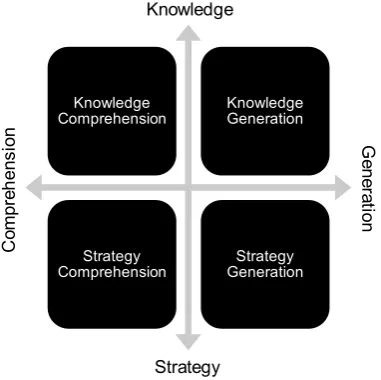
Knowledge
Comprehension Knowledge Generation
Strategy
Comprehension GenerationStrategy
Knowledge
Strategy
G
en
era
tio
n
C
om
pre
h
en
si
[image:26.595.182.373.75.265.2]on
Figure 2.1. Creating programming assessments with consideration of novice instruction aspects
By combining the knowledge-strategy aspect with the comprehension-generation aspect, four types of assessment tasks can be identified, as shown in Figure 2.1. This
division is the author‟s invention.
Exercises can be used to target programming knowledge by asking a novice to comprehend a piece of code, where strategies have not been applied. Knowledge-comprehension can be tested by asking novices to describe the effect of a particular language construct, such as an if statement, given in simple context.
Knowledge-generation can be assessed by asking novices to apply a particular language construct in a certain way. For example a novice could be asked to write a
for loop that counts from 0 to 9. Such tasks can be designed without asking novices to solve a problem.
Strategy-comprehension can be assessed by showing novices solutions and asking them to identify strategies that were applied in creating the solution.
Strategy-generation can be tested by asking novices to generate a solution that requires the application of certain strategies. In programming assignments, strategy-generation is perhaps the most commonly assessed combination.
For examples of questions that target individual areas, see section 7.4.3.
2.3.6
Implicit and Explicit Instruction
The previous sections have addressed aspects on which computing education research can be classified, according to Robins et al. (2003). Another important aspect relevant to this dissertation is how instruction is delivered, which can be described as being implicit, explicit, or a combination of these.
Explicit instruction involves the instructor openly describing, usually in some documented form, what the student is to learn and how to go about that learning.
The following is an example of the distinction between explicit and implicit instruction.
My four year old son enjoys playing Uno (a card game) against the computer. Being a father I naturally coach him on how to play. The goal of a player in Uno is to be the first to discard all their cards. In a turn a player must play a card with either the same colour or number as that on the top of the discard pile. If a player cannot match the colour or number of the top card on the discard pile they must draw a card from the pick-up pile or play a Wild card.
For many of the turns a player takes the choice of card to play is simple. Occasionally a player must choose from a number of alternatives, and choosing one option over another can give the player an advantage later in the game. Determining the best option is a strategic decision. For example, when a player cannot follow the colour or number of the card at the top of the discard pile they may play a Wild card. When a player uses a Wild card they can choose one of four colours to follow in the subsequent turns. To make an appropriate choice of colour I can coach my son in one of two ways.
I can examine the cards my son has and simply tell him which colour to choose. If we were to repeat such coaching several times my son might learn to generalise the advice I am giving him and extrapolate a strategy for choosing a colour after playing a Wild card. This is an implicit approach.
I can inform my son that a good strategy to follow after playing a Wild card is to determine which colour is in the largest majority of his cards and nominate that colour for subsequent turns. Giving my son this strategy in this manner is an example of explicit instruction. After instructing my son in this way, when the opportunity arises, I encourage my son to practice this strategy.
Novices will not become experts during an introductory course, but can be expected to reach a level of competency. A traditional form of programming problem-solving instruction begins with a worked example: novices are shown a simple problem solution from an instructor (or a textbook). Following exposure to a range of problem solutions, a novice is given a problem definition requiring a solution similar to those presented in examples. The novice is expected to devise a solution; they are expected to build strategies by undertaking problem solving, applying reasoning about the examples presented. Typically no framework is given to the novice to assist them in building the strategies required for a solution. This is an implicit approach to learning strategies. By contrast, explicit strategy instruction presents concrete techniques that a novice can use to take a problem definition and create a solution. An explicit approach guides the novice to learn and apply strategies.
Rist (1991) observed novices in an implicit-only setting as they attempted to construct strategies to solve problems and noted that many of the novices succeeded. He also noted that some novices were able to re-apply strategies they had developed earlier to new problems in order to solve them more quickly (Rist, 1995). However, achieving this may be possible for only a small group of novices. McCracken et al.(2001) and later studies (Whalley et al., 2006, Lister et al., 2004) have shown that many novices have a fragile programming knowledge and lack programming
strategies at the end of an introductory course.
had read the explicit instruction sheet, averaged accuracy of 84%, which was above that of trained sexers in the initial test. An important aspect of this experiment is that the volunteers are not learning a skill which needed to be generalised before it could be used. The participants were taught strategies which could be applied directly to the task they were being tested on. According to Baddeley (1997) the findings of this chick-sexing experiment demonstrate that a brief period of explicit instruction can be more effective than months of implicit learning.
Studies have shown that implicit-only learning can improve a student's performance but it does not create an understanding of underlying systems. In a study closer to programming, Reber (1993) examined implicit learning in the context of language acquisition. According to Reber, children learn the greater part of their native language through implicit means. Second-language instruction is usually achieved through explicit study of the grammar of a new language. Reber used a small, finite-state artificial grammar to test the effectiveness of implicit learning of a second language. An experiment was established involving volunteers divided into control and experimental groups. The experimental group was shown sequences generated from the grammar without being shown the rules of the grammar used to construct the sequences. The control group was shown sequences that were randomly generated and not part of the grammar. After training, both groups were shown 44 sequences, half of which were grammatically correct according to the grammar. The participants were asked to determine which were well formed according to the grammar. Experimental subjects achieved 79% accuracy while members of the control group showed no capacity to accurately distinguish sequences. The results showed that the experimental group had learned the grammar and were able to recognise sequences from it. However, when the experimental group participants were interviewed and asked to describe the grammar they had been exposed to, they were unable to express any understanding of the rules used to generate sequences. Berry and Dienes conducted a similar experiment (Berry and Dienes, 1993) which asked participants to learn the workings of a simulated transport system through implicit instruction only. Participants showed learning and an ability to operate the system, but when asked to describe the underlying rules of the system, participants were not able to show any understanding.
The previously described experiments indicate the weakness of implicit-only learning and the strength of explicit instruction. It is not the purpose of this dissertation to suggest that explicit instruction be adopted at the expense of implicit learning; programming is still a practical, creative art and much benefit can still be gained through self-discovery. Novice programmers can learn programming
strategies over time though implicit instruction, but it may be possible to improve the outcomes of novices by adding explicit instruction of programming strategies. Husic, Linn and Sloan (1989) discuss how teaching practices influence how students solve problems. If syntax is the focus, students will attempt to solve problems by syntactical means only. “Instructors must achieve a delicate balance between providing opportunities for independent problem-solving and modelling explicit problem-solving strategies” (p. 581). According to Soloway (1986, p. 851),
In light of previous research, adding explicit instruction to introductory programming curricula may:
increase student learning speed;
create a more structured understanding of the problem-solving processes;
create an enriched vocabulary for describing problems and how to solve them; and
enable instructors to undertake deeper analysis and assessment of novice programming strategy skill.
Another important requirement, suggested by previous research such as the chick sexing experiment, is need to be specific about which strategies will be included in the curriculum rather than teaching problem solving as a general abstract task. So not only is there a need to teach programming strategies in an explicit manner, the
strategies to be taught needs to be specifically defined also.
2.4
Explicit Programming Strategies
If it is desirable to include explicit instruction of programming strategies in introductory curricula, an instructor must first capture and document these in a form that can be delivered explicitly to novices. Robins et al. (2006) portray strategies as being important but ill-defined in literature. A number of attempts have been made to represent strategies; these include plans, schema and patterns. This section describes attempts to create explicit representations of programming strategies which can be, or are being, delivered to students.
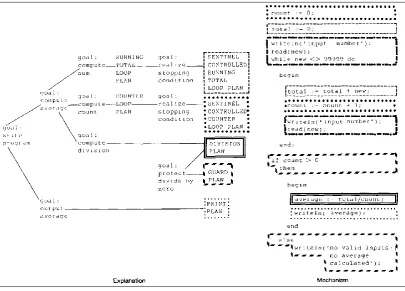
According to Soloway (1986), programming strategies are made up of plans and the associated means of incorporating these into a single solution. Goal/Plan Analysis is the process of describing an ideal solution, which contains appropriate plans, and comparing this with the solution of a novice. This analysis allows an instructor to see if a novice has succeeded in learning and applying specific plans. Much of the research by Soloway and his colleagues used the idea of plans to explore misconceptions that novices exhibit (Spohrer and Soloway, 1986, Spohrer et al., 1985a). PROUST (Johnson and Soloway, 1984) was one of a series of intelligent tutoring systems including the GPCEditor (Guzdial et al., 1998) and SODA (Hohmann et al., 1992). PROUST could perform Goal/Plan Analysis on a Pascal program, comparing its plan structure to a structure established by an instructor. Johnson (1986) gave a description of the inner workings of PROUST and also released a catalogue of goals and related plans. Plans, as a form of programming
strategy, are a candidate for explicit instruction to novices.
The idea of the schema/plan was not widely used by instructors for many years until the rise of the object paradigm, which brought with it a new sense of reuse and a new term to computing: patterns (Wallingford, 1996). According to Clancy and Linn (1999), “learning programming means learning patterns and strategies that enable rapid learning of new programming languages” (p. 37), but novices do not infer
patterns have enhanced their curriculum and pedagogical approach. “Patterns lend themselves to the learning of a skill like programming, because they provide the static knowledge plus the means to apply it” (p. 236). Porter and Calder tested their approach on a small number of volunteers divided into control and experimental groups (Porter and Calder, 2004). Participants were asked to undertake an exercise under test conditions. This study showed slightly better outcomes in participants who had been exposed to patterns and the pattern language, however none of the participants in either group demonstrated any obvious use of the patterns or the
pattern language during testing. A later study by Muller, Haberman and Ginat (2007) showed novices to be more competent in problem decomposition and solution construction after studying under a pattern-oriented instruction approach. In this study novices were shown how patterns can be used and were instructed in algorithmic patterns. There is a growing community of instructors interested in the
pattern approach (Wallingford, 2007).
Based on the plan ideas of Soloway, Sajaniemi has been refining an explicit description of the roles of variables which is being incorporated in introductory programming curricula (Sajaniemi, 2002). Sajaniemi‟s categorisation of variables by their role (for instance constant, stepper, most-recent holder and so on) is claimed to cover 99% of variables encountered in examples in an introductory programming course. When code is shown to students the role of each variable is identified. A standard visualisation of variable roles has also been created. Kuittinen & Sajaniemi (2003) describe an experiment involving novices divided into three groups, a control group (receiving traditional instruction) and two experimental groups (who were explicitly instructed in roles, with one experimental group also being exposed to animation of roles in examples). After an exam involving comprehension and
generation exercises, an analysis of results found no significant difference between groups on questions. However, when asked to give explanations of their answers, novices in the control group tended to give “operation level descriptions” while novices in the experimental groups gave “data level” descriptions, which reflect a deeper knowledge of a program and represent better comprehension (Pennington, 1987). Sajaniemi & Kuittinen (2005) conclude that novices are able to learn the roles of variables and apply them to new situations. They believe this allows novices to generate solutions which contain fewer errors and demonstrate superior programming skills.
Related to programming, Klahr and Carver (1988) found that students explicitly instructed and assess in debugging strategies showed improved debugging ability in later programming courses.
An experimental curricula, described later in this dissertation, uses Soloway‟s plans.
Plans were chosen over patterns, even though patterns have become more widespread in recent years. Patterns are commonly used in the object paradigm and require a pattern language for application. Plans can be used in multiple paradigms, including the object paradigm. Plans can be expressed simply, particularly at a sub-algorithmic level. In saying this, the focus of this research is not on the types of
2.5
Need for Further Research
Programming instruction is a relatively new practice. Programming curricula have evolved as student cohorts and technologies have changed, and have followed the shifting standards of the computing industry (§2.1). Currently student numbers in computing courses are dwindling, which places pressure on instructors to perform (§2.2).
Instructors do not have a common definition of what constitutes problem solving instruction in an introductory programming course and differ greatly on the extent to which problem solving should be incorporated into courses at this level (§2.2.4). Most existing textbooks contain little content addressing problem solving and most do not integrate this throughout (§0).
Introductory programming instruction is cognitively demanding, with many novices failing to reach expected standards at the end of an initial period of instruction. Studies have shown that novices perform poorly on standardised program generation
tests (§2.1.1). In program comprehension tests, novice performance is better, but still poorer than expected by instructors. This may indicate that the programming
knowledge of novices is fragile (§2.3.2). When asked to explain the purpose of a given piece of code only 30% of novices were able to give a SOLO Relational response, indicating a possible lack of programming strategy skill (§2.3.5). These strategy-related deficiencies could be compounding the effect of poor programming
knowledge in generation exercises.
The traditional approach to teaching programming to novices in an introductory course has been to gradually reveal the constructs and features of a programming language. Most attempts to enhance this approach, in order to improve outcomes for novices, have simply been novel ways of teaching the same curriculum.
New efforts to ease and enhance learning have varied in their general approach to improve learning: most studies report effects of new teaching methods and new ways of presenting teaching materials, while reorganization of topics and introduction of new concepts have been far more rare. (Kuittinen and Sajaniemi, 2003, p. 347)
Considering new concepts and ways of integrating these concepts may improve the potential of novices.
2.5.1
Strategies Appropriate for a Curriculum
Goal/Plan Analysis has been used as a tool for determining weaknesses in a student‟s
code and identifying gaps in their application of plans (§2.4). Expressing strategies
as plans provides a representation of strategies that can be explicitly incorporated into a curriculum. However, while plans are claimed to be based on the tacit
strategies of experts, this has not been authenticated. Any proposed set of strategies
needs to be validated as authentic by comparing them to the strategies used by expert programmers.
2.5.2
Integrating Strategies into a Curriculum
2004). Integration of plans as strategies was never attempted by Soloway, the initiator of plans, or his colleagues, but it was something they intended to do (Soloway, 2003). Once a set of strategies has been validated as authentic, and expressed in a form that us suitable for dissemination to novices, it can be explicitly integrated into an introductory programming curriculum. The usefulness of the curriculum and its impact on novices needs to be measured and contrasted to those of a traditional curriculum.
2.5.3
Assessing Strategy Ability in Novices
Goal/Plan Analysis is a tool for measuring the strategy skill of a novice programmer. However, it is not an appropriate tool for regular assessment in an introductory programming course. Testing novices' programming strategy skills, as a means of assessment, can be achieved by isolating programming knowledge and programming
strategies in assessment items and measuring these separately. The consistency of tasks used for such assessment needs to be measured.
3.
Experimental Methodology
Chapter 1 of this dissertation