DEVELOPMENT OF AN AUTOMATIC REWINDING
MACHINE FOR CABLE TAPE CONSIDERING
AFFECTIVE ANALYSIS
NORAIDAH BINTI BLAR
B050910225
UNIVERSITI TEKNIKAL MALAYSIA MELAKA
DEVELOPMENT OF AN AUTOMATIC REWINDING MACHINE
FOR CABLE TAPE CONSIDERING AFFECTIVE ANALYSIS
This report submitted in accordance with requirement of the Universiti Teknikal Malaysia Melaka (UTeM) for the Bachelor Degree of Manufacturing Engineering
(Robotic and Automation) with Honors
PREPARED BY:
NORAIDAH BINTI BLAR
B050910225
900117-12-5936
UNIVERSITI TEKNIKAL MALAYSIA MELAKA
BORANG PENGESAHAN STATUS LAPORAN PROJEK SARJANA MUDA
TAJUK: Development of An Automatic Rewinding Machine for Cable Tape Considering Affective Analysis
SESI PENGAJIAN: 2012/13 Semester 2
Saya NORAIDAH BINTI BLAR
mengaku membenarkan Laporan PSM ini disimpan di Perpustakaan Universiti Teknikal Malaysia Melaka (UTeM) dengan syarat-syarat kegunaan seperti berikut:
1. Laporan PSM adalah hak milik Universiti Teknikal Malaysia Melaka dan penulis.
2. Perpustakaan Universiti Teknikal Malaysia Melaka dibenarkan membuat salinan untuk tujuan pengajian sahaja dengan izin penulis.
3. Perpustakaan dibenarkan membuat salinan laporan PSM ini sebagai bahan pertukaran antara institusi pengajian tinggi.
4. **Sila tandakan ( )
SULIT
TERHAD
TIDAK TERHAD
(Mengandungi maklumat yang berdarjah keselamatan atau kepentingan Malaysia sebagaimana yang termaktub dalam AKTA RAHSIA RASMI 1972)
(Mengandungi maklumat TERHAD yang telah ditentukan oleh organisasi/badan di mana penyelidikan dijalankan)
Alamat Tetap:
Lot 523, Jambatan 4, Kampung Tinusa 2, Jalan Airport, 90000 Sandakan, Sabah.
Tarikh: ________________________ Disahkan oleh: Cop Rasmi: Tarikh: ____________ ___________
** Jika Laporan PSM ini SULIT atau TERHAD, sila lampirkan surat daripada pihak berkuasa/organisasi berkenaan dengan menyatakan sekali sebab dan tempoh laporan PSM ini perlu dikelaskan sebagai SULIT atau TERHAD.
DECLARATION
I hereby, declared this report entitled “Development of An Automatic Rewinding Machine for Cable Tape Considering Affective Analysis” is the results of my own
research except as cited in references.
APPROVAL
This report is submitted to the Faculty of Manufacturing Engineering of UTeM as a partial fulfillment of the requirements for the degree of Bachelor of Manufacturing Engineering (Robotic and Automation) (Hons.). The member of the supervisory is as follow:
i
ABSTRACT
ii
ABSTRAK
iii
ACKNOWLEDGEMENT
I have taken efforts in this project. However, it would not have been possible without the kind support and help of many individuals and organizations. I would like to extend my sincere thanks to all of them.
I am highly indebted to my project supervisor, Dr. Fairul Azni Bin Jafar for his guidance and constant supervision as well as for providing necessary information regarding the project and also for his support in completing the project.
I would like to express my gratitude towards my parents, my fellow final student’s classmate, laboratory technicians, and lectures for their kind co-operation and encouragement which help me in completion of this project.
I would like to express my special gratitude and thanks to industry persons for giving me such attention and time.
iv
TABLE OF CONTENT
ABSTRACT i
ABSTRAK ii
ACKNOWLEDGEMENT iii
TABLE OF CONTENT iv
LIST OF FIGURES vi
LIST OF TABLES viii
CHAPTER 1 INTRODUCTION 1.1Background 1
1.2Problem Statement 3
1.3 Objectives 3
1.4 Scopes 3
1.5 Report Structure 4
CHAPTER 2 LITERTURE REVIEW 2.1 Tape Rewinding Machine In Industry 5
2.2 Cutting or Spinning Mechanism 8
2.3 Tape Tensioning 10
2.4 Affective/Kansei Engineering 11
v CHAPTER 3 METHODOLOGY
3.1 Major Flowchart 12 3.2 Preparing Objectives 14 3.3 Affective Analysis 15 3.4 Design The Product 15 3.5 Collecting Materials 21 3.6 Fabrication 22 3.7 Performance Test 22 3.8 Chapter Summary 23
CHAPTER 4 RESULTS AND ANALYSIS
4.1 Design 24
4.2 Affective Analysis Result 30 4.3 Development Result 33 4.4 Experimental Setup 41 4.5 Experiment Result 44 4.6 Discussion 46 4.7 Chapter Summary 51
CHAPTER 5 CONCLUSION AND FUTURE
RECOMMENDATION 52
vi
LIST OF FIGURES
NO. TITLE PAGES
2.1 Tape winding machine 6 2.2 Portable cable tape winding machine 7 2.3 Cutter-Infeed apparatus 8 2.4 Cable tensioning for cable wrapping machines 10 3.1 Major flowchart 13 3.2 Cutting the tape manually 14 3.3 Cable wrapping machine 16 3.4 Machine for rewinding film or tape 16 3.5 Rough sketch of machine 17 3.6 Dimension of the machine 18 3.7 Production data sheet 20 3.8 Flowchart for the fabrication process 22
4.1 Body part 25
4.2 Reel 26
4.3 Shaft 27
4.4 DC motor 28
4.5 Assembly process 29 4.6 Survey result from first worker 30 4.7 Survey result from second worker 31 4.8 Graph of results for affective analysis survey 32 4.9 The reel after laser cutting process 33 4.10 Reel and shaft after combining process 34 4.11 The overall view of the body and the reel that already
vii
4.15 Bearing 39
viii
LIST OF TABLES
NO. TITLE PAGES
1
CHAPTER 1
INTRODUCTION
1.1 Background
Machine is widely used in many industries. In cable manufacturing industry, many large machines are being use and operated by a few persons. However each machine conducted by not more than five people per machine types. Each machine is differentiates by its functions and process undergo by it. Sometimes, one process will undergo many types of machine. In this report, the process that will be focused is cutting the cable tape manually by ordinary cutter.
2
To solve this situation, an analysis method is going to be adopted in order to find the burdening part in carrying out the job, so that the solution route (which is to build an automatic machine) will take consideration of the analysis findings. The analysis method that has been chosen is Affective analysis which is supported by the Affective Engineering.
To analysis and solve this situation, one method of analysis is useful to be used. Affective Engineering (also known as Kansei Engineering) is a technology for translating human feelings into a product design. By conducting survey and other method on the operator of the machine, a data will be found and a product will be produced to solve their problem.
3
1.2 Problem statement
In cable manufacturing industry, one of the processes, which is extruding plastic material over the conductor, required a lot of human effort. In this case, the process that involve is discarding the rejected cable tape due to its undesired requirements, and considering the next insulation step on the cable. In order to discard the cable tape from the cable, manual method has been used by using human effort. The operator needs to cut the cable tape manually for a long period of time. The average time required to complete the job is three hours per kilometer length of the cable. Through affective analysis method the effects of long hour job on the operator’s job performance can be observed. Therefore, an automatic product will help to solve the problems stated. It is believe that human working performance will drop after a long hour working and thus, will create another problem (which can cause defects on the product).
1.3 Objectives
(a) To develop a machine which able to rewinding the cable tape. (b) To analyze the machine’s performance on doing the job.
1.4 Scope
The work in this project is focusing more on the developing the rewinding machine, which is believe can help solving the problem of long hour job to rewind the cable tape. The design of the machine will consider the affective factors which can be drag out through the Affective analysis method.
4
1.5 Report Structure
Chapter 1 is the introduction of this project. This chapter will give the overview of the report on the background, problem statements, objectives, and scopes.
Chapter 2 is the literature review for this project. This chapter will analyze all the references found related the cable tape product and can be related to this project. The description on the affective analysis also will be included and explained.
Chapter 3 would describe the methods and procedures used for the project implementation. This chapter also describes the details of each method.
Chapter 4 is a chapter that describes and shows all the result from the experimental activities, surveys, and designs. A few brief explanations were stated in each result. A discussion part is made in order to explain cases that happen during conducting this project.
5
CHAPTER 2
LITERATURE REVIEW
In this chapter, all the information that can be related for this project is reviewed. All information about the machine that can be related with cable tape, and study about the Affective Engineering will be explored through many sources of journal and others.
2.1 Tape Rewinding Machine Types In Industry
6
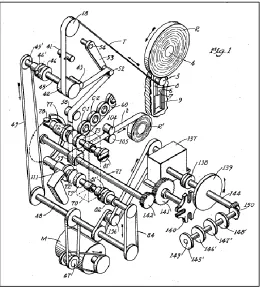
Figure 2.1: Tape winding machine
7
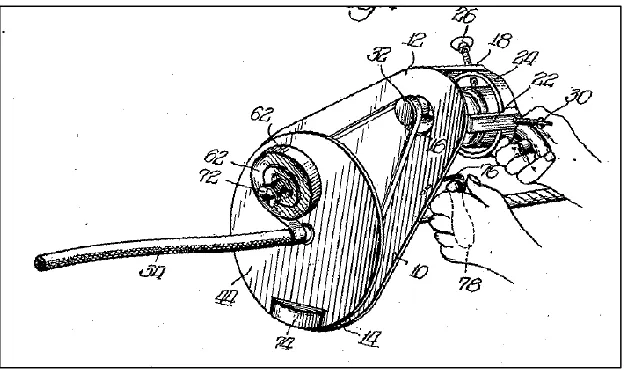
Figure 2.2: Portable cable tape winding machine
Cable wrapping machine involves in wrapping tape, strips, cords and the like around conductors, cables, cores and the others (Barnes 1998). Machine for rewinding film or tape have a function that rewind on one reel from another or rewind on the original reel (Nagamichi, 2008). The next type of machine is multi-roll segment package for plastic tape and winding machine for same. It comprises a first tape guide fixed traversely on a frame of the machine (French, 1935)
8
2.2 Cutting or Spinning Mechanism?
[image:21.612.173.513.234.533.2]According to the finding, there are two types of mechanism can be found in order to produce the rewinding machine; cutting and spinning. Based on the original technique used to discard the waterproof cable tape that is by cutting it manually, a machine of cutting the tape is possible to be produced.
9
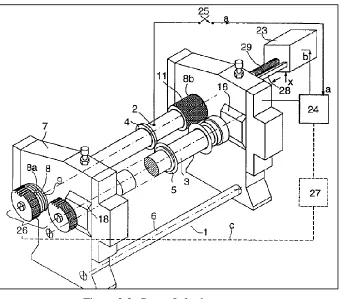
Cutter-infeed apparatus is for cutting installations for articles in tape or strip form or film-like articles, circular cutters being fastened on upper and lower shafts and displaced with respect to another for fixing the cutter infeed, and an electrical insulation between the upper and lower shafts making it possible to detect the cutter contact during infeeding and thereby make the infeeding operation automatable. It is also possible to make the infeeding of the individual cutters or cutter-box cutters such that it can be set depending on the difference in speed of the upper and lower shafts. The apparatus can be used for cutting machines of all types in which thin, uncoated or coated polymer films or metal foils can be cut (Cramer, 1969)
10
[image:23.612.200.493.112.397.2]2.3 Tape tensioning
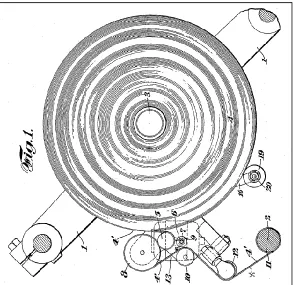
Figure 2.4: Cable tensioning for cable wrapping machines
11
2.4 Affective/Kansei Engineering
Affective/Kansei engineering was developed as a consumer-oriented for new product development. It is define as translating technology of a consumer’s feeling and image for a product into design elements. Kansei engineering technology classified into three types, KE type I, II, and III. KE type I is a category classification on the new product toward the design elements. Type II utilizes the current computer technologies such as Expert System, Neural Network Model and Generic Algorithm. Type III is a model using mathematical structure (Koehn, 2006).
Type I of Kansei engineering is a method in which a Kansei category of broken down in the tree structure to get the design details. Type II is a computer-assisted Kansei engineering system. Kansei engineering system is a computerized system with the Expert System to transfer the consumer’s feeling and image to the design details. The computerized Kansei engineering system architecture basically has four database; Kansei database, image database, knowledge-base, and design and color database.
2.5 Chapter Summary