This is a repository copy of Formalizing anonymity : A review. White Rose Research Online URL for this paper:
http://eprints.whiterose.ac.uk/72501/ Version: Submitted Version
Monograph:
Wright, Joss, Stepney, S orcid.org/0000-0003-3146-5401, Clark, John Andrew
orcid.org/0000-0002-9230-9739 et al. (1 more author) (2005) Formalizing anonymity : A review. Report. York Computer Science Technical Report Series, YCS . Department of Computer Science, University of York
[email protected] https://eprints.whiterose.ac.uk/
Reuse
Items deposited in White Rose Research Online are protected by copyright, with all rights reserved unless indicated otherwise. They may be downloaded and/or printed for private study, or other acts as permitted by national copyright laws. The publisher or other rights holders may allow further reproduction and re-use of the full text version. This is indicated by the licence information on the White Rose Research Online record for the item.
Takedown
If you consider content in White Rose Research Online to be in breach of UK law, please notify us by
Formalizing Anonymity: A Review
University of York Technical Report YCS 389
Joss Wright, Susan Stepney, John A. Clark, Jeremy Jacob
{
joss,susan,jac,jeremy.jacob
}
@cs.york.ac.uk
Abstract
This review provides an overview of the current state of the field of anonymity research with particular reference to the formal specification of anonymity as a security property.
Contents
1 Introduction 7
2 Background and Terminology 9
2.1 Privacy . . . 9
2.2 Names and Identity . . . 12
2.3 Anonymity . . . 12
2.3.1 Sender and Recipient Anonymity . . . 13
2.3.2 Connection-Based and Message-Based Anonymity . . . . 14
2.3.3 The Anonymity Set . . . 14
2.3.4 Unlinkability . . . 15
2.4 Pseudonymity . . . 15
2.5 Trust and Reputation . . . 16
2.5.1 eBay . . . 17
2.5.2 Numerical Reputation . . . 17
2.6 Repudiation . . . 18
3 Mixes 19 3.1 Basic properties . . . 19
3.1.1 Unlinkability . . . 19
3.1.2 Mixing . . . 20
3.2 Pool Mixes . . . 20
3.2.1 Threshold Mixes . . . 21
3.2.2 Timed Mixes . . . 21
3.3 Continuous Mixes . . . 21
3.4 Mix Networks and Mix Cascades . . . 22
3.4.1 Mix Networks . . . 22
3.4.2 Mix Cascades . . . 23
3.4.3 Hybrid Approaches . . . 23
3.4.4 Synchronous and Asynchronous Batching . . . 24
3.5 Attacks on mix systems . . . 24
3.5.1 Passive Attacks . . . 25
6 CONTENTS
3.5.2 Active Attacks . . . 25
3.5.3 Denial of Service Attacks . . . 26
3.6 Dummy Traffic . . . 26
3.6.1 RGB Dummy Traffic . . . 27
4 Other Technologies 29 4.1 Dining Cryptographer Networks . . . 29
4.2 Onion Routing . . . 30
4.3 Crowds . . . 31
4.4 Zero Knowledge Proofs . . . 31
5 Deployed Anonymity Systems 33 5.1 Type-0 (anon.penet.fi) . . . 33
5.2 Type-I (Cypherpunks) . . . 34
5.3 Type-II (MixMaster) . . . 34
5.4 Type-III (MixMinion) . . . 34
5.5 JAP . . . 35
5.6 Tor . . . 35
5.7 Freenet . . . 36
6 Modelling Anonymity 37 6.1 Quantifications . . . 37
6.1.1 The Anonymity Set . . . 37
6.1.2 Information Theoretic Metrics . . . 38
6.2 CSP and Anonymity . . . 38
6.3 Group Principals . . . 39
6.4 Anonymity in Multiagent Systems . . . 40
6.5 A Modular Approach . . . 41
7 Formal Methods 43 7.1 Motivation . . . 43
7.2 Logics . . . 44
7.2.1 Some basic notation . . . 45
7.2.2 Modal Logics . . . 45
7.2.3 Epistemic Logics . . . 46
7.2.4 Temporal Logics . . . 48
7.2.5 The BAN Logic . . . 49
7.3 Process Calculi . . . 50
7.3.1 CSP . . . 50
7.3.2 Theπ-Calculus . . . 52
Chapter 1
Introduction
In order to avoid discrimination against, or abuse of, users of communicating systems it may sometimes be necessary to prevent their activities from being made public. In many cases this may be achieved by robust encryption protocols for transactions, however in a number of important cases it is necessary for the content of transactions to be publicly available.
In other situations the very use of a particular system may be incriminating. Certain websites may be censored, or simply viewed unfavourably by parties with access to web browsing logs. The use of peer-to-peer file sharing networks, while legal in itself, can cause suspicion due to the high volume of illegal content. In these situations, the legitimate user may well desire privacy to prevent the assump-tion of guilt that others may associate with these uses.
Alternatively, a user may simply not wish their participation in an online sys-tem to be noted or traceable. Online discussion mailing lists and newsgroups are frequently archived in publicly accessible locations. The senders of spam email are known to harvest these locations for email addresses to populate spam databases. Users taking part in such lists may wish to avoid having their partici-pation logged to avoid an increase of unsolicited email to their accounts.
In all of these cases, a useful and effective method for protection of the user is to sever the link between a user’s identity and their observable behaviour in the system. In short: to make the user anonymous.
Several methods to achieve this goal have been proposed and, at least par-tially, implemented. Yet, despite some formal foundations in the literature, there has been very little rigorous design or verification work in the systems that have emerged. Indeed, there have been almost no proposed formal specifications of anonymity properties that are of utility in modelling anything more than academic or toy systems. As a result of this, nearly every system that has been released has imperfectly protected the identity of its users.
This review focuses on identity hiding, usually characterized by the linked
8 CHAPTER 1. INTRODUCTION
Chapter 2
Background and Terminology
“We’re an information economy. They teach you that in school. What they don’t tell you is that it’s impossible to move, to live, to operate at any level without leaving traces, bits, seemingly meaningless fragments of personal information. Fragments that can be retrieved, amplified...”
– William Gibson, “Johnny Mnemonic” (1981)
We first discuss some terms that provide a foundation on which to build more formal descriptions. Work in this section draws on many separate papers in the field, however special mention is due to Pfitzmann and K¨ohntopp (2000).
2.1
Privacy
“Nec vixit male qui natus moriensque fefellit.”
(Not a bad life is that of one who is born and dies in obscurity)1
– Horace, Epistles, I, 17, 10 (c.20 BCE)
The desire for privacy motivates much of the research into anonymity systems. Anonymity provides a mechanism by which an individual may render their actions free from observation, and thus protect the privacy of their actions.
The notion of privacy has been discussed at least as far back as Aristotle (384– 327 BCE), who defined the separate spheres of public life: ‘polic’ (polis, city) and private life ‘oikoc’ (oikos, home). The importance of these concepts is illustrated
1This quote, often found on the Web attributed to Cicero, is normally seen translated as “Nor
has he spent his life badly who has passed it in privacy.” The translation shown here is our own.
10 CHAPTER 2. BACKGROUND AND TERMINOLOGY
by the derivation from them of the English words politics and economics. Un-doubtedly, Aristotle was not the first to elucidate these ideas.
Within Britain, privacy has arguably been part of the law since 1361 with the adoption of the Justices of the Peace Act under the reign of Edward III. This act included punishments for “peeping toms” and eavesdroppers, themselves deroga-tory terms that reflect the already negative view held by society towards those who invade the privacy of others.
Despite this early recognition of personal privacy, privacy as an independent right has been explicitly recognized only in the past 150 years. One of the first extant definitions was made by the United States Supreme Court Justice Louis Brandeis and lawyer Samuel Warren (Brandeis and Warren, 1890), who exam-ined the right to privacy as a natural extension of the individual right to liberty. They stated that “liberty” as a right had initially been enforced with respect to pre-venting physical assault, but that as newer business models and media coverage started to have significant effects in society, intrusion into private lives for public consumption became of concern to many, and the ideal of liberty was necessarily extended to include unfair intervention into aspects of a person’s life that could be embarrassing or dangerous if publicized:
“Gossip is no longer the resource of the idle and of the vicious, but has be-come a trade, which is pursued with industry as well as effrontery... The intensity and complexity of life, attendant upon advancing civilization, have rendered necessary some retreat from the world, and man, under the refining influence of culture, has become more sensitive to publicity, so that solitude and privacy have become more essential to the individual; but modern en-terprise and invention have, through invasions upon his privacy, subjected him to mental pain and distress, far greater than could be inflicted by mere bodily injury.” (Brandeis and Warren, 1890)
In reference to earlier work by a Michigan Supreme Court Justice (Cooley, 1888), Brandeis and Warren define privacy as “the right to be let alone”. This concept is still fundamental to almost all definitions of personal privacy.
Real interest in privacy, however, appears to have begun only in the second half of the twentieth century. The United Nations Universal Declaration of Human Rights embodies the right to privacy in its twelfth article:
“No one shall be subjected to arbitrary interference with his privacy, family, home or correspondence, nor to attacks upon his honour and reputation. Everyone has the right to the protection of the law against such interference or attacks.” (United Nations, 1948)
clar-2.1. PRIVACY 11
ify the Universal Declaration of Human Rights, reiterates the fundamentality of privacy as a right to which humans are entitled.
Both the European Union and the United States have measures to protect pri-vacy (European Union, 1998; United States Department of Commerce, 2004), however these rights are still emerging and in a state of constant alteration.
In British law, the first explicit electronic privacy legislation was the 1984 Data Protection Act (HMSO, 1984). This act, superseded by the 1998 Act of the same name, regulates the uses to which data processed by automatic equipment may be put. The legislation places strict limitations on individuals who store the personal data of third parties, requiring that any information is subject to a number of “data protection principles”. These principles include the right of the subject to inspect any stored data, and the duty of the holder of the information to provide adequate technical protection for such data. The holder of the data is also obliged to ensure that the data is not used for purposes other than those for which the data was originally collected, unless such a use has been agreed to by the data subject.
The British 1998 Data Protection Act (HMSO, 1998) implements the 1998 Eu-ropean Union Directive on Data Protection (EuEu-ropean Union, 1998). This EU di-rective, enforced across the EU’s economic sphere, includes the principle that per-sonal data must not pass to countries outside the European Union that do not also implement adequate data protection measures as defined by the directive. This has caused some difficulties with the passage of data to the United States, which re-lies on corporate self-regulation (United States Department of Commerce, 2004) rather than legislation to protect privacy, and thus does not meet the requirements of the EU directive. Various programmes are in place to overcome this barrier between two of the world’s major economic forces, however the insistence of the EU on strict controls over such a valuable resource as personal data is pushing the world at large towards strong data protection policies.
There have been analyses of privacy that do not support its importance in soci-ety. Most notably, the work of Posner (1981) examines privacy from an economic basis. This view states that personal information should be kept private only if the economic value to society of such information is decreased by its becoming pub-lic knowledge. Posner argues that the only personal value in concealing private information is in deceiving or manipulating others for personal gain, and thus is not of economic use to society as a whole. This view proposes corporate privacy as having value, but asserts that personal privacy is not beneficial to a nation’s economy and so should not be protected in law.
12 CHAPTER 2. BACKGROUND AND TERMINOLOGY
personal data. As surveillance and storage become increasingly feasible, it has become necessary to protect this right in more detailed and effective ways.
The privacy legislation and regulations being enacted in various countries across the world are a useful step in preventing the widespread storage and dis-semination of personal information. There are, however, always parties that seek to bypass these measures, for a variety of reasons. Rather than regulate the stor-age and transmission of personal information, advocates of anonymity propose to achieve the same goals by preventing such information ever becoming available. This position provides the motivation for the research covered in this review.
2.2
Names and Identity
Many of the concepts examined in this review are in some way concerned with the obfuscation of information that relates to a user’s identity. This information can take many forms, but the classic example is the name. The name of an individual is intended to be a unique identifier within some group that allows for that individual to be distinguished from the other members of that group. The fact that, in the increasingly large social groups in which we find ourselves, a classical name is rarely unique does not affect the purpose of distinguishing those around us by such labels.
When we discuss the anonymity properties of an agent, we are implicitly as-suming definitions of identity. We assume that a user of a system is a unique individual who performs actions that can potentially be traced by another individ-ual. However, there is a dissociation between a user’s representation in a system and their “real-world” persona. Multiple users can collaborate to form a single online identity, and a single user may have multiple representations online. The implications of this are not fully understood, as the simplifying assumption that a single user is linked to a single representation is almost uniformly made in the field.
While it is possible to work with definitions of a “name” that rely on our implicit assumptions concerning identity, it should be remembered that there are many possible interpretations of what constitutes an identity. In forming a model of anonymity properties, the strict definition of these properties must play an im-portant rˆole.
2.3
Anonymity
prop-2.3. ANONYMITY 13
erty). “Anonymity” may therefore be understood as the state of being nameless, or having an absence of identification.
To extend this definition to more common use within the field, consider
“Anonymity is the state of being not identifiable within a set of subjects” Pfitzmann and K¨ohntopp (2000)
This definition succinctly expresses the main purpose of anonymity, although it leaves questions open concerning what is meant by the term “identifiable”.
Anonymity is the fundamental identity hiding property, providing total re-moval of identifying information from its subject. Any identifying information required by users or computers can be added into a data channel within an anony-mous system. As such, anonymity provides us with the choice to limit identity hiding as much or as little as desired by explicitly revealing identifying informa-tion when it is necessary.
Total anonymity is the focal point for research into identity hiding. Addi-tionally, anonymity systems are uniformly based on a small set of possible ap-proaches, Chaum’s mix (Chaum, 1981) being the most significant of these. (These approaches are treated in detail in sections 3 and 4). The most active topic of re-search into identity hiding is therefore the finer details of the various subtle varia-tions of these basic ideas.
Despite this focus on anonymous systems, total anonymity is very much a two-edged sword. For certain forms of application, such as posting to mailing lists or accessing the world wide web, anonymity can be a highly desirable goal. Other systems, however, suffer greatly if there is no possibility of tracking identities. Sometimes identity needs to be tracked over the course of an extended transac-tion, but not between transactions. For this reason pseudonymous communicatransac-tion, which provides a certain amount of information associated with an identity, is required for a number of practical identity hiding systems.
2.3.1
Sender and Recipient Anonymity
We have already defined anonymity as the property of being nameless, given cer-tain assumptions concerning the meaning of a “name”. However, this nameless-ness is only of use or interest in a communicating system. Communication re-quires two participants: a sender and a recipient, where either participant may in actuality be a group of individuals. To whom does this anonymity apply?
14 CHAPTER 2. BACKGROUND AND TERMINOLOGY
less studied. Finally, it may be desirable for both end-points of communication to be hidden from observation. Each of these forms of anonymity has its own set of applications, design problems and potential attacks.
2.3.2
Connection-Based and Message-Based Anonymity
Another important distinction is the form of the communication that takes place between the sender and the recipient. The majority of data transmission over the Internet uses the connection-based Transmission Control Protocol (Postel, 1981). However at a higher level, much of the actual communication that takes place, especially email, is message-based.
Current literature focuses mainly on message-based anonymity, which is an easier problem than that of anonymity within connection-based systems. There are some applications, such as remote terminal sessions, that simply cannot be performed effectively using a message-based approach. For these systems, it is necessary to use a connection-based approach.
A number of approaches to connection-based anonymity have been proposed. By far the most popular of these is “onion routing” (Goldschlag et al., 1996). The main concern with such systems is the requirement for low-latency connec-tions and bandwidth restricconnec-tions. Message-based systems inherently cause delays, unacceptable in connection-based systems. This makes it necessary to use other approaches that avoid these concerns, but which then open up a new set of possible attacks.
2.3.3
The Anonymity Set
The traditional method of quantifying anonymity is to use the size of the “anonymity set”: the set of all participants who could have performed an action. This approach was proposed by Chaum (1981), where it was used to analyse the anonymity pro-vided by a mix (see section 3). The larger the size of the set of participants that could have performed an action, the stronger the anonymity provided by the sys-tem.
2.4. PSEUDONYMITY 15
2.3.4
Unlinkability
Pfitzmann and K¨ohntopp (2000), in reasoning about anonymity systems, propose a viewpoint defined by a set of subjects sending messages to a set of recipients. In this setting, the critical concept is an item of interest, defined as the sending or receiving of a message.
The desirable property of an anonymity system is that items of interest are unlinkable to any identifier in the system, and no identifier in the system can be linked to a specific item of interest. This provides a basic definition of anonymity, however it does not lend itself to quantifying the property.
Bitwise unlinkability expresses the concept of unlinkability in terms of the cryptographic hiding of messages when they pass through a network node (Danezis, 2003). This hiding makes it impossible for an attacker to link an ingoing message to an outgoing message by examining the raw data itself. Almost all implemented anonymity systems use this process in combination with mixing (section 3) to achieve practical anonymity.
2.4
Pseudonymity
“If liberty means anything at all, it means the right to tell people what they do not want to hear.”
– Eric Arthur Blair (writing as George Orwell)2
Closely related to anonymity is the concept of pseudonymity. Pseudonymity, which stems from the Greekpseudoc (pseudos, false) again combined with
on-ima, refers to the adoption of a false name. This is also commonly known as
an allonym (‘alloc’, allos, other), nom de plume (pen name) or nom de guerre (name of war), after the traditional pre-computer use of pseudonyms as a method by which authors could publish politically inconvenient material without the threat of retaliation.
Pseudonymity, in terms of usable online systems, causes users to be associated with an identifier that is at least semi-persistent. The purpose of this approach is generally to allow types of transaction, relying on user history and behaviour, that are not possible using totally anonymous systems. This is of particular use in systems that rely on networks of trust between users, and thus cannot rely on a simple one-use “session identifier” approach.
2from “The Freedom of the Press”, Orwell’s original unpublished preface to Animal Farm, first
16 CHAPTER 2. BACKGROUND AND TERMINOLOGY
As mentioned above, pseudonymity can be achieved through the use of an anonymous infrastructure with suitable user information and history stored within the explicitly transmitted data. If the communication system on which commu-nication relies is inherently anonymous then pseudonymity becomes an easier proposition, as data can be released as chosen by the user without fear of extra information leakage from the system. Care must be taken that the interaction be-tween deliberately released data and otherwise harmless data within the system cannot interact to reveal more than is intended.
Pseudonymity may therefore be seen as a problem that exists at a ‘higher’ level than anonymity. An anonymous channel may have some form of persis-tent user identification added that is kept secret between the sender and recipient. Pseudonymity may be viewed less as a primitive construction and more as a com-bination of other security properties such as secrecy, anonymity and authentica-tion. There has been relatively little practical research into pseudonymity, perhaps due to the status of anonymity as a problem yet to be definitively solved.
Pseudonymity is related to the overall topic of censorship resistant systems. Interesting work into such systems may be found in the Eternity service (An-derson, 1996), the “Publius” system (Waldman et al., 2000), and the work of Goldberg (Goldberg, 2000; Goldberg and Wagner, 1998). These systems aim to provide an online cryptonymous data store that automatically mirrors documents across the entire network. Such approaches are designed to be resistant against any measure, whether physical or legal, to remove data from the system once it has been published.
2.5
Trust and Reputation
Trust and reputation are closely linked properties, particularly within the context of anonymity systems.
2.5. TRUST AND REPUTATION 17
2.5.1
eBay
The most famous reputation-based system in common use is the seller rating on eBay (eBay, 2004). eBay is a popular online auction site that manages the buying and selling of a large quantity of items all over the world. The site functions similarly to most auctions, in that buyers bid against each other during a given time period. At the end of this period, the item is sold to the highest bidder.
When the transaction is completed, both the buyer and the seller are encour-aged to leave feedback concerning the behaviour of the other party in the trans-action. This feedback takes the form of a positive, neutral or negative rating and an 80 character free-text comment for extra details on the transaction. When con-sidering an item, buyers can first examine the ratings of the potential seller. This allows a user to make a decision on whether or not the seller is likely to be trust-worthy and follow through with the transaction. The implicit assumption is that the higher the number of positive feedback reports a seller has listed, the more likely they are to be trustworthy.
A seller will endeavour to maintain and protect their reputation in order to attract more business in the future. As such, the seller will be unlikely to perform any action that could damage their reputation.
This approach towards trust management in commerce systems has been the subject of some study, for example in the work of Dellarocas (2001). Even before the invention of eBay and similar systems, reputation as a method of enforcing positive behaviour in markets had been well-known, and has received much atten-tion in that field.
2.5.2
Numerical Reputation
Beyond the use of reputation as a human measure of trust, reputation may also be treated as a strict numerical property that allows judgements to be made based on objective measurements. A common use of this appears in peer-to-peer network systems (Dingledine et al., 2003), which must dynamically decide on the best routes for information flow. In such systems, reputation is a property based on the past reliability performance of the network node in question.
This use of reputation can be extended to relate to any property of interacting systems. Recent work in reputation, such as that by Engelmann and Fischbacher (2002), has sought to unify the traditional economic and psychological aspects of reputation with the newer reputation algorithms emerging from the field of computer science, such as those presented in (Dingledine et al., 2001; Dingledine and Syverson, 2002b; Dingledine et al., 2003).
18 CHAPTER 2. BACKGROUND AND TERMINOLOGY
assurance that network nodes will behave as advertised. Similarly, for pseudony-mous online systems, reputation is of great importance in enforcing “good” be-haviour between participants.
2.6
Repudiation
Security protocol designers often wish a party to prove a certain fact to another party in such a way that it cannot later be retracted or denied (“repudiated”). This allows an agent who negotiates a contract with another party assurance that this party will honour the contract. Non-repudiation is a commonly desired property in the field of security.
In anonymity systems, however, it may often be desirable to prove a fact to another agent at some point, but for this fact to be unusable in creating long-term profile information. The ability to present a piece of information to an agent, but for this information to be valid for no longer than the course of that single trans-action, prevents personal information concerning the agent from being catalogued for the purposes of future identification.
Chapter 3
Mixes
This section describes the most studied and implemented anonymity technology: the mix. The mix underpins almost the entire field of anonymity research. There are many variations that build on the basic mix, designed to overcome attacks against the structure and to improve on desired aspects related to performance.
Mix systems were first proposed by Chaum (1981) as an anonymizing process for electronic mail.
3.1
Basic properties
A mix node accepts incoming messages, often emails, which are encrypted with that node’s public key. The mix decrypts the message and removes all sender information from the headers. This provides unlinkability, defeating recipient analysis by removing identifying information. When some specific condition is reached, the mix forwards a mixed batch of message on to the respective recip-ients, or to other mixes that repeat the strategy. Mixing defeats traffic analysis, by removing timing information. The condition that determines the sending of a message has the potential to greatly affect the strength of the anonymity provided by the mix and the attacks that can be performed against the users.
Latency is inherent in a mix system. This latency, often an hour or greater for a message travelling through a network of mix nodes, makes the system unusable by applications that rely on swift message passing. As such, mixes are typically used for message-based applications such as email or Usenet posting.
3.1.1
Unlinkability
Mixes accept cryptographically secure messages, which are decrypted and for-warded to the receiver. This prevents an attacker from observing any similarity
20 CHAPTER 3. MIXES
between the ingoing message and outgoing message.
The message sequence from a sender to a recipient through a mix can be ex-pressed as (where{M}K refers to the messageM encrypted with the keyK)
Sender −→ Mix: {Msg, Recipient}KM ix
Mix −→ Recipient: Msg
This behaviour can be extended to many mixes by including multiple layers of encryption, each of which corresponds to a mix in a chain. Messages can therefore take the form:
{{... {Msg, Recipient}KM ixn ...}KM ix
2}KM ix1
3.1.2
Mixing
If messages left the mix a known time after they entered, it would be possible to deduce which messages corresponded to which recipients. So a mix eliminates correspondence between the time of the message entering the node and the time at which it leaves. This is achieved in a number of ways, most usually by storing a number of messages and then flushing them in a batch, with internal reordering (mixing) of the messages taking place.
The trigger conditions that cause mixes to send out their batches of email are the subject of much study. Different approaches appear to be vulnerable to different attacks, and the problem is by no means trivial. In the following section we review a number of the common mix designs with reference to their flaws and advantages. A useful overview of this subject is given by Diaz and Preneel (2004b).
3.2
Pool Mixes
The original mix proposed by Chaum (1981) achieves mixing by accepting mes-sages that are stored until a certain threshold is reached. The mix then sends out all stored messages, with the messages reordered from their arrival order.
The technique of storing a number of messages until a given condition is reached and then flushing messages is the strategy behind a family of mixes known as pool, or batch, mixes. (Another approach is the “continuous” or “stop-and-go” mix proposed by Kesdogan et al. (1998), discussed in section 3.3.)
3.3. CONTINUOUS MIXES 21
3.2.1
Threshold Mixes
The messages entering the mix are placed into a pool, and when the number of messages in that pool reaches a certain threshold, the mix flushes the messages.
A mix using this strategy may, however, retain a certain number of messages at each round. Every message entering the mix therefore has a small probability of staying in the mix for an arbitrarily long time. This effectively increases the size of the anonymity set for that mix node to infinity, as the set of messages that could contain the desired message is all messages that leave the mix after the desired message entered it. This increases the latency for message delivery.
Threshold mixes are open to an “n−1attack”, in which the attacker floods the pool with a set of fake messages that are traceable to the attacker. This allows the attacker to input all but one message for each round, and thus trace the remaining message. This attack is discussed in section 3.5.
3.2.2
Timed Mixes
The messages in the pool are flushed at a given time interval (Serjantov and New-man, 2003). This prevents the possibility of a message remaining in the mix indefinitely, and overcomes problems that arise if too few messages are processed by the mix to reach a number related threshold. This guarantees a lower bound on the latency. However, if only a small number of messages, or even an individual message, have entered the mix in a given time period then the anonymity set for the messages is severely compromised.
Most implemented systems that use a pool mix combine a timing and a thresh-old constraint in order to reap the benefits of both strategies. A notable example is the MixMaster anonymous remailer network (M¨oller et al., 2003), discussed in section 5.3.
3.3
Continuous Mixes
Kesdogan et al. (1998) present the concept of a stop-and-go, or continuous, mix. A sender selects a delay from an exponential distribution and adds it to the mes-sage sent to the mix. The mix delays the mesmes-sage for the given time period before forwarding it.
22 CHAPTER 3. MIXES
has a predictable latency for messages and so can potentially detect interference in the network from an attacker who is delaying messages.
3.4
Mix Networks and Mix Cascades
It is not desirable to rely on a single mix node for anonymity. The possibility of traffic analysis is much higher for a single location on the network (Pfitzmann and Waidner, 1985). In addition, a lone mix node is a single point of failure. The possibility of the mix being compromised, by an attacker or a dishonest mix operator, is too high to risk the total loss of anonymity that these situations would cause.
So messages are usually routed through several mixes. This ensures the anonymity of a message, provided that at least one mix on the route is uncompromised.
The routing strategy for a message through such networks is important. Mix networks (Rennhard and Plattner, 2003) use a free-route strategy, and mix cas-cades (Dingledine and Syverson, 2002b) restrict the path a message may take through the network. There is debate as to which strategy is more effective and robust; Berthold et al. (2000) argue the case for using a mix-cascade over the more common mix-network. The relative advantages and disadvantages of both approaches are discussed here.
3.4.1
Mix Networks
Mix networks use a free-route approach to the network path. The user chooses a path from the available mixes for each message sent.
This provides flexibility. A user may choose to route their message through mix networks that they trust, or that have behaved reliably in the past. Free-route networks scale well as the number of network nodes increase. The free-route approach also provides fault-tolerance, as nodes that cease to function can be routed around by the system.
The free-route approach does, however, suffer from a number of potential ac-tive and passive attacks that can compromise anonymity. These are described in detail by Berthold et al. (2000). These attacks are possible for an attacker who controls the majority of mixes in a network.
3.4. MIX NETWORKS AND MIX CASCADES 23
Danezis (2003) notes that in a free-route mix network with a large percentage of compromised nodes, the chances of a choosing an entirely compromised path become high. In such a compromised path, anonymity is completely lost.
Other attacks on free-route networks include the ability to link senders and receivers across an honest node, and the trickling and blending attacks (discussed in section 3.5).
3.4.2
Mix Cascades
Mix cascades (Pfitzmann and Waidner, 1985) use a number of fixed paths through the network. This ensures that more messages take a particular path than with a mix network, which prevents the partitioning attack.
In a mix network, a node may be a member of a large set of potential routes, so there may be a big difference between the maximum and minimum observed traffic. At some times a node may be overwhelmed by the traffic passing through it, while at other times it may be handling only a tiny amount of traffic. In a mix cascade, however, all the traffic is routed consistently through nodes in the path. This helps to ensure that traffic is as uniform as possible, which helps to prevent an attacker from taking advantage of patterns in message flow.
Mix cascades suffer from a number of problems. In a free-route network, the attacker must compromise a large number of nodes in order to successfully mount many of the attacks discussed; in a mix cascade only the nodes on a particular route need be compromised. This allows an attacker to focus resources. Also, the flexibility and fault-tolerance seen in free-route networks is to some extent lost in cascades. Finally, cascades are subject to a simple denial of service attack in which one node in a route is shut down, effectively destroying a significant portion of the network.
3.4.3
Hybrid Approaches
Neither of the two extremes offers the ideal solution to routing within a network of mixes. A combination of the two approaches may be a better solution. For example, Berthold et al. (2000) enumerate a number of proposed advantages to free-route networks and show that each can, to some extent, be achieved within a cascade.
24 CHAPTER 3. MIXES
One hybrid approach uses a mix network based on a family of sparse, constant degree graphs known as “expander graphs” (see Danezis (2003) for details). This network topology, and the use of probabilistic techniques for selecting the next node in the message path, provide a system that seems to hold many desirable characteristics of both free-route mix nets and mix cascades.
3.4.4
Synchronous and Asynchronous Batching
Dingledine et al. (2004b) suggest that the perceived difference between mix works and cascades is due to the synchronicity of batching rather than to the net-work routing. They present an analysis of three netnet-work topologies (free-route, cascade, and a hybrid “stratified” topology) that process messages synchronously. Every mix forwards messages at the end of a given batch period, and queues any messages that enter the network during such a period. The details of such a net-work, where synchronous batching is the defining characteristic of the netnet-work, were first given by Dingledine et al. (2001).
Dingledine et al. (2004b) show that the use of a synchronous batching strat-egy in free-route networks provides stronger anonymity overall than the other approaches suggested, and that the traditional problems with free-routes may also be to some extent avoided. This includes attacks that could previously be resisted only by mix cascades. The paper does, however, stress that comparison of the rel-ative anonymity in these networks is open to further research and interpretation.
3.5
Attacks on mix systems
We now review the attacks that are possible against the anonymity provided by a mix network.
3.5. ATTACKS ON MIX SYSTEMS 25
3.5.1
Passive Attacks
There are two major threat models considered for mix networks. The first, and weaker, of these is the global passive attacker, who has the ability to observe all packets on the network, but not to inject, capture, delay or otherwise interfere with traffic. All attacks possible for this attacker, therefore, rely on observation of the information about senders and recipients that leaks from the unaltered behaviour of the network.
The intersection attack (Berthold and Langos, 2002) relies on the fact that user traffic is not random and can often have predictable behaviour within certain time periods. For example, consider pairs of users sending emails rapidly back and forth as a conversation takes place. This behaviour may take place only during certain time periods (during working hours for a business conversation, perhaps). By observing this behaviour and performing successive set intersections on the active users at particular times, it is possible to compromise user anonymity.
Other attacks available to the global passive attacker follow a similar form, referred to by Raymond (2000) as “contextual attacks”. Any feature that distin-guishes a particular message from the noise of the background traffic can be used to infer information about the sender or receiver. Uniformity is the key to defeat-ing the global passive attacker.
3.5.2
Active Attacks
Far more dangerous than the global passive attacker is the local1or global active
attacker. This attacker can inject their own messages and packets into the data stream, to compromise a number of mixes (up to total control of the network, whereupon the attacker becomes unconditionally able to trace a message), to delay messages passing through the network, and to alter messages that are already passing through the network.
A comprehensive overview of active attacks on mixes is given in Serjantov et al. (2002). Here we review the more common approaches.
The majority of attacks that an active attacker may attempt against a mix are known as blending attacks. Blending attacks, including the n −1 attack, allow a sufficiently powerful attacker to identify the receiver of a message with abso-lute certainty for basic pool mixes, and probabilistically for some more advanced mix designs. Blending attacks take the form of trickle attacks or flood attacks (Serjantov et al., 2002).
Trickle attacks rely on the ability of an attacker to delay or delete messages approaching a mix. The attacker waits until a mix has flushed its contents then
1The “local” attacker refers to an attacker who does not have total coverage of the network,
26 CHAPTER 3. MIXES
prevents all, or almost all, messages except the target from entering the mix in the next round. This attack is less effective with more complex mixes that use dummy traffic and advanced pool-flushing algorithms.
Flood, or n− 1, attacks also wait until the pool of a mix is emptied. After allowing a single target message through, the attacker then floods the mix with enough messages to cause the pool to be flushed. As the attacker can recognize their own messages, the target message is easily traced.
Then−1attack is particularly resistant to attempts to reduce its effect. The use of complex pool flushing algorithms that retain a number of messages at each round and dynamically alter timing conditions for flushing only degrade this at-tack to tracing messages with a certain probability of incorrect identification. However, the attack relies on a very powerful attacker model, as the n− 1 at-tack must be performed on all mixes within a network to be fully effective. Thus, an attacker must be able to flood an entire network with dummy messages whilst observing the passage of the desired message through the network.
3.5.3
Denial of Service Attacks
Another category of attacks against mix systems or networks does not seek to re-duce or compromise the anonymity of users, but rather to prevent the functioning of the mix networks. These denial of service attacks are of great concern in mix cascades that use known chains of mixes. Destroying the functionality of a single mix node removes an entire route from the cascade. A determined attacker could have a serious effect on a network by attacking a small percentage of nodes in the network.
The precise methods are much the same as for any other denial of service attack. The focus on messages in mixes lends itself to flooding nodes to the extent where valid messages cannot pass, however simple computer hacking or distributed denial of service attacks from worms would achieve much the same goal.
3.6
Dummy Traffic
In any proposed mix design there may be fewer messages passing through a sys-tem than required for anonymity, which relies on having as many interactions occurring in the system as is possible. Low traffic makes most attacks on the anonymity of users far simpler. Dummy traffic (Berthold and Langos, 2002) can be inserted into the network to confound traffic analysis.
3.6. DUMMY TRAFFIC 27
dummy messages passing through a network, the better for anonymity. Some systems pad traffic with dummy messages to cause constant message flow at all times in the system (Dai, 1996).
Flooding the network to capacity with dummy traffic overlaying genuine mes-sages is not feasible, however. Many implemented systems, such as (M¨oller et al., 2003), use a lower level of dummy traffic, generated by the mix nodes them-selves. This traffic is created according to a probability distribution that aims to mimic real traffic, although the best probability distribution to achieve this is not known.
There are a number of design decisions when creating dummy traffic. Assum-ing that the mix itself generates the traffic, it must be decided whether to insert the dummy messages into the message pool, thus potentially affecting the trigger condition for flushing the mix, or to add messages to the traffic as it leaves the mix. There are also choices as to whether the dummy traffic should adapt as the message flow increases, or remain constant. These issues are discussed in detail by Diaz and Preneel (2004a), Diaz and Preneel (2004b), and M¨oller et al. (2003). In all cases, the desired behaviour of dummy messages is to be indistinguishable from the normal traffic in the network. Describing this normal traffic is therefore a highly important task in the design of mix networks.
3.6.1
RGB Dummy Traffic
A scheme proposed by Danezis and Sassaman (2003) routes dummy traffic through the network, and delivers it back to the originating node. This allows the original node to detect attacks on the network by measuring the traffic that is successfully returned.
The name RGB refers to the types of traffic that are used to detect flooding attacks. Red traffic is “heartbeat” messages that are regularly sent through the network with a final destination of the sending mix. Black traffic is the traffic received by the mix, which may be either valid messages (including the dummy traffic of another mix) or an attacker’s flooding messages. Green traffic is dummy traffic inserted by the mix in response to estimates concerning the level of flooding that the node is experiencing.
28 CHAPTER 3. MIXES
Chapter 4
Other Technologies
Despite the focus on mixes within the anonymity community, there are other proaches that seek to achieve anonymous communication. Many of these ap-proaches suffer from flaws either in their scalability or in the level of anonymity that they provide. For this reason most are not the subject of intensive ongoing research, although most have utility in specific application domains.
4.1
Dining Cryptographer Networks
In 1988, seven years after the mix (Chaum, 1981), Chaum proposed another scheme for anonymous message sending. The “dining cryptographer” network provides unconditional sender and recipient untraceability within a network, given assumptions of cryptographic security between parties Chaum (1988).
Consider three cryptographers dining in a restaurant. At the end of the meal, they are told that an anonymous party has paid for the evening. They wish to know whether one of them or an outsider is their mysterious benefactor. They each flip a coin that is seen by both themselves and their right-hand neighbour. They each state whether the results of the two coin flips that they have seen are the same or different. If they are the diner who paid, they lie about the result. Then, if there is an even number of ‘same’ replies, one of the diners is lying. So the desired information can be deduced, but without revealing the identity of the buyer.
It is possible to generalize this approach to a reliable broadcast network where participants share cryptographic keys. The results of the hypothetical “coin flip” are broadcast one bit at a time into the network. If a participant wishes to make a message public, they flip the status of their broadcast bit for those bits that correspond to the high bits of their message. Thus, for each round a “default” parity of the broadcasted bits corresponds to a “0” bit in some message, and an inverse parity of all broadcasted bits corresponds to a “1” bit in the message.
30 CHAPTER 4. OTHER TECHNOLOGIES
Chaum (1988) proves that, under the assumption of a reliable broadcast chan-nel and collusion of no more thann−2participants in the network, this approach provides unconditionally secure sender and recipient anonymity.
Dining cryptographer networks are impractical for large-scale systems. The requirement of a reliable broadcast channel between participants causes the pro-tocol to be fragile against active attackers who can flip bits and thus potentially gain information. Some work has been carried out to resolve this problem (Waid-ner and Pfitzmann, 1990), however there is no entirely satisfactory solution.
In addition to being fragile, the dining cryptographers network is inefficient. A message is passed at the rate of only one bit per round on the network. In addition, the protocol relies on a large network of shared keys. Approaches to solving this problem are presented by Chaum (1988), however the logistics of achieving this on a large-scale network are far too complex for any widespread implementation to be considered.
Despite the inefficiencies of dining cryptographer networks, they do provide an effective method to unlink actions and actors. For small-scale systems, such as board room voting, an implementation of the dining cryptographer network could find use.
4.2
Onion Routing
Onion routing aims to overcome the high latency inherent in mix systems. The design was proposed by Goldschlag et al. (1996) as a method for hiding routing information in applications that demand almost real-time network connections.
The approach is to wrap a data payload with successive layers of encryption, corresponding to nodes in a chain of communicating servers, to form an “onion”. This encryption is performed by the first node of a routing network, which thus acts as a proxy server for future traffic. Each node along the route “peels off” a layer of encryption, and forwards the resulting onion the next node in the chain, as revealed by the decryption process. To defeat analyses of the decreasing size of the onion, each node pads the outgoing onion up to a constant size.
This differs from a mix system (section 3) in that an onion routing node does not perform any mixing operations within the node; each onion is immediately forwarded to the next node.
4.3. CROWDS 31
router in the chain, it is impossible for an attacker to determine the entire path without compromising either the entire chain or the end-point nodes.
Onion routing is the subject of ongoing research (Syverson et al., 2000; Clay-ton, 2003; Dingledine et al., 2004a) as a method to achieve relatively strong anonymity without the latency overheads of mixes. For details on a current im-plementation of onion routing, see section 5.6.
4.3
Crowds
The crowds system (Reiter and Rubin, 1998) is proposed as a method for pro-viding anonymous web-browsing capabilities. The system relies on a network of nodes, referred to as jondos (John Does), that forward web requests for other participants.
The crowds system re-routes encrypted web requests randomly between users of the network to obscure the location of the original request. When a user at-tempts to access a website through the network, the request is forwarded to a jondo. With a certain probability, each jondo forwards the request to another jondo, or fetches the website itself and returns the information to the original re-quester.
The crowds system is vulnerable both to the global passive attacker and to cor-rupted jondos. A global passive attacker can observe the flow of a message request and trace the originator, while corrupted jondos can collude or work individually to increase the likelihood that a given member of the crowd originated a request (Shmatikov, forthcoming).
Due to the poor anonymity guarantees of the crowds system, which are an inescapable aspect of the design, crowds has not gained much favour within the anonymity community. However, it does provide stronger anonymity than ordi-nary web-browsing and would appear to be scalable, and the weaknesses against determined attackers have not prevented an implementation of this approach from becoming more generally popular (see section 5.7).
4.4
Zero Knowledge Proofs
Zero knowledge proofs are an information hiding property with potential use in many applications that rely on anonymity.
32 CHAPTER 4. OTHER TECHNOLOGIES
to prove their knowledge, followed by a challenge-response initiated by the other party.
The capability of these proofs to allow assurance without revealing informa-tion has uses in digital anonymous cash, in authenticainforma-tion without revelainforma-tion of identity, and in verification of adherence to protocols by possibly untrustworthy participants.
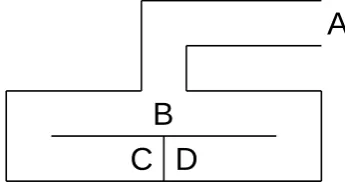
The canonical example of a zero knowledge proof is that of Ali Baba’s cave (Quisquater et al., 1990). Consider a cave containing a hidden door that allows a person knowing the secret magic words to pass fromC toD(see figure 4.1).
A
[image:33.595.212.385.271.362.2]B
C D
Figure 4.1: Zero knowledge proof: Ali Baba’s cave with a secret door between C and D
If Alice wishes to convince Bob that she knows the secret to pass betweenC and D, she can demonstrate her knowledge, without revealing the secret of the door to Bob, in the following way.
Initially, Alice and Bob stand together at the entrance of the cave, A. Alice proceeds to eitherCorDwithout being observed by Bob. This is the commitment. On reaching her destination, Alice calls out to Bob, who then proceeds to stand atB. Bob then calls out a direction from which he wishes Alice to appear. If Alice knows the secret of the door, she can appear from either direction regardless of her initial commitment.
At each run of this protocol, Alice has a fifty percent chance of being in the correct location. If Alice ever appears from the wrong direction, Bob can be con-fident that she does not know the secret of the door. Each time that Alice appears from the correct direction, Bob’s confidence in Alice’s knowledge of the secret in-creases. By performing this test a large number of times, Alice can convince Bob of her knowledge of the secret to an arbitrarily high level of probability without ever revealing the secret itself.
Chapter 5
Deployed Anonymity Systems
Chaum (1981) sparked serious research into online anonymity. Since then, several systems have been implemented. The most famous historical anonymity services, and the leading contemporary approaches, are reviewed in this section.
5.1
Type-0 (
anon.penet.fi
)
The original, and to this day most popular, anonymous remailer system was a sin-gle machine,anon.penet.fi, run by Johan Helsingius in Finland. This ma-chine operated a simple remailing policy whereby a user could send the server an email containing an extra header specifying the ultimate destination of the mes-sage. The server stripped all identifying information from the email’s headers, then forwarded the email to the destination. A simple reply service was also pro-vided, by which a user could set up a pseudonym on the server, all email to which would be forwarded to the owner’s real email address.
This system, though na¨ıve, was tremendously popular. However, the system ran on a single server, which was open to both legal and electronic attacks. The na-ture of the server also caused the administrator to be in possession of the identities of all users. This simplicity of use and lack of protection against attacks that are now considered commonplace has causedanon.penet.fito be retroactively labelled as the “Type-0” remailer.
A user of the service began anonymously distributing material from among the secret teachings of the Church of Scientology, which responded by suing the user. The legal case caused the logs and data stored on anon.penet.fi to be subpoenaed. This, in combination with allegations of the distribution of child pornography through the server, caused its eventual closure in 1996, after three years of providing anonymous services.
34 CHAPTER 5. DEPLOYED ANONYMITY SYSTEMS
5.2
Type-I (Cypherpunks)
Members of the online cryptography advocacy mailing listcypherpunks (Cypher-punks, 2004) developed and deployed the “Type-I” or “Cypherpunks” remailer network. This network uses multiple servers and PGP encryption for all mes-sages. By encrypting emails with the keys of a number of servers it is possible to chain a message through a series of nodes before reaching the final destina-tion. These design decisions removed the critical flaws that eventually caused the demise of the original Type-0 remailer.
The Cypherpunks remailer system, still in use today (APA-S, 2004), uses reply blocks to allow anonymous replies to emails. A reply block is a series of routing instructions that allow the message to be delivered to a pseudonym. This data is included in an anonymous message when sent, and so allows the recipient to reply, despite not knowing the identity of the sender.
5.3
Type-II (MixMaster)
The Type-I network is still open to many attacks on the anonymity of users. In 1994, in an attempt to rectify these problems, Lance Cottrell released the Type-II “MixMaster” remailer (MixMaster, 2004; M¨oller et al., 2003).
Mixmaster improves the anonymity service over the original Type-I remailer. Firstly it introduces fixed-length messages, with shorter messages being padded up to the message length and larger messages being broken up into multiple mes-sages. This defeats the trivial attack of following a message from sender to re-ceiver through the size of the message. Secondly, it implements a message pool to increase the difficulty of performing traffic analysis. This makes MixMaster the first implemented system to approach the design laid out by Chaum (1981).
MixMaster development has continued since 1994, and it is the most popular remailer network currently in use. MixMaster does not implement reply function-ality, due to the difficulty of maintaining anonymity with the use of reply blocks, so the Type-I remailer also continues to be used.
5.4
Type-III (MixMinion)
MixMinion is the latest remailer network, jointly designed by members of the aca-demic and remailer communities. MixMinion improves on the Type-II remailer by including a secure reply capability (Danezis et al., 2003).
mes-5.5. JAP 35
sages across the network, with the addition of functionality such as TLS1 encryp-tion for links between mixes and a frequent rotaencryp-tion of authenticaencryp-tion keys for each mix in order to prevent replay attacks.
MixMinion includes secure reply for anonymous messages. This is achieved through Single-Use Reply Blocks (SURBS). The message path is split into two halves (or “legs”), and the first half of the message path is encoded into the SURB, which accompanies the message. The message then continues along the entire path. When an anonymous reply is formed, the path encoded in the SURB is used to determine the second half of the reply path (which thus returns the message to the original sender), and the first half is formed randomly by the mix. Hence forward and reply messages are indistinguishable within the network.
MixMinion is still in the early stages of development, however the project is receiving considerable interest within the remailer community and development is highly active.
5.5
JAP
JAP (2004) is an anonymizing proxy server developed and hosted at the Technical University of Dresden, with certain nodes on the network hosted by other Univer-sities. The JAP software uses a mix cascade approach to provide anonymity, how-ever the application of the network is geared towards low-latency requirements such as web browsing.
JAP gained some notoriety in 2003 when the German Federal Bureau of Crim-inal Investigation successfully ordered the JAP service to record data concerning connections for future analysis. This ruling was later overturned by the District Court in Frankfurt (JAP Ruling, 2004), however the damage done to the system’s reputation and the worries concerning future reversals of the court’s decision have remained.
5.6
Tor
Tor (“The Onion Router”) (Dingledine et al., 2004a) is an implementation of an onion routing network designed to allow anonymous access to lower-latency ser-vices such as web-browsing and remote shell access. This network, along with the MixMinion effort, is being developed as part of the FreeHaven project to create a functional data haven (Dingledine et al., 2000).
1The Transport Layer Security (TLS) protocol is the latest incarnation of Netscape’s Secure
36 CHAPTER 5. DEPLOYED ANONYMITY SYSTEMS
Tor presents a scalable implementation of onion routing that uses standard proxy protocols to forward services across the network. The system is in the early stages of development, but is already usable for a number of applications. The combination of the low-latency overheads of the network with the integration of the system into a standard proxy format may allow Tor to be more widely adopted than many anonymity services, which have traditionally been weighed down with complex requirements on the user.
Tor can provide not only anonymity for the user of the system, but also can obscure the location of services such as web sites offered through the network. This is achieved through the ability of a server to “extend” a circuit into the net-work with no fixed client on the other end (see section 4.2 for details of circuits in onion routing). A client using Tor can connect to this extended service and relay requests through to the server without knowing the server’s address. This provides censorship-resistance capabilities.
5.7
Freenet
Freenet (Clarke et al., 2000) is an anonymous document publication and distribu-tion service that uses encrypted data storage, geographical distribudistribu-tion, and anony-mous communication between nodes. Anonymity within the network is provided both to the authors and the readers of documents.
The Freenet network protocol is most similar to the Crowds system (Reiter and Rubin, 1998), with requests being randomly redirected between nodes before finally reaching their destination. As such, the anonymity that the system provides is vulnerable to most of the attacks that mixes and onion routing seek to prevent.
Chapter 6
Modelling Anonymity
It is common for analytical approaches to describing anonymity systems to use simple quantifications and basic probabilistic models. There have also been some approaches to producing formal frameworks for the more general description of anonymity systems. These approaches, while not in widespread use, provide some inspiration for methods that could be produced in the future. Here we review some notable approaches.
6.1
Quantifications
Anonymity is not all or nothing: some anonymity systems are in some sense stronger than others. Here we review some means to quantify that strength.
6.1.1
The Anonymity Set
The anonymity set has been the basis of the traditional measure of anonymity since it was proposed by Chaum (1981). The metric is the cardinality of the setS of all participants who could have initiated an action (usually, the sending or receiving of a message). Assuming a uniform probability distribution, the probability that any individualiis the initiator isP(i) = 1/|S|.
This provides a useful first approach to measuring anonymity, but it is not sufficiently powerful to describe the anonymity of a real system. For a set of users with non-uniform probabilities of having performed an action, the anonymity set is a poor metric of anonymity.
“Anonymity is the stronger, the larger the respective anonymity set is and the more evenly distributed the sending or receiving, respectively, of the subjects within that set is.” Pfitzmann and K¨ohntopp (2000)
38 CHAPTER 6. MODELLING ANONYMITY
6.1.2
Information Theoretic Metrics
In an attempt to overcome the limitations of the anonymity set as a metric, Serjan-tov and Danezis (2002) and Diaz et al. (2002) independently proposed information theoretic anonymity metrics.
Information entropy (Shannon, 1948) quantifies the level of uncertainty inher-ent in a set of data. Shannon inher-entropy, in bits, may be calculated as:
H(S) =−X
i∈S
pilog2 pi (6.1)
wherepi is the probability of eventifrom the set of all possible eventsS.
The information theoretic anonymity metric calculates the entropy in terms of the anonymity probability distribution over the set of all users. This proba-bility distribution links each user with a given message through a (possibly zero) probability of being either the sender or the receiver of that message, as viewed a posteriori by an attacker.
The information theoretic metric expresses anonymity in terms of the number of additional bits of information an attacker would need to perfectly identify the originator of an action. If a particular pi = 1, hence all other pj = 0, then H(S) = 0, and an attacker needs no further information to uniquely identifyias the source of the action in question. In the case that all thepiare equally probable, H(S) = log2|S|, and the metric reduces to the simple anonymity set metric.
This approach provides a flexible and robust approach to quantifying anonymity properties. There is further work to be undertaken concerning the analysis of the anonymity of chained mix nodes (Serjantov and Danezis, 2002). This metric sug-gests the possibility of measuring attack efficacy via the entropy reduction caused by the actions of the attacker, however this capability has not been explored in the literature.
6.2
CSP and Anonymity
Schneider and Sidiropoulos (1996) examine anonymity as formalized in the CSP notation (see section 7.3.1).
The model relies on using certain existing features of CSP as an analogy for aspects of anonymity. “Hiding” CSP events from the view of other processes is used to model the anonymous sending of a message. Parallel execution of processes models an anonymity set of processes that could have performed an action.
re-6.3. GROUP PRINCIPALS 39
gardless of the original sender of the message. This ensures that an attacker cannot distinguish a user in the network based on the actions that the users perform.
This CSP anonymity framework is then used to prove the unlinkability be-tween sender and message in Chaum’s basic three agent dining cryptographer network (Chaum, 1988). The model is highly specialised for the specific case of a dining cryptographer network, and has only the broadest applicability to other anonymity systems.
Adding a probabilistic aspect to the more deterministic views that are tradi-tional in process calculi appears to be an essential aspect of building a functradi-tional model of real anonymity-providing services. Schneider and Sidiropoulos (1996) propose this approach, but it does not appear to have been subsequently pursued.
6.3
Group Principals
Syverson and Stubblebine (1999) present an approach towards formally reasoning about anonymity systems based on epistemic logic (see section 7.2 for a discus-sion of such logics).
Their approach treats the knowledge and actions of a group of principals, rather than that of individual agents. This shift from individuals to groups is well-suited to modelling anonymity systems, which intrinsically rely on the interaction of groups of agents in order to preserve anonymity. The epistemic logic developed in the paper relies on the standardS5axioms for modal logics (see section 7.2), and also gives an agent a local “clock” that keeps track of the time-order of events observed by the agent.
The model allows principals to possess knowledge from three sources:
• A log of timestamped actions, from which elements may be deleted
• A set of facts, either deduced from the environment, or predefined
• A set of recent actions performed by the agent
The logic expressed by Syverson and Stubblebine (1999) relies on four group principals that allow the expression of knowledge possessed by a group of agents. These principals are:
• Collective Group (⋆G): What is known by combining the knowledge of the groupGof agents.
• And-Group (&G): What is known by every member of groupG.
40 CHAPTER 6. MODELLING ANONYMITY
• Threshold-Group (n−G): What is collectively known by any given sub-group ofGof cardinalityn; this may be considered as a collective group of or-groups each with cardinalityn.
This framework treats actions that are performed within a run of the system, and are entered into or purged from the log of any agent that observes the action. A set of axioms based on the group principals listed above allows agents to gain knowledge from the system as each action is performed. The use of deduction rules expresses the knowledge that a particular agent may gain, and thus the po-tential of an attacker to deduce the identity (compromise the anonymity) of an agent in the system.
6.4
Anonymity in Multiagent Systems
Halpern and O’Neill (2002) present a “runs and systems” framework for analysing security systems. This is based on an epistemic logic of multiagent systems. Each agent in a system consists of a local state that contains all knowledge held by that agent. The state of the system is a tuple of the local states of all agents in the system.
The basis of the modelling approach is that of the run, a description of the possible execution states of a system considered over time. Logical deductions concerning the properties of agents are made based on points, expressed as a pair
(r, m) of a runr at a certain timem. This is analogous to the concept of traces seen in the process calculus CSP (see section 7.3.1).
Halpern and O’Neill (2004) then apply this framework to the problem of analysing anonymity properties within multiagent systems. The definitions of anonymity represents the lack of knowledge that an agentj has to link an agenti with a particular actiona. Ifj cannot deduce a link betweeniandathenican be said to have anonymity with respect toa.
This definition is extended to two forms: minimal and total anonymity. With minimal anonymity for a particular action,jis unaware thatiwas the originator of this action, but there are no limitations on how many other agentsjbelieves could have performed the action. For total anonymity, then for alli 6=j,j believes that icould have been the source of the action.