Numeracy
EFFECTIVE TEACHING
AND LEARNING
SUMMARY REPORT
Diana Coben, Margaret Brown
Valerie Rhodes, Jon Swain, Katerina Ananiadou
Published by the National Research and Development Centre for Adult Literacy and Numeracy
This document is also available in pdf and text-only format from the NRDC's website,
www.nrdc.org.uk. It is the summary version of the project’s full report, which was also published in February 2007.
For information on alternative formats, please contact:
Emily Brewer
Marketing and Publications Officer Institute of Education
University of London Tel: 020 7911 5501 Email: [email protected]
We welcome feedback on the content and accessibility of this publication. This should be sent to:
Publications
NRDC
Institute of Education
20 Bedford Way
London WC1H 0AL
Telephone: +44 (0)20 7612 6476 Fax: +44 (0)20 7612 6671 email: [email protected]
ISBN 1-905188-31-5
©Crown Copyright 2007
Extracts from this publication may be used or reproduced for non-commercial, research, teaching or training purposes on condition that the source is
acknowledged.
NRDC is a consortium of partners led by the Institute of Education, University of London (see back cover for a list of members) and is part of the Bedford Group for Lifecourse and Statistical Studies at the IoE.
www.ioe.ac.uk/bedfordgroup
Design: [email protected] Print: Redlin
5
Introduction
6
The effective practice studies
7
Main findings
9
Recommendations
10
Background to the study
13
The learners
19
The teachers
23
How practice and progress are linked
29
Conclusions
30
References
Numeracy
SUMMARY REPORT
RESEARCH TEAM
Principal investigators Diana Coben, Margaret Brown Researchers
Valerie Rhodes, Jon Swain, Katerina Ananiadou Researcher and administrative support Peter Brown
Teacher researchers
Jackie Ashton, Deborah Holder, Sandra Lowe Cathy Magee, Sue Nieduszynska and Veronica Storey
SERIES EDITOR John Vorhaus
■The Skills for Life Strategy has led to unprecedented investment in adult literacy, language and numeracy (LLN), major reforms of teacher education and training, and the introduction of core curricula and national standards in teaching and learning. We have a unique opportunity to make a step change in improving levels of adult skills. But until recently too little was known about effective teaching and learning practices, and reports from Ofsted and the Adult Learning Inspectorate repeatedly drew attention to the quality of teaching, and the need for standards to improve.
It has been a strategic priority at the National Research and Development Centre for Adult Literacy and Numeracy (NRDC) to investigate teaching and learning practices in all the subject areas and settings in Skills for Life: to report on the most promising and effective practices, and to provide teachers and trainers, along with policy-makers and researchers, with an unparalleled evidence base on which to build on the progress already made.
Our findings and recommendations are reported here, and in the four companion reports covering reading, writing, ESOL
and ICT. The five studies, which have been co-ordinated by NRDC Associate Director John Vorhaus, provide material for improving the quality of teaching and learning, and for informing
developments in initial teacher education and continuing professional development (CPD). We are also preparing a range of practitioner guides and development materials, as a major new resource for teachers and teacher educators. They will explore and develop the examples of good and promising practice
documented in these pages.
Until recently adult numeracy was under-researched and underdeveloped, and it was often not distinguished from literacy in policy documents and inspection reports. However, the profile of numeracy has been steadily rising, following confirmation by national and international surveys of low levels of skill amongst the adult population. This study is the largest undertaken into adult numeracy in the UK, and it represents a substantial advance in our understanding of the practices that contribute to successful teaching and learning.
■The NRDC’s five Effective Practice Studies explore teaching and learning in reading, writing, numeracy, English for Speakers of Other Languages (ESOL) and information and computer technologies (ICT), and they set out to answer two questions:
• how can teaching, learning and assessing literacy, numeracy, ESOL and ICT be improved?
• which factors contribute to successful learning?
Even before NRDC was set up it was apparent from reviews of the field that there was little reliable research-based evidence to answer these questions. Various NRDC reviews showed that progress in amassing such evidence, though welcome where it was occurring, was slow. Four preliminary studies on reading, writing, ESOL and ICT were undertaken between 2002 and 2004. However, we recognised the urgent need to build on these in order greatly to increase the research base for the practice of teaching these subjects.
The inspiration for the design of the five projects was a study in the United States of the teaching of literacy and English language to adult learners for whom English is an additional language (Condelli et al., 2003). This study was the first of its kind, and the lead author,
Larry Condelli, of the American
Institutes for Research, has acted as an expert adviser on all five NRDC projects.
The numeracy team’s research began in August 2003 and was completed in March 2006. We investigated approaches to the teaching of numeracy, aiming to identify the extent of learners’ progress, and to establish correlations between this progress and the strategies and practices used by teachers. The study involved 412 learners and 34 teachers in 47 classes. Two-thirds of the classes were in further education colleges; the average teaching session was just under two hours and average attendance in class was eight learners. In all, 250 learners were assessed on their mathematical understanding and 243 completed attitude surveys. This occurred at two time points in order to assess progress. Classes were observed between one and four times during each course. Background information was collected on teachers and learners, and we carried out interviews with 33 teachers and 112 learners.
The ICT study differed from the others in that its first phase was developmental, its sample size was smaller, and it had a shorter timescale, completing in March 2005.
3
Progress
We found evidence of significant progress, with an average gain of 9 per cent in test scores, although there was a wide range of average gains between different classes.
Learners’ attitudes were more positive at the end of the course, with the changes tending to be greatest for older people.
Once learners overcome initial anxiety about the course and about
mathematics, numeracy courses can have a significant and positive effect on their identities. They can improve confidence and self-esteem, and enable learners to develop new aspirations and form new dispositions towards learning.
For some learners, to maintain their level of skills, knowledge and understanding is a sign of personal progress.
Time to learn
Evidence from the National Center for the Study of Adult Learning and Literacy (NCSALL) in the US suggests that learners require between 150 and 200 hours of study if they are to progress by one level within the Skills for Life qualification framework. However, although average attendance by
learners between our first and second assessments was only 39 hours, we found that many had made significant progress. Others needed longer to consolidate their learning.
Teaching strategies
Teachers valued ‘flexibility’ as a key feature of effective practice. The diversity of learners, contexts and session lengths meant that no one pattern of lesson activity appeared to be optimal.
A wide range of teaching approaches was observed, although whole class and individual work predominated.
Most teachers gave clear explanations, which were much valued by learners. They also broke work down into smaller steps and gave feedback to learners about their work.
Most teachers followed a set scheme of work, and few incorporated learners’ personal interests. It was also less usual for teachers to differentiate work, make connections to other areas of mathematics, or ask higher-order questions to encourage higher-level thinking or probe learners’
misconceptions.
there was little use of practical resources or ICT, little group or collaborative work, and it was unusual to find learners collaborating with, and learning from, each other.
Teaching and learning relationships Over 90 per cent of learners interviewed expressed a high level of satisfaction with their course and their teacher. Learners were usually highly engaged. They were often, but not always, challenged and stretched; they were generally given time to gain
understanding, and the majority had their individual needs met.
Learners recognised that the
relationship between the teacher and effective learning was critical. It was important for teachers to develop good relationships with learners and to treat, and respect, them as adults. Classroom observation indicated that teachers were enthusiastic and generous in giving praise, and there was a high level of mutual respect.
Teachers’ qualifications The teachers were generally experienced and well-qualified, with many having previously taught mathematics in primary and/or secondary schools. Teachers’ subject knowledge was generally adequate.
Twenty-seven (79 per cent) of the 34 teachers reported having a formal qualification in mathematics or a related subject (e.g. science). Thirty teachers (88 per cent) said they had a teaching qualification and six (18 per cent) reported having a subject-specific Level 4 qualification for teaching numeracy to adults.
It is often assumed that individuals holding high qualifications in mathematics are able to teach basic concepts at lower levels of
mathematics. We did not always find evidence of this. Some teachers relied on methods they had been taught at school.
3
Development work and quality improvement
In all teacher education programmes for adult numeracy, there should be a requirement for teachers to have a firm understanding of basic concepts such as place-value, multiplication and division.
Teachers need a firm grasp of subject and pedagogical knowledge, and also subject-specific pedagogical knowledge. This enables them to be flexible in their approaches, and to cater to the diversity of learners and provision in adult numeracy.
Policy
Adult numeracy education should be seen as part of mathematics education, and as a discrete subject in relation to adult literacy and other Skills for Life areas. This should be reflected in policy documents and in the organisation and inspection of provision, so that, for example, adult numeracy provision is effectively co-ordinated with other mathematics provision offered by colleges and other organisations.
Research
Further research and development should be undertaken into learner assessment in numeracy at Skills for Life levels with a view to developing an
appropriate assessment instrument for research purposes. More sensitivity would be achieved if an instrument were designed to focus on a narrow range of initial attainment: for example, Entry Levels 1 and 2 or Entry Level 3 and Level 1.
A bank of secure, reliable and valid questions should be available to match assessment questions to individual teaching programmes, and therefore to provide a more genuine test of learning in relation to teaching.
More research is required to explore learner and teacher identities. Learners’ identities affect attitudes, motivations, dispositions towards mathematics and education in general, relations with peers and teachers, and future expectations and aspirations. Teacher identities also matter: we need to know how much personal investment teachers make both as numeracy teachers and as people who are knowledgeable about numeracy and mathematics.
■This study is set within the context of the Government’s Skills for LifeStrategy to improve adult literacy and numeracy in England, and took place against a backdrop of policy changes in adult numeracy education, post-14 mathematics education and training, initial teacher education and concerns about skills levels among adults.
Skills for Lifedefined numeracy as the ability ’to use mathematics at a level necessary to function at work and in society in general’. The strategy’s target is for 1.5 million adults to improve their literacy and numeracy skills by 2007. The Skills for Life Surveycommissioned by the Department for Education and Skills (DfES) in 2003 suggested that nearly half of all adults of working age in England (15 million) were at or below the level expected of an average 11-year-old in numeracy. At the same time, a disturbing picture of adult numeracy education began to emerge, with a shortage of experienced teachers and teacher trainers.
What counts as effective practice in adult numeracy education in this context is both complex and straightforward. It is straightforward in so far as adult numeracy provision is inspected according to standards set out in the Common Inspection Framework by the
Office for Standards in Education (OFSTED) and the Adult Learning Inspectorate (ALI). However, complexity arises as the relationship between effective teaching and successful learning in adult numeracy has yet to be established. Our study represents a step towards this goal.
The project was in two phases, in 2003/04 and 2004/05. The target was to recruit a minimum of 250 learners, assess their attainment and attitudes at two points during the year in which they were in the study, interview both learners and teachers, observe the strategies their teachers used, and correlate these strategies with changes in learners’ attainment and attitudes.
The research team consisted of the project directors, professional
researchers, and six teacher-researchers.
Our sample and methods
3 their knowledge of mathematics and
numeracy/mathematics pedagogy, and their teaching qualifications. We aimed to reflect the diversity of numeracy
provision, and the range of adult learners, who include growing numbers of non-traditional learners and 16 to 19-year-olds.
The research was undertaken in learning contexts throughout England, including adult numeracy, Return to Employment, Foundation ICT, family numeracy, GCSE, workplace-based groups, Jobcentre Plus, a prison and a ’vocational taster’ numeracy course for young people with learning difficulties, in both day and evening classes. Providers included FE colleges, a neighbourhood college, a community group, the Army, a prison, a local education authority (LEA) and a private training provider.
Research sites were sought through advertising but when this produced only one result, this was supplemented by sites found through professional contacts. As a result, sites were clustered near to the researchers in north Lancashire, Gloucestershire and London, with additional sites in Kent, Cambridgeshire and the South-west.
Our sample was thus neither random nor fully comprehensive and
representative. However, settings broadly reflected the range available nationally and the proportion of learners in them. We hope our sample also may be reasonably representative of the teaching workforce, although since all
teachers were in a sense volunteers, there may be some bias towards those who are more effective.
A total of 412 learners participated in the study, and we observed 34 teachers and 47 classes; 17 in Phase 1 (2003/04) and 30 in Phase 2 (2004/05). Thirty-one of these classes were in FE colleges, four in adult/neighbourhood colleges, two in family numeracy, four in workplaces, two Jobcentre Plus, one Army training course, two in prisons and one private training provider. Class sizes ranged from one to 23 learners, with an average size of eight. A minority of the classes observed (28 per cent) had a learning support assistant or volunteer. Most were daytime classes and lasted between one and three hours.
Phase 1 was used to develop our research instruments, which we trialled extensively. In both phases 1 and 2, we assessed learners at the beginning, Time 1 (T1), and near the end, Time 2 (T2), of their learning programmes. We observed teaching sessions, surveyed learners’ attitudes to numeracy and interviewed nearly every teacher and a sample of learners. We also gathered background information on all learners and teachers.
A typical assessment item
A
■
■
£1.18
B
■
■
£0.82
C
■
■
£0.80
D
■
■
£0.59
If I buy 2 jar
s of jam, ho
w much change w ould I get from £2.00?
59p
59p
What is distinctive about this study?
Two issues proved particularly
problematic in this study: encompassing the diversity of provision and teaching, and measuring learners’ progress.
Adult numeracy education takes various forms, occurs in various contexts, and has a wide range of teachers and learners. It is extremely heterogeneous by comparison, not only with numeracy and mathematics education in schools, but with other Skills for Life areas. There is also a wider issue of the difficulty of simulating in classrooms the situations in which mathematics occurs elsewhere. Hence an assessment might not give a clear indication of an individual’s strengths and weaknesses when confronted with mathematics outside the classroom. These factors make it difficult to produce generic research instruments able to encompass the full range of learners, teachers and forms of provision, or to draw conclusions that can be generalised across the whole sector.
Measuring learners’ progress
We reviewed several standardised tests
before deciding on a modified version of that used in the Skills for Life Survey. The assessment covered a range of
curriculum areas and difficulty levels, from Entry Level 1 to Level 2. The need for our assessment instrument to be practicable – and not take up too much class time – was also problematic, and we therefore chose a written test that could usually be completed in about 30 minutes and be administered in one sitting. The 20 items were all multiple-choice and incorporated photographs and diagrams, with only simple text. An example of an Entry Level 2 question is shown (above).
Researchers were able to read or explain the meaning of questions for ESOL learners or those with language
difficulties. Calculators were available but were seldom used. However, in
3
■The learners were fairly equally gender-balanced. They were predominantly in the younger age groups, with 40 per cent between the ages of 16 and 19. In a questionnaire, more than 40 per cent of learners reported their ethnic group as white British, with the second largest group being Bangladeshi. Almost three out of five learners in the sample said English was their first language. Forty per cent of the sample were in full-time education, and approximately 15 per cent were employed full-time. The average age at which learners left school was 16, and almost 40 per cent already held at least one maths or numeracy qualification. Around one in 10 reported being permanently sick or disabled. Nearly a quarter of the sample reported at least one factor that adversely affected their ability to learn. Dyslexia was most frequently mentioned, with around 7 per cent citing this.
In some classes the range of ability was relatively small; in other classes the wide range of ability was seen as a problem. Even in classes working at a similar level, an individual might be strong in one curriculum area but relatively weak in another. This tallies with the Government’s description of adult learners as having ‘spiky profiles’.
Other classes had distinctive
populations, such as those for people with learning difficulties and ESOL learners.
In some classes teachers often found it difficult to motivate learners. This problem was particularly acute when numeracy was part of a vocational course. Jobseekers’ classes also had a distinct population, as some learners attended for eight weeks and others up to six months, which made planning difficult.
Differences between learning numeracy as a child and as an adult
Many of those interviewed spoke of anxiety about returning to learning to study numeracy, and most of these were women. However, not all learners had worries and this was particularly true of the 16 to 19-year-olds, as many were, in effect, continuing at school.
generally stimulating level of work.
A key theme that emerged from the learner interviews was that, where the teaching is good, learners begin to understand more about
numeracy/maths, and with understanding comes greater confidence.
Learner motivations
Research has established that learners’ motivations for joining numeracy classes are many, intricate and often overlap. Most of our 412 learners reported ‘getting a
qualification’ as the main reason for doing a numeracy course, with ‘getting a better job’ being the second most popular response. The number of adults over 20 who said they wanted to study numeracy to either prove something to themselves or become more confident was more than twice that of the 16 to19 age group.
In common with other research findings our data confirm that wanting to prove to themselves that they can succeed in a high status subject is also a powerful reason. Although giving educational support to their children was only the fifth most popular response, it should be remembered that over 40 per cent of the sample were 16 to 19-year-olds, and so would not have children of school age.
Policy-makers often assume that a major reason for people to attend numeracy courses is to help them
function more effectively in the outside world. Our research, however,
suggests that this was perceived by learners as being a comparatively minor reason.
What people felt about numeracy
The 77 learners who spoke about their feelings towards numeracy were more likely to say that they liked numeracy (44 per cent) than disliked it (21 per cent).
Findings from the attitude survey were even more positive: from a total sample of 243, a large majority reported that they enjoyed numeracy learning (78 per cent), and only 22 per cent stated that they did not enjoy it.
During the interviews, more than one in four learners said they were feeling more confident about maths now that they were on the course. This was also reflected in data from the attitude survey.
Succeeding in what many learners perceive as being a high status subject also led to higher levels of self-esteem. Some saw it as like being able to join an elite club, and as one learner put it, ‘it makes me feel like an educated person’.
The potential of learning numeracy in being able to change learners’ identities is illustrated in the quotations below.
3 I feel equal. When I’m at work now I don’t
feel that I’m a second-rate person. I don’t feel that I have to prove myself anymore.
Her male classmate agreed:
To be able to do, like when you see maths, and to be able to do it, makes me so proud, I am going somewhere. And I want to do more.
Views on the course
Learners were overwhelmingly positive about the course, with more than 90 per cent expressing a high level of satisfaction. Learners seemed to like most the relaxed atmosphere and the way they were treated as an adult; the individual help and attention; the friendliness of the other learners; working with and helping others; the teacher and the way numeracy was taught; feelings of progress; and their improved confidence and self-esteem.
What makes a good numeracy teacher
We asked the learners what they thought makes a good teacher. In order of frequency, a good teacher was described as someone who:
• Has good communication skills; explains things clearly using several different ways, including breaking down concepts into small steps. • Has good relations with learners:
respects learners; does not make them feel stupid; is approachable and listens carefully to their needs. • Makes maths interesting by being
imaginative and makes sure there is plenty of variety in each session. • Does not lecture and talk too much. • Gives individual help.
• Does not rush through the work. • Has a firm grasp of their subject.
Learners also wanted a teacher who was cheerful, had a sense of humour, was relaxed and easy-going and made them feel welcome. Above all, they wanted someone who was patient.
Some of the teachers we interviewed had all of these qualities and were not fazed by what they encountered in the classroom, as the following story confirms:
Should have seen him (adult learner) last week actually. He comes up to me and needs his shoelace doing up and thinks I can do his shoelace up. He put his foot up, I did his shoelace up and said: “There you go” and he bent over to kiss me, it must be what he does to his Mum [laughs]…Personal space! And there, you know, tying one person’s shoelace when I’ve got someone else in my other ear asking me about quadratic equations because the maths exam is on.
Female numeracy teacher
What is progress?
in this and the other NRDC Effective Practice Studies. However, it is important that our findings are not over-interpreted. For instance, for some people, to simply maintain their level of skills in numeracy rather than falling back is itself a sign of personal progress. We also know that learners may regress if they are not regularly using their skills. Moreover, as we have already stated, we were aware that our instrument for measuring learners’ progress was not as valid and reliable as we would have liked.
Gains in attainment
Of the 412 learners in both phases of the study, 250 completed an
assessment at both time points, towards the beginning and end of their numeracy course. In this section we are presenting data only on learners assessed at both time points.
This group of 250 was compared with the 162 assessed only at T1 in terms of background characteristics such as gender, age and qualifications to establish that the groups did not differ significantly. The same test was used both times, usually with a gap of seven or eight months, although the nature of the majority of the provision meant that the average number of teaching hours that learners received between pre- and post-assessment for each class was only 39.
We found an average 9 per cent gain between the two time points across all learners in Phases 1 and 2. The mean
gains are statistically significant, and in a test with 20 items it is equivalent to an average learner being able to answer correctly two additional questions in the final test.
However, there was no correlation between number of hours of tuition and the gain in scores. Although this seems counter-intuitive and inconsistent with other research, this may reflect particular circumstances. For example, there were a number of short courses in our sample, such as one highly intensive course run by the Army over five days.
In interpreting results such as these we need constantly to bear in mind the difference between correlation and causation. For example, longer learning time would be expected to cause greater progress, but there may be other underlying associations.
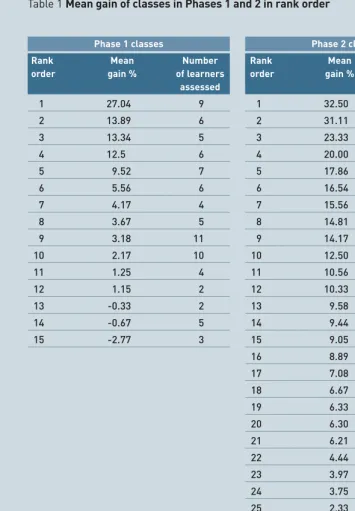
Table 1 shows the mean gains made by each class; these are shown in rank order within each phase. We found a large spread in the mean class gains, with the largest at more than 30 per cent and the lowest at -13. It should be noted that negative mean gains do not necessarily indicate that learners knew less at the end of the course than at the start. These indicate only that the mean scores on a small sample of items were lower.
Attainment gains and background characteristics
We investigated whether any learner characteristics were related to the
Phase 1 classes
Rank Mean Number
order gain % of learners
assessed
1 27.04 9
2 13.89 6
3 13.34 5
4 12.5 6
5 9.52 7
6 5.56 6
7 4.17 4
8 3.67 5
9 3.18 11
10 2.17 10
11 1.25 4
12 1.15 2
13 -0.33 2
14 -0.67 5
15 -2.77 3
Phase 2 classes
Rank Mean Number
order gain % of learners
assessed
1 32.50 5
2 31.11 6
3 23.33 5
4 20.00 2
5 17.86 7
6 16.54 13
7 15.56 3
8 14.81 9
9 14.17 2
10 12.50 12
11 10.56 3
12 10.33 5
13 9.58 4
14 9.44 3
15 9.05 7
16 8.89 6
17 7.08 4
18 6.67 3
19 6.33 5
20 6.30 9
21 6.21 11
22 4.44 3
23 3.97 13
24 3.75 4
25 2.33 5
26 1.11 3
27 -1.11 6
28 -4.44 3
29 -12.78 3
[image:17.595.94.450.120.632.2]30 -13.33 1
amount of progress learners made. We looked at gender, age group, first language, ethnic group, having attended another numeracy class since school, reporting a factor affecting learning, and qualifications held. The only statistically significant difference found was that learners who said they lacked a formal qualification in maths made greater progress.
We also explored differences in progress in terms of the reasons learners had given as their main motivation for doing the course. The only significant difference found was between learners who stated that they wanted to become more confident as opposed to those who did not, with the former group tending to make more gains than the latter.
Finally, there were no significant correlations between any of the teacher characteristics measured and the progress of the learners in their class. This may seem counter-intuitive, but it mirrors other findings about primary teachers and progress in numeracy. Similarly, as with earlier studies, we also found that young and/or inexperienced teachers were not necessarily less effective than older and/or more experienced teachers, possibly because of their more recent training experience.
How attitudes changed
A total of 415 learners completed the ‘attitude to numeracy’ questionnaire at T1 and 254 at T2, with 243 completing it
at both time-points over the two years of the project.
From the 17 statements, learners had to tick one of four options from ‘strongly disagree’ to ‘strongly agree’. The questionnaire was designed to include statements relating to usefulness, enjoyment and difficulty of learning numeracy.
The correlations between attainment and attitude scores were weak and non-significant, as was the correlation of gains in assessment and attitude scores. These seem surprising findings; one might expect that those with higher scores would be more positive about mathematics and that learners demonstrating a positive change in attitudes would make most progress. It may have been that the attitude survey was not capable of detecting the increased enthusiasm for mathematics that we noted when interviewing some learners.
Analysis of attitude sub-scales The 17 items of the attitude
3
■Twenty-five of the teachers were women and nine were men. Eleven taught classes in Phase 1 only, 18 in Phase 2 only, and five taught classes in both phases. The mean number of years of teaching experience in numeracy or maths was just over 13, while the vast majority had taught at Levels 1 and 2, GCSE and learners over the age of 19. More than 66 per cent had taught in secondary schools and 24 per cent in primaries. Twenty-seven had a formal qualification in
mathematics or a related subject, such as science. Thirty teachers reported having a teaching qualification. Six said they had the new Level 4 qualification for teaching numeracy to adults.
Key elements of an effective lesson: the teachers’ view
Teachers described their classes, and researchers drew out the features of what they regarded as an effective session.
• Being flexible and able to use a variety of approaches to accommodate learners’ needs; learners work at different speeds, and activities sometimes take more or less time to work through than anticipated.
• Enabling learners to make connections to other areas of
mathematics.
• Good planning, including anticipating learners’ responses.
• Starting from where the learners are, providing a variety of activities, and a variety of ways of doing things that incorporate learners’ own methods. • Extending learners beyond their
comfort zone.
• Getting learners to interact, and viewing learning as a social activity. • Encouraging learners to make their thinking explicit to the teacher and to other learners; allowing them to articulate what they understand.
The final point was important because it helped learners not only to practise a ‘technique’, but also to assimilate an underlying concept. One teacher, whose two Jobseekers’ classes were in the top three in terms of gains at Phase 2, said: ‘You have always got to hear learners speak.’
Researchers observed each teacher on an average of 2.4 occasions over the two phases. They completed a narrative sheet at the time of the session, and made reflective observations that were completed retrospectively. The analysis of sessions was divided into seven aspects:
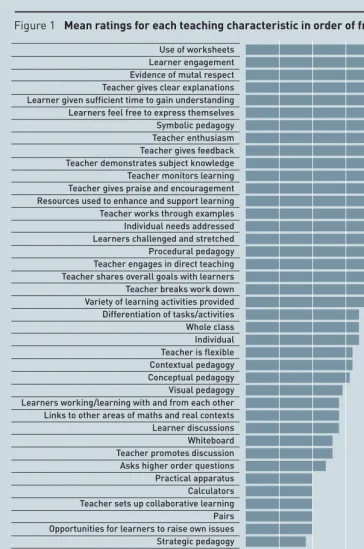
Figure 1 Mean ratings for each teaching characteristic in order of frequency
0 0.5 1 1.5 2 2.5 3
3 • teachers’ role
• teaching process • learners and learning • teacher-learner relations • materials
• mathematical pedagogy (Phase 2 only).
A numbering system from 0–3 was used to indicate the emphasis the researcher gave each characteristic of the lesson. 0 indicated that it was not observed; 1, that it was observed to a very limited extent; 2, that it was observed to some extent, and 3, that it was observed to a high degree. The reflection sheet therefore allowed us to describe the characteristics of the lessons as a whole.
Results for each class are based on the average ratings. Figure 1 is a summary of the 48 categories that were used to analyse teachers’ pedagogical
approaches, and it presents the average
degree to which each was observed across all the sessions observed.
Figure 1 shows that the most common forms of organisation were whole-class and learners working individually. There was less group or collaborative work, and it was less typical to find learners working with, and learning from, each other.
Most teachers followed a set scheme of work and rarely incorporated learners’ personal interests. The main approach was for teachers to show learners procedures, breaking concepts down into smaller parts and demonstrating examples. Worksheets were widely used, with little practical apparatus, games or ICT.
Teachers generally had adequate subject knowledge, gave clear explanations and provided a variety of learning activities. It was less usual for
teachers to differentiate work, make connections to other areas of mathematics, or ask higher-order questions to encourage higher-level thinking or to probe learners’ misconceptions.
The majority of the teachers asked learners to follow procedures using symbols (mainly numbers). There was less emphasis on conceptual
understanding or relating topics such as fractions to other areas of mathematics. Although about half of the sessions showed teachers relating mathematical topics to the world outside the
classroom, and employing visual techniques to aid understanding, very few teachers asked learners to solve problems or used concrete materials.
Mutual respect between teachers and learners was high, and learners felt free to express themselves. Teachers were invariably enthusiastic and gave learners much praise and
encouragement. They also usually monitored learning and gave feedback.
On the whole, learners were generally highly engaged; they were often challenged and stretched; they were given time to gain understanding, and the majority had their individual needs met.
Teaching typologies and other factors
Based on the classroom observations, teachers were classified according to their teaching approach. Three were identified: the connectionistand
transmissionstyles (Askew et al., 1997), and the constructivist/scaffolderstyle, after Bruner and Vygotsky. No one used a discoveryapproach – where the teacher believes that learners should discover the intended outcome of the lesson, guided by them and materials.
• The connectionist teacher frequently makes connections to other areas of mathematics, including moving between symbolic, visual and verbal representations.
• Thetransmissionteacher is principally concerned with mastery of skills. Mathematics is seen as a series of discrete packages to be taught in small steps emphasising procedures rather than conceptual
understanding.
• Using theconstructivist/scaffolder style, the teacher works alongside learners, co-constructing concepts and asking questions.
3
■We computed correlations between the average scores for each of the classroom characteristics observed and the class gains. Most of the correlations were relatively low and not significant. Since the gains were larger in Phase 2, and more observations were made per class, we have used only the Phase 2 data with 29 classes for the next section.
One significant positive correlation was found. This was between learners’ progress and the extent of procedural teaching. Procedural teaching involves showing discrete procedures for learners to follow in order to carry out a computation or technique.
Another significant but low negative correlation was found between learner progress and the amount of individual work. In other words, classes in which this characteristic was observed less were more likely to have made positive gains.
Almost every class contained individual work at least to a limited extent, and the relationship was not strong. Indeed, one of the classes that made the best progress contained a
significant amount of individual work. However, classes in which individual work was observed to a large extent
generally seemed to make a little less progress.
Teaching approaches and gains in progress and attitude
Our study shows no clear relationship between teaching typology
(transmission, connectionist and constructivist methods) and class progress.
We also found no significant correlations either between any of these three factors, or between teaching typologies and changes in learners’ attitudes.
This may seem surprising. However, such findings are not unusual in mathematics education literature, where it is first the learner variables and second the curriculum that seem to be the essential factors. The effect of the manner in which learners are taught is either not detected or is very small.
abilities and dispositions towards numeracy, socio-cultural background and previous experiences both inside and outside the classroom.
Best practice in classes where learners made most progress
We went on to examine the highest-performing classes in greater depth to find out whether any particular features distinguished the teaching of these classes from the others. We selected the five classes that made the most progress, all achieving mean gains of more than 15 per cent. We then compared these five with the full sample in several ways. We also looked for differences in the teachers’
background characteristics.
There was a considerable variety of teaching typologies even within these five classes. Two teachers were judged to use a connectionist/constructivist approach, one a
connectionist/transmission approach and two a transmission approach.
While the teachers in the two best-performing classes (both of which achieved more than 30 per cent
attainment gains) predominantly used a balance of constructivist and
connectionist approaches, other classes taught using similar approaches performed much less well.
We found that the teachers of the five groups that made the highest gains generally taught mathematical procedures more than the average
teacher, and very much more than the teachers of the five groups that gained least. This is consistent with procedural teaching having the highest correlation with gains for the whole sample.
Similarly, teachers of the five groups that made the highest gains made less use of practical activities than the average teacher and very much less use than teachers of the five groups who made the least gains.
It is important to guard against converting distinctions into causations. In this case it seems likely that teachers decide to use practical equipment for learners who have difficulties in learning.
Teachers would be unlikely to try to teach formal procedures to learners who had experienced problems in remembering these in the past. It would be more likely that they would do so for faster learners. We do not therefore believe procedural teaching necessarily causes greater learning and practical activities cause less learning.
Other aspects of what would normally be regarded as effective practice were used more among the lowest-performing classes, e.g. collaborative work, teaching of strategies as well as procedures, teachers emphasising making connections and hypotheses.
3 researchers thought that the teaching
was generally very good but learner progress was weak. Equally, we observed some teaching of lower than average quality but where progress was strong.
Finally, we also checked to see if the characteristics of the teachers and learners might have an effect. While the teachers’ background appeared to have no discernible effects, it was noticeable that the five highest-attaining classes all contained adults over 19 and tended to be dominated by older learners without any major language difficulties. No other clear associations were found.
Good practice in action
On pages 26-28 we present a detailed description of the beginning of one teacher’s numeracy class as an example of effective practice. It was an evening class at a London FE college, and the teacher had taught numeracy for 21 years.
This class achieved an average gain of more than 30 per cent, with many learners making exceptional progress. In addition, learners’ enthusiasm towards numeracy was noticeable both from the attitude surveys and the class observations. This was achieved by using a predominantly connectionist and constructivist approach which
emphasised conceptual understanding rather than routine procedures.
The teacher created a non-threatening atmosphere and learners’
misconceptions were used as examples to discuss with the whole group. Learners were encouraged to discuss problems and concepts both between themselves and with the teacher, building a strong collaborative culture. Numeracy learning was viewed as a social activity where understanding was formed through discussion.
A variety of group, individual and whole-class teaching was used. However, even when learning was organised on an individual basis the learners were still encouraged to discuss problems and help each other, developing a greater understanding. The class was taught in an open style, which allowed higher-order, diagnostic questioning that uncovered learners’ thinking.
A range of materials and teaching resources was used, from worksheets to games and activities, including whole-class role-play. Calculators were freely available. The teacher used problem-solving activities and was able to change direction to respond to learners’ needs.
The comments that appear in italics are retrospective and provide
Time Content/focus of the session
7.00 Topic: Percentages
Becky (BH) holds up an individual mini-whiteboard (A4 white laminated card) with ‘%’ hand-drawn on it. She asks the learners to tell her what it is and what it means. In response to one learner saying it looks like a division sign she draws one [÷] on the main (fixed) whiteboard and initiates a discussion about the relationship between percentages, fractions and decimals.
She asks learners to call out different percentages that they had come across, and she writes them up on the main whiteboard.
BH writes up: ‘10% means divide by 10’. She makes no further comment
The teacher asks open questions; does not give answers; initiates discussion, looks at relationships and connections and assesses learners’ prior knowledge. The teaching is interactive and the teacher reinforces understanding.
7.15 BH gives learners small cards with statements on two lines (e.g., I have 76. Who has 10 per cent of £6,500?) Learners have to read out their questions and answer if they have the right answer, otherwise keep quiet. BH: ‘If your neighbour is quiet they may be asleep, so you can look at your neighbour’s card.’ At the end Becky confirms to the class that they were all able to calculate 10 per cent of the amount.
BH (having drawn on small whiteboard): ‘10 per cent of 30? So what’s 5 per cent? So what’s 30 per cent? If I wanted 90 per cent of 500?’ Greg says, ‘Take off 10 per cent’. BH asks for a number and Greg says ‘300’: ‘50 per cent of 300? What’s 75 per cent of 300? Half is 50 per cent, then halve that and add it to the 150. Notice we’re talking about a half and a quarter.’ Learners call out the answers; Becky writes on large whiteboard. BH: ‘Can you see a pattern? What’s 55 per cent of 300? You can do it however you like.’ Learners hold up their
and here’ (shows examples on main whiteboard).
BH points out there are many different ways of doing percentages. In some situations one method is good, in others, another method might be better. ‘171
-2per cent. If you think you know what to do, write it down on your board. 10 per cent; 5 per cent; 21
-2per cent. What have they done here? Can you work out 171
-2per cent of 300?’ (shows it written on mini whiteboard with figures above each other). Learners work out each element and then add them together. BH asks why they’ve added them. Learners explain. BH: ‘That’s VAT. It’s not too bad. Now try it with my nice number (400). Just to see how comfortable you are with it, I’ll give you an even nicer number (800).’ Sandra gives the right answer. BH: ‘Did you do that in your head? That’s impressive. So 171
-2 per cent doesn’t hold any threats for you. How about 63 per cent? How will I break that down?’ (Learners call out different ways of breaking down 63 per cent). BH: ‘Distinguish between ones you can do in your head and more tricky ones – you’d use a calculator for those.’
BH: ‘Let’s try 63 per cent of £800.’ She goes around the room (using the space in the middle) helping learners as appropriate, e.g., not lining numbers up. BH: ‘There’s a terribly dangerous thing happening to everyone in the room and it’s all my fault! Karen, let me show what you did.’ She writes 400 wrongly aligned with the other numbers to be added. BH: ‘Be careful that you always find percentages of the same number (800). Always refer back to the number you’re finding the percentage of.’ BH: ‘Will 63 per cent be more than half or less than half? Always think about doing a check. There are different ways of checking. We can learn some of those as we go along.’ BH: (writing on whiteboard): ‘When you see 25 per cent what does it mean? A quarter; 75 per cent, three-quarters; 331
-3, a third.’
The teacher uses interactive games and asks questions. She builds on, and uses, learners’ strategies, points out that there are many different strategies that can be used, highlights that some may be better than others, and shows learners which ones to use. The teacher is, again, getting learners to look for patterns. The learners work collaboratively; some assume a teaching role and explain strategies to each other. The teacher breaks maths down and works through examples. She points out that there are different ways of solving problems. The teacher assesses
different ways of working and asks learners to justify what they’ve done. She breaks maths down using learners’ own methods, and encourages mental calculation. She gives praise and there is appropriate use of technology. The teacher monitors learning and identifies learners’ misconceptions. She emphasises need for checking and reinforces concepts learned with whole group.
The narrative above covers only the first hour of the session and provides a partial view. Nevertheless, it shows how complex teaching is, how many decisions teachers have to make, and how hard they often have to work. We believe that this extract exemplifies some of the key features of effective practice. These resonate with the approaches promoted by the DfES Standards Unit Improving Learning in Mathematics project that have been piloted with adult learners through the NRDC Maths4Life Thinking Through Mathematicsinitiative (www.maths4life.org.uk).
■Taking all classes together, significant progress was made over the length of the numeracy courses. There were, however, few significant links between progress made and different classroom approaches, and little association between teachers’ characteristics like qualifications and experience or the number of teaching hours. There was also little association between the size of gains and types of learner. There were small but positive overall changes in attitude.
We have found that effective approaches are difficult to determine solely from quantitative data. The multiplicity of factors contributing to learning mean that any effects that good practice might have are often compromised by other considerations that contribute to, or constrain, learner progress. In the end, our correlation calculations give little indication of what constitutes an effective approach in adult numeracy education.
This seems to suggest that factors which cannot easily be determined in a large-scale survey may have more influence on their learning than any specific easily-observed difference in teacher behaviour. These are: learners’ strength of motivation, their self-discipline, their aspirations, their
abilities and dispositions towards numeracy, their socio-cultural background and previous experiences both inside and outside the classroom.
In one sense our findings are in line with research literature that suggests that there is often only a partial relationship between interactions in pedagogic settings and learning. We therefore caution against any attempt to promote a single method or approach that can be applied across all settings.
Nevertheless, the qualitative strand of our research bears out the view that effective practice requires good teacher-learner relationships and teachers being flexible in their response to learners’ needs.
Askew, M., M. Brown, et al. (1997). Effective Teachers of Numeracy. London, King’s College London.
Condelli, L., Wrigley. H., Yoon. K., Seburn, M. and Cronen, S. (2003). What Works Study for Adult ESL Literacy Students. Washington, DC: US Department of Education.
NRDC
Institute of Education University of London 20 Bedford Way London WC1H 0AL
Telephone: +44 (0)20 7612 6476 Fax: +44 (0)20 7612 6671 email: info@nrdc.org.uk website: www.nrdc.org.uk
NRDC is a consortium of partners led by the Institute of Education, University of London with: • Lancaster University • The University of Nottingham • The University of Sheffield • East London Pathfinder • Liverpool Lifelong Learning
Partnership
• Basic Skills Agency • Learning and Skills
Network
• LLU+, London South Bank University • National Institute of
Adult Continuing Education • King’s College London • University of Leeds
Funded by the Department for Education and Skills as part of Skills for Life: the national strategy for improving adult literacy and numeracy skills.
Numeracy
EFFECTIVE TEACHING AND LEARNING