Project submitted to
The Tamil Nadu Dr. M.G.R. Medical University, Chennai In partial fulfilment of the award of Degree of
M PHARMACY (PHARMACY PRACTICE)
Submitted by SARAYU B
Under the Guidance of
Dr. A.S. Manjula Devi, M. Pharm., Ph.D., Associate Professor
Department of Pharmacy Practice
OCTOBER- 2018
COLLEGE OF PHARMACY
Certificate
This is to certify that the project entitled
“DOSAGE INDIVIDUALIZATION OF ANTI MICROBIALS AND CARDIOVASCULAR DRUGS IN PATIENTS WITH
CHRONIC RENAL DYSFUNCTION” Was carried out by
SARAYU B
in Sri Ramakrishna Hospital, Coimbatore, attached to the College of Pharmacy, Sri Ramakrishna Institute of Paramedical Sciences, Coimbatore, which is affiliated to The Tamil Nadu Dr. M.G.R Medical University, Chennai, under my direct supervision and guidance to my fullest satisfaction.
Dr. A.S. Manjula Devi, M. Pharm., Ph.D.,
Associate Professor, Department of Pharmacy Practice,
College of Pharmacy, SRIPMS, Coimbatore - 641 044. Place: Coimbatore
Certificate
This is to certify that the project entitled
“DOSAGE INDIVIDUALIZATION OF ANTI MICROBIALS
AND CARDIOVASCULAR DRUGS IN PATIENTS WITH CHRONIC RENAL DYSFUNCTION”
Was carried out by
SARAYU B
in the Department of Pharmacy Practice, College of Pharmacy, Sri Ramakrishna Institute of Paramedical Sciences, Coimbatore under the direct supervision and guidance of Dr. A.S. Manjula DeviM.Pharm., Ph.D., Associate Professor, Department of Pharmacy Practice, College of Pharmacy, Sri Ramakrishna Institute of Paramedical Sciences, Coimbatore.
Dr. S. Sriram, M.Pharm., Ph.D., Professor and Head Department of Pharmacy Practice, College of Pharmacy,
SRIPMS, Coimbatore- 641 044.
Place: Coimbatore
Certificate
This is to certify that the project entitled
“DOSAGE INDIVIDUALIZATION OF ANTI MICROBIALS AND CARDIOVASCULAR DRUGS IN PATIENTS WITH
CHRONIC RENAL DYSFUNCTION” Was carried out by
SARAYU B
in Sri Ramakrishna Hospital, Coimbatore, attached to the College of Pharmacy, Sri Ramakrishna Institute of Paramedical Sciences, Coimbatore, which is affiliated to The Tamil Nadu Dr. M.G.R Medical University, Chennai, under the direct supervision and guidance of Dr. A.S. Manjula Devi M.Pharm., Ph.D., Associate Professor, Department of Pharmacy Practice, College of Pharmacy, Sri Ramakrishna Institute of Paramedical Sciences, Coimbatore.
Dr. T. K Ravi, M. Pharm., Ph.D., FAGE, Principal, College of Pharmacy,
SRIPMS, Coimbatore- 641 044.
It is my great privilege and pleasure to acknowledge those who helped me during my project work. To begin with, I lay this work at the feet of the
"Almighty" whose blessings made me to complete this project successfully.
I submit my humble and grateful acknowledgement to my teacher and guide Dr. A.S. Manjula Devi, M.Pharm., Ph.D., Associate Professor, Department of Pharmacy Practice, whose valuable and unique guidance made my work a remarkable one.
I sincerely thank our co-guide Dr. Chezhiyan M.D., D.M., Consultant
Physician, Coimbatore who helped and guided me throughout my work.
It gives me great pleasure to record my deep sense of gratitude and indebtedness to Dr. T.K. Ravi, M. Pharm., Ph.D., FAGE, Principal, College of Pharmacy,for providing the necessary facilities to carry out this project work.
i find words inadequate to express my deep sense of gratitude and heartfelt thanks to my beloved teachers Dr. S. Sriram, M. Pharm., Ph.D., HOD, Department of Pharmacy Practice, Dr. B.Rajalingam M. Pharm., Ph.D.
Assistant Professor, and Mrs. B. Chitra M. Pharm., (PhD)., Dr. V. Shivashankar M.Pharm., PhD. Dr. Lakshmi menon., Mrs. Merin M. Pharm., Lecturers, Department of Pharmacy Practice.
It is my privilege and wonderful experience to be a part of this esteemed institution and I owe my sincere thanks to Dr. S. Sukumaran, M.S., M.Ch, FIACS, Dean of Sri Ramakrishna Hospital, and Coimbatore.
Our respect regard to the beloved Thiru. C. Soundararaj, Managing Trustee and Thiru. R. Vijayakumar, Joint Managing Trustee, SNR Sons Trust,
by Dr. N. Senthilvel, M.D., Dr. Jambulingam, MBBS., M.D., physicians of General medicine, andthe other physicians and surgeons of the study department.
I would like to express my sincere thanks to other teaching and non-teaching staff of the institution.
I would like to express our profound gratitude to my beloved parents who taught us hard work by their own example, and our siblings who rendered us enormous support during the whole tenure of life to achieve more.
I sincerely thank my seniors Neethu sara, Neha without whose help and guidance this project would not have been completed.
I thank our dear friends Amy, Jeethu, Jean who lend us a helping hand during the course of this study.
We would like to express our sincere thanks to our batch mates Saranya, Ashwin, Aparna, Jobin, Binil for their kind support.
My sincere thanks to Net Soft, Coimbatore for their help in bringing out this manuscript in a neat manner.
I would also put on record our thanks to all others who directly or indirectly gave a helping hand to us while carrying out this study.
S.NO.
TOPICS
PAGE NO.
I.
ABBREVIATIONS
1
II.
ABSTRACT
3
III.
INTRODUCTION
5
IV.
LITERATURE REVIEW
21
V.
SCOPE OF STUDY
36
VI.
OBJECTIVES
38
VII.
PLAN OF WORK
39
VIII.
METHODOLOGY
40
IX.
RESULTS
43
X.
DISCUSSION
64
XI.
CONCLUSION
70
XII.
FUTURE OUTLOOK
71
XIII.
REFERENCES
72
XIV.
ANNEXURE
1.
Permission Letter From Hospital
78
Dosage individualization of anti microbials and cardiovascular drugs in patients with chronic renal dysfunction P a g e | 1
ABBREVIATIONS
ABW – Actual Body Weight
ACE – Angiotensin Converting Enzyme
ADRs – Adverse Drug Reactions
APD – Acute Pulmonary Disease
ARB – Angiotensin Receptor Blocker
BD – Twice Daily
BNF – British National Formulary
CAPD – Continuous Ambulatory Peritoneal Dialysis
CCF – Congestive Cardiac Failure
CG – Cockcroft-Gault
CHF – Congestive Heart Failure
CKD – Chronic Kidney Disease
ClCr – Creatinine Clearance
CRF – Chronic Renal Failure
CVA – Cerebrovascular Accident
CVD – Cardio Vascular Disease
DCI – Dialysis Clinic, Inc
DM – Maintenance Dose
DRPs – Drug Related Problems
eGFR – Estimated Glomerular Filtration Rate
ESRD – End Stage Renal Disease
GFR – Glomerular Filtration Rate
HD – Heamodialysis
IBW – Ideal Body Weight
Dosage individualization of anti microbials and cardiovascular drugs in patients with chronic renal dysfunction P a g e | 2
IV – Intravenous
KDOQI – Kidney Disease Outcomes Quality Initiative
KF – Kidney Function
LBW – Lean Body Weight
LRTI – Lower Respiratory tract Infection
MDRD – Modification of Diet in Renal Disease
NAPQI – N-acetyl-P-benzoquinoneimine
NFK – National Kidney Foundation
NSAIDs – Non Steroidal Anti-inflammatory Drugs
NTI – Narrow Therapeutic Index
OD – Once Daily
PDR – Physician Desk Reference
PO – Per Oral
RI – Renal Impairment
RF – Renal Failure
RRT – Renal Replacement Therapy
SD – Standard Deviation
TDM – Therapeutic Drug Monitoring
TID – Thrice Daily
τ – Dosing Interval
q.8.h – Every Eight Hours
q.6.h – Every Six Hours
q.12.h – Every Twelve Hours
UTI – Urinary Tract Infection
Dosage individualization of anti microbials and cardiovascular drugs in patients with chronic renal dysfunction P a g e | 3
ABSTRACT
BACKGROUND
Chronic kidney disease is a common and progressive illness that may be harmful
and may have deleterious effects. Inappropriate dosing in patients with renal
dysfunction can cause toxicity or ineffective therapy. Dose adjustment in patients
with renal failure reduces both the cost of the drug therapy and the risk of ADRs.
OBJECTIVE
To understand the prescribing pattern of antimicrobials and cardiovascular
drugs in patients with renal function impairment.
To understand drug dosage individualization of all renally excreted
antimicrobials and cardiovascular drugs that necessitates dosage
adjustment in patients with renal function impairment.
DESIGN
Prospective descriptive study
STUDY DURATION
9 months (from December 2018 to August 2018)
SETTING
A 700 bedded multi-specialty tertiary care teaching hospital
PATIENTS
All in patients with estimated serum creatinine value more than 1.7mg/dL
(Normal range: 0.8 – 1.2 mg/dL), prescribed with at least one antimicrobial drug
or cardiovascular drug or both were included in the study.
METHOD
Clinical and demographic details of the eligible patients were collected in a
structured proforma after obtaining approval from the Institutional Review Board.
Creatinine clearance or estimated glomerular filtration rate of the patient were
calculated using Cockroft-Gault equation and Modified Diet in Renal Disease
equation respectively with the help of Micromedex calculators. The dose of all
Dosage individualization of anti microbials and cardiovascular drugs in patients with chronic renal dysfunction P a g e | 4
the published drug dosing guidelines. When necessary the new dosages or dosing
intervals were optimized to the patient’s individual degree of renal impairment
using relevant equations.
RESULTS
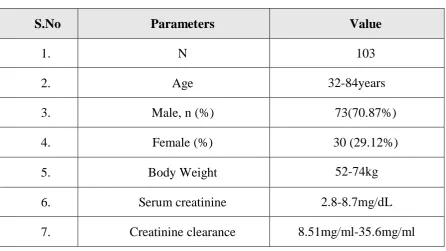
20 patients had moderate renal impairment while 46 had severe and 37 had end
stage renal dysfunction. 1016 drugs in 103 patients were evaluated in the present
study with an average of 10 drugs per patient. Of these 1016 studied drugs 98
(9.64%) required dose adjustment where 244 (24.01%) were adjusted and 83
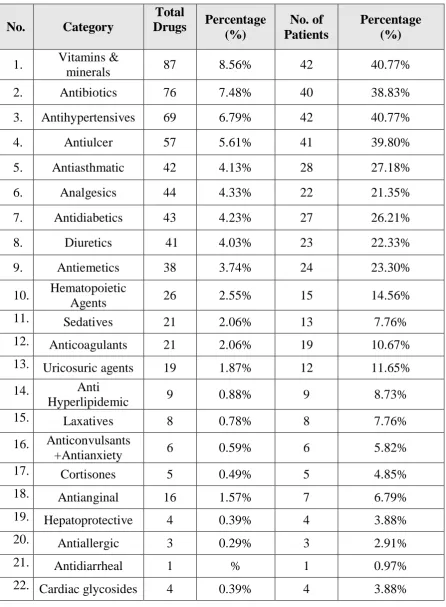
(8.16%) were not adjusted. It was found also that most of the drugs requiring dose
adjustment were antibiotics (41.77%) followed by antihypertensives (13.67%).
Major category of errors identified were overdose (61.53%) and wrong frequency
of administration (23.07%). About 15.38% of the drugs were to be avoided strictly.
It was also found that 13.12% of prescribed drugs had interaction. The most
common interaction was identified as Pantaprazole vs Torsemide and was found
in 4.17% of patients. Nephrotoxic drug interactions were observed in 2.79% of
patients. Around 1.84% of drugs had narrow therapeutic index. These were
prescribed in 13.5% of patients. Prazosin (2%) theophylline (8%) and Digoxin
(4%) were the drugs with narrow therapeutic index.
CONCLUSION
Recommended dosage guidelines in renally impaired patients were followed in
82.6% of prescriptions whereas only 17.39% were found to be deviated. Findings
of the present study revealed that the overall consistency was good when
Dosage individualization of antimicrobials and cardiovascular drugs in patients with chronic
renal dysfunction P a g e | 5
INTRODUCTION
The most important contribution of the kidney to overall maintenance of
body homeostasis is the urinary excretion of water, endogenous substances and
toxins. Through the combined processes of glomerular filtration, tubular secretion,
and tubular reabsorption, the nephron, as the functional unit of the kidney,
maintains balance between input and output of water and solutes from the body.
Thus the kidney is the key organ responsible for maintenance of homeostasis.1 this is represented as:
Renal deficiency can be caused by inadequate blood flow to the kidney, renal
and systemic diseases and disorders related to the urinary tract obstruction. The
major manifestations of altered kidney function are the effects on excretion of
metabolic wastes and on maintenance of Na +, K + water, and acid-base balance.
Failure to excrete urea and other metabolic wastes adequately, manifested as
progressive elevation of blood urea nitrogen (BUN) and serum creatinine. In the
absence of adequate renal clearance of excessive amounts of water, Na+, K+, or
acids may result in water, electrolyte and acids-base abnormalities that can be
life-threatening. Generally speaking, the renal deficiency includes also the endocrine
and metabolic dysfunction.
The two principle organs are responsible for the elimination of drugs and their
metabolites from the body are the liver and kidney.2 Kidney does the major work of the urinary system. Functions of the kidney include the following
Regulation of blood ionic composition
Regulation of blood pH
Regulation of blood volume
Regulation of blood pressure
Maintenance of blood osmolarity
Dosage individualization of antimicrobials and cardiovascular drugs in patients with chronic
renal dysfunction P a g e | 6
Production of hormones
Regulation of blood glucose level
Excretion waste and foreign substances.3
Kidney disease is defined as the presence of kidney damage or a reduction in
GFR for a period of three months or longer. Kidney disease is increasingly
recognised as a significant health issue in the population.4 In particular, older patients are at a higher risk of developing advanced disease and related decline in
renal function and the use of multiple medications to treat comorbid conditions.
Chronic kidney disease can affect glomerular blood flow and filtration, tubular
secretion and reabsorption and renal bio activation and metabolism. Drug
absorption, bioavailability, protein binding, distribution volume, and non-renal
clearance (metabolism) also can be altered in these patients.5
Renal failure is used primarily to denote failure excretory function of kidneys,
leading to retention of nitrogenous waste products of metabolism. Various other
aspects of renal function may fail at the same time, including the regulation of
fluid and electrolyte status and the endocrine function of the kidney. Renal failure
can be divided according to clinical presentation into acute renal failure
(ARF) and chronic renal failure (CRF).6 The severe condition (end-stage) of both is named as uremia. ARF is a heterogeneous group of disorders, which is
characterized by a sudden (within hours to days) deterioration of renal function
and usually associated with oliguria (< 400ml per day in (adult) or anuria (<
100ml per day in adult) resulting in accumulation in the blood of nitrogenous
wastes that would normally be excreted in the urine. The patient presents with a
rapidly rising blood urea nitrogen and serum creatinine. Other compounds
including uric acid, phosphate, and sulphates are also accumulated. Glomerular
filtration rate (GFR) decrease plays a central role in pathogenesis of ARF. Most
of the patients with ARF present oliguria, which is named as oliguric type of ARF.
The ARF without oliguria is named as non-oliguric type of ARF. Acute renal
failure may be observed in patients with previously normal renal function or
Dosage individualization of antimicrobials and cardiovascular drugs in patients with chronic
renal dysfunction P a g e | 7 normal at any time in mild forms of acute renal failure, the diminished urine
volume is commonly but not always seen. Some patients may be anuric, some
may be oliguric.
The incidences of prevalence of kidney failure are rising and the outcomes are
poor. The kidney provides the final common pathway for execration of most drugs
and their metabolites. Inappropriate dosing in patients with chronic kidney disease
can cause toxicity or ineffective therapy. The major outcomes of CKD regardless
to cause include progression to kidney failure, complications of decreased kidney
function and CVD. Increasing evidence indicates that some of these adverse
outcomes can be prevented or delayed by early detection and treatment.
Unfortunately, CKD is under diagnosed and under treated, resulting in lost
opportunities for prevention, in part because of lack of agreement on a definition
and classification of stages in the progression of chronic kidney disease and a lack
of uniform application of simple tests for detection and evaluation.
Renal dysfunction can affect the pharmacokinetic and pharmacodynamics
action of drug. Dosage adjustment in renal failure is critical because drug or its
active metabolites can accumulate and additional morbidity and cost. In many
drugs like aminoglycosides antibiotics, H2 receptor antagonists, ACE inhibitors,
Digoxin, Lithium are eliminated primarily unchanged through the kidney. Dosage
adjustment in renal failure can easily be achieved by estimating the creatinine
clearance based on serum creatinine, age, weight, gender; calculating the
individual elimination capacity for a given drug; and adjusting dose and/or dosing
interval. Dosage adjustment in patients with renal failure reduces the risk of
adverse drug reactions
Risk factors for the chronic kidney disease and its outcomes7
S.No Risk factors Definition Examples
1. Susceptibility
factors
Increase susceptibility to
kidney damage
Older age, family history of
CKD, reduction in kidney
Dosage individualization of antimicrobials and cardiovascular drugs in patients with chronic
renal dysfunction P a g e | 8 income or education
2. Initiation
factors
Directly initiate kidney
damage
Diabetes, high blood
pressure, autoimmune
disease, systemic infections,
urinary stones, lower
urinary tract obstruction,
drug toxicity
3. Progressive
factors
Cause worsening kidney
damage and faster
decline in kidney
function after initiation
of kidney damage
Higher level of proteinuria,
higher blood pressure, poor
glycemic control in
diabetes, smoking
4. End – stage
factor
Increase morbidity and
mortality in kidney
failure
Lower dialysis dose,
temporary vascular access,
anemia, low serum albumin
level, late referral
Patient diagnosed with severe renal impairment and patient in dialysis are
followed closely by nephrologist in specialized nephrology department. The high
prevalence of renal failure and the large number of drugs with renal elimination or
potential nephrotoxicity suggest that physicians should consider renal function
when prescribing. Studies have suggested that care provided by multi-disciplinary
nephrology teams may improve patient outcome. However, in most patients with
mild to moderate RI the reduced function may not have been diagnosed and these
patients are managed in general practice and in general hospitals. The necessity of
dose adjustment or drug avoidance is probably under estimated in clinical
Dosage individualization of antimicrobials and cardiovascular drugs in patients with chronic
renal dysfunction P a g e | 9 INITIATION AND PROGRESSION OF CHRONIC KIDNEY DISEASE
(CKD) AND THERAPEUTIC INTERVENTIONS.7
LABORATORY EVALUATION OF RENAL FUNCTION
Kidney function is assessed by a variety of tests and procedures that can be
done to evaluate how well kidneys are functioning. These tests are done on urine
as well as blood samples. Many conditions can affect the ability of the kidneys to
carry out their vital function. The extent of loss of renal function is judged by
calculating creatinine clearance which is a useful measure of glomerular filtration
rate. According to the reduction in creatinine clearance value the patients are
categorised into mild moderate and severe renal impairment.
The standard indicators of renal function are serum levels of urea nitrogen
and creatinine: this ratio is normally about 10:1. This ratio may increase when
renal perfusion or urine flow is decreased, as in the urinary tract obstruction or
dehydration. The most reliable single indicator of glomerular function is serum
levels of creatinine. For example serum creatinine increasing from 0.5mg/dl to
Dosage individualization of antimicrobials and cardiovascular drugs in patients with chronic
renal dysfunction P a g e | 10 Serum creatinine is a by-product of creatinine metabolism in
muscle. It is filtered in the glomeruli, but not reabsorbed in the tubules. Therefore,
blood values depend closely on GFR. Normal creatinine level is proportional to
muscle mass. For example, small woman – 0.5mg/dl, man – 1mg/dl and muscular
man – 11.4mg/dl
If value doubles, GFR and renal function probably have fallen to half of normal state.
If value triples, it suggested 75% loss of renal function.
Values of 10mg/100ml suggests 90% loss of renal function
Creatinine clearance: For 24 hours urine. Normal results: 90-139ml/min for
adults and 80-125ml/min for females.9
The NKF-KDOQI clinical practice guideline advocates using the
traditional Cockcroft - Gault equation or Modification of Diet in Renal Disease
(MDRD) study equation for routine estimation of GFR. However, in patients with
a GFR lower than 60ml/min/1.73m2 the MDRD equation has been shown to be superior to the Cockcroft - Gault equation.
Because the production and excretion of creatinine declines with age,
normal serum creatinine values may not represent normal renal function in older
patients. The MDRD equation has been shown to be the best method for detecting
a GFR lower than 90ml/min/1.73m2 5 Renal drug clearance 2
Three processes that can potentially contribute to the renal clearance of a
drug are glomerular filtration, tubular secretion and tubular reabsorption.
Approximately 20 -25 % of cardiac output or 1.1L of blood per min goes to the
kidneys. Of this volume, approximately 10% is filtered at the glomerulus. Large
circulating molecules, such as albumin and α1- acid glycoprotein to which many
drugs are reversibly bound, are normally not filtered to any appreciable extent at
the glomerulus. Consequently, only unbound drug in plasma water is excreted by
Dosage individualization of antimicrobials and cardiovascular drugs in patients with chronic
renal dysfunction P a g e | 11 Active tubular secretion is another efficient mechanism for
extracting substances from the circulation and secreting them into the tubular
lumen. Renal clearance by tubular secretion can be perfusion rate limited or
capacity rate limited. The renal proximal tubule is the primary site of active
transport for a wide variety of substrates including organic anions/ cations,
peptides and nucleosides.
Tubular reabsorption, which takes place by passive diffusion, may
also influence the renal excretion of drugs. The extensive reabsorption of filtered
water along the renal tubule- from 120 ml of plasma water filtered per min to only
1 to 2 ml/min arriving in the collecting tubules and bladder as urine is a driving
force for to tubular reabsorption. Factors that control the tubular reabsorption of
drugs are urine pH, degree of ionisation of drugs and their metabolites, urinary
flow rate, lipophilicity and pKa.
Effect of renal dysfunction on pharmacokinetic process2
Absorption
Drugs are most frequently administered orally. Both the rate and extent of
absorption from the GI tract influence the drug plasma concentration- time profile.
The rate of absorption is assessed by measuring Tmax, the time at which the
maximum plasma concentration (Cmax) occurs. Tmax has been shown to be
slightly increased for a number of drugs when administered orally to patients with
severe renal dysfunction. The longer Tmax may be due to reduced gastric emptying
in these patients or simply to a longer plasma elimination half-life of the drug.
Extent of oral absorption is best assessed by comparing the area under the plasma
drug concentration- time curve (AUC) following oral and IV administration. In
patients with renal dysfunction do not measure absolute oral bioavailability but
simply determine pharmacokinetic parameters such as plasma clearance, Vd and
plasma half-life following oral administration of the drug. Patients with renal
disease are treated with many medications some of which may alter the absorption
of other concomitantly administered drugs. For example hyperphosphatemia is an
Dosage individualization of antimicrobials and cardiovascular drugs in patients with chronic
renal dysfunction P a g e | 12 of these patients take phosphate binders may interact with certain drugs like
fluroquinolones, thereby reducing their extent of absorption.
Distribution
The plasma protein binding of many acidic drugs is decreased in patients
with renal dysfunction. Several mechanisms decreased plasma binding, including
hypoalbuminemia, the accumulation of endogenous substances which
competitively displace acidic drugs from their binding sites on albumin, and a
conformational change of the binding sites on the albumin molecule. While
acidic drugs usually bind to plasma albumin, basic drugs in general have a high
affinity for α1-acid glycoprotein but often also bind to albumin and lipoproteins.
Although the plasma binding of basic drugs appears to be generally unaffected in
patients with chronic renal disease, it may be increased for some drugs (e.g.,
bepridil, disopyramide) because α1-acid glycoprotein is an acute phase protein that is elevated in certain patients with renal disease, such as in renal transplant
patients and patients on haemodialysis.
The volume of distribution of several drugs is significantly increased in
patients with severe renal dysfunction. An increased volume of distribution may
be the result of fluid overload, decreased protein binding, or altered tissue
binding. The volume of distribution of a few drugs, such as digoxin, pindolol,
and ethambutol, is decreased in patients with ESRD probably due to a decrease
in their tissue binding.
Metabolism
Drugs which are mostly or completely eliminated from the body by non-
renal mechanisms may accumulate in patients with renal dysfunction if their
dosage regimen is not adjusted. Pharmacokinetic studies in patients with renal
dysfunction have shown that non-renal clearance is reduced for many drugs,
especially in ESRD, providing indirect evidence that the metabolism of these
drugs is impaired in these patients. Recently, the effect of renal dysfunction
Dosage individualization of antimicrobials and cardiovascular drugs in patients with chronic
renal dysfunction P a g e | 13 used the erythromycin breath test (EBT) to assess hepatic CYP3A activity in
patients with ESRD undergoing long-term hemodialysis three times weekly.
The EBT following intravenous administration of C-erythromycin has been
extensively used to measure in vivo hepatic cytochrome 450 (CYP)3 A activity,
although the outcome of the test may also be affected by the activity of hepatic
uptake and efflux transporters such as OATP and P-gp. The results of this study
showed that patients with ESRD had a 28% lower base line hepatic EBT value
despite adequate dialysis compared to age-matched healthy control subjects.
Likewise, Dreisbach et al. measured the plasma warfarin S/R ratio in patients
with ESRD. The idea that renal dysfunction could differentially affect the
activity of various drug- metabolizing enzymes. A study reveals that, although
the overall plasma clearance of antipyrine, amarker substance completely
eliminated by metabolism catalyzed by several CYP450 isoenzymes, was not
different in patients with chronic renal failure compared to healthy control
subjects, the formation clearance of one of the metabolites, nor antipyrine, was
decreased on average by 50% in the renal patients.
Many in vivo and in vitro studies on acute and chronic renal failure
subjects, it shows a down-regulation of the activity of not only CYP450
enzymes but also other drug-metabolizing enzymes, such as N-acetyl
transferase. In contrast, the activity of UDP- glucuronosyl transferases 1A and
2B seem to be preserved. Uremic toxins that accumulate in the body in chronic
renal failure have been implicated in these alterations in drug-metabolizing
enzyme activity.
Many drugs and/or their phase I metabolites are eliminated by
glucuronidation. These glucuronides are very polar and are efficiently
excreted b y r e n a l mechanisms such as tubular secretion. Acyl glucuronides,
i.e., glucuronide conjugates of compounds containing a carboxylic acid group,
are not stable at physiological pH and are susceptible to hydrolysis by amyriad
of catalysts, including β-glucuronidases, non-specific esterases, serum albumin,
Dosage individualization of antimicrobials and cardiovascular drugs in patients with chronic
renal dysfunction P a g e | 14 generally accumulate in the plasma. In the case of plasma accumulation of acyl
glucuronides of carboxylic acid drugs, this will inevitably lead to their systemic
hydrolysis and, consequently, reduced plasma clearance of the parent
compound. Systemic hydrolysis of acyl glucuronides has been shown to be the
cause of accumulation of several carboxylic acid drugs in patients with renal
dysfunction. For example, the aryl propionic acid non-steroidal
anti-inflammatory drug ketoprofen has a significantly reduced plasma clearance in
patients with renal dysfunction because of the compromised capacity to excrete
ketoprofen acyl glucuronide in urine which results in enhanced regeneration of
the parent drug by hydrolysis.
Impaired drug metabolism has been shown in patients with severe renal
dysfunction (see below) and may be the cause of a significant increase in oral
bioavailabity in these patients due to reduced presystemic elimination. One of the
first well- documented examples of increased plasma drug concentrations due to
decreased first-pass metabolism is propoxyphene. Propoxyphene is subject to
pronounced pre- systemic biotransformation after oral administration. In
functionally anephric patients, the AUC of propoxyphene and its major
metabolite, nor pro-poxyphene, was shown to be approximately two fold higher
than that of healthy control subjects. The increase in the AUC of propoxyphene is
very likely the result of reduced pre-systemic metabolism in the anephric patients.
Nor pro- poxyphene is normally eliminated renally and, therefore, accumulates
when renal function is impaired. Like pro- poxyphene, nor-propoxyphene can
depress cardiac conduction, and its accumulation can contribute to the cardiac
toxicity.
Accumulation of active metabolites:
Many drugs are eliminated from the body by metabolism. The metabolites
thus formed are often thought of as inactive waste products, which is certainly
not always the case. In many other cases, both the parent compound and its
metabolite(s) are active. The duration and intensity of the pharmacological
Dosage individualization of antimicrobials and cardiovascular drugs in patients with chronic
renal dysfunction P a g e | 15 body. Drug metabolites are usually eliminated by further metabolism and/or
renal excretion. Consequently, metabolites, especially polar phase II conjugates
such as glucuronides and sulfates, often accumulate in patients with renal
dysfunction. When adjusting the dosage of a drug in these patients, the altered
pharmacokinetics of all active species of the drug molecule has to be considered.
Morphine is a good example illustrating the significance of the
accumulation of drug metabolites in patients with renal dysfunction.
Elimination
Metabolism is the major mechanism for the elimination of drugs from the
body. Relatively few drugs are eliminated almost entirely unchanged by the
kidneys. The plasma clearance of a drug is the pharmacokinetic parameter that
best describes the capacity of a patient to eliminate that drug substance. Drug
plasma clearance (CL) is generally considered to be the sum of a renal and
non-renal component.
Renal Excretion
Depending on the etiology of renal dysfunction, the normal histology of
the glomeruli and the tubules may be differentially affected. However, according
to the intact nephron hypothesis, the function of all segments of a diseased
nephron is assumed to be equally affected. Consequently, it is assumed that,
regardless of the intra renal path ways of excretion, i.e., filtration, secretion, and
reabsorption, the loss of excretory function in the diseased kidney can be
quantified by GFR, a measure of glomerular function. Although it has been shown
in rat models of acute renal failure that glomerular filtration and tubular secretion
by the anionic and cationic pathways are not equally affected, the renal clearance
of most drugs in patients appears to vary indirect proportion to GFR or to a
measure of GFR, such as estimated creatinine clearance, regardless of the intra
renal mechanism involved in their urinary excretion. For example, the plasma
clearance of memantine has been shown to increase indirect proportion to CLCR,
Dosage individualization of antimicrobials and cardiovascular drugs in patients with chronic
renal dysfunction P a g e | 16 some plasma clearance remains: this is the non-renal clearance. Dosage
adjustment of memantine in patients with impaired renal function will be based
on the relationship between memantine plasma clearance and CLcr in the studied
patient sample. As pointed out before, the intact nephron hypothesis has been
questioned by some researchers who believe that a better method to quantify renal
function for dosage adjustment purposes may be based on the cocktail approach.
Altered pharmacodynamics in renal disease 2
Chronic renal failure can affect multiple organ systems and, the response
to a given drug may change even though the drug’s pharmacokinetics is not
dramatically altered. For example, furosemide reaches its site of action via tubular
secretion. Patients with chronic renal failure exhibit an increased maximal
response when the dose is adjusted to the functional status of the kidneys. To
achieve an adequate diuretic response, plasma furosemide concentrations must be
in- creased by administering larger doses so that adequate amounts of drug reach
the site of action. Adjusting the furosemide dose in a patient with renal
dysfunction to maintain normal plasma concentrations would not be appropriate
because of the altered pharmacodynamic response of furosemide in chronic renal
failure.
Several studies of enoxaparin in patients with varying degrees of renal
failure have shown that anti-Xa clearance decreases with the degree of renal
function. As a result, dosage reduction is recommended in patients with severe
renal impairment (i.e., ClCr<30mlmin−1).
The effect of renal dysfunction on the pharmacodynamics responses of
drugs has not been well studied. However, the examples of furosemide and
enoxaparin show that ideally integrated PK/PD studies are needed to evaluate the
necessity of dosage adjustment in renal dysfunction.
Dosage individualization of antimicrobials and cardiovascular drugs in patients with chronic
renal dysfunction P a g e | 17 The level of renal function below which the dose of a drug must be
reduced depends on the proportion of a drug eliminated by renal excretion and its
toxicity.
For many drugs with only minor or no dose related side effects very
precise modification of the dose regimen is unnecessary and a simple scheme for
dose reduction is sufficient.
For more toxic drugs with a small safety margin dose regimens based on
glomerular filtration rate should be used. When both efficacy and toxicity are
closely related to plasma – drug concentration, recommended regimens should be
regarded only as a guide to initial treatment. Subsequent doses must be adjusted
according to clinical response and plasma – drug concentration.
Renal failure declines with age, many elderly patients have renal
impairment but, because of reduced muscle mass, this may not be indicated by a
raised serum creatinine. It is wise to assume at least mild impairment of renal
function when prescribing for the elderly.
The total daily maintenance dose of a drug can be reduced either by
reducing the size of the individual doses or by increasing the interval between
doses. For some drugs, although the size of the maintenance dose is reduced it is
important to give a loading dose if an immediate effect is required. This is because
it takes about five times the half – life of the drug to achieve steady – state plasma
concentrations. Because the plasma half – life drugs excreted by the kidney is
prolonged in renal impairment it can take many doses for the reduced dosage to
achieve a therapeutic plasma concentration. The loading dose should usually be
the same size as the initial dose for a patient with normal renal function.
Nephrotoxic drugs should, if possible, be avoided in patients with renal disease
because the consequences of nephrotoxicity are likely to be more serious when
renal reserve already reduced.
Dosage Adjustment in Patients with Renal Dysfunction
Dosage individualization of antimicrobials and cardiovascular drugs in patients with chronic
renal dysfunction P a g e | 18 patients with renal dysfunction to avoid excessive accumulation of the drug
and/or its active metabolite(s) which could result in serious adverse reactions.
A dosage regimen is characterized by the maintenance dose (DM) and the
dosing interval (τ). The goal is to derive an equation that allows estimation of
the maintenance dosing regimen in a patient with renal dysfunction based on a
measure of his/her kidney function (KF). The objective is to adjust the usual
dosage regimen, by reducing the maintenance dose and/or prolonging the
dosing interval, to avoid accumulation of the drug (and/or its active
Dosage individualization of anti microbials and cardiovascular drugs in patients with chronic renal dysfunction P a g e | 21
LITERATURE REVIEW
Md Aslam Ali Hashmi et al54 (2017) performed a study on Antibiotics
requiring dosage adjustment in community acquired pneumonia patients with
renal impairment. A prospective and observational study was carried out in a
Tertiary care hospital. All community-acquired pneumonia patients with mild to
moderate renal impairment were included. The Cockroft-gault formula or MDRD
equation was used to calculate creatinine clearance. The mean creatinine clearance
values were calculated by t-test and chi-square test was used to test categorical
variables. The odds ratio and relative risk were estimated to test the association
between antibiotics requiring dosage adjustment and mortality. The proportions of
antibiotics requiring adjustment in Community acquired pneumonia patients with
renal impairment were high in the present study. It was concluded that large
randomized studies particularly focusing on in-hospital mortality of the patients
with renal impairment is warranted.
Alok Kumar et al55 (2016) performed a study on Evaluation of Antibiotic
Dose Adjustment in Patients with Renal Insufficiency in a Tertiary Care Centre.
The study is retrospective and cross sectional. Records of all patients with renal
dysfunction in any department where nephrology unit was consulted were
screened. Inclusion criteria were eGFR of < 60ml/minute, age>16 years and
administration of at least 1 antibiotic. Prescribed dosage of the drug was compared
with dosage recommended by guidelines to assess appropriateness of dose in renal
dysfunction. GFR was calculated by Cockcroft Gault equation. This study showed
that there was no adjustment done in drug doses in 63% patients with renal
insufficiency and 23.9% got adjustment for some drugs. 24 patients (9.9%)
developed adverse drug reaction attributable to excessive doses. There is need to
Dosage individualization of anti microbials and cardiovascular drugs in patients with chronic renal dysfunction P a g e | 22 Henok Getachew et al49 (2015) performed a study on Drug dosage
adjustment in hospitalized patients with renal impairment at Tikur Anbessa
Specialized hospital, Addis Ababa, Ethiopia. A prospective cross-sectional study
was carried out in the internal medicine wards. All patients with creatinine
clearance ≤59 ml/min admitted to hospital between April and July, 2016 were
included in the analysis. The estimated creatinine clearance was calculated using
the Cockcroft- Gault (CG) equation. Guideline for Drug prescribing in renal
failure provided by the American College of Physicians was used as the standard
for dose adjustment.The findings indicate that dosing errors were common among
hospitalized patients with renal impairment. Improving the quality of drug
prescription in patients with renal impairment could be of importance for
improving the quality of care.
Fanak Fahimia et al50 (2012) determined the number of prescribed
antibiotics being adjusted and assessed dosing of antibiotics based on the patient’s
renal function according to distinguished guidelines. The study was conducted at a
446-bed university hospital. One hundred and fifty patients admitted through
different wards of the hospital were included in the study. Demographic data were
extracted and creatinine clearance was calculated using either Cockcroft- Gault
(C&G) or Modification of Diet in Renal Disease (MDRD) formula. In patients
with creatinine clearances less than 50 mL/min, antibiotic dosages were compared
with guideline dose recommendations to judge whether they were correctly
adjusted. Two hundreds and ninety-one instructions (79.9%) of 364 antibiotic
prescriptions required dosage adjustment based on the patient’s renal condition.
These adjustments were rationally performed in 43.7% and 61.4% of
prescriptions, according to the two guidelines used. Ciprofloxacin (29.1% of
cases), and vancomycin (33.6% of cases), were the most inappropriately
prescribed antibiotics in terms of dose administration, and concluded that the drug
dosing adjustments should be emphasized in patients with renal dysfunction.
Dosage individualization of anti microbials and cardiovascular drugs in patients with chronic renal dysfunction P a g e | 23
costs. Estimating creatinine clearance prior to drug ordering and use of a reliable
dosing guideline is highly recommended.
Abdul rah man M51 (2012) the study was conducted to determine whether
dose adjustment was taken into account or not when prescribing drugs in patients
with renal impairment. A retrospective chart review was performed and included
98 adult in-patients, diagnosed with renal impairment based on clinical evaluation
and laboratory data, in King Abdul-Aziz University Hospital (KAUH), Jeddah,
Saudi Arabia, who was admitted to the hospital from September 2005 to January
2011. Data of the patients were noted and recorded including baseline
demographics, clinical data, laboratory data, renal state, treatment data and
medications. The current study confirms that dosage adjustment has to be done for
renal impairment when prescribing drugs. Continuous medical education and
collaboration with clinical pharmacist should be encouraged for quality
improvement in patients with renal impairment.
Sepideh Emami, Hamid Riazi Esfahani52 (2012) conducted the present
observational study was performed on drugs requiring dose adjustment in kidney
disease to assess the frequency and potential consequences of overlooked dosage
adjustment in hospitalized patients. Medication records and data of 142 patients
were collected on random basis. Selected patients with elevated serum creatinine
who were prescribed at least one drug needing dose adjustment were kept for
further study. Eight hundred and thirty drug orders were evaluated in which dose
adjustment was required in 193 (23.2%) of cases. Proper dose adjustments were
performed in 88 (45.5%) of cases and not performed in 105(54.4%) orders.
According to the study, dose adjustment in renal dysfunction shows a great need
for pharmacist involvement in the process to improve drug dosing and avoid
adverse drug reactions. Sub-grouping patients according to kidney function and
Dosage individualization of anti microbials and cardiovascular drugs in patients with chronic renal dysfunction P a g e | 24 Alahdal and Ahmed10 (2011) determined whether appropriate dose
adjustment was taken into account or not by the physicians when prescribing drug
in patients with renal impairment. Retrospective study was performed which
includes 98 adult in-patients, diagnosed with renal impairment based on clinical
evaluation and laboratory data. 502 drugs were investigated in the present study
with an average of six drugs per patient. Of these 502 drugs, 196(39%) required
dose adjustment where 92(46.9%) were adjusted and 104(53.1%) were not
adjusted. So this study confirms that physicians still do not take into account
sufficiently patient’s renal function when prescribing drugs. Continuous medical
education with clinical pharmacist should be encouraged for quality improvement
in patients with renal impairment.
Verbeeck and Flora2 (2009) described about the pharmacokinetics and
dosage adjustment in patients with renal dysfunction. In patients with kidney
dysfunction, the activity of several drug metabolizing enzymes, drug transporters
and the renal excretion of parent drug and/or its metabolites will be impaired,
leading to their excessive accumulation in the body. In addition the plasma protein
binding of drugs may be significantly reduced which in turn could influence the
pharmacokinetic processes of distribution and elimination. In a patient with renal
dysfunction the normal dosage regimen of a drug should be adjusted to get
therapeutic effects. Dosage adjustment was estimated on the basis of GFR
(glomerular filtration rate) or CrCl (creatinine clearance) using MDRD
(modification of diet in renal disease) or Cockroft-Gault formula. Thus this study
stated that a pharmacokinetic study should be carried out during the development
phase of a new drug that is likely to be used in patients with renal dysfunction and
appropriate dosing should be done to reduce toxicity and to get effective therapy.
Hassan et.al.11 (2008) studied the rate of inappropriate dosing in patients
with CKD in a nephrology unit and evaluated the impact on dose adjustment;
Dosage individualization of anti microbials and cardiovascular drugs in patients with chronic renal dysfunction P a g e | 25
selection and dosing for patients with chronic kidney disease is important to avoid
unwanted drug effects and ensure patient outcomes.
Libiszewski12 (2008) described the development of a drug dosage
adjustment service for patients with renal impairment. The dosage of nephrotoxic
drugs such as gentamicin should ideally be adjusted when they were administered
to patients with varying degrees of renal impairment. Such an adjustment of
dosage should be estimated with a knowledge of the plasma levels of the drug.
Until regular monitoring of drug levels in plasma was routinely available. A
service for dosage adjustment of nephrotoxic drugs had been provided in the
Macclesfield Health District since December 1977 and has been well received by
prescribers in the hospitals. The use of a flow chart scheme for the adjustment of
individual dosage for routine use is described. About 80% of the requests were for
dosage adjustments of gentamicin in renal failure. It is advocated that such a
service can be provided by hospital pharmacists without difficulty and should be
encouraged as part of the patient services.
Roblin et al13 (2008) evaluated if Cockcroft and Gault (CG) estimated
glomerular filtration rate (eGFR) might be replaced by abbreviated MDRD eGFR
for drug dose adjustment. CG eGFR was 61 mL/min vs. 78 mL/min/1.73 m2 for
MDRD (p < 0.0001). CG-MDRD difference ranged from − 93 to + 34 mL/min,
influenced by patient age, weight, and gender (p < 0.001). Authors suggested that
CG eGFR cannot be easily replaced by abbreviated MDRD eGFR for drug dose
adjustment12.
Philipneri et al14 (2008) developed a guideline for management of chronic
kidney disease (CKD). K/DOQI-consistent measurements of parathyroid hormone
(7.1 vs. 0.6%, P = 0.0002), phosphorus (38.2 vs. 1.9%, P < 0.0001) and quantified
urinary protein (23.8 vs. 9.4%, P = 0.008) were more common among CKD
patients with or without nephrology referral in the administrative
data. Nephrology referral correlated with increased likelihood of testing for
Dosage individualization of anti microbials and cardiovascular drugs in patients with chronic renal dysfunction P a g e | 26
Use of ACEi/ARB medications was more common among patients with
nephrology contact (50.0 vs. 30.0%; P = 0.008) but appeared largely driven by
higher comorbidity burden. The literature review demonstrated similar practice
patterns. Authors concluded that Delivery of CKD care may be monitored by
administrative data. There was any opportunity for improvement in CKD
guideline adherence in practice.
Munar et al5 (2007) reported dosing errors are common in patients with
renal impairment and can cause adverse effects and poor outcomes. Dosages of
drugs cleared renally should be adjusted according to creatinine clearance or
glomerular filtration rate and should be calculated using online or electronic
calculators. Recommended methods for maintenance dosing adjustments are dose
reductions, lengthening the dosing interval, or both. Physicians should be familiar
with commonly used medications that require dosage adjustments. Resources are
available to assist in dosing decisions for patients with chronic kidney disease.
Cavanaugh15 (2007) mentioned that Chronic kidney disease (CKD) was
common and can be found in up to 23% of patients with diabetes. The
recommended haemoglobin A1C goal for these patients is also < 7.0%.
Medication therapy for diabetes may require dose adjustments or may be
contraindicated in patients with CKD. Assessment and management of comorbid
diseases, including hypertension, hyperlipidemia, anemia, hyperphosphatemia,
and hyperparathyroidism, was important in the care of patients with diabetes and
CKD. Multidisciplinary care may provide the optimal system for maximizing care
of these complex patients.
Marr16 (2007) prepared a guideline for Antibiotic dosing in renal
impairment.
Shyam et al17 (2007) reported the need of national action plan for
minimizing the progression of CKD. Author suggested that a
Government-supported programme should be initiated for the large expanding ESRD
Dosage individualization of anti microbials and cardiovascular drugs in patients with chronic renal dysfunction P a g e | 27
prevention/control program for CKD. To pick up CKD at an early stage, steps
should be initiated to promote methodology for standardization and estimation of
glomerular filtration rate (GFR) rather than serum creatinine in clinical
laboratories. Such data would prompt and enable physicians to pick up CKD at an
earlier stage, improve the opportunity for early referral of CKD patients to
nephrologists to minimize progression of CKD.
Blix et al4 (2006) investigated the use of renal risk drugs in renally
impaired patients in general hospitals and analysed the relationship to
demographic factors, risk factors and occurrence of drug-related problems. Of the
808 included patients, 293 (36%) had normal renal function (stage 1), 314 (39%)
had mild RI (stage 2), 160 (20%) had moderate RI (stage 3), 35 (4%) had severe
RI (stage 4) and six (0.7%) had kidney failure (stage 5). Mean number of drugs
used per patient in patients with RI (stages 3, 4 and 5) and patients evaluated to
have adequate renal function relative to drug therapy (stages 1 and 2). All but six
patients with RI stages 3, 4 and 5 used two or more renal risk drugs. 124 (62%) of
the patients with RI stages 3, 4 and 5 had DRPs linked to the renal risk drugs, and
26% of the renal risk drugs were associated with DRPs. In patients with reduced
renal function, renal risk drugs were widely used and often in combination. DRPs
were frequently associated with the use of renal risk drugs.
Dijk et al18 (2006) analysed the incidence of required versus implemented
dosage adjustments according to guidelines in patients with renal insufficiency at
discharge and evaluated specific determinants responsible for the percentage of
overlooked dosage adjustments. At discharge, 237 of 647 (36.6%) patients had a
calculated creatinine clearance less than 51 mL/min/1.73 m2. Dosage adjustment
based on renal function was necessary in 411 of 1718 (23.9%) of prescriptions.
These adjustments were performed in 242 (58.9%) prescriptions and not
performed in 169 (41.1%) cases. The risk of not adjusting the dosage was
significantly associated with drugs producing severe consequences when dosing
Dosage individualization of anti microbials and cardiovascular drugs in patients with chronic renal dysfunction P a g e | 28
clearance less than 51 mL/min/1.73 m2, dosing according to their renal function
can be improved; an alert system could help prescribers and pharmacists to adapt
drug dosage in patients with renal impairment.
Joshi9 (2006) marked variability in drug responsiveness especially in
critically ill patients admitted in the Intensive care units. In order to obtain
therapeutic effectiveness with in pharmacokinetic parameters related to
therapeutic dose, it is always desirable to monitor and to maintain drug dose
adjustment in such a way especially in presence of organ failure like renal failure,
hepatic failure or any other clinical situation necessitating Therapeutic Drug
Monitoring (TDM) so that one can use safe and effective drug therapy with least
toxicity due to inaccurate and invalid drug doses.
Levey et al19 2006 described the performance of the revised 4-variable
MDRD Study equation and compare it with the performance of the 6-variable
MDRD Study and Cockcroft–Gault equations. Mean measured GFR was 39.8
mL/min per 1.73 m2 (SD, 21.2) Accuracy and precision of the revised 4-variable
equation were similar to those of the original 6-variable equation and better than
in the Cockcroft–Gault equation, even when the latter was corrected for bias, with
90%, 91%, 60%, and 83% of estimates within 30% of measured GFR,
respectively. Differences between measured and estimated GFR were greater for
all equations when the estimated GFR was 60 mL/min per 1.73 m2 or greater. The
4-variable MDRD Study equation provides reasonably accurate GFR estimates in
patients with chronic kidney disease and a measured GFR of less than 90 mL/min
per 1.73 m2.
Vidal et al20 (2005) compared four sources of drug information regarding
adjustment of dose for renal function. The four sources differed in their
recommendations foradjustments of dosage and dosing interval. They vary in
theirdefinitions of renal impairment; some were qualitative and remainunclear.
All sources provide only a general description; themethods on which the advice is
Dosage individualization of anti microbials and cardiovascular drugs in patients with chronic renal dysfunction P a g e | 29
variation in definitions and recommendations,along with scarce details of the
methods used to reach thisadvice, maid the available sources of drug information
ill-suited for clinical use. Authors noted that advice on drug prescription, dose and
dosing interval, contraindications,and adverse effects should be evidence based.
Ricci et al21 (2005) observed the practice patterns in the management of
acute renal failure in the critically ill patient. More than 200 different definitions
of ARF and about 90 RRTstart criteria were reported. In 10% of centresall forms
of renal replacement techniques were available, andin 70% of cases two or more
different techniques were available:absolute analysis of different techniques
showed that continuousrenal replacement therapies were utilized by 511
specialists(91%), intermittent haemodialysis by 387 (69%) and sustainedlow
efficiency dialysis by 136 (24%). Treatment prescriptionshowed significant
differences among specialists, 60% of intensivesbeing uncertain on RRT dose
prescription compared to 40% ofnephrologists (P = 0.002). New
classificationssuch as RIFLE criteria might improve well-known
uncertaintyabout ARF definition. Different RRT techniques are availablein most
centres, but a general lack of treatment dose standardizationis noted. Non-renal
indications to RRT still needto find a definitive role in routine practice.
Ararwal et al22 (2005) mentioned that Chronic renal failure (CRF) is a
debilitating condition responsible for high morbidity and mortality and was a
financial burden on government and society. Because of its costs and the
complexity of its treatment, proper care is available to very few patients in India.
A community-based study has not been done to determine the prevalence of CRF
in India. Results. A total of 4972 persons were contacted for the study. Their mean
age was 42±13 years; 56% were males. Out of the 4972 who were initially
approached, 4712 agreed to give the blood sample, and thus were included for the
evaluation of CRF. CRF was found in 37 of them. Thus, the prevalence of CRF in
that adult population was 0.785% or 7852/million. In conclusion, the prevalence
Dosage individualization of anti microbials and cardiovascular drugs in patients with chronic renal dysfunction P a g e | 30 Bailie et al23 (2004) evaluated the analgesic prescription patterns among
hemodialysis patients. Our results highlight that analgesics may be
underprescribed in the hemodialysis population. With respect to prevention of
chronic kidney damage, the National Kidney Foundation's position paper suggests
acetaminophen as the nonnarcotic agent of choice for episodic use, although
habitual use, and use of combination analgesic products, should be discouraged. It
is possible, although uncertain, that this recommendation has lead to a more
cautious use of analgesics in general in patients with kidney disease and resulted
in potential under-prescription. The safest approach to the management of pain in
dialysis patients may be the use of short courses of analgesics, where possible.
Extra vigilance is warranted for potential adverse effects of all analgesics in
dialysis patients. The extreme variability in facility practice suggests that patients
and clinicians should be educated about the need to appropriately prescribe
analgesics. Patients should understand that optimal pain management was an
acceptable expectation, and clinicians should examine reasons for any reluctance
on their part to prescribe analgesics. The refinement of existing World Health
Organization guidelines regarding analgesic use in dialysis patients may be
necessary to improve pain management and quality of life for this population.
Changes might be necessary to reflect appropriate choices of analgesics,
statements about combination products, and perhaps education about methods for
assessment of appropriate analgesia.
Nurko25 (2004) published Seventh Report of the Joint National
Committee on the Prevention, Detection, Evaluation, and Treatment of High
Blood Pressure. Most patients with advanced chronic kidney disease (CKD)
develop hypertension. Most classes of antihypertensive medication can be used to
treat patients with CKD. The general approach for prescribing drugs in CKD had
been either to decrease the maintenance dose without changing dosing intervals,
or to keep the usual dose but prolong the dosing intervals, or use of a combination
Dosage individualization of anti microbials and cardiovascular drugs in patients with chronic renal dysfunction P a g e | 31 Manley et al26 (2004) compared haemodialysis (HD) patient medication
prescribing patterns betweenthe Dialysis Clinic, Inc. (DCI) database and the
United States Renal Data System report. There were 128 477 medication orders
categorized in10 474 patients. DCI patient demographics were similar to
presentUSRDS patients except for fewer Hispanics (P<0.001). Patientswere
prescribed 12.3±5.0 (median 12) different medications(2.6±1.4 clinic medications
and 10.0±4.5 homemedications). This is higher than reported by USRDS
(median9 medications). Patient age did not influence number of medicationsused
(P = 0.54). DM patients were prescribed more medicationsthan non-DM
(13.3±5.0 DM vs 11.6±4.8 non-DM; P<0.00001). The data suggested that
medication prescribing patternsin HD patients have changed. The audit identified
appropriateand questionable prescribing patterns. Various prescribing patterns
identified areas for improvement in care (e.g. increased useof aspirin,
beta-blockers and hyperlipidaemia medications) andareas requiring further
investigation (e.g. high use of anti-acid,benzodiazepine and
non-aluminum/non-calcium phosphate-bindingmedications).
Salamon et al41 (2003) determined the frequency and potential
consequences of lack of dosage adjustment in hospitalized patients with renal
impairment. 202 order sheets were completed for 164 patients. They totalled 1469
lines of prescription, 85% of which were TEM medications, with guidelines for
dosage adjustment for 71% of them (n=886). Of these 886 prescriptions, 34%
were inappropriate, 14% being contraindicated and 20% with inappropriate
dosage given the patient’s renal function. Among the 202 order sheets, 75%
included at least one appropriate prescription. 63% included at least 1 prescription
with potentially adverse consequences, 3% of these had potential fatal or severe
consequences. The study confirmed that physicians do not take into account
sufficiently patient renal function when prescribing. Improving the quality of drug
prescription in patients with renal impairment could be of importance for
Dosage individualization of anti microbials and cardiovascular drugs in patients with chronic renal dysfunction P a g e | 32 Levey et al7 (2003) evaluated the usage of the Guidelines for Chronic
KidneyDisease: Evaluation, Classification, and Stratification in US population and
reported that Chronic kidney disease affects approximately 11% of the U.S. adult
population (20 million people from 1988 to 1994). The prevalence of earlier
stages of disease (10.8%) is more than 100 times greater than the prevalence of
kidney failure (0.1%). Adverse outcomes of chronic kidney disease, including loss
of kidney function and development of kidney failure and CVD, can often be
prevented or delayed through early detection and treatment. In particular,
physicians should consider using interventions to slow the progression of kidney
disease in all patients with chronic kidney disease and should place patients with
chronic kidney disease in the highest-risk group for CVD risk factor reduction and
other treatments for CVD.
Pillans et al27 (2002) observed whether appropriate dosage adjustments
were made in patients with significant renal impairment for drugs with a high
fractional renal clearance. Doses were found to be inappropriately high in 105
(42.2%) of 249 admission prescriptions of the targeted drugs. Doses were
appropriately reduced in hospital in 32 patients (30.4%). Seve