w
UJ 0HEALTH RESEARCH
WITH
DEVELOPING COUNTRIES
Volume 1
HEALTH SYSTEM RESEARCH
EUROPEAN COMMISSION
Edith CREssoN, Member of the Commission
responsible for research, innovation, education, training and youth DG Xll/84 - Programme/ I NCO-DC
Contact: Mr M. De Bruycker Address: Sq. de MeeOs 8,
B-1049 Brussels- Tel. (32-2) 295 91 72; Fax (32-2) 296 62 52 e-mail/ ingela.lasson@dg 12.cec.be
i,
I
J
!Lf~[~
lt/q.
t((/12.
Z1
"~i6,<7~'t.~ L.f.'·,,z ...63/,tZ-Z..
~~'~l/ltf{31
3
&,2
_~1
( 4'}
('s
I~ ~lf.
European Commission
Directorate-General XII:
Science, Research and Development
HEALTH RESEARCH
WITH DEVELOPING COUNTRIES
Volume 1
Published by the European Commission
Directorate-General
Science, Research and Development I NCO-DC
B-1 049 Brussels
LEGAL NOTICE
Neither the European Commission nor any person acting on
behalf of the Commission is responsible for the use which might be made of the following information.
Cataloguing data can be found at the end of this publication.
A great deal of additional information on the European Union is available on the Internet. It can be accessed through the Europa server (http://europa.eu.int).
Luxembourg: Office for Official Publications of the European Communities, 1997
ISBN 92-827-8644-7
© European Communities, Brussels • Luxembourg, 1997
Reproduction is authorised, except for commercial purposes, provided the source is acknowledged.
Printed in Italy
Table of Contents
Page
Foreword
7
The I NCO-DC Workprogramme: "Health System Research"
8
The European Commission and support for Health System Research
11
*
Geographical distribution (Figure 1)
13
*
Context (Figure 2)
15
Presentation of EC supported joint research projects (1991-1996)
STD3
INCO-DC: 1st and 2nd Call
21
Areas of interest:
1. Clinical intervention studies for specific health problems
21
2. Rational organisation of health services
59
3. Policies for improved practices
107
4.
Occupational health
185
Annexes:
Annex 1: Partnership between Europe and developing countries
in health research
195
Annex 2: Fourth Framework Programme
199
Annex 3: List of collaborating institutes by region/countries
203
Annex 4: List of scientists
213
Foreword
Health research with developing countries has been part of the European Commission's research agenda under its regular research budget for almost 15 years.
It is currently part of the specific RTD Programme in the field of Cooperation with Third Countries and International Organizations (INCO): activity II of the Framework Programme IV (1994-1998) (see annex).
The selection of research areas is based on existing and newly identified health needs in developing countries and on the capacity to cope with these needs through research.
This document presents the "health systems research" component of the health sector under the !NCO-developing countries (INCO-DC) programme and its predecessor STD-3 (1991-1994). It combines summaries of completed contracts for STD3 and a catalogue of ongoing and new contracts of STD3 and INCO-DC, 1st and 2nd call. Other health research areas on the tools for prevention and control of diseases (e.g. vaccines, drugs and diagnostic products) are presented in other volumes.
Science has offered the technical ability to have a major input to a wider variety of health needs in developing countries. This, however, has not been sufficiently translated into health benefits for the population at large. Historically there has been a lack of emphasis on properly questioning the health system particularly in the way scientific questions and results are effectively delivered in a cultural and socio-economic framework. Hence, the aim of this section in the INCO-DC programme is to strengthen the scientific basis of the delivery of healthcare in order to optimise the impact of the application of available resources.
Particular emphasis is given to the process of partnership-building in science. Capacity and capability development for all teams involved (in developing countries as well as in the EU) is the key to this process.
Scientific cooperation being an integral part of the EU research policy is therefore also an essential instrument in support of the development policy of the EU.
The specific objectives and the operational modalities are dealt with in annex 1 and in the information packages which are produced to accompany each 'call for proposals'.
Address:
European Commission
Health research with Developing Countries DG XIIIB-4
Rue de Ia Loi, 200 1049 Brussels Belgium
Tel: +32.2.295.91.72 Fax: +32.2.296.62.52
E-mail: [email protected]
The INCO-DC Workprogramme :
Field of Health Systems Research (HSR) : part of health related research
Research on health systems in the context of health sector reform
Developing Countries (DCs) are currently engaged in reforms of their health
sector, involving aspects such as cost recovery, decentralisation and
privatisation, which will have profound implications on the effectiveness,
efficiency and the equity of health care delivery. Others have to build or
rebuild health care systems after long periods of neglect often due to political
and economic disorder. The beneficial development of this process requires
research based on a systems approach which may use a variety of tools and
approaches, such as epidemiological methods, social science approaches,
operational and action research. Consequently, research should use the
various techniques to study the process of change occurring in health
systems. In order to be relevant, such research has to take account of the
historical and demographically background and of the social and economic
processes taking place. and should describe how these changes occur, while
guarding against the trend to seek only simple technological solutions for
complex social and economic problems. Attention will be paid to the
following fields: evaluation of health policy and of the operational strategies
of health care, management and financing of the health services,
development and validation of decentralised health care delivery models,
optimisation of the development of human resources, the prerequisites and
conditions for the transfer and the introduction of technologies, coverage and
utilization of health services, ways to promote equity and cost effectiveness,
quality of care, gender issues, better case management and follow up, and
ways to increase the participation and autonomy of the population served.
Research on nutrition will be eligible if proposed in the context of the above
mentioned guidelines, or when it relates to the study of methods and
relevance of health interventions.
Complementary areas bridging science and application
The programme will contribute to improved coordination and to better
research methodology in fields of growing interest and for which only a
limited number of international links are currently established, linking EU
scientists to their colleagues in DC's. Opportunities to combine research with
existing initiatives or future development initiatives of the EU and of Member
States in these fields will be exploited. These topics are:
Relevance and methodology of health interventions
Apart from technical aspects such as unequivocal contribution of morbidity and mortality of the health problem under study, there are issues of strategy, of ethics and relevance to be covered. Studies and tests of interventions have to he integrated into the existing health systems and the process of this integration can consequently form part of the research.
The research workers responsibility for the results of their intervention research and for the continuation of the health services depending on these studies should be adequately addressed. In order to be eligible for support under this heading, the health problem for which an intervention is planned should be relevant in epidemiological terms as well as in terms of the needs expressed by the community in which it is studied. Innovative methods on the interventions on health problems will be supported for evaluation in the field. The planning of interventions should take account of ongoing activities in appropriate geographical areas and concentrate preferably on those fields where significant investments have already been made, or are planned, so that optimum use is made of existing capacities.
Reproductive health
The accent will be put on the identification and the coordination of research aiming to promote safe, effective, affordable and acceptable methods for people to realise their choices and decisions regarding fertility and sexuality in order to achieve a transition from a pattern of uncontrolled reproduction, high mortality and morbidity towards a pattern of desired reproduction, combined with low mortality and morbidity. The aim is also to arrive at the integration of the various aspects of mother and child health in a comprehensive way.
Environmental health
The accent will be put on the identification and the coordination of research on the changes of the epidemiological patterns induced by man-made ecological modifications (e.g.. waterworks of hydrology, land use and demographic transitions). This research should have direct operational implications for the design of local and/or regional development plans and contain realistic possibilities of maintaining or of improving the health status of the population.
Health and human settlements
The European Commission and support for Health
System Research
* Geographical distribution
STD-3 (1991-1994)
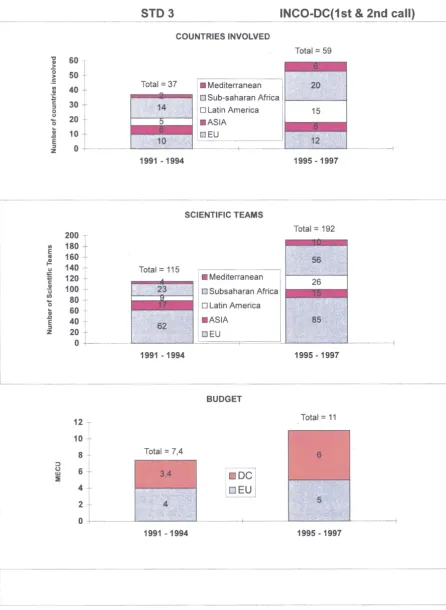
Under the 3rd Framework Programme, the predecessor of the INCO-DC programme, the STD-3 programme (Life Sciences and Technologies for Developing Countries: 1991-1994, area Health), resulted in the participation of 223 scientific teams, spread over 168 institutions in 78 different countries. Of the 140 health related STD-3 contracts, 26 were on Health System Research (including Nutrition). Over 115 scientific teams involving 37 countries (Figure 1) received European Commission support for this specific subtopic totaling 7.4 Million ECU. This represented about 19% of the total health research related budget of this EC RTD programme (Figure 2).
INCO-DC (1994-1998)
Under the 4th Framework Programme, the I NCO-DC programme (sector health) has, as a result of the first and second call in 1995 and in 1996, selected 29 projects related to Health System Research involving 59 countries (Figure 1 ). Therefore, a budget of 11 Million ECU (so far 28% of the contribution to the health sector of INCO-DC) has been in support of 192 teams dealing with this component of health research (Figure 2).
The evaluation process related to the 3rd Call for Proposals of 1997 will select another group of projects to be operational in 1998.
Positive trend
Since the beginning of the European Commission's RTD programmes with Developing Countries a positive trend towards a wider interest in Health System
Research could be noted. From STD-3 to INCO-DC, more high quality proposals
Figure 1
Figure 2 'C 60 Cll > 0 50 > .: Ill 40 Cll
:s
c30
::I
0
u
20
0 ...
Cll 10
.0 E
::I
0 z
200
I
Ill 180
E 160 "' t! 140 u li=
·.;; 120
c Cll 100 "ij U) 80
0 ...
60 Cll .0 40 E ::I 20 z 0 12 10 8 ::J (..) 6 w :E 4 2 0
HEALTH SYSTEM RESEARCH
COUNTRIES, PARTNERSHIPS, BUDGET
STD3 INCO-DC(1 st
&
2nd call)COUNTRIES INVOLVED
Total= 59
Total= 37 • Mediterranean
o Sub-saharan Africa 1--"---"---t
1991 -1994
0 Latin America
• ASIA
GJEU
SCIENTIFIC TEAMS
Total= 115
Ill Mediterranean
0 Subsaharan Africa
0 Latin America
• • ASIA
GEU
1991 -1994
BUDGET
Total= 7,4
[:]
u
1991 -1994
1995 -1997
Total= 192
1995-1997
Total= 11
(JI83
puz ¥
JSJ)
3
<I •
0 3
N I
l
£
(f
.1
S
(9661 •
1661)
SJ33fo.Jd q3Jeasa.J
lUJOf
pap:oddns
~
..
!·;
ll
I'
I
!
Areas of interest:
1. Clinical studies for specific health problems IC18*CT960033 IC18*CT960045 TS3*CT940311 TS3*CT920137 TS3*CT940282 TS3*CT940331 TS3*CT930231 TS3*CT910026 TS3*CT930218 TS3*CT940320 TS3*CT940332 IC18*CT960053 IC18*CT960086
Magnesium sulphate administration for prevention of eclampsia: reducing the human and health service burden associated with hypertensive disorders of pregnancy Effect of zinc and vitamin A supplementation on diarrhoea and physical growth in children
Persistent diarrhoea in early childhood - a prospective community study
Clinical benefit of selenium supplementation after the correction of iodine deficiency: community based
strategies for prevention of both trace element deficiencies Effet de !'ingestion des produits laitiers fermentes sur Ia capacite immune des sujets bien nourris et malnourris The effectiveness of different strategies of case detection and management of sexually transmitted diseases in Mwanza, Tanzania
Appropriateness of diagnostic ultrasound at district hospital level
Comparative advantages of contrasting biological responses to energy deprivation of third world rural populations
Health systems research for the improvement of tuberculosis control in Aceh province, Indonesia
Intervention trial to reduce mortality and improve outcome of hospitalization of the most common serious childhood infections in Maputo, Mozambique
Comprehensive prevention and control of STI/HIV in high-risk groups. Community intervention study on CSWS in Surabaya, Indonesia
Ensuring clinical effectiveness by closing the gap between science and practice: a European/Southern African
collaboration
Tropical medicine on trial : producing reliable reviews, designing better intervention studies, and using systematic reviews to inform practice
Contract number IC18*CT960033
CONCERTED ACTION : MAGNESIUM SULPHATE ADMINISTRATION FOR PREVENTION OF ECLAMPSIA: REDUCING THE HUMAN AND HEALTH SERVICE BURDEN ASSOCIATED WITH HYPERTENSIVE DISORDERS OF PREGNANCY
Period: Co-ordinator:
Objectives
October 1, 1996- September 30, 1999 CENTRE FOR STATISTICS IN MEDICINE,
INST. OF HEALTH SCIENCES, UNIVERSITY OF OXFORD, Oxford, United Kingdom (L. DULEY)
• To estimate the overall effectiveness and safety (for women and their babies) of magnesium sulphate when administered, within the existing health services, to women with pre-eclampsia.
• To contribute to The Cochrane Library by preparing and maintaining systematic
reviews of the care of women with severe pre-eclampsia, and by ensuring that the implications for practice within developing countries are discussed in Cochrane reviews relevant to the care of women with hypertension during pregnancy.
• To enhance and strengthen existing collaborative networks within developing countries, and to increase the capacity to conduct high quality primary and secondary research and to implement appropriate evidence into practice.
Activities
*
Develop a common core protocol for a trial to evaluate the administration of magnesium sulphate to women with pre-eclampsia.*
Conduct a collaborative randomised trial evaluating magnesium sulphate. Women with pre-eclampsia will be randomised to receive either magnesium sulphate or placebo.*
Trial co-ordination and management. The international co-ordinating centre will be in the UK; regional co-ordinating centres will be in Argentina, South Africa and Thailand. An international steering group will supervise overall management of the trial.*
Training. Workshops will be conducted by each of the co-ordinating centres, and therewill be regular meetings of collaborators.
I
i
Contract number IC18*CT960033
*
Recruitment. The estimated sample size is 14,000 women, and recruitment will take place over two years in Africa, South America, Asia, Europe and Australasia.*
Data collection. Primary outcomes will be eclampsia and perinatal mortality. Secondary outcomes will include measures of serious maternal and perinatal morbidity, and the use of health service resources. Data will also be collected on compliance with the allocated treatment.*
Long-term follow-up of the children. Although not part of this proposal, follow-up will be facilitated by generating randomised cohorts of children exposed and not exposed to magnesium sulphate in utero, and where possible collecting contact details for the children.*
Systematic reviews. Prepare and maintain reviews of the care of women with severe pre-eclampsia for the publication in The Cochrane Library.*
Implementation. Develop and pilot strategies for local dissemination and implementation of research evidence.Expected outcomes
=>This trial will provide reliable evidence, of direct clinical and policy relevance, about the effectiveness and safety of magnesium sulphate for women with pre-eclampsia and their children.
=> If magnesium sulphate is effective, this study will allow economic evaluation to determine cost-effectiveness in a variety of settings.
=> The results of this trial are likely to suggest hypotheses for the pathophysiology of eclampsia, and the mode of action of magnesium sulphate.
=>This project will contribute to the mission of the Cochrane Collaboration by making available Cochrane reviews relevant to the care of women with hypertension during pregnancy.
Contract number IC18*CT960033
Partners
Centre for Statistics in Medicine Institute of Health Sciences Old Road, Headington Oxford OX3 7LF United Kingdom
Aarhus University Hospital
Dept. of Obstetrics and Gynaecology 37-39 Norrebrogade
8000 Aarhus C Denmark
Coombe Women's Hospital
Dept. of Obstetrics and Gynaecology Dolphins Barn
Dublin 8 Ireland
King Edward VIII Hospital Faculty of Medicine
MRC Pregnancy Hypertension Research Unit Dept. of Obstetrics and Gynaecology
PO Box 17039
719 Umbilo Road, Congella H013 South Africa
University of Witwatersrand 7 York Road, Parktown Johannesburg 2193 South Africa
University of Pretoria
Dept. of Obstetrics and Gynaecology Private Bag X396
Pretoria 0001 South Africa
University of Zimbabwe Medical School
Dept. of Obstetrics Box A 178
Avondale Harare Zimbabwe
L. Duley
Tel: +44/1865/22.66.43 Fax: +44/1865/22.71.73
E-mail: [email protected]
N. Secher
Tel: +45/86/12.55.55 Fax: +45/86/19.74.13
P. Crowley
Tel: +353/1/453.75.61 Fax: +353/1/453.60.33
J. Moodley
Tel: +27/031/260.42.41 Fax: +27 /031/260.44.28
J. Hofmeyr
Tel: +27/11/470.90.00 Fax: +27 /11/470.90.90
R.C. Pattinson
Tel: +27 /12/373.80.41 Fax: +27/12/373.90.31
K. Mahomed
Contract number IC18*CT960033
Partners
Christian Medical College Hospital Dept. of OBGYN Unit 1
Vellore 632004 Tamil Nadu South India
Escola Paulista de Medicina
Centro de Estudos de Epidemiologia Grupo lnterdisciplinar de Epidemiologia Clinica - GRIDEC
Rua Pedro de Toledo, 598 Sao Paulo
Brazil
Centro Rosarino de Estudios Perinatales San Luis 2493
Rosario 2000 Argentina
Hospital Universitario del Valle Dept. de Obstetricia y Ginecologia AA 020333
Avenida Simon Bolivar Carrera 98# 18-49 Colombia
Concepcion Palacios' Maternity Hospital Dept. of Reproductive Endocrinology 20714 San Martin, Av San Martin Caracas
Venezuela
K. George
Tel: +91/416/22.102 Fax: +91/416/32.1 03
A.N. Atallah
Tel: +56/11/570.04.69 Fax: +55/11/549.21.27
G. Carroli
Tel: +54/41/48.38.87 Fax: +54/41/48.38.87
E.Cobo
Tel: +57/2/331.7474 Fax: +57/2/331.7499
F. Febres
Contract number IC18*CT960045
EFFECT OF ZINC AND VITAMIN A SUPPLEMENTATION ON DIARRHOEA AND PHYSICAL GROWTH IN CHILDREN
Period: Co-ordinator:
Objectives
December 1, 1996- May 31, 2000
UNIVERSITY OF BERGEN, CENTRE FOR INTERNATIONAL HEALTH, Bergen, Norway (H. SOMMERFELT)
To measure the impact of supplementation with zinc alone and a combination of zinc and vitamin A on:
• the outcome of acute diarrhoea, particularly the risk of persistence. • moderately malnourished children of 6-23 months of age.
Activities
The efficacy of micronutrient supplementation will be assessed in a two-centre placebo-controlled community-based trial where project staff will administer a single large dose of vitamin A upon enrolment and zinc 5 days per week until 12 weeks following recovery.
The study will enrol a total of 1,600 children who will be followed up twice weekly to measure the impact on:
*
enrolment diarrhoeal episode (duration of diarrhoea, number of diarrhoeal stools during the episode, proportion of episodes that become persistent, and change in weight during the episode)*
subsequent diarrhoeal morbidity over 12 weeks (incidence of acute diarrhoea and persistent diarrhoea, and daily diarrhoea prevalence)*
growth over 12 weeks after recovery (change in weight and length/height and risk of developing severe malnutrition)Furthermore, the effect of zinc supplementation on serum and hair zinc levels and on the severity of the enrolment episode will be measured after a programmatically relevant delivery approach, namely administration of zinc by mothers.
Comparison of baseline features including hair- and serum-zinc levels will be tnade to confirm comparability across intervention groups. Outcome measures will be compared across the intervention groups initially on an 11
Contract number IC18*CT960045
Expected outcome
The study will assess whether daily supplementation with zinc alone or zinc combined with vitamin A substantially reduces the severity and duration of acute diarrhoea and the nutritional insult of, particularly prolonged, diarrhoeal illness. If so, it is desirable and feasible to implement this reasonable intervention in national programmes, an intervention which will be particularly relevant to the 20% of children who experience recurrent diarrhoea and impaired physical growth.
Demonstrating the postulated benefits of micronutrient supplementation has other important programmatic implications, for example in influencing which foods should be promoted during nutritional counselling, the choice of diets to be offered in supplementation schemes and strategies for micronutrient food fortification, e.g. of domestic salt, wheat flour and animal milk.
Partners
University of Bergen
Centre for International Health Armauer Hansens Building 5021 Bergen
Norway
All India Institute of Medical Sciences Indian Council of Medical Research Advanced Centre for Diarrhoeal Disease Research
Paediatrics Department Ansari Nagar
110029 New Delhi India
Tribhuvan University Institute of Medicine
Dept. of Paediatrics and Dept. of Community of Medicine
Maharajgunj Kathmandu Nepal
Statens Serum lnstitut
Dept. of Epidemiology Research Artillerivej 5
2300 Copenhagen S Denmark
H. Sommerfelt
Tel: +47/55.97.49.80 Fax: +47/55.97.49.79
M.K.Bhan
Tel: +91/11/696.38.22 Fax: +91/11/686.26.63
R.K. Adhikari
Tel: +977/1/52.44.88 Fax: +977 /1/41.37.95
K. Melbak
Contract number TS3*CT940311
PERSISTENT DIARRHOEA IN EARLY CHILDHOOD- A PROSPECTIVE COMMUNITY STUDY
Period: Co-ordinator:
Objectives
January 1, 1995-December 31, 1997
STATENS SERUM INSTITUT, EPIDEMIOLOGY RESEARCH UNIT, Copenhagen, Denmark (K. M0LBAK)
The aim of the study is to improve community - and health-center based management of acute and persistent diarrhoea in early childhood. Furthermore, we wish to suggest vaccine-based or other targeted interventions against acute and persistent diarrhoea, and explore the long term impact of infections with specific enteropathogens on child survival and growth faltering.
Finally, the study will provide a substantial technology transfer to the National Public Health Laboratory in Bissau, and exchange and training of scientists, health workers and technicians.
Activities
The core of the study is an ongoing prospective community based surveillance for diarrhoeal disease, which is carried out in a semi-urban area of Bissau, the capital of Guinea-Bissau. All children below three years of age, residing in 600 randomly selected houses, are followed by weekly visits. At these household interviews, we obtain information on diarrhoeal diseases, other morbidity, and feeding patterns. All children have their height and weight measured at three-monthly intervals. In addition, more detailed anthropometric follow-up and microbiological examination of weekly collected stool samples are carried out in cases of persistent diarrhoea and in the intensive cohort (see below).
Within this frame, the study contains three work packages:
*
A community-based, randomized controlled trial (RCT), comparing standard oral rehydration salt (ORS) with reduced osmolarity ORS.*
The development and controlled evaluation of an algorithm for the appropriate management of persistent diarrhoea.*
An intensive cohort study with weekly collection of stool specimens from birth to the age of two years.The aim with this third package is to determine the microbial etiology of acute and persistent diarrhoea and to characterize in detail persistent, sequential and repeated infections by, as well as disease-to-infection ratios, for major enteropathogens. These data will be used for the investigation of the long term impact of infection with specific enteropathogens.
Results
Data collection for the RCT of reduced osmolarity ORS will be completed by the end of
Contract number TS3*CT940311
For the management of persistent diarrhoea (PD), an algorithm was adapted during 1995. The algorithm is primarily based on dietary therapy with a frequently offered modified traditional diet, a millet gruel with an energy density of 96 kcal/100 g, and a protein content of 2.3%. In addition, children with PD are examined at a health center, and treated with antibiotics or antimalarials upon scientific indications. Follow-up includes detailed anthropometry, including knee-heel measurements, in order to evaluate catch-up growth. Children with PD from a carefully selected control group receive the same clinical examination, treatment of severe infections, and anthropometric follow-up as the algorithm group.
The intensive cohort, with approximately 150 children, will be assembled during 1996. The sampling scheme, with weekly collection of stool specimens was implemented from early 1996, during the assembly of the cohort. In 1995- 1996, the diagnostic setup was established at the National Public Health Laboratory in Bissau. The diagnosis of enteropathogens is undertaken by a combination of conventional and probe-based microbiological techniques. For the detection of pathogenic E. coli, bacterial lysates are screened by a panel of DNA probes. For this purpose, a number of different probes identifying the virulence factors of the most important diarrhoeagenic types of E. coli as well as Shigella spp. have been modified and cloned into the same vector plasmid, PBS, thereby enabling an effective labelling with the non-radioactive marker digoxigenin by the polymerase chain reaction using the same set of primers for all the different probes. Because of the substantial sample load, a system of pooling the individual probes has been developed as well as systems for the handling and transportation of the large number of probe-positive strains.
Partners
Statens Serum lnstitut Epidemiology Research Unit Artillerivej 5
Copenhagen Denmark
Laboratoria Nacional de Saude Publica Ministerio de Saude Publica
P.O. Box 52 Bissau
Guinea-Bissau University of Bergen
Center for International Health Armauer Hansen's Building Haukeland Hospital
Bergen Norway
All India Institute of Medical Sciences Indian Council of Medical Research Advanced Centre for Diarrhoeal Dis. Res. Paediatrics Department
Ansari Nagar 110029 New Delhi India
K. Melbak
Tel: +45/3/268.31.57 Fax: +45/3/268.31.65
E-mail: [email protected]
P.A. da Silva
I
F. DiasTel/fax: +245/25.24.04
E-mail: [email protected]
H. Sommerfelt
Tel: +47 /55.97.49.87 Fax: +47/55.97.49.79
E-mail: [email protected]
M.K. Bhan
Contract number TS3*CT920137
CLINICAL BENEFIT OF SELENIUM SUPPLEMENTATION AFTER THE CORRECTION OF IODINE DEFICIENCY: COMMUNITY BASED STRATEGIES FOR PREVENTION OF BOTH TRACE ELEMENT DEFICIENCIES
Period: Co-ordinator:
Objectives
December 1, 1992- November 30, 1994
UNIVERSITE LIBRE DE BRUXELLES, FAC. DE MEDECINE, CAMPUS ERASMUS, Mons, Belgium (J. VANDERPAS)
A previous contract (TS20286.B TT) has documented combined severe iodine (I) and Selenium (Se) deficiency in Northern Zaire. Also a detrimental effect of the Se supplementation in 1- and Sa-deficient subjects on thyroid hormone metabolism (aggravation of hypothyroidism), in schoolchildren and in cretins has been reported. The aim of this contract was to assess the safety and the efficiency of correcting first I deficiency, and thereafter the Se deficiency.
Activities
9 -18-year old schoolchildren (n = 100) were supplemented first with I (0.1 ml oral iodised oil given once Lipiodol®). After 2 weeks (I Day +15/SeDay 0), Se (200 f..Lg/day as Selenomethionine) (n
=
78) or placebo (n=
22) was administered for 120 days. Blood samples and urine were collected at Day 0 (n=
100); at (I Day +15/SeDay 0) (n=
90); and at I Day+ 135/Se Day + 120 (n = 81) to determine the Se status (plasma glutathione peroxidase activity (GPX) and Se concentration) and the thyroid function (serum TSH, T4, T3, urinary iodine); blood samples were also collected sequentially at intermediate intervals in subsamples of 10 to 13 subjects.Results
=>Hypothyroidism (TSH>10mU/I) was frequent at entry in the study (58/100 cases, with 41 cases of TSH>50 mU/ssa. It was corrected within two weeks after I supplement (I
Day+15: 3/93 TSH>10 mU/1; 0/93 TSH>50 mU/1). Hypothyroiodism was no longer observed up to I Day + 46. Nevertheless, at I Day + 75 and at I Day + 135, respectively, 2/10 cases and 9/77 cases were again hyperthyroid. 1 absorption was sufficient: urinary I was very low at entry in the study (geom. mean ±1sd: 25(9.6-65) f..Lg/1) (Normal: >50); it increased to elevated values within one month in all cases (I Day+ 15: 148(57-382) f..Lg/1; I Day + 30: 221 (70-698) f..Lg/1). Ten weeks after I supplementation (I
Contract number TS3*CT920137
Conclusion I
The low dose of oraliodised oil administered is not adequate for some young schoolchildren of Ubangi, Northern Zaire.
Of the 81 schoolchildren seen at I Day +75 or at I Day +135, 12 cases of recurrent hypothyroidism (TSH >10 mU/1) occurred in subjects initially hyperthyroid (TSH > 10 mU/A at Day 0), suggesting a decreased functional capacity of the thyroid in an I deficiency stress.
Conclusion II
By analogy to the marked involution of thyroid in cretins, short lasting response t.o I supplementation in some schoolchildren could represent a less severe form of the same defect.
Contract number TS3*CT920137
Conclusion Ill
This is the definitive confirmation that cretins and hyperthyroid schoolchildren adequately responsive to iodine supplementation belong to two different clinical entities, with a blurred and less well-defined border (hyperthyroid schoolchildren inadequately responsive to iodine).
Euthyroid Hyperthyroid Hyperthyroid (Euthyroid on (Hyperthyroid on
completion) completion) TSH <10mU/I TSH Day 0 >OmU/1 TSH Day 0 >10mU/I
TSH 4 months >10mU/I TSH 4 months >10mU/I
n :33 n :36 n
=
12DayO
Serum Thyrotropin 2.9(2.1-3.9) 93(65-141) 104(52-213) Serum Thyroglobulin 346±46 1109±130 457±105 1 Day +15/Se Day 0
Serum Thyrotropin 1.3(1.0-1.7) 3.5(2.8-4.1) 8.6(5.6-13.2)
Serum Thyroglobulin 151±52 262±44 204±61
1 Day+ 135/Se Day +120
Serum Thyrotropin 1.5( 1.2-1.9) 3.1 (2.5-3.8) 32(16-63)
Serum Thyroglobulin 124±18 175±24 252±50
Selenium status (plasma GPX) was very low at entry in the study; it increased progressively in a log-linear pattern with time (normal: >630 U/1):
Day+O 189±93
Day+7 277±62
Day+14 431±141
Day+21 507±111
Day+31 631±133
Day+60 763±77
Day+120 902±188 At the end of the study, serum T4 was lower (5.7±1.6 J.Lg/dl vs 7.0±2.2 Jlg/dl) and serum TSH and T3 were similar in +I+Se group vs +1-Se group (TSH: geom. mean ±1sd: 2.9(0.9-8.7) mU/1 vs 3.8(1.2-12.6) mU/1; T3: arithm mean ±1sd 134±26 ng/dl vs 136±38ng/dl).
Conclusion IV
When I deficiency is first corrected, the correction of Se deficiency involves a small decrease of serum T4, remaining within a normal range, without aggravating hypothyroidism. Nevertheless, the short duration of effectiveness of small doses of iodised oil in some schoolchildren requires new strategies for covering an adequate iodine supply in all subjects over the long term (intramuscular iodised oil; iodised salt).
j.
I
I
! II.
i
Contract number TS3*CT920137
Partners
Universite Libre de Bruxelles Fac. de Medecine
Campus Erasmus Hopital Ambroise Pare Bd. Kennedy 2
7000 Mons Belgium
Ecole de Sante Unikin B.P. 11850
Kinshasa 1 Congo
Guy's and St. Thomas's Hospitals United Medical and Dental Schools London Bridge
SE 1 9RT London United Kingdom
J. Vanderpas
Tel: +32/6/539.27.60 Fax: +32/6/539.28.96
B.Ngo
A. Diplock
Contract number TS3*CT940282
EFFET DE L'INGESTION DES PRODUITS LAITIERS FERMENTES SUR LA CAPACITE IMMUNE DES SUJETS BIEN NOURRIS ET MALNOURRIS
P~riod:
Co-ordinator:
Objectives
January 1, 1994- December 31, 1996 UNIVERSIDAD AUTONOMA DE MADRID, INSTITUTO DE NUTRICION Y BROMATOLOGIA, Madrid, Spain (A. MARCOS)
• Comparative effects of yoghurt (enriched with non-pathogenic lactic bacterial) and milk consumption on immunocompetence in a healthy population.
• Comparative effects of yoghurt (enriched with non-pathogenic lactic bacteria) and milk consumption on immunocompetence and on nutritional recovery on two malnourished groups:
1. Young patients (12-18 years of age) suffering from anorexia nervosa (eating disorder increasingly seen in developing countries).
2. Malnourished African children (4-24 months of age).
• According to STD programme, within general objectives, we will try to establish the role played by fermented dairy products on immune capacity and thereby on nutritional status and recovery.
Summary
One of the causes of the increased susceptibility to infectious disease of malnourished individuals is an impaired immune function. In addition, immunocompetence has been shown to be depleted by infection and to be a sensitive and functional measure of the nutritional status. This work is aimed at assessing the effect of yoghurt (enriched with non-pathogenic lactic bacteria) consumption on immune capacity and thereby on nutritional status and recovery in three groups:
~Control, consisting of 50 healthy subjects (12-18 years of age).
~ 20 patients (12-18 years of age) suffering from anorexia nervosa (eating disorder seen increasingly in developing countries).
~ 20 malnourished African children (4-24 months of age).
Each group will be divided into two subgroups: a) 300 ml/day yoghurt consumption during 2 months and b) 300 ml/day milk consumption during 2 months. Dietary intake and anthropometric parameters (weight, height, body mass index, ideal body weight percentage, skin folds) will be measured. The following immunological parameters: lymphocyte proliferation 8 lymphocytes (CD19), T lymphocyte subsets (C02, CD3, CD4, CDS), NK lymphocytes (CD57), serum C3 and C4 complement factors and -interferon production will be evaluated.
Contract number TS3*CT940282
Partners
Universidad Autonoma de Madrid Fac. Farmacia
Institute de Nutricion y Bromatologia Ciudad Universitaria
28040 Madrid Spain
A. Marcos
Tel: +34/1/394.18.10
Fax: +34/1/394.18.29
lnstitut Agronomiqueet Veterinaire Hassan II A. Lemtouni
Dept. de Nutrition Humaine Tel: +212n77.09.35n078
B.P. 6202 Rabat-lnstituts Fax: +212n77.81.10/5838
Rabat Morocco INSERM-GERM
Faculte de Medecine Xavier Bichat Rue Henry Huchard 16
75018 Paris France
D. Lemonnier
Tel: +33/2/35.08.82.16
Contract number TS3*CT940331
THE EFFECTIVENESS OF DIFFERENT STRATEGIES OF CASE DETECTION AND MANAGEMENT OF SEXUALLY TRANSMITTED DISEASES IN MWANZA, TANZANIA
Period: Co-ordinator:
Objectives
January 1, 1995- December 31, 1997 INSTITUTE OF TROPICAL MEDICINE, Antwerpen, Belgium (A. BUVE)
General and long term objectives
• To assess the effectiveness of public health services in case detection and management of sexually transmitted diseases (STDs) occurring in the general rural population. Effectiveness is defined as the proportion of cases of STD occurring in the population, that C!Jre cured by the public health services.
Specific objectives to be achieved by this project
• To assess the losses of patients occurring at each of the following steps between infection and cure: perception of STD-related symptoms by infected persons; care-seeking behaviour; performance of the diagnostic procedure; reception by the patient of an efficacious treatment; patient compliance. Assessment of these losses will allow estimation of the cure rate, i.e. the proportion of cases of STD occurring in the population that are cured by health services.
• To assess the effectiveness and the feasibility of improved case detection and management of STDs through contact tracing.
Activities
The effectiveness of case detection and management will be assessed by quantifying the losses of patients through each of the steps described under the specific objectives. Assessment of the losses is done by:
*
Analysis of data already collected, including: the proportion of patients with STDs occurring in the population who contact the public health services; the factual knowledge about STD diagnosis and management of health care workers; prescription patterns for STDs.*
A series of focus group discussions on health care behaviour for STDs in the general community; among patients attending the outpatient department of a district hospital; and among health care workers.,.
Contract number TS3*CT940331
*
Interview and examination of a random sample of 1,000 men in the general population, in order to assess the prevalence of asymptomatic urethritis in men and the extent to which symptoms of urethritis are perceived as worrisome.*
Interview and examination of 500 men and 500 women presenting at the general outpatient department of a rural district hospital. Patients found with an STD will be followed up to assess compliance and will be requested to bring their partners. This study will enable assessment of the following losses: losses through non-recognition of symptoms by health care workers, losses through lack of sensitivity of the diagnostic procedure, losses through ineffective treatment and non-compliance. By assessing the prevalence of true infections among partners of patients diagnosed as suffering from an STD, the effectiveness of contact tracing, in terms of additional cases of STD detected, will be assured.*
An observational study on the performance of health centre staff in case detection and management of STDs.Expected outcome
The study will provide crucial information to guide the planning and implementation of improved case detection and management of STDs at the primary health care level in Tanzania.
Results (so far)
Analysis of existing data on prescription patterns
In 1993 a survey was conducted on the number of patients with STD syndromes seen, and treatments prescribed, in 6 health centres and 12 dispensaries in Mwanza Region. There were 26 different prescriptions recorded for genital discharge and 15 different prescriptions for genital ulceration. All prescriptions had, as their main component, procaine, penicillin or tetracyclic. A panel of STD specialists estimate that of the gonorrhoea cases that presented themselves to the health centres 15 - 25% received a prescription that would cure their infection; for chlamydia infections this percentage was 20 - 30%. Of the patients with
GUO
an estimated 80% received a prescription that was efficacious in interruption transmission of T. pallidum but not necessarily in preventingContract number TS3*CT940331
Key findings of the qualitative research into health care seeking behaviour
~ The most critical characteristic about having an STD is that it is shameful. Having an STD is associated with promiscuity and low moral status. The Swahili term for STD can be translated as ''diseases of sinfulness/promiscuity".
~ Shame and the lack of privacy/confidentiality at government health centres constitutes the most important reason why people do not seek early, sufficient or consistent treatment for STDs. Long waiting time is also significant in putting people off accessing government health centres.
~As a result, the majority of people prefer other avenues for seeking treatments (that offer greater privacy and less waiting time, including self-medication), and will usually only go to a health centre as a last resort.
~ People perceive that symptoms = disease; therefore the lack or reduction of symptoms = lack of disease. Pain is the primary marker for the seriousness of a disease; pain that is not particularly bothersome will often not be acted upon. For these reasons delayed treatment and incomplete treatment are common.
A population-based study on the prevalence of asymptomatic urethritis in men
This cross-sectional study was carried out in a rural community living near a health centre. One thousand men (78%) aged 15 to 54 years out of 1286 eligible study subjects agreed to participate. All men were first interviewed on symptoms suggestive of STD, then examined for urethritis including the taking of laboratory specimens. 30 men (3.1o/o) were infected with N gonorrhoea, 15 (1.5%) had a chlamydia infection, 105 men (10.9%) had Trichomonas and 61 men (6.3%) were found with non-specific urethritis. A large proportion of the men with gonococcal and/or chlamydia infection were unlikely to receive effective treatment.
First of all, 50 to 60% were asymptomatic, or were not aware of symptoms. Of the ones who were symptomatic less than 40% sought care from services that could provide effective treatment, i.e. a health centre, hospital or private dispenser. Most men with symptoms had bought drugs or taken herbal treatments or had consulted a traditional healer.
ii
I
Contract number TS3*CT940331
Partners
Institute of Tropical Medicine Dept. of Infection and Immunity Nationalestraat 155
2000 Antwerpen Belgium
African Medical and Research Foundation P.O. Box 1482
Mwanza Tanzania
London School of Hygiene and Tropical Medicine
Dept. of Clinical Sciences Keppel Street
London WC1
E
7HT United KingdomA.Buve
Tel: +32/3/247.65.33 Fax: +32/3/247.65.32
G. Ka-Gina
Tel: +255/68.22.91 Fax: +255/68.50.742
D. Mabey
Contract number TS3*CT930231
APPROPRIATENESS OF DIAGNOSTIC ULTRASOUND AT DISTRICT HOSPITAL LEVEL
Period: Co-ordinator:
Objectives
January 1, 1994- December 31, 1995
UNIVERSITY CHILDREN HOSPITAL HEIDELBERG, Heidelberg, Germany (H. BUSSMANN)
To assess the appropriateness of a comprehensive ultrasound service for district hospitals. The diagnostic value, the economic impact and the acceptance by patients and staff were studied.
Activities
In a representative district hospital diagnostic ultrasound was introduced for indicated medical problems. An observational study was performed using questionnaires on diagnosis and patient management before and after ultrasound examination and for follow-up. A detailed costing study was performed simultaneously. The effect of ultrasound on diagnosis, accuracy of diagnosis and patient management were measured. The opportunity costs and marginal costs were estimated. In a control hospital the conventional diagnostic work-up and the management of similar medical problems were recorded.
The understanding and reactions of patients and staff to the new technology and obtained information were studied. Information was collected through semi-structured interviews not later than 2 weeks after the ultrasound examination.
Results
Contract number TS3*CT930231
Notably in non-pregnant cases the sensitivity and prediction of diagnosing pelvic masses in female patients was enhanced with important consequences for their management. Other useful indications included the screening in blunt abdominal trauma and the confirmation of pleural or pericardia! effusions. The use of ultrasound in palpated masses (abdomen, liver, thyroid, scrotum) revealed a variety of pathological findings leading to a more focused management while the diagnostic yield in conditions like haematuria, jaundice or abdominal pain was scarce. These findings emphasise that for a rational use of ultrasound it is mandatory that the indication is based on a careful examination of the patient by the requesting health care worker prior to the ultrasound examination.
The new technology was well accepted by patients and health care workers, though unrealistic expectations were generally encountered. To prevent over-use and avert mystification of ultrasound it will be important to convey the indications and limits of ultrasound to the medical staff and clients alike. The service appears to be economically affordable for the Botswana Health Care System. The initial capital investment based on 1994 prices (1 Pula = 0.295 ECU) were Pula 92,271 and the recurrent cost of the ultrasound service Pula 60,468. They could have been funded by the unspent balance of the study hospital budget in 1994/95 financial year. The marginal cost of ultrasound investigation (Pula 0.50) was less than a quarter of that of carrying out at radiological examination. The average and marginal cost obtaining an improved diagnosis by ultrasound also appeared affordable; Pula 156.30 and Pula 1.76 respectively. Similarly the average and marginal cost of obtaining an opportunity to change therapy in order to improve health outcome appeared affordable; Pula 720.41 and Pula 8.10 respectively. Resource savings could be demonstrated for one group of patients which was clinically diagnosed as threatened abortion when the true diagnosis obtained by ultrasound was an incomplete abortion. The option to train a nurse to provide an ultrasound service for indicated common medical problems seems to be realistic and cost-saving.
Partners
University Children Hospital Heidelberg Section for Tropical Paediatrics
lm Neuenheimer Feld 150 6900 Heidelberg
Germany
London School of Hygiene & Trap. Med. Health Policy Unit
Keppel Street London WC1 E 7HY United Kingdom Ministry of Health P/Bag 0038
Gaborone Botswana
H. Bussmann
Tel: +49/6221/56.23.02 Fax: +49/6221/56.43.88
A.
MillsD. Arhin
Tel: +44/171/927.24.86 Fax: +44/171/255.15.06
E.T. Maganu
Contract number TS3*CT91 0026
COMPARATIVE ADVANTAGES OF CONTRASTING BIOLOGICAL RESPONSES TO ENERGY DEPRIVATION OF THIRD WORLD RURAL POPULATIONS
Period: Co-ordinator:
Objectives
June 1, 1992- Dec 31, 1995
ISTITUTO NAZIONALE DELLA NUTRIZIONE, UNIT OF HUMAN NUTRITION, Roma, Italy (A. FERRO-LUZZI)
The specific objectives of the study were to define the biological and functional response of chronic energy deprivation in Third World populations, and more particularly to establish whether the preservation of residual body energy reserves overrides the need to maintain normal physical activity and work capacity. Interest in this issue stems from the need to define the limits of costless adaptation and to assess, when these limits are exceeded, the extent to which the damage is reversible.
Activities
Two diverse naturally occurring models of energy shortage were studied and compared: exposure to life-long energy deficiency in South Indian peasants, and exposure to an appreciable seasonal cycling in food security and energy balance in a nutritionally borderline rural community in Benin. In both localities the entire village population was . recruited in the study and longitudinally monitored for the anthropometric indicators of food sufficiency over a whole agricultural year. These data served to provide the background picture. In each community, a subgroup of individuals was recruited for the in-depth investigation of their biological and functional status at contrasting energy balance stages. Subjects were selected on the basis of their energy status as defined by their body mass index (BMI, kg/m2). Only adults, both men and women, entered the study.
In Benin, the study was conducted on subsistence farmers living in two areas characterised by unimodal climatic seasonality located in the south and the centre of the country. An overall sample of 214 women and 198 men was selected on the basis of age (between 18 and 45 years), and having at least one child. The group was followed over almost three years, their weight being measured at close and regular intervals throughout. A data set covering the whole period of measurement was obtained on 139 men and 114 women. A subgroup of women was recruited for the in-depth study of their work capacity and energy turnover at different times of the year. Food consumption and time allocation was measured on a subset of 34 women.
Contract number TS3*CT910026
These have been divided into three groups, the well nourished one (BMI<18.5), the first grade chronic energy deficiency (CEO) (BMI 17.0- 18.5), and the moderate and severe CEO (BMI <17.0). Food consumption, work capacity, energy turnover (basal metabolic rate, BMR), time allocation and body composition were measured.
Results
In Benin, the population was on the whole relatively well nourished, with only 2 to 5% of the study population classifiable as 2nd grade CEO (BMI 16-17), and no more than 6 to 10% of the entire study group having a BMI below 18.5. This contrasts profoundly with the Indian study population where up to 34% subjects had a BMI below 18.5 and more than 15% were below 17, denoting a very severe and widely spread condition of chronic energy deficiency. In India, as anticipated, there was no seasonal cycling of the body weight. In Benin, both men and women lost an appreciable amount of body weight (4.8 to 6.4%} in association with seasonal energy stress (food shortage compounded by high demand for physical work) in the pre-harvest period. The post-harvest gain of weight of the Benin's subjects was weakly but significantly associated with the pre-harvest loss of weight and also over successive years.
The energy intake of the Benin subjects showed some seasonal fluctuations, with lowest value (9.8 MJ/day) being recorded during the pre-harvest season. Households with insufficient cereal stocks during the pre-harvest period (taken as an indicator of household food security) differed in their coping behaviour from households with sufficient stocks, such as gathering wild foods, selling livestock, seasonal migration, reduction of number of daily meals and actual fasting. However, these differences were not reflected in differences in seasonal body weight loss and there was no relation between weight loss of individual household members and their household food stocks. In India, the energy intake was remarkably lower than in Benin throughout the year, with average intakes ranging around 7.1 MJ/day (about 1700 kcal, or about 1.5 x BMR) for women and 9.2 MJ/day (2200 kcal) for men. Expressing the results as energy/kg body weight, a value of about 155 kj/kg is obtained for women. There was little or no indication of a seasonal influence on energy intake.
The energy turnover rate, measured under the standard conditions of basal metabolic rate, did not show any seasonal change in Benin, while there was a 10% increase in the level of physical activity (PAL) and longer time dedicated to field work and less to domestic and resting activities during the pre-harvest period.
Contract number TS3*CT91 0026
There were only minor differences in the work capacity during the pre-harvest period in Benin; with a slight decrease of their work capacity, defined as the ability to perform muscular work under standard conditions, only in the high BMI women. In India the work capacity of low BMI women, but not of low BMI men, was inferior to that of the high BMI subjects. On the other hand, low BMI men - but not women - had a somewhat lower hand-grip strength.
The body composition was studied only in India, measured by the multiple compartment method, in order to establish whether they had suffered important losses of protein and muscles from their body. It was found that there were indeed ''significant compositional differences" as compared to normal BMI controls, with noticeable reduction of the mass of muscle as well as of internal viscera. The losses were present already at the intermediate BMI category, and reached a maximum in the severely depleted low BMI subjects.
Discussion and conclusions
It is obvious that "adaptation" to cyclic periods of varying food availability might involve a set of functional variables - capacity to do physical work, resistance to infectious diseases, reproductive competence, learning capacity and mental ability, and avoidance strategies of a social nature. The survival value of the various coping strategies depends on a complicated balance of concurring conditions, and it is impossible to anticipate a set response. It seems nevertheless self-evident that a reduction in the food accessible to an individual or a household will result in less food being eaten and in the syndrome now called "energy stress". This does not necessarily translate into a negative energy balance of the individual, since reciprocal and equivalent compensatory adjustments may reduce the requirement for energy, e.g. by reducing physical activity and therefore energy expenditure. This reduction has however an associated cost, i.e. the drop of work production, just at the time when more is required. On the other hand, physical activity and work productivity can only be maintained if body energy stores are used. It has been demonstrated that at low levels of body fat, increasing amounts of lean tissue are used as substrate to meet the energy demands of the body. Muscle is the main reservoir, but also internal organs will be eventually depleted. This strategy will result, if sustained over a sufficiently long period of time, in multiple functional deteriorations, affecting work capacity and immunocompetence. It is reasonable to think that under conditions of short-lived shortage of food, especially if these are anticipated as in regular recurring pre-harvest food shortage, the community might have to choose to use their body energy stores.
I
I
l
iI
I
!
j·
I
I
Contract number TS3*CT910026
This appears to be a convenient option when- as in the case of the Benin peasants- they enter the food crisis with normal or near normal body fat stores. They lose weight, which is promptly regained when food becomes available again after the harvest. It will be a much less desirable option if- as in the case of the Indian peasants- the amount of fat in their body is such that any recourse it will inevitable cause important losses of lean tissues. In such cases, the only feasible option would be a reduction in the energy expenditure, by cutting down on physical activity. In the long term, this condition will result in a community of low weight, stunted individuals, whose physical activity is reduced and whose body composition is deeply modified. This is often the only choice available to nutritionally marginal poor communities. Our results clearly suggest that a low weight adult should be regarded as a priority target for support measures, and indicate also that even minor weight losses in these conditions should be avoided at all costs, as they risk precipitating major and permanent functional and compositional damage.
Partners
lstituto Nazionale della Nutrizione Unit of Human Nutrition
Via Ardeatina 546 00178 Roma Italy
StJohn's Medical College Dep. of Physiology
560034 Bangalore India
Wageningen Agricultural University Dep. Human Nutrition
Bomenweg 2
6703 HD Wageningen The Netherlands
Universite Nationale de Benin
Fac. des Sciences Agron., Section de Nutrition
P.O. Box 526 Cotonou Benin
Yorkhill Hospitals
Dept. of Human Nutrition G3 8SJ Glasgow
United Kingdom
A. Ferro-Luzzi
Tel: +39/6/504.26. 77 Fax: +39/6/503.15.92
P.S. Shetty
Tel: +91/80/553.07.24 Fax: +91/80/553.20.37
J. Hautvast
Tel: +31/7/48.25.89 Fax: +31/7/48.33.42
F. Nouwakpo
J. Durnin
Contract number TS3*CT930218
HEALTH SYSTEMS RESEARCH FOR THE IMPROVEMENT OF TUBERCULOSIS CONTROL IN ACEH PROVINCE, INDONESIA
Period: Co-ordinator:
General objectives
January 1, 1994- March 30, 1997
KONINKLIJK INSTITUUT VOOR DE TROPEN, Amsterdam, The Netherlands (P.R. LEVER)
• To contribute to the reduction of the incidence of tuberculosis in Aceh Province, to such a level that it is no longer a public health problem.
• To contribute to the reduction to a minimum of physical and psychological suffering due to tuberculosis.
• To contribute to the development of research and management capacities of the health staff of Aceh.
Specific objectives
• To determine the present tuberculosis problem and performance level of the tuberculosis control programme.
• To determine factors influencing perceptions, health seeking behaviour and compliance to tuberculosis among Aceh ethnic communities.
• To determine the factors influencing health services performance in detection and management of tuberculosis cases.
• To identify commonly agreed actions for the improvement of the tuberculosis control programme through the presentation and discussion of findings and conclusions of the study with the central and provincial health policy makers, the community leaders and the health services staff.
• To implement, monitor and evaluate the actions described in the objective above. • To disseminate information on the research at national and international level. Activities
The research is action-oriented and multidisciplinary, combining the expertise of the three partners in tuberculosis control, epidemiology, medical anthropology and health services management. Activities to address the above-mentioned objectives include:
*
A description and analysis of the present tuberculosis problem in Aceh, making useof available data from reports and past surveys, and additional studies in a sample of health facilities.
Contract number TS3*CT930218
*
Focus group discussions, interviews and observations of staff in a sample of district health facilities to identify the factors that facilitate and constrain an effective functioning of the health service.*
Based on the research results to generate recommendations for the improvement of tuberculosis control, implement these, and build a structure with the local management to maintain a sustainable managerial cycle of implementation, evaluation and reprogramming.Training
In the second year~ two suitable health services managers are given the opportunity to attend international courses in health development and PHC management in the Netherlands and in Italy. On return they will support the provincial and district health services staff in ongoing research and improvement of health services.
Results
In July 1995, the data collection phase was completed, and a research report was prepared. Owing to the postponed implementation of the Indonesian National Tuberculosis Control Programme, it proved to be impossible to implement the recommendations based on these findings, and an extension of 9 months has been granted to the project. At present, the main activities are focused on improving health education, whereby the findings of the research serve as the basis for health education messages. One health service manager has attended the International Course in Primary Health Care Management at the lstituto Superiore di Sanita in Italy in 1995, and one is presently attending the International Course in Biomedical Research Development at the Royal Tropical Institute in the Netherlands.
Partners
Koninklijk lnstituut voor de Tropen (KIT) Mauritskade 63
1092 AD Amsterdam The Netherlands
lstituto Superiore di Sanita, ICHM Viale Regina Elena 299
00161 Roma Italy
Provincial Health Services Aceh Province
Jl Prof A Madjid Ibrahim Ill, 23242 Banda Aceh
Indonesia
P.R. Lever
Tel: +31/20/693.92.97 Fax: +31/20/668.08.23
G. De Virgilio
Tel: +39/6/444.01.14
C.ldawani
Contract number TS3*CT940320
INTERVENTION TRIAL TO REDUCE MORTALITY AND IMPROVE OUTCOME OF HOSPITALIZATION OF THE MOST COMMON SERIOUS CHILDHOOD INFECTIONS IN MAPUTO, MOZAMBIQUE
Period: Co-ordinator:
Objectives
October 1, 1994 - September 30, 1996 UNIVERSIDADE NOVA DE LISBOA
INST. DE HIGIENE E MEDICINA TROPICAL, Lisbon, Portugal (P. FERRINHO)
This project has the following specific objectives:
• Determine the contribution of subclinical vitamin A deficiency to immediate and delayed case-fatality for diarrhoeal diseases (00), cerebral malaria (CM) and acute respiratory infections (ARI) among hospitalised children suffering from these diseases.
• Test the potential of routine VitA supplementation at hospital admission with regard to survival complications and recovery during hospitalisation for DO, ARI and CM. • Determine the outcome of children admitted with DO, ARI, and CM in the 6 weeks after
discharge to test the hypothesis that VitA supplements given at the time of admission to hospital improve recovery and diminish morbidity and mortality.
• Compare different methods of assessing subclinical deficiency of VitA. Activities
Three groups of children with either DD or CM, admitted to the paediatric wards of the Central Hospital of Maputo with the appropriate criteria will be assigned randomly to a control (placebo) or a supplementation (receiving VitA) group and will be visited 6 weeks after discharge. All efforts will be made to adhere to current practices regarding criteria for admission or discharge. A fourth group of children will be studied separately to compare different methods of measuring subclinical deficiency of VitA. All efforts will be made to adhere to current practices regarding criteria for admission and discharge. The different tasks associated with this research project can be grouped in five main activities:
*
Administrative co-ordination of the project- will be the responsibility of Portugal.*
Scientific co-ordination -will be the responsibility of Maputo.*
Clinical aspects of the trial - responsibility will be shared between Mozambique and Portugal.!'
I·