FERRITIN LEVELS BETWEEN SMOKERS AND NON SMOKERS
WITH RECURRENT APHTHOUS STOMATITIS VERSUS
CONTROLS - A CROSS SECTIONAL STUDY
DISSERTATION
Submitted to The Tamil Nadu Dr. M.G.R Medical University
in partial fulfillment of the requirement for the degree of
MASTER OF DENTAL SURGERY
BRANCH IX
ORAL MEDICINE AND RADIOLOGY
I extent my profound gratitude to my guide Dr. Shashi Kiran M., MDS,
Reader of the Department of Oral Medicine and Radiology for his invaluable guidance, co-operation, constant encouragement and immense patience with me in every step of this endeavor. I thank for his trust he had in me that made me complete this work and also I consider it as a great opportunity to do my post graduate programme under his guidance.
Iam thankful to my Dr. Tatu Joy E., Professor & HOD, Department of Oral
Medicine and Radiology for his constant enthusiasm, strive for perfection, and patience he showed me for writing this Dissertation.
I express my sincere gratitude to Dr. Elizabeth Koshi, Principal, Sree
Mookambika Institute of Dental Sciences, Kulasekharam, for her support and permitting me to carry out the dissertation in this institution.
I take this opportunity to express my sincere gratitude to my teachers Dr. Rahul. R, Reader, Dr. Redwin Dhas Manchil. P, Dr. Farakath Khan M, and
Dr. Lakshmi P.S. senior Lecturers for the constant encouragement throughout the course of this study.
seniors Dr. Divya N.L and Dr. Kartheesan T for their constant support and encouragement.
I would like to thank my fellow Post Graduates Dr. Maria Monisha A., Dr. Janetha Edwin, Dr. Godwi Femine C.P, Dr. Abija R.S., Dr. Leema R.K., and
Dr. Reshmi M. for helping me to get through difficult times and for all emotional support and care.
I owe a deep debt of gratitude and love to my Father Mr. T. Swamidhas and
Mother Mrs. K. Valsala and my lovely sisters Dr. S.V. Deepthi, Dr. S.V. Dharsana
and my grandparents for their constant encouragement and emotional support throughout my life.
Sl. No Index Page No
1. LIST OF ABBREVIATIONS i
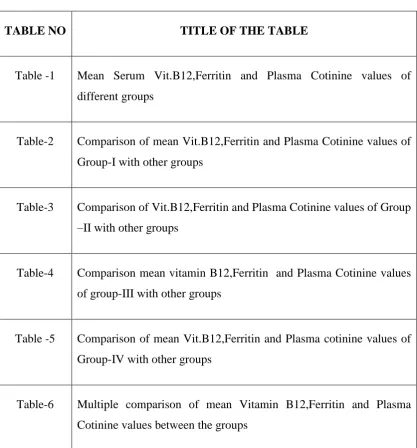
2. LIST OF TABLES ii
3. LIST OF GRAPHS iii
4. LIST OF COLOR PLATES iv
5. LIST OF ANNEXURE v
6. ABSTRACT vi
7. INTRODUCTION 1
8. AIM AND OBJECTIVES 5
9. REVIEW OF LITERATURE 6
10. MATERIALS AND METHOD 39
11. RESULTS AND OBSERVATIONS 51
12. DISCUSSION 59
13. CONCLUSION 67
14. BIBLIOGRAPHY ix-xvi
i
AS Active Smokers
AG Atrophic Glossitis
BS Behcet Syndrome
COT Cotinine
CLIA Chemiluminescent Assay
CPD Cigarettes Per Day
ELISA Enzyme Linked Immunosorbant Assay Method
3`HC Hydroxy Cotinine
Hb Haemoglobin
MMA Methyl Malonic Acid
NDSS Nicotine Dependence Syndrome Scale
NMR Nicotine Metabolism Ratio
PS Passive Smokers
RAS Recurrent Aphthous Stomatitis
RCF Red Blood cell Folate
RIA Radioimmunoassay
tHcy Total homocysteine
ii
TABLE NO TITLE OF THE TABLE
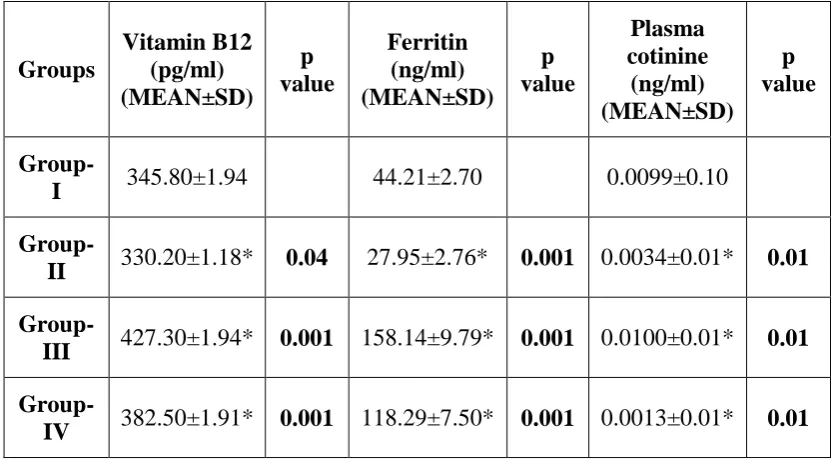
Table -1 Mean Serum Vit.B12,Ferritin and Plasma Cotinine values of
different groups
Table-2 Comparison of mean Vit.B12,Ferritin and Plasma Cotinine values of
Group-I with other groups
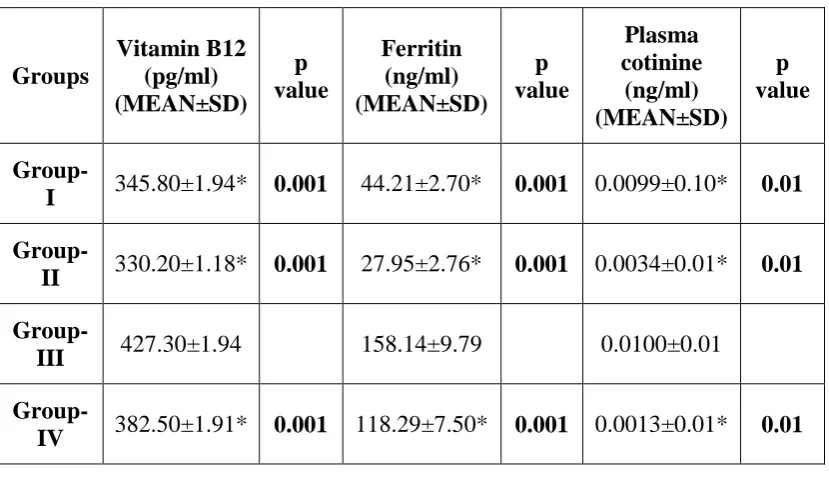
Table-3 Comparison of Vit.B12,Ferritin and Plasma Cotinine values of Group
–II with other groups
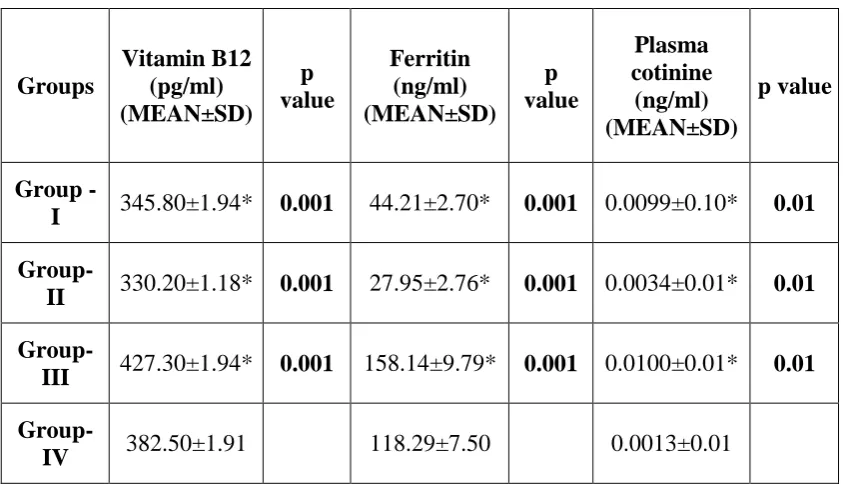
Table-4 Comparison mean vitamin B12,Ferritin and Plasma Cotinine values
of group-III with other groups
Table -5 Comparison of mean Vit.B12,Ferritin and Plasma cotinine values of
Group-IV with other groups
Table-6 Multiple comparison of mean Vitamin B12,Ferritin and Plasma
iii
GRAPH NO TITLE OF THE GRAPH
Graph -1 Mean Serum Vit.B12,Ferritin values of different groups
Graph -2 Mean Plasma Cotinine values of different groups
Graph-3 Comparison of mean vitamin B12,Ferritin of I With
Group-III
Graph-4 Comparison ofmean Plasma cotinine values of Group-I With
Group-III
Graph-5 Comparison of mean Vit.B12,Ferritin of Group-II With Group-IV
Graph-6 Comparison ofmean Plasma cotinine values of Group-IIWith
iv
LIST OF COLOR PLATES
COLOR PLATE NO TITLE OF COLOR PLATE
CP -1 ARMAMENTARIUM1
CP-2 ARMAMENTARIUM2
CP-3 HUMAN PLASMA COTININE ELISA KIT
CP-4 SERUM FERRITIN KIT
CP-5 SERUM VITAMIN B12 KIT
CP-6 RECURRENT APHTHOUS STOMATITIS
CP-7 SMOKER WITH RAS
CP-8 SMOKER WITHOUT RAS
CP-9 BLOOD SAMPLE COLLECTION
CP-10 ESTIMATION OF PLASMA COTININE AND ELISA
READER
CP-11 ESTIMATION OF SERUM VIT.B12 AND FERRITIN IN
BECKMANN COULTER ANALYZER
CP-12 BECKMANN COULTER ANALYZER BY CLIA
v
NO TITLE
Appendix-1
Certificate from Institutional Research Committee Certificate from Institutional Human Ethics Committee
Appendix-2
Patient Information Sheet English
Malayalam Tamil
Appendix-3
Patient consent Form English
Malayalam Tamil
vi
ABSTRACT
Background of the study:
Recurrent Aphthous Stomatitis is a chronic inflammatory ulcerative, relapsing, remitting oral mucosal disease affecting 50% of the population, with three classic forms namely minor, major and Herpetiform types. Despite numerous studies, the exact etiology of RAS has not been described, but the abnormality in Host factors and environmental factors have been implicated. Hematinic deficiency (Serum Ferritin and Serum Vitamin B12) in particular was found to be twice as common. Although the mechanism of RAS is not fully understood, Many investigators noticed lower prevalence rate of RAS in smokers when compared to nonsmokers, increase in the incidence of RAS following smoking cessation, and resolution of lesions upon resumption of cigarettes smoking. Cotinine is the major degradation product of nicotine metabolism and it can be assayed in various biological Fluids. Due to its relatively longer half-life in circulation, Cotinine is used as a most common biomarker used to assess nicotine exposure and abstinence. In the present study, cotinine level has been assessed in plasma, because plasma cotinine concentration is highly correlated with tobacco smoke exposure from both direct smoke inhalation via cigarette consumption and environment exposure via secondhand smoke.
Aims:
To compare the level of Plasma Cotinine, Serum B12 and Serum Ferritin to
enlighten the etiological factor of Recurrent Aphthous Stomatitis.
To assess whether the Plasma Cotinine levels have a positive influence in
vii Materials and Method:
Haematological investigations of Plasma Cotinine, Serum Vit.B12 and Serum Ferritin levels were evaluated among smokers and nonsmokers in patients with Recurrent Aphthous Stomatitis from the Department of Oral Medicine and Radiology, to check for the prevalence of RAS and also the influence of Plasma Cotinine, Serum Ferritin and Serum Vit.B12 in the etiopathogenesis of RAS. The study population comprises of 40 patients, divided into 4 groups, of which 10 in each group, were Group 1-Healthy patients, Group 2- Patients with Recurrent Aphthous Stomatitis, Group 3-Smokers without RAS, Group 4-Smokers with RAS. After getting informed consent from each patients ,3ml of blood Samples were collected and analysed for Plasma Cotinine levels by using 96 well MicroPlate Cotinine-Specific- Enzyme Linked Immunosorbent Assay method and Serum Vit.B12 and Ferritin levels using Chemiluminescent Assay Method. The data was analysed by Statistical package of Social Sciences (SPSS16.0).ANOVA followed by Dunnet t test was applied to find the Statistical Significance between the groups.
Results:
viii Conclusion:
Knowledge from the study suggest that, pure nicotine (not the other components of tobacco) is a safe component, although it depends on the dose. Tilldate, tobacco has had only a prophylactic role against aphthous ulcers, therefore the role of inundated nicotine in tobacco as a beneficial factor should be taken in to account. The present study sheds light on the importance of investigating Serum Ferritin and Vit.B12 in patients with RAS and also shows the need for close supervision regarding the dietary intake of Iron and nutritional supplements, especially Vitamin B12 in such patients. The study also reveals the fact that the prevalence of RAS is high among patients with recent cessation of smoking habits, therefore Nicotine Replacement Therapy must be investigated as a therapeutic option for RAS patients.
Page 1
INTRODUCTION
The term aphthae is derived from the Greek word aphthi, which means “to
set on fire “or “to inflame” and is described by Great philosopher Hippocrates as pain associated with a common disorder of oral mucosa during his time (Recurrent Aphthous Stomatitis).1 Recurrent Aphthous Stomatitis is a chronic inflammatory
ulcerative, relapsing, remitting oral mucosal disease affecting 50% of the population, with three classic forms namely minor, major and Herpetiform types. These subtypes vary with respect to morphologic, distribution, severity and prognosis.2,3
Despite numerous studies, the exact etiology of RAS has not been described, but the abnormality in Host factors such as Genetic, Immunological, Haematological, Vitamin deficiency, Physical or Emotional stress and environmental factors such as microtrauma, chemical injury and infections have been implicated. Hematinic deficiency (Serum Ferritin and Serum Vitamin B12) in
particular was found to be twice as common.4 Although the mechanism of RAS is
not fully understood, Many investigators observed lower prevalence rate of RAS in smokers when compared to nonsmokers, increase in the incidence of RAS following the termination of smoking , and resolution of lesions upon restarting of
cigarettes smoking.5-14
Page 2 same time, Cotinine testing provides a more accurate measure than exhaled air Carbon monoxide, one of the most widely used biomarkers in smoking research and has proved to be more desirable in examining nicotine intake due to its ability to determine tobacco smoke exposure over a longer time frame than CO monitoring.15,16
In the present study, cotinine level has been assessed in plasma, because plasma cotinine concentration is highly associated with tobacco smoke exposure from both direct smoke inhalation via cigarette depletion and environment exposure
via secondhand smoke. 17-20 Number of studies have reported that pure nicotine(not
the other components of tobacco) is a safe component, although it depends on the
dose.21,22 Until date, tobacco has had only a preventative role against aphthous ulcers
,therefore the role of inundated nicotine in tobacco as a therapeutic factor should be taken in to account.23
At the same time, there are two probable theories regarding the preventive effect of smoking on RAS has been reported:
Cigarette smoking prevents aphthous ulcers by causing an increase in
localized keratinization of the oral mucosa.23
Nicotine via several possible mechanisms could modulate local immune
responses as it has been shown to induce T-Cells anergy and inhibits the production of proinflammatory cytokines, such as
interleukin(IL-2,IL-6,IL-8,IL-10) and tumor necrosis factor α. It can also activate the release
of adrenocorticotrophic hormone and cortisol, thereby leading of further
Page 3 Cotinine Levels in Plasma increases with increase in cigarette smoke exposure. The blood Plasma Cotinine level that is accepted as defining a smoker is a level > 25 ng ml-1. Levels above 25 ng ml-1 correlate well with the number of
cigarettes smoked per day. Cotinine Levels between 0 and 25 ng ml-1 occur in
individuals exposed to cigarette smoke passively .8
Assessment of Plasma Cotinine level should be done within 24hrs, after smoking. According to Centre for Disease Control and Prevention, Smokers are classified as:
Current Smokers - Smoked ≥ 100 cigarettes over their lifetime and smoked
atleast 10 hrs before the time of interview.
Never Smoker - Never smoked any cigarettes in their lifetime.
Former Smoker - Smoked ≥ 100 cigarettes over their lifetime and were not
smoking at the time of interview or 24hrs prior to the interview.25
Many studies have suggested that haematinic deficiency of Serum B12 and serum Ferritin were twice as common in patient with Recurrent Aphthous Stomatitis. Ferritin is a globular protein which exist intracellularly in which iron is aggregated in a soluble non-toxic form. Basically, Ferritin in the serum is highly affiliated with iron stores in the body. Serum Ferritin determination provides direct measurement of total body iron store and thus helps in the differentiation between
Iron deficiency aneamia and aneamia due to chronic infections.26,27
Page 4 synthesis of DNA and its deficiency results in the development of megaloblastic
anaemia.28
AIM AND
Page 5
AIMS
To compare the level of Plasma Cotinine, Serum B12 and Serum Ferritin to
enlighten the etiological factor of Recurrent Aphthous Stomatitis.
To assess whether the Plasma Cotinine levels have a positive influence in
Page 6
REVIEW OF LITERATURE
BASIC PARAMETERS ANALYSED IN THE STUDY:
1. COTININE
Nicotine, the foremost addictive compound in tobacco, is metabolized principally by the hepatic enzyme CYP2A6 to cotinine (COT) and then exclusively by CYP2A6 to 3′-hydroxycotinine (3HC). The gene encoding this enzyme is supremely polymorphic, resulting in large difference in rates of nicotine metabolic inactivation. Because of the main role that CYP2A6 plays in nicotine’s metabolism, any genetic variation in CYP2A6 alters total nicotine clearance, non-renal plasma clearance, and nicotine plasma half-life. Genetically slow metabolizers are less prone to be a smokers; those who are smokers are less vulnerable and smoke fewer cigarettes per day. COT has a long half-life (averaging 16 h), making its assessment a relatively powerful indicator of the “time to last cigarette.” By comparison, 3HC has a longer half-life (averaging 5 h). Among regular smokers, because levels of COT reach equilibrium state, the elimination of 3HC is CYP2A6 formation-dependent, and the NMR ratio is stable over time. The NMR can be evaluated in the saliva, urine, or plasma of smokers and has been validated as a biomarker of nicotine clearance. New
data on the reproducibility and authenticity of the NMR are developing.29
Page 7 moved through smoke particles into the lungs, where it is absorbed rapidly into the pulmonary venous circulation. It then enters the arterial circulation and moves rapidly to the brain. Nicotine diffuses easily into brain tissue, where it binds to nAChRs, which are ligand-gated ion channels. When a cholinergic agonist attach to the outside of the channel, the channel opens, and permits the entry of sodium and calcium. These cations activate voltage-dependent calcium channels, and allows more calcium entry. The nAChR complex composed of five subunits and is found in both the peripheral and central nervous systems .Activation of central nAChRs by nicotine results in the
release of a variety of neurotransmitters in the brain, most importantly dopamine.30
Nicotine is a tobacco-specific biomarker. Nicotine is primarily metabolized to cotinine in the liver, either in particle or vapour phase, nicotine when absorbed the half-life in body fluids is approximately 2–3 hr, while cotinine is 12–20 hr. Because of its long half-life, cotinine, can be measured in saliva, urine, on exposure to tobacco he widely used biomarker is Plasma or serum. . Cotinine levels can be evaluated in the laboratory by radioimmunoassay, gas-liquid chromatography or liquid chromatography method in many different body constituents, including blood, urine, saliva, amniotic fluid cervical mucus, and hair. Cotinine remains the objective index for tobacco-derived carcinogen exposure. Cotinine is used for its individual variability in self-reported cigarettes smoked per day and on exposure to tobacco-derived carcinogen systemically. Increased lung cancer risk have been mainly associated with higher plasma cotinine levels. Six primary metabolites of cotinine in humans are namely: 3′-hydroxycotinine, 5′-3′-hydroxycotinine, which reside in tautomeric equilibrium with the open chain derivative 4-oxo-4-(3-pyridyl)-N-methylbutanamide, cotinine N-oxide,
Page 8 SERUM VITAMIN B12
(SYNONYMS - Anti Pernicious anaemia factor, Extrinsic Factor of Castle,
Animal Protein Factor, cyanocobalamine)
The term “vitamin B12” is used as a generic descriptor for the cobalamins - those corrinoids (cobalt containing compounds possessing the corrinring) having the biologic activity of the vitamin. Some corrinoids that are growth factors for microorganisms, not only have vitamin B12 activity but may also be antimetabolites of the vitamin. Although it is synthesized purely by microorganisms, but its sources are found in animal foods, there being no plant sources for this vitamin. This means that strict vegetarians (vegans) are at risk of developing B12 deficiency.
Vitamin B12 Absorption Requires Two Binding Proteins - Vitamin B12 is absorbed bound to intrinsic factor, a small glycoprotein secreted by the parietal cells of the gastric mucosa. Gastric acid and pepsin release vitamin from protein binding in food and make it available to bind to cobalophilin, a binding protein secreted in the saliva. In the duodenum, cobalophilin is hydrolyzed, releasing the vitamin for binding to intrinsic factor. Pancreatic insufficiency can therefore be a factor in the development of vitamin B12 deficiency, resulting in the excretion of cobalophilin-bound vitamin B12. Intrinsic factor binds the various vitamin B12 vitamers, but not other corrinoids. Vitamin B12 is also absorbed from the distal third of the ileum via receptors that bind the intrinsic factor-vitamin B12 complex but not free intrinsic factor or free vitamin. 32
Vitamin B12 is water soluble, heat stable and red in color. It holds 4.35% cobalt by weight. The empirical formula is C63H88N14P1CO1. Four pyrrole ring
Page 9 atom is covalently linked at right angles to a substituted benzimidazole ring, called
Cobalamin. The 6thvalency of the cobalt is satisfied by any of the following groups:
Cyanide, hydroxyl, adenosyl or methyl. When cyanide is added at the Rth position, the molecule is called cyanacobalamin. During the isolation procedure, cyanide is added to get stable crystals. The CN group has no physiological function. However common drug preparation for oral are in this form. When hydroxyl group is attached at the R th position is called hydroxyl cobalamin and injectable preparation are in this form. It is also known as B12a. Both forms, when taken up by the cells these group are removed and deoxyadenosylcobalamin are synthesized. When the adenosyl group is replaced by methyl group it is known as methyl cobalamin. This is
the major one, present in blood circulation as well as in cytoplasm of cell.33
Page 10 directly. Below the corrin ring system is DBI ring -5, 6- dimethyl Benzimidazole riboside which is connected, at one end, to central cobalt atom, and at the other end
from the riboside moiety to the ring IV of corrin ring system. One PO4 group
connects ribose moiety to “aminopropanol” which in turn is connected to propionic acid side chain of ring IV. If Cyanide group is bound to the cobalt atom and then it is alsoncalled as “cyanide cobalamine”. Normal Serum Level vitamin B12 - 0.008-
0.42µg/dl (Average = 0.02 µg/dl). Storage - Main storage site is Liver.34
SERUM FERRITIN
Iron is an essential element in humans. There are 50-70 mmol(3-1g) of iron in the body. Three-quarters are present as the molecular complex with haem. Most of the remaining iron, tissue stores bound to the iron storage proteins, ferritin and haemosiderin. Less than one percent of total body iron is in the plasma, where it is associated with the iron-binding protein, transferrin. Body iron is efficiently reutililed. Dietary intake is about 0.35 mmol (20 mg per day). Iron is transported in plasma bound to the specific glycoprotein, transferrin, each molecule of which binds two Fe" ion together with bicarbonate as an anion. A number of factors can lower serum iron independently of iron status. Serum iron determination are of limited routine value being of most assistance in the diagnosis of iron overload and acute iron poisoning. Total iron binding capacity (TlBC) of a serum specimen is, an indirect measure of transferrin concentration. Serum ferritin is the best indicator of body iron stores. It is, normally greater than 12 µg/l. The acute phase response to
infection. Injury or malignant diseases result in increases in serum ferritin level.35
Page 11 and growing children, a much higher proportion of dietary iron is absorbed to meet the increased body demands. Iron is mostly present in the foods in ferric form, bound to proteins or organic acids. In the acidic medium provided by gastric HCL, the fe3+ is released from foods. Reducing substances such as ascorbic acid and Cysteine convert ferric form to ferrous form. Iron in the ferrous form is soluble and readily absorbed. Iron in the mucosal cells by absorption is oxidized to ferric form by the enzyme ferroxidase.Fe3+ then combines with apoferritin to form ferritin, which is the temporary form storage form of iron. From the mucosal cells, iron may enter the blood stream or lost when the cells are desquamated. Iron is stored mainly in Liver, spleen and bone marrow in the form of ferritin. In the mucosal cells, Iron is stored in, temporary storage form. The maximum iron content of ferritin on weight
basis is around 5%.36
Total body iron content is 3 to 5gm; 75% of which is in blood, the rest is in liver, bone marrow and muscles. Iron is present in almost all cells. Blood contains 14.5g of Hb per 100ml.About 75% of total iron is in Haemoglobin and 5% is in myoglobin and 15% in ferritin. Iron is absorbed by upper part of duodeunum. The following factors affects the absorption of iron. A) Reduced form of Iron-only ferrous form is absorbed .Ferric form is not absorbed. B) Ascorbic Acid- Ferric ions are reduced with the help of gastric Hcl, ascorbic acid, Cysteine and SH groups of proteins.37
Page 12 other ulcerative oral lesions, 35 patients with non-ulcerative oral lesions and 78 controls. The prevalence of low serum ferritin levels was found to be 8% in patients with ROU, 15% in BS and 9.5% in patients with other ulcerative oral lesions, whereas less than 3% in patients with non-ulcerative oral disorders and in controls. It has been reported that in a small number of patients, oral ulceration may be an initial presenting sign of iron deficiency and ROU already present will be aggravated by concurrent iron deficiency. Therefore, results of this study suggested that serum ferritin levels are a useful part of the haematological investigations in patients with ROU rather than serum iron, since it appears to distinguish between patients with true iron deficiency and those with secondary sideropenia which is a
part of the haematological investigations in patients with ROU.38
Page 13 thiocyanate was determined by the method of Butts et al. A progress of plasma nicotine and cotinine concentration at levels above 20 cigarettes per day with a steady increase of carboxyhemoglobin and thiocyanate with increasing consumption of cigarettes occurred. Smoking cigarettes yielding more or less than I mg nicotine conveyed that smokers of low yield brands had decreased plasma levels of nicotine and cotinine, but comparable levels of carboxyhemoglobin and thiocyanate. Despite the lesser nicotine yield of cigarettes, certain modification in smoking behaviour empowered the smoker to acquire as much carbon monoxide and thiocyanate constituents from low and high yield cigarettes; thus counteracting the advantage of
low nicotine yield brands.39
Page 14 from nonsmokers and passive smokers with high accuracy. Among active smokers, there was relatively high degree of intersubject variability of cotinine levels among subjects claiming to smoke the same number of cigarettes per day, although light
smokers had considerably lower mean levels than heavier smokers.40
Page 15 choice of body fluids serve as a primordial factor for cotinine assay determination should be taken as consideration in smoking studies rather than practical or
pharmacokinetic considerations.41
Etzel RA in 1990 found out that Cotinine, the major degradation product of nicotine metabolism, serves as useful marker for exposure to tobacco smoke and it can be measured in plasma, serum, or saliva. The study was conducted, for assessing the relationship between cotinine concentration in saliva and self-reported tobacco smoke consumption in active and passive smokers, an English-language literature search using MEDLINE was being organized (1973-1989), and the bibliographies were reviewed. In total of 43 original studies conducted, inclusion criteria was met by 22 studies, where relative information regarding population studies, exposure to smoked tobacco, estimating methods, and concentrations of cotinine was evaluated. Reviews affirms that passive smokers have cotinine concentrations below 5ng/ml in case of saliva whereas heavy passive exposure have 310 ng/ml. Levels between 10 and 100 ng/ml may result from unusual active smoking or regular active smoking with low nicotine intake. Levels >l00ng/ml are probably the result of regular active smoking. Four categorizations of tobacco smoke exposure on the basis of saliva cotinine concentration were assessed. Thus the study results suggested that, additional studies are mandatory to determine the validity of any cotinine categorizations and also to check whether using saliva cotinine as a marker of tobacco smoke exposure reduces misclassification bias in epidemiologic studies must be critically evaluated.42
Page 16 smokers. Of 88 men, 40 were nonsmokers, 23 were light smokers, and 25 were heavy smokers were recruited into the study and they collected semen, urine, and blood specimens and completed a self-administered questionnaire describing their smoking habits and demographic characteristics. 1 ml of blood, urine, and semen were collected from each participant and analyzed for cotinine levels via radioimmunoassay method. Cotinine analysis showed that, among 48 smokers, detectable levels of cotinine were found in 100% of urine and 98% of semen and blood specimens. Therefore, the study results reported that blood and semen cotinine levels were of similar magnitude but urine cotinine levels were on order of higher
magnitude.43
Page 17 a smoking partner were 0.6–0.7% of those in cigarette smokers. And they concluded that, if cotinine was taken as a measure of risk relevant dose, the implied increase in risk of lung cancer in non-smokers with smoking partners reported have been inconsistent with the risk observed in epidemiological studies. Moreover, smoking by partners in the home is also a major source of non-smoking adults’ exposure to
passive smoke being revealed in the study .44
Page 18 Atkin PA, Xu X and Thornhill MH in 2002 conducted an epidemiological study to compare the blood cotinine levels between a group of patients with minor recurrent aphthous stomatitis and a group of healthy subjects (as controls), matched for age and gender. After getting consent, blood samples were collected from 84 RAS and 81 controls. A Microplate enzyme immunoassay was used to detect the plasma cotinine levels. Result of this study showed that number of RAS Patients who were smokers was significantly less than in the control group. Moreover, the mean cotinine level among smokers in the RAS group was significantly lower than in smokers in the control group. This study also reveals that, the group of RAS patients was significantly less likely to contain smokers than a matched control population, whereas among smokers the level of cigarette use
was significantly lower in RAS patients than the control population.8
Page 19 ago,(3)Between one month and half an year ago, (4) From half a year and one year ago, (5) More than one year ago. Based on the above mentioned questionnaire results first index contained the following four groups: (1) those who had smoked currenty as (“current smokers”), (2) those who had smoked two days to one month ago, as former smokers (3) those who had smoked longer than one month ago or (4) those who had never smoked. For the second index the participants were asked: Do you now smoke (1) regularly? (2) occasionally? (3) not at all? . The number of daily cigarettes, pipes smoked and cigars consumed were asked from those who reported to have smoked within the past month and also the duration, number of cigarettes smoked in a day were calculated. Then fresh serum samples were collected and sent to the laboratory at the National Public Health Institute where they were frozen and cotinine level was measured by a Hewlett Packard gas chromatography mass spectrometre with a selected ion monitoring mode. And he found that among self-reported regular smokers, 97.2% of men and 94.9% of women had a cotinine concentration of 10 ng/ml or higher in serum. Of those participants who reported to have smoked at any time during their life but not during the previous month, 6.3% of men and 5.2% of women had a serum cotinine concentration of at least 10 ng/ml. The validity of self reporting was similar among subjects from different areas, ages, and socioeconomic groups. Therefore, most of the self-reported non-smokers had only low or moderate levels of cotinine in their serum and of the general population
in Finland the validity of self-reported smoking was reported to be high.46
Page 20 haematological parameters in healthy Thai smokers and non-smokers. The study comprised of 123 male smokers and 66 male non-smokers with age group of 19-60 years were included in the study. After getting informed consent from each participants, 10ml of venous blood sample was collected from each subject after an overnight fast. Heparinised blood was used to estimate haematological measurements. And they found that, the serum folic acid and hemoglobin concentration of smokers was lower than that of non- smokers, whereas16.3% of smokers were anaemic when compared with 3.0% of non-smokers. White blood cell count was found to be higher in the smokers than in the non-smokers. And they reported that, there were low serum folic acid concentrations in the smokers comparing with the non-smokers, which might contribute to the development of
vascular and cardiovascular diseases. 47
Page 21 the patients affected. The ulcer ratings in patients using oral nicotine replacement products were reported to be higher than in those using patch, nasal spray or bupropion in the first week of abstinence .The study results reported that mouth ulcers were more prevalent in the dependent smokers, and also the occurrence of ulcers is more associated with other tobacco withdrawal symptoms. From this study they confirmed that mouth ulcers are a common result of smoking cessation,
affecting two in five individuals who quit smoking.11
Donny CE and his associates in 2008 found out that Data from epidemiological studies reported that individual difference in consumption of cigarettes per day (CPD) and duration of smoking account for only a small portion of the variance in Diagnostic and Statistical Manual of Mental Disorders nicotine dependence. This paper elaborates the relationship between cigarettes per day (CPD) and years of smoking and the influence of nicotine dependence as measured by the Nicotine Dependence Syndrome Scale (NDSS). Furthermore, they evaluated the validity of individual differences in nicotine dependence by determining whether they are related to cue-evoked craving during the cessation of habit. Datas were collected from five laboratorical studies of 489 regular smokers, showed that individual differences in both CPD and years smoking had little or no relationship with craving. However, the extent of craving was significantly related to the degree of nicotine dependence even after controlling for use variables and eliminating the craving related items on the NDSS. This study results, reported that among moderate to heavy daily smokers, meaningful individual differences in nicotine dependence are detected independent of differences in current daily cigarette consumption and
Page 22 Vardavas IC and his associates in 2008 conducted a cross-sectional study among 502 farmers from the Valley of Messara in Crete. The subjects were randomly selected and investigated the relationship between smoking status, dietary intake of vitamin, folate, fiber, fruits, vegetables and serum folate, iron and vitamin B12 concentrations. Complete three-day and 24-hr recall questionnaires were collected along with anthropometrical, physical activity and clinical datas from all participating subjects. After adjusting for age, gender and number of fasting days adhered to per year, the study results reported that current smokers have lower dietary intake of vitamin C, fiber, fruits and vegetables, while dietary vitamin B1 intake was found to be higher in smokers in comparison to nonsmokers. Controlling age, gender, fasting days and dietary micronutrient intake, serum folate levels were found to be decreased among smokers, while serum iron and vitamin B12 levels were not affected by smoking status. And they concluded that patients with current
smoking status affects dietary nutrient intake as well as serum folate levels.49
Page 23 black than white women and non-significantly 12 ng/ml higher among blacks than white men, after multivariant analysis reported. Results from the study shown that, among menthol cigarette users there was no significant increase in cotinine levels. And he concluded by stating that, the variations in cotinine levels among smokers may be due to racial variations in exposure to smoke and metabolic changes of tobacco smoke constituents in the body, but our findings do not support a role for
menthol preference in this disparity.50
Page 24 Milles LJ and his associates in 2011 conducted a cross sectional study in elderly individuals with low serum vitamin B-12, those who have high serum folate been reported to have greater abnormalities in the following biomarkers for vitamin B-12 deficiency: low hemoglobin and elevated total homocysteine (tHcy) and methylmalonic acid (MMA). This study reveals that folate exacerbates vitamin B-12–related metabolic abnormalities. Objective is to determine whether high serum folate in individuals with low serum vitamin B-12 increases the deleterious effects of low vitamin B-12 on biomarkers of vitamin B-12 cellular function. The study sample comprised of 2507 university students provided data on medical history as well as exposure to folic acid and vitamin B-12 supplements. Blood was collected to measure serum and red blood cell folate (RCF), hemoglobin, plasma tHcy, and MMA, holotranscobalamin, and ferritin in serum. Results showed that in subjects with low vitamin B-12 concentrations (148 pmol/L), those who had high folate concentrations (30 nmol/L; group 1) did not show greater abnormalities in vitamin B-12 cellular function in any area than did those with lower folate concentrations (30 nmol/L; group 2). And they concluded that in young adult population, high folate concentrations did not exacerbate the biochemical abnormalities related to vitamin B-12 deficiency. These results provided reassurance that folic acid in fortified foods and supplements does not interfere with vitamin B-12 metabolism at the cellular level in a healthy population.52
Page 25 healthy controls were chosen who did not have any history of aphthous ulcers as controls. Proforma was filled for each participant and 5ml of blood sample was collected and tested for complete blood picture by Sismex, serum ferritin by ELISA method (Biocheck), vitamin B12 and RBC folate by IBL kits from USA. Results from this study reported that anemia was present in 24 patients and 18 controls. Hematocrit levels were normal in 45 patients and 40 controls. Low levels of RBC folate was seen in 26 patients and 26 controls. Vitamin B12 deficiency was present in 29(50.1%) patients and none of the controls. The low levels of ferritin was seen in 6(10.5%) patients and 18(31.5%) controls. This study concludes that Patients with RAS had more hematinic deficiencies, particularly of vitamin B12 as compared to controls. 53
Alshaarawy O, Xiao J, Andrew EM, Burchfiel C and Shankar A in 2012 reported that only few studies have shown that high blood pressure was mainly related to never smokers via self-reported secondhand smoke exposure. However, there are no studies prior being done by investigating the role of serum cotinine, by establishing the relationship between secondhand smoke exposure and high blood
pressure in never smokers. The study sample includes only never smokers of (𝑛 =
2027) from the National Health and Nutrition Examination Survey 2005-2008. This study affirms that never smokers exposed to smoking by secondhand smokers had
prehypertension (𝑛=734), defined as a systolic blood pressure of 120– 139mmHg or
Page 26
(≥0.224ng/mL) was 1.45(1.00,2.11); 𝑃trend=0.0451. In further subgroup analysis,
men shows stronger positive association, especially among non Whites, and non obese subjects. And he concluded that certain preventative sample of US population showed higher amount of second hand exposure which measured higher serum
cotinine levels were found to be positively associated with prehypertension. 54
Farasat Khan N, Saeed M, Chaudhary S and Ghafoor F in 2013 conducted a cross sectional study among 60consecutive subjects, with active RAS were taken as the aphthous group and 60 patients with age and gender matched subjects without RAS as the non-aphthous group. 5ml of blood was taken from both groups to analyse the levels of serum B12, and RBC Folate through radio immuno assay and serum ferritin with enzyme linked immunosorbent assay method. Complete blood count was carried out to determine the level of haemoglobin and haematocrit in both groups. Proportion of subjects with lower values was compared and showed a significant p-value. Study results suggested that Serum Ferritin (p=0.001), haematocrit (p<0.001), RBC Folate (p<0.001) and serum B12 (p<0.001) were significantly lower in the RAS group and combined deficiency state (haemoglobin, serum Ferritin, haematocrit, RBC Folate and serum B12) was identified in 13% (n= 8) RAS patients. And they concluded that frequency of haematinic deficiencies was higher in RAS patients, in particular Serum B12 and RBC Folate were found to be
significantly low in aphthous group.55
Page 27 and sex hormones, their effect on the levels of cotinine formation and removal from bodyfluids were measured in non-smoking Caucasians (Study 1, n=181) infused with labeled nicotine and cotinine. The findings were then widely extended to add libitum smokers (Study 2, n=163). Results of the Study suggested that 1: Reduced CYP2A6 activity altered cotinine formation less than cotinine removal resulting in ratios of formation to removal of 1.31 and 1.12 in CYP2A6 reduced and normal metabolizers (P=0.01), or 1.39 and 1.12 in males and females (P=0.001), suggesting an overestimation of tobacco exposure in slower metabolizers. Study 2: Cotinine again magnified tobacco and carcinogen exposure by ≥25% in CYP2A6 reduced metabolizers (≈2 fold between some genotypes) and in males. The study concluded that, in people with slower, CYP2A6 activity cotinine concentration gets accumulated in the body fluids resulting in substantial differences in cotinine levels
for a given tobacco exposure.56
Page 28 levels were significantly high when compared to tobacco chewers. They also added the fact that high serum nicotine levels among smokers could be attributed to high nicotine content of the tobacco product, method of consumption, rate of nicotine
absorption and elimination.57
Bot M and his associates in 2014 conducted a study among cigarette smokers to assess whether cotinine was associated with depression and/or anxiety disorders. 1,026 smoking adults with or without depressive and/or anxiety disorders were included in the Netherlands Study of Depression and Anxiety. They assessed the presence of depression and anxiety disorders among the participants by subjecting them to the Composite International Diagnostic Interview. Cotinine was measured in plasma by solid-phase competitive ELISA method. The result of this study shown that patients with depressed or anxious smokers tend to have more no cigarettes per day which ultimately leads to increased level of cotinine in serum. It is also evident that after controlling for number of CPD and duration of smoking, depressed and/or anxious smokers had lower cotinine levels compared to smokers with no lifetime disorder. According to the full regression model, number of CPD was directly correlated with serum cotinine levels, whereas current depression and/or anxiety disorders in smokers and high body mass index were inversely associated with serum cotinine. Finally the study results reported that, after reducing the number of CPD, the prevalence of current depression and/or anxiety disorders were associated with lower cotinine levels, indicate the different smoking topography or a faster cotinine metabolism in individuals with affective disorders. The latter could help to explain the higher number of cigarettes smoked and poorer cessation rates among
Page 29 Chewnoweth JM and his associates in 2014 found out that nicotine metabolite ratio (NMR that the ratio of 3′hydroxycotinine to cotinine, or), is strongly associated with CYP2A6 genotype, CYP2A6-mediated nicotine and cotinine metabolism. Smoking larger no of cigarettes and patients with lower cessation rate has higher NMR retrospectively. NMR as a predictive biomarker for recent cessation of smokers has being investigated in the study. In this study, CYP2A6- has stronger genetic influences on NMR, at the same time demographic and hormonal factors alter NMR. Here they analyzed, for the first time together, these sources of variation on NMR in smokers screened for this clinical trial (N=1672).Results of the study shown that ,Participants with mentholated cigarette users had lower NMR of 16% percent (P<0.001). When analyzed together in a linear regression model, these predictors (each ≤2%) accounted for <8% of total NMR variation among cigarettes users.59
Page 30 infers that subjects using tobacco were 59% less likely to have aphthous ulcerations compared to nontobacco users. And he concluded that the study found the statistical association between the occurrence of recurrent aphthous ulceration and usage of tobacco. The association that exists between smoking and aphthous ulcerations of the mouth is in a negative direction. The tobacco users tend to have 45
% less chance of occurrence of recurrent aphthous ulcer than non-tobacco users.60
Sumathi K, Shanthi B, Subha Palaneeswari M and Manjula Devi AJ, in 2014 done an case control study included 50 positive cases of oral ulcers which were diagnosed clinically in the ENT Outpatient department OPD of Sree Balaji Medical College and Hospital and 25 normal healthy controls. This study was approved by the institutional ethical committee. Serum samples were collected from oral ulcer patients and from healthy individuals by venipuncture under aseptic precautions, after getting written informed consents from each patients. Serum ferritin level was estimated by doing a particle enhanced turbidimetric immunoassay method in both the oral ulcer patients as well as in healthy individuals. The assay was done by using CRM Diagnostics and a Semi-automated analyzer. And they reported that Sixty six percent of cases had decreased ferritin values and 34% had normal values, which was significant. From this study, it was concluded that one of the causative factors for oral ulcers was iron deficiency anaemia and this has to be brought into the knowledge of the patients as well as physicians. Therefore, Screening of oral ulcer patients by doing serum ferritin estimations is mandatory, so that iron deficiency
anaemia, which is one of the causes of recurrent oral ulcers cannot be ignored.61
Page 31 been very limited. Hence they made a trial by analyzing the biomarkers of tobacco exposure among 23,684 young adult participants from the National Health and Nutrition Examination Survey from 1999 to 2012. Serum cotinine,urinary4-(methylnitrosamino)-1-(3-pyridyl)-1-butanol (NNAL), blood lead, blood cadmium, blood mercury, urinary arsenic, and urinary N-acetyl-S-(2-cya- noethyl)-L-cysteine are the following biomarkers analyzed . Then they calculated geometric mean concentrations and ratios for each biomarker .The study findings suggested that specifically smokeless tobacco users had higher geometric mean concentrations of serum cotinine and NNAL than cigarette smokers. Smokeless tobacco users also had increased concentrations of blood lead compared with nontobacco users. Based on limited sample sizes, NNAL concentrations for smokeless tobacco users appear to have reduced from 2007 to 2008 (geometric mean ¼ 1013.7 pg/mg creatinine, 95% CI, 738.9-1390.8)to2011to2012(geometricmean¼325.7pg/mg creatinine, 95% CI, 159.6-664.9). Thus the study results highlighted that Exclusive smokeless tobacco users have increased range of exposure to nicotine and carcinogenic tobacco specific nitrosamines, as measured by cotinine and NNAL biomarker concentrations, than cigarette smokers. 62
Page 32 following terms: electronic cigarette(s), e-cigarette(s), electronic nicotine delivery system, cotinine, and nicotine. Articles were excluded if they not fufilled our study criteria. References of all pertaining articles were also taken into consideration. Results from this study suggested that eight studies were selected and following information were gathered from the articles: population size, age of participants, recruitment, inclusion and exclusion criteria, concentration of nicotine in refills liquids, study sample design, and observed concentrations. Following the design of studies, plasma nicotine Cmax was observed between 0 and 5 ng/mL (no significant changes) or between 13.9 and 16.3 ng/mL (similar to a tobacco cigarette) with a Tmax between 70 and 75 minutes. And he concluded that the peak concentration of nicotine appears to be dependent on the use and dose level of e-cigarette cartridge. The value of this peak concentration is similar to the value found with a tobacco cigarette. From this study they added the fact that, future research is also required to found out the parametric manipulation of devices characteristics (brand, content liquid, and nicotine concentration) and user behavior (ie, puff topography) that might contribute to safety and efficacy. Other studies are also necessary to confirm these results.63
Page 33 obtained 104 articles, 32 of which provided (1) sensitivity and specificity of a cutoff value and (2) determination methods for the given cutoff value. We found that the saliva cotinine cutoff value range of 10–25 ng/mL, serum and urine cotinine cut off of 10–20 ng/mL and 50–200 ng/mL, respectively, have been commonly used to validate self-reported smoking status using a 2×2 table or a receiver operating characteristics (ROC) curve. We also found that recent large population-based studies in the U.S. and UK reported lower cutoff values for cotinine in serum (3 ng/mL) and saliva (12 ng/mL), compared to the traditionally accepted ones (15 and
14 ng/mg, respectively).64
Sari K, Yildirim T and Sari N in 2016 done a prospective, cross-sectional study enrolling 195 patients with RAS (RAS group) and 217 healthy controls (control group). After getting informed consent from each subject and also the approval from the local ethical committee , Blood samples were drawn from the RAS group and control group for measuring blood Hb and vit B12 concentrations. The blood Hb and vit B12 levels were investigated by an auto analyzer. And they found out that RAS group had significantly lower mean Hb levels than the control group (P<0.001).No significant variations in the mean vit.B12 level was reported between the study group and controls. Around58(29.7%) patients were diagnosed as Hb deficient in the RAS group and 21(9.7%) patients in controls.VitB.12 deficiency was diagnosed in 63(32.3%)individuals in the RAS group and 32(14.7%)individuals among controls. Thus study results concluded that, vit.B12 and Hb deficiencies were
found to be higher in patients with RAS when compared to the control group.28
Page 34 chromatography–tandem mass spectrometry (LC-MS/MS) for the observation of serum cotinine and also to assure the optimal serum cotinine cut-off level for recognizing current smokers from nonsmokers. Serum specimens were collected from 120 subjects and they were randomly chosen to represent a broad distribution of urine cotinine levels based on a retrospective review of questionnaire. Then he determined serum cotinine levels using the IMMULITE 2000 XPi Immunoassay System and LC-MS/MS. Then correlation was made between IMMULITE serum cotinine, urine cotinine, and LC-MS/MS serum cotinine levels using ROC curve to identify the most appropriate IMMULITE serum cotinine cut-off level for differentiating current smokers from nonsmokers. The study findings showed that IMMULITE serum cotinine levels correlated with both urine cotinine and LC-MS/ MS serum cotinine levels, with range of 0.958 and 0.986, respectively. The most appropriate serum cotinine cut-off level for recognizing current smokers from nonsmokers was found to be 13.2 ng/mL using IMMULITE. And they finalised that this was the foremost study to explore the use of LC-MS/MS for the measurement of serum cotinine and also to determine the optimal serum cotinine cut-off level for the IMMULITE immunoassay. Further the results of this study also mentioned certain guidelines for differentiating current smokers from nonsmokers in the Korean population.65
Page 35 itself was a significant factor causing anemia and hematinic deficiencies in AGþ/RAS or AG/RAS patients, respectively. The mean corpuscular volume and mean blood hemoglobin (Hb), iron, vitamin B12, and folic acid levels were assessed and compared between any two of three groups of 160 AGþ/RAS patients, 195 AG-/RAS patients, and 355 healthy control subjects. And he found that both AGþAG-/RAS and AG/RAS patients had significantly lower mean Hb, iron, and vitamin B12 levels as well as significantly higher frequencies of Hb, iron, vitamin B12, and folic acid deficiencies than healthy control subjects. Moreover, AGþ/RAS patients had significantly lower mean Hb and serum iron level (for women only) and significantly higher frequencies of Hb and iron deficiencies than AG/RAS patients. And he concluded that some of the AGþ/RAS or AG/RAS patients have anemia and hematinic deficiencies and specifically AGþ/RAS patients have severe anemic
statuses and iron deficiency than AG/RAS patients.66
Page 36 5.32 µmol/L. Instead the concentration of vitamin B12 in smokers was 346.83 ± 125.76 pg/ml and in non-smokers was 481.43 ± 174.65 pg/ml. There was significant increase in concentration of Homocysteine in serum of chronic smokers as compared to non-smokers while it was inverse in case of vitamin B12. Thus this study concludes that smoking increases Homocysteine levels and decreases vitamin B12 levels leading
to increase cardiovascular disease risk among smokers.67
Tidgundi MS, Moinuddin K and Baig MSA in 2017 done a case control study by comparing Ferritin and Vitamin B12 levels in Recurrent Aphthous Stomatitis patients. The study group comprised of 64 cases with RAS and 60 controls, which was conducted in a tertiary care hospital in South India from May 2015 to May 2016. The study was approved by the institutional ethics committee, and after getting informed consent from all the patients 3ml of blood sample was withdrawn and centrifuged at 3000 rpm for 10 minutes, for the analysis of serum Ferritin by Enzyme Linked Immunosorbent Assay and serum B12 by radio immunoassay method. And they reported that statistically significant differences were observed in the serum levels of ferritin and vitamin B12 between the two groups ie. 64% of the patients had low serum ferritin levels and 54% of the patients had low serum vitamin B12 levels. From this study, it was known that Screening of aphthous ulcer patients by measuring serum ferritin and vitamin B12 levels was mandatory and it is also essential for recurrent aphthous ulcer patients to have
nutritional diet containing iron and vitamin B12.68
Page 37 that self-reports from smokers should be accompanied by cotinine test. Progression of periodontal disease was evaluated clinically, depending upon the clinical attachment loss and Smoking behavior was enquired by questionnaire interview. After getting consent from the patients, blood sample was drawn and serum cotinine levels were analysed. Many study reports suggested that serum cotinine level of 10 ng/ml was the most accurate cut-off point for smokers. However, this study findings concluded that self-reported smoking and serum cotinine test ≥ 10ng/ml are more accurate, systematic method to assess the patient’s smoking status and it could be remarkably used in samples with large population and multicenter studies for
evaluating serum samples.69
Shivasekar M, Vinothini VM and Rupesh Kumar Y in 2018 conducted a cross sectional study between smokers and nonsmokers. The study comprised of 200 subjects out of which 100 were smokers and rest were nonsmokers. The smokers group included, the subjects who were smoking filtered cigarette, a minimum of 5 (maximum 10) per day with duration of ≤10 years. After getting written informed consent, from all subjects with 12 hr fasting, 3 ml of blood samples was collected and centrifuged at 3000 RPM for 10 mins. Then, Serum ferritin level was measured using immunofluorometric method and for iron, total iron-binding capacity (TIBC) was measured using standard kits in Beckmann coulter auto-analyzer AU 400, on the same day of sample collection. And they found out that, the subjects with smoking habits showed a significant rise in serum ferritin level. From the study results they concluded that, serum ferritin serves as the most reliable indicator of iron status and also added the fact that cigarette smoking has adverse effect on
Page 38 Bao ZX, Shi J, Yang XW and Liu LX in 2018 conducted comparative assessment of Hematinic investigations, including serum ferritin, folic acid, and vitamin B12 deficiencies among 517 RAS patients and 187 healthy controls along with gender and age factors. Results of this study shown that, frequency of incidence and hematinic deficiencies were found to be higher among RAS patients when compared to controls. When gender and age were taken into consideration, notable variations in hematinic deficiencies were observed among young female patients. Serum ferritin deficiency was more common among young and middle-aged female RAS patients whereas Both Serum folate and serum vitamin B12 deficiencies were much more common in the young adult group of male RAS patients. Logistic regression analysis reported that both gender and age factors have significant association with the presence of hematinic deficiencies in the RAS patients. And they concluded that remarkable variations in hematinic deficiencies were detected
Page 39
MATERIALS AND METHOD
SOURCE OF DATA
This study was carried out in the Department of Oral Medicine and Radiology, Sree Mookambika Institute of Dental Sciences, Kulasekharam, and Department of Biochemistry, Sree Mookambika Institute of Medical Sciences,
Kulasekharam, Kanyakumari district, Tamil Nadu. Clinical trial registration was
made with Clinical Trial Registry of India (CTRI) (REF/2017/11/015768).
METHOD OF SELECTION OF DATA
1. SAMPLE SIZE
Total number of subjects - 40
Group I - Healthy Volunteers (10)
Group II - Recurrent Aphthous Stomatitis with no smoking habit (10)
Group III - Smokers without Recurrent Aphthous Stomatitis (10)
Group IV - Smokers with Recurrent Aphthous Stomatitis (10)
2. SELECTION OF CASES
Inclusion and Exclusion Criteria:
Group I: Healthy Volunteers
INCLUSION EXCLUSION
Healthy volunteers aged between
18- 50 years
Patients with no history of RAS
lesions.
Patients who are willing for blood
donation.
History of any systemic disease in
which oral aphthous ulceration may be a feature.
Concurrent medication with systemic
Steroids, immunomodulatory or
Cytotoxics drugs.
Page 40 Group II: Recurrent Aphthous Stomatitis with no smoking habit
INCLUSION EXCLUSION
History of regularly recurrent
episodes of Minor oral aphthous ulceration over the preceeding 6 months or longer.
An average of at least two ulcers per month over the previous 6 months.
Patients with history of Smoking and
any other Tobacco Habits. .
Concurrent medication with systemic
Steroids, immunomodulatory or
Cytotoxics drugs.
History of any systemic disease in
which oral aphthous ulceration may be a feature
Group III: Smokers without Recurrent Aphthous Stomatitis
INCLUSION EXCLUSION
Patients with a history of smoking
>100 cigarettes and who are current smokers.
Patients who are using Nicotine in
any other forms.
Patients with no history of RAS .
History of any systemic disease in
which oral aphthous ulceration may be a feature
Concurrent medication with systemic
Steroids, immunomodulatory or
Cytotoxics drugs.
Group IV: Smokers with Recurrent Aphthous Stomatitis
INCLUSION EXCLUSION
History of regularly recurrent
episodes of minor oral aphthous ulceration over the preceeding 6 months or longer.
Patients with a history of
smoking >100 cigarettes and who are current smokers.
Patients with no history of smoking
habits.
Patients with history of any systemic
diseases.
Concurrent medication with systemic
Steroids, immunomodulatory or
Page 41 PARAMETERS TO BE STUDIED
Plasma Cotinine
Serum Ferritin
Serum vitamin B12
MATERIALS REQUIRED
Kidney tray
Mouth Mirror
Explorer
Mask
Gloves
Disposable Syringe (5ml)
Needle ( 24 Gauge )
Gauze
Test tube
KIT - PLASMA COTININE MICROPLATE ENZYME LINKED IMMUNO
ASSAY KIT.
Indented Use: To assay the level of Human Cotinine in human plasma.
Materials Provided:
(1). Microtiter Coated Plate (96 wells) – 1 no (2). Human Cotinine Biotin Conjugated Detection Antibody, 1 ml – 1 vial 3. Standard, 32ng/L - 0.5 ml (4). Streptavidin: HRP
Conjugate - 6ml (5). Wash Buffer (30X) - 20ml (6). Standard Diluent - 3ml (7). Substrate A - 6ml (8). Substrate B - 6 ml (9). Stop Solution - 6 ml (All reagents
Page 42 Reagent Preparation:
a. Bring all reagents to Room Temperature before half an hour.
b. To make 1X Wash Solution, add 10 ml of 30X Wash Buffer in 290 ml of DI water.
Specimen Collection:
a. Specimens should be clear and non-hemolyzed. Samples should be run at a
number of dilutions to ensure correct specific quantitation.
b. Serum - Coagulate at room temperature for 10-20 mins and centrifuge for 20-min at
2000-3000 rpm. Then, remove the supernatant. If precipitation appears, recentrifuge.
B. SERUM FERRITIN KIT.
Use: The Ferritin Reagent is for the estimation of ferritin concentrations in human serum on the Beckman Coulter AU clinical chemistry analyzers.
Sample Collection and Reagent
- Serum(1ml)
Reagents:
- Ferritin Reagent
Final concentration of reactive ingredients
- Glycine buffer (R1: pH 8.3, R2: pH 7.3) 170 mmol/L
- Latex particles coated with rabbit anti-human ferritin
- Preservative
Preparation of reagents
Page 43 Storage of Reagent
The reagents are stable, kept unopened, up to the mentioned expiry date when stored at 2–8°C. Once open, reagents stored on board the instrument are stable for 60 days approximately.
C. SERUM VITAMIN B12 KIT.
Intended Use: For the estimation of vitamin B12 concentration in human serum.
MATERIALS PROVIDED
Access Vitamin B12 Reagent Pack Cat. No. 33000: 100 determinations, 2 packs, 50 tests/pack
Store upright and refrigerate at 2 to 10°C. Refrigerate at 2 to 10°C for a
minimum of two hours before use on the instrument. Stable until the expiration date stated on the label when stored at 2 to 10°C. Stable at 2 to 10°C for 14 days after initial use. Signs of possible deterioration are a broken elastomeric layer on the pack or control values out of range. If the reagent pack is damaged (i.e., broken elastomer), discard the pack. All antisera are polyclonal unless otherwise indicated.
R1a: Paramagnetic particles coated with goat anti-mouse IgG: mouse
monoclonal anti-intrinsic factor complexes, TRIS buffered saline, surfactant, bovine serum albumin (BSA), < 0.1% sodium azide, and 0.1% ProClin** 300.
R1b: Borate buffer with surfactant, cobinamide, and < 0.1% sodium azide.
R1c: Porcine intrinsic factor-alkaline phosphatase (bovine) conjugate in TRIS
Page 44
R1d: 0.5N sodium hydroxide solution (NaOH) with 0.005% potassium cyanide
(KCN), CORROSIVE. R1e: 0.02% acetic acid solution with dithiothreitol (DTT).
SPECIMEN COLLECTION AND PREPARATION
1. Serum(1ml) is the recommended samples.
2. Observe the following recommendations for handling, processing, and storing blood samples
Collect all blood samples observing routine precautions for venipuncture.
Allow serum samples to clot completely before centrifugation. • Keep tubes
stoppered at all times.
Within two hours after centrifugation, transfer at least 500 µL of cell-free
sample to a storage tube. Tightly stopper the tube immediately.
Store samples tightly stoppered at room temperature (15 to 30°C) for no
longer than eight hours.
If the assay will not be completed within eight hours, refrigerate the samples
at 2 to 8°C.
If the assay will not be completed within 24 hours, or for shipment of
samples, freeze at -20°C or colder.
Thaw samples only once.
3. Use the following guidelines when preparing specimens:
Ensure residual fibrin and cellular matter has been removed prior to analysis.
Follow blood collection tube manufacturer’s recommendations for
Page 45 4. Each laboratory should determine the acceptability of its own blood collection tubes and serum separation products. Variations in these products may exist between manufacturers and, at times, from lot-to-lot.
5. Avoid assaying hemolyzed samples.
PROCEDURE IN DETAIL
This study will be carried out in the Department of Oral Medicine and Radiology, SMIDS and Department of Biochemistry, SMIMS, Kulasekharam. Individuals satisfying the inclusion and exclusion criteria will be included in the study. A total of 3ml blood sample was obtained after informed consent from every willing participant. The sample was centrifuged for 20minutes at 2000- 3000rpm. Plasma and Serum were separated.1ml of Plasma was used for cotinine estimation, while the remaining 2ml for serum Ferritin and serum vitamin B12 estimation. The study comprises of two stages:
Stage 1:
A comprehensive history including the personal, family and past medical history will be recorded in a case history proforma. A detailed intraoral examination is performed in all participants. Once a lesion is detected patients are referred to the Department of Biochemistry for further evaluation.
HUMAN COTININE ELIZA
PRINCIPLE
Page 46 to wells pre-coated with monoclonal Cotinine antibody. After incubation, added Cotinine secondary antibodies labelled with biotin followed by Streptavidin-HRP to form immune complex. Unbound immune complex is removed by washing step. Then addition of Chromogenic Solution A and B, develops blue colour, and stop solution is added to stop the reaction. The concentration of Human Cotinine is directly proportional to the colour developed.
ASSAY PROCEDURE:
1) Bring all reagents to room temperature before use. It is strongly
recommended that all Standards and Samples should be run in duplicates or triplicates. A standard curve is required for each assay.
2) Prepare the Standards Dilution