SETUP TIME REDUCTION OF SNAP FASTENER MACHINE BY
IMPLEMENTING SINGLE MINUTE EXCHANGE OF DIE
This report is submitted in accordance with requirement of the University Teknikal Malaysia Melaka (UTeM) for Bachelor Degree of Manufacturing Engineering
(Manufacturing Management) (Hons.)
by
NUR SYUHADA BINTI MAT ADAM B051310236
940623-11-5446
Disahkan oleh:
_____________________________ ______________________________ Alamat Tetap: Cop Rasmi:
_____________________________ _____________________________ _____________________________
Tarikh: _______________________ Tarikh: _______________________
*Jika Laporan PSM ini SULIT atau TERHAD, sila lampirkan surat daripada pihak berkuasa/organisasi berkenaan dengan menyatakan sekali sebab dan tempoh laporan PSM ini perlu dikelaskan sebagai SULIT atau TERHAD.
UNIVERSITI TEKNIKAL MALAYSIA MELAKA
BORANG PENGESAHAN STATUS LAPORAN PROJEK SARJANA MUDA
Tajuk: SETUP TIME REDUCTION OF SNAP FASTENER MACHINE BY
IMPLEMENTING SINGLE MINUTE EXCHANGE OF DIE
Sesi Pengajian: 2016/2017 Semester 2
Saya NUR SYUHADA BINTI MAT ADAM (940623-11-5446)
mengaku membenarkan Laporan Projek Sarjana Muda (PSM) ini disimpan di Perpustakaan Universiti Teknikal Malaysia Melaka (UTeM) dengan syarat-syarat kegunaan seperti berikut:
1. Laporan PSM adalah hak milik Universiti Teknikal Malaysia Melaka dan penulis. 2. Perpustakaan Universiti Teknikal Malaysia Melaka dibenarkan membuat salinan
untuk tujuan pengajian sahaja dengan izin penulis.
3. Perpustakaan dibenarkan membuat salinan laporan PSM ini sebagai bahan pertukaran antara institusi pengajian tinggi.
4. *Sila tandakan (√)
(Mengandungi maklumat yang berdarjah keselamatan atau kepentingan Malaysiasebagaimana yang termaktub dalam AKTA RAHSIA RASMI 1972)
(Mengandungi maklumat TERHAD yang telah ditentukan oleh organisasi/ badan di mana penyelidikan dijalankan)
SULIT
TERHAD
DECLARATION
I hereby, declared this report entitled “Setup Time Reduction of Snap Fastener Machine by Implementing Single Minute Exchange of Die” is the result of my own research except as
cited in references.
Signature : ………
Author’s Name : NUR SYUHADA BINTI MAT ADAM
APPROVAL
This report is submitted to the Faculty of Manufacturing Engineering of Universiti Teknikal Malaysia Melaka as a partial fulfilment of the requirement for Degree of
Manufacturing Engineering (Manufacturing Management) (Hons). The members of the supervisory committee are as follow:
………...
i
ABSTRAK
ii
ABSTRACT
iii
DEDICATION
Only
my beloved father, Mat Adam Bin Mohd Saed my appreciated mother, Meriam Binti Yusoff my adored sister, Nur Baizura, Nur Afzan and Nur Ain
my lovely brother, Muhammad Hafize Firdaus, Muhammad Abdullah Hakim and Muhammad Syukri Hanafi
my little sister, Nur Syahirah
iv
ACKNOWLEDGEMENT
In the name of ALLAH, the most gracious, the most merciful, with the highest praise to Allah that I manage to complete this final year project successfully without difficulty.
My respected supervisor, Dr. Effendi Bin Mohamad for the great mentoring that was given to me throughout the project. His kindness, unwavering patience and mentorship guided me through the process, his easily understood explanations and open mind allowed me to grow and learn in such a way that I am now a better researcher. Besides that, I would like to express my gratitude to the Haberdashery Company, the production manager, the supervisor, the technician and the operator for their kind supervision, advice and guidance as well as exposing me with meaningful experiences throughout the study.
Last but not least, I would like to give a special thanks to my best friends who gave me much motivation and cooperation mentally in completing this report especially to, Nor Azatul Fasya Binti Azman for the transportation, Amiza Aliyana Binti Zamuri for the scientific advice, Nor Hafizah Binti Hamdan for the encouragement and Syazxerlin Abd Aziz, NorFarafazera Binti Mohd Sidek and Faridah Binti Dollah for the moral and the financial support. They had given their critical suggestion and comments throughout my research. Thanks for the great friendship.
v
TABLE OF CONTENT
Abstrak i
Abstract ii
Dedication iii
Acknowledgement iv
Table of Contents v
List of Tables viii
List of Figures ix
List of Abbreviations xi
CHAPTER 1: INTRODUCTION
1.1 Background of Study 1
1.2 Problem Statement 2
1.3 Objectives of Study 5
1.4 Scope of Study 6
1.5 Project Summary 6
CHAPTER 2: LITERATURE REVIEW
2.1 Concept of Waste in Changeover of Machine 8
2.1.1 Waste elimination 9
2.2 Introduction of Lean Manufacturing (LM) 10
2.2.1 Seven types of waste in LM 12
2.2.2 Lean Manufacturing (LM) tools and Principles 14
2.2.3 Lean Manufacturing (LM) tools used for changeover time reduction 18
2.3 Changeover of Machine 21
vi
2.3.2 The changeover time reduction via Single Minute Exchange of Die
(SMED) methodology 23
2.4 Implementation of Single Minute Exchange of Die (SMED) 25
2.5 Advantages of Single Minute Exchange of Die (SMED) 29
CHAPTER 3: METHODOLOGY
3.1 Relationship between Objectives and Methodology 30
3.2 Steps in a Changeover Study 31
3.3 Study the Existing Changeover Process 33
3.3.1 Direct observations of the current changeover process 33
3.3.2 Videotaping the entire setup operation 33
3.3.3 Interview or asking the setup person 34
3.3.4 Studying the time and motions involved in each step of the setup 36
3.4 Propose the New Standard Procedures 36
3.4.1 Identifying between internal and external activities or setup 36
3.4.2 Brainstorming and idea development 37
3.4.3 Why why’s analysis 39
3.4.4 Simplifying each activity or setup 40
3.4.5 Standardizing the function of cutter 40
3.5 Data Collection and Analysis 42
3.5.1 Qualitative data 43
3.5.2 Secondary sources 43
3.5.2.1 Journals / Articles 43
3.5.2.2 Research on books 45
3.5.2.3 Internet sources 45
3.6 Writing a Report 46
CHAPTER 4: RESULT AND DISCUSSION
4.1 Background of Study 47
4.1.1 Machine 49
4.1.2 Products 50
4.1.3 Process flow 53
4.1.4 Material 54
vii
4.2.1 List of snap fastener current changeover process 61 4.2.2 Identification of problem in changeover process 62
4.2.3 Potential failure and root causes analysis 65
4.2.3.1 Brainstorming method 65
4.2.3.2 Why why’s analysis 68
4.3 Project Improvements 69
4.3.1 Application of single minute exchange of die (SMED) 69
4.3.2 Additional of manpower / workers 71
4.3.3 An operation checklist 72
4.3.4 Transport improvements for raw material 74
4.3.5 Additional preparation of operating conditions 78
4.3.6 Implementation of function standardization of cutter type 80
4.3.7 The usage of Andon 81
4.4 Changeover Process and Time after Implementation 82
CHAPTER 5: CONCLUSION AND RECOMMENDATION
5.1 Conclusion 88
5.2 Recommendation 91
REFERENCES 92
viii
LIST OF TABLE
2.1 Wastes of setup 9
2.2 Seven aspects in process design (JIT system) 11
2.3 Seven types of waste 12
2.4 Types of manufacturing waste 13
2.5 Seven type of wastes outlined to software development 14
2.6 List of lean tools 16
2.7 Tools and techniques used for reducing changeover time 17
2.8 A theoretical structure of SMED 24
2.9 Single Minute Exchange of Die (SMED implementation) 26
3.1 A relationship between objectives and methodology 30
3.2 Overview of the informants’ roles 34
3.3 Overview of the informants’ roles 39
4.1 Snap fastener machine components and its functions 49
4.2 Time for current changeover process 61
4.3 Why why’s analysis 68
4.4 List of changeover activities after conversion 70
4.5 List of changeover activities after additional and correlation 72
4.6 Procedure before improvement 74
4.7 Procedure after improvement 76
4.8 List of changeover activities after standardizing cutter of block 80
4.9 List of activities for the new changeover process 83
ix
LIST OF FIGURES
1.1 Snap fastener machine 2
1.2 A current changeover process for snap fastener machine 3
1.3 A current changeover chart for snap fastener machine 4
1.4 A cutter of snap fastener machine 5
3.1 Data collection phase 31
3.2 Analysis of Data Phase 32
3.3 Data evaluation phase 32
3.4 Using a camera to do a setup analysis 34
3.5 The interview session at production line of snap fastener 35
3.6 Outcomes from the brainstorming session 38
3.7 Output of brainstorming and idea development 39
3.8 Why why’s analysis for cutter replacement 40
3.9 T-slot block 41
3.10 Cutter for T-slot block 41
3.11 Dovetail block 41
3.12 Cutter for Dovetail block 41
3.13 The snap fastener tape 42
3.14 Research resources from Library UTeM website 44
3.15 Research on ScienceDirect website 44
3.16 Research on Google Scholar website 44
3.17 Books 45
4.1 Line A 48
4.2 Snap fastener machine 50
4.3 The snap fastener products 51
4.4 The sizes of the snap fastener products 52
4.5 The stamped brass strip 53
4.6 The finished product 53
4.7 The brass strip 54
x
4.9 A flowchart of current changeover process 56
4.10 Prepare for changeover 57
4.11 Remove brass strip from machine 57
4.12 Loosen the screws on the pin lever of the machine 57
4.13 Unload and move the old mould / die away from the machine 57
4.14 Check whole part of mould / die 58
4.15 Design / make new cutter 58
4.16 Prepare new mould / die 58
4.17 Load new mould / die for next run 58
4.18 Settings and adjustments 59
4.19 Tighten screws on pin lever 59
4.20 Trial runs and adjustments 59
4.21 Setting position of brass strip 59
4.22 Quality check on the brass strip 59
4.23 Prepare for next run 59
4.24 Good to go 60
4.25 A current changeover process chart 62
4.26 Storage for mould / die at Line A 64
4.27 Brainstorming of snap fastener machine problem at Primary Department 65
4.28 T-slot block 66
4.29 Cutter for T-slot block 66
4.30 Dovetail block 66
4.31 Cutter for Dovetail block 66
4.32 A sample of checklist for changeover 73
4.33 Before improvement: Putting away the old roll of the brass strip before
loading the new one 75
4.34 After improvement: Loading the new roll of the brass strip before storing
the old one 77
4.35 A temporary holder for brass strip 78
4.36 A side view of a temporary holder 79
4.37 Andon for snap fastener machine 82
4.38 A flowchart for the changeover process 84
4.39 Preparing new mould / die 86
xi
LIST OF ABBREVIATIONS
SMED - Single Minute Exchange of Die
TPS - Toyota Production System
LM - Lean Manufacturing
JIT - Just-In-Time
WIP - Work-In-Process
VSM - Value Stream Mapping
NVA - Non Value Added
VA - Value Added
TPM - Total Productive Maintenance
CNC - Computer Numerical Control
OEE - Overall Equipment Effectiveness
1
CHAPTER 1
INTRODUCTION
In this introductory chapter, the background of the study and company background will be set out as a important information for better understanding. Problems are identified through interview and observation. This is followed by the objectives to be achieved throughout the study and scope which narrows down the area of the study. The important findings of other researchers are also stated in the problem statement as a rationale behind this survey. Besides that, the motivation of study is focused in reducing the changeover time in the manufacturing in industry. Finally, the impact of the study to the company is also revealed.
1.1 Background of Study
2
Lingayat et al. (2015) stated that nowadays, to achieve the higher demand from the customer, the industries produce the variety of products and they are bound to produce the same in low cost, shorter delivery time and without affect to quality. To respond to these demands, Eriksson (2007) outlined that industries need to increase the productivity and efficiency and this can be achieved through setup time and lead time reduction.
This study is conducted in a needlework and sewing industry in Melaka which is a multinational manufacturing company with worldwide operations. This study also evaluates the changeover process or setup operation and propose an effective solution that can reduce the production downtime and thus reduce the production cost of the industry.
1.2 Problem Statement
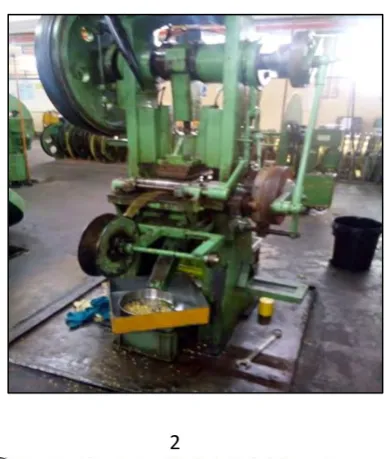
[image:17.595.217.410.565.795.2]This study was conducted in a needlework and sewing manufacturing industry in Melaka, Malaysia. In order to achieve the batch size reduction and the product variation demands, the snap fastener machine in this company as shown in Figure 1.1 have to undergo frequent changeovers and this machine need to shut down during the changeover.
3
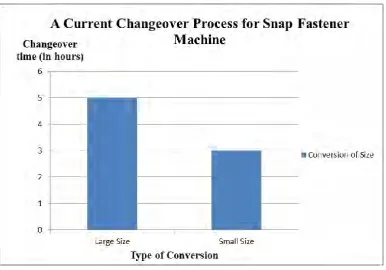
[image:18.595.107.494.252.522.2]This machine is producing different types of snap fastener tape and each type uses different types of cutter. All Pre-Stamping and Stud machines have difficulties on loading the raw material to the machine. The changeover process for the snap fastener machine involves the conversion of different types of size which are large and small sizes. The current changeover for small size to large size takes about 4 – 5 hours and large size to small size takes about 3 – 4 hours and time for each conversions are shown in Figure 1.2.
Figure 1.2: A current changeover process for snap fastener machine
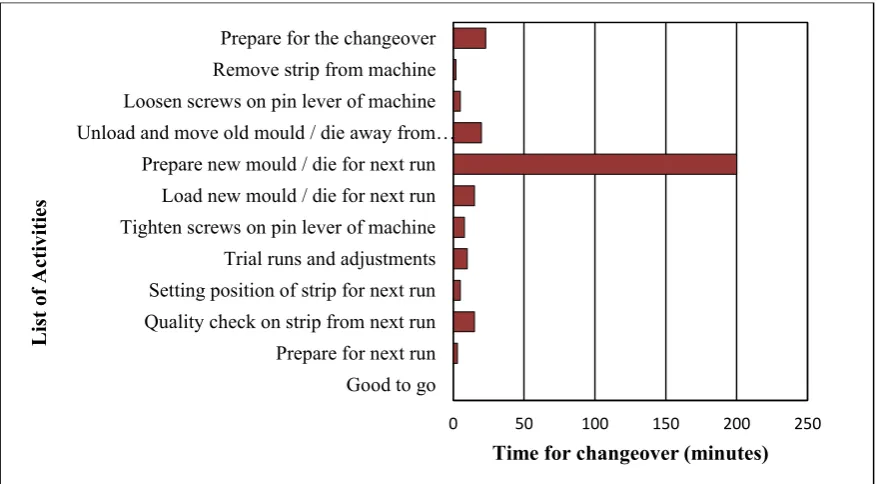
Besides that, the time for each activities are shown in Figure 1.3. The changeover time for this machine is long and more time will be wasted in the changeover procedure because the snap fastener machine usually need to undergo changeover at least 2 – 3 times per week. This problem will reduce the utilization of snap fastener machine and reducing the productivity of this industry. From the Figure 1.3 below, the activity whist is most time-consuming is preparing the new die for next run which is 200 minutes in this changeover process.
4
cutter from plate, setting on the snap fastener machine and mold and die repair were not adopted in current operation/process.
[image:19.595.106.545.337.579.2]Machines such as large pressses machine frequently require processes at both the front of the machine and rear of the machine. In this case, for snap fastener machine require three operations which are the front of the machine, the die or mold set and the back of the machine. Furthermore, only one operator will involve for this setup operations. One worker that do the changeover process of the snap fastener machine means wasted time and movement. It is because the same worker is continuously doing the changeover process by walking back and forth from one end of the snap fastener machine to the other.
Figure 1.3: A current changeover chart for snap fastener machine
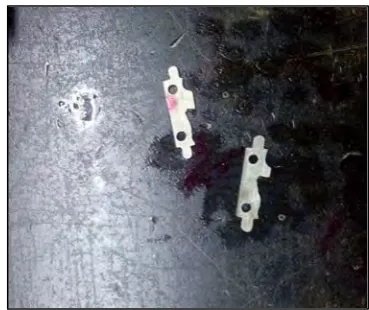
For the current changeover of the snap fastener machine, all the activities are performed internally, which means that can only be done when the machine is shut down. Last but not least, the snap fastener machine need to undergo frequent changeovers because of its cutter is always worn off and need to be replaced (Figure 1.4).
0 50 100 150 200 250
Good to go Prepare for next run Quality check on strip from next run Setting position of strip for next run Trial runs and adjustments Tighten screws on pin lever of machine Load new mould / die for next run Prepare new mould / die for next run Unload and move old mould / die away from…
Loosen screws on pin lever of machine Remove strip from machine Prepare for the changeover
Time for changeover (minutes)
5
Figure 1.4: A cutter of snap fastener machine
In order to fulfill demand from customers and to reduce the setup time, the main approach that has been used for this study is Single Minute Exchange of Die (SMED). According to Shingo, S. (1985), Single Minute Exchange of Die (SMED) is a scientific technique for changeover time reduction that can be implemented in any company and to any machine. The changeover processes and machine setup can be reduced to less than ten minutes. Besides, by making setup times quicker and simpler, SMED help companies meet the customer demands with less waste by making it cost – effective to produce products in smaller batches, or lots. Moxham and Greatbanks (2001) stated that the usage in SMED allowing industries to understand where they currently stand in setting up a process.
1.3 Objectives of Study
The objectives of this study are as follows:
a) To study the existing changeover process of snap fastener machine.
b) To propose the new standard procedures by simplifying the steps in the existing changeover process.
6 1.4 Scopes of Study
This study aims to reduce changeover time on the snap fastener machine by implementing Single Minute Exchange of Dies (SMED). This study focuses at Line A. It involves only one Snap Fastener machine. This machine produces different types of snap fastener tape to suit all possible demand of customers in the snap fastening application. Due to the time constraint that could not be avoided, and thus to the large amount of different changeover operations, it is important to focus on one machine only. SMED is expected reduce complex, time-consuming, and non value added activities in this company, which should support the competitiveness of the company and make the work easier. The quality and the performance improvement is not considered in the scope of this study.
1.5 Project Summary
To get the better understanding, this report has been written according to the arrangement of the chapter which have been decided by the researcher. This report is classified into five main chapters, which is each of the chapters contain the different explanation.
Chapter 1: Introduction
This chapter states about the background of the study, the problem statement, the objectives and the scope of this study which plays as the main to the whole research.
Chapter 2: Literature Review
7 Chapter 3: Methodology
It explains the method that have been chosen and used by the researcher to complete this study. It contains of fundamental approach and techniques that to be taken to achieve the objectives of the study.
Chapter 4: Result and Discussion
This chapter shows the results and the discussion of the study. Data was obtained from the method that have been used for this study followed by the discussions related to the results.
Chapter 5: Conclusion and Recommendation
8
CHAPTER 2
LITERATURE REVIEW
This chapter covers the research topic and the previous studies from articles and internet sources by other researchers. This study is about Single Minute Exchange of Die (SMED) implementation in order to cut the changeover time. The purposes of this chapter is to understand about the changeover operations from the earlier researchers that can be used as the reference. Besides, the basic methods in the changeover procedure, the changeover procedure for analyzing the current setup operation and the three stages of SMED are also comprised. Lastly, the concepts, methods and tools for implementing the each stage of SMED are described.
2.1 Concept of Waste in Changeover of Machine
Andreia and Alexandra (2010) stated that changing of products processes, replacement or modifying of the tools, are called as setup or changeover processes. From that, the waste has been considered in the productive system during the performance of changeover processes, since there is production cost and time used are added to the finished goods without direct creation of value. Ohno (1998) described the waste concept as non value added activity and concludes seven wastes which are overproduction, defects, over-processing, inventory, waiting, motion and transportation.
9
setups is considered as a waste and it should be minimized or if possible, eliminated. (Shingo, 1998)
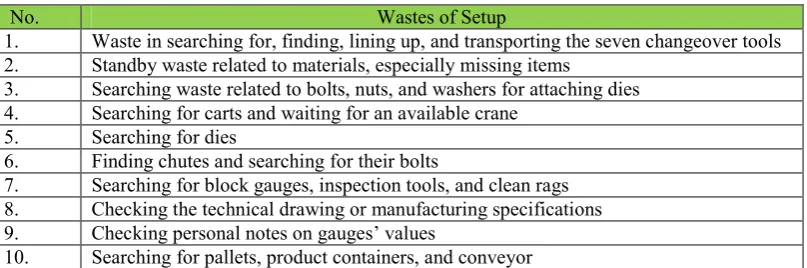
[image:24.595.104.508.297.431.2]Waste must be minimized or eliminated as much as possible in order to reduce the changeover time. Waste of changeover is usually found in motion such as; searching, selecting, arranging a tool and transporting the tool and dies to the machine. According to Arai and Sekine (1992), wastes of setup that always discovered are:
Table 2.1: Wastes of setup
No. Wastes of Setup
1. Waste in searching for, finding, lining up, and transporting the seven changeover tools
2. Standby waste related to materials, especially missing items
3. Searching waste related to bolts, nuts, and washers for attaching dies
4. Searching for carts and waiting for an available crane
5. Searching for dies
6. Finding chutes and searching for their bolts
7. Searching for block gauges, inspection tools, and clean rags
8. Checking the technical drawing or manufacturing specifications
9. Checking personal notes on gauges’ values
10. Searching for pallets, product containers, and conveyor
2.1.1 Waste elimination
Bicheno (2000) showed in an empirical study that there are two kinds of wastes in any manufacturing industry which are material waste and time waste. It is important to reduce all the types of wastes in order to increase the profit. In order to get the ambitious benefit, it is crucial to achieve the shorter setup time and possible through the waste of time reduction or non value added activities elimination.