Open Access
Research article
A systematic review of complex system interventions designed to
increase recovery from depression in primary care
Jane Gunn*
1
, Justine Diggens
2
, Kelsey Hegarty
1
and Grant Blashki
1,3
Address: 1Primary Care Research Unit, Department of General Practice, University of Melbourne 200 Berkeley St, Carlton, Melbourne, Australia, 2ParaQuad Victoria, 208 Wellington Street. Collingwood 3066. Melbourne, Australia and 3Institute of Psychiatry, Kings College London, London,
UK
Email: Jane Gunn* - [email protected]; Justine Diggens - [email protected]; Kelsey Hegarty - [email protected]; Grant Blashki - [email protected]
* Corresponding author
Abstract
Background:
Primary care is being encouraged to implement multiprofessional, system level,
chronic illness management approaches to depression. We undertook this study to identify and
assess the quality of RCTs testing system level depression management interventions in primary
care and to determine whether these interventions improve recovery.
Method:
Searches of Medline and Cochrane Controlled Register of Trials. 'System level'
interventions included: multi-professional approach, enhanced inter-professional communication,
scheduled patient follow-up, structured management plan.
Results:
11 trials met all inclusion criteria. 10 were undertaken in the USA. Most focussed on
antidepressant compliance. Quality of reporting assessed using CONSORT criteria was poor. Eight
trials reported an increase in the proportion of patients recovered in favour of the intervention
group, yet did not account for attrition rates ranging from 5 to 50%.
Conclusion:
System level interventions implemented in the USA with patients willing to take
anti-depressant medication leads to a modest increase in recovery from depression. The relevance of
these interventions to countries with strong primary care systems requires testing in a randomised
controlled trial.
Background
By 2020, depression is projected to become the second
most common cause of loss of disability-adjusted life
years in the world [1]. The majority of cases are diagnosed
and managed by general practitioners [2]. There is
evi-dence for effectiveness of pharmacological and
psycho-logical interventions when tested in efficacy trials in
well-controlled settings [3-5]. General practice has been
criti-cized for inadequately recognizing and managing
depres-sion, and since the early 1990's there has been an
increasing push for primary care to implement chronic
ill-ness management and collaborative care models to better
manage depression [6]. A number of randomised trials
testing these complex interventions for depression
man-agement have now been completed and published [6-10].
Policy-makers and clinicians are beginning to implement
these models, yet it is not clear to what extent these
inter-ventions actually improve remission of depression; and if
so, for how long. There have been calls for full remission
Published: 16 July 2006
BMC Health Services Research 2006, 6:88 doi:10.1186/1472-6963-6-88
Received: 23 March 2006 Accepted: 16 July 2006
This article is available from: http://www.biomedcentral.com/1472-6963/6/88
© 2006 Gunn et al; licensee BioMed Central Ltd.
and functional recovery as the most important goal of
treatment [11].
We have identified five relevant reviews published in six
papers since 2001 [6-10]. Von Korff's editorial reviewed a
selection of depression RCTs and concluded that case
management was a key ingredient to achieving a positive
outcome, yet did not review quality of trials included.
Gil-body et al focussed on identifying and describing the
edu-cational and organisational interventions for the
management of depression in primary care, yet did not
focus on recovery from depression as an outcome, nor on
trial quality. Badamgarav and colleagues focussed on
management programs for depression care, included
non-randomised studies and was not specific to primary care.
Bijl et al reviewed trials of disease management programs
that included screening, they commented on the 'highly
divergent' methodological quality of trials yet did not
report a formal assessment of trial quality. Dawson et al
undertook a meta-analysis of randomised trials recruiting
subjects with major depressive disorder conducted in
pri-mary care using remission as a key outcome.
These recent systematic reviews have gathered together
published articles of randomised trials aimed at
improv-ing the management of depression in primary care, yet
they vary in their scope and inclusion criteria from this
review. None include information about trial quality and
only one presents any data on recovery [7].
We report a systematic review of the randomized trials
testing chronic illness management approaches for
depression in primary care. We refer to these trials as
'sys-tems trials' throughout the paper. We examine the quality
of reporting of the published randomized trials and
dis-cuss the relevance of their findings to primary care led
health systems.
Method
We developed inclusion criteria to identify all randomised
controlled trials implementing interventions at the
'sys-tem' level, aimed at management of depression in adult
primary care populations and comparing the new 'system'
of care with the existing or 'usual' care. Trials were
included only if they used a validated tool to assess
partic-ipants as depressed at baseline and included a follow-up
measure of recovery or remission from depression (or
results from which recovery levels could be determined).
Clustered and individually randomised trials were
included.
Trials were classified as at the 'system level' if they tested
interventions that included all of the following:
1. A multi-professional approach to patient care. This
required that a general practitioner (GP) or family
physi-cian and at least one other health professional (e.g. nurse,
psychologist, psychiatrist, pharmacist) were involved with
patient care.
2. A structured management plan. In line with
introduc-ing an organised approach to patient care 'systems' trials
were required to offer practitioners access to evidence
based management information. This could be in the
form of guidelines or protocols. Interventions could
include both pharmacological (e.g. antidepressant
medi-cation) and non-pharmacological interventions (e.g.
patient screening, patient and provider education,
coun-selling, cognitive behaviour therapy).
3. Scheduled patient follow-ups. A 'systems' approach
required interventions to have an organised approach to
patient follow-up. We defined this as one or more
sched-uled telephone or in-person follow-up appointments to
provide specific interventions, facilitate treatment
adher-ence, or monitor symptoms or adverse effects.
4. Enhanced inter-professional communication. This
required that the intervention introduced mechanisms to
facilitate communication between professionals caring for
the depressed person. This included team meetings,
case-conferences, individual consultation/supervision, shared
medical records, patient-specific written or verbal
feed-back between care-givers and was sometimes referred to as
'collaborative care' in the publications.
As this review focussed on interventions for the general
adult primary care population, studies that selected for
sub-groups of adult patients with depression (eg, patients
with specific co-morbidities, patients from specific
cul-tural backgrounds only, samples of all women/men,
post-natal depression, or elderly-only samples) were excluded.
Literature search
deter-mine eligibility. In addition to this search strategy,
hand-searches of reference lists in relevant papers were
con-ducted.
Data extraction
JD systematically extracted the following data from the
papers: authors and year of publication, study setting and
location, method of screening and inclusion/exclusion
criteria, method and level of randomisation, components
of interventions, sample size, attrition rates, follow-up
times, recovery outcome measures and recovery results.
JD and JG independently examined each publication to
assess the degree to which it was reported in accordance
with CONSORT recommendations [13-15] and entered
this information into a template designed using
CON-SORT criteria. Where a trial was reported in multiple
pub-lications we examined each publication in detail.
Resulting tables were independently cross-checked by KH
and GB. Any discrepancies were discussed until consensus
was reached. Limitations of each trial were discussed by all
authors until consensus was reached.
Results
We identified 928 articles on the CCRTR, and 669 articles
on Medline (many trials being identified on both
data-bases, see Figure 1). Eleven trials met all inclusion criteria
[16-26]. Trials that were described in multiple
publica-tions were considered as a single study and are named in
this paper as the first published study.
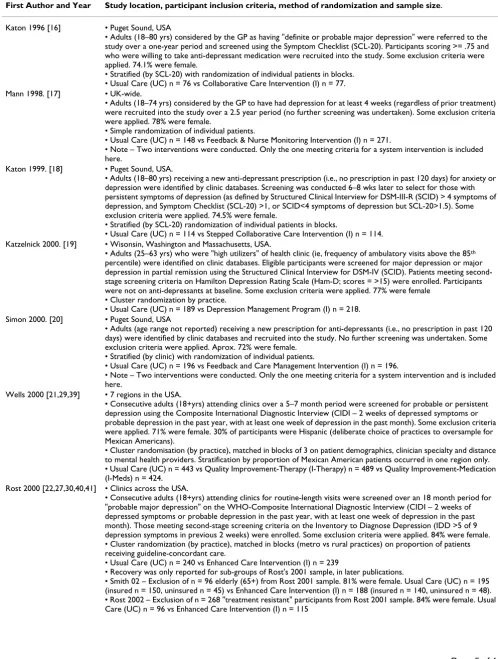
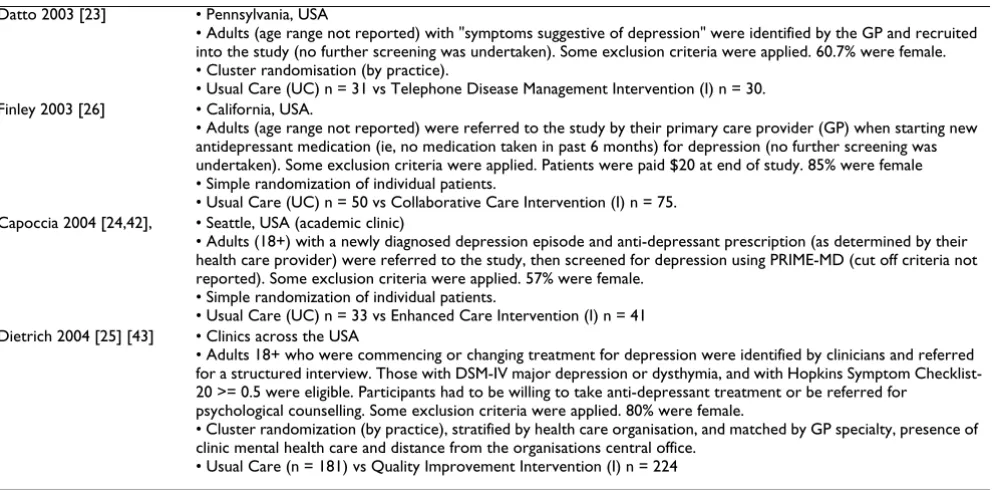
Table 2 summarises the study location, inclusion criteria,
randomisation method and study size and see Additional
file 1 which summarises the characteristics of the
interven-tions.
Representativeness of sample and generalisability of
results
Ten of the eleven trials were undertaken in the USA and
one in the UK [17]. Three trials [19,21,22], used a
prac-tice-based screening approach to identify cases of
proba-ble depression whilst the remainder relied upon
physician-made referral [16,17,20,23-25] or screening of
patients receiving a new antidepressant prescription
[18,26]. Details about the number of eligible cases not
recruited into studies were not well reported. Where they
were reported, issues of generalisability of the trial
find-ings to the population of depressed primary care patients
are raised. For example, Rost reports that 16% of those
approached refused screening and that 27% of those
screened refused a baseline interview [27]. Five of the
tri-als recruited only patients willing to take antidepressant
medication [16,18,20,24,26]. The majority of
interven-tions were focussed around improving compliance of
patients with antidepressant medication and only two
tri-als specifically included a manualised
non-pharmacolog-ical intervention [16,21]. All trials were pragmatic trials
undertaken in a real world clinical setting.
Table 3. summarises the quality of reporting of trials in
accordance with CONSORT criteria (as judged by the
authors). No trial was judged as adequately addressing all
of the CONSORT criteria. All trials gave good descriptions
of the actual interventions delivered. In general the
qual-ity of trial reporting when assessed using CONSORT
crite-ria was poor. Of the eleven identified tcrite-rials five were
randomised by cluster and six by individual. The method
used to generate the random allocation sequence was
reported for seven trials, yet none included a clear
descrip-tion of the method used to implement the random
sequence (allocation concealment). Other common
omissions were a lack of: clearly stated pre-specified
objectives, documented primary and secondary outcomes
and planned sub-group analyses, relevant sample size
cal-culations, power to assess recovery and a clear diagram
showing participant flow. Many studies inadequately
reported attrition rates and even those that did failed to
investigate how these rates could have influenced study
findings. Only two trials reported any information about
attempts to monitor adverse events. Blinding patients to
allocation in a randomised trial of a mental health
inter-vention is often impossible, yet few authors discuss the
potential biases introduced by the lack of blinding.
Allo-cation concealment and blinding status were poorly
reported and no paper presented a discussion of the
limi-tations of lack of blinding. Whilst statistical methods were
generally well reported many studies appeared to ignore
the problems of multiple testing [28].
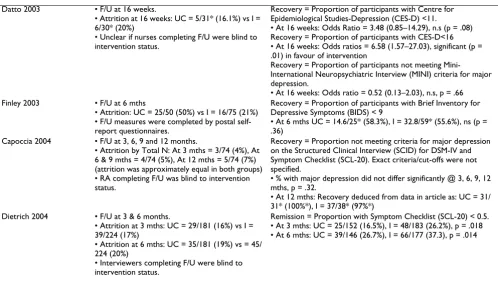
Table 4 summarises the follow-up times, attrition rates,
measurement tools, blinding and recovery results.
Recov-Table 1: Medline search strategy001 controlled clinical trials/ 002 randomized controlled trials/ 003 exp research design/ 004 multi-center studies/ 005 single-blind method/ 006 clinical trial.pt.
007 ((single or double or treble or triple) adj5 (mask$ or blind)).tw. 008 placebos/or placebo$.tw.
009 or/1–8
010 depress$.mp. [mp = title, original title, abstract, name of substance word, subject heading word]
011 (family practi$ or general practi$ or primary care$ or family physician$).mp. [mp = title, original title, abstract, name of substance word, subject heading word]
Flow diagram of search for relevant publications
Figure 1
Flow diagram of search for relevant publications.
Medline (Ovid)
Potentially
relevant RCTs
identified and
screened (n=669)
Potentially appropriate papers
reporting ‘System’ trials in adult
primary care population retrieved
for closer examination. (n=21)
RCTs excluded for not
meeting inclusion criteria
Cochrane Central Register
of Controlled Trials
Potentially relevant RCTs
identified and screened
(n=928)
RCTs included in
systematic review (n=11)
RCTs excluded for not
meeting inclusion criteria
Cluster RCT
n=5
Individual
RCT n=6
Sample
obtained by
screening
patients n=4
Sample
obtained
by GP
referral
n=1
Sample
obtained by
screening
patients n=3
Table 2: Study location, inclusion criteria, method of randomization and sample size.
First Author and Year Study location, participant inclusion criteria, method of randomization and sample size.
Katon 1996 [16] • Puget Sound, USA
• Adults (18–80 yrs) considered by the GP as having "definite or probable major depression" were referred to the study over a one-year period and screened using the Symptom Checklist (SCL-20). Participants scoring >= .75 and who were willing to take anti-depressant medication were recruited into the study. Some exclusion criteria were applied. 74.1% were female.
• Stratified (by SCL-20) with randomization of individual patients in blocks. • Usual Care (UC) n = 76 vs Collaborative Care Intervention (I) n = 77.
Mann 1998. [17] • UK-wide.
• Adults (18–74 yrs) considered by the GP to have had depression for at least 4 weeks (regardless of prior treatment) were recruited into the study over a 2.5 year period (no further screening was undertaken). Some exclusion criteria were applied. 78% were female.
• Simple randomization of individual patients.
• Usual Care (UC) n = 148 vs Feedback & Nurse Monitoring Intervention (I) n = 271.
• Note – Two interventions were conducted. Only the one meeting criteria for a system intervention is included here.
Katon 1999. [18] • Puget Sound, USA.
• Adults (18–80 yrs) receiving a new anti-depressant prescription (i.e., no prescription in past 120 days) for anxiety or depression were identified by clinic databases. Screening was conducted 6–8 wks later to select for those with persistent symptoms of depression (as defined by Structured Clinical Interview for DSM-III-R (SCID) > 4 symptoms of depression, and Symptom Checklist (SCL-20) >1, or SCID<4 symptoms of depression but SCL-20>1.5). Some exclusion criteria were applied. 74.5% were female.
• Stratified (by SCL-20) randomization of individual patients in blocks.
• Usual Care (UC) n = 114 vs Stepped Collaborative Care Intervention (I) n = 114. Katzelnick 2000. [19] • Wisonsin, Washington and Massachusetts, USA.
• Adults (25–63 yrs) who were "high utilizers" of health clinic (ie, frequency of ambulatory visits above the 85th percentile) were identified on clinic databases. Eligible participants were screened for major depression or major depression in partial remission using the Structured Clinical Interview for DSM-IV (SCID). Patients meeting second-stage screening criteria on Hamilton Depression Rating Scale (Ham-D; scores = >15) were enrolled. Participants were not on anti-depressants at baseline. Some exclusion criteria were applied. 77% were female
• Cluster randomization by practice.
• Usual Care (UC) n = 189 vs Depression Management Program (I) n = 218. Simon 2000. [20] • Puget Sound, USA
• Adults (age range not reported) receiving a new prescription for anti-depressants (i.e., no prescription in past 120 days) were identified by clinic databases and recruited into the study. No further screening was undertaken. Some exclusion criteria were applied. Aprox. 72% were female.
• Stratified (by clinic) with randomization of individual patients.
• Usual Care (UC) n = 196 vs Feedback and Care Management Intervention (I) n = 196.
• Note – Two interventions were conducted. Only the one meeting criteria for a system intervention and is included here.
Wells 2000 [21,29,39] • 7 regions in the USA.
• Consecutive adults (18+yrs) attending clinics over a 5–7 month period were screened for probable or persistent depression using the Composite International Diagnostic Interview (CIDI – 2 weeks of depressed symptoms or probable depression in the past year, with at least one week of depression in the past month). Some exclusion criteria were applied. 71% were female. 30% of participants were Hispanic (deliberate choice of practices to oversample for Mexican Americans).
• Cluster randomisation (by practice), matched in blocks of 3 on patient demographics, clinician specialty and distance to mental health providers. Stratification by proportion of Mexican American patients occurred in one region only. • Usual Care (UC) n = 443 vs Quality Improvement-Therapy (I-Therapy) n = 489 vs Quality Improvement-Medication (I-Meds) n = 424.
Rost 2000 [22,27,30,40,41] • Clinics across the USA.
• Consecutive adults (18+yrs) attending clinics for routine-length visits were screened over an 18 month period for "probable major depression" on the WHO-Composite International Diagnostic Interview (CIDI – 2 weeks of depressed symptoms or probable depression in the past year, with at least one week of depression in the past month). Those meeting second-stage screening criteria on the Inventory to Diagnose Depression (IDD >5 of 9 depression symptoms in previous 2 weeks) were enrolled. Some exclusion criteria were applied. 84% were female. • Cluster randomization (by practice), matched in blocks (metro vs rural practices) on proportion of patients receiving guideline-concordant care.
• Usual Care (UC) n = 240 vs Enhanced Care Intervention (I) n = 239
• Recovery was only reported for sub-groups of Rost's 2001 sample, in later publications.
ery was defined as no longer satisfying criteria for
proba-ble depression using the scale included in the study. Some
trials reported recovery results as proportions or odds
ratios and it was impossible to accurately determine the
actual numbers recovered or to independently calculate
significance levels. Where actual numbers could be
deduced we have included them in the table.
Meta-analysis
Due to the mix of cluster and individually randomised
tri-als, lack of actual numbers of participants who met
recov-ery criteria being reported, incomplete descriptions of
participant flow and variation in: follow-up times,
instru-ments used to measure outcomes; eligibility criteria,
severity of depression and co-morbidities, we were unable
to confidently utilise quantitative data synthesis
tech-niques.
Trials reported outcomes at varying time-points from
three, four, six, 12, 24 to 57 months. It was not always
clear why these time-points were chosen. Eight of the
tri-als reviewed showed an increase in the proportion of
those recovered in favour of the intervention group (range
from 10% to 33%) at the varying follow-up times.
Attri-tion rates ranging from 5% to 50% were reported (see
Table 4), yet not taken into account in the reported
recov-ery rates. No trial reported an intention to treat analysis.
Four trials reported recovery outcomes at or beyond one
year of follow-up [19,21,24,29,30], with three of these
tri-als reporting findings in favour of the intervention
[19,21,29,30].
Discussion
We identified eleven randomised trials testing a system
level intervention in primary care and measuring recovery
from depression as an outcome. We were able to use the
CONSORT criteria and reach agreement about the quality
of each trial reported. Overall the quality of reporting was
poor. As expected, more recently published trials were
more likely to report along CONSORT criteria, yet no trial
fully addressed all criteria. Most of the published studies
lacked power to measure the effect of the intervention on
recovery. Few clearly stated pre-specified objectives and
outcome measures. These limitations coupled with the
lack of intention to treat analysis and the problematic
practice of multiple testing and sub-group analyses makes
the interpretation of results and use of meta-analysis
tech-niques problematic.
The trials used a variety of tools to assess depression and
recovery and there appeared to be no consensus as to what
constitutes a clinically meaningful outcome measure for
testing interventions to reduce depression in primary care,
nor the best tools to measure it.
Clinical implications
All but one of the trials reviewed was undertaken in the
USA. We know that the primary health care system in the
USA is very different from Europe, Canada, Australia and
New Zealand. Translating the findings of systems based
intervention trials between countries raises interesting
challenges for researchers and policy makers; particularly
if we acknowledge the complexity in health care[31].
Datto 2003 [23] • Pennsylvania, USA
• Adults (age range not reported) with "symptoms suggestive of depression" were identified by the GP and recruited into the study (no further screening was undertaken). Some exclusion criteria were applied. 60.7% were female. • Cluster randomisation (by practice).
• Usual Care (UC) n = 31 vs Telephone Disease Management Intervention (I) n = 30. Finley 2003 [26] • California, USA.
• Adults (age range not reported) were referred to the study by their primary care provider (GP) when starting new antidepressant medication (ie, no medication taken in past 6 months) for depression (no further screening was undertaken). Some exclusion criteria were applied. Patients were paid $20 at end of study. 85% were female • Simple randomization of individual patients.
• Usual Care (UC) n = 50 vs Collaborative Care Intervention (I) n = 75. Capoccia 2004 [24,42], • Seattle, USA (academic clinic)
• Adults (18+) with a newly diagnosed depression episode and anti-depressant prescription (as determined by their health care provider) were referred to the study, then screened for depression using PRIME-MD (cut off criteria not reported). Some exclusion criteria were applied. 57% were female.
• Simple randomization of individual patients.
• Usual Care (UC) n = 33 vs Enhanced Care Intervention (I) n = 41 Dietrich 2004 [25] [43] • Clinics across the USA
• Adults 18+ who were commencing or changing treatment for depression were identified by clinicians and referred for a structured interview. Those with DSM-IV major depression or dysthymia, and with Hopkins Symptom Checklist-20 >= 0.5 were eligible. Participants had to be willing to take anti-depressant treatment or be referred for
psychological counselling. Some exclusion criteria were applied. 80% were female.
• Cluster randomization (by practice), stratified by health care organisation, and matched by GP specialty, presence of clinic mental health care and distance from the organisations central office.
[image:6.612.60.558.90.335.2]• Usual Care (n = 181) vs Quality Improvement Intervention (I) n = 224
Table 3: The quality of reporting of trialsi in accordance with CONSORT criteria [14,15] [13]
Consort item # Text in italics = consort criteria relevant to cluster randomised trials only.
Trials that reported information as outlined by CONSORTii Cluster RCTs are in bold.
1. Design How participants were allocated to interventions (eg "random allocation", "randomised", or "randomly assigned"), specifying that allocation was based on clusters.
A, B, C, E, G, H, J, K, L
2. Background Scientific background and explanation of rationale, including rationale for using a cluster design.
A, B, C, E, G, H, J, K
3. Participants Eligibility criteria for participants and clusters and the settings and locations where data were collected.
A, B, C, E, G, H, J, K, L
4. Interventions Precise details of the interventions intended for each group, whether they pertain to the individual level, the cluster level, or both, and how and when they were actually administered.
A, B C, D, E, F, G, H, I, J, K, L
5. Objectives Specific objectives and hypotheses and whether they pertain to the individual level, the cluster level, or both.
A, B C, D, E, F, G, H, I, J, K, L
6. Outcomes Clearly defined primary and secondary outcome measures, and whether they pertain to the individual level, the cluster level, or both.
B, F, G, H, K, L
And, when applicable, any methods used to enhance the quality of measurements (eg, multiple observations, training of assessors)
Not assessed/judged
7a. Sample size How total sample size was determined including method of calculation, number of clusters, cluster size, a coefficient of intracluster correlation (ICC or k), and an indication of its uncertainty).
B, E, J, K, L
7b. Sample size And, when applicable, calculation of interim analyses and stopping rules.
K (no other article calculated interim analyses)
8. Sequence generation Method used to generate the random allocation sequence, including details of any restriction, (eg blocking, stratification, matching).
A, B, C, E, F, H, K, L
9. Allocation concealment Method used to implement the random sequence (eg, numbered containers or central telephone), specifying that allocation was based on cluster rather than individuals and clarifying whether the sequence was concealed until interventions were assigned.
None
10. Implementation Who generated the allocation sequence, who enrolled participants and who assigned participants to their groups.
G, H
11a. Blinding Whether or not participants, those administering the interventions and those assessing the outcomes were blinded to group assignment.
J, K
11b. Blinding If done, how the success of blinding was evaluated. F (no others assessed blinding) 12a. Statistical methods Statistical methods used to compare groups for primary
outcome(s), indicating how clustering was taken into account.
A, B, C, D, E, F, G, H, J, K, L
12b. Statistical methodsiii Methods for additional analyses, such as subgroup analyses and adjusted analyses
F
13. Participant flowiv Flow of clusters and individual participants through each stage. Specifically for each group report the numbers of clusters and participants randomly assigned, receiving intended treatment, completing the study protocol and analysed for the primary outcome.
B, D, F, H (see footnote for further explanation)
Describe protocol deviations from study as planned, together with reasons.
Not assessed/judged
14. Recruitment Dates defining the periods of recruitment and follow-up B, F, G, H, K, L 15. Baseline data Baseline demographic and clinical characteristics for the individual and
cluster levels as applicable.
A, B C, E, G, H, I, J, K, L
16. Numbers analysedv Number of clusters and participants (denominator) in each group included in [recovery] analyses and whether analysis [not specific to recovery] was by "intention to treat". State the results in absolute numbers when feasible (eg, 10/20 not 50%)
B, D, F, J, L
7. Outcomes and estimationv
For [recovery analyses], a summary of results for each group for the individual or cluster level as applicable and the estimated effect size and its precision (eg, 95% CI)".
None
18. Ancillary analyses Address multiplicity by reporting any other analyses performed, including subgroup analyses and adjusted analyses, indicating those prespecified and those exploratory.
None (N/A for L)
19. Adverse events All important adverse events or side effects in each intervention group.
None
20. Interpretation Interpretation of the results, taking into account study hypotheses, sources of potential bias or imprecision and the dangers associated with multiplicity of analyses and outcomes.
Most of the trials recruited only patients willing to take, or
already prescribed, antidepressant medication and all but
one used primarily pharmacologically based
interven-tions. The findings from these trials may not be relevant
to the broader primary care population who prefer
psy-chological treatment [32]. This is further supported by the
work of Bower and Gilbody who report that system level
collaborative care interventions tend to be tested on
patients with more severe disorders and focus on drug
treatment and patients at risk of relapse and recurrence
[33]. These findings suggest the need to reconsider the
applicability of system level intervention models to those
with milder forms of depression.
Is this review biased?
Our review is biased as we have only included published
papers that report recovery data and have judged the trials
according to what is recorded in the publication. It should
be kept in mind that publication bias tends to favour trials
with a positive outcome and it is likely that recovery data
is more likely to be reported if it shows in favour of an
intervention. We purposefully did not contact authors of
the papers included in this review as we wished to assess
the evidence as it stands in the public domain. Our review
is also limited to English language papers and it is
possi-ble that negative trials reported in non-English journals
have been excluded.
Conclusion
System level interventions implemented in the USA, with
patients willing to take anti-depressant medication, lead
to a modest increase in recovery from depression.
Whether or not such systems of care are cost-effective in
the long-term is unresolved. The relevance of these
inter-ventions to countries that have stronger primary care
sys-tems (e.g. UK, Netherlands, Canada, Australia, NZ) is not
known. It is inappropriate to assume that these types of
interventions can be 'transplanted' to a different health
care setting with the same effect as observed in the USA.
We require adequately powered randomised trials to test
the effectiveness of these models of care in settings outside
the USA before widespread implementation occurs.
Outcomes for people experiencing depression are
subop-timal [34] and it is almost certain that researchers,
policy-makers and clinicians will maintain an interest in
re-defining the system of depression care in the community
setting [6,35]. It is important that we have high quality
randomised trial data to support any major re-engineering
of primary care and it appears from our review that the
tri-als testing systems of care for depression managed in the
community have suffered from many of the common
pit-falls outlined by Chalmers [36].
As a community we need to agree upon the measures to
be used when assessing effectiveness of interventions for
depression. This is a complicated issue in itself, and
Dow-rick highlights the need for debate on how we view and
measure depression [37]. If we agree that functional
recovery and full remission is the goal of management
[11] we need to agree upon a consistent way of measuring
it.
We hope that this review will assist researchers developing
trial protocols for interventions aimed at reducing
depres-sion, by encouraging them to think again about: defining
the components of their system intervention, planning for
a publication that addresses CONSORT reporting criteria,
contributing their data to a quantitative meta-analysis and
including a cost-effectiveness data analysis.
Competing interests
The author(s) declare that they have no competing
inter-ests.
Authors' contributions
JG is responsible for conception and design, analysis and
interpretation of data. JG drafted manuscript and gave
21. Generalisability Generalisability (external validity) to individuals and/or clusters (as relevant) of the trial findings.
A, C, D, E, F, G, H, I, J, K, L
22. Overall evidence General interpretation of results in the context of current evidence A, B, D, E, F, G, H, I, J, K, L
i A = Katon 1996, B = Mann, 1998, C = Katon 1999, D = Katzelnick, 2000, E = Simon 2000, F = Wells, 2000 (and Wells 1999), G = Smith 02 (and Smith 00, 01, Rost 00 and 01), H = Rost 2002 (and Rost 00), I = Datto 03, 2002, J = Finley 03, K = Capoccia 04 (and Boudreau 02), L = Dietrich 04a (and Dietrich 04b, and web appendices).
ii *For publications to be considered as reporting information in accordance with CONSORT criteria, publications had to provide an explicit
statement or clear and unambiguous information outlining details relevant to that CONSORT criteria. As many CONSORT items can be broken down into multiple components, each publication was only considered to have met CONSORT criteria if all components were adequately addressed.
*If a publication referenced another article that included the required information (such as when there were multiple publications about a single trial), this article was also used in judging CONSORT criteria where indicated.
iii For studies A, G, H, I, K, L, this item was either Not Applicable (because they did not report additional analyse or subgroup analyses), or was too
difficult to judge as they described statistical methods but did not clearly specify the outcomes they were used for (B, C, D, E).
iv When coding this item, the number analysed for primary outcome was difficult to judge as most articles reported multiple (primary) outcomes.
v For simplicity, items 16 and 17 were coded as they relate to recovery data only.
Table 4: Recovery results of system intervention trials.
1st Author and Date Follow-up Times and Attrition Measures of Recovery and Recovery Results
Katon 1996 & Lin 1999. • F/U at 1, 4, 7 & 19 mths.
• Attrition# at 4 mths: UC = 14/76* (18.4%*), I = 11/77* (14.3%*)
• RA's completing F/U were blind to intervention status.
Recovery = Proportion with 1 or less symptoms of depression on the Inventory for Depressive Symptomatology (IDS). Recovery was only reported for sub-groups in the article (people with Major depression vs Minor depression). Usual Care and Intervention data were deduced from sub-group data provided.
• At 4 mths: UC = 35/62* (56%*), I = 45/66* (68%*). No statistical comparisons were provided.
Mann 1998. • F/U at 4 mths.
• Attrition: UC = 14/148 (9.5%), I = 20/271 (7.4%) • RA's completing F/U were not blind to intervention status.
Recovery = Change in proportion not meeting DSM-III criteria for major depression on the Nurse Assessment Interview (NAI) from baseline to follow-up.
• At 4 mths: UC = 79/134* (59%*), I = 123/251* (49%*), ns. Katon 1999. • F/U at 1, 3 & 6 mths.
• Attrition at 3 mths: UC = 17/114* (14.9%*), I = 18/114* (15.8%*)
• Attrition at 6 mths: UC = 17/114* (14.9%*), I = 19/114* (16.6%*)
• RA's completing F/U were blind to intervention status.
Recovery = Proportion with 1 or 0 symptoms of depression on the Structured Clinical Interview (SCID) for DSM-IV.
• At 3 months: UC = 22/97* (23%), I = 38/96* (40%), p = .01 • At 6 months: UC = 30/97* (31%), I = 42/95* (44%), p = .05
Katzelnick 2000. • F/U at 6 wks, 3, 6 & 12 mths.
• Attrition at 12 mths: UC = 12/189 (6.3%), I = 15/ 218 (6.9%).
• RA's completing F/U were blind to intervention status.
Recovery = Proportion with Hamilton Depression Rating Scale (HDRS) < 7.
• At 12 mths: UC = 49/177 (27.7%), I = 92/203 (45.3%), p < .001 • At 12 mths: Number to Treat = 5:1
Simon 2000. • F/U at 3 & 6 mths. • Attrition not reported.
• RA's completing F/U were blind to intervention status.
Recovery = The inverse of odds ratios for meeting criteria for major depression on the Structured Clinical Interview (SCID) for DSM-IV.
• Across follow-ups, the Odds Ratio = 0.45 (0.24–0.86) indicates the probability of recovery was significantly higher in the Intervention group
Wells 2000 & Sherbourne 2001 & Wells 2004.
• F/U at 6, 12, 24 & 57 mths.
• Attrition at 6 mths: UC = 57/443 (12.9%), I = 143/913 (15.7%).
• Attrition at 12 mths: UC = 69/443 (15.6%), I = 161/913 (17.6%).
• Attrition at 24 mths (estim.): UC = 65/443* (14.7%), I-Meds = 62/424* (14.7%), I-Therapy = 72/489* (14.7%)
• Attrition at 57 mths: UC = 131/443 (29.6%), I-Meds = 102/424 (24.0%), I-Therapy = 132/489 (27%)
• RA's completing F/U were not blind to intervention status.
Recovery = Proportion no longer meeting probable or persistent depression on the Composite International Diagnostic Interview (CIDI).
• At 6 mths, UC = 193/386* (50.1%*), I-Therapy & I-Meds combined = 463/770* (60.1%*), p = .005
• At 12 mths: UC = 183/374* (48.8*)%, I-Therapy & I-Meds combined = 439/752* (58.4%*), p = .04
• At 24 mths: UC = 223/338* (66%*) vs I-Meds = 221/362* (61%*), ns. UC = 223/338* (66%*) vs I-Therapy = 337/489* (69%*), ns • At 57 mths: UC = 176/312* (56.4%*) vs I-Meds = 200/322* (62.1%*), ns. UC = 176/312* (56.4%*) vs I-Therapy = 228/357* (63.8%*), p = .05
Recovery = Proportion with Center for Epidemiologic Studies – Depression (CES-D, Modified version) < 20.
• At 6 mths: UC = 137/386* (35.6%), I-Therapy & I-Meds combined = 343/770* (44.6%*), p = .005
• At 12 mths: UC = 144/374* (38.6%), I-Therapy & I-Meds combined = 342/752* (45.5%*), p = .04
Rost 2001 & Smith 2002 & Rost 2002
• F/U at 6, 12, 18 & 24 mths.
• N = 479 were recruited to original trial (Rost 00). Smith 2002 and Rost 2002 are sub-group follow-ups.
• Smith 02: Attrition at 24 mths: UC = 48/195* (24.6%*), I = 70/188 (36.7%*).
• Rost 02: Attrition at 24 mths: UC = 13/96 (13.5%), I = 46/115 (40%)
• RA's completing F/U were blind to intervention status.
Smith 2002
Recovery = Proportion not meeting Composite International Diagnostic Interview (CIDI) criteria for major depression. Recovery was only reported for sub-groups in this article (uninsured vs insured, no significant difference was found). Usual Care and Intervention data were deduced from sub-group data provided.
• At 24 mths: UC = 113/148* (76.4%*), I = 92.5/119* (78%*). Rost 2002
Recovery = Proportion of participants with Centre for Epidemiological Studies-Depression (CES-D) <16.
final approval of the version to be published. JD is
respon-sible for analysis and interpretation of the data, drafting of
the manuscript tables and contributing to revisions of the
manuscript. KH and GB are responsible for checking of
data analysis and critically revising the article. All authors
gave approval of the version to be published.
Additional material
Acknowledgements
We acknowledge the input of Professor Bruce Arroll and Ms Patty Chon-dros in discussing the pros and cons of using quantitative meta-analysis techniques in this review.
References
1. Murray C, Lopez A: The Global Burden of Disease. Boston, Mass, World Health Organisation and Harvard University Press; 1996. 2. National Collaborating Centre for Mental Health: Depression:
Management of depression in primary and secondary care.
In National Clinical Practice Guideline Number 23 London, National Insti-tute for Clinical Excellence; 2004.
3. Proudfoot J, Goldberg D, Mann A, Everitt B, Marks IM, Gray JA:
Computerized, interactive, multimedia cognitive-behav-ioural program for anxiety and depression in general prac-tice. Psychological Medicine 2003, 33:217-227.
4. MacGillivray S, Arroll B, Hatcher S, Ogston S, Reid I, Sullivan F, Wil-liams B, Crombie I: Efficacy and tolerability of selective serot-onin reuptake inhibitors compared with tricyclic antidepressants in depression treated in primary care: sys-tematic review and meta-analysis. [Review] [9 refs]. British Medical Journal 2003, 326:10.
5. Williams JRJ, Mulrow CD, Chiquette E, Noel PH, Aguilar C, Cornell J: A systematic review of newer pharmacotherapies for depression in adults: evidence report summary. Annals of Inter-nal Medicine 2000, 132:743-756.
6. Von Korff M, Goldberg D: Improving outcomes in depression: The whole process needs to be enhanced. BMJ 2001,
323:948-949.
7. Dawson MY, Michalak EE, Waraich P, Anderson JE, Lam RW: Is remission of depressive symptoms in primary care a realistic goal? A meta-analysis. BMC Family Practice 2004, 5:.
8. Bijl D, van Marwijk HWJ, de Haan M, van Tilburg W, Beekman AJTF:
Effectiveness of disease management programmes for rec-ognition, diagnosis and treatment of depression in primary care. A review. European Journal of General Practice 2004, 10:6-12. 9. Badamgarav E, Weingarten SR, Henning JM, Knight K, Hasselblad V,
Gano Jr A, Ofman JJ: Effectiveness of disease management pro-grams in depression: a systematic review. Am J Psychiatry 2003,
160:2080-2090.
10. Gilbody SM, Whitty P, Grimshaw JM, Thomas R: Educational and organisational interventions to improve the management of depression in primary care. A systematic review. JAMA 2003,
289:3145-3151.
11. Ballenger J: Clinical guidelines for establishing remission in patients with depression and anxiety. J Clin Psychiatry 1999,
60:29-34.
Additional File 1
Table: Characteristics of the interventions used in system intervention tri-als.
Click here for file
[http://www.biomedcentral.com/content/supplementary/1472-6963-6-88-S1.pdf]
Datto 2003 • F/U at 16 weeks.
• Attrition at 16 weeks: UC = 5/31* (16.1%) vs I = 6/30* (20%)
• Unclear if nurses completing F/U were blind to intervention status.
Recovery = Proportion of participants with Centre for Epidemiological Studies-Depression (CES-D) <11.
• At 16 weeks: Odds Ratio = 3.48 (0.85–14.29), n.s (p = .08) Recovery = Proportion of participants with CES-D<16 • At 16 weeks: Odds ratios = 6.58 (1.57–27.03), significant (p = .01) in favour of intervention
Recovery = Proportion of participants not meeting Mini-International Neuropsychiatric Interview (MINI) criteria for major depression.
• At 16 weeks: Odds ratio = 0.52 (0.13–2.03), n.s, p = .66
Finley 2003 • F/U at 6 mths
• Attrition: UC = 25/50 (50%) vs I = 16/75 (21%) • F/U measures were completed by postal self-report questionnaires.
Recovery = Proportion of participants with Brief Inventory for Depressive Symptoms (BIDS) < 9
• At 6 mths UC = 14.6/25* (58.3%), I = 32.8/59* (55.6%), ns (p = .36)
Capoccia 2004 • F/U at 3, 6, 9 and 12 months.
• Attrition by Total N: At 3 mths = 3/74 (4%), At 6 & 9 mths = 4/74 (5%), At 12 mths = 5/74 (7%) (attrition was approximately equal in both groups) • RA completing F/U was blind to intervention status.
Recovery = Proportion not meeting criteria for major depression on the Structured Clinical Interview (SCID) for DSM-IV and Symptom Checklist (SCL-20). Exact criteria/cut-offs were not specified.
• % with major depression did not differ significantly @ 3, 6, 9, 12 mths, p = .32.
• At 12 mths: Recovery deduced from data in article as: UC = 31/ 31* (100%*), I = 37/38* (97%*)
Dietrich 2004 • F/U at 3 & 6 months.
• Attrition at 3 mths: UC = 29/181 (16%) vs I = 39/224 (17%)
• Attrition at 6 mths: UC = 35/181 (19%) vs = 45/ 224 (20%)
• Interviewers completing F/U were blind to intervention status.
Remission = Proportion with Symptom Checklist (SCL-20) < 0.5. • At 3 mths: UC = 25/152 (16.5%), I = 48/183 (26.2%), p = .018 • At 6 mths: UC = 39/146 (26.7%), I = 66/177 (37.3), p = .014
[image:10.612.57.555.88.370.2]* Figures (eg, n, percentages) were deduced from data in the article where indicated by an asterix. # Attrition rates were sometimes only reported for total subjects, rather than by arm of the trial.
Publish with
Bio
Med
Central
and every
scientist can read your work free of charge
"BioMed Central will be the most significant development for disseminating the results of biomedical researc h in our lifetime."Sir Paul Nurse, Cancer Research UK
Your research papers will be:
available free of charge to the entire biomedical community
peer reviewed and published immediately upon acceptance
cited in PubMed and archived on PubMed Central
yours — you keep the copyright
Submit your manuscript here:
http://www.biomedcentral.com/info/publishing_adv.asp
BioMedcentral
12. Cumbers B, Wentz R: Using MEDLINE to search for evidence (Ovid software) - some background information and sample searches. In Evidence based practice in primary care Edited by: Silagy C and Haines A. London, BMJ Books; 1998:161-176.
13. Altman DG, Schulz KF, Moher D, Egger M, Davidoff F, Elbourne D, Gotzche PC, Lang T: The revised CONSORT statement for reporting randomized trials: Explanation and elaboration.
Annals of Internal Medicine 2001, 134:663-694.
14. Campbell MJ: Extending CONSORT to include cluster trials.
BMJ 2004, 328:654-655.
15. Campbell MK, Elbourne DR, Altman DG: CONSORT statement: extension to cluster randomised trials. BMJ 2004, 328:702-708. 16. Katon W, Robinson P, Von Korff M, Lin E, Bush T, Ludman E, Simon G, Walker E: A multifaceted intervention to improve treat-ment of depression in primary care. Archives of General Psychiatry
1996, 53:924 -9932.
17. Mann AH, Blizard R, Murray J, Smith JA, Botega N, Macdonald E, Wilkinson G: An evaluation of practice nurses working with general practitioners to treat people with depression. British Journal of General Practice 1998, 48:875-879.
18. Katon W, Von Korff M, Lin E, Simon G, Walker E, Unutzer J, Bush T, Russo J, Ludman E: Stepped collaborative care for primary care patients with persistent symptoms of depression. Archives of General Psychiatry 1999, 56:1109-1115.
19. Katzelnick DJ, Simon GE, Pearson SD, Manning WG, Helstad CD, Henk HJ, Cole SM, Lin EHB, Taylor LH, Kobak KA: Randomized trial of depression management program in high utilizers of medical care. Archives of Family Medicine 2000, 9:345-351. 20. Simon GE, Von Korff M, Rutter C, Wagner E: Randomised trial of
monitoring, feedback and management of care by telephone to improve tretament of depresson in primary care. BMJ
2000, 320:550-554.
21. Wells KB, Sherbourne C, Schoenbaum M, Duan N, Meredith L, Unut-zer J, Miranda J, Carney MF, Rubenstein LV: Impact of disseminat-ing quality improvement programs for depression in managed primary care. JAMA 2000, 283:212-220.
22. Rost K, Nutting PA, Smith J, Werner JJ: Designing and implement-ing a primary care intervention trial to improve the quality and outcome of care for major depression. General Hospital Psy-chiatry 2000, 22:66-77.
23. Datto CJ, Thompson R, Horowitz D, Disbot M, Oslin D: The pilot study of a telephone disease management program for depression. General Hospital Psychiatry 2003, 25:169-177. 24. Capoccia K, Boudreau D, Blough D, Ellsworth A, Clark D, Stevens N,
Katon W, Sullivan S: Randomized trial of pharmacist interven-tions to improve depression care and outcomes in primary care. Am J Health-Syst Pharm 2004, 61:364-372.
25. Dietrich AJ, Oxman TE, Williams Jr JW, Schulberg HC, Bruce ML, W. LP, Barry S, J. RP, Lefever JJ, Heo M, Rost K, Kroenke K, Gerrity M, Nutting PA: Re-engineering systems for the treatment of depression in primary care: cluster randomised controlled trial. BMJ 2004, 329:602.
26. Finley PR, Rens H, Pont JT, Gess SL, Louie C, Bull SA: Impact of a collaborative care model on depression in a primary care setting: A randomized controlled trial. Pharmacotherapy 2003,
23:1175-1185.
27. Rost K, Nutting P, Smith J, Elliott C, Dickinson M: Managing depression as a chronic disease: a randomised trial of ongo-ing treatment in primary care. BMJ 2002, 325:934.
28. Cook DI, Gebski VJ, Keech AC: Subgroup analysis in clinical tri-als. MJA 2004, 180:289-291.
29. Wells K, Sherbourne C, Schoenbaum M, Ettner SL, Duan N, Miranda J, Unutzer J, Rubenstein L: Five-year impact of quality improve-ment for depression. Archives of General Psychiatry 2004,
61:378-386.
30. Rost K, Nutting P, Smith J, Werner J, Duan N: Improving depres-sion outcomes in community primary care practice. J Gen Intern Med 2001, 16:143-149.
31. Plsek PE, Greenhalgh T: The challenge of complexity in health care. BMJ 2001, 323:625-628.
32. Tylee A: Major Depressive Disorder (MDD) from the patient's perspective: overcoming barriers to appropriate care. Inter-national Journal of Psychiatry in Clinical Practice 2001, 5:s37-s42. 33. Bower P, Gilbody S: Managing common mental health
disor-ders in primary care: conceptual models and evidence base.
BMJ 2005, 330:839 -8842.
34. Andrews G: Should depression be managed as a chronic dis-ease? BMJ 2001, 322:419-421.
35. Pincus HA, Pechura CM, Elinson L, Pettit AR: Depression in pri-mary care: linking clinical and systems strategies. Gen Hosp Psych 2001, 23:311-318.
36. Chalmers I: Unbiased, relevant, and reliable assessments in health care. Important progress during the past century, but plenty of scope for doing better. BMJ 1998, 317:1167-1168. 37. Dowrick C: Beyond Depression. Oxford, Oxford University
Press; 2004.
38. Simon GE: Long-term prognosis of depression in primary care. Bulletin of the World Health Organisation 2000, 78:439-445. 39. Sherbourne CD, Wells KB, Duan N, Miranda J, Unutzer J, Jaycox L,
Schoenbaum M, Meredith LS, Rubenstein LV: Long-term effective-ness of disseminating quality improvement for depression in primary care. Archives of General Psychiatry 2001, 58:696-703. 40. Rost K: Life after primary care depression quality
improve-ment intervention. Journal of General Internal Medicine 2002,
17:811.
41. Rost KM, Duan N, Rubenstein LV, Ford DE, Sherbourne CD, Meredith LS, Wells KB: The quality improvement for depres-sion collaboration: general analytic strategies for a coordi-nated study of quality improvement in depression care.
General Hospital Psychiatry 2001, 23:239-253.
42. Boudreau DM, Capoccia KL, Blough DK, Ellsworth AJ, Clark DL, Katon WJ, Walker EA, Stevens NG: Collaborative care model to improve outcomes in major depression. The Annals of Pharma-cotherapy 2002, 36:585-591.
43. Dietrich AJ, Oxman TE, Williams JW, Kroenke K, Schulberg HC, Bruce M, Barry SL: Going to scale: re-engineering systems for primary care treatment of depression. Annals of Family Medicine
2004, 2:301-304.
![Table 3: The quality of reporting of trialsi in accordance with CONSORT criteria [14,15] [13]](https://thumb-us.123doks.com/thumbv2/123dok_us/8255008.276315/7.612.62.546.103.735/table-quality-reporting-trialsi-accordance-consort-criteria.webp)