1
“A STUDY OF PREVALENCE AND CLINICAL IMPLICATION OF
HYPOCALCEMIA IN MALARIA”
Submitted to
THE TAMIL NADU DR. M. G. R. MEDICAL UNIVERSITY
In partial fulfilment of the requirements
For the award of degree of
M.D. GENERAL MEDICINE
GOVERNMENT STANLEY MEDICAL COLLEGE & HOSPITAL
THE TAMIL NADU DR. M.G.R. MEDICAL UNIVERSITY
CHENNAI, TAMIL NADU
2
DECLARATION
I hereby declare that this dissertation entitled “A STUDY OF PREVALENCE AND
CLINICAL IMPLICATION OF HYPOCALCEMIA IN MALARIA”has been
prepared by me during March 2018 – August 2018, under the guidance of Dr. C.
SRIDHAR MD, Professor of General medicine,Department of General medicine,
Govt. Stanley Medical College,Chennai along with Co-guide
Dr. RAJA. MD
, assistantprofessor of general medicine, Govt. Stanley Medical College,Chennai is submitted to the
THE TAMIL NADU DR. M.G.R. MEDICAL UNIVERSITYin partial fulfillment for the
award of the degree of M.D. GENERAL MEDICINE. This work has not formed the basis
for the award of any degree or diploma to me by any other University before.
Date : Signature
3
CERTIFICATE
This is to certify that the study entitled “A STUDY OF PREVALENCE AND
CLINICAL IMPLICATION OF HYPOCALCEMIA IN MALARIA” is the result of
original work carried out by DR.PRAVEEN. R V,under my supervision and guidance at
GOVT. STANLEY MEDICAL COLLEGE, CHENNAI. The thesis is submitted by the candidate in partial fulfilment of the requirements for the award of M.D Degree in General medicine course from 2016 to 2019 at Govt. Stanley Medical College, Chennai.
Prof.Dr.C. SRIDHAR,MD
Professor of General medicine
Department of General medicine Gov.Stanley Medical College
4
CERTIFICATE
This is to certify that the study entitled “A STUDY OF PREVALENCE AND
CLINICAL IMPLICATION OF HYPOCALCEMIA IN MALARIA” is the result of
original work carried out by DR.PRAVEEN. R V,under the supervision and guidance of
Dr.SRIDHAR. C MD, Professor of General Medicine, Department of General
Medicine, Govt. Stanley Medical College, Chennai
. The thesis is submitted by the candidate in partial fulfilment of the requirements for the award of M.D Degree in General medicine course from 2016 to 2019 at Govt. Stanley Medical College, Chennai.Prof.Dr.S. PONNAMBALANAMASIVAYAM, M.D. D.A. DNB.
Dean
Govt. Stanley Medical College Chennai – 600 001.
Prof.Dr.R.MUTHUSELVAN,MD
5
ACKNOWLEDGEMENT
I express my immense gratitude to The Dean, Prof.Dr.S.PONNAMBALAM
NAMASIVAYAM M.D. D.A. DNB,
Govt. Stanley Medical College for giving
me the opportunity to work on this study.
I
express
my
immense
gratitude
to
The
Dean,
Prof.Dr.R.MUTHUSELVAN.MD,Head of Department,Department of General
Medicine, Govt. Stanley Medical College for giving me the opportunity to work on
this study.
I wish to express my heartfelt and profound indebtness to my teacher and guide
Prof. Dr.SRIDHAR.CMD, Professor of General Medicine, Department of
General Medicine, Govt. Stanley Medical College, Chennai-01, for his invaluable
feedback, suggestions and guidance throughout the completion of the study.
My heartfelt thanks to my teachers and Assistant Professors Dr. RAJA. MD, Dr.
NAMITHA
NARAYANAN
MD,
Dr.
ELAVAZHAKAN
MD
for
theirsupervision and assistance during the progression of my study.
6
I take the pleasure to offer my deepest sense of gratitude to my wife and my
parents for their moral support and encouragement.
Finally, I express my gratitude to the patients and volunteers who so willingly
8
URKUND
UrkundAnalysisResult
AnalysedDocument:Su bmitted:SubmittedBy:S ignificance:
THESISFINALCOPYpraveenrv.docx(D42290802)10/8/20 188:30:[email protected]
7%
Sourcesincludedinthereport
Vivax thesis.docx(D4157426) VIVAXTHESIS2.docx(D41622374)
KU-TH-BC-KISHORE-P-18.pdf(D40561794)
http://the-medical-dictionary.com/hypocalcemia_article_8.htmhttp://www.thepharmajourna
l.com/archives/2013/vol2issue2/PartA/5-9-8-864.pdfhttps://www.ncbi.nlm.nih.gov/pmc/articles/PMC3375727/http:// www.apiindia.org/pdf/monograph_2015_update_on_tropical_fever/009_ management_of_uncomplicated.pdfhttps://www.ncbi.nlm.nih.gov/pubme d/9785681 https://link.springer.com/content/pdf/10.1186%252Fs12936-015-07753.pdf
10
CERTIFICATE – II
This is to certify that this dissertation work titled entitled dissertation “A STUDY OF PREVALENCE AND CLINICAL IMPLICATION OF HYPOCALCEMIA IN
MALARIA” of the candidate Dr.PRAVEEN R V, with Registration Number
201611059 for the award of M.D degree in the branch of GENERAL MEDICINE. I personally verified the urkund.com website for the purpose of plagiarism check. I found that the uploaded thesis file contains from introduction to conclusion pages and result shows 7% of plagiarism in this dissertation.
11
LIST OF CONTENTS
SL.NO PARTICULARS PAGE NO
1. INTRODUCTION 12-14
2. REVIEW OF LITERATURE 15-44
4. AIMS AND OBJECTIVES 45
5. MATERIAL AND METHODS 46-50
6. RESULTS AND OBSERVATIONS 51-94
7. DISCUSSION 95-102
8. CONCLUSION 103-104
9. LIMITATIONS 105
10. RECOMMENDATIONS 106
11. REFERENCES 107-109
12
INTRODUCTION
Malaria is a protozoan disease caused by the protozoan ,plasmodium. Five species of the genus plasmodium causes nearly all malarial infections in humans - Plasmodium falciparum,Plasmodium vivax,Plasmodium ovale,Plasmodium malariae and Plasmodium knowlesi. Malaria is transmitted by the anopheles mosquitoes.
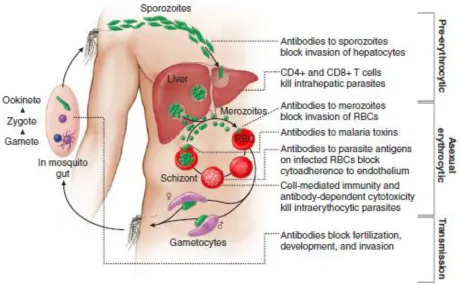
Life cycle
13
sporozoites are stored in salivary gland of the mosquito and injected into another person during the mosquito bite.
Clinical features
Malarial fever begins with non specific complaints of headache,fatigue,abdominal discomfort, and myalgia. These non specific symptoms are followed by high grade intermittent fever,associated with chills and rigor. According to the periodicity fever in malaria are classified into tertian fever(p.vivax and p.ovale),quartian fever (p.falciparum) etc. Anemia,jaundice and hepatospleenomegaly are other features seen in malarial fever.If a patients with malaria developsunarousable coma/cerebral malaria,acidosis,severe anemia,renal failure,ARDS,hypoglycemia,shock,DIC, hemoglobinuria,convulsions etc then it is considered as complicated malaria. Further metabolic abnormalities like hypoglycemia,hypocalcemia,hyponatremia etc are also noted in malarial fever. Exact causes of hypocalcemia in malaria is not known. Renal failure,hypomagnesemia and hypoparathyroidism are some of the possible causes of hypocalcemia in malaria.
Hypocalcemia
14
remain asymptomatic in mild and chronic hypocalccemia or they may present with life threatening complications. Moderate hypocalcemia presents with parasthesia,especiallyover fingers and circum oral areas. Carpopedal spasm. Chevstok’s sign and trosseau’s signs can be elicited on clinical examination of these patients. Severe
hypocalcemia presents with
seizures,carpopedalspasm,bronchospasm,laryngospasm,prolongation of QT interval and arrhythmias.
15
REVIEW OF LITRATURE
Epidemiology
Malaria is a tropical disease. Amongst the different species P. falciparum predominates in Africa,new guinea and Haiti while P.vivax predominates in central America. Both species are equally seen in regions like South America,Indian subcontinent,Eastern asia and Oceania. P .malaria is endemic to sub Saharan region whereas P. ovale is rarely found outside Africa. P.knowlesi is reported in the islands of Borneo and Southeast asia.
Endemic areas have been classified as hypoendemic(<10% of chidren with palpable spllen),mesoendemic(11-50%),hyperendemic(51-75%) and holoendemic(>75%)according to parasites rate or palpable spleen rates in chidren of age 2-9 years. In holo and hyper endemic areas,people get more than one infected mosquito bites per day and are infected repeatedly throughout life. Prevalence and incidence of malarial fever is more in children in endemic areas.
16
vectors,number of human bites per day and life span/longevity of mosquitoes. Malaria is less common in high altitudes and areas with cold climate.
[image:16.612.91.551.203.487.2]Life cycle of malarial parasite
figure 11
Pathophysiology
17
to increased adherence of PRBC to vascular endothelium. Adherence of PRBC with another PRBC (agglutination) and PRBC with non PRBC (rossetting) also take place. Reduction in cell deformability is observed not only in PRBC, but also in NPRBC. All these factorslead to blockade of microcirculation in various tissues, thus causing tissue ischemia.
Host immune responses also contribute to the pathogenesis of complicated malaria. Concentration of various proinflammatory cytokines are found to be elevated. TNF-alpha upregulates endothelial cytoadherence receptors andcan cause hypoglycemia and dyserythropoeisis. Cytoadherence and sequestration of PRBCs in microcirculation is seen in P.falciparum infection.
Clinical features
18
Mild jaundice and hepato splenomegaly are seen in malarial infection. Uncomplicated malarial infection resolves over 1-3 weeks.
Manifestations of Severe Falciparum Malaria - Signs Manifestations
Major
Unarguable coma/cerebral malaria
Coma persisting for>30 min after generalized convulsion .Failure to localize or respond appropriately to noxious stimuli
Acidemia/acidosis
Arterial pH of <7.25 or plasma bicarbonate level of <15 mmol/L; venous lactate level of >5 mmol/L; Patients develop labored deep breathing, often termed “respiratory distress”
Severe normochromic,normocytic anemia
Hemoglobin level of <50 g/L (<5 g/dl) or hematocrit of <15% with parasitemia level of >100,000/μL
Renal failure
Urine output of<400 ml in 24 hours in adults or <12 ml/kg in children; no improvement with rehydration; serumcreatinine level of >265 μmol/L (>3 mg/dl)
Pulmonary edema/adult respiratory distress syndrome Overhydration aggravates noncardiogenic pulmonary edema
Hypoglycemia
19 Hypotension/shock
Systolic blood pressure of <50 mmHg in children 1–5 years or <80 mmHg in adults; core/skin temperature difference of >10°C; capillary refill >2 s
Bleeding/disseminatedintravascular coagulation
Patients will have significant bleeding and hemorrhage from the gums, nose, and gastrointestinal tract and/or evidence ofdisseminated intravascular coagulation
Convulsions
More than two generalized seizures in 24 h. sometimes subtle (e.g., toniccloniceye movements without limb or face movement) is noted
Hemoglobinuria
Macroscopic black, brown, or red urine; not associated with effects of oxidant drugs and red blood cell enzymedefects (such as G6PD deficiency).It is called black water fever.
Other
Impaired consciousness/arousable Unable to sit or stand without support
Extreme weakness
Prostration; inability to sit without help Hyperparasitemia
20
Serum bilirubin level of >50 mmol/L (>3 mg/dl) if combined with other evidence of vital-organ dysfunction
Features Indicating Poor Prognosis in Severe Falciparum Malaria
Clinical
Marked agitation
Hyperventilation (respiratory distress) Hypothermia (<36.5°C)
Bleeding Deep coma
Repeated convulsions Anuria
Shock
Laboratory
Biochemistry
Hypoglycemia (<2.2 mmol/L) Hyperlactatemia (>5 mmol/L)
21 Elevated total bilirubin (>50 μmol/L)
Elevated liver enzymes (AST/ALT 3 times upper limit of normal) Elevated muscle enzymes (CPK ↑, myoglobin ↑)
Elevated urea (>600 μmol/L)
Hematology
Leukocytosis (>12,000/μL) Severe anemia (PCV <15%) Coagulopathy
Decreased platelet count (<50,000/μL) Prolonged prothrombin time (>3 s) Prolonged partial thromboplastin time Decreased fibrinogen (<200 mg/dl)
Parasitology Hyperparasitemia
Increased mortality at >100,000/μL High mortality at >500,000/μL
>20% of parasites identified as pigment-containing trophozoites and schizonts
22 Hypocalcemia in malaria
Many previous studies revealed the disturbance of calcium homeostasis in malaria. Many possible mechanisms are suggested to explain the relation between malaria and hypocalcaemia. This effect is found most severe in Falciparum malaria .The nature of the mechanisms causing disturbance in Ca++ homeostasis in malarial parasites remained unknown for almost two decades.
Some possible mechanisms are:
1. Ca++ based signaling pathway used by plasmodium parasites results in reduced calcium status, especially intracellular calcium, but not Ca++ found in body fluids. Environment of the host cell cytoplasm is disturbed by this. But how the protozoa achieved the calcium homeostasis – was unanswered.
2. Plasmodium Falciparum infected red blood cells show increased permeability for calcium. The magnitude of the increase is greater than that normally require activating the Ca++ dependent K+ channel. Some studies showed that Falciparum infectionincreases the influx of Ca++ to over 1mmol which is much higher than the normal values. The pathway responsible for the enhanced influx was expressed at approximately 30 hrs post invasion.
23
parasite. The effect is maximum when the trophozoitesare 48 hrs old and at that time most of the calcium is found in the parasite.
4. Ionized calcium “set point for basal PTH secretion is decreased in malaria. But a normal PTH response to acute hypocalcaemia in malaria skeletal resistance may attenuate the effect of the PTH response but patients with malaria appear relatively resistant to the calcium chelating effects of citrated blood products.
5. Some study showed that serum calcium is utilized by the parasite and this creates drug resistance in parasites. Sometimes, Chloroquine resistance is seen in Plasmodium Falciparum because of intracellular calcium utilization. This causes decreased calcium status in patients as well as drug resistance. The Chloroquine resistance is totally reversed when the channels of calcium were blocked with Verapamil & Fantofarone. Verapamil appeared 2to 3 times more potent than Fantofarone in reversing the drug resistance.
6. Disturbed Parathyroid hormone profile has also contributed to the lowered Calcium Status. ‘Sick euparathyroid syndrome’ is defined as a state in which the parathyroid response to Hypocalcemia remains depressed during active infection, with recovery of the glandular function as the parasitemia gets cleared.
24
threshold for phosphate. Hypercalcuria that occur along with Hypophosphatemia also contributes to hypocalcemia . Hypophosphatemia can cause encephalopathy, depressed leucocyte function, increased susceptibility to Gram-negative infections, platelet dysfunction, coagulation abnormalities, and hemolytic anemia are associated with hypophosphatemia . These abnormalities are also seen in severe and complicated malaria.
8. Mild asymptomatic hypomagnesemia is seen in malaria. Hypomagnesemia impair the release of parathormone by the parathyroid gland and blunt the tissue response to parathormone. This inturn results in Hypocalcemia.
Many studies found out that hypocalcemia has prognostic value in malaria as it may indicate complicated malaria or heavy parasitemia and it’s return to normal serum level may indicate clinical recovery and parasite clearance.
Diagnosis of malaria
Demonstration of parasites
25
26
27
Figure.2 thin blood smear of plasmodium falciparum: A-young trophozoite, B-old trophozoite, C-pigments in polymorphonuclear cells and trophozoite, D-mature schizonts,
E-female gametocyte, F-male gametocyte 1
Rapid, simple, sensitive, and specific antibody-based diagnostic stick or card tests thatdetect P. falciparum –specific, histidine-richprotein 2 (PfHRP2) or lactate
dehydrogenaseantigens in finger-prick blood samples are now being used widely in control programs. Falciparum malaria can be distinguished from the less dangerous malarias by some of these rapid diagnostic tests (RDTs) carry a second antibody. PfHRP2-based tests are found positive for several weeks after acute infection. This feature is a disadvantage in high-transmission areas where infections are frequent but is of value in the diagnosis of severe malaria in patients who have taken antimalarial drugs and cleared peripheralparasitemia (but in whom the PfHRP2 test remains strongly positive). RDTs are replacingmicroscopy in many areas because of theirsimplicity and speed, but they are relativelyexpensive and do not quantify parasitemia.
Laboratory findings
Normochromic, normocytic anemia is usual. The leukocyte count is generally normal, although it may be raised in very severe infections.Monocytosis, lymphopenia, and eosinopenia,with reactive lymphocytosis and eosinophilia can be seen in the weeks after the acute infection. The erythrocyte sedimentation rate, plasma viscosity,
28
times and more severe thrombocytopenia are noted in severe infection. Levels of antithrombin III are reduced even in mild infection. Plasma concentrations of electrolytes, blood urea nitrogen (BUN), and creatinine are usually normal in uncomplicated malaria.
Findings in severe malaria may include metabolic acidosis, with low plasma concentrations of glucose, sodium, bicarbonate, calcium, phosphate, and albumin together with elevations in lactate, BUN, creatinine, urea, muscle and liver enzymes, and conjugatedand unconjugated bilirubin. Hypergammaglobulinemia is usual in immune and semi-immune subjects. Urinalysis generally gives normal results. In adults and children with cerebral malaria, the mean opening pressure at lumbar puncture is ~160 mm of cerebrospinal fluid (CSF).usually the CSF is normal or has a slightly elevated total protein level [<1.0 g/L (<100 mg/dl)] and cell count (<20/μL).
Treatment of malaria
29
susceptibility testing can be performedbut is rarely available and yields results too slowly to influence the choice of treatment. Several drugs are available for oral treatment. The choice of drug depends on the likely sensitivity of the infectingparasites. There is increasing evidence of Chloroquine resistancein P. vivax (from parts of Indonesia, Oceania, eastern andsouthern Asia, and Central and South America).Still Chloroquineremains the treatment of choice for the non-falciparum malarias(P . vivax , P . ovale , P . malariae , P . knowlesi) except in Indonesiaand Papua New Guinea, where high levels of resistance inP. vivax are prevalent.The treatment of falciparum malaria has changed radicallyin recent years. In all endemic areas, the World HealthOrganization (WHO) now recommends artemisinin-basedcombinations as first-line treatment for uncomplicated falciparum malaria.
Uncomplicated malaria
Chloroquine sensitive strains are treated with chloroquine (10mg/Kg stat followed by 10 mg/Kg at 24hrs and 5 mg/kg at 48 hrs). Primaquine at a dose of 0.25mg/Kg body weight od for 14 days, is used for the radical treatment of vivax malaria.
Uncomplicated falciparum malaria is treated with artemether-lumefantrene(1.5/9 mg/Kg body weight at 0 and 8 hrs on day 1 and bd on day 2 and 3). Artesunate(4mg/Kg od for 3days) plus sulphadoxine(25 mg/Kg body weight)/pyramethamine(1.25 mg/Kg body weight) as a single dose can also be used for the treatment of uncomplicated falciparum malarial fever.
30
One of the following regimens are commonly used for the treatment of complicated malarial infection.
1. Artesunate(2.4 mg/Kg bodyweight iv stat followed by 2.5 mg/Kg body weight at 12 and 24 hours and daily)
2. Artemether(3.2 mg/Kg body weight im stat followed by 1.6 mg/Kg body weight ) 3. Quinine dihydrochloride(20 mg/Kg body weight infused over 4 hours followed by
10 mg/Kg infused over 2-8 hours.)
Hypocalcemia
Causes of Hypocalcemia
Low Parathyroid Hormone Levels (Hypoparathyroidism)
Parathyroid agenesis
Isolated
DiGeorge syndrome Parathyroid destruction Surgical
Radiation
Infiltration by metastases or systemic diseases Autoimmune
31 Hypomagnesemia
Activating CaSR mutations
High Parathyroid Hormone Levels (Secondary Hyperparathyroidism)
Vitamin D deficiency or impaired 1,25(OH)2D production/action Nutritional vitamin D deficiency (poor intake or absorption) Renal insufficiency with impaired 1,25(OH)2D production Vitamin D resistance, including receptor defects
Parathyroid hormone resistance syndromes PTH receptor mutations
Pseudohypoparathyroidism (G protein mutations) Drugs
Calcium chelators
Inhibitors of bone resorption (bisphosphonates, plicamycin) Altered vitamin D metabolism (phenytoin, ketoconazole) Miscellaneous causes
Acute pancreatitis Acute rhabdomyolysis
Hungry bone syndrome after parathyroidectomy
32 Clinical features
Patients with Hypocalcemia remain asymptomatic if the decreases in serum calcium are relatively mild and chronic. Severehypocalcemia may present with life-threatening complications. Moderate to severe hypocalcemia is associated with paresthesias, usually of the fingers, toes, and circumoralregions. It occurs as a result of increasedneuromuscular irritability. Chvostek’s sign (twitching of the circum oral muscles in response to gentle tapping of the facial nerve just anterior to the ear) may be elicited in hypocalcemia. Inflation of a blood pressure cuff to 20 mmHg above the patient’s systolic blood pressure for 3 min may induce carpopedal spasm (Trousseau’s sign). Severe hypocalcemia can induce seizures, carpopedal spasm, bronchospasm, laryngospasm, and prolongation of the QT interval.
Treatment
Acute, symptomatic hypocalcemia is initially managed with calcium gluconate, 10 ml 10% wt/vol (90 mg or 2.2 mmol) intravenously, diluted in 50 ml of 5% dextrose or 0.9% sodium chloride, given intravenously over 5 min. A constant intravenous infusion
(typically10 ampoules of calcium gluconate or 900 mg of calcium in 1 L of5% dextrose or 0.9% sodium chloride administered over 24 h) should be given to those with ongoing hypocalcemia.
33
in divided doses) and either vitamin D 2 or D 3 (25,000–100,000 Udaily) or calcitriol [1,25(OH) 2 D, 0.25–2 μg/d are used to correct chronic hypocalcemia due to
hypoparathyroidism]. Vitamin D deficiency, however, is best treated using vitamin D supplementation. Dose of vit D depends on the severity of the deficit and the underlying cause. Thus, nutritional vitamin D deficiency generally responds to relatively low doses of vitamin D (50,000 U, 2–3 times per week for several months),while vitamin D
deficiency due to malabsorption may require much higher doses (100,000 U/d or more). The treatment goal is to bring serum calcium into the low normal range and to
avoidhypercalciuria, which may lead to nephrolithiasis.
Studies regarding hypocalcemia in malaria
34
hypotension,bradycardia and heart block after quinine therapy.She also stated that there is an inverse relationship between serum calcium level and parasite load (p<0.05). Serum calcium was found to return to normal with clinical recovery and lowering of parasite load. Though exact cause of hypocalcemia in malaria could not be found out,it was attributed to renal failure, hypomagnesemia and parathyroid dysfunction. She concluded that hypocalcemia in malaria is not uncommon and it can be used as a prognostic indicator in complicated malaria as it can cause cardiac conduction abnormalities and death, and serum calcium level returns to normal with clinical recovery and parasite clearance.
35
and 14 patients had high parasitemia. 2 patients with hypocalcemia and prolonged QTc died of hepatorenal syndrome. Patients with complicated falciparum malaria were reported to have a mean parasite load, QTc interval and serum calcium ,of (3.07 +/- 1.2), (0411 +/- 0.038) sec and (7.06 +/- 0.77 ) mg% respectively , whereas it was (1.9 +/- 0.53) , (0.512 +/- 0.033) sec and (7.02 +/- 0.49 ) mg% respectively in complicated mixed infection. It was (1.04 +/- 0.61),(0.435 +/- 0.035) sec and (8.07 +/- 1.07) mg% in uncomplicated falciparum malaria and (1.43 +/- 0.58),(0.403 +/- 0.019)sec and (8.68 +/- 03)mg% in vivax malaria. She concluded that hypocalcemia is a feature of severe/complicated malaria as it had a good correlation with parasite load and complications. According to her,hypocalcemia also had a prognostic value in malaria as serum calcium level returns to normal with clinical recovery.
36
patients with falciparum malaria,2 patients with vivax malaria and 1 patients with mixed infection had hypocalcemia(>11mg%).
37
found significantly in complicated falciparum and mixed infection as compared to uncomplicated falciparum and vivax malarial infection(p<0.05)
38
Davis TM et al (1993) conducted a study on serum calcium, serum and intracellular phosphate and serum parathormone concentration in acute malaria. He had measured serum ionized calcium and intracellular phosphate in 18 malarial patients(10 with P.falciparum and 8 with P.vivax malaria) and 10 healthy individuals. 6 out of 18 malarial patients(4 falciparum,2vivax) were having low serum ionized calcium at the time of admission and a further 6 patients(3 falciparum,3 vivax ) developed hypocalcemia during treatment. Development of hypocalcemia was prominent in those with P.falciparum infection. Serum parathormone level was found to be depressed in malarial fever , especially in falciparum malaria.
39
severity. According to him, low serum parathormone level contributes to hypocalcemia in acute malaria.
J C Petithory et al (1985) did a study on hypocalcemia in malaria-study of correlation with other parameters. He measured serum calcium and albumin 26 non Africans with malaria. They had meanserum calcium of 8.5 mg% and average hypoalbuminemia of 3.7 mg%. he also measured serum calcium level in 30 each Africans with and without malaria. Those with malaria had average calcium of 8.75 mg% whereas those without malaria had average serum calcium of 9.15mg%.
Ayoola et al (2005) carried out a study on serum calcium and phosphatelevel in Nigerian children with malaria. He detected serum calcium and phosphate level in 39 children with malaria(6 complicated and 33 uncomplicated) and 39 healthy children. Hypocalcemia was detected in 23.1 % of malarial cases and 5.1% of controls. 38.5% of cases and 15.4% of controls had Hypophosphatemia. With these findings he concluded that hypocalcemia and Hypophosphatemia are associated with malaria in Nigerian children.
40
with normal QTc ,only 17 patients developed complications. Hypokalemia and hypocalcemia are the two dyselectrolemia that cause QTc prolongation. Mean serum potassium level was found to be low in those with QTc prolongation. Serum calcium level was not considered in this study. He concluded that, QTc prolongation is significantly associated with P.vivax malaria and AKI in malaria. So, malaria patients with QTc prolongation should be carefully monitored for complications.
Mohapathra M K et al (2009) studied about parathyroid dysfunction in complicated falciparum malaria. 42 patients with complicated falciparum malaria ,10 patients with uncomplicated falciparum malaria and 10 healthy individuals were included in the study. Serum calcium,magnesium,phosphate and parathormone level were measured. The study revealed the occurrence of hypocalcemia,hypomagnesemia and hypophosphatemia in malaria, regardless of disease severity. Patients had low parathormone level, in spite of hypocalcemia. It can be explained by low ionized calcium set point for parathormone secretion which occurs as a result of malaria induced parathyroid gland dysfunction.
41
children of mean age 5.8 years, with plasmodium falciparum parasitemia were selected for the study. Ghost membrane was prepared from the blood sample collected from these children by isotonic hemolysis and resealing. Ghost membrane Ca 2+ATPase activity(micromole of inorganic phosphate liberated from ATP substrate per hour) and intracellular calcium content in RBC were detected by spectrophotometric method. The infected erythrocytes were harboringring form(56.3%), schizonts/trophozoites(34.4%), and gametocytes(9.3%). A significant 1.9 – 3.9 fold increase in intracellular calcium concentration and 14. – 2.0 decrease in ghost membrane Ca 2+ ATPase activity were noted in infected erythrocytes ,as compared to control. This inverse relationship was found to be prominent ,with maturation of parasites. He concluded that decreased Ca 2+ATPase activity is responsible for increased concentration of intracellular calcium that is essential for maturation of parasites within the RBCs. So , this intracellular shift of calcium may contribute to development of hypocalcemia in malaria.
42
Mohsin Ali Baloch et al (2018) did a study on determination of serum calcium in patients with malaria by flame photometer. 50 each patients and controls were studied. He detected hypercalcemia in malarial patients.
43
acidosis in severe malaria can displace the ionized calcium bound to albumin and cause hypercalcemia.
Zayed ahammed zaki et al (2010)had reported an unusual presentation of malaria as tetany. 12 years old boy was admitted with complaints of high grade fever with chills and rigor and painful , intermittent muscle spasm of left foot for one day. His dietary history was normal with adequate calcium intake. Physical examination reveled tachycardia,tachypnoea and a normal blood pressure. Liver was tender and palpable 4 cm below the RCM. Spleen was palpable 3 cm below the LCM. Peripheral smear showed plasmodium falciparum. There was anemia and thrombocytopenia. Serum calcium at the time of admission was 7.1 mg% . Serum albumin was low(3mg%). Serum phosphate and magnesium was within normal limits. ECG was normal. The patient was treated with iv artesunate, calcium phosphate and magnesium infusion. Patient became asymptomatic on day 4 of the treatment.
44
Total calcium raised to 1.8 mmol/l on next day, but still below normal. Serum albumin was 3.05gm%. ECG showed APCs and prolonged QTc. She was treated with iv artesunate and calcium gluconate. Serum calcium came to normal(2.16 mmol/l) on fifth day of admission and she became asymptomatic.
Lacunae in knowledge
There are very few studies in the literatures regarding prevalence and clinical implication of hypocalcemia in malaria.
45
AIMS AND OBJECTIVES
Aim of the study
The aim of present study is to determine the prevalence and clinical profile of hypocalcemia in different types of malarial fever.
Objectives
Primary objects:
To evaluate the prevalence of hypocalcemia in malarial fever.
Secondary objects:
To study association between
1. Serum calcium level and types of malaria. 2. QTc prolongation and types of malaria.
46
MATERIALS AND METHODS
Type of Study: cross sectional study.
Study center:Stanley Government Medical College, Chennai.
Sample size: 110
n= 4pq/d2
p---45 %,
q=100-p = 55%
d --- error, taken as 10% for this study
so, n= 45*55/10*10 = 99
non responsive rate is 10 %
so, sample size =99 +9= 108
so, final sample size is 110
(Ref: 1 .clinical implication of hypocalcaemia in malaria; journal of medical research, 8/1/98: Prabha,M R Adhikari)
47
Inclusion criteria:
Patients with acute febrile illness (less than 7 day’s duration) and peripheralsmear positivity for malarial parasite
Exclusion criteria:
1. Patients with fever more than 7days duration 2. Patients who have undergone thyroid surgery 3. Patients with chronic kidney disease
4. Patients with chronic liver disease 5. Patients with hypoalbuminemia
METHODOLOGY
48
History and detailed clinical examination was done with special emphasis on signs and symptoms of complicated malaria and hypocalcaemia. Cerebral malaria, acute renal failure, ARDS, shock, severe anemia, hypoglycemia, DIC, jaundice and pulmonary edema were considered as complicated malaria for this study. Convulsions , carpopedal spasms,numbness, Trausseu’s sign and Chevstok’s sign were considered as the clinical manifestation of hypocalcemia in this study. Malarial patients were stratified into 2 groups according to the severity of the disease – complicated and uncomplicated malaria.
Those with peripheral smear positivity for malaria was taken as the cases of malarial fever and enrolled for the studies. Patients were stratified into 3 groups according to the species of plasmodium parasite causing the disease. Patients with P.falciparum infection, P.vivax infection and mixed infection(P.falciparum +P.vivax) constituted the 3 groups.
49
Blood was collected from the patient for serum calcium at the time of admission and within 7 days of onset of fever. Serum calcium was measured in central lab by Arsenazo method (reference range-8.8-10.5mg/dl). Total serum calcium level was analyzed in each patients. Total calcium level of < 8.8 mg% was taken as hypocalcemia for this study.
ECG was taken for all patients at the time of admission. QT segment was analyzed in each patients. Normal QTc in an ECG is equal to less than 0.44 sec. QTc of duration > 0.44 sec was considered as prolonged QTc for this study.
(ECG changes of hypocalcemia(QTc prolongation) detected in a patient)
50
Human subject protection
Full protocol along with proforma and informed consents was kept in institutional ethical committee and approval was obtained.
Informed consent
51
RESULTS
Demography
A total of 110 malarial fever patients were included in the study. 68patients were males and 42 patients were females. Out of 110 malarial cases 49 patients were infected with plasmodium falciparum. Of 49 falciparum malaria 15 patients presented with complicated malaria while 34 patients had uncomplicated malaria. Fifty out of 110 patients were having vivax malaria. Ten out of 50 had complicated vivax malaria whereas 40 patients had uncomplicated vivax malaria. Eleven out of 110 patients presented with mixed infection. Six patients with mixed infection had complicated malaria while 5 patients had uncomplicated malaria.
Prevalence of hypocalcemia in our study population
Out of 110 malarial cases 61 patients(55.5%) were found to have hypocalcemia. 49 patients (44.5 %) presented with normal serum calcium level.
Serum Calcium level N %
Hypocalcemia 61 55.5%
Normal 49 44.5%
52
Comparison of prevalence of hypocalcemia in malaria in males and females
Out of 68 males with malaria 41 patients(60.3%) have hypocalcemia while 27 patients(39.7%) didn’t have hypocalcemia. 20 out of 42 female patients(47.6%) developed hypocalcemia while 22 patients(52.4%) had normocalcemia. There was no statistically significant difference of prevalence of hypocalcemia in malaria between males and females.
Gender
Serum Calcium level
Hypocalcemia Normal Total
N % N % N %
Male 41 60.3% 27 39.7% 68 100.0%
Female 20 47.6% 22 52.4% 42 100.0%
Total 61 55.5% 49 44.5% 110 100.0%
Chi-Square Test Value p-value
Pearson Chi-Square 1.689 0.194
55% 45%
Prevalence of hypocalcemia
53
Comparison of prevalence of hypocalcemia in complicated and uncomplicated
malaria
Out of 110 malarial cases 31 patients(28.18%) were having complicated malaria. 22 patients(71%) out of 31 complicated malaria had hypocalcemia while 39 patients(49.4%) out of 79 uncomplicated malaria presented with hypocalcemia. 9 patients with complicated malaria (29%) had normal serum calcium.40 patients with uncomplicated malaria(50.6%) had normal serum calcium. Hypocalcemia was found to be more prevalent in complicated malaria than uncomplicated malaria. The results were analyzed with Pearson chi square test and p- value was found to be significant(p value-0.040).
Malaria complication
Serum Calcium level
Hypocalcemia Normal Total
N % N % N %
Complicated 22 71.0% 9 29.0% 31 100.0%
Uncomplicated 39 49.4% 40 50.6% 79 100.0%
54
Chi-Square Test Value p-value
Pearson Chi-Square 4.205 0.040*
* p value <0.05 is significant
Comparison of hypocalcemia in different species of malaria
Out of 49 cases of falciparum malaria 34 patients(69.4%) had hypocalcemia whereas 30.6 % patients had normocalcemia. 22 patients with vivax malaria cases(44%) developed hypocalcemia whereas 56% vivax malarial patients were having normocalcemia. 5 (55.5%) out of 11 patients with mixed infection had hypocalcemia. Normocalcemia was noted in 6 patients(54.5%) with mixed infection. Hypocalcemia was found to be prevalent in falciparum malaria. Dates were analyzed with fisher’s exact test and found to be significant with p- value of <0.05(0.028)
0.0% 10.0% 20.0% 30.0% 40.0% 50.0% 60.0% 70.0% 80.0% 90.0%
Complicated Uncomplicated 71.0%
55 Malaria species
Serum Calcium level
Hypocalcemia Normal Total
N % N % N %
Falciparum
34 69.4% 15 30.6% 49
100.0 %
Vivax
22 44.0% 28 56.0% 50
100.0 %
Mixed
5 45.5% 6 54.5% 11
100.0 %
Total
61 55.5% 49 44.5% 110
100.0 %
Chi-Square Test Value p-value
Fisher's Exact Test 6.979 0.028*
56
Prevalence of hypocalcemia in different species of complicated and uncomplicated
malaria
80% (12 patients) of complicated falciparum malaria cases had hypocalcemia. Only 20%(3 patients) of complicated falciparum malaria patients had normocalcemia. 64.7% of patients with uncomplicated falciparum malaria presented with hypocalcemia whereas 35.3% patients had normocalcemia. 60% of those with complicated vivax malaria had hypocalcemia. Normocalcemia was noted in 40% of patients with complicated hypocalcemia. 40% of patients with uncomplicated vivax malaria were having hypocalcemia whereas normocalcemia was reported in 60% patients with uncomplicated vivax malaria. Hypocalcemia was detected in 66.7% of those with complicated mixed infection while 33.3% of them had normocalcemia. Only 20% patients with uncomplicated mixed infection developed hypocalcemia. 80% of those with
0.0% 10.0% 20.0% 30.0% 40.0% 50.0% 60.0% 70.0% 80.0% 90.0%
Falciparum Vivax Mixed
69.4%
44.0% 45.5%
57
uncomplicated mixed infection had normocalcemia. Prevalence of hypocalcemia was found to be highest in those with complicated falciparum malaria. There was a statistically significant difference in the prevalence of hypocalcemia between the different types of malaria.(p value – 0.004)
Types of Malaria
Serum Calcium level
Hypocalcemia Normal Total
N % N % N %
Complicated falciparum
12 80.0% 3 20.0% 15
100.0 %
Uncomplicated falciparum
22 64.7% 12 35.3% 34
100.0 %
Complicated vivax
6 60.0% 4 40.0% 10
100.0 %
Uncomplicated vivax
16 40.0% 24 60.0% 40
100.0 %
Complicated mixed
4 66.7% 2 33.3% 6
58 Uncomplicated mixed
1 20.0% 4 80.0% 5
100.0 %
Total
61 55.5% 49 44.5% 110
100.0 %
Chi-Square Test Value p-value
Fisher's Exact Test 11.369 0.004*
* p value <0.05 is significant
0.0% 10.0% 20.0% 30.0% 40.0% 50.0% 60.0% 70.0% 80.0%
90.0% 80.0%
64.7% 60.0%
40.0%
66.7%
20.0%
59 Types of Malaria
Serum Calcium level
Hypocalcemia Normal Total
N % N % N %
Complicated falciparum
12 80.0% 3 20.0% 15
100.0 %
Uncomplicated falciparum
22 64.7% 12 35.3% 34
100.0 %
Total
34 69.4% 15 30.6% 49
100.0 %
Chi-Square Test Value p-value
Fisher's Exact Test - 0.336
60
be statistically insignificant. So, complexity of falciparum malaria doesn’t seem to have any influence on serum calcium level. This statistical insignificance may be because of the less number of falciparum malarial cases studied.
Types of Malaria
Serum Calcium level
Hypocalcemia Normal Total
N % N % N %
Complicated vivax
6 60.0% 4 40.0% 10
100.0 %
Uncomplicated vivax
16 40.0% 24 60.0% 40
100.0 %
Total
22 44.0% 28 56.0% 50
100.0 %
Chi-Square Test Value p-value
61
Prevalence of hypocalcemia in complicated vivax malaria was found to be 60% while it was 40% in uncomplicated vivax malaria. 40% of those with uncomplicated vivax malaria and 60% of those with uncomplicated vivax malaria had normocalcemia. The data were analyzed with fisher’s exact test. The difference in prevalence of hypocalcemia between complicated and uncomplicated vivax malaria was found to be statistically insignificant(p-value-0.302). So, complexity of vivax malaria doesn’t seem to have any influence on serum calcium level. This statistical insignificance may be because of the less number of vivax malarial cases studied.
60%
40% 40%
60%
0% 10% 20% 30% 40% 50% 60% 70%
COMPLICATED VIVAX UNCOMPLICATED VIVAX
62 Types of Malaria
Serum Calcium level
Hypocalcemia Normal Total
N % N % N %
Complicated mixed
4 66.7% 2 33.3% 6
100.0 %
Uncomplicated mixed
1 20.0% 4 80.0% 5
100.0 %
Total
5 45.5% 6 54.5% 110
100.0 %
Chi-Square Test Value p-value
63
Prevalence of hypocalcemia in complicated mixed malaria was found to be 80% while it was 66.7% in uncomplicated mixed malaria. 20% of those with uncomplicated mixed malaria and 33.3% of those with uncomplicated mixed malaria had normocalcemia. The data were analyzed with fisher’s exact test. The difference in prevalence of hypocalcemia between complicated and uncomplicated mixed malaria was found to be statistically insignificant(p value- 0.242). So, complexity of mixed malarial infection doesn’t seem to have any influence on serum calcium level. This statistical insignificance may be because of the less number of falciparum malarial cases studied.
Although a statistically significant difference was observed in the prevalence of hypocalcemia in complicated vs uncomplicated malaria,when cases were considered overall,such difference couldnot be established when individual species were considered.
66.70%
20% 33.30%
80%
0.00% 10.00% 20.00% 30.00% 40.00% 50.00% 60.00% 70.00% 80.00% 90.00%
COMPLICATED MIXED UNCOMPLICATED MIXED
64
Prevalence of QTc prolongation in our study population
54 (49.1%) out of 110 malarial cases were found to have prolonged QTc. QTc was normal in 56 patients(50.9%).
QTC status N %
Prolongation 54 49.1%
Normal 56 50.9%
Total 110 100.0%
44 (81.5%) out of 54 patients with prolonged QTc had hypocalcemia while 10 (18.5%) patients had normocalcemia. 17 patients(30.4%) with hypocalcemia had normal QTc
49.1%
50.9%
Prevalence of QTc prolongation
65
interval. Both serum calcium and QTc were normal in 39 patients. QTc prolongation is found to be related to low serum calcium level. Data were analyzed with Pearson chi square test and found to be statisticallysignificant(p-value 0.001).
QTC status
Serum Calcium level
Hypocalcemia Normal Total
N % N % N %
Prolongation
44 81.5% 10 18.5% 54
100.0 %
Normal
17 30.4% 39 69.6% 56
100.0 %
Total
61 55.5% 49 44.5% 110
100.0 %
Chi-Square Test Value p-value
Pearson Chi-Square 29.087 <0.001*
66
72.1% of patients with hypocalcemia were found to have QTc prolongation while 27.9% patients had normal QTc interval. 20.4% patients with normocalcemia also developed QTc prolongation.
Serum Calcium level
QTC status
Prolongation Normal Total
N % N % N %
Hypocalcemia
44 72.1% 17 27.9% 61
100.0 %
Normal
10 20.4% 39 79.6% 49
100.0 %
81.50%
30.40% 18.50%
69.90%
67 Total
54 49.1% 56 50.9% 110
100.0 %
Chi-Square Test Value p-value
Pearson Chi-Square 29.087 <0.001*
* p value <0.05 is significant
Comparison of prevalence of QTc prolongation in complicated and uncomplicated
malaria
68 Malaria complication
QTC status
Prolongation Normal Total
N % N % N %
Complicated
20 64.5% 11 35.5% 31
100.0 %
Uncomplicated
34 43.0% 45 57.0% 79
100.0 %
Total
54 49.1% 56 50.9% 110
100.0 %
* p value <0.05 is significant
Chi-Square Test Value p-value
69 Malaria
complication
Serum Calcium
level
QTC status
Prolongation Normal Total
N % N % N %
Complicated Hypocalcemia 18 90.0% 4 36.4% 22 71.0%
Normal 2 10.0% 7 63.6% 9 29.0%
Total 20 100.0% 11 100.0% 31 100.0%
Uncomplicated Hypocalcemia 26 76.5% 13 28.9% 39 49.4%
Normal 8 23.5% 32 71.1% 40 50.6%
Total 34 100.0% 45 100.0% 79 100.0%
0.0% 15.0% 30.0% 45.0% 60.0% 75.0% 90.0%
Complicated Uncomplicated 64.5%
70
Malaria complication Chi-Square Test Value p-value
Complicated Fisher's Exact Test - 0.003*
Uncomplicated Pearson Chi-Square 17.542 <0.001*
* p value <0.05 is significant
90% of patients with QTc prolongation in complicated malaria were found to have hypocalcemia while 10% of patients didn’t have hypocalcemia. Hypocalcemia was noted in 76.5% of patients with QTc prolongation in uncomplicated malaria. 23.5% of patients with QTc prolongation in uncomplicated malaria didn’t have hypocalcemia. It was found to be statistically significant.
Comparison of prevalence of QTc prolongation in different species of malaria
71 Malaria species
QTC status
Prolongation Normal Total
N % N % N %
Falciparum
31 63.3% 18 36.7% 49
100.0 %
Vivax
19 38.0% 31 62.0% 50
100.0 %
Mixed
4 36.4% 7 63.6% 11
100.0 %
Total
54 49.1% 56 50.9% 110
100.0 %
Chi-Square Test Value p-value
Pearson Chi-Square 7.113 0.029*
72 Malaria
species
Serum Calcium
level
QTC status
Prolongation Normal Total
N % N % N %
Falciparum Hypocalcemia 25 80.6% 9 50.0% 34 69.4%
Normal 6 19.4% 9 50.0% 15 30.6%
Total 31 100.0% 18 100.0% 49 100.0%
0.00% 10.00% 20.00% 30.00% 40.00% 50.00% 60.00% 70.00%
FALCIPARUM VIVAX MIXED
QTc INTERVAL
73
Vivax Hypocalcemia 16 84.2% 6 19.4% 22 44.0%
Normal 3 15.8% 25 80.6% 28 56.0%
Total 19 100.0% 31 100.0% 50 100.0%
Mixed Hypocalcemia 3 75.0% 2 28.6% 5 45.5%
Normal 1 25.0% 5 71.4% 6 54.5%
Total 4 100.0% 7 100.0% 11 100.0%
Malaria species Chi-Square Test Value p-value
Falciparum Pearson Chi-Square 5.035 0.025*
Vivax Pearson Chi-Square 20.109 <0.001*
Mixed Fisher's Exact Test - 0.242
* p value <0.05 is significant
74
falciparum and vivax malaria; but not in mixed infection. This statistical insignificance in mixed infection may be because of less number of mixed infection studied.
Comparison of prevalence of QTc prolongation in different species of complicated
and uncomplicated malaria
80% of patients with complicated falciparum malaria patients had prolonged QTc. Prevalence of QTc prolongation in complicated vivax malaria and complicated mixed malarial infection were 60% and 33.3% respectively. QTc was normal in 20%,67.5% and 60% patients with uncomplicated falciparum malaria, uncomplicated vivax malaria and uncomplicated mixed malarial infection respectively. Complicated falciparum malarial patients were found to have the highest prevalence of QTc prolongation. It was found to be statistically significant.
Types of Malaria
QTC status
Prolongation Normal Total
N % N % N %
Complicated falciparum
12 80.0% 3 20.0% 15
75 Uncomplicated
falciparum
19 55.9% 15 44.1% 34
100.0 %
Complicated vivax
6 60.0% 4 40.0% 10
100.0 %
Uncomplicated vivax
13 32.5% 27 67.5% 40
100.0 %
Complicated mixed
2 33.3% 4 66.7% 6
100.0 %
Uncomplicated mixed
2 40.0% 3 60.0% 5
100.0 %
Total
54 49.1% 56 50.9% 110
100.0 %
Chi-Square Test Value p-value
Fisher's Exact Test 12.056 0.027*
76 Types of Malaria
QTC status
Prolongation Normal Total
N % N % N %
Complicated falciparum
12 80.0% 3 20.0% 15
100.0 %
Uncomplicated falciparum
19 55.9% 15 44.1% 34
100.0 % 80.0% 60.0% 33.3% 55.9% 32.5% 40.0% 0.0% 10.0% 20.0% 30.0% 40.0% 50.0% 60.0% 70.0% 80.0% 90.0%
Falciparum Vivax Mixed
Types of malarial fever
Prevalence of QTC prolongation
77 Total
31 63.3% 18 36.7% 49
100.0 %
Chi-Square Test Value p-value
Pearson Chi-Square 2.605 0.107
80% of patients with complicated falciparum malaria had prolonged QTc while 55.9% of those with uncomplicated falciparum malaria developed QTc prolongation. Prevalence of normal QTc in complicated and uncomplicated falciparum malaria was 20% and 44.1% respectively. . The data were analyzed with fisher’s exact test. The
80%
55.90%
20%
44.10%
COMPLICATED FALCIPARUM UNCOMPLICATED FALCIPARUM
QTc INTERVAL
78
difference in prevalence of QTc prolongation between complicated and uncomplicated falciparum malaria was found to be statistically insignificant(p value- 0.107). So, complexity of falciparum malarial infection doesn’t seem to have any influence on QTc. This statistical insignificance may be because of the less number of falciparum malarial cases studied.
Types of Malaria
QTC status
Prolongation Normal Total
N % N % N %
Complicated vivax
6 60.0% 4 40.0% 10
100.0 %
Uncomplicated vivax
13 32.5% 27 67.5% 40
100.0 %
Total
19 38.0% 31 62.0% 50
100.0 %
Chi-Square Test Value p-value
79
60% of patients with complicated vivax malaria had prolonged QTc while 32.5% of those with uncomplicated vivax malaria developed QTc prolongation. Prevalence of normal QTc in complicated and uncomplicated vivax malaria was 40% and 67.5% respectively. . The data were analyzed with fisher’s exact test. The difference in prevalence of QTc prolongation between complicated and uncomplicated vivax malaria was found to be statistically insignificant(p value- 0.150). So, complexity of vivax malarial infection doesn’t seem to have any influence on QTc. This statistical insignificance may be because of the less number of falciparum malarial cases studied.
60%
32.50% 40%
67.50%
COMPLICATED VIVAX UNCOMPLICATED VIVAX
QTc INTERVAL
80 Types of Malaria
QTC status
Prolongation Normal Total
N % N % N %
Complicated mixed
2 33.3% 4 66.7% 6
100.0 %
Uncomplicated mixed
2 40.0% 3 60.0% 5
100.0 %
Total
4 36.4% 7 63.6% 11
100.0 %
Chi-Square Test Value p-value
81
80% of patients with complicated mixed malaria infection had prolonged QTc while 55.9% of those with uncomplicated mixed malaria infection developed QTc prolongation. Prevalence of normal QTc in complicated and uncomplicated mixed malaria infection was 20% and 44.1% respectively. . The data were analyzed with fisher’s exact test. The difference in prevalence of QTc prolongation between complicated and uncomplicated mixed malaria infection was found to be statistically insignificant(p value- 0.999). So, complexity of mixed malarial infection doesn’t seem to have any influence on QTc. This statistical insignificance may be because of the less number of falciparum malarial cases studied.
Although a statistically significant difference was observed in the prevalence of QTc prolongation in complicated vs uncomplicated malaria,when cases were considered overall,such difference couldnot be established when individual species were considered.
33% 40%
66.70%
COMPLICATED MIXED UNCOMPLICATED MIXED
QTc INTERVAL
82 Types of Malaria Serum Calcium level QTC status
Prolongation Normal Total
N % N % N %
Complicated
falciparum
Hypocalcemia 10 83.3% 2 66.7% 12 80.0%
Normal 2 16.7% 1 33.3% 3 20.0%
Total 12 100.0% 3 100.0% 15 100.0%
Uncomplicated
falciparum
Hypocalcemia 15 78.9% 7 46.7% 22 64.7%
Normal 4 21.1% 8 53.3% 12 35.3%
Total 19 100.0% 15 100.0% 34 100.0%
Complicated
vivax
Hypocalcemia 6 100.0% 0 0.0% 6 60.0%
Normal 0 0.0% 4 100.0% 4 40.0%
Total 6 100.0% 4 100.0% 10 100.0%
Uncomplicated
vivax
Hypocalcemia 10 76.9% 6 22.2% 16 40.0%
Normal 3 23.1% 21 77.8% 24 60.0%
Total 13 100.0% 27 100.0% 40 100.0%
Complicated
mixed
Hypocalcemia 2 100.0% 2 50.0% 4 66.7%
Normal 0 0.0% 2 50.0% 2 33.3%
83 Uncomplicated
mixed
Hypocalcemia 1 50.0% 0 0.0% 1 20.0%
Normal 1 50.0% 3 100.0% 4 80.0%
Total 2 100.0% 3 100.0% 5 100.0%
Types of Malaria Chi-Square Test Value p-value
Complicated falciparum Fisher's Exact Test - 0.516
Uncomplicated falciparum Pearson Chi-Square 3.825 0.051
Complicated vivax Fisher's Exact Test - 0.005
Uncomplicated vivax Pearson Chi-Square 10.940 0.001*
Complicated mixed Fisher's Exact Test - 0.467
Uncomplicated mixed Fisher's Exact Test - 0.400
* p value <0.05 is significant
Both QTc prolongation and hypocalcemia were noted in 83.3% ,78.9%, 100%, 76.9%, 100%
and 50% of patients with complicated falciparum malaria,uncomplicated falciparum malaria,
complicated vivax malaria, uncomplicated vivax malaria, complicated mixed infection and
uncomplicated mixed infection. The association between QTc prolongation and hypocalcemia
84
One-way ANOVA test to compare mean values of serum calcium and QTc between
different species of malaria
One way anova test was done to compare the mean value of serum calcium and QTc between different types of malaria. Lowest mean serum calcium was observed in complicated falciparum malaria while highest mean serum calcium was observed in uncomplicated mixed malarial infection. Difference in mean serum calcium level in different types of malaria was found to have statistical significance with a pvalue of 0.001.
Longest mean QTc was observed in complicated falciparum malarial fever. Uncomplicated vivax malarial cases had shortest QTc. But, there was no statistical significance for the difference in mean QTc between different types of malaria. P value was 0.143.
Variables Types of malaria N Mean Std. Dev F-value p-value
Serum Calcium
Complicated falciparum 15 7.427 1.0368
4.270 0.001*
Uncomplicated falciparum
34 8.065 1.2417
Complicated vivax 10 8.230 1.1898
85
Complicated mixed 6 7.900 1.3461
Uncomplicated mixed 5 8.940 .8649
Total 110 8.284 1.1735
QTC Complicated falciparum 15 .4587 .02031
1.691 0.143 Uncomplicated
falciparum
34 .4500 .02902
Complicated vivax 10 .4520 .02616
Uncomplicated vivax 40 .4385 .02445
Complicated mixed 6 .4433 .03266
Uncomplicated mixed 5 .4400 .02550
Total 110 .4464 .02653
86
0.459 0.450 0.452 0.439 0.443 0.440
0.0 0.1 0.2 0.3 0.4 0.5 0.6 M e a n v a lue
Types of Malaria
Mean QTC value
7.43 8.07 8.23 8.78 7.90 8.94 0.0 2.0 4.0 6.0 8.0 10.0 12.0 Complicated falciparum Uncomplicated falciparum Complicated vivax Uncomplicated vivax Complicated mixed Uncomplicated mixed M e a n v a lue
Types of Malaria
87
Tukey HSD Post Hoc Tests for Multiple Comparisons for Serum Calcium level
Since one way anova test found out the statistical significance of difference in mean serum calcium level between different types of malaria, tukey HSD post hoc test was done to find out most significant difference in mean serum calcium level between different types of malaria. It was found that, statistically significant difference in mean serum calcium was only observed between complicated falciparum malarial and uncomplicated vivax malarial cases.
Types of Malaria
Mean Difference
p-value
Complicated falciparum Uncomplicated falciparum
-.6380 0.420
Complicated vivax -.8033 0.471
Uncomplicated vivax -1.3533 0.001*
Complicated mixed -.4733 0.947
88 Uncomplicated
falciparum
Complicated vivax -.1653 0.998
Uncomplicated vivax -.7153 0.065
Complicated mixed .1647 0.999
Uncomplicated mixed -.8753 0.555
Complicated vivax Uncomplicated vivax -.5500 0.714
Complicated mixed
.3300 0.992
Uncomplicated mixed
-.7100 0.843
Uncomplicated vivax Complicated mixed .8800 0.447
Uncomplicated mixed -.1600 0.999
Complicated mixed Uncomplicated mixed -1.0400 0.620
* p value <0.05 is significant
Prevalence of symptomatic hypocalcemia(muscle spasm,convulsions and numbness)
in study population
89
Muscle spasm N %
Yes 22 20.0%
No 88 80.0%
Total 110 100.0%
No patients in the study population presented with convulsion.
Convulsions N %
Yes 0 0.0%
No 110 100.0%
Total 110 100.0%
Only 2 (1.8%) out of 110 patients with malarial fever presented with numbness.108(98.2%) patients didn’t have numbness.
20%
80%
MUSCLE SPASM
90
Numbness N %
Yes 2 1.8%
No 108 98.2%
Total 110 100.0%
Comparison of symptomatic hypocalcemia in different species of complicated and
uncomplicated malaria
60%(9 patients) of patients with complicated falciparum malaria presented with muscle spasm while 40%(6 patients) didn’t have muscle spasm. 5 (14.7%) out of 34 cases of uncomplicated falciparum malaria had muscle spasm while 29 (85.3%)patients didn’t
0.0% 5.0% 10.0% 15.0% 20.0% 25.0% 30.0% 35.0% 40.0%
Muscle spasm Convulsions Numbness
20.0%
91
have. 4(40%)out of 10 cases of complicated vivax malaria had muscle spasm while 6 (60%)patients didn’t have it. Muscle spasm was observed in only 2 (5%) out of 40 cases of uncomplicated vivax malaria. 1(16.7%)out of 6 cases of complicated mixed malarial infection were having muscle spasm while 5(83.3%) patients didn’t have it. 1 (20%) out of 5 cases of uncomplicated mixed infection had muscle spasm while 4 (80%) out of 5 patients didn’t have muscle spasm. Prevalence of muscle spasm was found to be highest in complicated falciparum malaria. When the data were analyzed with fisher’s exact test ,it was found to be statistically significant(p-value <0.01)
Types of Malaria
Muscle spasm
Yes No Total
N % N % N %
Complicated falciparum
9 60.0% 6 40.0% 15
100.0 %
Uncomplicated falciparum
5 14.7% 29 85.3% 34
100.0 %
Complicated vivax
4 40.0% 6 60.0% 10
92 Uncomplicated vivax
2 5.0% 38 95.0% 40
100.0 %
Complicated mixed
1 16.7% 5 83.3% 6
100.0 %
Uncomplicated mixed
1 20.0% 4 80.0% 5
100.0 %
Total
22 20.0% 88 80.0% 110
100.0 %
* p value <0.05 is significant
Chi-Square Test Value p-value
93
No patients in the study population presented with convulsions
Only 2 patients in the study population presented with numbness. Both of them were having complicated falciparum malaria. It was found to be statistically insignificant.
Types of Malaria
Numbness
Yes No Total
N % N % N %
Complicated falciparum
2 13.3% 13 86.7% 15
100.0 % 6 0 .0 % 1 4 .7 % 4 0 .0 % 5 .0
% 16.7
% 2 0 .0 % 0 .0 % 0. 0% 0 .0 % 0 .0 % 0 .0 % 0 .0 % 1 3 .3 % 0 .0 % 0 .0 % 0 .0 % 0 .0 % 0. 0% 0.0% 10.0% 20.0% 30.0% 40.0% 50.0% 60.0% 70.0% 80.0%
Types of Malaria
Prevalence of symptomatic hypocalcemia
94 Uncomplicated falciparum
0 0.0% 34
100.0 % 34 100.0 % Complicated vivax
0 0.0% 10