A QUASI EXPERIMENTAL STUDY TO ASSESS THEEFFECTIVENESS
OF STRUCTURED TEACHING PROGRAMME ON KNOWLEDGE
REGARDING POST NATAL CARE AMONG PRIMI MOTHERS IN
KANNIVADI BLOCK PHC AT DINDIGUL DISTRICT
REGISTER NO: 301323051
A DISSERTATION SUBMITTED TO THE TAMILNADU
DR.MGR.MEDICAL UNIVERSITY, CHENNAI, IN PARTIAL
FULFILLMENT FOR THE DEGREE OF MASTER OF
SCIENCE
IN NURSING
A QUASI EXPERIMENTAL STUDY TO ASSESS THEEFFECTIVENESS
OF STRUCTURED TEACHING PROGRAMME ON KNOWLEDGE
REGARDING POST NATAL CARE AMONG PRIMI MOTHERS IN
KANNIVADI BLOCK PHC AT DINDIGUL DISTRICT
EXTERNAL EXAMINER
INTERNAL EXAMINER
A DISSERTATION SUBMITTED TO THE TAMILNADU
DR.MGR.MEDICAL UNIVERSITY, CHENNAI, IN PARTIAL
FULFILLMENT FOR THE DEGREE OF MASTER OF
SCIENCE
IN NURSING
CERTIFICATE
This is the bonafide work of Ms. W.JANET ANBUMANI, M.Sc Obstetrics
and Gynecology Nursing II year student from Jainee College of Nursing, Dindigul,
submitted, in partial fulfillment for the Degree of Master of Science in Nursing,
under The Tamilnadu Dr.MGR Medical University, Chennai.
Prof.Mrs.K.Thilagavathi,
M.Sc., (Nursing) Ph.D.,
Principal,
Department of Psychiatric Nursing.
Jainee College of Nursing,
Dindigul.
A QUASI EXPERIMENTAL STUDY TO ASSESS THE EFFECTIVENESS
OF STRUCTURED TEACHING PROGRAMME ON KNOWLEDGE
REGARDING POST NATAL CARE AMONG PRIMI MOTHERS IN
KANNIVADI BLOCK PHC AT DINDIGUL DISTRICT.
APPROVED BY DISSERTATION COMMITTEE ON: ---PROFESSOR OF NURSING
PROFESSOR OF NURSING
RESEARCH :______________________________________
Prof.Mrs.K.Thilagavathi, M.Sc., (Nursing) Ph.D., Principal,
Department of Psychiatric Nursing. Jainee College of Nursing,Dindigul. CLINICAL SPECIALITY
EXPERT :______________________________________
Mrs. K. Kavitha, M.Sc., (Nursing).,
Department of Obstetrics and Gynaecology Nursing. Jainee College of Nursing,
Dindigul.
MEDICAL EXPERT :_________________________________________
Dr Uma Devi, MD., DGO., Consultant Gynecologist Saradha Hospital , Dindigul.
A DISSERTATION SUBMITTED TO THE TAMILNADU DR.MGR.MEDICAL UNIVERSITY CHENNAI, IN PARTIAL FULFILLMENT FOR THE DEGREE OF MASTER
OF SCIENCE IN NURSING
ACKNOWLEDGEMENT
“I will bless the lord at all times his praise shall continually be in mouth”
Psalm 34: 1
I thank Lord Jesus Christ with reverence and sincerity for his boundless grace and strength he gave me towards the processing of this dissertation.
I express my sincere thanks to Mr. Sukumar, Correspondent, Jainee College of Nursing, Dindugul, for his support and for providing all the facilities for the successful completion of this study.
I would like to express my sincere and heartful gratitude to Prof. K.Thilagavathy, M.Sc., PhD. Principal, Jainee College of Nursing, for her constant support.
My deep sense of gratitude is expressed to Ms. Meera, M.Sc Nursing, Vice principal, Jainee College of Nursing for her concern and motivation.
I am extremely thankful to Mrs.K.Kavitha M.Sc Nursing, Reader, Department of Obstetrics and Gynecology for her untiring efforts, inspiring discussion and enthusiasm to mould this study in a successful way. I thank for her guidance and suggestions which has made my research worthful.
It’s my privilege to express my sincere gratitude and heartfelt thanks to Dr. A. Mani., M.A.,MSc (Psy)M.Phil.,PhD,Assistant Professor, Assistant Director, Center for study of Social Exclusion and Inclusion Policy, Gandigram for valuable support.
I sincerely thank Mrs. Kokila P.G, M.Sc Nursing, Medical Surgical Nursing, for her encouragement and valuable guidance that she has rendered during the course of the study.
I express my words of appreciation to Statistician MR. SIVA GURU NATHAN, M.Sc., Statistician, Department of Population Research center, Gandigram Rural University, Gandigram, Dindigul, for his expert guidance and suggestions in the statistical analysis of data.
My sincere gratitude to Mr. Manimozhi Selvam, M.A. English., M. Ed., P.hd., Professor, Jainee college of Education, for editing the tool and content for manuscript.
I am deeply indebted to my grandparents Mrs. Evelyn Bhupal raj and Ms. Sylvia Sunder raj, for their constant prayerful support who never thought it will be possible for me. Besides them I extend my thanks to my beloved brother Mr. B. Franklin and Mr. R. Selvin Raj for their constant support.
I express my sincere thanks to my valuable friends Mr. V. Kathiresan and Mr. V. Alexander for their support, patience and their whole hearted encouragement which enabled me to complete the study.
TABLE OF CONTENTS
Chapter No. Title Page No.
I INTRODUCTION
Back ground of the study 1
Need for the study 4
Statement of the problem 8
Objectives of the study 8
Hypothesis 8
Operational definitions 8
Assumptions 9
Delimitations 9
Projected outcome 9
II REVIEW OF LITERATURE
Section – I
Part I – Literature related to post natal care 10 Part – II Literature related to effectiveness of
structured teaching programme 24
Section – II
Conceptual frame work 28
III METHODOLOGY
Research Approach 30
Research Design 30
Variables 30
Chapter No. Title Page No.
Sample and sample size 32
Sample population 32
Sampling technique 32
Criteria for sampling selection 32
Development of the tool 33
Research tool and techniques 33
Validity of the tool 34
Reliability 34
Pilot study 34
Data collection Procedure 34
Plan for data analysis 35
Ethical consideration 35
IV DATA ANALYSIS AND INTERPRETATION
Data on demographic background factors of the antenatal
Primi mothers 36
Data on knowledge pre-test and post-test after the
structured teaching programme among Primi mothers. 44 Data on association between the mean differences in
post-test score and background factors among Primi mothers. 46
V DISCUSSION 49
VI SUMMARY, CONCLUSION, IMPLICATIONS AND
RECOMMENDATION 53
BIBLIOGRAPHY 57
LIST OF TABLES
Table No. Title Page No.
I Frequency and percentage distribution of Primi
mothers regarding background factors 37
II
Mean, SD, mean difference and “t” value on pre test and over all post test knowledge score among Primi
mothers. 45
III
Linear regression regarding association between mean difference post test score and background factors among Primi mothers.
LIST OF FIGURES
Figure No. Title Page No.
1 Conceptual frame work 29
2 Schematic Presentation 31
3
Frequency and percentage distribution of gestational
weeks 39
4
Frequency and percentage distribution of mothers
education 40
5 Frequency and percentage distribution of occupation 41
6
Frequency and percentage distribution of Type of
family 42
7
Frequency and percentage distribution of Source of
LIST OF APPENDICES
APPENDIX
CONTENT
I
Letters seeking permission for content
validity
II
List of experts
III
Informed Consent
IV
Content validate certificate
V
Questionnaire (English)
VI
Tamil Content
VII
Questionnaire(Tamil)
CHAPTER - I
INTRODUCTION
BACK GROUND OF THE STUDY:
“Good health is an important yardstick that measures any country’s social and economic development”
Life shrinks or expands in to one’s courage. The best protection of any woman can have…. Is courage, because she has the power to create, and manifest the glory of God, those she posses within herself, which is expressed through when she becomes a mother, (William).
The puerperium, or the postpartum period lasts from delivery of the placenta to approximately 6 weeks afterward. During the postpartum period, the woman is referred to as the puerperal. The obstetric nurse will see the pregnant client experience various physiologic and psychological changes when she makes the transition from a pregnant woman to a mother on delivery. Postpartum nursing care often is considered routine; however, it encompasses a wide range of nursing care that includes psychological and physiologic assessment and intervention and provision of infant care.
The needs of the client and her family in the postpartum period can best be met through co-ordinate multidisciplinary care. The nurse also has the potential to significantly affect the client’s postpartum health by presenting self-care and infant care education, preparing for hospital discharge and providing follow-up for the mother and infant. The birth of a child most often is a joyous occasion for the family. Interaction between the family and infant should be facilitated by encouraging members to hold the infant and point out special physical characteristics. The bonding or family – infant interaction provides an initial introduction to each other. The birth of an infant brig about physical changes in the mother but also causes many emotional and relationship changes in all family members.
community. According to world health report launched on world health day make every mother and child counts, calls for the greater access to live saving care and intervention. It also advocates a continuum of care approach for women and children that begin before pregnancy and children and extends through childbirth into the baby’s childhood.
Preparing parents for the life style changes that occur with a new child ideally begins before conception. Parenting courses, group discussion and support from relatives or friends can be explored. Meeting the educational needs of the new mother and her family is one of the primary challenges facing the postpartum nurse. Effective education provides the child bearing family with sufficient knowledge to meet many of their own health needs and to seek assistance if necessary. The nurse teaches the new mothers how to best care for themselves to reduce the risk for complications.
Leahy warren conducted a descriptive study on first – time mothers concluded that inter disciplinary educational programme need to be developed so that public health nurses and midwives work collaboratively in facilitating social support for first – time mothers in caring for their infants.
World Health Organization (WHO) recommendations and meta-analyses of controlled trials have conducted that inappropriate perinatal care and technology continue to be practiced widely through out the world, despite the acceptance of evidence – based principles and care.
The post natal care is mainly includes the five main categories – I) Post natal Diet II) Post natal exercises III) Perineal hygiene IV) Breast feeding V) Family planning. These categories will ensure the postnatal mothers health.
` Nutrition is a key factor in national development. The term “Maternal nutrition” focuses on women as mothers, on their nutritional status as it relates to the bearing and nurturing of children.
the mother. Nutritional education should be made available to the postnatal mothers to improve their knowledge.
Regular exercise after pregnancy helps to improve postnatal recovery and return to pre pregnancy shape more quickly. Postnatal exercise offers a whole range of benefits for the mother. These exercises promote weight loss, restore muscle strength, improve mother’s mood, and relieve stress and postpartum depression etc.
The pregnant women should be given advice about exercise and physical fitness. During the first prenatal visit, they should be asked about daily routines, recreational and work related exercise, and plans for changes during pregnancy. The level of exercise to be continued, or started, during pregnancy will depend on the general fitness of the mother and her level of exercise period to pregnancy. The primary aim of these exercises is to achieve healthy mother and a healthy baby at the end of a pregnancy.
Practicing Perineal care during their postnatal period in hospital will enhance the mothers self esteem, skill knowledge, ability and confidence in performing self Perineal care at home.
Public interest in self care has evolved into a strong force with less hospital care and more community care, cost reduction and primary health care on prevention of disease. The main purpose of early hospital discharge is a decrease in costs, less exposure to iatrogenic infection and decreased description of family life. Today the concept of health focus on emphasis for the people, by the people, of the people. So they also have their own responsibility to maintain their health status.
A study reported that birth interval was indirectly proportional to infant and child mortality rates. At birth intervals of <24 months the neonatal mortality rate was 71.5 and infant mortality rate was 109.5. However, when birth interval increased beyond 48 months neonatal mortality declined to 24.1 and infant mortality rate to 38.5.
Mother’s health affects the health of her children. Being a healthy mother is the best way to assure having healthy children. Women who are in poor health or poorly nourished are more likely to give birth to unhealthy babies and often cannot provide adequate care, diminishing the chances their children will survive and thrive. Birth spacing improves child survival. Children need a good start in life. The timing of births has a powerful impact on a child’s chances of survival.
There is a great role for the mothers to participate in all these effects. People’s involvement is essential, for it is “awareness leading to action” but this awareness and involvement can only come through self care. Health education programme is to be given in the hospital during the antenatal visit and people gain knowledge through television, radio, magazines, newspapers etc. so education is an essential need of the mother and community in order to gain adequate knowledge for maintaining positive health of herself and her baby.
The postpartum (puerperal) period offers nurses as a challenging opportunity to assist women in their achievement of motherhood. The approach to care of women during the postpartum period ahs changed form one modeled on the concept of sickness to one that is wellness oriented. The nurse provides holistic care, focusing not only on the woman’s physically recovery but also on her psychological well – being and her ability to care for herself and her infant.
NEED FOR THE STUDY:
A nurse can be an instrument in helping the nation to achieve the goal by educating a women and their family about importance of perinatal care.
delivery, infection or fatigue can place the postpartum mother at risk or even death. So adequate education is required according to the needs of the postnatal mothers to enable them to handle changes during postpartum period and meet these demands.
Spinelli.A conducted an observational study on benefit of Antenatal classes to the mother and her baby. A total of 9004 women resident in 13 regions of Italy who delivered in a 4 month period were interviewed and conceded that Antenatal classes seem to improve women’s knowledge and competence.
Duong. D.V. et. al conducted a longitudinal study on contraception practice and factors influencing contraception decision within first six months. The findings revealed that proportion of contraceptive users at weeks 16 and 24 were 17% and 43% respectively. At week 24, of contraceptive users, 57% used IUD. 25% used condom and 14% used traditional methods.
Every minute at least one woman dies from complications related to pregnancy or childbirth that means 529000 women a year. In addition, for every women who dies in childbirth, around 20 more suffers from injuries, infections or diseases which accounts for 10 million women in each year. Five direct complications account for more than 70% of maternal deaths. They are due to hemorrhage (25%), infection (15%), unsafe abortion (13%), Eclampsia (12%) and obstructed labour (8%). The MMR ratio in India is 407/100000 live births.
One of the most important causes for poor maternal and child malnutrition in India is lack of knowledge of the mothers, coupled with superstitions which limit the food intake of mother. When dietary intake is inadequate this can have a major impact on mother’s nutritional status over the long term.
One neglected area of research is the role of traditional beliefs in postpartum practices in modern culture. The level of congruence between traditional beliefs and modern health practices is largely unknown and yet this is likely to play an important role in health and patient education. Postnatal period demands a lot a physical and psychological adaptation. While some exercise is very good for a new mother, doing too much too soon can be harmful also. A bout of exercise helps to suppress and appetite. Current medical practice recommends that pregnant women should most assuredly engage in some sort of exercise regimen while pregnant. Exercising during pregnancy is good for the mother. Pregnant women who exercise tend to have reduce risk of obesity, gestational diabetes, hypertension and pre Eclampsia.
Another study was conducted, to investigate the effect of an exercise programme, including specific stabilizing exercises, on pain intensity and functional ability in women with pregnancy related low back pain. Randomized method is used. The study concluded that a specific exercise program decreased back pain intensity and increased functional ability during pregnancy.
According to national centre for health statistics shows there were almost 6.4 million normal deliveries in 2005 among woman of all ages. According to WHO, the number of normal delivery rate being very high 72.30% per thousand birth. The risks of perineal infections range from 2.8% to higher than 18%, the risk of infection can be as high as 20%. All the maternal death in Asia is due to high population density, poverty, low female literacy, infections due to episiotomy and poor health services.
A study was conducted on “sepsis and maternal mortality. 90% of the deliveries in our country are home deliveries and majority of them are conducted by untrained dais under unhygienic condition which suggest that unhygienic measures and poor maternity care causes maximum infections, the birth rate being very high, it is important to educate about care of perineum following child birth.
According to NIS (National Immunization Survey) results, 23 states have greater than 75% of women breastfeeding at hospital discharge. 10 states have greater than 50% of their infants being breastfed at 6 months of age. 12 states have greater than 25% of their infants being breastfed at 1 year of age. 10 states have greater than 40% of their infants being exclusively breastfed through 3 months of age. 8 states have greater than 17% of their infants being exclusively breastfed through 6 months of age. The 8 states of Alaska, California, Hawaii, Idaho, Oregon, Utah, Vermont, and Washington have achieved the three Healthy People 2010 objectives above. More than 60% of mothers of all racial/ethnic groups and of all education levels are initiating breastfeeding. Only teenagers with 51% initiating breastfeeding are less than the 60% initiation rate.
Breastfeeding technique is a learned skill for both mother and newborn. Breast feeding techniques comprises of commencement of breast feeding, breastfeeding positions, latching on, taking your baby off the breast and burping.
A study was conducted on utilization of intra uterine devices in worldwide among women in U.S.A. Structured interview schedule was used to collect the data from the sample. The study reported that around the world, over 600 million women are following various contraceptives like oral contraceptives, injectables, intra uterine contraceptive devices are the most widely used contraceptives. An estimated 105 million married women about 1 in every 5 are not using any contraceptives.
Though India was the first country to launch a family planning programme in 1952, the total population of India as on 1st
march, 2001 stood at 1027 million sex ratio is 933 females/ 1000 males (2001). Maternal mortality ratio in India is 407/ 1000 live births. 150 to 180 eligible couples/ 1000 population in India are in need of family planning services. 20% of them are found in the age group of 15 to 24 years. As on 31st
March, 2000, 46.2% of eligible couples were effectively protected against contraception. However about 54% eligible couples are un protected against conception.
to evaluate the effectiveness of structured teaching programme on knowledge regarding post natal care among Primi mothers in Kannivadi block PHC, at Dindugul District.
STATEMENT OF THE PROBLEM
A quasi experimental study to assess the effectiveness of structured teaching programme on knowledge regarding post natal care among primi mothers in Kannivadi block PHC, at Dindugul District.
OBJECTIVES OF THE STUDY
1) To assess the Pre-test and Post-test level of knowledge regarding Post natal care among Primi mothers.
2) To determine the effectiveness of structured teaching programme on post natal care among Primi mothers.
3) To find out the regression between the Post-test knowledge score on Post natal care with selected demographic variables such as age, gestational weeks, education of mother, education of spouse, occupation of mother, type of family, Bread winner of the family, income, source of previous information.
HYPOTHESES
HI: There will be significant difference in the level of knowledge regarding post natal care between the Pre-test and Post-test score among Primi mothers.
H2: There will be significant influence between the Post-test knowledge score on post natal care and the selected demographic variables among Primi mothers.
OPERATIONAL DEFINITIONS
Assess – It refers to the method of estimating the level of knowledge among the Primi mothers regarding post natal care.
Knowledge- It refers to the information gained by the Primi mothers regarding diet, exercise, hygiene, breast feeding, and family planning during post natal period.
Primi mother - A mother who got pregnant for the first time.
Structured Teaching Programme – It refers to the systematically organized instructions regarding diet, exercise, hygiene, breast feeding, and family planning during post natal period to group a of Primi mothers for 30 to 45 minutes by using flash cards, models, live demonstrations.
Post natal care: It refers to the care starts from delivery upto 6 weeks of Period.
ASSUMPTIONS
1) Post natal care promotes a healthy life of the mother.
2) Group teaching will enhance each participant for active learning.
3) Knowledge of mother has strong influence in adaptation of healthy practices during post natal period.
DE-LIMITATION
1) The study is de- limited to Primi mother who were in III trimester. 2) Prescribed data collection period is 6 weeks only.
PROJECTED OUTCOME:
CHAPTER - II
REVIEW OF LITERATURE
Review of literature is defined as broad, comprehensive in depth systematic and critical review of scholarly publication, unpublished scholarly print materials, audiovisual materials and personal communications. Review of literature is a key step in research process. Review of literature refers to an extensive, exhaustive and systemic examination of publication relevant to research project. One of the most satisfying aspects of the literature review is the contribution it makes to the new knowledge, insight, and general scholarship of the researchers
Review of literature consists of 2 Sections:
Section I:
PART I: Literature related to Post natal Care
PART II: Literature related to effectiveness of structured teaching programme on post natal care.
Section II:
Conceptual frame work
SECTION I
PART I: LITERATURE RELATED TO POST NATAL CARE
was a significant association between knowledge of postnatal mothers regarding self-care after. Childbirth and education, monthly family income and obstetrical score at p<0.05. Findings of the study indicated the need to conduct frequent assessment of knowledge and attitude of postnatal mothers regarding self-care after childbirth. Educational programme should be conducted among the postnatal mothers for their promotion of health.
Edward. S (2014) conducted a study on Post Natal Care Services in a rural population near Chennai. Post Natal Care (PNC) is not universal. Post natal care is neglected among mothers Quality post natal care is very essential for reducing the morbidity and mortality among mothers. PNC is not uniformly utilized by the mothers in rural areas. Poor illiterate mothers are vulnerable and neglected. There are many socio demographic factors influence the utilization of post natal care services. This cross-sectional study was done among the mothers who delivered between August 2004 and July 2005 in a rural area. Structured questionnaire was prepared and used to collect data. Sample was selected by cluster sampling method. Among 442 mothers, 63% were in age of 18 to 21 years. Mean age of the participants was 24 years. Majority (65%) of mothers did not have any postnatal visits. Literacy and Standard of Living Index (SLI) were major factors affecting post natal care. It is concluded that post natal care is ignored by the mothers. Education and standard of living are major factors in influencing the decision to utilize post natal care services.
private facilities (0.03; 95% CI 0.01–0.10; P < 0.001). An increase in length of hospitalization by 1 day was associated with reduced EPNC utilization (0.63; 95% CI 0.43–0.91; P = 0.015). EPNC was poorly utilized and prioritized. Its use was hindered by protracted hospitalization, care provision at public facilities, maternal unemployment or self-employment, and lack of information.
(84.88 %) were from rural areas, with the remainder (15.12 %) living in cities and towns. The mean age of study participants was 28.58 years, with a standard deviation of ±7.71 years. A large proportion of participants (47.32 %) travel a distance of one to 2 h on foot and 19.88 % require more than 2 h, whereas 32.80 % of participants travel <1 h to nearby health centers.
A study was conducted to assess the Women's views and experiences of postnatal hospital care. The participants were 1616 women who gave birth in Victoria in a 2-week period. The research shows that women rate early postnatal care in hospital far less favorable than care in pregnancy, labor and birth. The findings indicate that interactions with caregivers are a major influence on women's overall rating of postnatal hospital care. Acting on these findings requires a greater focus on communication and listening skills, attention to staffing levels, and leadership promoting more women-centered care in postnatal wards.
Javed. R (2014) conducted a study on assess the knowledge on postnatal diet among Primi mothers: A descriptive approach A descriptive survey approach for was used for this study. The sample consisted of 60 postnatal mothers admitted in postnatal ward of YMCH, Mangalore. Sample was selected by purposive sampling technique. Structured interview schedule was used to collect the data from samples. The collected data was analyzed by using descriptive and inferential statistics. It was found that 17 percentages of postnatal mothers had good knowledge, 49 percentages of mothers had average knowledge, and 34 percentages of women had poor knowledge. Overall mean and standard deviation was 5.733 & 1.071. There was no significant association between age, religion, educational status, occupation, type of family, monthly income, eating habits and previous knowledge.
F. Adeniyi (2013) Postpartum Exercise among Nigerian Women: Issues Relating to Exercise Performance and Self-Efficacy Physical exercise during postpartum period is beneficial to mothers, and the health gains are abundantly reported. This study characterizes the postpartum exercise profile of a group of Nigerian women and reports how their exercise self-efficacies are influenced by socio demographic characteristics. Participants were women attending the two largest postnatal clinics in Ibadan, south-western Nigeria. A self-developed questionnaire assessed the socio-demographic and exercise profile of participants, while the Exercise Self-Efficacy Scale assessed their exercise self-efficacy. About two-third (61.0%) of the participants were not aware that they could undertake physical exercise to enhance postpartum health, and 109 (47.8%) were not engaged in any exercise. Those who exercised did so for less than three days/week, and 89% of the women did not belong to any exercise support group. Exercise self-efficacy was significantly associated with being in an exercise programme, age, employment, work hours/week, monthly income, and number of pregnancies. Most of the women were not aware they could engage in postpartum exercise, and about half were not undertaking it. More women with high compared to moderate exercise self-efficacy undertook the exercise. Efforts at increasing awareness, improving exercise self-efficacy and adoption of postpartum exercise are desirable among the Nigerian women.
duration of intervention, quality of study methodology, supervision of exercise intervention, exercise intervention goals used and the type of dietary intervention. In total 11 studies met eligibility criteria with 769 participants, 409 under intervention and 360 in the control group. The primary meta-analysis included all 11 studies and found a mean difference (MD) on weight loss ofí2.57kg (95% CI í3.66 to í1.47). The subgroup analysis demonstrated that the most effective interventions in reducing weight in postpartum women were exercise programs with objectively defined goals, such as the use of heart rate monitors or pedometer (MD of í4.09kg—95% CI í4.94 to í3.25, I2
=0%) and exercise combined with intensive dietary intervention (MD of í4.34kg—95% CI í5.15 to í3.52, I2
=0%). Thus, there is benefit from overall lifestyle interventions on weight loss in postpartum women and exercise plus intensive diet and objective targets are the most effective intervention strategies
Mohamed E (2012) studied the effect of Self Perineal Care Instructions on Episiotomy Pain and Wound Healing of Postpartum Women most women have some degree of discomfort during the first few postpartum days. One of the common causes of discomfort is episiotomy. Nursing interventions are intended to reduce the discomfort and allow the woman to take care of herself and her baby. Simple interventions that can decrease the discomfort associated with Perineal trauma is applying an ice pack, moist or dry or topical applications, cleansing the perineum with a squeeze bottle and taking a warm shower or a sitz bath. The aim of this study was to evaluate the effect of self perineal care instructions on episiotomy pain and wound healing of postpartum women. The research design used for the current study was quasi experimental design. A total of eighty postpartum women (experimental and control groups each group consisted of 40 women) were recruited randomly for this study from the postpartum ward at El- Minia General Hospital. Tools used for data collection consisted of interviewing sheet, the numerical rating scale (NRS), the standardized REEDA Scale and follow up sheet. The results of the study revealed that statistically significant reduction in the level of perineal pain at 4, 24, and 48 hours and seven days postpartum between the two groups. A highly statistical significant difference between groups in relation to the interference of pain with walking, sitting, and urination at 24 and 48 hours, and at seven days postpartum. Reduction in the REEDA scores of wound healing in experimental group as compared to control group. The current study Concluded that, women who received and practice self Perineal care instructions on episiotomy pain and wound healing during postpartum period have, lower the level of postpartum episiotomy pain scores, decrease pain related to Perineal episiotomy which interfere with women’s daily activities postpartum, such as walking, sitting, urination and defecation, and better wound healing progress.
postnatal st wards of University of Port Harcourt Teaching Hospital between 1 July and 31st December 2006. A systematic random sampling method was used. Fishers Exact and Chi Square tests were used for data analysis. A total of 224 questionnaires out of 250 were retrieved. Most (99.6%) of the respondents had some form of formal education. Most of the booked respondents (56.9%) used sanitary pads for perineal hygiene. The sanitary towels were mainly purchased from patent medicine stores/ open markets with burying and burning as dominating major modes of disposal. Majority of the booked respondents (90%) had knowledge regarding application of pad from vulva to anus and the cleaning of perineal area from front backwards. About 88% of the booked and 52% of the unbooked populations had knowledge and appropriate practice regarding cleaning of perineal area after each emptying of bladder/bowel. Most of the respondents (77.2%) never had any puerperal complications. Majority of the booked as opposed to the unbooked postnatal mothers in University of Port Harcourt Teaching Hospital had good knowledge and practice regarding perineal hygiene. Thus antenatal care and formal education may be regarded as sine-que-non in maintaining good Perineal hygiene among postnatal mothers.
Sari L (2010) conducted a study related to Knowledge of Breastfeeding Among Pregnant Mothers and Fathers, the purpose of this study was to describe breastfeeding knowledge of childbearing parents as well as to discover the demographic variables related to it, and evaluate the use of a web-based survey. The electronic Breastfeeding Knowledge, Attitude and Confidence scale was developed, and the data were collected at eight maternity healthcare clinics in Finland. All the families who visited those clinics were invited to the study, and 123 pregnant mothers and 49 fathers completed the survey. The respondents correctly answered 68% of the items related to breastfeeding knowledge. The most usual lack of knowledge concerned how to increase lactation, sufficiency of breast milk in hot weather, sufficiency of breast milk for 4 months after birth, and the need to pump the breasts after alcohol consumption. Differences in the breastfeeding scores existed when gender, parity, age, living with spouse, educational level, smoking, time of pregnancy and breastfeeding history were considered. The web-based survey was well suited to the data collection, but the weak response rate requires attention0. Parents need more information about ways to increase lactation and reasons to start complementary feeding.
Lee E, Young P D(2010) conducted a study related to Effects of an Educational Program of Pregnancy and Delivery on Pregnancy related Knowledge and Postpartum Care Self-efficacy of Marriage Immigrant Women This study was designed to evaluate the effects of an educational program on pregnancy and delivery including pregnancy related knowledge and postpartum care self-efficacy for married immigrant women. A nonequivalent control group quasi-experimental design was used. The educational program was developed by though an educational need assessment of married immigrant women and an expert opinion. The program was provided for 3 weeks, once a week for two hours. The data were analyzed with SPSS program using Kolmogorov-Smirnov, Ȥ2
childbearing and childrearing experience and this will ultimately enhance the quality of family life of married immigrant women in Korea.
Carol C, Friesen C (2009) done a study related to Breastfeeding Knowledge, Breastfeeding Confidence, and Infant Feeding Plans: Effects on Actual Feeding Practices To explore relationships among breastfeeding knowledge, breastfeeding confidence, and infant feeding plans and their effects on feeding practices in first-time breastfeeding mothers. The design used to evaluate the study was Prospective descriptive design. Telephone interviews were conducted prenatally and at 6 weeks, 3 months, and 6 months postpartum. Seventy-four of 83 first-time mothers with prenatal intentions to breastfeed completed all study requirements. The majority were White (95%), between the ages of 21 and 30 years (73%), with a post–high school education (85%), and household incomes of more than 200% of the federal poverty guideline (88%). Breastfeeding knowledge, breastfeeding confidence, planned infant feeding method, planned breastfeeding duration, weeks of daily human milk substitute feeding, breastfeeding duration, achievement of breastfeeding goals. Breastfeeding knowledge was strongly correlated with breastfeeding confidence (r= .262; p= .025) and actual lactation duration (r= .455; p= . 0001). Compared with women planning to exclusively breastfeed their infants, those planning to combination feed planned shorter breastfeeding duration (p= .022), reported shorter actual duration (p= .004), and were less likely to meet their breastfeeding goal (p= .034). The variables maternal education, breastfeeding knowledge, and weeks of daily human milk substitute feeding were used to develop a prediction equation that correctly categorized 93% of participants who met their breastfeeding goal and 90% of those who did not.
Expectations and the actual breastfeeding experience differed among women planning to combination feed and those planning to exclusively breastfeed. Whether a cause or consequence, daily human milk substitute feeding was associated with negative breastfeeding outcomes.
villages. A total of 150 women who had delivered in the previous 24 months were asked to participate in the study using a semi-structured questionnaire. The proportion of women who had received postnatal care after delivery was low (34%). Less than one in five women (19%) received care within 48 hours of giving birth. Women in one village had less access to postnatal care than women in the neighboring one. Lack of awareness was the main barrier to the utilization of postnatal care. The woman's own occupation and ethnicity, the number of pregnancies and children and the husband's socio-economic status, occupation and education were significantly associated with the utilization of postnatal care. Multivariate analysis showed that wealth as reflected in occupation and having attended antenatal are important factors associated with the uptake of postnatal care. In addition, women experiencing health problems appear strongly motivated to seek postnatal care. The postnatal care has a low uptake and is often regarded as inadequate in Nepal. This is an important message to both service providers and health-policy makers. Therefore, there is an urgent need to assess the actual quality of postnatal care provided. Also there appears to be a need for awareness-raising programme highlighting the availability of current postnatal care where this is of sufficient quality.
ethnicity or level of education. We found a significantly higher improvement in quiz scores in the educational handout group (3.65 point increase) compared to the usual care group (0.68 point increase) as calculated by the Student's two-sample t test (p <0.001). An educational handout on drug interactions and contraceptives resulted in increased short-term information retention on this topic among reproductive age female epilepsy patient. This pilot study highlights the need for further larger studies to evaluate the impact of educational interventions on improving patient knowledge about the drug interaction of AEDs and hormonal contraceptives.
skin implants 86%, oral pills 85% and emergency contraceptives 85%. Participation in family planning education groups was not easy for these women. Participatory education methods caused discomfort or uneasiness. They were uncomfortable in expressing their own ideas and also were fearful of the risks of invasion of their privacy. It is observed that knowledge of family planning methods was on the rise and attitudes were favorable towards family planning. Effective family planning programmers can play an important role to bring down the fertility rate.
Mahadeen A.I., Khalil A.O. (2012) conducted a study related to Knowledge and
practices towards family planning among women in the rural southern region of Jordan This
study explored the prevalence of use and knowledge and attitudes towards family planning
among rural Jordanian women. A descriptive study was conducted with 807 ever-married
women aged 15–49 years in a household survey of 29 villages in the southern region of Jordan.
The most common contraceptive methods ever used were oral contraceptive pills (31.1%),
intrauterine device (24.8%) and withdrawal (19.5%). Of the women interviewed, 37% were
currently using contraception. Being pregnant (11%) and breastfeeding (10%) were the most
reported reasons for not using contraceptives. None of the women reported obtaining supplies or
the cost of them as barriers, while opposition from husband or family members or religious
reasons were reported by less than 1% of the women. About 95% of the women agreed that using
family planning had positive advantages for health. The results highlight some educational needs
among these women.
contraceptive prevalence rate (CPR) of Baltistan is 8.5%, which is much lower from the national average CPR of Pakistan. A little over half of the non-users of family planning considered it against the religion, while fear of side effects and inability to use a certain method was the reason for not using among 18% of non-users. Moreover, 10% of couples did not use family planning because of the opposition from family or spouse. Findings of this study regarding knowledge of contraception methods are consisted with the findings from national and provincial surveys in Pakistan. The knowledge of at least one contraceptive method in Pakistan has increased from 70% in 1990–91 to 85% in 2004. It is interesting to note that knowledge for coitus interrupts was found 36% and this method is also persistently reported to be well known in previous surveys. We conclude that the important reasons for not using contraceptive measures were that family planning was considered against religion, beside illiteracy, poverty and poor communication. Efforts are required to provide better information about and access to modern family planning methods, particularly in the remote, rural areas of Pakistan
Part II: Literature related to effectiveness of Structure teaching programme.
P. Kavitha (2012) conducted a study to assess the knowledge the knowledge on kangaroo mother care among Primi mothers their care is a simple, easy method of caring for newborn infants where the mother uses her own body temperature to keep her infant warm. A Universally available and biologically sound method of care for all newborns, but in particular for premature babies with three components like skin-to-skin contact, Exclusive breast feeding, support to the mother infant dyad. It is also known as “Kangaroo mother method” and “skin-to-skin contact”, has been proposed as an alternative to Conventional neonatal care for low birth weight infants. To assess the knowledge of Primi mothers regarding kangaroo mother care and to prepare an educational tool regarding kangaroo mother care. The research design used for the study was Non-Experimental design. Convenient sampling technique was used to select 20 samples for the study. The tool used for the study was structured interview schedule. . Data collection was done in selected hospitals at Kadapa. The data gathered were analyzed by using descriptive statistic It reveals that out of 20 samples 48.15 % of Primi mothers have good knowledge and 51.85% have poor knowledge regarding knowledge on kangaroo mother care. It shows that there is a lesser rate of knowledge among Primi mothers regarding kangaroo mother care in overall view with adequate health awareness programme they may be motivated to know about kangaroo mother care.
the questionnaire was distributed to each woman’s. At the end of the teaching the doubts were cleared. Then 10 minutes was allotted for discussion. The analysis finding indicates clearly that 86.67% of mothers had adequate knowledge. A well planned structured teaching programme given to the same group. The effectiveness of programme showed high level of significant at p<0.001 level. It showed that structured teaching programme was an effective method to improve the knowledge.
Christie S. (2014) conducted a study effectiveness of structured teaching programme on knowledge regarding postnatal exercises among Primi mothers admitted in selected Hospitals of Vadodara. Postnatal is the period beginning immediately after the birth of a child and extending for about six weeks. Most women are eager to get to some abdominal exercises to firm up their now-stretched-out middles. An evaluative research approach with pre-experimental design was used. The sampling technique used was non - probability convenient sampling. Data was collected from 60 Primi mothers from selected hospital at Vadodara. The study aims to find out the existing knowledge regarding postnatal exercises among Primi mothers, to evaluate the effectiveness of structured teaching programme, to find out the association between the post-test scores with their demographical variables. The post test mean knowledge score is significantly greater than the pre-test mean knowledge score. The T calculated value is 32.855 which is more than the tabulated value of at 0.05 level of significance. So we accept H1 and conclude that there is significant difference between pre-test and post- test knowledge score of diabetic patients. There is significant difference in the pre-test knowledge score and post test knowledge score regarding postnatal exercise among Primi mothers in selected hospital of Vadodara city. The calculated ‘t’ value is 32.855 which is much higher than the tabulated ‘t’ = 2.00 at 5% level of significance. Also the calculated ‘p’ value is 0.000 which is ideal for any distribution as compared to acceptable 0.05. This statistically proves the effectiveness of the structured teaching programme in all the areas of postnatal exercise. Thus H1 is accepted. The study findings revealed that structured teaching program was highly effective in improving knowledge of Primi mothers regarding postnatal exercise.
infection which arises from bacterial invasion of the genital organs during puerperal period. The objectives of the study was to assess the pre test and post test level of knowledge regarding puerperal sepsis among Primi mothers and to evaluate effectiveness of structured teaching programme and to find association between pre test knowledge scores with selected socio demographic variables. Non-experimental research approach with one group pre- test post- test research design,” was used. The Sample comprised of 60 postnatal mothers who were diagnosed with puerperal sepsis in Sir.T hospital of Bhavnagar city selected through non- probability convenient sampling method. Major findings of the study showed that, majority of Primi mothers were from the age group 23 yrs to 27 years (46.66%). The majority samples (70%) were Hindus. Majority of (60%) mothers had primary education. The level of knowledge revealed that the majority 65% of mothers in pre-test of experimental group were having average knowledge score(8-14), where in post-test majority 63.33% of the mothers had a average knowledge score(8-14) and 36.66% of mothers were having good (15-22) knowledge score, which indicates that the STP was effective. The findings on relationship of selected variable of Primi mothers Show that there is a significant association between age, religion, educational status, type of Family, Residential area, monthly income, Parity, Source of information with knowledge on Puerperal Sepsis and its prevention. Thus, H2 was accepted. The calculate ‘p’ value is 0.000 at 0.005 level of significance which means that H0 is rejected and H1 is accepted. The study has Provided the importance of having a midwifery nurse, who would place more importance on Preventive, Promotive and Curative care.
± 2.05. The present study revealed that the calculated “t” value was 20.21 which was significant at p < 0.005 level of significance. Educational package on breastfeeding among Primi gravidae mothers was found effective to improve the knowledge regarding breast feeding.
SECTION II
PART II: CONCEPTUAL FRAME WORK
CONCEPTUAL FRAMEWORK:
Conceptual frame work is the conceptual underpinning of the study. It is a group of concepts and a set of proportions that spells out the relationship between them.
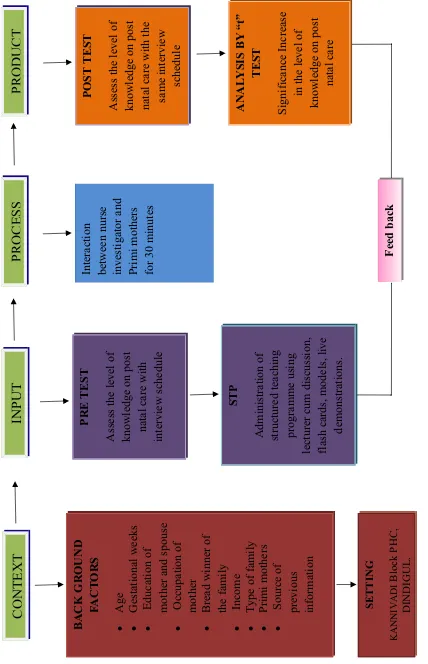
The study was aimed to assess the effectiveness of structured teaching programmes on knowledge regarding post natal care Primi mothers in Kannivadi block PHC, Dindigal. The conceptual frame work for this study was derived from the concepts of shuffle beam programme evaluation model. The model includes: context evaluation, input evaluation, Process evaluation and product evaluation.
Context evaluation
In this study context refers to selected factors of Primi mothers such as age, gestational weeks, education of mother, education of spouse, occupation, type of family, bread winner of the family, income, source of previous information of Primi mothers.
Input evaluation
In this study it refers to care givers, structured teaching programme has been taken using flash cards, models, live demonstrations among Primi mothers.
Process evaluation
Evaluates the implementing process includes the interaction between the clients and care givers. Administration of structured teaching programme for about 30 minutes.
Product evaluation
CHAPTER – III
METHODOLOGY
Methodology is the most important phase of the study. The methodology of research indicates the general pattern of organizing the procedures for gathering valid and reliable data for investigation. This chapter provides a brief description of method adopted by the investigator in this study. This includes the research approach, research design, setting of the study, population, sample, and sample size, sampling technique, criteria for sample selection, description of the tool, pilot study, data collection procedure, plan for data analysis and protection of human rights.
RESEARCH APPROACH
Quantitative research approach was used for the present study. According to Polit and Beck (2010) Quasi experimental research design refers to a design for an intervention study in which subjects are non randomly assigned to treatment condition, also called a non randomized rail, or a controlled trail without randomization. The present study is aimed at evaluate the effectiveness of structured teaching programme on knowledge regarding post natal care among Primi mothers.
RESEARCH DESIGN
The research design selected for this study was one group Pre-test Post-test design. This study is to assess the effectiveness of structured teaching programme regarding knowledge on Post natal care among Primi mothers in Kannivadi block PHC, at Dindigul District.
VARIABLES
The three categories of variables discussed in the present study were, Independent variable : Structured teaching programme Dependent variable : Primi mothers
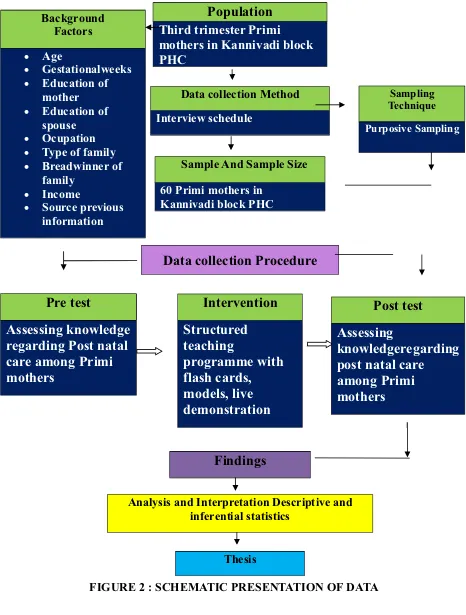
SCHEMATIC PRESENTATION OF DATA
SETTING OF THE STUDY
Population
Third trimester Primi
mothers in Kannivadi block
PHC
Background Factors
x Age
x Gestationalweeks
x Education of mother
x Education of spouse
x Ocupation
x Type of family
x Breadwinner of family
x Income
x Source previous information
Data collection Method Interview schedule
Sampling Technique Purposive Sampling
Sample And Sample Size 60 Primi mothers in
Kannivadi block PHC
Data collection Procedure
Intervention
Structured
teaching
programme with
flash cards,
models, live
demonstration
Pre-test
Assessing knowledge
regarding Post natal
care among Primi
mothers
Post-test
Assessing
knowledgeregarding
post natal care
among Primi
mothers
Findings
Analysis and Interpretation Descriptive and inferential statistics
The setting of the study was done on the basis of feasibility of conducting the study, availability of the subjects and permission from authorities. The study was conducted in the Kannivadi block PHC, Dindigul.
SAMPLE AND SAMPLE SIZE
The Samples for this study were Primi mothers with Third trimester who fulfilled the inclusion criteria. The sample size of the study was 60.
POPULATION
The population for this study was all Primi mothers with Third trimester who were attending the antenatal clinic in Kannivadi block PHC.
SAMPLING TECHINIQUE
The sampling technique adopted for the study was Purposive sampling technique. Purposive sampling is a type of Non probability sampling technique. The researcher had selected the Third trimester Primi mothers who were available for the present study based on the inclusion criteria.
CRITERIA FOR SAMPLE SELECTIONS
The samples were selected based on the following criteria Inclusion criteria,
1. Primi mothers who were in the 3rd
trimester 2. Primi mothers who visited the PHC in Kannivadi 3. Mothers who are willing to participate during the study Exclusion criteria,
1. Mothers who were in the 1st
and 2nd
trimester 2. Multi Para mothers
The protocol was developed for structured teaching programme for improving the knowledge regarding post natal care among Primi mothers.
Structured teaching programme:
Teaching on Post natal care was given with the help of flash cards, models and live demonstrations for better understanding of the Primi mothers.
Content of Structured teaching programme ¾ Definitions ¾ Post natal Diet ¾ Post natal exercise ¾ Perineal hygiene
¾ Breast feeding technique ¾ Family Planning.
RESEARCH TOOL AND TECHNIQUES
The study tool considered of two sections,
Section I: Back ground factors of Primi mothers.
Section II: Interview schedule to assess the Knowledge regarding Post natal care. SECTION –I: DEMOGRAPHIC DATA
Demographic data consists age, gestation weeks, education of mother, education of spouse, occupation of mother, type of family, bread winner of the family, income, and source of information.
SECTION-II: TO ASSESS THE KNOWLEDGE REGARDING POST NATAL CARE.
It is used to assess the knowledge of mother about Post natal care.
VALIDITY OF THE TOOL
Few modifications were made as per suggestions given by the experts. The tool was developed in English was translated into Tamil. Retranslation was done and language validity was established. RELIABILITY
The stability of an instrument refers to the instrument’s reliability to produce the same result with repeated testing. Inter-rater reliability was done. The subjects were selected by Purposive sampling. Six Persons were tested by using the interview scedule. Correlation coefficient was found r=0.78. The tool was found highly reliable.
PILOT STUDY
Pilot study was conducted at Kannivadi PHC, Dindigul, for a period of one week. Permission was obtained from the Deputy Director of health services. One group Pre-test and Post-test design was adapted to assess knowledge on Post natal care. The pilot study was conducted with 10% of the total population was selected. 6 Participants who met the eligible criteria were selected by purposive sampling technique. The purpose of the study was explained and oral consent was obtained from each patient. Study was assessed by using interview schedule. The duration of data collection for each participant was 30 minutes. No problem faced during pilot study
DATA COLLECTION PROCEDURE
Written permission was obtained from the Deputy Director of Health services, Dindigul. Primi Mothers who fulfilled the inclusion criteria were selected by using Purposive sampling method. The researcher introduced herself to the Primi mothers and developed good rapport with them for their co- operation. The researcher assured the participants for the confidentiality of their responses.
The purpose of the study was explained to every sample, so as to get their full co-operation. Adequate privacy was provided. Pre-test has been done with the help of interview schedule. A class has been taken as a Intervention with the help of power point. After that finally Post-test has been done.
In the present study the data collected were grouped and analyzed by using SPSS, version 16 software. The level of significance was 0.05 level.
The data were analyzed as follows:
¾ The data were organized in master excel sheet
¾ Back ground variables of Primi mothers were analyzed using frequency percentage distribution
¾ Mean score and “t” test analyzed data on knowledge regarding Post natal care among Primi mothers.
¾ The regression between mean difference in Post-test score in relation to the back ground factors were analyzed using linear regression.
ETHICAL CONSIDERATION
CHAPTER – IV
DATA ANALYSIS AND INTERPRETATION
Analysis and interpretation of data of this study was done by description and inferential statistics. Analysis was done by using SPSS, version 16. A probability value of less than0.05 was considered to be significant.
This chapter deals with analysis and interpretation of data collected on knowledge regarding post natal care before and after structured teaching programme among Primi mothers.
THE OBJECTIVES OF THE STUDY
¾ To assess the Pre-test and Post-test level of knowledge regarding Post natal care among Primi mothers.
¾ To determine the effectiveness of structured teaching programme on post natal care among Primi mothers.
¾ To find out the regression between the Post-test knowledge score on Post natal care with selected demographic variables such as age, gestational weeks, education of mother, education of spouse, occupation of mother, type of family, Bread winner of family, income, source of previous information. The data collected were edited, tabulated, analyzed, interpreted and findings obtained were presented in the form of tables, and diagrams under the following sections.
Section I : Data on demographic background factors of the antenatal Primi Mother’s.
Section II : Data on knowledge Pre-test and Post-test after the structured teaching programme among Primi mothers.
Section III : Data on association between the mean differences in Post-test and back ground factors among Primi mother’s.
SECTION I: DATA ON DEMOGRAPHIC BACKGROUND
TABLE – I
FREQUENCY AND PERCENTAGE DISTRIBUTION OF PRIMI MOTHERS REGARDING BACK GROUND FACTORS
N=60
S.No DIMENSION FREQUENCY PERCENTAGE
1 AGE
a) 20 – 25 years b) 26- 30 years c) > 30 years
22 28 10 36.7% 46.7% 16.7% 2 Bread winner of the family
a) Father in Law b) Husband c) Wife 11 44 5 18.3% 73.3% 8.3% 3 Education of Spouse:
a) Illiterate b) High school c) Higher secondary d) Degree 7 20 26 7 11.7% 33.3% 43.3% 11.7% 4 Income:
a) <5000 / month b) 5000 – 7000 / month c) Above 7000 /
month. 32 22 6 53.3% 36.7% 10.0%
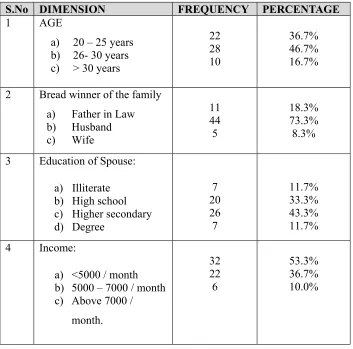
Table I Shows that frequency distribution and percentage on demographic variables among Primi mothers aged between 20 - 30 years and above. Regarding age, 22(36.7%) were between the age group of 20 - 25yrs, 28(46.7%) were between the age group of 26 - 30 yrs, and 10(16.7%) were between the age group of above 30 years.
[image:51.612.148.501.206.555.2]Regarding education of Spouse, 7(11.7%) were illiterate, 20(33.3%) were studied upto high school, 26(43.3%) were studied upto higher secondary, 7(11.7%) was degree.
Figure 2 : Frequency and percentage distribution of gestational weeks
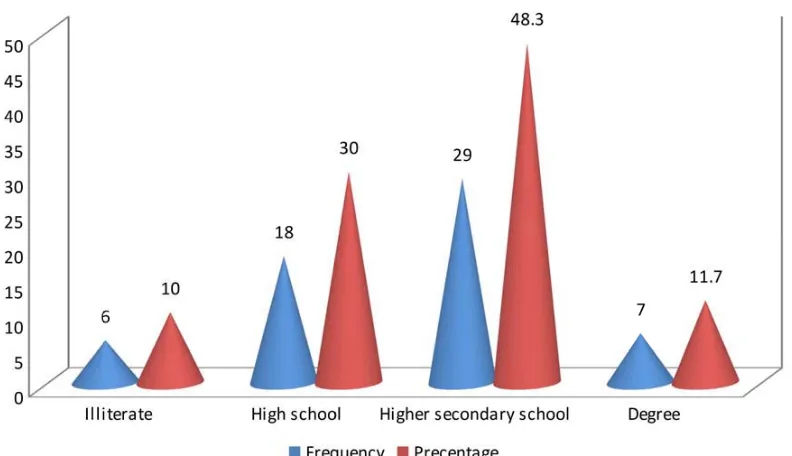
Figure 3: Frequency and percentage distribution of Mother’s education
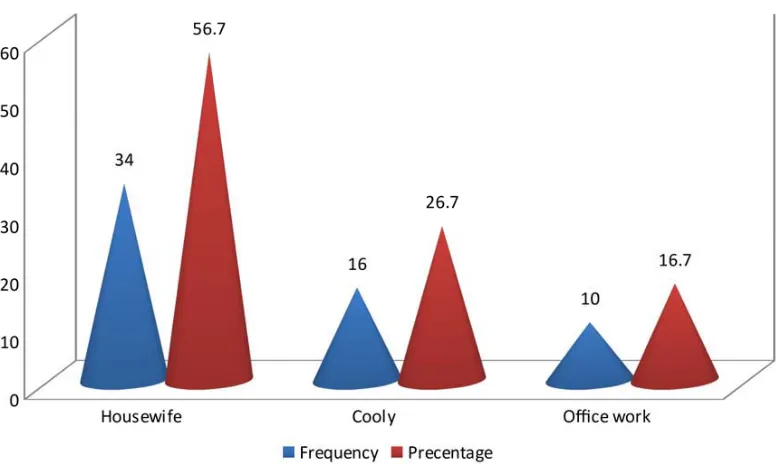
Figure 4 : Frequency and percentage distribution of occupation
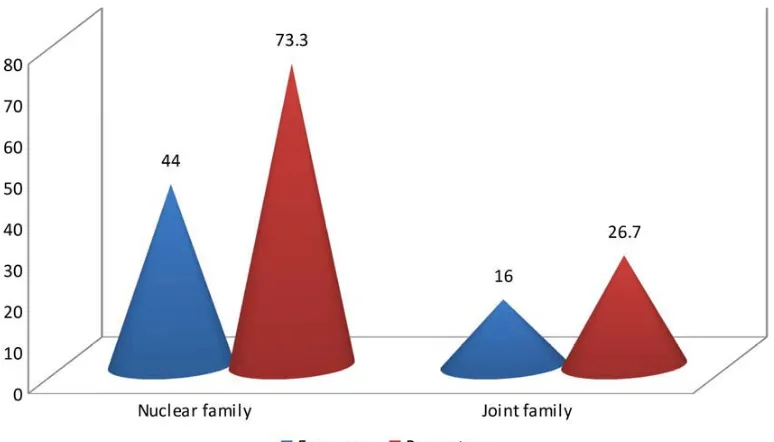
Figure 5 : Frequency and percentage distribution of Type of family
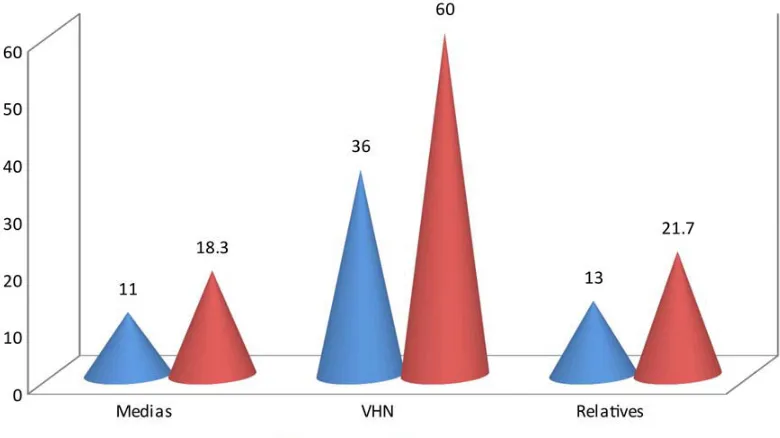
Figure 6: Frequency and percentage distribution of Source of previous information
Figure 6: Reveals the frequency and percentage distribution of Source of previous information, regarding source of previous information, 11(18.3%) were medias, 36(60.0%) were VHN, 13(21.7%) were relatives.
SECTION II: DATA ON KNOWLEDGE PRE-TEST AND
POST-TEST AFTER THE STRUCTURED TEACHING PROGRAMME
For the purpose of this study the following null hypothesis was stated.
H01: There will be no significant difference in the level of knowledge regarding post natal care between the Pre-test and Post-test score among Primi mothers.
H2: There will be no significant influence between the Post-test knowledge score on post natal care and the selected demographic variables among Primi mothers.
MEAN, SD, MEAN DIFFERENCE AND “t” VALUE ON PRE-TEST AND OVERALL POST-TEST SCORES ON KNOWLEDGE AMONG PRIMI
MOTHERS.
N=60
DIMENSIONS Mean Standard
deviation(SD) df
Table value “t”
S/NS
PRETEST 12.80 2.93
59 1.645 S POST-TEST 24.32 2.740
Table II: shows that mean, SD, mean difference and “t” value on Pre-test and over all Post-test scores on knowledge among Primi mothers.
The obtained overall Post-test score mean 24.32(SD = 2.740) was less than the Pre-test mean 12.80(SD = 2.93). The obtained mean difference was 59 and “t” value t= 23.32 (P = 0.00) was significant.
It inferred that knowledge had significantly increased after the structured teaching programme among Primi mothers. It was found to be very effective.
CARE AND DEMOGRAPHIC BACK GROUND FACTORS AMONG PRIMI MOTHERS
For the purpose of this study the following null hypothesis was stated.
H01: There will be no significant difference in the level of knowledge regarding post natal care between the Pre-test and Post-test score among Primi mothers.
H2: There will be no significant influence between the Post-test knowledge score on post natal care and the selected demographic variables among Primi mothers.
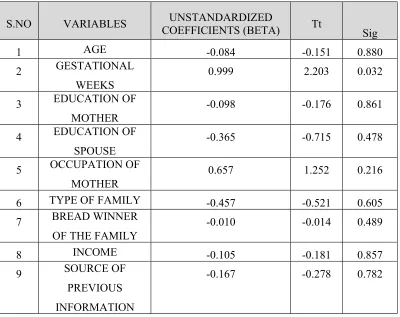
LINEAR REGRESSION REGARDING ASSOCIATION BETWEEN MEAN DIFFERENCES OF POST-TEST KNOWLEDGE SCORE ON POST NATAL
AND DEMOGRAPHIC BACK GROUND FACTORS AMONG PRIMI MOTHERS
S.NO VARIABLES UNSTANDARDIZED
COEFFICIENTS (BETA) Tt Sig
1 AGE -0.084 -0.151 0.880
2 GESTATIONAL WEEKS
0.999 2.203 0.032 3 EDUCATION OF
MOTHER
-0.098 -0.176 0.861 4 EDUCATION OF
SPOUSE
-0.365 -0.715 0.478 5 OCCUPATION OF
MOTHER
0.657 1.252 0.216 6 TYPE OF FAMILY -0.457 -0.521 0.605 7 BREAD WINNER
OF THE FAMILY
-0.010 -0.014 0.489
8 INCOME -0.105 -0.181 0.857
9 SOURCE OF PREVIOUS INFORMATION
[image:61.612.125.525.175.492.2]-0.167 -0.278 0.782
CHAPTER - V
DISCUSSION
This chapter deal with the discussion of the study with appropriate literature, statistical analysis and the findings of the study based on the study objectives.
The aim of the study was to assess the knowledge on post natal care among Primi mothers who were attending the antenatal clinic in Kannivadi block PHC at Dindigul District.
The main study was conducted from sample numbering of 60 among Primi mothers who were attending the antenatal clinic in Kannivadi PHC at Dindigul District.
The knowledge of post natal care among Primi mothers was assessed by tool.
HYPOTHESES
HI : There is a significant difference between the before and after the intervention. H2 : There is a the significant difference between the Post-test knowledge score and
the selected demographic variables among Primi mothers.
The first objective of the study is to assess the level of knowledge of post natal care among Primi mothers who were attending the antenatal clinic in Kannivadi block PHC at Dindigul District.
higher secondary school, 7(11.7%) were degree. Regarding occupation, 34(56.7%) were house wife, 16(26.7%) were Cooley, 10(16.7%) were office work. Regarding type of family, 44(73.3%) were belong to nuclear family, 16(26.7%) were belong to joint family. Regarding bread winner of the family, 11(18.3%) were father in law, 44(73.3%) were husband,5(8.3%)were wife. Regarding Income, 32(53.3%) were earning <5000 per month, 22(36.7%) were earning Rs. 5000 – 7000 per month, 6(10.0%) were earning Rs. 7000 above per month. Regarding source of previous information, 11(18.3%) were medias, 36(60.0%) were VHN, 13(21.7%) were relatives. SUPPOTIVE STUDY:
Sharma P (2013) was conducted a study to assess the knowledge of Primi mothers regarding breast engorgement Breast care is the most neglected aspect of maternity care. Breast engorgement is a common problem among postnatal mothers. Early postpartum care is essential to diagnose and treat complications. Studies have revealed that mother's awareness and knowledge regarding breast engorgement, symptoms, factors leading to breast engorgement, prevention and management is low. Therefore, an exploratory study to assess the knowledge of Primi mothers regarding breast engorgement in selected hospital of Ludhiana, Punjab was undertaken with the to assess the knowledge of Primi mothers regarding breast engorgement, to ascertain the relationship with selected socio demographic variables and to find out the deficit areas. A non-experimental, exploratory study was conducted in selected hospital of Ludhiana. The study accessible population was Primi mothers in the selected hospital of Ludhiana. 100 Primi mothers were selected by purposive sampling technique. Data was collected from postnatal mothers by questionnaire. Data was analyzed by descriptive and inferential statistics and presented through tables and figures. Findings revealed that majority of Primi mothers (52%) had average knowledge regarding breast engorgement. Mean percentage of knowledge score was highest in symptoms (64.16%) and lowest in area of factors leading to breast engorgement (42.62%). Education variable was found to be associated with knowledge of Primi mothers none of the other variables were found significantly related with the knowledge of Primi mothers.
24.32(SD = 2.740) was less than the Pre-test mean 12.80(SD = 2.93). The obtained mean difference was 59 and “t” value t= 23.32 (P = 0.00) was significant.
SUPPOTIVE STUDY:
Rajan E. (2014) was conducted a effectiveness of self instructional module on knowledge of post natal care for Primi mothers in selected hospitals, Mangalore. The study was conducted on Effectiveness of self instructional module on knowledge of post natal care for Primi mothers in selected hospitals, Mangalore. The research design was a one group Pre-test Post-test design which was a pre experimental research design. 40 mothers were selected by purposive sampling. The pretest knowledge questionnaire was administered to the mothers two days prior to self instructional module, followed by a self instructional module on post natal care. Post-test was conducted after 5 days using the same tool. The collected data were analyzed using descriptive and inferential statistics. The mean knowledge score was 14.98 whereas maximum possible score was 30. Among the 11 areas, the mean percentage knowledge score in the area of caesarean section and self care was 77.50% bladder and bowel care was 60% breast feeding was 58.40% diet was 52.50% pain manag