EFFECTIVENESS OF VIRTUAL LACTATION MANAGEMENT UPON KNOWLEDGE AND LACTATION PRACTICE AMONG PRIMI LACTATING
MOTHERS
BY
ASWATHI NAIR . J.K
A DISSERTATION SUBMITTED TO THE TAMILNADU DR.M.G.R MEDICAL UNIVERSITY, CHENNAI, IN PARTIAL FULFILMENT OF THE
REQUIREMENTS FOR THE DEGREE OF MASTER OF SCIENCE IN NURSING
EFFECTIVENESS OF VIRTUAL LACTATION MANAGEMENT UPON KNOWLEDGE AND LACTATION PRACTICE AMONG PRIMI LACTATING
MOTHERS
Approved by the Dissertation committee on : --- Research Guide : --- Dr. Latha Venkatesan
M.Sc (N)., M.Phil.(N)., Ph.D.(N)., Principal cum Professor in nursing, Apollo College of Nursing,
Chennai- 600 095
Clinical Guide : --- Prof.Nesa Sathya Satchi M.Sc (N)., Ph.D.(N)., Child health nursing,
Apollo College Chennai-600 095.
Medical Guide : --- Dr.Kalpana Bharani.,
M.B.B.S.,DCH.,MRCPCH., Pediatric Consultant,
Apollo speciality Hospitals,
A DISSERTATION SUBMITTED TO THE TAMILNADU DR.M.G.R MEDICAL UNIVERSITY, CHENNAI, IN PARTIAL FULFILMENT OF THE
REQUIREMENTS FOR THE DEGREE OF MASTER OF SCIENCE IN NURSING
APRIL 2014
DECLARATION
I hereby declare that the present dissertation entitled “Effectiveness of virtual lactation management upon knowledge and lactation practice among primi lactating mothers” is the outcome of the original research work undertaken and carried out by me under the guidance of Dr. Latha Venkatesan M.Sc (N)., M.Phil.(N), Ph.D.(N), Principal, Apollo College of Nursing, Prof. Nesa Sathya Satchi M.Sc (N)., Ph.D.(N), Apollo College of Nursing, Chennai. I also declare that the material of this has not formed in anyway, the basis for the award of any degree or diploma in this university or any other universities.
i
ACKNOWLEDGEMENT
I thank God Almighty for being with me and guiding me throughout my endeavour and showering His profuse blessings in each and every step to complete this dissertation.
I proudly express my sincere gratitude to our esteemed leader Dr.Latha Venkatesan, M.Sc (N)., M.Phil.(N)., Ph.D.(N), Principal, Apollo College of Nursing, for her relentless effort in setting higher goals for us to achieve , her excellent guidance, caring spirit, support and valuable suggestions during the course which paved the way for our overall development and the success of this work is credited to her.
I extend my earnest gratitude to Prof. Lizy Sonia, A., M.Sc (N)., Ph.D (N)., Vice-principal and Head of Medical Surgical Nursing Department, Apollo College of Nursing, for her elegant direction, encouragement and timely help.
I am thankful to Prof. Nesa Sathya Satchi, M.Sc (N)., Ph.D.(N), Paediatric Nursing Department, Apollo College of Nursing, for her support, excellent guidance and encouragement.
With special reference I thank Dr.Kalpana Bharani, M.B.B.S., DCH., MRCPCH., Consultant, Department of paediatrics, Apollo Speciality Hospitals, Vanagaram, for her elegant direction and worthful suggestions for performing the study. I owe my special thanks to Prof.Vijayalakshmi, M.Sc.(N)., Ph.D(N)., Research co-ordinator, Apollo College of nursing for her prolonged patience and continuous guidance in completing my study.
ii
for their increasing search, valuable suggestions, efficient guidance, invaluable caring spirit and profound support throughout the study.
I am thankful to the study participants, their good nature, kind heartedness and
contagious energy will always be remembered. I am indeed indebted to Dr.N. Gomathy, MD., DGO , medical superintendent , Andhra Mahila Sabha
Hospital, Chennai and Mr. Paul Francis, Nutrition Officer, Nestle group,Chennai who enthusiastically helped me to successfully complete this study.
I extend my earnest gratitude to Mr. Kannan, Universal computers, who helped me in printing. A note of thanks to the Librarians at Apollo College of Nursing and Dr. Tamil Nadu M.G.R. University, for their help in providing needed reference materials which I required.
I honestly express my sincere gratitude to my parents Mr.G.S. Unnikrishnan, and Mrs.B. Jagadambika for helping me to pursue my academic interest and supported me. I wish to extend my heartfelt thanks to my brother Mr. Harisankar J.K and all my family members who took concern and supported me.
iii SYNOPSIS
An Experimental Study to Assess the Effectiveness of Virtual Lactation Management Upon Knowledge and Lactation Practice Among Primi Lactating Mothers at Selected Hospitals, Chennai
The Objectives of the Study were
1. To assess the level of knowledge on lactation before and after virtual lactation management among control and experimental group of primi lactating mothers. 2. To assess the lactation practice before and after virtual lactation management
among control and experimental group of primi lactating mothers.
3. To determine the effectiveness of virtual lactation management upon lactation by comparing the level of knowledge and lactation practice before and after the virtual lactation management among control and experimental group of primi lactating mothers.
4. To determine the association between selected demographic variables and level of knowledge and lactation practice before and after virtual lactation management among control and experimental group of primi lactating mothers. 5. To determine the association between selected obstetrical variables and level of
knowledge and lactation practice before and after virtual lactation management among control and experimental group of primi lactating mothers.
iv
The conceptual framework for the study was developed based on the modified model of Wiedenbach’s helping art of clinical nursing theory. An experimental study of pre-test and post-test design was used. The study included 60 primi lactating mothers selected by simple random sampling. The present study was conducted at Andhra Mahila Sabha Hospital, Chennai. The variables of the study were virtual lactation management, knowledge and lactation practice.
An extensive review of literature and guidance by experts laid to the foundation of development of demographic variable proforma, obstetric variable proforma, structured interview schedule, lactation practice observational checklist and rating scale on satisfaction of virtual lactation management. The data collection tools were validated and reliability was established. After two weeks of pilot study, then data collection for main study was conducted.
The level of knowledge and lactation practice was assessed for control and experimental group of primi lactating mothers. The Virtual lactation management of seven minutes duration was provided for the experimental group. Then the level of knowledge and lactation practice was assessed again after 7 days for both the groups. The level of satisfaction on virtual lactation management among the experimental group of primi lactating mothers was assessed after one week from intervention. The data obtained was analyzed using descriptive and inferential statistics.
Major Findings of the Study were
v
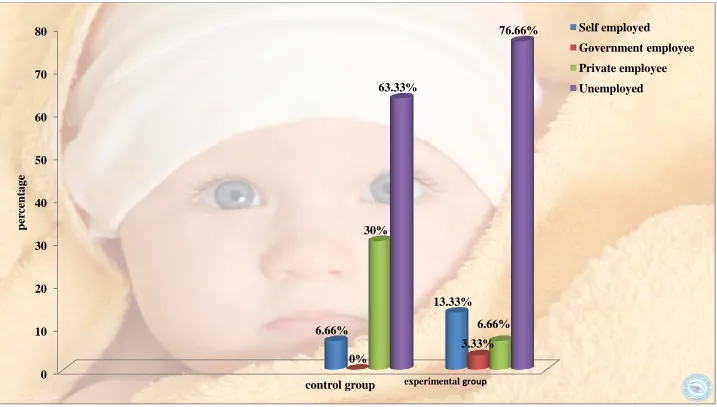
Large percentage of them were unemployed (63.33%, 76.66%) in control group and experimental group respectively.
Majority of primi lactating mothers had regular antenatal checkups (100%, 100%), none of the mothers had practiced antenatal nipple exercises (100%, 100%) and most of them did not have any complications during labour (86.66%, 93.33%). Majority of them practiced breastfeeding (93.33%, 96.66%) and most of them practiced demand feeding (36.66%, 43.33%).About more than half of the babies had an effective latch (50%, 56.66%) and good sucking (56.66%, 63.33%) in control and experimental group respectively.
Majority of the primi lactating mothers had inadequate knowledge before intervention (80%, 93.33%) in the control and experimental group respectively and all of them had adequate knowledge (100%) in experimental group after intervention.
The mean knowledge level was slightly high in the post test (M=10.8, SD=2.119) when compared to pre test (M=10.7, SD=2.246) in the control group where as the mean level of knowledge was high in the post test (M=23.3, SD=0.97) when compared to pre test (M=10.2, SD=1.81) in the experimental group.
Majority of mothers in pre test had poor practice with regard to lactation (100 %, 100%) in the control and experimental group. After the intervention the lactation practice was good in (63.33%) lactating mothers in experimental group. Hence null hypothesis H01 was rejected.
vi
Whereas in the control group there was only a minimal increase in the score of lactation practice (M=7.5, SD=1.403) during post test when compared with pre test (M=7.4, SD=1.518).
There was no significant association between age in years, educational status, type of employment and type of family with level of knowledge in experimental and control group of primi lactating mothers. Hence null hypothesis H02 is retained.
There was no association between age in years, educational status, type of employment and type of family and lactation practice in control group of primi lactating mothers but there is significant association between type of family and lactation practice in experimental group of primi lactating mothers. Hence null hypothesis H02 was partially rejected.
There was no significant association between effective latch of the baby, type of delivery, initiation of breast feeding and frequency of feeding with level of knowledge and lactation practice in control and experimental group of primi lactating mothers. Hence the null hypothesis H03 was retained.
All the participants in the experimental group were satisfied (100%) with the virtual lactation management intervention.
Recommendations
The same study can be conducted with large number of samples to generalize results.
A comparison can be made between primi and multi gravidae mothers.
The same study can be conducted in different settings.
vii
TABLE OF CONTENTS
Chapter Contents Page No
I INTRODUCTION 1-12
Background of the study 1
Need for the study 3
Statement of the study 5
Objectives of the study 5
Operational definition 6
Assumptions 7
Null Hypotheses 7
Delimitations 8
Conceptual Framework 8
Projected Outcome 13
Summary 13
Organization of the Report 13
II REVIEW OF LITERATURE 14-20
Literature Related to breastfeeding 14 Literature Related to knowledge of breastfeeding in primi paras 16 Literature Related to lactation practice 18 Literature Related to virtual lactation management 19
III RESEARCH METHODOLOGY 21-32
viii
Research Design 22
Variables of the Study 24
Research Setting 24
Population, Sample, Sampling technique 25
Sampling Criteria 26
Selection and Development of Study Instrument 26 Psychometric Properties of the Study Instrument 29
Pilot Study 29
Intervention Protocol 30
Protection of Human Rights 30
Data Collection Procedure 31
Problems Faced During Data Collection 31
Plan for Data Analysis 31
Summary 32
IV ANALYSIS AND INTERPRETATION 33-67
V DISCUSSION 68-75
VI SUMMARY, CONCLUSION, IMPLICATIONS AND
RECOMMENDATIONS
76-85
REFERENCES 86-89
ix
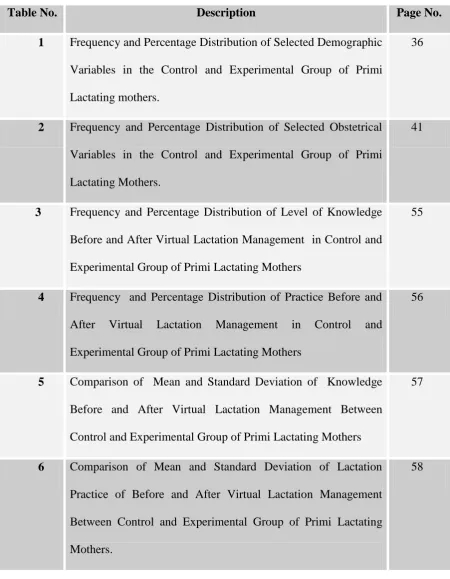
[image:12.595.94.545.113.693.2]LIST OF TABLES
Table No. Description Page No.
1 Frequency and Percentage Distribution of Selected Demographic Variables in the Control and Experimental Group of Primi Lactating mothers.
36
2 Frequency and Percentage Distribution of Selected Obstetrical Variables in the Control and Experimental Group of Primi Lactating Mothers.
41
3 Frequency and Percentage Distribution of Level of Knowledge Before and After Virtual Lactation Management in Control and Experimental Group of Primi Lactating Mothers
55
4 Frequency and Percentage Distribution of Practice Before and After Virtual Lactation Management in Control and Experimental Group of Primi Lactating Mothers
56
5 Comparison of Mean and Standard Deviation of Knowledge Before and After Virtual Lactation Management Between Control and Experimental Group of Primi Lactating Mothers
57
6 Comparison of Mean and Standard Deviation of Lactation Practice of Before and After Virtual Lactation Management Between Control and Experimental Group of Primi Lactating Mothers.
x
7 Association Between the Selected Demographic Variables and the Level of Knowledge Before and After Virtual Lactation Management in the Control Group of Primi Lactating Mothers.
59
8 Association Between the Selected Demographic Variables and the Level of Knowledge Before and After Virtual Lactation Management in the Experimental Group of Primi Lactating Mothers
60
9 Association Between the Selected Demographic Variables and Practice Before and After Virtual Lactation Management in the Control Group of Primi Lactating Mothers Mothers.
61
10 Association Between the Selected Demographic Variables and Practice Before and After Virtual Lactation Management in the Experimental Group of Primi Lactating Mothers.
62
11 Association Between the Selected Obstetric Variables and the Level of Knowledge Before and After Virtual Lactation Management in the Control Group of Primi Lactating Mothers.
63
12 Association Between the Selected Obstetric Variables and the Level of Knowledge Before and After Virtual Lactation Management in the Experimental Group of Primi Lactating Mothers.
64
13 Association Between the Selected Obstetric Variables and Lactation Practice Before and After Virtual Lactation Management in the Control Group of Primi Lactating Mothers
xi
14 Association Between the Selected Obstetric Variables and Lactation Practice Before and After Virtual Lactation Management in the Experimental Group of Primi Lactating Mothers
66
15 Frequency and Percentage Distribution of Level of Satisfaction Regarding Virtual Management Among Experimental Group of Primi Lactating Mothers.
xii
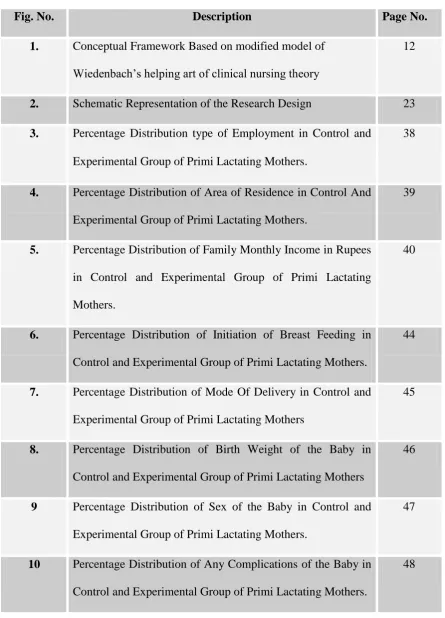
[image:15.595.93.539.127.746.2]LIST OF FIGURES
Fig. No. Description Page No.
1. Conceptual Framework Based on modified model of Wiedenbach’s helping art of clinical nursing theory
12
2. Schematic Representation of the Research Design 23 3. Percentage Distribution type of Employment in Control and
Experimental Group of Primi Lactating Mothers.
38
4. Percentage Distribution of Area of Residence in Control And Experimental Group of Primi Lactating Mothers.
39
5. Percentage Distribution of Family Monthly Income in Rupees in Control and Experimental Group of Primi Lactating Mothers.
40
6. Percentage Distribution of Initiation of Breast Feeding in Control and Experimental Group of Primi Lactating Mothers.
44
7. Percentage Distribution of Mode Of Delivery in Control and Experimental Group of Primi Lactating Mothers
45
8. Percentage Distribution of Birth Weight of the Baby in Control and Experimental Group of Primi Lactating Mothers
46
9 Percentage Distribution of Sex of the Baby in Control and Experimental Group of Primi Lactating Mothers.
47
10 Percentage Distribution of Any Complications of the Baby in Control and Experimental Group of Primi Lactating Mothers.
xiii
11 Percentage Distribution of Breast Condition of the Mother in Control and Experimental Group of Primi Lactating Mothers.
49
12 Percentage Distribution of Frequency of Feeding in Control and Experimental Group of Primi Lactating Mothers.
50
13 Percentage Distribution of Type of Feeding in Control and Experimental Group of Primi Lactating Mothers
51
14 Percentage Distribution of Effective Latch of the Baby in Control and Experimental Group of Primi Lactating Mothers
52
15 Percentage Distribution of Sucking Behaviour of the Baby in Control and Experimental Group of Primi Lactating Mothers
53
16 Percentage Distribution of Satiety Behaviour of the Baby in Control and Experimental Group of Primi Lactating Mothers
xiv
LIST OF APPENDICES
Appendix Title Page No.
I Letter seeking permission to conduct study xv II Letter permitting to conduct the study xvi
III Ethics committee letter xvii
IV Request For Content Validity xix
V List Of Experts For Content Validity xx
VI Content Validity Certificate xxii
VII Research Participant Consent Form xxiii
VIII Certificate for English Editing xxv
IX Certificate for Tamil Editing xxvi
X Demographic Variables Proforma xxvii
XI Obstetric Variables Proforma xxxi
XII Structured Interview Schedule xl
XIII Structured Observational Checklist lv
XIV Rating Scale on Satisfaction of Virtual lactation management lviii XV Tamil script for virtual lactation management lxii
XVI Plagiarism Originality Report lxvii
XVII Data Code Sheet lxviii
XVIII Master Code Sheet lxx
1
CHAPTER I
INTRODUCTION
“The new baby has only three demands they are warmth in the hands of mothers,
food from her breast and security in the knowledge of her presence, the breast feeding
satisfies all the three”
Grandly Dick Read Background of the Study
Every baby deserves breast milk and every mother deserves an empowering breastfeeding experience. It is an instinctual and natural act, but it is also an art that is learned day by day. The reality is that almost all women can breastfeed, have enough milk for their babies and learn how to overcome problems both large and small. It is almost always simply a matter of practical knowledge and not a question of good luck.
Lactation benefits both the mother and the baby. For the mother this helps to keep her away from many life threatening diseases like cancer. On the other hand it is said to be first immunization for the baby and prevents the baby from many childhood diseases and obesity. As a whole it helps in the optimal growth and development of the baby.
2
Breast milk is thought to be the best form of nutrition for neonates and infants. Hence being nurses, its our responsibility to provide health teaching and training on lactation to help mothers and babies to achieve this goal.
In recognition of the immense importance of breast feeding, the Baby Friendly Hospital Initiative (BFHI) was launched by UNICEF/WHO in 1992. Lack of breast feeding practice– especially exclusive breast feeding during first 6 months of life is important as it reduces the risk factors for the infant mortality and the morbidity rate. WHO estimates that 1.5 million of infants life can be saved each year through increased breast feeding.
Breast feeding is the most important thing for every mother. It is the unique experience to be cherished. Sometimes certain simple problems faced by the mothers results in stoppage of the breast feeding or started giving artificial milk or commercial infant formula feeds to the baby. Problems may be like the flat nipples, inverted nipples, breast engorgement, swelling, sore nipples or not enough milk. Few simple techniques can easily resolve this problems like proper positions, latching up and burping up the baby.
Most of the mothers don't know the correct technique of breast feeding especially the primi mothers. This leads to many unnoticed and biased problems in babies and lactating mothers. These include improper nutrition to baby, altered growth, Oral thrush, low secretion of milk, inadequate feeds, nipple problems etc.
breast-3
feeding. Before the baby is born, attending classes, reading books, and watching videos that demonstrate breast-feeding techniques will help the mothers in promoting breast feeding practices.
The foundation for breast-feeding is established in the first few weeks after delivery. Proper techniques are crucial for successful breast-feeding. Although some aspects of breast-feeding technique comes naturally, learning new skills also is important.5Before the baby is born, attending classes, reading books, and watching videos that demonstrate breast-feeding techniques will help the mothers in promoting breast feeding practices.
Need for the study
Even though basic aspect of health is the foundation for many technological advances in the field of health, many forget about the importance of basics and they try seeking the new innovations in technology to maintain their health. Alike even some mothers are very much interested to feed their newborns with other formula feds rather than giving breast milk. This clearly helps us to depict their lack of knowledge about the importance of breast milk for the baby. Even some fail to practice breast feeding due the lack of knowledge regarding breast feeding.
4
Literally hundreds of studies regarding breast feeding have been conducted. Many studies shown a positive results in the breastfeeding practices among rural mothers when compared to urban community. But a hospital based study conducted in Libya showed that parity had a greater significance in lactation practice. In that study practice of primi mothers was poor when compared to multiparous women.
In a cross sectional study conducted in Nepal, in 2007 regarding the infant feeding practices shown that three quarters of all mothers reported that they did not receive any information on breastfeeding during the antenatal visit. From these studies it clearly understands that most of the mothers had lack of knowledge on breastfeeding practices.
According to Centres for Disease Control and Prevention (CDC), a nationwide survey conducted in 2008, of the infants who were 19-35 months of age, 74% were breastfed at birth, 43% were breastfed at 6 months, 21% were breastfed at 12 months, 32% were exclusively breastfed at 3 months, and 12% were exclusively breastfed at 6 months.
5
Statement of the problem
An Experimental Study to Assess the Effectiveness of Virtual Lactation Management Upon Knowledge and Lactation Practice Among Primi Lactating Mothers at Selected Hospitals Chennai.
Objectives of the study
1. To assess the level of knowledge on lactation before and after Virtual Lactation Management among Control and Experimental group of primi lactating mothers. 2. To assess the lactation practice before and after Virtual Lactation Management
among Control and Experimental group of primi lactating mothers.
3. To determine the effectiveness of Virtual Lactation Management upon lactation by comparing the level of knowledge and lactation practice before and after the Virtual Lactation Management among Control and Experimental group of primi lactating mothers.
4. To determine the association between selected demographic variables and level of knowledge and lactation practice before and after Virtual Lactation Management among Control and Experimental group of primi lactating mothers. 5. To determine the association between selected obstetrical variables and level of knowledge and lactation practice before and after Virtual Lactation Management among Control and Experimental group of primi lactating mothers.
6
Operational definitions
Effectiveness
In this study the effectiveness refers to the outcome of Virtual Lactation Management programme as measured in terms of knowledge and lactation practice before and after the Virtual Lactation Management among primi lactating mothers using structured interview schedule and observational checklist respectively, developed by the researcher.
Virtual
In this study the term virtual refers to the moving animated picture which is prepared by the researcher with a time duration of 7minutes. This depicts the process of lactation, importance of lactation, initiation and maintenance of lactation, factors affecting lactation, lactation techniques, expression and storage of breast milk and difficulties during lactation. This is administered to each primi lactating mothers in the Experimental group individually.
Lactation
In this study it refers to the production, secretion, maintenance of breast milk and providing this milk to a newborn or infant either from mother‟s breast or as expressed breast milk.
Knowledge
7 Practice
In this study it refers to the skill of performing lactation by the primi lactating mothers before and after the Virtual Lactation Management as measured by using a checklist, developed by the researcher.
Primi mothers
In this study it refers to a women who has a live baby delivered for the first time and is lactating irrespective of abortion.
Assumptions The study assumes that:
Babies who are breastfed generally are healthier and achieve optimal growth and development.
To an extent lactation is a natural contraceptive method.
Health teaching is essential for the primi mothers because some mothers have never even seen an infant suckling a mother‟s breast.
Virtual Lactation Management is an accepted method of teaching.
Null Hypothesis
H01: There will be no significant difference between pre test and post test level of knowledge and practice of lactation among the primi lactating mothers
8
H03: There will be no significant association between the selected obstetric variables and the level of knowledge and practice of lactation before and after the Virtual Lactation Management among the primi lactating mothers.
Delimitation The study is limited to :
those women who are willing to participate in the study
primi lactating mothers
those who are available at the time of data collection
primi mothers who are with their babies
women who can read and understand English or Tamil
Conceptual Framework
Conceptual framework is interrelated concepts or abstractions that are assembled together in some rational schemes by virtue of their relevance to a common theme (Polit).
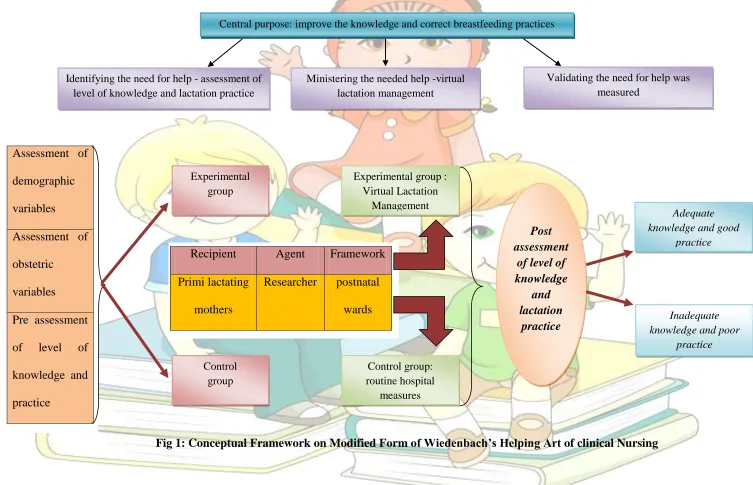
The conceptual framework set up for the study is the modified model of Wiedenbach‟s helping art of clinical nursing theory. Ernestine Wiedenbach proposed a prescriptive theory of nursing which is described as a conceiving of desired situation of the ways to attain it. Prescriptive theories direct action towards an explicit goal. It consists of three factors:
9
A nurse develops a prescription based on a purpose and implements it according to the realities of the situation.
Central purpose
In the model central purpose refers to what the nurse wants to accomplish. It is the overall goal towards which a nurse strives; it transcends the immediate intent of the assignment or task by specifically directing activities towards the patient‟s good. The central purpose of this study is to improve knowledge of breastfeeding and lactation practice. The researcher plans the prescription that will fulfil the central purpose by identifying the goal. Thus the researcher selected the method, Virtual Lactation Management as it is effective and without side effects.
Prescription
Refers to the plan of care for the patient. It specifies the nature of the action that will fulfil the nurse‟s central purpose and acts as the rationale for the action.
Realities
10 The realities identified in the study are:
Agent - Researcher.
Recipient – Primi lactating mothers.
Goal - To improve knowledge on breastfeeding and lactation practice. Means – Virtual Lactation Management.
Frame work – postnatal wards
Wiedenbach views nursing practice as an art based on goal directed care. Her vision of nursing practice closely parallels the assessment, implementation and evaluation steps of the nursing process. She identifies seven levels of awareness/sensation, perception, assumption, realization, insight, design and decision.
According to Wiedenbach nursing practice consists of three steps:
Identifying the patient‟s need for help
Ministering the needed help
Validating that the need for help was met
Identifying the patient’s need for help
11 Ministering the needed help
In this study the nurse researcher after getting consent from the selected primi lactating mothers, implemented the intervention of Virtual Lactation Management to Experimental group and to the Control group no intervention was provided.
Validating that the need for help was met
In this study the nurse researcher validating whether the needed help was met or not by assessing the effectiveness of Virtual Lactation Management through observation of mothers lactation practice.
12
Post assessment
of level of knowledge
and lactation
[image:29.842.47.800.52.537.2]practice
Fig 1: Conceptual Framework on Modified Form of Wiedenbach’s Helping Art of clinical Nursing Central purpose: improve the knowledge and correct breastfeeding practices
Validating the need for help was measured
Ministering the needed help -virtual lactation management Identifying the need for help - assessment of
level of knowledge and lactation practice
Assessment of demographic variables Assessment of obstetric
variables Pre assessment of level of knowledge and practice
Experimental group
Control group
Experimental group : Virtual Lactation
Management
Control group: routine hospital
measures Recipient Agent Framework
Primi lactating mothers
Researcher postnatal wards
Adequate knowledge and good
practice
Inadequate knowledge and poor
practice
13
Projected outcome
This study will be useful for the primi mothers to improve the knowledge and improve breast feeding practices.
Summary
This chapter has dealt with background of the study, need for the study, statement of the problem, objectives of the study, operational definitions, assumptions, null hypotheses, delimitations and conceptual framework.
Organization of report
Further aspects of the study are presented in the following chapters Chapter II: Review of literature
Chapter III: Research methodology which includes research approach , research design , research setting , population , sampling , sampling criteria and development of analysis and research instrument
Chapter IV: Analysis and interpretation of data is presented in terms of descriptive and inferential statistics
Chapter V: Discussion
14 CHAPTER II
REVIEW OF LITERATURE
A literature involves the systematic identification, location, scrutiny and summary of written materials that contain information on the research problem (Polit and Hungler 2007).
Review of Literature
“Conducting a literature review is a little bit doing a full-fledged study”. The review of literature has two major goals: (1) To provide readers with an overview of existing evidence on the problem being addressed and (2) To develop an argument that demonstrates the need for the new study. According to nursing research by Polit (2008), „Review of literature is a written summary of the state of evidence on a research problem.‟
The review of literature in this chapter is presented under the following headings: 1. Literature related to breastfeeding
2. Literature related to knowledge of breastfeeding in primi paras 3. Literature related to lactation practice
4. Literature related to Virtual Lactation Management
Literature related to breastfeeding
15
study results showed that exclusively breast fed infants had a significantly lower incidence of respiratory tract infection, otitis media, diarrhoea and dehydration. So all the mothers encouraged to breast feed their babies upto six months to reduce infant mortality and morbidity rates.
Bhavani (2007) conducted a worldwide survey and showed that every year, there are about 120million infants born, of which majority (85%) are in the developing countries. Before they reach the age of 1 year (10%) of these children die and another (4%) die before they are 5 years old. The survey resulted that in India (75%) of hospital admissions of infants and children is due to malnutrition (40%) diarrheal disease (15%) and infectious diseases (30%) this can be prevented from meeting the nutritional needs of the infants through breastfeeding.
In Mount Sinai Hospital, Toronto, Canada Shah (2007) conducted a study with the aim of 1) comparing breastfeeding with Control (placebo, no treatment ,sucrose , glucose , pacifiers or positioning) 2) comparing breast milk with Control for procedural pain in neonates. They concluded that breast feeding group had significantly less increase in heart rate , reduced proportion of crying time and reduced duration of crying compared to the swaddled or pacifier group. Neonates in the supplemental breast milk group had significant differences in the duration of crying time and SPO2 changes compared to the placebo group.
16
consequences of excessive weight gain, yet they found it difficult to lose weight due to individual constrains such as lack of time , cultural beliefs about diet while breastfeeding and community constraints including lack of child care and lack of community programs for mothers.
Wright et al (2006) investigates the factors relate most strongly to breast feeding duration in order to support breastfeeding mothers. He found that only (24%) infants were still breast feeding at 6weeks, although (15%) continued beyond 4 months, early cessation seems to frequent feeding and rapid growth as well as continuing failure to eradicate health practices that determine breast feeding. Those infants not receiving breast milk suffered increased morbidity, but the apparent association between breast feeding duration and growth reflects reverse cessation.
In 2005, Sachs et al. revealed infant weight monitoring, establishing breast feeding and the promotion of continued exclusive breast feeding are important activities of health professionals. Research evidence for choosing appropriate interventions to improve the growth of breast feeding babies is reviewed. This review gathers together a wide range of literature, and identifies infants whose weight may be of concern, and who may need appropriate intervention, and support continued breastfeeding.
Literature related to knowledge of breastfeeding in primi paras
17
concludes that there is a necessity of systematic and planned education for women. The system of lactation counselling should be an integral part of post-labour care in obstetrician clinics.
In July 2009 Ekambaram Maheswari conducted a descriptive study to explore the practices, knowledge and attitude towards breastfeeding among postnatal mothers and factors that determine them. This study resulted that there is still a need for programmes, which support and encourage breast-feeding particularly at a primary care level, focusing more on younger, less well-educated women and those from lower socioeconomic class.
Chang (2008) conducted a quasi Experimental study in Veterans General Hospital, Taiwan to assess the effectiveness of educational programme on knowledge and attitude of breastfeeding, satisfaction and problems of breastfeeding, and exclusive breastfeeding rate. The study revealed that prenatal educational programme on breastfeeding will help the mothers to increase the knowledge, attitude about breastfeeding and satisfaction toward breastfeeding not only during the intervention but also during the postnatal period.
18 Literature related to lactation practice
A clinical trial to assess the effectiveness of postpartum position and attachment education to increase the breast feeding rates, was performed in a public hospital in Adelaide, south Australia. 160 primi mothers were participated in this study. The study results showed that (90%) of the study group were continued breastfeeding in the Control group (60%) of them were stopped breast feeding due to nipple pain and nipple trauma; (25%) of them reported lactation failure and remaining had introduced bottle feeding within 6 weeks. The researcher concluded that postpartum position and attachment education increases breast feeding rates (Henderson, et al .2011)
Ram (2010), conducted a cross sectional study to assess the correct position, attachment and effective suckling in the breastfeeding of infants as practiced by mothers .The study concluded that primipara mothers were more in need of support and guidance for appropriate breastfeeding techniques. It is recommended that each mother should be observed for mother's and infant's positioning and attachment at the onset of breastfeeding and if needed subsequent counselling should be given on correct positioning and attachment.
19
To identify factors that are associated with low incidence of breast feeding , a study was conducted in 2008 in a maternity unit, West Bengal. The study results showed that (95%) of the mothers reported breastfeeding cessation before 6 months. The researcher concluded that by promoting effective antenatal teaching regarding breastfeeding technique – latch on, duration and breast care will help to improve breastfeeding in the first 6 months.
A cross sectional study conducted in 2006 by Madhu with the primary objective to describe the breastfeeding and newborn care practices in rural areas and the secondary objective to describe the factors affecting the initiation and duration of breastfeeding. The findings was ((97%) of the mothers initiated breastfeeding, (19%)
used pre lacteal feeds, (90%) had hospital deliveries and (10%) had home deliveries, and (50%) used a house knife to cut the umbilical cord among home deliveries. This study emphasizes the need for breastfeeding intervention programs especially for the mother during antenatal and postnatal check-ups and practices like discarding the colostrum and early/late weaning are still widely prevalent and need to be addressed.
In 2005, Gunasekaran Dhandapany, conducted a descriptive study in Pondicherry upon antenatal counselling on breastfeeding and postnatal lactation support. The study awareness related to breastfeeding among mothers in the "counselled" group was better than those in the "not counselled" group.
Literature related to Virtual Lactation Management
20
feature, aggravated by a dearth of professional education that uses a biopsychosocial approach. This paper describes how using women's video narratives of their lived experience of breastfeeding within higher education impacted positively on the attitudes of a group of midwives in relation to supporting breastfeeding women they concluded that. 'Listening and learning from real women's experiences' was central to learning, and was pivotal to attitudinal change, motivating an intense need to improve practice.
Summary
21
CHAPTER III
RESEARCH METHODOLOGY
This methodology of the research study is defined as the way the data are gathered in order to answer the question and to analyze the research problem. It enables the researcher to project a blueprint of the research undertaken. The research methodology involves a systemic procedure in which a researcher had a start from the initial identification of the problem of its final conclusion (Polit and Beck, 2008).
The present study was conducted to assess the effectiveness of Virtual Lactation Management upon knowledge and lactation practice. This chapter deals with a brief discussion of different steps undertaken by the researcher for the study. It involves research setting, population, sample and sampling technique, selection of tool, content validity, reliability, pilot study, data collection procedure and plan for data analysis.
Research Approach
Research approach is the most significant part of any research. The appropriate choice of the research approach depends on the purpose of the research study which was undertaken.
22
literatures the researcher found that the true Experimental approach was seemed to be the most appropriate approach for the study.
Research Design
The research design is the plan, structure and strategy of investigations answering the research question. It is the overall blue print to the researchers to select and carry out the study.
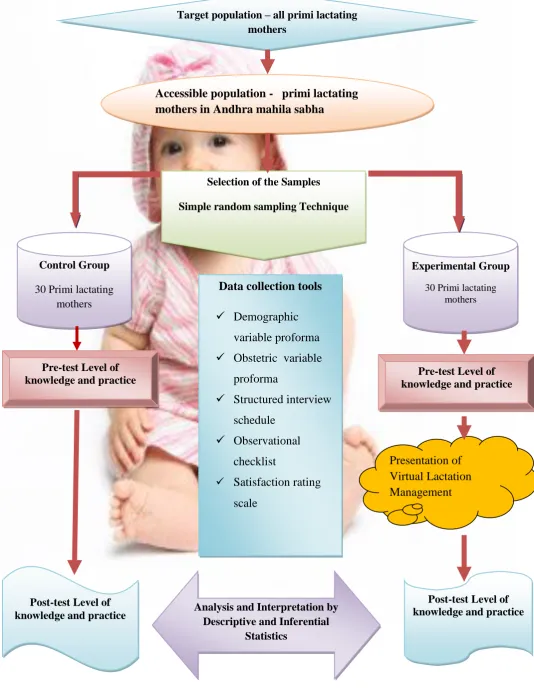
The research design used in this study was pre test – post test design. R O1 X O2
R O1 - O2 R – randomization
O1- assessment before the administration of Virtual Lactation Management X – administration of Virtual Lactation Management
23
Presentation of Virtual Lactation Management
Target population – all primi lactating mothers
(Andhra mahila Sabha)
Selection of the Samples
Simple random sampling Technique
Control Group
30 Primi lactating mothers
Experimental Group
30 Primi lactating mothers
Pre-test Level of knowledge and practice
Post-test Level of
knowledge and practice Analysis and Interpretation by Descriptive and Inferential
Statistics
Post-test Level of knowledge and practice
Pre-test Level of knowledge and practice
Accessible population - primi lactating mothers in Andhra mahila sabha
Data collection tools
Demographic variable proforma
Obstetric variable proforma
Structured interview schedule
Observational checklist
[image:40.595.31.566.43.733.2] Satisfaction rating scale
Fig.2 Schematic Representation of Research Design
24 Variables
Variable is an attribute that varies , that is taken on different values (Polit , 2010) Independent variable
The variable that is believed to cause or influence the dependent variable is called independent variable. In this study Virtual Lactation Management is the independent variable. The Virtual Lactation Management provided to the primi mothers after the pre test to improve their knowledge and practice on breast feeding.
Dependent variable
The variable hypothesised to depend on or be influenced by independent variable is the dependent variable. In this study knowledge and lactation practice is the dependent variable.
Extraneous variables
A variable that confounds the relationship between the independent and dependent variables and that needs to be Controlled either in the research design or through statistical procedures is the extraneous variables. Demographic variables and obstetric variables were extraneous variables in this study.
Research Setting
25
and other diagnostic facilities like ultrasonography. They also provide immunization and conduct teaching programmes for the staffs and the patients and do referral to government agencies indeed.
Population
The entire set of individuals or objects having same or common characteristics (Polit and Beck, 2010).
The target population is the entire population in which a researcher is interested and to which he or she would like to generalize the study results. In this study the target population comprises of entire primi lactating mothers.
The accessible population is the aggregate of cases that confirm to designated criteria and that are accessible as subjects for a study. In this study the accessible population comprises of all primi lactating mothers satisfying the inclusion criteria and to whom the study findings will be generalized.
Sample
26
Sampling technique
Sampling is the process of selecting a portion of the population to represent the entire population so that inferences about the population can be made (Polit and Beck 2010). Simple random sampling was used in this study for the women who satisfy the inclusion criteria where the odd number primi lactating mothers were assigned to Control group and the even number women primi lactating mothers were assigned to the Experimental group
Inclusion criteria
Those women who are willing to participate in the study
Primi lactating mothers
Those who are available at the time of data collection
Primi mothers who are with their babies
Women who can read and understand English or Tamil Exclusion criteria
Women who are not willing to participate
Multi parous women
Primi women with still birth or neonatal death.
Babies with cleft lip or palate.
Selection and development of study instruments
27
variable, obstetric variable, structured interview schedule, observational checklist, satisfaction scale.
Demographic variable proforma of primi lactating mothers
The demographic variable proforma consists of age, religion , educational status , type of family , area of residence , type of employment and monthly income.
Obstetric variable Proforma of primi lactating mothers
The obstetric variable proforma consists of antenatal checkups, antenatal nipple exercises, medical disorders during pregnancy, gestational age of the newborn at birth , mode of delivery, birth weight of the baby, sex of the baby, any complications during labour, initiation of breast feeding after delivery, breast condition of the mother, frequency of feeding, effective latch of the baby, sucking behaviour of the baby, satiety behaviour of the baby.
Structured interview schedule to assess knowledge
The structured interview schedule was used to assess the level of knowledge of primi lactating mothers before and after Virtual Lactation Management which was collected by the researcher through interview schedule. The scoring was given based on observation by investigator during the procedure.
Scoring was classified as follows:
Percentage Level of knowledge <50% Inadequate Knowledge
28
Observational checklist to assess lactation practice
The observational checklist was used to assess the lactation practice of primi lactating mothers before and after Virtual Lactation Management which was collected by the researcher through observation. The scoring was given based on observation by investigator during the procedure.
The checklist was classified as follows
Scoring Percentage(%) Lactation Practice 0-8 0-33 poor
9-6 34-66 average 17-24 67-100 good
Rating scale on satisfaction of Virtual Lactation Management
This scale was designed by the researcher to assess the satisfaction level of the participants regarding the Virtual Lactation Management.
The satisfaction score was classified as follows:
Score Percentage (%) Interpretation
1 – 10 ≤25 Highly dissatisfied
11 – 20 26 – 50 Dissatisfied
21 – 30 51 – 75 Satisfied
29
Psychometric Properties
Validity of the instruments
Validity is the degree to which an instrument measures what it is intended to measure ( Polit, 2010).
Content validity of the tool, was obtained from 7 experts in the field of paediatrics. Five of them were nursing personnel and two were paediatric specialists. The suggestions given by the validators regarding the structured interview schedule and checklist was made in the final preparation of the tool.
Reliability of the instruments
Reliability is the degree of consistence or dependability with which an instrument measures an attribute (Polit 2007). The reliability was found using Pearsons correlation formula.
Structured interview schedule - 0.9 (test – retest method) Observational checklist - 0.9 (test – retest method) Rating scale - 0.9 (test – retest method)
Pilot study
Pilot study is a small scale version or trial run done in preparation for a major study (Polit, 2004). The purpose of the pilot study was to find out the feasibility and practicability of study design.
30
structured interview schedule and observational checklist respectively for both the Control and Experimental group before therapy. Virtual Lactation Management was provided for 7 minutes for the participants of Experimental group. Again the knowledge and lactation practice were assessed for both the groups after 7 days. The level of satisfaction on Virtual Lactation Management was assessed from the Experimental group after 7 days of Virtual Lactation Management. After the pilot study, it was found to be feasible and effective and the study instruments were found to be appropriate.
Intervention protocol
The primi lactating mothers were made to sit comfortable and informed verbal consent was taken to conduct the study. Then Virtual Lactation Management which contains the process of lactation , importance of lactation , initiation and maintenance of lactation , factors affecting lactation , lactation techniques , expression and storage of breast milk and difficulties during lactation which was administered to each primi lactating mothers in the Experimental group individually for a duration of 7 minutes and 5-10mts were allotted for discussion .
Protection of Human Rights
31
Data collection procedure
Data collection is gathering information about something which the researcher has chosen to explore or investigate (Crookes and Davies, 1998).
.
The participants were selected using simple random sampling among which 30 primi mothers were assigned to the Control group and 30 primi mothers to the Experimental group and the data was collected from the participants through interview, observation and through medical records. The level of knowledge was assessed by the structured interview schedule, lactation practice was assessed by observational checklist before each intervention for both Control and Experimental group of primi lactating mothers.
Virtual Lactation Management was provided for 7 minutes for Experimental group of primi lactating mothers. The level of knowledge and lactation practice were assessed again after 7 days of intervention for both groups with the same tools. The level of satisfaction on Virtual Lactation Management was assessed in the Experimental group of primi lactating mothers using rating scale developed by the researcher.
Problems Faced During Data Collection
Some primi lactating mothers were not willing to participate in the study.
Plan for Data Analysis
Data analysis is the systematic organization, synthesis of research data and testing of hypothesis using those data (Polit and Beck, 2010).
32
Analysis were carried out using descriptive statistics like frequency distribution, percentage, mean, standard deviation and inferential statistics like independent „t‟ test. The association between the demographic variables, obstetric variables and dependent variables were analyzed with the help of chi-square test.
Summary
33
CHAPTER IV
ANALYSIS AND INTERPRETATION
The analysis is defined as the method of organizing data in such a way that the research questions can be answered. Interpretation is the process of the results and of examining the simplification of the findings with in a broader context (Polit and Hungler 2010).
This chapter deals with the analysis and interpretation including both descriptive and inferential statistics. Statistics is the field of study concerned with techniques or methods of collection of data, classification, summarization, interpretation, drawing inferences, testing of hypothesis, making recommendations, etc (Mahajan, 2004).
The data was analysed according to the objectives and hypothesis of the study. Analysis of the study was compiled after all the data was transferred to the master coding sheet. The investigator used descriptive and inferential statistics for analysis. The data were analysed, tabulated and interpreted using appropriate descriptive and inferential statistics.
Organization of the findings
The findings of the study was organized and presented under the following headings
Frequency and percentage distribution of demographic variables in Control and Experimental group of primi lactating mothers.
34
Comparison of mean and standard deviation of knowledge and lactation practice before and after Virtual Lactation Management between Control and Experimental group of primi lactating mothers.
Comparison of mean and standard deviation of lactation practice before and after Virtual Lactation Management between Control and Experimental group of primi lactating mothers.
Association between the selected demographic variables and the level of knowledge before and after Virtual Lactation Management in Control group of primi lactating mothers.
Association between the selected demographic variables and the level of knowledge before and after Virtual Lactation Management in Experimental group of primi lactating mothers.
Association between the selected demographic variables and lactation practice before and after Virtual Lactation Management in Control group of primi lactating mothers.
Association between the selected demographic variables and and lactation practice of before and after Virtual Lactation Management in Experimental group of primi lactating mothers
Association between the selected obstetric variables and the level of knowledge before and after Virtual Lactation Management in Control group of primi lactating mothers.
35
Association between the selected obstetric variables and lactation practice before and after Virtual Lactation Management in Control group of primi lactating mothers.
Association between the selected obstetric variables and and lactation practice before and after Virtual Lactation Management in Experimental group of primi lactating mothers
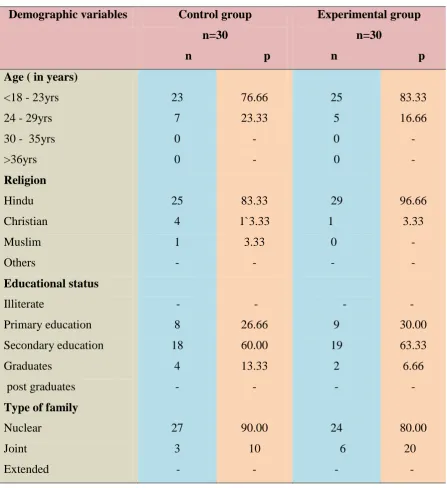
36 Table.1
Frequency and percentage distribution of demographic variables in Control and Experimental group of Primi Lactating Mothers.
Demographic variables Control group n=30
n p
Experimental group n=30
n p Age ( in years)
<18 - 23yrs 24 - 29yrs 30 - 35yrs >36yrs Religion Hindu Christian Muslim Others Educational status Illiterate Primary education Secondary education Graduates post graduates Type of family Nuclear Joint Extended 23 7 0 0 25 4 1 - - 8 18 4 - 27 3 - 76.66 23.33 - - 83.33 1`3.33 3.33 - - 26.66 60.00 13.33 - 90.00 10 - 25 5 0 0 29 1 0 - - 9 19 2 - 24 6 - 83.33 16.66 - - 96.66 3.33 - - - 30.00 63.33 6.66 - 80.00 20 -
37
(100%,100%). Large percentage of them are unemployed (63.33%, 76.66%) in Control group and Experimental group respectively.
Fig.3. Percentage distribution type of employment in Control and Experimental group of primi lactating mothers. Majority of primi lactating mothers are unemployed (63.33%, 76.66%) in control and experimental group respectively.
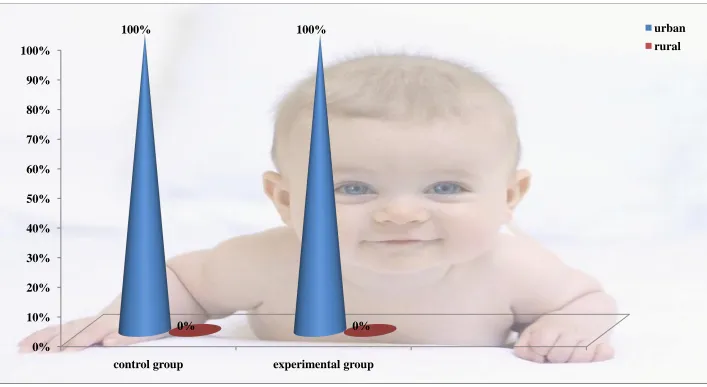
Fig 4.Percentage distribution of area of residence in Control and Experimental group of primi lactating mothers. Majority of primi lactating mothers are from urban area (100%,100%) in control and Experimental group respectively.
38
Fig 3.Percentage distribution of employment in Control and Experimental group of primi lactating mothers. 0
10 20 30 40 50 60 70 80
6.66%
13.33%
0%
3.33% 30%
6.66% 63.33%
76.66%
p
er
ce
n
tage
control group
Self employed
Government employee Private employee Unemployed
[image:55.842.95.812.69.476.2]39
Fig 4.Percentage distribution of area of residence in Control and Experimental group of primi lactating mothers. 0%
10% 20% 30% 40% 50% 60% 70% 80% 90% 100%
control group experimental group
100% 100%
0% 0%
40
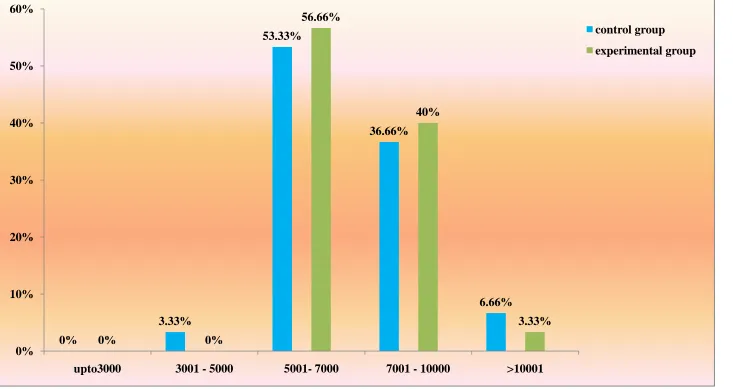
Fig.5.Percentage distribution of area of residence in Control and Experimental group of primi lactating mothers 0%
3.33%
53.33%
36.66%
6.66%
0% 0%
56.66%
40%
3.33% 0%
10% 20% 30% 40% 50% 60%
upto3000 3001 - 5000 5001- 7000 7001 - 10000 >10001
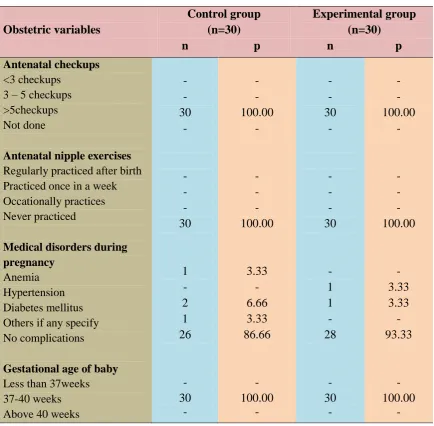
41 Table: 2
Frequency and percentage distribution of obstetric variables in Control and Experimental Group of Primi Lactating Mothers.
Obstetric variables
Control group (n=30)
Experimental group (n=30)
n p n p
Antenatal checkups
<3 checkups 3 – 5 checkups >5checkups Not done
Antenatal nipple exercises
Regularly practiced after birth Practiced once in a week Occationally practices Never practiced
Medical disorders during pregnancy
Anemia Hypertension Diabetes mellitus Others if any specify No complications
Gestational age of baby
Less than 37weeks 37-40 weeks Above 40 weeks
- - 30 - - - - 30 1 - 2 1 26 - 30 - - - 100.00 - - - - 100.00 3.33 - 6.66 3.33 86.66 - 100.00 - - - 30 - - - - 30 - 1 1 - 28 - 30 - - - 100.00 - - - - 100.00 - 3.33 3.33 - 93.33 - 100.00 - Data presented in table 2 depicts that majority of primi lactating mothers had regular antenatal checkups (100%, 100%), none of the mothers had practiced antenatal nipple exercises (100%,100%) in Control and Experimental group respectively.
42
initiated breastfeeding between half an hour to one hour (46.66%, 43.33%) in Control and Experimental group respectively.
Fig 7. Percentage distribution of mode of delivery in Control and Experimental group of primi lactating mothers. Most of the mothers had normal vaginal delivery with episiotomy (73.33%, 86.66%) in Control and Experimental group respectively.
Fig 8. Percentage distribution of birth weight of the baby in Control and Experimental group of primi lactating mothers. Majority of babies birth weight is less than 2.5kgs (53.33%,46.66%) in Control and Experimental group respectively.
Fig 9. Percentage distribution of sex of the baby in Control and Experimental group of primi lactating mothers. Majority of newborns were males (53.33%, 63.33%) in Control and Experimental group of primi lactating mothers respectively.
Fig10. Percentage distribution of complications during labour in Control and Experimental group of primi lactating mothers. Most of the mothers did not have any complications during labour (86.66%, 93.33%) in Control and Experimental group of primi lactating mothers respectively.
Fig 11. Percentage distribution of breast condition of the mother in Control and Experimental group of primi lactating mothers. Majority of the mothers had erect nipple (100%, 100%) in Control and Experimental group of primi lactating mothers respectively.
43
Fig13. Percentage distribution of type of feeding in Control and Experimental group of primi lactating mothers. Most of the mothers practice only breastfeeding (93.33%, 96.66%) in Control and Experimental group of primi lactating mothers respectively.
Fig .14. Percentage distribution of effective latch of the baby in Control and Experimental group of primi lactating mothers. About more than half of the babies had an effective latch (50%, 56.66%) in Control and Experimental group of primi lactating mothers respectively.
Fig15. Percentage distribution of sucking behaviour of the baby in Control and Experimental group of primi lactating mothers. Most of the babies have good sucking (56.66%, 63.33%) in Control and Experimental group of primi lactating mothers respectively.
44
Fig 6 percentage distribution of initiation of breast feeding in Control and Experimental group of primi lactating mothers. 26.66%
46.66%
16.66%
10%
43.33% 43.33%
10%
3.33% 0.00%
5.00% 10.00% 15.00% 20.00% 25.00% 30.00% 35.00% 40.00% 45.00% 50.00%
Within half an hour 1/2 - 1hour 1 hour - 2 hours after 2hours
45
Fig 7 percentage distribution of mode of delivery in Control and Experimental group of primi lactating mothers. 0%
10% 20% 30% 40% 50% 60% 70% 80% 90% 100%
normal vaginal delivery with
episiotomy
lower segmental
cesarian section
assissted delivery 73.33%
26.66%
0% 86.66%
13.33%
0%
control group
46
Fig 8. Percentage distribution of birth weight of the baby in Control and Experimental group of primi lactating mothers. 0%
10% 20% 30% 40% 50% 60% 70% 80% 90% 100%
<2.5kg 2.51 - 3.5kg >3.5kg
53.33%
40%
6.66% 46.66%
43.33%
10%
47
Fig.9 percentage distribution of sex of the baby in Control and Experimental group of primi lactating mothers. 0%
10% 20% 30% 40% 50% 60% 70% 80% 90% 100%
control group experimental group
53.33%
63.33%
46.66%
36.66%
48
Fig.10. percentage distribution of complications during labour in Control and Experimental group of primi lactating mothers. control group
experimental group 0%
10% 20% 30% 40% 50% 60% 70% 80% 90% 100%
prolonged
labour non
progressive labour
difficulty in
labour no
complication anyother complication
specify 3.33%
3.33%
3.33%
90%
0% 3.33%
3.33% 6.66%
86.66%
0%
49
Fig .11. percentage distribution of breast condition of the mother in Control and Experimental group of primi lactating mothers. 0%
10% 20% 30% 40% 50% 60% 70% 80% 90% 100%
erect nipple inverted nipple cracked nipple breast engorgement 100%
0% 0% 0%
100%
0% 0% 0%
50
Fig12. Percentage distribution of frequency of feeding in Control and Experimental group of primi lactating mothers. 3.33%
6.66%
53.33%
36.66%
0% 0%
56.66%
43.33%
0% 10% 20% 30% 40% 50% 60% 70% 80% 90% 100%
every fourth hourly every second hourly every hourly demand feeding