Copyright © 1999, American Society for Microbiology. All Rights Reserved.
The Human Immunodeficiency Virus Type 1 Gag Polyprotein
Has Nucleic Acid Chaperone Activity: Possible Role in
Dimerization of Genomic RNA and Placement
of tRNA on the Primer Binding Site
YA-XIONG FENG,
1STEPHEN CAMPBELL,
1DEMETRIA HARVIN,
1BERNARD EHRESMANN,
2CHANTAL EHRESMANN,
2ANDALAN REIN
1*
Retroviral Genetics Section, ABL-Basic Research Program, National Cancer Institute-Frederick Cancer Research and
Development Center, Frederick, Maryland 21702,
1and Unite´ Propre de Recherche du CNRS no. 9002, Institut de
Biologie Moleculaire et Cellulaire (IBMC), 67084 Strasbourg Cedex, France
2Received 11 November 1998/Accepted 13 February 1999
The formation of an infectious retrovirus particle requires several RNA-RNA interaction events. In
partic-ular, the genomic RNA molecules form a dimeric structure, and a cellular tRNA molecule is annealed to an
18-base complementary region (the primer binding site, or PBS) on the genomic RNA, where it will serve as
primer for reverse transcription. tRNAs normally possess a highly stable secondary and tertiary structure; it
seems unlikely that annealing of a tRNA molecule to the PBS, which involves unwinding of this structure, could
occur efficiently at physiological temperatures without the assistance of a cofactor. Many prior studies have
shown that the viral nucleocapsid (NC) protein can act as a nucleic acid chaperone (i.e., facilitate annealing
events between nucleic acids), and the assays used to demonstrate this activity include its ability to catalyze
dimerization of transcripts representing retroviral genomes and the annealing of tRNA to the PBS in vitro.
However, mature NC is not required for these events in vivo, since protease-deficient viral mutants, in which
NC is not cleaved from the parental Gag polyprotein, are known to contain dimeric RNAs with tRNA annealed
to the PBS. In the present experiments, we have tested recombinant human immunodeficiency virus type 1 Gag
polyprotein for nucleic acid chaperone activity. The protein was positive by all of our assays, including the
ability to stimulate dimerization and to anneal tRNA to the PBS in vitro. In quantitative experiments, its
activity was approximately equivalent on a molar basis to that of NC. Based on these results, we suggest that
the Gag polyprotein (presumably by its NC domain) catalyzes the annealing of tRNA to the PBS during (or
before) retrovirus assembly in vivo.
A single viral protein, the Gag polyprotein, is sufficient for
assembly of retrovirus particles in cells of higher eukaryotes.
Normally, after the particle is released from the cell, the
polyprotein is cleaved by the virus-coded protease (PR),
liber-ating a series of cleavage products. This series of cleavage
events causes a major structural reorganization of the particle
called maturation; PR-deficient particles, in which Gag is not
cleaved, are termed immature particles (reviewed in reference
10).
Among the molecular events which occur during virus
as-sembly and maturation are several instances of RNA-RNA
interaction, including the formation of a dimer from two
iden-tical, plus-strand molecules of genomic RNA; maturation or
condensation of the dimer to a more compact, more
thermo-stable dimer; and placement of a cellular tRNA molecule at a
specific site, the primer binding site (PBS), on the genomic
RNA, where it will serve as the primer for viral DNA synthesis
by reverse transcriptase when the particle infects a new host
cell (reviewed in reference 10). It seems likely that some or all
of these RNA-RNA interactions are facilitated by viral or
cellular cofactors. In particular, it appears extremely
improb-able that the primer tRNA could spontaneously bind to the
PBS with high efficiency under physiological conditions. This
binding involves the annealing of the 18 3
9
nucleotides of the
tRNA to the PBS (to which they are complementary) and
additional interactions between other regions of the tRNA and
other sites in the genomic RNA (2, 24, 27); thus, formation of
this complex requires the disruption of the normal secondary
and tertiary structure of the tRNA.
What is the identity of this putative cofactor? In fact, a
virus-coded protein, termed nucleocapsid (NC), is an obvious
candidate, since it is capable of facilitating all of these
RNA-RNA interactions in vitro (12). NC is one of the products
formed as a result of cleavage of the Gag polyprotein during
virus maturation. NC proteins are small, basic proteins which
bind single-stranded nucleic acids in vitro and are associated
with the genomic RNA in the interior of mature retrovirus
particles. They have been shown to possess nucleic acid
chap-erone activity in a wide variety of assays; that is, they catalyze
the conformational rearrangement of nucleic acids into
opti-mally base-paired structures. The molecular mechanism of this
effect is not well understood, but NC presumably acts by
low-ering the energy barrier for breakage and reformation of base
pairs. Recent evidence strongly suggests that this activity gives
NC a crucial accessory role during the reverse transcription of
retroviral RNA into DNA (reviewed in references 12 and 31).
Further evidence supporting the idea that NC assists in the
placement of tRNA on the PBS in vivo is the fact that
muta-tions in the NC coding region prevent the placement of the
primer tRNA on the PBS in packaged viral RNA (22, 30).
On the other hand, well-documented biological observations
* Corresponding author. Mailing address: Retroviral Genetics
Sec-tion, ABL-BRP, NCI-Frederick Cancer Research & Development
Center, P.O. Box B, Bldg. 535, Frederick, MD 21702. Phone: (301)
846-1361. Fax: (301) 846-7146. E-mail: [email protected].
4251
on November 9, 2019 by guest
http://jvi.asm.org/
are difficult to reconcile with the hypothesis that the mature
NC protein performs these functions in vivo. In particular,
immature retrovirus particles, in which NC is not formed from
the Gag polyprotein because of a defect in PR, contain dimeric
RNA (16, 18, 32). Further, primer tRNA is annealed to the
PBS on these genomic RNA molecules (11, 17, 23, 32).
One hypothesis which is consistent with all of these
obser-vations is that the retroviral Gag polyprotein, like the NC
protein derived from it by proteolytic cleavage, possesses
nu-cleic acid chaperone activity. The present experiments have
tested this possibility, and we now report that recombinant
human immunodeficiency virus type 1 (HIV-1) Gag
polypro-tein indeed exhibits nucleic acid chaperone activity. The data
presented here show that this protein is able to catalyze both
the dimerization of transcripts containing HIV-1 genomic
se-quences and the annealing of primer tRNA to the PBS in vitro.
In view of these results, we suggest that Gag catalyzes these
two events in vivo, probably during assembly of the retrovirus
particle.
MATERIALS AND METHODS
Reagents.The production of recombinant HIV-1 Gag polyprotein and of Gag polyprotein lacking the p6 domain (GagDp6) have been described previously (7). Briefly, the coding regions from the BH10 isolate of HIV-1 were expressed by using the pET 3xc vector. Some experiments used proteins with two point mutations, viz., A37V and Q63D, but control experiments indicated that these differences from the wild-type sequence did not affect the results of our studies. The two polyproteins were purified as previously described for derivatives of the Gag protein of Rous sarcoma virus (8); in addition, the full-length protein was purified with an affinity column containing rabbit antibodies against the 21 C-terminal amino acids of Gag. We estimate, based on inspection of Coomassie blue-stained sodium dodecyl sulfate (SDS)-polyacrylamide gels, that the proteins were$90% pure. One microgram of GagDp6 corresponds to 20 pmol of the protein.
Recombinant HIV-1 NC protein (6, 35), whose sequence was from the NL4-3 isolate of HIV-1 (1), was a kind gift from Robert Gorelick and Louis Henderson, National Cancer Institute-Frederick Cancer Research and Development Center. One microgram of NC represents 170 pmol.
tRNA3Lyswas purified from beef liver by an adaptation of the procedure
described by Isel et al. (25) and was then further purified by two-dimensional electrophoresis (19). Both the primary sequence and the posttranscriptional modifications of bovine tRNA3Lysare identical to those of human tRNA3Lys(25a).
The template for synthesis of RNA representing nucleotides (nt) 1 to 331 of NL4-3 HIV-1 genomic RNA was constructed as follows. pJD DNA (20), which contains the 59131 nt of HIV-1 genomic RNA sequence after a phage T7 promoter, was altered by addition, at the 39end of the viral sequence, of a PCR product containing the next 200 bases of the NL4-3 genome, followed by an NcoI site. The plasmid was linearized by digestion with NcoI before transcription with T7 RNA polymerase (Promega) in accordance with the manufacturer’s instruc-tions.
HaSV 34-378 RNA was synthesized with SP6 RNA polymerase (Promega) exactly as described previously (14).
Selective annealing of oligonucleotides.Selective annealing experiments were performed exactly as described by Tsuchihashi and Brown (34), except that the sequences of the oligonucleotides were slightly altered: the labeled oligonucle-otide was 59GACTAAAAAAAAATCTCTAGCAGTGCAT39, and the two competing oligonucleotides were 59ATGCACTGCTAGAGATTTTTTTTTAG TC39(28-base perfect match) and 59ACTGCTAGAGATTTTTTTTTT39 (21-base oligonucleotide, which can form 20 (21-base pairs with the labeled oligonucle-otide). This change in sequence had no detectable effect on the outcome of selective annealing experiments with NC protein (data not shown). Briefly, 20 fmol of the labeled oligonucleotide was mixed with 20 fmol of the complemen-tary 28-base oligonucleotide and 1 pmol of the complemencomplemen-tary 21-base oligonu-cleotide, along with the protein being tested, in 10ml of 50 mM Tris (pH 7.9)–1 mM EDTA–3 mM MgCl2–1 mM dithiothreitol–0.1% Triton X-100–0.2mg of
BSA/ml. After incubation as indicated, the reactions were terminated by the addition of SDS (final concentration, 2%), extracted with phenol, and analyzed by electrophoresis in 15% polyacrylamide and by autoradiography.
RNA-RNA annealing.The ability of proteins to stimulate the annealing of complementary RNA molecules was assayed as follows. A 205-base RNA mol-ecule, consisting of nucleotides 34 to 180 of the sense strand of the Neor
-encoding open reading frame plus 58 vector nucleotides, was synthesized by using T7 RNA polymerase in the presence of [a-32P]CTP. The second RNA, also
synthesized with T7 RNA polymerase, was 833 nt long, consisting of the anti-sense strand of the Neor-encoding open reading frame from residues 790 to 34,
plus 76 residues from the 39untranslated region of the gene. Twenty fmol of the
first RNA were mixed with 200 femtomol of the second in 10ml of 5 mM NaCl–0.1 mM EDTA–10 mM Tris [pH 8.0]–0.1 Mb-mercaptoethanol–0.2mg of bovine serum albumin (BSA) (New England Biolabs)–8 U of RNasin (Promega)/ ml. Each tube thus contained a total of;57 ng of RNA. The RNAs were first denatured by heating the mixture to 90°C for 5 min and chilling it on ice. Proteins were then added to the mixture as indicated, and the reactions were incubated at 0°C. (Incubation of these reactions at 37°C frequently resulted in aggregation of the RNA samples in the presence of NC). After incubation times as indicated, the reactions were terminated by the addition of 2ml 10% SDS and 10ml H2O,
followed by extraction with phenol-CHCl3(1:1) and analysis by electrophoresis
in agarose under nondenaturing conditions and by autoradiography.
Dimerization of HIV-1 RNA.An RNA transcript representing nt 1 to 331 of the NL4-3 clone of HIV-1 (1) was synthesized by T7 RNA polymerase in the presence of [a-32P]CTP. The transcript was purified on a G-50 spun column
(Stratagene) and by electrophoresis in polyacrylamide. For dimerization, 1.5mg of RNA was heated in water to 85°C for 2 min and chilled on ice. It was then incubated in 20ml of 250 mM NaCl–5 mM MgCl2–20 mM Tris (pH 7.0) at 37°C
for 3 h, in the presence of NC or Gag. The RNAs were then treated with 2% SDS, extracted with phenol, and analyzed by electrophoresis through 2.5% Met-aphor (FME) under nondenaturing conditions and by autoradiography.
Stabilization of dimers of HaSV RNA.The thermostability of dimers of HaSV 34-378 RNA was assessed as described previously (13), except that in some experiments the dimers were formed in the presence of Gag, NC, or BSA rather than being formed first and then treated with the proteins. Briefly, labeled RNA was allowed to dimerize by incubation for 30 min at 37°C in 0.25 M NaCl–1 mM MgCl2–0.01 M Tris (pH 7.0). After deproteinization by phenol extraction, it was
then microdialyzed into 0.05 M NaCl–1 mM EDTA–0.01 M Tris (pH 7.0). The thermostabilities of the dimers were then determined by incubating them for 10 min at the indicated temperatures and analyzing them by electrophoresis in agarose, followed by autoradiography.
Placement of tRNA3Lyson PBS of HIV-1 RNA.Purified tRNA3Lyswas labeled at
its 59end by incubation with T4 polynucleotide kinase (Boehringer Mannheim) and [g-32P]ATP. The labeled tRNA was repurified by electrophoresis in a
poly-acrylamide gel. After elution from the gel, it was precipitated with ethanol and redissolved in water. Unlabeled RNA transcripts representing nt 1 to 331 of the NL4-3 clone of HIV-1 or nt 34 to 378 of HaSV were synthesized using T7 or SP6 RNA polymerase, respectively. The transcripts were heated to 85°C in water and placed on ice. Fifty nanograms of radioactive tRNA was mixed with 250 ng of transcript in 20ml of 50 mM NaCl–5 mM MgCl2–20 mM Tris (pH 7.0) in the
presence or absence of GagDp6 protein. After incubation for 30 min at 37°C, the samples were deproteinized and analyzed as in the dimerization experiments (see above).
Extension of tRNA3Lyswith reverse transcriptase after annealing to PBS of HIV-1 RNA.Two hundred fifty nanograms of an RNA transcript representing nucleotides 1 to 331 of pNL4-3 HIV-1 was heated to 100°C and placed on ice. It was then mixed with 50 ng of unlabeled tRNA3Lysin 20ml of 250 mM NaCl–1 mM
MgCl2–10 mM Tris (pH 7.0). After incubation for 60 min at 37°C in the presence
or absence of GagDp6 protein, the mixture was deproteinized by treatment with 2% SDS and phenol extraction. After ethanol precipitation, the RNAs were redissolved in 20ml of 75 mM KCl–5 mM MgCl2–0.1 mM dithiothreitol–50 mM
Tris (pH 7.5) containing 57 U of HIV-1 reverse transcriptase (Worthington) and 0.1 mM (each) deoxynucleoside triphosphate (dNTP), including 1 mCi of [a-32P]dCTP (Amersham). After 30 min at 37°C, 27 additional U of reverse
transcriptase was added and the incubation was continued for 30 min more. The reaction mixture was then heated to 85°C for 5 min and digested for 60 min at 37°C with 20mg of pancreatic RNase (Boehringer Mannheim) and 8 U of RNase H (Stratagene). The digest was then extracted with phenol, and the DNA was purified with a G-50 spun column (Boehringer Mannheim). Finally, the product was analyzed by electrophoresis on a 15% polyacrylamide gel in the presence of 7 M urea, followed by autoradiography.
RESULTS
Selective annealing of oligodeoxynucleotides.
The nucleic
acid chaperone activity of NC protein has previously been
demonstrated by the selective annealing of oligonucleotides
(34). In this assay, a radioactively labeled 28-base
oligode-oxynucleotide is mixed with two other oligodeoligode-oxynucleotides.
Both of these oligonucleotides are complementary to the
la-beled oligonucleotide, but one is a 28-base, completely
com-plementary molecule, while the other is shorter and can form
only 20 base pairs with the labeled oligonucleotide. The
shorter of these two molecules is in 50-fold excess over the
longer one; therefore, the less stable hybrid which can form in
this mixture is kinetically favored over the more stable one. As
previously shown by Tsuchihashi and Brown (34), labeled
oli-gonucleotide is found annealed to the shorter complementary
oligonucleotide if the mixture is incubated in the absence of
on November 9, 2019 by guest
http://jvi.asm.org/
NC but is annealed to the longer oligonucleotide if NC is
present. This shift presumably reflects the ability of NC to
destabilize the 20-bp hybrid, enabling the labeled DNA strand
to enter into the more stable, 28-bp hybrid.
We tested the ability of HIV-1 Gag
D
p6 polyprotein to
promote the selective formation of the more stable hybrid in
this assay. As shown in Fig. 1A, incubation with Gag
D
p6 at
37°C did cause the labeled oligonucleotide to shift from the
kinetically favored, 20-bp hybrid to the thermodynamically
fa-vored 28-bp hybrid; in fact, analysis of the data (Fig. 1B)
indicated that the activities of the polyprotein and of NC in this
assay were, on a molar basis, indistinguishable.
Annealing of complementary RNA molecules.
We also
tested the ability of the Gag polyprotein to stimulate the
an-nealing of complementary RNAs. These RNA molecules were
transcripts of portions of the Neo
rgene. Figure 2 (lanes 8 and
9) shows that in the presence of Gag, a large fraction of the
labeled RNA (although less than in the sample incubated with
NC) was hybridized to the complementary strand, while under
these conditions no detectable hybrid was formed in the
ab-sence of Gag.
Dimerization of retroviral RNAs in the presence of Gag.
As
originally demonstrated by Darlix and coworkers (12, 29),
RNA transcripts containing sequences from the 5
9
portion of a
retroviral genome can form dimers in vitro, even in the absence
of any added proteins or other macromolecular cofactors.
However, as noted above, NC has been shown to accelerate
this dimerization process in vitro (12). We tested the ability of
the Gag polyprotein to promote the dimerization of RNA
molecules consisting of nt 1 to 331 of the HIV-1 genome, using
a low RNA concentration at which there was virtually no
spon-taneous dimerization during the incubation period. As shown
in Fig. 3, this RNA was converted to a dimeric structure in the
presence of Gag; the amount of Gag required for this effect,
;
0.8
m
g (lane 14), was equivalent in molar terms to the level
of NC (
;
0.1
m
g) (lane 5) which exerted a similar effect.
Stabilization of a dimer of retroviral RNA by Gag.
The
genomic RNA in an immature retrovirus particle is dimeric.
However, during maturation of the particle, the dimer is
con-verted to a more thermostable dimeric structure (16, 18, 33).
We previously described conditions in which a 345-base
tran-script of HaSV RNA formed dimers in vitro, but some of these
dimers were relatively thermolabile. Incubation of these
prep-arations of dimeric RNA with recombinant HIV-1 NC was
shown to convert the thermolabile dimers into more stable
dimers; this conversion thus appeared to replicate, in a defined
system in vitro, the stabilization of dimeric RNAs which occurs
during the maturation of a retrovirus particle (13).
[image:3.612.313.545.76.204.2]We also tested the ability of the HIV-1 Gag polyprotein to
induce this stabilization in dimers of HaSV transcripts. Figure
4 shows the results of this experiment. As can be seen, the
FIG. 1. Demonstration of nucleic acid chaperone activity by selectiveanneal-ing of oligonucleotides. (A) Oligonucleotides were incubated alone (lanes 1 and 2) or with 0.01, 0.04, or 0.16 mg of NC (lanes 3 and 4, 5 and 6, 7 and 8, respectively) or 0.02, 0.08, 0.32, or 1.3mg of GagDp6 (lanes 9 and 10, 11 and 12, 13 and 14, and 15 and 16, respectively) at 0° (odd-numbered lanes) or 37°C (even-numbered lanes) for 60 min. Lanes 17 to 19 represent markers, in which the labeled oligonucleotide was mixed with nothing (lane 17), with the 28-base complementary oligonucleotide alone (lane 18), or with the 21-base complemen-tary oligonucleotide alone (lane 19), heated to 90°C for 5 min, and allowed to cool slowly to room temperature. (B) Data from incubations at 37°C in panel A as analyzed by phosphorimaging.
[image:3.612.311.550.583.677.2]FIG. 2. Annealing of complementary RNAs in the presence of Gag or NC. RNAs were incubated with nothing (lane 12) or with 200 ng of BSA/ml (lanes 1 and 2), 330 ng of NC/ml (lanes 3 to 6), or 2.7mg of Gag/ml (lanes 8 to 11) for 1 h (lanes 1, 3, 5, 8, and 10) or 4 h (lanes 2, 4, 6, 9, 11, and 12) and analyzed as described in Materials and Methods. RNA which was complementary to the labeled RNA was present in lanes 1 to 4 and 7 to 9. The samples were heated to 90°C for 5 min; those shown in lanes 7 and 12 (indicated by an asterisk) were allowed to cool slowly to room temperature, while the others were quickly chilled on ice before incubation as indicated. ss, single stranded; ds, double stranded.
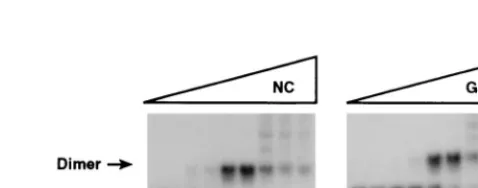
FIG. 3. Dimerization of HIV 1-331 transcripts in the presence of Gag or NC.
32P-labeled HIV-1 1-331 RNA, prepared as described in Materials and Methods,
was incubated with 0, 0.01, 0.02, 0.05, 0.10, 0.50, 1.0, 1.25, or 1.5mg of NC (lanes 1 to 9) or 0, 0.08, 0.16, 0.4, 0.8, 4.0, 8.0, 10.0, or 12.0mg of Gag (lanes 10 to 18). The results were analyzed by electrophoresis and autoradiography as described in Materials and Methods.
on November 9, 2019 by guest
http://jvi.asm.org/
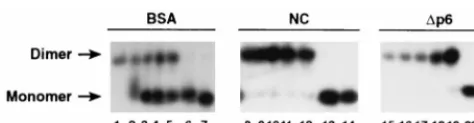
dissociation profile of the dimers after exposure to the Gag
D
p6
polyprotein (lanes 15 to 21), like that seen after exposure to
NC (lanes 8 to 14), showed that the dimers were uniformly
dissociated between 55 and 65°C; in contrast, controls
incu-bated with BSA (lanes 1 to 7) were a mixture in which some
molecules dissociated between 25 and 37°C, and others were
stable to a temperature between 55 and 65°C. Thus, the Gag
polyprotein is evidently able to induce the stabilization of
dimers of retroviral RNAs in vitro. Moreover, its activity per
mole appears to be at least as high as that of NC in this assay,
since NC and Gag were equimolar in these experiments and
since the dose of NC is only slightly more than sufficient for full
stabilization of the dimers (13).
Placement of tRNA
3Lyson the PBS by Gag.
Finally, we also
tested the ability of the Gag
D
p6 polyprotein to anneal
tRNA
3Lysto the PBS on transcripts of the HIV-1 genome. We
used natural tRNA
3Lys, rather than tRNA produced by
tran-scription in vitro, since the posttrantran-scriptional modifications in
natural tRNA play a significant role in the interaction of the
primer with the PBS (25). As shown in Fig. 5A, incubation of
labeled tRNA
3Lyswith RNA molecules representing nt 1 to 331
of HIV RNA, together with Gag
D
p6, caused a shift of
radio-active tRNA to a high-molecular-weight complex (lanes 3 and
4). This shift was not observed in the absence of Gag
D
p6 (lane
5) and reflected a true annealing reaction, rather than
aggre-gation of the RNAs, since it was also not seen in a control
reaction in which the tRNA was incubated with a 345-base
HaSV transcript, which contains a PBS complementary to
tRNA
Prorather than tRNA
3
Lys
, in place of the HIV transcript
(lane 2). In other experiments (data not shown), there was no
shift of the labeled tRNA into a complex with the HaSV RNA,
even when the latter was present at a fourfold-higher level than
that of HIV-1 RNA used in these experiments.
As an additional test of the proper placement of the tRNA
on the PBS in these experiments, we annealed unlabeled
tRNA to HIV-1 transcripts as in Fig. 5A and then extended it
by adding reverse transcriptase and dNTPs, including [
a
-
32P]
dCTP, to the reaction mixtures. The products were then
di-gested with RNase and analyzed by polyacrylamide gel
elec-trophoresis and autoradiography. As shown in Fig. 5B (lane 4),
a major DNA product was seen at
;
182 nucleotides in the
reaction mixture containing HIV-1 RNA, tRNA
3Lys, and
Gag
D
p6. This product corresponds to minus-strand strong stop
DNA. (Higher-molecular-weight products were also observed
in this lane; these products presumably arise by self-priming of
DNA synthesis from the minus-strand strong stop DNA [20,
26]). These three reactants are all required for the synthesis of
significant amounts of DNA under these conditions, since very
little product was observed if any of them was omitted (lanes 1
to 3). The formation of a DNA product of the correct size is
strong evidence that Gag
D
p6 faithfully anneals the natural
primer molecule to the PBS under our in vitro conditions.
DISCUSSION
The basic conclusion which can be drawn from the results
presented here is that the HIV-1 Gag polyprotein, like its
cleavage product NC, exhibits nucleic acid chaperone activity.
That is, it is capable of catalyzing the rearrangement of nucleic
acid molecules into the conformation with the maximum
num-ber of base pairs. As discussed below, these results support the
suggestion that in vivo, the Gag polyprotein catalyzes the
FIG. 4. Stabilization of dimers of HaSV 34-378 RNA by incubation with Gagor NC. A total of 0.5mg of [32P]-labeled HaSV 34-378 RNA was incubated at
[image:4.612.54.291.71.132.2]37°C with 2mg of BSA (lanes 1 to 7), 1.5mg of NC (lanes 8 to 14), or 12mg of GagDp6 (lanes 15 to 21). Thermostabilities of the dimers were then determined by incubation for 10 min at 0° (lanes 1, 8, and 15), 25° (lanes 2, 9, and 16), 37° (lanes 3, 10, and 17), 45° (lanes 4, 11, and 18), 55° (lanes 5, 12, and 19), 65° (lanes 6, 13, and 20), or 70° (lanes 7, 14, and 21), followed by electrophoresis and autoradiography as described in Materials and Methods. Some RNA remained at the top of the gel in lanes 15 to 17, but this aggregation was not a consistent feature of these experiments.
FIG. 5. Placement of tRNA3Lyson HIV-1 1-331 RNA by GagDp6. (A)32
P-labeled tRNA3Lyswas incubated with retroviral transcript and GagDp6, and the
reactions were analyzed as described in Materials and Methods. Lanes: 1, tRNA alone; 2, tRNA plus HaSV 34-378 plus 6mg of GagDp6; 3, tRNA plus HIV-1 1-331 plus 3mg of GagDp6; 4, tRNA plus HIV-1 1-331 plus 6mg of GagDp6; 5, tRNA plus HIV-1 1-331. (B) Unlabeled tRNA3Lyswas annealed to the PBS on
HIV-1 1-331 RNA by incubation as indicated. The mixtures were deproteinized as described in Materials and Methods and then tested for the presence of primer on the HIV-1 template RNA by addition of reverse transcriptase and dNTPs, including [a-32P]dCTP. The reactions were analyzed as described in
Materials and Methods. Size of the labeled DNA product was determined610 nt compared with labeled DNAs of known sizes (data not shown). Lanes: 1, tRNA plus 6mg of GagDp6; 2, 6mg of GagDp6 plus HIV-1 1-331; 3, tRNA plus HIV-1 1-331; 4, tRNA plus 6mg of GagDp6 plus HIV-1 1-331.
on November 9, 2019 by guest
http://jvi.asm.org/
dimerization of the genomic RNA of the virus and the
place-ment of the primer tRNA on the PBS, probably during
assem-bly of the virion.
It is striking to note that the Gag polyprotein is evidently
capable of exquisitely specific interaction with RNA, i.e.,
se-lection of the genomic RNA for packaging during virus
assem-bly in vivo (reviewed in reference 5), and also of nonspecific
interactions, as demonstrated here by the nucleic acid
chaper-one activity observed with nonviral RNA substrates (Fig. 1 and
2). Gag resembles NC in this respect, since NC also exhibits
profound sequence preferences in binding to DNA or RNA
(3–5, 15) but displays nucleic acid chaperone activity in a wide
variety of assays with nonviral substrates (12, 21, 31).
Remark-ably, still another outcome of the interaction between Gag and
nucleic acid molecules is the assembly of minute virus-like
particles in vitro, which occurs with short
oligodeoxynucleo-tides as well as larger RNA molecules and shows almost no
sequence dependence (7). It is conceivable that these
struc-tures formed during some of the experiments described above.
In some of the nucleic acid chaperone assays presented here,
it was possible to make a direct comparison between the
dose-response curve of the Gag polyprotein and that of NC. It was
found that the two proteins have very similar activities per
mole in these assays (Fig. 1 and 3). Thus, the NC domain of the
Gag polyprotein, which is near the C terminus of the
polypro-tein (and only 16 residues from the C terminus of Gag
D
p6,
which was used in many of these experiments), probably
func-tions as a nucleic acid chaperone independently of the
remain-der of the polyprotein.
What is the biological significance of the nucleic acid
chap-erone activity of Gag? Analysis of protease-deficient,
imma-ture virions, in which the Gag polyprotein is not cleaved, shows
that they contain dimers of genomic RNA (16, 18, 32) and that
the primer tRNA is annealed to the PBS on this RNA (11, 17,
23, 32). Thus, cleavage of the polyprotein, which releases NC
protein, is not required for these RNA-RNA interaction events
in vivo. We have also demonstrated (17) that in murine
leu-kemia virus, expression of the pol gene product is unnecessary
for these interactions. Thus the Gag polyprotein is the only
internal viral protein which might be required to facilitate
these events. In light of the present results (Fig. 3 and 5),
showing that Gag can catalyze them in vitro, we consider it
likely that it performs this function in vivo. (It is also possible
that RNA dimerization occurs without the aid of a cofactor in
vivo, as has been shown with transcripts of retroviral RNAs in
vitro [12, 29]).
There is no direct information as to whether RNA
dimer-ization and tRNA annealing precede or occur simultaneously
with virus assembly, and one could imagine that the cytoplasm
contains genomic RNA molecules which are dimeric and/or
contain primer tRNA annealed to the PBS as a result of
in-teractions with Gag. However, several observations seem to
argue against this possibility. First, an early study suggested
that tRNA annealing was incomplete in newly released
parti-cles of avian leukosis virus (9), and secondly, a recent report
indicated that the placement was also incomplete in immature
(PR-deficient) HIV-1 particles (28). The fact that the
anneal-ing is not complete at the moment of virus release suggests that
it occurs simultaneously with virus assembly; perhaps under
normal circumstances it is catalyzed in part by the Gag
polyprotein and in part by NC. It is also striking that that the
HIV-1 Gag polyprotein can induce the stabilization of a dimer
of retroviral RNA in vitro (Fig. 4). This finding was somewhat
unexpected, since stabilization of dimeric RNAs within the
retroviral particle in vivo depends upon the release of NC from
the polyprotein by the viral PR (16, 18). Thus, the polyprotein
is evidently capable of inducing stabilization in solution but not
within the virion. One possible explanation for this discrepancy
is that the polyprotein does not interact with viral RNAs within
the cytoplasm, but only during the formation of the virion, and
that the structure of the nascent virus particle somehow
re-stricts the ability of the protein to interact with the RNA.
Indeed, contact between Gag and RNA in the immature
par-ticle is probably very limited: a careful analysis of avian
leuko-sis virus particles (in which the maturation of dimeric RNA was
first observed [33]) showed that UV-induced cross-linking of
Gag to RNA in immature particles is extremely inefficient
compared to the cross-linking of NC to RNA in mature
par-ticles (32).
In summary, the initial assembly of a retrovirus particle
involves at least two RNA-RNA interaction events:
dimeriza-tion of genomic RNA and annealing of a cellular tRNA to a
specific site on the genomic RNA. The present results strongly
suggest that the Gag polyprotein (the major structural protein
of the immature retrovirus particle) is responsible not only for
formation of the particle but also for catalyzing these
associa-tions between RNA molecules. This catalysis is presumably
carried out by the NC domain of the polyprotein, but the
detailed molecular mechanism of the catalytic reaction is not
yet understood.
ACKNOWLEDGMENTS
We thank Guillaume Bec and Gerard Keith for the gift of purified
bovine tRNA3
Lys, Robert Gorelick and Louis Henderson for the gift of
HIV-1 NC protein, Jianhui Guo and Judith Levin for the pJD plasmid,
and Judith Levin for help with the experiments and for a thoughtful
reading of the manuscript.
Research was supported in part by the National Cancer Institute,
DHHS, under contract with ABL, and also by grants from the French
Agence Nationale de Recherches sur le SIDA and the CNRS.
REFERENCES
1. Adachi, A., H. E. Gendelman, S. Koenig, T. Folks, R. Willey, A. Rabson, and
M. A. Martin.1986. Production of acquired immunodeficiency syndrome-associated retrovirus in human and nonhuman cells transfected with an infectious molecular clone. J. Virol. 59:284–291.
2. Aiyar, A., D. Cobrinik, Z. Ge, H. J. Kung, and J. Leis. 1992. Interaction between retroviral U5 RNA and the T psi C loop of the tRNA(Trp) primer is required for efficient initiation of reverse transcription. J. Virol. 66:2464– 2472.
3. Allen, P., B. Collins, D. Brown, Z. Hostomsky, and L. Gold. 1996. A specific RNA structural motif mediates high affinity binding by the HIV-1 nucleo-capsid protein (NCp7). Virology 225:306–315.
4. Berglund, J. A., B. Charpentier, and M. Rosbash. 1997. A high affinity binding site for the HIV-1 nucleocapsid protein. Nucleic Acids Res. 25:1042– 1049.
5. Berkowitz, R., J. Fisher, and S. P. Goff. 1996. RNA packaging. Curr. Top. Microbiol. Immunol. 214:177–218.
6. Busch, L. K. 1994. Production of HIV-1 (MN) nucleocapsid protein (p7) by recombinant DNA technology. M.S. thesis. Hood College, Frederick, Md. 7. Campbell, S., and A. Rein. 1999. In vitro assembly properties of human
immunodeficiency virus type 1 Gag protein lacking the p6 domain. J. Virol.
73:2270–2279.
8. Campbell, S., and V. M. Vogt. 1997. In vitro assembly of virus-like particles with Rous sarcoma virus Gag deletion mutants: identification of the p10 domain as a morphological determinant in the formation of spherical par-ticles. J. Virol. 71:4425–4435.
9. Canaani, E., K. V. Helm, and P. Duesberg. 1973. Evidence for 30-40S RNA as precursor of the 60-70S RNA of Rous sarcoma virus. Proc. Natl. Acad. Sci. USA 70:401–405.
10. Coffin, J. M., S. H. Hughes, and H. E. Varmus. 1997. Retroviruses. Cold Spring Harbor Laboratory Press, Cold Spring Harbor, N.Y.
11. Crawford, S., and S. P. Goff. 1985. A deletion mutation in the 59part of the
pol gene of Moloney murine leukemia virus blocks proteolytic processing of
the gag and pol polyproteins. J. Virol. 53:899–907.
12. Darlix, J. L., M. Lapadat-Tapolsky, H. de Rocquigny, and B. P. Roques. 1995. First glimpses at structure-function relationships of the nucleocapsid protein of retroviruses. J. Mol. Biol. 254:523–537.
13. Feng, Y. X., T. D. Copeland, L. E. Henderson, R. J. Gorelick, W. J. Bosche,
J. G. Levin, and A. Rein.1996. HIV-1 nucleocapsid protein induces
on November 9, 2019 by guest
http://jvi.asm.org/
ration” of dimeric retroviral RNA in vitro. Proc. Natl. Acad. Sci. USA
93:7577–7581.
14. Feng, Y. X., W. Fu, A. J. Winter, J. G. Levin, and A. Rein. 1995. Multiple regions of Harvey sarcoma virus RNA can dimerize in vitro. J. Virol. 69: 2486–2490.
15. Fisher, R. J., A. Rein, M. Fivash, M. A. Urbaneja, J. R. Casas-Finet, M.
Medaglia, and L. E. Henderson.1998. Sequence-specific binding of human immunodeficiency virus type 1 nucleocapsid protein to short oligonucleo-tides. J. Virol. 72:1902–1909.
16. Fu, W., R. J. Gorelick, and A. Rein. 1994. Characterization of human im-munodeficiency virus type 1 dimeric RNA from wild-type and protease-defective virions. J. Virol. 68:5013–5018.
17. Fu, W., B. A. Ortiz-Conde, R. J. Gorelick, S. H. Hughes, and A. Rein. 1997. Placement of tRNA primer on the primer-binding site requires pol gene expression in avian but not murine retroviruses. J. Virol. 71:6940–6946. 18. Fu, W., and A. Rein. 1993. Maturation of dimeric viral RNA of Moloney
murine leukemia virus. J. Virol. 67:5443–5449.
19. Gross, H. J., G. Krupp, H. Domdey, M. Raba, P. Jank, C. Lossow, H. Alberty,
K. Ramm, and H. L. Sanger.1982. Nucleotide sequence and secondary structure of citrus exocortis and chrysanthemum stunt viroid. Eur. J. Bio-chem. 121:249–257.
20. Guo, J., L. E. Henderson, J. Bess, B. Kane, and J. G. Levin. 1997. Human immunodeficiency virus type 1 nucleocapsid protein promotes efficient strand transfer and specific viral DNA synthesis by inhibiting TAR-depen-dent self-priming from minus-strand strong-stop DNA. J. Virol. 71:5178– 5188.
21. Herschlag, D. 1995. RNA chaperones and the RNA folding problem. J. Biol. Chem. 270:20871–20874.
22. Huang, Y., A. Khorchid, J. Gabor, J. Wang, X. Li, J. L. Darlix, M. A.
Wainberg, and L. Kleiman.1998. The role of nucleocapsid and U5 stem/A-rich loop sequences in tRNA(3Lys) genomic placement and initiation of reverse transcription in human immunodeficiency virus type 1. J. Virol.
72:3907–3915.
23. Huang, Y., J. Wang, A. Shalom, Z. Li, A. Khorchid, M. A. Wainberg, and L.
Kleiman.1997. Primer tRNA3Lys on the viral genome exists in unextended and two-base extended forms within mature human immunodeficiency virus type 1. J. Virol. 71:726–728.
24. Isel, C., C. Ehresmann, G. Keith, B. Ehresmann, and R. Marquet. 1995. Initiation of reverse transcription of HIV-1: secondary structure of the
HIV-1 RNA/tRNA(3Lys) (template/primer). J. Mol. Biol. 247:236–250. 25. Isel, C., R. Marquet, G. Keith, C. Ehresmann, and B. Ehresmann. 1993.
Modified nucleotides of tRNA(3Lys) modulate primer/template loop-loop interaction in the initiation complex of HIV-1 reverse transcription. J. Biol. Chem. 268:25269–25272.
25a.Keith, G. Personal communication.
26. Lapadat-Tapolsky, M., C. Gabus, M. Rau, and J. L. Darlix. 1997. Possible roles of HIV-1 nucleocapsid protein in the specificity of proviral DNA synthesis and in its variability. J. Mol. Biol. 268:250–260.
27. Liang, C., X. Li, L. Rong, P. Inouye, Y. Quan, L. Kleiman, and M. A.
Wainberg.1997. The importance of the A-rich loop in human immunodefi-ciency virus type 1 reverse transcription and infectivity. J. Virol. 71:5750– 5757.
28. Liang, C., L. Rong, N. Morin, E. Cherry, Y. Huang, L. Kleiman, and M. A.
Wainberg.1997. The roles of the human immunodeficiency virus type 1 Pol protein and the primer binding site in the placement of primer tRNA(3Lys) onto viral genomic RNA. J. Virol. 71:9075–9086.
29. Prats, A.-C., C. Roy, P. Wang, M. Erard, V. Housset, C. Gabus, C. Paoletti,
and J.-L. Darlix.1990. cis elements and trans-acting factors involved in dimer formation of murine leukemia virus RNA. J. Virol. 64:774–783.
30. Prats, A. C., L. Sarih, C. Gabus, S. Litvak, G. Keith, and J. L. Darlix. 1988. Small finger protein of avian and murine retroviruses has nucleic acid an-nealing activity and positions the replication primer tRNA onto genomic RNA. EMBO J. 7:1777–1783.
31. Rein, A., L. E. Henderson, and J. G. Levin. 1998. Nucleic acid chaperone activity of retroviral nucleocapsid proteins: significance for viral replication. Trends Biochem. Sci. 23:297–301.
32. Stewart, L., G. Schatz, and V. M. Vogt. 1990. Properties of avian retrovirus particles defective in viral protease. J. Virol. 64:5076–5092.
33. Stoltzfus, C. M., and P. N. Snyder. 1975. Structure of B77 sarcoma virus RNA: stabilization of RNA after packaging. J. Virol. 16:1161–1170. 34. Tsuchihashi, Z., and P. O. Brown. 1994. DNA strand exchange and selective
DNA annealing promoted by the human immunodeficiency virus type 1 nucleocapsid protein. J. Virol. 68:5863–5870.
35. Wu, W., L. E. Henderson, T. D. Copeland, R. J. Gorelick, W. J. Bosche, A.
Rein, and J. G. Levin.1996. Human immunodeficiency virus type 1 nucleo-capsid protein reduces reverse transcriptase pausing at a secondary structure near the murine leukemia virus polypurine tract. J. Virol. 70:7132–7142.
on November 9, 2019 by guest
http://jvi.asm.org/