1
Leading for Learning: A Model for Best Practice in School Libraries
Cristina Sacco Judge and David McMenemy
Department of Computer and Information Sciences, University of Strathclyde, Glasgow, UK
Abstract
This chapter introduces a model for school libraries in Scotland, based on best practices as identified in the literature, and on five case studies undertaken in schools, two in the United States and three in Scotland. The research design was qualitative, and used grounded theory and multiple case study methods. The model represents an ideal set of circumstances for school libraries in Scotland, highlighting the interconnected web of influences that affect the success of a school library in meeting professional standards. These influences primarily fall in three areas: the school librarian, the school environment, and the professional support available to the librarian. The school librarian is the primary leader of the school library programme, but factors in these other two areas can provide opportunities and barriers that can help or hinder the success of the library service. For instance, the findings suggest that school-based factors such as curriculum, scheduling, technology facilities, and staffing can have significant influence over the access the librarian has to teachers and students. Our model includes all three areas in describing a set of circumstances that would allow a school library programme to thrive and meet the highest professional standards.
Keywords: school libraries, qualitative case study, multiple case study, Scotland, grounded theory, professional issues
Classification:
Introduction
This chapter presents a model for school libraries based on best practice as identified in the literature and via comparative case studies in the United States and Scotland. The main goal of the project was to learn from the US model of school librarianship and apply elements of it to a model for school libraries that could help Scottish school libraries benefit from the, arguably, more successful US model.
2
2003; Sinclair-Tarr & Tarr, 2007; Williams, Wavell, & Coles 2001). It is this body of research that warrants referring to the US model of school librarianship as more successful.1
The British model, in contrast, typically describes school librarians who work alone with no clerical support and no additional training beyond a standard library qualification, although many school library staff across the UK lack any professional qualifications (Knuth, 1995; Knuth, 1997; Ritchie, 2009; Ritchie, 2011; Tilke, 2002; Turner, 2005; Williams, Coles, & Wavell, 2002). UK professional associations representing school librarians are seen as weak and passive, speaking with conflicting voices (Knuth, 1995; Owen, 2009). Little research exists on the provision and quality of UK and Scottish school libraries (Johnson et al., 2004; Knowles, 2002). Because Scotland is part of the UK, it might be reasonable to assume that it would fit the British model, however, education is a devolved power in
Scotland2, and Scottish school libraries, unlike the rest of the UK, typically staff professional librarians rather than library or classroom assistants (Knowles, 2002; Ritchie, 2009; Tilke, 2002), suggesting that there is a place for a model specifically tailored for Scotland.
Schooling and Libraries in the US and UK
There are many differences between the two systems at all levels, from the qualifications of individual librarians to national-level professional organizations. Some of these differences are systemic and have evolved over time. In the US, for instance, school libraries are much more tightly integrated into the education system (Knuth, 1995; Knuth, 1997). They are administered by school districts and in most states are staffed by librarians with dual teaching and library qualifications whereas in Britain, school libraries are more closely aligned with public libraries in terms of their administration and also in their focus on recreational reading (Knuth, 1995; Knuth, 1997). The following table lists some of the main differences between these two systems.
TAKE IN TABLE 1
Table 1
Comparison of US and Scottish/UK Models of School Libraries
US model of school libraries Scottish & UK model of school libraries
Clerical support (Knuth, 1995) Solo worker (Ritchie, 2011; Tilke, 2002; Turner, 2005)
Dual-certification commonly required (Thomas & Perritt, 2003)
No specialist training (Ritchie, 2011, p.101)
1 Generally, the use of the word success throughout this work will refer to how well a library or a librarian meets professional standards. Defining success in more specific terms than this is outside the scope and purpose of this research.
2 Devolved powers are areas that the Scottish Government controls rather than the central
3 Better pay than public librarians and
teachers (AASL, 2012; Maatta, 2008)
Lower pay than teachers and most public librarians (Ritchie, 2009)
Active professional associations (Knuth, 1995)
Weak professional associations (Knuth, 1995; Ritchie, 2011, p.101)
Regularly-updated qualitative high professional standards (Knuth, 1995; Michie & Holton, 2005)
Guidelines instead of standards, quantitative only (Knuth, 1995)
Large body of impact research (Callison, 2006)
Scant research (Johnson et al., 2004; Knuth, 1997; Williams et al., 2002)
American Public Education
In the United States, government-funded schools are called public schools. There is no national curriculum in the US. Decisions on what to teach are usually taken at the state or local level, as education is primarily the responsibility of state and local governments rather than the federal government (U.S. Department of Education, 2010). Organizations of all kinds, public or private, can “establish schools and colleges, develop curricula, and determine requirements for enrolment and graduation” (USDE, 2010, np). Typically, public school systems are funded by a combination of federal, state, and local funding. The U.S.
Department of Education (USDE) only contributes around 10.5 percent of the funds used by public elementary and secondary schools (USDE, 2010). Often, local property taxes
contribute significantly towards the costs of schools (AASL, n.d.). Because of this, the quality of provision can vary widely, due to differing tax bases from area to area (Baker, Sciarra, & Farrie, 2010).
Scottish Education
From a UK perspective this study focuses on school libraries in Scotland, which are different from those in England and Wales. The Scottish education system has been on a different path than that of English education since 1885, when the Scotch (later Scottish) Education
Department was formed and placed under the control of the Secretary for Scotland (The Scottish Government, 2004). In 1888, this department established a single external examination system for Scotland, a system that is currently overseen by the Scottish Qualifications Authority or SQA (Scottish Qualifications Authority, 2010). One hundred years later, a similar examination system was set up in England and Wales, when the Education Reform Act of 1988 established a national system of testing and the National Curriculum in England and Wales. The Curriculum for Excellence is a national curriculum for Scotland, which was being implemented at the time of this field study, in 2010-2011, replacing the 5-14 curriculum (Learning and Teaching Scotland, 2010b). It is designed to be more flexible than the 5-14 curriculum, and schools are to develop their own interpretations of the curriculum, whilst aiming to meet certain learning outcomes (LTS, 2010b). The Curriculum for Excellence (CfE) covers pupils ages 3-18, though it does not supersede nor does it replace the National Qualifications system, overseen by the SQA. Learning and Teaching Scotland, a non-departmental public body, is the national body responsible for reviewing CfE (LTS, 2010a). At the time of writing, CfE was still being developed for pupils aged 14-18.
4
services” (The Scottish Government, 2004, np) and the implementation of Scottish Government policies in education . Education accounts for over half of the annual
expenditure of local authorities, and is the most expensive service provided by authorities, paid for by a combination of Council Tax, taxes on business premises, and an annual grant from the Scottish Government (The Scottish Government, 2004).
LIS Education and Qualifications in the US
For librarians in most sectors in the US, masters degrees are the standard requirement for employment, but because school librarians are also classed as teachers in most states, school librarians are typically required to hold some form of teaching qualifications as well. The exact requirements vary from state to state, but most states (36 out of 50, including the State of Connecticut, where the American case studies were located) require a classroom-teaching certificate as well as a masters degree or credit hours for certification as a school library media specialist (Thomas & Perritt, 2003). Additional coursework may include topics such as educational psychology, child development, or educational foundations. Thirty-seven states require at least some time spent in practice or an internship in a school library prior to certification, “thus sending a clear message that media specialists require specialized training,” (Thomas & Perritt, 2003, np).
In the US, it is typical for school librarians to have undertaken more training than either their librarian or their teaching colleagues. Data gathered by the National Center for Education Statistics (NCES) indicates that school librarians are more likely than teachers to hold a Masters degree (Lance, 2006). The NCES data indicate that 98.1% of principals, 48.1% of teachers, and 69.4% of school library media specialists hold a Masters degree or higher. In addition, school librarians are the only types of librarians for whom additional qualifications are required as a norm. There are, however, ongoing debates in academic librarianship regarding whether or not academic librarians should hold additional
qualifications, either in a content area to work as subject specialists, or in teaching to work as instructional librarians (Julien, 2005; Sproles & Johnson, 2008).
LIS Education in the UK
A topic heavily debated in the 1960s and 1970s was the issue of training for librarians. Many authors called for school librarians to hold a dual-qualification, demonstrating competency in teaching and in librarianship (see, amongst others, Dyer, Brown, & Goldstein, 1970; School Library Association, 1961). The Library Association Guidelines of 1977 quote the
recommendations of the 1975 Bullock Report that “as a long term aim all school librarians should be doubly qualified in teaching and librarianship,” and comments that the “trend towards dual qualification will continue and must be taken account of,” (Library Association, 1977, p.15).
Herring (1988) notes that arguments in favor of dual qualification include: that school librarians do teach information skills and information literacy; that they select
materials supporting the entire curriculum, and that dual qualification may enhance the status of the school librarian within the school. Brewer argues that having a dual qualification ensures that school librarians are recognized and treated as professionals by both teaching staff and librarians (Brewer, 1981, p.251). Herring, however, (1988) poses a counter-argument that there is a danger in being seen as an extra teacher to the detriment of the library.
5
Scotland and the rest of the UK (Ritchie, 2009; Turriff, 2005). In contrast, American school librarians, who are typically certified teachers, earn the same salary as teachers or even more in some situations, for keeping the library open throughout the afternoon (AASL, 2012). Though the debate over dual-qualification, and the idea of dual qualification itself, eventually died out in the UK, dual qualifications became the norm elsewhere, such as in the US and Australia (Tilke, 1998).
Recent Research
Research in the US: Impact Research
In the US, a large body of research spanning twenty years and 14 states has indicated with remarkable consistency that student achievement is improved where schools have libraries with longer opening hours, more teaching hours spent on information skills, high-quality collections, and higher numbers of professional staff. These studies are called “Lance studies” after the researcher Keith Curry Lance, who published a seminal study using state-wide educational and socioeconomic data in Colorado from school year 1988-89 (Lance et al., 1993). This study, referred to as the first Colorado study, concluded the following, paraphrased below:
• Academic achievement was higher in schools that have better-funded libraries regardless of the economic status of the students or local communities and the educational attainment of adults in the area;
• Academic achievement was higher at schools where the librarian participated in library-related instruction;
• Amongst predictors of academic achievement, the size of the library staff and collection was second only to the absence of at-risk conditions such as poverty and low adult educational attainment. (Lance et al., 1993)
By 2005, the first Colorado study had been replicated in more than a dozen other states by Lance as well as several other researchers and research teams, covering
approximately 2.6 million students, with remarkably consistent findings: test scores were significantly positively correlated with high levels of library resources and library teaching activity (Callison, 2006). It is a hallmark of the Lance studies that these correlations are still found even controlling for socio-economic variables (Lonsdale, 2003, p.12). The Tables 2 and 3 highlight both the aspects of school library programmes that have consistently emerged as significant to academic achievement, and the socio-economic variables that the studies typically controlled for (Lance, 2006; Lance & Hofschire, 2011; Lance et al., 1993; Lance et al., 2007; Lance et al., 2000; Lonsdale, 2003; Sinclair-Tarr & Tarr, 2007).
Table 2
6
Qualities of school library programmes that impact achievement Schools with a professional librarian
The number of hours a librarian is on duty
Higher levels of library staffing
Library staff dedicated to information skills
The number of information skills lessons students receive
Good levels of funding
TAKE IN TABLES 2 & 3
Table 3
Typical Controlled Variables in Lance Studies
Controlled variables
Socioeconomic status of students Teacher-pupil ratio
Per-pupil spending Poverty
Adult educational attainment Racial and ethnic diversity
School librarians who have shared these research findings with their principals and teaching colleagues have found that their relationships with their colleagues improved, that they spent more time collaboratively planning with teachers, that they spent more time teaching information skills to students, and that library usage increased (Callison, 2006).
Recent Research on UK School Libraries
There is little research on the impact of school library provision in the UK, no national picture of provision in Scotland (Knowles, 2002), and the collection of annual library statistics published by LISU at Loughborough University has been discontinued. As such, many scholars in the UK who wish to comment on the impact of school libraries refer to the Lance studies and other research from around the world.
Williams and Wavell (2001) conducted a study of the non-curricular impact of school libraries, finding that teachers, librarians, and pupils have different ideas of how the school library makes an impact, however, all three groups believe it contributes to independence, motivation, and interpersonal skills. Through data collected via case studies, the researchers found evidence to support these perceptions as being accurate. They recorded many instances of the school library impacting on the development of pupils in terms of independence, peer support, motivation and attitude, and progression of reading, study, and information,
7
In 2001, Williams et al. conducted a critical review of the literature regarding the impact of school libraries on learning and attainment (Williams et al., 2001). Their areas of interest included literature related to:
• impact on academic achievement as measured by performance on tests
• impact on broader areas such as personal growth
• models of school library service provision
• professional training, experience and attitudes of key stakeholders (Williams et al., 2001)
The authors sought to identify areas of further research, investigate how applicable the impact research would be to school library services in England, and explore methods of service evaluation (Williams et al., 2001). The authors conclude that librarians who take a
“professional and proactive approach” to the role are able to gather evidence of their impact on learning, and are better able to improve and develop their programmes (Williams et al., 2001). Their conclusions also include the observation that although there is good evidence to suggest how well school libraries can impact student learning, further research is necessary to explore the transferability of findings elsewhere to school libraries in England (Williams et al., 2001, p.26).
Williams et al. followed their 2001 publication with a related critical review of the literature pertaining to the links between educational attainment and school library use at the primary school level (Williams, Coles, & Wavell, 2002). In their 2001 report they had highlighted the differences between English primary education and primary education in the countries where much impact research has been carried out (Williams et al., 2001). In the 2002 report, the authors acknowledge the relative under-development of primary school library provision in the UK compared to the US, particularly in terms of the number of librarians staffing primary school libraries (Williams et al., 2002). Remember that in the US, 95 percent of public elementary schools had a school library in 2003-4, and most public school libraries at all levels were staffed by a librarian (Michie & Holton, 2005). In the UK, little is known about library provision for primary schools, but primary schools typically do not have librarians (Streatfield, Shaper, & Rae-Scott, 2010), and any library services primary schools enjoy are typically offered by centralized school library services (Williams et al., 2002).
The Research Design
As indicated at the beginning of the chapter, the specific research questions of this study were:
• What are the different internal and external factors that hold influence over the development of the school library programme?
• What allows a school library to succeed?
• What can prevent a school library from succeeding?
• How important are the systemic differences between the US and Scotland to the success of a school library?
8 Methodology
This research used both multiple case study and grounded theory tools and procedures. Put simply, case studies provided the data and grounded theory provided a flexible, iterative approach to data collection and analysis that allowed for better use of the limited time spent in field study. This type of hybridization of research methods was once thought to contravene the principles of grounded theory, but is now an accepted practice in qualitative research (Charmaz, 2006; Goulding, 2005).
The work was inspired by comparisons made between school libraries in Scotland and those in the US, and the decision to use multiple (or comparative) case studies was the first methodological decision made. Case studies were seen as a desirable way to compare school libraries in both countries, because they lend themselves to studying complex, real-world phenomena (Denscombe, 2007), and qualitative methods were chosen because such methods generate rich data on complicated, interconnected relationships and processes (Crabtree & Miller, 1999).
The research used a grounded theory approach to data collection and analysis.
Grounded theory is recognized as a legitimate approach to qualitative research, and it is well-suited to small-scale research conducted by individuals (Denscombe, 2007). Grounded theory is based on the idea that one should not impose an external hypothesis on data; rather, a researcher should maintain an open mind to themes that emerge during data collection (Charmaz, 2006). In grounded theory, one does not test a hypothesis, one follows lines of enquiry as they emerge (Corbin & Strauss, 2008) and builds theory from the data collected (Bryman, 2008; Mansourian, 2006).
The Field Study
The case studies for this research included five schools and took place in 2010-11. American and Scottish schools divide at different age levels, so in the US cases both middle schools (ages 12-13) and high schools (ages 14-18) needed to be included to cover the same range as Scottish secondary schools (ages 12-18). The American schools chosen, two middle schools and one high school, were all in the researcher’s home state of Connecticut, where the researcher maintains contacts in the education world. The Scottish schools chosen were both secondary schools. All five schools were state-funded.
The field study in each country was scheduled so that the researcher spent two non-consecutive weeks in each school, meaning that field time was spent alternating full-weeks in the different schools. This ensured that the researcher could compare data from the schools to use as a basis for further investigation, enhancing the immediate comparative aspect of the field study. The Connecticut case studies were conducted in May and June 2010. The Scotland case studies were conducted in February and March 2011.
Data collection methods included unstructured observation, semi-structured interview, and documentary evidence collection (Davies, 2007; Yin, 2009). The researcher primarily observed for the first several days of each two-week period, and conducted semi-structured interviews in the final few days, in order to reduce the influence of the interview questions on participants’ observed behavior. This structure also allowed interview questions to emerge from the observations made, another grounded theory approach (Mansourian, 2006). The researcher developed good relationships with the participants, who were welcoming and granted the researcher ready access. The librarians in each school acted as gatekeepers, and facilitated interviews with teachers and school managers.
9
Much can be learned from research in the fields of librarianship, education, and service marketing, particularly when one considers that a school library is at once a library, a part of an educational institution, and a service. Based on an analysis of the literature the following sets of qualities have emerged as what one might expect would support a successful, leading school library programme. For ease of reading, these qualities have been put into lists, in the following categories: the school librarian, the school environment, and the professional support available to the librarian.
According to the literature, a successful school librarian will:
• Be a professionally qualified librarian (Stimpson, 1976)
• Develop positive relationships with students (Hughes et al., 2001; Newberry, 2010; White, 2000)
• Demonstrate appropriate dispositions across the intellectual, cultural, and moral domains (Katz & Raths, 1985; Council of Chief State School Officers, n.d.; National Council for Accreditation of Teacher Educators, 2010; Schussler, Bercaw, &
Stooksberry, 2008)
• Display a disposition of caring towards students (Newberry, 2010; O'Connor, 2008)
• Display empathy and perspective-taking (Birdi et al., 2008; Oswald, 1996; Parker & Axtell, 2001)
• Deliver strong service encounters and build strong service relationships (Chandon et al., 1997; Godson, 2009; Gutek et al., 2002; Nicholson et al., 2001; Ng et al., 2011)
• Interact courteously with users (Johnson & Zinkhan, 1991)
• Offer tailored services which satisfy users’ information needs and problems (strong market-orientation) (Singh, 2009).
• Be a service enthusiast rather than a service bureaucrat (Godson, 2009).
• Be service-oriented (Alge et al., 2002).
• Go beyond the minimum required and voluntarily do more than what is strictly specified in the role description (Becton et al., 2008; DiPaola & Neves, 2009).
• Align one’s own goals to the goals of the school (Delaney, 1968; DiPaola & Neves, 2009; Oplatka, 2007)
• Be enthusiastic about working with others (Montiel-Overall, 2008)
• Have as a main goal the enhancement of teaching and learning (Montiel-Overall, 2008)
• Be trustworthy and capable of developing personal relationships with colleagues (Montiel-Overall, 2008)
The school environment has been shown in the literature to have a significant impact on the functioning of the school library programme. The successful school library sits within a school that will:
• Facilitate a culture of collaboration in which librarians and teachers co-plan projects (Loertscher, 2000; Montiel-Overall, 2007).
• Have an atmosphere where colleagues have strong relationships and trust one another (Montiel-Overall, 2008).
• Employ administrators who expect collaboration and idea-sharing to occur (Montiel-Overall, 2008)
• Employ administrators who are knowledgeable about the school library programme and who support the school library programme in terms of vision, resources, planning, and problem-solving (Church, 2008; Oberg, 2006).
10
• Employ administrators who see the librarian as having an area of expertise (Roys & Brown, 2004).
The literature also suggests that professional support is important to the personal and
professional wellbeing of professionals. According to the literature, this professional support will comprise:
• A professional association that generates standards, which serve to formalize models of practice (Knuth, 1997)
• A single professional association that acts as “the voice” of school librarians (Knuth, 1997)
• A professional association that provides networking opportunities to combat professional isolation (Chernow et al., 2003; Knuth, 1996)
• Peer support networks that meet regularly (Chapman & Hadfield, 2010; Wenger, 1998; Wenger et al., 2002)
A school library that meets all of these criteria, in all of these areas, would most likely be an example of excellence.
Discussion and Model Presentation
The goal of this research was to develop a model for school libraries in Scotland based on data from case studies conducted in this project as well as best practices gleaned from the literature. In its early stages, the model was built directly from the literature, with additional emergent themes added from the case studies. These pieces were refined into a draft model, which was then presented to the case study librarians for feedback, and their feedback was incorporated into the final version of the model.
International Comparison
The international comparative aspect of this work is one of its core features and is important to the model. Because a key feature of the model is that each element could feasibly exist in Scotland, aspects of the US model of school librarianship that are truly unique to American librarians or libraries cannot be included. In this section the focus is on broad differences in the US and UK models of school librarianship such as pay, status, and the strength of
professional associations. The relevance of these differences to the daily practice of the case-study librarians is discussed, with an eye towards the development of the model.
Pay and status.
The most obvious differences between school librarianship in the US and Scotland are related to pay and status. School librarians in most states in the US hold dual-certification as a
teacher and a librarian (Thomas & Perritt, 2003). School librarians in Scotland typically hold professional qualifications solely as a librarian (Ritchie, 2011), and school librarians in the UK outside of Scotland are often qualified neither as a teacher nor a librarian (Tilke, 2002).
11
more likely than teachers to hold masters degrees (Lance, 2006). This means that in the Connecticut case studies, school librarians were paid more than many teaching colleagues, and better than some local public librarians.
This was not the case in Scotland. School librarians there typically have a maximum pay that is lower than a new, non-probationary teacher’s starting salary (Ritchie, 2009). This is true even if the librarian holds a master’s degree, whereas a teacher in Scotland will typically only hold a bachelor’s degree or a post-graduate certificate or diploma (General Teaching Council for Scotland, n.d.).
Does the lack of pay and status make a difference to the quality of the school library programme? The evidence in this study suggests that the difference in pay could prevent some from entering the profession at all, particularly career-changers. Put another way, the fact that school librarians earn teacher salaries in the US makes school librarianship an option for teachers looking to change jobs. Having teacher pay and status, however, is a feature of the American model of librarianship that is unlikely ever to be implemented in Scotland. Therefore, it could not be one of the recommendations in the model. Additionally, the case studies suggested that the role of a school librarian is to support learning within and beyond the curriculum, and that this can be done well in either country, regardless of teacher status. There is no evidence in the case studies to suggest that not having a teacher’s pay or status is detrimental to the school library programme. A teacher’s pay and status will therefore not feature in the model.
Differences in professional associations.
A major difference in the strength and quality of the professional associations available to librarians in this study was an issue highlighted by the literature prior to the start of field study. Authors have highlighted that the US professional associations, such as the American Library Association (ALA) and the American Association of School Librarians (AASL) were robust and successful organizations who published strong professional standards, spoke with authority, and successfully advocated and lobbied for stronger training and certification requirements. In contrast the UK-based associations such as Chartered Institute of Library and Information Professionals (CILIP) and the School Library Association (SLA), have issued conflicting statements and were seen as weak and passive (Ashcroft, 2003; Knuth, 1995; Thomas & Perritt, 2003).
Professional standards.
American school librarians can look to the professional standards published by ALA and AASL for guidance. Information Power (AASL & AECT, 1998) covers the standards expected of school librarians, and Standards for the 21st Century Learner lays out standards for students to meet (AASL, 2007).
There are no Scotland-specific standards for their school librarians to aspire to, despite the fact that education in Scotland is a devolved power, and is different than in the rest of the UK. Although Scottish school librarians do not have Scotland-specific standards or guidance, they do have a self-evaluation framework that reflects school librarianship in Scotland. How Good Is Our School (HGIOS) (2007) is a self-evaluation framework designed for schools to assess themselves against various quality indicators in preparation for
12
rather than the rest of the UK. The most important feature of Libraries Supporting Learners is that it defines the role of the school library as supporting learning across the entire school.
This is a fundamentally different vision than that of the CILIP guidelines. The key recommendations in the CILIP guidelines for secondary school libraries place the librarian as a steward of literacy and recreational reading in the school: “The school librarian [should] play a lead role in developing a whole-school reading culture, promoting literacy and reading for pleasure” (Barrett & Douglas, p.xi). The HGIOS framework, in contrast, offers a much broader role for the librarian: An effective school library resource centre is one which is central to the learning and teaching taking place in the school… The specific contribution of the school library resource centre includes:
• access to a wide range of information;
• development of information literacy;
• effective use of ICT in learning and teaching; and
• promotion of reading for enjoyment. (HMIe, 2005, p.1)
The HGIOS framework places the librarian at the heart of the school community, as a facilitator of learning: “Their understanding of different learning styles and collaboration with teaching colleagues enables them to act as a bridge between young people, teachers, information and the curriculum” (HMIe, 2005, p.1).
Like Information Power, HGIOS: Libraries Supporting Learners describes the librarian as a collaborative, technologically-literate partner, whose role is to support student learning across the entire curriculum. Because HGIOS: Libraries Supporting Learners, a Scottish document, articulates the role of the school librarian as supporting learning across the curriculum, this assumption underpins our model, as does the assumption that school librarians should have a professional qualification. HGIOS: Libraries Supporting Learners will influence our model in another way. It shows that there is an appetite for Scotland-specific standards, and the will to work towards them, and so this serves as further
justification for the model and the fact that it will be an aspirational model rather than one simply reflecting current practices.
Conferences and networking opportunities.
American librarians in the case studies enjoyed more, and more school library-specific
professional conferences and networking opportunities through their professional associations than did the case-study librarians in Scotland. US librarians preferred to engage with their professional associations at the state level rather than nationally. For instance, two of the case librarians regularly attended conferences of two organizations: Connecticut Association of School Librarians (CASL), and Connecticut Educators' Computer Association (CECA). Conferences at the state-level are more relevant, more manageable are more affordable since only in-state travel is involved. Further everyone at the conference is held to the same educational standards, which are generated by the State of Connecticut.
In contrast, case-study librarians in Scotland had mixed feelings about the value of their professional associations, their doubts centering on the lack of relevant local
conferences, local professional development opportunities and lack of standards for school libraries, generally, let alone Scottish school libraries.
13
by the SLA or the School Libraries Group (SLG) within CILIP. Scottish education is a devolved power, and UK-wide organizations such as SLA and SLG do not support the Scottish curriculum. In 2009, 2010, and 2013, CILIPS conference programming included presentations on school libraries, although not in 2011 or 2012, highlighting that it is not guaranteed in any given year that school librarians will enjoy conferences relevant to their work (CILIPS, 2011; CILIPS, 2012; CILIPS, 2013).
Professional role expectations.
As we have seen, the professional landscapes in the US and Scotland are very different. How our American and Scottish participants perceived the role of the school librarian, however, was much more similar than one would think after comparing the US and UK models of school librarianship (Knuth, 1995) or national standards for school libraries. The American standards, as outlined in Information Power, stress the importance of student learning stating that “At the center of the Information Power logo is student learning. Nurturing authentic student learning within and beyond the curriculum is at the core of an effective school library media program” (AASL & AECT, 1998, p.49).
In contrast, CILIP’s guidelines for secondary school librarians recommend that the librarian “play a lead role in developing a whole-school reading culture, promoting literacy and reading for pleasure,” (Barrett & Douglas, 2004, p.xi). This difference reflects the
historical alignment of libraries with education in the US, and with recreational reading in the UK (Knuth, 1995). Findings of this case study indicate that Scottish school librarians
perceive their role to be more in line with the US model, rather than the UK model. Both Scottish librarians viewed the role of the library as supporting learning within and beyond the curriculum. They ensured that their projects met curricular goals, including, but critically, not limited to, those related to reading and literacy.
There are systemic differences between professional associations in the US and Scotland that cannot easily be overcome. Our American librarians enjoy robust professional standards and active professional associations at the national and state levels that provide relevant and regular professional networking opportunities. There were, however, some surprising similarities to emerge from the data. How Scottish school librarians see the role of the school library is more closely aligned with the US than the rest of the UK, but the lack of statutory status and Scotland-specific standards means they have no official guidance in developing their programmes. The model presented here is built on the belief that school librarians should hold professional qualifications, as is the current tradition in Scotland, and that the role of the school librarian is to support learning, an outlook which was shared by case study librarians in both countries.
The Model Developing the Draft Model
14
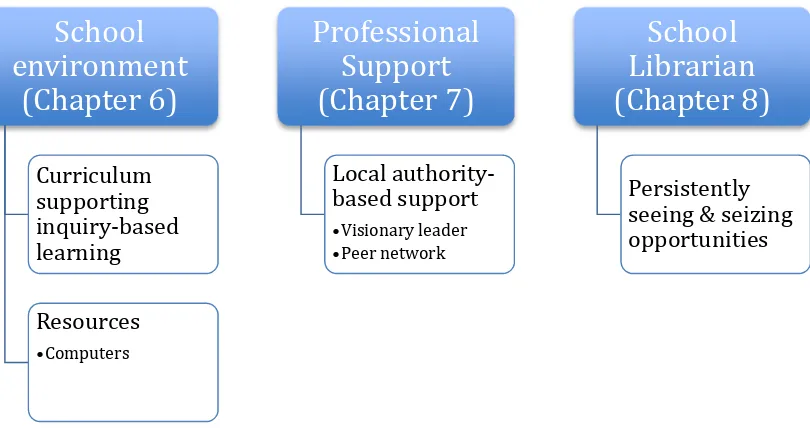
Fig. 1 elements of the model derived from the case studies.
Elements from the case study data that will be included in the model.
The framework can be described in words as follows: 1. School environment
a. School curriculum that supports inquiry-based learning b. Resources that enable maximum access to classes
i. Enough computers for a whole class 2. Professional support
a. Local authority-based professional support
i. Visionary local professional leader or manager ii. Strong local peer support network
3. Librarian
a. Persistently seek, see, and seize opportunities to work with teachers
The case study-derived framework was combined with the literature-derived framework, and then this combined framework was refined to generate the draft model. In order to combine both frameworks into a coherent whole, several adaptations were made:
• All elements were evaluated for feasibility in Scotland. This reasoning excludes items such as teacher-level pay, however, we also found no case study evidence for this to be included in the model.
• Elements were grouped using the three main categories of librarian, school environment, and professional support, and then grouped further within those headings.
• The librarian, as a main heading, was moved to the beginning of the model, for two reasons:
o The case study data reflects that the librarian is the primary driver of the library programme. The school environment and professional support offer opportunities and challenges to the librarian but the librarian is at the centre.
School
environment
(Chapter 6)
Curriculum supporting inquiry-based learning
Resources
•Computers
Professional
Support
(Chapter 7)
Local authority-based support
•Visionary leader •Peer network
School
Librarian
(Chapter 8)
15
o The model will primarily be of use to school library policy-makers and school librarians.
Member-checking and revisions.
It was desirable to ask the case-study librarians for feedback on the draft model, to ensure that the model made sense to them, and did not overlook anything they deemed significant. This process is part of validation of the analysis (Corbin & Strauss, 2008). Gorman and Clayton (2005) consider the process of asking participants for feedback, sometimes called “member-checking,” to be “the single most important action inquirers can take, as it goes to the heart of” credibility and validity of the construct. In this case the construct is the model. Minor final revisions to the model were made after member feedback was incorporated: one Connecticut librarian suggested the inclusion of embracing current technology and also the use of online learning, and both were added. Another Connecticut librarian suggested
emphasizing the teaching aspect of school librarianship, but this was not included for reasons explained above. Librarians in Scotland gave positive feedback and did not make suggestions for changes.
Finalizing the Model
This model is designed to represent an ideal school library, and an ideal set of elements that help it achieve high standards. This model does not represent professional standards. Rather it seeks to describe features that would enable a library service to meet high professional
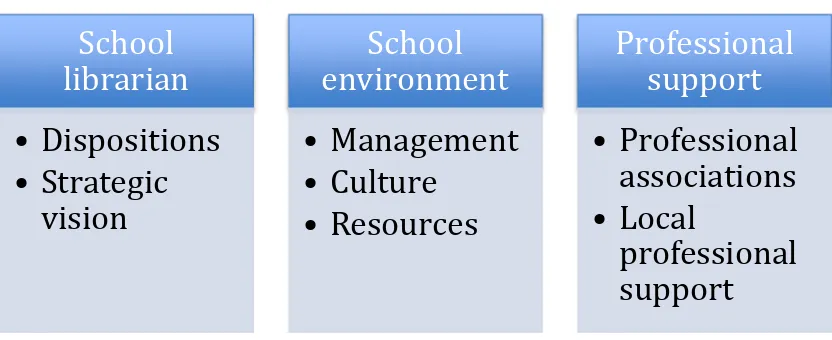
standards. It seeks to describe an exemplary school library that could feasibly exist in Scotland, drawing on research literature and our American and Scottish case studies. The case study elements of the model from Figure1 are broken up into three interdependent parts: the librarian, the school environment, and professional support. These elements shaped the model, including factors that are internal to the library (the librarian) and external factors that influence how well the librarian is able to develop the service (the school environment and the professional support available to the librarian). These three areas all contribute to the success of a school library, and form the top-level elements in our model. in Figure 2 below.
TAKE IN FIGURE 2
School
librarian
Professional
support
School
16 Fig. 2 Three top-level elements in model.
The school librarian is the primary driver of the school library and is critical to its success, however, even a model school librarian can become demotivated by an unsupportive senior management team in the school, the lack of professional support at the local authority level, or a combination of both. Outside support helps active, visionary librarians meet standards and maintain motivation, commitment, and resilience. The more of these model elements a school library has, the better it can be.
The three top-level elements in the model represent areas of influence. Within these three areas, the model contains subcategories of elements that represent an ideal school library programme, such as “management” and “culture” within the school environment. What follows is the essential framework of the model (see Figure 3 below).
[image:16.595.77.493.270.440.2]TAKE IN FIGURE 3
Fig. 3 framework of the model.
The school librarian
The model school librarian will be professionally qualified, and will have a strategic vision that involves supporting the overarching goals of the school through dynamic, tailored, high-quality library services. The model school librarian will exhibit appropriate behaviours that contribute to providing a high-quality service that supports learning within and beyond the curriculum. When describing these behaviours the word dispositions will be used, which are observable behaviours that one is inclined to exhibit repeatedly and consciously. These terms do not relate to personality, level of intro- or extroversion, character, or even beliefs; but only to behaviours. The following dispositions reflect the multi-faceted nature of the librarian’s role.
The model school librarian will display appropriate dispositions, such as the following
• Develops positive, productive relationships with students and teachers
• Engages in positive interactions with students whether the student is seldom or regularly in the library
• Is welcoming to every student and teacher who enters the library
• Shows caring and empathy towards students
• Displays a service-orientation by seeking to fulfil others’ needs in a courteous and helpful manner
• Takes the perspective of students and teachers
School
librarian
• Dispositions
• Strategic
vision
School
environment
• Management
• Culture
• Resources
Professional
support
• Professional
associations
• Local
17
• Manages expectations of self and others
The model school librarian will have a strategic vision expressed through a diverse set of dispositions such as the following
• Prioritises the enhancement of teaching and learning as the main goal of the school library
• Demonstrates knowledge of the curriculum and stays current with curricular developments
• Aligns the goals of the library to the goals of the school
• Offers tailored services centred around teachers’ and students’ needs
• Stays current in best practices, technology and literature
• Seeks to expand and develop the school library, for instance, by working with new teachers and departments or new types of projects every year
• Persistently seeks, sees, and seizes opportunities to work with teachers
The school environment.
The school environment can provide both opportunities and barriers to a school librarian. The model school environment allows the library to thrive by providing numerous
opportunities for the librarian to interact with teachers and students.
The model school managers will be supportive of an active librarian
• Managers support the librarian taking an expansive, non-operational role and endeavouring to support learning across the curriculum
• Managers see the librarian as a professional with an area of expertise
The model school culture will support the library by having the following features
• A culture of collaboration in which staff are expected to work together
• An atmosphere in which colleagues have strong relationships and trust one another
• A strong focus on shared objectives and continual improvement of teaching and learning
• A curriculum that supports inquiry-based learning and/or research projects requiring independent sources, critical thinking, and information literacy
The model school will have resources that enable the librarian to have good access to teachers and classes
• There should be enough computers in the library for a whole class
• There should be adequate time for the librarian to work with teachers
• There should be clerical support in the library to enable the librarian to take on higher-level work
Professional support.
Strong professional leadership can help motivate school librarians and raise the standards of professional activity. Model professional support will provide intellectual and social
18
The model professional associations and organizations will support school librarians nationally and regionally through the following means
• Professional associations publish high professional standards librarians can work towards
• Professional associations provide opportunities for peer networking and idea-sharing, such as conferences and online learning
The model local professional personnel will support librarians at the local authority level by having the following attributes
• The school librarian has a local professional manager within the council who has a strategic vision for school libraries and encourages high-level professional activity
• The school librarians in the council form a strong local peer support network, working together to solve professional problems and share knowledge
Discussion of the Model
Interconnection
The three sections of this model are closely entwined. A model library programme depends on an active librarian as well as adequate resources and support from the school and the professional sphere. A school library programme will not thrive without a combination of internal and external strengths. This interrelatedness is visible in the model, as elements in one section sometimes complement elements in another:
• A model school librarian: Seeks to expand and develop the school library, for instance, by working with new teachers and departments or new types of projects every year
• A model school librarian: Prioritises the enhancement of teaching and learning as the main goal of the school library
• A model school environment: Managers support the librarian taking an expansive, non-operational role and endeavouring to support learning across the curriculum
The first two of these elements represent the librarian’s efforts to reach out and develop the library programme, and the third element represents an environment that is receptive to those efforts. Elements such as these reflect the two-way relationship that exists between the librarian and the school environment. If a school librarian meets with resistance or even hostility from management, the library programme will be less likely to succeed (Church, 2008). Conversely, a librarian with a narrow, traditional view of the school library who never reaches out to teachers and ignored the educational mission of the school would not run a model school library programme, even with unlimited support from school management.
Another example of model elements being intertwined is when several different elements describe various facets of a single significant phenomenon, such as the library supporting learning via the curriculum. In our model, four elements cover this idea:
The model school librarian will have a strategic vision expressed through a diverse set of dispositions such as the following
19
• Demonstrates knowledge of the curriculum and stays current with curricular developments
• Aligns the goals of the library to the goals of the school
• Offers tailored services centred around teachers’ and students’ needs
The first of these four elements is akin to a mission statement, defining the main goal, and the main role, of the school library: to support teaching and learning across the school. The next three elements spring from this statement. The curriculum is the main delivery mechanism for learning and teaching, therefore, the librarian must be familiar with the curriculum in order to support it and work within it. The first two elements in this group are both general, and will apply to all schools. The third element recognizes the importance of working towards specific school-level goals, because the school is the parent organization the library serves, and the fourth element highlights the importance of meeting the individual needs of individual teachers and students. These four elements work together, describing how the model school librarian will support learning and teaching across the school.
Feasibility
One of the core goals of this work is to develop a model for school libraries in Scotland that was feasible. This meant that everything in the model must be possible in Scotland. For many of the items, the possibility of existing in Scotland was proven simply by being observed in one of the Scottish case studies.
We are making a leap when recommending in the model that professional associations available to school librarians in Scotland and “publish high professional standards librarians can work towards.” There are currently no standards for school librarians in Scotland, although many school librarians voluntarily follow the HGIOS: Libraries Supporting
Learners self-evaluation framework (HMIe, 2005) which was developed by a working group within the Scottish Library and Information Council (SLIC). The members of the working group were primarily heads of library services from various Scottish local authorities and demonstrates that motivated practitioners can work in concert with an official body to produce useful guidelines.
The role of professional associations is not limited to standards-generation, however. In the model, it is recommended that professional associations “provide opportunities for peer networking and idea-sharing, such as conferences and online learning”.
Findings from the case studies indicate that Scottish school librarians are closer to the American model of school librarianship than they are to the British (Knuth, 1995, p.267), in terms of role-perception and programme orientation. This has two main consequences: firstly, it validates the researchers’ approach of learning from the American model of school
librarianship. Secondly, it means that it no longer seems reasonable to expect Scottish school librarians to follow the CILIP guidelines for secondary school librarians, particularly when the school library community has developed and chosen to adopt HGIOS: Libraries
Supporting Learners (HMIe, 2005) its own evaluation framework. There is an appetite for better guidance and higher standards in Scotland, and the will to work towards them clearly exists, therefore it is feasible to suggest that school librarians should have Scotland-specific professional guidelines to follow.
20
The purpose of this study was to develop a model of best practice for school libraries in Scotland based on literature and existing practices in the US and Scotland. In order to develop a model of best practice, the authors investigated what made libraries successful via the literature and undertaking five case studies. Through research questions, they sought to examine factors that enabled individual libraries in both the US and Scotland to succeed. The research questions were:
• What allows a school library to succeed?
• What can prevent a school library from succeeding?
• How important are the systemic differences between the US and Scotland to the success of a school library?
• What are the different internal and external factors that hold influence over the development of the school library programme?
These questions were explored both through the literature and through case studies in Connecticut and Scotland. The findings were used to build a model for school libraries in Scotland, and in the next few sections, we will address each of these questions directly, in turn.
What are the different internal and external factors that hold influence over the development of the school library programme? Results indicate that the school library programme is influenced by factors that are internal to the school library (the school librarian) and external (the school environment and professional support). As the main internal influence, the school librarian is the primary driver of the school library programme. The librarian interacts with external forces such as the school environment and the
professional support available to him or her. The interplay of these three main spheres of influence is what determines the shape of a library programme. Aspects of the school environment and available professional support can provide opportunities or barriers to the librarian in developing the library programme. While it is the responsibility of the librarian to seize opportunities and minimize barrier, there is a limit to what can be done. Chronic
conflict or a lack of support in both the school environment and the professional sphere can lead to demotivation or staff attrition (Day, Stobart, Sammons, Kington, Gu, Smees, & Mujtaba, 2006). For a school library programme to meet its highest potential, all three areas should be strong.
What allows a school library to succeed?
An interconnected web of factors allows a school library to succeed. It depends on the school librarian firstly, and also the school environment and the professional support available to the librarian. A school librarian is the main driver of the school library programme, and without the librarian, the school library will not succeed. A librarian builds a strong programme through careful high-level strategic management as well as successful day-to-day operations. A school librarian can develop a high-quality service through actions in three areas:
• Managing self: employing effective coping strategies to maintain motivation and commitment;
• Interacting with others: forming positive relationships with managers, teachers and students; and
• Strategic management: working towards a vision for the school library.
Although the model lists elements individually, some of them overlap all three of these areas.
What can prevent a school library from succeeding?
21
development of a successful programme. Many of these things could be described as the opposite to elements in the previous section. For example, imagine a librarian who has poor relationships with teachers and students, who cannot manage disappointment well, loses motivation easily, has no vision for the programme and who is content to perform only basic operational tasks such as checking books in and out. That librarian will not run a successful programme.
A school environment can provide many barriers to a library programme, either by having a culture or atmosphere that is hostile to the efforts of an active, collaborative librarian or by putting logistical barriers to the librarian’s efforts, such as resources so limited that the library becomes difficult to use.
Poor professional support can leave librarians without clear guidance or standards to aim for. Professional associations can under-serve school librarians by publishing weak or irrelevant professional standards, or by providing a lack of opportunities to meet and learn from other school librarians at conferences. A lack of employment-based support offered by the local authority can be another weakness. Poor or even hostile leadership at the local level can mean that librarians are given conflicting messages about their roles, and are thwarted in their attempts to reach high professional standards. Non-existent peer support can mean that librarians feel isolated and lose motivation,
How important are the systemic differences between the US and Scotland to the success of a school library?
International comparison has been a key element of this study, investigating how important the systemic differences between school libraries in the US and Scotland are to individual, practicing librarians. The findings indicate that although American school librarians enjoy advantages in pay, status, and professional support, some differences can be overcome, and are not insurmountable barriers to excellence in Scottish school libraries. Our Scottish case studies showed that our librarians in Scotland, like those in the US, see the role of the school library as supporting learning across the school, both within and beyond the curriculum. Although some might choose not to enter the profession because of the low pay relative to teachers, that says nothing about the capabilities of those who do.
Another difference that can be overcome is the difference between the strength of the professional associations in the US and UK. Professional standards in the UK are weak relative to those in the US. The Scottish school library community have responded by taking the initiative to develop their own self-evaluation framework. Their efforts to integrate with the education establishment and become part of the inspection process is impressive given that school librarians do not hold a statutory position, and there is no legal requirement to have library staff (Owen, 2009).
Final Thoughts
This chapter reports on an investigation of the reality of daily life in a school library
comparing the workings of American and Scottish school libraries, to find out if they are as different as the literature and national guidelines would make them seem. In many ways, American and Scottish school libraries are highly similar. The findings suggest that librarians in both countries see the role of the school librarian to be the same, namely supporting
22
23 References
AASL. (2007). Standards for the 21st-century learner. Chicago, IL: American Library Association. Retrieved from
http://www.ala.org/aasl/sites/ala.org.aasl/files/content/guidelinesandstandards/learnin gstandards/AASL_Learning_Standards_2007.pdf
AASL. (2012). Learning about the job. Chicago, IL: American Library Association. Retrieved from
http://www.ala.org/aasl/aasleducation/recruitmentlib/learningabout/learningabout AASL, AECT. (1998). Information power: Building partnerships for learning. Chicago IL:
American Library Association.
Alge, B.J., Gresham, M.T., Heneman, R.L., Fox, J., & McMasters, R. (2002). Measuring customer service orientation using a measure of interpersonal skills: A preliminary test in a public service organization. Journal of Business and Psychology, 16(3), Retrieved from http://www.jstor.org/stable/25092784
Ashcroft, L. (2003). Raising issues of salaries and status for library/information professionals. New Library World, 104(4/5), 164-170.
doi:10.1108/03074800310475981
Baker, B.D., Sciarra, D.G., & Farrie, D. (2010). Is school funding fair? A national report card. Newark, NJ: Education Law Center. Retrieved from
http://www.schoolfundingfairness.org/National_Report_Card.pdf
Barrett, L. (2010). Effective school libraries: Evidence of impact on student achievement. The School Librarian: The journal of the School Library Association, 58(3), Retrieved from http://www.sla.org.uk/pdf.php?pdf=sla-effective-school-libraries.pdf
Barrett, L., & Douglas, J. (Eds.). (2004). The CILIP guidelines for secondary school libraries. London, UK: Facet.
Becton, J.B., Giles, W.F., & Schraeder, M. (2008). Evaluating and rewarding OCBs:
Potential consequences of formally incorporating organisational citizenship behaviour in performance appraisal and reward systems. Employee Relations, 30(5), 494-514. doi:10.1108/01425450810888277
Birdi, B., Wilson, K., & Cocker, J. (2008). The public library, exclusion and empathy: a literature review. Library Review, 57(8), 576-592. doi:10.1108/00242530810899568 Brewer, J. (1981). Education for school librarians. In J. Cook (Ed.), School librarianship (pp.
67-76). Sydney, Australia: Pergamon Press.
Bryman, A. (2008). Social research methods (3rd ed.). Oxford, UK: Oxford University Press. Callison, D. (2006). Enough already? Blazing new trails for school library research: An
interview with Keith Curry Lance. School Library Media Research. Retrieved from http://www.ala.org/ala/mgrps/divs/aasl/aaslpubsandjournals/slmrb/editorschoiceb/lanc e/interviewlance.cfm
24
customers and personnel. International Journal of Service Industry Management, 8(1), 65-86. doi:10.1108/09564239710161088
Chapman, C., & Hadfield, M. (2010). Realising the potential of school-based networks. Educational Research, 52(3), 309-323. doi:10.1080/00131881.2010.504066
Charmaz, K.C. (2006). Constructing grounded theory: A practical guide through qualitative analysis. London, UK: Sage.
Chernow, E.K., Cooper, D.L., & Winston, R.B. (2003). Professional association involvement of student affairs professionals. NASPA Journal (Online), 40(2), 43-58.
Church, A.P. (2008). The instructional role of the library media specialist as perceived by elementary school principals. School Library Media Research, Retrieved from http://www.ala.org/ala/mgrps/divs/aasl/aaslpubsandjournals/slmrb/slmrcontents/volu me11/church.cfm
CILIPS. (2011). Presentations. Edinburgh, UK. Retrieved from http://www.cilips.org.uk/conference-2011-presentations/
CILIPS. (2012). Events. Edinburgh UK. Retrieved from http://www.cilips.org.uk/events CILIPS. (2013). Autumn Gathering Presentations. Edinburgh UK. Retrieved from
http://www.cilips.org.uk/autumn-gathering-presentations/
Cohen, L., Manion, L., & Morrison, K. (2000). Research methods in education (5th ed.). London. UK: RoutledgeFalmer.
Corbin, J.M., & Strauss, A.L. (2008). Basics of qualitative research: Techniques and procedures for developing grounded theory (3rd ed.). Los Angeles, CA: Sage. Council of Chief State School Officers. (n.d.). INTASC standards and related CSS
dispositions (standards of effective practice for beginning teachers).Retrieved from http://resources.css.edu/academics/EDU/undergrad/forms/INTASCStandards&EDUD ispositionsAlignment.pdf
Crabtree, B.F., & Miller, W.L. (1999). Doing qualitative research (2nd ed.). Thousand Oaks, CA: Sage
Davies, M.B. (2007). Doing a successful research project: Using qualitative or quantitative methods. Basingstoke. UK: Palgrave McMillan.
Day, C.,Stobart, G., Sammons, P., Kington, A., Qing, G., Smees, R., & Mujtaba, T. (2006) Variations in teachers’ work, lives and effectiveness. Final report for the VITAE Project. London: DfES. Retrieved from:
https://www.education.gov.uk/publications/standard/publicationDetail/Page1/RR743 Delaney, J.J. (1968). The new school librarian. Hamden, CT: Shoe String Press.
Denscombe, M. (2007). The good research guide for small-scale social research projects(3rd ed.). Maidenhead, UK: Open University Press.
DiPaola, M.F., & da Costa Neves, P.M.M. (2009). Organizational citizenship behaviors in American and Portuguese public schools: Measuring the construct across cultures. Journal of Educational Administration, 47(4), 490-507.
25
Dyer, C., Brown, R., & Goldstein, E.D. (1970). School libraries: Theory and practice. London, UK: Bingley.
General Teaching Council for Scotland. (n.d.). Secondary teaching. Edinburgh, UK: Author. http://www.gtcs.org.uk/education-in-scotland/secondary-teaching.aspx
Glaser, B.G. (1998). Doing grounded theory: Issues and discussions. Mill Valley, CA: Sociology Press.
Glaser, Barney G & Strauss, Anselm L., 1967. The Discovery of Grounded Theory: Strategies for Qualitative Research, Chicago, Aldine Publishing Company Godson, M. (2009) .Relationship marketing. Oxford, UK: Oxford University Press.
Gorman, G.E. & Clayton, P. (2005). Qualitative research for the information professional : A practical handbook (2nd ed.). London, UK: Facet.
Goulding, C. (2005). Grounded theory, ethnography and phenomenology: A comparative analysis of three qualitative strategies for marketing research. European Journal of Marketing, 39(3/4), 294-308. doi:10.1108/03090560510581782
Gutek, B.A., Groth, M. & Cherry, B. (2002). Achieving service success through relationships and enhanced encounters. The Academy of Management Executive, 16(4), 132-144. Retrieved from http://www.jstor.org/stable/4165909
Hartzell, G. (2002). The principal’s perceptions of school libraries and teacher- librarians. School Libraries Worldwide, 8(1), 92-110.
Herring, J.E. (1988). School librarianship (2nd ed.). London, UK: Bingley.
HMInspectorate of Education (HMIe). (2005). How good is our school? Libraries supporting learners. (Self Evaluation Series E). Livingston, UK: Author.
www.slainte.org.uk/files/pdf/slic/schoollibs/hgioslsl.pdf
Hughes, J.N., Cavell, T.A., & Willson, V. (2001). Further support for the developmental significance of the quality of the teacher–student relationship. Journal of School Psychology, 39(4), 289–301. doi.org/10.1016/S0022-4405(01)00074-7
Information and Libraries Scotland (SLAINTE). (2010). Welcome to Slainte. Edinburgh, UK: Information and Libraries Scotland (SLAINTE). Retrieved from
http://www.slainte.org.uk
Johnson, I.M., Williams, D.A., Wavell, C., & Baxter, G. (2004). Impact evaluation, professional practice, and policy making. New Library World, 105(1/2), 33-46. doi:10.1108/03074800410515255
Johnson, M., & Zinkhan, G.M. (1991). Emotional responses to a professional service encounter. The Journal of Services Marketing, 5(2), 5-16.
doi:10.1108/08876049110035503
Julien, H. (2005). Education for information literacy instruction: A global perspective. Journal of Education for Library and Information Science, 46(3), 210-216.
Katz, L.G., & Raths, J.D. (1985). Dispositions as goals for teacher education. Teaching and Teacher Education, 1(4), 301-307. doi.org/10.1016/0742-051X(85)90018-6
26
Knowles, L. (2002). Libraries and information services in schools. In R. McElroy & R. Craig (Eds.), Advocating libraries: Essays presented to Robert Craig, (pp. 170-180). Hamilton, UK: CILIPS.
Knuth, R. (1995) Factors in the development of school libraries in Great Britain and the United States: A comparative study. International Information and Library Review, 27(3), 265-282. doi.org/10.1006/iilr.1995.0022
Knuth, R. (1996). Through the lens of theory: Perspectives on an international library association. International Information & Library Review, 28(4), 303–329. doi.org/10.1006/iilr.1996.0021
Knuth, R. (1997). Innovation diffusion: Proposal of an organizing theory on which to base research into school library development. Library & Information Science Research, 19(3), 301-313. doi.org/10.1016/S0740-8188(97)90017-7
Lance, K.C. (2006). Media specialists more likely than teachers to have master's degrees. American Libraries, 37(6), 24.
Lance, K.C., & Hofschire, L. (2011, September 1).Something to shout about: New research shows that more librarians means higher reading scores. School Library Journal. Retrieved from
http://www.schoollibraryjournal.com/slj/printissue/currentissue/891612-427/something_to_shout_about_new.html.csp
Lance, K.C., Welborn, L., & Hamilton-Pennell, C. (1993). The impact of school library media centers on academic achievement. Denver, CO: Colorado Department of Education. Retrieved from http://files.eric.ed.gov/fulltext/ED353989.pdf
Lance, K.C., Rodney, M.J., & Russell, B. (2007). How students, teachers, and principals benefit from strong school libraries: The Indiana study. Denver, CO: Library Research Service. Retrieved from http://www.lrs.org/impact.php
Lance, K.C., Rodney, M.J., & Hamilton-Pennell, C. (2000). How school librarians help kids achieve standards: The second Colorado study (ERIC Number: ED445698) . Denver, CO: Colorado State Library.
Learning and Teaching Scotland. (2010a). About LTS. Edinburgh, UK: Learning and Teaching Scotland. Retrieved from http://www.ltscotland.org.uk/aboutlts/
Learning and Teaching Scotland. (2010b). What is the Curriculum for Excellence? Learning and Teaching Scotland.
http://www.ltscotland.org.uk/understandingthecurriculum/whatiscurriculumforexcelle nce/
Library Association (1977). Library resource provision in schools guidelines and recommendations. London, UK: Author.
Library Research Service (2008) Impact studies. [online] Denver, Colorado: Library Research Service. Retrieved from http://www.lrs.org/impact.php