City, University of London Institutional Repository
Citation: Chassin, L.J. (2005). In silico testing of glucose controllers : methodology and sample application. (Unpublished Doctoral thesis, City University London)
This is the accepted version of the paper.
This version of the publication may differ from the final published version.
Permanent repository link: http://openaccess.city.ac.uk/8435/
Link to published version:
Copyright and reuse: City Research Online aims to make research
outputs of City, University of London available to a wider audience. Copyright and Moral Rights remain with the author(s) and/or copyright holders. URLs from City Research Online may be freely distributed and linked to.
METHODOLOGY AND SAMPLE APPLICATION
by
Ludovic Jean Chassin
Thesis submitted in partial fulfilment of the requirements for the
degree of
Doctor of Philosophy
In
Measurement and Information in Medicine
City University
Diabetes mellitus designates a range of metabolic disorders characterised by hyperglycaemia due to deficient or absent insulin secretion, insulin action, or both. In particular, Type 1 diabetes is characterised by a total lack of endogenous insulin secretion which has to be replaced by exogenous insulin to control the plasma glucose concentration.
An extracorporeal wearable artificial pancreas (AP) has been a research aim for over three decades. The research is motivated by the need to improve glucose control. Results of a major study, the Diabetes Control and Complications Trial (DCCT), have demonstrated that improvements in glucose control prevent or delay long term complications, which are the main causes of morbidity and mortality in subjects with Type 1 diabetes.
Prior to a clinical evaluation, performance of new medical devices can be tested in
silico. Such an approach has been adopted extensively by the pharmaceutical industry in the development of new drugs. In silica testing benefits from relatively low financial, human, and time costs by comparison with the resources required for a full clinical evaluation.
The aims of the present thesis are to identify components of the AP, integrate them into a simulation environment, and design an in silico evaluation strategy for the development of closed-loop algorithms with the ultimate goal to assess safety and efficacy prior to clinical evaluation.
evaluating a nonlinear model predictive controller. The robustness of the AP was explored by hypothesising various perturbations induced by different system components.
A further objective included the establishment of a qualitative grading scheme of glucose control from the clinical viewpoint. This was followed by a comparison between results from simulations and a clinical trial of 24 hours, which gave the proof of concept of in silica testing. It was found that despite discrepancies due to initial conditions and meal differences, the simulations indicated well the outcome of the clinical trial.
I would like to thank my supervisor Dr. Roman Hovorka for his generous advice, availability, patience, sympathy and his constant positive attitude during the work on the entire thesis.
Many thanks to my friends and colleagues for their encouragements and in particular to Dr. Malgorzata E. Wilinska for her comments, listening and for keeping me
energised with coffees.
I am also grateful to Dr. Thomas Vering for supporting me in the continuation and completion of this PhD study.
I would like to extend my thanks to Diana Kasparova who has done much to boost my optimism towards the end of the PhD.
ADA ADICOL AP
CHO CSII DCCT IG IVGTT MOl mM MPC MTT mU OGTT PG U WHO
American Diabetes Association
ADvanced Insulin infusion using a COntrol Loop Artificial pancreas
Carbohydrate
Continuous subcutaneous insulin infusion Diabetes Control and Complications Trial Interstitial glucose
I ntravenous glucose tolerance test Multiple daily injection
Millimoles per litre
Model Predictive Controller Meal tolerance test
Milliunits of insulin
Oral glucose tolerance test Plasma glucose
Units of insulin
~l)~t,.tl(;t •••••••••••••••••••••••••••••••••••••••••••••• •••••••••••••••••••••••••••••••....•..•..•..•.•••••••••••.•••••.•.•••.•..•.•••••••••••••• I ~£:JCIIl)}1)I(?tl~I1t~l1t ••••••••••••••••••••••••••••••••••••••• ••••••••••••••••••••••••••••••••••••••••••••••••••••••••••••••••••••••••••••••• III
(Jf/£JSStl1JV ••••••••••••••••••••••••••••••••••••••••••••••• ••••••••••••••••••••••••••.••••••••••••••••••••••••••• •••••••••••••••••••••••••••••••• il'
Table of COlltellts ... v
T"l1le l1f Jffi~ll,.es ...•...•...•... LJC ]rtll)l~ l1f ]rtll)l~s •...•..•.•••...•...•....•...•... Jell 1 Introtluction alltl Th~sis Structure ... 1
1.1 Background and Motivations ... 1
1.2 Aims ... 3
1.3 Objectives ... 3
1.3.1 Technical objectives ... 3
1.3.2 Clinical objectives ... 4
1.4 Thesis Structure ... 4
2 Type 1 Diab~tes tllltl its Tretltmellt ... 6
2.1 Introduction ... 6
2.2 Glucose Metabolism ... 6
2.2.1 Generalities ... 6
2.2.2 Systemic Glucose Appearance ... 7
2.2.3 The Pancreas ... 7
2.2.4 Insulin ... 7
2.2.5 Glucagon ... 9
2.2.6 Conclusion ... 9
2.3 Diagnostic Categories ... 10
2.3.1 Type 1 Diabetes Mellitus ... 1 0 2.3.2 Type 2 Diabetes ... 10
2.3.3 Other Types of Diabetes ... 11
2.4 Type 1 Diabetes ... 11
2.5 Di~lbetic COlnplications ... 12
2.6.3 Other Insulin Delivery Approaches ... 18
3 Simulation and Modelling to Support Treatment of Type 1 Diabetes ... 20
3.1 Introduction ... 20
3.2 Modelling of Glucose Metabolism ... 20
3.3 Decision Support Systems ... 25
3.4 Closed-Loop Control ... 27
3.4.1 Non Adaptive Approaches ... 27
3.4.2 Adaptive and Optimal Control Approaches ... 28
3.4.3 Model Predictive Approaches ... 29
3.4.4 Non-linear Model Predictive Controller ... 31
3.4.5 Conclusion ... 34
4 Simulating Carbohydrate Metabolism in Type 1 Diabetes ... 35
4.1 Introduction ... 35
4.2 General Overview ... 35
4.3 Glucose Kinetics Subsystem ... 36
4.4 Insulin Action Subsystem ... 40
4.5 Insulin Kinetics Subsystem ... 43
4.6 Gut Absorption Subsystem ... 45
4.7 Interstitial Glucose Kinetics Subsystem ... 48
4.8 Simulation Example ... 49
4.9 Implementation ... 50
4.10 Discussion ... 51
4.11 Conclusion ... 52
5 Sillilliatioll Elzvirolllllelzt ... 53
S.1 Introduction ... 53
5.2 General Overview of Simulation Environment ... 53
5.3 Insulin Pump l\Ilodel ... 55
5.4 Glucose Measurement Model ... 56
5.4.1 Calibration Model ... 56
5.5.2 5.5.3 5.5.4 5.5.5 5.5.6 5.6 5.6.1 5.6.2 5.6.3 5.7 5.8 5.9
Glucose Kinetics Subsystem ... 59
Insulin Action Subsystem Parameters ... 61
Insulin Kinetics Subsystem ... 62
Gut Absorption Subsystem ... 63
Interstitial Glucose Kinetics ... 64
Intra-Subject Variability ... 65
Introduction ... 65
Parameter Variation ... 66
Variability in Glucose Absorption Rate ... 70
Characteristics of Synthetic Subjects ... 71
Discussion ... 78
Conclusion ... 80
6 Evaluation of Glucose Controllers in Virtual Environment: Methodology and Sample ~ppli~tlti()11 ... ~~ 6.1 Introduction ... 81
6.2 Methods ... 81
6.2.1 Simulation Environment ... 81
6.2.2 Model Predictive Controller of Glucose Concentration ... 83
6.2.3 System Tuning ... 83
6.2.4 Methodology to Test Blood Glucose Controllers Employing Simulator of Glucose Metabolism .84 6.2.4.1 Overview ... 84
6.2.4.2 6.2.4.3 6.2.4.4 Assessing Glucose Control ... 87
Safety Criteria ... 90
Efficacy criterion ... 90
6.3 Results and Discussion ... 91
6.3.1 Simulation Environment ... 91
6.3.2 System Tuning ... 93
6.4 Application of the Methodology to Test Blood Glucose Controllers on Simulator ... 94
6.5 Gelleral Discussion ... 96
6.6 COllclusion ... 97
7 Clinical ~ssessment of Control and Simulator Validity ... 98
7.1 Illtroductioll ... 98
7.2 J\, 1 ctilOd(»)ogy ... 100
7.2.3.1 Fasting Conditions ... 101
7.2.3.2 Postprandial Conditions ... 103
7.2.4 Clinical Trial Setting ... 104
7.2.5 Simulated Trial. ... 1 05 7.3 Results ... 106
7.3.1 An Example Use of the Criteria ... 106
7.3.2 Comparison Assessment ... 109
7.4 Discussion ... 113
7.5 Conclusion ... 116
8 General Discussioll and Conclusions ... 117
8.1 General Discussion ... 117
8.2 Achievements of Ob j ectives ... 120
8.3 Future Work ... 121
~~~~,.l?It(?l?~ •...•...•... j7 ~~ Per~o"al Bibliography ... 151
Journal Papers ... 151
Abstracts ... 152
~ppl?,'''i(?e~ ...•...•...•.•..•...••...•.••... 1:;:;
~. Glucose Profile in 18 Synthetic Subjects Controlled by MPC ... 156
B. Sinlulator Simuii"k Blo(?k Diagram~ ... 17:;
Figure 3.1.' Strategy of model predictive control . ... 30
Figure 3.2: Block diagram of the model predictive algorithm ... 32
Figure 4.1: Model structure of a simulated subject with Type 1 diabetes ... 36
Figure 4.2: Compartmental model of glucose kinetics and insulin action. Ql alld Ql represellt masses ill accessible (plasma) and nOll-accessible compartments, I represents plasma illsulill, Xl. Xl, and X3 represent insulin actioll 011 glucose transport, disposal, alld endogenous glucose productioll, for more details, see section 4.3 and 4.4 ... 38
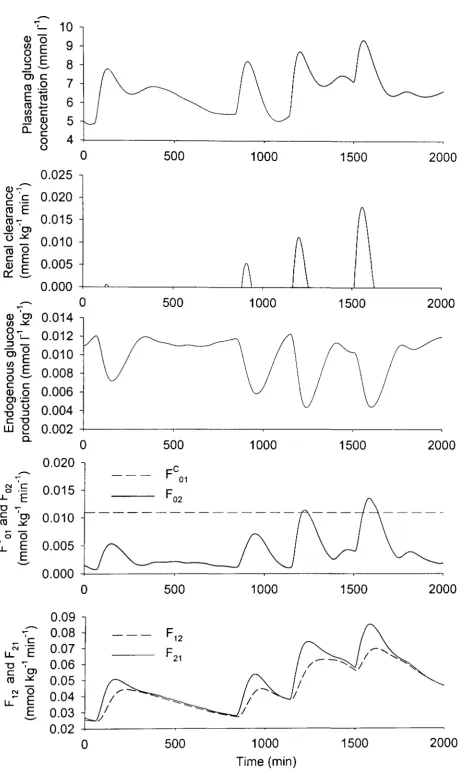
Figure 4.3: Sample simulation with the glucose kinetics subsystem over olle and a half day. See text for details . ... 39
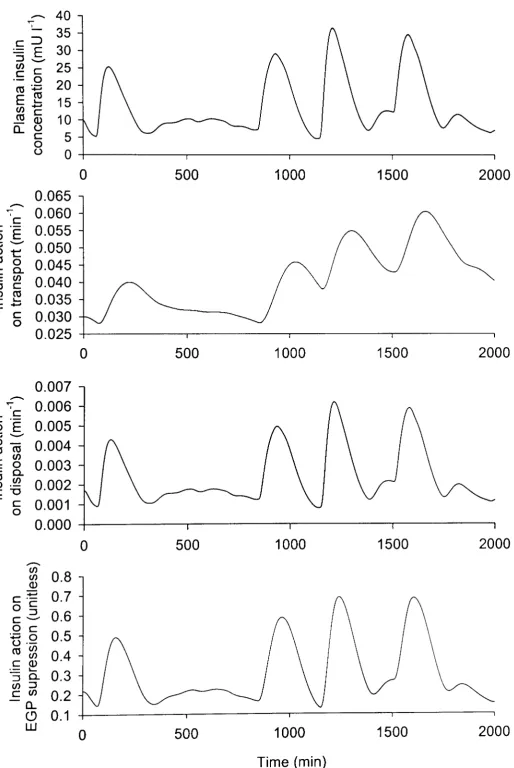
Figure 4.4: Sample simulation with the insulin action subsystem over one alld a half day. See text for details . ... 4 2 Figure 4.5: Subcutaneous insulill absorption model, see text for details ... 43
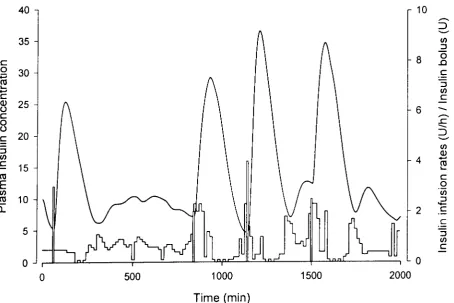
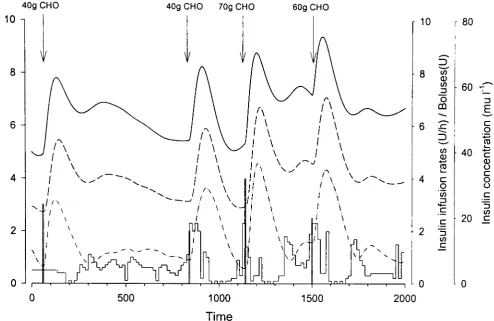
Figure 4.6: Illsulin illfusioll rates (piecewise constant function), insulin bolus (vertical bars at 60, 840, 1140, and 1500) and the resulting plasma insulin profile ... 44
Figure 4.7: Glucose absorptioll subsystem ... 45
Figure 4.8: Sample simulatioll with the gut absorption subsystem with meals of 40, 40, 70, alld 60g CHO digested at 60, 840, 1140, and 1500min, respectively ... 47
Figure 4.9: Illterstitial glucose killetics subsystem . ... 48
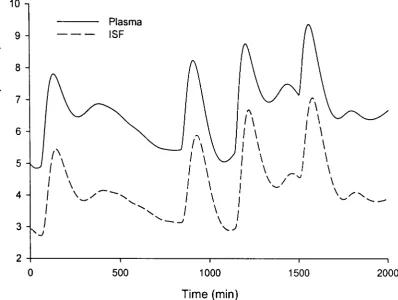
Figure 4.10: Sample simulation with the illterstitial glucose killetics subsystem ... 49
Figure 4.11: Simulation example over one and a half day. See text for details ... 50
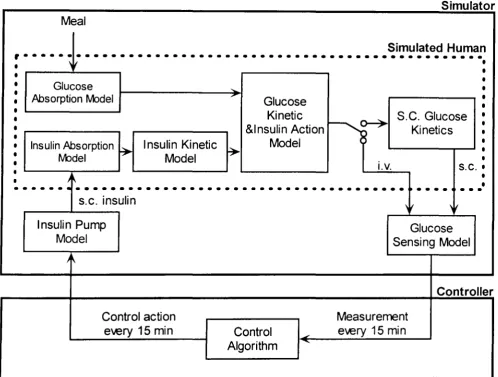
Figure 5.1: All overall layout of the simulatioll environment which illclude a simulated subject with Type 1 diabetes within the closed-loop control framework with measurement and insulin pump models and cOlllrol algoritl,m to close tile loop ... 54
Figure 5.2: Model ofillsulill pump. U(t) represents insulin actually delivered by the pump. The Iloise is ollly associated with the illsulin infusion rate because of the very smallflow rates involved ... 55
Figure 5.3: The commanded and the actually delivered insulin during a simulated trial with a model predictive COil troller. The actual infusion rate was delivered ill the form of microboluses 3 mill apart alld a delil'cry error "'ith a 15% Cv. ... 56
Figure 5..1: Thc sequellce of determillillg glucose measuremellt from the subcutaneous glucose concelltratioll . ... ... ... ... ... 57
Figure 5.5: ;l1odel of subcutaneous glucose killetics usedfor the calibratioll ... 58
Figure 5.8: A sample simulation of subject 14 with a 30% sinusoidal oscillation superimposed UpOIl
time-variant parameters except parameters of the subcutalleous glucose kinetics left at the 5%
amplitude. 69
Figure 5.9: Simulations of the glucose absorption profile including a random variation in the absorption rate
for the last meal (meals of 40, 40, 70, and 60g CHO at 60, 840, 1140, and 1500min) . ... 70
Figure 5.10: Simulations with a glucose controller using the glucose absorption profiles of Figure 5.9 as the forcing functions . ... 71
Figure 5.11: A sample simulation of a subject difficult to control (subject 5). See text for details oftlte experlm ent . ... 76
Figure 5.12: A sample simulation of a subject with high insulin requirements (subject 11). For details of the simulated experiment, see Figure 5.11 ... 77
Figure 5.13: A sample simulation of a subject easy to control easy control case (subject 8). See Text for details of the experiment . ... 78
Figure 6.1: Overview of a simulation (virtual) environment to facilitate tuning and testing of glucose controllers . ... 82
Figure 6.2: Simulation environment is instrumental in tuning the controller and assisting in the evaluation of settings of other system components such as tlte insulin pump ... 84
Figure 6.3: Glucose controller must be evaluated under different physiological conditions ... 84
Figure 6.4: Overview of the validation methodology for blood glucose controllers (see textfor details) ... 85
Figure 6.5: Example of glucose control using the simulator. At time Omin, a synthetic Type 1 diabetes subject had a meal and received insulin bolus. At 180min (vertical bar), glucose was artificially raised to 11 mM and the subcutaneous insulin infusion was initiated. A model based glucose controller calculated tlte infusion rate every 15 min using intravenous glucose measurements also taken every 15 min ... 92
Figure 7.1: The approach to compare the simulator with data collected during a real clinical trial ... 106
Figure 7.2: Plasma glucose profile (smooth solid line) as all example of good control in synthetic subject 14 . ... 107
Figure 7.3: Plasma glucose profile (smooth solid line) as an example of poor cOlltrol in synthetic subject 17 . ... ... ... 1 08 Figure 7.4: Plasma glucose profiles durillg tlte clinical and simulated trial (mean±SE) ... 110
Figure 7.5: Gradillg of glucose profiles observed during the simulated alld clillical trial ... 1] 2 Figure .. 1.1: Silllulation of subject 1 ... 157
Figure A.2: Silllulatioll of subject 2 ... 158
Figure A.3: Sillllllatioll of subject 3 ... 159
Figure .. t4: Sittlulatioll of subject 4 ... 160
r'igure A.5: Sil1IUlatioll of subject 5 ... 161
Figure A.9: Simulation o/subject 9 ... 165
Figure A.IO: Simulation o/subject 10 . ... 166
Figure A.I1: Sim ulation
0/
subject 11 ... 16 7 Figure A.12: Simulation o/subject 12 ... 168Figure A.I3: Simulation o/subject 13 ... 169
Figure A.14: Simulation
0/
subject 14 ... 170Figure A.IS: Simulation
0/
subject 15 . ... 171Figure A.I6: Simulation
0/
subject 16 ... 172Figure A.I7: Sim ulation
0/
subject 17 ... 173Figure A.I8: Simulation o/subject 18 ... 174
Figure B.I: Simulink schematic diagram showing the top level structure o/the simulator ... 176
Figure B.2: Simulink schematic diagram showing the top level o/the insulin absorption model and the three insulin actions on transport, disposal, and suppression ... 177
Figure B.3: Simulink schematic diagram showing insulin absorption implemented as a/unction block ... 177
Figure B.4: Simulink schematic diagram showing insulin absorption implemented as a/unction block ... 178
Figure B.5: Simulink schematic diagram showing insulin actioll on disposal implemellted as a/unction block . ... 178
Figure B.6: Simulink schematic diagram showing insulin actio" on hepatic glucose production implemented as a /unctio" block . ... 178
Figure B. 7: Simulink schematic diagram showing gut absorption ... 179
Figure B.B: Simulink schematic diagram showing fluxes associated with the glucose accessible compartmellt alld the 11011 accessible compartment GJ and G]o ... 179
Figure B.9: Simulillk schematic diagram showing the calibration procedure ... 180
Figure B.I 0: Simulink schematic diagram showing saturation process 0/ FOJ ... 180
Figure B.II: Simulink schematic diagram showing hepatic glucose production ... 180
Figure B.12: Simulit,k schematic diagram showing the top level structure o/the renal clearance model ... 181
Figure B.13: Sim ulillk schematic diagram showing the renal clearallce threshold ... 181
Figure B./.J: Simulillk schematic diagram showing conversion 0/ amount to cOllcentratioll ... 182
Table 4.1: Parameters of the glucose kinetics subsystem (subject 8) used to generate the simulation presented
in Figure 4.3 ... 40
Table 4.2: Parameters of the insulin action subsystem (subject 8) used to generate simulation presented in Figure 4. 4 ... 43
Table 4.3. Parameter values for the insulin kinetics subsystem (subject 8) employed to generate the simulation shown in Figure 4. 6 ... 45
Table 4.4: Parameters of the gut absorption subsystem (subject 8) used to generate Figure 4.8 ... .47
Table 4.5: Parameters of the interstitial glucose kinetics subsystem (subject 8) used to generate simulation in Figure 4.1 0 ... 49
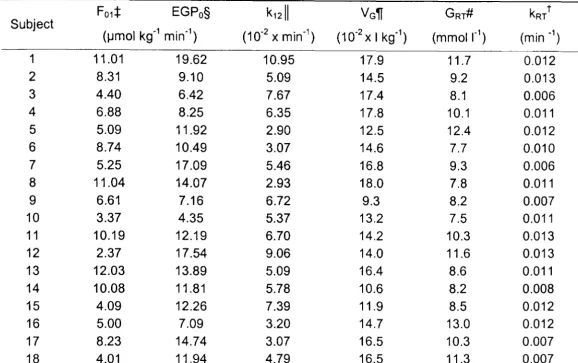
Table 5.1: Parameters of the glucose kinetics subsystem for the 18 synthetic subjects ... 61
Table 5.2: Parameters of the insulin action submodel ... 62
Table 5.3: Parameter of the insulin absorption submodel.. ... 63
Table 5.4: Parameters of the glucose absorption model ... 64
Table 5.5: Parameters of the model of subcutaneous glucose kinetics ... 65
Table 5.6: Model parameters can be time-variant (oscillatory) or time-invariallt (stationary) ... 67
Table 5. 7: Overall characteristics of 18 synthetic subjects ... 73
Table 5.8: Cont ... 74
Table 5. 9: Cont ... 75
Table 6.1: Definition of safety and efficacy criteria for glucose controllers ... 89
Table 6.2: Tuning controller and insulin pump settings ... 93
Table 6.3: Summary of validation results for model predictive controller during fasting conditions ... 95
Table 7.1: Characteristics of real and synthetic subject groups ... 99
Table 7.2: Qualitative grading of glucose control ... 1 01 Table 7.3: Gradillg for fasting alld postprandial conditions . ... 101
Table 7.4: Percelltage time spellt ill grade A to F for fasting alld postprandial conditions, alld both cOllditiolls for a well cOlltrolled subject 14 ... 107
Table 7.5: Percelltage time spellt ill grade A to F for fastillg and postpralldial conditiolls alld both cOllditiolls for a suboptilllall)' COil trolled subject 17 ... 1 08 Table 7.6: Correlatiolls between basal alld prall dial needs with time spent in (A+B) bands durillg fasting, pralldial alld co",bined cOllditiolls ... 109
1 Introduction and Thesis Structure
1.1 Background and Motivations
Type 1 diabetes is a widespread metabolic disease characterised by a total loss of insulin secretion resulting in elevated glucose (hyperglycaemia). Exogenous insulin is needed to maintain normoglycaemia and to avoid death. The aim of the treatment is to limit hyperglycaemia while avoiding low glucose (hypoglycaemia).
Results from the Diabetes Control and Complications Trial (DCCT) (1) and the United Kingdom Prospective Diabetes Study (UKPDS) (2) have demonstrated the importance of intensive insulin therapy to achieve better glucose control and to avoid or at least delay diabetes complications. Near normal glucose control is difficult to achieve requiring patient compliance and a considerable health care infrastructure. It is associated with an increased risk of hypoglycaemia (1).
The emergence of advanced glucose measuring and insulin delivery devices has improved self management of diabetes (3-5). The development of new insulins with various pharmacokinetic and pharmacodynamic characteristics (6-8) have played an important role in the progress toward a more physiological insulin profile (9).
Education has a major role to play in the improvement of glucose control (10) but this implies an effort and compliance which can be difficult to achieve in some subject groups such as in adolescents or the elderly. To reduce the burden and to achieve an optimum insulin delivery reproducing more closely the physiological insulin release, an automated insulin delivery device is therefore desired.
Approaches to tight glucose control rely on the intensified insulin therapy represented by two types of strategy. The multiple daily injection (MOl) consists of three to four insulin injections a nd glucose measurements daily ( 11,12) and the use of different insulins (fast and slow acting) in attempting to mimic the pancreatic insulin release.
with more flexibility. This facilitates a closer match to the pancreatic insulin release. However, the outcome of the CSII is dependent on user attitudes (15).
Both approaches are still suboptimal. Several studies illustrate the presence of large
glucose deviates from the target glucose concentration (16). Periods of
hypoglycaemia and hyperglycaemia periods can be largely unnoticed.
Combining a continuous glucose monitor, with an insulin pump controlled by an algorithm, an optimised insulin delivery could be achieved in a closed-loop fashion (17 -21). For management, costs and safety reasons, the widespread application of the artificial pancreas (AP) is likely to employ the subcutaneous glucose measurements and the subcutaneous insulin infusion which unfortunately introduce considerable delays and variability (22-24). Therefore, the extracorporeal AP is still awaiting the solution of a range of issues and especially the development of a reliable continuous glucose monitor.
Safety and efficacy aspects of the AP need to be extensively addressed in a range of situations and under different conditions. This represents a high demand for clinical testing at a considerable cost. The potential for setbacks is considerable and limits the development of such devices.
Considerable knowledge has been compiled about the characteristics of the whole body glucose metabolism and its control by exogenous insulin. Physiological modelling enables physiological systems to be described mathematically and therefore enables implementation of temporal models on a computer. This suggests that the use of glucoregulatory simulators has the potential to accelerate the development of the AP and the control algorithm in particular.
Many studies have focused on the development of a control algorithm for closed-loop
systems. However, it appears that none encompassed a systematic and complete in
subcutaneous glucose sensor, a handheld PocketPC computer, and an insulin pump (Disetronic D-Tron) delivering subcutaneously insulin lispro. The ADICOL project demonstrated the feasibility of a closed-loop glucose control during fasting and fed conditions with a wearable, modular extracorporeal artificial pancreas. The development of a control algorithm for closed-loop control was a critical task of the ADICOL project. It became clear that a comprehensive simulation environment was needed to support the development of the algorithm. As such an environment was not available, the project described in this thesis was initiated as part of the ADICOL work.
1.2 Aims
The primary aim of the thesis is to facilitate the development of glucose controllers by designing, implementing, and validating an in silica testing environment. The secondary aim is to develop a methodology to test systematically glucose controllers and exemplify its use in the assessment of a model predictive controller (MPC) developed in parallel with the simulation environment during the ADICOL project.
1.3 Objectives
There are four technical and two clinical objectives.
1.3.1 Technical objectives
The technical objectives are
• To develop a model of the whole body glucoregulatory processes in subjects with Type 1 diabetes treated by the CSII;
• To c reate a population of virtual subjects with Type 1 diabetes representing inter and intra-subject variability;
• To develop a methodology for in silico systematic testing of glucose controllers in a simulation environment.
1.3.2 Clinical objectives
The clinical objectives are
• To define clinically relevant criteria to assess glucose excursions during closed-loop control;
• To a ssess clinical validity of the simulator by comparing simulated and real clinical trials.
1.4 Thesis Structure
A review of diabetes mellitus is given in Chapter 2 starting with a general overview of glucose metabolism and then focussing on Type 1 diabetes and the current standard treatments are presented.
Chapter 3 reviews approaches to simulation and modelling in diabetes. Decision support systems are also reviewed. This is followed by a review of closed-loop control algorithms. A non-linear MPC is described in greater detail as it is used in the following chapters to demonstrate the performance of the simulation environment.
Chapter 4 describes a model of the glucoregulatory processes. The model consists of submodels, which are individually presented.
Chapter 5 describes the simulation environment which includes an insulin pump model, a calibration model, and a measurement model. The chapter also describes the generation of 18 synthetic subjects with Type 1 diabetes and the approaches taken to represent inter- and intra-subject variability.
Chapter 7 defines clinically relevant criteria for the assessment of glucose excursions during closed-loop control and focuses on the clinical validity of the simulator by comparing results obtained in the simulated and clinical studies.
A general discussion is presented in Chapter 8. This is then followed by conclusions summarising the achievement of the objectives and outlining future work.
Appendix A contains Matlab/Simulink® plots of glucose control in synthetic subjects controlled by the MPC.
Appendix B includes Matlab/Simulink® block diagrams representing the model of subjects with Type 1 diabetes, and the measurement and insulin pump models.
2 Type 1 Diabetes and its Treatment
2. 1
Introduction
Diabetes is a widespread metabolic disorder affecting glucose homeostasis and characterised by chronic hyperglycaemia (elevated blood glucose). The worldwide increase in incidence has enormous cost implications due to the long term complications (25). In Sweden in 1994, resources expenditure was three times higher to treat complications compared to what was spent on control of the disease (26) and accounted for 2% of the total hospital admissions in the US in 1987 (27). The predictions are alarming (28) with projected 221 million cases in 2010 against estimated 124 million cases in 1997 (29).
There exist several types of diabetes but the vast majority is accounted for by Type 1 and Type 2 diabetes. The former subgroup is characterised by an absolute deficiency in insulin secretion whereas the latter is characterised by a relative lack of insulin secretion and/or insulin action. Treatment is essential to prevent long term complications but is not easily achieved.
In this chapter, a general overview of glucose metabolism is presented and is followed by the description of the types of diabetes with a focus on Type 1 diabetes, its treatment and complications.
2.2 Glucose Metabolism
2.2.1 Generalities
meals very rarely exceeding 7.8mM (31) and with a return to normal within two to three hours.
The glucose homeostasis ism aintained through different pathways 0 f glucose
absorption, endogenous production, utilisation, and storage under the main control of antagonist hormones glucagon and insulin. The glucose concentration is constantly balanced by glucose appearance and its utilisation by the tissues.
2.2.2
Systemic Glucose Appearance
Two sources of glucose contribute to systemic glucose a ppearance. First, the endogenous source originates from various organs such as the liver and the kidneys. Second, the exogenous source is from the digestion of food. In the latter case, the rate of appearance of glucose is dependent on various factors such as the type of carbohydrates, meal composition, gastric motility and emptying, and intestinal absorption (32-35).
2.2.3
The Pancreas
The pancreas is a hook shaped flat organ measunng about 12.5-15cm and located behind the stomach. It has both an exocrine and endocrine role. The exocrine pancreas secretes the pancreatic juice that aids the digestion while the endocrine pancreas through a specialised group of cells constituting the islets of Langerhans secretes insulin (~-cells) and glucagons (a-cells).
2.2.4
Insulin
polypeptide (GIP) are also involved in insulin release (36,37). It is believed that neuromediators (38) have a feed forward effect on insulin secretion.
Insulin is delivered through the portal vein allowing fast distribution and therefore exercises a quick response to elevated plasma glucose. By binding to insulin receptors, insulin enables glucose to enter the cells where it is metabolised.
The glucose uptake by the liver represents about one third of the ingested glucose (39) and the liver is the most important organ for postmeal glucose uptake in addition to the systemic glucose removal (40). The remaining glucose is taken up by an increased glycolysis (transforming glucose into pyruvate), glycogenesis (glucose polymerisation into glycogen) in the muscle, and increased lipogenesis (synthesis of fatty acids), insulin stimulating triglyceride storage in the adipose tissue while glycogenolysis (the production of glucose from stored glycogen) and gluconeogenesis (the transformation of pyruvate and certain amino acids into glucose) is reduced.
Although the liver is central to glucoregulation, in terms of glucose storage capacity muscles represent a larger reservoir. Of the 500g of carbohydrates (CHO) which can be stored as glycogen, 25% are retained by the liver while the remaining 75% are retained in the muscle (41).
When the glucose level is normalised, insulin secretion is strongly inhibited and returns to a level controlling the endogenous glucose production mainly driven by the hepatic glucose output (42).
Because of its key role, a deficiency In insulin secretion and/or insulin
insensitivity will result in a departure from a normal healthy glucose profile. At the same time, insulin is not needed at all time and has to be disposed of by the body. Most of secreted insulin is degraded by the liver (43), the remaining insulin being catabolised by most tissues.
Some tissues do not need insulin to utilise glucose such as the control nervous
2.2.5
Glucagon
The counterregulatory hormones are catecholamine, glucocorticoides, growth hormone, and glucagon which have synergic effects but the latter is by far the most potent. Glucagon is secreted by the a-cells in response to a low glucose concentration and has an opposite effect to insulin. Its role is to preserve the glucose concentration constant between meals or during an extended fasting period. Numerous factors contribute to the production of glucose to prevent hypoglycaemia. Glucagon stimulates glycogenolysis (the glucose production from stored glycogen) and gluconeogenesis from pyruvate, glycerol (resulting from adipose triglycerides degradation and metabolised by the liver) and certain amino acids by series of complex enzymatic reactions. Glycerol can have a significant role in prolonged fasting (44) and glycogen from the muscle can only be used indirectly by a complex biochemical process producing lactic acid which can be converted into glucose by the liver (41).
Should these first barriers to prevent hypoglycaemia be insufficient, another hormone, epinephrine, which is secreted by the adrenal medulla (41), can quickly contribute to a glucose rise.
2.2.6
Conclusion
2.3 Diagnostic Categories
2.3.1 Type 1 Diabetes Mellitus
Type 1 diabetes is characterised by absolute deficiency of insulin secretion and was for this reason previously called insulin dependent diabetes mellitus or
100M.
Type 1 diabetes is usually diagnosed at an early age, most commonly under 20 years. Its prevalence is characterised by a large geographical variation with about 30 cases per year per 100 000 of the population in Finland down to 0.5-2.0 cases per year per 100 000 of the population in Japan (45) strongly suggesting ethnic and environmental factors. Moreover, a seasonal variation seems to be present.
Type 1 diabetes IS believed to be an auto-immune disease in which the pancreatic f1-cells are perceived as a foreign body and are destroyed by the immune system.
Symptoms include frequent thirst and urination, blurred vision, weight loss and hyperphagy. Diagnosis is critical as elevated glucose can lead to coma and death.
2.3.2 Type 2 Diabetes
Type 2 diabetes is also characterised by wide differences in its prevalence ranging from less than 1 % in Mapuche Indian, Chile, to about 50% in Pima Indian, USA (45). In developing countries it represents almost 100%
of the cases and represent a large number of newly diagnosed diabetic subjects in developed
countries (46,47).
resistance associated with Type 2 diabetes. Type 2 diabetes is very insidious and can develop over years before being diagnosed. It is usually found in people over 40 years old, a decade earlier in newly westernised countries and accounts for the majority of diabetic cases representing about 97% of the population affected by the disease worldwide (29). The rate of increase is epidemic and it already affects more than 150 million persons.
It is believed that the origin of type 2 diabetes is multifactorial. These include a sedentary life style, obesity, and some nutritional related factors. Most common symptoms include thirst, urination, and tiredness.
2.3.3 Other Types of Diabetes
Gestational diabetes mellitus is characterised by glucose intolerance occurring during pregnancy, in most case reversibly. It is estimated that it affects 135,000 pregnant woman annually in the U.S.(30).
Various genetic defects can lead to diabetes. Some affect the ~-cell function resulting in reduced insulin secretion, other affect insulin action mostly because of a genetic defect of the insulin receptor.
Partial or total pancreatectomy can also induce a relative or total lack of endogenous insulin secretion inevitably resulting in diabetes.
Lastly, some drug and chemicals can induce diabetes by Impairing insulin secretion or insulin action. Contact with certain toxins or medications will induce diabetes with a variable severity.
2.4 Type
1 Diabetes
The focus of the present work is on subjects with Type 1 diabetes, a much less common form than Type 2 diabetes but still highly prevalent in the developed countries. Type 1 diabetes accounts approximately for 10-15% of diabetes cases
The exact cause of Type 1 diabetes is not fully understood but aetiological studies suggested risk factors including genetically mediated hereditary factors (49). Several genes are implicated in an increased susceptibility to develop diabetes. Particularly strong associations have been found with the human leukocyte antigen (HLA) DR3 and/or DR4 present in 95% of Caucasians with Type 1 diabetes (45).
In most cases, Type 1 diabetes is the result of an autoimmune disorder causing the subject's immune system to attack its own tissues. More specifically, in the case of Type 1 diabetes the immune system targets the pancreatic ~-cells which secrete insulin. Several antigens have been implicated including islet cell antibodies (ICA) and glutamate decarboxylase (GAD), the latter being present in a majority of recent onset Type 1 diabetes subjects (45).
Several nutritional factors are also suspected to induce Type 1 diabetes, in particular the milk proteins, but this still lacks solid evidence (50). An exposure to certain infections is also suspected to trigger an autoimmune reaction (51) and infant's day-care seems to playa role in the incidence of diabetes (52). Other possibilities include physical injuries, pancreatectomy, or contact with specific toxins.
2.5 Diabetic Complications
If glucose is vital to the cells, an excessive glucose concentration is also toxic and leads directly or indirectly to a large panel of complications with huge cost implications. In 1997, the United States health care expenditure for diabetes was about 15% of the total budget of which 95% were associated with diabetes
complications.
Complications fall into two categories, acute complications, that develop quickly, and chronic complications also qualified as long term complications.
plasma glucose below 3.3 and 2.BmM, respectively, and hyperglycaemia when plasma glucose is above the level of 13.9mM.
Although not due to diabetes itself but ironically to its treatment, the most immediate complication is a drop in plasma glucose due to an oversupply of insulin. This can happen in a number of situations, most commonly, due to an overestimated insulin bolus at the meal time, or an unexpected alcohol intake, or exercise.
A large insulin excess leads to pronounced hypoglycaemia, and possibly death. Fortunately, in most cases the subject will experience symptoms which can be autonomic (due to the body reaction to hypoglycaemia) or, if plasma glucose further decreases, neuroglycopenic (due to the brain glucose deprivation). However, it has been reported that repeated hypoglycaemia can diminish hypoglycaemia symptoms and couterregulation, resulting in a condition known as hypoglycaemia unawareness (53,54).
Acute hyperglycaemic complications correspond to diabetic ketoacidosis (DKA) and hyperosmolar hyperglycaemia. Although not as immediate as hypoglycaemia, DKA is a serious condition and may cause death among subjects with Type 1 diabetes. DKA is the result of a build up of catabolic by-product in the blood stream due to shortage of insulin.
Chronic hyperglycaemia is responsible for tissue damage. The long term complications can be grouped into the microvascular and macrovascular complications.
The microvascular complications affect the retina. Retinopathy is induced by vasopermeability and non perfused areas. At an advanced stage this results in haemorrhage and severe ischemia responsible for a non-reversible vision loss.
kidney failure will occur. Subjects survival is then subject to renal replacement therapy.
Neuropathy IS another type of long term microvascular complication. It is responsible for a large number of non traumatic amputations. As opposed to retinopathy and nephropathy, this complication affects various organs of the body by damaging the nervous system. A foot ulceration and neuropathic oedema are some of the most common occurrences due to neuropathy. Other complications related to the nervous system damage include gastroparesis, diarrhoea, neuropathic bladder, erectile failure, and anomalous cardiovascular reflexes.
The second family of long term complications involves large blood vessels. It is a leading cause of cardiovascular disease in diabetes subjects. Because of the aetiology of Type 2 diabetes this family of complications is more frequent in Type 2 diabetic subjects because these often pre-exist and constitute the background for the development of the disease. However, poorly controlled subjects with Type 1 diabetes are also affected because of the high level of the plasma insulin concentration combined with high plasma glucose at other times.
Lastly, subjects with diabetes are more prone to infections. Combined with a decreased sensation, this can lead to pain free ulcer which then can possibly lead to amputation.
2.6 Standard Diabetes Treatment
Insulin was discovered in the early 1920s. Before then Type 1 diabetes led to death as insulin is the only hypoglycaemic agent in the body. The hypoglycaemic effect of insulin has no redundancy and is still the only available treatment.
An early treatment offered very crude means to control blood glucose. Relying on urine glucose strip, it was lacking precision and reliability. At high plasma glucose concentration, glucose passes into the urine but the urine test measurements do not reflect the plasma glucose concentration. It is influenced by a variable dilution.
In healthy subjects, glucose IS constantly monitored and insulin release is constantly adapted to the needs. The objective of the treatment is to replace the absence of endogenous insulin by exogenous insulin. Ideally the insulin injection should reproduce basal and postprandial insulin profiles. At present, the two most common types of treatment are based on multiple daily injections (MOl) or the continuous subcutaneous insulin infusion (CSII) using an insulin pump.
Three main insulin types are now available: long, intermediate, and fast acting insulin analogues. These provide a different onset, peak, and duration of action (6,8,55-57).
2.6.1 Multiple Daily Injections
Treatment with multiple daily injections (MOl) is the most commonly employed approach to control blood glucose in Type 1 diabetes.
The strategy of the MOl treatment is to use insulin with various time action profiles to reproduce the basal rate with long and intermediate acting insulins and the postprandial insulin surge with fast acting insulin (58). The long acting insulin is, ideally, a slow, peak-free insulin (59,60) mimicking the basal needs. The fast acting insulin is quickly absorbed with an early peak action (61).
With the multiple daily injections, two types of treatments have been developed making use of the insulin characteristics by combining fast acting and intermediate acting insulins or mixing long acting and fast acting insulins.
symptomatic h yperglycaemia a nd severe h ypoglycaemic episodes. The insulin regimen is dictated by the subject's lifestyle and finger prick glucose measurements.
Another type of insulin treatment is called the intensive therapy. It has gained popularity and is widely promoted because of its superior results compared to the conventional therapy (1,62). It consists 0 f a mixture of long, intermediate,
and fast acting insulin but the difference lies in the more tailored approach than that adopted by the conventional therapy. It consists of a minimum of three injections per day. Insulin is injected before each meal in addition to long acting insulin which covers the basal needs.
Combined with educational training, the intensive therapy leads to improved treatment (10) and enhanced life quality (63).
The improvement in insulin therapy has been made possible thanks to a progress in insulin engineering but also in the availability of reliable and easy-to-use monitoring devices (64). Measurement devices are numerous and have become more and more advanced often keeping track of past events therefore facilitating optimisation of insulin treatment and helping in the adoption of the intensive insulin therapy.
Injections classically rely on syringes but devices known as insulin pens facilitate the insulin administration by combining an insulin cartridge with a highly pressurised air mechanism. Their usage characteristics have promoted their dissemination and improved self care (65).
2.6.2 Continuous Subcutaneous Insulin Infusion
The continuous subcutaneous insulin infusion (CSII) is seen as an alternative to MOL CSII dates back to the late 1970s with the first report of a portable insulin pump (66). Initially very bulky, burdened by a limited battery life and insulin aggregation, insulin pumps have became popular during the last ten years (67). They have the size of a pager, equipped with a long-life battery and far more stable insulin.
As opposed to MOl, during CSII insulin is infused continuously with a pre-programmed user-defined profile and an additional bolus at meal time. This provides for a more regular insulin delivery facilitating a more physiological plasma insulin profile.
There are two types of insulin pumps, either internal, delivering insulin intraperitonealy but requiring surgery to be implanted, or external, employing the subcutaneous delivery route and being minimally invasive. External pumps have entered into routine use. The use of internal pumps is limited and the present section focuses on external pumps.
An advantage of insulin pumps is related to the use of fast acting insulin permitting fast changes in the plasma insulin profile. This allows f or a greater flexibility to adapt to the subject's lifestyle.
The downside of the use of fast acting insulin is an increased risk of hyperglycaemia and ketoacidosis. Because of its short-term action, an insulin infusion discontinuation will lead to hyperglycaemia faster than with regular insulin (68-70). However, pumps can be equipped with a pressure sensor to detect occlusion (71). However, complications are due to the catheter dislocation or a possible mechanical failure. This risk implies frequent measurements and
a
Many studies have demonstrated the association between a good glucose control and the reduction of the long term complication (62,72-75). Some studies focused on comparing MDI and CSII in terms of efficacy and safety (13,76). Results shown some improvements in metabolic control (77,78) but also an improvement in the number of hypoglycaemia events (13,79,80) usually associated with the tight glucose control.
CSII has been shown to improve insulin sensitivity (78) which is important because of the deleterious effect of excessive insulin delivery needed in the insulin resistant patient. Insulin has been associated with weight gain which in turn increases the risk of complications. A relatively low weight gain has been reported in a review by Bode et al (67).
With CSII, an insulin sensitive subject can benefit from a high resolution of insulin delivery, usually as low as 0.1 U/h which is not possible with the MDI approach. CSII can enhance the control of subjects expenenclng hyperglycaemia due to the dawn phenomenon (81).
CSII is ideal for some but not for all. An important factor for the choice of a pump is related to the subject's compliance. A meal content estimation and regular monitoring are a requirement for a successful and safe pump use. Despite its advantages, the adoption of the insulin pump can be slowed down by its initial cost and an expensive maintenance (82).
2.6.3
Other Insulin Delivery Approaches
Other types of insulin delivery are under development. Iontophoresis can be employed to deliver insulin by circulating an electric current provoking the migration of insulin molecules through the dermal route (83,84).
(87) and clearance mechanisms are still unclear. But progress is being made (86,88).
Other controlled release approaches are being elaborated employing various materials. Biocompatible and biodegradable materials such as hydrogel (89,90) or microspheres (91-93) could be employed.
3 Simulation and Modelling to Support Treatment of
Type 1 Diabetes
3. 1
Introduction
Glucoregulation is an extensively studied system. Over the last three decades, different approaches have been applied to distil complexities and intricacies of the glucose metabolism on the whole body, organ, or cellular level.
The present review is concerned with modelling and simulation of the glucoregulatory system on the whole body level. Specific subsystems are also reviewed. A review of model-based decision support systems is also included. The focus is on approaches related to Type 1 diabetes. Models describing insulin secretion are therefore excluded. Finally, a review of closed-loop approaches to treat Type 1 diabetes is presented. A non-linear model predictive controller is described in detail as it is used extensively throughout the thesis to exemplify the utility of the simulation environment.
3.2 Modelling
of
Glucose Metabolism
Modelling and simulation of the glucoregulatory system has a long history as a tool to explain, quantify, predict, and teach. As all models have a restricted validity, their use has to be limited to a specific domain. By definition, a model can only be an approximation of the system behaviour. However, it can be sufficient for its intended purposes.
A large proportion 0 f models to represent the glucoregulatory system adopt a
compartmental approach which offers suitable means to describe fluxes between different body organs and/or tissues in terms of the mass balance expressed in a
mathematical form.
saturation processes (102). Specifically, Ackerman et al (103) introduced one of the first models to represent glucose and insulin kinetics employing two linear differential equations. This two compartment model had two parameters for the glucose kinetics and two parameters for the insulin kinetics.
More complex structures were proposed by Cerasi et al and Insel et al (104,105). A three compartment model was proposed by Ferrannini (106) representing the distribution and exchange of glucose among the different body pools. However, the representation failed to partition the peripheral and hepatic glucose disposal.
Salzsieder et al (107) developed a model-based system to optimise the insulin therapy. The model was described by fourth-order differential equations. The approach consisted of identifying subject's metabolism characteristics, and employed simulations to derive an optimised insulin therapy.
A study by Boroujerdi et al (108) focused on representing glucose transport processes. This explanatory model was employed in various simulations to increase our understanding of glucose utilisation in subjects with diabetes. The model included insulin dependent and independent glucose disposal and a glucose saturable flux into the intra cellular space.
New technologies such as the positron emission tomography (PET) combined with the use of tracers have enabled to increase our understanding and knowledge. The technique has provided deep understanding of glucose transport leading to a 15 compartment model (109).
In line with a detailed description of the glucoregulatory system, Guyton et al (110) resorted to a set of 32 differential equations. This model was further expanded by Sorensen (111) and included additional components such as the glucose counteregulation and disturbances such as meal and exercise.
At times, it is important to reduce model complexity and thus the number of parameters while retaining the representation of the fundamental physiological processes. The primary advantage of the so called "minimal model approaches" is that they facilitate the parameter estimation of individual subjects without excessively complicated clinical tests.
Two widely used clinical experiments can be used to estimate characteristics of the carbohydrate metabolism using model-based techniques. These tests are (i) the intravenous glucose tolerance test (IVGTT) and (ii) the meal tolerance test (MTT) or the oral glucose tolerance test (OGTT).
In 1979, Bergman et al (112) adopted a minimal approach to derive insulin sensitivity (S,) and glucose effectiveness (SG) from data collected during the IVGTT. Insulin sensitivity describes the ability of insulin to stimulate glucose disappearance and glucose effectiveness describes the ability of glucose to promote its own disappearance. However, unlabelled IVGTT could not distinguish between the glucose production and the glucose disposal. This limitation was overcome by developing labelled IVGTT. The minimal model of the glucose kinetics (113-115) during the labelled IVGTT facilitates the estimation of the hepatic glucose production during the IVGTT.
As opposed to the IVGTT which can be considered unphysiological, other more physiological tests were employed to characterise a subject. Recently, Breda et
al (116) have employed the oral glucose tolerance test to derive indices of insulin
secretion and insulin action for a particular subject. An insulin secretion model during the MTT by Hovorka et al (117) gives indices describing the ability of the pancreas to secrete insulin under fasting and postprandial conditions.
A number of models (110,118,119) have been adopted in simulation studies (120-124) according to particular requirements. These models were employed to test control or advisory algorithms and strategies to optimise insulin therapy
A simulator has incorporated the sUbcutaneous insulin kinetics and allowed experiments with various insulin inputs and the resulting glucose profile to be executed. The simulator was only valid for an average subject (130). Lehmann and Deutsch have extended the capabilities of the system by including a parameter estimation process. However, the parameter individualisation process was not evaluated (131).
The relationship between plasma and interstitial fluid glucose has been investigated following the availability of minimally invasive or non invasive subcutaneous glucose sensors (23,132-134). A model of the subcutaneous glucose kinetics has been recently developed (64,135,136). Wilinska ef al
proposed 9 models. Important findings about the temporal variation in interstitial glucose (IG) to plasma glucose ratio were found. The study provided background information for the new model implemented in the simulator; 2 of the 9 models were used in the simulator as described in Chapter 4.
Modelling studies identified the importance of the insulin delivery route and algorithms (137,138). Cobelli ef al (138) employed a previously developed model of glucoregulation (118) replacing endogenous insulin secretion by a controlled insulin delivery in the liver or plasma compartment. It outlined and explained the potential and limitations of the peripheral insulin and hepatic delivery route (138).
To model the absorption and kinetics of different types of insulin, compartmental modelling has again been widely used. A two compartment model representing plasma glucose and the interstitial glucose space was developed for actrapid (139), a fast acting insulin. A three compartment model was developed by Puckett ef al to model the kinetics of human insulin given as boluses (140). Another three compartment model dividing the subcutaneous space into two subcompartments was developed to describe the kinetics of fast acting insulin
(141 ).
of monomeric insulin was developed by Trajanoski et al (143). The study suggests that a change in the absorption rate was not influenced by the varying volume and the injection depth. The model was then used in simulations to test a glucose controller (124).
Stimulated by the need for a better therapy, some models were placed in a simulation framework. These simulators were used in various ways to educate subjects with diabetes or to test 0 pen loop a nd/or closed-loop insulin delivery
systems.
Models in simulators developed for educational purposes are usually characterised by a representation of an average subject. Therefore these systems do not provide individualised advice but rather enable the influence of different insulin regimens, meals, or exercise to be understood.
An educational simulator was developed using a heuristic model of physician's predictions (144) to derive the glucose profile from insulin injections In an average subject. It included the influence of food intake and exercise.
In Glucosim (138), a complex model is employed to describe the glucoregulation in subjects with Type 1 diabetes representing the glucose kinetics and the pharmacokinetics of subcutaneous insulin. Glucosim can be employed to simulate virtual experiments. However, the model does not support an individualised insulin optimisation.
An Interactive Diabetes Advisor (AIDA) (145-147), one of the most promoted simulators dedicated to education, contains a model that represents both endogenous and exogenous glucose inputs. Although AI DA is limited by its representation of an average subject, the glucose utilisation is well described by distinguishing between the insulin independent and insulin dependent
components.
knowledge. A typical example can be found in a published simulated study by Sano (148) who related the intravenous insulin infusion and the blood glucose level using a linearised model.
The model by Ackerman et al (103) which adopted the input output relationship representation was modified to represent a subject with Type 1 diabetes by setting the insulin response parameter to zero. It was used in simulated studies (127) to obtain knowledge about insulin therapy.
Parker et al (122) employed a pharmacokinetic-pharmacodynamic approach by using a fundamental model by Sorensen.
A two-compartment model of carbohydrate metabolism has been recently developed (42). It provides novel information about certain characteristics of the glucose/insulin kinetics. In particular, the study using glucose tracers has enabled the partitioning of three different insulin effects on the glucose transport/distribution, disposal, and hepatic glucose production.
In summary, modelling and simulation have complementary aims and may use different approaches and reach different levels of complexity. Key elements when building a model are to define its objectives and the type and complexity of its structure.
3.3 Decision Support Systems
Decision support systems are intended to help in the decision making process and are used in a wide range of systems, tools, technologies, and domains such as in economics for risk analysis, management of various organisational processes, or in medicine to facilitate diagnosis, treatment optimisation, or disease management.
analysis (149,150), fuzzy logic (151-153), and causal probabilistic networks (154-157). The systems give advice on insulin dosing on a visit-to-visit, day-to-day, or dose-by-dose basis depending on the exact objectives. Decision support systems in diabetes are numerous but a few stand out.
In Utopia, the time series analysis technique of subject specific data was employed (150) to adjust insulin regimen on a visit-to-visit basis through the establishment of a subject's modal-day which implied a certain consistency 0 f
the subject's lifestyle.
Hovorka et al (158) developed a model-based system, which employed individualised parameter estimation using past glucose measurements and insulin administration to generate advice on insulin therapy. The system was shown to improve glucose control.
A diabetes advisory system (DIAS) (157) is a decision support system which employs a causal probabilistic network model of the glucose metabolism and the Bayesian parameter estimation to predict the glucose profile from historic plasma glucose measurements, food intake and insulin doses.
Others adopted a rule-based approach, see for example Skyler et al (159).
Diabetex (160) is a knowledge-based system that can accept various modes of insulin delivery. However, it has poor capabilities to individualise treatment. Stadelmann et al (161) have extended Diabetex with a decision module to take into account special situations.
A mathematical model of the glucose/insulin interactions was used in the development of the decision support system Kadis (162). However the parameter estimation procedure requires numerous clinical experiments which render its extensive use difficult.
The 0 bjectives 0 f the decision support systems a re different from these 0 f an automated closed-loop system. They should not be regarded as a substitute but
3.4 Closed-Loop Control
The development of an "artificial endocrine pancreas" for subjects with Type 1 diabetes has been subject to extensive research since the 1970s. Considerable research has been dedicated to the development of insulin delivery algorithms to close the loop. Several approaches have shown promising results under simulated conditions but few results are available about their clinical performance.
The present review covers the main control strategies developed for a closed-loop system. The approaches can be divided into three categories according to the type of control employed to drive the insulin delivery: (i) non-adaptive approaches, (ii) adaptive or optimal control approaches, and (iii) model predictive approaches.
3.4.1 Non Adaptive Approaches
These control approaches have the advantage of being relatively simple but are limited in their ability to cope with the variability and delays.
The initial work was carried out by Pfeiffer et al (163) developing the glucose controlled insulin infusion system (GCIIS) leading to the development of the "Biostator" (164,165), one of the most well known feedback control system still in use in experimental settings. The system employed ex vivo blood glucose measurements and the intravenous insulin infusion. It used a proportional integral derivative (PID) controller coupled with measurement noise rejection techniques. The insulin infusion was linked to the rate of glucose change by an algorithm developed by Albisser et al (166) with modifications, for example, by Botz (167), Marliss et al (168), and Kraegen et al (169). These and similar algorithms were reviewed by Broekhuyse et al (170), who concluded that none of the algorithms was superior and that further work was required to achieved
Another method was developed to close the loop (171). The intravenous insulin infusion was modified on hourly basis according to hourly plasma glucose measurements. Good control was obtained overnight. The overall amount of insulin given intravenous and insulin delivered by an insulin pump via the subcutaneous route on the basis of a 4 to 5 days insulin requirement study were strongly correlated. The nocturnal basal insulin requirements remained constant for several months apart from special conditions such as illness. The authors concluded that insulin infusion rates need to be customised to the individual.
3.4.2 Adaptive and Optimal Control Approaches
Due to the presence of the inter- and intra-subject variability, optimal and adaptive control approaches characterised by the ability to adapt to new circumstances are appealing.
Advanced algorithms used, for example, include the pole-placement technique (125). A similar concept was adopted by Shichiri et al (17,172). The optimal control theory was employed by Swan (173), Ollerton (174), and Fisher and Teo (127).
A study was carried out focussing on robustness to deal with parameter variations and uncertainty using the H-infinity theory but made the assumption of the continuous plasma glucose measurement (120). The H-infinity theory was shown to provide a good compromise between the performance and robustness requirements. However, in another study using the same approach (175), it was concluded that the uncertainty needed to be well characterised and it was necessary to restrict the uncertainty included on the eight parameters problem to that associated the three most highly sensitive parameters.