REGULAR ARTICLE
Non-compliance with randomised
allocation and missing outcome data
in randomised controlled trials evaluating
surgical interventions: a systematic review
Temitope E. Adewuyi
*, Graeme MacLennan and Jonathan A. Cook
Abstract
Background:
Randomised controlled trials are widely acknowledged as the gold standard in medical research
although their validity can be undermined by non-compliance with the randomly allocated treatment and missing
data. Due to the nature of the intervention, surgical trials face particular threat to compliance and data collection.
For example, ineligibility for the intervention may only become apparent once the operation has commenced. It is
unclear how such cases are reported and handled.
Objective:
The objective was to assess non-compliance and missing data in reports of trials of surgical interventions.
Methods:
Searches for reports of trials involving at least one surgical procedure and published in 2010 were carried
out in the Medical Literature Analysis and Retrieval System Online (MEDLINE
®). Data on missing data, non-compliance
and methods of handling missing data were extracted from full texts. Descriptive data analyses were carried out on
the data.
Results:
Forty-five (55 %) studies reported non-compliance with treatment allocation and 52 (63 %) reported primary
outcome missing data. The median levels of non-compliance and missing data were 2 % [IQR (0, 5), range (0–29)] and
6 % [IQR (0, 15), range (0–57)], respectively. Fifty-two (63 %) studies analysed as randomised, 17 (21 %) analysed per
protocol and 3 (4 %) analysed as treated. Complete case analysis was the most common method used to deal with
missing data, 35/52 (67 %).
Conclusions:
The reporting of non-compliance to allocation and the handling of missing data were typically
subop-timal. There is still room for improvement on the use of the CONSORT statement particularly in accounting for study
participants. Transparency in reporting would facilitate evidence synthesis.
Keywords:
Missing data, Non-compliance, Intention-to-treat, Surgical trials
© 2015 Adewuyi et al. This article is distributed under the terms of the Creative Commons Attribution 4.0 International License (http://creativecommons.org/licenses/by/4.0/), which permits unrestricted use, distribution, and reproduction in any medium, provided you give appropriate credit to the original author(s) and the source, provide a link to the Creative Commons license, and indicate if changes were made. The Creative Commons Public Domain Dedication waiver (http://creativecommons.org/ publicdomain/zero/1.0/) applies to the data made available in this article, unless otherwise stated.
Background
A randomised controlled trial (RCT) is the optimal type
of experimental design [
1
] for evaluating causal effect of
treatments. High quality RCTs with very low risk of bias
serve as first level evidence in evidence-based medicine
[
2
]. However, the theoretical advantages of the RCT design
can be undermined by non-compliance to the treatment
and group allocation and missing data, potentially
intro-ducing bias and therefore applying the findings becomes
problematic. Over recent years there has been growing
awareness of the importance of these issues and
methodo-logical development [
3
,
4
]. Trials of surgical interventions
have been criticised in part due to concerns about their
ability to account for the complexity of surgery, the role
and influence of the surgeon along with potentially strong
patient preference and challenges in outcome
measure-ment. Difficulties include achieving adequate sample size
and potentially higher levels of non-compliance because
Open Access
*Correspondence: [email protected]
participants are at liberty to seek their preferred treatment
option outside the trial [
5
]. Empirical evidence suggests
that surgical expertise (in terms of both individual and
surgical community learning curves) may cause deviation
from allocated procedures [
6
–
8
].
Unlike pharmacological trials where temporary or
per-manent discontinuation of study drug constitutes
non-compliance [
9
], surgical trials are particularly prone to
other forms of non-compliance as a result of the
chal-lenges involved in their design and implementation.
Causes of non-compliance and missing data in surgical
trials include changes in treatment option at the surgeon’s
discretion or for other clinical indications; failure of
sur-geons to adhere strictly to protocol by performing the
same procedure but with modifications because of
vari-able surgical expertise or in an attempt to tailor the
inter-vention to the individual needs of the patient; change to
the alternative surgical procedure if the surgeon is not in
equipoise in terms of skill; failure to receive the allocated
treatment because surgery was deemed unnecessary or
impossible after gaining surgical access; refusal of surgery
whereby a participant does not give consent for surgery
but is otherwise happy to continue in the study; death
before surgery; and withdrawal of consent for
participa-tion in the trial after randomisaparticipa-tion but before surgery
is received. Treatment changes may be to another
treat-ment being evaluated within the trial or to treattreat-ments
outwith the trial protocol. It is unclear how
non-com-pliance and missing data are reported and accounted for
in surgical trials. Randomisation must be accompanied
by analysis of data that include unbiased measurements
and ignorable missing values for attribution to be made
[
10
]; therefore, inappropriate methods of handling
miss-ing data could lead to false conclusions. Different
meth-ods of handling missing data are employed in different
situations and the effect of different approaches on the
estimates should be considered because different
meth-ods can produce results that vary not only in magnitude
but also in direction [
11
,
12
]. The main aims of this study
were to assess the level of non-compliance and missing
data in surgical trials, and also to describe the methods
used to account for this. Additionally, we aimed to show
whether the level of these occurrences varied according
to the type of surgical trial (see below for definitions).
Methods
Systematic searches for relevant surgical trials published
in 2010 in the general medical (GMJs) and surgical
jour-nals (SJs) were carried out in MEDLINE
®from
incep-tion till 31st March 2011 (see Addiincep-tional file
1
). Six GMJs
(
The British Medical Journal
,
Journal of the American
Medical Association
,
The Lancet
,
New England Journal
of Medicine
,
Archives of Internal Medicine and Annals of
Internal Medicine
) and 12 SJs (
British Journal of Surgery
,
American Journal of Surgery
,
Annals of Surgery
,
Archives
of Surgery
,
World Journal of Surgery
,
International
Jour-nal of Surgery
,
The Journal of Bone and Joint Surgery
(
American
),
The Journal of Bone and Joint Surgery
(
Brit-ish
),
British Journal of Urology International
,
Journal of
Urology
,
Obstetrics and Gynecology
,
American Journal of
Obstetrics and Gynecology
and
British Journal of
Obstet-rics
and
Gynaecology International
) were searched.
Pri-mary reports of two-arm randomised controlled trials
involving at least one surgical procedure were included.
Studies comparing the timing of administration of the
same surgical procedure were excluded because the
tim-ing of intervention was not the unit of comparison in
this review. Those comparing alternatives within the
same participant (within-patient randomisation) were
excluded because it would be impossible to assess
dif-ferential attrition between groups. Secondary reports of
the same study as well as pilot and feasibility studies were
excluded because the aim was to assess primary reports
on the same basis. Non-randomised studies, systematic
reviews and non-English language papers were excluded.
Cook [
6
] defines surgical interventions as ‘those which
involve physically changing body tissues and organs
through manual operation such as cutting, abrading,
suturing or the use of lasers’. Wente et al. [
8
] described
two types of surgical trials: (1) those focusing on
surgi-cal procedures and (2) those focusing on other aspects
of surgery such as anaesthesia or pharmacological
and adjuvant treatments in surgical patients. The first
group, which this review will be examining, can be
fur-ther divided into four types of comparisons: (1) those
comparing surgical procedure with placebo surgery, for
example arthroscopic debridement versus sham surgery
for osteoarthritis; (2) those comparing similar surgical
procedures, for example use of reamed or unreamed nails
for fixation of tibial fractures; (3) those comparing
sub-stantially different surgical procedures, for example open
versus laparoscopic hernial repair; and (4) those
compar-ing surgical with non-surgical management, for example
surgery versus medicine in the treatment of
gastroesoph-ageal reflux disease or surgery versus physiotherapy for
the management of anterior cruciate ligament injury.
exclusions). Methods for handling missing data were
determined either from the text or denominators in
the tables and figures. The occurrence and level of
non-compliance were deduced from the methods of analysis
reported when these were not reported in the text. A
definition of the terms related to the methods of analysis
that were reviewed are presented in Table
1
.
All titles and abstracts and full texts were screened by
two independent reviewers. Data were double extracted
by two independent reviewers using a data extraction
form that was designed for the review and which had
been piloted on 10 % of the included studies.
Discrep-ancies were resolved by discussion or arbitration by the
third reviewer. Two independent reviewers ran
descrip-tive statistical analyses (mean, median, frequency and
proportion) on the data using Stata 13 (StataCorp. 2013.
Stata Statistical Software: Release 13. College Station,
TX: StataCorp LP). The review protocol was not
regis-tered and it is available from the authors.
Results
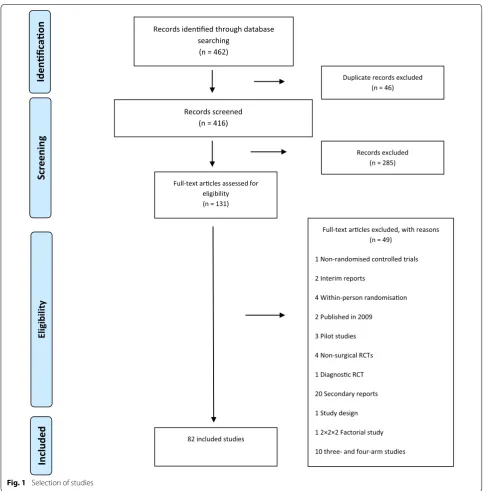
Eighty-two studies were included from 131 full texts
screened. Figure
1
outlines the identification of
poten-tially eligible studies and the reasons for exclusion while
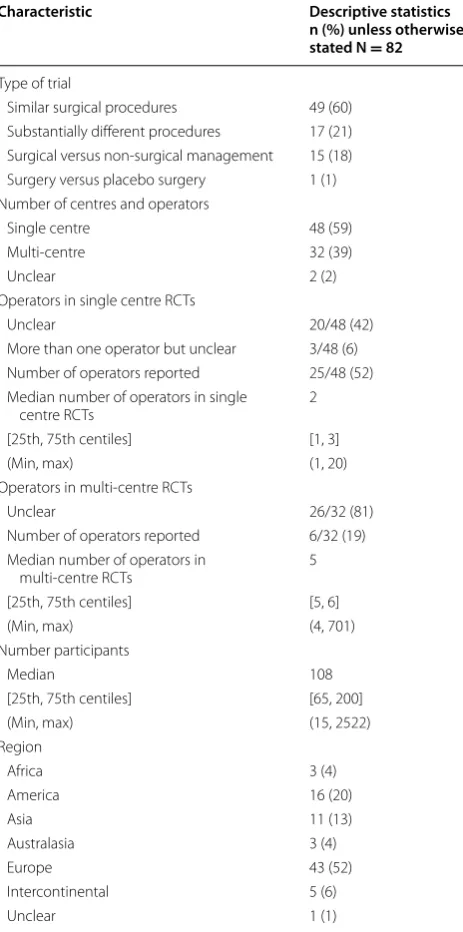
Table
2
summarises their characteristics.
Description of included studies
Of 82 included studies, 49(60 %) compared similar
sur-gical procedures [
13
–
61
], 17 compared substantially
dif-ferent procedures [
62
–
78
], 15 compared surgical and
non-surgical management [
79
–
93
] and one compared
surgery with placebo [
94
]. Most reports were of
sin-gle centre RCTs, the median number of participants
recruited was 108 [IQR 65, 200].
Non‑compliance
Forty-five (55 %) studies reported non-compliance with
treatment allocation; it was unclear in 11 (13 %)
stud-ies. In the 68 studies where the level of non-compliance
could be derived (including 26 studies with zero
non-compliance) the median percentage was 2 % [IQR (0,
5 %), range (0–29 %)], see Table
3
. The reported
analy-sis strategies were 52 (63 %) analysed as randomised, 17
(21 %) per-protocol and 3 (4 %) as-treated. The method of
primary analysis was unclear in 10 (12 %) studies. Of the
31 studies which explicitly stated that the analysis was by
intention-to-treat, 20 (65 %) included all participants in
the analysis and analysed as randomised.
Missing data
Fifty-two (63 %) studies reported having missing primary
outcome data. In 7 (9 %) studies, it was unclear whether
there were missing data. The median level of missing
pri-mary outcome data (including studies with zero missing
data) was 6 % [IQR (0, 15), range (0–57)], see Table
3
. The
most common analysis strategy when missing data were
present was complete case analysis, 35/52 (67 %).
Meth-ods used to account for missing data were survival type
analysis to deal with censoring (4, 8 %); baseline or last
observation carried forward (4, 8 %); imputing best case
scenario (3, 6 %); and imputing best and worst case
sce-narios (2, 4 %). Multiple imputation and mixed models
were used by 4 (8 %) studies (Table
4
).
Non‑compliance, missing data and types of surgical trials
Clear reporting of the occurrence or otherwise of
non-compliance was observed in 40/49 (82 %), 14/17 (82 %)
and 13/15 (87 %) comparisons between similar surgical
procedures, substantially different surgical procedures
and between surgical and non-surgical management,
respectively. The median levels were 1 % [IQR (0, 3),
range (0–3)], 4 % [IQR (1, 10), range (0–29)], and 4 %
[IQR (0, 6), range (0–10)], respectively.
The level of missing data could be derived
(includ-ing those with zero miss(includ-ing data) in 45/49(92 %), 15/17
(88 %) and 13/15 (87 %) comparisons between similar
surgical procedures, substantially different surgical
pro-cedures and between surgical and non-surgical
manage-ment, respectively. The medians were 5 % [IQR (0, 13),
range (0–57)], 0 % [IQR (0, 14), range (0–27)], and 14 %
[IQR (6, 17), range (0–46)], respectively.
Discussion
The CONSORT statement [
95
] and the CONSORT
state-ment extension for RCTs of non-pharmacological
treat-ments [
96
] provide a means of ensuring transparency in
reporting RCTs as well as non-pharmacological RCTs
which have peculiar challenges in specific areas such as
Table 1 Definition of terms
Terms DefinitionAs-randomised analysis All participants were analysed in the groups they were originally allocated to, irrespective of the treatment they received Per-protocol analysis Participants who deviated from treatment allocation were excluded from the analysis
As-treated analysis Participants were analysed according to the treatment they received
[image:3.595.56.539.651.729.2]blinding, standardisation of interventions and care
pro-vider expertise.
This review shows that non-compliance and missing
data commonly occur in surgical trials but the reported
levels are typically low where reported. The occurrence
and level of non-compliance were comparable among the
three types of trials (82–87 %, 1–4 %). The occurrence
of missing data was similar (88–92 %) across the types
of surgical trials while the level varied from 0 % between
substantially different surgical procedures, to 5 % between
similar surgical procedures and 14 % between surgical and
non-surgical management. In about a sixth of studies, the
extent of reporting was not sufficient to allow assessment
of the occurrence of non-compliance and missing data. A
recent study [
97
] found an overall level of loss to
follow-up (6 %, IQR 2–14 %) across studies of pharmacological
versus surgery/invasive procedure versus other
interven-tions which is similar to that found in our study.
It is well known that many cases of non-compliance
result in missing data and this was also observed in the
Records screened (n = 416)
Full-text arcles assessed for eligibility (n = 131)
Records idenfied through database searching
(n = 462)
Records excluded (n = 285) Duplicate records excluded
(n = 46)
Full-text arcles excluded, with reasons (n = 49)
1 Non-randomised controlled trials
2 Interim reports
4 Within-person randomisaon
2 Published in 2009
3 Pilot studies
4 Non-surgical RCTs
1 Diagnosc RCT
20 Secondary reports
1 Study design
1 2×2×2 Factorial study
10 three- and four-arm studies 82 included studies
Idenficaon
Screenin
g
Include
d
Eligib
ilit
y
[image:4.595.56.540.86.578.2]current study. We suspected that the occurrence of
non-compliance and hence missing data would be higher
when surgical procedures were compared with
non-sur-gical interventions such as medicine, active surveillance
and physiotherapy due to patient preference particularly
when blinding is impractical or between substantially
different surgical procedures such as open versus
lapa-roscopic procedures which may be due to differences in
surgical skill, experience and flexibility in unexpected
situations such as rare anatomical findings. Our
find-ings suggest that non-compliance is more likely in RCTs
of surgical versus non-surgical management. We have
not identified similar studies with which to compare our
findings.
In most of the studies where it was impossible to
ascer-tain whether a type of non-compliance or missing data
occurred, this was because the authors had not fully
accounted for all randomised participants and/or given
Table 2 Description of included studies
Characteristic Descriptive statistics n (%) unless otherwise stated N = 82
Type of trial
Similar surgical procedures 49 (60) Substantially different procedures 17 (21) Surgical versus non-surgical management 15 (18) Surgery versus placebo surgery 1 (1) Number of centres and operators
Single centre 48 (59)
Multi-centre 32 (39)
Unclear 2 (2)
Operators in single centre RCTs
Unclear 20/48 (42)
More than one operator but unclear 3/48 (6) Number of operators reported 25/48 (52) Median number of operators in single
centre RCTs 2
[25th, 75th centiles] [1, 3]
(Min, max) (1, 20)
Operators in multi-centre RCTs
Unclear 26/32 (81)
Number of operators reported 6/32 (19) Median number of operators in
multi-centre RCTs 5
[25th, 75th centiles] [5, 6]
(Min, max) (4, 701)
Number participants
Median 108
[25th, 75th centiles] [65, 200]
(Min, max) (15, 2522)
Region
Africa 3 (4)
America 16 (20)
Asia 11 (13)
Australasia 3 (4)
Europe 43 (52)
Intercontinental 5 (6)
Unclear 1 (1)
Table 3 Non-compliance and missing data
a 3 studies where non-compliance was reported but it was not possible to derive the percentage of participants and 11 studies where non-compliance was unclear
b 1 study where missing data were reported but it was not possible to derive the percentage of participants and 7 studies where missing data were unclear
Outcome Descriptive statistics n (%) unless otherwise stated N = 82
Non-compliance with allocated intervention
Yes 45 (55)
No 26 (32)
Unclear 11 (13)
Percentage of non-compliance
In all studies N; median 68a; 2
[25th, 75th centiles] [0, 5]
(Min, max) (0, 29)
Only in studies with non-compliance N;
median 42
a; 4
[25th, 75th centiles] [2, 7]
(Min, max) (1, 29)
Missing data for primary outcome
Yes 52 (63)
No 23 (28)
Unclear 7 (9)
Percentage of missing data
In all studies N; median 74b; 6
[25th, 75th centiles] [0, 15]
(Min, max) (0, 57)
Only in studies with missing data. N;
median 52
b; 12
[25th, 75th centiles] [6, 19]
(Min, max) (0, 57)
Table 4 Methods used to account for missing data
a Number of studies where missing data were reported; percentages do not add up to 100 because of rounding
Missing data method n (%) N = 52a
[image:5.595.58.290.105.572.2] [image:5.595.303.539.107.427.2] [image:5.595.305.539.516.609.2]clear reasons for non-compliance and/or exclusions
from analysis. When the levels of non-compliance and
missing data were unquantifiable, this was because the
authors reported that there were missing data and
non-compliance but we could not quantify the numbers with
missing data or non-compliance because the authors had
presented the results in percentages and either the
num-ber randomised into each group had not been reported
or the number analysed was unclear. On occasion, it was
observed that only the number of participants included
in the analysis was reported while the numbers
ran-domised into treatment groups were not reported. In
addition, many authors reported the overall number of
participants with non-compliance and/or missing data as
a proportion of all participants in the study rather than
as a proportion of the participants in each intervention
group as stipulated by the CONSORT statement [
96
,
98
].
Some non-compliance and missing data are almost
inevitable, therefore it is important that investigators
define adequately what the intervention is and specify
reasons for non-compliance and address missing data.
Reporting the timing of non-compliance or loss to
fol-low-up was often ambiguous thus making it difficult to
ascertain whether or not patients allocated to surgical
interventions received the intervention or the period of
time that patients who were allocated to medical
inter-ventions defaulted from treatment. Akl et al. [
97
] found
that the accuracy of abstracted information varied
from 84 to 100 % depending on the clarity of reporting
in reports of RCTs of pharmacological versus surgery/
invasive procedure versus other interventions. In order
for readers not to misjudge poor reporting as poor
methodology, clarity and transparency in reporting is
essential. Furthermore, the reason for missingness is
important in choosing an appropriate method for
han-dling missing data. When data are missing completely
at random (MCAR), for example, if a participant moves
abroad and outcome data cannot be collected, the
rea-son for missingness is not influenced by the prognosis or
the study, neither is it related to the missing value itself
[
99
] and as such, the difference between the observed
data and the hypothetically complete data is random
and exclusion of missing data would not introduce bias
but there will be loss of power [
99
,
100
]. When data are
missing at random (MAR), the difference between the
observed data and the hypothetically complete data
is systematic. The reason for missingness on that
vari-able cannot be explained by the missing value itself but
rather by the information available on other variables
[
99
] and as such, deletion of missing data would not be
justified. For example, if it is known that older
partici-pants tend to ignore a certain question in a survey, one
could explain that the reason for missingness is the age
of the participant but this reason is non-informative or
ignorable because it still does not explain why older
par-ticipants ignore the question. In such situations, there
are methods that could handle the missing data and a
model is not required [
100
]. Missing not completely at
random (MNAR) is when data is missing in a
system-atic fashion, the probability of missingness depends
on the missing value itself [
99
,
100
] and the reason for
missingness is informative or non-ignorable because it
is related to the prognosis. In this situation a model is
required to explain the missingness and handle it in the
analysis [
100
]. Authors need to investigate and report
reasons for missingness so as to justify the
appropriate-ness of the methods of handling missing data as well as
the possible implications missing data may have on the
findings.
There appears to be a lack of consistency in the
termi-nologies used in reporting missing data and
non-com-pliance. However, a better understanding of the purpose
of the CONSORT flow chart and strict adherence to the
guidance template would definitely give some clarity in
the numbers randomised, treated, followed up and
ana-lysed; this finding is supported by previous studies [
97
,
101
,
102
]. Akl et al. [
97
] showed that 87 % of reviewed
studies explicitly reported information on loss to
follow-up or presented it in a CONSORT flow diagram or both.
The current review found that 91 % of studies reported
the occurrence or otherwise of missing data explicitly,
using a CONSORT flow chart or the reviewers obtained
relevant information by calculating denominators from
raw figures and percentages in result tables.
analysis were found to have analysed all randomised
par-ticipants as-randomised.
The vast majority of studies with missing data used
simple methods of handling missing data such as
com-plete case analysis and simple imputation despite the
widespread availability of more robust methods. While
levels of missing data were generally low, some studies
had large levels for which the use of more complex
meth-ods could be particularly useful.
This review is limited by the sample size and the
lim-ited range of sources of the included studies and as such
our findings may not be generalizable to all journals. In
addition, the extent to which compliance and missing
data could be evaluated was dependent upon the
stand-ard of reporting, which was suboptimal.
Recommendations for authors
Based on our findings, we recommend that authors
should account for all participants who were assessed
for eligibility at every stage of the trial and the
num-bers should also be clearly documented in the text as
well as in the CONSORT flow chart. Authors should
endeavour to investigate the reasons for missing data
and non-compliance with treatment allocation for all
randomised participants and report these reasons with
the number of participants in the text as well as in the
CONSORT flow chart. It is crucial that this is done per
treatment arm. Authors should also report the time in
the course of the trial when the missing data occurred
and indicate this at the appropriate stage in the
CON-SORT flow chart. Finally, the analysis strategy should be
described clearly rather than described with terms such
as “intention-to-treat” which could vary in meaning.
Conclusions
Non-compliance and missing data commonly occur in
surgical trials but typically low levels. Reporting of
non-compliance and missing data is sub-optimal and there is
room for improvement in reporting standards. Authors
should be encouraged to use more robust methods of
handling missing data. Lack of transparency in reporting
may hinder users of research findings from making valid
decisions and could raise questions about the integrity of
a trial.
Abbreviations
CONSORT: CONsolidated Standards Of Reporting Trials; GMJ: General Medical
Journal; ITT: intention-to-treat; MEDLINE: Medical Literature Analysis and
Retrieval System Online; SJ: Surgical Journal; RCT: randomised controlled trial.
Additional file
Additional file 1: Search strategy.
Authors’ contributions
TEA was the primary reviewer and coordinated all aspects of the study includ-ing data extraction, analysis and wrote the manuscript. GMAC extracted and analysed data as a second reviewer, and provided critical comments on the manuscript. JAC extracted data also as a second reviewer, acted as an arbiter when there were discrepancies, provided expert advice on methodological challenges in conducting surgical trials and provided critical comments on the manuscript. All authors read and approved the final manuscript.
Acknowledgements
JAC held MRC training (reference number: G0601938) and methodology (ref-erence number: G1002292) fellowships while this research was undertaken. The Health Services Research Unit is core funded by the Chief Scientist Office of the Scottish Government Health and Social Care Directorates. The authors accept full responsibility for this manuscript.
Compliance with ethical guidelines
Competing interests
The authors declare that they have no competing interests.
Received: 27 July 2015 Accepted: 31 July 2015
References
1. Stolberg HO, Norman G, Trop I. Fundamentals of clinical research for radiologist: randomised controlled trials. AJR. 2004;183:1539–44. 2. Harbour R, Miller J. A new system for grading recommendations in
evidence based guidelines. BMJ. 2001;323(7308):334–6.
3. White I. Uses and limitations of randomization-based efficacy estima-tors. Stat Methods Med Res. 2005;14:327–47.
4. White I, Horton N, Carpenter J, Pocock S. Strategy for intention to treat analysis in randomised trials with missing outcome data. BMJ. 2011;342:d40. doi:10.1136/bmj.d40.
5. Ergina PL, Cook JA, Blazeby JM, Boutron I, Clavien PA, Reeves BC, et al. Challenges in evaluating surgical innovation. Lancet. 2009;374:1097–104.
6. Cook JA. The challenges faced in the design, conduct and analysis of surgical randomised controlled trials. Trials. 2009;10:9. doi:10.1186/1745-6215-10-9.
7. SPRINT Investigators. Randomized trial of reamed and unreamed intramedullary nailing of tibial shaft fractures. J Bone Joint Surg Am. 2008;90:2567–78.
8. Wente M, Seiler C, Uhl W, Bchler M. Perspectives of evidence-based surgery. Dig Surg. 2003;20(4):263–9.
9. Snapinn SM, Jiang Q, Iglewicz B. Informative non-compliance in end-point trials. Curr Control Trials Cardiovasc Med. 2004;5(1):5. 10. Lachin JM. Statistical considerations in the intent-to-treat principle.
Control Clin Trials. 2000;21(3):167–89.
11. Montori VM, Guyatt GH. Intention-to-treat principle. CMAJ. 2001;165(10):1339–41.
12. Wittes J. Missing inaction: preventing missing outcome data in rand-omized clinical trials. J Biopharm Stat. 2009;19(6):957–68.
13. Abo-hashem AA, Sarhan A, Aly AM. Harmonic scalpel compared with bipolar electro-cautery hemorrhoidectomy: a randomized controlled trial. Int J Surg. 2010;8(3):243–7.
14. Barton TM, Gleeson R, Topliss C, Greenwood R, Harries WJ, Chesser TJ. A comparison of the long gamma nail with the sliding hip screw for the treatment of AO/OTA 31-A2 fractures of the proximal part of the femur: a prospective randomized trial. J Bone Joint Surg Am. 2010;92(4):792–8. 15. Basha SL, Rochon ML, Quinones JN, Coassolo KM, Rust OA, Smulian
16. Basu M, Duckett J. A randomised trial of a retropubic tension-free vaginal tape versus a mini-sling for stress incontinence. BJOG. 2010;117(6):730–5.
17. Bevis PM, Windhaber RA, Lear PA, Poskitt KR, Earnshaw JJ, Mitch-ell DC. Randomized clinical trial of mesh versus sutured wound closure after open abdominal aortic aneurysm surgery. Br J Surg. 2010;97(10):1497–502.
18. Botker HE, Kharbanda R, Schmidt MR, Bottcher M, Kaltoft AK, Terkelsen CJ, et al. Remote ischaemic conditioning before hospital admission, as a complement to angioplasty, and effect on myocardial salvage in patients with acute myocardial infarction: a randomised trial. Lancet. 2010;375(9716):727–34.
19. Can MF, Sevinc MM, Hancerliogullari O, Yilmaz M, Yagci G. Multicenter prospective randomized trial comparing modified Limberg flap transposition and Karydakis flap reconstruction in patients with sacrococcygeal pilonidal disease. Am J Surg. 2010;200(3):318–27.
20. Chalmers RT, Darling Iii RC, Wingard JT, Chetter I, Cutler B, Kern JA, et al. Randomized clinical trial of tranexamic acid-free fibrin sealant during vascular surgical procedures. Br J Surg. 2010;97(12):1784–9. 21. Chen Q, Zhang L, Fan QL, Zhou J, Peng YB, Wang Z. Bipolar
transure-thral resection in saline vs traditional monopolar resection of the prostate: results of a randomized trial with a 2-year follow-up. BJU Int. 2010;106(9):1339–43.
22. Choi WC, Lee S, Seong SC, Jung JH, Lee MC. Comparison between standard and high-flexion posterior-stabilized rotating-platform mobile-bearing total knee arthroplasties: a randomized controlled study. J Bone Joint Surg Am. 2010;92(16):2634–42.
23. Davila-Perez R, Bracho-Blanchet E, Tovilla-Mercado JM, Hernandez-Plata JA, Reyes-Lopez A, Nieto-Zermeno J. Unnecessary gastric decompres-sion in distal elective bowel anastomoses in children: a randomized study. World J Surg. 2010;34(5):947–53.
24. Degiuli M, Sasako M, Ponti A, Italian Gastric Cancer Study G. Morbidity and mortality in the Italian Gastric Cancer Study Group randomized clinical trial of D1 versus D2 resection for gastric cancer. Br J Surg. 2010;97(5):643–9.
25. Demey G, Servien E, Pinaroli A, Lustig S, Ait Si Selmi T, Neyret P. The influence of femoral cementing on perioperative blood loss in total knee arthroplasty: a prospective randomized study. J Bone Joint Surg Am. 2010;92(3):536–41.
26. Farrell SA, Gilmour D, Turnbull GK, Schmidt MH, Baskett TF, Flowerdew G, et al. Overlapping compared with end-to-end repair of third- and fourth-degree obstetric anal sphincter tears: a randomized controlled trial. Obstet Gynecol. 2010;116(1):16–24.
27. Garcia-Pagan JC, Caca K, Bureau C, Laleman W, Appenrodt B, Luca A, Abraldes JG, Nevens F, Vinel JP, Mossner J, Bosch J, Early TIPS, (Tran-sjugular Intrahepatic Portosystemic Shunt) Cooperative Study Group. Early use of TIPS in patients with cirrhosis and variceal bleeding. N Engl J Med. 2010;362(25):2370–9.
28. Geavlete B, Multescu R, Dragutescu M, Jecu M, Georgescu D, Geavlete P. Transurethral resection (TUR) in saline plasma vaporization of the prostate vs standard TUR of the prostate: ‘the better choice’ in benign prostatic hyperplasia? BJU Int. 2010;106(11):1695–9.
29. Gong Y, Xu J, Shao J, Cheng H, Wu X, Zhao D, et al. Prevention of seroma formation after mastectomy and axillary dissection by lymph vessel ligation and dead space closure: a randomized trial. Am J Surg. 2010;200(3):352–6.
30. Haskal ZJ, Trerotola S, Dolmatch B, Schuman E, Altman S, Mietling S, et al. Stent graft versus balloon angioplasty for failing dialysis-access grafts. N Engl J Med. 2010;362(6):494–503.
31. Hay GC, Kampshoff J, Kuster MS. Lateral subvastus approach with osteotomy of the tibial tubercle for total knee replacement: a two-year prospective, randomised, blinded controlled trial. J Bone Joint Surg Br. 2010;92(6):862–6.
32. Hove LM, Krukhaug Y, Revheim K, Helland P, Finsen V. Dynamic com-pared with static external fixation of unstable fractures of the distal part of the radius: a prospective, randomized multicenter study. J Bone Joint Surg Am. 2010;92(8):1687–96.
33. Iglesia CB, Sokol AI, Sokol ER, Kudish BI, Gutman RE, Peterson JL, et al. Vaginal mesh for prolapse: a randomized controlled trial. Obstet Gynecol. 2010;116(2 Pt 1):293–303.
34. Khafagy W, Omar W, El Nakeeb A, Fouda E, Yousef M, Farid M. Treatment of anal fistulas by partial rectal wall advancement flap or mucosal advancement flap: a prospective randomized study. Int J Surg. 2010;8(4):321–5.
35. Lambert EH, Walsh R, Moreno MW, Gupta M. Effect of escalating versus fixed voltage treatment on stone comminution and renal injury during extracorporeal shock wave lithotripsy: a prospective randomized trial. J Urol. 2010;183(2):580–4.
36. Lee PC, Lo C, Lai PS, Chang JJ, Huang SJ, Lin MT, et al. Randomized clinical trial of single-incision laparoscopic cholecystectomy versus minilaparoscopic cholecystectomy. Br J Surg. 2010;97(7):1007–12. 37. Li JP, Chu JP, Oh P, Li Z, Chen W, Huang YH, et al. Characterizing
clinico-pathological findings of transarterial chemoembolization for Wilms tumor. J Urol. 2010;183(3):1138–44.
38. McCalden RW, Charron KD, Yuan X, Bourne RB, Naudie DD, MacDonald SJ. Randomised controlled trial comparing early migration of two collarless polished cemented stems using radiostereometric analysis. J Bone Joint Surg Br. 2010;92(7):935–40.
39. Mishra S, Sabnis RB, Kurien A, Ganpule A, Muthu V, Desai M. Question-ing the wisdom of tubeless percutaneous nephrolithotomy (PCNL): a prospective randomized controlled study of early tube removal vs tubeless PCNL. BJU Int. 2010;106(7):1045–8.
40. Muzi MG, Milito G, Cadeddu F, Nigro C, Andreoli F, Amabile D, et al. Ran-domized comparison of Limberg flap versus modified primary closure for the treatment of pilonidal disease. Am J Surg. 2010;200(1):9–14. 41. Nystrom PO, Qvist N, Raahave D, Lindsey I, Mortensen N, Stapled or
Open Pile Procedure (STOPP) trial study group. Randomized clinical trial of symptom control after stapled anopexy or diathermy excision for haemorrhoid prolapse. Br J Surg. 2010;97(2):167–76.
42. Ohye RG, Sleeper LA, Mahony L, Newburger JW, Pearson GD, Lu M, et al. Comparison of shunt types in the Norwood procedure for single-ventricle lesions. N Engl J Med. 2010;362(21):1980–92.
43. Omonbude D, El Masry MA, O’Connor PJ, Grainger AJ, Allgar VL, Calder SJ. Measurement of joint effusion and haematoma formation by ultrasound in assessing the effectiveness of drains after total knee replacement: a prospective randomised study. J Bone Joint Surg Br. 2010;92(1):51–5.
44. Parker MI, Pryor G, Gurusamy K. Cemented versus uncemented hemiar-throplasty for intracapsular hip fractures: a randomised controlled trial in 400 patients. J Bone Joint Surg Br. 2010;92(1):116–22.
45. Penninx JP, Mol BW, Engels R, van Rumste MM, Kleijn C, Koks CA, et al. Bipolar radiofrequency endometrial ablation compared with hydrother-mablation for dysfunctional uterine bleeding: a randomized controlled trial. Obstet Gynecol. 2010;116(4):819–26.
46. Perera D, Stables R, Thomas M, Booth J, Pitt M, Blackman D, et al. Elec-tive intra-aortic balloon counterpulsation during high-risk percuta-neous coronary intervention: a randomized controlled trial. JAMA. 2010;304(8):867–74.
47. Persson P, Brynhildsen J, Kjolhede P, Hysterectomy Multicentre Study Group in South-East, Sweden. Short-term recovery after subtotal and total abdominal hysterectomy: a randomised clinical trial. BJOG. 2010;117(4):469–78.
48. Rane A, Bradoo A, Rao P, Shivde S, Elhilali M, Anidjar M, et al. The use of a novel reverse thermosensitive polymer to prevent ureteral stone retropulsion during intracorporeal lithotripsy: a randomized, controlled trial. J Urol. 2010;183(4):1417–21.
49. Reid K, Pockney P, Pollitt T, Draganic B, Smith SR. Randomized clinical trial of short-term outcomes following purse-string versus conventional closure of ileostomy wounds. Br J Surg. 2010;97(10):1511–7.
50. Richter HE, Albo ME, Zyczynski HM, Kenton K, Norton PA, Sirls LT, et al. Retropubic versus transobturator midurethral slings for stress inconti-nence. N Engl J Med. 2010;362(22):2066–76.
51. Rogers SJ, Cello JP, Horn JK, Siperstein AE, Schecter WP, Campbell AR, et al. Prospective randomized trial of LC + LCBDE vs ERCP/S + LC for common bile duct stone disease. Arch Surg. 2010;145(1):28–33. 52. Sari S, Erbil Y, Sumer A, Agcaoglu O, Bayraktar A, Issever H, et al.
Evalu-ation of recurrent laryngeal nerve monitoring in thyroid surgery. Int J Surg. 2010;8(6):474–8.
54. Shepherd AC, Gohel MS, Brown LC, Metcalfe MJ, Hamish M, Davies AH. Randomized clinical trial of VNUS ClosureFAST radiofrequency ablation versus laser for varicose veins. Br J Surg. 2010;97(6):810–8.
55. Simpson DJ, Kendrick BJ, Hughes M, Glyn-Jones S, Gill HS, Rushforth GF, et al. The migration patterns of two versions of the Furlong cementless femoral stem: a randomised, controlled trial using radiostereometric analysis. J Bone Joint Surgery Br. 2010;92(10):1356–62.
56. Smolders JM, Hol A, Rijnders T, van Susante JL. Changes in bone mineral density in the proximal femur after hip resurfacing and uncemented total hip replacement: a prospective randomised controlled study. J Bone Joint Surg Br. 2010;92(11):1509–14.
57. Sovik TT, Taha O, Aasheim ET, Engstrom M, Kristinsson J, Bjorkman S, et al. Randomized clinical trial of laparoscopic gastric bypass versus lap-aroscopic duodenal switch for superobesity. Br J Surg. 2010;97(2):160–6. 58. Stassano P, Di Tommaso L, Monaco M, Mastrogiovanni G, Musumeci A,
Contaldo A, et al. Left heart pump-assisted myocardial revascularization favorably affects neutrophil apoptosis. World J Surg. 2010;34(4):652–7. 59. Subramonia S, Lees T. Randomized clinical trial of radiofrequency abla-tion or convenabla-tional high ligaabla-tion and stripping for great saphenous varicose veins. Br J Surg. 2010;97(3):328–36.
60. Tani M, Kawai M, Hirono S, Ina S, Miyazawa M, Shimizu A, et al. A prospective randomized controlled trial of internal versus external drainage with pancreaticojejunostomy for pancreaticoduodenectomy. Am J Surg. 2010;199(6):759–64.
61. van der Gaag NA, Rauws EA, van Eijck CH, Bruno MJ, van der Harst E, Kubben FJ, et al. Preoperative biliary drainage for cancer of the head of the pancreas. N Engl J Med. 2010;362(2):129–37.
62. Basiri A, Zare S, Tabibi A, Sharifiaghdas F, Aminsharifi A, Mousavi-Bahar SH, et al. A multicenter, randomized, controlled trial of transureteral and shock wave lithotripsy—which is the best minimally invasive modality to treat distal ureteral calculi in children? J Urol. 2010;184(3):1106–9. 63. Brott TG, Hobson RW 2nd, Howard G, Roubin GS, Clark WM, Brooks W,
et al. Stenting versus endarterectomy for treatment of carotid-artery stenosis. N Engl J Med. 2010;363(1):11–23 (Erratum appears in N Engl J Med. 2010;363(2):198).
64. Darai E, Dubernard G, Coutant C, Frey C, Rouzier R, Ballester M. Rand-omized trial of laparoscopically assisted versus open colorectal resec-tion for endometriosis: morbidity, symptoms, quality of life, and fertility. Ann Surg. 2010;251(6):1018–23.
65. Gervaz P, Inan I, Perneger T, Schiffer E, Morel P. A prospective, rand-omized, single-blind comparison of laparoscopic versus open sigmoid colectomy for diverticulitis. Ann Surg. 2010;252(1):3–8.
66. Ghezzi F, Uccella S, Cromi A, Siesto G, Serati M, Bogani G, et al. Postoperative pain after laparoscopic and vaginal hysterectomy for benign gynecologic disease: a randomized trial. Am J Obstet Gynecol. 2010;203(2):118.e1–8. doi:10.1016/j.ajog.2010.04.026.
67. Guo JJ, Tang N, Yang HL, Tang TS. A prospective, randomised trial com-paring closed intramedullary nailing with percutaneous plating in the treatment of distal metaphyseal fractures of the tibia. J Bone Joint Surg Br. 2010;92(7):984–8.
68. Hessman O, Westerdahl J, Al-Suliman N, Christiansen P, Hellman P, Bergenfelz A. Randomized clinical trial comparing open with video-assisted minimally invasive parathyroid surgery for primary hyperpar-athyroidism. Br J Surg. 2010;97(2):177–84.
69. Huang J, Yan L, Cheng Z, Wu H, Du L, Wang J, et al. A randomized trial comparing radiofrequency ablation and surgical resection for HCC conforming to the Milan criteria. Ann Surg. 2010;252(6):903–12. 70. Itani KM, Hur K, Kim LT, Anthony T, Berger DH, Reda D, et al. Comparison
of laparoscopic and open repair with mesh for the treatment of ventral incisional hernia: a randomized trial. Arch Surg. 2010;145(4):322–8. 71. Langeveld HR, van’t Riet M, Weidema WF, Stassen LP, Steyerberg EW,
Lange J, et al. Total extraperitoneal inguinal hernia repair compared with Lichtenstein (the LEVEL-Trial): a randomized controlled trial. Ann Surg. 2010;251(5):819–24.
72. Naik R, Jackson KS, Lopes A, Cross P, Henry JA. Laparoscopic assisted radical vaginal hysterectomy versus radical abdominal hysterectomy— a randomised phase II trial: perioperative outcomes and surgicopatho-logical measurements. BJOG. 2010;117(6):746–51.
73. Nicholson ML, Kaushik M, Lewis GR, Brook NR, Bagul A, Kay MD, et al. Randomized clinical trial of laparoscopic versus open donor nephrec-tomy. Br J Surg. 2010;97(1):21–8.
74. Ozmen M, Zulfikaroglu B, Ozalp N, Moran M, Soydinc P, Ziraman I. Femoral vessel blood flow dynamics following totally extraperito-neal vs Stoppa procedure in bilateral inguinal hernias. Am J Surg. 2010;199(6):741–5.
75. Penn HA, Gatti JM, Hoestje SM, DeMarco RT, Snyder CL, Murphy JP. Laparoscopic versus open pyeloplasty in children: preliminary report of a prospective randomized trial. J Urol. 2010;184(2):690–5.
76. Pospischill M, Kranzl A, Attwenger B, Knahr K. Minimally invasive com-pared with traditional transgluteal approach for total hip arthroplasty: a comparative gait analysis. J Bone Joint Surg Am. 2010;92(2):328–37. 77. van Santvoort HC, Besselink MG, Bakker OJ, Hofker HS, Boermeester MA, Dejong CH, et al. A step-up approach or open necrosectomy for necrotizing pancreatitis. N Engl J Med. 2010;362(16):1491–502. 78. Wulker N, Lambermont JP, Sacchetti L, Lazaro JG, Nardi J. A prospective
randomized study of minimally invasive total knee arthroplasty compared with conventional surgery. J Bone Joint Surg Am. 2010;92(7):1584–90. 79. Frobell RB, Roos EM, Roos HP, Ranstam J, Lohmander LS. A randomized
trial of treatment for acute anterior cruciate ligament tears. N Engl J Med. 2010;363(4):331–42.
80. Kelly T, Suddes J, Howel D, Hewison J, Robson S. Comparing medical versus surgical termination of pregnancy at 13–20 weeks of gestation: a randomised controlled trial. BJOG. 2010;117(12):1512–20.
81. Klazen CA, Lohle PN, de Vries J, Jansen FH, Tielbeek AV, Blonk MC, et al. Vertebroplasty versus conservative treatment in acute osteoporotic vertebral compression fractures (Vertos II): an open-label randomised trial. Lancet. 2010;376(9746):1085–92.
82. Kuck KH, Schaumann A, Eckardt L, Willems S, Ventura R, Delacretaz E, et al. Catheter ablation of stable ventricular tachycardia before defibril-lator implantation in patients with coronary heart disease (VTACH): a multicentre randomised controlled trial. Lancet. 2010;375(9708):31–40. 83. Leon MB, Smith CR, Mack M, Miller DC, Moses JW, Svensson LG, et al.
Transcatheter aortic-valve implantation for aortic stenosis in patients who cannot undergo surgery. N Engl J Med. 2010;363(17):1597–607. 84. Moosmayer S, Lund G, Seljom U, Svege I, Hennig T, Tariq R, et al.
Com-parison between surgery and physiotherapy in the treatment of small and medium-sized tears of the rotator cuff: A randomised controlled study of 103 patients with one-year follow-up. J Bone Joint Surg Br. 2010;92(1):83–91.
85. Nasr M, Ezzat H, Elsebae M. Botulinum toxin injection versus lateral internal sphincterotomy in the treatment of chronic anal fissure: a randomized controlled trial. World J Surg. 2010;34(11):2730–4. 86. O’Brien PE, Sawyer SM, Laurie C, Brown WA, Skinner S, Veit F, et al.
Laparoscopic adjustable gastric banding in severely obese adolescents: a randomized trial. JAMA. 2010;303(6):519–26.
87. Rompe JD, Cacchio A, Weil L Jr, Furia JP, Haist J, Reiners V, et al. Plantar fascia-specific stretching versus radial shock-wave therapy as initial treatment of plantar fasciopathy. J Bone Joint Surg Am. 2010;92(15):2514–22.
88. Schouten R, Rijs CS, Bouvy ND, Hameeteman W, Koek GH, Janssen IM, et al. A multicenter, randomized efficacy study of the EndoBarrier Gas-trointestinal Liner for presurgical weight loss prior to bariatric surgery. Ann Surg. 2010;251(2):236–43.
89. Sciurba FC, Ernst A, Herth FJ, Strange C, Criner GJ, Marquette CH, et al. A randomized study of endobronchial valves for advanced emphysema. N Engl J Med. 2010;363(13):1233–44.
90. Symplicity HTN-2 I, Esler MD, Krum H, Sobotka PA, Schlaich MP, Schmieder RE, et al. Renal sympathetic denervation in patients with treatment-resistant hypertension (The Symplicity HTN-2 Trial): a ran-domised controlled trial. Lancet. 2010;376(9756):1903–9.
91. Verze P, Imbimbo C, Cancelmo G, Creta M, Palmieri A, Mangiapia F, et al. Extracorporeal shockwave lithotripsy vs ureteroscopy as first-line therapy for patients with single, distal ureteric stones: a prospective randomized study. BJU Int. 2010;106(11):1748–52.
92. Wilber DJ, Pappone C, Neuzil P, De Paola A, Marchlinski F, Natale A, et al. Comparison of antiarrhythmic drug therapy and radiofrequency catheter ablation in patients with paroxysmal atrial fibrillation: a rand-omized controlled trial. JAMA. 2010;303(4):333–40.
94. Chitale S, Morsey M, Swift L, Sethia K. Limited shock wave therapy vs sham treatment in men with Peyronie’s disease: results of a prospective randomized controlled double-blind trial. BJU Int. 2010;106(9):1352–6. 95. Altman D, Schulz K, Moher D, Egger M, Davidoff F, Elbourne D. The
revised CONSORT statement for reporting randomized trials: explana-tion and elaboraexplana-tion. Ann Int Med. 2001;134:663–94.
96. Boutron I, Moher D, Altman DG, Schulz K, Ravaud P, for the CONSORT group. Extending the CONSORT Statement to randomized trials of nonpharmacologic treatment: explanation and elaboration. Ann Int Med. 2008;148(4):295–309.
97. Akl E, Briel M, You J, Sun X, Johnston B, Busse J, et al. Potential impact on estimated treatment effects of information lost to follow-up in randomised controlled trials (LOST-IT): systematic review. BMJ. 2012;344:e2809. doi:10.1136/bmj.e2809.
98. Moher D, Hopewell S, Schulz K, Montori V, Gøtzsche P, Devereaux P, et al. CONSORT 2010 explanation and elaboration: updated guidelines for reporting parallel group randomised trials. BMJ. 2010;340:c869. doi:10.1136/bmj.c869.
99. Baraldi AN, Enders CK. An introduction to modern missing data analy-ses. J Sch Psychol. 2010;48:5–37.
100. Howell DC. The analysis of missing data. In: Outhwaite W, Turner S, edi-tors. Handbook of social science methodology. London: Sage; 2007. p. 1–44.
101. Sinha S, Sinha S, Ashby E, Jayaram R, Grocott MPW. Quality of reporting in randomized trials published in high-quality surgical journals. J Am Coll Surg. 2009;209:565–71.
102. Dodd S, White I, Williamson P. Nonadherence to treatment proto col in published randomised controlled trials: a review. Trials 2012;13:84. doi:10.1186/1745-6215-13-84.
103. Little RJ, Long Q, Lin X. A comparison of methods for estimating the causal effect of a treatment in randomized clinical trials subject to noncompliance. Biometrics. 2008;65(2):640–9.
104. Snapinn S. Noninferiority trials. Curr Control Trials Cardiovasc Med. 2000;1(1):19–21.
105. Richter HE, Albo ME, Zyczynski HM, Kenton K, Norton PA, Sirls LT, et al. Retropubic versus transobturator midurethral slings for stress inconti-nence. N Engl J Med. 2010;362(22):2066–76.
106. Hollis S, Campbell F. What is meant by intention to treat analy-sis? Survey of published randomised controlled trials. BMJ. 1999;319(7211):670–4.
Submit your next manuscript to BioMed Central
and take full advantage of:
• Convenient online submission • Thorough peer review
• No space constraints or color figure charges • Immediate publication on acceptance
• Inclusion in PubMed, CAS, Scopus and Google Scholar • Research which is freely available for redistribution