INTERNATIONAL CONFERENCE ON ENGINEERING DESIGN ICED 01 GLASGOW, AUGUST 21-23, 2001
DESIGN ACTIVITY MODELLING: A PERFORMANCE VIEWPOINT
F J O’ Donnell and A H B Duffy
Keywords: Descriptive Models of the Design Process; Process Modelling; Design Management; Design Development; Performance.
1 Introduction
Design activity modelling has received significant attention in research over the last 30 years with a focus on both descriptive and prescriptive models. This has resulted in the development of models offering different viewpoints of the design process, such as the description of the process in terms of activities/stages [3], the cognitive nature of design as described by Smithers [4] and those relating design within an overall model of product development [5].
These models focus primarily on the activities required to create a design solution, i.e. design activities, in isolation of the activities involved in managing the process by which that solution is developed, i.e. design management activities, and the relationship between them. This paper presents a novel formalism describing activities focused both on the design and its development, i.e. the design development process. The model describes how outputs of design and design management activities are evaluated within a model of performance measurement and management in design development.
2
Current activity models in design development
When we refer to performance in design it can be related to different areas, e.g. the performance of the design solution (artefact) in terms of its properties, such as the top speed of a car, or the performance of the process by which the solution was created in terms of duration or cost. These areas of performance are related in some way but the relationship is unclear.
Existing models of activities in design are almost exclusively focused on the performance of the design (artefact) and not the performance of the activities required for its development. For example:
• Smithers [4] presents a model of the design process which treats design as a knowledge based exploration task. The model illustrates the role of knowledge in design. However, all of the activities described in the work are focused on processing knowledge of the design. Design management activities, such as scheduling and control are not included within the work.
• The model of Pahl and Beitz [3] is representative of a number of phase/stage based models and provides a step-by-step method to be followed in design, which supports scheduling of the activity within discrete phases. However, the tasks outlined in this model are focused on design goals and there is no reference to activity goals and the need to manage the design process in relation to both design and activity goals, e.g. the trade-off between cost of design development and quality of the design. Similarly, French [8] suggests that evaluation is carried out continually within the design process but this evaluation is focused on the initial need in terms of the artefact.
• Authors such as Andreasen [5] and Hales [9] provide more insight into the (business) context in which design is carried out. Andreasen identifies the need for greater efficiency in product development while also ensuring better results in terms of the artefacts produced. The concept of efficiency as defined by Andreasen identifies the trade-off between what is being achieved in product development and the costs (and implicitly time) incurred. However, the author provides a viewpoint, identifying the need for managing such a trade-off, and does not relate this within an activity/process model to further illustrate how it might be achieved.
The design activity and process models discussed provide significant insight into the activities, stages, etc. in design. There is a reasonable consensus on the main types of activities involved in design, their sequence, etc., and the evaluation of the output in relation to the design goals is a key component of the models discussed. However, the analysis of performance in relation to the activities carried out in design is restricted to literature addressing the management of design at the project level, e.g. [9]. However, it is proposed here that management activities are carried out at every level in design and not just at a project level and therefore there is a requirement to analyse performance in relation to activities at all levels.
3 E
2performance model
I O G
R
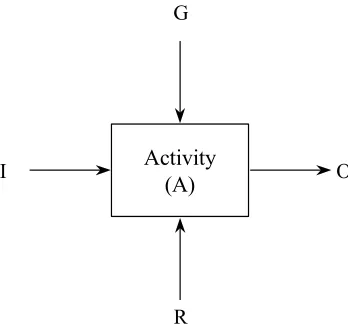
[image:3.595.210.384.73.236.2]Activity (A)
Figure 1. Knowledge Processing Activity
Four categories of knowledge are identified here:
• Knowledge Input (I): the knowledge present prior to the activity;
• Knowledge Output (O): the knowledge present as a result of the activity taking place;
• Knowledge Goal (G): the knowledge which directs and constrains the activity;
• Knowledge Resource (R): the knowledge which acts on the input to produce the output.
The category in which an element of knowledge resides is not fixed, but derived from the context of the model, i.e. the activity to which it is related. For example, an output of one activity may act as a constraint on another.
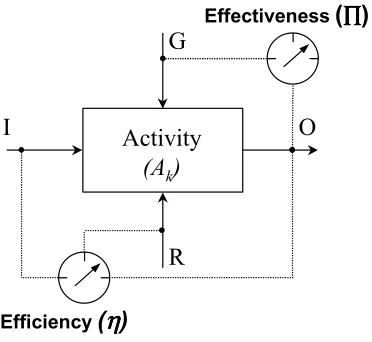
The performance of activities in design is described within the concepts of efficiency and effectiveness [15] and their relationship is further elaborated in [16]. Efficiency (η) refers to the relationship between the knowledge gained in the activity and the cost (in terms of time, money, etc.) of resources required to achieve that gain. Efficiency describes the inherent behaviour of activities in design but does not directly indicate goal achievement. The degree to which the result (output) meets the goal may be described as the activity effectiveness. Therefore, to obtain a fully informed view of activity performance both efficiency (η) and effectiveness (∏) are evaluated (Figure 2). That is:
Design Performance
Effectiveness(∏∏∏∏)
Activity (Ak)
O G
R I
[image:4.595.207.393.74.245.2]Efficiency(ηηηη)
Figure 2. E2 Performance Model
4
Design and Management
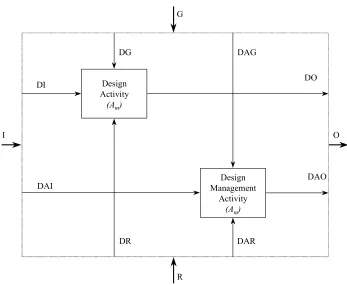
The knowledge goal (G) identified in Figure 1 may be related to either the design (DG) e.g. reliability, aesthetics, or the design activity (DAG) involved in creating that design, e.g. time consumed, labour costs, etc. The design and design activity goals may be managed intuitively by the designer in what has been presented in Figure 1 as one activity. However, it is proposed that there are two types of activity taking place; design activities (Ad) and design
management activities (Am). Design activities are focused on the design goals (DG) while
design management activities are concerned with design activity goals (DAG) and managing the trade-off between achieving design and design activity goals to ensure best overall performance.
At a design project level these activities are often defined separately and are generally carried out by different people e.g. the designer/design team and the design manager [9]. However, the distinction between these activity types exists even at the level of individual design activities. For example, during sketching a designer may glance at their watch to evaluate the time elapsed in relation to an implicit or explicit time goal before proceeding. This represents a change of activity, i.e. from a design activity, focused on producing a sketch in accordance with a design goal (DG), to a design management activity focused on ensuring a design activity goal (DAG) is achieved, e.g. sketch is completed on time.
Given the basic design activity representation presented in Figure 1 and the distinction between design and design management presented above, a further model is introduced in Figure 3 to describe design and its management. This Design Activity Management (DAM) model represents a managed activity i.e. any activity in design aimed at achieving design and design activity goals. The categories of input (I), output (O), goal (G) and resource (R) knowledge, presented in Figure 1, are decomposed to reflect categories related to either design or design management activities as follows:
DI DO
DAI
Design Activity
(Am)
Design Management
Activity
(Am)
DR DAR
DAO G
O I
R
[image:5.595.124.471.89.374.2]DG DAG
Figure 3. Design Activity Management (DAM) model
The managed activities described above are the fundamental elements of the design process, i.e. the design process consists of a number of managed activities with relationships such as those based on information dependencies and described as dependent, independent or interdependent [17]. Having established the design and design activity goals, perhaps through planning activities, the focus subsequently moves to ensuring these goals are achieved [13], i.e. optimising overall effectiveness. This overall effectiveness is composed of design effectiveness, illustrating how well the design goals have been met, and design management effectiveness, indicating if the design activity goals, such as resource cost, have been met.
In an informal sense, a designer will continually evaluate the effectiveness of his/her activities, e.g. checking their watch to assess time elapsed (design management effectiveness), evaluating the aesthetic strengths of a particular concept (design effectiveness), etc. More formally, effectiveness may be reviewed through simulating product behaviour and evaluating results at specific stages as represented within many of the phase models of the design process.
4.1 A Model of Performance Measurement and Management (PerMM)
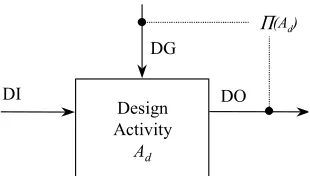
1. The design activity (Ad) takes DI as input and, directed by knowledge of the specific design goal (DG), produces an output (DO) aimed at meeting the goal. This output will be compared against the goal to determine the level of design effectiveness, ∏(Ad), achieved in the activity (Figure 4).
DG DO Design Activity Ad DI
[image:6.595.370.525.69.157.2]∏(Ad)
Figure 4. Design Effectiveness
2. The resulting level of design effectiveness ∏(Ad) is
used as an input of control knowledge into the design management activity (Figure 5). The description of design effectiveness may describe how well a design goal has been met or whether a constraint has been satisfied or not.
Design Management
Activity
(Am)
∏(Ad)
Figure 5. Effectiveness Input
3. The design management activity analyses design management effectiveness, ∏(Am), using knowledge
(including meta-knowledge) of the resources being used in both the design and design management activities. This knowledge is primarily time and cost based i.e. it refers to the time consumed or cost incurred during a particular activity-resource relationship. This is compared against knowledge of the design activity goal (DAG), e.g. to achieve a design lead time of 1 month, to determine the level of design management effectiveness (Figure 6).
DAG
DAO DAI
∏(Am)
∏(Ad)
Design Management
Activity (Am)
Figure 6. Design Management Effectiveness
4. Utilising design activity resource (DAR) knowledge the design management activity evaluates the relationship between design and design management effectiveness and decides on the controlling action, if any1, which must be taken as an attempt to optimise overall effectiveness. This controlling action will typically involve changing the goals or resources in order to achieve a change in effectiveness.
Figure 7 is evolved from Figure 3 to illustrate the decision points and flow of control knowledge (shown as dashed lines) within a managed activity and serves to summarise the steps described above. That is, the model describes the process of measuring and managing performance in relation to both design and design activity goals. The following outlines the types of controlling action, aimed at optimising overall effectiveness, that may result from the evaluation of design and design management effectiveness:
• At decision point ci the decision options are to terminate the activity having established
satisfactory levels of design and design management effectiveness or to continue with the activity.
1
It may be desirable to take no controlling action, i.e. to maintain all goals, resources, etc. as they
• At decision point cj the decision options are to redefine goals and/or alter resource
allocation.
• At decision point ck the decision options are to redefine design goals (DG) and/or design
activity goals (DAG). For example, the outcome of the design management activity may be to set a new launch date for the project. In contrast, it may be more appropriate to reduce the targets specified in some design goals, e.g. life in service, while maintaining the original planned launch date.
• At decision point cl the decision options are to alter design resources (DR) and/or the
design activity resources (DAR). For example, the outcome from the management activity may be to allocate additional design resources to achieve increased design effectiveness with a probable negative impact on design management effectiveness.
DG DAG
DI DO
DAI
DKR DAR
Stop
ci cj ck
cl
DAO G
O I
R Design
Activity
(Ad)
Design Management
Activity
[image:7.595.103.492.266.575.2](Am)
Figure 7. Performance Measurement and Management (PerMM) Process Model
5
Discussion and conclusion
Management (PerMM) clearly distinguishes, yet relates, performance of the artefact and of the activities.
References
[1] Pahl, G. and W. Beitz, Engineering Design: A systematic approach. 2nd Revised Edition ed, ed. K. Wallace. 1996, London: Springer-Verlag.
[2] Smithers, T., et al., Design as Intelligent Behaviour: An AI in Design Research Programme. Artificial Intelligence in Engineering, 1990. 5(2).
[3] Andreasen, M.M. and L. Hein, Integrated Product Development,. 1987: IFS (Publications) Ltd and Springer-Verlag London UK.
[4] Radcliffe, D.F., Concurrency of Actions, Ideas and Knowledge within a Design Team, in Analysing Design Activity, N. Cross, H. Christiaans, and K. Dorst, Editors. 1996, John Wiley and Sons.
[5] Cross, N., H. Christiaans, and K. Dorst, eds. Analysing Design Activity. . 1996, John Wiley and Sons: Chichester, West Sussex. 463.
[6] French, M.J., Conceptual Design for Engineers. 3rd ed. 1998, London: Springer. [7] Hales, C., Managing Engineering Design. 1993: Longman Scientific and Technical. [8] Colquhoun, G.J., R.W. Baines, and R. Crossley, A state of the art review of IDEF0.
International Journal of Computer Integrated Manufacturing, 1993. 6(4): p. 252-264.
[9] Persidis, A. and A. Duffy. Learning in engineering design,. in Selected and Reviewed Papers and Reports from the IFIP TC/WG5.2 Third Intelligent Workshop on Computer Aided Design Osaka Japan September 1989. 1991. Elsevier Science Publishers B.V. (North-Holland) Amsterdam The Netherlands.
[10] Andreasen, M.M., Modelling - The Language of the Designer. Journal of Engineering Design, 1994. 5(2): p. 103-115.
[11] Ullman, D.G., T.G. Dietterich, and S.L. A, A Model of the Mechanical Design Process Based on Empirical Data. AI EDAM, 1988. 2(1): p. 33-52.
[12] Zhang, Y., Computer-based Modelling and Management for Current Working Knowledge Evolution Support, in Department of Design, Manufacture and Engineering Management. 1998, University of Strathclyde: Glasgow.
[13] Duffy, A.H.B. and F.J.O. Donnell. A Model of Product Development Performance. in Designers: Key to Successful Product Development. 1997: Springer.
[14] O'Donnell, F.J. and A.H.B. Duffy. Performance Management at Design Activity Level. in International Conference on Engineering Design (ICED 01). 2001. Glasgow.
[15] Eppinger, S.D., et al., A model-based method for organising tasks in product development,. Research in Engineering Design, 1994. 6(1): p. 1-13.
Frank J O’ Donnell