ANNUAL TOURISM REPORTING TEMPLATE
1. INTRODUCTION
Council Decision 86/664/EEC of 22 December 19861 establishing a consultation and
cooperation procedure in the field of tourism foresees that “each Member State shall send the Commission, once a year, a report on the most significant measures it has taken and, as far as possible, on measures it is considering taking in the provision of services for tourists which could have consequences for travellers from the other Member States”.
With the publication of the “Agenda for a sustainable and competitive European tourism”, the Commission announced that “in order to strengthen the collaboration with and among Member States, their current annual reporting through the Tourism Advisory Committee (TAC) will be used to facilitate the exchange and the dissemination of information about how their policies and actions safeguard the sustainability of tourism”.
This Communication was welcomed by the Competitiveness Council conclusions (22nd-23rd November 2007) and by the Presidency Conclusions of the Brussels European Council of 14th December 2007.
The main aims for the reporting process are:
to be able to monitor the level of implementation of the “Agenda for a sustainable andcompetitive European tourism” by Member States;
to facilitate the exchange of experiences among member States with regard to how they tackle issues which are important for the competitiveness and sustainability of European tourism.MS reports referring to year n shall be sent to the European Commission by the end of February of year n+1.
If the reports are sent in English, the deadline is shifted to the end of April.
2. ORGANISATIONAL STRUCTURE
This section should provide an overview of the main organisational structure to illustrate how tourism is organised and managed, to identify linkages and to identify the engagement of other organisations/stakeholders.
The information required will only need to be prepared fully in year 1 as it will subsequently only be necessary to provide details of any changes.
2.1 Please identify the National Bodies responsible for tourism (Ministry and also any separate/related National Tourism Organisation), including key areas of responsibility, and their relationship to other national bodies. (maximum of 1.000 characters)
2.2 Please, describe what organisations/agencies are used to deliver services at the national and regional level and the services that they deliver. (maximum 800 characters)
2.3 Please, describe which other bodies and organisations are involved at the national level and the process for involving them. (maximum 800 characters)
State Planning Organisation, Ministry of Environment and Forestry, Ministry of Agriculture and Rural Affairs, Ministry of Trade and Industry, Ministry of Construction and Resettlement, Ministry of Transport and Ministry of Finance are related national bodies for implementation of actions defined in Action Plan of the Tourism Strategy of Turkey 2023 , which is approved by the decision of high planning council and published in the Official Gazzette dated 02.03.2007 and no. 26450
(^) to be formed
2.5 Please provide information about financial data, including spend/budget on tourism as a
percentage of overall government spend/budget, the level of national funding support for tourism marketing, the amount of EU funding support made available for tourism and data concerning the support to SMEs and Destinations. (500 characters)
Ministry of Culture and
Tourism
Govermental Institutions: *State Planning Organization *Ministry of Environment and Forestry
* Ministry of Agriculture and Rural Affairs
* Ministry of Construction and Resettlement
*Ministry of Trade and Industry * Ministry of Transport
* Ministry of Finance
*Other Govermental Institutions
* Directorate General for Investment and Establishments
* Directorate General for Promotion * Directorate General for Research and Education
* External Relations and EU Coordination Department
Councils(^)
* National Tourism Council * City Tourism Council * Tourism Council at the Local Level
Sectoral Institutions: *Tourism Unions
* Chambers of Professionals * Municipalities
* Turkish Travel Agencies Association
* Unions of Tourist Guides * Federation of Turkish Hotelliers * Tourism Investors Association *Investment Support and Promotion Agency
Budget of the Ministry of Culture and Tourism for 2008-2009
(national currency/TL)
ALLOCATION RATIO WITHIN ALL OVER GENERAL BUDGET
2008
826.586.000
0,38
2009
1.021.346.000
0,40
BUDGET INVESTMENT ALLOCATION
(national currency/TL)
2008 2009
CULTURE 86.868.000
152.542.000
TOURISM 35.806.000
82.993.000
Budget of the Directorate General of Promotion (Marketing and Promotion)
(national currency/TL)
2008
122.992.865
2009 (proposed) 119.140.720
3. POLICIES AND STRATEGIES
3.1 Is there a current National Strategy for tourism? Yes No
If yes, please, provide information in bullet point format about the key aims, objectives and priorities of the strategy highlighting those that are designed to address sustainability issues in economic, environmental and social terms in particular those related in the six aims included in the Agenda. In preparing the tourism strategy, explain how consideration has been given to the 9 principles set out in the Agenda (para2.3 p5) and given in the appendix. (maximum 1.000 characters)
Turkey Tourism Strategy-2023 and Action plan 2013 were prepared by Ministry of Culture and Tourism,
approved by the desicion of High Planning Council dated 28.02.2007 and no. 2007/4 and published in the
VISION- “With the adoption of sustainable tourism approach tourism and travel industry will be brought to a
leading position for leveraging rates of employment and regional development and it will be ensured that Turkey
becomes a world brand in tourism and a major destination in the list of the top five countries receving the highest
number of tourists and tourism revenues by 2023.”
The study fort he Tourism Strategy of Turkey 2023 proposes a variety of long term strategies in the realms of
planning, investment, organisation, domestic tourism, research and development, services, strengthening,
promoting and marketing, education, branding at city level, diversification of tourism products, rehabilitation of
existing tourism areas and improvement of destinations.
PLANNING STRATEGY-“To exhibit a planning approach that supports economic growth, is physically
applicable adn socially oriented and fairly reflects the princciple of sustainable tourism.
TARGETS:
-To contribute to the objective of sustainable development by eliminating the interregional differences in levels
of development.
-To reconsider and plan the existing tourism sites within a sustainability perspective and thus create high quality
viable environment.
-To support tourism development with sustainable environmental policies.
- To help increase the competitiveness of the tourism sector through ccreation of regional tourism brands rather
than relying upon cheaper products
- to support the social and economic objectives of central government with tourism development.
-To strengthen international cooperation
-To close the trace global trends and demands and build up plans and conduct practices accordingly
-To promote tourism and rase awareness n public, private companies and NGO’s, especially on eco-tourism,
plateau and agricultural tourism
-To make both domestic and international promotions and marketing efforts effective
-To ensure intergration of various types of tourism specific to region or locality, thus establish tourism cities
with focus on alternative tourism (health, thermal, golf, winter sports, nature trips, and etc.) capable of offering
an ample variety of tourism facilities, along with such utilities as health, education and etc.
_ T alleviate the burden on public by encouraging active involvement of private sector enterprises in tourism
infrastructure and transportation projects.
_ To ensure that appropriate governance mechanisms are used in which central and local government and civil
actors can collaborate and cooperate in decision making processes concerning tourism.
_To ensure coordination between central and local government and integral treatment of managerial organization
and means of financing, within and integral planning approach when drafting down plans on tourism .
-Helping infrastructure related and environmental problems occurring at locations where tourism activities get
3.2 Who was the initiator and who is responsible for its implementation? (maximum 200 characters) The Ministry of Culture and Tourism has initiated this study of Tourism Strategy of Turkey and Action Plan, and is responsible for its implementation together with other related responsible ministries and institutions reported in the action plan, also by strong co-operation with private sector institutions. Besides within the framework of the Tourism Strategy, Central and Provincial Tourism Councils which will be formed in the implementation stage will be responsible for the implementation of strategies and actions.
3.3 How is the strategy monitored and how often? (maximum 500 characters)
The criteria of measurement developed for monitoring the performance of Tourism Strategy of Turkey-2023 and how successfully the targets are attained will be among the basic tools used by enforcers and decision makers to get involved and proceed with the transformation process. At this extend, National Certification Service shall be formed and put in function.
Throughout the process monitoring phase which has critical importance for the overall success of the strategy, the outcomes of updates measured according to predefined indicators will be subject to regular comperative analysis with preset targets and objectives.
The National Database Repository Service will organize the data transmitted by various public and private sector entities and then submit its conclusions with Ministry of Culture and Tourism and National Tourism Council. Later, the service and Council will get together to set measures required to be taken in line with the conclusions and opinions submitted, making necessary amendments in the strategy accordingly.
3.4 What tourism specific legislation exists? (maximum 500 characters)
Current Tourism Legislation includes, Tourism Encouragement Law No: 4957/2634 and related Regulations, Law For The Foundation of Ministry of Culture And Tourism No:4848, Law of Travel Agencies and Union of Travel Agencies No:1618
4. MEASURES AND INITIATIVES
This section provides Member States with an opportunity to outline specific initiatives and policies that are or are going to be adopted to manage and develop tourism activity in ways which respond to the key challenges of the Agenda and which fall within the six main aims of the Agenda itself.
1 Economic prosperity
a. To ensure the long term competitiveness, viability and prosperity of tourism
enterprises and destinations.
b. To provide quality employment opportunities, offering fair pay and conditions for all employees and avoiding all forms of discrimination
experience for visitors, available to all without discrimination by gender, race, religion, disability or in other ways.
3 Environmental and cultural protection To minimise pollution and degradation of the global and local environment and the use of scarce resources by tourism activities. To maintain and strengthen cultural richness and biodiversity and contribute to their appreciation and conservation.(
4.1 Please set out, briefly, the steps which have been or will be taken, if any, to address the 7 key challenges for the delivery of sustainable and competitive tourism, covered in the TSG report and referred to in the ‘Agenda’
4.1.1 Reducing the seasonality of demand. (maximum 200 characters)
In order to reduce the seasonality of demand in tourism new approaches are adopted such as diversification of tourism types by concentrating on thermal tourism, golf tourism, congress tourism, winter tourism, ecological tourism and nature tourism beside coastal tourism in Tourism Strategy of Turkey, physical planning activities and other master planning studies.
4.1.2 Addressing the impact of tourism transport. (maximum 200 characters)
In increasing the quality of tourism activities, competitiveness of tourism regions and also diversification of new tourism types, transportation infrastructure is highly important. In order to connect the inner country tourism activities with coasts new transportation infrastructure types like fast-train routes, seaway connections, airports are proposed the Action Plan of Tourism Strategy of Turkey.
4.1.3 Improving the quality of tourism jobs. (maximum 200 characters)
In improving the quality of tourism jobs, main theme is the educational strategy in Tourism Strategy of Turkey. The Educational Strategy is mainly to set up and introduce an education program in tourism, which would yield measurable outcomes.
Tourism Education shall target raising awareness on existence and protection of national tourism assets and resources and leveraging the contribution of tourism national economy at the highest possible extent. Within the context of education, enrollments shall basically be instructed on moral ethics of serving every traveller without discrimination but discrete honesty, as well as on the importance of showing hospitality asnd left for a brainstorm on the long term benefits of such education and knowledge.
In order to achieve the educational targets; co-developing academic and vocational educations to raise qualified staff for the tourism industry, boosting informal education, renewing and updating the content in formal and informal education are the main goals.
In maintaining and enhancing community prosperity and quality of life, main aspect is the increase of economical level of community with the increase of tourism revenues, while not disturbing the moral and ethnic values at the social base and maintaining the quality of settlements during the change process.
In that context almost all of the strategies of Tourism Strategy of Turkey offers targets to increase the tourism revenues by new tourism development areas, diversification of tourism types, increasing tourism investments, with renovation of existing tourism sites, preservation of historical and cultural heritage and natural values in the means of sustainibillity. These targets will be set into action in the frame of Action Plan.
4.1.5 Minimising resource use and the production of waste. (maximum 200 characters)
Ministry of Culture and Tourism issued a general comminique to encourage tourism facilities in minimising resource use and production of waste named “ Communique for the Certification of Environment-friendly Tourism Establishments, No:2008/3” which is announced in Official Gazzette on 22.09.2008 No:27005.
This communique aims to reward Tourism Establishments which provide evidence on;
- preparing an action plan for environment policy of the establishment, implementing and monitoring this plan,
- conducting training and certification programs for the staff to raise environmental awareness and to take neccessary precautions according to action plan,
- preperation of waste water mamagement plan,
- monitoring of water and energy consumption in the establishments,
- preparing periodical reports on proper disposal of chemicals and monitoring of waste, - coordination with NGOs on environmental sensitivity.
If the establishments prove their environmental sensitivity they then will have the right to use “The Green Star” instead of their ordinary star labels.
4.1.6 Conserving and giving value to natural and cultural heritage. (maximum 200 characters)
On the conservation of natural and cultural heritage, Law for The Preservation of Cultural and Natural Assets No:2863, Law for Renovation and Restitution of Deteriorated Historical and Cultural Immovables No:5366, Law for the Approval of European Decleration on Protection of Archeological Heritage are valid and related Institutions are carrying out operations about their area of responsibility in the frame of sustainability.
According to the actions defined in the Tourism Strategy of Turkey diversification of tourism types will allow creation of new and different tourism types for different tourist groups.
Besides this, with the social strategy defined under the heading of “Domestic Tourism Strategy” “A variety of social tourism projects will be developed and launched to allow disadvantaged groups to take up vacations more easily.
Program alternatives will be evolved that address university youth high school juniors and middle aged singles which collectively form up % 20 of the entire population. As beter recognition of the country among young people will increase their attitude toward favoring travel and vacation habits more than usual joint work groups and programs shall be put in action with the sector, for persuading them to turn towards youth tourism in growing youths.
4.2 As key challenges may change over time, please identify any other areas that are becoming a new challenge. (maximum 600 characters)
- Rehabilitation of existing tourism regions in the aspects of infrastructure and urban quality, During the change proccesses while new tourism areas are created the quality of existing mass tourism centers gets worse. Additional transportation, waste management, urban renovation projects must be developed in order to raise the quality.
-The effects of global economic conditions to tourism sector,
As soon as new investment opportunities are developed, global economic conditions are challenging factors to make clear interpretations for the next 10 years period.
4.3 Please identify and describe a specific initiative, which is related to the 7 key challenges, that is innovative/ successful and which would be of interest to or of help to other Member States. (maximum 2.000 characters
5. MECHANISMS FOR IMPLEMENTATION
Three mechanisms for implementing the Agenda were identified in the “Agenda”: sustainable destinations, sustainable businesses and responsible tourists.
5.1 Sustainable destinations: What support is given to strengthen destination management at the regional/ destination level (supportive policy environment, knowledge networks, training programmes, establishment of measures/indicators for benchmarking, etc.)? (maximum 600 characters)
governments and NGOs under the principle of “Governance”, developing marketing and branding strategies are taken into consideration at the preparation of action plans for each developing city.
5.2 Sustainable businesses: What support is given to strengthen the sustainability and competitiveness of businesses (supportive policy environment, orientation of business support services to sustainability, training, financial incentives, etc.)? (maximum 600 characters)
Investment Strategy is developed which is to boost tourism investments by designing incentive schemes that would make tourism investment projects economically feasible and viable, which includes building up new incentive opportunities, eliminating bureaucratic barriers and certification of companies for sustainibilty of compatibilty.
5.3 Responsible tourists: What support is given to promote responsible choices by tourists (e.g. sustainability in education, national marketing and media campaigns, promotion of certification schemes)? (maximum 600 characters)
Investment and tourism operation licenses are given by the Ministry of Culture and Tourism where monitoring and control of tourism establishments is carried out. Supporting these operations new educational and certification strategies are developed by Tourism Strategy Report.
6. DATA AND INDICATORS
Eurostat will provide, as an annex, the key statistical data required to support the reporting process covering around 20 indicators2. These are mainly related to the aim of ‘economic prosperity’.
Please, identify indicators that are being used or developed which could add to the range of information being provided by Eurostat, particularly in relation to social and environmental issues (other indicators from the TSG report, visitors/ residents satisfaction, etc.). (maximum 500 characters)
INTERNATIONAL VISITOR ARRIVALS IN TURKEY
YEARS VİSİTOR (million) CHANGE RATİO (%)
2004 17,5 24,86
2005 21,1 13,05
2006 19,8 -6,26
2007 23,3 17,86
2008 26,3 13
INTERNATIONAL TOURISM RECEIPTS
YEARS MILLION DOLLARS
CHANGE RATİO (%)
2005 18 153,5 14,3
2006 16 850,9 -7.2
2007 18 487,0 9.7
2008(^) 21 910,9 18.5
Ministry of Culture and Tourism + Turkstat + Central Bank
(^) provisional data
SHARE OF TOURISM RECEIPTS IN THE GROSS DOMESTIC PRODUCT(GDP)
YEARS Gross Domestic
Product(GDP) Million dollar
Receipts
Million dollar
% Share of Tourism Receipts in the Gross Domestic Product
2004 390 387,0 15 887,7 4,1
2005 481 497,0 18 153,5 3,8
2006 526 429,0 16 850,8 3,2
2007
648 754,0
18 487,0
2,8
2008(^)
741 792,0
21 910,9
3,0
Ministry Culture and Tourism+Turkish Statistical Instute+Central Bank (^)2008 provisional data.
TURİZM GELİRLERİNİN İHRACAT GELİRLERİ VE TURİZM GİDERLERİNİN İTHALAT GİDERLERİ ORANI
( 1 000 000 $ )
YILLAR TURİZM TURİZM GELİRLERİNİN TURİZM TURİZM GİDERLERİNİN
IHRACAT GELİRLERİ İHRACAT GELİRLERİNE ITHALAT GİDERLERİ İTHALAT GİDERLERİNE
ORANI (%) ORANI (%)
Tourism Rate of Tourism Receipts Tourism Rate of Tourism Expenditure Years Exports Receipts in the Export Earnings (%) Imports Expenditure in the Import Expenses (%)
2000 27 774,9 7 636,0 27,5 54 502,8 1 711,0 3,1
2001 31 334,2 10 066,5 32,1 41 399,1 1 738,0 4,1
2002 35 081,1 11 900,9 33,9 51 553,8 1 880,0 3,7
2003 46 877,6 13 203,1 28,2 69 339,7 2 113,3 3,1
2004 63 167,0 15 887,7 25,1 97 539,8 2 524,0 2,6
2005 73 476,4 18 153,5 24,7 116 774,2 2 870,4 2,5 2006 85 534,7 16 850,8 19,7 139 576,2 2 742,3 2,0
2007 107 271,8 18 487,0 17,2 170 062,3 3 259,6 2,0
2008(*) 131 965,7 21 910,9 16,6 201 960,3 3 506,4 1,7
(*) provisional data.
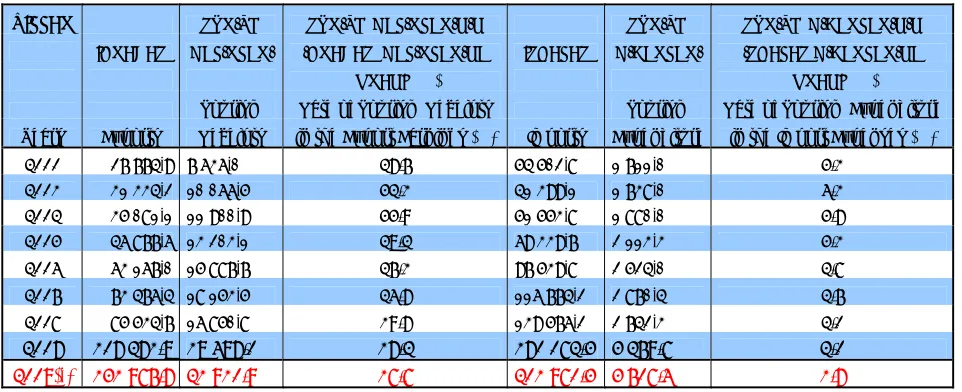
[image:13.595.69.550.90.286.2]TABLO 2 - TÜRLERİNE VE SINIFLARINA GÖRE TURİZM BELGELİ KONAKLAMA TESİSLERİNİN SAYISI : (31.12.2007)
TURİZM YATIRIMI BELGELİ
TURİZM
İŞLETMESİ BELGELİ
TÜRÜ SINIFI Investment Tourism
Licenced
Tourism Operation
Licenced
Type Class SAYISI TESİS ODA SAYISI YATAK SAYISI SAYISI TESİS ODA SAYISI YATAK SAYISI
Number
of Number of Number of Number of Number of Number of
Establis
hments Rooms Beds Establishments Rooms Beds
5 YILDIZLI / 5 Stars 141 40 897 91 923 238 74 330 159 016
4 YILDIZLI / 4 Stars 188 34 648 75 170 432 62 765 131 168
OTELLER
(Hotels) 3 YILDIZLI / 3 Stars
171 10 982 23 020 615 43 676 88 875
2 YILDIZLI / 2 Stars 72 2 785 5 572 643 25 535 50 522
1 YILDIZLI / 1 Star 24 705 1 385 105 3 665 7 326
TOPLAM - Total 596 90 017 197 070 2 033 209 971 436 907
1.SINIF / 1st Class - - - 1 68 136
MOTELLER
(Motels) 2.SINIF / 2nd Class - - - 8 193 381
Motel / Motel 4 93 188 9 211 436
TOPLAM - Total 4 93 188 18 472 953
1.SINIF / 1st Class (5
YILDIZLI / 5 Stars) 23 6 996 15 551 70 22 609 50 645
TATİL KÖYLERİ
(Holiday
Villages) 2.SINIF / 2nd Class (4 YILDIZLI / 4 Stars) 11 2 972 6 268 25 4 554 10 632
TOPLAM - Total 34 9 968 21 819 95 27 163 61 277
5 YILDIZLI / 5 Stars 6 1 587 4 348 3 748 1 692
4 YILDIZLI / 4 Stars 1 400 1 593 1 150 303
TERMAL OTELLER
(Thermal Hotels)
3 YILDIZLI / 3 Stars
3 216 458 7 350 758
2 YILDIZLI / 2 Stars - - - 1 21 42
TOPLAM - Total 10 2 203 6 399 12 1 269 2 795
PANSİYONLA R (Boarding
Houses)
24 496 1 000 67 1 048 2 080
KAMPİNGLER
(Campings) 4 873 2 511 9 517 1 499
OBERJLER
(Inns)
- - - 1 246 481
APART OTELLER
(Apart Hotels)
35 3 155 10 227 107 4 756 11 988
ÖZEL BELGELİLER (Special Licenced Establishments)
13 547 1 142 160 4 959 10 662
GOLF TESİSLERİ(Golf Facilities with Accommodation)
4 373 930 2 199 485
EĞİTİM VE UYGULAMA TESİSLERİ
(Training and Practice Establishments)
- - - 2 180 408
TURİZM KOMPLEKSİ(Tourism Complex) 5 2 175 4 993 2 916 1 987
BUTİK OTEL (Boutique Hotel)
36 1 392 3 437 3 171 361
B TİPİ TATİL SİTESİ (B Type Holiday Site) 8 1 065 4 150 1 25 112
DAĞ EVİ(Mountain House)
1 24 120 1 51 152
ÇİFTLİK EVİ - KÖY EVİ( Farm House - Village House )
2 160 205 1 44 115
T O P L A M / T o t a l
776 112 541 254 191 2 514 251 987 532 262
NUMBER OF TRAVEL AGENCIES BY THE YEAR 2008: 5411 (Ministry Licenced)
If necessary use the following box to provide additional complementary information that has not already been covered.
The impacts of Economic Crisis on Tourism Sector globally :
• Increase in the short-haul and domestic trips
• Slowdown in the visits of friends and relatives and repeating trips
• More slowdown in the business trips compared to leisure trips
• Decline in the length of stay and expenditure
• Importance of favourable currency rates in decission on destinations
• Strong co-operation is needed, amongst all the actors of the tourism industry
Main Stategy in terms of promotion and marketing in Turkey:
To Sustain and develop the actual market share of Turkey in the main markets, by using the cost/quality advantage,
To strengthen the brand position, by developing Turkey’s positive image,
Destination marketing and promotion,
Stressing the diversity of tourism products of Turkey, such as winter, thermal, MICE, culture, yachting, youth, city tourism etc.
Positioning main destinations, such as Istanbul, Muğla, Antalya, Cappadocia, as short break (Noel, Easter, Christmas, and shool holidays) destinations
To improve expenditure and length of stay
Improving the promotion of the international sports and cultural organizations in Turkey
Customer profile researches are done to define New tourist trends
Responding to the crisis in terms of tour operators, accomodation, transportation:
Public-Private Sector Partnership
• In the Target Countries;
Co-advertising, info-tours, fam trips, workshops, road-shows in co-operation with tour operators
• In Turkey;
Proffessional tourism fairs Workshops
Meetings
In co-operation with private sector institutions (travel agencies, accomodation enterprises etc.) Co-operation with the neighbouring countries
- Balkans
- Caucasus and Turkic republics
- Gographical proximity and common cultural ties.
- The visitors from neighbouring countries covers 20 % of total visitors of Turkey.
Development of Domestic Tourism
- Holiday credits
- Discounts on early bookings
Advantages of price/quality and all Inclusive holidays
APPENDIX
Principles of sustainable tourism:
Taking a holistic and integrated approach
All the various impacts of tourism should be taken into account in its planning and development. Furthermore, tourism should be well balanced and integrated with a whole range of activities that affect society and the environment.
Planning for the long term
Sustainable development is about taking care of the needs of future generations as well as our own. Long term planning requires the ability to sustain actions over time.
Achieving an appropriate pace and rhythm of development
The level, pace and shape of development should reflect and respect the character, resources and needs of host communities and destinations.
Involving all stakeholders
A sustainable approach requires widespread and committed participation in decision making and practical implementation by all those implicated in the outcome.
Using best available knowledge
Policies and actions should be informed by the latest and best knowledge available. Information on tourism trends and impacts, and skills and experience, should be shared across Europe.
Minimising and managing risk – the precautionary principle
Where there is uncertainty about outcomes, there should be full evaluation and preventative action should be taken to avoid damage to the environment or society.
Prices should reflect the real costs to society of consumption and production activities. This has implications not simply for pollution but for charging for the use of facilities that have significant management costs attached to them.
Setting and respecting limits, where appropriate
The carrying capacity of individual sites and wider areas should be recognised, with a readiness and ability to limit, where and when appropriate, the amount of tourism development and volume of tourist flows.
Undertaking continuous monitoring