Rochester Institute of Technology
RIT Scholar Works
Theses
Thesis/Dissertation Collections
Fall 2014
The Movement: A Performance Venue
Matthew J. Burke
Follow this and additional works at:
http://scholarworks.rit.edu/theses
This Thesis is brought to you for free and open access by the Thesis/Dissertation Collections at RIT Scholar Works. It has been accepted for inclusion in Theses by an authorized administrator of RIT Scholar Works. For more information, please [email protected].
Recommended Citation
A Performance Venue
Master of Architecture Thesis Rochester Institute of Technology Golisano Institute for Sustainability Department of Architecture Matthew J Burke
Fall 2014
© Copyright by Matthew J Burke, 2014 All Rights Reserved
Committee Approval
Date
Date
Date
Date
Dennis A. Andrejko, FAIA Department Chair
Department of Architecture
Jules Chiavaroli, AIA, NCARB, LEED AP Professor or Architecture
Department of Architecture Thesis Chair
Jim Yarrington, AIA, NCARB
Adjunct Associate Professor of Archi-tecture
Director of Planning & Design Services RIT Facilities Management Services Thesis Advisor
Gabrielle Gaustad
Assistant Professor
Acknowledgements
Jules Chiavaroli, Jim Yarrington, and Gabrielle Gaustad for serving on my thesis committee, providing many insights, constructive feedback, inspirations, and knowledge.
Richard Napoli, without you I would have never completed thesis (or possibly even started). Your mentorship and design knowedge are invaluable to me.
My parents, for many years of support, encouragement, wisdom, and love. You are my role models, and inspiration to always better myself.
My fellow classmates, for forging ahead in this program, despite all obstacles. This has been a long 3 and a half years, and would have felt far longer without this amazing group.
To my band, for offering me countless nights of stress relief, and comaraderie.
Preface
Abstract
The aim for the thesis project is to design a concert venue for the City of Saint Albans, Vermont. The venue will serve as an entertainment hotspot, an educational tool, a set of rehearsal spaces, and performance halls with recording capabilities. The goal is to create a welcoming entertainment and educational environment, open to use by all, to show that music is more than entertainment, but also a hobby, an educational medium, a skill-set, and a tool.
representation is in music. Sound itself is movement; it is pressure; it is the air moving around you, translated to the audible spectrum by your ears and brain. It is impossible to perform music without moving in some way. Second, water will be moving through the building (as in all buildings), but in this special case through an in-pipe
Table of Contents
Title Page Copyright Page Committee Approval Acknowledgements Preface AbstractTable of Contents Project Vision Location Climate Local Need Demographics
Character and History Context Case Study Financial Feasibility Study Building Type Case Study Literature Review
Form Case Study Design Process Site Strategy The Design
Water and Hydropower
Materials, Colors, and Construction Design Drawing Descriptions
Design Drawings
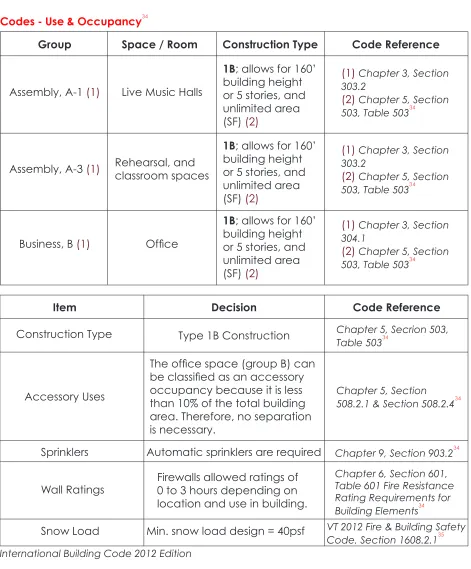
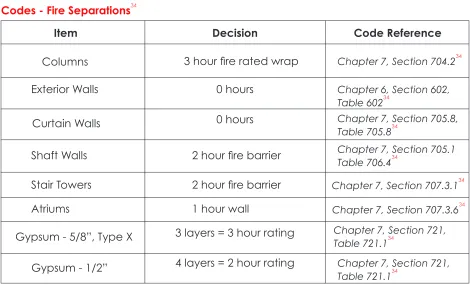
Design Development - Zoning Design Development - Codes Design Development - Egress Design Development - Egress Plans Design Development - Fire Rating Plans Design Development - Accessibility
Design Development - Mechanical, Electrical, Plumbing Design Development - MEP Plans
Design Development - Sustainability
Design Development - Structural Plans & Calculations Design Development - Energy Compliance
This architectural thesis project is a
micro-hydropower technology, and acoustics. The acoustics component stems from my passion for music, while the micro-hydropower component comes from research conducted under an EPA funded grant.
The project is also an exploration of personal roots. The project is set in my hometown, a small city in north-western Vermont. In analyzing the city’s present building stock and business make-up, a gap was evident in what is available to the community. The project grew out of the hypothesis that Saint Albans has almost no opportunities to see live music. Furthermore, another goal for the project was to include a renewable energy component. This is done with the implementation of a micro-hydropower energy generation system.
Location
The project’s location will be 133 North Main Street, in the City of Saint Albans Vermont. The City of Saint Albans is encompassed entirely by the Town of Saint Albans. Presently, there is a small shopping plaza with a few successful businesses, as well as the local Post
Location
133 N. Main Street is within easy walking distance of prominent downtown St. Albans restaurants, bars, and the city’s 3-screen movie theatre. This focal portion of Main Street is approximately 0.4 miles in length, an easy <10-minute walk from even the furthest area restaurant. Within this walking distance is the local high school, which serves a handful of towns in Franklin County, as well as the Town Elementary School, and City Elementary School. The site is also a popular viewing site for annual parades, such as July 4th, Memorial Day, and The Maple Festival (a celebration of Maple Syrup, for which Saint Albans is famous).
Location
Site
R R R R
Main St
Main St
Main St
Congress St
Messenger St
Federal St
Lake St
Fairfield Rd
Fairfield Rd
Retail
Restaurant / Bar Entertainment Non-Food Business
School Post Office Religious
R
R Railroad
Climate
Saint Albans is located on Lake Champlain, and just shy of the 45-degree latitude mark (~10 miles). Snow is common from the months of November through April. Precipitation patterns are fairly consistent, ranging from 1.96” in January to 3.92” in August, with no dry months. Average snowfall is approximately 80.6” over the course of the winter months, with an average
of 44 snow days1
. As a result, buildings’ structures have to take 40psf snow load into consideration.
Temperatures can range from a record low of -37 °F to a record high of 99 °F, making for an average temperature of 44.1 °F2
. In terms of design, the local climate is a heating load dominated area. The heating degree-days far outnumber the cooling degree-days at 7,771 to 388 respectively. In terms of solar potential, it is a relatively cloudy region, with an average of 58 clear days a year, and an average of 154
days annually with precipitation3
. Nonetheless, South facing glazing is
recommended in this climate4
.
8-10mph1
. The majority of this wind load comes from the South, making for a great opportunity for natural cooling in the summer months. In terms of design, there are a number of possilbilities to keep a building more comfortable to human occupants. Some of these
Southern glazing to maximize winter
sun exposure
Extra insulation can prove cost effective, and can help to keep indoor temperatures more uniform Basements must extend at least 18” below the frost line
Vestibule entries can minimize air
Temperature1
Local Need
A poll was conducted to gain insights on the need for a concert venue in Saint Albans, Vermont. This was conducted
with the web tool Survey Monkey5
, and spread through Facebook and email blasts (a full list of the questions can be seen at the end of this section).
There were 89 participants, from varying backgrounds and occupations. The participants were made aware that the poll proposed questions for a hypothetical venue.
Data
Of the participants, 80.89% (72) were from Saint Albans, and it’s
Saint Albans Franklin County, but not Saint Albans Other
Healthcare Childcare/Education Small Business Owner Construction Architect/Engineer/Designer Government Artist Retail Hospitality IT Administration Banking/Financial Social Services Marketing Legal Student Other retired Stay-at-home Manufacturing Clerical Ministry Law Enforcement Baker Biologist
0 5 10 15
Musician Non-Musician
Occupations of the participants varied widely, and included healthcare, retail, legal, retired individuals, and stay-at home-moms. The breakdown is as
Local Need
Of those polled, 83.14% (74) attended
I attend concerts I do not go to concerts
Of those polled, 68.54% (61) attended a live musical performance once every
Once every 2-3 Months Once a month
A couple times a month Every Week
Never / This does not apply to me
Of those polled, 59.6% (53) travelled to Burlington, VT (30 miles) or farther to
In Town (Saint Albans)
Close to Saint Albans (15 miles) Burlington, VT or farther
This does not apply to me
Of those polled, 80.9% (72) said they would be more likely to attend a live musical performance if there was a
More likely to attend Not more likely to attend
Of the musicians polled (31), 67.7% were interested in the availability of practice
I'd like practice space
Of those polled, 55.1% (49) believed that a music venue should have a bar. The “Depends” category gained comments such as “can be good for business,” and “some form of refreshments like coffee,” and “not necessarily, but wouldn’ t object to it.”
Local Need
Yes, it should have a bar
No, it doesn't need a bar
Depends
Finally, a summarizing comment section showed resident support for the venue. One participant said “I’ d love to see Saint Albans have a music venue,” while another said “Overdue!” while others claimed their interest in the venue depended on the genres of music brought in.
Summary
While the turnout for poll participation was not huge, the majority of
participants were in favor of a new music venue for Saint Albans, Vermont. A majority occasionally attends live musical performances, but must travel far in order to do so. More importantly, an overwhelming majority would be more likely to attend musical
performances if there was a dedicated venue in town. A majority of musicians polled were interested in the idea of a
multipurpose music venue that included practice spaces. Many people also liked the idea of bar/concessions/
refreshments availability, which suggests they don’t think Saint Albans already has adequate opportunities for “social” spaces. However, there was one
Local Need
The poll was conducted through the web tool Survey Monkey5, which was posted with a link on Facebook, and spread around to as many Saint Albans community group pages as possible, as well as emailed to many people. There were 10 questions in total, and 89 participants in total .
The questions and reported answers are as follows5:
Q1. What City/Town are you a resident of?
A. Saint Albans (39); Franklin County, but not Saint Albans (33); Other (16); Skipped (1)
Q2. What is your occupation?
A. Healthcare (13); Childcare/Education (15); Small Business Owner (2); Construction (2); Architect/Engineer/Designer (3);
Government (6); Artist (1); Retail (3); Hospitality (5); IT (1); Administration (5); Banking/Financial (2); Social Services (1); Marketing/Publishing/Writing (1); Legal (1); Student (6); Other (18); Skipped (4)
Q3. Are you a musician (do you play any instruments)?
A. Yes (31); No (56); Skipped (2)
Q4. Do you attend live musical performances?
A. Yes (74); No (15)
Q5. If so, how often?
A. Once every 2-3 months (61); Once a month (2); A couple times a month (6); Every week (3); Never, this does not apply to me (16); Skipped (1)
Q6. If you attend live musical performances, where do you typically go?
A. In town [Saint Albans] (10); Close to Saint Albans [15 minutes away] (5); Burlington, VT or farther (53); This does not apply to me (14); Skipped (7)
Q7. If there was a dedicated music venue in town, would you be more likely to go see a show / see friends perform?
A. Yes (72); No (9); Skipped (8)
Q8. If you are a musician, would you be interested in the availability of practice space?
A. Yes (21); No (12); This does not apply to me (54); Skipped (2)
Q9. Do you believe a music venue should have a bar?
A. Yes (49); No (27); Skipped (13)
Q10. Any other comments on this subject?
Demographics
The City of Saint Albans has 6,918 residents, with 31.6% of households having children. It is a youthful city, with 65.7% of the population under the age of 45. The median household income is $37.2k, while the median family income is $44.3k1.
The Town of Saint Albans has 6,392 residents, with 38.2% of households having children. The town is also youthful, with 62.6% of its population under the age of 45. The median household income is $46.9k, while the
median family income is $53.1k1
.
Saint Albans is a net import City and Town, and not a bedroom suburb. The population grows daily during business hours. During the daytime hours, the population grows 37.5%, or ~2,605 individuals (City-Data, 2014). Saint Albans sits in Franklin County, which has
a total population of 47,746 people1
.
City with <18 City with >18
City <45 City >45 Town <45 Town >45 City Pop. Town Pop.
Town with <18 Town with >18
$38,000 $40,000 $42,000 $44,000 $46,000 $48,000 $50,000 $52,000 $54,000
City Med. Family Income Town Med. Family Income
Character and History
The proposed project is a fairly unique building type for the City (and Town) of Saint Albans Vermont. The City has its fair share of history; it was the site of the northernmost Civil War battle, and has for more than a century and a half
6
. The existing building type of the downtown
transportation vernacular. Running straight through the center of the City is a primary railroad corridor, still in use
today by Amtrak6
.
Even in the downtown core, there is a heavy use of residential-type architecture. Furthermore, more than a block of the heart of Main Street only has buildings on one side; the opposite side is a large park, making the downtown core even more unique.
Despite all of this, Saint Albans is a very progressive city. Evidence of this is littered throughout the City’s current Master Plan, with pushes
core, increased development of underdeveloped parcels, walk-ability, avoidance of suburban-style development, and recently with the creation of a large multi-story public parking structure, the city has
consolidated surface parking6
.
The character of the proposed venue will have to take all of this into account. It must speak the City’s historic roots, its transportation, industrial, and residential vernacular, and embrace the city’s desire to move forward and grow. The
site it will sit upon could also be looked at as the gateway to the downtown, an entrance marker, and an edge condition for the downtown core. The City’s Master Plan already expresses a desire “to create an architectural presence along Main Street” on this site, which is presently the Saint Albans
Shopping Center6
.
this new building. The large parking lot will have opportunity to be used during normal business hours (9-5), and gain new use in the evening and night hours, since that is when concerts tend to happen. Furthermore, any outdoor events that draw large crowds to the venue can help increase business for the existing businesses in the 1 story strip mall adjacent to the parking lot. Hopefully in the future, the surrounding lot will turn into a pedestrian friendly shopping area.
Context Case Study
Usable rooftop space
Arched and round windows Saint Albans already has a rich
architectural vocabulary. In order to proceed with a design for a new building, a tour of the city/town was conducted to create a collection of visuals from which to draw inspiration. Drawing inspiration from the existing building stock pays respect and
homage to the surrounding community.
Much of the existing building stock was built decades, or even more than a century ago. Along the railroad corridor at the heart of the city are many
industrial, and transportation oriented buildings. Along the main street is a collection of mixed use type buildings
residential upper stories), and formerly residential buildings now converted to commercial uses.
The built environment offered inspiration in two ways. First, in architectural
features and details. Second, in material choices, which show both texture
and color. Examples of highlighted architectural features and details are as
Context Case Study
Symmetry and grids
Reds and grays Looking deeper into these features, it
Feasibility Study
Small-scale venues are not terribly expensive to keep in operation,
particularly small local ones that do not pay musicians to perform, but merely give them exposure, and live practice.
conducted on The California Brew Haus, a concert venue/brewpub in Rochester,
New York7
. Some of the operating costs
Total Max. Cost for 1 evening of entertainment = $2,480(highest paid musicians, 4 security)
Total Min. Cost for an evening = $410
(non paid band, reduced security) Typical Low Nightly Income = $750
(based on 50 customers, purchasing 2 drinks each, at $5 apiece, with unpaid musicians. Also included is a $5 apiece cover charge. Paid musicians bring
for a slow night= $340 (typical low income - typical minimum cost)
provide live entertainment for 1 night,
a slow night at that7
.
Item Cost ($) Notes
Tech cost (sound, lighting) Touring band cost Security $200/event $50-$2,000 $280/event
This price is high for this type of venue Speciality show. Small venues do not typically bring in paid touring musicians 3-4 guards at $10/hour for a 7 hour timeframe
To compare this area of Rochester to the proposed site in Saint Albans Vermont for a concert venue, some
demographic information is helpful1
.
Criteria Rochester, NY 14615 St. Albans,VT 05478
Population Land Area Median Household Income Households with Children Residents below age 45 Competition within <10 miles 16,317 5.8 square miles $36,749 45.5% 60% No dedicated venues $37.2k (city) $46.9k (town) 65.7% (city) 62.6% (town) 31.6% (city) 38.2% (town) Dozens of dedicated venues 62.6 square miles
13,310 (city & town)
Feasibility Study
Other means of income for the proposed music venue in Saint Albans are the rehearsal spaces and educational spaces. These spaces can be used simultaneously with the concert hall, allowing for 2 concurring
often acts as a stand alonebusiness;
rehearsal spaces that charge hourly and monthly. Some average pricing for this income is as follows8
Item Charge Note
Rehearsal Spaces Education, Lessons, Workshops Starting at $25/hour; $200/month Starting at $25/hour
As many as 9 operating hours per day in many cities (5pm-2am).
Same time opportunity as above. Furthermore, this is a job opportunity for trained musicians
Item Unit Cost Units Needed
Building Cost Estimate9
Total Cost Notes
Auditorium
Rehearsal
Excavation
Building Subtotal Cost
With Architectural Fee
With Area Factor (94.2%)
Demoltion of Existing Building $161/SF $135/SF $143/SF $2.42 $8.97 18,318 SF 501 SF 1,877 SF 7,778 SF 800 SF $2,949,198 $67,635 $268,411 $69,768.66 $3,358,052 $3,626,696 $3,416,347 ($1,936.00)
Low Rise, 1-4 stories
Based on vocational school
$3,200 Min. allowed cost
With an estimated price tag above $3.4M, this is a building that would likely need privae funding, such as a large donation from a wealthy individual or
Building Type Case Study
Introduction
Case studies were conducted on
differing sizes and types of music venues in New York, and Vermont. The venues that have been examined are Twiggs, in Saint Albans Vermont; The California Brew Haus in Rochester, New York; Upstate Concert Hall in Clifton Park, New York; and The Tralf Music Hall in Buffalo, New York.
Twiggs, Saint Albans, VT10
Twiggs is a restaurant in the heart of downtown Saint Albans. Recently, the owners have branched their services into offering live music, mostly at a smaller capacity like an acoustic duo playing to the dining rooms. The space has exposed brick walls, hardwood
systems. There are 3 stages within the restaurant. The restaurant is in a mixed-use building with storefront type
windows overlooking Main Street10
.
The California Brew Haus, Rochester, New York11
The California Brew Haus is a bar,
restaurant, and concert venue situated within walking distance of the Kodak plant on West Ridge Road. The Brew Haus has been open for decades serving the Rochester community. The venue hosts anything from small local bands, to large touring bands, and community fundraisers. The space is fairly simple in design, with concrete
suspended building systems, and some acoustic treatments (curtains) on the
walls of the main performance space11
.
Stages
Stage Sizes
Audience Count
Total Venue Size
Window stage (front); small stage (side); main stage (back)
(front) accomodates 2-3 people; (side) accommodates 3-4 people; (back) accommodates 14 people by code Largest space can accommodate 75 people seated at tables ~4,500 SF Stages Stage Sizes Hall Sizes Bar Sizes Storage Size Total Venue Size
Main stage (rear of venue); window stage (front of venue)
373 SF (main); 51 SF (window stage)
1,600 SF (main hall) 1,000 SF (window) 240 SF (main) 200 SF (window)
Building Type Case Study
Upstate Concert Hall, Clifton Park, New York12
The Upstate Concert Hall is a concert venue and bar situated in a strip plaza in the Albany suburb of Clifton Park. The plaza is a single story building. The venue tends to gear towards larger touring acts, typically drawing 1,000+ customers to each show. The venue is fairly simple in design with
building systems, and some acoustical treatments (curtains) on the walls like
the previously examined spaces12
.
Stages
Stage Sizes Hall Size
Bar Size
Total Venue Size
Main Stage (back left corner)
704 SF
~12,000 SF
600 SF
14,500 SF
The Tralf Music Hall, Buffalo, New York13
The Tralf Music Hall is a bar, restaurant, and performance venue that hosts live bands, as well as comedians (Jay Leno, and Jerry Seinfeld performed here in the 1980’s). The venue exists in the 2nd story of a Main Street building in downtown Buffalo, nestled in with other area entertainment venues, shopping, and
either through a freight entrance on the rear side, or stair lobby from the Main Street side. Similar to other venues examined, the space contains concrete
(curtains), and exposed suspended
building systems. The venue sports ~15’ ceilings, and low lighting levels for an
entertainment atmosphere13
.
Stages Stage Sizes
Hall Size
Bar Size
Total Venue Size Load-in size
Main (front left) 300 SF
5’ hallway with an approximate 40’ total length for temporary storage, gear pep, and back of stage access 3 Levels; lower level ~2.5k SF; upper level ~1k SF, mezzanine ~600 SF
Other notable spaces include a coat room at roughly 56 SF, a kitchen ~225 SF, 2 sound booths at roughl~64 SF apiece
200 SF 250 SF
Summary
Overall, the venues have many similarities in design, materials and performer type. They are built for durability, using rugged materials
(brick, steel, concrete), building systems exposed (and often painted black), and acoustical treatments installed in consideration of neighbors. Aesthetics are not always a top priority, but
Literature Review
Acoustics Introduction
At this point, it is evident the building type will include spaces for live music. Therefore, some information on
is a widely studied one. However, the sustainability of acoustical materials is not. Sustainability is a complex term, and is one that will be discussed in the following section. This section will discuss the ways in which sound reacts against and with chosen materials.
Sound affects the hearing population, the hard-of-hearing, and the
non-comprised of waves, created by
vibrations. Therefore, sound is something that cannot only be heard, but
something that can be felt. Because of this, it is important to understand how sound affects the use of a space. Different spaces have different
functions, and therefore have different acoustic requirements. A concert hall for example may require sound to travel
productive with sound staying isolated.
Because of the nature of how sound behaves in the environment, it will also be important to understand the placement of materials when they behave with sound, and this will also be explored. Rooms of different shapes will behave and sound differently. Sound waves bounce off of the surfaces they come into contact with, so the exact angle of a surface affects what direction the sound waves travel after they have come into contact with Acoustics
the surfaces, as well as how users of a space will hear or feel the sound being generated in that space. Rounded surfaces around a user will create an entirely different “soundscape” than if that same user was in a space with four
ceiling surfaces.
While research on material properties
materials is clearly important, it is also important to consider sustainability characteristics such as recyclability and embodied energy of these products and materials. Sustainable design
practices must consider where materials come from, and how their use can make an impact. These impacts can show up at a variety of life stages of the material, whether that is in the initial extraction phase, manufacturing, use, or even the end of life in recycling or discard.
Alternative Sustainable Acoustic Materials
“A Novel Sound Absorber With Recycled Fibers Coming From End of Life Tires”14 The article discusses a possible solution and use for end of life tires. Around the world, there is a large quantity of waste tires, mostly due to their short lifetime. The article suggests shredding
which can then be used as a sound absorbing material. This creates a use for a waste material. It has been in
14
of a material.
The process to make this material is
nanometers. The end result is a mixture of tire ingredients, which includes both
batt-like material has an open pore structure. “When a sound wave strikes a porous sound absorber, the sound
material to vibrate. This vibration
causes tiny amounts of heat due to the friction and thus the sound absorption is accomplished by way of energy to
heat conversion,”14. Thus, this may be
an important factor to consider for the thesis project. Since sound absorption can actually be an energy conversion process that generates heat, the chosen materials to work with must be
heat.
The results found by the article
suggested a couple solutions to use the material. One method was to make a more rigid version, which coupled a resin with the shredded tires. This method however decreased sound absorption qualities of the original material.
Nonetheless, a rigid version presents
in workability. The second method layered the batts of insulation, which was successful at sound absorption of lower frequencies of 0-4000 Hz (normal
hearing range is about 20-20,000 Hz)14
.
While the article suggests a sustainable solution for the end-of-life use of tires, it is clearly a solution that requires a full-scale industrial process. Such a process can be energy intensive to carry out. Regardless, it appears that a batt-like material comprised of shredded tires could be a feasible solution to produce a sound-absorbing sustainable material. It creates a use for a waste material, thereby decreasing (or replacing) a need for virgin materials.
“Sustainable Acoustic Absorbers From the Biomass”15
The study presented was conducted in the UK. It looked at biomass materials that could be used as sound absorbers. The more prominent materials
researched in the article are whole straw, and reed. They are looked at for the possibility of using them to mitigate sound levels coming from highways. In this regard, they would be used outdoors predominately.
Reed and straw are ideal for this
application because they are materials that have already proven to be durable and long lasting when subjected to extreme environmental conditions. A thatched reed roof for example can have a lifespan of 40-60 years. As suggested in the previous article, porous materials are good at absorbing sound, and a straw or reed layered batt can
be porous15
.
Other materials considered in the article
is already in use in acoustic applications, placed within stud walls as a sound
Literature Review
absorbing material. The only issue is that presently wool tends to be more of a by-product of sheep that are farmed for their meat. Hemp is more commonly used in animal bedding, and thus could be a cheaper alternative material for sound absorption15.
The materials discussed have a wide range of thicknesses, ranging from 13 to more than 200 nanometers. As presented in the previous article, smaller
in sound absorption, especially when compacted. Therefore, some of the later suggested materials such as
suited, and are already in use in such applications. However, there is a downside to the materials examined. They can be prone to fungal attacks,
treated with chemicals. However, treating them with chemicals then requires special considerations when
they come to the end of life15
.
In connection to the previous article, the materials discussed here do offer up feasible solutions as sound absorbing materials. The solutions here however don’t necessarily require large-scale industrial processes; they can be acquired from traditional farming methods. It also offers some insight in looking at old materials in a new way.
Sustainability in the Urban Environment
“Acoustic Sustainability in Urban Residential Areas”16
The study presented in this article was conducted in the UK. Its central focus is on noise pollution in urban environments, however it takes a broader focus, looking at culture, and not necessarily a single material for acoustic sound absorbing
characteristics. It does however point out that “little attention has been paid to the sustainability and environmental impacts of various acoustics-related materials and building elements,”
need of and offering great opportunities for (future) research.
In the urban environment, there is a high density of buildings. These are constructed with hard materials such as steel, stone, concrete, and brick, and stretch many stories high. “The number of stories is relevant to the urban sound environment, in terms of appropriate distance between noise sources and buildings, as well as sound propagation in street canyons,”16
. However, there are many urban environments across the globe. The authors point out that different cultures have different tolerances to annoyances, such as sound and noise levels.
In a portion of the article, the authors discuss sustainable energy, and how they are related to acoustics. The sustainable energy source of interest is that of wind-farms. Wind farms can produce some noise pollution, particularly in the low end of the
frequency spectrum. Lower frequencies tend more to be felt than heard,
Literature Review
disturbing both the hearing, and non-hearing populations. As windmills increase in height from 10 to 46 meters, the noise level can increase in the
range of 10-20 decibels16
. To put this in perspective, normal conversation at about 3 feet is in the range of 60-65 decibels, and a typical concert is 110-120 decibels17
.
Perhaps the most important point that can be taken from this article is that sustainability is a regional and local phenomenon. As different cultures have different tolerances to things like noise pollution, so must the solutions be as varied. The urban environment is a naturally loud one. Newer, sustainable energy sources are not without their faults. These are all things that must be taken into consideration when designing.
Acoustics Summary
The connecting thread between all the pieces examined is the need for sustainable solutions to acoustical
be understood as we design for the future. It is a cultural, regional, and local problem, and one that must have cultural, regional, and local solutions. There is no single answer.
Looking at materials in new ways, such as end of life tires as an acoustic absorbing material, could be a more universal solution, or at least one in the developing world, where this is a vast supply of waste. Biomass solutions can
Literature Review
Acoustics
also be a feasible option, at least in places where it is easy, or practical to grow and farm such choices as wool,
Literature Review
Hydropower
Hydropower Introduction
Hydropower is an energy generation method that mankind has understood for hundreds of years. Hydropower has been adapted to both large scale, and small scale uses, from the enormous Three Gorges Damn in China, to simple backyard, stream sized hydropower systems. The proposed thesis aims to implement hydropower technology
There are many threads to study on the feasibility of a micro hydropower system implemented in a building’s storm water drainage system. First, a building’s
overall form would be important to consider. One with a smaller footprint would have a smaller roof, and vice versa. What would be the minimum collection area for rainwater needed? How large, or small would the drainage pipe need to be? How many stories, or what would the minimum height need to be to create adequate head to create enough pressure in such a system? Would more stories/height introduce opportunities for multiple instances of hydropower generators?
The use of a building would also be important to consider. Different types of buildings have different energy requirements. For example, an industrial lab building would use far more energy than a single family home. This will be important to consider. Nonetheless, moving forward in the 21st century, it is important to always search for ways to reduce energy consumption .
Weather is an incredibly variable phenomenon, and one that affects every geographic location differently. A basic understanding of the local climate will be necessary for this project. A city such as Saint Albans, Vermont sees its fair share of rain, but it certainly doesn’t rain every day of the year. With this consideration, energy storage would also likely be very important to the success of the proposed system. This may take the form of a large water cistern, a large battery bank, or even some combination of the two.
Small-Scale Hydropower
“Determining Optimum Location and Capacity for Micro Hydropower Plants in Lorestan Province in Iran18
The research was conducted on determining ideal locations for micro hydropower installations in Iran. It
concentrated on a mountainous region, thereby taking advantage of natural streams, and abundant precipitation generated from colliding weather fronts. The region of Lorestan, Iran contains 3,000 possible areas for in-stream micro hydropower systems. Also, due to the
potential for larger head heights. In the scenarios studied in this region of Iran, the micro hydropower plants would pay themselves off within a year, “provided that the power plant is operated at rated capacity around the clock”18
Literature Review
Hydropower
power plants with micro hydropower systems.
“It may be possible to build serial
from one power plant to another via canals. In this system, it is only for the
dam is constructed. The electricity generated by all the power plants in the series can be consolidated in parallel. Therefore, such power plants reduce energy production costs and increase
18
.
Knowledge of in-stream hydropower systems is crucial for the design of in-pipe micro hydropower systems. Much can be learned from in-stream solutions. For example, greater head heights can be easily achieved in buildings as they contain more and more stories. A building that takes advantage of micro hydropower could be ideal for a mountainous region, or near one, as there is more likelihood for precipitation. Other insights include water storage
of water and energy generation as needed. Last but not least, there is potential for a “chained” system, particularly in a high-rise application, when a micro hydropower system could include several turbines at different heights within a building.
“The Diversity of Hydropower Projects”19 Hydropower is an energy generation method that can be easily scaled; it
“is based on a simple process, taking advantage of the kinetic energy freed by falling water”19
. The article discusses a range of hydropower plants, from small to large systems, systems that use reservoirs, systems that provide a base or peak load, small streams to large rivers, and systems that use pumped storage. Systems that use reservoirs are capable of storing large amounts of energy, and releasing a more constant
and sizes at different points. The article suggests pumped storage is not the
storage systems only ever regain
about 65-75% of the energy consumed
released.
A couple points of interest can be gained from this article. First, a reservoir style system for in-pipe micro hydropower is almost always necessary
generation. However, it does have structural implications on a building. Second, the article makes the point “electricity can not be stored, unlike energy sources such as wood, petrol, or gas”19
Of course energy can be stored in batteries, but batteries are not 100%
hydropower system, energy would be stored in a water cistern before its release, thereby retaining 100% of its potential.
Literature Review
Hydropower
is that pumped storage placed before the in-pipe micro hydropower turbine would not be ideal since it loses so much of the generated energy. In-pipe micro hydropower is not working with anything large like gigawatts, or terawatts, but rather on the micro scale of watts, and kilowatts. An energy
However, storage placed after the energy generating turbine for reuse of the water would be acceptable. Water in most buildings is pumped to the upper stories already anyway.
Optimal Installation of Small Hydropower Plant – A Review20
hydropower systems on a small scale. Hydropower is one of the oldest forms of energy to mankind, and furthermore “hydropower on a small scale is one of the most effective
energy technologies”20
. Energy and development are closely intertwined. In a world with so many developing countries, it is an important technology type to keep in mind. Pico hydropower schemes have been used for remote,
cost is lower than fossil fuels generators, as well as wind and PV generation
with many 20th century plants still
The article also suggests “dams can
reservoirs that should be emptied ahead of the rainy season. The level difference and water releases from the reservoir
can be used to generate power”20
.
Conclusions helpful to an in-pipe micro hydropower system are that hydropower on a micro scale is highly effective, and ideal for developing regions of the planet. Systems are cheaper to install than other clean energy sources such as wind or PV, and of course better for the environment than a fossil fuel combustion energy generation system. Lastly, there are
a system. Water storage controls the release of storm water to storm water systems, allowing it to be released at non-peak times. And, it generates electricity when water is released.
Cost Analysis of Pump as Turbine for Pico Hydropower Plants – A Case Study21
small-scale hydropower systems, and downfalls to large scale. Large hydropower plants face long construction time frames, create ecological changes in their vicinity, lose energy in transmission from their remote locations to the areas where the power is actually consumed, and often submerge large tracts of land underwater where valuable forests, or underground mineral resources may exist. Micro hydropower projects however are free from all of these
mentioned issues21
.
Literature Review
Hydropower
60%, however pumps are cheaper than conventional turbines, and may make them more cost effective for small-scale
hydropower21
.
Applicable points from the article that could be adapted to in-pipe micro hydropower is that there are minimal environmental impacts, and fast
construction times. They can be placed where the power is consumed, and not long distances away allowing the power supply to degrade in transmission.
Furthermore, a pump could be used in place of a turbine to lower costs.
Human Behavior
“Revealing the Determinants of Shower Water End Use Consumption: Enabling Better Targeted Urban Water Conservation Strategies”22
This study concentrates on bathing patterns and water consumption from bathing only. Bathing accounts for the largest consumption of water in residences. In a study performed in Australia, the average consumption of a collection of two hundred households, containing an average of 2.6 persons, over a two-week period, was 335.9L per
day per household22
. However, there are
shower end use consumption, such as individuals’ attitudes (mentioned previously), household makeup, and socio-demographic characteristics. This study did accede that “the use of
end use consumption,”22
therefore
showing evidence behind the LEED guideline. But, it may be obvious, the larger the household, the more water is consumed. And stereotypically, the more females, and the more teenagers in a household, relates to increased water use22.
Furthermore, “a high proportion of shower end use consumption is hot water, any conservation of shower
22
. The more
shower times can be reduced, the more energy can be saved in water heating. This is perhaps the most relevant piece of information from the article. Resource consumption from showering is about more than fresh water usage; it is about energy consumption. If people can strive to consume less water in their daily routines, they are inevitably also conserving energy.
“Alarming Visual Display Monitors Affecting Shower End Use Water and Energy
Conservation in Australian Residential Households”23
A third study, also conducted in Australia took a different approach to attempt to lower water usage. This included the installation of water usage visual displays in 44 of 151 homes. The displays proved helpful, because the homes with the installed meters showed a 27% reduction in water usage, particularly in showering. The meters also had a 1.65-year payback for the device in the savings it allowed on water
Literature Review
Hydropower
Conclusions
Visual, easily understood metering in homes could be applied to water usage to encourage less consumption. But perhaps it could also be applied to energy consumption. While it’s true that buildings are already metered, they are largely just for utility companies to assess consumption and generate a bill. They are not easily understood by a layperson. This is an area building systems can be improved to encourage decreased energy and water
Form Case Study
Three case studies were conducted with
a unique roof form. The 3rd example
utilized curvilinear forms, both in plan, and the 3rd dimension.
The Magney House24
The Magney house was designed by architect Glenn Murcutt in the early 1980’s. The house is located in New South Wales, along the coast line. The design was to capture Northern light, and to capture water for drinking and heating of the residence by use of a curvilinear roof form. The roof directs
water to a collection channel24
.
Fort Belvoir Community Hospital25
The Fort Belvoir Hospital is a large complex located in Fort Belvoir,
Virginia. The facility is 1.3 million square feet, and has achieved LEED Gold status. The building is symmetrical in form, comprised of 2 wings creating a “V” shape. Each wing has a set of opposing curvilinear roof forms which direct rainwater into central courtyard collecting tanks. The tanks are located underground, and can hold a combined total of 160,000 gallons of water, which is reused for irrigation, and
Bart Prince26
Bart Prince is an American architect. His designs are unique, driven by the closely held practice principle of “form follows function.” His design provided inspiration in its distinctive form, often using strong, curvilinear shapes. This architectural case study did not have to do with water collection; it was simply an exploration of curviliinear building forms26
.
To begin the discussion on the design process, a brief summary of the
architecture comes from the synthesis of many, many pieces of information. The
Information on acoustics Information on hydropower The location for the project The climate of the location
The needs of the community for the proposed project
A demographic background on the chosen community
A history of the chosen city and town A Visual summary of existing building stock of the chosen city and town
building type
Building type case studies on concert venues
Form case studies
From this gathered information, a theme can be pulled which will inspire the entire project. The thesis statement is as
“To create an entertainment hotspot for downtown Saint Albans, Vermont that embodies the concept of ‘movement’ through sound, water, and urban development”
Design Process
Designing a concert venue stems from my own passion for music. Music is a creative outlet, a hobby, and for some a lifeskill. My goal was to introduce a venue for my hometown as an opportunity to share my passion.
Saint Albans is a land rich area
pushing for a consolidated developed
an appropriate site; one that would not destroy anything historical, develop an underused parcel, and have
In combining the sustainable
technology chosen, a larger building became more ideal for its feasibility. Furthermore, a larger building
could create more opportunities for education, and business.
Before designing the building, it is important to consider how its site will affect its design. The site chosen is a small lot, surrounded by a much larger underutilized parking lot. The topography is a gentle slope up from Main Street, which will be designated as the “front” side. Over the width of the site, the land goes up 3 feet in elevation, making building access something to consider in design.
Orientation
Designating the Main Street side of the site as the front side presents some immediate issues. First, any people accessing the site by car will be forced to park in the “back” or sides. Second, the Main Street side of the building is the Western side, meaning glazing on this side could result in solar heat gain in the afternoon.
Dual Entry
There is existing parking at both the Northern and Southern side of the building. Entrances will be required at each of these sides. This allows the lobby and public space to have presence at both ends of the building.
Public vs. Private
The building type is one that has two different types of users. First, are the general public, the paying customers which support the business. Access will be needed along prominent street frontages, and multiple entrances to the performance halls, since there will be many people. Second, are the performers themselves. They require
Site Strategy
more private access for undisturbed entry and exit, and loading in of large equipment. These two types of access and building users will be split in where they enter the building on the site.
Exterior vs. Interior
Although Saint Albans, Vermont is a cold climate, opportunites for both indoor and outdoor activities will be good for business. Bringing people outside has potential for larger crowds, since they are not hindered by the square footage of a room. Situated along Main Street and sitting in a large parking lot, there is opportunity for street festivals. A dual purpose stage is to be added into the design; this is a stage that can be used for indoor or outdoor events. This gives new life to the underused parking lot, and makes opportunity for surrounding businesses to be more prosperous.
Proposed Parcel Topo Map 1” = 20’-0”
Site Strategy
EXISTING PLAZA
EXISTING PLAZA
PLAZA PARCEL
SITE EXISTING BANK BUILDING 420’
The Design
Program
The program of the building was created from knowledge gained from the building type case studies, Time Saver Standards, and personal experience. The space needs are as follows27
Some of these spaces can be
combined while others can not. Some sizes are generous, while others are a little small. Some can exist within others. For example, the tech booths and bars can be absorbed into the hall sizes. A single set of restrooms, while allowable by code, is not convenient to building users. Dressing rooms are a luxury, and can thus become smaller or bigger with ease and as deemed appropriate. A Main Hall
Main Stage Main Bar
Main Tech Booth Hall 2
Stage 2 Bar 2
Tech Booth 2 Hall 3
Stage 3 Tech Booth 3 Restrooms Dressing Room Loading
Entry / Lobby
Classroom/Flex 10 Rehearsal Spaces
...1,250 SF ...150 SF ...300 SF ...64 SF ...750 SF ...90 SF ...100 SF ...64 SF ...400 SF ...75 SF ...64 SF ...237 SF(min) ...400 SF(min) ...500 SF ...750 SF ...400 SF(min) ...600 SF ...2,400 SF
Subtotal = 8594 SF + Mechanical Factor (8%) = 9,281 SF + Circulation Factor (18%) = 10,952 SF
space planning standards would allow
classrooms and rehearsal spaces can be combined in any way, and can be a minimum of 80 SF apiece, making 2,400 SF a generous size27.
Design Vocabulary
A design vocabulary can serve as a sort of parti, or guiding principles when planning spaces, and designing the buildings form. The words chosen are
movement, , energy,
, repetition, and oscillation.
Movement was chosen because of
the 3 focal points behind the design. Movement will be present because of the building type. Sound is movement. What we perceive as sound is the air literally pushing against us, echoing in our ears, and translated to sound by our brains. It is impossible to make sound or music without moving. The building will showcase the movement of water through itself. Water already moves through every building, but this building will showcase it, and take advantage of the energy in its movement. Lastly, redeveloping this parcel pushes forward the City’s Master Plan, and desire to move away from suburban development, creating a walkable destination, and creating a City landmark.
Flowwas chosen because of the use
Energy was chosen because of both the hydropower and sound in the building. The hydropower system will help to offset grid dependence in the building by generating immediately usable energy. Removing dependence from the grid offsets greenhouse
gas emissions, and thus unnecessary consumption of non-renewable energy
sources. Energy was also chosen to
performance. A live performance can captivate an audience, make them feel emotion, and energize them.
Flexibility is a principle that can inspire
the venues business plan. A building containing many spaces which can be used for different purposes is more
customers needs.
Repetition goes hand in hand with
single space allows for multiple users, and mutliple different uses, catering to different types of user groups.
Oscillation can also be likened to
of something changing and reverting back. It represents opposites, duality, and an ability to serve two purposes.
Orthogonal versus Curvilinear
The building presents the dichotomy between orthogonal and curvilinear. The spaces to be occupied by users are orthogonal, while the circulation to get from space to space is largely
curvilinear. The reason behind this is
driven by the word movement.
People
The people or building users will
represent movement in plan. The users are what give the building energy and life, and their movement from space to space will make the building used. The goal is to make this evident from both the exterior and interior of the building, to people inside, and people outside at the street. This is evident in the offset, opposite oscillating balconies which run between performance halls and rehearsal studios, and which are adjacent to the buildings large curtain glass wall.
Public vs. Private
The nature of the different building users are what dictate a need of public versus private access, and usable spaces. The front (Main Street) side of the building is the public side, containing main entrances. The Northern side and rear (East) of the building house entrances for private building users (musicians and staff), segregating the two entry and exit streams. The ciruclation within the
at the front of the building, while there is private circulation running along the rear (or Eastern) side.
Main and Secondary Halls
There is a further hierarchy in the circulation space. This is most evident at the third level of the building, the rehearsal level. There is a public
circulation balcony at the front (or Western) side of the building, which allows (securitied) access to interior circulation for rehearsal and classroom spaces.
Balconies and Views
The balconies oscillate opposite eachother to provide differing views of the 3 story lobby atrium. This allows building users different experiences at different points in the building. Furthermore, the differently heighted round windows allow unique views.
Shapes and Movement
The curvilinear circulation of the building is inspired by nature (let’s call it biomimicry). They are inspired by the shape of waves, which is moving water.
moving through the building.
Water and Hydropower
Hydropower Design
The music venue will implement a new
hydropower system. The system will take advantage of the water that is already moving through it in its stormwater system, but storing it and channeling it for optimum pressure. Water will be collected at the roof and stored in two 1,000 gallon storage tanks (2 smaller tanks to decrease structural demand) at the 4th story until enough volume has accumulated (>1,500 gallons), and
then released through a 2” pipe28
down through the lobby at a rate of 26.1 GPM. After passing through the energy generating turbine, the water will then be re-stored in a basement cistern for
water-metering and energy-metering visual displays in the lobby. Computer controls for the system would be in the 4th story storage room. Water released can also be timed with weather
patterns; it can be released at non-peak (non-storm) times.
Education
This system will serve for energy generation, water conservation, and as a water feature. It will symbolize movement, and energy, and can be an educational tool to teach about hydropower technology.The building will
and visual water metering displays in the restrooms.
Precedent
Through research conducted in the 2013-2014 school year, an in-pipe micro hydropower system was found to be feasible for a large, institutional size building. A system like this is a clean energy system that can reduce
dependency on fossil fuel resources29
.
“Microhydropwer is economically
term costs, there are no fees for
additional inputs to the system thereafter (when using grey water). No fuel needs to be purchased, no additional water needs to be bought, and it reduces the amount of electricity drawn from the grid. Therefore, the only additional costs will be operation, repair, and maintenance, which are a relatively small portion of overall costs, 1-6% of the total. In addition, the installation of
reduce electrical bills”29.
The research included the study and design of the implementation of a micro hydropower system in a new facility on the SUNY Binghamton campus. The systems design included the use of rainwater harvesting and collection at the roof level. Once the water was channeled through the hydropower system, it could then be reused for grey-water purposes. Calculations showed that a 10,000 SF roof that was 52’ above the ground had the potential to
Water and Hydropower
Consumption and Offset
The energy offset for the hydropower system is substantial. The assumptions made for these calculations are average rainfall of 3.14” per month throughout the year, an average number of rain events at 13 per month,
hydropower systems are at 80%+
29
.
Energy29
Water31
Based on DEC water design standards, this building type consumes the
following quantities of water31
Concert halls = 5 gallons/day/person
Bar = 20 gallons/day/person 3.14” / 13 = 0.241538” per event
0.241538” x 10,440SF roof = 1,566.12
gallons per event
1,566.12 gallons / 60 minutes = 26.1 GPM
=0.208 horsepower per minute
= 155.17 watts per minute
15 x 15 = 225 gal/day peak H2O
361 x 5 = 1,805 gal/day peak H2O
20 x 20 = 400 gal/day peak H2O
=2,430 gallons/day peak H2O usage
155.17w / 1,000 = .15517 kW per minute
.15517kw/min x 60 = 9.3kW per hour
when the system is run
11.2kWh / 365 days = 0.03kWh/SF/day
0.03kWh/SF/day 24 hours
=0.0012kWh/SF/hour
=25.8kWh
=36% energy offset when system is run
9.3kWh 25.8kWh
0.0012kWh/SF/hour x 20,180 SF (building
total)
0.208HP x 746 W/HP (conversion factor)
26.1GPM x 42’ head x 75%
3960 (constant)
actually offset for this building type, data was gathered from the US EIA. For public assembly use, buildings that fall between 10,000-100,000 SF consume
11.2kWH per SF per year30
.
Person Count
Halls Bars
5 10 (security)
83 94 184
10 10
Water and Hydropower
2,430 gallons/day peak H2O usage
=27.9% water offset per month
20,359.6 gallons 72,900 gallons
2,430 gpd x 30 = 72,900 peak average
gallon use per month
20,359 monthly gallon average income
from rain
With graywater reuse, the building can offset 27.9% of its water needs.
Materials, Colors, and Construction
Wall Structures
The curtain walls of the building will be a double curtain wall. The purpose here is for thermal retention, as this region of th world is a heating load dominated one. A double curtain wall adds an insulating air gap in the middle, and more panes of glass with insulating gas gaps between interior space and the outdoors.
The remainder of the exterior walls will be super insulated, at 1’-6” thick. They will contain the structure (steel columns) within them. The walls will be composed
with 2 layers rigid insulation, and batt insulation between. This will serve for both thermal insulation, as well as
acoustic insulation. The walls will provide an impressive R70, and be punctured by minimal fenestration. The fenestration is made up of a collection of small round windows, at a diameter of 5’, and will be triple pane. This window type is accompanied by a second type; a single strip window, at 4’ in height, running along the “front,” or Western side of the building.
Acoustics
The walls between the rehearsal spaces and performance halls will serve to cut down on as much sound transmission as possible. This will be achieved through
batt insulation, for it provides the most sound absorption. This method was chosen over solid mass walls because it allows for the use of sustainable (renewable) acoustic materials and
can be more effective across the
barrier is constructed of two separate layers without rigid interconnection, its performance exceeds the calculated transmission loss based on mass alone... The net result is an improvement in performance through the frequncy
range”32
. Furthermore, the unique
with insulation allows for increased
void with porous, sound-absorbent material”32
.
Interior
Interior materials will be simple. Floors will be exposed concrete, for durability and ease of cleaning. The structure will be exposed steel, but protected with
Aesthetics
The building will be clad in an aluminum panel system of size 2’x 6’. The aluminum panels are for aesthetics only. Their color pattern of differing tints of gray and red have been pulled from the surrounding building stock. The surrounding building stock is largely brick and masonry, made up of grays and reds. The pattern on the building is made up a repeating cluster of 6 red tints, which moves (statically) across the facade
patches, are randomized gray shades. The red patches serve as the focal point, and are another representation of
movement in the design.
This section details features and
decisions made on the actual design of the building. It includes a walk through, descriptions of the facades, building form, and wall construction.
Site Plan
The site plan demonstrates building access at different points. At the North West and Southwest, there is public entry. The main entry at the South Western side faces the downtown area. These entries are accessible from the sidewalk that runs along Main Street which sits 3’ below the building’s main
1/12 connects the sidewalk to the building’s level.
A goal for the design is to promote walkability in the downtown, and therefore the Main Entry is faced towards the downtown, an easy <10 minute walk from many popular restaurants, bars, and stores in the downtown. The site also sits fairly close to the train station (<0.4 miles), so it can be accesssed via public transportation.
The loading dock area is separated from the public entries, due to it’s more private nature and needs.
First Floor Plan
Moving inside the building, the public access and circulation at the front (Western) side of the building is evident. The lobby hallway oscillates allowing visitors different views of the building at different points, as well as different views of the hydropower feature.
Design Drawings
The oscillating shape is inspired by a wave (water), taking inspiration from nature. In the South West corner is the turbine, along with large visual displays to educate building visitors on the technology. Running along the rear (East) side of the building is private circulation for employees and entertainers. Also at the back of the Main Hall and Main Stage is a large opening wall. This is for a dual use stage; it can be used for interior or exterior performances.
The stage in this hall (as well as Hall 2, and Hall 3 on the upper levels) sits 3’-6”
The Bar in the Main Hall sits 1’-0” above
it for ease of alcohol control. This bar is handicap accessible; a ramp leads up to it (this is not the case for the bar in Hall 2).
Also at this level, some of the acoustic treatements are visible. The walls of the Main Hall are covered in thick curtains to absorb some of the sound produced.
Second Floor Plan
additional music halls of differing (and slightly smaller than the main hall) size. These are offset from the main hall. This is because it’s easier (and cheaper) to make a double wall than
Design Drawings
West side allows visitors new views of the lobby below, along with the hydropower feature in the South West corner. On this
unique is displayed in the restrooms. They contain visual metering displays so people can be conscious of how much water and energy they are usuing.
Third Floor Plan
with different views of the space below. This balcony oscillates at a slightly different rate than the balcony at the
offer different views. This is also a public circulation space, segregated from an interior circulation to the private rehearsal halls. At this level there is also movement in the orthogonal spaces. They are cantilevered, slightly offset from
Fourth Floor Plan
The fourth story presents an opportunity for seasonally usable outdoor space. It is covered by the roof above, allowing for mild protection from the elements. It has been designated as a possible live-music space. Live music could be placed in the South East corner of
naturally amplify the sound towards the audience, and surrounding town/ city. The fourth story also houses the upper water storage tanks for the micro-hydropower system.
Basement
The basement contains The majority of the mechanical equipment for the building. It also contains the lower water storage tank for the micro-hydropower system.
West Elevation
This elevation offers a glimpse of the exterior of the building. There are large expanses of fenestration on this side of the building. This is the side that faces Main Street. This is to allow views in and
out, so people can see the energy and
movement of the people inside the
building. While a large Western glass wall could be a concern for increasing unwanted solar heat gain, this is a building time that is primarily in use at night and therefore not affected by it.
At the third story, a strip window is used, taking a cue from the areas architecture vernacular. This facade begins to showcase a moving pattern.
South Elevation
The moving pattern is made up of aluminum panels, sized at 2’x6’. There is a block of 6 red tints that move across the facade. In between is a randomized collection of gray panels, to offset and help highlight the red blocks. These are colors that were pulled from the surrounding architecture. They are colors from existing masonry in the City.
East Elevation
Design Drawings
by small round windows, each at differing heights. The round window is an architectural feature “borrowed” from the City’s existing architectural vernacular. This elevation also shows the wall that opens for the dual purpose stage inside the building.
North Elevation
At the bottom middle and left in this view are the different access points. The public access at the right is much larger, and glazed, while the private access at the bottom middle and lef is much smaller in scale, and not glazed.
Roof Plan
The roof plan shows that the overall roof shape is quite simple in plan. Towards the lower right corner is the drain for rooftop storm water. The drain is connected to water storage tanks on the 4th story.
Section a-a
This view offers a glimpse of the micro-hydropower system. Highlighted in red are the 4th story storage tanks, pipes down through the lobby to the turbine, and then down to the basement storage tank.
Wall Sections
Wall construction for this facility is thick. The walls encase the structural system, which is steel column and beam. The exterior walls act as super insulated walls. The wall is comprise of 2 sets of
insulation each, sandwiching 3” of wool batt insulation. This assembly is