City, University of London Institutional Repository
Citation
: Ashford, M., Olander, E. K. and Ayers, S. (2016). Finding Web-Based Anxiety
Interventions on the World Wide Web: A Scoping Review. JMIR Mental Health, 3(2), e14. doi: 10.2196/mental.5349This is the published version of the paper.
This version of the publication may differ from the final published
version.
Permanent repository link:
http://openaccess.city.ac.uk/14842/Link to published version
: http://dx.doi.org/10.2196/mental.5349
Copyright and reuse:
City Research Online aims to make research
outputs of City, University of London available to a wider audience.
Copyright and Moral Rights remain with the author(s) and/or copyright
holders. URLs from City Research Online may be freely distributed and
linked to.
City Research Online: http://openaccess.city.ac.uk/ [email protected]
Review
Finding Web-Based Anxiety Interventions on the World Wide Web:
A Scoping Review
Miriam Thiel Ashford, BSc, MSc; Ellinor K Olander, PhD; Susan Ayers, PhD
Centre for Maternal and Child Health Research, School of Health Sciences, City University London, London, United Kingdom
Corresponding Author:
Miriam Thiel Ashford, BSc, MSc
Centre for Maternal and Child Health Research School of Health Sciences
City University London Northampton Square London, EC1V 0HB United Kingdom
Phone: 44 20 7040 ext 5775 Fax: 44 0207 040 5808
Email: [email protected]
Abstract
Background: One relatively new and increasingly popular approach of increasing access to treatment is Web-based intervention programs. The advantage of Web-based approaches is the accessibility, affordability, and anonymity of potentially evidence-based treatment. Despite much research evidence on the effectiveness of Web-based interventions for anxiety found in the literature, little is known about what is publically available for potential consumers on the Web.
Objective: Our aim was to explore what a consumer searching the Web for Web-based intervention options for anxiety-related issues might find. The objectives were to identify currently publically available Web-based intervention programs for anxiety and to synthesize and review these in terms of (1) website characteristics such as credibility and accessibility; (2) intervention program characteristics such as intervention focus, design, and presentation modes; (3) therapeutic elements employed; and (4) published evidence of efficacy.
Methods: Web keyword searches were carried out on three major search engines (Google, Bing, and Yahoo—UK platforms). For each search, the first 25 hyperlinks were screened for eligible programs. Included were programs that were designed for anxiety symptoms, currently publically accessible on the Web, had an online component, a structured treatment plan, and were available in English. Data were extracted for website characteristics, program characteristics, therapeutic characteristics, as well as empirical evidence. Programs were also evaluated using a 16-point rating tool.
Results: The search resulted in 34 programs that were eligible for review. A wide variety of programs for anxiety, including specific anxiety disorders, and anxiety in combination with stress, depression, or anger were identified and based predominantly on cognitive behavioral therapy techniques. The majority of websites were rated as credible, secure, and free of advertisement. The majority required users to register and/or to pay a program access fee. Half of the programs offered some form of paid therapist or professional support. Programs varied in treatment length and number of modules and employed a variety of presentation modes. Relatively few programs had published research evidence of the intervention’s efficacy.
Conclusions: This review represents a snapshot of available Web-based intervention programs for anxiety that could be found by consumers in March 2015. The consumer is confronted with a diversity of programs, which makes it difficult to identify an appropriate program. Limited reports and existence of empirical evidence for efficacy make it even more challenging to identify credible and reliable programs. This highlights the need for consistent guidelines and standards on developing, providing, and evaluating Web-based interventions and platforms with reliable up-to-date information for professionals and consumers about the characteristics, quality, and accessibility of Web-based interventions.
(JMIR Ment Health 2016;3(2):e14) doi:10.2196/mental.5349
Introduction
The National Comorbidity Survey Replication showed that 28.8% of people in the United States suffer from an anxiety disorder in their lifetime [1]. Reviews suggest that anxiety disorders are the most frequently occurring class of mental health disorders [2-4] and are considered chronic and disabling conditions worldwide [5]. Despite effective treatments being available, anxiety disorders are still widely underdiagnosed and undertreated [4,6]. The adverse effects of anxiety disorders on psychological and somatic health, as well as high economic costs [2,6-8] mean that treatment is a significant public health issue.
Lack of help-seeking behavior and perceived barriers to accessing treatment contribute to underdiagnosis and undertreatment. Generally, individuals with anxiety display a tendency not to seek help for their disorder [9,10]. Identified treatment barriers include lack of awareness of the presence of a disorder and available services, financial burden, and the stigma associated with disclosing mental health disorders [10,11].
Research has shown that many individuals use the Internet to find information or help for health-related topics [12], especially for topics that they experience as difficult to talk about [13,14]. A survey demonstrated that 18% of all surveyed Internet users had searched the Internet for mental health-related information, with higher prevalence for those who had a history of mental health issues and those who at the time stated that they were experiencing psychological distress [15]. Similarly, nationally representative surveys from the Pew Internet and American Life Project found that 26-39% of individuals who sought Web-based health information looked at mental health information [14,16]. When searching the Internet for mental health information, individuals may come across Web-based interventions.
A Web-based intervention has been defined as “a primarily self-guided intervention program that is executed by means of a prescriptive online program operated through a website.” (p. 5) [17]. Advantages of Web-based approaches include accessibility, affordability, and anonymity of mental health interventions [18,19]. Web-based interventions can be accessed anytime and anywhere from devices such as computers, laptops, tablets, and mobile phones and large audiences and rural areas can be reached in a cost-effective manner [20-22]. Web-based interventions also offer anonymity and privacy, which may attract individuals who experience difficulties with disclosing mental health disorders [23-24].
The efficacy of Web-based mental health intervention programs is well established. Meta-analyses of Web-based mental health interventions have shown that those interventions were as effective as face-to-face treatments and superior to control groups with substantial effect sizes [25,26]. With regard to anxiety disorders specifically, a meta-analysis concluded that computerized- and Internet-based cognitive behavioral therapy (CBT) for anxiety disorders had improved outcomes compared to waitlist and placebo assignments and these effects were equal to face-to-face treatment [27,28]. Another meta-analytic review
as face-to-face therapy and that the effects did not differ across various anxiety disorders and types of delivery [29]. Similarly, a recent review reported moderate to large effect sizes for Internet-based CBT for a range of anxiety disorders ranging from 0.30 to 2.53 [30].
Despite an extensive body of literature evaluating the effectiveness of developed Web-based interventions, little research has examined the range and characteristics of publically available Web-based intervention programs for individuals with mental health issues. Research has started to identify, describe, and evaluate the range and characteristics of mental health mobile phone apps [31,32] and e-therapy or e-counselling services [33,34]. However, e-therapy is different from Web-based programs, as in e-therapy mental health professionals use text- or video-based formats (eg, email, chat, Skype) for delivering therapy. There is also a clinical online directory of Web-based mental health programs called Beacon available, which lists among others, intervention program websites for phobias, generalized anxiety disorder, social anxiety disorder, and panic disorder [35]. However, this website is not updated very often and is clinically directed rather than a systematic review of programs that are publically available. A few publically available Web-based programs were briefly discussed in a review; however, this was restricted to four programs available in Australia (FearFighter, Beating the Blues, Online Anxiety, CRUfAD) and included only a short overall description of the main program characteristics [36]. In addition, the programs were not identified by a systematic Web search. Recently, a scoping review has identified and evaluated currently available interactive Web-based interventions for depression [37]. However, to our knowledge no study has conducted a similar review for Web-based intervention programs for anxiety.
In summary, despite the clear advantages of Web-based anxiety interventions, there is only limited systematically identified and up-to-date information available on the characteristics of publically available Web-based interventions for anxiety and the quality of these services is currently unknown. This information would be helpful and important for consumers and practitioners interested in Web-based interventions for anxiety, as well as researchers developing and evaluating those interventions. Therefore, this study conducted a replicable Web search to identify freely available Web-based anxiety intervention programs and review these in terms of (1) website characteristics such as origin, accessibility, and credibility; (2) Web-based program characteristics, such as intervention focus, design, delivery, and features; (3) intervention characteristics such as the overall therapeutic approach and intervention features; as well as (4) published evidence of efficacy.
Methods
Search Strategy
the browser. A list of the 9 search term combinations used can be found in Textbox 1. Primarily simple and lay keywords were used to simulate a Web search that was relatively likely to be conducted by an individual searching for Web-based programs. It has been shown that most individuals rarely consider more
than the first 20 links generated by a search engine [40]. As featured links placed at the top and bottom were also considered, we chose to assess the first 25 links. This resulted in 675 hyperlinks being screened (3 search engines × 9 search terms × 25 hyperlinks).
Textbox 1. Search terms used in Google, Bing, and Yahoo.
1. Internet therapy anxiety
2. Internet treatment anxiety
3. Internet cognitive behavioural therapy anxiety
4. Online therapy anxiety
5. Online treatment anxiety
6. Online cognitive behavioural therapy anxiety
7. Web therapy anxiety
8. Web treatment anxiety
9. Web cognitive behavioural therapy anxiety
Program Identification
All 675 hyperlinks were screened for eligible Web-based programs for anxiety by the first author. The screening process consisted of two stages. The first stage involved screening all 675 hyperlinked websites to eliminate clearly irrelevant websites. All hyperlinks were screened and organized into 1 of the following 3 categories: websites with Web-based programs, websites linking to websites with Web-based programs, and websites with irrelevant content. Irrelevant content included, among others, e-counselling websites, mental health information websites, support groups/forums, online mental health screening/assessment, therapist or mental health clinic websites, scholarly articles, blogs, Facebook pages, Wikipedia, videos, and broken links.
For all websites categorized as “websites of Web-based programs” and “websites linking to websites of Web-based programs,” duplicates were removed. All remaining websites entered the second stage of screening and were screened according to the following criteria by the first author: (1) designed for anxiety symptoms (although they did not need to be focused on anxiety only), (2) currently publically accessible on the Internet (via registration, application, General Practitioner
(GP) referral), (3) online component, (4) structured treatment plan (information only), and (5) available in English. Programs were excluded if they were (1) not publically accessible; (2) Web-based counseling only (Skype, email, or instant message contact with a counselor only, with no structured program associated); (3) purely informational (psychoeducation only); or (4) exclusively part of a research study.
Data Extraction
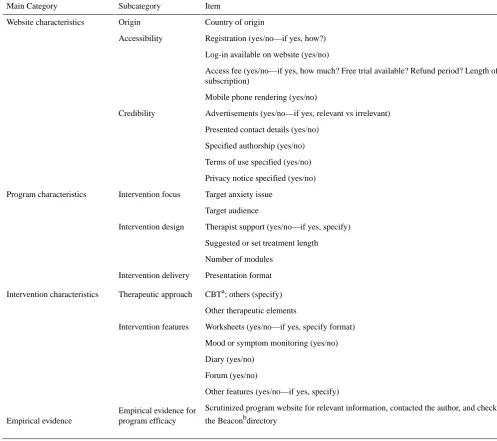
Table 1. Data extraction categories and subcategories.
Item Subcategory
Main Category
Country of origin Origin
Website characteristics
Registration (yes/no—if yes, how?) Accessibility
Log-in available on website (yes/no)
Access fee (yes/no—if yes, how much? Free trial available? Refund period? Length of subscription)
Mobile phone rendering (yes/no)
Advertisements (yes/no—if yes, relevant vs irrelevant) Credibility
Presented contact details (yes/no)
Specified authorship (yes/no)
Terms of use specified (yes/no)
Privacy notice specified (yes/no)
Target anxiety issue Intervention focus
Program characteristics
Target audience
Therapist support (yes/no—if yes, specify) Intervention design
Suggested or set treatment length
Number of modules
Presentation format Intervention delivery
CBTa; others (specify) Therapeutic approach
Intervention characteristics
Other therapeutic elements
Worksheets (yes/no—if yes, specify format) Intervention features
Mood or symptom monitoring (yes/no)
Diary (yes/no)
Forum (yes/no)
Other features (yes/no—if yes, specify)
Scrutinized program website for relevant information, contacted the author, and checked the Beaconbdirectory
Empirical evidence for program efficacy Empirical evidence
aCBT: cognitive behavioral therapy
bBeacon: Australian clinical Web-based platform that describes different Web-based self-help treatment programs [49].
Program Evaluation
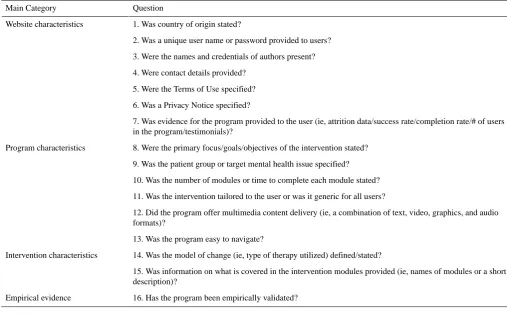
Several validated and widely accepted scales are available to evaluate the methodology of published studies. However, there are currently no validated criteria available for evaluating actual Web-based interventions as found on the web. Renton et al [31] created a program scoring system to evaluate Web-based depression interventions. With permission from the authors, the
[image:5.595.40.538.85.526.2]Table 2. Program evaluation criteria.
Question Main Category
1. Was country of origin stated? Website characteristics
2. Was a unique user name or password provided to users?
3. Were the names and credentials of authors present?
4. Were contact details provided?
5. Were the Terms of Use specified?
6. Was a Privacy Notice specified?
7. Was evidence for the program provided to the user (ie, attrition data/success rate/completion rate/# of users in the program/testimonials)?
8. Were the primary focus/goals/objectives of the intervention stated? Program characteristics
9. Was the patient group or target mental health issue specified?
10. Was the number of modules or time to complete each module stated?
11. Was the intervention tailored to the user or was it generic for all users?
12. Did the program offer multimedia content delivery (ie, a combination of text, video, graphics, and audio formats)?
13. Was the program easy to navigate?
14. Was the model of change (ie, type of therapy utilized) defined/stated? Intervention characteristics
15. Was information on what is covered in the intervention modules provided (ie, names of modules or a short description)?
16. Has the program been empirically validated? Empirical evidence
Results
Program Selection
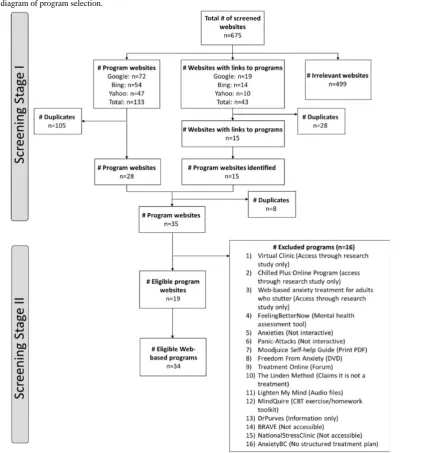
A search log outlines the number of hits per search, as well as the number of included and excluded hyperlinks (see Multimedia Appendix 1). Most program websites were identified when the search terms “online treatment anxiety” (Program websites: n=14, websites with links to program websites: n=2) and “online cognitive behavioural therapy anxiety” (program websites: n=12, websites with links to program websites: n=4) were entered into Google. “Web therapy anxiety” entered in Yahoo did not identify any program websites. All 675 links were
[image:6.595.41.549.83.398.2]Figure 1. Flow diagram of program selection.
Website Characteristics
Country of Origin
Programs identified in this review originated from 4 different countries. The majority of programs were developed in Australia (16/34, 47%), followed by the UK (9/34, 28%) and the USA (8/34, 24%), and Sweden with one program.
Accessibility
Out of the 34 programs evaluated, 25 (74%) had a compulsory online registration process to access the program, 5 (15%) required GP/clinician referral, 1 (3%) was accessible through either registration or GP referral, 1 (3%) through application, and 2 (6%) did not require registration to access the program (see Figure 2). Excluding the 2 programs that did not require registration, 29 (85%) had a log-in feature on their website. For
3 programs (9%), no log-in feature was found and it was unclear how users would log in after buying the program. For programs requiring registration, consumers had to enter personal information to set up a profile. Registration allowed tracking and saving of entered information. This was not possible for programs that required no registration.
[image:7.595.98.541.72.526.2]Figure 2. Access to evaluated programs.
Credibility
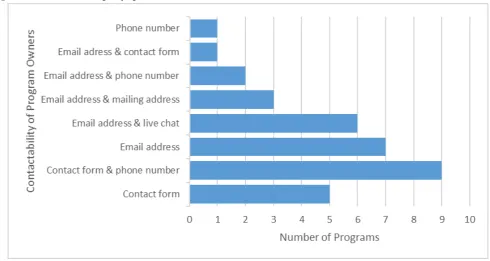
All programs specified authorship and all programs presented contact details either via a contact form and phone number (9/34, 28%), email address (7/34, 21%), email address and live chat (6/34, 18%), contact form (5/34, 15%), email address and mailing address (3/34,9%), email address and phone number (2/34, 6%), phone number (1/34, 3%), or email address and contact form (1/34, 3%) (see Figure 3). Thirty out of 34 (88%) programs specified their terms of use and 32 (94%) had a privacy notice. All programs with a privacy notice also included
information about browser cookies, data collection, and data management. Thirty-one programs (91%) displayed no advertisements. One program’s advertisement was deemed relevant (mental health self-help books) and the other two were deemed irrelevant (BBC news link and Google Ads).
Intervention Program Characteristics
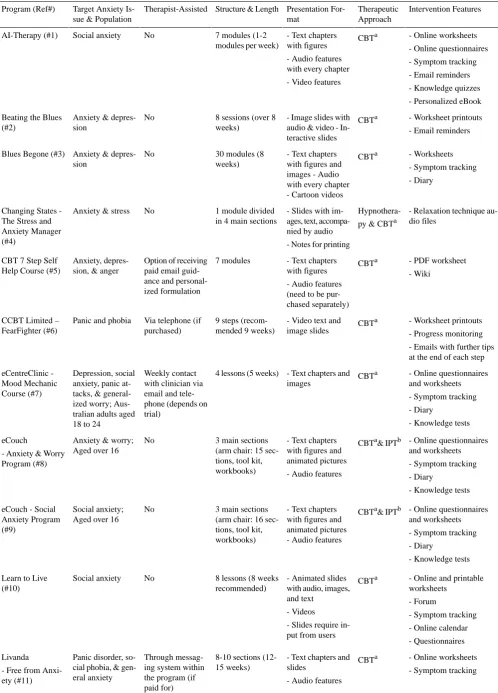
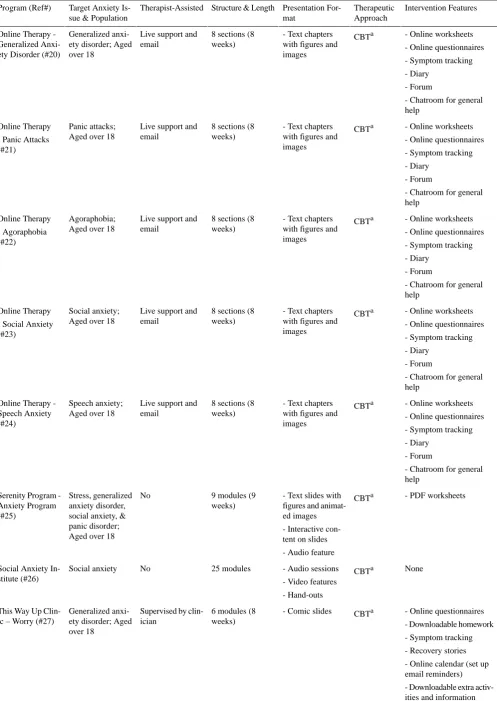
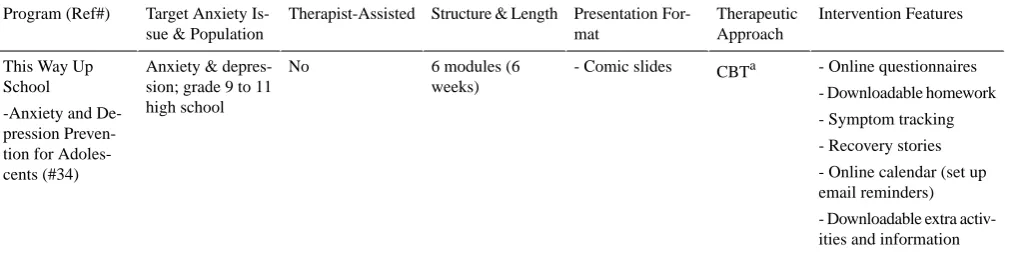
An overview of intervention program characteristics for each program can be found in Table 3and screenshots of all programs can be found in Multimedia Appendix 2.
[image:8.595.126.502.83.308.2] [image:8.595.49.540.460.721.2]Table 3. Intervention program characteristics of included Web-based intervention programs for anxiety. Intervention Features Therapeutic Approach Presentation For-mat Structure & Length Therapist-Assisted
Target Anxiety Is-sue & Population Program (Ref#)
- Online worksheets - Online questionnaires - Symptom tracking - Email reminders - Knowledge quizzes - Personalized eBook CBTa
- Text chapters with figures - Audio features with every chapter - Video features 7 modules (1-2
modules per week) No
Social anxiety AI-Therapy (#1)
- Worksheet printouts - Email reminders CBTa
- Image slides with audio & video - In-teractive slides 8 sessions (over 8
weeks) No
Anxiety & depres-sion
Beating the Blues (#2)
- Worksheets - Symptom tracking - Diary
CBTa - Text chapters
with figures and images - Audio with every chapter - Cartoon videos 30 modules (8
weeks) No
Anxiety & depres-sion
Blues Begone (#3)
- Relaxation technique au-dio files
Hypnothera-py & CBTa - Slides with
im-ages, text, accompa-nied by audio - Notes for printing 1 module divided
in 4 main sections No
Anxiety & stress Changing States
-The Stress and Anxiety Manager (#4)
- PDF worksheet - Wiki
CBTa - Text chapters
with figures - Audio features (need to be pur-chased separately) 7 modules
Option of receiving paid email guid-ance and personal-ized formulation Anxiety,
depres-sion, & anger CBT 7 Step Self
Help Course (#5)
- Worksheet printouts - Progress monitoring - Emails with further tips at the end of each step CBTa
- Video text and image slides 9 steps
(recom-mended 9 weeks) Via telephone (if
purchased) Panic and phobia
CCBT Limited – FearFighter (#6)
- Online questionnaires and worksheets - Symptom tracking - Diary
- Knowledge tests CBTa
- Text chapters and images
4 lessons (5 weeks) Weekly contact
with clinician via email and tele-phone (depends on trial)
Depression, social anxiety, panic at-tacks, & general-ized worry; Aus-tralian adults aged 18 to 24
eCentreClinic -Mood Mechanic Course (#7)
- Online questionnaires and worksheets - Symptom tracking - Diary
- Knowledge tests CBTa& IPTb
- Text chapters with figures and animated pictures - Audio features 3 main sections
(arm chair: 15 sec-tions, tool kit, workbooks) No
Anxiety & worry; Aged over 16 eCouch
- Anxiety & Worry Program (#8)
- Online questionnaires and worksheets - Symptom tracking - Diary
- Knowledge tests CBTa& IPTb
- Text chapters with figures and animated pictures - Audio features 3 main sections
(arm chair: 16 sec-tions, tool kit, workbooks) No
Social anxiety; Aged over 16 eCouch - Social
Anxiety Program (#9)
- Online and printable worksheets
- Forum
- Symptom tracking - Online calendar - Questionnaires CBTa
- Animated slides with audio, images, and text
- Videos
- Slides require in-put from users 8 lessons (8 weeks
recommended) No
Social anxiety Learn to Live
(#10)
- Online worksheets - Symptom tracking CBTa
- Text chapters and slides
- Audio features 8-10 sections
(12-15 weeks) Through
messag-ing system within the program (if paid for) Panic disorder,
so-cial phobia, & gen-eral anxiety Livanda
[image:9.595.45.544.82.776.2]Intervention Features Therapeutic
Approach Presentation
For-mat Structure & Length Therapist-Assisted
Target Anxiety Is-sue & Population Program (Ref#)
- Alert emails for incom-plete modules
- Symptom tracking - PDF worksheets - Online books - Online questionnaires CBTa
- Text slides with figures
- Audio with every slide
12 modules User can designate
a support practition-er
Anxiety, stress, & life skills Living Life to the
Full (#12)
- PDFs worksheets - Online worksheets - Symptom tracking - Diary
CBTa - Text chapters
with figures - Audio and video features
12 modules (12 weeks) Weekly eTherapist emails, monitor progress, answer questions and pro-vide support via email
Generalized anxi-ety disorder; Aged over 18
Mental Health On-line
- Generalised Anx-iety Disorder (#13)
- PDF worksheets - Online worksheets - Symptom tracking - Diary
CBTa - Text chapters
with figures - Audio and video features
12 modules (12 weeks) Weekly eTherapist emails, monitor progress, answer questions and pro-vide support via email
Social anxiety dis-order; Aged over 18
Mental Health On-line
- Social Anxiety Disorder (#14)
- PDF worksheets - Online worksheets - Symptom tracking - Diary
CBTa - Text chapters
with figures - Audio and video features
12 modules (12 weeks) Weekly eTherapist emails, monitor progress, answer questions and pro-vide support via email
Panic disorder with or without agora-phobia; Aged over 18
Mental Health On-line
- Panic Disorder with or without Agoraphobia (#15)
- PDF worksheets - Online questionnaires - Symptom tracking - Forum
- Bonus material (sessions for personal development and life change) - Additional worksheets CBTa
- Video for every chapter with an in-troduction text 12 modules (13
weeks) No
Anxiety & depres-sion
Mood Control (#16)
- Quizzes - Worksheets
- Downloadable relaxation audio
- Symptom tracking CBTa& IPTb
- Text chapters with images 5 modules
No Anxiety & depres-sion; Aged over 16 MoodGym (#17)
- PDF worksheets - Online worksheets - Symptom tracking - Diary
- Wiki
- SMS & email reminders - Real-life experience sto-ries
CBTa, IPTb, & positive psychology - Text chapters
with figures 12 modules (6-8
weeks) No
Anxiety, depres-sion, & stress; Aged over 18; Mo-bile phone function for Australian resi-dents only myCompass (#18)
- Online worksheets - Online questionnaires - Symptom tracking - Diary
- Forum
- Chatroom for general help
CBTa - Text chapters
with figures and images 8 sections (8
weeks) Live support and
email Anxiety; Aged
over 18 Online Therapy –
Intervention Features Therapeutic
Approach Presentation
For-mat Structure & Length Therapist-Assisted
Target Anxiety Is-sue & Population Program (Ref#)
- Online worksheets - Online questionnaires - Symptom tracking - Diary
- Forum
- Chatroom for general help
CBTa - Text chapters
with figures and images 8 sections (8
weeks) Live support and
email Generalized anxi-ety disorder; Aged over 18
Online Therapy -Generalized Anxi-ety Disorder (#20)
- Online worksheets - Online questionnaires - Symptom tracking - Diary
- Forum
- Chatroom for general help
CBTa - Text chapters
with figures and images 8 sections (8
weeks) Live support and
email Panic attacks;
Aged over 18 Online Therapy
- Panic Attacks (#21)
- Online worksheets - Online questionnaires - Symptom tracking - Diary
- Forum
- Chatroom for general help
CBTa - Text chapters
with figures and images 8 sections (8
weeks) Live support and
email Agoraphobia;
Aged over 18 Online Therapy
- Agoraphobia (#22)
- Online worksheets - Online questionnaires - Symptom tracking - Diary
- Forum
- Chatroom for general help
CBTa - Text chapters
with figures and images 8 sections (8
weeks) Live support and
email Social anxiety;
Aged over 18 Online Therapy
- Social Anxiety (#23)
- Online worksheets - Online questionnaires - Symptom tracking - Diary
- Forum
- Chatroom for general help
CBTa - Text chapters
with figures and images 8 sections (8
weeks) Live support and
email Speech anxiety;
Aged over 18 Online Therapy
-Speech Anxiety (#24)
- PDF worksheets CBTa
[image:11.595.49.547.71.773.2]- Text slides with figures and animat-ed images - Interactive con-tent on slides - Audio feature 9 modules (9
weeks) No
Stress, generalized anxiety disorder, social anxiety, & panic disorder; Aged over 18 Serenity Program
-Anxiety Program (#25)
None CBTa
- Audio sessions - Video features - Hand-outs 25 modules
No Social anxiety Social Anxiety
In-stitute (#26)
- Online questionnaires - Downloadable homework - Symptom tracking - Recovery stories - Online calendar (set up email reminders) - Downloadable extra activ-ities and information CBTa
- Comic slides 6 modules (8
weeks) Supervised by clin-ician
Generalized anxi-ety disorder; Aged over 18
Intervention Features Therapeutic
Approach Presentation
For-mat Structure & Length Therapist-Assisted
Target Anxiety Is-sue & Population Program (Ref#)
- Online questionnaires - Downloadable homework - Symptom tracking - Recovery stories - Online calendar (set up email reminders) - Downloadable extra activ-ities and information CBTa
- Comic slides 6 modules (8
weeks) Supervised by clin-ician
Depression & anxi-ety; Aged over 18 This Way Up
Clin-ic
-Worry and sad-ness (#28)
- Online questionnaires - Downloadable homework - Symptom tracking - Recovery stories - Online calendar (set up email reminders) - Downloadable extra activ-ities and information CBTa
- Comic slides 6 modules (8
weeks) Supervised by clin-ician
Panic/agoraphobia; Aged over 18 This Way Up
Clin-ic – PanClin-ic (#29)
- Online questionnaires - Downloadable homework - Symptom tracking - Recovery stories - Online calendar (set up email reminders) - Downloadable extra activ-ities and information CBTa
- Comic slides 6 modules (8
weeks) Supervised by clin-ician
Social phobia; Aged over 18 This Way Up
Clin-ic
- Shyness (#30)
- Online questionnaires - Downloadable homework - Symptom tracking - Recovery stories - Online calendar (set up email reminders) - Downloadable extra activ-ities and information CBTa
- Comic slides 3 modules (3
weeks) No
Social phobia; Aged over 18 This Way Up
Self-help
- Shyness (#31)
- Online questionnaires - Downloadable homework - Symptom tracking - Recovery stories - Online calendar (set up email reminders) - Downloadable extra activ-ities and information CBTa
- Comic slides 3 modules (3
weeks) No
Depression & anxi-ety; Aged over 18 This Way Up
Self-help
- Worry and Sad-ness (#32)
- Online questionnaires - Downloadable homework - Symptom tracking - Recovery stories - Online calendar (set up email reminders) - Downloadable extra activ-ities and information CBTa
- Comic slides 6 modules (6
weeks) No
Social anxiety; grade 11 and 12 high school This Way Up
School
Intervention Features Therapeutic
Approach Presentation
For-mat Structure & Length Therapist-Assisted
Target Anxiety Is-sue & Population Program (Ref#)
- Online questionnaires - Downloadable homework - Symptom tracking - Recovery stories - Online calendar (set up email reminders) - Downloadable extra activ-ities and information CBTa
- Comic slides 6 modules (6
weeks) No
Anxiety & depres-sion; grade 9 to 11 high school This Way Up
School
-Anxiety and De-pression Preven-tion for Adoles-cents (#34)
aCBT: Cognitive behavioral therapy bIPT: Interpersonal Therapy
Intervention Focus
Programs were designed for a range of issues including specific anxiety disorders; anxiety combined with depression and stress, or anger; various anxiety disorders combined; or anxiety in general. Figure 4 shows that the majority of programs were designed for social anxiety/phobia (9/34, 28%) or for mixed anxiety and depression (8/34, 24%). The remaining programs focused on anxiety in general (1/34, 3%); multiple anxiety disorders combined (3/34, 3%); anxiety mixed with stress (2/34,
6%); anxiety mixed with depression and stress or anger (2/34, 6%); or other specific anxiety disorders such as generalized anxiety disorder (3/34, 9%), panic attacks with or without agoraphobia (4/34, 12%), agoraphobia (1/34, 3%), and speech anxiety (1/34, 3%). Concerning the target audience, the majority of programs were designed for an adult population (aged over 16 or 18 years) (20/34, 59%), 2 were targeted at teenagers of high school age, 1 specifically for young adults aged 18-24 years, and 11 programs (32%) did not specify an age group, but based on content seemed to be designed for adults.
Figure 4. Intervention target of evaluated programs.
Intervention Design
In total, 17 programs (50%) offered therapist support, either by email, instant messaging, or phone. See Figure 5for a summary of the different forms of therapist support. Therapist support always required a fee; for the majority of these support programs (10/17, 59%), there was an option of paying only for the
[image:13.595.45.551.72.200.2]Figure 5. Therapist support offered in evaluated programs.
Modes of Therapy Presentation
All programs used a combination of different modes of presentation (eg, text, images, audio, video, text entry-fields, and animation). Content was most frequently presented as text chapters with images or diagrams (23/34; 68%). Other identified modes of presentation included animated slides or pictures, comic slides, ebooks, and video sessions. In total, 15 programs (44%) incorporated audio components and 9 included video components (26%).
General Therapeutic Approach
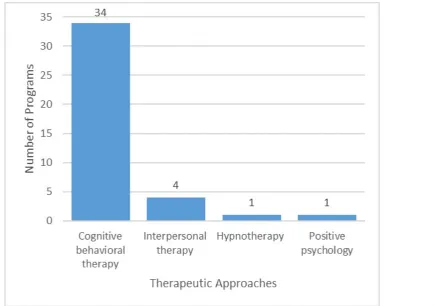
All 34 programs claimed to be CBT-based and at least one cognitive and behavioral therapeutic element was employed for each program based on the examined module content. Some programs stated that they also incorporated other therapeutic approaches, such as interpersonal therapy (4/34, 13%), hypnotherapy (1/34, 3%), and positive psychology (1/34, 3%) (see Figure 6).
[image:14.595.72.534.77.306.2] [image:14.595.101.536.447.753.2]Other Therapeutic Elements
Other popular therapeutic elements included psychoeducation modules, goal-setting features, features to create case conceptualizations for oneself, skills training exercises, various forms of relaxation exercises, mindfulness-based exercises, experience stories, sleep hygiene, and relapse prevention.
Intervention Features
All except for one program (33/34, 97%) provided the user with worksheets during the session or homework in PDF or online forms. Mood or symptom monitoring/tracking was part of the majority of programs (29/34, 85%). Most programs allowed the user to see results and access a result history either in a numerical or diagram format. In total, 12/34 programs (35%) offered an online diary and 9/34 programs (27%) incorporated a user forum. The review also revealed a great variety of other program features. One feature was the set-up of email or text message reminders for unfinished or future sessions (AI-Therapy, Beating the Blues, Living Life to the Full, myCompass) and an online treatment calendar to schedule the next session and set up alerts (Learn to Live, This Way Up programs). Other features included bonus material (eg, personal development offered in Mood Control), additional resources (ie, more worksheets to be used between sessions or after the end of treatment, offered in Mood Control, This Way Up), treatment items voted most useful by users, to-do-list maker,
personal note section, awards, commitment checks (Blues Begone), knowledge tests at the beginning and information about medication (AI-Therapy, e-couch), personalized eBooks (AI-Therapy), printable session recap and homework cards in wallet format (Mental Health Online), and a teammate function, which allowed the nomination of friends or family members for optional support (Learn to Live).
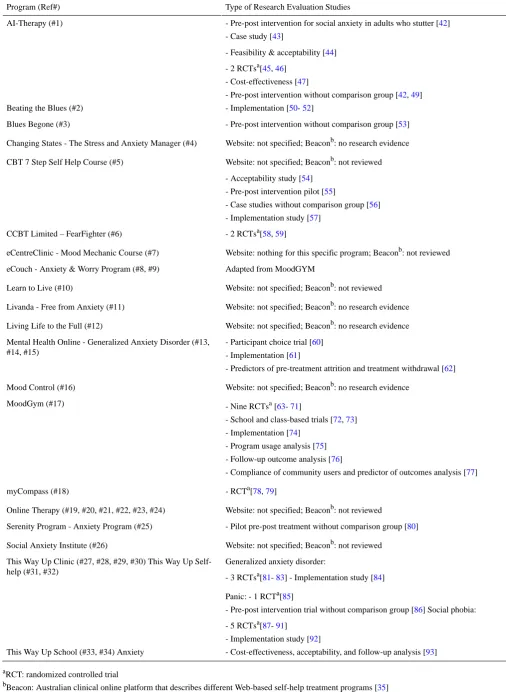
Empirical Evidence for Program Efficacy
A summary of the types of published research evaluations for each program and the respective references can be found in
Table 4. Types of research evaluations of included Web-based interventions
Type of Research Evaluation Studies Program (Ref#)
- Pre-post intervention for social anxiety in adults who stutter [42] - Case study [43]
AI-Therapy (#1)
- Feasibility & acceptability [44]
- 2 RCTsa[45, 46] - Cost-effectiveness [47]
- Pre-post intervention without comparison group [42, 49] - Implementation [50- 52]
Beating the Blues (#2)
- Pre-post intervention without comparison group [53] Blues Begone (#3)
Website: not specified; Beaconb: no research evidence Changing States - The Stress and Anxiety Manager (#4)
Website: not specified; Beaconb: not reviewed CBT 7 Step Self Help Course (#5)
- Acceptability study [54] - Pre-post intervention pilot [55]
- Case studies without comparison group [56] - Implementation study [57]
- 2 RCTsa[58, 59] CCBT Limited – FearFighter (#6)
Website: nothing for this specific program; Beaconb: not reviewed eCentreClinic - Mood Mechanic Course (#7)
Adapted from MoodGYM eCouch - Anxiety & Worry Program (#8, #9)
Website: not specified; Beaconb: not reviewed Learn to Live (#10)
Website: not specified; Beaconb: no research evidence Livanda - Free from Anxiety (#11)
Website: not specified; Beaconb: no research evidence Living Life to the Full (#12)
- Participant choice trial [60] - Implementation [61]
- Predictors of pre-treatment attrition and treatment withdrawal [62] Mental Health Online - Generalized Anxiety Disorder (#13,
#14, #15)
Website: not specified; Beaconb: no research evidence Mood Control (#16)
- Nine RCTsa[63- 71]
- School and class-based trials [72, 73] - Implementation [74]
- Program usage analysis [75] - Follow-up outcome analysis [76]
- Compliance of community users and predictor of outcomes analysis [77] MoodGym (#17)
- RCTa[78, 79] myCompass (#18)
Website: not specified; Beaconb: not reviewed Online Therapy (#19, #20, #21, #22, #23, #24)
- Pilot pre-post treatment without comparison group [80] Serenity Program - Anxiety Program (#25)
Website: not specified; Beaconb: not reviewed Social Anxiety Institute (#26)
Generalized anxiety disorder:
- 3 RCTsa[81- 83] - Implementation study [84] This Way Up Clinic (#27, #28, #29, #30) This Way Up
Self-help (#31, #32)
Panic: - 1 RCTa[85]
- Pre-post intervention trial without comparison group [86] Social phobia:
- 5 RCTsa[87- 91]
- Implementation study [92]
[image:16.595.40.547.84.777.2]Results were examined for programs for which anxiety symptoms were evaluated in RCTs. Beating the Blues was found to lead to a significant reduction of anxiety both at the end of treatment and at 6 months’ follow-up compared to treatment as usual [45]. For FearFighter, both the face-to-face and online program group had reduced anxiety at post-treatment and 1-month follow-up [59]. MoodGym was evaluated in adolescents and university students and levels of anxiety were found to be lower in the intervention group compared to the waitlist control group after the intervention [63,66]. In addition, combined face-to-face and online CBT was more effective in treating anxiety symptoms than either face-to-face or online as a standalone [70]. Compared to control subjects, participants in the myCompass intervention had reduced anxiety symptoms after the program and symptom scores remained at near normal levels at 3-month follow-up [78]. For This Way Up, a program targeted at generalized anxiety disorder, the intervention group participants showed significantly reduced symptoms of panic [81] and anxiety [82] at post-treatment compared to the control group. Symptom reduction was the same for technician and clinician-assisted versions of the treatment [83].
Program Evaluation
Program evaluation scores for each program and each evaluation criteria can be found in Multimedia Appendix 3. Scores for each program ranged from 69% (CBT 7 Step Self Help Course) to 100% (AI-Therapy) with an average score of 81% (SD 7%). Concerning the evaluation criteria, all program websites specified for which patient group or symptoms the program was designed, defined or stated the utilized model of change, presented program author names and credentials, and provided contact details. About half of the program websites had been empirically evaluated (19/34, 55.9%), specified which information was covered in the intervention modules (18/34, 52.9%), and provided evidence for the program to the user (eg, attrition data, success rate, completion rate, number of users in the program, testimonials) (14/34, 41.2%). Only 4 program websites (11.8%) specified whether the intervention was tailored to the user or generic for all users. This question could not be evaluated for one website (Social Anxiety Institute).
Discussion
Principal Findings
To our knowledge, this is the first review of publically available Web-based programs for anxiety that showcases what individuals seeking such treatment options might find if they search the Web. The review aimed at providing consumers, practitioners, and researchers with a summary of the availability, characteristics, and efficacy of currently freely available Web-based interventions for anxiety. The review identified a wide variety of programs for anxiety, specific anxiety disorders, or anxiety in combination with stress, depression, or anger with treatments based predominantly on CBT techniques. The majority of websites were found to be credible and accessible. Of the programs reviewed, the majority required that users register and/or pay a program access fee. Half of the programs offered some form of paid therapist or professional support. Programs varied in treatment length and number of modules
and employed a variety of presentation modes. Relatively few were evaluated in terms of efficacy. In particular, this review highlights two key issues: the large number and diversity of program formats and the lack of empirical evidence of efficacy for many of the identified programs. These will be discussed in more detail and results will be compared with a similar review of Web-based depression programs available on the Web [37]. First, the great variety and large number of identified programs for anxiety is noteworthy. Programs differed in their level of support, accessibility, and presentation. A similarly great variability among identified programs was also found for Web-based depression interventions [37]. Concerning accessibility, more than half of the programs required an access fee. Considering the high costs and waiting times for psychotherapy in many countries, paid Web-based programs may provide an affordable alternative. However, programs often could only be purchased for a limited period. Many users may not be able to finish the program in the allotted time, and being able to receive treatment at one’s own pace might be an important reason for choosing Web-based treatment over face-to-face therapy.
Overall, most programs used a multimedia presentation for the intervention delivery. With the current rapid pace of advances in technology, more engaging ways of translating therapeutic techniques into interactive techniques could be created for Web-based interventions to distinguish them from traditional self-help material. Increased engagement through interactivity may increase adherence and effectiveness [94,95], especially when considering reports of low utilization and high dropout rates of Web-based interventions [19,96]. As individuals may differ in their preferred style of therapy and time and resources available for treatment, trying different programs and considering the access period is recommended before choosing a program.
offered interventions targeting both anxiety and depression issues.
To ensure that consumers access programs of appropriate quality and safety, national and/or international platforms are needed that provide consumers with reliable guidance on evidence-based and effective Web-based intervention options. For example, the E‐Mental Health Strategy for Australia [97] outlines the development of an e-mental health portal that provides reliable information and accessible pathways for consumers and caregivers to navigate and use evidence-based Web-based mental health support. In addition, there is little consistent guidance on necessary quality standards, as well as legal and ethical issues regarding Web-based interventions for professionals. There is, for example, the Suggested Principles for the Online Provision of Mental Health Services by the International Society for Mental Health Online (ISMHO); however, this document mainly addresses online counselling and there are no guidelines specifically addressing Web-based programs. In the context of mental health apps, a review has also highlighted the need for standards and guidelines for developers to follow and frameworks for consumers to assess credibility and legitimacy [32].
Concerning the evidence base of the included programs, all were found to be based on CBT principles. This is consistent with prior reviews, which found that some form of CBT or other behavioral therapy was included in most Web-based interventions [98], as well as in publically available Web-based intervention programs for depression [37]. In general, research evidence indicates that CBT is an effective treatment for anxiety disorders (eg, [99,100]. This suggests that all reviewed programs were to some extent developed using an evidence-based approach; however, this does not guarantee that the evidence-based approach used is necessarily effective in the program.
In this context, another major finding was that several programs did not provide any research evidence or provided only limited evidence of the efficacy of the treatment. This is similar to findings from the review of Web-based depression interventions, which showed that 63% had not been evaluated using RCTs [37]. This finding is interesting considering the numerous systematic reviews and meta-analyses of Web-based interventions [25,30,101]. However, some may currently be in the process of being evaluated and not yet published. In addition, the absence of evidence of efficacy in terms of RCTs for a particular intervention also does not necessarily mean that the intervention does not work, especially if it is based on evidence-based approaches such as CBT. For treatment efficacy, the predominant model has been “empirically supported treatments” [102]. However, recently it has been proposed that clinical treatment decisions should be based on the best available research evidence, a clinician’s expertise, and patient characteristics [103]. It has also been argued that RCTs evaluating interventions should focus on evaluating intervention principles rather than each actual implementation [104]. However, unlike therapists who require accreditation to practice an evidence-based approach such as CBT, no such accreditations
requirements and therefore not work, which is especially problematic for programs requiring an access fee. Therefore, programs should ideally undergo appropriate empirical evaluation before being made available online. The development of an accreditation service for Web-based interventions may help improve this issue and enable consumers to make more informed decisions. It is also important to acknowledge competing interests within the eHealth space. Developers with a commercial focus may not be as concerned about treatment efficacy and researchers developing programs may not have the resources to sustain a publically available program. For programs for which published empirical studies were identified in this review, there was a large variety of study designs and quality of evidence. Only This Way Up programs, MoodGYM, myCompass, Beating the Blues, and FearFighter underwent rigorous evaluation through RCTs.
Limitations
In regard to this study, a few limitations have to be noted. The representativeness and comprehensiveness of the search and identified programs may be affected by various characteristics of the Web, search engines, and search terms. First, the ranks of websites vary by location on commercial search engines. The search for this review was performed in the UK and it is likely that the same search in another country may have yielded different results. The Web and search engines are also dynamic. Results of search engines vary over time, meaning searches conducted several months before or after the current search could present a different set of programs. In addition, currently existing programs may change or be discontinued and new programs may be released. It is also possible that some individuals may not use the three search engines and would have therefore received different results. However, a considerable strength of this review is that the three most popular search engines were used.
Secondly, the first 25 hyperlinks from the search were included in this review. It is likely that more programs are available, which at the time did not have the page ranking to be identified by the search. This may especially be the case for recently created services [105]. However, it has been suggested that most people rarely consider more than the first 20 links [40]; thus the identified sample of this review is believed to be representative of what an average Internet user might discover when searching the Web for Web-based intervention options. Page ranking is also influenced by various search engine optimization techniques, algorithms of the search engines, as well as cookie settings of the browsers [106], and thereby impacts the results of the search. To combat this, we removed search engine histories and cookies were disabled on all three browsers. While this may not be a complete list of currently available Web-based programs for anxiety, it is a comprehensive snapshot of programs found in March 2015.
beyond the scope of this review; however, it would be important to develop a weighted scale for similar future reviews.
Lastly, it is important to acknowledge that the definition of Web credibility is complex and consists of multiple dimensions [107]. In the case of this paper, only a limited number of credibility dimensions that focused on trustworthiness rather than expertise, were assessed.
Conclusion
This review found that individuals searching for Web-based intervention programs for anxiety are presented with a large number and variety of potential programs to choose from. For consumers with limited knowledge about intervention quality criteria it may be challenging to choose an appropriate program. With the number of people using the Internet increasing, it is likely that more individuals will search for information about treatments options in general and, specifically, online interventions. It is therefore important for health professionals
working with mental health clients to be aware of the diversity of Web-based interventions and that not all have had their efficacy tested in robust research trials. Directories such as Beacon can assist clinicians, as well as individuals in this task; however, it is important to keep services like these up-to-date. There is a definite need for consistent guidelines and standards on developing and providing Web-based mental health intervention programs for professionals and a platform with reliable up-to-date information for professionals and consumers about the quality and accessibility of Web-based interventions. This review is the first to identify and review Web-based anxiety interventions available on the Web. Therefore, research is needed in reviewing and evaluating Web-based intervention programs for other mental health related issues. There is also a need to develop standardized evaluation scales for publically available Web-based intervention programs to facilitate the rating process and ensure its rigor. For future research, it may also be interesting to explore health professionals’ and consumers’ experiences and perceptions of those programs.
Acknowledgments
We would like to thank all the authors of the interventions who provided us with free access to their Web-based interventions and additional information, such as relevant publications.
Conflicts of Interest
None declared.
Multimedia Appendix 1
Search log.
[XLSX File (Microsoft Excel File), 490KB- jmir_v3i2e14_app1.xlsx]
Multimedia Appendix 2
Screenshots of programs.
[PDF File (Adobe PDF File), 3MB- jmir_v3i2e14_app2.pdf]
Multimedia Appendix 3
Program evaluation scores.
[XLSX File (Microsoft Excel File), 15KB- jmir_v3i2e14_app3.xlsx]
References
1. Kessler RC, Chiu WT, Demler O, Merikangas KR, Walters EE. Prevalence, severity, and comorbidity of 12-month DSM-IV disorders in the National Comorbidity Survey Replication. Arch Gen Psychiatry 2005 Jun;62(6):617-627 [FREE Full text] [doi: 10.1001/archpsyc.62.6.617] [Medline: 15939839]
2. Somers JM, Goldner EM, Waraich P, Hsu L. Prevalence and incidence studies of anxiety disorders: A systematic review of the literature. Can J Psychiatry 2006 Feb;51(2):100-113. [Medline: 16989109]
3. Kessler R, Ruscio A, Shear K, Wittchen H. Epidemiology of anxiety disorders. In: Stein MB, Steckler T, editors. Behavioral Neurobiology of Anxiety and Its Treatment. Berlin: Springer; 2010:978-983.
4. Wittchen HU, Jacobi F, Rehm J, Gustavsson A, Svensson M, Jönsson B, et al. The size and burden of mental disorders and other disorders of the brain in Europe 2010. Eur Neuropsychopharmacol 2011 Sep;21(9):655-679. [doi:
10.1016/j.euroneuro.2011.07.018] [Medline: 21896369]
6. Kroenke K, Spitzer RL, Williams JBW, Monahan PO, Löwe B. Anxiety disorders in primary care: Prevalence, impairment, comorbidity, and detection. Ann Intern Med 2007 Mar 6;146(5):317-325. [Medline: 17339617]
7. Schonfeld WH, Verboncoeur CJ, Fifer SK, Lipschutz RC, Lubeck DP, Buesching DP. The functioning and well-being of patients with unrecognized anxiety disorders and major depressive disorder. J Affect Disord 1997 Apr;43(2):105-119. [Medline: 9165380]
8. Living with Anxiety: Understanding the Role and Impact of Anxiety in Our Lives. London: Mental Health Foundation; 2014. URL: http://www.mentalhealth.org.uk/publications/living-with-anxiety/[accessed 2015-11-14] [WebCite Cache ID 6d1eEKytm]
9. Pollard C, Henderson J, Frank M, Margolis RB. Help-seeking patterns of anxiety-disordered individuals in the general population. J Anxiety Disord 1989 Jan;3(3):131-138. [doi: 10.1016/0887-6185(89)90007-8]
10. Mechanic D. Barriers to help-seeking, detection, and adequate treatment for anxiety and mood disorders: Implications for health care policy. J Clin Psychiatry 2007;68 Suppl 2:20-26. [Medline: 17288503]
11. Collins KA, Westra HA, Dozois DJA, Burns DD. Gaps in accessing treatment for anxiety and depression: Challenges for the delivery of care. Clin Psychol Rev 2004 Sep;24(5):583-616. [doi: 10.1016/j.cpr.2004.06.001] [Medline: 15325746] 12. Powell J, Clarke A. The WWW of the World Wide Web: Who, What, and Why? J Med Internet Res 2002;4(1):e4 [FREE
Full text] [doi: 10.2196/jmir.4.1.e4] [Medline: 11956036]
13. Kummervold PE, Gammon D, Bergvik S, Johnsen JK, Hasvold T, Rosenvinge JH. Social support in a wired world: Use of online mental health forums in Norway. Nord J Psychiatry 2002;56(1):59-65. [doi: 10.1080/08039480252803945] [Medline: 11869468]
14. Fox S, Rainie L. Vital Decisions: A Pew Internet Health Report.: Pew Research Center; 2002. URL: http://www. pewinternet.org/2002/05/22/vital-decisions-a-pew-internet-health-report/[accessed 2015-11-14] [WebCite Cache ID 6d1eWDQMg]
15. Powell J, Clarke A. Internet information-seeking in mental health: Population survey. Br J Psychiatry 2006 Sep;189:273-277 [FREE Full text] [doi: 10.1192/bjp.bp.105.017319] [Medline: 16946364]
16. Fox S, Rainie L. The Online Health Care Revolultion. 2000. URL: http://www.pewinternet.org/2000/11/26/ the-online-health-care-revolution/[accessed 2015-11-14] [WebCite Cache ID 6d1ed5Yzt]
17. Barak A, Klein B, Proudfoot JG. Defining internet-supported therapeutic interventions. Ann Behav Med 2009 Aug;38(1):4-17. [doi: 10.1007/s12160-009-9130-7] [Medline: 19787305]
18. Griffiths F, Lindenmeyer A, Powell J, Lowe P, Thorogood M. Why are health care interventions delivered over the internet? A systematic review of the published literature. J Med Internet Res 2006;8(2):e10 [FREE Full text] [doi: 10.2196/jmir.8.2.e10] [Medline: 16867965]
19. Mohr DC, Burns MN, Schueller SM, Clarke G, Klinkman M. Behavioral intervention technologies: Evidence review and recommendations for future research in mental health. Gen Hosp Psychiatry 2013 Aug;35(4):332-338 [FREE Full text] [doi: 10.1016/j.genhosppsych.2013.03.008] [Medline: 23664503]
20. Kaltenthaler E, Brazier J, De NE, Tumur I, Ferriter M, Beverley C, et al. Computerised cognitive behaviour therapy for depression and anxiety update: A systematic review and economic evaluation. Health Technol Assess 2006 Sep;10(33):iii, xi-ixiv, 1 [FREE Full text] [Medline: 16959169]
21. Muñoz RF. Using evidence-based internet interventions to reduce health disparities worldwide. J Med Internet Res 2010;12(5):e60 [FREE Full text] [doi: 10.2196/jmir.1463] [Medline: 21169162]
22. Griffiths KM, Christensen H. Internet-based mental health programs: A powerful tool in the rural medical kit. Aust J Rural Health 2007 Apr;15(2):81-87. [doi: 10.1111/j.1440-1584.2007.00859.x] [Medline: 17441815]
23. Gega L, Marks I, Mataix-Cols D. Computer-aided CBT self-help for anxiety and depressive disorders: Experience of a London clinic and future directions. J Clin Psychol 2004 Feb;60(2):147-157. [doi: 10.1002/jclp.10241] [Medline: 14724922] 24. Rüsch N, Angermeyer MC, Corrigan PW. Mental illness stigma: Concepts, consequences, and initiatives to reduce stigma.
Eur Psychiatry 2005 Dec;20(8):529-539. [doi: 10.1016/j.eurpsy.2005.04.004] [Medline: 16171984]
25. Barak A, Hen L, Boniel-Nissim M, Shapira N. A comprehensive review and a meta-analysis of the effectiveness of internet-based psychotherapeutic interventions. J Technol Hum Serv 2008 Jul 03;26(2-4):109-160. [doi:
10.1080/15228830802094429]
26. Andrews G, Cuijpers P, Craske MG, McEvoy P, Titov N. Computer therapy for the anxiety and depressive disorders is effective, acceptable and practical health care: A meta-analysis. PLoS One 2010 Oct;5(10):e13196 [FREE Full text] [doi:
10.1371/journal.pone.0013196] [Medline: 20967242]
27. Reger MA, Gahm GA. A meta-analysis of the effects of internet- and computer-based cognitive-behavioral treatments for anxiety. J Clin Psychol 2009 Jan;65(1):53-75. [doi: 10.1002/jclp.20536] [Medline: 19051274]
28. Murean V, Montgomery GH, David D. Emotional outcomes and mechanisms of change in online cognitive-behavioral interventions: A quantitative meta-analysis of clinical controlled studies. J Technol Hum Serv 2012 Jan;30(1):1-13. [doi:
10.1080/15228835.2011.653290]
30. Mewton L, Smith J, Rossouw P, Andrews G. Current perspectives on Internet-delivered cognitive behavioral therapy for adults with anxiety and related disorders. Psychol Res Behav Manag 2014;7:37-46 [FREE Full text] [doi:
10.2147/PRBM.S40879] [Medline: 24511246]
31. Harrison AM, Goozee R. Psych-related iPhone apps. J Ment Health 2014 Feb;23(1):48-50. [doi:
10.3109/09638237.2013.869575] [Medline: 24484194]
32. Shen N, Levitan M, Johnson A, Bender JL, Hamilton-Page M, Jadad Alejandro Alex R, et al. Finding a depression app: A review and content analysis of the depression app marketplace. JMIR Mhealth Uhealth 2015 Feb;3(1):e16 [FREE Full text] [doi: 10.2196/mhealth.3713] [Medline: 25689790]
33. Heinlen K, Welfel E. The nature, scope, and ethics of psychologists' e-therapy web sites: What consumers find when surfing the Web. Psychother Theory Res Pract Train 2003;40(1):112-124. [doi: 10.1037/0033-3204.40.1/2.112]
34. Recupero PR, Rainey SE. Characteristics of e-therapy web sites. J Clin Psychiatry 2006 Sep;67(9):1435-1440. [Medline:
17017831]
35. Beacon 2.: Beacon 2015 URL: https://beacon.anu.edu.au/[accessed 2015-04-24] [WebCite Cache ID 6Y1bEAONK] 36. Andrews G, Titov N. Is internet treatment for depressive and anxiety disorders ready for prime time? Med J Aust 2010 Jun
7;192(11 Suppl):S45-S47. [Medline: 20528709]
37. Renton T, Tang H, Ennis N, Cusimano MD, Bhalerao S, Schweizer TA, et al. Web-based intervention programs for depression: A scoping review and evaluation. J Med Internet Res 2014;16(9):e209 [FREE Full text] [doi: 10.2196/jmir.3147] [Medline: 25249003]
38. eBizMBA I. Top 15 Most Popular Search Engines. 2015 URL: http://www.ebizmba.com/articles/search-engines[accessed 2015-04-23] [WebCite Cache ID 6Y1betZk5]
39. Levene M. An Introduction to Search Engines and Web Navigation. Hoboken, NJ: John Wiley & Sons, Inc; 2010. 40. Eysenbach G, Powell J, Kuss O, Sa E. Empirical studies assessing the quality of health information for consumers on the
world wide web: A systematic review. JAMA 2002;287(20):2691-2700. [Medline: 12020305]
41. Proudfoot J, Klein B, Barak A, Carlbring P, Cuijpers P, Lange A, et al. Establishing guidelines for executing and reporting Internet intervention research. Cogn Behav Ther 2011;40(2):82-97. [doi: 10.1080/16506073.2011.573807] [Medline:
25155812]
42. Helgadóttir FD, Menzies RG, Onslow M, Packman A, O'Brian S. A standalone Internet cognitive behavior therapy treatment for social anxiety in adults who stutter: CBTpsych. J Fluency Disord 2014 Sep;41:47-54. [doi: 10.1016/j.jfludis.2014.04.001] [Medline: 25173456]
43. Helgadóttir FD, Menzies RG, Onslow M, Packman A, O'Brian S. Online CBT II: A Phase I trial of a standalone, online CBT treatment program for social anxiety in stuttering. Behav Chang 2009 Dec;26(4):254-270. [doi: 10.1375/bech.26.4.254] 44. Proudfoot J, Swain S, Widmer S, Watkins E, Goldberg D, Marks I, et al. The development and beta-test of a computer-therapy
program for anxiety and depression: Hurdles and lessons. Comput Human Behav 2003 May;19(3):277-289. [doi:
10.1016/S0747-5632(02)00062-6]
45. Proudfoot J, Goldberg D, Mann A, Everitt B, Marks I, Gray JA. Computerized, interactive, multimedia cognitive-behavioural program for anxiety and depression in general practice. Psychol Med 2003 Feb;33(2):217-227. [Medline: 12622301] 46. Proudfoot J, Ryden C, Everitt B, Shapiro DA, Goldberg D, Mann A, et al. Clinical efficacy of computerised
cognitive-behavioural therapy for anxiety and depression in primary care: Randomised controlled trial. Br J Psychiatry 2004 Jul;185:46-54 [FREE Full text] [Medline: 15231555]
47. McCrone P, Knapp M, Proudfoot J, Ryden C, Cavanagh K, Shapiro DA, et al. Cost-effectiveness of computerised cognitive-behavioural therapy for anxiety and depression in primary care: Randomised controlled trial. Br J Psychiatry 2004 Jul;185:55-62 [FREE Full text] [Medline: 15231556]
48. Cavanagh K, Shapiro DA, Van Den Berg S, Swain S, Barkham M, Proudfoot J. The effectiveness of computerized cognitive behavioural therapy in routine care. Br J Clin Psychol 2006 Nov;45(Pt 4):499-514. [doi: 10.1348/014466505X84782] [Medline: 17076960]
49. Mitchell N, Dunn K. Pragmatic evaluation of the viability of CCBT self-help for depression in higher education. Couns Psychother Res 2007 Sep;7(3):144-150. [doi: 10.1080/14733140701565987]
50. Fox E, Acton T, Wilding B, Corcoran S. Service development report: An assistant psychologist's perspective on the use of computerised cognitive behavioural therapy in a GP practice in Barnet. Qual Prim Care 2004;12:161-165.
51. van den Berg S, Shapiro DA, Bickerstaffe D, Cavanagh K. Computerized cognitive-behaviour therapy for anxiety and depression: A practical solution to the shortage of trained therapists. J Psychiatr Ment Health Nurs 2004 Oct;11(5):508-513. [doi: 10.1111/j.1365-2850.2004.00745.x] [Medline: 15450016]
52. Learmonth D, Rai S. Taking computerized CBT beyond primary care. Br J Clin Psychol 2008 Mar;47(Pt 1):111-118. [doi:
10.1348/014466507X248599] [Medline: 17939879]
53. Purves DG, Bennett M, Wellman N. An open trial in the NHS of Blues Begone: A new home based computerized CBT program. Behav Cogn Psychother 2009 Oct;37(5):541-551. [doi: 10.1017/S1352465809990282] [Medline: 19703330] 54. MacGregor AD, Hayward L, Peck DF, Wilkes P. Empirically grounded clinical interventions clients' and referrers' perceptions
55. Kenwright M, Marks I, Marks IM, Gega L, Mataix-Cols D. Computer-aided self-help for phobia/panic via internet at home: A pilot study. Br J Psychiatry 2004 May;184:448-449 [FREE Full text] [Medline: 15123511]
56. Gega L, Marks I, Mataix-Cols D. Computer-aided CBT self-help for anxiety and depressive disorders: Experience of a London clinic and future directions. J Clin Psychol 2004 Feb;60(2):147-157. [doi: 10.1002/jclp.10241] [Medline: 14724922] 57. Hayward L, MacGregor AD, Peck DF, Wilkes P. The feasibility and effectiveness of computer-guided CBT (FearFighter)
in a rural area. Behav Cogn Psychother 2007 Apr 16;35(04):409. [doi: 10.1017/S1352465807003670]
58. Schneider AJ, Mataix-Cols D, Marks IM, Bachofen M. Internet-guided self-help with or without exposure therapy for phobic and panic disorders. Psychother Psychosom 2005;74(3):154-164. [doi: 10.1159/000084000] [Medline: 15832066] 59. Marks IM, Kenwright M, McDonough M, Whittaker M, Mataix-Cols D. Saving clinicians' time by delegating routine
aspects of therapy to a computer: A randomized controlled trial in phobia/panic disorder. Psychol Med 2004 Jan;34(1):9-17. [Medline: 14971623]
60. Klein B, Meyer D, Austin DW, Kyrios M. Anxiety online: A virtual clinic: Preliminary outcomes following completion of five fully automated treatment programs for anxiety disorders and symptoms. J Med Internet Res 2011;13(4):e89 [FREE Full text] [doi: 10.2196/jmir.1918] [Medline: 22057287]
61. Al-Asadi AM, Klein B, Meyer D. Posttreatment attrition and its predictors, attrition bias, and treatment efficacy of the anxiety online programs. J Med Internet Res 2014;16(10):e232 [FREE Full text] [doi: 10.2196/jmir.3513] [Medline:
25316533]
62. Al-Asadi AM, Klein B, Meyer D. Pretreatment attrition and formal withdrawal during treatment and their predictors: An exploratory study of the anxiety online data. J Med Internet Res 2014;16(6):e152 [FREE Full text] [doi: 10.2196/jmir.2989] [Medline: 24938311]
63. Calear AL, Christensen H, Mackinnon A, Griffiths KM, O'Kearney R. The YouthMood Project: A cluster randomized controlled trial of an online cognitive behavioral program with adolescents. J Consult Clin Psychol 2009 Dec;77(6):1021-1032. [doi: 10.1037/a0017391] [Medline: 19968379]
64. Christensen H, Griffiths KM, Jorm AF. Delivering interventions for depression by using the internet: Randomised controlled trial. BMJ 2004 Jan 31;328(7434):265 [FREE Full text] [doi: 10.1136/bmj.37945.566632.EE] [Medline: 14742346] 65. Christensen H, Griffiths KM, Mackinnon AJ, Brittliffe K. Online randomized controlled trial of brief and full cognitive
behaviour therapy for depression. Psychol Med 2006 Dec;36(12):1737-1746. [doi: 10.1017/S0033291706008695] [Medline:
16938144]
66. Ellis L, Campbell A, Sethi S, O’Dea B. Comparative randomized trial of an online cognitive-behavioural therapy program and an online support group for depression and anxiety. J Cyber Ther Rehabil 2011;4(4):461-467.
67. Farrer L, Christensen H, Griffiths KM, Mackinnon A. Internet-based CBT for depression with and without telephone tracking in a national helpline: Randomised controlled trial. PLoS One 2011 Nov;6(11):e28099 [FREE Full text] [doi:
10.1371/journal.pone.0028099] [Medline: 22140514]
68. Hickie IB, Davenport TA, Luscombe GM, Moore M, Griffiths KM, Christensen H. Practitioner-supported delivery of internet-based cognitive behaviour therapy: Evaluation of the feasibility of conducting a cluster randomised trial. Med J Aust 2010 Jun 7;192(11 Suppl):S31-S35. [Medline: 20528705]
69. Griffiths KM, Christensen H, Jorm AF, Evans K, Groves C. Effect of web-based depression literacy and cognitive-behavioural therapy interventions on stigmatising attitudes to depression: Randomised controlled trial. Br J Psychiatry 2004
Oct;185:342-349 [FREE Full text] [doi: 10.1192/bjp.185.4.342] [Medline: 15458995]
70. Sethi S, Campbell AJ, Ellis LA. The use of computerized self-help packages to treat adolescent depression and anxiety. J Technol Hum Serv 2010 Aug 31;28(3):144-160. [doi: 10.1080/15228835.2010.508317]
71. Lintvedt OK, Griffiths KM, Sørensen K, Østvik AR, Wang CEA, Eisemann M, et al. Evaluating the effectiveness and efficacy of unguided internet-based self-help intervention for the prevention of depression: A randomized controlled trial. Clin Psychol Psychother 2013;20(1):10-27. [doi: 10.1002/cpp.770] [Medline: 21887811]
72. O'Kearney R, Gibson M, Christensen H, Griffiths KM. Effects of a cognitive-behavioural internet program on depression, vulnerability to depression and stigma in adolescent males: A school-based controlled trial. Cogn Behav Ther
2006;35(1):43-54. [doi: 10.1080/16506070500303456] [Medline: 16500776]
73. O'Kearney R, Kang K, Christensen H, Griffiths K. A controlled trial of a school-based Internet program for reducing depressive symptoms in adolescent girls. Depress Anxiety 2009;26(1):65-72. [doi: 10.1002/da.20507] [Medline: 18828141] 74. Christensen H, Griffiths KM, Korten AE, Brittliffe K, Groves C. A comparison of changes in anxiety and depression
symptoms of spontaneous users and trial participants of a cognitive behavior therapy website. J Med Internet Res 2004 Dec 22;6(4):e46 [FREE Full text] [doi: 10.2196/jmir.6.4.e46] [Medline: 15631970]
75. Christensen H, Griffiths KM, Korten A. Web-based cognitive behavior therapy: Analysis of site usage and changes in depression and anxiety scores. J Med Internet Res 2002;4(1):e3 [FREE Full text] [doi: 10.2196/jmir.4.1.e3] [Medline:
11956035]