City, University of London Institutional Repository
Citation:
Cacciatori, E., Tamoschus, D. & Grabher, G. (2012). Knowledge transfer across projects: Codification in creative, high-tech and engineering industries. ManagementLearning, 43(3), pp. 309-331. doi: 10.1177/1350507611426240
This is the accepted version of the paper.
This version of the publication may differ from the final published
version.
Permanent repository link:
http://openaccess.city.ac.uk/16068/Link to published version:
http://dx.doi.org/10.1177/1350507611426240Copyright and reuse: City Research Online aims to make research
outputs of City, University of London available to a wider audience.
Copyright and Moral Rights remain with the author(s) and/or copyright
holders. URLs from City Research Online may be freely distributed and
linked to.
Knowledge Transfer across Projects: Codification in Creative,
High-Tech and Engineering Industries
Eugenia Cacciatori D-MTEC ETH Zurich
and
Department of Management and Technology Università Bocconi
David Tamoschus Bayer Business Services [email protected]
Gernot Grabher HCU Hamburg
Please cite as:
2 Abstract
The use of codification to support knowledge transfer across projects has been explored in
several recent, and mostly qualitative, studies. Building on that research, this paper puts
forward hypotheses about the antecedents of knowledge codification, and tests them on a
sample of 540 inter-organizational projects carried out in the creative, high-tech and
engineering industries. We find that the presence of strong industry norms governing the
division of labour discourages knowledge transfer through codification, as suggested by the
existing qualitative studies. The presence of a system integrator plays an important role in
driving the use of codification for knowledge transfer, to some extent embodying an
organizational memory in volatile project environments. Finally, the level of use of
administrative control in the project is a robust predictor of attempts to transfer knowledge
via codification. When these antecedents are taken into account, the novelty of products and
services plays a smaller role than previously found in determining the use of codification.
Keywords: knowledge transfer, project-based organizing, creative industries, engineering
industries, high-tech industries, codification, system integration
Acknowledgements: We wish to thank Roberto Fontana, David Obstfeld, the research team of the
project Knowledge Governance and Projects coordinated by Prof. Anna Grandori, the participants in the R&D Management Workshop Integrating Knowledge: Challenges for R&D Management
(Linköping, Sweden, 15–16 September 2008) and in the Sub-theme Temporary and Project-Based Organizing at the 24th EGOS Colloquium (Amsterdam, 10–12 July 2008) for comments and
3 Introduction
Forgetfulness is often seen as the hallmark of project operations. Because projects are
temporary enterprises with specific objectives and are organizationally distinct from both
other projects and the organizations generating them, accumulating and sedimenting learning
is more difficult than in organizations characterized by more continuous operations (Gann
and Salter, 1998; Scarbrough et al., 2004a,b). The relative forgetfulness of projects is both a
blessing and a curse (cf. Hobday, 2000). Many things are started anew for each project,
liberating them from the ‘shadow of the past ‘and facilitating adaptation to the specificities
of changing clients, places and products. This forgetting makes projects the organizational
device of choice for the pursuit of novelty and is a feature of projects that is particularly
appreciated in creative industries, such as advertising or film-making, in which the
discontinuity of projects is valued as a means to respond to the creative imperative of
‘freshness’. In these industries, firms intentionally and frequently change the composition of
teams in order to ensure novelty in the product (e.g., Grabher, 2002). In other industries,
such as those involved in the production of complex investment goods (e.g., construction or
engineering design), it is the discontinuity of projects that instead is often seen as
problematic (Gann and Salter, 1998; Scarborough et al., 2004). Many managers, particularly
in industries that rely on complex technologies, believe that there is much to gain from
improving the transfer of knowledge across projects (Williams, 2008).
Despite the different emphasis placed by different industries on the benefits of and
drawbacks to forgetting, balancing the need for creativity unconstrained by the past, with
the benefits of learning from experience is paramount for project-based organizations in all
industries. On the one hand, there is an extensive body of research in strategy and
4
development of the organizational capabilities underpinning competitive advantage (e.g.,
Gavetti and Levinthal, 2000; Nelson and Winter, 1982; Pisano, 2000) and to provide a basis
for adaptation to environmental changes (Levinthal and Rerup, 2006; Levinthal, 1991). In
other words, relying on projects may bring firms too far in escaping ‘competency traps’
(Levitt and March, 1988) and ‘core rigidities’ (Leonard-Barton, 1992), making it difficult for
them to develop reliable competencies. For example, even in the advertising business, it
is important for account holders to have a solid understanding of their clients, their clients’
business and their ways of working, understanding that is developed through experience and
needs to be preserved and maintained (cf. Grabher, 2002). In an attempt to deal with the
problems caused by forgetting in projects, many firms have invested in organizational
processes and information technology to support the transfer of learning across projects. On
the other hand, even in industries, such as those involved in the production of investment
goods, in which the cumulative nature of competencies is acknowledged as an important
source of competitive advantage, firms need to innovate in order to remain competitive, and
therefore need to preserve creativity by guaranteeing that projects are free of the ‘shadow of
the past’ (Engwall, 2003; Leonard-Barton, 1992; Brady and Hobday, 2011).
For both theoretical and practical reasons, therefore, the topic of how learning can be
transferred across projects without hindering the adaptability and creativity of these latter is
attracting considerable research attention. Most studies in this area are conceptual or
qualitative and help to clarify the reasons why the transfer and accumulation of learning in
project environments is so challenging (Gann and Salter, 1998; Hobday, 2000; Keegan and
Turner, 2001; Scarbrough et al., 2004a,b). Previous research has examined whether and to
what extent encoding of learning into routinized behavior is possible (Davies and Brady,
2000); the differences in learning practices across industries (Grabher, 2004); and the role
5
Christopherson, 2002) and communities of reflective practitioners (Ayas and Zeniuk, 2001;
Garrick and Clegg, 2001; Lindkvist, 2011). This paper builds on the findings from this
extensive body of qualitative research and attempts to develop a contingency view of
forgetting in projects and how this can be rectified – in a way similar to what has already
been attempted in relation to projects in general (Söderlund, 2004; Shenhar and Dvir, 1996).
We do so by focusing on the extent to which the codification of knowledge is used to support
knowledge transfer across projects in different industries. Knowledge codification,
understood as the inscription of knowledge into text, drawings, templates, models and
similar media, often plays a central role in the strategies devised by firms to preserve and
transfer learning. Because of the vastly augmented scope of codification afforded by
information technology, and the relative lack of success of many IT-supported codification
efforts, the issue of codification has been extensively investigated by scholars (e.g., Swan et
al., 1999; Hall, 2006; Balcony et al., 2007). In the present study, we test the relevance of the
antecedents to codification in a sample of successful inter-organizational projects in three
project-based industries - creative, high-tech, engineering - shown by qualitative research to
have different learning architectures. We find that strong industry norms dictating the
division of labor, the presence of a system integrator, and firm specific factors such as the
tendency to use formal administrative tools, influence the decision to transfer learning
across projects via codification. In contrast to previous studies, we find that product novelty
has little influence on the decision of firms to use codification, once these other factors are
taken into account. The paper is organized as follows. Section 1 reviews the debate on the
role of codification in the transfer of knowledge in project environments. Based on this, we
develop hypotheses on the antecedents to the transfer of knowledge by codification. Section
6
Section 4 discusses the results. We close with conclusions in Section 5 and an outlook on
further research directions in Section 6.
1 Knowledge transfer through codification in project environments
Knowledge codification is the inscription of knowledge in symbolic forms. At minimum, it
includes the textual and mathematical representations needed to express knowledge in the
form of declarative statements and consistent propositions (cf. Cowan et al., 2000), but can
also include graphical modeling and newer forms of representation such as video (Foray and
Steinmueller, 2003). The output of knowledge codification efforts can include ‘lessons
learnt’ reports and databases, best practice portfolios, handbooks, and design templates. The
question of whether and how codification helps to transfer learning has been at the center of
a lively debate that developed out of the information technology revolution and the
seemingly limitless opportunities offered by this technology to spread knowledge in
codified form. The debate falls broadly within two schools of thought based on general
positions on the effects of the ‘contextuality’ of knowledge (Cohendet and Steinmueller,
2000). Scholars of the first school argue that in most cases information about the appropriate
context of use for the knowledge being transferred can also be codified, for instance in the
form of conditional statements. This allows the incorporation of information about the
context into the knowledge to be transferred. Specifying the context, however, incurs costs,
which in turn influence the actual degree of codification: codification will be extensive in
contexts that are easy to specify and less so in contexts that are difficult to specify. Scholars
subscribing to the second school of thought, however, maintain that the meaning of codified
knowledge is embedded in its social context and therefore cannot itself be codified (e.g.,
Amin and Cohendet, 2003; Styhre, 2009). In this case, in order for codification to be useful
7
contexts of senders and receivers, or these contexts must be reproducible to some extent.
There is a similar divide in the related literature on knowledge management (Schultze and
Leidner, 2002; Swan and Scarbrough, 2001). Investigations on the benefits of knowledge
codification efforts, especially when supported by information and communication
technology (ICT), generally find that, despite the significant investment, employees are
reluctant to use them (Rajan, et al., 1999; Prencipe and Tell, 2001; Newell et al., 2006;
Swan et al., 2010). It is only recently that research has begun to uncover the cultural and
organizational conditions that can make codification supported by information technology
beneficial to the performance of firms (Vaccaro et al., 2010).
The polarization of the debate, in favor and against the usefulness of codification, has led to
the view that codification (whether or not supported by ICT) is a substitute to knowledge
transfer through personal interaction (e.g, Hansen et al., 1999; Greiner et al., 2007). Several
studies investigate when a ‘social’ rather than a ‘codified’ approach to knowledge transfer is
appropriate. Researchers have focused on the degree of innovativeness or customization of
the project output. Increasing innovativeness or customization seems to reduce the scope for
reusing knowledge due to substantial differences in the contexts of generation and use of
this knowledge. The task of locating, assessing, and adapting knowledge then becomes
difficult (Carlile and Rebentisch, 2003). Codified knowledge typically is less malleable than
knowledge exchanged through personal interactions in which the individuals involved have
the opportunity to renegotiate meanings (Wenger, 1998) and jointly to modify the knowledge
(e.g., Carlile, 2004). Therefore, in the case of more innovative or customized
products, firms will find the transfer of knowledge based primarily on codification less
useful. These findings are generally supported by research on project-based contexts, for
example management accounting and consulting firms (Morris and Empson, 1998); firms
8
biotechnology firms (Garcia-Muina et al., 2009); and consulting firms (Hansen et al., 1999).
These studies find that firms providing more standardized products use comparatively more
codified means of knowledge transfer, while customized and creative products emerge from
multiple direct personal contacts. In terms of performance, Haas and Hansen’s (2005)
quantitative study of a management consultancy firm shows that the probability that a sales
team will win a client contract increases with the team’s use of codified material only in the
case of standardized projects and inexperienced teams. In a follow-up study, Haas and
Hansen (2007) found that use of codified knowledge enables sales teams to save time, but
decreases quality of the proposal made to the client. On the basis of the findings in the
literature, we posit that
Hypothesis 1: The probability that codification is used to support the transfer of
learning from project to project decreases with the innovativeness of product.
While the studies discussed above are consistent in their findings for different industries, the
industry dimension warrants closer examination. Industries are characterized by significant
variation in the sources and modes of their innovation, in the structure and stability of their
knowledge bases, and in their institutional arrangements (Nelson, 2003; Malerba, 2002;
Pavitt, 1984). These differences most likely impact on the extent to which firms use codified
knowledge, especially vis-à-vis strategies based on personal interaction. A key aspect here is
the presence of industry norms, understood as expected modes of behavior that are
considered socially acceptable, that clearly specify the division of labor among actors,
thereby creating a stable structure of roles and predictable actions that facilitate coordination
(Bechky, 2006; Grabher, 2002; Meyerson et al., 1996; Sydow and Staber, 2002). In this
context of established norms, the codification of knowledge about how to perform a role and
9
learn how to coordinate with others through socialization.1 Relatively stable role structures
in industry are often associated with clear professional identities, which have an impact on
the way knowledge about substantive technical issues, as opposed to knowledge about how
to interface with other professionals, is managed. There is an extensive literature on how
knowledge transfer related to substantive technical issues and specific roles tends to take
place through informal (and different types of) professional networks (e.g., Allen, 1977;
Grabher, 2002, 2004; Smet, 1992). Emergent industries often exhibit patterns that are
significantly different from the traditional ‘managed project’ (e.g. as usually practiced in the
construction industry). In a study of the organization of project work in the new media
industry, Heydebrand and Miron (2002) find that projects are ‘self-organized’. In self-
organized projects, the project team’s knowledge does not correspond to a preordained
division of labor, and team coordination does not follow traditional managerial practice.
Work phases are organized less sequentially than in more mature industries, and may
overlap or occur simultaneously, in self-coordinated teams. The flexibility between project
conception and execution corresponds to ‘immediatism’, and the renegotiation of means and
ends during project performance (Girard and Stark, 2002). The use of codification to store
and transfer knowledge across projects therefore is likely to depend on the extent to which
industry norms about appropriate behavior and role structure exist. Therefore, we can posit
the following
1 The term procedural knowledge in this context is different from its use in psychology and decision-sciences
10
Hypothesis 2: The probability that codification is used to support the transfer of
learning from project to project decreases with the strength of industry norms
specifying the division of labor among actors.
Projects have proliferated in recent years because they are the organizational form of choice
for new product development. As the breadth and depth of the knowledge bases involved in
product development increase (Granstrand et al., 1997) firms are resorting more to inter-
organizational collaboration which that has given rise to innovation networks. These
networks are based on contractual relationships and typically are characterized by low
density and the presence of a high centrality ‘hub’. These hub firms play leadership roles
and orchestrate the activities within the network (Dhanaraj and Parkhe, 2006). In industries
characterized by complex products consisting of highly interdependent components, such as
computers, jet engines, or cars, central actors play the role of ‘systems integrators’.
Similarly, industries such as the construction business, traditionally based on a project
organization, rely on inter-organizational networks built around a ‘general contractor’ who
performs the role of system integrator (cf. Cacciatori and Jacobides, 2005). In addition to
coordinating activities, systems integrators organize the integration of the knowledge that is
distributed among network members (Chataway et al., 2007; Orsenigo et al., 2001; Powell
et al., 2005) by maintaining in-house competencies in a wider range of areas than required
by their productive activities (Brusoni, et al., 2001). Research on system integrators and
their knowledge integrating activities so far has focused on their competencies to manage
substantive technological knowledge related to the product. However, integrators are also
the locus of the development and accumulation of the complex organizational competency
of coordination of the efforts of a wide range of diverse partners (cf. Dhanaraj and Parkhe,
2006). That is, system integrators or general contractors need to accumulate procedural
11
(project capabilities in the sense of Davies and Brady, 2000). Procedural knowledge about
how to sustain multi-connectivity might contribute to ‘cumulative advantage’ making hubs
increasingly attractive to other project collaborators (e.g., Powell et al., 2005). The
procedural knowledge about how to orchestrate a large network (‘learning by repetition’ in
the sense of Davies and Brady, 2000) might be more easily formalized in portfolios than the
substantive knowledge generated in projects, particularly if the same process can be used to
generate different individual project outcomes (see also Newell et al., 2006). For instance, in
a creative industry such as feature film production, the movie production process is
relatively well established and stable despite the diverse content of each film (Bechky,
2006). There are robust procedures, supported by strong industry norms that regulate the
division of labor and the interactions of different actors in such projects. In industries with
less developed institutional regulation, the presence of a system integrator can facilitate the
transfer of learning through similar mechanisms. System integrators typically have stronger
contractual and technical authority than other project partners (Brusoni, 2005) and can
maintain a certain stability in processes across projects. Therefore, we posit that
Hypothesis 3: The presence of a system integrator increases the probability that
codification will be employed in order to sustain the transfer of learning from
project to project.
So far we have discussed the antecedents to knowledge codification connected to industry
features, and in particular the way that the division of labor is regulated. However, firms in
the same industry may differ significantly in their organizational arrangements and culture.
For instance, Swan et al. (2010) find that the type of matrix structures employed by project
based organizations influence their ability to learn from project to project, with
12
of firms’ administrative governance may differ, i.e. the extent to which the rules governing
the behavior of organizational members, including the behaviors associated with their roles,
are prescribed explicitly – typically in written procedures, regulations, and job descriptions
(Pugh et al., 1963; Scott and Davis, 2007). Administrative regulation is associated with the
rise of the modern ‘rational’ organization, and helps to decouple roles from the individuals
occupying them, and by providing an abstract representation of the organization, aids its
conscious manipulation (cf. Scott and Davis, 2007). This process of organizational
modernization has recently gained additional momentum in PBOs with the introduction of
project management offices (Aubry et al., 2004; Dai and Wells, 2008; Hobbs et al., 2009).
This organizational innovation helps to transform accumulated knowledge from past project
experiences into project management routines and procedures (see, for example, Julian
2008). The degree of administrative regulation has been shown to vary substantially across
differently sized organizations and in similarly sized organizations it may depend on
environmental stability (Donaldson, 2001) which can vary considerably among niches in the
same industry. Finally, by making role expectations explicit, administrative regulation
clarifies and helps to enforce accountability for incumbents. Thus organizations operating in
high-risk environments such as nuclear power plants or aviation companies are
characterized by higher levels of administrative regulation (Perrow, 1974). While it entails a
form of codification, administrative regulation typically is developed with the intent of
controlling the behavior of organizational members. It is primarily normative and
emphasizes conformity over learning. However, firms that are more bureaucratic and use
codification as a way to control behavior are more likely to favor knowledge codification to
transfer learning from project to project. In particular, procedural knowledge about how to
run a project is likely to be incorporated into procedures and administrative tools. Therefore,
13
Hypothesis 4: The probability that codification is used to support the transfer of
learning from project to project increases with the use of administrative regulation.
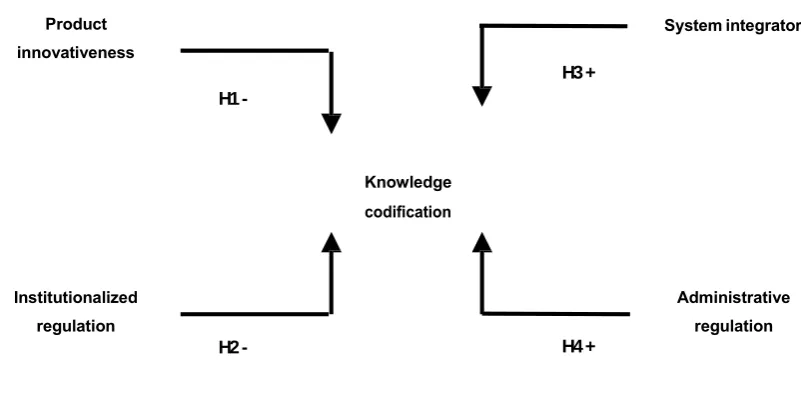
[image:14.595.106.507.227.435.2]Our hypotheses are summarized in Figure 1.
Figure 1: Antecedents to the use of codification in across-project knowledge transfer
Product innovativeness
System integrator
Knowledge codification
Institutionalized regulation
H2 - H4 +
Administrative regulation
2 Data and method
The data for this paper is from a survey carried out within an international collaborative
research project involving several European universities.2 The project’s database contains
detailed information on 540 completed projects involving three or more partners. Data were
gathered between February 2006 and January 2007 through a questionnaire survey that
targeted projects in the engineering, creative, and high-tech industries in Canada, Denmark,
France, Germany, Italy, and the US.
2 The research project was funded by the Italian Ministry of University and Research (MIUR) and coordinated
by Prof. Anna Grandori, CRORA Bocconi University, Milan (Italy). The research partners include Patrick Cohendet (HEC Montreal), Mark Ebers (University of Colone), Gernot Grabher (University of Bonn), Peter Maskell (DRUID/Copenhagen Business School), Andrea Prencipe (SPRU - University of Sussex and Università G. D’Annunzio –Pescara).
H1 -
14
These industries were chosen because they are characterized by different institutional
arrangements for sustaining learning and innovation, and by different levels of product
innovativeness. For example, creative industries differ from engineering and high-tech
industries because of their greater reliance on symbolic innovation, produced through a
disruptive learning regime, rather than technological innovation produced through a
cumulative regime (see e.g. Aage and Belussi, 2008; Cappetta, et al., 2006; Grabher, 2004;
Nelson, 2003). While engineering and high-tech industries both rely on technological
knowledge that typically evolves cumulatively, engineering industries as defined in this
paper operate on the basis of mature technologies where technical change is incremental,
while high-tech industries work with emerging technologies and therefore are subject to
periods of technological upheaval and radical change. Engineering industries are involved in
the production of investment goods, ranging from machine tools to industrial plants, and
draw on more stable technologies than high-tech industries such as biotech, semiconductors,
and software. Further, the spatial complexity and the coordination needs of engineering
projects are typically higher than in high-tech industries (Shenhar and Dvir, 1996).
As lists of projects are not publicly available, we surveyed firms that perform projects in the
selected industries. Since projects can be accessed through any of their main partners, we
used convenience sampling to select firms, based on national statistical office data (NACE
industry classification codes or national statistical office listings) and on industry listings
when national statistical office data were insufficiently detailed or unavailable. Information
from both national statistical office and industry association listings were used to select
firms in the creative industries – which included firms operating in feature film production,
advertising, book and magazine publishing, events, interior and fashion design, operation of
15
engineering industries were accessed through national industry associations. The
engineering sectors in our sample include machine tools, industrial and agricultural
machinery, industrial and chemical plant, and aerospace. Firms in the high-tech industries
(software, semiconductors, biotech, and telecommunication) were identified through
industry listings of the high-tech clusters in Silicon Valley and Sophia Antipolis. We
identified each industry in at least two countries in order to control for country specific
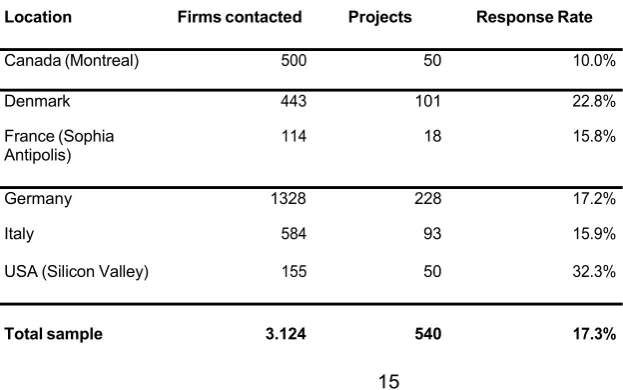
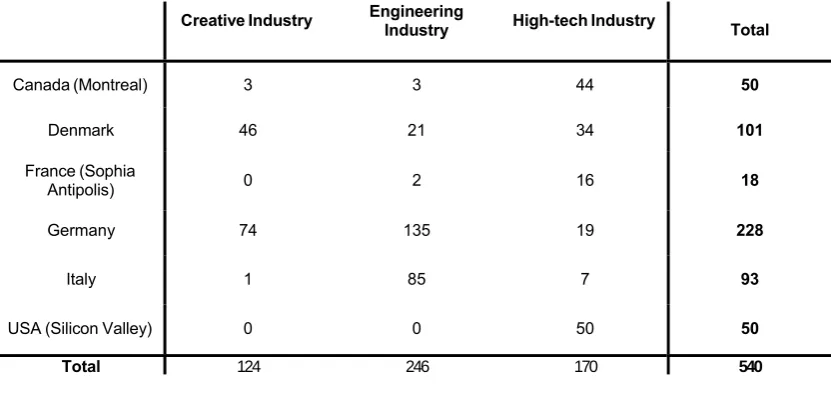
institutional settings. Table 1 provides a description of the sample in terms of location and
response rate. Table 2 provides the industry distribution of the sample.
We enquired about up to three projects for each firm. Industry country was on the basis of
the location of the firms contacted not the location of their headquarters. Firms were
contacted by phone via their publicly available contact information. The purpose of the
survey was explained and we then requested to be put through or given contacts of people
directly involved in the management of projects. This process continued until we reached a
person with in-depth knowledge of individual projects. Most interviewees were in
managerial positions, which ensured a broad overview of the project and specific knowledge
[image:16.595.100.412.543.738.2]about its practices derived from direct involvement.
Table 1: Overview of the sample
Location Firms contacted Projects Response Rate
Canada (Montreal) 500 50 10.0%
Denmark 443 101 22.8%
France (Sophia Antipolis)
114 18 15.8%
Germany 1328 228 17.2%
Italy 584 93 15.9%
USA (Silicon Valley) 155 50 32.3%
16
Table 2: Projects per industry and country
Creative Industry EngineeringIndustry High-tech Industry Total
Canada (Montreal) 3 3 44 50
Denmark 46 21 34 101
France (Sophia
Antipolis) 0 2 16 18
Germany 74 135 19 228
Italy 1 85 7 93
USA (Silicon Valley) 0 0 50 50
Total 124 246 170 540
In order to limit recall bias, interviewees were asked to choose a project completed within
the previous three years. We also asked interviewees to focus on projects that (a) were
successful, (b) involved different independent legal entities as partners (either organizations
or individuals); and (c) in which the respondent organization was a ‘key partner’.
Project success was defined in terms of (a) effectiveness (it produced a valuable output) and
(b) economic viability. These criteria were very broad and include projects that did not meet
their objectives in terms of expected output, cost and delivery date, but were of value for at
least one of the organizations involved. This definition of project success strikes a balance
between very short term and limited measures of success, and too imprecise criteria. The
problems involved in measuring project performance have been discussed extensively in the
literature (Atkinson, 1999; Atkinson et al., 2006; Fincham, 2002; Flyvbjerg et al., 2003) and
17
Traditional measures of performance, i.e. adherence to schedule and budget, impose several
limitations. First, success in these measures might reflect the organization’s ability or
willingness to make reliable time and budget estimations, rather than measuring the intrinsic
features of the project. Project bidders may deliberately underestimate budget and time in
order to win the project, on the basis that they can renegotiate later. Second, such measures
favor more predictable and routine projects. Third, they focus on short term and direct
results whereas a project that goes over budget and over time may produce profits in the
long term and in indirect ways (e.g. by building reputation). This definition of performance
also neglects the fact that firms typically manage portfolios, in which a certain share of
projects may not yield immediate returns but will produce significant benefits in other areas
(e.g. an unprofitable project may establish a valuable client relationship). Fourth, data on
project performance in terms of cost and time are typically sensitive and difficult to collect.
More qualitative measures of success, such as the generation of new knowledge or long-
term profitability, tend to be too subjective and open to the maneuverings of organizational
politics. Our choice of a broad and relatively undemanding definition of success provides us
with an overview of the ‘normal’ practice related to codification in an industry, without the
need to probe the issue of what is project success. It also does not delve into the extent to
which codification influences project performance, which is beyond the scope of this paper.
‘Key partner’ is defined as a participant organization that ranks high for the amount, quality
18
In order to eliminate biases due to missing data, the database was imputed by latent class
analysis (Van Ginkel, 2007; Van Ginkel et al., 2007) using Latent GOLD 4.0 (Vermunt and
Magidson 2005). 3
3 Variables
Dependent variable
To measure use of codification, our dependent variable, interviewees were asked whether
‘the project incorporated lessons learnt or solutions developed in previous projects which
were formally stored in portfolios of best practice, databases, manuals and reports’. The
dependent variable was coded as a dummy, with value 1 if the interviewee checked the box.
In order to check the stability of knowledge transfer over time, we also asked interviewees,
in a separate question, whether lessons learnt or solutions developed in the project were
codified for use in later project. Correlation between the two answers is 0.543 with
significance at the 0.01 level.
Independent variables
Degree of product innovativeness was measured on a five-point scale based on the question
of whether ‘the product or service developed in the projects was: a variation of an existing
product or service; a new generation of an existing product or service line; a new product or
service line for the partners; a new-to-the-industry product or service line; a new-to-the-
world product or service line’. Since degree of product innovativeness is an ordinal level
3 The authors gratefully acknowledge the contribution of Andries van der Ark of Tilburg Business School,
19
variable, in the regressions we used separate dummies for each level of innovativeness. We
tracked the presence of a system integrator by asking whether the project was based on a set
of contracts with one central contracting party, as opposed to multi-party contracts. Degree
of administrative regulation was assessed by asking about the extent of use in the
relationship between the three key partners, of extra-contractual but written regulation
exemplified by the use of internal charts, procedures, and job descriptions of the type used
for internal organization. In order to include all aspects of the division of labor, and not just
substantive tasks, interviewees were asked about the use of administrative regulation in
relation to ‘property rights over assets and outputs; decision and control rights; definition of
tasks; definition of duration; separation procedures; warranties and indemnities; prices, fees
and royalties.’ (cf. Durlauf and Blume, 2008). Responses were scored on a four-point Likert
scale: (1) no specification; (2) general principles; (3) extensive specification; (4) complete
specification.
The degree of informal, institutionalized regulation through norms, habits or practices of
the industry was measured by asking interviewees about the relative importance of industry
norms, habits and practices vis-à-vis written contracts or administrative regulation, two
alternatives for standardizing behavior (see Scott and Davis, 2007). The same Likert scale
and items were used for scoring degree of administrative regulation.
Responses relating to each of the seven types of objects for regulation are highly correlated
in relation to both administrative and institutionalized regulation (see Tables in Appendices
2 and 3). We created an average degree of administrative regulation by aggregating the
responses across the seven objects and normalizing the result. We did the same for
20 Control variables
We introduced the following control variables.
Complexity of knowledge, in terms of the number of different disciplines involved in the
project. A high level of knowledge complexity makes effective codification of project
learning more difficult because it requires the integrated effort of a larger number of people.
Also, the likelihood of solutions being easily reused across projects is small because
different disciplines interact in complex ways. High levels of knowledge complexity
discourage the use of codification to transfer learning. We gauged the degree of knowledge
complexity through the following question: ‘Projects often draw upon many distinct and
complex bodies of knowledge. One way to measure the knowledge complexity of a project
is to ask how many of the activities involved could be carried out by an individual.
Assuming 100 to be the entire range of activities included in the project, what is the largest
share of the full range of activities that a single person would have been fully qualified to
carry out (irrespective of acceptable work-load)? (For instance, in the development of a new
space shuttle, it is likely that the percentage of activities that a person would be fully
qualified to carry out would be close to zero. Conversely, an architect is likely to be fully
qualified to carry out 100% of the activities connected with the design of a small house)’.
Knowledge complexity decreases as the percentage of activities that can be carried out by
one individual increases.
Face-to-face communication was included to take into account that, in the case of
numerous meetings for coordination purposes, knowledge and expertise will also be
transferred. Face- to-face communication was measured through the question: ‘How much
of the time spent for communication among the three key partners was in face-to-face
meetings?’ indicated as a percentage. Industry dummies were introduced to check for sector
21
differences in the institutional structure of industries not incorporated in our explanatory
variables or other controls. Table 3 provides an overview of the variables used in our
analysis.
Table 3: Variables used in the analysis
variable parameter value explanation
dependent variable
knowledge codification
(databases, portfolios, manuals &
reports) 1 0 utilized not utilized independent variables
dummies for
product innovativeness
(1) new generation of existing product
(2) new‐to‐the‐partners
(3) new‐to‐the‐industry
(4) new‐to‐the‐world
1 0 1 0 1 0 1 0 yes no yes no yes no yes no
system integrator
administrative regulation
(normalized)
institutionalized regulation
(normalized)
1 0 0 – 1 0 – 1
central party contract multi party contract
ranging from 0 = no specifications to
1 = complete specification
ranging from 0 = no specifications to
1 = complete specification
control variables
knowledge complexity
face to face communication
dummies for
industry
(1) high‐tech industries
(2) creative industries
0 – 100 0 – 100 1 0 1 0
% of activities that could have been accomplished by a single person
% of activities that required face‐to‐face communication
high‐tech project non high‐tech project
22
4 Results
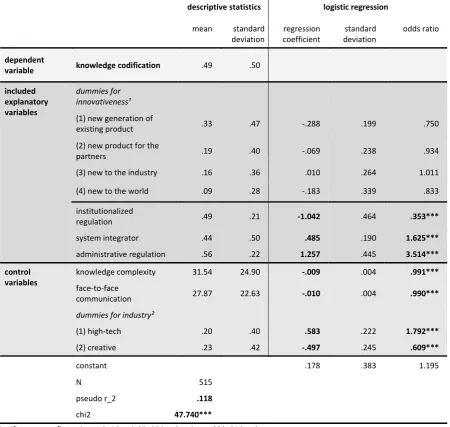
Because the dependent variable is dichotomous, we use a binary logistic regression (see
Agresti, 2002). The results of the analysis are presented in Table 4. The pseudo r-square of
this model is 0.118 (see Nagelkerke, 1991). The classification table shows that the inclusion of
the explanatory variables increases the proportion of the model’s correctly predicted results by
9.9%. A Hosmer Lemeshow test provides a chi-square of 8.960 with a significance of 0.346
indicating the good quality of the model in terms of goodness of fit.
Among the explanatory variables, only product innovativeness does not contribute
significantly. Hypothesis 1 is thus not supported; the results are mixed and non-significant.
Hypotheses 2, 3 and 4 are supported, and especially the hypothesis that project regulation by
institutionalized industry-wide norms, habits and practices is negatively related to knowledge
transfer across inter-firm projects through codification (H2). The likelihood that codification
is used to transfer learning across projects decreases by slightly over 60% if the project is
regulated by institutionalized means. Our hypothesis that the presence of a system integrator
increases the probability of implementation knowledge management strategy
based on codification (H3) is supported, with the likelihood of using codification to support
the transfer of knowledge across projects increasing by about 60%. Our hypothesis of a
positive relationship between administrative regulation and the employment of codification
is also strongly supported (H4). The likelihood of codification being used increases by
23
Table 4: Regression results4
descriptive statistics logistic regression
mean standard
deviation
regression
coefficient
standard
deviation
odds ratio
dependent
variable knowledge codification .49 .50
included
explanatory
variables
dummies for
innovativeness¹
(1) new generation of
existing product .33 .47 ‐.288 .199 .750
(2) new product for the
partners .19 .40 ‐.069 .238 .934
(3) new to the industry .16 .36 .010 .264 1.011
(4) new to the world .09 .28 ‐.183 .339 .833
institutionalized
regulation .49 .21 ‐1.042 .464 .353***
system integrator .44 .50 .485 .190 1.625***
administrative regulation .56 .22 1.257 .445 3.514***
control
variables
knowledge complexity 31.54 24.90 ‐.009 .004 .991***
face‐to‐face
communication 27.87 22.63 ‐.010 .004 .990***
dummies for industry²
(1) high‐tech .20 .40 .583 .222 1.792***
(2) creative .23 .42 ‐.497 .245 .609***
constant .178 .383 1.195
N 515
pseudo r_2 .118
chi2 47.740***
Significances are flagged on a * .1 level, ** .05 level and on a *** .01 level
¹ a variation of an existing product serves as reference category
² engineering Industries serves as a reference category
4 The modeling was performed with SPSS 17.0. Correlation tables for the explanatory variables can be found in
24
Among the control variables, complexity of knowledge is significant but has a weak effect,
showing a slight negative relation to the implementation of codification strategies. Face-to-
face communication has weak negative effects on the implementation of knowledge transfer
through codification, which confirms our assumption that when face to face meetings are
involved in project coordination, some knowledge transfer takes place, which reduces the
likelihood of reliance on codified knowledge transfer.
Among the industry dummies, differences are strong and significant. High-tech projects
tend to use codification more frequently than creative projects.
We also conducted some further checks. Level of innovation does not correlate significantly
with the use of administrative tools or industry norms. Uncertainty, measured by the
availability of feedback on performance during the projects and the extent of revisions to
activities during the project, does not significantly influence the knowledge transfer
strategy. Geographical dispersion of the project (see Shenhar and Dvir, 1996), and length
(years of cooperation among the key partners) or depth of the relationship (number of
projects performed in collaboration with key partners) (cf. Uzzi and Lancaster, 2003; Argote
et al., 2003) exert significant influence on the type of knowledge transfer mechanism
employed in inter-firm projects. We controlled also for project size effects because the use of
formalized administrative control has been associated with size and geographical scope
(Shenhar and Dvir, 1996). The number of partners, number of people involved, and project
duration and budget have no significant influence on the knowledge transfer strategy. We can
conclude therefore that the model is robust to uncertainty, geography and size, and to various
25
dummies for the location of firms to control for the influence of geography but the
robustness checks using location dummies show that geography does not impact
systematically on knowledge codification practices.
Differences across industries
Our analysis of the knowledge transfer mechanisms across industries shows that engineering
and high-tech industries use codification as a means to transfer learning across projects
more frequently than creative industries. Only 36.4% of creative projects incorporated
learning transferred through codification, compared to 59.0% of high-tech and 49.0% of
engineering projects. We ran separate logistic regressions for each industry to explore the
differences in the use of codification to support knowledge transfer across industries in more
depth. The results in Table 5 indicate that the antecedents identified in the literature are
more accurate predictors of the use of codification strategies in technologically complex
settings (high-tech or not) than in creative industries, where the choice to use codification
seems to be linked exclusively to the propensity for administrative regulation, measured by
the extent of use of internal charts, procedures and job descriptions.
The model works well for engineering industries, explaining almost 18% of use of
codification to support knowledge transfer. Engineering is the only industry where there is
limited support for Hypothesis 1, i.e. that product innovativeness reduces the chance of
knowledge transfer via codification. The complexity of the knowledge being transferred also
limits the use of codification. Interestingly, use of codification is driven by the presence of a
26
Table 5: Logistic regressions for individual industries
descriptive statistics for
complete database
logistic regression
at industry level
Creative Engineering High‐tech
mean standard
deviation
odds ratio¹ odds ratio odds ratio
dependent
variable
knowledge
codification .52 .50
included explanatory variables
dummies for
innovativeness²
(1) new
generation of
existing product
.33 .47 (‐) .483**
(2) new product
for the partners .19 .40
(3) new to the
industry
.16 .36
(4) new to the
world .09 .28
institutionalized
regulation .49 .21
system integrator .44 .50 (+) 1.761** (+) 2.461**
administrative
regulation .56 .22 (+) 5.708* (+) 14.756***
control
variables
knowledge
complexity 31.54 24.90 (‐) .983***
face‐to‐face
communication 27.87 22.63 (‐) .982***
constant (‐) .414 (+) 3.514** (‐) .457
N 515 118 241 156
pseudo r_2 .069 .177 .124
chi2 6.098 34.362*** 15.056*
¹ (+) and (-) specify the direction of influence as indicated by the regression coefficient
² a variation of an existing product serves as reference category
27
For high-tech industries, the model shows a pseudo r square of 12.4%, with the
administrative regulation level being the strongest driver of codification, followed by
presence of a system integrator. These results can be explained by the different knowledge
accumulation regimes in high-tech industries. Industries based on technically complex
bodies of knowledge tend to operate within a regime of cumulative learning in which
significant overall progress and improvement are derived from the cumulative effect of
relatively incremental innovations. For instance, in software projects, the reuse of code
modules is an effective way to transfer knowledge across projects, and is used as a basis for
subsequent innovation and customization. Creative industries tend to operate within a more
disruptive learning regime, in which change and freshness are paramount (Grabher, 2004;
Sapsed et al., 2005). In other words, the endemic amnesia of projects seems to be
particularly problematic for industries producing technologically complex goods that rely on
cumulative learning. Most studies on project-to-project learning are based on
technologically complex industries such as engineering design and aerospace.
All three of the industry models were checked for size (persons, partners, budget, duration),
geographical dispersion of the project partners, and relationship (length of relationship and
number of projects carried out by project partners) variables: none was significant.
5 Conclusions
This paper has investigated the factors determining the use of codification to support the
transfer of knowledge across projects. In contrast to a widely-held assumption, the
innovativeness of the product may not be the most important determinant of the choice to
use codification to support knowledge transfer across projects. The results support the
28
institutionalized governance. Industry conventions, norms, and regulations establish more or
less stable expectations about roles, practices, and procedures and constitute channels
facilitating the accumulation and consolidation of knowledge (Sydow and Staber, 2002).
The presence of a system integrator, as revealed by a contractual hub firm, is important for
supporting deliberate knowledge transfer strategies based on codification. Previous studies
show that system integrators maintain in-house knowledge about the technologies used by
their partners (Brusoni et al., 2001) and play pivotal roles in the management of projects,
acting as ‘linchpins’ for the development of trust in the absence of personal relations and
familiarity (Meyerson et al., 1996: 171). Our research shows that, in volatile environments,
the system integrator can embody some degree of organizational memory which favours the
systematic transfer of knowledge across projects in industries characterized by
technologically complex products.
Finally, our study provides an empirical exploration of the role of different industry contexts
and knowledge bases in shaping knowledge management strategies. On the one hand, the
relative importance of codification in engineering and high technology industries reflects
their cumulative learning regimes. Knowledge is built up in continuous step-by-step
processes, and sedimented in modules and methods that can be recombined for different
purposes. In creative industries, the learning trajectory is discontinuous and deliberately
disruptive. While cumulative learning helps to avoid ‘reinventing of the wheel’ through
deliberate knowledge management, and the achievement of often significant progress over
time through the accumulation of incremental innovation, discontinuous learning is driven
by the creative imperative of ‘freshness.’ On the other hand, norms, roles, and professions in
emerging high-tech fields are more fluid and shifting than in established creative or
29
traditionally was accumulated only partially available. In other words, more traditional
formalized means of knowledge management might be important in emerging new fields
that have yet to develop the organizational registers that make possible the consolidation of
knowledge.
6 Directions for further research
This study is primarily concerned with the factors that influence the choice of firms to use
codification in order to support the transfer of experiential learning across projects. The
costs, challenges, and impacts of codification on performance are beyond its scope.
As suggested by the literature on knowledge management, codification cannot be reduced to
the cognitive process of transforming tacit knowledge into codebooks or manuals. Rather,
the effectiveness of the process of codification and also de-codification and adaptation to
diverse local circumstances (Hall, 2006; D’Adderio, 2003), relies heavily on a robust social
infrastructure of networks and communities in which these processes are embedded (Swan
et al., 1999; Bosua and Scheepers, 2007; Amin and Roberts, 2008). Future research could
explore to what extent cumulative knowledge regimes draw relatively more benefits from
codebooks while disruptive knowledge regimes rely relatively more on networks and
communities. Additionally, the quality of the processes that make possible de-
contextualizing and re-contextualizing knowledge to different context may depend
significantly more on how knowledge is codified, rather than on the extent of codification
(Adler and Borys, 1996; Cacciatori 2008; Carlile and Rebentish, 2003). Further research
investigating the effects of different types of knowledge codification is therefore warranted.
The existing body of research on the performance benefits of codification (e.g., Haas and
30
understand whether the direct impacts of codification on traditional performance
parameters, such as time, costs, and quality, differ for different knowledge regimes and
industries. Research is needed into the effects of knowledge codification on innovative
performance, how they vary between process and product innovation, and whether such
differential effects are stable across industries. For instance, creative industries might have a
higher propensity to rely on personal relationships and networks for product innovation than
technology intensive industries and the reverse could be true for process innovation, whose
tacit nature is a source of competitive advantage for manufacturing (Winter, 1987). Beyond
the impacts on traditional performance indicators and innovation, codification might also
enhance the stability of client relations. Codification entails increasing transparency of the
project completion process, improves the (long-term) accountability of the project partners,
and corroborates the legitimacy of the various steps taken in the course of the project.
Codification in this sense signifies the ‘rationality’ of project performance which in turn
might help to convert a single project into a lasting client relationship.
On the other hand, there is also a range of indirect or non-intended effects on performance
that would benefit from further research. Regardless of whether the outputs of knowledge
codification such as codebooks are used or not, the process of codification might increase
organizational reflexivity (see Zollo and Winter, 2002; Prencipe and Tell, 2001). The
organizational practice of codification forces actors to discursively reflect on established
practices and procedures thereby enhancing the quality of their learning. Also, discursive
reflection in the course of the knowledge codification process might induce interrelating
activities that trigger moments of collective creativity (see Hargadon and Bechky, 2006):
search for and provision of help, reflective reframing (in which each actor in turn attends to
and builds upon the comments and actions of others), and reinforcing (e.g. through
31
reframing). In this sense, codification could induce ‘heedful interrelating’ (Weick and
Roberts, 1993) within the organization that connects individual ideas and experiences in
ways that can help to redefine and resolve the demands of emerging situations.
Finally, further research should examine whether and to what extent codification for the
purposes of knowledge transfer, ultimately is used in a normative sense, to increase
conformity. Increased conformity might have positive impacts on traditional performance
indicators, but at the same time might reduce the propensity to ‘think outside the box’ and to
explore novel approaches.
References
Aage T and Belussi F (2008) From fashion to design: Creative networks in industrial
districts. Industry and Innovation 15: 475-491.
Adler PS and Borys B. (1996) Two types of bureaucracy: Enabling and coercive.
Administrative Science Quarterly 41: 61-89.
Agresti A (2002) Categorical Data Analysis, New Jersey: New Jersey.
Allen TJ (1977) Managing the flow of technology, Cambridge MA: MIT Press.
Amin, A and Cohendet, P (2003) Architectures of knowledge: Firms, capabilities, and
communities, Oxford: Oxford University Press.
Amin A and Roberts J (2008) Knowing in action: Beyond communities of practice.
Research Policy 37: 353-369.
Anderson JR (1983) The Architecture of Cognition, Cambridge, MA: Harvard University
32
Argote, L., McEvily, B and Reagans R (2003) Managing knowledge in organizations: an
integrative framework and review of emerging themes. Management Science 49:
571-582.
Atkinson R (1999) Project management: Cost, time and quality, two best guesses and a
phenomenon, it’s time to accept other success criteria. International Journal of
Project Management 17: 337-342.
Atkinson R, Crawford L, Ward S (2006) Fundamental uncertainties in projects and the
scope of project management. International Journal of Project Management 24:
687-698
Aubry M, Hobbs B and Thuillier D (2004) A new framework for understanding organisational project management through the PMO. International Journal of Project Management
22: 523-532
Ayas K and Zeniuk N (2001) Project-based learning: Building communities of reflective
practitioners. Management Learning 32: 61-76.
Balconi M, Pozzali A and Viale R (2007) The ‘codification debate’ revisited: A conceptual
framework to analyze the role of tacit knowledge in economics. Industrial and
Corporate Change 16: 823-849.
Bechky B (2006) Gaffers, gofers, and grips: Role-based coordination in temporary
organizations. Organization Science 17: 3-21.
Bosua R and Scheepers R (2007) Towards a model to explain knowledge sharing in
complex organizational environments. Knowledge Management Research &
Practice 5: 93-109.
Brady T and Hobday M (2011) Projects and innovation: Innovation and projects. In: Morris,
PWG, Pinto JK and Söderlund J (eds), The Oxford Handbook of Project
33
Brusoni S (2005) The limits to specialization: Problem solving and coordination in modular
networks. Organization Studies 26: 1885-1907.
Brusoni S, Prencipe A and Pavitt K (2001) Knowledge specialization, organizational
coupling, and the boundaries of the firm: Why do firms know more than they make?
Administrative Science Quarterly 46: 597-621.
Cacciatori E (2008) Memory objects in project environments: Storing, retrieving and
adapting learning in project-based firms. Research Policy 37: 1591-1601.
Cacciatori E and Jacobides MG (2005) The dynamic limits of specialization: Vertical
integration reconsidered. Organization Studies 26: 1851-1883.
Cappetta R, Cillo P and Ponti A (2006) Convergent designs in fine fashion: An evolutionary
model for stylistic innovation. Research Policy 35: 1273-1290.
Carlile PR (2004) Transferring, translating and transforming: An integrative framework for
managing knowledge across boundaries. Organization Science 15: 555-568.
Carlile PR and Rebentisch ES (2003) Into the black box: The knowledge transformation
cycle. Management Science 49: 1180-1195.
Chataway J, Brusoni S, Cacciatori E, et al. (2007) The International AIDS Vaccine Initiative
(IAVI) in a changing landscape of vaccine development: A public private
partnership as knowledge broker and integrator. The European Journal of
Development Research 19: 100-117.
Christopherson S (2002) Project work in context: regulatory change and the new geography
of media. Environment and Planning A 34: 2003-2015.
Cohendet P and Steinmueller WE (2000) The codification of knowledge: A conceptual and
empirical exploration. Industrial and Corporate Change 9: 195-209.
Cowan R, David PA and Foray D (2000) The explicit economics of knowledge codification
34
D'Adderio L (2003) Configuring software, reconfiguring memories: The influence of
integrated systems on the reproduction of knowledge and routines. Industrial and
Corporate Change 12: 321-350.
Dai CX and Wells WG (2008) An exploration of project management office features and their relationship to project performance Project Management Journal 39: 43-58
Davies A and Brady T (2000) Organisational capabilities and learning in complex product
systems: Towards repeatable solutions. Reserch Policy 29: 931-953.
DeFillippi RJ and Arthur MB (1998) Paradox in project-based enterprise: The case of film
making. California Management Review 40: 125-139.
Dhanaraj C and Parkhe A (2006) Orchestrating innovation networks. Academy of
Management Review 31: 659-669.
Donaldson L. (2001) The Contingency Theory of Organizations, Thousand Oaks, California:
Sage.
Durlauf SN and Blume LE (eds) (2008) Social Norms. In: New Palgrave Dictionary of
Economics, Second Edition. London: McMillan.
Engwall M. (2003) No project is an island: linking projects to history and context. Research
Policy 32: 789-808.
Fincham R (2002) Narratives of success and failure in systems development. British Journal
of Management 13: 1-14.
Foray D and Steinmueller WE. (2003) The economics of knowledge reproduction by
inscription. Industrial and Corporate Change 12: 299-319.
Flyvbjerg B, Bruzelius N, and Rothengatter, W (2003) Megaprojects and Risk: An anatomy
35
Garcia-Muina FE, Pelechano-Barahona E and Navas-López JE.(2009) Knowledge
codification and technological innovation success: Empirical evidence from Spanish
biotech companies, Technological Forecasting and Social Change 76: 141-153.
Gann D and Salter A (1998) Learning and innovation management in project-based, service
enhanced firms. International Journal of Innovation Management 2: 431-454.
Garrick J and Clegg S (2001) Stressed-out knowledge workers in performative times: A
postmodern take on project-based learning. Management Learning 32: 119-134.
Gavetti G and Levinthal D (2000) Looking forward and looking backward: Cognitive and
experiential search. Administrative Science Quarterly 45: 113-137.
Girard M and Stark D (2002) Distributing intelligence and organizing diversity in new-
media projects. Environment and Planning A 34: 1927-1949.
Grabher G (2002) The project ecology of advertising: tasks, talents and teams. Regional
Studies - Special Issue on Production in Projects: Economic Geographies of
Temporary Collaboration 36: 245-262.
Grabher G (2004) Temporary architectures of learning: Knowledge governance in project
ecologies. Organization Studies 25: 1491-1514.
Grabher G and Ibert O (2005) Bad company? The ambiguity of personal knowledge
networks.” Journal of Economic Geography 5: 1-21.
Granstrand O, Patel P and Pavitt K (1997) Multi-technology corporations: why they have
‘distributed’ rather than ‘distinctive core’ competences. California Management Review 39:
8-25.
Greiner ME, Böhmann T and Kramer H (2007) A strategy for knowledge management.
36
Haas MR and Hansen MT (2005) When using knowledge can hurt performance: The value
of organizational capabilities in a management consulting company. Strategic
Management Journal 26: 1.
Haas MR and Hansen MT (2007) Different knowledge, different benefits: toward a
productivity perspective on knowledge sharing in organizations. Strategic
Management Journal 28: 1133.
Hall, M (2006) Knowledge management and the limits of knowledge codification. Journal
of Knowledge Management 10: 117-126.
Hansen MT, Nohria N and Tierney T (1999) What's your strategy for managing knowledge?
Harvard Business Review 77: 106-116.
Hargadon AB and Bechky BA (2006) When collections of creatives become creative
collectives: A field study of problem solving at work. Organization Science 17: 484-
500.
Heydebrand W and Miron A (2002) Constructing innovativeness in new-media start-up
firms. Environment and Planning A 34: 1951-1984.
Hobbs B, Aubry M and Thuillier D (2009) The project management office as an
organizational innovation. International Journal of Project Management 26: 547-
555.
Hobday M (2000) The project-based organisation: an ideal form for managing complex
products and systems? Research Policy 29: 871-893.
Julian J (2008) How project management office leaders facilitate cross-project learning and
continuous improvement. Project Management Journal 39: 43-58.
Keegan A and Turner JR (2001) Quantity versus quality in project-based learning practices.