1
Using Computer-Generated Design Aids to Facilitate Alternative Concept Embodiments
ROMAN ŽAVBI
University of Ljubljana, Faculty of Mechanical Engineering, Laboratory for Engineering Design – LECAD, Aškerčeva 6, SI-1000 Ljubljana, Slovenia
NUŠA FAIN
University of Strathclyde, Strathclyde Business School, Department of Marketing, 199 Cathedral Street, G4 0QU, Glasgow, United Kingdom
JANEZ RIHTARŠIČ
University of Ljubljana, Faculty of Mechanical Engineering, Laboratory for Engineering Design – LECAD, Aškerčeva 6, SI-1000 Ljubljana, Slovenia
Abstract: The objective of this study was to investigate whether the use of computer-generated aids facilitates a greater variety of concept embodiments compared to the classical approach. A total of 60 participants were enrolled in the Design Methodology course. They were divided into a control group using the classical approach and an experimental group in which computer-generated aids were employed. The embodiments produced by the participants from both groups were assessed for variety, independently by two experts having both academic and industrial experience in the field of product development. The experts were not informed about the groups or any of the study details. Analysis of the results of this experiment indicates that computer-generated aids play a supportive role in concept embodiment.
2
1. IntroductionDesign is considered one of key activities of engineering [1] and engineering institutions should educate engineers to be capable of developing appropriate solutions for the needs of users [2]. Designing is also found to be one of the most important competencies engineering students should achieve during their studies [3]. The importance currently placed on these and other competencies to be attained by engineering students is the result of the so-called “paradigm shift”, whereby ABET's (the U.S. accrediting agency for engineering programs) focus on inputs, such as topics taught until the year 2000, has been completely replaced by focus on outputs, i.e. competencies achieved by students [4, 5]. Such changes have dictated a transformation of engineering curricula and also formally acknowledged the significance of designing.
The core aspect of designing is the generation of alternative solutions [6] and one of key conditions for successful concept design is the generation of the maximum possible number of alternative solutions [7 - 9], as there is a positive correlation between the number of generated alternative product concepts and their quality [10 - 12]. In addition, a concept that is different from the concepts of existing products determines the level of innovative input. Furthermore, innovative solutions provide a competitive advantage for companies [13]. There are many methods for generating alternative solutions. Žavbi and Rihtaršič [14] discussed the most well-known and documented approaches. A weakness of many of these approaches is the synthesis of function structure, which is essentially a mere trial and error process. In addition, a composed function structure is rigid and generated in advance [15] indirectly question the suitability of such function structures by proposing a basic model for functional reasoning in design). Therefore, it does not allow the generation of a multitude of solutions that would function differently from what is enabled by the function structure. The rigidity of function structure means an incapability of the function structure to include alternative building blocks (i.e. means), which will provide different input/output transformations as required by the functions of the rigid function structure. The problem of rigidity is further explained in [16].
Both professional engineers and engineering students very often have to deal with such shortcomings. Therefore, a method and a computer tool were developed that enable the generation of a large number of alternative concepts (e.g. of products, product parts and components) and do not require prior synthesis of function structure to describe the functioning of a future product in component-neutral terms. In this way, it is possible to avoid the trial and error process as well as any problems related to rigid function structure.
The purpose of this paper is to briefly present the method and the computer tool based on it, as well as to start testing the tool's support role. The paper is structured as follows: Section 2 briefly introduces the developed prescriptive process model and computer tool. Section 3 structures and describes the essentials of the experiment. The results and discussion are given in Section 4. Section 5 concludes the paper.
1.1 Prescriptive process model and computer tool
3
Fig. 1. Example of a set of generated alternative chains of physical laws: force (output variable) can be generated by many input variables [17]
4
Fig. 2. An example of a generated chain of physical laws and basic schemata (A: result of mechanized mode) which represents a design concept for windshield sticker removal (B: result of manual mode using simple
modeller) [18]
From the process model, a computer tool was designed that generates appropriate alternative chains of physical laws and complementary basic schemata, i.e. alternative design concepts based on a given characteristic input quantity (extracted from a future product’s function) (Figure 2). The database of physical laws and chaining of physical laws (and complementary basic schemata) bridge the gap between insufficient knowledge of physical laws/effects and possibilities offered by less known and as yet unapplied physical laws/effects (as well as their combinations). This tool offers mathematical, textual and graphical presentations which are available during a manual activity (subdivision of activities: see below).
The prescriptive process model basically comprises two activities, namely (i) chaining of physical laws and complementary basic schemata and (ii) embodiment design based on the chains of basic schemata. The first activity was formalized and is mechanized (i.e. mechanized mode provided by the computational tool; Figure 2), the second one requires the human intervention (i.e. manual mode; Figure 2, part B). Computational tools can be more effectively exploited when combined with the designer’s creativity (as described in [19 – 24]. This subdivision of design activities (i.e. mechanized and manual activities) is in line with Blessing [25], who stated that the designer’s role is not only to provide input, but also constitutes an important reasoning component of the design process [26].
2. Experiment
Our hypothesis was formed with respect to the results obtained in non-formal tests of the method and the computer tool. It was noticed that e.g. an individual chain of physical laws and complementary basic schemata (i.e. product concepts) can be embodied in various ways by professional engineers [19].
A
5
With the experiment, the following hypothesis was thus tested:Use of computer-generated aids facilitates greater variety of concept embodiment than the classical approach The approach to conduct the experiment basically follows the ‘Direct Method’ (more specifically, the ‘Intrinsic Merit Stage’) as proposed by Shah et al. [28]: formation of two groups (i.e. control and experimental group), selection of the design task, generation of the results and the type of data collected.
Similar studies were done e.g. by Kurtoglu et al. [22], who explored how a computer tool facilitates design and influences the designer’s creativity.
The similarity between the two studies lies in their purpose, which was to perform a preliminary evaluation of the usefulness of computer-generated aids. Both studies were done using a control group and an experimental group, in which the participants were asked to individually solve various design tasks. The main difference between the two studies involves the complexity of design tasks and the fundamentals of producing computer-generated aids. While the authors of this paper use the chaining of physical laws and complementary basic schemata [14], Kurtoglu et al. [22] prefer graph grammar; the differences in their approaches are described in [14].
[image:5.595.67.528.365.584.2]Regarding the complexity of experimental design task, Kurtoglu et al. have found insufficient correlations between individual judges. This is probably due to the fact that each judge focuses on a different part of the solution to a complex design task.
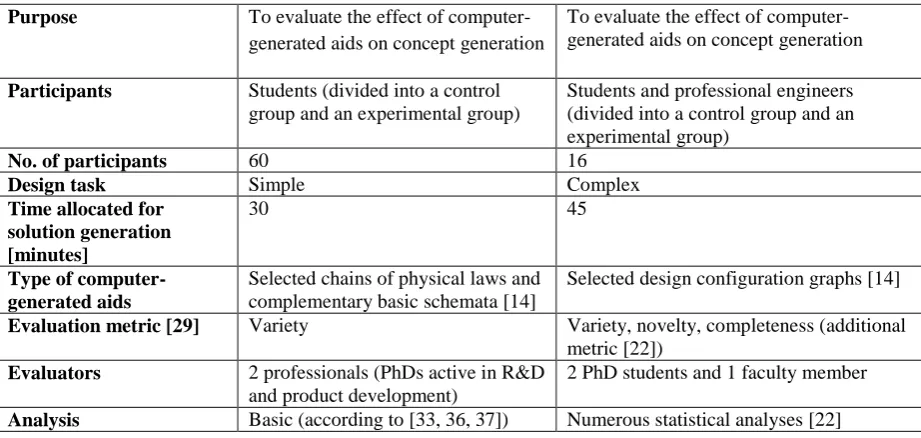
Table 1. Basic properties of two studies of the effect of computer-generated aids on concept generation
Purpose To evaluate the effect of computer- generated aids on concept generation
To evaluate the effect of computer- generated aids on concept generation
Participants Students (divided into a control group and an experimental group)
Students and professional engineers (divided into a control group and an experimental group)
No. of participants 60 16
Design task Simple Complex
Time allocated for solution generation [minutes]
30 45
Type of computer-generated aids
Selected chains of physical laws and complementary basic schemata [14]
Selected design configuration graphs [14] Evaluation metric [29] Variety Variety, novelty, completeness (additional
metric [22]) Evaluators 2 professionals (PhDs active in R&D
and product development)
2 PhD students and 1 faculty member
Analysis Basic (according to [33, 36, 37]) Numerous statistical analyses [22] This study indicates a positive and statistically significant effect of the use of computer-generated aids on the variety of solutions (see section 3). The study by Kurtoglu et al. [22] also indicates a positive effect, but not a statistically significant one; Kurtoglu et al. are encouraged by the positive effect and believe that the enlarged database of solutions will have a stronger influence on the variety of solutions [22]. The basic properties of the two studies are shown in Table 1.
2.1 Evaluation metrics
6
observations, we have chosen variety as a measure of explored design space. The generation of similar ideas indicates a low level of variety and consequently a lower probability of finding better ideas in the solution space.
2.2 Participants
The method for chaining of physical laws and complementary basic schemata as well as the computer tool were developed to support conceptual design by both students and professional product developers. Testing of the hypothesis began with students, as in this group the logistics are much simpler. Conceptual product design is one of the main topics of the Design Methodology course, so students enrolled in this course were invited to participate in the experiment. The Design Methodology course is organized for third year students in the B.Sc. programme. From among 83 students, a total of 60 responded to our invitation. They all had the same courses during the first two years, predominantly involving basic and engineering sciences (e.g. mathematics, physics, chemistry, statics, strength of materials, rigid body dynamics, fluid dynamics, thermodynamics, and materials science). The only course in which they had been exposed to some specific design tasks was Machine Elements.
2.3 Design problem
The task presented to the students involved the design of any technical systems (i.e. products) that are capable of generating electrical energy. Only the basic function was of interest to us and there were no additional requirements concerning the parameters of the produced energy (e.g. power, voltage, current and frequency). The specific text was adjusted to the individual (control or experimental) group. The text for the control group was as follows:
Develop concepts of technical systems that are capable of generating electrical energy. The output physical quantity can be electrical voltage, current or charge, while the input physical quantity is arbitrary. The concepts should be presented with a sketch and text. Use function structure and morphological matrix.
The text for the experimental group is stated below (the equations describing the physical laws in the chains were also supplied within the text; in this paper, they are omitted for brevity):
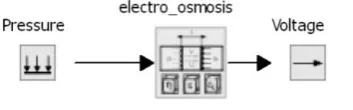
[image:6.595.205.382.543.598.2] Based on the chains of physical laws and basic schemata (Figures 3-6 [30]), embodiments of technical systems for generating electrical energy have to be developed.
7
[image:7.595.72.563.252.342.2]Fig. 4. A chain of physical laws (2 physical laws) and complementary basic schemata (2 basic schemata)
Fig. 5. A chain of physical laws (3 physical laws) and complementary basic schemata (3 basic schemata)
Fig. 6. A chain of physical laws (4 physical laws) and complementary basic schemata (4 basic schemata)
2.4 Procedure
The students responding to our invitation to participate in the experiment were divided into the control group named CLASSIC (37 students) and the experimental group named COMP (23 students). Due to logistic problems at the time of experimentation, the COMP group was smaller than the CLASSIC group, although a more balanced size was planned during the preparation phase.
[image:7.595.81.552.396.454.2]8
Due to the deterministic nature of the computer tool and given input data (the output variable, length of the chains and the selected governing physical principle in the chains), the results (i.e. the selected computer-generated chains of physical laws and complementary basic schemata) were independent of the tool’s user. The time allocated for the design task was 30 minutes, and the two groups worked on their tasks simultaneously. The decision to set the time limit to 30 minutes was based on the opinions of experienced product developers and R&D managers, who were consulted in this regard. An additional argument in favour of the selected time limit is Howard et al. [32] finding that after the 30 minute mark, the rate of idea generation during brainstorming decreases slowly and steadily, with a sharp decline in quality after 20 min. Similar was found by Kurtoglu et al. [22] in their experiments involving more complex design tasks, as many participants ran out of ideas after 45 minutes.
The COMP group had an additional constraint in that the allocated time was structured so that 7 minutes were assigned for each chain of the design task, that is for chains with one, two, three or four physical laws and complementary basic schemata in the chain, respectively. The procedure and the following evaluation procedure were used also for the task of developing product concepts for emptying a tube [27].
2.5 Evaluation procedure
Embodiments produced by the participants from both groups were assessed independently by two experts with academic and industrial experience in the field of product development, blind to the conditions and hypothesis. They first classified embodiments into the following two classes: class (i) solutions, and class (ii) non-solutions. Fulfilment of the basic function, i.e. generation of electrical energy, was the criterion used for this classification. Following classification, the authors included those embodiments that were assessed as solutions by both experts into the “solutions” class, while all other solutions were classified as “non-solutions”.
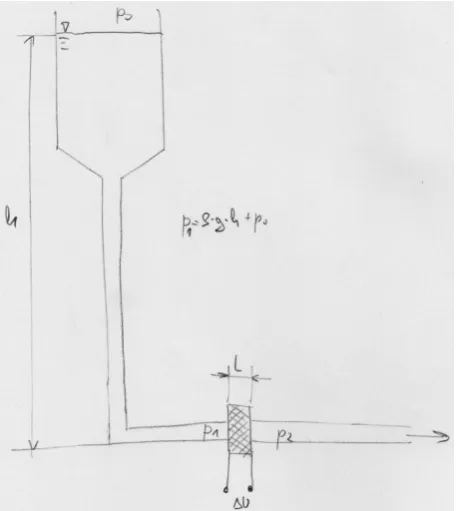
The experts then classified all embodiments from the “solutions” class into two further classes, i.e. (i) “different”, and (ii) “similar”. In this way they assessed variety, which in our case was the measure of differences in the embodiment of technical systems for generating electrical energy. Such differences in embodiment were sufficient for embodiments to be classified as “different” (e.g. those shown in Figure 7). If a particular embodiment differed only in some details from another embodiment that was already classified as “different” (e.g. the one shown in Figure 8 differed only in details from the embodiment (b) shown in Figure 7), it was classified as “similar”. At the end of classification, the “different” class only contained those embodiments which were assessed as such by both experts, while all other solutions were classified as “similar”.
9
Embodiment a [image:9.595.83.516.84.316.2]Embodiment b
Fig. 7. Embodiments (a, b) classified as different (members of a “different” class) Embodiment a: pressure (needed to generate voltage via electro-osmosis) is generated by a piston Embodiment b: pressure (needed to generate voltage via electro-osmosis) is generated by hydrostatic pressure in
a vertical pipe (distinction from Embodiment a)
Fig. 8. Embodiment classified as similar (member of the “similar” class)
[image:9.595.184.414.413.669.2]10
3. Results and discussionThe solutions for the design tasks of both groups were collected, classified and analyzed.
[image:10.595.63.530.209.259.2]Those participants from the COMP group who used computer-generated aids as their starting point produced a greater number of embodiments (i.e. solutions), which also included more varied solutions (i.e. different; 74% of embodiments were classified as different) than were generated by the participants from the CLASSIC group (44% of embodiments were classified as different) (Table 2). Examples of solutions are presented in Figures 7 and 8.
Table 2. Synthesized embodiments for the design problem
Group No. of participants No. of solutions No. of solutions from
the “different” class
CLASSIC 37 78 34
COMP 23 96 71
For analyzing the differences between the results of the two groups, the chi-square test was chosen based on the work of De Vaus [34] and Petz [35] and in particular on the analyses of experimental results obtained by Finke and colleagues within the scope of studies on pre-inventive object forms [33, 36, 37].
The critical value of χ2
at 1 degree of freedom and significance at 5% is 3.84. The calculated value of χ2 for our case is 4.4, which is higher than the critical value. The difference in the frequencies of both experimental groups is therefore statistically significant. The hypothesis that the use of computer- generated aids facilitates product embodiment has therefore been confirmed.
Chains of physical laws and complementary basic schemata (i.e. computer-generated aids) represent concept designs at a high level of abstraction, while the results of analysis show their supportive role. The research done by Hubka and Eder [38] and Onarheim [39] indicates that a higher level of abstraction offers a wider range of possibilities for novel solutions (i.e. embodiment variations). The great variety is also in accordance with Rusák’s [40] statement that the variety of structural solutions (i.e. embodiments) is at least as large as the variety of abstract concepts.
For interpreting the analytical results of this experiment, the findings of studies on creativity done by Finke et al. [37] have been especially useful. These findings suggest that some types of constraints (e.g. use of specified basic building blocks to generate concept designs) enhance the probability of generating unique concepts. The results of our experiment indicate that the chains of physical laws and complementary basic schemata provide such constraints (using design constraints in the generative manner [41]) and have a facilitating role in generating a greater variety of embodiments. More precisely put, the elementary function carriers (building blocks of basic schemata) have the role of such specified building blocks.
Kowaltowski et al. [42] also reported a similar positive effect of constraints (in this case in the form of the thermal comfort theory) on the creativity of the developed solutions. In their case, a group of students who were told to take the thermal comfort theory into account in building development generated more diverse designs than the group of students who did not have any such constraints.
It is true that the exact mechanisms of how student designers from the COMP group actually use computer-generated aids to generate embodiments are not known. Gonçalves et al. [43], for example, reported that the question of how designers transform the available aids to produce innovative creative solutions has still been unanswered. Andreasen and Howard [44] also emphasize a lack of research into the process of transformation to embodiment and include this topic among future challenges. Furthermore, they believe that current design methodology neglects the proper nature of embodiment design and that embodiment is not properly supported by CAD systems.
11
It cannot be said that the time chosen for the experiment was exactly optimal. Time and creativity exhibit an inverted U-shape relation, meaning that too short or too long time intervals have harmful effects on creativity [45, 46]. In general, the effect of time on concept generation needs additional research [47]. It could be argued that according to the cognitive theory of memory search, well-known and common solutions could be retrieved in a relatively short time, while search for uncommon solutions would require more time [46, 47].
For the time being, it is speculated that computer-generated aids offering uncommon physical principles have a higher impact on a greater variety of generated concept embodiments than time; this speculation is based on a preliminary experiment described in [48].
Apart from the suitability assessment of the prescriptive model/computer tool, the results of the analysis also provide additional insight into the relationship between creativity and constraints. A thorough knowledge about this complex relationship is also of great importance for understanding creativity in engineering design. Engineering design is recognized as a constraint-intensive domain, where creativity plays a crucial role [49]. Furthermore, understanding this complex relationship is also essential for engineering design education [50].
4. Conclusion
In our efforts to provide various type of support for the design process, it was decided to undertake this task selectively. The use of physical laws and complementary basic schemata was mechanized, while embodiment was left to humans for the time being. This is in line with the findings of many researchers (see Section 1) who have reported that computational tools can be more effectively exploited when combined with the designer’s creativity.
The presented experiment was conducted to study the effect of computer-generated aids on the variety of generated solutions to a given design problem. For this purpose, 60 students of design methodology were included either in a group which used computer-generated design aids for generating solutions to a given design task or in another one in which such design aids were not used. For assessment, variety was used as the
evaluation metric. The analysis of obtained solutions supports our hypothesis that the use of computer-generated aids facilitates a greater variety of concept embodiments compared to the classical approach (i.e. the use of function structure and morphological matrix). This is because the variety of embodiments produced by the students who used such aids proved to be greater than the one achieved by students who did not use the aids, and the difference was statistically significant.
In the interpretation of the results, one should also be aware of the experimental conditions. The participants were students and not professional engineers and they were solving the design task individually, not as a team. The time given to solve the task was 30 minutes, and the design task was simple. Future research should address the influence of participant competencies and the complexity of the design task, along with the synergies of teamwork, the relationship between the design task complexity and the available time on the quality of solutions (i.e. variety as well as other metrics which were not tested in this particular experiment).
Due to the indicated support role of the developed computer tool and positive response from the students (i.e. participants of the experiment), it will be introduced on a trial basis in the education of future engineers as one of the conceptual design methods within the scope of the Design Methodology course that is part of the B.Sc. study programme.
Acknowledgments
12
References1. H.A. Simon, The Sciences of the Artificial, 3rd ed., Cambridge, The MIT Press Massachusetts, 1996. 2. C.L. Dym, A.M. Agogino, O. Eris, D.D. Frey and L.J. Leifer, Engineering Design Thinking, Teaching,
and Learning, Journal of Engineering Education 94(1), 2005, pp. 103-120.
3. H.J. Passow, What competencies should engineering programs emphasize? A Dilemma of Curricular Design that Practitioners’ Opinions Can Inform. Dissertation. The University of Michigan, 2008. 4. C.L. Dym, Engineering Design: So Much to Learn, International Journal of Engineering Education
22(3), 2006, pp. 422-428.
5. L.R. Lattuca, L.C. Straus and J.F. Volkwein, Getting in sync: Faculty and employer perceptions from the national study of EC2000, International Journal of Engineering Education 22(3), 2006, pp. 460-469.
6. Cross, N., Engineering Design Methods, 4th edn, Wiley, Chichester, 2008. 7. M. Baxter, Product Design, CRC Press, Boca Raton, 1995.
8. E.B. Magrab, Integrated Product and Process Design and Development. Boca Raton: CRC Press, 1997. 9. S. Pugh, Total design, Addison-Wesley Publishers Ltd., Wokingham, England, 1991.
10. M.M. Andreasen and L. Hein, Integrated product development,reprint, Institute for Product Development, Technical University of Denmark, Lyngby, 2000.
11. N. Cross and A.C. Cross, Winning by design: the methods of Gordon Murray, racing car designer, Design Studies 17 (1), 1996, pp. 91-107.
12. S.J. Parnes, Effects of extended effort in creative problem solving. Journal of educational psychology 52(3), 1961, pp. 117-122.
13. E. Kroll, S.S. Condoor and D.G. Jansson, Innovative Conceptual Design, Cambridge University Press, Cambridge, 2001.
14. R. Žavbi and J. Rihtaršič, Synthesis of elementary product concepts based on knowledge twisting, Research in engineering Design, 21(2), 2010, pp. 69-85.
15. P. Freeman and A. Newell, A model for functional reasoning in design, in D.C. Cooper (ed),
Proceedings of the International Joint Conferences on Artificial Intelligence (IJCAI 71), San Francisco, CA, Morgan Kaufmann Publishers, 1971, pp. 621–640.
16. J. Duhovnik and R. Žavbi, Expert systems in conceptual phase of mechanical engineering design, Artificial Intelligence in Engineering 7(1), 1992, pp. 37-46.
17. J. Rihtaršič, R. Žavbi and J. Duhovnik, Sophy – tool for structural synhtesis of conceptual technical systems, in D. Marjanović, M. Štorga, N. Pavković and N. Bojčetić (eds.), Proceedings of the International Design Conference (DESIGN 2010), Faculty of Mechanical Engineering and Naval Architecture, Zagreb, and, The Design Society, Glasgow, 2010, pp 1391-1398.
18. J. Rihtaršič and R. Žavbi, R., Semi-automatic synthesis of conceptual technical systems. In: A. Chakrabarti (ed.), 3rd International Conference on Research into Design, Research Publishing, Singapore, 2011, pp. 639-645.
19. J. Rihtaršič, R. Žavbi and J. Duhovnik, Properties of elementary structural elements for synthesis of conceptual technical systems, in A. Chakrabarti (ed.), 2nd International Conference on Research into Design, Research Publishing, Singapore, 2009, pp. 11-17.
20. R. Bracewell, Synthesis based on function-means trees: Schemebuilder, in A. Chakrabarti (ed.), Engineering design synthesis, Springer, London, 2002, pp. 199–212.
21. Chakrabarti, P. Langdon, Y-C. Liu and T.P. Bligh, An approach to compositional synthesis of mechanical design concepts using computers, in A. Chakrabarti (ed.), Engineering design synthesis, Springer, London, 2002, pp. 179-197.
22. T. Kurtoglu, M.I. Campbell and J.S. Linsey, J.S., An experimental study on the effects of a computational design tool on concept generation, Design Studies 30(6), 2009, pp. 676-703.
23. R.S. Lossack, Design processes and context for the support of design synthesis, in A. Chakrabarti (ed), Engineering design synthesis, Springer, London, 2002, pp. 213-227.
24. O. Shai, Y. Reich and D. Rubin, Creative conceptual design: extending the scope by infused design, Computer Aided Design, 41(3), 2009, pp. 117-135.
25. Ziv-Av and Y. Reich, SOS-subjective objective system for generating optimal product concepts, Design Studies, 26(5), 2005, pp. 509-533.
26. L. Blessing, A Process – Based Approach to Computer – Supported Engineering Design, Dissertation. University of Twente, Enschede, 1994.
13
28. J.J. Shah, S.V. Kulkarni and N. Vargas-Hernandez, Evaluation of idea generation methods for conceptual design: effectiveness metrics and design of experiments, Journal of Mechanical Design 122(4), 2000, pp. 377-384.
29. J.J. Shah, N. Vargas-Hernandez and S.M. Smith, Metrics for measuring ideation effectiveness, Design Studies 24(2), 2003, pp. 111-134.
30. R. Žavbi, N. Fain and J. Rihtaršič, Do basic schemata facilitate embodiment design?, in T.J. Howard, K. Mougaard, T.C. McAloone, C.T. Hansen (eds.), Proceedings of the International Conference on Engineering Design (ICED 11), Section Design Education, Technical University of Denmark, Lyngby/Copenhagen, 2011, pp. 120-129.
31. G. Pahl, W. Beitz, J. Feldhusen and G-H. Grote, Pahl/Beitz Konstruktionslehre , 7. Auflage, Springer, Berlin, 2007.
32. T.J. Howard, S. Culley and E.A. Dekoninck, Reuse of ideas and concepts for creative stimuli in engineering design, Journal of Engineering Design 22(8), 2011, pp. 565-581.
33. R.A. Finke, R.A., Creative Imagery: Discoveries and inventions in visualization, Psychology Press, New York, 1990.
34. D.A. De Vaus, Research Design in Social Research, Los Angeles, SAGE, 2001. 35. B. Petz, Statistics for nonmatematicians, Naklada Slap, Zagreb, 2007, in Croatian.
36. R.A. Finke and K. Slayton, Explorations of creative visual synthesis in mental imagery, Memory & Cognition 16(3), 1988, pp. 252-257.
37. R.A. Finke, T.B. Ward and S.M. Smith, Creative Cognition, The MIT Press, Cambridge, Massachusetts:, 1992
38. V. Hubka, E. Eder, Theory of technical systems and engineering design synthesis, in A. Chakrabarti (ed), Engineering design synthesis, Springer, London, 2002, pp. 49-66.
39. B. Onarheim, Creativity from constraints in engineering design: lessons learned at Coloplast, Journal of Engineering Design, 23(4), 2012, pp. 323-336.
40. Z. Rusák, Vague Discrete Interval Modeling for Product Conceptualization in Collaborative Virtual Design Environment. Dissertation, Delft University of Technology, 2003.
41. L.J. Ball, B. Onarheim and B.T. Christensen, Design requirements, epistemic uncertainty and solution development strategies in software design, Design Studies 31(6), 2010, pp. 567-589.
42. D. Kowaltowski, L.C. Labaki, V.T. de Piva, G. Bianchi and M.E. Mösch, The creative design process supported by the restrictions imposed by bioclimatic and school architecture: a teaching experience, in M. Santamouris and P. Wouters (eds), Proceedings of 2nd PALENC Conference and 28th AIVC Conference on Building Low Energy Cooling and Advanced Ventilation Technologies in the 21st Century, Heliotopos Conferences, Athens, 2007, pp. 577-581.
43. M. Gonçalves, C. Cardoso, C. and P. Badke-Schaub, Around you: How designers get inspired, in: T.J. Howard, K. Mougaard, McAloone and T.C. Hansen (eds), Proceedings of the International Conference on Engineering Design (ICED2011), Section Human Behaviour in Design, Technical University of Denmark, Lyngby/Copenhagen, 2011, pp. 404-413.
44. M.M. Andreasen and T.J. Howard, Is Engineering Design Disappearing from Design Research?, in H. Birkhofer (ed.), The Future of Design Methodology, Springer, London, 2011, pp. 21-34.
45. M. Baer and G.R. Oldham, The Curvilinear Relation Between Experienced Creative Time Pressure and Creativity: Moderating Effects of Openness to Experience and Support for Creativity, Journal of Applied Psychology 91(4), 2006, pp. 963-970.
46. L.A. Liikkanen, T.A. Björklund, M.M. Hämäläinen and M.P. Koskinen, Time constraints in design idea generation, in M. Norell Bergendahl, M. Grimheden, L. Leifer, P. Skogstad, U. Lindemann (eds), Proceedings of the International Conference on Engineering Design (ICED 09) (9-81 – 9-90)Glasgow, The Design Society, 2009
47. J. Tsenn, O. Atilola, D.A. McAdams and J.S. Linsey, The effects of time and incubation on design concept generation, Design Studies, 35(5), 2014, pp. 500-526.
48. R. Žavbi, N. Fain and J. Duhovnik, Embodiment design based on basic schemata, in D. Marjanović, M. Štorga, N. Pavković, N. Bojčetić (eds.), Proceedings of the International Design Conference (DESIGN 2012) Faculty of Mechanical Engineering and Naval Architecture, Zagreb and The Design Society, Glasgow, 2012, pp. 1225-1232.
49. M. Stacey and C. Eckert, Reshaping the box: creative designing as constraint management, International Journal of Product Development, 11(3/4), 2010, pp. 241–255.
14
Roman Žavbi is Associate Professor at the University of Ljubljana, Faculty of Mechanical Engineering, Slovenia. His main research interests are conceptual design (e.g., prescriptive design models, synthesis of elementary product concepts using chaining of natural laws with complementary basic schemata, allocation of elementary function carriers and transformations from conceptual to embodiment design), impact of conceptual design tools on performance of engineering designers (students and professionals) and virtual product development teams (e.g., formation and application of the teams in combined academic-industrial projects). He is co-responsible for preparation and improvement of under- and postgraduate courses of the Faculty dealing with product development.
Nuša Fain is a Lecturer in marketing at University of Strathclyde, Glasgow, UK. She has extensive scientific knowledge and practical experience in market research and analysis, statistical data analysis, development of marketing campaigns and strategies as well as interdisciplinary integration of functions within a company. Her current work includes cooperation with industrial partners in developing new business models for successful new product development (KTP project) and teaching and supervision of Honours and Masters students in marketing. She has presented several of her findings in journal papers and at conferences.
15
List of figuresFig. 1. Example of a set of generated alternative chains of physical laws: force (output variable) can be generated by many input variables [17]
Fig. 2. An example of a generated chain of physical laws and basic schemata (A: result of mechanized mode) which represents a design concept for windshield sticker removal (B: result of manual mode using simple modeller) [18]
Fig. 3. A chain of physical laws (1 physical law) and complementary basic schemata (1 basic scheme) Fig. 4. A chain of physical laws (2 physical laws) and complementary basic schemata (2 basic schemata) Fig. 5. A chain of physical laws (3 physical laws) and complementary basic schemata (3 basic schemata) Fig. 6. A chain of physical laws (4 physical laws) and complementary basic schemata (4 basic schemata) Fig. 7. Embodiments (a, b) classified as different (members of a “different” class)
Embodiment a: pressure (needed to generate voltage via electro-osmosis) is generated by a piston
Embodiment b: pressure (needed to generate voltage via electro-osmosis) is generated by hydrostatic pressure in a vertical pipe (distinction from Embodiment a)
Fig. 8. Embodiment classified as similar (member of the “similar” class)
Embodiment: pressure (needed to generate voltage via electro-osmosis) is generated by hydrostatic pressure in a vertical pipe (similarity to Embodiment b in Fig. 7)
List of tables
![Fig. 1. Example of a set of generated alternative chains of physical laws: force (output variable) can be generated by many input variables [17]](https://thumb-us.123doks.com/thumbv2/123dok_us/1571835.109779/3.595.86.509.70.409/example-generated-alternative-chains-physical-variable-generated-variables.webp)
![Fig. 2. An example of a generated chain of physical laws and basic schemata (A: result of mechanized mode) which represents a design concept for windshield sticker removal (B: result of manual mode using simple modeller) [18]](https://thumb-us.123doks.com/thumbv2/123dok_us/1571835.109779/4.595.90.511.67.378/generated-physical-schemata-mechanized-represents-windshield-removal-modeller.webp)