Out of Sight, Out of Mind
Population Estimates and Dynamic Interplay between Age-related
Decline in Hearing and Cognitive Functioning during Late Life.
Kim Matthew Kiely
A thesis submitted for the degree of
Doctor of Philosophy of
The Australian National University.
Declaration
Except where otherwise acknowledged, this thesis is my own original work and has not been submitted for a higher degree at any other university or institution. I developed the research questions, harmonized and pooled the data, and conducted and interpreted all statistical analyses presented herein. This thesis draws on secondary data analysis of the Dynamic Analyses to Optimise Ageing (DYNOPTA) project, a collaborative program that has pooled nine longitudinal studies of ageing. Within DYNOPT A I advised on data pooling strategies, performed harmonization and was responsible for data management.
~
Kim Matthew Kiely_/n{~{MJSTRAliAN'\
,jl L18f1Al\Y ~ ) ·._ ·1!!J!!LAJ:.
UM~"I must live almost alone, like one who has been banished; I can mix with
society only as much as true necessity demands. If I approach near to
people a hot terror seizes upon me, and I fear being exposed ... "
Ludwig Van Beethoven
Heiligenstadt
6 October 1802
Acknowledgment
First and foremost, I must express my sincere gratitude to my supervisor Professor Kaarin Anstey for guiding me throughout my PhD candidature and always offering encouragement, honest feedback and sound advice. I especially would like to thank Kaarin for providing excellent research training, and presenting opportunities to learn from, and collaborate with, colleagues based locally and abroad.
I would also like to acknowledge my panel advisors to whom I am greatly indebted: Professor Mary Luszcz for the opportunity to work with ALSA and always finding the time to read my work (even when on LSL); Dr Denis Gerstorffor his attention to detail, meticulous advice on statistical methodology and being a gracious host during my visit to Penn State in 2009; And Dr Lesley Ross for her mentoring, GSA drinky-poos and grits!
Thank you to all other DYNOPTA collaborators, in particular Professor Paul Mitchell and Dr Bamani Gopinath for their sharing their expertise, commenting on my manuscripts and providing the opportunity to work with the Blue Mountains Eye Study.
Finally, I must give special thanks to Dr Richard Bums for the coffee, Sunny and Bindi for their energy and eternal optimism, Dylan for giving me a new cause for sleepless nights -And of course, to Emma for her support, patience, and unwavering affection.
Precis
Age-related sensory loss and major neurocognitive impairment are two of the leading drivers of non-fatal disability burden among the oldest-old, and are often reported to co-occur. Both biological and social explanations have been given to account for links between these two functional domains. This thesis explores inter-associations between age-related hearing-loss with cognitive function. The broad substantive aims of this dissertation are: 1) to document the levels of hearing
impairment, dual sensory loss, and co-morbid hearing-loss with cognitive impairment in an older adult population; 2) to identify predictors of decline in hearing acuity and its association with all-cause mortality risk; 3) to investigate longitudinal pathways between hearing thresholds, hearing aid use and processing speed.
The Dynamic Analyses to Optimise Ageing (DYNOPT A) project is a collaborative inter-disciplinary project that has pooled nine Australian longitudinal studies of ageing. The DYNOPTA project constitutes an import_ant methodological backdrop to this thesis. Data pooling is advantageous because it can enhance representativeness of a population, increased statistical power and allows for direct replication of effects. However, variability in study protocols and the need to orientate functionally equivalent measures onto a common scale can create analytic challenges. A subsidiary aim of this thesis will be to illustrate and evaluate the use of harmonised longitudinal data pooled from independently designed epidemiological surveys.
This research presented in this thesis primarily draws upon data from two contributing DYNOPT A studies that began in the early 1990s and are ongoing. These two studies were selected because they collected functionally equivalent clinical measures of hearing, vision and cognition, as well as a range of comparable contextual variables including data on socio-demographics, health, noise exposure, and hearing aid
use. Multistate Markov Chain models estimated transition rates and expected years
lived with sensory impairment. Joint Survival-Growth Curve models demonstrated that
hearing thresholds were associated with increased mortality risk in women but not in
men. Linear Mixed Models were used to identify predictors of hearing trajectories.
Bi-variate Dual Change Score models demonstrated that low levels of hearing were leading indicators of subsequent rates of decline in processing speed. Finally, hearing-aid use
was shown to be associated with improved levels of processing speed after adjusting for
the effects of hearing thresholds, but did not attenuate rates of decline in processing
speed.
Hearing loss and cognitive impairment are highly prevalent and contribute to a
significant number of years lived with functional impairment in late life. Links between hearing and cognition may be due to common biological processes. Alternatively,
hearing loss could limit opportunities to engage in activities that promote and maintain
cognitive reserves. Reductions in cognitive resources may also mean that older adults
are less well equipped to deal with sensory ageing. In the context of this thesis, the main benefits of pooling and harmonization were the capacity to derive coarse population
level estimates and the fostering of inter-disciplinary collaboration. However, it was
necessary to return to the use of single study data to facilitate investigations into more fine grained causal pathways between hearing and cognition.
Publications Arising from this Thesis
Journal Articles
Kiely, K. M., Luszcz, M.A., Piguet, 0., Christensen, H., Bennett, H., & Anstey, K. J. (2011). Functional equivalence of the National Adult Reading Test (NART) and Schonell reading tests and NART norms in the Dynamic Analyses to Optimise Ageing (DYNOPTA) project. Journal of Clinical and Experimental Neuropsychology, 33(4), 410-421.
Kiely, K. M., Gopinath, B., Mitchell, P., Browning, C. J., & Anstey, K. J. (2012). Evaluating a dichotomized measure of self-reported hearing loss against gold standard audiometry: Prevalence estimates and age bias in a pooled national dataset. Journal of Aging and Health, 24(3), 439-458.
Kiely, K. M., Gopinath, B., Mitchell, P., Luszcz, M., & Anstey, K. J. (2012). Cognitive, Health, and Sociodemographic Predictors ofLongitutlinal Decline in Hearing Acuity Among Older Adults. The Journals of Gerontology Series A: Biological
Sciences and Medical Sciences. doi: I 0.1093/gerona/gls066
Conference Abstracts
Kiely, K.M., Luszcz, M., & Anstey, K. J. (2013). Do hearing aids protect against cognitive decline or does higher cognitive function predict hearing aid use? Paper presented at the International Association for Gerontology and Geriatrics 20th World Congress. Seoul, Korea.
Kiely, K. M., Cherbuin, N., Gerstorf, D., Luszcz, M., & Anstey, K. J. (2011). Lateralization and brain aging: a comparison of static and dynamic longitudinal associations between cognitive functioning and pure-tone thresholds in the left and right
ear. The Gerontologist, 5 l(supp2), 268. Paper presented at the The Gerontological
Society of America's 64th Annual Scientific Meeting "Lifestyle--->Lifespan". Boston,USA.
Kiely, K. M., Gopinath, B., Mitchell, P., Luszcz, M.A., & Anstey, K. J. (201 I). Age-related hearing loss and its association with health and longevity in older adults. Evidence from DYNOPT A. Paper presented at the International Association for Gerontology and Geriatrics 9th Asia/Oceania Regional Congress. Melbourne, Australia.
Kiely, K. M., Gopinath, B., Mitchell, P., Luszcz, M.A., & Anstey, K. J. (2011). Intra-individual and inter-individual effects of cognitive impairment on decline in hearing during late life. Combined Abstracts of the 2011 Australian Psychology Conference, 198-199. Paper presented at the 46th Annual Australian Psychological Society Conference. Canberra, Australia.198-199
Kiely. K. M., Anstey. K, & The DYNOPTA Investigators. (2009). The
DYNOPTA project and variable harmonisation: Establishing a common ground for combining nine Australian longitudinal studies of ageing. Australasian Journal on Ageing, 28(S2), A63. Paper presented at the Australian Association of Gerontology
Annual Conference. Canberra, Australia.
Kiely, K. M., Anstey, K. J., & The DYNOPTA Investigators. (2009). Variable harmonisation in the DYNOPTA project: Establishing a common ground for combining sensory functioning data across nine Australian longitudinal studies of ageing. Abstracts and Proceedings (page 30, 4E). Paper presented at the 8th National Conference of
Emerging Researchers in Ageing: Melbourne, Australia.
CoUoquia, Committee and Community Presentations
Kiely, K. M. (September 2012). "Epidemiology of Age-related Hearing Loss,
links with cognitive function and the role of hearing aids". Talk to the ACT AAG Annual
General Meeting, Council of the Ageing (COTA), Canberra
Kiely, K. M. (June 2012). "Out of sight, out of mind: Age-related Hearing Loss
and its Association with Cognitive lmpairrnent". Talk to the Centre for Research on
Ageing Health and Wellbeing, The Australian National University
Kiely, K. M. (March 2012). "Epidemiology of Age-related Hearing Loss and its
Association with Cognitive lmpairment". Talk at the ACT Australian Psychological
Society (APS) Ageing Interest Group (PAIG) Breakfast Meeting
Kiely, K. M. (September 20 I 1 ). "Late-life Associations between Cognitive and
Auditory Functioning". Paper presented at the CMHR Student Colloquium. Centre for
Mental Health Research, The Australian National University
Kiely, K. M. (October 2011). "PhD Update: Declines in Sensory and Cognitive
Functioning in the Years Before Death". Paper presented at the Annual DYNOPTA
Retreat. CMHR, The Australian National University.
Kiely, K. M. (March 2011). "The Epidemiology of Age-related Hearing Loss".
Paper presented at the 3rd Australian Association of Gerontology Intergenerational
Forum. NATSEM, Unjversity of Canberra.
Kiely, K. M. (July 2010). "Does the Orientation of Time Alter Developmental
Dynamics Between Functional-Domains? Proof of Concept". Paper presented at the
CMHR Sandwich Seminar. Centre for Mental Health Research, Australian National
University.
Kiely, K. M. (2010). "Prevalence and Incidence of Hearing lmpairrnent and its
Co-morbidity with Visual and Cognitive lmpairrnent". Report for the DYNOPTA
Steering Committee: The Australian National University.
Kiely, K. M. (September 2009). "Dataset Version 2: Management, Updates and Process". Paper presented at the Inaugural DYNOPTA Retreat.
Kiely, K. M. (September 2009). "Dynamic Inter-relations between vision and processing speed". Paper presented at the CMHR Sandwich Seminar Student Colloquia.
Centre for Mental Health Research, The Australian National University
Kiely, K. M. (September 2009). "Time Ordered Inter-relationships across Functional Domains in the Years Preceding Death: Harmonized Data and DYNOPTA".
Visiting Student Colloquia at the Gerontology Center, Pennsylvania University, USA
Kiely, K. M. (2008). "Combining 9 Longitudinal Studies of Ageing. An Overview of Harmonisation Methodologies". Paper presented at the WJP Day
Presentation. National Centre for Economic and Population Health, The Australian
National University
Kiely, K. M. (2008). "The DYNOPTA Dataset. Format and Data Management". Presentation to the D YNOPTA Scientific Committee Meeting. Centre for Mental Health
Research, The Australian National University
Kiely, K. M. (2008). "Introduction to DYNOPTA". Presentation to the Joint DYNOPTA Scientific and Steering Committee Meetings. Centre for Mental Health
Research, The Australian National University
Kiely, K. M. (2007). "DYNOPTA Cohort Profile". Presentation to the DYNOPTA Joint Scientific and Steering Committee Meetings. John Curtin School for Medical
Research, The Australian National University
Declaration Acknowledgment Precis
Table of Contents
Publications Arising from this Thesis Journal
ii iv V vii
Conference Abstracts ... vii Colloquia, Committee and Community Presentations ... ix Table of Contents
List of Tables List of Figures
CHAPTER!:
Synopsis
EPIDEMIOLOGY OF AGE RELATED HEARING LOSS AND ITS LINK WITH COGNITIVE DECLINE
xi xvii xx
1 1.1 Introduction ... 2 1.1.1 Population Burden ... 4 1.1.2 Individual Impacts of Hearing Loss
1.1.3 Psychological Perspectives
1.1.4 Primary Objectives and Research Questions 1.1.4.1 Population level
1.1.4.2 Individual level
CHAPTER 2:
Synopsis 2.1
COMBINING DATA FROM INDEPENDENTLY DESIGNED LONGITUDINAL STUDIES OF AGEING
2.1.1 The Case for Pooling Data 2.1.1.1
2.1.1.2 2.1.1.3
Enabling synthesis
Limits of single sample designs Pooling as a solution 2.1.2 Variable Harmonization
2.1.2.1 2.1.2.2
2.1.3 Methods ofHannonisation ... 21 2.1.3.1 By fiat
2.1.3.2 Model based approaches
2.1.4 Challenges of Data Hannonization and Pooling ... 24
2.1.4.1 2.1.4.2 2.1.4.3
Study censoring Information loss
Dataset complexity and study design effects 2.1.5 Minimizing Study Design Effects
2.1.6 Conclusion ..
CHAPTER 3: STUDY SAMPLE AND MEASURES
26
27
Synopsis 29
3.1 Background ... 30 3.1.1 The DYNOPTA Dataset ... 30 3.1.2 Studies Contributing to the Primary Objectives of this Thesis
3.1.2.1 The Australian Longitudinal Study of Ageing (ALSA) 3 .1.2.2 The Blue Mountains Eye Study (BMES)
3 .1.3 Other Studies Collecting Cognitive and Sensory Data 3.1.3.l
3.1.3.2
The Canberra Longitudinal Study of Ageing (CLS) The Sydney Older Persons Study (SOPS)
3.1.3.3 The Personality and Total Health (PATH) through life Survey 3 .1.4 Harmonisation of Sensory Measures
3.1.4.1 3.1.4.2 3.1.4.3 3.1.4.4 3.1.4.5 3.1.4.6
Hearing thresholds Hearing Loss
Self-reported hearing difficulties Noise damage and noise exposure Hearing aids
Visual acuity
35
37
38
3.1.5 Ham1onisation of Cognitive Measures ... 48 3.1.5.1
3.1.5.2
3. l.6
Mini-Mental State Examination (MMSE) Processing speed
3. l.7 Statistical Analyses 3. l.8 Optimal Scaling of Time
CHAPTER 4: PREVALENCE, INCIDENCE AND RISK FACTORS FOR
HEARING LOSS AND ITS CO-MORBIDITY WITH
VISION LOSS AND COGNITIVE IMPAIRMENT
Xlt
53
54
Synopsis 56 4.1 Background ... 57 4.2 Methods ... 58 4.2.1 Participants ... 5 8 4.2.2 Measures ... 58 4.2.3 Analyses ... 58 4.3 R~ults ... 60
4.3.1 Prevalence of Hearing Loss and its Co-morbidity with Vision
Loss and Cognitive Impairment 60
4.3.2 Comparison of Prevalence Derived from Audiometric Hearing
Loss and Self-report Hearing Difficulty ... 60 4.3 .3 Mean Audiograms ... 66
4.3.4 Incidence Rates
70
4.4 Discussion ... 73
4.4.1 Key Findings 73
4.4.2 Comparison with Self-Report Data ... 75 4.4.3 Limitations ... 77
CHAPTERS: LIFE EXPECTANCIES WITH AND WITHOUT
SENSORY IMPAIRMENT
Synopsis
5.1 Background
5.2
5.3
5 .2.1 Participants and Measures
5.2.2 Statistical Analyses
78
79
80
80
80
815 .3 .1 Observed and Period Prevalence ... 81 5.3.2 Sensory Life Expectancies
5.3.3 Annual Transition Probabilities
5.4 Discussion
5.4.1 Limitations
CHAPTER 6: SEX DIFFERENCES IN MORTALITY RISK OF
HEARING LOSS, DUAL SENSORY LOSS AND RATES OF CHANGE IN HEARING
xm
87
91
98
Synopsis 102 6.1
6.2
6.3
Background ... 104 6.1.1 Hearing Loss and Mortality ... I 04 6.1.2 Study Aims ... 107 Methods ... 109 6.2.1 Participants ... I 09 6.2.2 Variables
6.2.3 Analyses
6.3.1 Testing Proportional Hazards Assumption 6.3.2 Kaplan-Meier Survival Curves
6.3.3 Study Effects
109 109 112 112 114 114 6.3.4 Baseline Sensory Predictors of Mortality for the Whole Sample ... 119 6.3 .5 Comparison of Sex Differences in Baseline Associations
between Hearing and Survival
6.3.6 Main Effects and Interaction Terms for Age, MMSE and Visual
6.3.7 Dual Sensory
119
120 121 6.3.8 Change in Hearing Thresholds Predicting Mortality Risk ... 127
6.4 Discussion 129
CHAPTER 7: COGNITIVE, HEAL TH AND SOCIO-DEMOGRAPHIC PREDICTORS OF LONGITUDINAL DECLINE IN HEARING ACUITY AMONG OLDER ADULTS Synopsis
7. 1 Background 7.2 Methods
7.3
7 .2.1 Participants 7.2.2 Variables 7.2.3 Analyses
7 .3.1 Description of Sample Characteristics 7.3.2 Modelling of Time
7.3.3 Trajectories of Hearing Thresholds for Men and Women
7.3.4 Predictors of Hearing Trajectories
7.4 Discussion
145 146
CHAPTERS: TIME ORDERED INTER-ASSOCIATIONS BETWEEN
AUDIOMETRIC HEARING THRESHOLDS AND
PROCESSING SPEED IN OLDER ADULTS
Synopsis 151
153 8.1 Background
8.1.1 Theoretical frameworks ... 154
8.1.2 Supporting Evidence 158
8.1.3 The Present Study and Aims ... 161
8.2 Methods ... 164
8.3
8.2.1 Sample ... 164 8.2.2 Measures ... 164
8.2.3 Statistical Analysis 165
171 8.3.1 Comparison of competing models ... 171 8.3.2 Differential Magnitude of Inter-domain Coupling ... 171 8.4 Discussion ... I 77
8.4.1 Limitations 180
8.4.2 Conclusions and Considerations for Future Research ... 180
CHAPTER 9: HEARING AID USE AND COGNITIVE DECLINE
Synopsis
9.1 Background
9.2 Study I Methods
182
183 187
9.2.1 Study! Participants and Measures ... 187 9.2.2 Study I Analyses ... 187 9.3 Study 1 Results ... 195
9.3.1 Hearing aid use over 9.3.2 LMM Goodness
195 195 9.3.3 LMM Parameter Estimates ... 195 9.3.4 Residual Diagnostics
9.3.5 ~ L L . ,SH •••
xv
9.4 Study 1 Discussion ... 201
9.5 Study 2 Methods ... 203
9.5.1 Study 2 Participants ... 203
9.5.2 Study 2 Measures ... 203 9.5.3 Study 2 Analyses ... 203
9.6 Study 2 Results 207 9.6.1 Hearing aid use by wave ... 207
9.6.2 Within and between effects of PTA on DSS ... 207
9.6.3 Effects of Hearing Aid Use ... 208
9.6.4 Study 2 Discussion ... 209 9.6.4.1 Limitations
9.7 Conclusion
CHAPTERIO:
SUMMARY
Syn ops~ 216
10.1 Introduction ... 217
10.1.1 Population Estimates ... 217
10.1.2 Predicting Change in Hearing Thresholds ... 218
l 0.1.3 Hearing-related Cognitive Decline
10.1.4 Hearing Aids and Cognitive Function I 0. I .4.1 Hearing aid costs in Australia
10.1.5 Lessons Learned from Methodology of Harmonised Data
10.1.6 Limitations
I 0.1.6.1 Time schedule I 0.1.6.2 Missing data
I 0.1.6.3 Observational survey design I 0.1.6.4 Definition of cognitive impairment 10.1.6.5 Other aspects of hearing and cognition I 0.1. 7 Implications and Concluding thoughts
REFERENCES
APPENDIX I: PUBLISHED ARTICLES
XVI
218
219
221
222
List of Tables
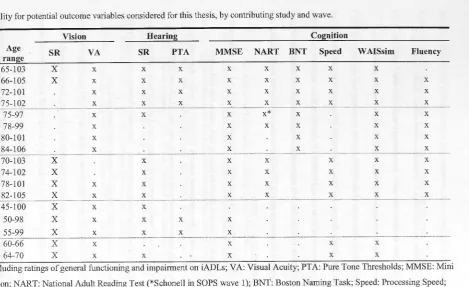
Table 3.1 Data availability for potential outcome variables considered for this thesis, by
contributing study and wave. 33
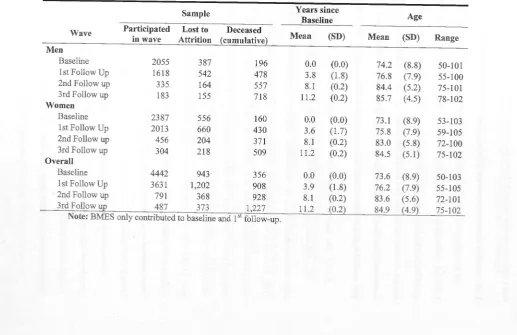
Table 3.2 Participation rates, time intervals and age range for each wave in the pooled ALSA and BMES sample.
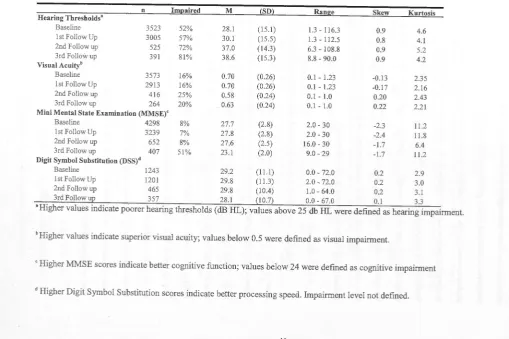
Table 3.3 Descriptive data for outcome sensory and cognitive measures by measurement occaswn.
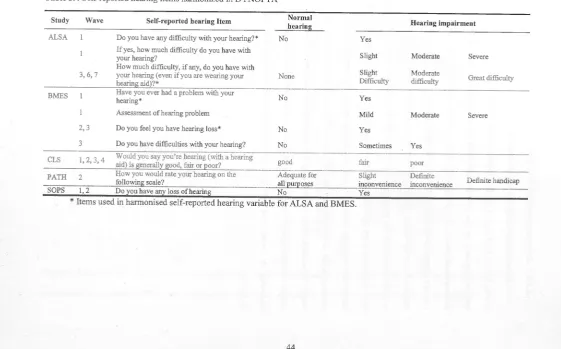
Table 3.4 Self-reported hearing items hannonized in DYNOPTA ... .44 Table 3.5 Descriptive statistics for monocular and binocular corrected visual acuity for
CLS wave 3.
Table 4.1 Time schedule for ALSA and BMES. 58
Table 4.2 Pooled sample prevalence of hearing loss by age and sex (n = 3,526) ... 61 Table 4.3 Prevalence and 95% confidence intervals of vision loss, hearing loss and
Dual Sensory Loss stratified by 5 year group and sex (n
=
3190) ... 62 Table 4.4 Prevalence and 95% confidence intervals of probable cognitive impairment(PC!), Hearing Loss (HL) and co-morbid hearing loss with cognitive impairment stratified by 5 year age group and sex (n = 3448).
Table 4.5 Incident rates for Hearing Loss (HL), Dual Sensory Loss (DSL) and co-occurring hearing and cognitive impairment per 1000 person-years for men .... 71 Table 4.6 Incident rates for Hearing Loss (HL), Dual Sensory Loss (DSL) and
co-occurring hearing and cognitive impairment per 1000 person-years for women. 72 Table 5.1 Sensory impaired life expectancies (years) for men and women aged 70, 75,
80, and 85 years old.
Table 6.1 Baseline characteristics of survivors and decedents (N = 3,505).
XVll
Table 6.2 Main effect Hazard Ratios for hearing thresholds, hearing loss and dual sensory loss for the whole sample with study effects accounted for by
meta-analysis, stratified analysis or adjusted analysis. 122
Table 6.3 Main effect Hazard Ratios for hearing thresholds, hearing loss and dual sensory loss for men with study effects accounted for by meta-analysis, stratified
analyses or adjusted
Table 6.4 Main effect Hazard Ratios for hearing thresholds, hearing loss and dual
sensory loss for women with study effects accounted for by meta-analysis,
stratified analyses or adjusted analysis.
Table 6.5 Results from the Cox proportional hazards model component of the joint
longitudinal-survival analysis (n = 2622), the sample was restricted to
participants who provided a minimum of2 waves of hearing data.
124
125
128 Table 7.1 Baseline sample profile, 3526 Australian adults aged 50 and older. ... 138
Table 7 .2 Fixed effects for predictors of baseline levels and longitudinal trajectories of
hearing thresholds (PTA) in the better ear, estimated from univariate and
multivariate linear mixed models.
Table 8.1 Sample characteristics for participants who completed both hearing and
cognitive assessment at baseline.
142
170
Table 8.2 Goodness of fit indices for unadjusted zero-order bivariate DCSMs (top) and adjusted bivariate DCSMs (bottom) of hearing thresholds and processing speed
over 11 years. 173
Table 8.3 Parameter estimates from adjusted bivariate Dual Change Score Model with
full dynamics between processing speed and pure tone average of hearing
thresholds in the better ear and (n = I 174
Table 9.1 Example of data format for modelling discontinuity in level and change .... 189
Table 9.2 Level 1 (individual level) and Level 2 (population average level) equations
tested for linear mixed models 190
Table 9.3 Goodness of fit statistics for eleven mixed models for change in MMSE errors
(n = 3,412). 192
Table 9.4 Estimates for trajectories ofMMSE errors with discontinuities in elevation and slope as a function of hearing aid use (n = 3412) ... 193 Table 9.5 Level 1 and Level 2 equations
Table 9.6 Frequency of hearing aid use at each wave of ALSA by sex and level of hearing loss, with mean age and DSS score ... 206 Table 9.7 Goodness of fit for four mixed models for change in DSS scores (n
=
1535).Table 9.8 Estimates from linear mixed models of 16 year trajectories ofDSS scores with discontinuities in elevation (n = I 535) ... 212
List
of
Figures
Figure 1.1 Disability Burden (Years Lived with Disability per 1000-person years) in
Australian adults aged 65 years and older (Australian Institute of Health and Welfare 2003, author's calculations). * Adult onset hearing loss is a subset of
sense organ disorders. 5
Figure 1.2 A cascade model depicting two bottom-up pathways between hearing loss
and cognitive decline, one via a social mechanism (sensory deprivation) and the other via a resource allocation mechanism (sensory degradation). 13
Figure 3 .1 Interview schedule for all contributing DYNOPTA studies. Studies included
in this thesis are ALSA, and BMES ... 32
Figure 3.2 Box plots of sensory and cognitive outcome variables by measurement
41
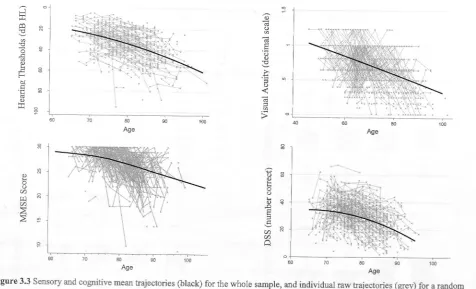
Figure 3.3 Sensory and cognitive mean trajectories (black) for the whole sample, and individual raw trajectories (grey) for a random selection of approximately 10%
of the pooled sample (Hearing Thresholds, Visual Acuity, MMSE) and for
ALSA (DSS). 42
Figure 3.4 Eight randomly selected audiograms and participant characteristics. The top
row shows audiograms that were identified to have noise notches by Coles et al. (2000) criteria. The bottom row shows audiograms that were not identified to
have noise notches. 45
Figure 3.5 The Digit Symbol Substitution (DSS) Test (Wechsler, 1981) was used as a
measure of processing speed in the ALSA. Participants are required to match as many symbols with their paired digit in 90 seconds. Similar processing speed
tasks were collected in the CLS and PATH but do not form part of this thesis. 52
Figure 4.1 Comparison of prevalence derived from either audiometric sensory loss or
self-reported hearing difficulty for men and women by 5 year age group. Error
bars show 95% confidence intervals.
Figure 4.2 Mean audiograms for men and women aged 65 and 85; mean thresholds were
estimated from baseline data as a function of age, sex and their interaction ... 67
Figure 4.3 Mean audiograms for adults aged 65 and 85 with and without probable
cognitive impairment (MMSE < 24), mean thresholds were estimated from
baseline data as a function of age, cognitive impairment and their interaction .. 68
Figure 4.4 Mean audiograms for adults aged 65 and 85 by self-reported hearing difficulty, mean thresholds were estimated from baseline data as a function of
age, self-reported hearing difficulty and their interaction ... 69
Figure 5.1 Three health states and four possible transitions between 2 non-absorbing
states (no sensory loss and sensory loss) and I absorbing state (death). igure
based on Lievre, Brouard, & Heathcote (2003) ... 82
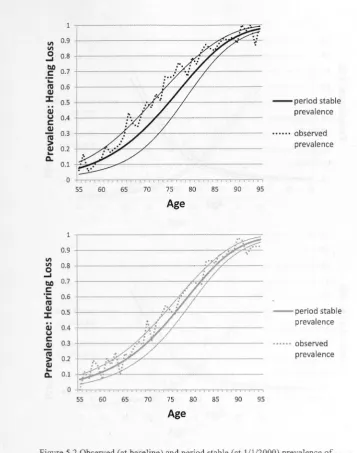
Figure 5.2 Observed (at baseline) and period stable (at 1/1/2000)-prevalence of Hearing
Loss (PTA> 25 dB) with 95% confidence intervals for men (black lines, top
panel) and women (grey lines, bottom, panel). 83
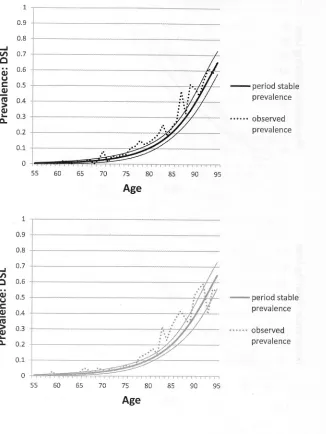
Figure 5.3 Observed (at baseline) and period stable (at 1/1/2000) prevalence of Dual
Sensory Loss with 95% confidence intervals for men (black lines, top panel) and
women (grey lines, bottom, panel) ... 84
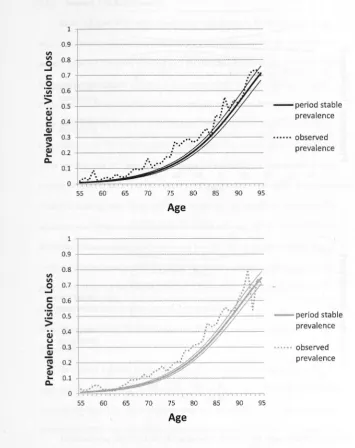
Figure 5.4 Observed (at baseline) and period stable (at 1/1/2000) prevalence of Vision
Loss (> 0.3 logMAR) with 95% confidence intervals for men (black lines, top
panel) and women (grey lines, bottom, panel) ... 85
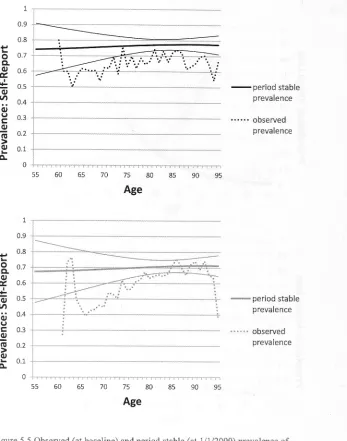
Figure 5.5 Observed (at baseline) and period stable (at 1/1/2000) prevalence of
Self-Reported Hearing Difficulty with 95% confidence intervals for men (black lines,
top panel) and women (grey lines, bottom, panel). 86
Figure 5.6 Expected years lived with sensory impairment for men and women at age 75
(top panel) and age 85 (bottom panel) with 95% confidence intervals ... 89 Figure 5.7: IMaCh estimates of average proportion oflife lived with sensory
impairment for men and women by age at the population level. Sensory
impairments are visual acuity> 0.3 logMAR, PT A > 25dB HL, and self-reported hearing difficulty. Black lines indicate proportion of life for men; grey lines
indicate proportion of life for women.
90
Figure 5.8 Annual transition probabilities as a function of age for conversion from 'No
Impairment' to either 'Hearing Loss' (HL), 'Vision Loss' (VL), 'Dual Sensory
Loss' (DSL), or 'Self-Reported Hearing Difficulty' (SR HD). Black lines indicate probability of transition for men; grey lines indicate probability of
transition for women. 93
Figure 5.9 Dual Sensory Loss (DSL) annual transition probabilities as a function of age, for men and women. Black lines indicate no sensory loss at the beginning of the
I-year period; grey lines indicate sensory loss at the beginning of the I-year
period. Solid lines show probability ofno transition, dashed lines show
probability of transition, dotted lines show probability of death.
94
Figure 5.10 Vision Loss (VL) annual transition probabilities as a function of age, for
men and women. Black lines indicate no sensory loss at the beginning of the
!-year period; grey lines indicate sensory loss at the beginning of the I-year period. Solid lines show probability of no transition, dashed lines show
probability of transition, and dotted lines show probability of death. 95 Figure 5.11 Hearing Loss (HL) annual transition probabilities as a function of age for
men and women. Black lines indicate no sensory loss at the beginning of the 1-year period; grey lines indicate sensory loss at the beginning of the I-year
period. Solid lines show probability of no transition, dashed lines show
probability of transition, and dotted lines show probability of death.
96
Figure 5.12 Self-Reported Hearing Difficulty (SRHL) annual transition probabilities as
a function of age for men and women. Black lines indicate no sensory loss at the beginning of the I-year period; grey lines indicate sensory loss at the beginning
of the I-year period. Solid lines show probability ofno transition, dashed lines show probability of transition, and dotted lines show probability of death ... 97 Figure 6.1 Schematic of joint parameter growth curve and survival model used to test
for associations between rates of change in hearing with all-cause mortality risk. The PTA slope factor is estimated by individually varying time points ... 108 Figure 6.2 Partial residual plot for hearing thresholds. A lowess smoothing line parallel
to the y-origin indicates that the proportional hazards assumption is satisfied. x.,2
= 3.21,p = .07. 113
Figure 6.3 Kaplan-Meier survivor function by study, unadjusted (left panel) and
adjusted for age and sex (right panel). 115
Figure 6.4 Kaplan-Meier survivor function for baseline Hearing Loss crude estimate (left panel) and adjusted for age, sex and study (right panel). 116 Figure 6.5 Kaplan-Meier survivor function for baseline Dual Sensory Loss crude
estimate (left panel) and adjusted for age, sex and study (right panel) ... 117
Figure 6.6 Forest plots from meta-analysis, study estimates and pooled estimate for hearing thresholds adjusted for age and sex (top panel) and adjusted for all
demographic and health covariates (bottom panel). Hearing thresholds have been
rescaled so a one unit increase in hearing thresholds is interpreted as a 10 dB increase in PTA.
Figure 6.7 Raw longitudinal data for hearing thresholds for decedents and survivors (random selection of 10% of sample).
xxiii
118
Figure 6.8 Predicted individual linear rates of change for hearing thresholds for
decedents and survivors (random selection of 10% of sample). 126
Figure 7.1 Unadjusted 11 year trajectories of pure-tone thresholds decibel hearing level
(dB HL) for frequencies ofO.5, I, 2, 3, 4, 6 and 8 kHz in the better ear, and PTA in the better ear, estimated for three cohorts of men (left panel) and women
(right panel) aged 60, 75 and 90 years at baseline. The y-axis has been reversed
so a negative gradient indicates a decline in hearing performance. Sample
excludes participants with high frequency noise notches. The better ear was
defined by PT A. 141
Figure 8.1 A bottom-up cascade model depicting two pathways between hearing loss
and cognitive decline, one via a social mechanism (sensory deprivation) and the
other via a resource allocation mechanism (sensory degradation). 157
Figure 8.2 Path diagram of an unadjusted Bivariate Dual Change Score Model used in
the current study. Residuals were constrained to be equal within domain over
time, but were not correlated across domains at each time point. The model can
be adjusted for by regressing the intercept (Xo, Yo) and slope (X,, Y,) factors on time invariant covariates, and residualising observed variables (xroJ, X[2J, X[sJ, X[I 11 and Y[0J, Y[2J, Y[SJ, Y(1 I]) for time varying covariates. 169 Figure 8.3 Model implied means trajectories for Digit Symbol Substitution (DSS)
scores (black lines upper panel) and Pure-Tone Average (PT A) of hearing
thresholds in the better ear (grey lines, lower panel) estimated by the unadjusted
Full Dynamics DCSM (n=lO72). Varying the initial level for processing speed has minimal effect on the estimated mean rate of change in hearing thresholds. In contrast, varying the initial level of hearing will noticeably alter the estimated
mean rate of change in processing speed. Higher levels of hearing were associated with more gradual rates of declines in processing speed (black line,
long dash) whereas lower levels of hearing were associated with faster rates of declines in processing speed (black line, short dash). All variables are transformed to at-score metric (M=50, SD=lO) using the baseline sample as
reference and y-axis scales were orientated so a negative gradient indicates a
decline in performance. 175
Figure 8.4 Model implied mean trajectories for participants with data at all waves and
MMSE > 23 (n=l 19), multivariate adjusted for sex, age, education, MMSE,
CES-D, smoking status, visual acuity, and medical conditions (stroke, diabetes,
hypertension, history of heart attack). x2 (72) = 105.1, CFI = 0.963, RMSEA = 176
Figure 9.1 Predicted mean MMSE trajectories (errors) from LMM 6 for three hypothetical cases, each a woman aged 75 years at baseline with secondary
schooling as their highest level of education, who across all waves reported no medical conditions (stroke, diabetes, heart attack, hypertension), had normal visual acuity, and a mild degree of hearing impairment at-baseline (PTA=30 dB
HL) with average rate of change in hearing (0.9dB per year). The only difference between the three hypothetical cases is their pattern of hearing aid use. Care should be taken when interpreting differences between slopes as these
were not significant in generalized latent mixed models
Figure 9.2 Histograms of the level-2 random effect variance components and level-I residual for Model 6 estimated by linear mixed model for MMSE change.
198
Distributions indicate some deviation from normality ... 199 Figure 9.3 Diagnostic checking for distribution ofLevel-1 residuals for MMSE data. All plots indicate positive right hand skew with some deviation from normality .. 200 Figure 9.4 Model 3 mean trajectories estimated from Model 4 for four hypothetical
represents women aged 75 years at baseline with average rates of decline in
hearing, who report no medical conditions and have 14 years of education. Frequent use of a hearing aid was associated with higher levels of processing
speed compared to non-aid users and irregular aid users. Although frequent aid use may appear to predict mildly slower rates of decline in processing speed,
this difference in slopes was not statistically significant. 211
CHAPTER 1:
Epidemiology of Age Related
Hearing Loss and its link with Cognitive Decline
Synopsis
This opening chapter lays the rational for the key research questions guiding this thesis, which aims to document the extent to which sensory and cognitive impairment affects the older population, and inform a better understanding of how these two
systems interact. The key motivation for this research is the recognition that hearing and
cognition are important for maintaining daily functioning in older adults and their
decline with age can have considerable impacts at an individual and societal level. The
chapter briefly reviews the literature from epidemiological and psychological perspectives. The epidemiological perspectives presented are chiefly concerned with
population burden and risk factors for hearing loss and its comorbidity with cognitive
impairment. While the psychological perspectives presented focuses on normal ranges
of functioning, and the attempt to identify mechanisms that explain hearing-related
1.1 Introduction
Global reductions in fertility and mortality rates have resulted in a historically unprecedented demographic transition towards an aged population (United Nations,
2010). Within Australia, increases in life expectancy have outstripped the OECD average, with current estimates placing Australian life expectancies at 79.5 years for
men and 84 years for women (Australian Bureau of Statistics, 2012b). In 2006, 13% of the Australian population were aged over 65; this is projected to almost double to
between 23% and 25% over the next 50 years. Furthennore, the proportion of adults
aged 85 years and older is expected to increase at an even faster rate, growing from 1.6% to between 4.9% and 7.3% by 2056 (Australian Bureau of Statistics, 2008). From an individual perspective, greater longevity means we are faced with new experiences
and hold expectations that were rarely encountered by previous generations. A top-heavy population age structure also presents a unique public health challenge to policy makers, as they endeavour to optimise health and well-being among older adults and promote successful ageing (Louria, 2005; Prime Minister's Science Engineering and Innovation Council, 2003)1.
Sensory and cognitive functions are important abilities that underpin ageing well as they enable older adults to remain engaged with the world around them.
Unfortunately, as a consequence of both nonnative morphological changes and disease processes, deterioration in sensory discrimination is near ubiquitous (Rybash , Roodin, & Santrock, 199 I) and many cognitive factors also decline with age (Salthouse, 2012).
1 Whil
e l recognise that there is some contention concerning the most appropriate way to conceptualise successful ageing, it is beyond the scope of this thesis to review this literature. Nevertheless, it is important to acknowledge that a definition of successful or optimal ageing should entail more than mere absence of disease and dysfunction, but also consider a person's opportunities for growth, capacities to adapt and maintain a sense of purpose in life.
(Rowe & Kahn, 1997) (Baltes & Baltes, 1990) (Baltes & Carstensen, 1996) (Bowling & Dieppe, 2005)
Aside from the obvious consequences this has for daily functioning and the limitations
placed on the capacity to adjust to late-life transitions (Heyl & Wahl, 2011; Wallhagen,
Strawbridge, Shema, Kurata, & Kaplan, 2001), there is also good evidence to suggest
that sensory and cognitive ageing occurs in unison. This latter observation has sparked
considerable discussion on how best to explain this association (Anstey, Hofer, &
Luszcz, 2003a; Baltes & Lindenberger, 1997; Birren, Botwinick, Weiss, & Morrison,
1963; Li & Lindenberger, 2002; Schneider & Pichora-Fuller, 2000). Accordingly,
research groups from across a number of disciplines have examined exactly how these
two broad functional domains are inter-related across the latter stages of the life-span. A
broad range of sensory domains have been incorporated into this research program,
though arguably an emphasis has been placed on visual functioning, and perhaps to a
slightly lesser extent on hearing.
The opening quotation on the inside cover of this thesis (Beethoven 1802, cited
in Comini, 2008) alludes to a central tenet of this thesis, that hearing is of vital
importance for social engagement, and its loss can have subtle yet serious impacts on a
person's ability and willingness to actively participate socially. Furthermore, there has
been little acknowledgment of the serious health issues that poor hearing presents to
older adults (Lin, 2012). Perhaps to in some way redress this, there has been a notable
resurgence of discussion on how to conceptualise the connection between age-related
hearing loss and cognitive functioning within medical, psychological and
epidemiological disciplines (Beck & Clark, 2009; Lin, 201 la). Some of this discussion
has fallen under the inter-disciplinary banner of Cognitive Hearing Science (Arlinger,
Lunner, Lyxell, & Kathleen Pichora-Fuller, 2009), which has recently begun a biennial
conference in Linkoping, Sweden (Linnaeus Centre HEAD, 2011).
For these reasons, it is with a focus on hearing abilities that this thesis seeks to
extend our understanding of age-related sensory decline, by investigating links between
peripheral hearing and cognition among older adults from both epidemiological and
psychological perspectives. The purpose of this opening review chapter is to provide a
rationale for the main research objectives of this thesis. I will take an inter-disciplinary
life course perspective that draws upon clinical, epidemiological, biological and
psychological literature to briefly describe the nature of age-related hearing loss at both
a societal and individual level. I will then discuss how sensory and cognitive systems
interact in old age and explain how these patterns of change fit within key theoretical
frameworks, before outlining the specific aims of my research.
1.1.1 Population Burden
Sensory and cognitive impairment disproportionately affect older adults and are
the leading contributors to the total global burden of chronic disease in people aged over
60. They are the two leading causes of Years Lived with Disability (YLD) in older
Australians (Figure 1.1; See also Begg et al., 2007), while hearing loss itself is widely
considered the most prevalent chronic condition among older adults (Kiely, Gopinath,
Mitchell, Browning, & Anstey, 20 I 2), occurring in at least 80% of American adults
aged over 80 (Cruickshanks et al., 2003; Lin, Thorpe, Gordon-Salant, & Ferrucci, 2011)
and estimated to affect 75% of Australians aged over 70 years (Access Economics,
2006). With an ageing population, the overall disability burden of these conditions is
expected to grow and there is already evidence of such a trend. The Australian Institute
of Health and Welfare (AIHW) (2012a) has reported that of all the major disease group
classifications, 'Nervous system and sense disorders' showed the biggest increase in
Disability Adjusted Life Years (DAL Ys) in Australia from 2003 to 2010.
Dementia
Sense organ disorders*
Cardiovascular disease Malignant neoplasms
Diabetes mellitus
Musculoskeletal diseases
Adult-onset hearing loss*
Chronic respiratory disease
Other nervous system disorders
Diseases of the digestive system
Genitourinary diseases
Injuries
Mental disorders
Endocrine and metabolic disorders
Skin diseases Oral conditions
Communicable diseases
Other neoplasms
Congenital anomalies 0
"
-t=II
:::
-:::
•
:::
■
:
■
ll
10 20 30 40
50
60-■Age group 65-74
■ Age group 75+
Figure 1.1 Disability Burden (Years Lived with Disability per 1000-person years) in Australian adults aged 65 years and older (Australian Institute
Despite being the predominate contributors to the non-fatal component of
DALY s, sensory and cognitive impairment comprise a meagre 1.1 % of the total Years
of Life Lost (YLL) (Alzheimer's Disease international, 2009). That these chronic
conditions can substantially impact quality of life but without greatly reducing length of
life, places them as ideal targets for efforts to compress morbidity (Fries, 1980). Despite
this, there has been a prioritisation in research and policy towards those chronic health
conditions that contribute more to mortality rather than disability. While increasing
survival and alleviating the burden of fatal disease are not unreasonable public health
goals, the value of gains in life expectancy are questionable if they are not accompanied
by parallel reductions in morbidity -or more importantly, the ability to manage
morbidity. Further, this apparent preference for quantity over quality of life does not
align.with economic outcomes, as dementia alone has a greater financial cost to society
than the combined costs of stroke, cardio-vascular disease and cancer (Alzheimer's
Disease international, 2009).
Such economic impacts should not be understated. In 2005, the financial cost and
burden of disease arising from hearing loss was estimated to be over AU$22 billion in
Australia (Access Economics, 2006), representing approximately 2.3% of Gross
Domestic Product for the 2005-06 financial year. Modelling of the economic impact of
hearing loss among adults aged 65 years and older in the US during the year 2002
estimated first year treatment to cost US$1292 per person or US$8.2 billion nationally,
and lost national productivity of US$1.4 billion. This was projected to increase to
US$9billion by the year 2030, with the increasing burden of hearing loss to
disproportionately affect older adults (Stucky, Wolf, & Kuo, 2010). As Australian
prevalence rates are projected to increase in line with population aging, so too will the
associated costs. Population estimates of sensory loss, cognitive impaim1ent, and their
co-morbidity should therefore be of interest to public health as they are important for informing and prioritising health policy planning decisions.
1.1.2 Individual Impacts of Hearing Loss
The gradual decline of hearing with age, often referred to as presbycusis, begins during early adulthood and progresses from high to low frequencies. This decline is attributed to deterioration of the inner-ear and cochlear (Liu & Yan, 2007; Weinstein, 2000). There is wide variation in rates of decline and in the nature of hearing loss, and a number of distinct types of presbycusis have been recognised. Risk factors for hearing loss are broad, and include age, sex, family history, environmental exposures, medications, vascular disease, diabetes (Mitchell et al., 2009), and smoking (Gopinath et al., 2010). It is notable that hearing loss shares common risk factors with other chronic diseases, including dementia.
The impacts of hearing loss are wide ranging and potentially devastating (Lin, 2012). Age-related hearing loss has been linked with reduced quality of life (Chia et al., 2007; Hogan, O'Loughlin, Miller, & Kendig, 2009), poor mental health (Gopinath, Wang, et al., 2009; Kramer, Kapteyn, Kuik, & Deeg, 2002), cognitive impairment (Lin, 2011 b; Maggi et al., 1998; Tay et al., 2006), reduced social participation, increased use of community support services (Schneider et al., 2010), and indirectly associated with increased risk of mortality (Karpa et al., 2010).
Given their high prevalence, the co-occurrence of sensory loss and cognitive impairment are of real concern. Dementia co-morbidities can complicate and compromise the treatment, management and care of dementia patients, thus affecting their quality of life (Allen et al., 2003). In particular, deafness is estimated to be the third most common co-existing condition for people with dementia, affecting 36.8% of all dementia cases in Australia. Within residential care settings, deafness and hearing loss are actually the most common co-existing conditions with dementia (Australian
Institute of Health and Welfare, 2012b). It appears that hearing loss may even be a
pre-curser of dementia (Gates, Anderson, McCurry, Feeney, & Larson, 2011; Lin, Metter, et
al., 2011 ), so their co-occurrence should not simply be considered a coincidence of
ageing. The findings of Lin and colleagues (2011 b) are particularly startling as they
demonstrate that peripheral hearing abilities are independent predictors of dementia
incidence. Whether this association can be attributed to a biological or a social
mechanism is unclear, though APOE e4/e4 has recently been linked with higher
audiometric hearing thresholds (Kurniawan et al., 2012). Of course this same genotype
is one of the strongest single genetic risk factors for Alzheimer's Disease (Corder et al.,
1993).
Unfortunately the gradual and progressive nature of hearing loss means it is often
unnoticed. Despite its strong impact on health and wellbeing, age-related hearing loss is
believed to be both under-recognized and under-treated (Reuben, Walsh, Moore,
Damesyn, & Greendale, 1998). It is possible that this is partly due to the misperception
that hearing loss is a normal part of the ageing process (Lin, 2012), a view that is reinforced by the near universal experience of hearing difficulties among the oldest old.
One way to gain a better appreciation of the extent to which hearing loss can affect
individuals, is to compare its impacts to other chronic conditions commonly found
among older adults. For example, in the algorithm used to calculate DALYs, moderate
hearing loss is considered to have a disability weight comparable to chronic pain
(Davis, Smith, Ferguson, Stephens, & Gianopoulos, 2007), while the disability weight
for severe hearing loss is comparable to major depressive disorder or pneumonia
(Access Economics, 2006). The poor acknowledgment of the real problems hearing loss
can cause is reflected in the research literature. Although there are a number of large
epidemiological surveys that include gold-standard measures of sensory function
(Cruickshanks et al., 2003; Lin, Thorpe, et al., 2011; Luszcz et al., 2007; Mitchell et al.,
2009), recent reviews have found that globally only a small number of surveys were suitable for estimating hearing impairment in the general population (Pascolini &
Smith, 2009). There are currently sparse national data on hearing impairment in older people, in Australia or elsewhere, with recent investigations of risk factors for incidence of age-related hearing loss being underpowered (Gopinath et al., 201 0; Gopinath,
Schneider, Rochtchina, Leeder, & Mitchell, 2009; Mitchell et al., 2009). Existing
Australian prevalence of sensory loss has been estimated for broad age cohorts (Access Economics, 2006). In this is the implicit assumption that an adult in their early 70s share comparable needs, expectations and experiences to adults aged in their 90s - an
assumption that is unlikely to bear up against scrutiny. It is clear that more precise age-prevalence estimates of hearing loss and its comorbidities are needed.
The practicalities of data collection could be one reason why reliable estimates of age-related hearing loss have been difficult to obtain. Costs and logistics involved in
conducting audiometric assessment make clinical measures prohibitive for many
epidemiological surveys, so self-report measures or interviewer judgements are often
used instead. These self-reported measures of hearing loss have previously been thought to be reliable and predictive of audiometric hearing loss whilst also providing an ecologically valid measure of perceived hearing difficulties (Caban, Lee, Gomez-Marin,
Lam, & Zheng, 2005; Nondahl et al., 1998; Sindhusake et al., 2001). Yet there is good evidence to suggest that this is not the case (Hong, Ron is, & Antonakos, 2011 ). ln particular, dual sensory loss estimates are commonly reliant on self-report data, or a
combination of visual acuity and a measure of subjective hearing (Smith, Bennett, &
Wilson, 2008). This is problematic as self-report data can be biased by individual differences. A recent review on dual sensory loss identified 37 research articles on the prevalence or impacts of dual sensory loss (Schneider et al., 2011). Unfortunately, Schneider and colleagues reported that a lack of consistent standardized definitions and
differences in study age and sex distributions resulted in large discrepancies in reported
estimates. They called for more studies on dual sensory loss that use objective clinical
measures and longitudinal data. The present thesis seeks to address this shortcoming in
the literature.
1.1.3 Psychological Perspectives
By emphasising dementia, pathology, impairment and loss, most of the
epidemiological and clinical literature focuses on secondary ageing processes (Anstey,
Stankov, & Lord, 1993). But it is also important to understand the inter-relations
between hearing and cognition as primary ageing processes. Following these lines, there
has been a long tradition within psychology that has investigated links between hearing
and cognition along the spectrum of normal functioning. Early researchers attempted to
elucidate the extent to which auditory discrimination could be identified with mental
abilities (Deary, 1994; Galton, 1883; Raz, Willerman, & Yama, 1987). More recently
the focus has shifted to identifying explanatory mechanisms that underlie the
age-related interconnection between auditory acuity and cognitive function. This has been
driven by a long line of studies demonstrating a strong connection between hearing and
cognition among older adults (Anstey, Luszcz, & Sanchez, 2001a; Birren et al., 1963;
Lin, 201 la; Lindenberger & Baltes, 1994; Schaie, Baltes, & Strother, 1964). Though
not all studies have supported this finding (Colsher & Wallace, 1990), and it is further
argued that the unique association may not hold longitudinally (Anstey et al., 2003a;
Lindenberger & Ghisletta, 2009).
Explanations of hearing-cognition associations can be distinguished by the
direction of the proposed causal relation (Baltes & Lindenberger, 1997; Gallacher,
2004; Schneider & Pichora-Fuller, 2000). Common cause theories attribute the
association to a third variable, generally purported to be an unidentified biological
mechanism. Though common cause accounts attracted considerable debate during the
late 1990s and early 2000s, more recently such explanations have fallen from favour. Cascade models place sensory loss as the driver of subsequent cognitive decline via a
number of pathways (Figure 1.2), including social isolation and increased cognitive load. Social withdrawal due to hearing loss could result in lower participation in
stimulating activities purported to help maintain cognitive reserve (sensory deprivation). Similarly, effortful listening may require more cognitive resources to be allocated to lower level sensory processes in order to attend to degraded speech sounds, thus
diverting cognitive resources away from higher order processes and compromising cognitive function (sensory degradation). On the other hand, an alternative argument might construe effortful listening as cognitively stimulating for some people, in which case poor hearing may actually predict better cognitive function. Individuals with the capacity to maintain both their hearing and cognitive abilities despite degraded sensory
inputs may benefit from the extra effort. Cognitive underload hypotheses make the opposite prediction to cascade models, and suggest that low cognitive function
influences sensitivity to sensory information. These hypotheses specify modular models that treat sensation and cognition as distinct constructs that can be distinguished by their contrasting predictions. However, these explanations can be assimilated by a single model that views hearing and cognition as components of a single integrated system (Schneider et al, 2000). Another theoretical framework that can be used to inform our understanding of hearing-related cognitive decline maintains that a more elucidating index of old age is provided by functional ability rather than chronological age. Such biomarker accounts place hearing as a functional biomarker of cognitive function and make similar predictions to cascade models (Anstey, 2008b). Proponents ofbiomarker theories argue that age is in essence an empty variable (Bytheway, 2005) that serves as a proxy for developmental processes and senescence. This view sits comfortably within a broad research program that has sought to describe late-life developmental phenomena
in tem1s of processes other than ageing, such as mortality (Gerstorf, Ram, Hoppmann,
Willis, & Schaie, 2011 ), disability, and functional decline (Sliwinski & Mogle, 2008).
These theories and their supporting evidence are reviewed in more detail in Chapters 8
and 9, which report on the testing of dynamic longitudinal interrelations between
hearing and cognition.
Hearing assistive technologies, including aids and hearing loop induction systems,
have improved considerably over the past decade and show great efficacy in
counteracting the adverse impacts of hearing loss, especially when incorporated into a
holistic rehabilitation program (Lin, 2012). Despite their many benefits, levels of
hearing aid use have remained surprisingly low (Gopinath et al., 2011; Sanchez, Scott,
Esterman, & Luszcz, 2011). This reluctance to use hearing aids could be due to
personality characteristics, costs, awareness of hearing problems, and difficulties in
hearing aid acclimatization. Aside from the more obvious benefit of improving
communication and quality of life, an intriguing hypothesis germane to this thesis, is
that hearing aid use may actually be protective against hearing-related cognitive decline
(Lin, 2012). The rationale for this theory is that by facilitating easier communication
and removing barriers to social engagement, hearing aids may interrupt the upward
cascade of hearing loss to poor cognition (Figure 1.2). An additional novel view could
be that the process of becoming accustomed to using a hearing aid could even constitute
a type of cognitive training in and of itself. 1n light of this, one of the final aims of this
thesis will be to examine this notion that hearing aids may break the nexus between
poor hearing and cognitive decline.
Hearing Loss
(S
Embarrassment
Frustration
Communication
Difficulty
Sensory Higher
l
processing proces_sing
locceased demaods placed oo cogmt,ve
~
.resources-. Greater cognitive load
~
SocialWithdraw
I
U
Low participation incognitive reserve building activ1t1es Reduced Qol
(b
~
~
-
~JJ
e cesslooMsk
--:::-7
~
'
Increased d P ---;;;;_ _ Cognition
<
[image:39.594.10.570.35.364.2]cognitive resources
Figure 1.2 A cascade model depicting two bottom-up pathways between hearing loss and cognitive decline, one via a social mechanism (sensory deprivation) and the other via a resource allocation mechanism (sensory degradation).
1.1.4 Primary Objectives and Research Questions
It is important to understand how age-related decline in cognition and sensory
function interact as part of the ageing process in late life at both the individual and
population level. This thesis broadly investigates the level of hearing loss in older
Australians, and in particular focuses on links with cognition. The specific research
aims follow two themes, as follows:
1.1. 4.1 Population level
• To estimate the prevalence and incidence of hearing loss and its
comorbidity with vision loss and cognitive impairment (Chapter 4).
• To calculate sensory life expectancies and estimate the number of years
older Australians can be expected to live with hearing loss, vision loss and
dual sensory loss (Chapter 5).
• To compare measures of self-reported hearing loss with measures based on
pure-tone audiometry in epidemiological research (Chapter 4, 5).
• To investigate sex differences in the association between hearing and
mortality risk (Chapter 6).
1.1.4.2 Individual level
• To identify predictors of change in hearing thresholds (Chapter 7).
• To explore time-ordered lead-lag inter-associations between hearing
thresholds and processing speed (Chapter 8).
• To test if hearing aid use is protective against decline in processing speed
(Chapter 9).
CHAPTER 2:
Combining Data from
Independently Designed Longitudinal Studies of
Ageing
Synopsis
The purpose of this chapter is to provide a brief review of the rationale and
methods of data pooling and harmonization. Generalising findings from single studies
can be limited by sample coverage, statistical power and a need for replication.
Further, attempts to systematically review, collate and integrate research findings can be
hampered by variation in sample heterogeneity, study characteristics and measures,
research objectives, and analytic techniques. Pooling ofharmoniz~d data has been
touted as one strategy to address these shortcomings. Harmonisation is the rescaling of
functional equivalent measurement instruments onto a common metric, which provides
a framework for the integration and direct comparison of data obtained from
independently sampled populations. It has the advantages of increasing population
coverage (reducing coverage error), increasing sample size, facilitating instantaneous
replication across studies, and investigating the impact of study idiosyncrasies. However, data pooling can present a unique set of analytic challenges. These include the introduction of study design effects, study censoring, information loss, and dataset
complexity.
2.1 lntroduction
An initial key focus of this thesis was to examine the utility of harmonised and
pooled data for testing theories of cognitive ageing. However, as my research evolved
the aims shifted to a more substantive focus with less emphasis on the methodological
issues that may arise when establishing a common ground for combining population
based longitudinal studies of ageing. Nevertheless, this thesis does draw upon pooled
data from two studies to inform some of the research questions posed in the opening
chapter. It is therefore important that such methodological issues are acknowledged and
addressed. The purpose of this chapter is to make the case for data pooling, outlining the
benefits and different approaches to combining studies. It will also highlight some of
the challenges of analysing pooled data and describe potential solutions to address these
issues.
2.1.1 The Case for Pooling Data
2.1.1.1 Enablingsynthesis
Research synthesis is fundamental for accumulating evidence based knowledge,
and key to the formation and progression of scientific consensus (Curran, 2009; Light &
Smith, 1971). This is typically reached firstly via replication, and then by conducting
systematic reviews and meta-analyses of published (and if available, unpublished)
estimates. However, there is a view that opportunities for assimilating psychological
and gerontological research have been limited because of disparate research agendas
and incompatible study characteristics (Piccinin & Hofer, 2008). To support their claim,
Piccinin and Hofer cite a review of the literature on age-related cognitive decline that
was restricted to a qualitative narrative (Park, O'Connell, & Thomson, 2003). Park's
intended meta-analysis could not be conducted because of heterogeneous samples,
variability in assessment procedures and differences in time intervals between data
collection periods across the selected studies. Comparability problems can also arise
due to a lack of commonly applied standards or definitions. The lack of a uniform
definition for functional decline prevented a more precise integration of study findings
that would otherwise have facilitated a closer inspection of causal pathways leading to
frailty and disability in late life (Stuck et al., 1999). Similar issues concerning
non-standardised definitions have arisen when reviewing prevalence estimates of dual
sensory loss (Smith et al., 2008).
2.1.1.2 Limits of single sample designs
An undue emphasis on significance testing, over reliance on single-sample studies and small sample sizes (Dyer, 1986; Schmidt, 1996) can constrain generalizability of research findings and slow the accumulation of scientific evidence (Curran, 2008).
Within psychology in particular, there is currently considerable debate concerning replication, with a special issue devoted to the topic in a recent edition of Perspectives on Psychological Science (Pashler & Harris, 2012; Pashler & Wagenmakers, 2012) and articles in both Science (Carpinter, 2012) and Nature (Yong, 2012). These authors have
expressed a belief that some sectors of the discipline have stagnated and face credibility
issues due to a failure to reproduce, or even attempt to reproduce, a large number of
published findings. This has called into question the veracity ofun-replicated research
and its theoretical underpinnings (Ferguson & Heene, 2012). Such reflection has
underscored a strong push to recognise the importance and afford greater credence to
research replication (Frank & Saxe, 2012). Normative data are often derived from small samples that have been recruited via non-random methods, which have the potential to bias estimates. Even in cases where normative data has been drawn from random
sample designs, the sample frame may be limited in its population coverage (Kiely et al., 2011). Cross population comparisons are important for investigating universal