Beyond Picturing
Peter Adsett
October 2012
A thesis submitted for the degree of Doctor of Philosophy (in Visual Arts) of the Australian National University
Beyond Picturing
Abstract
Declaration of Originality
I, . ..
fe,
J~
-
/
... .
t?.-d.f.!:-.
f."t. ...
(date:1
//o I I~, hereby declare that the thesis here presented is the outcome of the research project undertaken during my candidacy, that I am the sole author unless otherwise indicated, and that I have fully documented the source ideas, references, quotations and paraphrases attributable toAcknowledgements
In memory of Pitjantjatjara elder, Nganyinytja.
Thank you to my supervisors, Gordon Bull and Ruth Waller, for their continuous support and encouragement in the development of the ideas explored in this thesis. Thank you also to the graduate convenors of the postgraduate programme, Nigel Lendon, Patsy Healy and Helen Ennis.
Thank you to Jonathan Milne and Alice Wilson Milne of The Learning Connexion for supporting the implementation of a programme where the practice is theoretical. A particular mention to all my Stage Three students who provided a forum to test these ideas.
Thank you to the Australian and New Zealand galleries who have supported my practice and research: Stephen Grant and Bridget Pirrie of Grantpirrie, Sydney; Dallas Gold of Raft Artspace, Alice Springs; Matt Nache of Paulnache Gallery, Gisborne; Peter McLeavey Gallery, Wellington; and David Trerise of City Gallery, Christchurch. To always have access to a space to test ideas is critical to my practice. Thank you.
Thank you, friends and colleagues, for the discussions that have helped and supported my practice over the years: Richard Abbott, Sally Blundell, Gillian and Alan Cameron, John Cornish, Horiwia, Jan Hogan, Heng The, Patrick Hutchings, Diana James, Sam Kebbell, Clare Lewis, Gill Newland, Linda Norden, Peggy Patrick and Rusty Peters.
A special mention to Mary Alice Lee-a friend and colleague to whom I am indebted. For over 20 years, we have shared a rigorous intellectual discussion on painting.
Thank you to the Holmes
a
Court Collection for the kind permission to reproduce the images of Paddy Jaminji' s paintings, and to the Museum of Contemporary Art, Sydney, to reproduce the images of Paddy Bedford's paintings.Contents
Abstract. ... i
Declaration of Originality ... ii
Acknowledgements ... iii
Contents ... iv
List of Figures ... v
Introduction ...... 1
Chapter 1: Horizontality ... 6
Chapter 2: Kngwarreye's Lesson in Horizontality ...•...••... 27
Chapter 3: Reading Bedford's Track/Tract ... 44
Conclusion ...•...•... 65
Bibliography ... 70
Appendix 1: Approved Study Program for Thesis ... 73
List of Figures
Fig.1. Michelangelo Merisi da Caravaggio, Narcissus, 1596-1597, oil on canvas, 44 x 361/4 inches, Palazzo Barbarini, Rome.
Fig. 2. Michelangelo Merisi da Caravaggio, Madonna of Loreto, 1604-1605, oil on canvas, 260 x 150 cm, Church of Sant' Agostino, Rome.
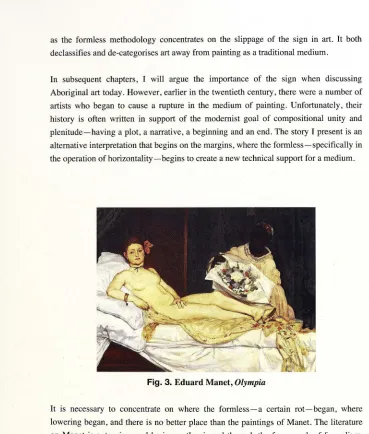
Fig. 3. Eduard Manet, Olympia, 1863, oil on canvas, 51 x 74u4 inches, Musee d'Orsay, Paris.
Fig. 4. Paul Cezanne, Kitchen Table (still life with basket), 1888-1890, oil on canvas, 64 x 80 cm, Musee d'Orsay, Paris.
Fig. 5. Pablo Picasso, Guitar, Sheet Music and Glass, Fall 1912, pasted papers, gouache and charcoal on paper, 24518 x 181/2 inches, The Marion Koogler McNay Art Museum, San Antonio, Texas.
Fig. 6. Jackson Pollock, Full Fathom Five, 1947, oil on canvas with nails, buttons, key, coins, cigarettes, matches, etc., 50718 x 30718 inches, The Museum of Modem Art, New York.
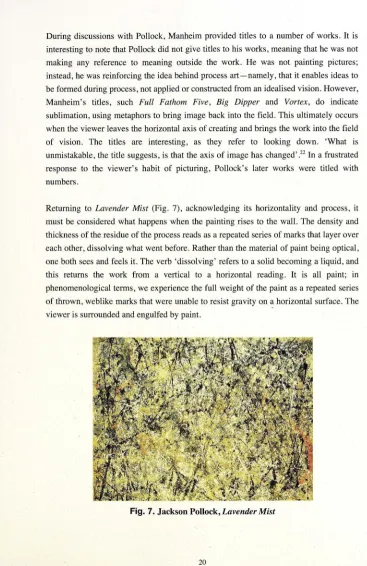
Fig. 7. Jackson Pollock, Lavender Mist, 1950, oil, enamel, and aluminium on canvas, 87 x 118 inches, National Gallery of Art, Washington, DC.
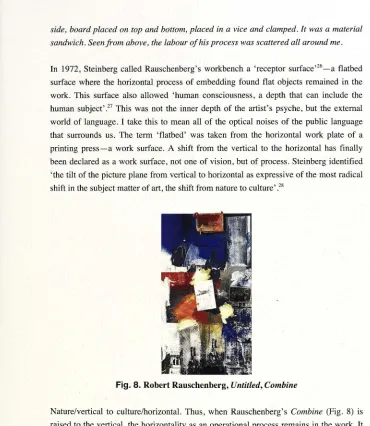
Fig. 8. Robert Rauschenberg, Untitled, Combines, 1963, oil, silkscreen ink, metal, and plastic on canvas, 82 x 48 inches, Solomon R Guggenheim Museum, New York.
Fig. 9. Richard Serra, Tearing Lead from 1:00 to 1:47, 1968, Tom sheet of lead, measuring 118 x 106 inches, Musee National d' Art Modeme-CC, Centre Georges Pompidou, Paris.
Fig. 10. Alberto Giacometti, Project for a Passageway, 1930-1931, plaster, 6 x 50 x 17 inches, Kunsthaus, Ziirich.
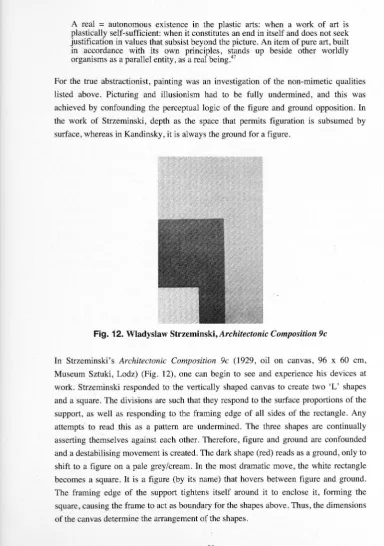
Fig. 12. Wladyslaw Strzeminski, Architectonic Composition 9c, 1929, oil on canvas, 96 x 60 cm, Museum Sztuki, Lodz.
Fig. 13. Paddy Jaminji, Djuwarlin- the other side of Mount House Gap, 1985, earth pigments on plywood, 90 cm x 61 cm, 1985, Holmes
a
Court Collection, Western Australia.Fig. 14. Paddy Jaminji, Djuwarlin-small rocks on the hills between Wyndahm & Mt House Station make the hills difficult to climb, 1985, 90 cm x 61 cm, earth pigments on plywood, Holmes a Court Collection, Western Australia.
Fig.15. Paddy Jaminji, Djuwarlin-Mount House Station Gap and aerodrome, undated, 90 cm x 61 cm, earth pigments on plywood, Holmes
a Court Collection, Western
Australia.Fig. 16. Rover Thomas, Lulumalulu at Mount House, 1983, natural pigments on hardboard, 46 cm x 64 cm, Australian National Gallery, Canberra.
Fig. 17. Rusty Peters, Place I was born, 2000, ochres on linen, 120 cm x 120 cm, Peter Adsett, Number 2, acrylic paint on linen, 120 cm x 120 cm, Grantpirrie Collection, Sydney.
Fig. 18. Paddy Bedford, Red Pocket, 1998, ochres and pigment with acrylic binder on Belgian linen, 122 cm x 135 cm, Paddy Bedford Trust.
Fig. 19. Paddy Bedford, Red Pocket, 1999, ochres and pigment with acrylic binder on Belgian linen, 122 cm x 135 cm, Paddy Bedford Trust.
Fig. 20. Paddy Bedford, Red Pocket, 2000, ochres and pigment with acrylic binder on Belgian linen, 122 cm x 135 cm, Paddy Bedford Trust.
Fig. 21. Paddy Bedford, Red Pocket, 2001, ochres and pigment with acrylic binder on Belgian linen, 122 cm x 135 cm, Paddy Bedford Trust.
Fig. 23. Paddy Bedford, Red Pocket, 2005, ochres and pigment with acrylic binder on Belgian linen, 122 cm x 135 cm, Paddy Bedford Trust.
Fig. 24. Paddy Bedford, Untitled ( sequence 195-201 ). Index of works-gouaches, Paddy Bedford catalogue, 2004, 195-201).
[image:8.397.7.368.33.579.2]Introduction
A recent major exhibition at the Art Gallery of South Australia, entitled Desert Country, included a move by the curator, Nici Cumpston, of which few people understood the significance-either then or now. She placed a central desert acrylic painting on the floor, stating that because this was the original site of production, it should be displayed this way. While her statement regarding production is undeniably true, the move was nai:ve and fails to recognise the deep meaning embodied in a vertical, as opposed to horizontal, axis.
The first point to make about work made on a horizontal surface (a floor or table) is that the painter looks down, with their whole body connecting with the work. The distance that separates a painter from the easel or wall is removed. With no horizon, no trajectory for the eye to seek perspective, the surface of the painting becomes lowered, reduced to a work surface, a repository for materials that read only as materials. The horizontal process is one of making and responding to the supine position of the body, and the artwork produced becomes a residue of this process or action. The eye is no longer dominant as it was when the body was upright. In the latter position, the viewer cannot avoid sublimation-constructing an image. Work that is created horizontally operates differently on a viewer, so that even if hung vertically, its horizontal matrix is clearly recognisable. It has an internal logic that is not that of representation. What I have described can be called the 'conventions' of horizontality.
Everything we take for granted in a vertical work-that is to say, a perspective-based work-has been eliminated. In order to read the image, one must discern a figure against a ground. However, in Aboriginal paintings, those spatial distinctions are collapsed through horizontality. We might refer to this space as 'ground on ground'. All Aboriginal art contains symbols; however, in being read as figures, they are compromised by a ground that is equally activated. This is diametrically opposed to Western figurative art where the ground is neutral.
Tuckson (or Jackson Pollock or Piet Mondrian), would regard the border as an integral element which helps determine the structure of the painting.
However, there is a body of knowledge that allows us to develop a language for this horizontal matrix: the 'formless'. This was first theorised by Georges Bataille in the 1920s, and analysed in the catalogue of an exhibition entitled L'Informe at the Pompidou Centre in 1996 by Yves-Alain Bois and Rosalind Krauss. Their discussion of horizontality, a category of the formless, provides an alternative reading of crucial works of the last hundred years-works by Richard Serra, Robert Ryman, Jackson Pollock, Marcel Duchamp, Robert Morris, Jean Dubuffet, Pablo Picasso and Alberto Giacometti, among them. This new reading places the emphasis on the operational aspect of the work-that is to say, how it affects the viewer (or, as Maurice Merleau-Ponty would say, its phenomenological address).
My focus on this alternative history of 20'h Century and contemporary art means that this thesis ignores a comprehensive survey which would include all recent figurative art (whether or not painted on a horizontal matrix), and all so-called recent abstract painting like that of Brent Harris, John Nixon, Aida Tomescu (to name a sample from Australia). Their work, when not merely decorative, (that is having no underlying principle stemming from the conventions of Abstraction established by Piet Mondrian, Kazimir Malevich et al) has no interest in the internal meaning of horizontality.
The reason that most contemporary abstract art is reduced to being merely decorative or in fact outright figurative is that artists have adopted the teleological view which holds that the underlying principles of abstraction have no longer relevance. Clearly a significant number of artists today, notably (Cy Twombly, Richard Serra and Robert Ryman) think differently.
When I first encountered the writings of Krauss and Bois, they articulated what I had been doing in my practice since the 1990s. At that time, in a series of works entitled Snakes and Ladders, I applied thin layers of paint on the ground. I have done so ever
since-on the ground. Working horizontally, I know the field that inhabits the body.
My body knows irresolvability.
be used herein to substitute the terms 'abstraction' and 'representation' when discussing the art of Kngwarreye and Bedford.
In the first chapter, I discuss the evolution of horizontality as a medium, indicating that
artists have been aware of it and the axial shift it produces, since Michelangelo Merisi da Caravaggio at least. In many works by Caravaggio, the religious narrative is overlaid with deliberate implied movement of bodies between the upright and supine position. Furthermore, Caravaggio's works incorporate the space of the chapel and thus the worshipping viewer, whose posture is represented as if in a mirror by kneeling figures (Madonna of Loreto) or supplicant figures ( Conversion of St. Paul).
In the case of Paul Cezanne in the modem era, the painting is constructed in a series of marks (touches) in such a way that the viewer is aware of a vertical slippage downwards to the floor-a space shared by the body of the viewer (Merleau-Ponty calls this the phenomenological vector)-through which we construct meaning. What Cezanne dropped on the floor was not picked up and used until the advent of Pollock, as I will demonstrate in depth through the study of Full Fathom Five.
Meanwhile, Cezanne's great student, Picasso, reinterpreted Cezanne's vertical drop in a series of townscapes done at Horta de Ebro in 1909. These combine a bird's eye perspective with that of an Albertian view. However, it is in the papier colle still lifes of 1912-such as Still Life with a Bottle of Suze-that the game is fully declared and he limits himself to the sign of horizontal flatness. The elements of collage are deliberately chosen as signs of horizontality: wallpaper, newspaper and labels. In general, things that are cut out are always horizontal. Moreover, the site of production for all these works was a table top, not an easel.
In the 1970s, when Leo Steinberg was writing on Picasso's cubist works, he referred to this horizontal surface in relation to Robert Rauschenberg's Combines, as having a 'receptor surface'. The term 'flatbed' (the bed of a printing press) was used as a synonym. Rauschenberg expanded Picasso's vocabulary by using photographic material, postcards and other printed things, including fabric. Ultimately, he would dump anything onto the receptor surface that appeared on the workbench. Steinberg realised that the categories of abstraction and representation were of little use here: 'leaving the old stand-by criteria to rule an eroding plane' .1 In other words, horizontality as a process had declassified the terms of abstraction and representation.
both to the horizontal field and the manual process. At the heart of this first chapter is a study of two key paintings of Pollock's drip period, inasmuch as his method of working came to epitomise the idea of horizontality as the internal logic of the work for artists such as Serra and Morris.
The second chapter focuses on the art of Kngwarreye, examining the issue of comparing her art to modernism. If one fails to discriminate between different forms of abstraction in twentieth century art, one might lump together such disparate figures as Kandinsky and Pollock, seeing in both a hidden image. More surprisingly, both have been compared to Kngwarreye. However, Kandinsky simplified nature into organic or geometric form, while Pollock never abstracted from nature, as he himself vehemently declared.
Kngwarreye's art is not representational in any Western sense of the term. She is, in fact, concerned with neither the non-mimetic aspects of Western abstraction nor the resemblance of form through perspectival representation. It is crucial with Kngwarreye to understand that the marks she made horizontally are a residue of a process and not ghost images of nature. In my study of Kngwarreye's painting, Big Yam Dreaming, I develop the argument that the horizontal support for practice generates its own set of conventions. That is to say, her art is a lesson to us to rethink abstraction-to see her painting as a theoretical object.
In the third chapter, I expand my discussion of the concept of horizontality, examining the paintings of Bedford, with an initial digression to the works of Paddy Jaminji and Rusty Peters. The Bedford painting Red Pocket, 2005 introduced tone and the illusion of depth. It is one of a group that unfortunately reintroduced image and verticality. For several years, Bedford lost sight of the medium of horizontality that had always supported his practice. Only in gouaches on paper and crescent board, which use deep blacks and reds, did the paint return to its materiality and become a residue of an event.
Chapter 1: Horizontality
This chapter will discuss the concept of horizontality as a medium and argue that it was a break from traditional painting-one that went beyond picturing. Pollock was not, as Clement Greenberg indicated, in a continual progression in painting from the Old Masters to Eduard Manet. Manet's break liberated the boundaries of representation so
that the subject matter became painting, itself. That is, the material surface-that which
I call the signifier (since painting is a language)-is not a transparent gateway to meaning behind it, but signifies in its own right. The function of modernist composition was to unify the surface, and Greenberg understood this as a progression towards the inherent flatness of the painting support. However, as Steinberg wrote in Other Criteria,
a break occurred in the 1960s from 'nature to culture'. Steinberg used the term 'flatbed' to describe the horizontal work plate of a printing press. A shift from the vertical to the horizontal had been declared as a work surface-not one of vision (nature), but of
process (culture).
How does lowering the canvas to the floor create a new medium and a new set of conventions to analyse and interpret art? How does horizontality, an operation in the 'formless' ,2 become a foundation for a possible cross-cultural dialogue? I will argue and give examples to show that horizontality as a technical support for the medium strikes against the figure of painting, and that, as process, it repositions the viewer from the beholder of focused vision to one in which they can construct meaning through a
phenomenological vector.
PA: I remember looking back over my shoulder at Piltarti, Nganyinytja's waterhole,
thinking 'this is not the site of a reflected surface, a mirror of our upright surrounds',
when suddenly a serpent pierced the surface to reveal not the depths below but black as
Fig. 1. Michelangelo Merisi da Caravaggio, Narcissus
In Caravaggio's Narcissus (1596--97, oil on canvas, 44 x 36114 inches, Palazzo Barbarini, Rome) (Fig. 1) the boy is bending over to see his reflected self in the water. It soon becomes clear that the mirror image of the boy-bounded in an oval shape rotating around a central point-is upright. We read this as such because the image also reflects the way we look. It is fixed and central and therefore reinforces the Gestalt experience of being an upright image, balanced, symmetrical and ultimately of good form.
David Levin described this condition of focused vision as being 'frontal ontology' .3 It
embraces a received history of perspectival representational art from the Old Masters to the present. As a consequence, one's viewing is continually being reaffirmed as upright and reflecting conventions of good form. I would argue that the centralisation of image, pointing back to us, is narcissistic. Like the boy, we are transfixed and seduced by the image of what we like to view (a psychological condition). No matter how determinedly one tries to penetrate the surface to depths below, the horizontal plane of Caravaggio's painting, the image, remains as one of an upright figure. It is vertical, beholden to the controlli.ng gaze associated with good form. The medium of painting and its conventions of chiaroscuro, colour, line, perspective and composition are all used to reinforce this and give stability to the centralised image. This medium was reinforced by both the narrative, but also by art history.
[image:15.395.11.382.18.582.2]the viewer to the ground on which he or she stands. The reflective image is impenetrable. Therefore, the plane of water creates a ground for an axial shift to the vertical.
I have in mind a work that declares this shift more overtly. In the Church of
Sant' Agostino in Rome, in a side chapel, is a radical painting by Caravaggio, entitled
Madonna of Loreto (1604-1605, oil on canvas, 260 x 150 cm) (Fig. 2). It is a narrative
depicting the Madonna holding Jesus in her arms as two pilgrims kneel before her. The
subject of the painting relates to pilgrimage. However, one cannot ignore the importance of the dirty soles of the man's feet, which outraged audiences at the time. How could Caravaggio paint such degradation in the divine presence of the Madonna? Embedded in the dirty soles of the feet lies the forensic evidence (indexical trace) of the
pilgrims' journey over the land. The soles of the feet marked the ground as the ground
marked the soles.
·
·.
~
i
tI
~
.
\..
/
t
'.~
/
~
' 1 (,\;.~
,,
-
...
~
•
~
__
..
.
.
L7-
=
"'•
__..,
-
~
-
-
---'
-
~-'
Fig. 2. Michelangelo Merisi da Caravaggio,Madonna of Loreto
by an operation of displacement, and makes the religious narrative real and tangible for a seventeenth century pilgrim.
To bring this discussion forward in time, I turn to Manet. Most critics cite Manet as the beginning point of modernism, where the subject matter moved from representing narrative (iconography) and became painting, in itself. It moved from exteriority to interiority, where meaning was located in the painting, not outside it. Historically, this move has been seen as a progressive move forward in modernism towards flatness. I need to digress at this point to clarify this. Both Greenberg and Ernst Gombrich were historicists and interpreted art in constant renewal of previous forms. That is, a progressive move forward both in history and art. As David Carrier explained, 'Greenberg argued that radically original painting built upon without breaking with, tradition' .4
The framework constructed to interpret this art was 'formalism'. This blinkered the optics of modernism, so that the viewer only sees what is in front. In 1972, Krauss wrote in Artforum:
The syllogism we took up was historical in character, which meant that it read only in one direction, it was JJrogressive. No ii rebours was possible, no going backwards against the grain.
No going back against the grain.
PA: I remember as a child sitting on my father's workbench, scattered with all sorts of tools and debris watching him plane and sand timber. He would often say 'don't sand or plane across the grain as you will mark the surface by cutting it'.
It is precisely by going against the grain that one can break from tradition. To make a cut is structural. Enter Bataille and his Documents group, including ethnographers and the avant-garde. Krauss explained:
The attack on exchange value was conducted by both halves of the Documents group, the ethnographers on the one hand as they deplored the aestheticization not only of tribal objects but of the sacred glyphs from the caves, and the avant-garde on the other, as Bataille set out to theorize that which escapes categorization altogether, 'that which would collapse any system of equivalency whatever' .6
It was this 'categorisation' that enabled the art historical canon and its close relative, the museum, to formalise a system that enabled entry.
as the formless methodology concentrates on the slippage of the sign in art. It both
declassifies and de-categorises art away from painting as a traditional medium.
In subsequent chapters, I will argue the importance of the sign when discussing
Aboriginal art today. However, earlier in the twentieth century, there were a number of
artists who began to cause a rupture in the medium of painting. Unfortunately, their
history is often written in support of the modernist goal of compositional unity and
plenitude-having a plot, a narrative, a beginning and an end. The story I present is an
alternative interpretation that begins on the margins, where the formless-specifically in
[image:18.395.9.378.10.444.2]the operation of horizontality- begins to create a new technical support for a medium.
Fig. 3. Eduard Manet, Olympia
It is necessary to concentrate on where the formless-a certain rot-began, where
lowering began, and there is no better place than the paintings of Manet. The literature
on Man!!t is extensive, and he is mostly viewed through the framework of formalism.
However, is something else happening, something that works against the grain? Like
Krauss, I would suggest that there is a low-an operation of displacement-in Manet's Olympia (1863, oil on canvas, 51 x 74114 inches, Musee d'Orsay, Paris) (Fig. 3) that
undermines a formalist reading of fonn/content. The word 'operation' means a
performative action that has a job to complete. Thus, what is the job of Manet's
Olympia? What is displaced? What slides towards the low? The viewer's assumption of the goddess- both ideological and in formal terms of painting a nude- were refused by
lowered both the idea (the narrative text was no longer about the historical goddess Olympia, but about social issues in nineteenth century France) and the tradition of nude painting (Olympia was not academically painted, but was rendered flat).
Where modernism understood art in terms of the embedded relationship between form and content, Krauss observed that 'it is neither form nor content that interests Bataille, but the operation that displaces both of these terms' .7
In Olympia, both the content (the narrative text) and the form (the nude) were displaced.
The next move down towards the low is in the art of Cezanne, where not all is as appears. Cezanne's Kitchen Table (still life with basket) (1888-1890, oil on canvas, Musee d'Orsay, Paris) (Fig. 4) shifted the space of the viewer. Up until that point, painting was seen to purely address vision. That is, it resisted gravity on the vertical wall, like an Albertian window. It was focused, bounded within the frame, and reinforced 'frontal ontology'. The viewer was separate from the pictorial space. However, as Jonathan Crary explained:
Cezanne learnt from Manet: the creative discovery that looking at any one thing intently did not lead to a fuller and more inclusive grasp of its presence, its rich immediacy. Rather, it led to its perceptual disintegration and loss, its breakdown as intelligible form.8
Fig, 4. Paul Cezanne, Kitchen Table (still life with basket)
A breakdown in form, as Meyer Shapiro aptly described it, is 'deformation, balanced as composition but great unbalanced in the parts' .9 In other words, it is an instability of
as well as of the concept of self'10 (Cartesian perspectival epistemology). This vision is
ocular-centric and bounded; it reaffirms retinal Gestalt and always resists gravity.
Bataille's critique of Western vision and thinking in Documents centred on this purely
optical control. His essay, 'The Rotten Sun and Big Toe', is a summation of how he
wanted to strike against the high ideals of Western culture, and lower art to a horizontal
world- a world of base material.
Pallasmaa also spoke of a second type of vision, called 'peripheral vision'. This is not
bounded by the frame; it enters the flesh of the world, integrates with space and
transforms 'retinal gestalt into spatial bodily experiences' .11
Immediately, one senses
that the eye and body are inseparable. As Merleau-Ponty explained:
Sense of sight is an embodied vision, that is part of the flesh of the world. Our body is both an object among objects that sees and touches them because of the tangible and the visible.12
Let us now return to Cezanne's oil on canvas construction, Kitchen Table (still life with basket), and discuss how viewers experience the sensation of instability as the fruit
begins to slide off the table onto the ground occupied by the viewer's body-how the
image being upright meets the horizontal ground of the body, the low. Cezanne
undermined the use of perspective to paint multiple viewpoints, enabling the viewer to
experience a lived position. He created a phenomenological vector in which the viewer
experiences the act of perceiving, or, as Merleau-Ponty stated, made 'visible how the
world touches' .13
What appears to be misunderstood at times is what one is touching. Cezanne's attention
was not focused on rendering the glossy look of an apple on the kitchen table (depicting
an object), it was on the physicality of paint itself-its material quality. The focus is on
what the paint does, not what it represents. In this painting, the red pear is not a fine
rendering of tone to represent an illusion of a three-dimensional red pear. No-it is flat,
as if cul in half. However, what the red does is to punctuate, to draw attention to itself.
Cezanne. allows the viewer to experience red as it punctures the depth to bring depth to
the surface. Richard Shiff speaks about Cezanne's painting as being 'all surface' ,14 with
both depth and surface becoming material. This is important, as it raises the question:
can transparency become material, instead of being read as depth and illusion? Opacity
is the raw material of paint, sitting on the surface, while transparency lies underneath,
often read as depth.
How does Cezanne create this tension between transparency and opacity to achieve a
viewer? I emphasise becoming because it has the potential to slide. The entire painted surface grips tenuously to its support, resisting the gravitational pull of the paint slide. The phenomenological vector allows one to understand this slide, as the viewer is fronto-parallel to the painting in a field of vision, while at the same time experiencing touch due to the contact with the ground.
This disorientation disturbs the viewer's sense of what is visible and what is touchable, and questions where we should stand in relation to the painting. A number of positions are possible, and each move reveals more of the instability of the painted surface. The viewer's assumption of a still life being fixed and bounded is confounded here, as, in fact, it is not still by any means; it is just holding on. Susan Sidlauskas explained:
Cezanne's discontinuous shifts between transparency and opaque stemmed not from the need to render a faithful description of an object but rather from a desire to calibrate passages of 'surface' and 'depth', the visible and the invisible.15
She added: 'Cezanne encouraged the viewer to sense and experience the bodily shifts'.
These shifts between transparency and opacity are not rendered to describe an object (picturing), but to create passages of and between surface and depth. These distinctions become ambiguous and blurred as the viewer is caught following the marks that Cezanne made in painting. One begins to experience his viewpoint-multiple viewpoints-where each dab and stroke of paint was placed. It created its own weather. This is 'touche', as a trace of Cezanne making the work, not a vision of how well he
rendered an object. Touch and vision are irreconcilable due to touch being a felt experience, while vision is optical. I would say that not only did Cezanne's doubt cause an anxiety, but it also causes the viewer to question what constitutes a still life. With such instability, moving towards breakdown, the crisis is psychological-a sure move to the low. The surface of painting is still seen as picture; however, what I term the 'rot'
has come to work its way inside the structure.
In walks Picasso and sits down. Krauss speaks of his paper collages-works that shook the foundations of pictorial representation, as a sign began to slip away from resemblance to mark its absence:
The magic, indeed the brilliance of the game it plays is that two opposite meanings, light on the one hand and opacity on the other are generated from identical scraps of paper the same physical shape.16
of drawing and painting had collapsed onto a horizontal support where paint and canvas were replaced with found, flat material. Christine Poggi stated, 'For the immediacy of drawing or painting, Picasso substituted a process of selecting, cutting and pasting preformed materials' .17
The table top becomes a site where one reads horizontally, and a place of making that involves a process.
Let us tum our attention to Guitar, Sheet Music and Glass (Autumn 1912, pasted papers, gouache and charcoal on paper, 24518 x 18112 inches, The Marion Koogler McNay Art Museum, San Antonio, Texas) (Fig. 5). The wallpaper is flat, decorative and represents nothing other than itself-it is an arbitrary sign. Lisa Florman explained the function of this wallpaper:
[image:22.395.5.379.33.473.2]Wallpaper as designs themselves affect no change in the pattern of our thought, they are nothing more than 'idle play' a 'decorative frill' of the system. But Picasso's collages- the successful ones, at least-by demonstrating their non-reconciliation to the ineluctable flatness and banality of the wallpapers are able to achieve some measure of autonomy .18
Fig. 5. Pablo Picasso, Guitar, Sheet Music and Glass
the hole of the guitar. Therefore, white performs as black. In this way, the sign
circulates and reattaches itself to another meaning, depending upon what lies near it.
This continual shifting of figure and ground, positive and negative, enables the process
of signification to occur. As Krauss stated, 'No positive sign without the eclipse or
negation of its material referent'. 19
To read collage, not just as visual forms, but also as linguistic shifters, allows for a sign
to be absent-in this case, depth or even black is absent due to the rules of the game,
which do not allow illusion or perspective. Ironically 'the shifter', as Carrier explained,
'is a linguistic sign which is filled with signification only because it is empty'
.2°
The guitar/wallpaper can be read as depth, even when flat and frontal, without the use ofpainting's illusionistic depth because collage enabled it, through its absence, to be read
on the pictorial surface.
A different slippage of the sign occurs with the use of newsprint. In the Guitar and
Wineglass, newspaper-an object of popular culture-operates extensively as a sign,
continuously shifting, not to its opposite as absence, but to a play with a difference-a
play in which nothing is resolved and all things remain ambiguous. The binary logic of
opposition has been transcended; absence is no longer its opposite. This means that,
from a distance, the fine print of the newspaper dissolves into tone, rendering text as
tone, while up close, it can be read as transparent, plane, edge and even political
narrative. At no stage is the sign stable. The viewer becomes acutely aware of being
involved in a process of signification that is not about the object of perception, but
about negotiation.
In this collage system, reading takes place in a pictorial field that is frontal, bounded
and vertical (upright to vision). However, the process of layering one flat material shape
over another by cutting and pasting on a table shifts the axis of making to the
horizontal. Thus, while Picasso's process is horizontal, his collages remain vertical.
At a similar time, Duchamp was working against the aesthetic of painting, retinal
Gestalt and traditional art-making materials, but for very different reasons. The
'readymade' was introduced and associated with exchange value, commodity and
consumption. For the purpose of this paper, I am interested in how Duchamp
undermined the sign through the operation of horizontality.
Thus, let us turn briefly to the example of the Three Standard Stoppages (1913-1914,
complex construction of multiple parts inside wooden box, 129.2 x 28 x 23 cm,
the horizontal matrix. A ruler is a standard arbitrary sign of measurement. Held vertically, parallel to the horizontal, one is able to measure a length of string-its length from point A to point B. With gravity, the string would collapse to the horizontal field of the floor, the length from points A to B becoming much less, and immeasurable by the standard ruler, as the length of string is no longer a taut straight line from A to B, but a series of waves and curves. One can still measure with a ruler from points A to B, but the standard measurement will vary-hence, 'three standard stoppages'. This demonstrates the lowering of the sign, ironically, through the negation of standard measurement.
How does horizontality, as discussed in the four instances above, create a new set of conventions? Up until now (except in the case of Duchamp) these works engage with picturing-a pictorial system of resemblance-even when the materials and processes have been lowered to the horizontal matrix. Even Picasso's collages are lifted back up to the vertical to be interpreted through picturing. How can we reconcile vertical pictorial practice with the operational process of horizontality? What set of new conventions can be established to analyse this axial shift? This will require not just a shift in medium, but a means with which it may be interpreted. It may involve other senses than just the eye, other concepts of painting than the mirror imaging of our upright selves. What constitutes a medium, the material or the concept? In the past, this aspect of medium has been framed from an art historical position, a received history of easel painting, and a picturing system that started with the Old Masters and led to the flatness of the New York School (as Greenberg explained).
I have mentioned successive breaks within this formalist reading of modernism. Armed with Bataille's idea of the 'formless' and the operation of horizontality, we have observed ruptures of the sign. Manet's slippage of the narrative text (content) and the nude (form) were displaced. In the slippage of Cezanne's work, vision and the space of the floor were no longer separate. Picasso's collages enabled a slippage in which the sign became a linguistic shifter. Duchamp's ready-mades were an attack on picturing. These were tremors; however, a seismic break was required in order for painting's medium to shift to the horizontal. With that event, a framework could be laid for the beginnings of a cross-cultural dialogue.
PA: I remember sitting on the inma ground in Nganyinytja's country, waiting, when
suddenly in front of me N ganyinytja appeared, dancing with both song and paint of the
wanampi. I could not sense the difference between snake and figure, between the figure
This memory reminds me of when I came upon a Pollock painting at the Georges Pompidou Centre in Paris, 1984. Never before had I encountered a Pollock, and I knew very little about his work. However, as I approached, my body stopped, as I was transfixed by the 'smell' of lavender. This was painting, I thought, as I sucked in all the air I could-painting such as I had never seen before. Intoxicated by the smell and the vision, not wanting to move, I finally stepped forward to be engulfed by the paint. It was much later that I learnt the title of the painting-Lavender Mist (1950). I knew, of
course, that this was not a painting of lavender; it was much more. It was the tip of an iceberg, and what lay beneath its horizontal plane was unfathomable.
We need to go no further than Pollock's Full Fathom Five (1947, oil on canvas with
nails, buttons, key, coins, cigarettes, matches, etc., 50718 x 30718 inches, The Museum of
Modern Art, New York) (Fig. 6) to address the horizontal matrix of his work. Laid on the floor, unstretched linen became the ground of work, a site for labour. This axial shift from the easel, from the verticality of image to the horizontality of the making process, defines a critical break in art. In this discussion, I will argue that horizontality collapses form, and, in its wake, picturing. As a result of this, one cannot recourse to the traditional medium of painting to address Pollock's work. The tradition that sees colour as depth and line as contour is undermined through the horizontal matrix and process.
This work begins to create a new medium that belongs to horizontality. However, it is the response to Pollock some years later that will define the ~reak in the medium and establish a new set of conventions. Let me outline the foundations of what Pollock enabled the next generation to undertake.
Imagine standing up, looking down at a horizontal plane, at any found material one has dumped or thrown onto the site. Decisions are made regarding how and what to throw or dump, and the actions are different depending on the material. Rules have been established. This sounds familiar; however, we are not at the local garbage and recycling centre; rather, the industrial site of Pollock's workplace. However, there is missing equipment: no brushes with hairs, no stretched linen supports, no artist quality oil paint, and no easels. All that is required is un-primed linen rolled onto the floor, industrial paint and sticks.
stands. This goes against the vertical field that Gestalt psychology calls 'anisotropic' -meaning that a support must have a top and bottom because it belongs to picturing that mirrors one's upright self. This horizontal matrix is no longer a field of vision supporting verticality, but one where creating becomes a residue of a process involving the whole body. It is on the ground-the ground at one's feet where gravity is felt, a lived space, the space of our body, and a space of culture.
[image:26.395.5.376.34.539.2]Now let us return to the ground of Full Fathom Five. There are three conditions to consider when engaging with work that is made horizontally: the horizontal address, the material and the process.
Fig. 6. Jackson Pollock, Full Fathom Five (usually hung on this vertical axis)
I am suggesting that the horizontal axis has now become a phenomenological vector
involving the whole body. As one leans over, stands beside or walks on the work, the
fronto-parallel plane of distance is collapsed. No longer is one surveying a scene across
distance with a horizon that is always vertical. Instead, the body is in the work-there is
no distance, there are no boundaries. Skeins of paint are thrown, dripped and poured on
and beyond the framing edge of the canvas, onto the wooden floor. They are
indistinguishable. Therefore, the painting is not one of vision, but one of process.
Depending on the viscosity of the paint, enamel left to air for some hours will tend to
thicken. This paint will pool, run, or hold its ropey form. It will not run off, as it is not vertical. The quality of skein after skein, line after line (note that the line has no hard
edge), colour after colour, digesting or suffocating what went before, is non-collagenic
(it does not allow the surface to breathe). Since Pollock employed the heavy use of
black to completely underscore what is beneath, he made a direct attack on the figure.
The viewer can see the action in the gerundive form of the verb (that is, as continuing in
the present).
The importance of the dialogue that Pollock had with his material and process is that
they remained in his work as a trace and index to horizontality. As Krauss explained,
'Gravity was what had combined with the liquidity of the paint to read through the
finished work as a sign of process'. She quoted Morris as saying, 'Only Pollock was
able to recover process and hold onto it as part of the end of the work' _2l
I have described the site, the materials used and the process as all being horizontal.
However, what happens when Pollock drags this work up onto the wall to the sight of
the viewer? This axial shift from the horizontal to vertical is critical for an
understanding of Pollock, and also for some Aboriginal art, when it too moves from the
ground of process to that of vision. What lessons can be learnt from Pollock as one
begins inevitably to sublimate the process into the field of vision?
With Bataille in mind, we ask the question, 'what is the job here'? What are Pollock's
drip paintings doing to form? A good beginning, often stated, is that Pollock would
raise his work to the wall to become familiar with the painting-to decide a right way
up. Pollock recognised the field of vision; he always knew the work was destined for a
gallery wall. However, for many writers, this became an act of sublimation, bringing the
work back into the field of image-no more so than for Pollock's neighbour, the writer
During discussions with Pollock, Manheim provided titles to a number of works. It is interesting to note that Pollock did not give titles to his works, meaning that he was not making any reference to meaning outside the work. He was not painting pictures; instead, he was reinforcing the idea behind process art-namely, that it enables ideas to be formed during process, not applied or constructed from an idealised vision. However, Manheim's titles, such Full Fathom Five, Big Dipper and Vortex, do indicate
sublimation, using metaphors to bring image back into the field. This ultimately occurs when the viewer leaves the horizontal axis of creating and brings the work into the field of vision. The titles are interesting, as they refer to looking down. 'What is unmistakable, the title suggests, is that the axis of image has changed' .22 In a frustrated response to the viewer's habit of picturing, Pollock's later works were titled with numbers.
Returning to Lavender Mist (Fig. 7), acknowledging its horizontality and process, it
must be considered what happens when the painting rises to the wall. The density and thickness of the residue of the process reads as a repeated series of marks that layer over each other, dissolving what went before. Rather than the material of paint being optical, one both sees and feels it. The verb 'dissolving' refers to a solid becoming a liquid, and this returns the work from a vertical to a horizontal reading. It is all paint; in phenomenological terms, we experience the full weight of the paint as a repeated series of thrown, weblike marks that were unable to resist gravity on a horizontal surface. The viewer is surrounded and engulfed by paint.
[image:28.395.10.377.14.580.2]Formally, colour and line are oppositional, such as contour and field, figure and ground.
However, we have learnt from Picasso's paper collages the purpose of the linguistic
shifter in the process of signification. Text reads as tone, transparency, depth and plane.
Therefore, is it possible to read colour operating as line in Pollock's work? The usual
job of line is to cut because it marks as it divides. In Pollock's case, this was a liquid
gesture, and gravity caused it to mark horizontally, leaving a residue as an indexical
trace. This immediately undermines any reading of Lavender Mist as the visual field of
all-over painting. There are no tones or values to declare depth, as each gesture
announces that the job to cut on a horizontal axis is to cut vision away from image. Line
cannot be contour, as this suggests a figure in relation to a ground. Figure and ground is
the binary code of Western perceptual logic.
Krauss explained that the liquid gesture is 'one and the same stroke cancelled and
testified' .23
In other words, the liquid gesture cancelled the figure, but also declared
what was underneath, with the horizontal support being an indexical trace of the
process. Therefore, through a repeated series of cuts, wave after wave of gestural liquid
dissolved depth to reassign the job of colour as line. Krauss thought Jacques Derrida's
differance was helpful in articulating this movement ('presence of meaning is always
deferred from one sign to another in an endless sequence'24
). The evidence suggests that
the process of signification in the collapsing of form in Pollock's painting creates a
slippage of meaning that ultimately operates in the present.
Finally, Bois and Krauss identified the break associated with horizontality in
Surrealism, with Alberto Giacometti. This will be discussed in the next chapter;
however, in reference to Morris responding to Pollock's collapsing form, they stated:
The operational character of Morris's thinking turned on the distinction he made between the 'well built' and the unconstructed, the former being everything man has fashioned to resist the dispersive force of gravity-including, in the field of art, the stretchers that support canvas, the armatures that hold up clay, and all the other rigid materials, from marble to bronze, that are employed. A function of the well built form is thus vertical because it can resist gravity; what yields to gravity, then is anti-form.25
Many artists have responded to the phenomenological vector of Pollock's horizontality
and collapsed form. Eva Hesse's Right After, Morris's Untitled: felts and Serra's
Castings are all examples discussed by Krauss in The Optical Unconscious. However,
before we move onto Serra, we need to visit Rauschenberg's workbench.
side, board placed on top and bottom, placed in a vice and clamped. It was a material sandwich. Seen from above, the labour of his process was scattered all around me.
In 1972, Steinberg called Rauschenberg's workbench a 'receptor surface'26
-a flatbed
surface where the horizontal process of embedding found flat objects remained in the
work. This surface also allowed 'human consciousness, a depth that can include the
human subject' .27
This was not the inner depth of the artist's psyche, but the external
world of language. I take this to mean all of the optical noises of the public language
that surrounds us. The term 'flatbed' was taken from the horizontal work plate of a
printing press-a work surface. A shift from the vertical to the horizontal has finally
been declared as a work surface, not one of vision, but of process. Steinberg identified
'the tilt of the picture plane from vertical to horizontal as expressive of the most radical
[image:30.395.5.375.21.447.2]shift in the subject matter of art, the shift from nature to culture' .28
Fig. 8. Robert Rauschenberg, Untitled, Combine
Nature/vertical to culture/horizontal. Thus, when Rauschenberg's Combine (Fig. 8) is raised to the vertical, the horizontality as an operational process remains in the work. It
cannot be sublimated into image. No longer is one rendering an object of resemblance,
no longer is one picturing, no longer is one constructing an idealised vision. Picturing
has been replaced by process, and the receptor surface as a workbench receives all the
information through a process of sticking, gluing, smearing, scraping, sanding, rubbing
and nailing-a work of labour that becomes the residue of an event.
This sanding, planning and rubbing against the grain is not optical. The concerns are not
are embedded in a work surface. This is the world in which we iron clothes, walk, sit,
eat, work and sleep-a place where gravity allows our feet to connect to the ground, to
the horizontal. Objects such as postcards, photographs, scraps of paper and newsprint
are glued, pasted to a workbench, and any reference to an image is compromised while
it beds itself to the surface. This is a shift that declares a break from tradition, a break
that will now require a new set of critical criteria. As Steinberg explained:
The flatbed picture plane lends itself to any content that does not evoke a prior event. As a criterion of classification it cuts across terms 'abstract' and 'representation' .29
At each successive stage in this chapter, I have argued towards a lowering through the
concept of Bataille's horizontality, which was aimed to attack the field of vision that
underscores the canon of received art history and practice. We now move onto
establishing a new medium of horizontality and a set of conventions that will provide a
framework for the beginning of a cross-cultural dialogue.
In 1972, Steinberg wrote:
The all-purpose picture plane underlying this post modernist pamtmg has made the course of art once again non-linear and unpredictable. What I have called the flatbed is more than a surface distinction if it is understood as a change within painting that changed the relationship between artist and image, image and viewer. Yet this internal change is no more than a symptom of changes, which go far beyond questions of picture planes, or painting as such. It is part of a shakeup which contaminates all Rurified categories ... leaving the old stand by criteria to rule an eroding plain.
Fig. 9. Richard Serra, Tearing Lead from 1:00 to 1.47
Serra's Tearing Lead from 1 :00 to 1 :47 (1968, tom sheet of lead, measuring 118 x 106 inches, Musee National d' Art Modeme-CC, Centre Georges Pompidou, Paris) (Fig. 9) is an example of horizontality and process. The word 'tearing' immediately brings one to the process. The making is phenomenologically connected to the process and the horizontal support. Being a transitive verb that relates to an action, the action is itself
retained in the work as the presence of making. The viewer is required to experience the
work as it is placed to enter/negotiate the signifying system as a process of signification. Serra was not constructing an object, but was focusing on the action to create the work-its internal logic-inviting the viewer into the process.
Between 1967 and 1968, Serra composed a verb list that developed from his
observations of the processes involved in the production of work (the list appeared in Process Sculpture and Film in the Work of Richard Serra). He referred to them as actions that relate to oneself, material and place. In other words, the material condition, how it was made and the place it occupied for the viewer. Those three aspects are encapsula.ted in horizontality.
support for the medium-the horizontal matrix generating a set of conventions that will
speak directly to its horizontality.
So what are the conventions of horizontality? If one takes the example of Tearing Lead,
it is the operational process that Steinberg referred to that becomes important in
constructing meaning. The title refers to a performative action, a verb, and by tearing
around the perimeter of rectangular flat plane of lead, Serra was inviting the viewer to
experience 'tearing' phenomenologically.
In the essay, 'The Crisis of the Easel Picture', Krauss discussed and identified the birth
of a convention when she stated that a 'work must find the syntax internal to the event
itself, and this is the syntax that it will formalize' .31 In regard to Serra's work, the syntax
internal to the event is the transitive verb 'tearing' and, by its recursive action, it
produces rules that will establish the structure. Thus, the residue of this 'tearing' event
becomes an index both to the horizontal field and the process.
Time was critical in this process: the title includes 1.00 to 1.47 minutes. The operation
begins around the rectangular framing edge and, as tearing follows this edge, it also
invades the shape by cutting away its edge. Each length of tearing carries the process of
the left hand twisting and the right hand turning, in successive moves, until it has
reached the end on the north side. As a residue and an index to the trace of tearing, it
remains where it lies at the corner. This is repeated again on the west, south and east
sides. Once all four sides have been torn, the process is repeated again; however, each
time, the residue as the gestural mark of tearing becomes increasingly shorter in length.
It is time that stops this incessant flow/wave and halts the process. To continue would
destroy the shape, and the gesture would be read as an object, not an index to the
process arid horizontality. Each tearing along its length becomes a gesture embedded
into the horizontal surface. Time allows the viewer to experience the meaning of this
interruption, and to contemplate its consequence. It is at this point that 'tearing' operates as index to an event and the past unfolds into the present, stopping time and allowing
contemplation of the future.
In conclusion, the use of the Bataille's horizontality in the operation of the formless has
enabled the reassessment of a received history of art. This is significant in terms of
reclassifying and re-categorising art from a style to an operation. By using structural
linguistics-in which meaning is understood by virtue of its opposite, and the
displacement of the sign, which allows a slippage-the medium of horizontality can be
have argued that the support for this practice is horizontality and have demonstrated that this generates its own set of conventions that are located in the work's internal logic.
I argue that the space between the upright figure and the field of vision has collapsed to the horizontal plane where ground becomes a condition of touch. This action redefines the viewer's sense of place when encountering the work, so that (to paraphrase Merleau-Ponty's expression) one feels oneself to be 'in the flesh' of the lived world, not as a construction of an idealised vision. This places the viewer in the present and asks them to explore or negotiate the perceptual experience of the site/place, with the use of the perception of the body in space and time. This present goes beyond the frame of picturing as the viewer experiences it. It is no longer about the essence of the painting medium (its inherent flatness), but is about the function of the work-what the work is doing.
Chapter 2: Kngwarreye's Lesson in Horizontality
This chapter will examine the claim in the received history of Western art that Emily
Kame Kngwarreye's art falls within the category of abstraction. I will take an
alternative position, using Bataille's concept of the 'formless' as set forth in the
Documents, to argue that Kngwarreye's work is misrepresented when assimilated into a
Western aesthetic. The aim is to explain how the horizontality of Kngwarreye's art is a
lesson that teaches us to rethink abstraction, and to view her painting as a theoretical
object. I will argue that horizontality not only collapses the oppositional difference
between the concepts of representation and abstraction, but also creates a new set of
conventions that will become a ground for a cross-cultural dialogue and for critical
thinking.
PA: I clearly remember 1984, not by George Orwell's book, but by the Te Maori exhibition at the Metropolitan Museum in New York. This exhibition exemplified the correct procedures of consultation required in curating an exhibition of work by Maori. The curator created a framework for effective dialogue that enabled Maori to mount an
exhibition of art from their perspective. lt was sacred and political. What a different experience at the time for New Yorkers, as opposed to the Museum of Modern Art's
'Primitivism in 2(/h Century Art' curated by William Rubin at the same time, which was roundly attacked by the critics for its central concept of affinity between the tribal and
the modern.
The most coherent of the critics, James Clifford, wrote in reference to Picasso's Girl Before a Mirror:
Nowhere does the exhibition or catalogue underline a more disquieting quality of modernism: its taste for appropriating or redeeming otherness, for constituting non-western arts in its own image.32
This raises the argument of mimesis, in which aesthetic pleasure is reaffirmed through
the desire for resemblance. Clifford recognised that process, rather than resemblance, is
valued in indigenous cultures. He cited the Igbo artist who sees 'value as process rather
than product, process is motion while product is rest' .33 However, the Museum of
Modern Art (MOMA) exhibition framed Western art alongside tribal art in terms of
resemblance, and even the use of similar materials. As Clifford indicated, Rubin used
Picasso's image Girl Before a Mirror, 193234 and the Kwakiutl half-mask to demonstrate likeness. It would have been far more instructive to demonstrate how Picasso understood the Grebo mask as an arbitrary sign, bearing no resemblance to the
Texts dealing with Rubin's exhibition by both Krauss and Bois analysed how Picasso's understanding of the sign led him to explore the process of signification in the medium papier colle.35 (These texts stimulated by the exhibition that re-examined Picasso's cubism by Krauss and Bois.) As demonstrated in the previous chapter, pieces of printed matter were used as a linguistic shifter to become plane, tone and edge, while the process of cutting and pasting became the tools of making, rather than brushing and painting.
To concentrate on resemblance, as Rubin did, negates the linguistic function of signs to shift, and in turn assimilates likeness into its own image. It is this picturing of desire that ignores the process-specifically, the horizontal vector in cubist works and in indigenous art, including that of Australian Aboriginal artists. The denial of horizontality as a process in the painting of Kngwarreye is a failure that continues to do an injustice to her achievements. For example, Big Yam Dreaming must acknowledge the dimension of the ritual in representing the yam dreaming.
As Krauss and Bois showed, the habit of picturing entered the reading of Western abstraction even when, as in the case of Picasso, the abstraction worked against picturing. It continues today in the reading of Tuckson's art. For example, how often does one see a Tuckson painting compared to a Kngwarreye? T~e reason for this is that the colourful graphic mark appears in both. Structurally, however, the artists' responses to the surface could not be more different. If it must be compared to Aboriginal art, Tuckson's painting has more in common with the bark painters of Northern Australia, due to his understanding of frame and surface. Both artists use the framing edge as an internal device to map the surface-often expressed by Tuckson as 'up and down and
across and back'
.3
6Meanwhile, the most absurd assumption that I have heard (from a prominent Melbourne dealer) is that Kngwarreye saw and responded to a reproduction of a Bryce Marden painting-.most likely Cold Mountain VI-Bridge, 1989-91. This kind of comparison becomes far more serious when voiced by a curator from MOMA in New York. Once again, at our own peril, we fail to recognise that horizontality as a process is a residue of an event, is meaningful, and can generate a new set of conventions. Throughout this chapter, I will explore this concept of the surface, horizontality and process, touching first on Alberto Giacometti and the African masks that appeared in Rubin's
As Krauss acknowledged, her radical re-examination of Giacometti and, later, Picasso, was enabled by her discovery of Bataille's Documents, in which he introduced the notion of the formless. Bataille's 1930s Documents group (including Giacometti) deplored the popular aestheticisation of tribal objects. The surrealist group's aim was to use words that had an operation-that had the job to undo 'good' form, ultimately attacking the central category of art criticism. 'Good' form reaffirms verticality-human verticality or uprightness-elevating the work to a moral position, one of dominance or power. Bataille's formless collapses this 'good' or upright form, and, in so doing, collapses the modernist boundaries between primitive art and Western art. In other words, the 'formless' brings art down into the world from its high pedestal: from the vertical to the horizontal. Krauss recognised that Giacometti's sculpture from 1930 to 1933 played a serious game with Bataille' s notion of horizontality. Krauss stated:
The rotation of the axis onto the horizontal plane was further specified by the contents of the work as the 'lowering' of the object, thereby joining simultaneously to the ground and to the real-to the actuality of space and the literalness of motion in real time.37
Fig. 10. Alberto Giacometti, Project for a Passageway
Giacometti's plaster sculpture Project for a Passageway (Plaster, 6 x 50 x 17 inches, The Alberto Giacometti Foundation, Kunsthaus, Zurich) (Fig. 10), referred to by Giacometti as The Labyrinth, is of particular importance. Whether in painting or sculpture, good form always resembles the world from a vertical position, mirroring the erect human gaze over the horizon-a position of visual control and moral uprightness. To lower this is to bring it down to the horizontal base where the horizon disappears. One now enters the labyrinth, the phenomenological space where there is no illumination, where distinctions are blurred, and where the body repositions itself to function in darkness. I am reminded of Merleau-Ponty's ideas of 'embodied thinking' when the painter takes his body with him. Juhani Pallasmaa explained: