Evidence Report
57
August
2012
Sector Skills Insight:
Education
Sally-Anne Barnes and Terence Hogarth
Institute for Employment Research, University of Warwick
Rachel Pinto and Richard Garrett
UK Commission for Employment and Skills
Table of Contents
GLOSSARY iiEXECUTIVE SUMMARY ... iv
1. The Economic and Policy Climate ... 1
2. The Importance of the Sector ... 4
2.1 Overall Output and Employment Performance ... 4
2.2 Employment Structure (for 2010) ... 7
2.3 Self-employment ... 9
2.4 Age Structure of Employment ... 9
2.5 Distribution of Employment by Nation and Region ... 11
2.6 International Standing of the Sector ... 12
2.7 Conclusion ... 13
3. Key Challenges Facing the Sector over the Medium-term ... 15
3.1 Introduction ... 15
3.2 From Recession to Recovery ... 15
3.3 Investment, Innovation and R&D ... 17
3.4 Global Competition ... 19
3.5 Attracting Talented Individuals and Developing Capabilities ... 20
3.6 Other Drivers of Change – Consumer/Learner Demand ... 22
3.7 The Strategic Role of Management and Leadership Skills ... 23
3.8 Conclusion ... 26
4.1 Introduction ... 27
4.2 The Changing Demand for Employment ... 27
4.3 Factors Affecting the Demand for Skill ... 28
4.4 Changing Patterns of Skill Demand ... 30
4.5 Replacement Demands ... 34
4.6 Conclusion ... 36
5. Skills Supply ... 37
5.1 The Supply Infrastructure ... 37
5.2 Trends in Skill Supply: Individuals ... 38
5.3 Employer Investment in Skills ... 42
5.4 Skills Utilisation ... 45
5.5 Employer use of, and satisfaction with, the external training infrastructure ... 46
5.4 Migration ... 47
5.5 Conclusion ... 47
6. Skill Mismatches ... 49
6.1 Defining Skill Mismatches ... 49
6.2 Evidence of Relative Wage Growth ... 50
6.2 Evidence of Employer Reported Skill Deficiencies ... 52
6.4 Occupational Distribution of Skills Shortages and Gaps ... 54
6.5 Causes, Impacts and Remedies ... 56
7. CONCLUSION ... 62
Tables
Table 1.1 Four recent periods of recession in the UK ... 1
Table 2.1 Key Output and Employment Indicators for the Education Sector ... 5
Table 2.2 Size Structure of Employment (% of employment by employer size band), 2010 ... 8
Table 2.3 Total public expenditure on education, 2008 ... 13
Table 3.1 Sector Investment as a Share of Total Investment ... 18
Table 4.1 Changing Pattern of Skill Demand in the Education Sector, 2011 ... 32
Table 4.2 Changing Pattern of Skill Demand by Qualification ... 34
Table 5.1 Number of Employees in Receipt of Work-Related Training over the Past 13 Weeks, 2010 ... 39
Table 5.2 Employer Investments in Skill ... 43
Table 5.3 Recruitment of young people ... 44
Table 5.4 Recruitment of apprentices ... 44
Table 5.5 Other Indicators of Training Activity ... 45
Table 6.1 Gross Weekly Wage Levels ... 50
Table 6.1a Incidence of Skill Deficiencies ... 53
Table 6.2b Density of Skill Deficiences ... 53
Charts
Chart 1.1 Employment and Gross Value-Added 1978 - 2020 ... 3
Chart 2.1 Trends in Employment and Output of the Education Sector, 1990-2020 ... 6
Chart 2.2a Size Structure of Employment (% of employment by employer size band) ... 7
Chart 2.2b Size Structure of Employment (% of employment by employer size band) ... 8
Chart 2.3 Age Structure of the Education Workforce, 2010 ... 10
Chart 2.4 Education Sector Employment by Nation and Region, 2011 ... 11
Chart 4.1 Employment Structure of the Education Sector, 2010-2020 ... 28
Chart 4.2 Replacement Demand, 2011 ... 35
Chart 5.1 Apprenticeship Programme Starts and Achievements by Sector Subject Area – Education and Training, 2002/03-2010/11 ... 40
Chart 5.2 Apprenticeship Programme Starts and Achievements by Sector Framework – Teaching Assistants, 2002/03-2010/11 ... 41
Chart 5.3 Apprenticeship Programme Starts and Achievements by Sector Framework – Learning and Development (direct training and support), 2002/03-2010/11 .... 42
Chart 6.1 Occupational Distribution of Skill shortages, 2011 ... 55
Chart 6.2 Occupational Distribution of Skills Gaps, 2011 ... 56
ii
GLOSSARY
This report uses data from several sources and uses a definition of the sector depending upon which data sources are available.
PRINCIPAL DATA SOURCES
Employer Perspectives Survey 2010 (EPS 2010)
The UK Commission’s Employer Perspectives Survey 2010 gathered the views of approximately 14,500 employers on the UK’s employment and skills system. The aim of the survey is to provide evidence to stakeholders operating in the system across the four UK nations to inform policy and improve service delivery.
Source: Shury et al (2011), see: http://www.ukces.org.uk/publications/er25-employer-perspectives-survey
UK Employers Skills Survey 2011 (ESS2011)
The 2011 UK Employer Skills Survey provides UK-wide data on skills deficiencies and workforce development across the UK on a comparable basis. It was undertaken at the establishment level and involved over 87,500 interviews, with a follow up survey of over 11,000 employers focusing on employers’ expenditures on training.
Source: Davies et al (2012) see: http://www.ukces.org.uk/publications/ukess-2011-first-findings
Working Futures Database
Working Futures 2010-2020, is the most detailed and comprehensive set of UK labour market forecasts available. The results provide a picture of employment prospects by industry, occupation, qualification level, gender and employment status for the UK and for nations and English regions up to 2020. The database used to produce the projections is held by the University of Warwick Institute for Employment Research and Cambridge Econometrics.
Source: Wilson and Homenidou (2011) see: http://www.ukces.org.uk/assets/ukces/docs/publications/evidence-report-41-working-futures-2010-2020.pdf
Labour Force Survey
The Labour Force Survey (LFS) is a quarterly sample survey of households living at private addresses in the United Kingdom. Its purpose is to provide information on the UK labour market that can then be used to develop, manage, evaluate and report on labour market policies. It is conducted by the Office for National Statistics. For the purposes of this report the LFS findings are an average of four quarters data.
http://www.ons.gov.uk/ons/guide-method/surveys/respondents/household/labour-force-survey/index.html
Inter-Departmental Business Register
The Inter-Departmental Business Register (IDBR) covers businesses across the economy, except some very small businesses (self-employed, those without employees and low turnover) and some non-profit making organisations. The IDBR accounts for 2.1 million businesses listed and covers 99 per cent of UK economic activity.
iii
SECTOR DEFINITIONS
Standard Industrial Classification (SIC 2007) Based Definition
Education is defined as SIC code 85. The principal data sources above use this definition of Education. This comprises pre-primary education, primary education, secondary education, higher education and educational support activities such as educational consulting and counselling. Other education activities such as sports and recreation, cultural education and driving school activities also form part of the education sector.
Sector Skills Assessment (SSA) Definition
iv
EXECUTIVE SUMMARY
This report considers the current situation of the UK Education sector, the challenges it faces over the medium-term and its implications for skills. The intention is to provide a summary of the extent to which the performance challenges faced by the sector can be addressed through skill development and thereby bring about growth and contribute to the recovery of the UK economy.
The Importance of the Sector
• The sector is vitally important to the UK for a number of reasons. First, it is a major employer of highly skilled and qualified employees. Secondly, it provides the UK with a large part of its competitive advantage in world markets by providing the education and training to individuals which allows them to provide innovative solutions to a wide range of problems. Thirdly, it is a bulwark against social exclusion and is potentially a facilitator of upward social mobility by providing individuals with the skills and abilities to gain access and then prosper in the labour market.
• It is also apparent that education and training has been one of the main policy instruments used by Government over recent years to foster growth in the economy through, mainly, increasing the provision of education and training to all individuals.
Key Challenges
• The sector is going through a period of substantial change, though it is a sector with a long tradition of needing to introduce major reforms since the Education Act of 1945. Education budgets are being cut, policy continues to develop apace with implications for the skill needs of teachers, lecturers and managers. Recent reforms have redesigned and reshaped education and skills provision which has major implications for managers operating in the sector.
• Further Education (FE) and Higher Education (HE) institutions are increasingly operating in international markets for their income. So a key challenge is maintaining its strong position in the world FE and HE markets against increasingly strong competition from countries such as the USA and Australia.
v
sector. This can be achieved by putting initiatives in place to boost supply and attracting new talent from the UK, the EU, and international labour markets.
• The sector workforce needs to develop technical and ICT skills to respond to the increasing demand for e-learning and technology implementation in service delivery. The implementation and exploitation of technology, in terms of new platforms, new delivery methods and new communication methods, will be essential to growth in the sector and maintaining its position in the international market.
Employment and Skills Demand
• Employment will continue to grow over the medium-term albeit at a slower pace than in the past. But when replacement demands are considered, in relation to the age structure of the workforce, there is likely to be a strong demand for labour and skills over the medium-term.
• The occupational structure of the sector is dominated by professional staff who make up around half of the entire workforce. This share is likely to increase over the medium-term.
• As well as having a strong demand for professional staff, increasingly there is a demand for people with skills in STEM subjects.
• People are attracted to teaching as a vocation, but the sector will place strong pressures upon its supply of skills if it is to meet its projected replacement demands and, in addition, continue to meet the demand for existing employees to acquire new skills. Given the importance of the sector to the UK economy this is a challenge which cannot be avoided and cannot be failed.
• Growth through skills is dependent upon people possessing the minimum entry requirements when graduating from university. There are enormous skill replenishment needs once people are in the sector in relation to curriculum changes and advances in knowledge. This can only be achieved through training.
Skill Supply
vi
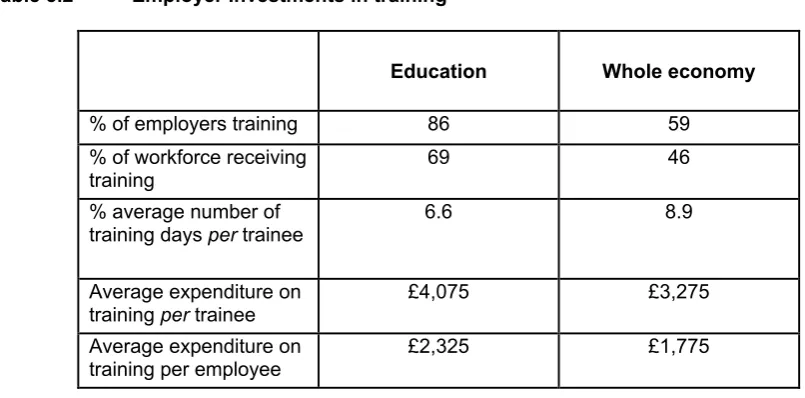
• The Education sector invests heavily in its workforce, compared to the economy as a whole. There is a well-developed professional development and training structure to assist with the initial and continuing training of the sector’s workforce, but for the sector to continue to grow, more specific professional development opportunities will be required in key areas.
• It is also apparent that the sector has made use of initiatives such as Apprenticeships to provide training via vocational entry routes into the sector.
Skill Mismatches
• Skill mismatches are less in evidence in the sector than in the economy generally. This relates to both external skill deficiencies (i.e. recruitment problems) and internal ones (i.e. skill gaps).
• This relates at least in part to the strong training supply infrastructure and the relatively heavy investments which are made in the training of new and existing teachers, trainers, and lecturers.
• Despite the relatively low incidence of skill mismatches there are likely to be particular areas of shortage, such as those people are who are skilled in teaching STEM subjects.
Concluding Comments: Benefits of Training
• An exhortation to train more would not be well placed in the context of the Education sector because of the high volume of activity already undertaken. What can be said is that there is a need to maintain current levels of activity and build upon it, at a time of pressures on education and training budgets, in order that important economic and social goals are not derailed by people lacking the necessary skills the economy needs.
1
1. The Economic and Policy Climate
Increasingly, the competitiveness of advanced industrial nations is explained with reference to the capabilities of their respective labour forces. Hence, national education and training systems are seen as providing comparative economic advantages. It is notable that over the recent past education and training have taken centre stage in policies designed to foster the UK’s competitiveness and lie at the heart of the current Government’s plans to kick start the recovery against a backdrop of challenging global economic conditions. To understand the role skills development might play in stimulating growth within the digital and creative sector requires some consideration of the current economic situation and current skills policy.
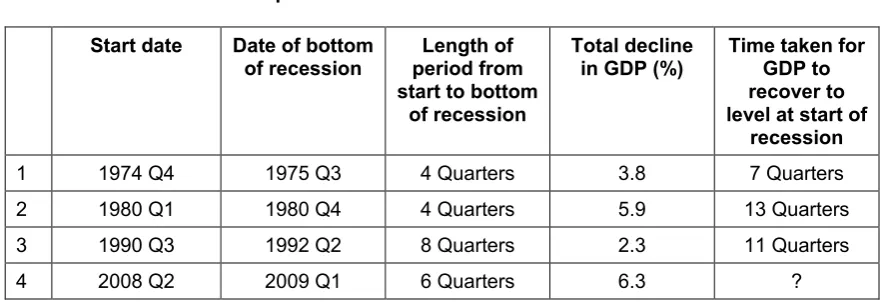
[image:12.595.64.505.557.708.2]In 2012 the UK economy, and indeed the global economy, is still coming to terms with the repercussions of the 2008/9 economic recession. By comparison with previous recessions, 2008/9 was relatively deep and it continues to cast a long shadow over the country’s medium-term economic prospects (see Table 1.1). The economic climate at the time of the 2008/9 recession and in the period afterwards has been characterised by low interest rates and a depreciation of sterling against other currencies, notably the dollar and the euro. Whilst these would usually be sufficient to give a fillip to the economy by boosting demand and, given time, increasing output, the potential for export led growth has been seriously undermined by continuing weak demand conditions across the global economy, especially in the Eurozone and the USA. Also the difficulties households and businesses have had gaining access to finance as the banks have sought to increase their capital has restricted growth. Moreover, the markets’ continuing disquiet over developments in the Eurozone has contributed further to the climate of uncertainty in the global economy thereby further dampening demand.
Table 1.1 Four recent periods of recession in the UK
Start date Date of bottom
of recession period from Length of start to bottom
of recession
Total decline
in GDP (%) Time taken for GDP to recover to level at start of
recession
1 1974 Q4 1975 Q3 4 Quarters 3.8 7 Quarters 2 1980 Q1 1980 Q4 4 Quarters 5.9 13 Quarters 3 1990 Q3 1992 Q2 8 Quarters 2.3 11 Quarters
4 2008 Q2 2009 Q1 6 Quarters 6.3 ?
2
As a consequence of the above developments, the rapid acceleration in growth observed after the recessions of the early 1980s and 1990s has failed to materialise. Nevertheless the economy is expected to resume its long-run growth path over time (see Chart 1.1) but in order to do so there are specific steps the UK economy needs to take. The UK Treasury has identified a number of weaknesses which need to be addressed if a sustained recovery is to be achieved (HM Treasury 2011a):
i. the level of debt funded household consumption;
ii. the share of the economy accounted for by the public sector; iii. weak business investment;
iv. an over-dependence upon financial and business services; and v. unbalanced regional growth.
Government has identified four ambitions which need to be realised in order to restore long-term sustainable growth (HM Treasury 2011a):
i. creating the most competitive tax system in the G20;
ii. making the UK one of the best places in Europe to start, finance and grow a business; iii. encouraging investment and exports as a route to a more balanced economy; and
iv. creating a more educated workforce that is the most flexible in Europe.
Therefore, the role of skills in national economic policy is clearly an essential one; to bring about recovery and sustainability by creating jobs and growth.
3
Chart 1.1 Employment and Gross Value-Added 1978 - 2020
Source: Wilson and Homenidou (2011)
At a time when capital investments are constrained as a consequence of problems in the global banking system, investments in skills, and human resources more generally, made through programmes such as Apprenticeships and Investors in People, and funded through initiatives such as the Growth and Innovation Fund, may be the most amenable to employers.
Based on the latest evidence available, this report considers the specific situation in the Education sector to provide:
i. an overview of the size and structure of the sector and the principal drivers of change over the medium term which are likely to have some bearing upon skill demand;
ii. an outline of current and expected patterns of skill demand in the sector;
iii. a description of skills supply and how this has adapted to changing patterns of skill demand;
iv. an analysis of mismatches between the demand for, and supply of skills, and the implications of this for the sector.
In conclusion, the report identifies the performance challenges faced by the sector and highlights the skills solutions available to address them thereby delivering increased levels of growth and contributing to the recovery of the UK economy.
4
2. The Importance of the Sector
2.1 Overall Output and Employment Performance
The Education sector has a significant role to play in the sustainable long-term economic growth of the UK. The Government’s first growth review (HM Treasury, 2011a) focused on eight key sectors to contribute to the UK’s future competitiveness and prosperity. The second Government growth review focused on the Education sector and the growth in skills across the economy (HM Treasury, 2011b). The Education sector has an essential role in developing skills and knowledge - which are at a premium in the current economic climate given that the supply for labour is currently outstripping its demand - and addressing high youth unemployment by providing young people with the skills which allow them to enter the labour market (BIS, 2011a).
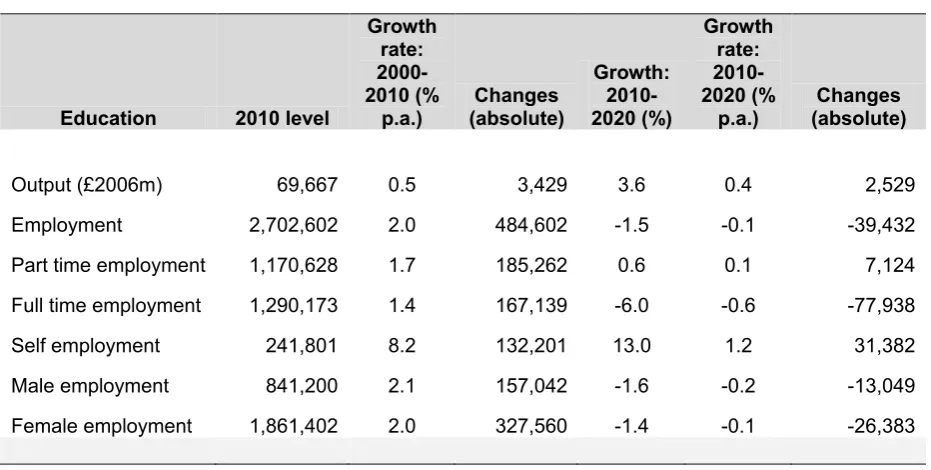
Table 2.1 highlights key output and employment indicators for the Education sector over the last ten years and for the coming decade.
The Education sector contributed nearly £70 billion in 2010 (2006 prices) to the UK economy (i.e. gross value added, GVA). This has grown, on average, by 0.5 per cent a year between 2000 and 2010. Growth between 2010 and 2020 is forecast to be 3.6 per cent, which is equivalent to growth rate only 0.4 per cent a year to 2020. The sector contributes seven per cent to the total output of the UK. It is also export orientated with Further Education (FE) and Higher Education (HE) institutions recruiting pupils from abroad and/or developing campuses overseas.
The sector is principally a public sector one. UK public expenditure on all education levels (as a percentage of GDP) has risen from 4.5 per cent in 1999 to 5.4 per cent in 2008. A similar rise has been recorded in private expenditure on education; 0.8 per cent in 1999 to 1.7 per cent in 2008 (Eurostat, 2011). At primary and secondary levels, there is a substantial and growing private sector (OECD, 2011).
5
Education (FE) colleges are female, whilst women occupy 53 per cent of academic professional roles in Higher Education (HE) (LLUK, 2011b).
[image:16.595.71.537.370.605.2]In the Education sector over the last decade, there has been relatively strong employment growth, albeit from a low base, of people who are self-employed (by 8.2 per cent a year between 2000 and 2010) (see Table 2.1). The number of full-time and part-time workers has also increased but more slowly, by 1.4 per cent and 1.7 per cent a year, respectively. Projections suggest that growth in the sector, between 2010 and 2020, will again be among the self-employed, with numbers increasing by 13 per cent. Over the same period, the part-time workforce is projected to grow by 0.6 per cent, whilst the full-part-time workforce is expected to decrease by 6 per cent. Overall, future employment in the sector is forecast to decrease by 0.1 per cent a year between 2010 and 2020. Decreases among the male workforce will be more marked than that of the female one. The projected changes in the numbers of self-employed people working in the sector will have significant implications for skills and training in the sector.
Table 2.1 Key Output and Employment Indicators for the Education Sector
Education 2010 level
Growth rate: 2000-2010 (%
p.a.) (absolute) Changes
Growth: 2010-2020 (%)
Growth rate: 2010-2020 (%
p.a.) (absolute) Changes
Output (£2006m) 69,667 0.5 3,429 3.6 0.4 2,529 Employment 2,702,602 2.0 484,602 -1.5 -0.1 -39,432 Part time employment 1,170,628 1.7 185,262 0.6 0.1 7,124 Full time employment 1,290,173 1.4 167,139 -6.0 -0.6 -77,938 Self employment 241,801 8.2 132,201 13.0 1.2 31,382 Male employment 841,200 2.1 157,042 -1.6 -0.2 -13,049 Female employment 1,861,402 2.0 327,560 -1.4 -0.1 -26,383
6
Employment in the sector is female dominated and in terms of ethnic group it is predominately white. The number of female workers in the Education sector has grown significantly over the last three years (UK Commission, 2011).
The Education sector has been a source of growth for the UK economy. Excluding the public sector, there has been year-on-year increases in turnover and purchases of between 5 and 12 per cent across the 2008 - 2010 period resulting in a £2.5 billion increase in approximate GVA from 2009 - 2010. GVA for the sector was £9,995 million in 2008, £9,982 million in 2009 and an increased to £12,449 million in 2010 (Annual Business Survey, 2011).
From 2010, employment in the sector has continued to rise and it is projected to remain relatively constant to the year 2020. Output, however, has been relatively stable since 2004, although it is forecast to decrease slightly from 2010 to 2015 but moderate growth is then forecast up to 2020.
Chart 2.1 Trends in Employment and Output of the Education Sector, 1990-2020
Source: Wilson and Homenidou (2011)
The UK Education sector is a highly skilled one: half of the workforce comprises professional workers – principally in teaching, training, and lecturing jobs – and the share of people working in highly skilled and qualified jobs will increase in the period to 2020.
0 10,000 20,000 30,000 40,000 50,000 60,000 70,000 80,000
0 500 1,000 1,500 2,000 2,500 3,000
1990 1995 2000 2005 2010 2015 2020
Output (£2006m) Employment
(000s)
Education
7
2.2 Employment Structure (for 2010)
The evidence shows that most establishments in the sector are relatively small (20 per cent having between 2 and 4 employees and 54 per cent have fewer than 25 employees (see Chart 2.2a).
Chart 2.2a Size Structure of Employment (% of employment by employer size band)
Source: Inter-departmental Business Register (IDBR), ONS 2010.
The distribution of employment by employer size in the sector is shown in Table 2.2 and Chart 2.2b. In terms of employer size, the Education sector is different to the UK economy as a whole. Employment is concentrated within establishments with 50 or more employees, compared to the UK economy where the majority of employees (36 per cent) are working within a company with less than 25 employees (see Table 2.2, below).
2-4, 20
5-9, 14
10-24, 20 25-49, 23
50-250, 21
8
Table 2.2 Size Structure of Employment (% of employment by employer size band), 2010
Number of employees All employment (%) Education (%)
Under 25 36 20
25 to 49 13 21
50 to 249 23 37
250 to 499 7 5
500 or more 21 17
Source: Labour Force Survey 2010, (average of four quarters).
Organisations with 250-499 employees account for the smallest share of employment in education (5 per cent), whilst companies with 50-249 employees comprised 37 per cent of total employment in the Education sector in 2010. The smallest employers (those with less than 25 employees) accounted for 20 per cent (see Table 2.2 above) in 2010.
Chart 2.2b Size Structure of Employment (% of employment by employer size band)
Source: Labour Force Survey 2010 (average of four quarters).
Under 25 20%
25 to 49 21%
50 to 249 37% 250 to 500
5%
9
2.3 Self-employment
Self-employment in the Education sector is relatively small, accounting for 8.9 per cent of all employment, compared to 14 per cent across all sectors. Between 2010 and 2020, the numbers of self-employed in education are projected to increase by 1.2 per cent a year (see Table 2.1 above). A possible explanation for the increase may be due to the demand for private education services. This presents more opportunities for self-employment through private tuition, assessors and examiners. Alternatively, there also may be an age effect, as older workers may be keen to work on a self-employed basis, after retiring from the sector. Across the whole economy, the number of self-employed is projected to increase by 0.2 per cent over the same period. The Education sector together with the Construction and Digital and Creative sectors are the only sectors with a positive increase in the numbers of self-employed forecast between 2010 and 2020.
2.4 Age Structure of Employment
The profile of the UK labour force is changing as individuals extend their working lives and respond to changes in the default retirement age. Chart 2.3 shows the age structure of the Education sector workforce by gender. The sector has typically had an older worker profile and this is set to continue. The majority of the education workforce is aged between 25 and 59 years, but there are also high numbers of people aged 60-64 years employed in education compared to other sectors. So, the development and implementation of effective age management strategies across the Education sector are still needed (LLUK, 2011b; Manfredi, 2008; Universities UK, 2007).
10
Chart 2.3 Age Structure of the Education Workforce, 2010
Source: Labour Force Survey 2010 (average of four quarters).
In FE, 35 per cent of staff is aged over 50 years compared with the national average of 24 per cent (LSIS, 2011b). In this sub-sector, there are particular issues requiring consideration as:
• the number of older workers in support roles is increasing;
• part-time working arrangements are common; and
• those in selected occupations are more likely than others to work beyond 60 years (including those in managerial, technical and teaching roles) (LSIS, 2011b).
This has positive implications for addressing the demand for teaching and training skills. The retention and recruitment of staff beyond 60 years allows skills, knowledge and experience to be retained.
An ageing population and workforce across the UK also has implications for the sector as more adults will require education later in life to ensure their skills are up-to-date and that they gain new skills in order to work longer. In FE, requirements for both vocational and non-vocational courses are predicted to rise. As government funding is not expected to increase, meeting these demands will require the workforce to adapt and look to partnership funding (LSIS, 2011b). This could drive further collaborations with employers. New
0% 10% 20% 30% 40% 50%
Under 16 16 to 18 19 to 24 25 to 34 35 to 44 45 to 59 60 to 64 65 and over
11
technologies will increasingly be used to address these new demands, but will require the Education sector workforce to develop new technical skills.
2.5 Distribution of Employment by Nation and Region
The distribution of the Education sector workforce across the UK (England, Scotland, Wales and Northern Ireland) and English regions are depicted in Chart 2.4. Employment is concentrated in the South East and London. Northern Ireland and the North East have the smallest employment numbers.
Trend data show that across the majority of regions employment levels in the Education sector have slowly increased from 1990 levels, peaking in 2009. However, employment levels are forecast to fall to some extent and then stabilise by 2020. A similar picture is forecast for Scotland and Wales. In Northern Ireland, education employment levels have remained relatively constant since 2005 and are forecast to remain at similar levels by 2020.
Chart 2.4 Education Sector Employment by Nation and Region, 2011
Source: Wilson and Homenidou (2011)
The HE sub-sector in London and the South East has the highest total revenue (£4.85 billion and £3.1 billion, respectively) and provide the most full-time equivalent (FTE) jobs across a wide range of occupations (74,641 FTE and 42,960 FTE, respectively) (Universities UK, 2010). The North East, by comparison, has the lowest revenue of £967 million and its universities only provide 13,715 FTE jobs.
There are national, regional and sub-regional differences in terms of education and skills needs, which the Education sector is proficient at responding to. For example, in areas with high levels of long-term unemployment, there is a need to provide training around employability skills that are focused on getting the individuals back into work (LLUK, 2011b).
England , 2281.3 Wales, 1
34.8
Scotland
, 208.7 NI, 77.8
12
2.6 International Standing of the Sector
European data reveals that the sector in the UK is relatively large accounting for 11 per cent of all employment in the UK (according to Eurostat data for 2008) compared with an average of 7 per cent per cent in the European Union (EU). Overall, the sector in the UK accounts for 19 per cent of employment in education in the EU.
In terms of expenditure on education, the UK is ranked fifth internationally, with the USA spending considerably more than any other country (see Table 2.3 below). In 2008, an estimated 93,635 million Euros was spent on education in the UK (Eurostat, 2011). However this picture may have changed slightly following the recession.
FE and HE institutions are increasingly operating in international markets. The UK has a successful Higher Education system, which is home to the majority of top universities in the world (with the exception of the USA). Although HE has experienced recent funding increases and additional income from student top-up fees, new sources of income are being sought. Across the Education sector, there is increasing competition internationally to attract overseas students who are charged higher fees than domestic and EU students. The UK share of overseas students is expected to fall.
13
Table 2.3 Total public expenditure on education, 2008
2008
(Millions EUR PPS)
United States 599,340
Japan 117,711
Germany 107,711
France 96,689
United Kingdom 93,635
Italy 69,970
Spain 54,140
Netherlands 30,159
Poland 27,458
Belgium 19,973
Sweden 19,113
Norway 14,724
Switzerland 14,554
Austria 14,161
Denmark 12,816
Portugal 10,222
Finland 9,570
Romania* 9,486
Czech Republic 8,582
Ireland 8,477
Hungary 8,262
Bulgaria 3,629
Slovakia 3,518
Croatia 2,974
Lithuania 2,558
Slovenia 2,405
Latvia 1,850
Cyprus 1,412
Estonia 1,284
Luxembourg* 1,036
Iceland 7,31
Malta 472
Liechtenstein 56
Source: Eurostat 2011
Note: 2008 and 2007 data unavailable for Greece, Montenegro, Former Yugoslavia and Turkey.
* 2007 data used for Romania and Luxembourg as 2008 data were unavailable.
2.7 Conclusion
14
of knowledge and skills adds to individual quality of life and the competitiveness and cultural capital of the country. GVA has continued to increase since 2008 and moderate increases are forecast over the medium term. Higher pupil scores, the rising qualification levels of the workforce and a more skilled workforce will contribute to increasing the productivity of the economy.
The employment structure of the sector is forecast to remain the same, but the number of people employed in the sector will continue to grow over the next decade, but this is mainly accounted for by the rise in the number of those self-employed. It is important to note that the sector has an older workforce profile, which will have implications on replacement demands in the future. The sector will remain an important source of high skilled employment for women.
15
3. Key Challenges Facing the Sector over the
Medium-term
3.1 Introduction
A number of key challenges face the Education sector and will be particularly influential over the medium-term. Of course, the impact of the 2008/09 recession and policies to address some of the issues contributing to the financial crisis and to stimulate recovery will have implications for the sector’s performance in the years to come, whilst other issues which have been important for the sector will continue to present challenges. Over the medium term the sector needs to focus on:
• the sector’s economic impact on the economy;
• its role in increasing the stock of human capital in the labour market;
• maintaining the world class education system and improving in terms of international educational attainment indicators; and
• developing workforce capacity and skills.
This section outlines the key challenges facing the sector over the medium term by considering the role it will play in: supporting the economy move from recession to recovery; encouraging investment, innovation and R&D in the sector; tackling global competition; and meeting changing consumer/learner demands. Attracting talented individuals and developing their capabilities, together with the strategic role of management and leadership skills will be considered.
3.2 From Recession to Recovery
16
deliver services and increase funds for work-based learning. As part of economic recovery, the Education sector will need to:
• provide individuals of all ages with the knowledge and skills that will sustain them in the labour market through their life course;
• deliver economically valuable skills which employers require;
• attract STEM and modern language teachers in sufficient numbers;
• continue to develop the market and generate export income;
• maintain its strong position in the world Higher Education market; and
• attract and retain the best and brightest educators.
A challenge for the sector will be to deliver the same level of service with reduced levels in public funding and other sources of income. The proportion of HE income from public sources has fallen from 61 per cent in 2005/06 to less than 56 per cent in 2009/10, but institutional income from non-EU domiciled students continues to rise (Universities UK, 2011). It is unknown to what extent the current economic climate and the new fee arrangements will impact on the number of UK domiciled and overseas applicants, who provide a valuable source of income for both FE and HE Education institutions. Research has suggested that upfront fees will have a negative impact on participation in HE and that increases in financial aid will have a positive impact (Dearden et el, 2010). Early indications are that there has been an 8.3 per cent decrease in the number of UK, EU and non-EU applicants to UK universities1 but only time will tell what the longer term impact will be. The
number of applications from domestic students has decreased by 8.5 per cent between 2011 and 2012, to 478, 285 applicants.
In the FE sector too there are changes afoot with changes to entitlements especially for people aged over 25 years where increasingly either the employer or the individual will be expected to contribute to the costs of their training in England.
Without doubt, the Education sector is key to economic recovery and is able to address the labour market need for new skills, knowledge and innovations. In its Plan for Growth (HM Treasury, 2011a), the Government has set out measures to secure opportunities for sustainable growth through the education and skills system. Economic output is attributed in
1 For more data on number of 2012 applications to UK Higher Education Institutions see:
17
part to a skilled workforce. One of the Government’s four ambitions is to create an educated and flexible workforce for Europe. It is the aim to create new jobs by stimulating private sector growth. In addition, to make the education and skills system more responsive to the demands of the labour market, there have been reforms in education policy, and the Further and Higher Education systems. The aim of these changes has been to address employer needs for increased literacy, numeracy and employability skills in labour market entrants (HM Treasury, 2011b).
3.3 Investment, Innovation and R&D
18
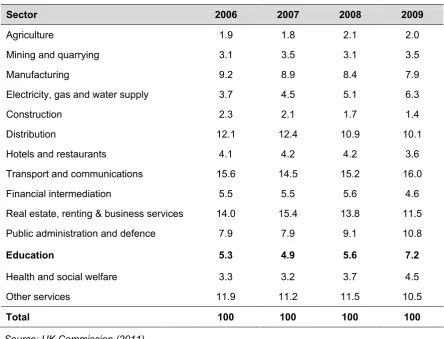
Table 3.1 Sector Investment as a Share of Total Investment
Sector 2006 2007 2008 2009
Agriculture 1.9 1.8 2.1 2.0
Mining and quarrying 3.1 3.5 3.1 3.5
Manufacturing 9.2 8.9 8.4 7.9
Electricity, gas and water supply 3.7 4.5 5.1 6.3
Construction 2.3 2.1 1.7 1.4
Distribution 12.1 12.4 10.9 10.1
Hotels and restaurants 4.1 4.2 4.2 3.6
Transport and communications 15.6 14.5 15.2 16.0 Financial intermediation 5.5 5.5 5.6 4.6 Real estate, renting & business services 14.0 15.4 13.8 11.5 Public administration and defence 7.9 7.9 9.1 10.8
Education 5.3 4.9 5.6 7.2
Health and social welfare 3.3 3.2 3.7 4.5
Other services 11.9 11.2 11.5 10.5
Total 100 100 100 100
Source: UK Commission (2011)
Note: Percentage shares of total investment based on current price data.
Data show that those developed countries which have invested in education to prepare their workforce for new jobs have higher levels of educational attainment and employment. In terms of public expenditure on education, the UK expenditure (as a percentage of GDP) of 5.7 per cent is below the OECD (2011) average of 5.9 per cent and well below Korea (7.6 per cent), Norway (7.4 per cent) and the USA (7.2 per cent). It is reported that on average, public expenditure at all levels of education has decreased globally, but as a share of all tertiary education funding private funding for tertiary education rose by more than 10 percentage points between 2000 and 2008 in the UK due to the decrease in public funding.
19
(BIS, 2012) has reviewed business-university collaboration and the role the Government can play in supporting these partnerships. It is recognised that there is a strong link between universities, innovation and R&D activity, which are integral to economic and business development, but skills are needed to support these activities, together with more flexible research systems to address the tensions between basic and applied research (Kearney, 2009).
The UK Higher Education sub-sector is internationally recognised for its innovation and knowledge exchange, which makes a significant contribution to the economy (Universities UK, 2009). Universities are establishing their own spin-off enterprises and their partnerships with business are good examples of how this is being achieved. It is estimated that the UK HE sub-sector generated over £59 billion of output in 2007/08 (Universities UK, 2009). So, universities have an important role to play in creating new knowledge and capacity building to support R&D activity in order for the UK labour market to compete in the global labour market.
3.4 Global Competition
Over the past decade, the Education sector has had to respond to policy and educational reforms in the UK and international markets. The sector continues to respond to changes in demand, diversification of provision, changing education and skills needs, together with the implementation of technology (Kearney, 2009). Investment in education and training systems is vital to economic growth and the challenge for the sector is to meet investment needs within a global market. Being competitive in the global market requires the Education sector workforce to develop various management skills, which include managing: change in economic circumstances; contracts and projects; staff (both those that are employed and those that volunteer); a range of customers, such as learners, businesses, policy makers; and the increasing use of technology in delivery (LLUK, 2011b). Strategic planning skills, marketing, networking and business development have also been identified as essential.
20
studies. The challenge is to improve the Education sector, at least as quickly as the main competitors. This means attracting high level, high quality teachers, trainers, managers and leaders, support staff, and researchers, as well as making it an attractive sector in which to work. A major challenge for all parts of the Education sector is the capacity to recruit and retain staff, especially in those subject areas where staff are in high demand.
International students also provide valuable income to the HE and FE sectors, and also have a positive impact on local economy. Current data suggest that in the short-term international applicants are not declining. The number of HE applications from EU decreased by 12 per cent, whilst EU domiciled applicants increased by 13 per cent. A high proportion of non-UK domiciled students at non-UK HE institutions were from Asia and the European Union (excluding the UK) (Universities UK, 2011), but the market for international students is becoming more competitive, so over the medium-term universities will have to meet this challenge. It is recognised that they need new skills in order to compete in this international market. At a fundamental level, new skills are required to facilitate learning (such as language skills) for students who are coming to study in the UK from eastern European regions, the Middle East, India and elsewhere.
3.5 Attracting Talented Individuals and Developing Capabilities
As discussed earlier, there is strong competition for high quality teachers, both within the UK and from abroad. Here, the challenge of attracting talented individuals and developing their capabilities and skills are discussed. In the compulsory Education sector, there is strong competition between the private and public sector for suitably qualified and experienced teachers, particularly in science, technology, engineering, mathematics and modern language subjects. The capacity of schools to compete on the basis of salaries is constrained, so there is a need to develop policies which will attract people into the sector and ensure that they develop their careers. In HE, there is international competition for staff.
21
graduates and has plans to double this in 2013. The Training and Development Agency for Schools (TDA) recruits around 37,000 each year for the school workforce. Bursaries are now available to boost recruitment in selected subjects, including specialist mathematics, physics and chemistry, thereby facilitating the satisfaction of demands for more STEM teachers.
22
Case Study: Teach First – Attracting and Developing Talented Individuals
The Challenge
Only four per cent of all teachers would consider teaching in a school in challenging circumstances. This poses a huge challenge for tackling the problem of educational disadvantage, and attracting talented individuals to work in these schools.
The approach
Teach First harnesses the energy, enthusiasm and drive of exceptional graduates to provide leadership, motivation and, above all, inspirational teaching in schools in challenging circumstances across England. The charity (founded in 2002) attracts new talent to the sector by providing an intensive two year Leadership Development Programme, which combines working, training, coaching and mentoring to develop individual leadership abilities. Alongside the programme, there are opportunities for internships, networking and the opportunity to work towards a Masters qualification. So, in the long-term, individuals develop a range of transferable skills.
The benefits
Every Teach First teacher is placed in a challenging school, and over 90 per cent of Teach First recruits stay for a minimum of two years and over 50 per cent stay longer. While 67 per cent of those placed since 2003 remain actively engaged with addressing educational disadvantage through the Teach First ambassador community.
"Teach First is almost like a constant reminder that there's a wider mission out there and there's an opportunity to learn new skills, go to events and meet new people. I think also it constantly reminds me of the Teach First mission, so that I'm not just plodding through my day job, I'm kind of thinking that there is a sense of urgency, there is a desire to see change in these inner-city schools." Taken from Teach First’s report.
Source: Teach First website
See: http://www.teachfirst.org.uk/OurWork/
3.6 Other Drivers of Change – Consumer/Learner Demand
23
further opportunities for individuals to learn and develop skills. Educational courses are to be kite-marked (particularly those in science, engineering, technology and mathematics subjects), so students are aware of what employers have endorsed. An improved careers information, advice and guidance portal (the National Careers Service) will be launched in early 2012. In addressing these changes, a key challenge for the sector is to ensure that consumer/learner demands are met as well as employer demands.
Both FE and HE institutions report that learner demands (and expectations) are increasing (LLUK, 2011b). Learner demands are focused on new delivery methods and options, as well as more pastoral support. As more students are opting to study part-time, educational institutions have to adapt, which means the workforce requires different skills sets and working patterns. For those working in areas of high unemployment, the sector workforce has to learn to support those looking for work to develop employability skills, for example self-management, team-working, business and customer awareness, problem solving, communication and literacy, the application of numeracy, and the application of information technology. A key challenge for the sector workforce is to maintain knowledge and skills related to qualification and curriculum reforms, including understanding the size and level of qualifications, developing more flexible training programmes for learners and tracking learner achievement through an individual’s electronic learner record.
3.7 The Strategic Role of Management and Leadership Skills
As mentioned, management skills are vital for the UK Education sector to compete internationally. The Education sector also needs to manage a programme of change resulting from policy reforms at all levels. This places considerable pressure on management and leadership skills, which are now the responsibility of head teachers, principals, vice chancellors and other senior staff within educational institutions. Much of this responsibility is related to managing finances, managing the performance of teachers and lecturers, improving educational standards, research and project management, plus marketing, networking and business development. Enhancing leadership, governance and management for improvement, innovation and change is one of the five strategic platforms set out by LSIS (2011c) in its Strategic Intentions 2011-2014 and part of the mission for the Leadership Foundation for Higher Education.2
24
Over a number of years, educational institutions have been increasingly self-governing. School heads, for instance, now have more management responsibilities than their counterparts 20 or 30 years ago. At all levels of the education system, senior managers within schools, colleges and universities are facing a variety of challenges and require more strategic management skills, for instance:
• schools: substantial decrease in their capital spending, managing teacher performance, meeting educational standards and ensuring sufficient enrolments;
• FE: budget cuts, the need to provide a more responsive service to employers to maintain income, developing overseas markets;
• HE: managing the increase in tuition fees and substantial reduction in funding for non-STEM subjects; being able to develop international markets.
25
Case Study: Developing Management Skills – Meeting More Demanding Leadership Needs in Schools
The challenge
With increasing self-governance and leadership demands being placed on head teachers the current National Professional Qualification for Headship (NPQH) was failing to meet their needs.
The approach
The National College for School Leadership in England decided the best way forward was to revamp the NPQH so that it was more targeted and relevant to their needs. The changes announced by the National College for School Leadership included a tougher entry bar, more demanding content and a much sharper focus on the key skills required by heads to achieve higher standards for pupils – from the leadership of teaching and learning to the management of behaviour and teacher performance.
Essential modules for the NPQH now include, ‘leading and improving teaching’, ‘leading an effective school’ and ‘succeeding in headship’. The new programme also includes greater access to peer networks and resources for head teachers.
Steve Munby, Chief Executive of the National College, said: “Raising the bar will help to drive up the standard of school leadership in this country even further. We believe the new non mandatory NPQH will become the first choice qualification, ranked alongside the best leadership development in the world, and the mark of quality that governing bodies and academy boards choose to rely on when appointing head teachers and principals, as only the most talented candidates will get through.”
The Benefits
In developing initiatives like the NPQH, the sector is developing management and leadership skills across schools in England, and providing a wealth of support to head teachers as requirements change.
Source: National College for School Leadership in England website
See: http://www.education.gov.uk/nationalcollege/index/professional-development/npqh.htm
26
3.8 Conclusion
A number of key challenges face the Education sector over the medium term. The recent recession has had adverse effects on the sector in terms of funding cuts and the recovery presents a number of challenges to all parts of the sector. Also, changes in education policy create both challenges and opportunities for the sector. Increasing investment, encouraging innovation and R&D together with global competition and meeting consumer/learner demands also present challenges for the sector. Attracting talented individuals to the sector and developing new skills, particularly in management, governance and leadership, together with knowledge and skills in new technologies are important if the sector is to respond to the medium-term challenges. Similarly, the sector will need to encourage new partnerships to support the growing use and application of information and communication technology. The Education sector is well placed to meet the challenges over the medium term as it has a successful track record in adapting to change, but will need to continue to develop its well-established training infrastructure to support new skills requirements.
27
4. Employment and Skill Demand in the Sector
4.1 Introduction
The Education sector has a highly skilled and highly qualified workforce which is dominated by people working in professional teaching and learning roles; this is unlikely to change over the medium-term. This section emphasises the changing nature of employment in the sector with respect to the changing composition of employment and skills over recent years. Factors that affect skills demand in the sector, while not unique to education, have different implications on the resulting demand for skills compared to other sectors. It will focus on the changing demand for employment, factors affecting the demand for skill, changing patterns of skill demand and replacement demands.
4.2 The Changing Demand for Employment
Although job losses are expected in the sector, employment levels are still forecast to grow, but at a much slower rate than in recent years (see Wilson et al 2007). Job losses are forecast in administrative, secretarial and clerical roles and elementary roles (see Chart 4.1 below), but with an increasing need for those in support roles and a high replacement demand, employment levels will grow.
28
Chart 4.1 Employment Structure of the Education Sector, 2010-2020
Source: Wilson and Homenidou (2011)
4.3 Factors Affecting the Demand for Skill
The National Strategic Skills Audit for England identified a number of key drivers that will impact on the demand for skills in the future (UK Commission, 2010a). The principal drivers of skill needs are: technical change; globalisation; policy and regulation; product market strategies related to horizontal and vertical integration; the low-carbon agenda; and demographic change. These drivers are interdependent and the dynamic interplay of these means that the future skill requirements are not certain. These drivers of skills demands, together with those drivers identified by the Life Long Learning UK Sector Skills Councils in their Sector Skills Assessment in 2010 (see LLUK, 2011b), are discussed next.
Technical Change
The rapid pace of change in relation to new technology across all areas of the Education sector, both in its organisation of work and delivery of services, has created the need to develop new ICT and technical skills. Sector organisations have to ensure that equipment and training keep abreast of these changes. Across the Education sector, there is an increasing demand for e-learning and other types of learning and service delivery. These delivery methods are focused on the implementation and exploitation of technology, in terms
3 50 7 8 2 21 1 2 7 2 56 7 5 1 23 0 2 4
0 20 40 60
Managers, directors and senior officials Professional occupations Associate professional and technical Administrative and secretarial Skilled trades occupations Caring, leisure and other service Sales and customer service Process, plant and machine operatives Elementary occupations
% of workforce
29
of new platforms, new delivery methods and new communication methods. For instance, technology can create global education platforms to connect learners (LSIS, 2011d). Sector organisations need to equip their workforce with higher-level technical skills.
Globalisation
The Education sector is increasingly operating in a global, competitive market where there is increased supply of labour and skills, but also competition for highly qualified staff and international students as more European countries are offering courses. The sector has to attract high level, high quality teachers, trainers, managers and leaders, support staff, and researchers. The capacity to recruit and retain staff, especially in those subject areas where staff are in high demand is important. To be competitive in the global market, the Education sector workforce requires management, leadership and strategic planning skills to manage contracts and projects, staff, a range of learners. The LLUK Sector Skills Assessment (2011b) noted the need for the sector workforce to development skills in marketing, PR and advocacy to ensure that organisations remain competitive, reach wider markets and secure new business. New skills related to innovation and entrepreneurship to ensure new business development, particularly in global markets, are also required.
Policy and Regulation
A significant driver for skills is public policy reforms, regulation and legislation, which may be cross-sector or sector specific, UK wide or nation specific. Policies implemented by each nation’s Government in relation to skills and education have an important impact in influencing skills needs and priorities across the Education sector within each nation, particularly in relation to the curriculum, working with children and young people, quality and regulation. In response, there are increasing demands for problem solving skills and creativity to ensure the sector is able to keep pace with reforms. Skills needs relating to policy analysis, especially amongst managers – for example, being able to understand the shifting policy context and anticipate, plan for, and respond to the implications of the policy changes for organisations, and also of increased importance.
30
to enable organisations to compete for diminishing funding sources and negotiate to maintain or extend their current funding streams, especially within the current economic climate. Skills in efficient procurement and outsourcing to make the most effective and efficient use of the funds available are also required. The LLUK Sector Skills Assessment (2011b) reported increasing demands for skills related to budget planning and financial management to ensure organisations cope with and adapt to more complex funding procedures and streams.
Sustainability and Environmental Issues
Research within FE and HE institutions may need to develop skills to enable staff to research and develop products given sustainability and environmental issues (LLUK, 2011b). National strategies related to environmental issues will also impact on skills requirements and demand. For instance, ‘green’ policies regarding alternative energy strategies, and developments in the low carbon industry may prompt research funding towards climate change. The development of skills to enable research, innovation and product development, such as training and awareness raising, will need to address prominent issues, such as climate change and sustainability. The Skills for Growth report, produced by BIS (2010) sets out plans in which FE institutions will be required to improve and expand courses in areas where there is a demand for trained technicians, such as green technologies.
Demographic Change
The UK population is forecast to increase to around 70 million by 2054 and the average age of the population is rising. Demand for learning amongst older individuals is likely to increase to meet the demands of those working longer and those wishing to learn for leisure. New skills may be required to teach older learners. The ageing education workforce also presents a need for succession planning where expertise, knowledge and skills will be lost through those leaving the sector. There is also the challenge to continually develop older workers.
4.4 Changing Patterns of Skill Demand
31
teacher), which is consistent with the need for higher-level skills in management, governance and leadership.
32
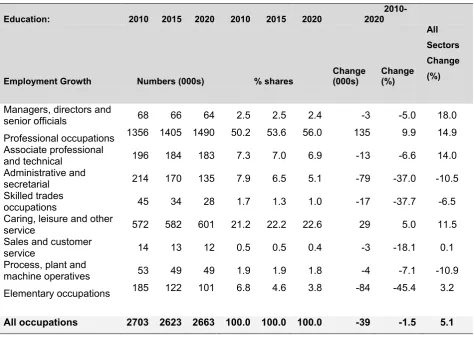
Table 4.1 Changing Pattern of Skill Demand in the Education Sector, 2011
Education: 2010 2015 2020 2010 2015 2020 2010-2020
Employment Growth Numbers (000s) % shares Change (000s) Change (%)
All Sectors Change (%)
Managers, directors and
senior officials 68 66 64 2.5 2.5 2.4 -3 -5.0 18.0 Professional occupations 1356 1405 1490 50.2 53.6 56.0 135 9.9 14.9 Associate professional
and technical 196 184 183 7.3 7.0 6.9 -13 -6.6 14.0 Administrative and
secretarial 214 170 135 7.9 6.5 5.1 -79 -37.0 -10.5 Skilled trades
occupations 45 34 28 1.7 1.3 1.0 -17 -37.7 -6.5 Caring, leisure and other
service 572 582 601 21.2 22.2 22.6 29 5.0 11.5 Sales and customer
service 14 13 12 0.5 0.5 0.4 -3 -18.1 0.1 Process, plant and
machine operatives 53 49 49 1.9 1.9 1.8 -4 -7.1 -10.9 Elementary occupations 185 122 101 6.8 4.6 3.8 -84 -45.4 3.2
All occupations 2703 2623 2663 100.0 100.0 100.0 -39 -1.5 5.1
Source: Wilson and Homenidou (2011)
The shares of total employment in Sales and customer service occupations (e.g. telephonists, sales assistants), Process, plant and machine operatives (e.g. food and drink operatives) and Managers, directors and senior officials (e.g. research directors, service managers) are expected to decrease slightly between 2010 and 2020. The absolute changes in employment in these occupations however, are small at between 3,000 and 4,000 jobs. The greatest absolute change is forecast in Elementary occupations (e.g. cleaners, school midday and crossing patrol wardens) (-84,000 jobs) and Administrative and secretarial occupations (e.g. school secretaries, librarians, receptionists) (-79,000) between 2010 and 2020.
33
In 2009, 33 per cent of the working age population had obtained a Level 4 or above qualification, compared to 26 per cent in 2002 (UK Commission, 2011). Demand for these qualifications across the UK labour market is growing.
34
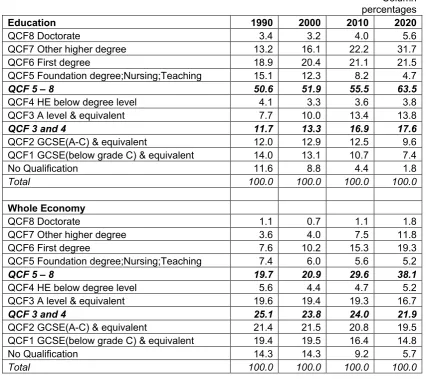
Table 4.2 Changing Pattern of Skill Demand by Qualification
percentages Column
Education 1990 2000 2010 2020
QCF8 Doctorate 3.4 3.2 4.0 5.6
QCF7 Other higher degree 13.2 16.1 22.2 31.7
QCF6 First degree 18.9 20.4 21.1 21.5
QCF5 Foundation degree;Nursing;Teaching 15.1 12.3 8.2 4.7
QCF 5 – 8 50.6 51.9 55.5 63.5
QCF4 HE below degree level 4.1 3.3 3.6 3.8 QCF3 A level & equivalent 7.7 10.0 13.4 13.8
QCF 3 and 4 11.7 13.3 16.9 17.6
QCF2 GCSE(A-C) & equivalent 12.0 12.9 12.5 9.6 QCF1 GCSE(below grade C) & equivalent 14.0 13.1 10.7 7.4
No Qualification 11.6 8.8 4.4 1.8
Total 100.0 100.0 100.0 100.0
Whole Economy
QCF8 Doctorate 1.1 0.7 1.1 1.8
QCF7 Other higher degree 3.6 4.0 7.5 11.8
QCF6 First degree 7.6 10.2 15.3 19.3
QCF5 Foundation degree;Nursing;Teaching 7.4 6.0 5.6 5.2
QCF 5 – 8 19.7 20.9 29.6 38.1
QCF4 HE below degree level 5.6 4.4 4.7 5.2 QCF3 A level & equivalent 19.6 19.4 19.3 16.7
QCF 3 and 4 25.1 23.8 24.0 21.9
QCF2 GCSE(A-C) & equivalent 21.4 21.5 20.8 19.5 QCF1 GCSE(below grade C) & equivalent 19.4 19.5 16.4 14.8
No Qualification 14.3 14.3 9.2 5.7
Total 100.0 100.0 100.0 100.0
Source: Wilson and Homenidou (2011)
4.5 Replacement Demands
35
Replacement demand and the age structure of the workforce in the Education sector are interrelated. The sector has an older age profile, with many over the age of retirement continuing to work. Meeting replacement demand is a concern as many of the skills held by retiring workers are essential to the sector. So, communicating knowledge and skills is essential to the sector.
The principal demand in the future will be to recruit high quality teachers often in subject areas in which there is likely to be relatively high demand. Whilst educational institutions now have some autonomy in their recruitment and the terms and conditions of employment they are able to offer, they are, in many instances, constrained by rules of entry to the teaching profession and nationally negotiated wage structures. An environment in which to develop individual skills would appear to be an important incentive attracting teachers and lecturers to particular institutions.
Chart 4.2 Replacement Demand, 2010-2020
Source: Wilson and Homenidou (2011)
-1000 0 1000 2000 3000 4000 Elementary occupations
Process, plant and machine operatives Sales and customer service
Caring, leisure and other service Skilled trades occupations Administrative and secretarial Associate professional and
technical Professional occupations Managers, directors and senior
officials
Whole economy
Net Change Replacement Demand Total Requirement
[thousands] -200 0 200 400 600 800
Elementary occupations Process, plant and machine
operatives Sales and customer service
Caring, leisure and other service Skilled trades occupations Administrative and secretarial Associate professional and
technical Professional occupations
Managers, directors and senior officials
Education
36
4.6 Conclusion
The key drivers of change in education have a variety of implications for employment and skills demand in the sector. Changes in the employment structure and an ageing will mean there are significant replacement and skills demands. Technical change, globalisation and competitiveness, developments in policy and regulation, together with sustainability and environmental issues have implications for skills demand. The Education sector has to be adept at responding to the demands of the labour market and retaining a workforce with managerial, leadership and technical skills to meet policy reforms, new funding regimes and legislation. Learner demands, such as new ways of delivering courses, and demographic change are also shaping skills required by the workforce.
Future skills are likely to be much the same as current skill needs (LSIS, 2012). The critical issue is that learning providers at all levels keep updated in their specific fields of knowledge. These relate to:
• subject knowledge;
• pedagogical skills development;
• IT skills;
• thinking and creative skills;
• management and leadership;
• customer service and community engagement skills;
• fundraising skills;
• low carbon knowledge;
37
5. Skills Supply
5.1 The Supply Infrastructure
Skills supply is dependent upon the supply of labour, the skills infrastructure (including compulsory education, FE and HE), and employers’ investment in skills. A sufficient supply of skills is required to increase productivity and to meet future demand for skills thus encouraging growth in the Education sector, but also in the labour market that it supports. Indicators show that the supply of skills matches demand where labour markets have a supply of well-educated workers (OECD, 2011). Shifts in demand, however, created by technological changes and the economic downturn, can change rapidly and a well-qualified workforce does not mean that the demand for skills will be met. So, training and development plays a vital role in ensuring that the supply of skills matches demand.
Various bodies oversee training and development in the Education sector:
• Learning and Skills Improvement Service (LSIS) is the sector-owned body that aims to drive for excellence in the learning and skills sector, building the sector’s own capacity to design, commission and deliver improvement and strategic change;
• Teaching and Development Agency for Schools (TDA) is the national agency and recognised sector body responsible for training and development of the school workforce;
• Association of Colleges (AoC) represents Colleges and provides professional support services for the workforce;
• Association of Learning Providers (AELP) is a national organisation representing independent learning providers who engage in government-funded skills training and employability programmes throughout England;
• General Teaching Council for England (GCT) is the professional body for teaching in England;
• General Teaching Council for Wales (GTCW) is the statutory self-regulating professional body for the teaching profession in Wales;
38
• General Teaching Council for Northern Ireland (GTCNI) is the statutory, independent body for the teaching profession dedicated to promoting the highest standards of professional conduct and practice in Northern Ireland;
• Higher Education Funding Council for England (HEFCE) promotes and distributes public money for teaching and research to universities and colleges, plus ensures accountability and promotes good practice;
• National College for School Leadership works to develop leaders in schools and academies, early years settings plus children’s services;
• Teach First is a charity that recruits and trains high achieving graduates to become teachers in disadvantaged and challenging schools;
• Teacher Support Network is a group of independent charities that provides practical support to staff in the Education sector; and
• Teacher Training and Education in Wales represents those working in primary