© Crown copyright 2010
ISBN 978-0-7559-8310-0 (web only)
This document is also available on the Scottish Government website: www.scotland.gov.uk
GrowinG Up in Scotland:
Maternal mental health and
its impact on child behaviour
and development
GrowinG Up in Scotland:
Maternal mental health and
its impact on child behaviour
and development
© Crown copyright 2010
ISBN: 978-0-7559-8310-0 (web only) The Scottish Government
St Andrew’s House Edinburgh
EH1 3DG
GrowinG Up in Scotland:
Maternal mental health and
its impact on child behaviour
and development
Louise Marryat and Claudia Martin
Scottish Centre for Social Research, Edinburgh
Prepared for the Scottish Government: Children, Young People and Social Care Directorate by the Scottish Centre for Social Research
acKnowlEdGEMEntS
First and foremost, the authors of the report would like to thank all the families who have given up their time to take part in the study and have supported it continuously sweep by sweep.
The Growing Up in Scotland study is very much a collaborative venture. We owe a huge debt of gratitude to our colleagues in NatCen’s operations and computing departments and to our team of interviewers and supervisors for conducting the interviews with such dedication and professionalism.
We would also like to thank everyone involved in the preparation of this report –
particularly Wendy van Rijswijk and colleagues at the Scottish Government who provided feedback on early drafts.
Responsibility for the opinions expressed in this report, and for all interpretation of the data, lies solely with the authors.
GrowinG Up in Scotland:
Contents
EXEcUtiVE SUMMarY v
1 BacKGroUnd & introdUction 1
1.1 the policy context 1
1.2 pregnancy, childbirth and mental health 2
1.3 Maternal mental health and child outcomes 3
1.4 longitudinal research 3
1.5 How the study will contribute to the evidence base 4
2 aiMS, oBJEctiVES and MEtHodS 5
2.1 project aim 6
2.2 Specific objectives 6
2.3 Summary of methods 6
3 FindinGS 8
3.1 Summary of main findings 9
3.2 incidence of maternal mental health problems 9
3.3 the social patterning of mental health problems 12 3.4 the impact of maternal mental health on early child outcomes 16
4 conclUSion 21
4.1 the key findings 22
4.2 the findings in context 22
4.3 Measurement issues: reliability and validity 23
4.4 artefact and attribution 24
4.5 conclusions and implications 24
rEFErEncES 26
appEndiX a: MEtHodS in dEtail 28
Assessing maternal mental well-being over time 28 The relationship between maternal mental health and child outcomes 30
appEndiX B: rEGrESSion oUtpUt 32
GrowinG Up in Scotland:
Background
A mentally healthy childhood can be a precursor to a healthy and productive adulthood. Children’s development can be affected by their socio-economic circumstances, but also by the emotional climate within the home, including the quality of relationships between a child’s parents, the supports that are available to a family and by the health and well-being of the child’s primary care-givers.
Longitudinal surveys afford a unique opportunity to study change over time for the same individuals and to explore the impact of prior circumstances on long-term outcomes. Using longitudinal data over four sweeps of the Growing Up in Scotland (GUS) study, this report explores the impacts of poor maternal mental health on children’s emotional, cognitive and behavioural development and on their relationships with peers at ages three to four.
aims of the research
The overall aim of the research is to explore the impacts of poor maternal mental health on children’s pre-school emotional, cognitive and behavioural development and considers:
• How many mothers in Scotland experience poor mental health in the first four years? • What are the characteristics of these women?
• What are the longer-term impacts on child development and behaviour (at age 4) of a brief period of maternal emotional ill-health?
• What are the impacts on child development and behaviour of persistent (long-standing or repeated) exposure to maternal emotional ill-health?
Methods
This paper is based on data from natural mothers interviewed at the time of the first
sweep of GUS undertaken in 2005/2006 when their baby was aged 10 months old and subsequently re-interviewed annually on three further occasions, until their children were almost four years old.
Maternal mental health was assessed at each interview and three categories of
respondent were defined: those who were mentally well at each survey sweep; those who were classified as having poor mental health at one sweep only; and, finally, those mothers who were classified as having poor mental health at two or more survey
sweeps. Child outcomes in relation to their emotional, behavioural and inter-personal relationships with peers were assessed at age 46 months, while cognitive development was assessed at 34 months. Standardised instruments were used throughout the survey.
ExECUTIvE SUMMARY
We have used statistical techniques which allow us to look at the relationship between a mother’s mental health and her child’s development, but which control for other factors – such as the mother’s age or marital status – which may affect both the mother’s
emotional health and the child’s development.
Findings
The findings suggest that maternal mental health had a significant impact on their child’s
development by the age of four.
The incidence and prevalence of maternal mental health problems
• Almost a third of all of the GUS mothers interviewed experienced poor mental health
at some point in the four years after the survey baby’s birth
• At any one sweep, between 12 and 16% of the mothers was experiencing mental health difficulties
• One in 6 mothers had poor mental health recorded at one sweep only and 1 in 7 had
poor mental well-being recorded on at least two occasions
• Poor mental health at the first sweep was a strong predictor of having poor mental
health scores recorded at a subsequent sweep or sweeps: two-thirds (67%) who had poor mental health at Sweep 1 went on to have mental health problems at subsequent sweeps
• Mental health difficulties were associated with a mother’s social circumstances: those
who experienced poverty and those living in an area of deprivation were more likely to experience brief and repeated mental health problems
• Repeated mental health problems were additionally associated with reported
relationship difficulties and with poor social support from friends, family or within the
local community
Maternal mental health and child development outcomes
• Children’s development was associated with a number of social factors, including
maternal age and educational level, income, employment and family characteristics
• Maternal mental health was significantly associated with child development outcomes
and there was evidence that the degree of a child’s exposure to maternal mental ill-health affected child development outcomes
• Cognitive development at 34 months was not statistically associated with the mother’s
mental health
GrowinG Up in Scotland:
• Children whose mothers were emotionally well throughout the survey period had
better social, behavioural and emotional development than those whose mothers had brief mental health problems and they, in turn, had better development than those whose mothers had repeated mental health problems
• The relationships between maternal mental health and children’s social, emotional and behavioural development remained statistically significant, even after we took account
of maternal family characteristics and socio-economic factors
conclusions and implications
Maternal mental health is closely associated with socio-economic disadvantage and with
deficits in relation to emotional and social support. Maternal mental health problems in the first year after a birth were often associated with further episodes of poor mental health and, to a large extent, predicted future difficulties. The Sweep 1 assessments took
place when the survey baby was already 10 months old, beyond the immediate postnatal period often associated with maternal depression. By age four, children who experienced prolonged (repeated) exposure to a mother with mental health problems were particularly likely to have poor behavioural, emotional and social outcomes. At the point when they
are about to start formal education, these early deficits may affect their transition to
school and their subsequent development and attainment.
There were significant associations between brief exposure to maternal mental ill-health,
but the outcomes for children were less marked than for those repeatedly exposed to a mother with mental health problems. This gradient in differences in outcome suggests that the impact of maternal mental health on children’s development may be causal. It was not possible to explore how or why maternal mental health impacted on child
outcomes, but we postulate that deficits in attachment may play a role by disrupting
the mother-child relationship, inhibiting the nature and quality of their interactions.
Supporting mothers with mental health problems may have a direct impact on young children’s development and well-being and could enhance children’s early school experiences.
ExECUTIvE SUMMARY
chapter
BACKGROUND & INTRODUCTION
1
The health and well-being of children is intimately connected with their early social, emotional and inter-personal experiences. This paper describes an analysis of the Growing Up in Scotland (GUS) longitudinal data-set over four sweeps, to explore the impacts of maternal mental health1 on their children at ages 3-4.
1.1 the policy context
“Equally Well”,2 the report of the ministerial task force of the Scottish Government on health inequalities, emphasised the well-established and persistent damaging effects of low income and poverty on physical health and mental health. The report made it clear that the Government is committed to reducing “unfair and unjust inequalities in health”:
the early years are identified by the Scottish Government as a priority area for action.
A mentally healthy childhood can be a precursor to a healthy and productive adulthood. Children’s development can be affected by their socio-economic circumstances, but also by the emotional climate within the home. This can include the quality of relationships between a child’s parents, the supports that are available to a family and by the health and well-being of the child’s primary care-givers. Longitudinal evidence suggests that conduct problems in childhood are associated with a range of adverse outcomes in adulthood, including crime, substance abuse, poor mental health, and poor educational attainment. “Equally Well” noted that:
Children’s earliest experiences shape how their brains develop. Very young children need secure and consistent relationships with other people, or else they will not thrive, learn and adapt to their surroundings [page 2].
In a similar vein, “Towards a Mentally Flourishing Scotland”3 notes that:
Concentrating efforts on the early years of life, from before birth to up to 8 years old, and more generally on the mental well-being of children and young people, is likely to bring the best long-term outcomes of improved population mental health [page 8] The health, well-being and development of children is jeopardised directly and indirectly by poverty (Marmot, 2005) but also, in complex ways, by poor parental health which, in turn, is affected by socio-economic factors. There is a higher incidence of depression and anxiety in women with young children, particularly among those who are young, unsupported and living in socio-economically disadvantaged circumstances (Brown and
Harris, 1978; Petterson et al., 2001).
CHAPTER
1
Background & introduction
1 1 We use the term mental “health” rather than “well-being” as the instruments used in GUS to capture psychological
health produce measures of “ill-health”, not positive well-being.
2 Equally Well: Report of the Ministerial Task Force on Health Inequalities; Scottish Government, 2008: http://www.scotland.gov.uk/Resource/Doc/201215/0053753.pdf
GrowinG Up in Scotland:
Maternal mental health and its impact on child behaviour and development
1.2 pregnancy, childbirth and mental health
A woman is more likely to be admitted to a psychiatric hospital in the three month period following childbirth than at any other time in her life (Kumar, 1982). While only a very small number of women – approximately 1-2 per thousand – will experience a severe
postpartum psychosis (Kendall et al., 1981), surveys suggest that between 10-17% of all deliveries are followed by a depressive episode that would be regarded as indicative of clinical depression, although this may never come to the attention of health professionals (Cox et al., 1982; Kumar and Robson, 1984).
There are competing schools of thought about the factors that may cause or be associated with depression in the period after childbirth: that depression is caused by biological changes associated with pregnancy and childbirth or that it is the social
context surrounding a pregnancy or birth that is the significant trigger or causal factor.
Brown and Harris (1978) showed that depression in women was very strongly associated with their psycho-social environment. In particular, women who had experienced a stressful life event but did not have supportive relationships, had three or more young children and/or were not employed outside the home were more likely to become depressed after a stress event. In addition, women who had experienced an early (before the age of 11) loss of their own mother were also more vulnerable in the face of adversity.
Using the same methodology as Brown and Harris, Martin et al., (1989) explored the role of stress events among women who had recently given birth. This study suggested that depression during pregnancy and in the six months after childbirth was common, affecting up to 1 in 5 women at some point in that period. It was shown that most depression observed after childbirth actually began in pregnancy. While there were some cases of severe psychiatric illnesses which began very shortly after childbirth and
3
CHAPTER
1
Background & introduction
1.3 Maternal mental health and child outcomes
Maternal mental health can affect children’s emotional well-being and their cognitive and behavioural development in particular ways. There is consistent evidence that depressed mothers may be less responsive than mentally healthy mothers to their infants’ efforts to engage with them and that this, in turn, affects the strength of infants’ attachment to the mother (Murray et al., 1991). Poor attachment, in turn, has been shown to be related to impaired cognitive functioning at 18 months (Murray et al., 1996). There is also evidence to suggest that there may be different developmental outcomes for children exposed briefly to a mother with poor mental health compared with those exposed over a prolonged period. While brief exposure to a mother with poor mental health has been associated with adverse emotional and cognitive outcomes for the child (Murray et al., 1996, and Wachs et al., 2009), long-term exposure may additionally be associated with adverse behavioural outcomes (Lyons-Ruth et al., 1993 and Chang et al, 2007).
Understanding the possible causal mechanisms is, however, not straightforward as the factors associated with poor maternal health may also be those associated with less favourable developmental outcomes for children.
1.4 longitudinal research
Longitudinal surveys afford a unique opportunity to study change over time for the same individuals, and to explore the impact of prior circumstances on long-term outcomes. Using longitudinal data over four sweeps of the Growing Up in Scotland (GUS) survey this paper explores the impacts of poor maternal mental health on children’s emotional, cognitive and behavioural development and on their relationships with peers at ages three to four.
We do not have a clear picture of the ways in which maternal mental health may change over the course of their child’s early years in Scotland and how poor maternal mental health at one point in time may impact on children’s longer-term development and well-being. Nor too do we have an understanding of the factors – including service
GrowinG Up in Scotland:
Maternal mental health and its impact on child behaviour and development
1.5 How the study will contribute to the evidence base
Longitudinal data afford valuable opportunities to explore change over time and possible causal relationships between circumstances or events and outcomes which are less likely to be subject to the reporting biases associated with one-off cross-sectional surveys. The GUS survey to date comprises information collected for mothers and their children at discrete points over a four year period and it is now possible to assess whether early social and inter-personal experiences may have impacted on children’s development and well-being.
The analysis reported here uses statistical techniques which allow us to assess the extent to which broader psycho-social and socio-economic factors influence both maternal mental health and child outcomes. The analysis considers whether and in what ways maternal mental health may affect a child and, in particular, whether brief or repeated exposure to an emotionally compromised mother might have differential impacts on child development and sociability. Finally, we consider the implications of the
findings, on the one hand, to identify and support mothers with mental health problems
chapter
AIMS, OBJECTIVES AND METHODS
2
GrowinG Up in Scotland:
Maternal mental health and its impact on child behaviour and development
2.1 project aim
The overall aim of the research is to explore the impacts of poor maternal mental health on children’s pre-school emotional, cognitive and behavioural development.
2.2 Specific objectives
The specific objectives are to explore:
• The incidence of brief and repeated poor mental health among mothers of young
children in Scotland
• The impacts on children’s development and behaviour of brief exposure to poor
mental health
• The impacts on children’s development and behaviour of repeated exposure to poor
mental health
The research questions associated with each of these objectives are:
• How many mothers in Scotland experience poor mental health in the first four years? • What are the characteristics of these women?
• What are the longer-term impacts on child development and behaviour (at age 4) of a brief period of maternal emotional ill-health?
• What are the impacts on child development and behaviour of persistent (long-standing or repeated) exposure to maternal emotional ill-health?
2.3 Summary of methods
This paper is based on the women who were interviewed at the time of the first sweep of
GUS in 2005, when their baby was aged 10 months old.4 This analysis looks at data from natural mothers interviewed at that time and who were then subsequently
interviewed on three other occasions, each year until their children were aged 46 months. Different instruments were used at different sweeps to assess maternal mental health. The methods section (Appendix A) details what instruments were used and how we
classified women in terms of the mental health scores for each of the measures. The findings that we report in this paper look at maternal mental health at different points and
assess whether the mother’s mental health is associated with the cognitive development of her child when he or she is almost three years old, and emotional, behavioural and social development when the child is almost four. In particular, we have looked at whether there were differences between the children of women who had poor mental
7
CHAPTER
2
Aims, objectives and methods
health at only one point, at two or more points in the four years of the survey or were mentally well at all times that the survey was conducted. In our analyses we have used statistical techniques which allow us to look at the relationship between a mother’s mental well-being and her child’s development, but which control for other factors – such as the mother’s age or marital status – which may affect both the mother’s emotional well-being and the child’s development. Appendix A provides a full description of the methods we used to conduct these analyses, including description of the statistical techniques employed.5
chapter
FINDINGS
3
9
CHAPTER
3
Findings
3.1 Summary of main findings
• Almost a third (31%) of the GUS mothers overall experienced poor mental health at
some point in the four survey years, although at any one time, the incidence of poor mental health was much lower, affecting 12-16% of mothers
• Almost 1 in 6 (17%) had poor mental well-being recorded on one occasion only. These women were classified as having “brief” mental health problems
• Almost 1 in 7 (14%) had poor mental well-being recorded on at least two occasions. These women were classified as having “repeated” mental health problems
• Mental health difficulties were associated with a mother’s social characteristics (e.g.
lone parenting, low income and living in an area of deprivation) and with reported
relationship difficulties and poor social support
• Children’s social, behavioural, cognitive and emotional development were also
associated with social factors
• Children whose mothers were emotionally well throughout the survey period had
better social, behavioural and emotional development than those whose mothers had brief mental health problems, and they in turn, had better development than those whose mothers had repeated mental health problems
• The relationships between maternal mental health and children’s social, emotional and behavioural development at 46 months was still statistically significant after we took
account of social factors
• Cognitive development at 34 months was not statistically associated with the mother’s
mental well-being
3.2 incidence of maternal mental health problems
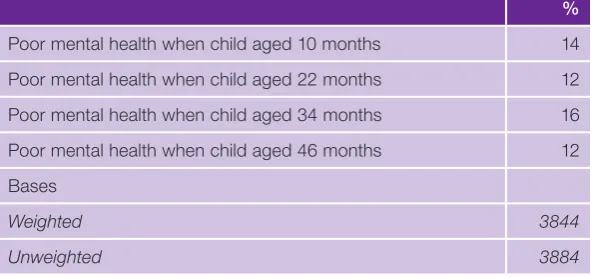
Maternal mental health was assessed at each sweep of the survey. As can be seen in Table 3.1, at any one sweep, 12-16% of all mothers interviewed were found to be experiencing poorer mental health (see Appendix A for a detailed description of how
GrowinG Up in Scotland:
[image:21.595.73.369.210.349.2]Maternal mental health and its impact on child behaviour and development
Table 3.1 Incidence of poorer mental health at each sweep
%
Poor mental health when child aged 10 months 14 Poor mental health when child aged 22 months 12 Poor mental health when child aged 34 months 16 Poor mental health when child aged 46 months 12 Bases
Weighted 3844 Unweighted 3884
Base: All natural mothers who responded at sweeps 1-4
Whereas about two thirds (69%) of GUS mothers had good or average health at all sweeps, almost a third (31%) of the GUS mothers had scores which indicated that they were experiencing mental health problems at some point in the four years after the birth of the cohort baby (see Figure 3-A).
Figure 3‑A Instances of poorer maternal mental health (%)
Base: All natural mothers in birth cohort at sweep 4, n = 3844 (unweighted)
None (good or average mental health at all sweeps) At one sweep
At two sweeps
Poor Mental Health
At three sweeps At all four sweeps
2% 5% 7%
17%
[image:21.595.77.472.513.714.2]11
CHAPTER
3
Findings
In all, 1 in 7 (14%) of all the women was defined as having “repeated” poor mental health
– with scores indicative of poorer mental health at two or more sweeps of the survey.
As we were measuring at four discrete points in time, it cannot be assumed that repeated negative scores indicate continuous mental health problems. Nor can it be assumed that
those we have classified as having “brief” emotional health problems were experiencing transitory or fleeting difficulties. It may simply have been that they had problems at other
times as well, but not at the point when a survey interview was carried out.
In the following sections, we distinguish between three distinct groups comprising those
who were classified as having:
• good mental health at every sweep (that is, had scores in the good/average range) • a “brief” mental health problem (poor mental health at one sweep only – 1 or 2 or 3 or 4) • a “repeated” mental health problem (poor mental health at any two (or more) sweeps)6
It was relatively unusual for someone to be included in this “repeated” category if she had
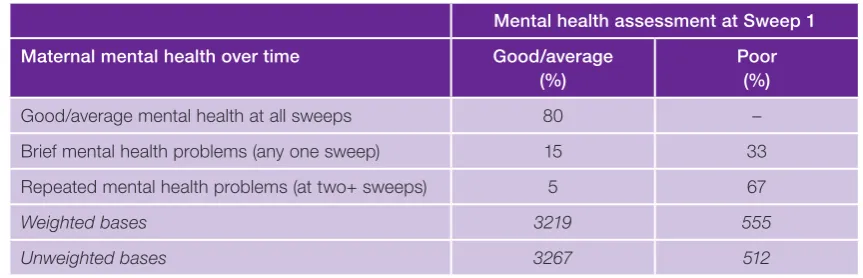
been defined as having average or good mental health at Sweep 1: only 1 in 5 (20%) of
these women (that is, those with good or average mental health at sweep 1) had scores
indicating poor mental health at a further point. On the other hand, of those who had
[image:22.595.95.527.568.707.2]poor mental health at Sweep 1, two-thirds (67%) went on to have poor mental health scores recorded at a subsequent sweep or sweeps.
Table 3.2 Mother’s mental health at Sweep 1 (10 months after child’s birth) by mother’s mental health group
Mental health assessment at Sweep 1
Maternal mental health over time Good/average
(%)
Poor (%)
Good/average mental health at all sweeps 80 – Brief mental health problems (any one sweep) 15 33 Repeated mental health problems (at two+ sweeps) 5 67 Weighted bases 3219 555 Unweighted bases 3267 512
GrowinG Up in Scotland:
Maternal mental health and its impact on child behaviour and development
3.3 the social patterning of mental health problems
The mental health of the GUS mothers was patterned by social and economic factors.
The following figures provide some basic descriptive information about the characteristics
of women who experience brief, repeated or no mental health problems in the child’s early years.
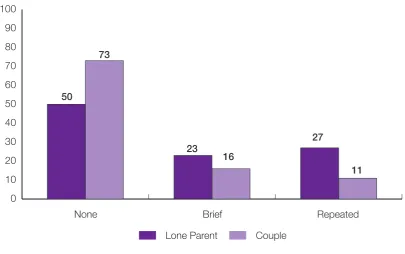
[image:23.595.83.489.362.616.2]Lone parents were found to be both more likely to experience a mental health problem while their child was young, and were also more likely to have a repeated mental health problem (Figure 3-B).
Figure 3‑B Maternal mental health group by family type (%)
None Brief Repeated
50
73
23
16
27
11
Lone Parent Couple 0
13
CHAPTER
3
Findings
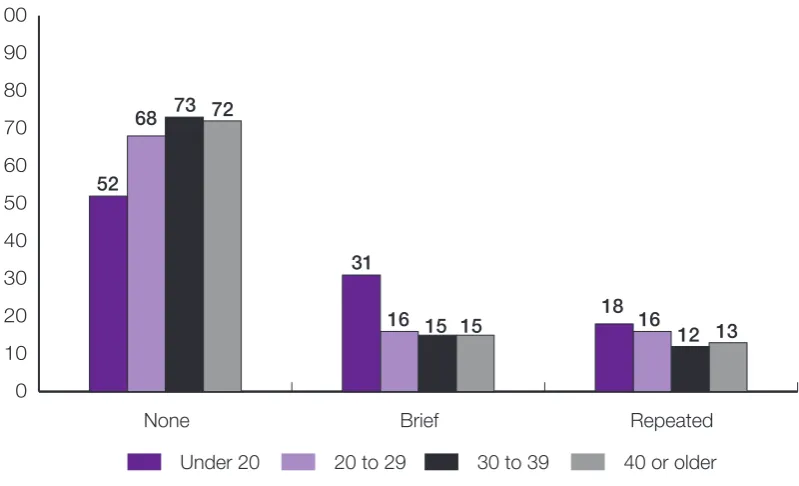
The mother’s age was less obviously associated with poor mental health (Figure 3-C),
although it is worth noting that although teenage mothers were significantly more likely
[image:24.595.115.515.290.533.2]than older mothers to have a brief period of poor mental health, the difference was much smaller for repeated mental health problems.
Figure 3‑C Maternal mental health group by age of mother at birth of the child (%)
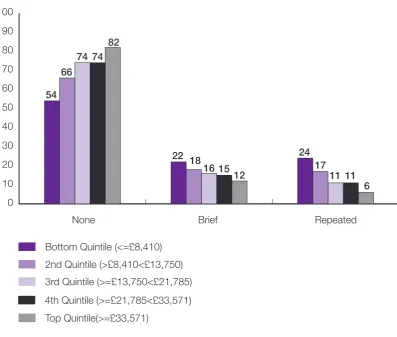
There were also stark differences by income (Figure 3-D) with 82% of those in the highest income group having good/average mental health throughout the four sweeps, compared with just 52% of those in the lowest equivalised income group. In contrast, four times as many women in the lowest income group had repeated mental health problems as those in the highest income group (24% compared with 6%).
Under 20
None Brief Repeated
52
68 73 72
31
16 15 15 18 16
12 13
20 to 29 30 to 39 40 or older 0
GrowinG Up in Scotland:
[image:25.595.86.484.209.546.2]Maternal mental health and its impact on child behaviour and development
Figure 3‑D Maternal mental health group by Household equivalised income (%)7
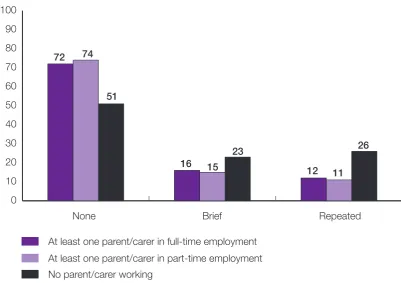
Household employment status also showed a relationship with maternal mental health (Figure 3-E) In particular, in households where there was no-one in paid employment,
rates of poor maternal mental health were significantly higher. It appeared to make little
difference whether the employment was full or part-time.
54 66
74 74 82
22 18
16 15 12
24 17
11 11 6
Bottom Quintile (<=£8,410)
None Brief Repeated
3rd Quintile (>=£13,750<£21,785)
Top Quintile(>=£33,571)
4th Quintile (>=£21,785<£33,571) 2nd Quintile (>£8,410<£13,750) 0
15
CHAPTER
3
[image:26.595.111.513.214.497.2]Findings
Figure 3‑E Maternal mental health group by household employment status (%)
The factors that could affect mental health may, of course, be inter-related. For example, low income is likely to be connected to unemployment. As such, we wanted to explore the extent to which different factors were important in their own right. We therefore used multivariate regression analysis to look at the independent associations between maternal mental health and the various indicators of socio-economic status. Regression analysis allows the association between an explanatory variable (such as low income) and an outcome variable (such as repeated mental health problems) to be explored while controlling for other variables (such as lone parenthood) which may affect the outcome variable – mental health. As well as considering various socio-economic characteristics, including those described above, a range of additional psycho-social factors were also considered which have been shown to be associated with maternal mental health in previous research. These include access to social support and the quality of the couple
relationship (Brown and Harris, 1978; Martin et al., 1989).8
8 A fuller description of the analysis undertaken is included in Appendix B. The odds ratios from the regression model are included in Table B.1 in Appendix B. The interpretation of odds ratios is also explained in Appendix B.
72 74
51
16 15 23
12 11 26
At least one parent/carer in full-time employment
None Brief Repeated
At least one parent/carer in part-time employment No parent/carer working
GrowinG Up in Scotland:
Maternal mental health and its impact on child behaviour and development
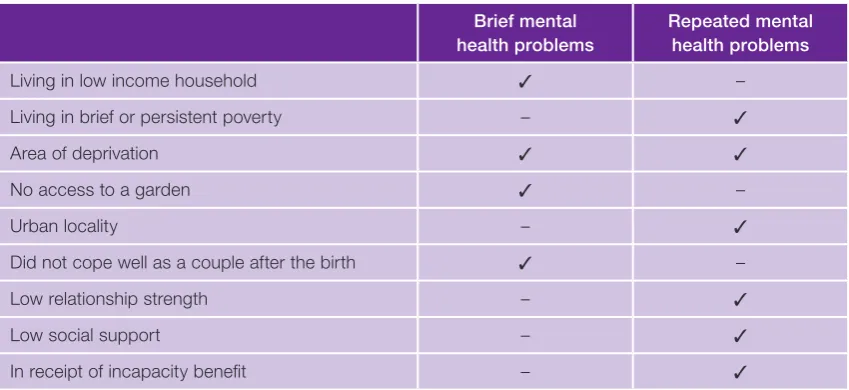
Living in an area of deprivation was the only characteristic associated with both brief and repeated mental health problems. Repeated mental health problems were additionally associated with experiencing brief or persistent poverty, low social support and a poor relationship with a partner as well as living in a large urban locality. Having no access to a garden and having a low household income were associated with brief mental health
problems as was reported difficulty in coping shortly after the birth. Table 3.3 shows the factors that had an independent statistically significant association with maternal mental
health after we took account of the inter-relationships between variables.
Although socio-economic factors were significantly and independently associated with
brief mental health problems, the relationship was more pronounced in relation to
[image:27.595.72.497.409.604.2]repeated mental health difficulties.
Table 3.3 Independent significant associations with brief and repeated mental health problems
Brief mental health problems
Repeated mental health problems
Living in low income household ✓ –
Living in brief or persistent poverty – ✓
Area of deprivation ✓ ✓
No access to a garden ✓ –
Urban locality – ✓
Did not cope well as a couple after the birth ✓ – Low relationship strength – ✓
Low social support – ✓
In receipt of incapacity benefit – ✓ 3.4 the impact of maternal mental health on early child outcomes
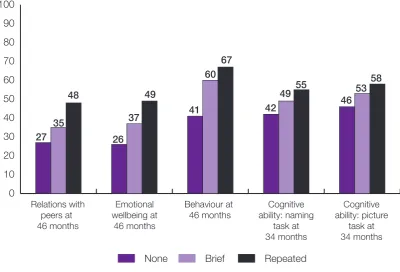
Figure 3-F shows the percentage of children for each maternal mental health category who had poorer child outcome scores. At a basic level, maternal mental health was
significantly associated with children’s emotional well-being, cognitive development,
behaviour and their social relationships with peers at 46 months. For example, almost a quarter (27%) of children whose mothers had good/average mental health at all sweeps
had poor reported relations with their peers at 3 years of age. However, this figure almost
17
CHAPTER
3
Findings
There was a clear effect of the duration of exposure to poor mental health for all of the child outcomes: those children exposed to repeated poor maternal mental health had poorer outcomes than those exposed “briefly” who, in turn, had poorer outcomes than
those whose mothers were defined as having good or average mental health throughout.
In other words, the greater or more prolonged the exposure to maternal mental health problems, the greater the likelihood that the child would have poorer outcomes. These differences were more marked for some outcomes than others but were statistically
[image:28.595.113.514.353.625.2]significant for all.
Figure 3‑F Poor child outcomes in relation to maternal mental health status (%)
Base=All mothers who participated at sweep 4, n = 3844
It is perhaps not surprising that many of the factors associated with poorer maternal mental health were also associated with child outcomes. The following analysis therefore
assessed whether maternal mental health status continued to be significantly associated
with child outcomes once other socio-economic factors were controlled for: that is, whether it was simply that the same socio-economic factors were associated with maternal mental health and child outcomes or whether maternal mental health affected child outcomes, regardless of other socio-economic factors. The following sections consider the relationship between maternal mental health and each of the selected child outcomes (see Figure 3-F).
27 35 48 26 37 49 41 60 67 42 49 55 4653 58 Relations with peers at 46 months Emotional wellbeing at 46 months Behaviour at 46 months Cognitive ability: naming task at 34 months Cognitive ability: picture task at 34 months
GrowinG Up in Scotland:
Maternal mental health and its impact on child behaviour and development
Relations with peers
Children’s social skills were assessed in terms of the quality of his/her relations with peers
at age 46 months via a sub-scale of Goodman’s “Strengths and Difficulties
Questionnaire” (SDQ). Appendix A provides further detail about the measures used. Looking at just the relationship between the child’s social skills and maternal mental health without taking into account any other factors, we found that children exposed to a mother with repeated mental health problems were almost twice as likely to have poorer relations with peers than those whose mothers remained mentally well throughout the four year period or who had only brief episodes of poor mental health in that time. The more exposed a child was to poor maternal mental health, the greater the likelihood that
they would be experiencing difficulties in their peer relationships at age 46 months.
When we added in other factors, we found that that maternal mental health continued to
exert a significant independent impact on a child’s social skills. However, other
socio-economic, household and family characteristics were also independently associated with peer problems. In particular, children in low income households, children with no siblings, and those whose parents (or step-parents) had a poor relationship were more likely to have poor pre-school relationships with their peers. In other words, children who do not experience positive relationships within the home appear to have more negative social relationships outside the home. Boys were also found to have poorer peer relationships than girls at this age.
Emotional well-being
A very similar pattern was observed in relation to children’s emotional well-being at 46 months with, once again, an almost two-fold difference between those with an emotionally well mother and those children whose mothers had repeated problems. Again too, those children whose mothers had brief episodes of poorer mental health were more likely than those with repeated exposure to fare well emotionally, but had poorer outcomes than children of mentally well mothers.
The child’s emotional well-being was also clearly and independently associated with his or her mother’s mental state, even when taking into account other socio-demographic factors, including the mother’s social class status and household income, both of which were also independently associated with children’s emotional outcomes. Having a poor
19
CHAPTER
3
Findings
Behaviour
Children’s behaviour at sweep 4, when they were almost 4 years old, was assessed using the conduct and hyperactivity sub-scales of the SDQ. This included a list of statements such as “child often has temper tantrums or hot tempers” and “child often lies or cheats”, to which the respondent had to code whether this was “Not true” of their child, “Somewhat true”, or “Certainly true”.
Maternal mental health remained significantly and independently associated with
behavioural outcomes at 46 months: children whose mothers had either brief or repeated mental health problems were more likely than those whose mothers were emotionally
well to have behavioural difficulties at 46 months. Demographic and socio-economic factors were again also significantly independently associated with behavioural outcomes:
children with a younger mother, those with lower social support, who had lived in
persistent poverty and in an area of higher deprivation had poorer behavioural outcomes than other children.
Cognitive development
Cognitive outcomes had a rather different relationship with maternal mental health than the social, emotional and behavioural outcomes. While cognitive outcomes (both naming
vocabulary and picture similarities) at 34 months were significantly associated with
maternal mental health, there was a less marked gradient compared with the other
outcomes we examined. More importantly, the association was no longer significant once
other social and economic factors were taken into account.
Factors which were found to be significantly related to lower cognitive scores included
maternal characteristics (low maternal educational attainment and younger age) and socio-economic factors (living in an area of deprivation, an urban area of residence, larger family size and living in persistent poverty during the early years).
Table 3.4 summarises the relationships between maternal mental health and the selected
child development outcomes that continued to show a significant independent
GrowinG Up in Scotland:
Maternal mental health and its impact on child behaviour and development
Table 3.4 Summary of significant independent association between maternal mental health and poorer child outcomes
Child outcomes
Behaviour Emotional Peer Cognitive:
Picture task
Cognitive: Naming
task Maternal characteristics
Poor mental health (brief and
repeated) ✓ ✓ ✓ – – Age (younger) ✓ – – – ✓
Unemployment or low status
occupation ✓ ✓ – – – Low educational attainment – – – ✓ ✓ Family/child characteristics
Male – – ✓ – – Not an only child – – ✓ ✓ ✓ Household characteristics
Area of deprivation ✓ – – ✓ ✓
Urban locality – – – ✓ ✓
Low household income – ✓ ✓ – –
Persistent poverty ✓ – – ✓ ✓ Psycho–social characteristics
Poor couple relationship – ✓ ✓ – – Lower social support ✓ – – – –
The cognitive assessments were conducted at an earlier stage of development than the other measures which may explain at least some of the difference with this outcome. It may also be that very early maternal mental well-being may be particularly important in terms of shaping children’s cognitive abilities, possibly mediated by poor attachment. We were not able to explore this as we were unable validly to identify mothers who may have been depressed in the early postpartum period where there may be a more pronounced potential impact. However, there is also strong evidence that children’s cognitive
chapter
CONCLUSION
4
GrowinG Up in Scotland:
Maternal mental health and its impact on child behaviour and development
4.1 the key findings
The longitudinal Growing Up in Scotland (GUS) survey was used to explore whether being exposed to a mother with poor mental health affected children’s development at age four. The mental health of a random sample of over 3000 mothers in Scotland was assessed at four points in time between 10 and 46 months after the study child was born. We distinguished between mothers who were emotionally well throughout the survey period (that is, were emotionally well at every interview), those who had scores
suggesting mental health problems on one occasion only and, finally, those who
appeared to have repeated mental health problems.
At any one point, between 12 to 16% of these mothers were deemed to be experiencing
poor mental health. However, overall, almost a third were defined as having poor mental health at some point in the first four years of the cohort child’s life: 17% had a brief
episode of poor mental health, but a similar proportion (14%) were found to have been in poorer mental health at more than one survey sweep.
Maternal mental health was closely associated with women’s socio-economic conditions and the quality of their inter-personal relationships. Although children’s social, emotional, behavioural and cognitive development was associated with social conditions, it was also linked with maternal characteristics such as age, occupational status and educational
attainment. Importantly however, maternal mental health was found to exert a significant
independent effect on key child outcomes. For all of the child outcomes included in the analyses, it was clear that children with mothers who were free from mental health problems were more likely to have more positive outcomes and that those children whose mothers had persistent mental health problems had the poorest outcomes. Children who had more prolonged exposure to a mother with mental health problems were more likely to have an adverse developmental outcome. This possible “dose response” relationship (the higher the “dose” the greater the impact) between maternal
mental health and child outcomes indicates that the relationship may be causal; that is
the mother’s mental health problems are a causal factor in the child’s poorer outcomes.
4.2 the findings in context
It has been suggested that there is a complex causal association between the quality of mothering and a range of emotional, behavioural, cognitive and social outcomes for children. Murray (1992, 1996) has postulated that mothers suffering from depression may have weaker attachment to the baby and may, as a result, be less attuned and
emotionally responsive to the baby and that this may explain deficits in their child’s
23
CHAPTER
4
Conclusion
Much of the evidence linking maternal depression to longer-term outcomes for children has focused on relatively early and often severe postpartum depressive disturbance and
rather less on depression beyond the first few weeks or months following a birth. While
there is a body of observational research, much of the research evidence exploring links between maternal mental health and child outcomes has relied on retrospective analyses. The longitudinal Growing Up in Scotland (GUS) study provides an opportunity to explore links over time, based on measures obtained at discrete points in a child’s life. Thus, measures of maternal mental health when the baby is almost a year old can be linked to later measures of child development which are not contaminated by the mother’s mental health at an earlier phase of the survey. They may, of course, be influenced by her current
mental health status and the effect that might have on our findings is considered below.
4.3 Measurement issues: reliability and validity
In the absence of standardised clinical assessment, the definition and identification of
mental ill-health is problematic. There is a range of measures and instruments which can be used by non-clinicians in non-clinical settings. The choice of assessment tool has to be valid and reliable, but also has to be appropriate for the population and the mode of administration. The instruments used within the GUS survey interview had to compete with a large number of questions in a time-limited context and had to be acceptable to the respondents. Two different instruments were used and, in hindsight, it might have been preferable for one consistent measure to have been used throughout. However, both instruments are well-validated and there was a high correlation within our sample between the measures.
As we noted (see Appendix A), neither of the instruments used (the SF12 (MCS) nor
DASS) have threshold scores which define whether an individual’s score is indicative of
a psychiatric disorder. Such stringent criteria are not necessarily required. This analysis
used within-cohort scores to define those with poorer mental health in relation to other mothers rather than defining these women as suffering from a mental illness which meets
The Diagnostic and Statistical Manual of Mental Disorders (DSM) criteria.
We have emphasised on several occasions that we cannot assume that women with repeated poorer mental health were necessarily suffering from a chronic mental health problem. Although it is quite likely that some of the women who had scores indicative of poorer mental health on more than one occasion were experiencing long standing
difficulties, we would urge caution in over-extrapolation. However, it was clear that children exposed to repeated maternal mental health difficulties had poorer outcomes
GrowinG Up in Scotland:
Maternal mental health and its impact on child behaviour and development
4.4 artefact and attribution
Depressed or anxious mothers may have a negative perception of themselves, their relationships and their children and this could be reflected in their responses to the survey questions about their child. We cannot preclude that this may have occurred in some cases, particularly in relation to reports of behavioural, social and emotional outcomes. However, the longitudinal research design reduces the chance that the information provided by mothers about child outcomes was contaminated by her responses to mental health questions at an earlier time. The use of well-established, standardised and validated instruments, suitable for administration by interviewers, to assess child development also ameliorated potential biases associated with negative maternal affect.
There was suggestive evidence that women in conflictual relationships where the couple
either did not cope well in the early months or showed signs of difficulty at a later point
were more likely to be experiencing poorer mental health and for there to be an independent
effect of these relationship tensions on children. Again, we cannot be confident that the
poor relationships are not themselves a consequence rather than a cause of maternal mental state. However, there is a plethora of evidence suggesting that women who have unsupportive relationships are more vulnerable to depression, particularly in the context
of stressful life events or financial hardship (Brown and Harris, 1978).
4.5 conclusions and implications
Maternal mental health was associated with socio-economic disadvantage, impoverished interpersonal relationships and with poor social support. It was clear that maternal mental health problems at Sweep 1 when the cohort baby was 10 months old and therefore beyond the immediate postnatal period usually associated with depression, were
common. Previous research has also observed the high incidence of depression beyond the early postnatal months (Martin et al., 1989). Moreover, it was apparent that mental health problems among the GUS cohort mothers at Sweep 1 were often associated with further episodes of poor mental health. Indeed, it was unusual for a mother to have a
repeated mental health problem which began (or was first recorded by the survey interview) after the first year. Exposure to a mother with mental health problems, in turn, was found to be significantly associated with negative impacts on their children with
prolonged or repeated exposure having a greater impact than brief exposure.
The study children were almost four years old at the time of Sweep 4 and most were
attending pre-school. At this early stage, there was evidence already of clear deficits in
relation to their emotional, social and behavioural development linked to their mothers’
emotional well-being. These deficits will undoubtedly shape their pre-school and
25
CHAPTER
4
Conclusion
There were significant associations between brief and repeated exposure to maternal
mental ill-health and child outcomes, but the relationship was most marked for children who experienced repeated exposure. The evidence that repeated exposure to maternal mental ill-health was associated with a greater likelihood of an adverse outcome
suggests that the effects may be causal. It was not possible to explore how or why
maternal mental health impacted on child outcomes, but we might postulate that deficits
in attachment may play a role by disrupting the mother-child relationship and diminishing the quality of their interactions (Murray et al., 1996).
Monitoring maternal mental health beyond the first months after a birth could facilitate
GrowinG Up in Scotland:
Maternal mental health and its impact on child behaviour and development
Bromley, C. (2009) Growing Up In Scotland: The impact of children’s early activities on cognitive development, Edinburgh: Scottish Government.
Brown, G.W. and Harris, T.O. (1978) Social Origins of Depression, London: Tavistock.
Chang, J.J., Halpern C,T., and Kaufman, J.S. (2007) “Maternal Depressive Symptoms,
Father’s Involvement, and the Trajectories of Child Problem Behaviors in a US National Sample”, Archives of Pediatrics and Adolescent Medicine, 161/7, pp 697-703.
Cox, J.L., Connor, Y., and Kendell, R.E. (1982) “Prospective study of the disorders of
childbirth”, British Journal of Psychiatry, 118, pp 689-692.
Kendall R.E., Rennie D., Clarke, J.A. and Dean, C. (1981) “The social and obstetric
correlates of psychiatric admission in the peurperium”, Psychological Medicine, 11, pp 341-350.
Kumar, R. (1982) “Neurotic disorders in childbearing women” in Brockington, I.F. and Kumar, R. (eds) Motherhood and mental illness; London: Academic press.
Kumar, R. and Robson, K. (1978) “A prospective study of emotional disorders in childbearing women”, British Journal of Psychiatry, 144, pp 35-47.
Lyons-Ruth, K. Alpern, L. and Repacholi, B. (1993) “Disorganized Infant Attachment
Classification and Maternal Psychosocial Problems as Predictors of Hostile-Aggressive
Behavior in the Preschool Classroom”, Child Development, 64/2, pp 572-585.
Marmot M (2005) Social determinants of health inequalities, Lancet, 365, 1099–104.
Martin, C.J., Brown, G.W., Goldberg, D.P. and Brockington, I.F. (1989) “Psychosocial
stress and puerperal depression”, Journal of Affective Disorders, 16, pp 283-93.
Murray, L., Cooper, P.J. and Stein, A. (1991) “Postnatal depression and infant
development”, BMJ, 302, pp 978-979.
Murray, L., Fiori-Cowley, A., Hooper, R. and Cooper, P. (1996) “The Impact of Postnatal Depression and Associated Adversity on Early Mother-Infant Interactions and Later Infant
Outcome”, Child Development, 67/5, pp 1891-1914.
27
REFERENCES
Petterson, S.M. and Burke-Albers, A. (2001) “Effects of Poverty and Maternal Depression on Early Child Development”, Child Development, 72/6, pp 1794-1813.
Scottish Government (2007) Towards a Mentally Flourishing Scotland: The Future of Mental Health Improvement in Scotland 2008-11, Edinburgh: Scottish Government.
Scottish Government (2008) Equally Well: Report of the Ministerial Task Force on Health Inequalities, Edinburgh: Scottish Government.
Wachs, T.D., Black, M.M. and Engle, P.L. (2009) “Maternal Depression: A Global Threat to Children’s Health, Development, and Behavior and to Human Rights”, Child
GrowinG Up in Scotland:
Maternal mental health and its impact on child behaviour and development
appEndiX a: MEtHodS in dEtail
assessing maternal mental well-being over time
This report uses data from the birth cohort respondents only (the younger cohort in GUS9). At sweep 4, the cohort children were aged 46 months.
GUS has measured maternal mental health using two different scales: at sweeps 1 and 3 (ages 10 months and 34 months respectively), the SF12 Mental Health Component Score (MCS) was used, whereas at sweeps 2 and 4 (ages 22 months and 46 months respectively) selected items from the Depression, Anxiety and Stress Scale (DASS10) were used.11 Both scales are widely used and well validated.
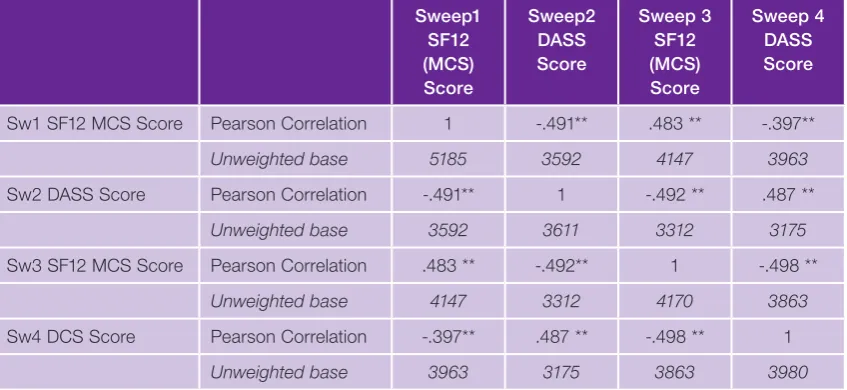
The use of two different scales at alternative sweeps potentially presents some problems in relation to comparability, particularly as the MCS aims to assess the impact mental health problems have on everyday life, while the DASS is a more symptomatic measure. In order to calculate the consistency of the measurement of maternal mental health
problems between the scales, Pearson’s correlation coefficient was calculated for the raw scores at each sweep. There were statistically significant and fairly strong correlations
between the scales at each sweep, particularly between the MCS at 34 months and the DASS at 46 months. This suggests that each measure is capturing a set of similar
difficulties or symptoms among respondents at each sweep.12 Table 3.1 shows the correlations between the two measures for the GUS sample.
9 For further information on the design of the Growing Up in Scotland study, please see the study website: www.growingupinscotland.org.uk
10 Six items from the Depression, Anxiety and Stress (DASS) scale (Lovibond & Lovibond, 1995) were included in the self-completion section of the interview. DASS is available in a 42-item, or 21-item scale in full. We took 6 items: 3 measuring stress, and 3 measuring depression. These items can be combined to create a stress scale and depression scale. Standardized versions of the scales (z-scores) can be combined to produce a single scale measuring evidence of negative emotional symptoms in the respondent.
29
[image:40.595.102.526.209.404.2]APPENDIx
a
Table A.1 Correlations between SF12 (MCS) and DASS scores at sweeps 1 to 4
Sweep1 SF12 (MCS) Score Sweep2 DASS Score Sweep 3 SF12 (MCS) Score Sweep 4 DASS Score
Sw1 SF12 MCS Score Pearson Correlation 1 -.491** .483 ** -.397** Unweighted base 5185 3592 4147 3963 Sw2 DASS Score Pearson Correlation -.491** 1 -.492 ** .487 **
Unweighted base 3592 3611 3312 3175 Sw3 SF12 MCS Score Pearson Correlation .483 ** -.492** 1 -.498 **
Unweighted base 4147 3312 4170 3863 Sw4 DCS Score Pearson Correlation -.397** .487 ** -.498 ** 1
Unweighted base 3963 3175 3863 3980
** Correlation is significant at the <0.01 level (2-tailed).
Neither the SF12 (MCS) nor DASS have threshold scores which define “caseness” – that
is, whether an individual’s score indicates that they are suffering from a psychiatric disorder
which could be classified using standardised diagnostic criteria such as DSM-IV (2000). For these analyses, maternal mental health is defined in terms of an individual’s score in
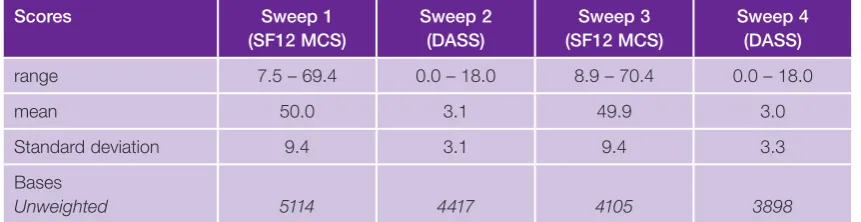
relation to the mean score for the cohort as a whole. Preliminary analyses suggested that scores which were more than one standard deviation from the mean should be used.
A respondent is defined as having “poor” mental health at sweeps 1 and/or 3 if she has
a score on SF12 (MCS) which fell more than one standard deviation below the mean
population score for that sweep. At sweeps 2 and 4, poor mental health is defined in
relation to DASS scores which fall more than one standard deviation above the mean for the cohort.
A “brief” mental health problem was defined as a score more than one standard deviation
from the mean at any one sweep – on SF12 (MCS) at sweep 1, DASS at sweep 2, SF12
(MCS) at sweep 3 or DASS at sweep 4. A “repeated” mental health problem was defined
GrowinG Up in Scotland:
[image:41.595.70.501.206.317.2]Maternal mental health and its impact on child behaviour and development
Table A.2 Maternal mental health scores by Survey Sweep
Scores Sweep 1
(SF12 MCS) Sweep 2 (DASS) Sweep 3 (SF12 MCS) Sweep 4 (DASS)
range 7.5 – 69.4 0.0 – 18.0 8.9 – 70.4 0.0 – 18.0 mean 50.0 3.1 49.9 3.0 Standard deviation 9.4 3.1 9.4 3.3 Bases
Unweighted 5114 4417 4105 3898
We have no information about the duration of any mental health problems, including the
timing of any onset or fluctuations over time. Our measures are based on score results
on the SF12 (MCS) or DASS at the time of the survey interview. As the data were collected at discrete points in time, we do not have access to continuous measures of respondents’ mental health which means that we cannot assume that we are identifying chronic – that is, long-standing – mental health problems.
the relationship between maternal mental health and child outcomes
Previous research has found that exposure to poor maternal mental health in the early years can have a range of impacts on child behavioural, emotional, social and cognitive outcomes, and that there may be differences in outcomes for those exposed to brief or long-standing maternal mental ill health. In order to explore whether such associations can be discerned within the representative GUS sample of mothers and children, multivariate analysis attempted to examine the impact of brief and repeated exposure to poor maternal mental health on each of these areas, while controlling for possible confounding effects of other known socio-demographic and environmental factors.
Scores on four scales from Goodman’s “Strengths and Difficulties Questionnaire” at age
46 months (sweep 4) were used to assess impact on emotional, social and behavioural
outcomes. The Strengths and Difficulties Questionnaire (SDQ) is a brief behavioural
screening questionnaire designed for use with 3-16 year olds. The scale includes 25
questions which are used to measure five aspects of the child’s development: emotional
symptoms, conduct problems, hyperactivity/inattention, peer relationship problems and pro-social behaviour. A score is calculated for each domain, as well as an overall
‘difficulties’ score which is generated by summing the scores from all the scales except
pro-social. For all scales, except pro-social where the reverse is true, a higher score
indicates greater evidence of difficulties. The data were obtained via parental report,
31
APPENDIx
a
Cognitive ability was measured in the GUS birth cohort at age 34 months via two
assessments: the naming vocabulary and picture similarities subtests of the British Ability Scales Second Edition (BAS II). These two assessments measure, respectively, language development and problem solving skills. Each subtest is part of a cognitive assessment battery designed for children aged between 2 years and 6 months and 17 years and 11 months (Elliott, 1996). The assessments are individually administered. Numerous tests of ability and intelligence exist, but the BAS is particularly suitable for administration in a non-clinical setting as is the case for a social survey like GUS (see Bromley, 2009 for a discussion of the cognitive measures and their application within GUS).13
Binary variables were created for all child outcome measures. Assignment to “positive” and “negative” child development outcome categories was based on mean or median scores for the various tests used. For the SDQ measures (social, behavioural and emotional), a child was deemed to be in the “negative” group if he/she had a score above the mean score for the cohort. The analysis reported here for the cognitive assessments used
normative BAS scores, derived from the standard BAS tables and defined with reference
to the standardisation samples used in developing the assessments. These normative scores were converted into T-scores based on the values in the standardisation sample for the applicable age band. T-scores range from 20 to 80 and have a mean of 50. A child with a T-score of 50 is therefore placed at the mean value for their age. Higher scores on either scale denote an increase in cognitive ability and conversely, lower scores indicate a reduced level of ability.
In order to establish if there were differential effects of brief or repeated maternal mental health on child behaviour, emotional, social and/or cognitive outcomes which were independent of socio-demographic and environmental factors, separate models were run for each of the outcomes. In a further stage, we explored whether access to social and other supports moderated the impacts of poor maternal mental health on child outcomes by adding various social support factors into the model. variables used to explore access to support included: whether the mother is partnered, the presence of a maternal
grandmother, use of childcare facilities, existence of friend and kinship networks, and the strength of the couple relationship, if applicable. As some of these were found not to be
significant in the first stage of models, they were not included in the forced entry model.
GrowinG Up in Scotland:
Maternal mental health and its impact on child behaviour and development
appEndiX B: rEGrESSion oUtpUt
Logistic regression models are used to assess whether there is reliable evidence that particular variables are associated with each other.
Regression analysis aims to summarise the relationship between a ‘dependent’ variable and one or more ‘independent’ explanatory variables. It shows how well we can estimate a respondent’s score on the dependent variable from knowledge of their scores on the independent variables. This technique takes into account relationships between the different independent variables (for example, between education and income, or social class and housing tenure).
The Sweep 4 Maternal Mental Health Report uses logistic regression – a method that summarises the relationship between a binary ‘dependent’ variable (one that takes the values ‘0’ or ‘1’) and one or more ‘independent’ explanatory variables. The regression
results are presented as odds ratios for each independent variable. Odds ratios estimate
the effect of each individual independent variable on the outcome variable, adjusted for all other independent variables in the regression model. Logistic regression compares the odds of a reference category (shown in the tables in brackets) with that of the other categories. An odds ratio of greater than one indicates that the group in question is more likely to demonstrate this characteristic than is the chosen reference category, an odds ratio of less than one means they are less likely. For example, in the second column of Table B.1, which contains the results of the regression model seeking to identify factors related to the cohort child’s mother having a repeated poor mental health record, the category of poor couple relationship returns an odds ratio of 1.71. This indicates that the odds of respondents with a poor couple relationship having repeated poor mental health are 1.71 times greater than they are for respondents with a good couple relationship.
The significance of differences between the reference category and other categories are
indicated by ‘p’. A p-value of 0.05 or less indicates that there is less than a 5% chance we would have found such a difference just by chance if in fact no such difference exists, while a p-value of 0.01 or less indicates that there is a less than 1% chance. p-values of 0.05 or less are generally considered to indicate that the difference is highly statistically
significant. As shorthand to aid interpretation, we have used symbols to summarise statistically significant differences:
• ‘*’ denotes results that are significant from 0 at the 5% level (p = 0.015 – 0.05) • ‘**’ denotes results that are significantly different from 0 at the 1% level (p = 0.0015 –
33
APPENDIx
B
• ‘***’ denotes results that are significantly different from 0 at the 0.1% level (p = 0.001
or below)
• ‘NS’ denotes results that are not significantly different from the reference category. It should be noted that the final regression models reported below were produced
following a process involving several stages of analysis:
1 First, forward stepwise regression analysis was conducted in SPSS 15.0. Further
details of variables entered into this first stage can be found below.
2 Second, those variables found to be significantly associated with the dependent
variable in the forward stepwise model were entered into a forced entry regression which was able to account for the survey’s complex sample design (in particular, the effects of clustering and associated weighting) when calculating odds ratios and
determining significance values. The models shown in Tables B.1 and B.2 include only those variables found to be significant after the forced entry regression models taking into account the complex survey design.
3 In some cases, two models were run for one dependent variable – for example,
running a model including demographic factors only in the first instance, then running a second model including significant demographic factors from the first stage plus
subjective factors such as views of the couple relationship, support networks and hardship. Running the analysis in these stages allowed for the exploration of how much each additional set of factors added to the ability to explain the dependent variable. Further, it revealed interesting demographic variations that might have been masked had self-rated health and hardship been included in this analysis from the outset. 4 Where more than one model was created for one dependent variable, only the final
model has been reported below. These include significant factors after all the various
GrowinG Up in Scotland:
Maternal mental health and its impact on child behaviour and development
Stage 1 explanatory models
The following variables were entered into forward stepwise models before the final forced
entry model was performed for each outcome:14
• Mental health (3 groups: brief poor, repeated poor, good/average) • Number of children in the household (grouped)
• Family type (Lone parent/couple)
• Age of mother at birth of cohort child (grouped) • Whether household lived in persistent poverty • Tenure
• Highest education level of mother • Household employment status • Mother’s employment status
• Socio-economic classification (NS-SEC 6 category) • Urban/rural index
• Scottish Index of Multiple Deprivation • Equivalised income
• Whether respondent is receiving incapacity benefit • Strength of couple relationship
• Strength of social support networks
• Whether maternal grandmother of cohort child is alive • Whether child is attending pre-school
• Sex of child
Where the p value is blank in Tables B.1 and B.2, these variables were not entered into
35
APPENDIx
B
Table B.1 Associations between key socio‑economic and psycho‑social characteristics and brief or repeated poor maternal mental health
Brief Repeated
Scottish Index of Multiple Deprivation quintile (ref: 5th, most deprived) ** * 1st (least deprived) -0.58 -0.65
2nd -0.18 -0.68
3rd -0.37 -0.19
4th -0.23 -0.10
Urban/Rural Classification (ref: remote rural) * Large urban 0.61
Other urban 0.44
Small, accessible towns 0.31 Small remote towns -0.43 Accessible rural 0.30
Equivalised annual household income (ref: < £11,875) **
2nd Quintile (>=£11,875<£19,444) 0.30
3rd Quintile (>=£19,444<£25,625) 0.27
4th Quintile (>=£25,625<£37,500) 0.40 Top Quintile (>=£37,500) 0.72
Persistent poverty (ref: persistent poverty) *** Never lived in poverty -0.75 Brief period of poverty -0.19
Whether respondent has a garden (ref: no) *
Yes -0.47
Respondent receiving incapacity benefit *
No -0.57
How well the parents coped as a couple in the first few months (self‑reported)
(ref: coped not very well/not at all well as a couple in the first few months)
***
Coped very well as a couple in the first few months -0.90
Coped well as a couple in the first few months -0.64
Strength of couple