Harnessing Technology: Preliminary identification of
trends affecting the use of technology for learning
July 2008
Ian Chowcat, Barry Phillips and John Popham - Sero Consulting
Table of contents
Ian Chowcat, Barry Phillips and John Popham - Sero Consulting ... 1
Ian Jones, Learning Sciences Research Institute, University of Nottingham ... 1
Table of contents... 2
Executive summary ... 4
Introduction ... 4
Summary of trends ... 4
Conclusions ... 6
Introduction ... 6
Method ... 7
Trends, drivers and inhibitors ... 7
Disruptions ... 8
Mapping against the strategy ... 8
Trends and disruptions ... 9
Economic policy ... 10
Globalisation ... 12
Capital investment programmes ... 13
Online learning environments ... 14
Curriculum innovation ... 15
Expanded children’s workforce ... 17
Non-traditional education providers ... 18
New pedagogies and teacher roles ... 20
Next-generation teachers ... 21
Co-option of technologies designed for business and social use ... 22
Ubiquitous mobile devices ... 24
Personalisation and Web 2.0 services ... 25
‘Perpetual beta’ technologies ... 26
E-safety ... 28
Just-in-time learning ... 30
Reconfigured learning spaces ... 31
Lifelong multi-context learning ... 33
Learners as participants in and co-creators of learning ... 35
Online assessment ... 36
Learning habits of the Net Generation ... 37
Integrating formal and informal learning ... 38
Changing IT user skills ... 39
Gender divides ... 41
Conclusions ... 42
References ... 45
Appendix 1: Becta priorities ... 48
Executive summary
Introduction
This report is part of Becta’s programme of managed research in support of the development of Harnessing Technology – a system-wide strategy for technology in education and skills.
Becta published its revised Harnessing Technology strategy – Harnessing
Technology: Next generation learning 2008–14 – in July 2008. The overarching aim of this strategy is to map out the key components of an e-confident education and skills system. In this report, we seek to identify:
• the main trends in the areas of curriculum and pedagogy that are driving progress towards the outcomes envisaged in the strategy document • factors arising from those trends that may inhibit progress
• initial views on emerging disruptions to these trends.
These are preliminary findings from the first term’s activity in this project – a report on progress, in which we set out the main trends and disruptions.
We will use the trends identified in this report in the key next stage of our research, when we engage in dialogue with a wider community of experts about the impact of technology on curriculum and pedagogy.
Summary of trends
We identified these main trends driving progress towards the outcomes envisaged in the strategy:
• Economic policy: The Government continues to invest in education and training with technology.
• Globalisation: Worldwide investment in technology for learning is increasing, with significant cultural differences between countries. • Capital investment programmes: There is major capital investment in
rebuilding secondary schools.
• Online learning environments: Investment in virtual learning environments (VLEs) is increasing, particularly at school level.
• Curriculum innovation: Curriculum innovations, including support for collaborative and cross-curricular learning, are being implemented. • Expanded children’s workforce: The workforce of professionals who
deal with children is growing, particularly in non-formal sectors. • Non-traditional education providers: The role for the third sector in
• New pedagogies and teacher roles: New technology is creating the conditions for new types of learning and teaching.
• Next-generation teachers: Next-generation teachers are developing skills in exploiting technology for creativity and social networking.
• Co-option of technologies designed for business and social use: We must strike the right relationship between the technology used in education and in the workplace, and the financial issues for education.
• Ubiquitous mobile devices: Mobile and ubiquitous technologies offer opportunities for personally managed learning within and outside the classroom.
• Personalisation and Web 2.0 services: Technologies developed for personalised commercial sites are being adopted for education. • ‘Perpetual beta’ technologies: Web 2.0 technologies are continually
being developed by software companies and by users.
• E-safety: Society’s concerns about the risks to children of internet use influence the adoption of technology in schools.
• Just-in-time learning: Knowledge-based technology enables learners to access content and services to meet their immediate needs.
• Reconfigured learning spaces: Learning spaces are being reconfigured to facilitate new modes of learning that support personalisation.
• Lifelong multi-context learning: Learning is a continual and connected process across a lifetime.
• Technology-enabled whole-school services: Institutional services are becoming more integrated.
• Learners as participants in and co-creators of learning: Technology enhances opportunities to engage learners in designing and creating their own learning.
• Online assessment: Technology offers new forms of personal and formative assessment.
• Learning habits of the Net Generation: Younger learners, used to pervasive digital technology, transfer their habits of working with technology to their learning.
• Integrating formal and informal learning: There is increasing recognition of the need to connect formal and informal learning.
• Changing IT user skills: New ways of interacting with the internet affect how children study and learn.
Conclusions
From our preliminary analysis of the trends, six cross-cutting themes emerge; these are the:
• wide-ranging implications for curriculum and pedagogy of Web 2.0 technologies, and the behaviours of young people who are incorporating them into their lives
• longer-term impact on curriculum and pedagogy of capital investment programmes
• changing demands for workplace skills
• extent to which both social and technological drivers will lead to a fundamental transformation of the character of education and how it is organised
• implications for the pedagogical role and professional development of teachers and other enablers of learning
• implications for education of the arrival of pervasive computing.
In the next phase of our work, we will refine our understanding of the trends and, especially, the emerging disruptions through dialogue with the expert community and by engaging in other activities. Activities will include ‘sandpit’ events (where small groups can engage in-depth with specific technologies to evaluate their educational potential), commissioning a small number of action research projects, and identifying exemplar projects to form the basis of case studies.
The aim is to produce a final report by the end of March 2009 that identifies the new emerging modes and strategies of learning with technology.
Introduction
The overall aim of this report is to inform the further development of the
Government’s Harnessing Technology strategy. Becta published a revised version of the strategy in July 2008 – Harnessing Technology: Next generation learning 2008– 14 (Becta, 2008).
This report, based on the first stages of our research, aims to identify the emerging trends and disruptions, drivers and inhibitors, related to learning and technology across all sectors.
Our intention is to use this report to begin a debate with the wider community that is interested in the development of learning technology across all educational sectors. Through a series of planned events, individual discussions and informal exchanges, we want to help bring together the thinking of government and Becta with the
insights and concerns of educationalists. Our aim is not to achieve an artificially contrived consensus, but to encourage dialogue and mutual understanding, and to open up possibilities for moving the development of technology-informed teaching and learning forwards on a well-grounded basis. We anticipate that new modes and strategies for teaching and learning will emerge from this process as we encounter innovations that are worth disseminating more widely, and as responses to issues and problems are developed. Over the next few months, we will build on our
understanding of the issues identified in this report and our knowledge of the range of possible responses that educators may make. We will also aim to find out whether we have overlooked any important issues or misidentified key concerns.
Method
To identify the trends and disruptions that are significant for our analysis, we have sought to relate them to what the strategy (Harnessing Technology: Next generation learning 2008–14) seeks to do – what helps drive the outcomes identified in the strategy, and what inhibits those outcomes from being achieved?
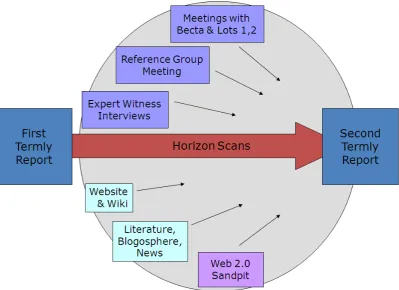
We used a range of evidence to identify the trends, including a series of horizon scans. The horizon scans focused on eight priority themes identified by Becta; these are listed in Appendix 1.
At this stage, we have not put the trends discussed later in this document in any order of priority; this should emerge from engagement with the wider expert
community. In addition, others may decide that trends which we have not highlighted in this report are significant; again, we look forward to engaging in dialogue about this.
Trends, drivers and inhibitors
We have defined trends as persistent patterns of changing practice in a domain. We have focused on those trends that are significant for the development of the strategy as it relates to the curriculum and to pedagogy.
In carrying out this analysis, we have tried to take account of all those factors that might have an impact on the outcomes of the strategy, whether those factors emanate from wider social trends, government policy, from within specifically
they will act as inhibitors. So, for each trend, we identify the relationship it bears to the aims of the strategy as a framework for intervention in education and skills thinking, policy and practice, accepting that in many cases this will be a matter of judgement.
Disruptions
Most importantly, we have begun to identify those factors that are emerging as disruptions of current trends. Disruptions are emerging issues that have the potential to lead to behaviours that diverge from the trends.
Some disruptions may be absorbed by pre-existing trends, others may wither, but some will evolve to displace existing trends and become new trends themselves. The possibility that disruptions may form new trends makes them particularly significant to a change programme like Harnessing Technology. Any disruption will displace some behaviours and afford others.
Disruptions may have the most impact on how the strategy develops over the next few years; they present both the greatest challenges and perhaps the biggest opportunities.
As our work goes forwards, we will focus more on evaluating these disruptions with a view to understanding the issues they pose and the positive developments they allow.
Mapping against the strategy
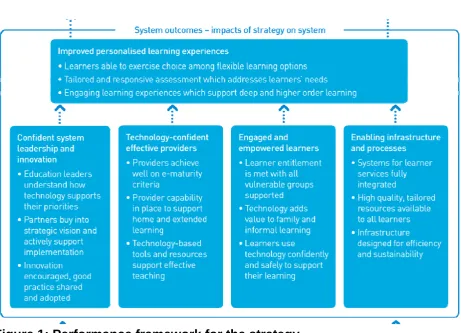
Figure 1: Performance framework for the strategy
These outcomes, combined together, aim to create what the strategy calls an ‘e-confident system’.
Trends and disruptions
The list below groups the trends and disruptions under the system outcomes for the strategy Harnessing Technology: Next generation learning 2008–14. Note that most trends appear under more than one system outcome.
• Confident system leadership and innovation: Economic policy | Globalisation | Capital investment programmes | Curriculum innovation | Expanded children’s workforce
• Technology-confident effective providers: Capital investment programmes | Online learning environments | Expanded children’s workforce | Non-traditional education providers | New pedagogies and teacher roles | Next-generation teachers | Co-option of technologies designed for business and social use | Ubiquitous mobile devices | Personalisation and Web 2.0 services | ‘Perpetual beta’ technologies | E-safety | Just-in-time learning | Reconfigured learning spaces |
• Engaged and empowered learners: Online learning environments | Curriculum innovation | Expanded children’s workforce | E-safety |
Reconfigured learning spaces | Learners as participants in and co-creators of learning | Learning habits of the Net Generation | Integrating formal and informal learning | Changing IT user skills | Gender divides
• Enabling infrastructure and processes: Capital investment programmes | Online learning environments | Non-traditional education providers | Co-option of technologies designed for business and social use | Ubiquitous mobile devices | Personalisation and Web 2.0 services | ‘Perpetual beta’ technologies | E-safety | Lifelong multi-context learning | Technology-enabled whole-school services | Online assessment
• Improved personalised learning experiences: Curriculum innovation | New pedagogies and teacher roles | Ubiquitous mobile devices |
Just-in-time learning | Lifelong multi-context learning | Technology-enabled whole-school services | Learners as participants in and co-creators of learning | Online assessment | Learning habits of the Net Generation | Changing IT user skills | Gender divides
The following subsections present the individual trends. For each trend, the
information includes the system outcome mapping (using the numbering above), the domain (educational, societal, policy or technology), and the sectors (schools; further education, skills and regeneration (FESR); and higher education) to which it applies. Appendix 2 presents a summary of trends.
Economic policy
Short description The Government continues to invest in education and training with
technology System outcome mapping 1
Educational, societal, policy or technology?
Policy
Sectors All
Return to list of trends
Relationship to the strategy: what it drives, what it inhibits
In their preface to the 2008 strategy document (Becta, 2008), ministers from the DCSF and DIUS set out the challenge that the strategy seeks to address:
understanding. Both the Department for Children, Schools and Families (DCSF) and the Department for Innovation, Universities and Skills (DIUS) see technology as a vital tool to help achieve our ambitions as set out in the Children’s Plan, World Class Skills and Higher Education at Work – High Skills: High Value. We need to ensure providers and learners use technology well in supporting these ambitions.’
This sets the ultimate goal which public funding for education and training will seek to secure for the foreseeable future: a world-class education system that underpins a competitive, world-class economy. Again, the preface to the 2008 strategy document identifies the reasons why investment in technology for learning is vital in pursuing this goal: new technology is seen as helping to raise standards, support flexible, personalised learning, support transitions across different parts of the system, and enable services which are responsive to needs and which gel together.
As welcome as this investment is to all those who want to promote the development and use of educational technology, it is not yet clear whether the potential of
educational technology to improve and possibly transform learning exceeds the Government’s vision, and whether public funding is sufficient in all areas to achieve the full potential. Government policy assumes that technology is a major driver for change in education, but draws short of aiming for a fundamental transformation in the nature of education itself, which some believe that digital technology affords. Some argue that this results in, for example, the under-funding of government initiatives for the professional development that teachers need if they are to be able to understand and act upon the pedagogical opportunities that technology can offer, and a corresponding overemphasis on hardware and institution-level infrastructure.
There is also a question of whether the evidence on impact justifies the investment made in ICT for education, although recent Becta surveys do show some positive impact on attainment.
Emerging disruptions
To the extent that drivers such as the growth of Web 2.0 technologies and other trends position the learner as co-producer of learning and promote the web, rather than institutional networks, as the platform for services, the supply-and-demand model of education contained in the strategy is put into question. If such
Globalisation
Short description Worldwide investment in technology for learning is increasing, with significant cultural differences between countries
System outcome mapping 1
Educational, societal, policy or technology?
Society
Sectors All
Return to list of trends
Relationship to the strategy: what it drives, what it inhibits
The UK is a world leader in innovation in education, and this provides good
opportunities for international partnerships and access to global learners. But the UK is not the only player in global markets for learners – there is keen international competition from education providers elsewhere.
The UK has its traditional strengths and reputation to draw upon as well as its recent record for innovation and technological investment. Building Schools for the Future (BSF) has attracted international attention as one programme of investment in schools, unique in its ambition, which integrates ICT at the heart of building design and puts pedagogical considerations in the driving seat. Another area where the UK has a world lead is in the adoption of mobile technology for learning in schools.
Areas where the UK might adopt innovations from other countries include adaptive tutoring systems, computer-supported collaborative learning in the classroom, large-scale courseware design, online formative assessment, and support for students learning with laptops in higher and further education.
Emerging disruptions
Until recently, emerging economies such as China and India were seen as
customers for UK education, but increasingly they are emerging as providers in their own right, creating new competitive markets.
Capital investment programmes
Short description There is major capital investment in rebuilding secondary schools
System outcome mapping 1, 2, 4
Educational, societal, policy or technology?
Policy
Sectors Schools
Return to list of trends
Relationship to the strategy: what it drives, what it inhibits
Capital investment programmes clearly represent an unparalleled opportunity to improve the physical environment for secondary school education
Capital investment programmes contribute to the increased profile and
understanding of technology in education as local authorities and schools are encouraged to draw up strategic plans. The promise of new schools acts as a
catalyst for leaders and practitioners to analyse and reappraise current teaching and learning strategies. It also drives a greater understanding among the commercial stakeholders. Where new schools are being created from the foundations upwards, there is an opportunity to build in the technology and flexibility necessary for 21st century teaching and learning.
The immense investment in technologies (for teaching and learning, administration and, in some cases, intelligent and environmentally sensitive building management) aims to level the physical ICT infrastructure within schools (for example to ensure consistency between departments and subject areas) and, almost certainly, to remove disparities between schools. Some local authorities are taking the
opportunity to radically rethink their provision of teaching and learning away from the traditional concept of a school, towards learning centres with revamped curricula and reformed governance structures. Co-location of special educational needs provision and mainstream schools with on-campus multi-agency services, and greater
community use of facilities (particularly ICT) are being developed in many areas.
In some local authorities, a single technology supplier (possibly a consortium) will provide a managed service for most schools. This facilitates greater sharing of effective technologies and practice. The provision of managed services should allow schools to concentrate on education. However, commercial managed services need to be capable of rapid response and flexibility if they are to support the development of creative, contemporary curricula.
Emerging disruptions
Over the coming years, it is necessary to analyse the extent to which the promise of major capital investment programmes is being realised, identify any barriers to achieving the full potential of the strategy, and assess whether the contractual
arrangements that schools enter into for managed services are sufficiently flexible to support the innovation that is likely to be needed in respect of the impact of Web 2.0 technologies and the Net Generation of learners. Changing technologies, teaching practices and environmental concerns could make new school buildings
inappropriate and in need of major structural change. A significant concern is how to design for continual flexibility and change and take account of a mix of pedagogical strategies and innovations.
Online learning environments
Short description Investment in virtual learning environments (VLEs) is increasing, particularly at school level
System outcome mapping 2, 3, 4
Educational, societal, policy or technology?
Education
Sectors All
Return to list of trends
Relationship to the strategy: what it drives, what it inhibits
The government target that all learners should have an online learning space by 2008 and access to a VLE by 2010, combined with funding being made available to schools for this, has helped to drive a big uptake of VLEs. In many schools, VLE deployment is still in its early stages, although, in some, it is well advanced. Over the past decade, implementation of VLEs has become widespread in further and higher education.
convenience of 24/7 access, dimensions of the learning experience can be lost. As a tool for personalising learning, VLEs can seem shallow. While VLEs can help to some extent with variations of pace, for example, and can be an efficient and flexible tool for distributing learning resources, it is increasingly argued that they hinder the full exploitation of digital technology to create engaging learning experiences and to merge formal and informal learning, and that they reinforce institutional control of learning, so running counter to other trends.
Emerging disruptions
Those working with students with special educational needs voice concerns about the accessibility and general suitability of the VLEs now being deployed. More generally, the traditional model of a VLE is facing two challenges. First, there is a move to more modular learning environments where separate components, often from different suppliers, are joined together with single authentication and transfer of data between components. Secondly, a more fundamental challenge comes from the move towards personal learning environments where the technology is controlled by the learner rather than the institution. Initiatives range from attempts to define
learning software that allows some customisation by the learner, to efforts to utilise existing tools that learners already use, perhaps integrated through sites like iGoogle or a wiki.
Curriculum innovation
Short description Curriculum innovations, including support for collaborative and cross-curricular learning, are being implemented
System outcome mapping 1, 3, 5
Educational, societal, policy or technology?
Education
Sectors Schools, FESR
Return to list of trends
Relationship to the strategy: what it drives, what it inhibits
The importance of relevant technologies in supporting curriculum innovation is generally accepted, although quantifiable impact remains, unsurprisingly, elusive.
continue to permeate the school, FESR and personal and community development learning (PCDL) sectors, although the depth and breadth of penetration may vary.
The use of technology to underpin this learner-oriented, thematic approach will continue to increase, driven from below by learners’ exploitation of Web 2.0 tools, and from above by Qualifications and Curriculum Authority (QCA) curriculum
reforms, government-sanctioned programmes – such as Creative Partnerships, the Opening Minds project of the Royal Society for the encouragement of Arts,
Manufactures and Commerce (RSA), and the Innovation Unit’s Next Practice model (see
[http://www.innovation-unit.co.uk/education-experience/next-practice/background-to-next-practice.html]) – and the demands of some employers.
Examples of curriculum and pedagogic innovation are increasingly apparent, yet whole-school or whole-college innovation remains rare in the secondary and FESR sectors, where innovation tends not to extend beyond a class or year group. The superstructure of the mainstream education sector is far from being adequately responsive to allow innovation to flourish and achieve momentum.
Emerging disruptions
Schools and colleges remain inhibited from risk-taking by inspection, testing and attendance regimes which may not recognise the value of new approaches.
Curriculum innovation will require pedagogic innovation. Not all practitioners and learners will necessarily welcome curriculum innovation. The younger generation of teachers may be familiar with new technologies, but many teachers have known nothing other than teaching to the National Curriculum. Many of the older generation of teachers have experience of thematic teaching and learning but may be less comfortable with technology. Hence those possibly best placed to exploit
technologies may not be those best qualified as champions of curriculum reform.
The lack of robust and persuasive evidence of successful innovation undermines the drive to reform. However, if evidence begins to emerge both from the UK and
internationally of the impact of innovation, there may be increased impetus to
Expanded children’s workforce
Short description The workforce of professionals who deal with children growing,
particularly in non-formal sectors System outcome mapping 1, 2, 3
Educational, societal, policy or technology?
Policy
Sectors Schools
Return to list of trends
Relationship to the strategy: what it drives, what it inhibits
Every Child Matters: Change for children (DfES, 2004) stated the Government’s aspiration for a ‘step-change in the quality, accessibility and coherence of services’. The magnitude of the reforms set in train was such that they are yet to be fully realised. However, while there are regional variations, significant progress has been made in establishing the structures that will enable connected support for children, young people and their families.
Leaders and practitioners such as educational psychologists, learning mentors, education welfare officers, Connexions personal advisers, drugs and alcohol
advisors and youth offending services must develop transferable skills and common knowledge while retaining specialist expertise. The Children’s Workforce Network is therefore developing the Integrated Qualification Framework (IQF) – a
comprehensive set of approved qualifications that allow progression, continuing professional development and mobility for people who work with children and young people. Qualifications will include degrees and postgraduate qualifications.
New technologies have obvious applications in three of the five qualifications currently being tested as part of the IQF. These three qualifications are Family Learning, Supporting Teaching and Learning, and Working with Vulnerable Young People. In each of these areas, some practitioners have embraced innovative use of technologies – often to help engage the most disengaged learners, particularly in non-school locations – in recognition that these learners have the same entitlement to a high-quality, personalised offering as do those in the mainstream. This
The IQF is integral to meeting the Government’s ambitions as set out in Every Child Matters and the subsequent publication The Childrens’ Plan: Building brighter futures (DCSF, 2007).
Emerging disruptions
The evolution of children’s services is still relatively new, but the far-reaching development itself disrupts many patterns of behaviour.
Access to technology and continuing professional development (CPD) programmes for non-school-based practitioners is significantly behind that in the mainstream. Without expert support, the Children’s Workforce Network will struggle to maintain the currency of the cross-sector, common, core units of the Integrated Qualifications Framework (IQF) in the face of rapid technological change, just as those providing teacher training and ongoing CPD for teachers have struggled. Coherence with the higher level qualifications offered by the higher education sector is crucial, especially in areas where innovative use of technology has traditionally had a low priority – in particular, social work.
As these developments evolve, it is possible that new categories of support worker may emerge. While the definition of such roles may vary from area to area, online mentoring may well be a feature of many of them. Traditional professional
accreditation frameworks and demarcations may be challenged.
Not only were the initial reforms sweeping, but the landscape continues to evolve and the demands on local authorities accumulate. Thus there is a question whether some local authorities have the capacity to continue to deliver these reforms, and a risk that the focus may move elsewhere as new priorities emerge.
Non-traditional education providers
Short description The role for the third sector in learning has expanded
System outcome mapping 2, 4
Educational, societal, policy or technology?
Policy
Sectors Schools, FESR
Return to list of trends
Relationship to the strategy: what it drives, what it inhibits
specialist areas in which it has unparalleled knowledge and skills – typically,
vulnerable and disadvantaged children. It will also expand its support for adults with specific needs, such as substance abusers, victims of domestic abuse, ex-offenders, those with disabilities, and the homeless. The heterogeneity of the third sector allows it to be relevant to localised needs or special-interest groups such as those in need of niche language skills. Third-sector knowledge and expertise is central to providing a learner entitlement to vulnerable groups. The DCSF is also keen to involve the third sector in mainstream education through trust schools and academies.
The third sector draws on a vast network of practitioners who bring specialist skills often above and beyond those of more mainstream providers. This is particularly true of creative practitioners and those working with digital arts. These individuals have a valuable role to play in introducing new pedagogies and enriching the curriculum for disadvantaged and mainstream learners.
In spite of the announcement of a £515 million central government investment for programmes, the third sector remains a hugely disparate entity. Well-resourced national bodies such as the NSPCC exist alongside thousands of small organisations that rely on multiple sources of short-term funding, and for which financial uncertainty severely limits their ability to plan ahead or make capital investments. The
Government is considering three-year funding for the largest charities.
Emerging disruptions
The third sector has uneven and, at times, extremely uncertain levels of e-maturity. Of particular concern are the barriers to technology procurement and the difficulties in contracting affordable technical support which face many smaller organisations outside the mainstream public sector.
There is a distinct risk that the growing influence of the third sector may undermine the foundations for e-maturity currently being established across schools, FESR and higher education. This risk will be particularly acute if an existing provider that has achieved a reasonable level of e-maturity is replaced by a third sector organisation that is only just beginning to explore the use of digital technologies. This
New pedagogies and teacher roles
Short description New technology is creating the conditions for new types of learning and teaching
System outcome mapping 2, 5
Educational, societal, policy or technology?
Education
Sectors Schools
Return to list of trends
Relationship to the strategy: what it drives, what it inhibits
It is well established that investment in ICT does not in itself lead to educational change. What is important about ICT is the new pedagogical approaches that it can afford and how these approaches can facilitate improved learner attainment. When teachers explore and develop the potential of new technology, they are likely to create the sorts of engaging learning experiences and offer the flexible modes of learning that can support improved and more personalised learning. The trend towards personalised learning supported by personal and social technology offers new opportunities for learner control, individual and social construction of knowledge, and learning through collaboration and conversation.
However, continued pedagogical improvement does not automatically arise from new technology and cannot necessarily be driven from above. To a considerable extent, new technologies can be deployed in support of old teaching methods, at least in the short term, or technology can be under-utilised because of an
unwillingness to relinquish old methods.
Moreover, the development of new pedagogies can be a substantial professional challenge: teachers must learn new skills and rethink and refashion the teacher– learner relationship. Developing pedagogical approaches of active learner
engagement, facilitating and scaffolding learning rather than transmitting knowledge, using new, more open, questioning techniques, and undertaking assessment for learning all provide significant challenges to a teacher’s role and identity. A lack of time, willingness or the resources to develop new pedagogical approaches is a major barrier to fully exploiting the educational potential of digital technology.
Emerging disruptions
One disrupting factor is the emergence of the Net Generation of learners. Traditional pedagogies may be unlikely to succeed with learners whose habits outside the classroom, lecture theatre or library are very different to those traditionally
demanded within learning. Many practitioners could face a growing crisis as their established procedures and routines become less effective.
Technology has the potential to allow us to rethink relationships between teachers, learners, their families and the community, and in doing so to radically rethink the nature of schools and learning. Such ideas are now becoming part of the
mainstream policy debate, as evidenced by the recent publication of the Gilbert review with its visions of children as active participants in learning, Charles
Leadbeater’s What’s Next? 21 Ideas for 21st century learning (Leadbeater, 2008) and the Beyond Current Horizons project looking at the education system we will need for 2025 and beyond.
Next-generation teachers
Short description Next-generation teachers are developing skills in exploiting technology for creativity and social networking
System outcome mapping 2
Educational, societal, policy or technology?
Society
Sectors Schools
Return to list of trends
Relationship to the strategy: what it drives, what it inhibits
Teachers are no more immune to general social trends than are any other group. Hence they, like others, are becoming more confident with a variety of technologies in their social and personal lives. A smaller proportion of teachers in the UK have not used a computer in the classroom in the last 12 months than in any other EU country – less than 5 per cent (Korte and Hüsing, 2006). Everyday technologies such as digital cameras and video, iPods and MP3 players, digital, satellite and interactive television, increasingly powerful mobile phones, and online social networks are commonplace in many teachers’ lives outside the school environment.
the teacher as a digital immigrant or technophobe, consequently distanced from the student as a digital native or technophile. While the ways in which different
generations use technologies may vary, the differentiation between the generations is becoming blurred. Differences in the use of the same technologies will increasingly present opportunities for peer-learning between teachers and students, and at times a reversal of the roles of the mentor and person being mentored; the best teachers will exploit the positive impact on students’ self-esteem and the strengthening of relationships.
There will be increasing challenges to institutional ICT networks as teachers seek to use everyday technologies in the classroom. Leaders and parents may be
suspicious, as may those with responsibility for managed services. There may continue to be a conflict between inspection regimes and teachers’ rapid innovation with technology. There is also a risk that the innovators with the highest profiles inadvertently focus the debate on a limited set of technologies, such as edublogs, wikis or podcasts. This may result in unofficial prescription, whereby innovative use of more mundane or unapproved technologies is discouraged or goes unrecognised. Similarly, the drive to promote learning platforms must occur in harmony with
teachers’ innovation and not be allowed to smother it.
Emerging disruptions
A key question is the response of initial teacher training institutes to intakes of young teachers, and the ideas about teaching and learning that the institutes promote. International studies show teachers to be among the most skilled users of technology, and yet, to date, unable or unwilling to apply this to their teaching (OECD, no date).
Co-option of technologies designed for business and social use
Short description We must strike the right relationship between the technology used in education and in the workplace, and the financial issues raised for
education System outcome mapping 2, 4
Educational, societal, policy or technology?
Education, society
Sectors All
Relationship to the strategy: what it drives, what it inhibits
To prepare young people for the world of work in the future, schools and colleges must adopt the practices and technology used beyond their gates. ‘The biggest single problem is that schools are still embracing nineties technology... The old system is based on desktop computers and lockdown networks while businesses use a mass of media – smartphones, BlackBerries and presentations’ (Professor Stephen Heppell, quoted in Brettingham, 2008). The degree to which the vast majority of jobs rely on these technologies is, however, uncertain, and the dominant business applications may well be the same as (or analogous with) the Microsoft tools used in schools (the prominence of PowerPoint for presentations for example). Many business networks are also restricted.
Nevertheless, the need to continually refresh technology in order to keep pace with business and social technology developments troubles educational policymakers. One often-suggested solution is the use of devices that learners already own. Not only would this go some way to solving the affordability issue, but learners would be more comfortable using familiar tools. Low-cost devices such as the ASUS Eee PC or similar, currently popular, sub-notebooks appear to offer a possible solution. Learners could use their own technologies such as digital cameras, camera phones and MP3 recorders to prepare and present their multimedia work; this scenario already occurs in some places. Many higher education institutions, for example, encourage and expect students to provide their own laptops or desktop computers. The institutions then supply students with obligatory anti-malware resources and network passwords and logins. For this system to be effective, students must have almost ubiquitous access to helpdesks and technical support from the university’s IT department or student services.
Specialist assistive technologies will continue to be developed to meet specific educational needs, but there is also a trend for standard technologies to have specialised functionality built in (Abbott, 2007). The need for specialist technologies will diminish as symbols, graphics, text, audio and visual options become standard in off-the-shelf packages. Even where these are not yet available, there is evidence of groups of technologists and enthusiasts customising standard technologies –
devising and sharing solutions to inaccessible programming and design.
Cost to the individual will remain a sensitive subject, with even low-cost devices being beyond the reach of some families – particularly if families have more than one child of school age. The ongoing burden of internet connectivity will remain a
disincentive to some families.
A further complication is the perceived divide between less-well-off learners with low-cost devices and others with access to more sophisticated tools. This may be seen as entrenching existing inequalities.
Emerging disruptions
New entrants such as ultra-low-cost laptops may be very attractive to education markets on the grounds of cost and portability. But this may lead to a divide between the devices and applications used in education and those used in business.
Ubiquitous mobile devices
Short description Mobile and ubiquitous technologies offer opportunities for personally managed learning within and outside the classroom
System outcome mapping 2, 4, 5
Educational, societal, policy or technology?
Society, technology
Sectors All
Return to list of trends
Relationship to the strategy: what it drives, what it inhibits
Ubiquitous mobile devices provide an example of education following technology. Many young and older people carry personally owned mobile devices such as mobile phones and handheld computers which connect to other devices and to information through infrastructure such as RFID (radio frequency identification), infrared and Bluetooth. Users can be given location-specific content and services on their personal devices within healthcare, for marketing purposes and even within entire cities.
Mobile technology offers opportunities to transform how and where we work and live, and when we work. Many of these opportunities – such as knowledge sharing,
Certain challenges present themselves when considering the potential role of ubiquitous mobile devices in learning settings. These challenges include: technical issues of standards for interoperability across a spectrum of personal devices and with institutional systems; ensuring all learners have access to personal, portable devices; security and privacy of data; changing the beliefs of practitioners who remain unconvinced; challenging cultural distinctions about the appropriateness of mobile technology in formal and informal settings; and the ethics of continually monitoring learners.
There is a need to develop a robust evidence base to demonstrate that reliable ubiquitous technologies have positive effects in real-world settings. While some studies have been conducted, there is a need for action and design research
conducted in collaboration between learners, practitioners and researchers (Cobb et al, 2003; Somekh, 2006).
Emerging disruptions
The success in consumer markets of the ultra-low-cost computers originally targeted at developing economies and at education has led rapidly to a new market for these devices. Ultra-low-cost computers seem to meet a need for a more mobile
alternative to a laptop, while also competing against smartphones and PDAs. These devices may offer greater scope for applications in learning settings, while helping schools achieve a one-to-one pupil–device ratio.
Multimedia phones brought into the classroom by children can challenge the authority of a teacher by enabling direct access to websites and ‘under the desk’ conversations.
A side-effect of mobile technology may be to bring in new operating systems and drive up the use of open source software in education.
Personalisation and Web 2.0 services
Short description Technologies developed for
personalised commercial sites are being adopted for education
System outcome mapping 2, 4
Educational, societal, policy or technology?
Technology
Sectors All
Relationship to the strategy: what it drives, what it inhibits
Outside education, it is becoming increasingly common for organisations to deliver personalised services automatically. Organisations predict customers’ behaviour and intentions by collecting data on the pages that customers visit, the links they click, and the purchasing decisions they make. Amazon is an exemplar here. Amazon offers recommendations by aggregating user data and applying it to an individual’s behaviour; if you look at one book, you can see what others who bought that book also bought; alternatively, you can look at recommendations based upon your past purchases. Moreover, you can view user reviews of products and add your own.
Educational institutions are beginning to mine the rich data they hold on their learners, derived from online learning platforms, and administrative and library management systems. As yet, few institutions make use of the data to provide enhanced personalised services to learners. The potential to offer enhanced personalised services is being explored in the higher education library sphere through the Joint Information Systems Committee (JISC)-funded projects TILE
(Towards Implementation of Library 2.0 & the e-Framework) and DPIE (Development of Personalisation for the Information Environment). The scope to exploit data is far greater, however. For example, learners could plan progression by looking at the resources and behaviours of learners in other contexts, read reviews from other students, or get recommendations about resources; teachers could not only find online resources and see reviews by other teachers, but also track back to others who used the same resources and contact them.
Emerging disruptions
If education does not develop such personalised services, others may do so. Google Scholar has already made an impact in higher education, as has LibraryThing. Educational institutions have an advantage in that they own a huge amount of data about their students that cannot be accessed by others.
Issues of privacy and ownership of data may become more important.
‘Perpetual beta’ technologies
Short description Web 2.0 technologies are continually being developed by software
companies and by users
System outcome mapping 2, 4
Educational, societal, policy or technology?
Technology
Sectors All
Relationship to the strategy: what it drives, what it inhibits
The growth of Web 2.0 technologies has led to a new approach to technological innovation and deployment. In the words of Tom O’Reilly, who coined the term Web 2.0:
‘Users must be treated as co-developers, in a reflection of open source development practices (even if the software in question is unlikely to be released under an open source license.) The open source dictum, “release early and release often”, in fact has morphed into an even more radical position, “the perpetual beta”, in which the product is developed in the open, with new features slipstreamed in on a monthly, weekly, or even daily basis. It’s no accident that services such as Gmail, Google Maps, Flickr, del.icio.us, and the like may be expected to bear a “Beta” logo for years at a time’ (O’Reilly, 2005).
This approach to technological innovation and deployment has the benefit that the creators of software can respond quickly to changing needs and opportunities.
However, for educational institutions, this evolution of technology can cause
problems. For one thing, the cycle of evaluating need followed by procurement and deployment is geared to technology that is relatively stable and evolves slowly. Institutions can possibly overcome this by procuring services rather than products, although this in many instances is counter-cultural.
A deeper issue is that of how to evaluate educational innovation with technology through traditional models of piloting, when the technology that is being evaluated goes rapidly out of date. The challenge for educational institutions that are keen to harness technology is that the target is always changing.
Emerging disruptions
Some researchers are raising ethical concerns about educational innovation that is not properly evaluated, drawing a parallel with the processes and safeguards in place for medical innovation (Oates, 2007). While this argument has force in protecting learners against the exigencies of the political cycle, which can drive policy decision, it breaks down for technological innovation, especially when a major driver of innovation is the changing habits of learners themselves. This may raise the importance of developing action research approaches to innovation, and the need for more effective networks for disseminating the results of small-scale innovative
E-safety
Short description Concerns of society about the risks to children of internet use influencing the adoption of technology in schools System outcome mapping 2, 3, 4
Educational, societal, policy or technology?
Society
Sectors Schools
Return to list of trends
Relationship to the strategy: what it drives, what it inhibits
It is widely recognised that e-safety is integral to e-confidence. E-safety is becoming embedded in the inspection regime and the curriculum. However, constant vigilance is required to maintain the currency of inspectors’ and practitioners’ skills and the curriculum content regarding risks and responses.
Some schools use e-safety as the catalyst for nurturing e-confident citizens. E-safety is also a powerful tool for drawing in parents, and family learning programmes are being developed around e-safety. Many schools for those with special educational needs are leading the way in using parental interest in their childrens’ personal technologies to engage with families. Mainstream schools can follow. Computers for Pupils, the work of the e-Learning Foundation, and capital investment programmes that provide home access are now being recognised as opportunities for intervention and engagement.
Similarly, e-safety is emerging as a tool for bringing greater co-operation among the range of children’s services and a greater understanding of new technologies among leaders and practitioners from those services. This will continue as local authorities appoint dedicated e-safety co-ordinators to advise and support their schools and Local Safeguarding Children Boards (LSCBs).
Nevertheless, the growing variety of devices and software with which to
communicate, and the ever-expanding quantity of readily accessible content and new ways of interacting socially online, increase users’ potential exposure to risk. A fear of physical, sexual, cultural, psychological and financial exploitation will inhibit innovation in some cases. Managed service providers are tasked with ensuring security and may face financial penalties if they fail; they will therefore, at times, prefer caution over creativity.
access, banning mobile phones and Google, and creating a list of sites that my be accessed through the school’s network. Thus they fulfil the basic duty of care for the time the students are with them, but deny them access to rich sources of content and expertise and fail to prepare them for life beyond the school gates.
The Child Exploitation and Online Protection Centre (CEOP) remains important, but as a law-enforcement agency its long-term role in education is not guaranteed. The newly established UK Council for Child Internet Safety (UKCCIS) will oversee the work of the DCSF, Training and Development Agency for Schools (TDA), QCA and Becta in promoting e-safety within education. The setting up of the National
Safeguarding Unit for the Third Sector is a welcome recognition that e-safety is not an issue for schools alone, and will significantly widen the potential audience for e-safety messages. It was also recently acknowledged that materials are urgently required specifically for the most vulnerable in society: those with special educational needs and language requirements.
Sections of the industry invest heavily in e-safety features within their products and services. Many companies also provide significant funds for e-safety charities, watchdogs and lobby groups. The impact of the emerging self-regulatory codes of practice for industry (as proposed in the Byron review action plan) is yet to be felt, but could be profound. The DCSF freely admits that it is ‘difficult to find a parallel example in another area of industry self-regulation to help define this approach to e-safety, not least because the internet is constantly evolving in how it is used and what it can offer’ (DCSF, 2008). Regarding industry self-regulation of e-safety, the UK is a world leader.
Emerging disruptions
The development of successful e-safety policies which reassure parents and the public would remove a major constraint on innovation, and Becta initiatives are helping progress towards that goal. The relatively unregulated nature of the web means many providers and producers avoid their corporate responsibilities. There is a real risk that the disparity between the ever-growing number of products and services that may expose users to risk and the capacity to police and educate will undermine efforts to provide a secure environment for teaching and learning. A major scare is always a possibility, and that could set back prospects for educational innovation. A decision to create ‘walled garden’ educational networks separated from the public internet could result in a new digital divide between the internet explorers and the internet followers.
There are specific concerns for children and adults with special educational needs. The existing materials and strategies are not appropriate for many of these
Just-in-time learning
Short description Knowledge-based technology enables learners to access content and services to meet their immediate needs
System outcome mapping 2, 5
Educational, societal, policy or technology?
Society
Sectors FESR, higher education
Return to list of trends
Relationship to the strategy: what it drives, what it inhibits
A number of changes in society have driven the growth in demand for bespoke learning at times and in places that suit the learner rather than the teacher or the learning provider.
Key among these changes has been the growing (if not yet universal) recognition that the modern knowledge economy requires constantly updated skills and
knowledge. This factor heightens employers’ awareness of the need to ensure that their employees have or acquire the skills for the job. Some employees engage in learning and skills training as a means of self-improvement.
The majority of workforce training is funded by employers, is bespoke and tailored to the job in hand, and usually takes the form of one-to-one coaching. New types of technology, including adaptive search engines and knowledge based tutoring systems can offer personal access to knowledge where and when it is needed. Employers who recognise the need for constantly refreshed skills and knowledge have always been able to meet their needs either from their own resources or by negotiated arrangements with learning providers.
In recent years, the Government has made a growing push to drive up workforce skills for international competitiveness. The Leitch report (HM Treasury, 2006) sought to establish the skills required by the UK workforce in 2020.
One aspect of e-enabled learning that appears to be taking root in workplace learning and elsewhere is the e-portfolio. An e-portfolio allows learners to build an electronic record of their learning achievements, and is portable between different settings. E-portfolios are popular in work-based learning circles, and educators in other sectors are gradually embracing them.
Emerging disruptions
The increasing free availability of online learning materials such as those offered by Massachusetts Institute of Technology (MIT) and the Open University is having an impact: sophisticated employers and employees are taking the opportunity to build portfolios of learning that meet their needs for increased competitiveness and personal effectiveness.
The changes in delivery methods are in their very early stages. Some learning
providers find the process of changing their delivery methods slow and painful. In the absence of a comprehensive and systematic guide to workplace use of e-learning materials, considerable progress must be made before the potential of e-learning can be realised. Issues such as restrictions on employees’ use of the internet at work, continuing ignorance among employers about the value of workplace training, and employees’ reluctance to undertake learning in their own time all remain as barriers to widespread adoption of e-learning to improve workforce skills.
New technology such as the semantic web, personalised tutoring or adaptive search could offer a new level of just-in-time learning that will need to be integrated with traditional workplace training.
Reconfigured learning spaces
Short description Learning spaces are being
reconfigured to facilitate new modes of learning that support
personalisation
System outcome mapping 2, 3
Educational, societal, policy or technology?
Education, society
Sectors All
Return to list of trends
Relationship to the strategy: what it drives, what it inhibits
The reconfiguration of physical and virtual learning spaces is key to providing a 21st century environment (or environments) for learning. Futurelab lists the key questions to ask learners when considering the personalisation of learning as ‘when?’,
‘where?’, ‘what?’ ‘how?’ and ‘who with?’ (Rudd et al, 2006). Learning spaces must be responsive to these considerations.
The moves to new curricula and pedagogies demand new environments in order to fully attain the benefits. Physical learning spaces should therefore support
collaborative working in small groups, large spaces for presentation and
performance, and small spaces for individual study and reflection or pastoral care. Thematic, project-based work in small teams avoids whole-school disruption on a class-by-class basis every 45-60 minutes when students move from one
standardised room to an identical one. Research shows that, when given the opportunity, students select the locations in which they feel they can achieve most and are most comfortable. Equally, places where they feel uncomfortable or unable to achieve lead to disengagement. Some older students, in particular, may feel most comfortable not on campus, but at home, in a library, museum or archive, in another educational institution or on business premises – wherever best serves their
learning.
The ICT infrastructure must fit in with demands for new environments. Above all, it must be learner-centric. Virtual learning spaces must be much more than combined content delivery and management information systems; they must take account of different learning strategies and exploit the power of technology to facilitate social aspects of learning. Access must be ubiquitous, but must take account of the different levels of complexity of learning – portable devices may not be suitable for some work, and access to a range of devices is preferable. Both the physical and virtual infrastructure must allow for informal learning which does not take place only beyond the confines of the institution. As far as possible, the physical learning environment should allow for unforeseen pedagogical and curriculum innovation.
Learning spaces must therefore be appropriate for the education taking place within them. Some continue to perceive a disconnection between learning space strategy and broader educational strategy. There are many barriers to personalisation; some of the general issues being wrestled with in BSF, for example, apply more widely to learning spaces. There is a risk that a ‘successful’ design is identified and, in the rush to provide new facilities, this model is applied universally with little or no variety – the so-called ‘Starbuckisation’ of education. Natural conservatism, the continuation of ‘successful’ models, adherence to traditional building bulletins, and current notions of health and safety may all test the commitment to providing 21st century learning environments.
(Dr Betty Despenza-Green, Director, National High School Initiative.)
Emerging disruptions
Capital investment programmes require answers now to questions about the design of learning spaces. However, educators are still developing their understanding of what constitutes best practice in learning space design. Building designers and architects, if unguided by educators, are likely to have traditional views about pedagogical needs, for example designing classrooms that are teacher-focused or hallways that are only about circulation. Will the cycle of pedagogical development and innovation become out of step with the capital investment programme, or will new-builds be flexible enough to cope with changing pedagogical approaches?
Lifelong multi-context learning
Short description Learning is a continual and connected process across a lifetime
System outcome mapping 4, 5
Educational, societal, policy or technology?
Society
Sectors FESR, higher education
Return to list of trends
Relationship to the strategy: what it drives, what it inhibits
Predictions of the demise of the learning institution brought about by individual use of online materials have, as yet, proved premature. Nevertheless, the availability of online learning materials, the ever-increasing use of personal computers and
laptops, and the ubiquity of portable devices capable of accessing and utilising online content are all factors which suggest that any time, anywhere, any context learning will be a reality in the future.
Learning is seen not only as a set of courses and qualifications, but also as a seamless process that continues across life transitions: in the home, at school and college, and in the workplace. Technologies can support the transition between learning institutions and can support continuity of learning. Nevertheless, the lack of a consistent approach to the adoption and deployment of new technologies often means that learners fail to transfer their learning from one setting to another.
Demand is growing for standardised, portable learning materials that learners can use across a variety of learning platforms and via different technologies. Such approaches can enable individuals to learn in their homes or other community
As institutions move away from fixed modes of technology for learning, such as desktop computers, towards portable technologies owned by learners, they meet some resistance, particularly from young people who do not want to use for learning the gadgets they associate with leisure activities. However, there is also growing evidence that portable, transferable technologies can help engage learners who are resistant to institution-based learning. Often these learners are disadvantaged young people who would not normally gain access to expensive gadgets, and thus may be more willing to use them for learning.
Emerging disruptions
The development of cross-device and cross-platform learning resources threatens to render obsolete some of the proprietary or institutional-specific systems which have been procured or developed at considerable expense, and which still often feature in institutional planning, for example for BSF. An online ‘personal learning organiser’ could provide a powerful tool to integrate learning across settings, putting ownership of learning into the hands of learners.
Technology-enabled whole-school services
Short description Institutional services are becoming more integrated
System outcome mapping 2, 4, 5
Educational, societal, policy or technology?
Education
Sectors Schools
Return to list of trends
Relationship to the strategy: what it drives, what it inhibits
One of the desired outcomes from the strategy is that systems for learner services should be fully integrated. It is, for example, part of the expectation for BSF that VLEs should be integrated into a wider managed learning environment that links learning, pupil data and access for the wider school community, including parents and governors. This approach is also consistent with the QCA’s view of the
curriculum as the entire planned learning experience of the young person, and hence provides schools with the opportunity to model the good use of technology across all areas of school activity, as well as deliver cost savings, for example though making shared services easier to deliver.
Emerging disruptions
online to deliver many of their services, for example Google mail or online office software. This represents a move away from institutional or even area-wide hosting of services and from the provision of managed learning environments under
institutional control. It is unclear to what extent schools and local authorities are building such flexibility and openness to innovation into their managed service contracts or what the implications of such moves may be on the whole-school technological experience.
Learners as participants in and co-creators of learning
Short description Technology enhances opportunities to engage learners in designing and creating their own learning
System outcome mapping 2, 3, 5
Educational, societal, policy or technology?
Society, technology
Sectors All
Return to list of trends
Relationship to the strategy: what it drives, what it inhibits
Co-creation of learning supports enhanced learner engagement and responsibility, meta-cognitive skills, relationships with staff, social skills and participation
(Hargreaves, 2004). Driven by Every Child Matters, the Specialist Schools and Academies Trust, Creative Partnerships, the Higher Education Academy and individual projects such as the Global Gateway, learner engagement in the design and creation of learning is increasing throughout the education sectors. In schools, the engagement of learners often becomes most apparent in conjunction with the development of thematic curricula. In higher education in particular (but not exclusively), there is a belief that ‘students are already monitoring, self-assessing and regulating their own learning and that the purpose of HE is to build on and strengthen this capacity’ (Nicol, 2008).
Co-creation of learning goes significantly beyond existing notions of student voice and consultation, for example the elementary democracy of a student council or individual summative feedback such as student surveys. Co-creation of learning relies on conversations between student(s) and teacher(s), and student(s) and student(s). Technology can be both the facilitator of student voice (allowing the conversations) and the desire expressed by students (where students want to learn with more or specific technologies or in a way that may be best supported by
Blogs and wikis allow students to collaboratively create and share content. Students can review each other’s work and also publish on the web to get feedback from other audiences. They can take content they find online, whether from the web or a
repository, and repurpose it to create something new. They can share comments on the work of others and, through developing such critiques, create new content. Thus, technology allows content to be used, reused and re-purposed to create something new. Learners need no longer be passive consumers of content written by others which they must accept in its received form only.
Emerging disruptions
There is a risk of an emerging split between a minority of very active producers of content and the majority who mostly consume.
Uncertainty about the assessment and quality assurance of learner-created content may lead to unfavourable perceptions, thus constraining innovation.
If adopted systematically, co-creation could be seen to be at odds with the provider/consumer model embedded in the strategy.
Online assessment
Short description Technology offers new forms of personal and formative assessment System outcome mapping 4, 5
Educational, societal, policy or technology?
Education
Sectors All
Return to list of trends
Relationship to the strategy: what it drives, what it inhibits
The term ‘online assessment’, for many, conjures up images of national
examinations that computers conduct, collate, and even mark and analyse. Such automation of existing assessment practices is a high-stakes endeavour, given the impact on test-takers and teachers. While the ability to reduce human workload and error are key attractions of technology, among educational technologists there is also optimism about the potential of technology to qualitatively and radically transform the very nature of assessment. In particular, online assessment has the potential to:
• be formative as well as summative (Walker, 2003) – formative for the learner, teacher and curriculum itself