Rochester Institute of Technology
RIT Scholar Works
Theses
Thesis/Dissertation Collections
5-1-2007
A tale in motion; ascended learning
Stacey Houghton
Follow this and additional works at:
http://scholarworks.rit.edu/theses
This Thesis is brought to you for free and open access by the Thesis/Dissertation Collections at RIT Scholar Works. It has been accepted for inclusion
in Theses by an authorized administrator of RIT Scholar Works. For more information, please contact
.
Recommended Citation
Ascended
Learning
L't cr^Jt >
C'\?J
Rochester Institute
ofTechnology
A Thesis
submittedto the
Faculty
ofthe
College
ofImaging
Arts
andSciences,
School
ofDesign
In
Candidacy
for
the
degree
ofMasters
ofFine Arts.
Submitted by:
Stacey
Houghton
A Tale In Motion: Ascended
Learning
www.taleinmotion.com
book
entitledI hove
t/ie
Rain
by
Margaret Park Bridges.
This
projectis
designed
to
makereading
moreenjoy
able
through
the
use of animatedtext.
Rochester Institute
ofTechnology
A Thesis
submittedto the
Faculty
ofthe
College
ofImaging
Arts
andSciences,
School
ofDesign
In
Candidacy
for
the
degree
ofMasters
ofFine Arts.
Submitted by:
Stacey
Houghton
...•...
Rochester
Inst
itute of
Technology
Stacey Houghton
..
.
...
.
.
.
...
.
...
.
.
.
.
.
...
..
.
..
...
.
..
.
....
.
..
..
.
..
...
...
.
...
.
.
.
..
...
.
...
.
...
.
....
...
.
.
...
....
.
.
.
....
.
.
...
.
.
.
Title- A Tale In Motion
-
Animated Typographical Children's Book
/
Learning Tool
Submitted by-
Stacey Houghton
Date-
May
2007
Thesis
Committee Approval
-Daniel DeLuna, Assistant Professor, Computer Graphics Design
S
ignature of
Committee Chair
Chris
Jackson,
Associate Professor, Computer Graphics Design
Signature
of
Committee Member
Virginia Orzel,
Signature
of
Committee Member
Patti Lachance,
Associa
te
Professor, School
of
Design
Signature
of Administrative Chairperson
Repro
I,
hereby grant permission to Rochester
In
sti
tut
e of T
echno
lo
gy t re roduce my thes
i
s documentation in
w
h
o
l
e o
r
part. Any
reproduction
will
n
ot be for commercia
l
use o
r
profit.
,
5!70ICSJ
Table
ofContents
Title Pages
Pages
1-3
Signature Page
Page
4
Abstract
Page
6
Description
ofTarget Audience
Page
7
Breakdown Description
Page
7
Scenarios
Page
7
Thesis Problem
Page
8
Design Research
Pages
9-12
Aesthetic Decisions
Pages
13-17
Technical Issues
Pages
18-20
Conclusion
Page
21
User
Testing
Survey
Page
22
User
Testing
Response
Page
23
Appendix A
-Original Proposal
A
Appendix B
-Stills
ofWeb
Site
B
Rochester Institute
ofTechnology
Stacey
Houghton
Abstract:
The
education of childrenin
their
early development is
an essentialtime
for
them to
de
velop
their
mindsboth cognitively
andcreatively.Reading,
in
particular,
is
one ofthe
mostimportant factors
withinthis
developmental
stage,
andthus
needsto
be
fully
graspedby
children.
A widening gap
ofilliteracy
in America may be
lessened
by
a moreinteractive
and creative approachto
learning.
With
the
advent ofthe
computer and motion graphicssoftware, this thesis
provesthat
there
is
now a moreengaging way
ofeducating
our youth.Using
the
characterswithinthe
wordsto
createimagery,
ratherthan
a series oflines,
this thesis
adaptsthe
story
ofthe
popular children's storybookI Love
tlie
Ram
by
Margaret Park Bridges. It
attemptsto
make a visual
link between
elements ofthe
story
andthe typographical
contents within.An
example ofthis
is
a portion ofthe
story
that
likens
the
raindropsto
race cars zooming
down
the
schoolbus
window.Unlike
traditional
printmedia, the
format
ofthis
book,
which
this
thesis proposes,
allowsfor
children as usersto
interact
withthe
story itself
Once
a childbetween
the
ages offour
andten
reads a section ofthe
book,
they
are rewarded with an animation.
That is
to say, this thesis
aimsto
show childrenthat
reading
can
be
arewarding
and enjoyablelearning
experience.Please
visitthis
thesis'web site at
Description
ofTarget
Audience:
The
target
audiencefor
this
thesis
projectis boys
and girlsbetween
the
ages offour
and
ten
who arein
the
beginning
to
intermediate
stages oftheir
reading
skilldevelop
ment.
This
audience will rangein
educational experiencefrom
pre-kindergartento
fourth
grade.
Breakdown
Description:
Age Range:
4-10
years oldGender/ Ethnicity: Female
andMale/
Any
Ethnicity,
Must
Understand
Written
English
Educational
Experience:
Pre-Kindergarten
to
Fourth
Grade
Interests:
Bugs, Dolls,
Race
Cars,
Playing
onthe
Playground,
Video
Games, Puppies,
Rain
Puddles,
Having
Fun,
and aSlight Interest in
Learning
Technical Knowledge: Must be
ableto
navigatethrough
aDVD
menu,
or atleast have
parental supervision
during
this
portion ofthe
project.If
viewed viawebsite,
mustbe
able
to
navigatethrough
a simpleFlash-based
web site.Technical Requirements:
Computer
with accessto
the
internet,
or aDVD
player with re mote.Viewed
via website,
Flash
Player
7
is
requiredto
viewthe
full
extent of content.Scenarios:
Kelly
is
a six-year-oldgirl whois
aboutto
begin first
grade.Kelly's kindergarten
teacher
told
her
motherthat
Kelly
was notdeveloping
her reading
skills asfast
asthe
other children in her
classlast
year.Concerned for Kelly's further
development,
Kelly's
mother seeks alternative ways ofteaching
Kelly
how
to
read.Kelly's
mother comes acrossthis
project over
the
summer and sharesit
withKelly,
whichin
turn
keeps Kelly's interests for
reading
andhelps
to
develop
her reading
skills,
as well asher
confidencefor
the
upcoming
school year.
This
project coupled withher
traditional
learning
experiencein
school willstrengthen
her reading
skills significantly.Jimmy
is
aten-year-old,
over-activeboy
withAttention Deficit Disorder. His
third
gradeteacher
has strongly
recommendedto the
principal ofJimmy's
schoolthat
he
notbe
advanced
to the
fourth
gradedue
to
his lack
ofreading
skills.Frightened
ofthe
repercussions
to
Jimmy's
self-esteem,
his teacher, Mrs.
Lee,
suggeststo
Jimmy
andhis newly
singlefather
that
they
spend afew
minutesevery
day
after schoolworking
through this
project.
She feels it
will strengthenhis reading
abilities,
allthe
whilebuilding
his
confiRochester Institute
ofTechnology
Stacey
Houghton
Thesis Problem:
During
the
preliminary
education of achild, there
is
a select set of skillslearned
that
carriesthroughout
the
child'slife. These
skillshelp
him/her
to
communicatewithothers,
andthus
be
productive withinsociety.One
such skillis
the
ability
to read;
our cultureis
centralized aroundthe
fact
that
we can all communicate witheachotherthrough
written
language. If
this
essential skill ofreading is
notmasteredat anearly
age,
illiteracy
becomes
ahuge
problemfor
the
rest ofthe
child'slife.
The
animated subjects withinthis
project consist oftype
characters placedin
specific waysto
form
pictures.As
opposedto
creating
traditional
imagery
to
illustrate
the story,
the typographical
elementsthemselves
come aliveto
visually depict
the
ideas
presented within.As
each section ofthe
book
unfolds, the
useris
rewardedfor his/her reading
skillsby
an animationthat
directly
relatesto that
part ofthe
book.
This
willtake
the
literary
education of children
to
a newlevel
by incorporating
typographical
elements with anexciting
andinnovative
perspective on reading.My
thesis
consists of aninteractive
learning
tool that
facilitates reading in
childrenbe
tween
the
ages offour
andten
years of age.The
thesis
projectis
availablethrough two
mediaformats. One is
aDVD
format
accessible viaDVD
player,
either stand-aloneor onthe
user's computer.The
otherformat is
aninteractive
web siteoffering
extendedinfor
mationregarding
the
animatedelements withinthe
project.Design
Research:
Before I began
this project,
I
researched several popular children's websitesthat
usedin
teractivity
in
asimple,
yet useful way.One
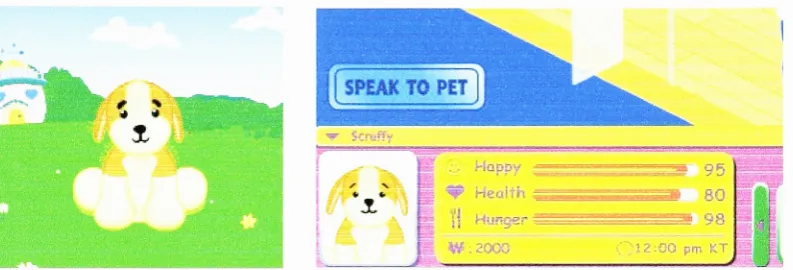
such site entitledWebKins.com
has
simpleroll overfunctions
that
give ameaningful,
yet simple responseto the
childrolling
over one ofthe
buttons. Another
great aspect ofthis
siteis
that the
creatorsused simplevector-basedgraphics
that
areeasily
identifiable,
Figure
1
and2.
Instead
ofusing
realistic photos of stuffedpuppy
dogs,
they
transformed
these
realistic stuffedanimals, that
childrencan pur chasein
stores acrossAmerica,
into
vector-basedicons
that
childrenfind easy
to
identify
andfun
to
play
with.w
Screffy
jL
_____ _
;.
Happy
g
^p
Health St;jj
Himger !
I
W
;2000'
: .. ._. 95*
;IZ:0Q pm KT
Fig.
1
and2.
WebKins.com
character,
and characterset-up
screenfrom
one ofthe
games.2005-2007.
Another
suchsitethat
I
looked
atis
createdby
the
Lycette
Brothers,
andis
entitledNot
My
Type. This
site showcasesfour
short animationsusing
type
charactersinstead
oflines
to
generate
the
main characters andsurrounding
environments.The
plotline
circles around an officescenario,
where a manhas
emotionalinterests
in
a womanthat
he
works with.The story
plots evolvethroughout
the
four
separate movie shorts.Although
this
siteis
not educationalin any
way,
andmerely for
adultfun,
I
found it
interesting
whenI began
fS)
/
#
[image:10.534.57.454.225.360.2] [image:10.534.59.453.507.634.2]Rochester
Institute
ofTechnology
Stacey
Houghton
Design Research
(con't):
creating
my
characters.The way
that
the
creators usedlarge
singlecharacters,
Figure
3
and4,
to
give a gesturalfeel
to the
figures is
avery
interesting
way
ofoutlining
them.
This
gave meideas for my digital illustrations.
Compared
to this
very
expressionisticway
ofcreating
these
types
of characters seenin
Not
My
Type,
another sitebecame
a significantinterest
to
meduring
my
research.This
web
site,
entitledWords At
Play,
used a moredetailed
approachto
creating
their
imagery
The way in
whichthey
usethe
typography
throughout this
siteis in
more of an experi mentalfashion,
comparedto
whatI
had
set outto
attemptthrough
my
thesis
project.This
siteis
usedin
an educationalfashion,
althoughit is
meant morefor
adultsthan
for
children.
Within
the
pages ofthis
website,
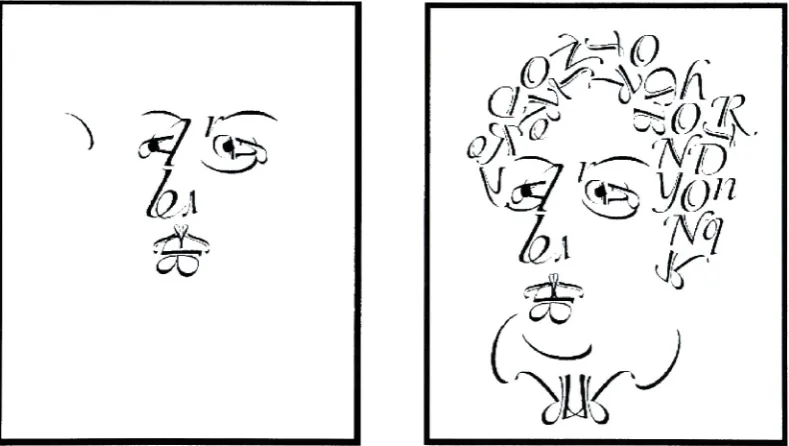
popular scholars and writers areillustrated
through
actualletter
characters ratherthan
lines,
as canbe
seenin Figures
5
and6.
The
characters
fly
into
the
screento
begin
to
form
the
face
ofthe
popularindividual.
Fig.
5
and6.
WordsAtPlay.com
example of animatedtypography.
This
exampleis
ofLord
Byron,
1788-1824.
There
is
avery
poetic andimaginative
feeling
to these
piecesthat
I
enjoyed.Throughout
the
creationofmy
pieces,
I
wouldfrequently
look
through
this
web sitefor
inspiration.
I
found
it
to
be
an exceptionalway
ofdisplaying
this
type
ofinformation,
andthought the
[image:11.534.103.498.303.526.2]Design
Research
(con't):
From
here,
I
startedlooking
at popular children'sbooks
that
I
felt
wouldbe best
suitedas an
illustrated
web site.Upon researching dozens
of children'sbooks
such asWhere
the
Wild Things
Are,
Goodnight
Moon
andthe
Rainbow
Fish,
I
came across abook
that
I
thought
had
an excellent moralto
it. This
book is
alsoillustrated in
watercolordrawings
that
I
found intriguing. This book is
entitled/ Love
the
Rain
by
Margaret Park
Bridges,
Figure
7.
The
illustrations,
Figures
8
and9, have
avery
carefreefeeling
to
them,
whichI
gravitatedto.
These
aredone
by
artistChristine Davenier
and are whatI
loosely
based my
characters
from. The
combination ofthese
illustrations
andthe
excellently
writtenstory line
made
this
book
perfectfor
the type
of projectI
wantedto
produce.i
^*i_
the
3
-J
-"___...--"''IJ_ :-m
:
RaiN
M ':>1'
|.l
^
IIFig.
7.
I Love
the
Rain,
childrensbook
coverby
authorMargaret
Park Bridges.
[image:12.534.134.380.277.506.2]Rochester Institute
ofTechnology
Stacey
Houghton
Design
Research
(con't):
Itsat.i,, withraindroplmklc-s
"lh. raindropshillonmy (a. hk. .mil.inin.1
\
<m*trFig.
8
and9.
I Love
the
Rain,
childrensbook illustrations
by
Christine Davenier.
The
nextstep
wasto
getthe
approvalfrom
the
publisher andthe
authorto
usethis
book
in my
project.As laborious
asthis
was,
it
wasfairly
painless.It
took
alot
of persistence onmy
part,
but
luckily
that
is
one ofmy strong
suits.I
first
wrote ane-mailto the
publisher asking for
approval.Then,
the
publisher neededto
getthe
approval ofthe author,
who agreedto
let
me useher book. I
then
simply
askedthe
publisherfor
a written e-mailstating
that
I had
the
publisher's andthe
author's approvalto
usethis
book in my
thesis
project,
andI
wasready
to
go!All in
all,
I
wouldsay
this
whole experience was much moretedious than
anything
else.I
wantedto
make surethat
I
had
researched allthat
had been done
currently,
such asthe
[image:13.534.102.503.97.285.2]Aesthetic
Decisions:
From
the
onset ofthis project,
I
knew
that
I
wantedto
makethe
web site portion ofit
as simple as possible
to
keep
the
focus
onthe
reading.For
the
DVD
part ofthe project,
I
decided
I
wantedit
to
be
as similarto the
web site aspossible,
whilestillremaining easy
to
navigate.As I
wentthrough
my
research,
I
noticedthat
what seemedto
workbest for
this
wasto
merely
makethe
buttons
enlarge abit
asthey
werebeing
rolled over.I
then
started
to
sketch out what possiblebuttons
mightlook like.
When I
readthe
study
entitledUsability
of Websites for Children:
70
Design
Guidelines
by
the
Nielsen Norman
Group,
I
decided
that
shapes andbright
colors were whatmostyoung
children respondedthe
best
to
whenin
an onlinelearning
environment.Keeping
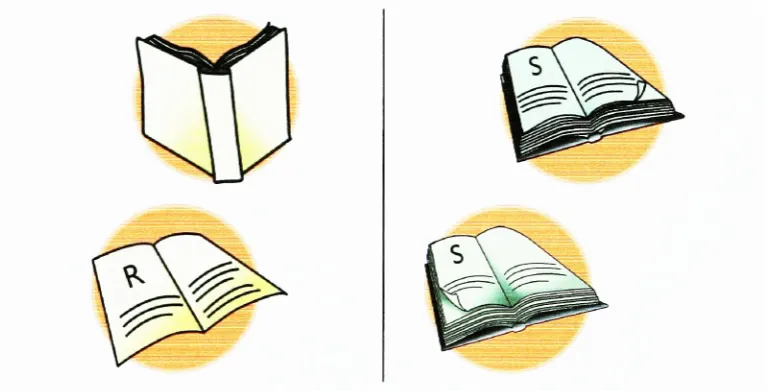
"1
love
the
IV
p>
Fig.
10.
The
first
state ofthe
button,
in
an umbrella shape.Fig.
11.
Early
button images for
the
web site ofthis
thesis
project.The
images
to the
left
are
for
the
"Read
Story"section,
andthe
images
to the
right are [image:14.534.126.375.249.406.2] [image:14.534.57.442.432.627.2]Rochester
Institute
ofTechnology
Stacey
Houghton
Aesthetic
Decisions (con't):
this
in
mind,
I
startedsketching
outdifferent
shapes,
mixed withboth my hand-drawn
and
digitally-created
images
to
see whichworkedbest.
In
one ofthe
early
stages ofthe
buttons,
I designed
them
in
the
shapeofumbrellas,
using
letters
to
createthem
ratherthan
lines,
Figure
10.
From
adesign
perspective, this
wasn't
the
best
choicefor
this
important
action.The buttons
neededto
be
more recognizable,
andlarger. When
these types
ofbuttons
were putinto
the
DVD
menu, the
childrenbecame lost
withinthe navigation,
andthus
became frustrated
anddidn't
wantto
watchit
anymore.After
muchtrial
andeffort,
I
decided
onthe
circle asthe
background,
as canbe
seenin Figure
1 1
.I had
thought
about sound effects upon roll over ofthe
buttons,
althoughmy
usertesting
had
shownthat
parents wereless
receptiveto their
childrengoing
to
web sites withlots
of noises.
Because
ofthe
fact
that these
noisestook
away from
the
child'slearning
attention, I decided
to
stickstrictly
to the
sound effects withinthe
animations.After
minortweaks
of whatthe
images
ontop
ofthe
red circles wouldbe
for
the
buttons,
I decided
to
do
some usertesting
in
aDVD format. I
tested
childrenbetween
the
ages offive
to
eleven years of age.One
thing
that
resoundedthroughout
all oftheir
replies wasthat the
childrenreally
wantedto
have
a section wherethe
story
was readto
them,
andthey
could sitback
and watchthe
animations.After
hearing
this, I decided
to
create sucha section.
This
sectionbecame known
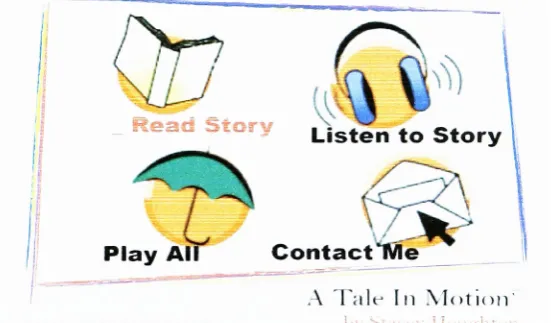
as"Listen
to
Story."Before
this
section wasadded, there
wereonly
the
following
three categories,
Read
Story,
Play
All
andContact Me. This fourth
section added a newdimension
to the
web site andthe
DVD
menu.I decided
to
usemy
ownvoice,
since women's voices seemto
be
moresoothing
to
children.In choosing
the colors,
I knew
that
I
wantedto
stay
withprimary
colors, red,
yellow andblue,
with afew secondary
colors such as purple and green addedin. The
reasonfor
this
was
to
makethis
project seem as seamless of atransition
as possiblefrom
the
child's educational arena at school.
In
school,
the
decorations
and postersmainly
consist ofprimary
colors
to
keep
information
simple andeasy
to
understand.The
colorsfeatured in Figure
12
wereoriginally
chosento
be
showcasedthroughout
the
site.Although
afterdoing
test
runs on
the
DVD
format
ofthe project, the
reds andblues
seemedto
be
too
saturated.So,
the
colorsin Figure
1
3
werefinally
selecteddue
to
their
less-saturated
state.This
provedto
be less
problematicin many factors. Some
older computer monitorshad
ahard
time
Aesthetic
Decisions (con't):
Fig.
12.
The
original color palettefor
this
project._________________K
Fig.
13.
The final
color palettefor
this
project.colors,
andthe
blues
odd violethues.
So,
by
changing
the
overallhue
and saturation ofthe
color
scheme,
it
wouldlook crisp
andbeautiful
onvirtually every
monitor.After
the
color palette was setinto
place,
it
wastime to
naildown
the
design
ofthe
sub-navigation areas.
I
decided
to
stick withthe
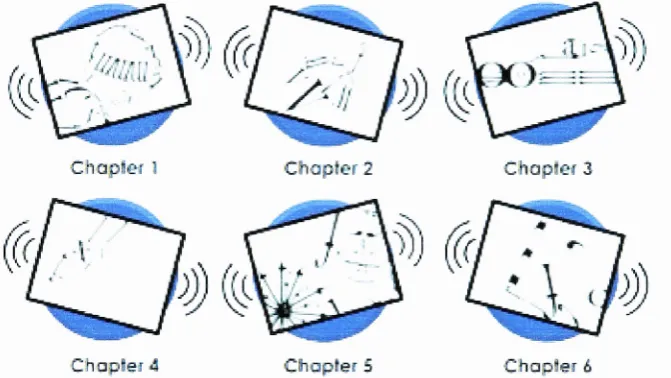
circularbackground images from
the
mainnavigation,
and manipulateit
abit
to
look
similar yetdistinctly
different. In
place ofthe
iconic
graphics,
I
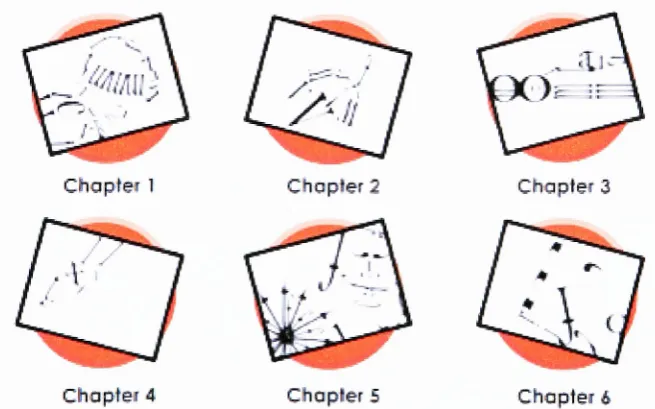
placed stillimages
of each ofthe
scenes.I
re-usedthe
idea
ofmaking
the
stillimages
grow asthe
user rolled overthe
buttons
to
keep
withthe
sametheme,
Figure
14.
Chapter
1
Chapter
2
Chapter
3
Chapter
4
Chapter
5
Chapter &
Fig.
14.
Sub-navigation
for "Read
Story"section of web site.
[image:16.534.58.438.85.169.2] [image:16.534.59.441.205.272.2] [image:16.534.80.408.439.643.2]Rochester
Institute
ofTechnology
Stacey
Houghton
Aesthetic
Decisions (con't):
I
decided
to
usethe
sameidea
ofthe
circles withthe
stillimages
for
the
"Listen
to
Story"section where
the
user canlisten
to the
story
being
readto
them
andsimply
watchthe
animations.Although,
here I
changedthe
color ofthe
circlesto
blue. I
also addedthe
sound wave graphicsalong
the
sides ofthe
buttons
to
reinforcethe
fact
that
they
werefor
the
"Listen
to
Story" section ofthe
site.I
found
that
using
the
samedesign for both
menus made
it
easierfor
the
childrento
focus
onthe reading,
ratherthan
trying
to
re-Q&x
((a
\^V\)
kV^Yl^fi
i^)(^L^
^
Chapter
1
Chapter
2
Chaplef 3
Chapter
4
Chapters
Chapter.
Fig.
15.
Sub-navigation for "Listen
to
Story" section of web site.learn
a new menuformat,
Figure
15.
So,
nowthat the
main menus and sub-menus wereidentified
design-wise,
it
wastime to
compile all of
the
finished Quicktime files for
each section.This
posedits
own set ofis
sues as
I
wentthrough
my
usertesting.
Following,
I
will showcasethree
ofthe
several user-tested childrenwithinmy
age group.I
will explainto
youtheir thoughts
and con cerns with referenceto the
beta
version ofthis
thesis
project.An
eight-year-oldchildby
the
name ofAndrew,
whomI
tested the
preliminary beta
version of
my
thesis
projecton,
showeddisinterest in
the
bandleader's
mouth withinScene
5.
He
thought
that
it borderlined
scary.He
also mentionedthat
he
wouldlike
the
animations extended,
andthat
a"Listen
to
Story" section wouldbe
nice.(This
was of coursethe
reasonthis
section wasadded.)
Another
sample userby
the
name ofAlexandra,
seven yearsold,
wastested
using
this
beta
versionalso.She had
mentionedto
methat
having
rolloversound effects onthe
but
[image:17.534.134.470.212.401.2]Aesthetic
Decisions (con't):
having
a"Listen
to
Story" section wouldbe very exciting for her
as well.One
ofher final
comments wasthat
the
subtle sound effectsin
the
"Read
Story" section ofthe
rainandtap
dancers,
etc.,
was a nicetouch that
helped
reinforcethe
actionsthat
weretaking
placein
the
animations.A young
boy by
the
name ofJordan,
whois
eight yearsold,
wasone ofthe
first
that
I
tested this
project on.He
wantedto
seethe
animations extended.He indicated
to
methat
what would make
this
project"really
cool"
would
be
a section wherethe
story
was readto
you,
and you could sitback
andenjoy
the
animations.After extending
the
animations within eachscene,
andadding my
voiceto the
"Listen
to
Story"section
pieces,
it
wastime to
compilethem
alltogether
for
the
"Play
All" area ofthe
project.I
decided
to
usethe
Quicktime files
withoutmy
voice onthem
for
this section,
to
keep
the
focus
onthe
animations ratherthan
my
voice.I
noticedthat
it
seemedalittle
confusing
to
my
usersto
have my
voice andthe
constant animations play.Rochester Institute
ofTechnology
Stacey
Houghton
Technical
Issues:
Throughout
the
construction ofmy
thesis project, there
werefour
main computer programs
that
I
used,
After Effects 7, Flash 8,
Photoshop
CS2
andIllustrator
CS2. The first
step
wasto
figure
out an effectiveway
to
createthe
motionpaths ofthe
letters
withinAfter Effects. After
doing
severalletters
by
hand,
I decided
to
try
adifferent
approach.This
wasto
createthe
pathsin Illustrator using
the
pentool,
andthen
copy
their
pathsinto After Effects. Due
to the
fact
that
Illustrator's
pentool
has better
controlthan the
pen
tool
in After
Effects,
I
found it
easierto
manipulatethe
points.Once
these
werein
place,
I
then
neededto
figure
out away
to
getthe
QuickTime
moviefiles from After Effects
to
Flash. I first
tried to
exportFLV files
out ofAfter Effects
to
use
in Flash. This
madethe
audio stutter.So,
then
I
decided
to
makeQuickTime
files
outof
After Effects using
the
Animation
compressionsetting
to
getthe
best quality
possiblefor
the
".mov"file. Then I batch
captured all ofthe
QuickTime
movfiles using
the
Flash
8
VideoEncoder. I
codedthe
Flash
file
to
load
the
FLV files externally
through
aFlash
component.
This
seemedto
makethe
audio withinthe
FLV
files
not stutter andskip
whenplayed online.
It
took
a second ortwo
longer
to
load
completely,
however.
The
nextissue
came whenI
wastrying
to
createthe
buttons
withinthe
sub-navigationwindows.
I
took
screen shots ofthe
animatedQuickTime
movies,
andthen
imported
these
images into Flash. When I
rotatedthese
images slightly
to
makethem
look
morein
teresting,
however,
the
crisp lines became jagged
and not straight.To
overcomethis
problem,
I
put a slightblur
onthem
withinPhotoshop,
andthen turned
on"Allow
Smoothing"
within
the
Flash
library
settings.Once
all ofthese
stepshad been
made,
I
spentthe
restofmy
time
trying
to
codeevery
thing
correctly using ActionScript
2.0
to
makeeverything
worktogether.
Most
ofall,
the
contentis loaded
dynamically
through
the
main shellFLA file. I
did
this
by
creating
a
FLV
componentfrom
the
library
withinthe
sub-navigationFLA
files,
then
I
initialized
the
name ofthe
FLV file in
the
Properties
section.This
told the
component which external
FLV
file
to
load
whenthat
frame
was chosen.Then I loaded
the
sub-navigationSWF
files into
anempty movieclip
withinthe
mainFLA
shell.Since everything is
loading
into
the
mainshell,
I
cutdown
onthe
load
time
for
each section.Everything
loads
initially,
andTechnical
Issues (con't):
DVD Menu
Construction
Once
the
mainQuickTime files
werefinished for
the animations,
it
wastime to
constructthe
DVD
menu.I
usedthe
softwareDVD Studio Pro
to
puttogether the menu,
andPho
toshop
to
comprisethe
buttons. I had
afew
technical
difficulties
withthis
stageofthe
project.One
ofthese
issues
wasthe
image quality
ofthe
Photoshop
images
oncethey
wereimported
to
DVD
Studio
Pro.
Every
time
I
wouldbring
ahigher
quality, 150
dpi,
image into DVD Studio
Pro,
the
program wouldautomatically
reducethe
image
quality
down
to 72
dpi. After I figured
outthis
was aninherent quality
ofDVD
Studio
Pro,
I
decided
to take
out all ofthe text that
wasincorporated into
the
Photoshop
files
andgenerate
it
withinDVD
Studio Pro instead. This way
there
wasbetter image quality
that
took
place whenit
cameto the
text,
andI
could get clean edges.One
essentialthing
that
I
neededto
remember wasthat
this
DVD
wasprimarily for
people who could not get
to
acomputer,
morefor
grade schools.In realizing this, I found
out afterplaying
the
DVD
onmy home DVD
playerthat televisions
have
alower
quality
resolutionthan
computermonitors,
andthus the
quality
ofthe
images
werejust fine
when viewed via aDVD
player.After
this
wassettled,
I
designed
the
menulook-and-feel,
andthen
I
wasready
to
burn
it
to
DVD. I
had been
usedto
using
the
programToast
to
burn
the
DVDs,
using
the
file
content
information
from DVD Studio Pro.
Although,
whenI
tried
to
find Toast
onthe
computersI
wasusing
at our schoollab,
I
discovered
that
it
wastoo
expensive andthus
taken
offthe computers;
andthe
license
was not renewed.This
was adistressing
moment
in
the project,
sinceI
was notinterested in purchasing
the
program withmy
own money.There is
apossibility
to
burn DVD's
straight out ofDVD
Studio
Pro,
althoughit is very
unpredictable and unreliable.I
wouldhave
to
burn
andthen
check eachDVD
A Tale I
nMotion
1
>\ Ni.m\1
i u rJ-)
ri nFig.
16.
Look
ofthe
main menuwithinDVD.
[image:20.534.111.387.462.623.2]Rochester Institute
ofTechnology
Stacey
Houghton
Technical
Issues (con't):
individually,
instead
ofbeing
assuredthat
each one worked.Also,
aboutonein four
DVD's
would notburn
correctly,
andthus
I
wouldhave
to
throw
them
away.This became costly
after
burning
several ofthese
disks.
I
had
wantedto
create rolloverfunctions
withinthe
DVD
menuusing
the text
andthe
image
buttons; however,
due
to
the
fact
that the text
I
imported
from
Photoshop
looked
horrible,
I
decided
to
forgo
this
idea
and stuck withthe
rolloverfunction strictly
onthe
words
themselves,
notthe
buttons
as well.Other
than
that, I
amextremely
proudofthe
Conclusion:
With
the
creation ofe-learning,
I
was surethere
wasa moreinteresting
way
ofdisplay
ing
information
for
children.I
amworking
ontaking
this
projectto the
nextlevel
ofdevelopment
whereit is
a program ownedby
schools.It
wouldlet
the
child's parents andthe teacher
know
that
Johnny
has
readthe
book
assignedto
them
this
week.This
projectwould make
Johnny
moreinterested in
reading,
as well asshowhim
that
reading
canbe
an enjoyable and evenfun
experience.In
addition,
I
wantto take this
project astep
further,
andhave
the
parentsnotifiedby
anonline
book selling
company,
such asAmazon.
They
wouldbe informed
that
Johnny
had
just finished reading
this
book,
in
casethe
parentwantedto
purchasethat
book in
ahard
copy
format,
and/or otherbooks from
the
seriesfor
Johnny
to
read.Reading
is
afundamental
part of oursociety
and needsto
be
masteredby
our youth asearly
as possibleto
maketheir
further development
easier and more seamless.I believe
that this
projecthas facilitated
such anaction,
andis designed in
afashion
that
makesit
accessible
for
children ofdifferent ethnicity
and socialclimates.Rochester Institute
ofTechnology
Stacey
Houghton
Survey
for
/ Love
the
Rain DVD:
Below is
acopy
ofthe
survey I
passed outto
childrenandteachers
afterthey
viewedmy
thesis
projectto
gettheir
feedback regarding
the
DVD.
Thank
youfor watching
this
interactive DVD. Please
take
afew
momentsto
look
overthis
survey
andlet
meknow
what youthink
ofmy
thesis
projectfor
Rochester Institute
ofTechnology.
Any
feedback
that
you could provide wouldreally
help
me withthe
completion
ofmy
thesis
project.Any
added comments youmay have
are welcomed atthe
bottom
of
this
page.Please
ratethe
answersfrom
5
being
excellent/yesto 1
being
very bad/no.
Thanks
again.1.
Are
the
images
andanimationsdistracting
or enjoyable?5
4
3
2
1
2.
Would it better if
there
was an optionto
listen
to the story,
as well as readit
on yourown?
3.
How easy
wasthe
DVD
menuto
navigatethrough?
Were
there
any
partsthat
confusedyou?
5
4
3
2
1
4.
Do
the
childrenfeel
moreinterested in reading books
afterviewing
this
DVD?
5
4
3
2
1
Comments:
(Any
other comments or suggestions youmay have
are appreciatedbelow.)
User
Testing
Survey:
The
following
is
asummary
ofthe
survey
that
I
createdto
have
childrenandteachers
fill
out after
viewing
this thesis
project at alocal Western New York
school:Comments:
Teachers:
Another
option wouldbe
to
have
the
words readif
youhover
the
mouse overit. When
achild
hovers
their
mouse over a specificword,
a voice would pronouncethe
wordfor them,
to
help
with pronunciation.The kids loved
the
animations!My
students werevery
engagedthroughout the
DVD. I
wouldlove
to
seethe
DVD
sur roundedby
a specificlearning
strategy,
such as wordfamilies
orcomprehension strategies.
I
enjoyedit
myself!*
The
childrenliked
the
DVD.
They
were engagedto
know/hear
more stories onDVD.
Children:
I like
that
the
author made picturesfrom
numbers andletters.
Awesome Job! I liked
when she said what are wehaving
for dessert? Sugar
cookies withsprinkles.
I like it how it
rhymed and made sensetoo.
I liked it because
ofthe
little
pictures afterthe
words.It
was cute.I
think the
moving
pictures arefunny.
I
think
it
shouldbe
onheadphones.
Thesis
Proposal
for
Master
of
Fine
Arts
Degree
Rochester Institute
of
Technology
College
of
Imaging
Arts
and
Sciences
School
of
Design
Computer
Graphics
Design
Title-Typology
-Animated Typographical Children's
Book/Learning
Tool
Submitted
by-Stacey
Houghton
Date-
Sept.
2006
Tliesis Committee Approval
-Daniel
DeLuna,
Assistant
Professor,
Computer Graphic Design
Signature
of
CommitteeT^fatr
Chris
Jackson,
Associate
Professor,
Computer
Graphic
Design
Signature
of
Committee
Member
Virginia
Or/A,
^f
(2:
">
<7
Signature-oT CommitteeuM_m^er
Your
signatures onthis
page authenticatethat
you are all committed
to
work
withme
in
my
effort
to
complete
A
Thesis
submittedto the
Faculty
ofthe
College
ofImaging
Arts
andSciences
in
candidacy for
the
degree
ofMaster
ofFine
Arts.
Ascended
Learning
:An Animated
Typographical
Children's
Book/Learning
Tool
by
:Stacey
Houghton
May
25th,
2007
Rochester Institute
ofTechnology
Abstract:
The
educationofchildrenin
their
early development
is
an essentialtime
for
cognitive andcreativedevelopment.
Reading
in
particularis
one ofthe
mostimportant
factors
withinthis
development
stage,
andthus
needsto
be
fully
graspedby
the
child.A widening gap
ofilliteracy
in
America may
be lessened
by
a moreinteractive
and creativeapproachto
learning.
With
the
advent ofthe
computerand motion graphicssoftware,
this thesis
provesthat
there
is
nowa moreengaging
way
ofeducating
our youth.Using
the
characterswithinthe
wordsto
create
imagery
(rather
than
a series ofillustrative
lines)
is
how
this thesis
project will maintainits
uniquenessfrom
other such projects.This
thesis
adaptsthe
story
ofthe
popular children'sstorybook
I Love
the
Rain
by
Margaret
Park
Bridges
andmakes avisuallink
between
elements ofthe
story
andthe typographical
contentswithin.An
exampleofthis
is
aportion ofthe
story
that
likens
raindropsto
race carszooming down
a schoolbus
window.Unlike
traditional
printmedia,
the
format
ofthis
project,
whichthis thesis
proposes,
allowsfor
children as usersto
interact
withthe
story itself.
When
children withinthis
thesis'
target
audience(four
to
ten
years ofage)
read a section ofthe
book,
they
are rewarded with an animation.That is
to
say, this thesis
aimsto
showchildrenthat
Audience:
Description
of Target Audience:
The
target
audience
for
this thesis
projectis
boys
and girlsbetween
the
ages offour
andten
whohave
abeginning
to
intermediate reading level.
This
audiencewillrangein
educational experiencefrom
pre-kindergarten
to
fourth
grade.Breakdown Description:
Age Range:
4-10
yearsoldGender/Ethnicity:
Female
andMale/Any
Ethnicity,
Must Understand Written English
Educational Experience: Pre-Kindergarten
to
Fourth Grade
Interests:
Bugs, Dolls,
Race
Cars,
Playing
onthe
Playground,
Video
Games, Puppies,
Rain
Puddles,
Having
Fun,
and aSlight Interest in
Learning
Technical Knowledge: Must
be
ableto
navigatethrough
aDVD
menu or atleast have
parentalsupervision
during
this
portion ofthe
project.If
viewed via website,
be
ableto
navigatethrough
a simple
Flash-based
web site.Technical
Requirements:
Computer
withaccessto the
internet
oraDVD
player with remote.If
viewed via web
site,
Macromedia Flash Player 7 is
requiredto
viewthe
full
extentofcontent.Scenarios:
Kelly
is
a six-year-old girl whois
aboutto
begin
first
grade.Kelly's kindergarten
teacher
told
her
mother
that
Kelly
was notdeveloping
her
reading
skills asfast
asthe
other childrenin
her
classlast
year.Concerned
for
Kelly's further
development,
Kelly's
mother seeks alternativeways ofteaching
Kelly
how
to
read.Kelly's
mothercomes acrossthis thesis
project overthe
summerandshares
it
withKelly,
whichin
turn
keeps Kelly's interests for reading
andhelps
to
develop
her
reading
skills,
aswellasher
confidencefor
the
upcoming
school year.Jimmy
is
aten-year-old
over-activeboy
withAttention Deficit Disorder. Due
to
Jimmy's
lack
ofreading
skills,
his
third
gradeteacher
has strongly
recommendedto the
principal ofJimmy's
schoolthat
Jimmy
notbe
advancedto the
fourth
grade.Frightened
ofthe
repercussionsto
Jimmy's
selfesteem,
his
teacher,
Mrs.
Lee,
suggeststo
Jimmy
andhis
newly
singlefather
they
spend afew
minutes
every
day
after schoolworking
through
this thesis
projectto
strengthenhis reading
abilities.Rochester
Institute
ofTechnology
Project Description:
Tfiesis Problem:
The early
stagesofeducationaldevelopment for
childreninclude
essential communication skills.These
skills aid childrenin
becoming
productive members ofsociety
asthey
grow older.Because
writtencommunicationis
animportant
aspect ofsociety, the
ability
to
read andreadwellis
anecessary
skillfor
childrento
develop.
This
thesis
seeksto
assistchildrenin
developing
strong reading
skillsthrough
creativeuse oftypographical
storytelling
elements.The
animated subjectswithinthis
project consist oftype
charactersplacedin
specific waysto
form
pictures.As
opposedto
creating
traditional
imagery
to
illustrate
the
story,
the
typographi
cal elements
themselves
come aliveto
visually
depict
the
ideas
presentedwithin.This
technique
will
take the
literary
education of childrento
a newlevel
by incorporating
typographical
elements with anexciting
andinnovative
perspectiveon reading.Using
the
book
/ Love
the
Rain
by
Margaret
Park Bridges
this
thesis
consists of aninteractive
learning
tool
that
facilitates reading
in
childrenbetween
the
ages offour
andten
years of age.The
thesis
projectis
availablethrough
two
mediaformats: DVD
format,
accessibleviaaDVD
playereither stand-alone or on
the
user'scomputer;
the
otherbeing
aninteractive
web siteoffering
extendedinformation regarding
the
animated elements withinthe
project.One
such exampleof
this
extendedinformation
wouldbe
during
the
racecar'sanimatedtext
scene.A
highlighted
area around
the
carimplies
that
it is
aninteractive
elementofthe
story,
andthat
whenclickedby
the
userbrings
up further information
pertaining
to
racecarsthat
engagesandinterests
childrenwithin
the
aforementioned age range.As
each section ofthe
book
unfolds,the
useris
rewardedfor
their
reading
skillsby
an animationthat
direcdy
relatesto that
part ofthe
book.
Through
this
form
ofreading
and,
in turn,
learning,
the
useris
giventhe
confidence and skillsneeded
to
confront all ofthe
addedtrials
andtribulations that
life has
to
offer.Without
this
essential
skill,
the
development
notonly
as a childbut
alsolater in
life
as an adult willbe
muchmoreMarketing
Plan:
Competitions:
BolognaRagazzi Children's Book
Award: Interactive
Children's
Book
VII
International
Computer Art
Biennale
-Rzeszow: Computer
Graphic
Art
Flash in
the
Can
-Toronto, Canada;
Hollywood,
California 2007-2008
Exhibitions:
San Jose Museum
ofArt:
San
Jose, California
Strong
Museum:
Rochester,
New York
Submissions:
Highlights
magazineScholastic Books
Leap Frog
Fisher-Price
National
Geographic
Kids
Flash in
the
Can
Budget:
Website:
$10
for
apossible newdomain
namefor
this
project.$43 for
more possiblewebhosting
space.$150 for
100
DVDs
to
putprojectonfor
competitions and colleagues.Rochester Institute
ofTechnology
Methods of Completion:
This
completed
thesis
project usesMacromedia Flash
to
constructthe
interactive
web siteaswellas
its
interactive
elements.The
mainpartofthe
work willbe
completedin
Adobe After
Effects,
including
the
motion graphicselements.The DVD
menu willbe
constructedusing Apple DVD
Studio
Pro,
andAdobe
Photoshop
for
the
screenshotsusedthroughout
the
menu.Testing:
This
projectwillbe
tested
on children withinthe
agebracket
offour
to ten
years ofage, to
make surethat the
language
usedis
appropriatefor
this
agegroup,
aswellasto
ensurethat the
navigation
is
simpleenoughfor
the
aboveagegroup
to
workthrough
onthe
DVD
andthe
web site.Presentation:
This
thesis
projectwillbe
presentedonaDVD
player viathe
computer,
as wellasonthe
webathttp://www.houghtondesigns.com/thesis06site.html.
Design
Issues:
The design issues I
expectto
encounter whilecompleting
this
project are asfollows:
getting
the
image quality
ofthe
DVD
menuup
to
professionalstandards;
maintaining
the
language
usedthrough
the
pieceto
be
easily
understandableby
this
thesis'
target audience;
creating
simplehigh
lighted
areasfor
the
websiteportion ofthe
projectto
be
recognizableto this
thesis'
target
audiLiterature Review:
Books:
Thinking
withType: A
Critical Guide for Designers,
Writers,
Editors,
& Students
by
Ellen Lupton
Princeton Architectural Press
2004
Typography
book
that
describes different
type
faces
andtheir
usesandproperfunctionality.
Texts
onType: Critical Writings
onTypography
by
Steven Heller
andPhilip
B. Meggs
Allworth
Press
March 2001
This
book
identifies
the
relationship
between
type
form
andexpression,
as wellasthe
anatomy
ofthe typefaces
withinthe
20th
century.It
alsoexplainsthe
principlesoftypography,
whichleads
into
the
presentand pasthistory
oftypefaces.
The Ten
Commandments
ofTypography/
Type Heresy:
Breaking
the
Ten
Commandments
ofTypography
by
Paul Felton
andJonathan Barnbrook
Merrell Oct. 2006
This
book
presentsthe
ten
mainrulesor"commandments"
of
typography,
and addressissues
oflegibility,
alignment and proper usage oftype
in
different
mediums.It
alsoidentifies
"disciples"oftypography
whichareworld-renownedgraphicdesigners
such asEric
Gill,
Jan
Tschichold
andErik Spiekermann.
Advanced Web-Based
Training
Strategies:
Unlocking Instructionally
Sound
Online
Learning
by
Margaret Driscoll
Jossey-Bass 2005
This
book
providesunderstanding into how
to
create aproductive and usefulonlinelearning
experiencefor
the
user.It
focuses
onhow
to
tailor
youronlineteaching
into
a productivelearning
experienceand
is
writtenfor
ateacher.
This
book
showsthe
well-developedonlinelearning
areas,
and
how
andwhy
they
workfor
teaching.
This
willbe
a useful sourcein
relationto
my
thesis
proj
ect
to
show whathas
already been
provento
workin
anonlinelearning
situation.Designing
Virtual Communities in
the
Service
ofLearning
by
Sasha A.
Barab,
Rob
Kling,
James
H.
Gray
Cambridge
University
Press 2004
This
book
describes
the
way in
whichteachers
design
for
virtualcommunitiesin
the
serviceoflearning. It is
gearedtoward
the
teacher
andfocuses
in
onthe
commonground and criticaldiffer
ences
in
designing
technical
environments.This book includes
studies preformedto
showgroup
Rochester Institute
ofTechnology
Literature Review (con't):
Assessing
Online
Learning
by
Patricia Comeaux
Anker
Publication Co.
2005
Within
this
book
the
authorhas
created acasestudy
of collaborativelearning
in design
online.This book
is
for
teachers
who aretrying
to
better design
and managestudent assessmentin
anonline
learning
environment.The
authorbelieves
that
onlinelearning
canbe
profitableif
ac companiedby
otherteaching
methods suchasdigital
video.This
book
notesthe
pros andconsofonline
lecture
seriesin
comparisonto
aseminar-based course.It
willbe
usefulto
mein
that the
author
has done
previousresearchin
onlineteaching.
How To Be A Great Online Teacher
by Kay
Johnson Lehmann
Scarecrow
Education 2004
This
book
makesthe
claimthat
any
teacher
canbe
a"great
onlineteacher"
after
reading
this
author's
instructions. It
focuses
on all ofthe
aspects a"normal"
teacher
needsto
be
successful,
and
then
appliesthese
principlesto the
onlinesector ofteaching.
This
book
is
focused
toward
ateacher
whois
looking
to
moveinto
onlineteaching.
This
book
willbe
invaluable
to
mein
that
it
teaches the
properway
to
have
successfulonlineteaching.
Facilitating
Online
Learning: Effective
Strategies for Moderators
by
George
Collison,
Bonnie
Elbaum,
Sarah
Haavind,
andRobert Tinker
Atwood Publications 2000
This book
explainshow
the
effectiveness of moderationis
acrucial,
but
oftenforgotten
aspectofturning
anonlinediscussion group into
a goal-orientedlearning
community.This book is
focused
towards teachers,
andhow
having
teaching
materialonlinecan proveto
be
extremely important
and useful
for
teachers
alloverthe
globe.This
book
willbe
abit less
usefulto
mein
that
it is
basically
discussing
the
effective"sharing"
techniques
teachers
useto
shareinformation
through
the
web.Distance
Learning
andUniversity
Effectiveness:
Changing
Education
Paradigms
for
Online
Learning
by
Caroline
Howard,
Karen
Schenk,
andRichard Discenza
Information Science Publications 2004
Within
this
book
the
authorprovides usefulhypothesizes
onhow distance
education classes canbe
atleast
aseffective,
andin
certainsituations moreeffective,
than
face-to face learning.
It
de
scribes
how in
the
future
teachers
willbe practically
forced
into
someform
ofonlineteaching.
The
author gives anintriguing
look into
the
history
andthe
future
ofteaching
andhow
it
has
evolved
into
online education.This
willbe
resourcefulfor
mein
that
it
willhelp
mewiththe
di
Literature Review (con't):
Web Sites/Articles:
Words
At
Play
by
Matteo Bologna
andRoberto de
Vicq
de
Cumptich
http://www.wordsatplay.com
Adobe Systems
Inc.
Animated
typography
of well-knownintellectuals. Flash
based
motion/website.Samuel
Beckett,
etc.More
for
olderpeople,
teens to
adults,
not children oriented.Free
talking
eBookfor
Children
by
Rolando
Merino,
Carol Moore
http://www.magickeys.com/books
Free
online storybooksthat
have
the
optionofturning
onaudioto
readthe
book
to the
childin
steadof
the
childactually
reading
the
book. Good for
awideageofchildren,
4-12
yearsold.Animated
Typography:
Not
My
Type
IV,
by
the
Lycette Bros.
by Greg
Allen Sept. 2004
http://greg.org/archive/2004/09/06/animated_not_my_type_iv_by_the_lycette_bros.html
Article
aboutananimatedtypographical
pieceby
Mark & John
Lycette,
entidedNot
My
Type.
Basic
animation,
figures
aren'treally
detailed
withexpression.More for
adults,
notchildren oriented.
Lycette Bros.
Animations
by
John
andMark Lycette
http://www.lycettebros.com
Short
animated spotsusing
type to
build
the
characters.Animations
areprimarily for
commercialwork,
suchasNokia Nseries
andACMI Cinemas. Not
all oftheir
projects areusing
typographical
elements, though.
The
seriesNot
My
Type 1-4
arealladultbased
animationsusing
type to
form
picturesandcharacters.Implied
shapes,
ratherthan
completely
made.Basic
colorschemeusing
plainblack
text
withaccents ofred.Ni9e.com
by
Fi5e
andMax
Asare
http://ni9e.com/typo_illus.html
Typographic
Illustration
of musicindustry
artists,
such asBob
Dylan,
using
the
lyrics
ofthe
artRochester Institute
ofTechnology
Literature Review (con't):
Expressive
Typography
by
Paul Prudence
May
2005
http://www.Actionscript.com
An
articlein
a seriesdevoted
to
typography
in Flash. Author
examinestop
industry
leaders
in
the
motionoftype that
whichbrings
the type to
life.
Several
examples aresharedofsuch worklike
Typorganisms,
Ni9e
andLeogeo
who all usetypographical
artin
someway
onwithintheir
work.Intersection
by
Zach Lieberman
Thesis
Project
from Parsons School
ofDesign Nov. 2001
http://www.thesystemis.com.intersection/index.html
This
websiteis
athesis
projectfrom
a masters student atParsons
School
ofDesign
that
studiesthe typographical
space.Experimental
use oftype
withFlash interactivity.
Calliscope.One
by
Paul AT
http://www.transphormetric.com/t4/_calliscope01.htm
Artist
usestype
to
producerandominteractive
kaleidoscopes
that
are changedby
he
usersmouse movementsonthe
screen.Experimental
workusing
type
asthe
medium.Textension
by
Josh
Nimoy
http://jtnimoy.com/textension/
Textension is
an explorationoftype
as aninteractive
elementin
abstract arenas.For All Seasons
by
Andreas Muller 2004
http://www.hahakid.net/forallseasons/forallseasons.html
A
pieceabout memoriesandseasonsusing
type to
representthe
author'smemory
in
aninterac
tive
format. Experimental
use oftype
asimagery.
Kinetext:
concrete-programming
paradigmfor
animatedtypography
by
Chloe
Ming-shu Chao
MIT
Thesis Project 1998
http://dspace.mit.edU/handle/1721.l/29139
Literature Review (con't):
Illiteracy
onthe
risein
America
by Larry
Roberts
World Socialist Web Site Oct.
1998
http://www.wsws.org/news/1998/ill-ol4.shtml
Within
the
American
population of191
millionin
1998,
asmany
as44
million cannot read anewspaper
orfill
out ajob
application.One
out oftwo
Americans is
afunctionally
illiterate,
notpossessing
the
minimum skills neededin
modernsociety.During
the
post-World War II
era
the
government
denied
that
America
had
anilliteracy
problem.In
the
1982
English Language Profi
ciency
Study
(ELPS)
12
percentofAmericans
werefound
to
be
illiterate. In 1991
the
US
government
initiated
the
National Institute
for
Literacy
withthe
objectiveof"full
literacy"
in America
O CO C <D O c _ c en -.-. <B
T3
c __8
_j"c
_p
'i:
'.j c O (De
E
o oTJ
-" c 01 3 C " -6 o o -_ 05 _ c"_
TJ
_: o *- 0) CO<*M
?
C O CD O2
6
_= ._ o cO)
O c _ oc
c _. _ -= o> U CD r, cu _
_
fe
a>E
O CDE
o
<D C -: (D OF
__ ay
o
o
5
5-CD -> TJ _ O _C "" - "O o _o
_ _t>
CD uo O _ r CD > CD U c ._ <Da
X CD 0> c __"o
x: u 3 oo
CO c "O T)0
"O c!__.
(D _: o Cfl-II
>b
0
Q
CO . <D J_ O _- c x _ c CD sC CS o o O _ "C <j> a: sza
D o ?3 C x: a>F
o c 01 a X CD TJ O .-= CD _C U L v_ CD 3 > O CD ** > r, o "O 0 CD CO c t 0 : l_O
Oc.