EFFECTS OF HAMSTRING ECCENTRIC EXERCISES TO IMPROVE A PERFORMANCE IN SEMI-PROFESSIONAL
FOOTBALL PLAYERS: AN EXPERIMENTAL STUDY
Dissertation submitted to
The Tamil Nadu Dr. M.G.R. Medical University
Chennai
In partial fulfillment of the requirements for the degree of
MASTER OF PHYSIOTHERAPY (SPORTS)
Reg. No. 271750231 MAY – 2019
COLLEGE OF PHYSIOTHERAPY
SRI RAMAKRISHNA INSTITUTE OF PARAMEDICAL SCIENCES
CERTIFICATE
This is to certify that the dissertation work entitled “Effects of Hamstring Eccentric Exercises to Improve a Performance in Semi-Professional Football Players: An Experimental Study” was carried out by the candidate bearing the Register No. 271750231 (MAY 2019) in College of Physiotherapy, SRIPMS, Coimbatore, affiliated to the Tamil Nadu Dr. M.G.R Medical University, Chennai towards partial fulfillment of the Master of Physiotherapy (Sports).
Prof. B. SANKAR MANI, MPT (Sports)., MBA, Principal, College of Physiotherapy,
SRIPMS, Coimbatore – 641044.
Date:
CERTIFICATE
This is to certify that the dissertation work entitled “Effects of Hamstring Eccentric Exercises to Improve a Performance in Semi-Professional Football Players: An Experimental Study” was carried out by the candidate bearing the Register No.271750231 (MAY 2019) in College of Physiotherapy, SRIPMS, Coimbatore, affiliated to the Tamil Nadu Dr. M.G.R Medical University, Chennai towards partial fulfillment of the Master of Physiotherapy (Sports) under my direct supervision and guidance.
Prof. B. SANKAR MANI, MPT (Sports)., MBA, Guide, College of physiotherapy,
SRIPMS, Coimbatore – 641044.
Date:
CERTIFICATE
This is to certify that the dissertation work entitled “Effects of Hamstring Eccentric Exercises to Improve a Performance in Semi-Professional Football Players: An Experimental Study” was carried out by the candidate bearing the Register No.271750231 (MAY 2019) in College of Physiotherapy, SRIPMS, Coimbatore, affiliated to the Tamil Nadu Dr. M.G.R Medical University, Chennai towards partial fulfillment of the Master of Physiotherapy (Sports) was evaluated.
INTERNAL EXAMINER EXTERNAL EXAMINER
ACKNOWLEDGEMENTS
First and foremost, I pay my homage and bow before the Almighty God for his divine blessing and never failing guidance and mercy that I had experienced through every step of my project and its successful completion.
I am indebted to my father R.GUNASEKAR, my mother
G. AZAGARASI, my brother G.POOVARASAN, B.E (Civil), and my sister G.DIVYA, Bsc
(Maths), for their love, support and encouragement throughout this endeavour.
My sincere gratitude to Prof. B. SANKARMANI, MPT., MBA., Principal and my project
guide, College of Physiotherapy, SRIPMS, Coimbatore, who shared the vision and work involved in this research and also for his valuable time and expertise, and for motivating me towards the successful completion of this study
It is privilege to express my sincere gratitude to Prof. V.S.SEETHARAMAN, MPT (ORTHO), Vice-Principal and clinical co-ordinator College of Physiotherapy, SRIPMS,
Coimbatore for his kind help and support and valuable suggestions throughout the academics.
I would like to extend my sincere thanks to Asst.Prof. AHAMED
THAJUDEEN,MPT (SPORTS) and to all my PROFESSORS for their constant guidance and
valuable advice throughout the academics.
My special thanks to Mr. S.DHAMODHARASAMY, MA.Business Economics, Mr.
GURU, team coach and V.TAMIL ARASAN, B.com, physical education trainer (P.E.T), thadagam for the kind help and support.
I extend my thoughtful thanks to my FRIENDS who were with through this study, for their moral support and encouragement.
I also express my sincere gratitude to all PLAYERS for their kind cooperation in making this study possible.
TABLE OF CONTENTS
Chapter No Contents Page No
1 Introduction 1-6
1.1 Aim 5
1.2 Objective of the Study 5
1.3 Need for the Study 6
1.4 Hypothesis 6
2 Review of Literature 7-10
3 Methodology 11-15
3.1 Study Design 11
3.2 Study Sampling 11
3.3 Sample Size 11
3.4 Study Setting 11
3.5 Study Duration 11
3.6 Treatment duration 11
3.7 Selection criteria 11
3.8 Materials 12
3.9 Treatment Techniques 12
3.10 Tools used in Study 15
3.11 Outcome Measures 15
4 Data Analysis and Results 16-22
5. Discussion 23-25
6. Conclusion 26
6.1 Limitation 27
6.2 Recommendations 27
References 28
Bibliography 33
Appendices 34-43
Appendix I 34-35
Appendix II 36-42
LIST OF TABLES
Table. No CONTENTS Page. No
1. Triple hop distance test Control group: 17
2. Triple hop distance test Experimental group 18
3.
Triple hop distance test control group and experimental group
19
4. Repeated sprint ability test Control group 20
5. Repeated sprint ability test Experimental group 21
6. Repeated sprint ability test Control group and Experimental group
LIST OF GRAPHS
Graph. No Contents Page. No
1. Triple hop distance test Control group: 17
2. Triple hop distance test Experimental group 18
3.
Triple hop distance test control group and experimental group
19
4. Repeated sprint ability test Control group 20
5. Repeated sprint ability test Experimental group 21
6. Repeated sprint ability test Control group and Experimental group
1
1.INTRODUCTION
Foot ball is the most popular sport around the world there are
207 associations, with almost 38 million foot ball players, in the
International Federation of Football Association (FIFA) and almost
250 million people play it today1.
Foot-ball players have been increased between 2008 to 2017
from 21.9 to 26million1-3. The number of football players has
increased dramatically, until the next year there will be the
semi-professional football league. As a result, the number of injuries
should be proportionally increased3.
It has been well documented as lack of hamstring strength its
end up to reduction in performance of sprinting and kicking force,
risk of hamstring tendinopathy and having four to six times greater
risk of injuredto an athlete4-5.
The need for primary prevention and improving a performance
by implementing ofNORDIC HAMSTRING STRENGTHENING to
a semi-professional football player to find out a effectiveness of this
training in Sir Ramakrishna College football players.
It has been hypothesized that hamstring injuries are likely to
result from eccentric overload during the terminal swing phase of
high velocity running gait (Garrettet al. 1987)6. The analyses during
sprinting have shown that muscle activity is highest during the late
swing phase, when the hamstring muscles work eccentrically to
decelerate the forward movement of the leg, as well as during
foot-strike, in the transition from eccentric to concentric muscle action
2
The authors showed that the peak hamstring torque occurred at
a significantly shorter muscle length in the previously injured
hamstring when compared to controls, indicating what may be
termed a shift in the length-tension curve8-10.
It is possible that when an athlete sustains a hamstring strain
they potentially return to play with weakness at longer muscle
lengths possibly predisposing them for a hamstring strain during the
eccentric terminal sprinting movement during play9.
It has been well established in the literature that eccentric
training is effective in the prevention of hamstring strains10.
The authors feel that the eccentric training should be done not
just in the seated position from 90 degrees to full knee extension, but
should include training in the lengthened state10. We hypothesize that
training in the lengthened state may help lift the curve to acquire the
necessary eccentric strength at the end of the range of motion to
avoid susceptibility to further injury11.
The absence of rehabilitation focusing on lengthened state
eccentric training may explain the disproportionally high rate of
recurrence11. Therefore, it is the belief of the authors that complete
rehabilitation of a strained hamstring should include lengthened state
eccentric training in order to minimize exposure to further muscle
strain11-12.
Unfortunately, despite the best prevention programs hamstring
strain injuries still occur12. In most of hamstring rehabilitation
program clinicians are implementing a Nordic hamstring exercise to
rehabilitate an athlete and concentrating to improve muscle strength,
3
Isolated findings of physical assessments may be frequently
poorly related to functional impairments. Otherwise, biomechanical
evaluations of athletic performance and clinical conditions can be
performed using functional exercises14. Single leg triple hop test
(SLTHT) may provide more relevant information on knee stabilizer
muscles than isolated isometrics or iso-kinetic torque analysis15.
The several muscles have such changes, including the gluteus
medius, hamstrings and the different portions of the quadriceps
femoris, gasterosoleus muscles general, the first half of the
movement was characterized by ankle, knee and hip flexions with an
eccentric contraction of the extensor muscles, slowly lowering the
center of mass16-17.
This pattern was remarkable in hip extensor, biceps femoris,
semimembranosis, semitendinosis and gluteus maximus the psoas
major increased anterior pelvic tilt and hip flexion, while gluteus
medius and minimus stabilized the pelvis in the frontal plane18. Knee
extensors and ankle plantar flexors werealso active during this
phase18-19.
The ability to produce a high rate of power output and to sprint
a high velocity is essential toperformance in team invasion games.
Furthermore sprinting in football fluctuates in its intensity
scholasticmanner so players required to sprint repeatedly in any
direction, players should refer ability to regularly reproduce a
maximal sprint support during play C.B WARRG et, al. has highly
recommended repeated sprint ability test to identify a acceleration
4
Single leg triple hop test (SLTHT) may provide more relevant
information on knee stabilizer muscles than isolated isometrics or
isokinetic torque analysis Estimations of muscle force in high
demand tests have the potential to predict functional performance
and define treatment planning24-27.
Musculoskeletal models allow estimating muscle synergies
regarding forces and activations during a functional task27.
The main novelty presented by this paper was the estimation
of lower limb muscles activation and force during the preparation
phase of SLTHT in a group of healthy young women28.
During the SLTHT preparation phase, the volunteer slightly
lowers her body center of mass and then changes the movement
direction, producing a high hip abduction and hip extension and knee
extension torques to perform the first jump29-30.
THD is a strong predictor of lower limb muscular strength and
power in a healthy soccer population and support its clinical
usefulness as a preseason screening test in a coeducational NCAA
Division I soccer population.
Those assessments allow adequate prescription and monitor
improvements caused by physical training aiming high-performance
attainment. Accordingly, there is a necessity for development and use
of assessment protocols to identify these improvements respecting
specific metabolic ways for energy contribution worn in each of the
sport. Currently, more attention has been devoted to anaerobic
capacity or power to attain optimum performance, as well as the
5
The ability to perform sport activities under fatigueconditions
is of great importance, 10 as injuries often occurtoward the end of a
sporting event when a participant isfatigued. Therefore, to better
evaluate the effectiveness oftraining or rehabilitation interventions,
testing under fatigue conditions should be encouraged. A major
fitness component for successful participation in team sports is RSA,
that is, the ability to recover and to maintain maximal
power/speedover a series of high-intensity sprints, coping with
repeated about of high-intensity exercise and effort. The RSA test
wasvalidated in team sports with different distances and numberof
sprints including basketball, soccer, and handball.
1.2 AIM
To find out whether the effectiveness of General warm-up
training and Nordic hamstring eccentric training will improve a
performance in semi-professional football players.
1.3 OBJECTIVE OF THE STUDY
To find out whether the effectiveness of General Warm-up
training will improve a performance in semi-professional football
player.
To find out whether the effectiveness of Nordic hamstring
eccentric training will improve a performance in semi-professional
6
1.3 NEED FOR STUDY
1. Hamstring muscle strain is not only result in numerous visits
to emergency care facilities and significant time loss from
sports participation but they can also cause long term
disability.
2. Among 2.18million players 15 %(1million) of athletes sustain
in hamstring injury due to the sudden twisting and cutting
movements involved in sport.
3. There are lot of conventional training methods are followed in
all sports clubs and clinical settings according to the coach and
the trainer way of training, but the complete proper training is
not followed.
4. Without adequate care of proper training or strengthening can
lead to reduced in sprinting performance and also leads to
hamstring injury. (Br J sports Med 2006; 40:610-613.)
1.4 HYPOTHESIS
Null hypothesis:
There is no significant difference between the effects of
hamstring eccentric exercise to improve performances in
semi-professional football players.
Alternative hypothesis:
There is significant difference between the effects of
hamstring eccentric exercise to improve performance in
7
2. REVIEW OF LITERATURE
Christian Sebelienet al. (2014) authors are purposed of this
study was to investigate the effect of an NH exercise program
combined with traditional training, versus traditional training alone,
on hamstring and quadriceps strength, sprinting speed a number of
hamstring injuries in semi-professional soccer player. Our hypothesis
was that the player, who participated in the NH exercise in addition
to their usual training program, would experience a decreased
number of hamstring injuries, improved sprinting speed and
increased hamstring and quadriceps strength compared to the control
group who participated in a traditional training program.
Jesper Petersen et al. (2011) It is possible to reduce the
incidence of hamstring injuries in professional and amateur soccer
significantly by completing a training program that focuses on
increasing eccentric hamstring muscle strength. The training program
is able to reduce the injury rate of new injuries by more than 60%
and an important clinical finding of this trial is that the interventional
is highly effective in reducing the rate of recurrent injuries when
completing the training program was documented.
B.J. Gabbe et al. (2006) The prevention of hamstring injuries
in Australian football simple pre-season program might reduce the
incidence of hamstring injuries. The intervention selected for
investigation was a simple and inexpensive eccentric exercise
program shown to produce a potentially protective change in muscle
8
Ross Clark et al. (2005) The purpose of this pilot study was
to assess the effect of predominantly eccentric hamstring training
programme on iso-kinetic variables associated with hamstring
injuries and lower body dynamic power. The pre-intervention result
for position of peak hamstring torque for the untrained subject
participating in this experiment were similar to these found in
uninjured elite athletes in a previous study (Brockett et al., 2004).
The subjects in the present study recorded slightly higher pre-training
knee extension angles for production of peak torque in comparison to
elite athletes in the previous study for both right (14.9%) and left
(5.9%) hamstrings.
A.Arnason et al (2007) The study was that eccentric strength
training with Nordic hamstring lower combined with warm-up
stretching seems to be effective in preventing hamstring strain in
soccer. In contrast stretching during warm- up and flexibility training
of the hamstring group had no effect on the incidence of the
incidence of strains.
Roald Mjolsneset al (2003) The eccentric strength exercise
NH was more effective than a concentric strength exercise HC in
developing maximal eccentric hamstring strength measured at 60 s
among well-trained male soccer player. No change was observed in
maximal concentric quadriceps torque in any of the group.
Consequently, there was a significant increase in H:Q ratio in the NH
group, but not in the HC group. Significant gains were also seen for
maximal isometric torque in the NH group at the three-knee angle
9
Matt Brughelli (2009) Study on the effects of eccentric
exercise on optimum length in an athletic population. The results of
the study suggest that eccentric based training can shift the optimum
length of two opposing muscle groups i.e. the knee flexors and knee
extensors. (Brooks et al.,2006; Proske et al., 2004) The main finding
of the present study was that a group of professional male soccer
players performing extra preseason eccentric exercise significantly
increased their optimum lengths during knee flexion and extension in
comparison to a CG.
Johnny Padulo et al (2016) This study assessed the sensitivity, reliability, and validity of RSA for confirming the
functional recovery status in injured soccer players (CH), by
comparing their neuro- muscular responses under a fatigue condition
with a matched sample of healthy subjects (GH). Repeated sprint
ability is a validated exercise/test for evaluating the ability to
perform sport activities under fatigue conditions in team sports.
Wladimir Rafael Beck et al (2014) RAST is the only
procedure that aimed to estimate anaerobic power. MART and W are
good predictors of anaerobic capacity and ability, respectively, and
the performance assesses seem to be more related to anaerobic
power. So, P50 could be applied in daily training to estimate the
anaerobic power a simple, fast and reliable way.
R. Tyler Hamilton et al (2008) The primary finding of this
study was that THD was a strong positive predictor of performance
on clinical power and strength tests. This result suggests that THD is
a valid test of lower limb power and strength in National Collegiate
10
no relationship between THD and balance as measured by the BESS.
The following discussion addresses the relationships noted between
THD and each of the dependent measures.
K. Kormmeset al (2017) The study on effect of Performing
the full 10-week Nordic Hamstring Protocol during preseason in elite
soccer players did not seem to negatively affect sprint and vertical
jump performance outcomes, while in fact showing some promise for
the more explosive characteristics such as the short 5 and 10 m
split-times and maximal countermovement jump height compared to
control group or baseline measures. The data from the present study
are in line with previous findings of both maintained or increased
sprint and jump performance when performing the Nordic Hamstring
exercise with smaller dosage or as part of additional strength
training. Previous studies on sprint performance in elite male football
players have demonstrated a difference in maximum mean 10 m
sprint times between the top and bottom 25th percentile of 0.08 s,
suggesting the median improvement of 0.078 s (mean 0.14 s)
observed in the intervention group could be clinically relevant if
11
3. METHODOLOGY
METHODOLOGY
3.1 STUDY DESIGN
The study design isExperimental study
3.2 STUDY SAMPLING
Convenient sampling technique
3.3 SAMPLING SIZE
20 subjects were assigned into two group.10 subjects in the
control group and 10 subjects in experimental group.
3.4 STUDY SETTING
This study was conducted at Sri Ramakrishna College Ground.
3.5 STUDY DURATION
The study was carried out by a period of 12 months.
3.6 TREATMENT DURATION
The training was given for 3 sessions in a week for period
of 5 weeks.
3.7 SELECTION CRITERIA:
Inclusion criteria:
▪ Age between 18 to 30 year
▪ Gender-Male
12 Exclusion criteria:
▪ Lower extremity injuries
▪ Back pain
▪ Recent Surgeries
▪ Current hamstring injuries
▪ Upper extremity injuries
3.8 MATERIALS
▪ Stop watch
▪ Measuring Tape
▪ Traffic Cone
▪ Stationery’s
▪ Recording sheet
3.9 TREATMENT TECHNIQUES
A total of 20 semi-professional football players selected as a
sample. Using convenient sampling technique 20 subjects were
assigned into the Control Group & Experimental Group.
Control group:
The subject in this group received General warm-up exercises.
Experimental group:
The in subject this group received General warm-up exercises
and Nordic hamstring exercises.
PROCEDURE
After obtaining informed consent from all participants by
using convenient sampling method for 20 participants they will be
13
group. Control group received General warm-up exercises.
Experimental group received General warm-up and Nordic hamstring
exercises.
TESTING PROCDURE
Before and after an intervention for both groups are pre-test
and post test procedures consisted of (1) TRIPLE HOP
DISTANCE TEST, (2) REPEATED SPRINT ABILITY TEST
THDT and RSAT for escalation performance.
Control group:
Consisting of jogging progressing to light sprinting was
performed for 10 min. in a standing position, the participants were
asked to alternately kick their right and left heel as close to their
buttocks as possible in 3 sets of 20 repetitions(figure1). Then 3 sets
of 10 repetitions of lifting their knees as close to their chest as
possible(figure2). Self stretch of hamstring (20 sec) (figure3) and
partner stretching for (45sec) players should have to perform it
(figure 4).
Experimental group:
Consisting of jogging progressing to light sprinting for
(10 min), Butt kick for 3 set 20 repetitions, knee to chest for 3 sets
10 repetitions, self stretch (20 sec) and partner stretching (45sec).
Followed by Nordic hamstring exercise (figure5) also performed
with a partner to avoid cramps try to relax the ankles and calves
during the exercises. Sets and number of repetition were gradually
14
Nordic Hamstring Strengthening Protocol
Weeks Session Sets Repetitions Comments
1 1 2 5
Straight upper body (with a
slight bend in the hip)
Throughout the whole
movement.
Resist falling as long as
possible.
Fall on your arms, let the chest touch the surface and
Push up immediately, until your hamstring muscles can
take over the movement.
2 2 2 6 Try to reduce the lowering
speed more.
3 3 3 6-8
Gradually increased load.
You can resist falling even
longer and for an increasing number of repetitions.
4 3 3 8-12 Full program: 12, 10and 8
repetitions.
5 3 3 8-12 When you can control the
15 3.10 TOOLS USED IN THE STUDY
1. Triple hop distance test
2. Repeated sprint ability test
3.11 OUTCOME MEASURE
1. Muscular strength
16
4. DATA ANALYSIS AND RESULTS
Data collected from participants of the same group (intra
group) were analyzed using paired’ test and the difference between
the two groups (inter group) were analyzed using independent
‘t’ test. Differences were considered at significant level of 0.05%.
Independent‘t’ test:
The “t” value was calculated using the formula,
t =𝒙𝟏−𝒙𝟐
𝒔 √
𝒏𝟏𝒏𝟏
𝒏𝟏+𝒏𝟏
S= √∑(𝒙𝟏−𝒙𝟏
𝟏)𝟐+ ∑(𝒙 𝟐−𝒙𝟐𝟏)𝟐
𝒏𝟏+𝒏𝟐−𝟐
𝜹= √𝚺𝒅𝟐−𝒏(∑𝒅)𝒏−𝟏 𝟐
Paired’ test:
The “t” value was calculated using the formula,
17
Table: 1 Triple hop distance test Control group:
Outcome
measure Test Mean
Standard deviation
Calculates
‘t’ value P value
THDT (RT)
PRE
TEST 4.3240 0.4457
5.0377 0.0007
POST
TEST 4.4130 0.4303
THDT (LT)
PRE
TEST 4.0780 0.4058
8.9642 0.0001
POST
TEST 4.1280 0.0350
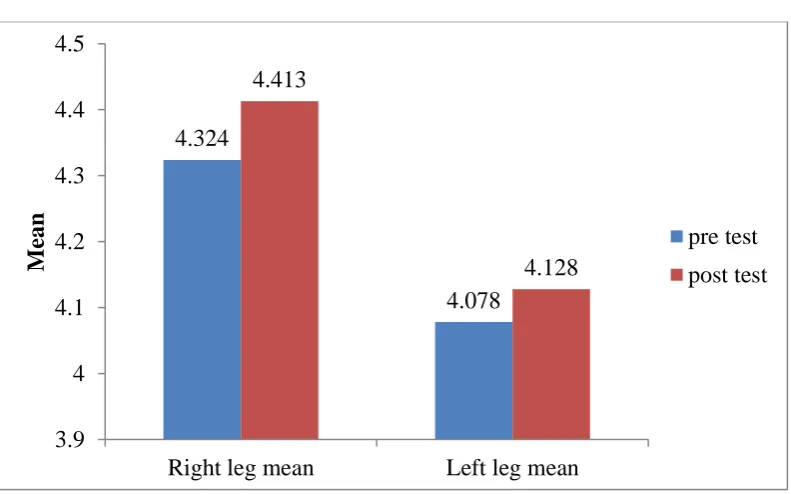
There was a significant difference in the outcome measure of
Triple hop distance test in control group the right and left leg at the
significance level 0.05% at 9 degrees of freedom.
Graph: 1 Triple hop distance test Control group:
4.324 4.078 4.413 4.128 3.9 4 4.1 4.2 4.3 4.4 4.5
Right leg mean Left leg mean
M
ean pre test
18
Table: 2 Triple hop distance test Experimental group :
Outcome
measure Test Mean
Standard deviation
Calculates
‘t’ value P value
THDT (RT)
PRE
TEST 4.3460 0.4402
14.0444 0.0001
POST
TEST 4.8750 0.3431
THDT (LT)
PRE
TEST 4.1200 0.3787
16.7629 0.0001
POST
TEST 4.5240 0.3990
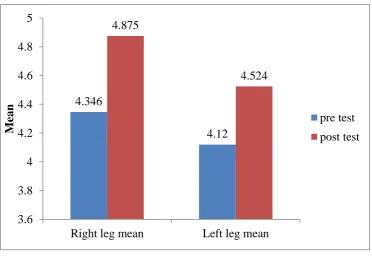
There was a significant difference in the outcome measure of
Triple hop distance test in Experimental group the right and left leg
at the significance level 0.05% at 9 degrees of freedom.
Graph : 2 Triple hop distance test Experimental group :
4.346 4.12 4.875 4.524 3.6 3.8 4 4.2 4.4 4.6 4.8 5
Right leg mean Left leg mean
M
ean pre test
19
Table: 3Triple hop distance test control group and experimental group
Outcome
measure Test Mean
Standard deviation
Calculates
‘t’ value value P
THDT (RT)
Control group Post test
4.4130 0.4303
2.6550 0.0161
Experimental group
Post test 4.8750 0.3431
THDT (LT)
Control group Post test
4.1280 0.3490
2.2310 0.0387
Experimental group
Post test 4.5240 0.3990
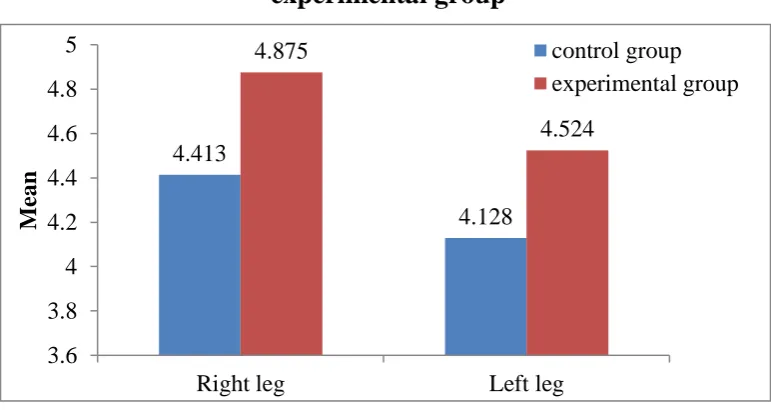
There was a significant difference in the outcome measure of
Triple hop distance test Control group and Experimental group the
right leg at the significance level 0.05% at 18 degrees of freedom.
Triple hop distance test Control group and Experimental group the
left leg at the significance level 0.05% at 18 degrees of freedom.
Graph: 3 Triple hop distance test control group and experimental group 4.413 4.128 4.875 4.524 3.6 3.8 4 4.2 4.4 4.6 4.8 5
Right leg Left leg
M
ean
20
Table: 4 Repeated sprint ability test Control group
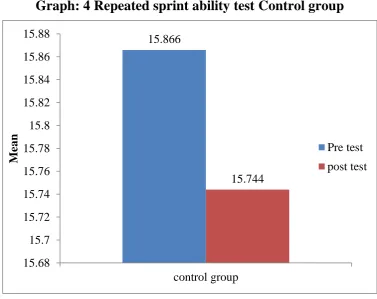
There was a significant difference in the outcome measure of
repeated sprint ability test Control group at the significance level
0.05% at 9 degrees of freedom.
Graph: 4 Repeated sprint ability test Control group
15.866
15.744
15.68 15.7 15.72 15.74 15.76 15.78 15.8 15.82 15.84 15.86 15.88
control group
M
ean Pre test
post test
Outcome
measure Test Mean
Standard deviation
Calculates ‘t’ value
P value
RSAT
Pre test 15.8660 1.0229
7.5726 0.0001
21
Table: 5 Repeated sprint ability test Experimental group
Outcome
measure Test Mean
Standard deviation
Calculates
‘t’ value P value
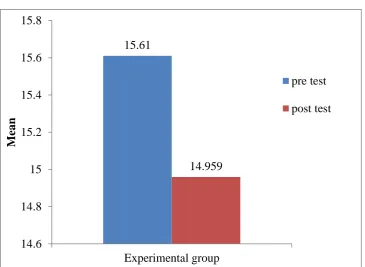
RSAT Pre test 15.6100 0.6866 6.6477 0.0001
Post test 14.9590 0.4381
There was a significant difference in the outcome measure of
repeated sprint test Experimental group at the significance level
0.05% at 9 degrees of freedom.
Graph : 5 Repeated sprint ability test Experimental group
15.61
14.959
14.6 14.8 15 15.2 15.4 15.6 15.8
Experimental group
M
ean
pre test
22
Table: 6 Repeated sprint ability test Control group and
Experimental group
Outcome
measure Test Mean
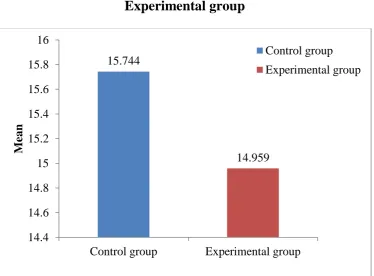
Standard deviation Calculates ‘t’ value P value RSAT Control group
Post test 15.7440 1.0166
2.2426 0.0378
Experimental group
Post test
14.9590 0.4381
There was a significant difference in the outcome measure in
Repeated sprint ability test Control group and Experimental group at
the significance level 0.05% at 18 degrees of freedom.
Graph : 6 Repeated sprint ability test Control group and
Experimental group 15.744 14.959 14.4 14.6 14.8 15 15.2 15.4 15.6 15.8 16
Control group Experimental group
M
ean
Control group
23
5. DISCUSSION
The purpose of the study has to been investigated that the
effect of warm-up training and along with hamstring eccentric
exercises program and versus warm-up training alone, to evaluate a
sprinting speed performance and muscular strength in
semi-professional football players. That we hypothesized the players
whoare all participated in the Experimental group warm-up training
along with Nordic hamstring exercises training program would
experience an improved in sprinting speed performance and
improved muscular strength are compared to the control group who
participated in a general warm-up training program only.
The Result was concluded that, there is improvement in
between the both groups the sprinting speed performance and
muscular strength among both the groups but Experimental group is
highly significantly improved by comparing with control group.
within the group comparison of pre and post test data of triple hop
distance test among the Experimental group has showed a highly
significantly difference by using paired “t” test for the right leg mean
difference 0.529 with level of significance <0.05% at 9 degree of
freedom. Left leg mean difference 0.404 with level of significances
<0.05% at 9 degree of freedom. In Experimental group. Repeated
sprint ability test showed a highly significantly difference in paired
“t” test mean difference 0.651 with level of significances <0.05% at
24
Comparison of pre and post test data for triple hop distance
test among control group showed significant difference in the paired “t” test for right leg mean difference 0.089 with level of significances
<0.05% at 9 degree of freedom. Left leg mean difference 0.05 with
level of significances <0.05% at 9 degree of freedom. In control
group the repeated sprint ability test showed significant difference in paired “t” test mean difference 0.122 with level of significances
<0.05% at 9 degree of freedom.
While considering the comparison between post mean of triple
hop distance test among control group and experimental group. The
experimental group has been showed high significant difference in
the independent “t” test for right leg mean difference 0.462 with
level of significances <0.05% at 18 degree of freedom. The
comparison of post mean difference on Left leg mean difference
0.396 with level significance <0.05% at 18 degree of freedom,
repeated sprint ability test comparison between the post mean of
control group and experimental group the experimental group has
been showed highly significant difference in the independent “t” test
with mean difference of 0.785 with level of significances <0.05% at
18 degree of freedom.
Another point is that, Nordic hamstring exercises can be
considered as a closed chain exercise according to the conditions of
closed chain motion described by Steindler. There is proposition that
closed chain exercise provide greater proprioception and kinesthesia
because axial loading provides joint approximation which is believed
25
might have a positive effect on the muscular strength and sprinting
speed. The warm up will have benefits on the speed and strength of
muscular contraction due to the increase in temperature of the
muscles.
This might be the reason for improving the parameters in both
groups. But significant improvement is observed in Experimental
group. It can be explained by the concept of lever system. During
prone leg hangs, the lever is the lower leg, fulcrum is knee joint,
effort is supplied by contraction of Hamstring muscle at its insertion
and weight is the weight of the lower leg and pull force of gravity or
weight of the resistance added. This can be considered as a third
order lever. During this eccentric contraction only small amount of
muscular contraction is required to achieve a much more rapid and
extensive movement compared to NHE. While performing NHE, hip
joint is stabilized by muscular contraction to form a lever. The
fulcrum is knee joint; weight of the body is transmitted to tibia. The
effort is applied at the origin of Hamstring muscles32.These factors
would have contributed to the significant change in Experimental
26
6. CONCLUSION
The results of the study showed that Nordic Hamstring
Exercise demonstrated a significant improvement in sprinting speed,
muscular strength, as measured by triple ho distance test, repeated
sprint ability test 30-m respectively after 5 weeks of training. Thus it
can be concluded that, Nordic Hamstring Exercise is effective in
improving sprinting speed, muscular strength, and semi-professional
football players. Since, improvement in physical fitness parameters
like sprinting speed, muscular strengthcan prevent easy fatigue of the
muscles thereby enhancing the efficiency of activities of daily living,
it can be concluded that Nordic Hamstring exercise is an effective
training program that can be incorporated in routine exercise
program. Nordic Hamstring Exercise is easy to perform, is not a big
time consumer, and can be done without the use of any additional
27
6.1 LIMITATION
• The study is conducted for only 5 weeks.
• Small sample size 20 subjects were taken into the study.
• Only the male subject included in the study.
• There is a lack of follow up.
6.2 RECOMMENDATIONS
• Further studies including large sample sizes and study duration
should be extent.
• More research is needed to further explore the real benefit of
sprinting capacity.
• The female subjects can be included.
• Hamstring injuries are commonly seen in sports activities. So
professional player can be taken as a sample for the study.
• Follow up need to assess the long term improvement in effect
of treatment.
• Future studies could examine the relation between core muscle
strength and NHE and its effect on hamstring injury as well as
28
REFERENCES
1. Arnason A, Andersen TE, Holme I, Engebretsen L, Bahr R.
Prevention of Hamstring strains in elite soccer: an intervention
study. Scand J Med SciSports. 2008; 18:40-48.
2. Brooks J, Fuller CW, Kemp S, Reddin DB. Incidence, risk,
and prevention of Hamstring muscle injuries in professional
rugby union. Am J Sports Med.2006; 34:1297-1306.
3. Ekstrand J, Gillquist J. Soccer injuries and their mechanisms: a
prospective study. Med Sci Sports Exercise1983; 15:267–70.
4. Garrett WE Jr. Muscle strain injuries. Am J Sports Med
1996;24(6Supply):S2–8.
5. Woods C, Hawkins RD, Maltby S, et al. The football
association medical research programmed: an audit of injuries
in professional football: analysis of hamstring injuries. Br J
Sports Med 2004; 38:36–41
6. Verrall GM, Slavotinek JP, Barnes PG, et al. Clinical risk
factors for hamstring muscle strain injury: a prospective study
with correlation of injury by magnetic resonance imaging. Br J
Sports Med 2001; 35:435–9.
7. Connell Da, Schneider-Kolsky ME, Hoving JL, et al.
Longitudinal study comparing sonographic and MRI
assessments of acute and healing hamstring injuries. AJR Am
29
8. Verrall GM, Slavotinek JP, Barnes PG, et al. Clinical risk
factors for hamstring muscle strain injury: a prospective study
with correlation of injury by magnetic resonance imaging. Br J
Sports Med 2001; 35:435–9.
9. Connell Da, Schneider-Kolsky ME, Hoving JL, et al.
Longitudinal study comparing sonographic and MRI
assessments of acute and healing hamstring injuries. AJR Am
J Roentgenol 2004; 183:975–84.
10. Askling CM, Tengvar M, Saartok T, Thorstensson A. Acute
first-time hamstring strains during slow-speed stretching:
clinical, magnetic resonance imaging, and recovery
characteristics. The American journal of sports medicine.
2007; 35(10):1716–1724. [PubMed: 17567821]
11. Askling CM, Tengvar M, Saartok T, Thorstensson A.
Proximal hamstring strains of stretching type in different
sports: injury situations, clinical and magnetic resonance
imaging characteristics, and return to sport. The American
journal of sports medicine. 2008; 36(9):1799–1804. [PubMed:
18448581]
12. Brukner, P.; Khan, K.; Brukner, P. 4th. Sydney ; New York:
McGraw-Hill; 2012. Brukner& Khan's clinical sports
medicine;1296
13. Cacchio A, Borra F, Severini G, Foglia A, Musarra F, Taddio
N, et al. Reliability and validity of three pain provocation tests
used for the diagnosis of chronic proximal hamstring
tendinopathy. British journal of sports medicine. 2012;
30
14. De Vos RJ, Reurink G, Goudswaard GJ, Moen MH, Weir A,
Tol JL. Clinical findings just after return to play predict
hamstring re-injury, but baseline MRI findings do not. British
journal of sports medicine. 2014; 48(18):1377–1384.
[PubMed: 25037201]
15. Clark R, Bryant A, Culgan JP, HartleyB. The effects of
eccentric hamstring strength training on dynamic jumping
performance and isokinetic strength parameters: a pilot study
on the implications for the prevention of hamstring injuries.
Phys Ther Sport. 2005;6:67-73.
16. Small K, McNaughton L, Greig M, Lovell R. Effect of timing
of eccentric hamstring strengthening exercises during soccer
training: implications for muscle fatigability. J Strength Cond
Res. 2009;23:1077-1083.
17. Gabbe BL, Branson R, Bennel KL. A pilot randomized
controlled trial of eccentric exercise to prevent hamstring
injuries in community-level Australian football. J Sci Med
Sport 2006; 9: 103-09.
18. Petersen J, Thorborg K, Bachmann M, et al. Preventive Effect of Eccentric Training on Acute Hamstring Injuries in Men’s
Soccer: A cluster-Randomized Controlled Trial. Am J Sports
Med 2011;39: 2296-2303.
19. De Weijer VC, Gorniak GC, Shamus E. The effect of static
stretch and warm-up exercise on hamstring length over the
course of 24 hours. J Orthop Sports Phys Ther 2003;33:
31
20. Potier TG, Alexander CM, Seynnes OR. Effects of eccentric
strength training on biceps femoris muscle architecture and
knee joint range of movement. Euro J
ApplPhysiol2009;105:939–44.
21. Reeves ND, Maganaris CN, Longo S, et al. Differential
adaptations to eccentric versus conventional resistance training
in older humans. Exp Physiol2009;94:825–33.
22. J. Augustsson, R. Thomeé, C. Lindén, M. Folkesson, R.
Tranberg,
J. Karlsson, Single-leg hop testing following fatiguing
exercise: Reliability and biomechanical analysis, Scand. J.
Med. Sci. Sport. 16 (2006) 111–120. doi:10.1111/j.1600-
0838.2005.00446.x.
23. R.T. Hamilton, S.J. Shultz, R.J. Schmitz, D.H. Perrin,
Triple-hop distance as a valid predictor of lower limb strength and
power, J. Athl. Train. 43 (2008) 144– 151.
doi:10.4085/1062-6050-43.2.144.
24. A.S. Bley, J.C.F. Correa, A.C. Dos Reis, N.D.D.A. Rabelo,
P.H. Marchetti, P.R.G. Lucareli, Propulsion Phase of the single
leg triple hop test in women with patellofemoral pain
syndrome: A biomechanical study, PLoS One. 9
(2014)e97606. doi:10.1371/journal.pone.0097606.
25. M.G. Pandy, F.E. Zajac, Optimal muscular coordination
strategies for jumping, J.Biomech. 24 (1991) 1–10.
32
26. Baker J, Ramsbottom R, Hazeldine R (1993) Maximal shuttle
runningover40masameasureofanaerobicperformance.BrJ Sport Med 27„228−232
27. Nagahama H, Isokawa M, Suzuki S, Ohashi J (1993) Physical
fitness of soccer players a Reacted by a maximal intermittent
exercise ‘‘MIE’’. In„ Reilly T, Clarys J, Stibbe A (eds)
Science and football. II. Spon, London, pp 46−52
28. Nummela A, AlbertsM, RjintjesRP, Luhtanen P, Rusko(1996)
Reliability and validity of the Maximal Anaerobic Running
Test. Int J Sports Med 17„S97−S102
29. Reilly T (1996) Energetic of high-intensity exercise (soccer)
with particular reference to fatigue. J Sports Sci 15„ 257−263
30. Reilly T, Thomas V (1976) A motion analysis of work-rate in
deferent positional roles in professional football match-play.J Hum Mov Stud 287−89
31. Kinesiology of human body under normal and pathological
conditions. Arthur Steindler, Charles C Thomas Publishers.
USA.5th edition.
32. The principles of Exercise Therapy. M Deena Gardiner. CBS
Publishers & Distributors, Delhi. 2005, 4th Edition. Chapter 2:
33 BIBLIOGRAPHY
1. Rehabilitation Research: principle and application by
Elizabeth Domholdt (Elsevier health science IV, 2004)
2. Kinesiology of human body under normal and pathological
conditions. Arthur Steindler, Charles C Thomas Publishers. USA.5th edition.
3. The principles of Exercise Therapy. M Deena Gardiner. CBS
Publishers & Distributors, Delhi. 2005, 4th Edition. Chapter 2: 110-13
4. Exercise physiology by Mc Ardle, Katch and Katch
(Lippincott Williams and Wilkins, 2000)
5. Sports physiotherapy by Maria Zuluga, Christopher Briggs and
John Carlisle.
6. Clinical sports medicine by Peter Brukner and Karim Khan
third edition 2008
7. Joint structure and function: a comprehensive analysis by
Cynthia C Norkin, Pamela K Levangi (Jaypee Brothers, 2006)
8. Orthopedic sports medicine, mark D. Miller, 3rd edition: 2009,
Saunders Elsevier
9. Sports injuries prevention and their treatment by lass Peterson
1st edition (martin Donitz, 2001)
10. Therapeutic exercise: foundation and techniques by Carolyn
Kisner and Lynn Allen Colby (W.B Saunders Company, 2007)
11. Basic biomechanics of the musculoskeletal system by
Margareta Nordin and victor H. Frankle,2nd edition (Lea and
34
APPENDICES
APPENDIX I
ASSESSMENT
Name:
Age:
Date:
Gender:
Address:
Occupation:
Weight: Height: Dominant: BMI:
Personal medical history
Diabetes Yes/no
Kidney disease Yes/no
Blood pressure Yes/no
Thyroid disease Yes/no
Asthma Yes/no
Cardiac disease Yes/no
Respiratory problem Yes/no
Digestive disorders Yes/no
Musculoskeletal Disorders Yes/no
Injury lower extremities injury/upper extremities injury / back pain/hamstring injury
35 Surgical history
Abdominal surgery Yes/no
Spine surgery Yes/no
Any other implants / Fracture Yes/no
Personal history
Cigarette smoking Yes/no
Drinking alcohol Yes/no
Bowel and bladder dysfunction Yes/no
Under any medications Yes/no
Any supplements Yes/no
Habit of regular exercise Yes/no
Vital sign
Heart rate:
Blood Pressure:
Respiratory rate:
Temperature:
Spo2:
Physical variables
TEST PRE TEST POST TEST
THDT Right(cm) Left(cm) Right(cm) Left(cm)
36
APPENDIX II
General warm-up training:
Consisting of jogging progressing to light sprinting was
performed for 10 min.
Butt kicks:
• Stand with your legs shoulder-width apart. Your arms should
be bent your sides.
• Flex the right knee and kick your right heel up toward your
glutes. Bring the right foot back down.
• As the right leg comes down, flex your left knee and kicks
your foot up toward your glutes. Swing your arms as if you
were jogging.
• Repeated in 3 sets of 20 repetition
37 Knee to chest:
• Stand with your feet shoulder -width apart. Maintain a tight
core throughout. Lift your left knee up and towards your chest.
• Grab your left knee and pull it in as close as you can into
chest. Hold this stretch.
• Slowly release the left leg to the ground and repeated on the
other side 3 sets of 10 repetition.
38 Self-stretch:
• Use support from a partner or stationary object such as a chair
or low table.
• The knee should be bent at the start, and the ankle relaxed.
• Press the heel against the ground for 5-10 seconds to activate
the hamstring muscles.
• Then relax and use your hand to extend your knee. Hold the
stretch for about 20 seconds.
• If necessary, increase the distance between your legs and bend
your hips little more,
• But keep your back straight. Stretch each thigh three times.
39 Partner stretch:
• Your partner raises your leg with the knee bent, until you
feelthe back of the thigh stretch.
• Hold this position for a few seconds before you press your leg
towards your partners shoulder.
• Hold for 10 seconds. Then relax while your partner stretches
firmly, but cautiously by leaning forward.
• Hold this position for 45 seconds. Stretch each thigh three
times.
40 Nordic hamstring lowers:
• Your partner holds your legs stable. Lean slowly forward with
a steady speed.
• Hold your back and hips straight.
• Try to resist with your hamstring muscles as long as possible,
until you lose your balance and fall on your arms.
• As you get stronger, make the exercise more demanding by
increasing speed in the beginning of the movement, even by being “pushed” by your partner. Let the chest touch the
ground.
• Use your arms to push up immediately, until your hamstring
muscles can take over the movement and pull you up to the
starting position.
• Be careful in the beginning, use two sets with 5 reps, and
increase slowly to 3 sets with 12 reps
Beginning position Mid position
41 Triple hop distance test:
• Stand with single leg, perpendicular to starting line.
• Participants stood on the designated testing leg, with the great
toe on the starting line
• They performed 3 consecutive maximal hops forward on the
same limb.
• Arm swing is not allowed placed behind back.
• The investigator measured the distance hopped from the
starting line to the point where the heel struck the ground upon
completing the third hop.
• All participants were allowed 1 to 3 trials on each leg and then
completed 3 test trials.
• The distance is measured with standard tape in centimeters.
• Is a method of measuring the muscular strength of lowers to
assess functional performance. THD is strong predictor of
lower limb muscular strength in healthy semi- professional
football players.
42 Repeated sprint ability test:
• Marker cones and lines are placed 30 meters apart to indicate
the sprint distance.
• Two more cones are placed a further 10 meters along on each
end. At the instructions of the timer the subject places their
foot at starting line.
• Then on ‘go’ to stopwatches are started and the subject sprints
maximally for 30m, ensuring that they do not slow down
before reaching the finish line.
• Those assessments allow adequate prescription and monitor
improvements caused by physical training aiming
high-performance attainment.
• Is a method of measuring the sprinting capacity to assess
functional performance in healthy semi- professional football
players.
43
APPENDIX III
INFORMED CONSENT FORM
I _________________________________________ agree to
take part in the study, conducted by _____________________’ post
graduate student (MPT), Sri Ramakrishna Institute of Paramedical
sciences, college of physiotherapy, Dr.MGR University.
I acknowledge that the research study has been explained to
me and I understand that agreed to participate in the research.
• Provide information about my health status to the researcher.
• Allow the researcher to have access my medical records for
purpose of the study.
• Participate in the analysis program.
• Make myself available for further analysis if required.
I have been informed about the purpose, procedures and
measurements involved in the research and my queries towards the
research have been clarified.
I understand that my participation is voluntary and can
withdraw at any stage of the research.
Signature of the participant:
Contact Address: