COMMISSION OF THE EUROPEAN COMMUNITIES
Brussels, 24.07.1998
COM(l998) 379final
TEMPUS U PROGRAMME
INTERIM REPORT
MARCH 1998
THE TEMPUS (PHARE) AND- TEMPUS (TACIS) PROGRAMMES: PERSPECTIVES ON DEVELOPMENT
I. INTRODUCTION
This Report examines the impact of the Tempus programme in the countries eligible to take part and its role in stimulating the reforms that have taken place in the countries. This Report identifies the nature and the scale of the achievements of Tempus in three geographical areas, and offers perspectives on future development. It accompanies the proposal for Council Decision on Tempus III as requested by the Council Decision of 21 November 1996 on the extension of Tempus II.
In respect of content, the Tempus Programme has operated to date in three identifiable groups of beneficiary countries. These are:
• the Tempus (Phare)1 Programme established in 1990-91 and as now applying to the associated Central and Eastern European countries (CEEC) which are preparing for accession to the European Community,2
• the same Tempus (Phare) Programme as now applyin~ to the non-associated CEEC\ • the Tempus
(1')
5 Programme adopted in1993 and which now applies to twelve6 of the fifteen countries of the former USSR, and also to Mongolia. In this last cluster, the Russian Federation and Ukraine are particularly important, in the context of the Partnership and Co-operation Agreements which came into force between the European Community and the Russian Federation in December 1997 and in March 1998 with Ukraine.
It is recognised that the Tempus Programme has become quite different in each of the three country clusters identified. In the first group there exists for Tempus the political context of future accession, which does not exist in the other two groups. In these ten countries also, there is an impressive critical mass of achievement which has been built up over time. In the non-associated Phare countries there is a recent background of physical conflict and/ or civil unrest, creating a context of reconstruction which is of a different order from that of the ten, while the Programme itself (that of Albania apart) is in the process of being created. For the Tempus (T) countries, the Programme is established but still developmental, while the amount of Tempus funding available - relative to the scale of the task to be addressed - is critically far more limited than for the associated countries.
1 Here Tempus (P).
2 I.e. Bulgaria, the Czech Republic, Estonia, Hungary, Latvia, Lithuania, Poland, Romania, Slovakia,
Slovenia.
3 Here Tempus (PnA).
4 Albania, Bosnia-Herzegovina, Fyrom.
'Here Tempus ('I).
6 Armenia, Azerbaijan, Belarus, Georgia, Kazakstan, Kyrgystan, Moldova, the Russian Federation,
Material for the Report has been taken from the 1996 Tempus I final report and the 1996 interim report on Tempus II. "National Profiles" of higher education of the Phare countries and "Impact studies" which provide an overview of the influence of the programme in the Phare countries, with the exception of Bosnia, up to 1998 have also been used. These last two publications were produced by national experts in the Phare countries. Finally the chapter on Tempus Tacis is based on the findings of the external evaluation of the first phase of Tempus in the New Independent States of the former Soviet Union and Mongolia which was completed in March 1998.
Statistical data, in annexes, are used onty as illustration and not as a main focus. Equally, the Report does not address the outcomes of specific projects within Tempus. By focusing on w4at appear to be the main issues only, it becomes possible better to illustrate the achievements, and the perspectives for development, of this impressive programme.
II. TEMPUS-PHARE: THE ASSOCIATED. COUNTRIES
A. The changing political contexts: from aid to Accession support
The Tempus Programme was proposed at the meeting of ·the Council of Ministers of Education in December 1989, the very year of the transformational political changes in the CEEC; it was formally adopted by the Council in May 1990, and operations began immediately. There are very few instances indeed of such a large-scale and significant action being agreed and activated so quickly at the European level, and it is clear that, since 1990, the Programme has been a mechanism for major changes within the Higher Education systems of the CEEC. Certainly it has been highly appreciated within the Universities of these countries.
Within the lifetime of the Programme, the changes in its political context have been equally remarkable. What began as a rejection of a worn-out political system and of Soviet dominance has become a formal process of accession to the European Community. That this process still needs some time for its completion is immaterial: the key point here is that, in 1988, it was simply unthinkable, and a dream has become the driving force behind a massive investment in planning and development. Within this context of political change, Tempus
(P)
has evolved from being an ad hoc aid programme to· being a serious contribution to preparation for a re-drawing of the map of Europe. It offers also important pointers to the way ahead for Tempus in other geopolitical areas.B. Programme orientation and budgets
planning at the institutional level.
It is important also that the first phase of Tempus
(P)
was also bottom-up so far as national Ministries were concerned. A combination of, in some cases, administrative inertia in the immediate. post-1989 period and, in other cases, a wish to promote the maximum degree of academic freedom as a political goal meant that Ministry intervention in Tempus was a1; the outset limited to establishing National Tempus Offices and to formal participation in the process of agreeing Priorities and budgets. Establishing new legal frameworks for Higher Education and for University autonomy were integral to the rejection of old Communist-style central control; in such a climate the bottom-up approach was not only highly appropriate, it was the only approach with any chance of succeeding. In the mid-term, however, at the national level as within the Universities, the success of this bottom-up dynamic hindered a need for a greater synergy between the Programme and national planning.The success of the Tempus
(P)
Programme has been determined also by an allocation of budget levels which in most cases have made the operation feasible. Tempus budgets are decided on a national basis in agreement with the Commission $ervices, within the overall budgets of the Phare Programme. The proportions of Phare budgets allocated to Tempus, and the cash amounts which these have represented, have varied between countries but in most cases allowed for a critical mass of Tempus activity to be generated, though this was more easily achieved in the larger countries than in the smaller.It is important also that the bottom-up approach meant that budgets were disbursed mainly through Joint European Projects OEPsY which were relatively small-scale compared to the larger operations of the Phare programme, and that the project budgets were directly managed by project teams. These factors helped Tempus to be an efficient programme, with a very high turn-over of expenditure commitment and disbursement, and of successful project completion.
C. Development of Priorities and achievements
The achievements of Tempus
(P)
in any one country have been determined largely by the Priorities selected for that country. Within Tempus (P) the term "Priorities" has come to be used in an increasingly formal sense. This sense shifted from bearing, at the outset, a meaning of the areas "most favoured" for project proposals to a later but very quickly adopted meaning, of the only areas in which project proposals would be accepted. Failure to correspond with the formal statement of country Priorities now means automatic rejection of a proposal.In the first two years, Priorities were virtually identical across all beneficiary countries and were effectively laid down by the European Commission as part of the Tempus "offer". Increasingly however the Commission implemented a policy of agreeing Priorities in
partnership with the beneficiary countries, though legally the final responsibility for acceptance or rejection of a Priority - or for that matter of a specific project - has rested with the Commission.
Increasingly also the statements of national Priorities diverged, reflecting different national identifications of needs. As a consequence, while there are certain achievements which are basic to all Tempus programmes within Phare, others tend to be more a reflection of
7 References to the Tempus JEPs are used as a shonhand for all forms of projects - JEPs, JENs,
specific national Priorities.
CONCLUSIONS
There are very important lessons to be drawn from the activities of Tempus in Phare countries about both funding levels and the bottom-up approach.
However, the Tempus (P) Programme is now entering its last two years of operation, and it is not reasonable, nor would it be desirable, to apply these lessons within Tempus (P). It is not possible to look to sweeping changes in the programme's modalities at this late stage. It seems more appropriate, therefore, to. reserve conclusion from Tempus (P) for comments on Tempus in the non-Associated countries and in the Tacis countries.
What is important is that policy developments in this last phase are finally pointing Tempus (P) in the direction of the more strategic approach that appears to be essential; what is interesting here is the current emphasis on "institution-building" which is one of the main objectives of the Phare guidelines aiming to prepare Ministries and public and private services for. accession to the European Co~munity.
This is a concept of the highest importance. The concept of institution-building offers to the CEEC Universities two key opportunities. First, they have the opportunity, with Tempus support, to contribute to the development of other institutions, governmental and social, in the preparation for accession. Second, within that process, they have the opportunity themselves to develop as institutions in dialogue with their social, political and economic environments, as institutions able to learn from that dialogue and to grow in the service of their regions and their countries.
If
Universities in Central and Eastern Europe succeed in grasping this challenge, they will have risen above the limitations of the bottom-up approach and will truly have turned Tempus (P) to strategic advantage.
c-\.
.
-·
'III. TEMPUS-PHARE: THE NON-ASSOCIATED COUNTRIES
To examine the situation of Tempus (Phare) in the non-associated countries (here "Tempus (PnA)") is to find both continuity and discontinuity with Tempus (P).
A. Background: continuity and discontinuity
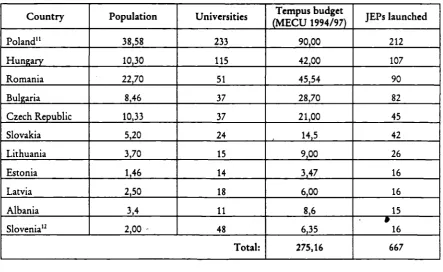
The continuity is clearly present in the fact that Albania has participated in the Programme since 1992, with a total number of 33 approved JEPs (27 implemented), very much on the scale ofthe Baltic States and Slovenia (see Table 1 and Table 2). In this country, a great deal has been achieved through the JEPs, perhaps as much as anything the opening up of the Higher Education of a country which had undergone an isolation far more complete than that of the other ten Phare countries. This has been a major factor for change in Albania.
It may now be anticipated that development activity will continue under a Tempus III Programme, and it is important that it be designed to the maximum benefit of the recipient country.
considerably further back than it was for the ten Associated countries. In recent years, political instability and the threat of civil war have also created in Albania a situation which has been avoided in other Phare countries ..
It need hardly be stated that the legacy of war, especially as reflected in ethnic and religious conflict, and the mistrust which they leave beh~d even within the University community, is also a major factor in the present re-construction of Bosnia-Herzegovina. In this respect also the starting-point for development is considerably further back than in the Associated countries.
Very importantly, there is a further discontinuity in the fact that the Tempus
(PnA)
countries are States which do not have Associated status and which therefore are not in the process of preparing their institutions for membership of the European Community.This is a major difference of context, though it may be more important in respect of its time-frame than of its substance. The need for the ten Associated countries to prepare for Accession is pressing, but - and without making any judgement about eventual Accession by the PnA countries - it is also true that no country in Europe can ignore the existence of the European Community. Creating the conditions for even a non-Associated country to live alongside the European Community in political, legal and economic terms calls for an institutional capacity which is at least similar to that of Associated States, and there is an evident need for training to be developed in these areas.
B. Perspectives for development
It is clearly very difficult to generalise about Albania, Bosnia-Herzegovina and Fyrom, three countries in which the history of even the period since 1989 has been very different; very importantly, for example, Albania was never a part of the Yugoslav Federation and is therefore emerging from a quite different tradition. Moreover, it is necessary to recognise that the situation vis-a-vis Tempus in these three countries is currently highly dynamic, and that judgements and opinions may quickly be rendered out-of-date. One important step, however, is to apply the lessons of Temps
(P)
to each of these three countries.1. Budgets
In terms of the analysis offered earlier, it is clear that all three countries are likely to remain relatively small-budget countries. As a consequence, their potential for covering a wide range of Priority areas in any one year is low. The choice of Priorities is therefore of critical importance.
However, because their total number of Universities is small, the potential for impacting the system as a whole is high. The strategy for Tempus development in these countries needs to reflect the balance of these two factors if optimum effectiveness is to be achieved.
2. Programme modalities
The subject-based JEP should not be seen as the automatic choice of modality in any one of the three countries. Further, the bottom-up approach is no longer, or not in these circumstances, necessarily the most appropriate mechanism to use.
other two countries, Tempus II is only now being initiated. It seems important however that the principles which are to drive Tempus III should be put in place now, as these countries enter Tempus II. For that reason, the prospective for Bosnia-Herzegovina and Fyrom is more immediate than for Albania: there are principles which require to be established now.
3. Bosnia-Herzegovina
This country is, quite evidently, the most problematic of the three.
It seems evident that, as a basic principle, the needs of social and ethnic re-building in this country should be an 'over-Pri~rity' which drives all else. Division is to be avoided at all costs.
In practice, this would mean:
• that there should be an emphasis on a very small number of projects which attempt to target all Universities;
• that there be' an emphasis on support for University management projects which engage representatives of different Universities in working together,
• that, given the importance and effectiveness of staff mobility in Tempus
(P),
a .proportion of the budget should be reserved for GMGs - Group Mobility Grants - in which small teams, preferably representing all or most of the Universities, be mandated to carry out and report back from comparative study visits to selected EC University partners,• that there should be a close synergy between GMGs and the process of Priority development.
These are relatively simplistic solutions for which most of the mechanisms are already in place. What is important in this country, however, is to give a strong signal that, under present circumstances, educational development through Tempus is expected to go hand-in-hand with national reconstruction.
It may be that there is no need at present for Tempus in Bosnia-Herzegovina to support a large amount of student mobility but there might be a limited support in this area. Donation of equipment, if any, should be at the University level only and should support institution-wide networking above all; obviously there are special issues of security to be
considered. ·
4. Former Yugoslav Republic of Macedonia (Fyrom)
A key factor in Fyrom is that there are only two eligible Univ~rsities in the countries but with, as throughout former Yugoslavia, many Faculties enjoying legal independence. It has to be recognised also that the two institutions are quite different in size, with approximately 26.000 and 4.400 students each.
The 'Profile of Higher Education and Tempus' for this country prepared for the European Commission provides a reasoned analysis of needs and possibilities in Fyrom. Further, the Priorities for Fyrom as published by the ETF on behalf of the European Commission are illuminating. It is clear that these have been thought out carefully.
implementation which will best respond to the needs and possibilities embodied in the Priorities.
Again drawing on the lessons of Tempus
(P),
it seems that in the case of Fyrom it is essential to ensure maximum benefit from a budget which will necessarily be small. To attempt to cover all Priorities separately wo¥ld lead to the exclusion of some and/ or dilution of resources.To counter-act this risk, it seems that it provides an ideal context
in
which to develop a University-based approach to Tempus investment. The fact of Faculty autonomy has to berecognised but that there are altogether some 42 Faculties, Institutes and Colleges within the structure. There is no case for allowing Tempus funding to re-inforce the fragmentation of Higher Education to which this may lead in a country of. two million people.
A University-based approach would reduce
the
problem of have and have-not distribution, and could be developed so as to reduce the abrupt discontinuities of JEP-based funding. It goes without saying that insistence on a University-wide strategy would enforce creation of internal mechanisms for dialogue.It is attractive from both national
and
EC perspectives to achieve rapid short-term results from projects with a specific areafocus
(development of training forSMEs
or for important areas such as teacher training and nurse education). What appears necessary however is to invest from the outset in the creation of a system whichwill
take a holistic view of development and which willsustain
a multiplier effect. There is no room for competition in such a small context.In an initial phase, attention should be given to the setting up of infrastructures within the two Universities. There should
be
support for the development of the management structures and for support functions .such as Development Units, which would include International Offices. During this phase, there should be an emphasis on GMGs, with an insistence that the learnings of participantsbe
fed into the system: one can envisage regular 'Tempus-sharing' seminars being mounted with the Universities.Resourcing, as far as possible, should again support central services, with Library development and computer communication (identified Priority areas) receiving a high priority.
This is not in any way to. dissent from the identification of Priorities such as it exists at present for Fyrom. On the contrary: the concern should be for establishing a strategy which will allow as many Priorities as possible to be accommodated, and to be seen to be accommodated.
5. Albania
In looking at a prospective for Albania, it is clear that a great deal has been achieved already and that the Programme has behind it a record since 1992/93 of 29 JEPs, 16 CMEs, 3 JENs and more than 800 IMGs. There is thus in Albania a Tempus know-how and momentum which does not exist in the other two Tempus
(PnA)
countries.The current statement of Priorities is well-elaborated. Very importantly, it provides a balance between reform of the Higher Education system (three main Priorities) and the restructuring of c~rricula and study programmes.
Further, there are eleven eligible HEis in Albania. There remams a need to reduce progressively the element of competitivity between Priorities within Tempus, and to achieve if possible the critical mass of development. The success rate of 18% in JEP submissions does not present an encouragement for future submissions.
In Albania, then, as in Bosnia-Herzegovina and Fyrom, there needs to be an implementation strategy based on maximum synergy within the system. As in Fyrom, there is a major difference between a policy of funding projects which support University management, on the one hand, and on the other hand a University-based approach to development. It seems essential in Albania also to move to the latter approach, with the added need-for this to be achieved by consortia of Universities. Such a strategy will require very careful co-ordination, and a strong support from the NTO will be required. Consortia should be required to give attention to a distribution of development tasks between members, and must be absolutely required to attend to maximum dissemination of learnings. The ideal consortium would include all HEis in Albania.
This is not an easy approach to implement. In tenus of the number of its Universities, Albania represents a transitional point between systems with a very small number of components, where it is possible to include all Universities, and those with too many for any one project to include all. Eleven Universities represents an awkward in-between point, and this has to be recognised. Careful consideration might be given to adoption of a cascade model for consortia, based on (possibly regional) groupings of institutions, where one or two core partners have disseminator/multiplier roles.
Again the use of GMGs, preferably within consortium structures, is to be recommended.
CONCLUSIONS
The essential is to seek a transfer of learning from Tempus
(P)
to Tempus(PnA).
This transfer should be based on a close examination of what is possible between the variables of size of budget, number of Priorities, the need to ensure that project budgets arc viable, and size of the University community.The choice of Tempus modalities has to be considered carefully within this context of variables. The 'traditional', subject-centered, JEP is no longer an appropriate mechanism if development investment is to be optimised across institutions and systems. There needs to be a shift towards a more institutionally-centered approach, with maximum sharing of learning across consortia of Universities.
The establishing of an institutional approach is not an easy task but has to be regarded as a key to development. In Bosnia-Herzegovina especially, the needs of social and ethnic re-building provide an especially strong motivation for a collaborative approach to further
development. ·
IV. TEMPUS (TACIS)
A. The difference of context
1. The geopolitical scale
This is sufficiently obvious to need no more than acknowledgement here. The sheer scale of the territory involved is a major barrier to any attempt at synergy between activities.·
Equally obvious is the very wide range of ethnic, linguistic and religious diversity to be found across the T acis
(T)
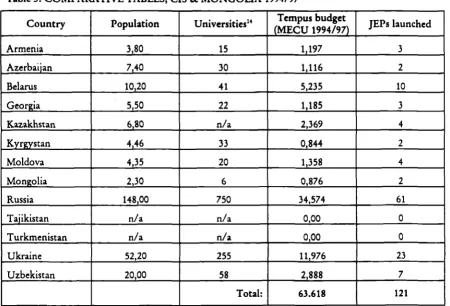
countries. That diversity is now exacerbated by the separation of the former Republics into sovereign States, each with its own developmental agenda.Third, it has to be recognised also that, in this diverse collection of States, for which the one Tempus programme has to serve as a development umbrella, the weight of the Russian Federation in terms of economy and of population {148,000,000) is quite disproportionate to that of the others, or indeed to any Member State of the EC. These comparisons, however, mean little when set against the sheer scale of the territory involved. What has to be recognised is that what has been done, and can be done in the Russian Federation, and to a lesser extent Ukraine, is of a different order from what is possible in other States.
2. The political context
There is also one further point of distinction between the Tempus (1) countries as a whole and the two other country groups.
A comment frequently made about Tempus {P) relates to the need to 'change the mind-sets' created by forty years of Communist domination. Forty years is a long time, but there are people in Central and Eastern Europe who do remember life before the Communist take-overs and even before 1939. In the Tempus
(T)
countries there is no effective pre-Communist memory to speak of; one would have to be a near-centenarian to remember 1917. The precursor of the Communist regime was the rule of the Tsars, not a Social Democrat tradition from the 1930s. This simple historical fact has a very important bearing on what can be expected in terms of developing new forms of University governance in the CIS.It has been noted already that the political context of Accession does not exist for the Tempus (1) countries, though as for the Tempus {PnA) countries there is a need to train civil servants and others to work with the European Community. Now however, there exists a new and major distinction to be drawn at the political level between two of the T acis (T) countries on one hand and the other ten countries and Mongolia .
In December 1997 a Partnership and Co-operation Agreement with the European Community and its Member States came into force with the Russian Federation, and then in March 1998 with Ukraine. The Agreements specifically incorporate provisions for co-operation in the field of education and training, with a particular reference to Tempus.
These Agreements create a diplomatic context for consideration of Tempus in. the Federation and Ukraine which require attention separately from development of the Programme in other countries.
· B. CONCLUSIONS OF EXTERNAL EVALUATION
This was completed by an external firm in March 1998. The mam objectives of the evaluation were:
• to analyse to what extent Tempus fulfilled its objectives of supporting the development and restructuring of higher education in T acis countries and encouraging co-operation between the beneficiary countries and the EC Member States;
• make a preliminary attempt to assess the global impact of the Tempus programme in terms of its contribution to the development of human resources and democratic values in the beneficiary countries to support the political, economic and social reform process;
• analyse the Tempus programme planning and management efficiency.
The evaluation report drew on desk research based on project documentation and Tempus policy documentsi interviews with relevant actors in the EC including representatives from the Tempus committee of Member States, the European Comission, the European Training Foundation, EC National Contact Points; and field visits to Russia, Ukraine and Uzbekistan where interviews were conducted with running Tempus projects, Partner state educational authorities, Tacis Co-ordinating Units and Tempus Information Points;
The evaluation's findings have been a useful basis for the elaboration of the Tempus III decision as well as providing detailed recommendations· on project and programme management which will be useful for the future implementation of Tempus III. The major conclusions drawn by the evaluators with regard to the two first objectives mentioned above can be summarized as follows:
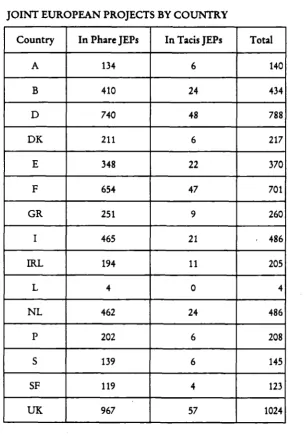
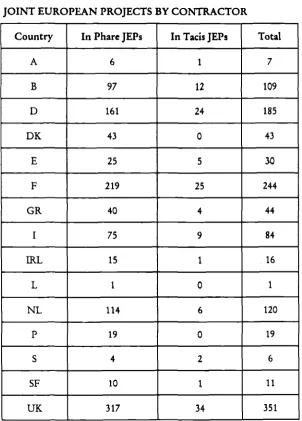
The Tempus programme is the largest higher education, university based technical assistance programme in the NIS and Mongolia reaching a considerable number of important universities. Coverage in the EC has been substantial as well with a strong representation from the UK, Germany and France as well as good participation of Belgium, the Netherlands and Spain, the annexed tables show the statistics. The main areas of co-operation have been in social sciences, university management, EC languages and ) humanities. The "bottom-up" nature of the programme has allowed EC and NIS universities to be directly involved in the development of project proposals. In the area of curriculum development considerable results have been achieved in terms of the development of new courses, textbooks and teaching materials. At the institutional level universities are becoming increasingly aware of the importance of decentralisation of management and of the university's own role in generating income. Overheads on Tempus projects have been relatively small with the majority of project financing being used for staff mobility and equipment.
actors and they encourage projects to get maximum benefit from their new courses by addressing training programmes to the requirements of enterprises or local administration. The development of such consultancy services could ensure the sustainability of projects. Closer co-ordination with the overall T acis programme is also urged, clear mechanisms should be set up in order to link Tacis and Tempus higher education projects and Tacis projects should take more advantage of the expertise trained under Tempus projects.
The actual project activities are thought to be appropriate with certain improvements to be considered. Staff mobility has contributed to up-grading of knowledge and skills as well as familiarisation with new teaching materials and methodologies. However, more attention within projects needs to be given to the close linking of staff mobility into the development of the project. A balance should be struck between involving junior staff with better languages and aptitude for change and senior staff who are essential for the acceptance of educational innovation in the universities. Student mobility is highly appreciated by the participants although its contribution to the project objective is felt to be. indirect by the evaluators. The provision of teaching and computer equipment, literature and other teaching materials has been a success story of the programme.
The evaluation recommends that more attention should be paid to dissemination of project achievements. Although this is an issue which is underlined in many Tempus publications to date dissemination activities are limited since the first Tempus projects came to an end only in 1997. This has been introduced in the 1998 call for proposals and the response from universities is awaited. Finally the evaluation recommends· that more attention should be given to the provision of information in such areas as good practice within projects, projects achievements and general information about the programme. In order to achieve this it is advised to reinforce the service provision of the Tempus Information Points in the Partner Countries.
C. Scale of task, scale of funding
Before turning to the two groups of countries within Tempus (T}, it is necessary to note briefly that the funding situation is more complicated in the Tempus (T) countries, but that a pattern may be extracted from past funding levels. For example :
• in all Tempus (T} countries with the exception of Russia, the potential for covering a wide range of Priorities is low,
• in Russia, the potential for covering a wide range of Priorities is relatively high, but only relatively,
• in all Tempus (T} countries with the exception of Mongolia, the potential for impact on the entire University system ranges from rather low (Moldova) to extremely difficult (Russia and Ukraine).
D. The Russian Federation
Universities within the system and the difficulty of establishing coverage.
Priorities in the Russian Federation
Current priorities (1998/99) for the Russian Federation are in fact well-targeted. They cover five main areas only; these are Law, Economics, European Community Studies and Policies, Natural Resources Management and Medical and Health Care. Within these Priorities, projects are expected to cover also horizontal measures such as teacher training, new information technology methods, languages education and distance education.
This balance of subject areas which· are strategic in · relation to Russian needs with horizontal dimensions appears to be well chosen and realistic with the available budget, and some impressive projects are already operational. The Priorities also place a strong emphasis on dissemination activities which, given the number of Universities in the Federation, is a Programme element of the utmost importance.
The Co-operation Agreement• could offer an additional framework for the definition of future Priorities within Tempus in two ways: ·
The first definition that emerges is that of identified subject areas. Article 63 refers specifically to areas such as European Studies, languages teaching, interpretation and journalism. Given that these areas are identified within a diplomatic agreement, a Tempus programme could channel support in their direction.
The second definition to emerge is that of identified educational mechanisms. Article 63 refers to a range of such mechanisms - though not necessarily all at the same semantic level. These include the updating of higher education and training systems, the training of civil servants and others, inter-University and University-industry co-operation, mobility, promotion of modern training programmes, distance education and training of trainers.
In both definitions it is clear that there are a number of elements already present in the current Tempus programme and its Priorities and transition would not be difficult.
In addition throughout the Co-operation Agreement, Article after Article identifies areas for joint development: agriculture, energy, environment, transport, telecommunications, financial services, regional development, tourism, SMEs. Each and every one of these is an area in which Higher Education and training is required. ·
Regional aspects of the Programme could also be strengthened. For example, it would be highly appropriate to operate through regional consortia of Universities, as a training support to the regions. The use of information technology networks and of distance education systems would clearly be of great importance.
E. Ukraine
Ukraine is territorially far smaller than the Russian Federation, but in terms of population', number of Universities and Tempus budget it is neatly one-third of the scale of its larger neighbour.
However, a comparison with Tempus
(P)
countries puts the Tempus funding for Ukraine into perspective. Over the three years 1994/97, Tempus in Ukraine received almost MECU 12.00; in the same period Slovakia, with one-tenth of the population and one-tenth1 The Agreement on Partnership and Co-operation between the European Community and the
Russian Federation- OJ L 327 28111/97
9
also of the number of Universities, received MECU 14,50. This is not a negative comment, but it does provide a focus on what can and cannot be achieved.
Given that an Agreement for Partnership and Co-operation has come into force between Ukraine and the European Community and its Member States, along the lines of that signed with the Russian Federation, argument~, similar to those of the last section should apply. That is to say, one of the strategic goal "of Tempus in Ukraine could be to support University-level education and training which in turn is supportive of the areas of co-operation laid down in the Agreement.
However it is important to note both the similarities and differences between Ukraine and the Russian Federation. The problem of achieving impact across the University system is the same in both countries: Ukraine, with one-third of the Russian Federation budget for Tempus, has to impact a total number of Universities which is one-third that of the Federation's. The problem for the Ukraine emerges in respect of the number of areas of co-operation identified in the Agreement, where a budget of one-third that of the Russian Federation will need to support only a slightly smaller number of development areas. 10
Priorities in Ukraine
The 1998 Priorities for Tempus in Ukraine, like those of the Russian Federation, cover a range of academic areas which is clearly of strategic value. These are: Social Sciences, Law, International Relations and European Studies, Environmental Sciences, Agriculture and Food Sciences. In addition, Compact Projects in University management and for dissemination activities are supported.
However, this number of Priorities is more or less equal to the number of projects which the budget is likely to support in any one year, so that it is difficult to achieve more than one project per Priority area.
The construction of future Priorities for Ukraine therefore needs careful strategic planning, Broadly, there are two approaches which might answer the evaluation's recommendation to restrict Priorities.:
In the first model, the current list of Priorities would be continued. This model is based on the acceptance that only one or two projects can be funded in any Priority area in any one year, but relies on the accumulation of development over several projects started in several years to provide the critical mass of know-how transfer.
A second model would take a 'rolling' approach to Priorities, with one or two areas being favoured in any one year, thus allowing some three or four projects to be funded in each of those areas; other areas would be prioritised in following years. Given that projects are of three years duration, a developmental cycle could be built up.
In either model, two elements are important. One is the concept of critical mass within a given subject area: one JEP does not transform a system. It is necessary to support a sufficient number of projects to enable a sustainable know-how to be established.
The second element directly supports the first: it is dissemination. Given the impossibility of involving all Universities in projects, it is essential that the results of successful projects be widely disseminated into the system.
10 The Agreement on Partnership and Co-operation between the European Community and Ukraine,
F. Modalities (Russian Federation and Ukraine)
Tempus Programme modalities, as indicated in earlier Sections, relate very closely to the extent to which the Programme succeeds in impacting the University system. In respect of developments in the Russian Federation and Ukraine, again lessons from Tempus
(P)
may be drawn.It is no longer necessarily appropriate to operate through relatively compartmentalised JEPs; in this context also it is necessary to be sceptical about the value of those planned
bottom-up.
Possible scenarios for the future in the Russian Federation and Ukraine could envisage a Tempus Programme based on relatively flexible developmental plans put forward by Universities, or better consortia of Universities, which would allow a range of Priority subject areas or activities to be addressed over time. Within the proposed activities for such development plans should be included the development of the Universities' own infrastructures.
G. Implications for funding (Russian Federation and Ukraine)
The existing approach to funding in these two countries is based on a notional maximum of ECU 500.000 per JEP and ECU 200.000 per CP.
In the future some re-thinking may be necessary to ensure an optimum balance between the available budget, the number of Priorities and the number of JEPs which may be awarded a viable funding. This balance is not the same in each country, and strategies need to be country-appropriate.
H.
Other T
aciscountries
To turn to the Tacis countries other than the Russian Federation and Ukraine is to move into a different context. The funding available is of a lesser order but also the political framework is different: most have signed Agreements for Co-operation which have, however, not· yet come into force. It is important therefore to have a clear sense of what Tempus (T) seeks to achieve in these countries.
1. Objectives
The objectives are clearly identifiable. The overall aim of the Tacis Programme was originally to assist the Soviet Union, and then very soon to assist the separate States which emerged from the Soviet Union, with the transition to a market economy and to democratic forms of government. Tempus (T) functions within this perspective; its mandate, like that of Tempus
(P)
is to support 'the develop men~ of the Higher Education systems' in the recipient countries andthereby
to contribute to the transition processes.In this respect, their situation still resembles that of the Phare countries in the early years of Tempus
(P).
It is worth recalling, therefore, that Tempus(P)
was of very considerable value to those countries well before the goal of Accession was identified. That value was defined, certainly, in terms of curriculum development and of equipment received, but the point emphasised time and again by Programme participants from the Tempus(P)
countries was the great sense of 're-entry' that resulted from the pos3ibility to travel to and to receive colleagues from Universities in Western Europe. The great value of Tempus(P)
was that it ended years of isolation and re-created a European University community.Ukraine. The goal is not exactly that of 're-entry' since {a) the Soviet period was so long and
(b)
prior to that period, the Central Asian Republics, for example, were certainly far isolated from the European 'mainstream' - which, of course, was not at all their mainstream in cultural, historical or religious terms.But if the goal is not that of re-entry, it is something similar. It
is
important to respect the deep cultural differences between the Central Asian Republics (and for that maner, the States in the Transcaucasus or even 'European Russia' and Europe, but it is also the case that their Universities, also, live in a global society.The overall goal of future Tempus activity in these countries needs to be seen, then, in terms of assisting their Universities to respond to the demands of the global economy. It may not necessarily be a goal for the European Community to influence the re-shaping of their Higher Education systems.
The operational implication, drawing upon the lessons of the early phase of Tempus
(P)
isthat a great deal can
be
achieved through the opening up of-contact and through relatively modest projects. We develop this point below.2.
Funding
Just
as the budget for the Russian Federation and Ukraineis
limited when compared with that' of the Tempus(P),
so that of most other Tacis countriesis
limited
when compared to the Federation and to Ukraine. The one exception is Belarus, where a budget which is justunder 40% of that of Ukraine targets a population which is fifth of the size, with one-sixth of the number of Universities.
Overall however, it has to be recognised that the budgets available set limits on what may realistically be achieved. Only in Mongolia, for example, with its six Higher Education Institutions, is there any hope of targeting the whole system. This further re-inforces the arguments of the last section.
Hitherto, Tempus
(I')
funding for these countries has funded a mixture preparatory projects {pre-JEPs), JEPs and CPs, though pre-JEPs are now discontinued. Currently however, i.e. in 1998/99, Uzbekistan alone has JEPs listed as a possible project structure; in all other countries included in the list the Commission will support only CPs.It is clear that CP budgets of a maximum ECU 200.000, and with a duration of two, rather than three, years, allow a greater range of activities to be
addressed.
While the strategy itself is to some extent a reaction to circumstances such as delay in approval of European Community budgets, there appear to be good arguments for retaining it as a basic principle of operation, and to focus on the opening up of contacts and of dialogue emphasised above.Other possible strategic goals for future Tempus funding in these countries could be that
• support should as far as possible be infrastructural,
• that consortia should be encouraged,
• . dissemination should be emphasised,
• given that Priorities are at present largely shared between countries, dissemination should be inter-coUntry as well as intra-country.
V. SUMMARY OF CONCLUSIONS
This Report concludes that:
1. the achievements of the Tempus Programme, in all its operational areas, are considerable and should be recognised as such;
2. for any further development of Tempus, there are major learnings to be transferred from Tempus
(P)
to Tempus(PnA)
and Tempus(T).
For example:3. there has come a point at which it is necessary to differentiate between different countries or country clusters, and to adopt strategies which are more closely tuned to specific situations, ·
4. such fine tuning should take into account not only the political context (the political situation in Bosnia-Herzegovina, clearly, is not that of Ukraine) but also the practicalities of budget allocations,
5. the definition of Priorities should continue to be closely related to country needs but should also be realistic in terms of likely budget levels,
6. in respect of modalities, the bottom-up approach which was successful in launching Tempus is no longer necessarily the most appropriate in all cases, and in many countries a more institutionally-based approach to development could also be encouraged,
7. Compact Projects, and within them targeted mobilities, are seen as valuable and flexible mechanisms for development and should be encouraged,
8. dissemination of Tempus results should have a high profile within countries and between countries,
9. where possible, allocation of material reso~rces should be targeted at the institutional level, and a climate of have and have-not Departments within a University is to be avoided,
References
1996 Tempus I final report COM (96) 428 final
1996 Tempus II interim report COM {96) 197 final
1998 Tempus II Tacis interim report
(Available from Tacis Evaluation Unit DGIA European Commission)
National profiles Phare countries
(Available from DG XXII, European Commission)
Impact studies (Phare countries, excluding Bosnia)
Annexes: comparative tables 1994/1997.
Note: the period 1994/97 has been selected as the best basis for comparison in all Tables below
Table 1: COMPARATIVE TABLES, TEMPUS (PHARE) 1994/97
Country Population Universities Tempus budget JEPs launched
(MECU 1994/97)
Poland11 38,58 233 90,00 212
Hun~ary 10,30 115 42 00 107
Romania 22,70 51 45,54 90
Bul~aria 8,46 37 28,70 82
Czech Republic 10,33 37 21,00 45
Slovakia 5,20 24 14,5 42
Lithuania 3,70 15 9,00 26
Estonia 1,46 14 3,47 16
Latvia 2 50 18 6,00 16
Albania 3,4 11 8,6 15
•
Slovenia12
2,00-48 6,35 16
Total: 275,16 667
Table 2: COMPARATIVE TABLES, FORMER YUGOSLAVIA 1994/97
Countryu Population (M) Universities Tempus budget JEPs
(MECU 1994/97)
Bosnia-Herzegovina 4,1 5 1.5 4
FYROM 2,2 2 2 5
11 The number of Universities in Poland includes private Universities. Under the previous regime, there
were approximately 90 State HEis. 12
In Slovenia, the University of Maribor and its 10 Faculties, and the University of Ljubljana and its 27 Faculties are all counted as separate eligible institutions.
13 The inclusion of a country in this list should not be construed as an interpretation of present or
[image:19.583.66.510.189.461.2]Table 3: COMPARATIVE TABLES, CIS & MONGOUA 1994/97
Country Population Universities14 Tempus budget
JEPs launched (MECU 1994/97}
Armenia 3,80 15 1197 3
Azerbaijan 7 40 30 1,116 2
Belarus 10,20 41 5,235 10
Geor~tia 5,50 22 1,185 3
Kazakhstan 6,80 n/a 2,369 4
Kyrgystan 4,46 33 0,844 2
Moldova 4,35 20 1,358 4
Mongolia 2,30 6 0,876 2
Russia 148,00 750 34,574 61
Tajikistan n/a n/a 0,00 0
Turkmenistan n/a n/a 0,00 0
Ukraine 52,20 255 11,976 23
Uzbekistan 20,00 58 2,888 7
Total: 63.618 121
H Figures for Azerbaijan, Moldova, Kyrgystan, the Russian Federation and Ukraine include eligible
[image:20.585.74.525.113.419.2]TABLE 4: EUROPEAN COMMUNITY MEMBER STATE PARTICIPATION IN TEMPUS
PROJECTS
JOINT EUROPEAN PROJECTS BY COUNTRY
Country In Phare JEPs In Tacis JEPs Total
A 134 6 140
B 410 24 434
D 740 48 788
OK 211 6 217
E 348 22 370
F
654 47 701GR 251 9 260
I 465 21 486
IRL 194 11 205
L 4 0 4
NL 462 24 486
p 202 6 208
s
139 6 145SF
119 4 123 [image:21.583.68.373.138.576.2]TABLE 5: EUROPEAN COMMUNITY MEMBER STATE PARTICIPATION IN TEMPUS
PROJECTS
JOINT EUROPEAN PROJECTS BY CONTRACTOR
Country In Phare JEPs In T acis JEPs Total
A 6 1 7
B 97 12 109
D
161 24 185DK
43 0 43E 25 5 30
F 219 25 244
GR 40 4 44
I 75 9 84
IRL 15 1 16
L 1 0 1
NL 114 6 120
p 19 0 19
s
4 2 6SF 10 l 11
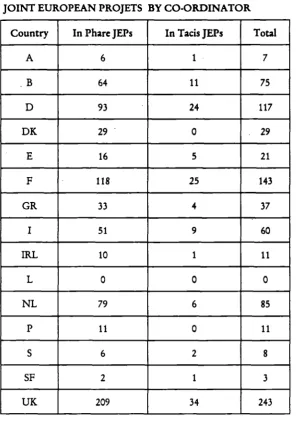
TABLE 6: EUROPEAN COMMUNITY MEMBER STATE PARTICIPATION IN TEMPUS
PROJECTS
JOINT EUROPEAN PROJETS BY CO-ORDINATOR
Country In Phare JEPs In Tacis JEPs Total
A 6 1 7
B 64 11 75
D 93 24 117
DK 29 0 29
E 16 5 21
F 118 25 143
GR 33 4 37
I 51 9 60
IRL 10 1 11
L 0 0 0
NL 79 6 85
p 11 0 11
s
6 2 8SF
2 1 3TABLE 7: EUROPEAN COMMUNITY MEMBER STATE PARTICIPATION IN TEMPUS
PROJECTS· COMPLEMENTARY MEASURES· PHARE
Country lnCMEs
A 28
B 62
D 89
DK 22
E 42
F
93GR 39
I 56
IRL 12
L 0
NL 86
p 21
s
36SF
24 [image:24.588.71.482.117.777.2]TABLE 8: PARTICIPATION IN INDIVIDUAL MOBIUTY GRANTS 1990-1997 • PHARE
from/to EC Member States
EC FromtheEC TotheEC
Member States 1990-1997 1990-1997
Austria 4 82
Belgium 149 513
Denmark 61 220
Finland 13 66
France • 310 1349
Germany 185 1511
Greece 125 274
Ireland 59 137
Italy 174 967
Luxembourg 3 4
Portugal 44 132
Spain 81 382
Sweden 6 102
The Netherlands 149 643
United Kingdom 611 2413
TOTAL 1,974 8,795
Notes:
1. In 1995 there were no calls for applications from EC Member States.
2. IMG mobilities from/to Austria, Finland and Sweden have been supported from 1996
i.e. when these three countries became EC Member States.
From/To
theEC
86
662
281
79
1659
1696
399
196
1141
7
176
463
108
792
3024
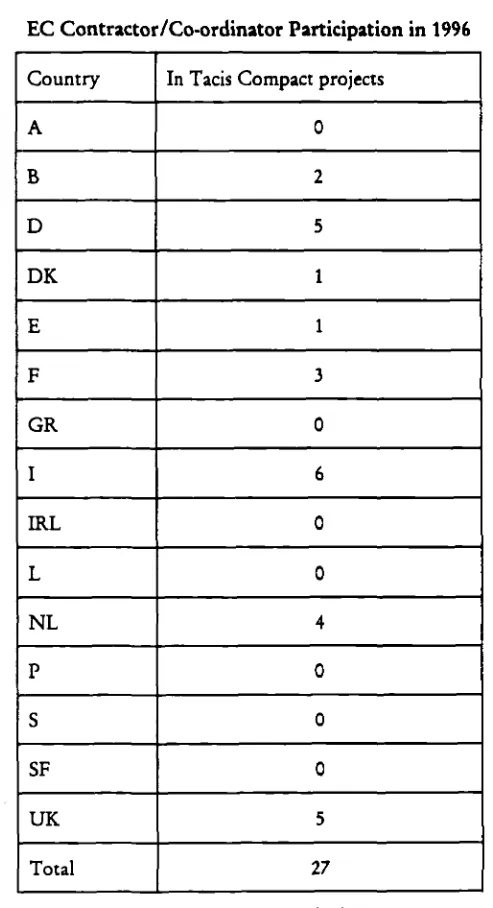
[image:25.588.69.529.130.707.2]TABLE 9: EUROPEAN COMMUNITY MEMBER STATE PARTICIPATION IN TEMPUS
PROJECTS
COMPACT PROJECTS· TACIS
EC Contractor/Co-ordinator Participation in 1996
Country In Tacis Compact projects
A 0
B 2
D 5
DK 1
E 1
F
3GR 0
I 6
IRL 0
L 0
NL 4
p 0
s
0SF
0UK 5
Total 27
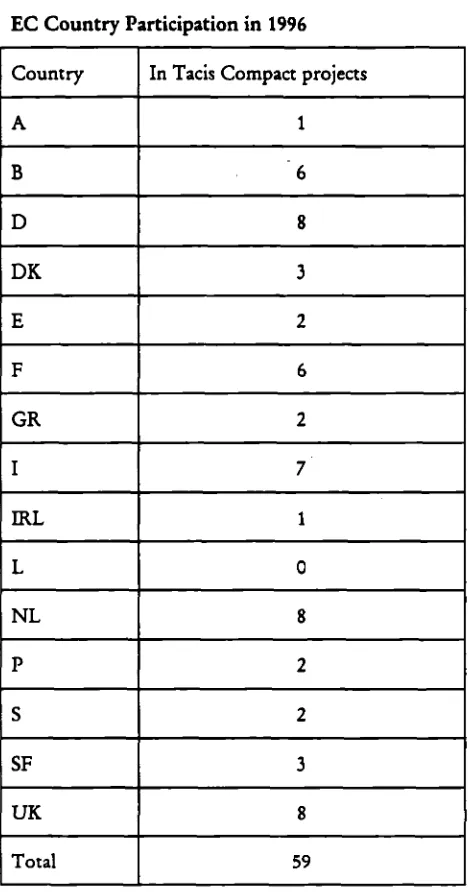
[image:26.583.57.304.180.635.2]TABLE 10: EUROPEAN COMMUNITY MEMBER STATE PARTICIPATION IN TEMPUS
PROJECTS
COMPACT PROJECTS- TACIS
EC Country Participation in 1996
Country In Tacis Compact projects
A 1
B 6
D 8
DK 3
E 2
F 6
GR 2
I 7
IRL 1
L 0
NL 8
p 2
s
2SF 3
UK
8 [image:27.582.79.313.158.604.2]TaE 11 Subject Area Involvement in Phare and Tacis JEPs
Languages 6% Art and Design
1%
Applied Sciencei and Technologies
44%
Other 9%
Humanities
3% Social Sciences 13%
Management and Business
Natural Science and Mathematics
6%
18%
C Humanities
• Social Sciences
0 Management and Business
0 Natural Science and Mathematics
•Applied Sciences and Technologies·
CArt and Design
•Languages
OOther
Subject Area Involvement in Phare JEPs
Languages 5% Art and Design
1%
Applied Sciences and Technologies 48% Other 9% Languages 12%
Applied Sciences and Technologies 14% Management and Business 23% Humanities
3% Social Sciences 10%
Management and Business
18%
Natural Science and Mathematics
6%
: D Humanities
i •
Social SciencesI
OManagament and BusinessI ONatural Science and Mathematics : \ •Applied Sciences and Technologies ::
DArt and Design
•Languages
OOther
Subject Area Involvement In Tacis JEPs
Other 2% Humanities 9% Social Sciences 40%
i
C Humanities • Social SciencesOManagement and Business
OApplied Sciences and Technologies·
•Languages