Review
Hydrothermal liquefaction of biomass: Developments from batch
to continuous process
Douglas C. Elliott
a,⇑, Patrick Biller
b, Andrew B. Ross
b, Andrew J. Schmidt
a, Susanne B. Jones
a aPacific Northwest National Laboratory, P.O. Box 999, Richland, WA 99352, USAb
Energy Research Institute, University of Leeds, Leeds LS2 9JT, UK
h i g h l i g h t s
HTL has been evaluated with biomass feedstock ranging from lignocellulosic to algae. Continuous-flow processing systems have been demonstrated for HTL of biomass. HTL concentrates bioenergy by a high yield of biocrude product.
Biocrude can be catalytically hydrotreated to liquid hydrocarbon fuel components. The byproduct aqueous stream can be processed by CHG to maximize energy efficiency.
a r t i c l e
i n f o
Article history:
Received 13 August 2014
Received in revised form 23 September 2014
Accepted 25 September 2014 Available online 13 October 2014
Keywords:
Hydrothermal Liquefaction Biomass Algae Lignocellulosic
a b s t r a c t
This review describes the recent results in hydrothermal liquefaction (HTL) of biomass in continuous-flow processing systems. Although much has been published about batch reactor tests of biomass HTL, there is only limited information yet available on continuous-flow tests, which can provide a more rea-sonable basis for process design and scale-up for commercialization. High-moisture biomass feedstocks are the most likely to be used in HTL. These materials are described and results of their processing are discussed. Engineered systems for HTL are described; however, they are of limited size and do not yet approach a demonstration scale of operation. With the results available, process models have been devel-oped, and mass and energy balances determined. From these models, process costs have been calculated and provide some optimism as to the commercial likelihood of the technology.
Ó2014 The Authors. Published by Elsevier Ltd. This is an open access article under the CC BY license (http://creativecommons.org/licenses/by/3.0/).
1. Background on hydrothermal liquefaction
Hydrothermal liquefaction of biomass is the thermochemical conversion of biomass into liquid fuels by processing in a hot, pres-surized water environment for sufficient time to break down the solid biopolymeric structure to mainly liquid components. Typical hydrothermal processing conditions are 523–647 K of temperature and operating pressures from 4 to 22 MPa of pressure. Closely related processing in supercritical water conditions (>647 K and >22 MPa) will not be discussed in this review, except in the context of aqueous phase processing. The process is meant to provide a means for treating wet materials without drying and to access ionic reaction conditions by maintaining a liquid water processing medium. The temperature is sufficient to initiate pyrolytic
mechanisms in biopolymers while the pressure is sufficient to maintain a liquid water processing phase.
Hydrothermal processing is divided into three separate pro-cesses, depending on the severity of the operating conditions. At temperatures below 520 K, it is known as hydrothermal carboniza-tion. The main product is a hydrochar which has a similar property to that of a low rank coal. In the case of microalgae, the hydrochar is largely produced from the carbohydrate and protein fractions and the lipid fraction is still intact making it possible to extract the lipids prior to hydrothermal carbonization (Heilmann et al., 2011). At intermediate temperature ranges between 520 and 647 K, the process is defined as hydrothermal liquefaction result-ing in the production of a liquid fuel known as biocrude. Biocrude is similar to petroleum crude and can be upgraded to the whole distillate range of petroleum derived fuel products. At higher tem-peratures above 647 K gasification reactions start to dominate and the process is defined as hydrothermal gasification, resulting in the production of a synthetic fuel gas. One of the advantages of
http://dx.doi.org/10.1016/j.biortech.2014.09.132
0960-8524/Ó2014 The Authors. Published by Elsevier Ltd.
This is an open access article under the CC BY license (http://creativecommons.org/licenses/by/3.0/).
⇑ Corresponding author.
Contents lists available atScienceDirect
Bioresource Technology
hydrothermal gasification over liquefaction is the lower amount of organic carbon found in the water phase following gasification leading to high carbon efficiencies (Brown et al., 2010). The overall aim in each case is to generate a product with a higher energy den-sity by removal of oxygen. The current review will focus on the HTL pathway at intermediate conditions to produce a biocrude using continuous-flow reaction systems.
Hydrothermal liquefaction (also known as direct liquefaction) is essentially pyrolysis in hot liquid water. As such, it does not require a catalyst, but a significant amount of research and devel-opment on catalytic methods in hydrothermal liquefaction has been undertaken. The most commonly considered ‘‘catalyst’’ has been the use of alkali to modify the ionic medium to favor certain base-catalyzed condensation reactions, which can lead to aromatic oil formation, in preference to acid-catalyzed polymerization reac-tions, which lead to solid product formation. While HTL proceeds through pyrolytic mechanisms, its biocrude product is much differ-ent from fast pyrolysis bio-oil. It is more deoxygenated through, among other reaction pathways, condensation reactions of the light fragments generated from the biomass, resulting in a more hydrophobic phase with less dissolved water. Physically, the bio-crude is much more viscous, but is actually less dense than bio-oil. Analysis of the HTL products from woody biomass show the biocrude product is clearly not a petroleum analog. It is a complex mixture of oxygenated compounds extending over a wide range of molecular weight. More details of the analyses and the composi-tion are described in Elliott’s review (Elliott, 2011). The biocrude products included acids, alcohols, cyclic ketones, phenols, meth-oxy-phenols (guaiacols from softwood lignin) and more condensed structures, like naphthols and benzofurans. The amount of bio-crude chromatographed reflected the amount of distillate product. A large fraction of the chromatographed oil was not included in the quantified identified peaks, either because of poor resolution and peak overlap or because the complex, oxygenated isomers were not found in the standard mass spectrometry libraries. Attempts to understand and organize the means of formation of these com-plex mixtures have been reviewed previously (Barbier et al., 2012; Behrendt et al., 2008; Peterson et al., 2010).
Direct biomass liquefaction was the terminology used for hydrothermal liquefaction in the 1970–1980s. This early continu-ous-flow process development work, including laboratory work at Lawrence Berkeley Laboratory (Schaleger et al., 1982) and the Albany Biomass Liquefaction Experimental Facility (Thigpen, 1982), both in the U.S., and the Hydrothermal Upgrading (HTU) plant (Goudriaan et al., 2008) in the Netherlands, was recently described by Elliott (Elliott, 2011). Hydrothermal liquefaction has only been demonstrated on a small scale for short time periods. The largest demonstration of a version of the technology was the operation of the Albany Facility producing 52 barrels of product (approximately 8 m3) over the life of the facility.
Although these pilot scale efforts demonstrated continuous-flow operation of HTL, the vast majority of the literature describes small batch reactor tests in the laboratory (Toor et al., 2011). This review will concentrate on the recent research in continuous-flow process development for biomass HTL and related subjects.
2. Wet biomass feedstocks—properties and preparation for processing
Most biomass can be processed in HTL because of the hydro-philic nature of biomass and the reasonable ease in forming water slurries of biomass particles at pumpable concentrations, typically 5–35% dry solids. In using lignocellulosic biomass, which is lower in moisture content, recovery and reuse of the water for slurry preparation is imperative. For high-moisture biomass, like algae,
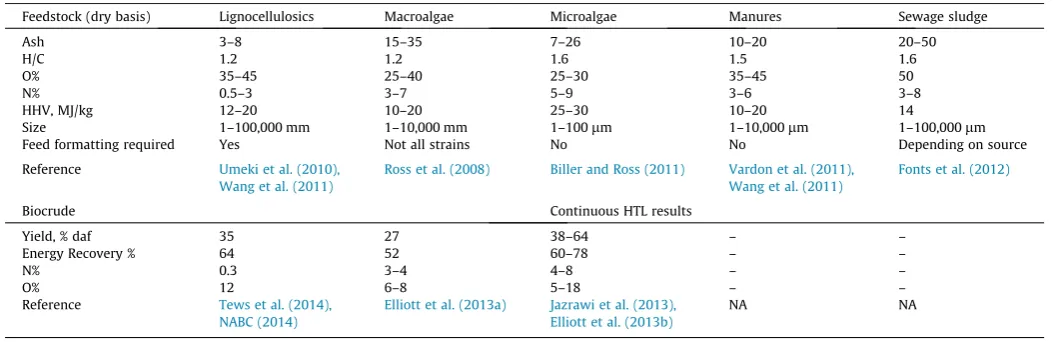
some dewatering is required prior to processing in order to lessen the processing costs of excessive water.Table 1 presents some common feedstock utilized in HTL processing, wet feedstocks are particularly suited for HTL and especially algae biomass has received a lot of attention in the research field recently. Woody biomass requires grinding prior to processing as is discussed in the subsequent section, microalgae, some strains of macroalgae and certain manures and sludges are of suitable small size for direct processing. Table 1also presents a summary of the HTL results published on the respective feedstock to date. It can be seen that the wet manure and sewage sludge feedstock have not been processed in continuous systems, although results from batch sys-tems are promising for their application in continuous syssys-tems (Vardon et al., 2011; Yin et al., 2010). A further advantage of using hydrothermal processing for sludges and manures is the effect of sterilizing bioactive contaminants (Pham et al., 2013).
Algal biomass has been identified as a promising alternative as a resource for renewable fuels due to its higher photosynthetic effi-ciency and area specific yields (Pienkos and Darzins, 2009; Ross et al., 2008). The development of third generation biofuels from microalgae has seen increasing research efforts over the last dec-ade. Microalgae are microscopic organisms that can grow in fresh, brackish or salt water. The advantage of microalgae compared to terrestrial biomass is its much higher photosynthetic efficiency which results in higher growth rates and improved CO2mitigation
(Brennan and Owende, 2009). They are especially suited for contin-uous hydrothermal liquefaction due to the small size (<100um). Because they grow at concentrations significantly less than 0.1% they need to be dewatered prior to HTL. However, through physical separation methods, they are available as slurries with around 10–20% water post cultivation harvest and dewatering. This means that the additional energy spent to achieve a dry feedstock required for most thermochemical biofuel pathways is not required and nor is additional water added as required for a dry biomass feedstock for HTL. Their pumpability has been demon-strated at large scale (Elliott et al., 2013b; Jazrawi et al., 2013). The particle size has been shown to be in direct correlation to pumpability and pressure control in continuous reactors (Jazrawi et al., 2013).
Macroalgae, also known as seaweed, is a group of eukaryotic photosynthetic marine organisms. Diverse and abundant in the world’s oceans and coastal water, they are typically comprised of a blade or lamina, a stipe, and a holdfast (haptera) for anchoring and support in marine environments. They generally have a low lipid content (McDermid and Stuercke, 2003) but are high in carbo-hydrates, which are potential biofuel precursors. Adams et al. (Adams et al., 2011) studied the seasonal variation in the chemical composition of a macroalga,Laminaria digitata, for thermochemical conversion. They reported that summer harvests contained the highest proportion of carbohydrate and lowest ash content making them most suitable for conversion to biofuels. Macroalgae are gen-erally of larger size than microalgae and only certain species such as those of the genus Ulva do not require pre-processing; the majority of macroalgae require grinding or maceration when wet before pumping due to their large size.
higher temperature will lead to higher reaction rates also resulting in reduced reactor size and cost. However, higher temperature will require higher pressure to maintain a liquid water phase for slurry transport in the hydrothermal system. Therefore, the economic drivers for capital cost reduction in hydrothermal processes are higher slurry concentrations and higher operating pressures both of which lead to increasing difficulties for pumping.
High-pressure feeding systems for biomass slurries have been recognized as a process development issue, but scaled-up systems have not been demonstrated. Pumping biomass slurries was accomplished at the laboratory scale at several sites, but in all cases the slurry concentration was limited. Early work at the Pitts-burgh Energy Research Center (PERC) suggests, ‘‘Perhaps the areas (sic) of greatest operational difficulty in the bench-scale plant involves the pumping of the waste slurry.’’ (Wender et al., 1975) As a result, PERC could only process at up to 15% dry solids of municipal solid waste (MSW) in water slurry. Yet, ‘‘This pumping problem is not anticipated in large-scale operation.’’ But, ‘‘It is doubtful, however, because of the low bulk density of dried organic refuse, that slurries containing greater than 30 weight percent sol-ids can be pumped (even in commercial installations).’’ Similar results were reported in the larger scale plant operated for the Department of Energy at Albany, Oregon, for the production of oil from wood flour. In the final report (Thigpen, 1982) it is dis-closed that wood flour ( 60 mesh) could be pumped at up to 10% in water. Attempts to prehydrolyze the wood at concentra-tions up to 23% were accomplished (with either flour or chips) but the prehydrolyzed feed needed to be diluted back to 18% in water (12% suspended solids) for high-pressure pumping in order to avoid plugging. Both of these cases used progressing cavity pumps for low-pressure pumping and reciprocating plunger pumps with ball check valves for high-pressure pumping. Subse-quent evaluation of other pumping methods that were tested at the bench-scale in laboratories around the world were reviewed by Elliott (Elliott, 2011).
These results suggest that the feeding of wet biomass to hydro-thermal processing systems is a barrier to implementation. The high-pressure feeding of biomass slurries should be more readily achieved at larger flow rates wherein the fibrous nature of the bio-mass would not be expected to bridge and plug the orifices and valves. Whereas the earlier strategy was to form slurries with small particle biomass feeds, the size reduction costs (dry grinding) were high and effective drying of the biomass was also required, with a
resulting high energy cost penalty. By using wet biomass as the feed, size reduction can be accomplished in a lower cost wet grinding process step. Such results have been reported wherein sorghum stalks were chopped and processed through a wet ball mill and filtered through an 18 mesh screen to produce a slurry at 4–6% dry solids was pumpable at up to 21 MPa (Elliott et al., 1989). Pumpable slurries of brewer’s spent grain were also pro-duced by this method wherein the final percentage of dry solids was 7.5–9.2% (Baker et al., 1988). Subsequently, tests were also performed with potato crumbs from a ‘‘french fry’’ manufacturing operation. These could be pumped following the wet milling oper-ation at 14% dry solids slurry content (Elliott et al., 1995). Most recently a high-pressure piston syringe pump (Isco) has been used to feed biomass slurries. The pump can feed at up to 10 L/hat 21 MPa with a dual-piston arrangement, which allows automatic refilling for uninterrupted feeding; however, the uninterrupted feed rate is limited to only 8 L/h because of the fill rate. This pump has been used to feed wastewater treatment biosludge at 1.5–5% dry solids. The biosludge was initially recovered as a 1.5% slurry or a dewatered sludge with about 14% dry solids, which was remixed with the dilute slurry to form the 5% dry solids material. Corn ethanol stillage (10.8% dry solids), which has been homoge-nized with an in-line sheer mixer unit (Arde Barinco) has also been effectively pumped with the syringe pump (Elliott, 2011).
3. Liquefaction process results
3.1. Lignocellulosic feedstocks
The National Advanced Biofuels Consortium (NABC) in the U.S. was established with funding from the U.S. Department of Energy in 2010 to develop biomass-based alternative fuels that can be ‘‘drop in’’ replacements for gasoline and diesel fuel. NABC brought together 17 partners from academia, national laboratories, and industry representing the entire fuel production chain from biomass growers, to technology developers and refinery fuel pro-ducers. The consortium performed research, development, and analysis over a three-year period that was completed in December 2013 on a range of advanced biofuel production technologies including hydrothermal liquefaction.
[image:3.595.40.567.85.256.2]The HTL team, led by Pacific Northwest National Laboratory (PNNL), demonstrated a baseline process with loblolly pine and Table 1
Summary of HTL feedstock and continuous-flow reactor results.
Feedstock (dry basis) Lignocellulosics Macroalgae Microalgae Manures Sewage sludge
Ash 3–8 15–35 7–26 10–20 20–50
H/C 1.2 1.2 1.6 1.5 1.6
O% 35–45 25–40 25–30 35–45 50
N% 0.5–3 3–7 5–9 3–6 3–8
HHV, MJ/kg 12–20 10–20 25–30 10–20 14
Size 1–100,000 mm 1–10,000 mm 1–100lm 1–10,000lm 1–100,000lm Feed formatting required Yes Not all strains No No Depending on source Reference Umeki et al. (2010),
Wang et al. (2011)
Ross et al. (2008) Biller and Ross (2011) Vardon et al. (2011), Wang et al. (2011)
Fonts et al. (2012)
Biocrude Continuous HTL results
Yield, % daf 35 27 38–64 – –
Energy Recovery % 64 52 60–78 – –
N% 0.3 3–4 4–8 – –
O% 12 6–8 5–18 – –
Reference Tews et al. (2014), NABC (2014)
Elliott et al. (2013a) Jazrawi et al. (2013), Elliott et al. (2013b)
NA NA
daf = dry, ash free.
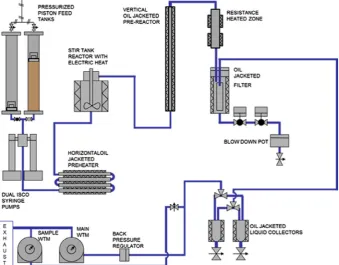
corn stover. They examined the influence of process conditions (temperatures and residence time) and the recycle of aqueous product to increase biocrude oil yields and decrease wastewater generation. Hydrotreating of the biocrude product was also tested to construct material balances and to evaluate upgraded fuel qual-ity. R&D was done initiated in a 1-L continuous stirred-tank reactor operating in full continuous mode. To transition the process towards a more scalable design, a reactor configuration that com-bined a small CSTR with plug flow components was used for the latter part of the NABC test work. In this configuration, shown in Fig. 1, the CSTR was used to provide good mixing in the critical temperature range from 160°C to 300°C.
The results of the NABC work (NABC, 2014) demonstrated that:
The only feed preparation required was grinding for slurry preparation.
Liquefaction did not require a reducing gas environment. Water recycle led to improvement in biocrude quality, carbon
yields, and reduced water consumption/wastewater disposal. Biocrude was stable in an accelerated aging test (There was less
than a 2% change in biocrude viscosity during the course of the test (24 h@353 K)).
Reduced reaction severity led to lower quality biocrude. Overall carbon yield, including hydrotreatment of the biocrude
product, was nearly 50%, with the resulting product exhibiting a large fraction in the distillate range. The fate of carbon in the overall process is shown in Fig. 2. These results are based on lignocellulosic feedstock, and the results could be significantly different for other biomasses, such as algae, with high nitrogen contents.
Based on the technoeconomic assessment (TEA), and relative to other NABC strategies, the aggregate cost of production on a gallon gasoline-equivalent basis was favorable.
To advance the technical maturity of HTL, specific challenges were identified including reducing the risk of large-scale
pumpa-bility, reducing capital costs by moving away from a continuous stirred-tank reactor configuration to a scalable plug-flow reactor configuration, and understanding appropriate materials of con-struction for process design.
Upgrading provided the critical step to determine the quality and economic value of the biocrude generated from HTL. Multi-liter quantities of biocrude from bench-scale HTL testing were provided to conduct screening tests to identify catalysts and operating conditions. Parametric tests were completed to deter-mine the impact of process severity on upgrading product quality. Longer-term upgrading tests were conducted to demonstrate recommended operating parameters and catalyst processing life (>100 h).
[image:4.595.122.462.69.334.2] [image:4.595.310.551.377.509.2]Biocrude from both the forest residue and corn stover feed-stocks were generated for upgrading. The biocrude, hydrocarbon products, and by-products from the upgrading, including the aque-ous stream and the spent catalyst, were analyzed. A composite hydrocarbon product from the testing was provided to the refinery partners for more-detailed product evaluation. Based on bulk physical properties and modeling, potential refinery process Fig. 1.PNNL HTL laboratory reactor system.
locations (unit operations) for insertion of the HTL materials were identified.
Outcomes (Zhu et al., 2014) of the work on HTL of lignocellu-losic feedstocks included:
Demonstrated high yield (>50% carbon efficiency) and efficient HTL process on forest residue and corn stover feedstocks requir-ing nothrequir-ing other than size reduction (formattrequir-ing).
Demonstrated the process in a plug-flow reactor (PFR) configu-ration that maintained a small, continuous, stirred-tank reactor (CSTR) as a preheater.
s Operating conditions that led to plugging in the PFR were identified along with strategies for minimization of plugging. Viscosity increases during heat up of the HTL feedstocks appeared to be linked to lignin concentrations and likely contributed to the plugging.
s A hybrid HTL reactor configuration was demonstrated that included a preheater, CSTR, and PFRs. The configuration was considered robust and provided a significant advance-ment in reactor scalability.
Within the limits of the corrosion assessment testing, the suit-ability of stainless steels for HTL applications was confirmed. Developed a single-stage hydrotreating protocol to produce
dis-tillate (57%) and naphtha (27%) and product fractionation and fuel properties were evaluated.
Prepared a full pumping report assessing industrial operation (Berglin et al., 2012).
s Three types of positive displacement pumps, offered by five vendors, were found that meet the conceptual plant produc-tion rate of 2000 DMTPD (2300 gallon per minute), 15 wt%, 20.8 MPa.
s Relevant vendor experience included industrial/municipal sludge, pastes, fibers, silage. Vendors were quite interested in the HTL feed application, and several expressed interest in collaboration.
s High confidence in ability to pump immersion milled feed-stock was expressed. Large scale testing would be required to establish pumpability limits for larger particle size feedstock.
Reviewed process economic model including five alternative HTL reactor designs (Knorr et al., 2013).
An HTL TEA was prepared and published to provide potential commercial partners with a detailed understanding of the pro-cess economics and sensitivities (Zhu et al., 2014).
3.2. Algae feedstocks
HTL provides an alternative process route from algae biomass to hydrocarbon liquid fuels. The vast bulk of algae process research has focused on the cultivation of algae with high levels of lipid con-tent with an eye toward solvent extraction of the triglycerides and transesterification to a biodiesel liquid fuel. HTL provides a path-way to a higher yield of a biocrude product based on conversion of not just the lipids but all the biomass material including the pro-teins and carbohydrates. Separation of the biocrude and upgrading the material is required before it can be used as a transportation fuel. Because HTL processing can be applied to all types of algae, it allows for maximizing algae production without restriction to high-lipid production and with mixed cultures.Fig. 3shows the flow through hydrothermal processing of algae to hydrocarbon fuels with potential recycle streams for nutrient reuse. A key ele-ment of HTL as applied to algae is the potential for recycling of nutrients through separation of solids (by precipitation at hydro-thermal conditions) allowing recovery of P and the transformation
of N into ammonium in the process water, so it can be recycled back for further cultivation. The recycling of nutrients is seen as essential for the success of algal derived biofuels. The solids sepa-ration step following HTL allows high ash containing feedstock to be processed into nearly solids- & mineral-free biocrude. Clean-up of the organic material in the aqueous byproduct can be accomplished by catalytic hydrothermal gasification (CHG). Marine microalgae strains with high chloride content can poten-tially cause chloride stress corrosion on stainless steel reactor com-ponents. This aspect is currently under investigation and should be monitored to ensure the longevity of reactor operations asJazrawi et al. (2013)point out.
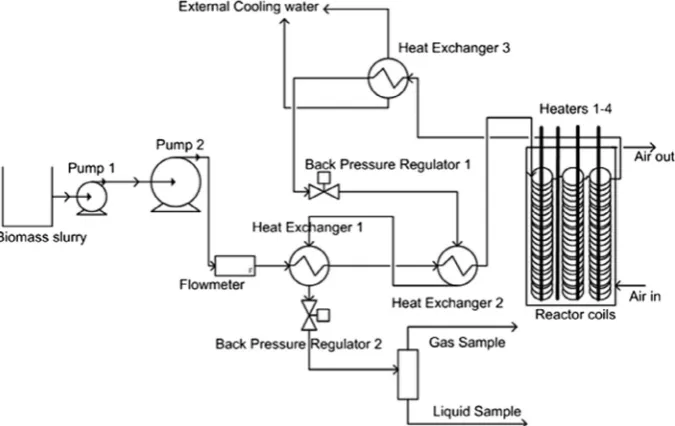
With funds from the Australian National Collaborative Research Infrastructure Strategy (NCRIS) a continuous flow pilot-scale hydrothermal processing unit became operational at the Univer-sity of Sydney in 2012. The design of the unit, as shown inFig. 4, has some noticeable differences compared to the PNNL set-up; it is unstirred and reactants flow through coiled stainless steel tubes submerged into a fluidized sand bath.
Using high-pressure pumps and back-pressure regulators, continuous sub-critical flow conditions could be obtained. A triplex piston pump (GEA Niro Ariete NS3006P) capable of flows of 15–90 L/h, pressures of 61 MPa and high viscosity fluids could reliably pump up to 10 wt% microalgae slurries. A series of two heat exchangers, recovering some of the sensible heat of the reactor were employed to pre-heat the slurry to 443 K before passing to the reactor consisting of four 16 m 316 stainless steel coils (total volume of 2 liters). A detailed description and schematic of the reactor layout can be found inJazrawi et al.’s publication (2013). The flow rates investigated in the study were in the region of 15–30 L/h and resulted in residence times in the reactor of 3–5 min. The products are then passed firstly through back-pressure regulator and heat exchanger reducing the back-pressure to 1.0 MPa and temperature to 443 K. In contrast to the continuous hydrothermal treatment of microalgae in the PNNL studies, the research in Sydney employed the use of a solvent for the recovery of biocrude. This was initially performed to recover small amounts of biocrude in the initial commissioning runs with low solids concentrations of only 1 wt% and later for consistency.
The two microalgae strains Spirulina and Chlorella were inves-tigated at a range of temperatures (523–653 K) residence times (180–300 s) and slurry concentrations (1–10 wt%). A maximum biocrude yield of 42 wt% was achieved at the highest temperature and 180 s residence time.
Some noticeable outcomes of the collaborative study between Sydney and Leeds include:
More severe reaction conditions led to highest yields, lowest oxygen but increased nitrogen contents in the biocrude. Very short residence times produce yields similar to longer
res-idence time batch studies. This allows much higher throughput and reduced energy requirements.
Higher solid loadings increase the biocrude yields, as shown in PNNL studies, and reduce carbon losses within the system. The ‘‘inverse scaling’’ effect of pumping and pressure control led
to the conclusion that scaling up the Sydney design should result in better controllability and reduced potential of forma-tion of agglomerates and deposits, which can lead to blockages.
microalgae at the lower residence time. Both the continuous-flow work byJazrawi et al. (2013)and the batch work byFaeth et al. (2013)suggest that higher heating rates and lower residence times favor the production of biocrude. This is likely to improve the energy balance and TEA of microalgae to fuel systems by continu-ous HTL.
The National Alliance for Advanced Biofuels and Bioproducts (NAABB) (NAABB, 2014), an algal biofuels research consortium, was formed to specifically address the objectives set forth by the U.S. Department of Energy (DOE). DOE sought a consortium that would ‘‘synergistically use their unique capabilities to expedite the development of biomass based fuel production pathways.’’ Par-ticipants from industry, academia, and government and/or non-government laboratories, all provided ‘‘best-in-class’’ technical approaches. NAABB specifically addressed the following pathways:
Feedstock Supply–Strain development and cultivation. Feedstock Logistics–Harvesting and extraction.
Conversion/Production of intermediates and synthesis of fuels and coproducts.
Direct conversion of the wet whole algae biomass to biocrude was investigated using the thermochemical processing method of hydrothermal liquefaction. In addition, a catalytic hydrothermal gasification process was investigated for the conversion of wet lipid-extracted algae (LEA) to methane and as companion
wastewater treatment for HTL processing. The combined HTL– CHG processing route (Elliott et al., 2013c) resulted in the best biocrude yields, process economics, and life cycle assessment. A simplified process flow diagram for the combined HTL–CHG pro-cess with pictures of resulting propro-cess streams is shown inFig. 5.
[image:6.595.124.467.70.187.2]The consortium concluded that the advantages of the HTL–CHG processing pathway include:
[image:6.595.123.461.227.440.2]Fig. 3.Hydrothermal processing of algae with nutrient recycle.
Fig. 4.Schematic layout of the Sydney continuous reactor, adapted from (Jazrawi et al., 2013).
[image:6.595.306.550.588.736.2]Capture of 85% of the carbon in algae as fuel-grade components (biocrude that can be upgraded to diesel, jet, gasoline, and syngas).
Production of a biocrude that can be readily converted to meet diesel and Jet A fuel standards.
Effective wastewater treatment to reduce the organic content and provide methane for process energy.
Recycle of water and nutrients (nitrogen, phosphorous, and other trace minerals for algal cultivation.
Significant decrease in capital and operating costs compared to processes requiring high lipid-yielding algal biomass and extraction of the lipid from the biomass.
NAABB concluded that one of the highlights of the three-year effort was the high-yield extraction-conversion technology, HTL, that combines extraction and conversion to provide high biocrude yield without the need for extraction solvents, resulting in an 86% cost reduction.
Wet algae slurries were converted into an upgradeable biocrude by HTL in a bench-scale continuous-flow system at PNNL (Elliott et al., 2013b). High levels of carbon conversion to gravity-separable biocrude product were accomplished at typical HTL temperature (623 K) at an operating pressure of 20 MPa. Direct biocrude recov-ery was achieved without the use of a solvent and biomass trace components were removed by processing steps so that they did not cause process difficulties. The highest yield of biocrude (up to 82 wt% on a carbon basis) was obtained with high slurry concen-trations of up to 34 wt% of dry solids. With subsequent hydrotreat-ing of the biocrude and catalytic hydrothermal gasification of the water-soluble organic byproducts, a high conversion of algae to liquid hydrocarbon and gas products was found with low levels of organic contamination in the byproduct water. All three process steps were accomplished in bench-scale, continuous-flow reactor systems such that design data for process scale-up was generated. Chemical analysis of the biocrude suggested the hydrothermal conversion of the full complement of algae components including lipid, carbohydrate, and protein. The biocrude was composed of not only carbon, hydrogen and oxygen, but also nitrogen and sul-fur. Specific components identified by gas chromatography-mass spectrometry (GC–MS) included aromatic hydrocarbons and phen-olics, in addition to nitrogen heterocycles, and long chain fatty acids and amides (Elliott et al., 2013b). Detailed analysis of the biocrude was undertaken using Fourier Transform Ion Cyclotron Resonance Mass Spectrometry (FT-ICR MS) showing in particular the heavier components containing oxygen in combination with nitrogen (Sudasinghe et al., 2014). The study concluded that the components found in the biocrude were very similar to those also found in the aqueous byproduct in that aromatic nitrogen com-pounds and free fatty acids are predominant species. The compo-nents in the aqueous phase are slightly lower in molecular weight. Subsequent work involved HTL ofChlorellaalgae and the details of the process results are reported as part of a design case study (Jones et al., 2014). A key conclusion relates to the distribution of organic product between the biocrude phase and the aqueous byproduct phase. The yield of phase separable biocrude is clearly a function of dry solids concentration in the feedstock slurry. In addition, a similar biocrude is produced from the different species and they can be hydrotreated with similar results.
Macroalgal slurries have been converted into a biocrude by HTL in a bench-scale, continuous-flow reactor system (Elliott et al., 2013a). Carbon conversion to gravity-separable biocrude product was lower than for microalgae at 57.6% when using feedstock slur-ries with a 21.7% concentration of dry solids. In addition, CHG was effectively applied for HTL byproduct water cleanup and fuel gas production from water soluble organics. As a result, high conver-sion of macroalgae to liquid and gas fuel products was found with
low levels of residual organic contamination in the byproduct water. A key conclusion was the relationship of the algal dry solids in the slurry to the yield of gravity separable biocrude. The bio-crude yield dropped to only 17.1% (on a carbon basis) when the feedstock concentration was only 5.3 wt% dry solids. The biocrude composition was very much like the microalgae biocrude, at least on an elemental basis.
Other reports indicate that yields of biocrude from macroalgae are low and contain large amounts of high molecular weight mate-rial and nitrogen. (Anastasakis and Ross, 2011) The higher heating value (HHV) of the biocrude was high compared to the original feedstock and the oxygen content was significantly lowered. The mineral matter was mainly distributed between the aqueous phase and the solid residue. The sugars were passed into the aqueous phase making further utilization possible, such as fermentation. Macroalgae tend to have higher carbohydrate content which has been shown to produce lower biocrude yields during HTL (Biller and Ross, 2012), microalgae on the other hand generally contain higher lipid content which results in increase biocrude yields.
4. Subsequent processing of HTL product streams
While HTL of wet biomass provides a viable route to liquid fuels from biomass, subsequent upgrading of the HTL biocrude product is required in order for the product to be useful in the current fuel markets. In addition, treatment of the byproduct aqueous is a key component for producing a sustainable, renewable fuel via HTL.
Summarizing the published papers on HTL of algae, it has been shown that a high biocrude yield (40–60 wt.%) is obtained in con-tinuous-flow reactor systems. The biocrude is a highly viscous oil with relatively high nitrogen (5 wt%) and oxygen contents (5%) with HHV of around 35 MJ/kg. It appears that the optimum operating conditions for maximum biocrude yield are623 K with a space time of 3–14 min (Jazrawi et al. 2013; Elliott et al., 2013b). However, the operating conditions are highly strain and system specific. If a biocrude of lower nitrogen content is desired with higher lipid content, lower operating conditions should be used or the protein fraction should be removed prior to HTL. Alterna-tively, value-added compounds such as lipids can be extracted as demonstrated byZhu et al. (2013) andVardon et al. (2012)and biocrude produced subsequently (Vardon et al., 2012; Zhu et al., 2013). Recently Prof. Chen’s research group at the Washington State University has developed a novel two-step sequential HTL technology (SEQHTL) for the extraction of value-added polysaccha-rides followed by biocrude production (Miao et al., 2012). This is an interesting approach as the extraction of high-value compounds from algal biomass is an aspect that could favorably distinguish it from terrestrial biomass. The first step involved mild hydrother-mal processing (433 K) and removal of the polysaccharide rich water extract by precipitation with ethanol. This was presented in batch reactors, but the application to continuous systems could be feasible. Another alternative proposed to improve the biocrude yields and composition involves microwave pre-treatment of the algae with subsequent hydrothermal liquefaction. This was tested in batch experiments resulting in increased yields and lower het-ero-atom content in the biocrudes (Biller et al., 2013). To date only lipid extraction prior to continuous hydrothermal processing has been demonstrated while the other pre-treatment and extraction approaches are still in the developing batch reactor stages.
Boiler firing tests were undertaken with HTL biocrude products produced from Douglas fir wood. The biocrude handled and fired similar to a #6 residual fuel oil, requiring preheating to 410 K to perform satisfactorily. Fuel oil burn test data compared to HTL biocrude suggested that with less excess air, the NO and SO2were
contents in the fuel) while the CO was higher due to several large spikes in concentration level (Elliott, 1981). The higher average CO was derived from spikes in the effluent and it has been speculated that the spikes were due to particulate in the biocrude, resulting in different burning properties (Elliott, 2011).
4.1. Hydrotreating of HTL biocrude
The biocrude product from HTL can be used directly as an alter-native to heavy fuel oil. However, it must be upgraded, primarily to remove oxygen, to produce hydrocarbon fuels similar to the cur-rently marketed petroleum products. Catalytic hydrotreating of HTL biocrude in a process analogous to petroleum product hydro-treating, e.g. to produce low sulfur diesel, is an important method for producing a marketable liquid hydrocarbon product.
Hydroprocessing of HTL biocrude has been demonstrated in the laboratory. A recent review describes the extent of development in the past several decades (Elliott, 2007). The biocrude product from wood HTL was readily hydroprocessed using conventional petro-leum hydrotreating technologies. In effect, hydrodeoxygenation replaced hydrodesulfurization, which is usually required for petroleum utilization. Similar catalysts and conditions were used. Oxygen contents were reduced to near zero and the resulting hydrocarbon mixtures were readily analyzed using normal petroleum product tests, such as PONA (paraffin, olefin, naphthene, aromatic) chromatography and octane number measurements for gasoline range distillates (Baker and Elliott, 1988).
As mentioned above as part of the NABC effort in the U.S., hydrotreating of biocrudes from forest residue and corn stover HTL was more recently undertaken in the laboratory. The research included biocrude feed characterization, initial upgrading, a sec-ondary upgrading step, and detailed analyses of all products. Pro-cessing challenges were encountered due to the relatively high viscosity of the biocrude in the existing equipment so that modifi-cations, such as replacement of small diameter piping and heat tracing, were required. Catalyst activity reduction was observed.
There is also a report that biocrudes from microalgae HTL have undergone catalytic hydrotreating (Elliott et al., 2013b). Catalytic hydrotreating was effectively applied for hydrodeoxygenation, hydrodenitrogenation, and hydrodesulfurization of the biocrude fromNannochloropsis algae HTL to form liquid hydrocarbon fuel. The upgraded process caused the oxygen content of the biocrude to be reduced from 6–8% to 1–2% while the nitrogen and sulfur contents were reduced from 4% and 0.5%, respectively to <0.25% and <50 ppm for nitrogen and sulfur. These results were later con-firmed forChlorellaalgae as well. (Jones et al., 2014) The effective reduction of the nitrogen is particularly interesting as the level of nitrogen is much higher than found in typical petroleum hydro-treating. Although all of these results are for continuous-flow reac-tor tests operated over a range of days, they do not yet validate the long-term catalyst activity that would be needed for an economic process. Another long-term operational concern is based on the mineral residue in the HTL biocrude, of which there is still a mea-sureable amount.
4.2. Catalytic gasification of aqueous soluble organics
The use of water as the processing medium in hydrothermal processing results in a large water handling requirement. The pro-cess input of water is often met by the water in the wet biomass feedstock, but additional water may also be required. Recycle and reuse of the water becomes a major consideration in the design of hydrothermal processes. Depending on the effectiveness of the process for organic transformation to fuel products and their recovery, a significant waste or recycle water treatment load may result from the process.
The aqueous phase byproduct from HTL has undergone limited analysis (Davis, 1981). The same components found in the bio-crude product were also seen at low concentration in the aqueous stream, due to their slight solubility in water while a suite of organic acids was also found. Although those authors were puzzled by this acid formation under reducing conditions, Krochta studied the formation of these acids from cellulose in the presence of alkali at the same temperature range (Krochta et al., 1984). He found sig-nificant yields (5–30% in 10 min) of formic, lactic and glycolic at 473–553 K with these being displaced by formation of acetic and propionic at 593–633 K.
Because of the significant flow of organic material into the aqueous byproduct stream, recovery or reuse of this product is essential for economical processing by HTL. Although mineral sep-aration from the aqueous stream is possible by precipitation and filtration, (Elliott et al., 2012) other valuable nutrients remain in the aqueous stream further suggesting a need for recovery and recycle. Treatment of the aqueous byproduct by anaerobic diges-tion has received limited study (Wirth & Mumme, 2013). Another option being developed is the use of catalytic hydrothermal gasifi-cation (Elliott et al., 2013c). By this process step the organic mate-rial in the aqueous byproduct can be converted to methane, which can be easily separated from the water, and carbon dioxide gas, some of which passes to the gas phase and much of which remains dissolved in the water along with ammonia generated from any nitrogen-containing organic byproducts.
A number of studies have investigated the potential recycling of nutrients from the HTL process water for algae cultivation (Biller et al., 2012; Garcia Alba et al., 2013; Jena et al., 2011). The recycling of nutrients is regarded to be essential in microalgae biofuels sys-tems since the energy, cost and carbon emissions associated with nutrient production are very high. In most cases, it was necessary to significantly dilute the process waters to avoid growth inhibi-tion from components such as phenols and nickel. Suitable growth was established in dilutions of around 200–400 times the original volume for a number of strains (Biller et al., 2012; Garcia Alba et al., 2013; Jena et al., 2011). It was further shown that some strains were able to use organic carbon in the water phase to grow mixotrophically, leading to higher biomass yields. Another study investigated the use of the HTL aqueous byproduct as a substrate for microbial growth in dark conditions rather than phototrophic microalgae. The microbial strains were shown to have a higher tol-erance to the aqueous phase leading to significantly reduced dilu-tion requirements compared to microalgae (Nelson et al., 2013).
The levels of potential toxic compounds in the process waters was also shown to significantly reduce following cultivation of algae (Pham et al., 2013). Additional studies have shown that growth inhibitors are not the main reason for reduced growth in recycled water from HTL (Garcia Alba et al., 2013). The lack of micro nutrients appears to be more significant than the presence of inhibitors and the addition of micronutrients such as Mg results in almost identical growth to standard media. It has been proposed that performing algae cultivation in recycled HTL process waters may significantly reduce costs associated with nutrient manage-ment and is capable of supplying up to 50% of the required nitro-gen. Potential also exists for the recycling of nutrients for microalgae cultivation from other feedstock such as waste and macroalgae after hydrothermal gasification of the aqueous phase for removal of the residual organics. This was successfully demon-strated by gasifying four strains of microalgae with subsequent cultivation of microalgae in the aqueous phase in batch experi-ments (Cherad et al., 2013).
In the macroalgal case, CHG was effectively applied for HTL byproduct water cleanup and fuel gas production from water soluble organics (Elliott et al., 2013a). Conversion of 99.2% of the carbon left in the aqueous phase was demonstrated.
5. Energy balance and conceptual process costs
As part of NABC, a techno-economic analysis for HTL of woody biomass was prepared based experimental results and input from consortium industrial partners. A manuscript of the TEA was prepared and has been published (Zhu et al., 2014). Sensitivity evaluations were performed to evaluate incorporation of a CSTR pretreatment step and a HTL reactor recycle loop.
As part of NAABB, a techno-economic analysis for HTL of algal biomass was prepared based experimental results. A manuscript of the TEA was prepared and has been published (Zhu et al., 2013). The primary cost driver was determined to be the algae feedstock cost.
Subsequent work involved design studies of HTL of Chlorella algae (Jones et al., 2014). Key conclusions relate to the distribution of organic product between the biocrude phase and the aqueous byproduct phase and the need for more efficient biocrude recovery. More process results at a broader range of operating conditions with a wider range of algae species is needed to help define the operating envelop for HTL. Continued development of plug flow reactor operations are also needed. More information on corrosion is needed to inform the materials of construction decisions. The study concluded that for the projected target case, a $4.49/gallon of gasoline equivalent (gge) was the minimum fuel selling price considering the assumed costs ($430/ton DAF algae including the cultivation, harvest and dewatering to 20 w% dry solids) and finan-cial structure. This amounts to a conversion only cost (excluding all feedstock related costs) of $1.18/gge. Improvement to a $3/gge minimum fuel selling price would require a combination of improvements, such as upgrading at a central (larger scale) site, coprocessing with other available biomass types, and reducing the cost of the CHG water treatment.
Recently a life cycle analysis (LCA) has been published based on microalgae to green diesel using data from a continuous pilot-scale plant. Three scenarios are analyzed, namely, lab scale, pilot-scale and full scale systems (Liu et al., 2013). The energy return on investment, as well as the greenhouse gas emissions, were calcu-lated and compared to lipid extracted algal bio-diesel, petroleum fuels, corn-ethanol and soy biodiesel. The study was based on data and expertise from Sapphire Energy Inc. (USA), for the production of green diesel using HTL. It was shown that pilot scale facilities have life cycle burdens on par with conventional biofuels. How-ever, the results from extrapolating to full scale facilities were more favorable; greenhouse gas emissions were lower compared to petroleum fuels and corn ethanol. The energy return on invest-ment (EROI) was found to be between 1 and 3 with full scale pro-duction facilities having an EROI of around 2.7. These EROI results are favorable compared to all conventional biofuels but not as high as petroleum-derived fuels. A sensitivity analysis revealed the areas where improvements could make a significant impact to be the yields of biocrude and efficient nutrient recycling.
6. Conclusions
The current review on continuous HTL of biomass leads to the conclusion that there is significant potential for commercialization of the technology. Several feedstocks have successfully been pro-cessed at high feed concentrations resulting in high energy recov-eries and carbon efficiencies. There are still a number of challenges which need to be addressed before the technology is market ready.
The current size of continuous systems is not adequate for demon-stration scale of operation. TEA calculations nevertheless highlight the potential of the technology especially for wet waste and algae feedstock.
Acknowledgements
The manuscript preparation work at PNNL was supported by the U.S. Department of Energy under Contract No. DE-AC05-76RL01830 at the Pacific Northwest National Laboratory. The PNNL authors gratefully acknowledge the support of the Department of Energy Bioenergy Technologies Office. The researchers at the University of Leeds would like to thank the EPSRC for financial support (EP/ I014365/1, EP/L504993/1) for the manuscript preparation work.
References
Adams, J.M.M., Ross, A.B., Anastasakis, K., Hodgson, E.M., Gallagher, J.A., Jones, J.M., Donnison, I.S., 2011. Seasonal variation in the chemical composition of the bioenergy feedstock Laminaria digitata for thermochemical conversion. Bioresour. Technol. 102 (1), 226–234.
Anastasakis, K., Ross, A.B., 2011. Hydrothermal liquefaction of the brown macro-algaLaminaria Saccharina: effect of reaction conditions on product distribution and composition. Bioresour. Technol. 102 (7), 4876–4883.
Baker, E.G., Butner, R.S., Sealock Jr., L., Elliott, D.C., Neuenschwander, G.G. 1988. Thermocatalytic conversion of food processing wastes: topical report, FY 1988. PNL-6784, Pacific Northwest Lab., Richland, Washington, USA.
Baker, E.G., Elliott, D.C., 1988. Catalytic upgrading of biomass pyrolysis oils. In: Bridgwater, A.V., Kuester, J.L. (Eds.), Research in Thermochemical Biomass Conversion. Springer, Netherlands, pp. 883–895.
Barbier, J., Charon, N., Dupassieux, N., Loppinet-Serani, A., Mahé, L., Ponthus, J., Courtiade, M., Ducrozet, A., Quoineaud, A.-A., Cansell, F., 2012. Hydrothermal conversion of lignin compounds. A detailed study of fragmentation and condensation reaction pathways. Biomass Bioenergy 46, 479–491.
Behrendt, F., Neubauer, Y., Oevermann, M., Wilmes, B., Zobel, N., 2008. Direct liquefaction of biomass. Chem. Eng. Technol. 31 (5), 667–677.
Berglin, E.J., Enderlin, C.W., Schmidt, A.J. 2012. Review and Assessment of Commercial Vendors/Options for Feeding and Pumping Biomass Slurries for Hydrothermal Liquefaction. PNNL-21981, Pacific Northwest National Laboratory, Richland, Washington, USA.
Biller, P., Friedman, C., Ross, A.B., 2013. Hydrothermal microwave processing of microalgae as a pre-treatment and extraction technique for fuels and bio-products. Bioresour. Technol. 136, 188–195.
Biller, P., Ross, A.B., 2012. Hydrothermal processing of algal biomass for the production of biofuels and chemicals. Biofuels 3 (5), 603–623.
Biller, P., Ross, A.B., Skill, S.C., Lea-Langton, A., Balasundaram, B., Hall, C., Riley, R., Llewellyn, C.A., 2012. Nutrient recycling of aqueous phase for microalgae cultivation from the hydrothermal liquefaction process. Algal Res. 1 (1), 70–76.
Biller, P., Ross, A.B., 2011. Potential yields and properties of oil from the hydrothermal liquefaction of microalgae with different biochemical content. Bioresour. Technol. 102, 215–225.
Brennan, L., Owende, P., 2009. Biofuels from microalgae – a review of technologies for production, processing, and extractions of biofuels and co-products. Renew. Sustain. Energy Rev. 14 (2), 557–577.
Brown, T.M., Duan, P., Savage, P.E., 2010. Hydrothermal liquefaction and gasification ofNannochloropsissp. Energy Fuels 24 (6), 3639–3646.
Cherad, R., Onwudili, J.A., Ekpo, U., Williams, P.T., Lea-Langton, A.R., Carmargo-Valero, M., Ross, A.B., 2013. Macroalgae supercritical water gasification combined with nutrient recycling for microalgae cultivation. Environ. Prog. Sustain. Energy 32 (4), 902–909.
Davis, H., 1981. Chemistry and stoichiometry of wood liquefaction. Biotechnol. Bioenergy Symp. 11, 151–170.
Elliott, D., 1981. Description and utilization of product from direct liquefaction of biomass. Biotechnol. Bioenergy Symp. 11, 187–198.
Elliott, D.C., 2007. Historical developments in hydroprocessing bio-oils. Energy Fuels 21 (3), 1792–1815.
Elliott, D.C., 2011. Hydrothermal processing. In: Thermochemical Processing of Biomass. John Wiley & Sons Ltd, Chichester, U.K, pp. 200–231.
Elliott, D.C., Hart, T.R., Neuenschwander, G.G., Deverman, G.S., Werpy, T.A., Phelps, M.R., Baker, E.G., Sealock, L.J., Jr. 1995. Low-temperature catalytic gasification of wet industrial wastes. FY 1993–1994 interim report. PNL—10513, Pacific Northwest National Laboratory, Richland, Washington, USA.
Elliott, D.C., Hart, T.R., Neuenschwander, G.G., Rotness, L.J., Olarte, M.V., Zacher, A.H., 2012. Chemical processing in high-pressure aqueous environment. 9. Process development for catalytic gasification of algae feedstocks. Ind. Eng. Chem. Res. 51, 10768–10777.
Elliott, D.C., Hart, T.R., Schmidt, A.J., Neuenschwander, G.G., Rotness, L.J., Olarte, M.V., Zacher, A.H., Albrecht, K.O., Hallen, R.T., Holladay, J.E., 2013b. Process development for hydrothermal liquefaction of algae feedstocks in a continuous-flow reactor. Algal Res. 2 (4), 445–454.
Elliott, D.C., Neuenschwander, G.G, Hart, T.R. 2013c. Combined hydrothermal liquefaction and catalytic hydrothermal gasification system and process for conversion of biomass feedstocks, U.S. Patent Application 2013/041412. Elliott, D.C., Sealock Jr., L., Butner, R.S., Baker, E.G., Neuenschwander, G.G. 1989.
Low-temperature conversion of high-moisture biomass: continuous reactor system results. PNL-7126. Pacific Northwest National Laboratory, Richland, Washington, USA.
Faeth, J.L., Valdez, P.J., Savage, P.E., 2013. Fast Hydrothermal liquefaction of Nannochloropsissp. to produce biocrude. Energy Fuels 27 (3), 1391–1398.
Fonts, I., Gea, G., Azuara, M., Ábrego, J., Arauzo, J., 2012. Sewage sludge pyrolysis for liquid production: a review. Renew. Sustain. Energy Rev. 16 (5), 2781–2805.
Garcia Alba, L., Torri, C., Fabbri, D., Kersten, S.R.A., Brilman, D.W.F., 2013. Microalgae growth on the aqueous phase from Hydrothermal Liquefaction of the same microalgae. Chem. Eng. J. 228, 214–223.
Goudriaan, F., van de Beld, B., Boerefijn, F.R., Bos, G.M., Naber, J.E., van der Wal, S., Zeevalkink, J.A., 2008. Thermal efficiency of the HTUÒ
process for biomass liquefaction. In: Progress in Thermochemical Biomass Conversion. Blackwell Science Ltd, Oxford, U.K, pp. 1312–1325.
Heilmann, S.M., Jader, L.R., Harned, L.A., Sadowsky, M.J., Schendel, F.J., Lefebvre, P.A., von Keitz, M.G., Valentas, K.J., 2011. Hydrothermal carbonization of microalgae II. Fatty acid, char, and algal nutrient products. Appl. Energy 88 (10), 3286– 3290.
Jazrawi, C., Biller, P., Ross, A.B., Montoya, A., Maschmeyer, T., Haynes, B.S., 2013. Pilot plant testing of continuous hydrothermal liquefaction of microalgae. Algal Res. 2 (3), 268–277.
Jena, U., Vaidyanathan, N., Chinnasamy, S., Das, K.C., 2011. Evaluation of microalgae cultivation using recovered aqueous co-product from thermochemical liquefaction of algal biomass. Bioresour. Technol. 102 (3), 3380–3387. Jones, S.B., Zhu, Y., Anderson, D.B., Hallen, R.T., Elliott, D.C., Schmidt, A.J., Albrecht,
K.O., Hart, T.R., Butcher, M.G., Drennan, C., Snowden-Swan, L.J., Davis, R., Kinchin, C. 2014. Process design and economics for the conversion of algal biomass to hydrocarbons: whole algae hydrothermal liquefaction and upgrading. PNNL-23227, Pacific Northwest National Laboratory, Richland, Washington, USA.
Knorr, D., Lukas, J., Schoen, P. 2013. Production of Advanced Biofuels via Liquefaction – Hydrothermal Liquefaction Reactor Design: April 5, 2013. NREL/SR-5100-60462, National Renewable Energy Laboratory, Golden, Colorado, USA.
Krochta, J.M., Hudson, J.S., Drake, C.W., Wang, D.I.C., 1984. Alkaline thermochemical degradation of cellulose to organic acids. Biotechnol. Bioenergy Symp. 14, 37– 54.
Liu, X., Saydah, B., Eranki, P., Colosi, L.M., Greg Mitchell, B., Rhodes, J., Clarens, A.F., 2013. Pilot-scale data provide enhanced estimates of the life cycle energy and emissions profile of algae biofuels produced via hydrothermal liquefaction. Bioresour. Technol. 148, 163–171.
Matsumura, Y., Minowa, T., Potic, B., Kersten, S.R.A., Prins, W., van Swaaij, W.P.M., van de Beld, B., Elliott, D.C., Neuenschwander, G.G., Kruse, A., Jerry Antal Jr., M., 2005. Biomass gasification in near- and super-critical water: status and prospects. Biomass Bioenergy 29 (4), 269–292.
Miao, C., Chakraborty, M., Chen, S., 2012. Impact of reaction conditions on the simultaneous production of polysaccharides and bio-oil from heterotrophically grownChlorella sorokinianaby a unique sequential hydrothermal liquefaction process. Bioresour. Technol. 110, 617–627.
McDermid, K., Stuercke, B., 2003. Nutritional composition of edible Hawaiian seaweeds. J. Appl. Phycol. 15 (6), 513–524.
NAABB. 2014. NAABB Synopsis report. <http://www.energy.gov/eere/bioenergy/ downloads/national-alliance-advanced-biofuels-and-bioproducts-synopsis-naabb> 7 August 2014.
NABC. 2014. <http://www.nabcprojects.org/> 7 August 2014.
Nelson, M., Zhu, L., Thiel, A., Wu, Y., Guan, M., Minty, J., Wang, H.Y., Lin, X.N., 2013. Microbial utilization of aqueous co-products from hydrothermal liquefaction of microalgaeNannochloropsis oculata. Bioresour. Technol. 136, 522–528.
Peterson, A.A., Lachance, R.P., Tester, J.W., 2010. Kinetic evidence of the Maillard reaction in hydrothermal biomass processing: glucose glycine interactions in high-temperature, high-pressure water. Ind. Eng. Chem. Res. 49 (5), 2107–2117.
Pham, M., Schideman, L., Scott, J., Rajagopalan, N., Plewa, M.J., 2013. Chemical and biological characterization of wastewater generated from hydrothermal liquefaction of Spirulina. Environ. Sci. Technol. 47 (4), 2131–2138.
Pienkos, P.T., Darzins, A., 2009. The promise and challenges of microalgal-derived biofuels. Biofuels, Bioprod. Biorefin. 3 (4), 431–440.
Ross, A.B., Jones, J.M., Kubacki, M.L., Bridgeman, T., 2008. Classification of macroalgae as fuel and its thermochemical behaviour. Bioresour. Technol. 99 (14), 6494–6504.
Schaleger, L.L., Figueroa, C., Davis, H.G., 1982. Direct liquefaction of biomass: results from operation of continuous bench-scale unit in liquefaction of water slurries of Douglas fir wood. Biotechnol. Bioenergy Symp. 12, 3–14.
Sudasinghe, N., Dungan, B., Lammers, P., Albrecht, K., Elliott, D., Hallen, R., Schaub, T., 2014. High resolution FT-ICR mass spectral analysis of bio-oil and residual water soluble organics produced by hydrothermal liquefaction of the marine microalgaNannochloropsis salina. Fuel 119, 47–56.
Tews, I.J., Zhu, Y., Drennan, C.V., Elliott, D.C., Snowden-Swan, L.J., Onarheim, K., Solantausta, Y., Beckman, D. 2014. Biomass direct liquefaction options: technoeconomic and life cycle assessment. PNNL-23579, Pacific Northwest National Laboratory, Richland, Washington, USA.
Thigpen, P.L. 1982. Final Report: An Investigation of Liquefaction of Wood at the Biomass Liquefaction Facility, Albany, Oregon, Battelle Pacific Northwest Laboratories, Department of Energy, Wheelabrator Cleanfuel Corporation. Technical Information Center, Office of Scientific and Technical Information, U.S. Department of Energy, contract.
Toor, S.S., Rosendahl, L., Rudolf, A., 2011. Hydrothermal liquefaction of biomass: a review of subcritical water technologies. Energy 36 (5), 2328–2342.
Umeki, K., Yamamoto, K., Namioka, T., Yoshikawa, K., 2010. High temperature steam-only gasification of woody biomass. Appl. Energy 87 (3), 791–798.
Vardon, D.R., Sharma, B.K., Scott, J., Yu, G., Wang, Z., Schideman, L., Zhang, Y., Strathmann, T.J., 2011. Chemical properties of biocrude oil from the hydrothermal liquefaction of Spirulina algae, swine manure, and digested anaerobic sludge. Bioresour. Technol. 102 (17), 8295–8303.
Vardon, D.R., Sharma, B.K., Blazina, G.V., Rajagopalan, K., Strathmann, T.J., 2012. Thermochemical conversion of raw and defatted algal biomass via hydrothermal liquefaction and slow pyrolysis. Bioresour. Technol. 109, 178– 187.
Wang, L., Shahbazi, A., Hanna, M.A., 2011. Characterization of corn stover, distiller grains and cattle manure for thermochemical conversion. Biomass Bioenergy 35 (1), 171–178.
Wender, I., Steffgen, F.W., Yavorsky, P.M., 1975. Clean liquid and gaseous fuels from organic solid wastes. In: Henstock, M.E. (Ed.), Recycling and Disposal of Solid Waste. Pergamon Press, New Elmsford, New York, pp. 43–99.
Wirth, B., Mumme, J., 2013. Anaerobic digestion of waste water from hydrothermal carbonization of corn silage. Appl. Bioenergy 1, 1–10.
Yin, S., Dolan, R., Harris, M., Tan, Y., 2010. Subcritical hydrothermal liquefaction of cattle manure to bio-oil: effects of conversion parameters on bio-oil yield and characterization of bio-oil. Bioresour. Technol. 101, 3657–3664.
Zhu, Y., Albrecht, K.O., Elliott, D.C., Hallen, R.T., Jones, S.B., 2013. Development of hydrothermal liquefaction and upgrading technologies for lipid-extracted algae conversion to liquid fuels. Algal Res. 2 (4), 455–464.