
DESIGN AND DEVELOPMENT OF LINUX-BASED FINGER-VEIN RECOGNITION SYSTEM
UMA MAGESW ARY AlP K.MUNUSAMY
This Report Is Submitted In Partial Fulfillment of Requirements for the Bachelor Degree of Electronic Engineering (Computer Engineering)
11
UNIVERSTI TEKNIKAL MALAYSIA MELAKA
F AKUL Tl KEJURUTERAAN ELEKTRONlK DAN KEJURUTERAAN KOMPUTER BORANG PENGESAHAN STATUS LAPORAN
PROJEK SARJANA MUDA II
Tajuk Projek DESIGN AND DEVELOPMENT OF LINUX-BASED FINGER-VEIN RECOGNITION SYSTEM
Sesi Pengajian 5 I 6
Saya UMA MAGESWARY AlP K.MUNUSAMY
mengaku membenarkan Laporan Projek Sarjana Muda ini disimpan di Perpustakaan dengan syarat-syarat kegunaan seperti berikut:
1. Laporan adalah hakmilik Universiti Teknikal Malaysia Melaka.
2. Perpustakaan dibenarkan membuat salinan untuk tujuan pengajian sahaja.
3. Perpustakaan dibenarkan membuat salinan laporan ini sebagai bahan pertukaran antara institusi pengajian tinggi.
4. Sila tandakan ( ...J ) :
D
SULIT*D
TERHAD**TIDAK TERHAD
(TANDATANGAN PENULIS)
. 13
I
Obf.lO\'
Tankh: ... .*(Mengandungi maklumat yang berdarjah keselamatan atau kepentingan Malaysia seperti yang termaktub di dalam AKT A RAHSIA RASMI 1972)
**(Mengandungi maklumat terhad yang telah ditentukan oleh organisasi/badan di mana penyelidikan dijalankan)
Disahkan oleh:
(COP DANT
A
~G
AN
PENYEL!A)111
/
I hereby declare that the work in this project is my own except for summaries and quotations which have been duly acknowledge."
Signature:
Author: Date:
·
·
··~
·
·.·
···
·
···
/
IV
"I acknowledge that I have read tllis report and in my opinion tllis repm1 is
sufficient in term of scope and quality for the award of Bachelor of Electronic
Engineering Computer Engineering with Honours."
Signature:
..
.
.
..
..
..
b.
...
...
..
.
.
...
..
.
Supervisor's Name: DR. SY AFEEZA BT. AHMAD RADZI
v
DEDICATION
Sincere thanks to my supervisor for her guidance and support in completing this project. Special thanks to my family member and friend for their encouragement
VI
ACKNOWLEDGEMENT
First of all, I would like to thank my supervisor Dr.Syafeeza binti Ahmad
Radzi for contributing her time and guidance in completing this final year project.
She has given full direction and supervision throughout completing the project. All
her remarks and feedback were helpful and become essential part all through my
project progression.
Besides that, I must thank my parents Mr.K.Munusamy and
Mrs.Puvanesvary who helped me by giving consistent perspectives and confidence
all the time in order to complete this project. Not to forget all my friends who had
given a lot of productive discussion with basic inputs every once in a while. It would
Vll
ABSTRACT
In this era of growing technology, finger-vein recognition system is believed
to play a vital role for security purposes. Although there were no many researches
done regarding this, it has be started a few years back and proven to be one of the
safest biometric systems in compare with others such as finger-print, iris, face and so
on. This is because veins are an internal structure of our body and almost impossible
to be forged and replicated. This project is basically about designing and developing
a finger-vein recognition system in Linux platform. The recognition part of the
finger-vein is applying Convolution Neural Network and work similar as pattern
recognition. Convolution Neural Network technique gives the recognition accuracy
at almost 1 00%. The whole system was developed in C Language and works in
Ubuntu Operating System. The databases of the finger-veins images of are sources of
Vlll
ABSTRAK
Pada era teknologi yang semakin berkembang, sistem pengesahan urat-jari dipercayai memainkan peranan yang penting dalam sistem sekuriti.
lX
TABLE OF CONTENT
CHAPTER TITLE PAGE
PROJECT TITLE I
REPORT STATUS APPROVAL II
FORM
DECLARATION III
SUPERVISOR APPROVAL IV
DEDICATION
v
ACKNOWLEDGEMENT VI
ABSTRACT VII
ABSTRAK VIII
TABLE OF CONTENT IX
LIST OF FIGURES XII
LIST OF TABLE XIV
LIST OF ABBREVATION XV
X
1.1 Project Background
1.2 Objectives 2
1.3 Problem Statement 2
1.4 Scope of Project 3
1.5 Significant of Project 3
1.6 Report Overview 3
2 LITERATURE REVIEW 5
2.1 Biometric System 5
2.2 Convolution Neural Network 8
2.3 Image Pre-processing 12
2.4 Finger-vein Recognition 13
3 METHODOLOGY 18
3.1 Project Planning 18
3.2 Finger-vein Recognition System Steps 20
3.3 C Code in Linux-based 22
Platform (UBUNTU)
3.4 Pre-processing oflmage 22
3.5 Graphical User Interface (GUI) 24
3.5.1 Overview of GUI 24
3.5.2 User Interface Widget 25
Declaration
Xl
4.1 Coding Explanation 29
4.1.1 Pre-processing 29
4.1.2 GUI of System 36
4.2 Result and Software Limitation 39
5 CONCLUSION 44
5.1 Conclusion 44
5.2 Future Recommendation 45
REFERENCES 46
Xll
LIST OF FIGURE
NO TITLE PAGE
2.1 Taxonomy of biometric methods and 6
characterization
2.2 Example of identification Method 6
2.3 Example of identification Method 7
2.4 The equivalent LeNet-5 CNN architecture. 8
2.5 Topology of fused CNN architecture in fmger-vein 9
recognition
2.6 The Architecture of Simple Neural Network 9
2.7 The Architecture ofNeural Network with Multiple 10
Hidden Layers
2.8 General Pre-processing Steps 12
3.1 Flow Chart of Project Planning 19
3.2 Steps in Image Pre-processing 20
3.3 Steps in CNN 21
3.4 Command to compile C Program 22
3.5 Output of C Program 22
3.6 Code to change the image format in MA TLAB 22
3.7 Actual image for to calculate cropping pixels 23
X Ill
3.9 Set ID of a Button 26
3.10 Set Label of a Button 27
3.11 Set Signal of a Add Button 27
3.12 Command to run GUI 28
4.1 Coding to read pixel value for train folder 30
4.2 Coding to declare pixel value to crop image for train 31
folder
4.3 Coding to read pixel value of cropped image for 31
train folder
4.4 Coding to read pixel value of resized image for train 32 folder
4.5 Coding to read pixel value pre-processing image for 33 test folder
4.6 Original Image (320 x 240) 35
4.7 Cropped Image (130 x 70) 35
4.8 Resized Image (67 x 55) 35
4.9 Coding for GUI 36
4.10 GUI ofthe System 37
4.11 Coding to read user selected to be input of 38
recognition in evaluate.c file
4.12 Coding to display result of recognition in label in 39 User Interface
4.13 Image of Userl 0 to be Recognize 40
4.14 Image of User15 to be Recognize 40
4.15 Result of Recognition of User 1 0 41
4.16 Result of Recognition of User 15 41
XIV
LIST OF TABLES
NO TITLE PAGE
2.1
Summary of biometric systems7
2.1
Comparison of recognition algorithm14
3.1
Pixel at Image is cropped24
3
.
2
Declaration of Widgets in GLADE26
ABBREV A TION
CNN MLP GUI GTK
LIST OF ABBREV A TION
MEANING
Convolution Neural Network
Multilayer perceptron Graphical User Interface Graphical Toolkit
CHAPTER 1
INTRODUCTION
1.1 Project Background
Biometric identification system has become one of the most effective tools
used for security and privacy purposes nowadays. Biometric system is where a
person's biological and behaviour characteristics are used in identification and
verification purposes. Some of the famous biological characters used are fingerprint,
face, voice, iris, and so on. Other than these, finger-vein is becoming more popular in
these days as it can overcome the drawbacks of the previous biological
characteristics in recognition purposes. Some of those drawbacks are like for finger
print system, it has been proven that the artificial fingerprint can successfully bypass
the system and the condition of the fmger like dryness and sweat will affect the
accuracy. The iris system can cause inconvenience to the user during the capturing
process as the brightness of the light intensity, thus it is considered being less
user-friendly.
Convolution Neural Network (CNN) is a feed-forward artificial neural
network which is used in image recognition. It consists of multiple convolution and
subsampling layer alternatively and ends with Multilayers Perceptron (MLP). In this
2
and subsampling layers comprised of 4 layers without considering the input layer
which will end with MLP also. This MLP will be using the back propagation
algorithm in achieving the desired output with highest accuracy possible.
Therefore this Convolution Neural Network (CNN) method will be used to
recognize the fmger-vein image (1]. The CNN algorithm will be developed in
Linux-based C language. The pre-processing part of this system has already been developed
in Windows-based MATLAB which will be translated to Linux-based C language.
This is to improve the performance of the fmger-vein recognition system in compare
with the existing one. GUI using GTK will also be design and develop as a user
interface for the system in Linux-based GLADE software.
1.2 Objectives
I. To translate the algorithm in Windows-based MA TLAB to Linux-based C
language for the pre-processing part.
2. To develop a Graphical User Interface (GUI) using GIMP Toolkit (GTK) in
Linux-based system by GLADE software.
3. To develop a Linux-based finger recognition system which uses Convolution
Neural Network (CNN)
1.3 Problem Statement
The main problem in the existing system is that the coding for the
overall system are in different operating system where the pre-processing part is in
Windows-based MA TLAB and the CNN algorithm in LINUX-based C Language.
Although these two algorithms can be synchronised manually for simulation purpose
but it is not convenient for the users. Moreover, when the training of neurons was
3
1.4 Scope of Project
The scope of this project will be as follows:
I . The pre-processing part coding in the Windows-based MA TLAB will be
translated to Linux -based C language
2. The performance of the neural network IS measured m percentage of
accuracy.
3. A Graphical User Interface (GUI) using Graphical Toolkit (GTK) will be
developed as a user interface in GLADE software.
4. The finger-vein databases that are going to be used are the ones that have
been developed in-house by Universiti Teknologi Malaysia (UTM).
5. The design and development of the finger-vein capturing device IS not
included.
1.5 Significant of Project
The finger-vein recognition system in Linux-based Operating System which
uses the Convolution Neural Network (CNN) for recognition purposes is suitable to
be implemented in security system such as bank lockers, authorized place door lock,
prison locks and luxury house and vehicles. In this case, the number crimes such as
break in, hacking bank lockers and robbing or stealing can be reduced. This is
because finger-vein as a biometric feature is hard to be replicated or duplicated.
Unlike, password or keys, they are easy to be stolen and duplicated. In fact, the
present fingerprint system is also not as effective as this finger-vein because the
accuracy of fingerprint recognition can be affected by the condition of the finger like
dryness and blur fingerprint. Furthermore, the accuracy of CNN recognition is very
high where it is very close or almost 100% which makes the system nearly
impossible to be forge.
1.6 Report Overview
There are overall 5 chapters in this report which are Introduction, Literature
4
Suggestion. Chapter I discuss about the project background, problem statement,
objective, scope of project and significant of project.
Chapter 2 is mainly about the literature review on the previous study of
Biometric system, Convolution Neural Network, Finger-vein Recognition Method
and reviews on the existing work.
Chapter 3 is the Project Methodology where all the method used to complete
the project will be discussed. It also states the flow of the steps in completing this project.
Chapter 4 will brief regarding all the result obtain and result analysis to
justify the performance of the project.
Lastly, Chapter 5 concludes the project and gives some suggestion the project
5
CHAPTER2
LITERATURE REVIEW
This chapter will discuss about study related to this project such ad biometric
system, Convolution Neural Network and finger-vein recognition methods.
2.1 Biometric System
In this era of technology, biometric system has gain more popularity in many fields. A biometric system is where a person's biological characteristics are used to
identify a person. This is because biological characteristics are unique where it is
different for each person. Biometric characteristics can be divided into two
categories which are physiological characteristics s~ch as finger-print, face, ms,
DNA and fmger-veins and behavioural characteristics voice, keystroke and signature
6
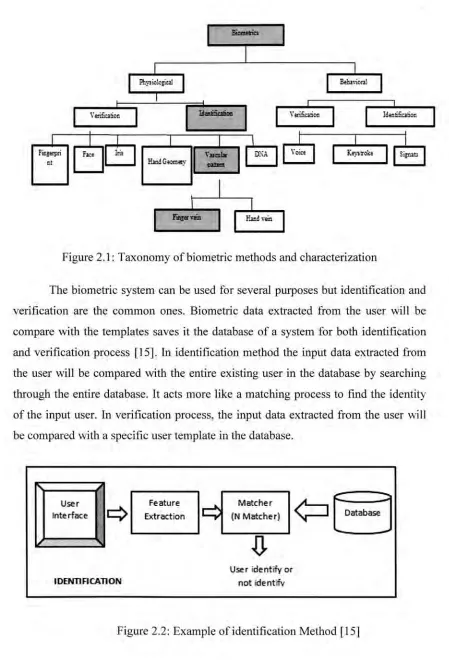
[image:21.564.84.533.39.699.2] [image:21.564.102.535.43.311.2]lden6fruion
Figure 2.1: Taxonomy of biometric methods and characterization
The biometric system can be used for several purposes but identification and verification are the common ones. Biometric data extracted from the user will be
compare with the templates saves it the database of a system for both identification
and verification process [15]. In identification method the input data extracted from
the user will be compared with the entire existing user in the database by searching
through the entire database. It acts more like a matching process to find the identity of the input user. In verification process, the input data extracted from the user witl be compared with a specific user template in the database.
"'
IUser Feature
~
Matcher¢::1l:::J
Interface
¢
Extraction (N Matcher)~
User identify or
IDENTIRCATION not identifv
7
"
·~. f" ~....
User Feature
~
Matcher¢::J
lnltertac·e
'
Y
q
Extraction (N Matcher) Database~
OneTemplate
True/ False
VERIFICATION
Figure 2.3: Example of identification Method [ 15]
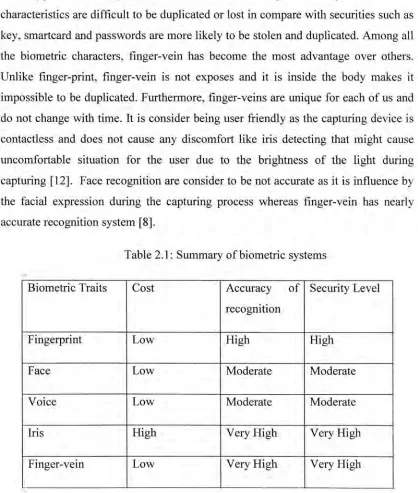
Biometric system has become important in security system in compare with
other types of security. This is because it has high reliability as biometric
characteristics are difficult to be duplicated or lost in compare with securities such as
key, smartcard and passwords are more likely to be stolen and duplicated. Among all
the biometric characters, finger-vein has become the most advantage over others.
Unlike finger-print, finger-vein is not exposes and it is inside the body makes it
impossible to be duplicated. Furthermore, finger-veins are unique for each of us and
do not change with time. It is consider being user friendly as the capturing device is
contactless and does not cause any discomfort like iris detecting that might cause
uncomfortable situation for the user due to the brightness of the light during
capturing [12]. Face recognition are consider to be not accurate as it is influence by
the facial expression during the capturing process whereas finger-vein has nearly
[image:22.564.96.514.258.751.2]accurate recognition system [8].
Table 2.1: Summary of biometric systems
Biometric Traits Cost Accuracy of Security Level
recognition
Fingerprint Low High High
Face Low Moderate Moderate
Voice Low Moderate Moderate
Iris High Very High Very High
8
2.2 Convolution Neural Network
Convolution Neural Network (CNN) IS a feed-forward artificial neural
network which is used in pattern recognition which was proposed by LeCun in
handwriting characters recognition [13] .CNN consists of multiple convolutions and
subsampling layers alternatively and ends with multilayer perceptron (MLP). This
MLP will be trained by the back propagation algorithm in achieving the desired
output. The feature extraction will be performed in convolution layer whereas local
averaging is performed at subsampling layer.
C I: feature maps
6@28x28
C3: feature map S4: feature maps
16@10x 10 16@5x5 S2: feature maps
6@14xl4
Subsampling Convolution 5x5
2x2
Subsampling
+
.
!
• Full connectiOn' Ga s ian
[image:23.566.77.528.77.624.2]Full connection connection
Figure 2.4: The equivalent LeNet-5 CNN architecture [8]
The proposed method used in this project was inspired from Simard [12] and
used in finger-vein recognition [8]. The proposed topology is a fused convolution
and subsampling layers comprised of 4 layers without considering the input layer.
This architecture is known as the 5-13-50 model, implying that there are 5, 13 and 50 feature maps in layers C1, C2, and C3 respectively. Layer 4 (i.e. the output layer) is
7
ConYotunon
2:1;2
ubs:unplmg
-
t
-
~
on~lunon3.:4
ttbsamphng
t
Full conn•
e~I!-
Qn• 7
[image:24.564.86.523.45.708.2]Full connt>ctaon
Figure 2.5: Topology of fused CNN architecture in finger-vein recognition [8] 9
The advantages of using fused CNN in compare with the conventional
CNN are the ability to extract features and reduce data dimension. The extracted
section will be train through CNN by learning the weights for the extracted features
using back propagation method at the MLP layer. Only minimal pre-processing is
required as CNN is able to ability to extract topological properties from raw image
(3][15]. Moreover, CNN is robust to noise thus only minimal pre-processing are
required for the recognition system where noise removal and image enhancement can
be avoided.
In out Laver
Hidden Layer
![Figure 2.4: The equivalent LeNet-5 CNN architecture [8]](https://thumb-us.123doks.com/thumbv2/123dok_us/80425.7553/23.566.77.528.77.624/figure-equivalent-lenet-cnn-architecture.webp)
![Figure 2.5: Topology of fused CNN architecture in finger-vein recognition [8]](https://thumb-us.123doks.com/thumbv2/123dok_us/80425.7553/24.564.86.523.45.708/figure-topology-fused-cnn-architecture-finger-vein-recognition.webp)